
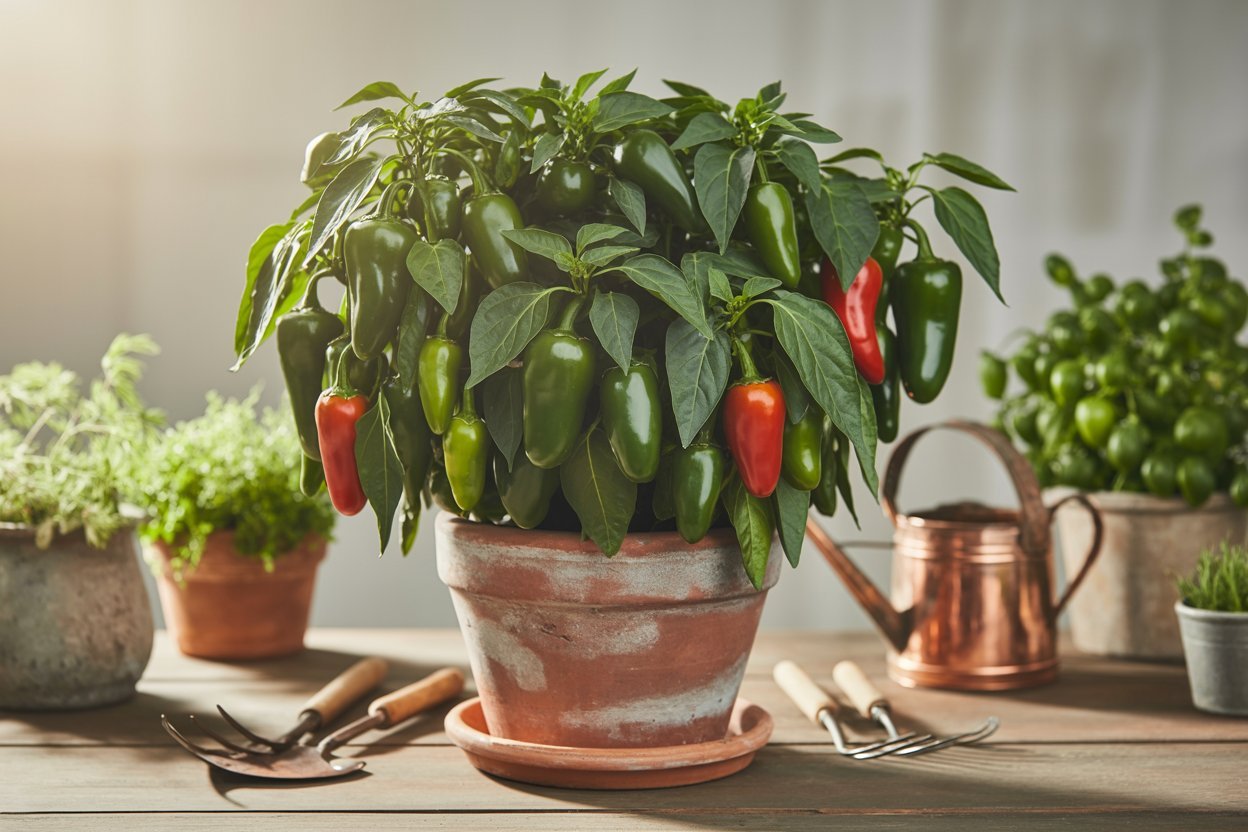

Growing jalapeños in pots is one of the most rewarding container-gardening projects you can try.
These fiery green beauties aren’t just flavorful they’re incredibly ornamental, surprisingly easygoing, and quick to reward you with baskets of peppers even if you don’t have an inch of garden soil.
With the right tender care and intentional tactics, jalapeños thrive in pots just as happily as they do in raised beds.
In this guide, I’ll walk you through 10 powerful, practical tactics to help you grow lush jalapeño plants from choosing the right pot to harvesting those glossy peppers at peak heat.
I’ve also included gentle reminders, easy-to-follow steps, and lots of real-life container gardening wisdom we women naturally bring to our spaces.
Let’s get your potted jalapeños growing beautifully.
1: Choose the Right Pot (Size Matters!)
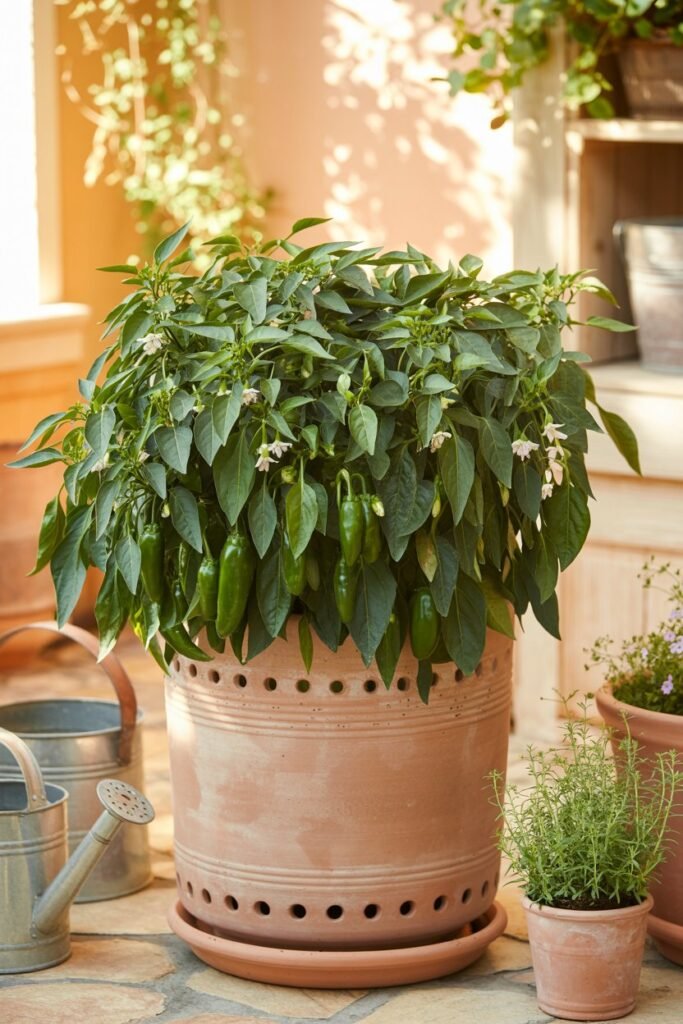
If there’s one thing jalapeños refuse to compromise on, it’s space for their roots. A cramped pot means stunted growth, fewer flowers, and a stingy harvest.
Ideal Pot Size
- At least 3–5 gallons (12 inches deep or more)
- A single plant per pot — don’t overcrowd
- Ensure at least 4–6 drainage holes
Pot Material Tips
- Terracotta: Breathable, classic look, reduces risk of overwatering
- Fabric grow bags: Amazing airflow, prevents root rot
- Plastic pots: Lightweight and retain moisture longer
How to Use This Tactic
Before planting, flip your pot over. If the drainage is weak, add extra holes using a drill or heated screwdriver. Jalapeños despise having “wet feet,” so drainage is non-negotiable.
Pro Tip:
Place a thin layer of gravel, broken terracotta, or mesh over the holes to prevent soil loss without restricting drainage.
2: Use a Nutrient-Rich Potting Mix (Not Garden Soil!)
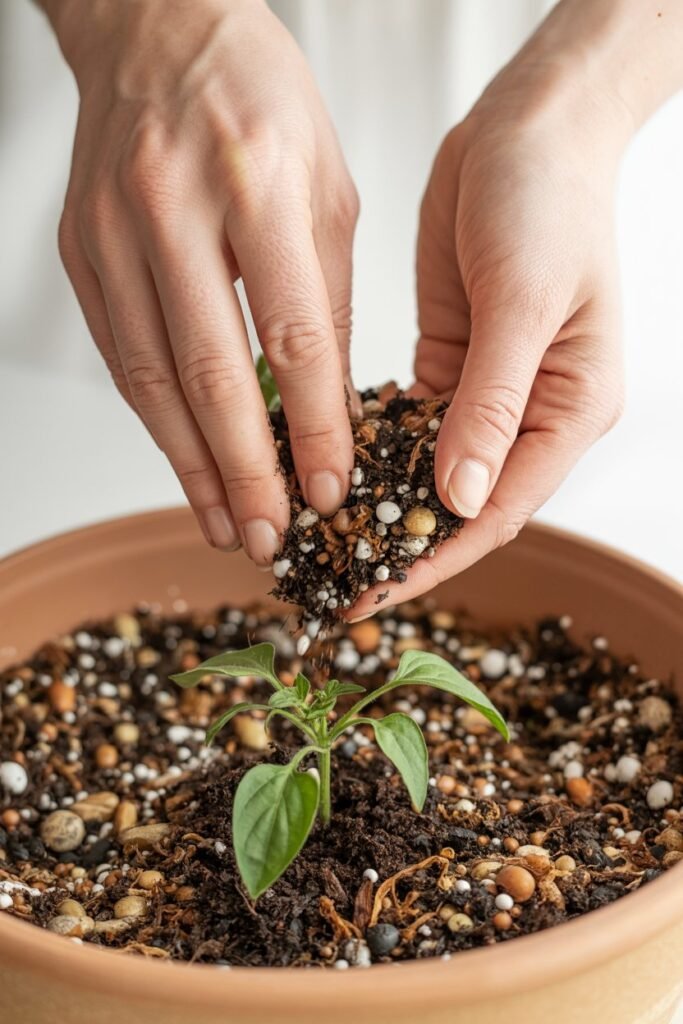
Container gardening is different from in-ground gardening because your plant relies entirely on what you provide. Garden soil compacts in pots, suffocating the roots.
Best Soil Blend for Jalapeños
Use a mix that is:
- Light
- Well-draining
- Full of organic nutrients
Recipe for the Perfect Soil
- 50% high-quality potting mix
- 30% compost (homemade or store-bought)
- 20% perlite or coco coir for aeration
Mix thoroughly until fluffy.
Optional Boosters
- A handful of worm castings
- 1 tablespoon bone meal (promotes strong root growth)
- A sprinkle of Epsom salt (magnesium for deeper green leaves)
How to Use This Tactic:
Fill the pot two-thirds full, place the seedling in the center, and backfill while gently pressing—not compacting—the soil. Your jalapeño will love the breathing room.
3: Give Your Jalapeños Full Sun (6–8 Hours Minimum)
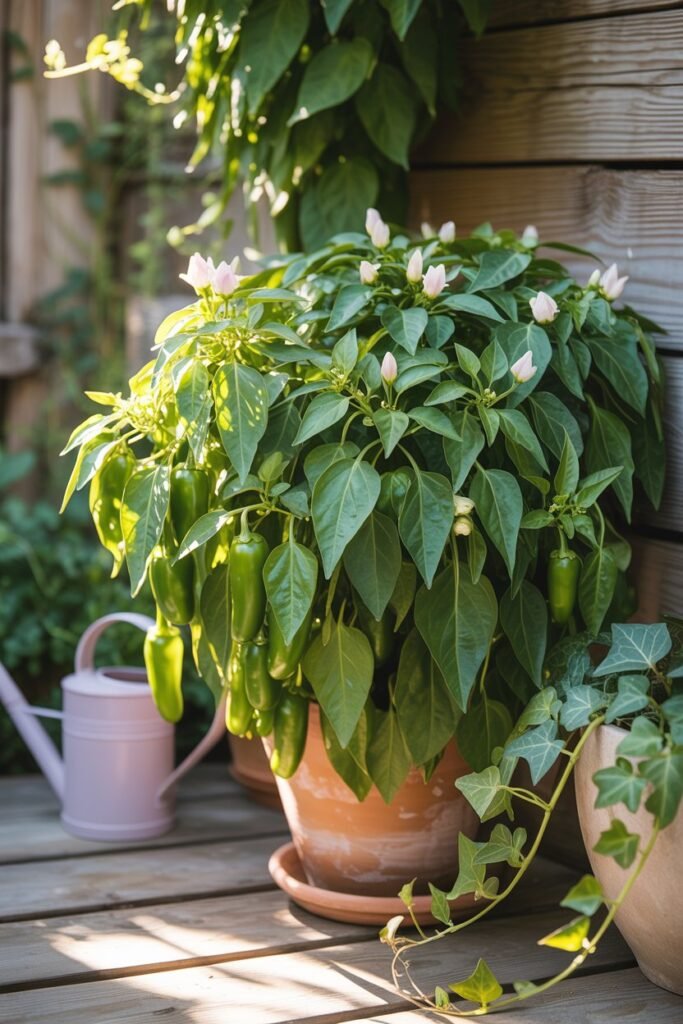
Jalapeños are sun-lovers, and they love heat even more. Without enough sun, the plant will grow tall and leggy with few flowers.
Sun Requirements
- 6–8 hours of direct sunlight daily
- Morning sun is best; afternoon sun is heat-boosting
- If indoors, use a grow light (12–14 inches above the plant)
How to Use This Tactic
Place the pot in your sunniest corner. If you live somewhere very hot, offer light shade between 2–4 PM to prevent leaf scorch. You can use:
- A sheer curtain
- A patio umbrella
- Shade cloth (30%)
Feminine tip:
Rotate your pot every 3–4 days to help the plant grow evenly and stay picture-perfect.
4: Water Smart, Not More
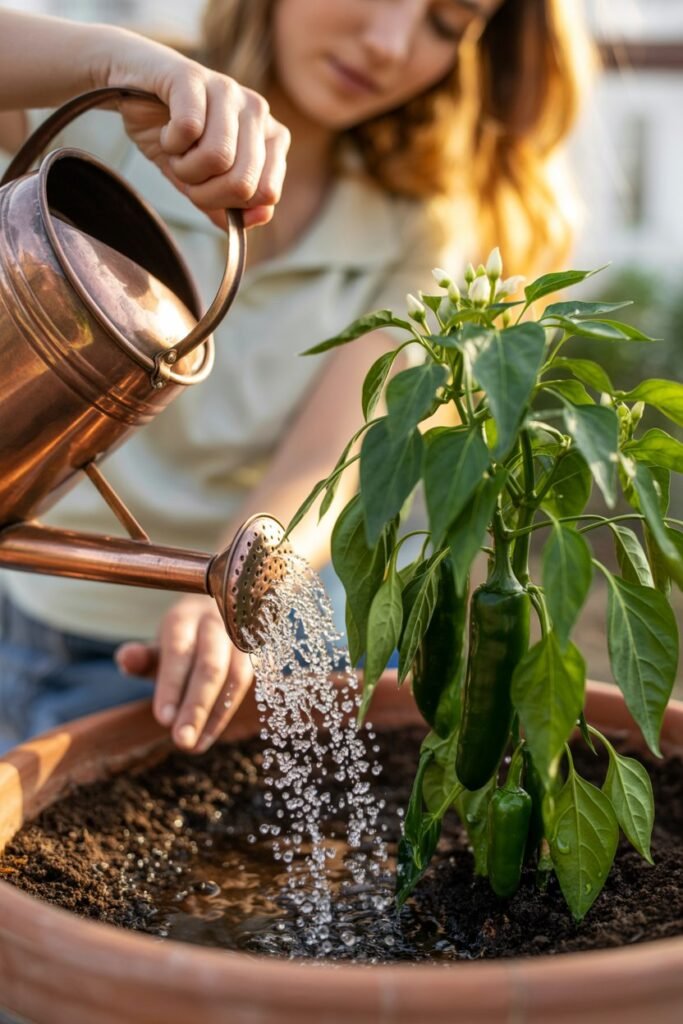
Overwatering is the #1 killer of potted peppers. Jalapeños prefer moist-but-never-soggy soil.
How to Water Properly
- Water deeply, not frequently
- Allow the top 1 inch of soil to dry out before watering again
- Water at the base, never the leaves
- Water early in the morning
Signs You’re Overwatering
- Yellow leaves
- Dropping flowers
- Mushy stems
- Fungus gnats
Signs You’re Underwatering
- Drooping leaves
- Wrinkled peppers
How to Use This Tactic:
Stick your finger into the soil—if it’s dry up to your first knuckle, it’s watering time.
Pro Tip:
Mulching the pot with dried leaves, straw, or coco chips helps retain moisture longer.
5: Feed Your Jalapeños (They Are Hungry Plants!)
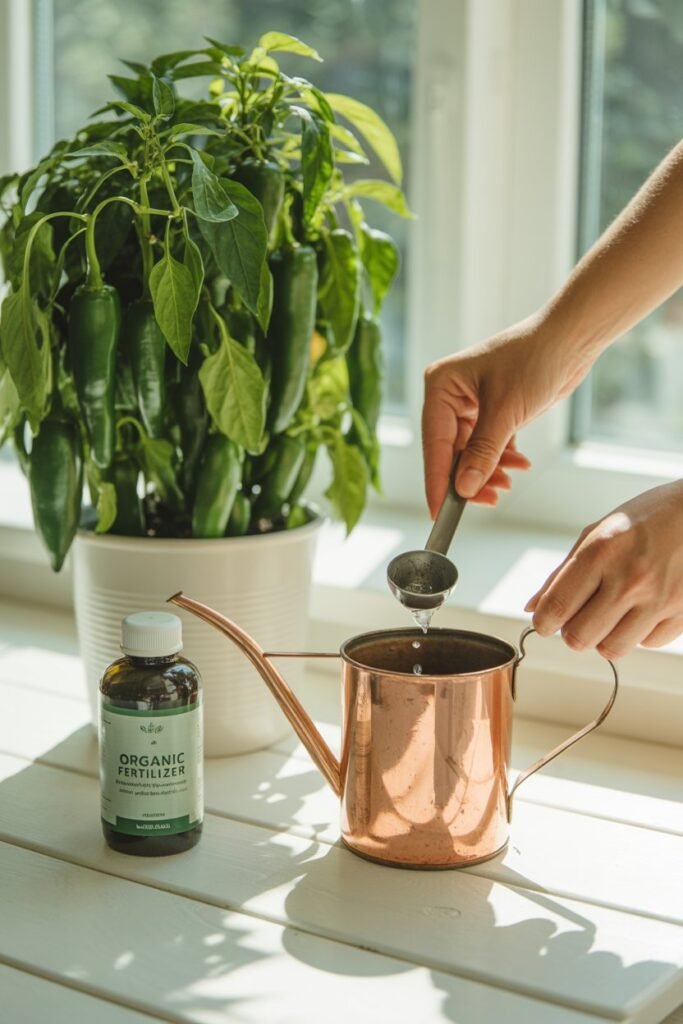
Fertilizing is essential in containers because nutrients wash out quickly with watering.
Best Fertilizers for Jalapeños
- Balanced fertilizer (10-10-10) every 2–3 weeks
- Or Organic options like:
- Fish emulsion
- Seaweed extract
- Compost tea
- Worm castings tea
Fertilizing Schedule
- Early growth: Nitrogen-focused fertilizer to build leafy structure
- Flowering & fruiting: Switch to low nitrogen, higher phosphorus & potassium
How to Use This Tactic
Every watering, alternate between plain water and a diluted fertilizer solution. Jalapeños thrive when fed gently and consistently.
6: Support the Plant with Stakes or Cages
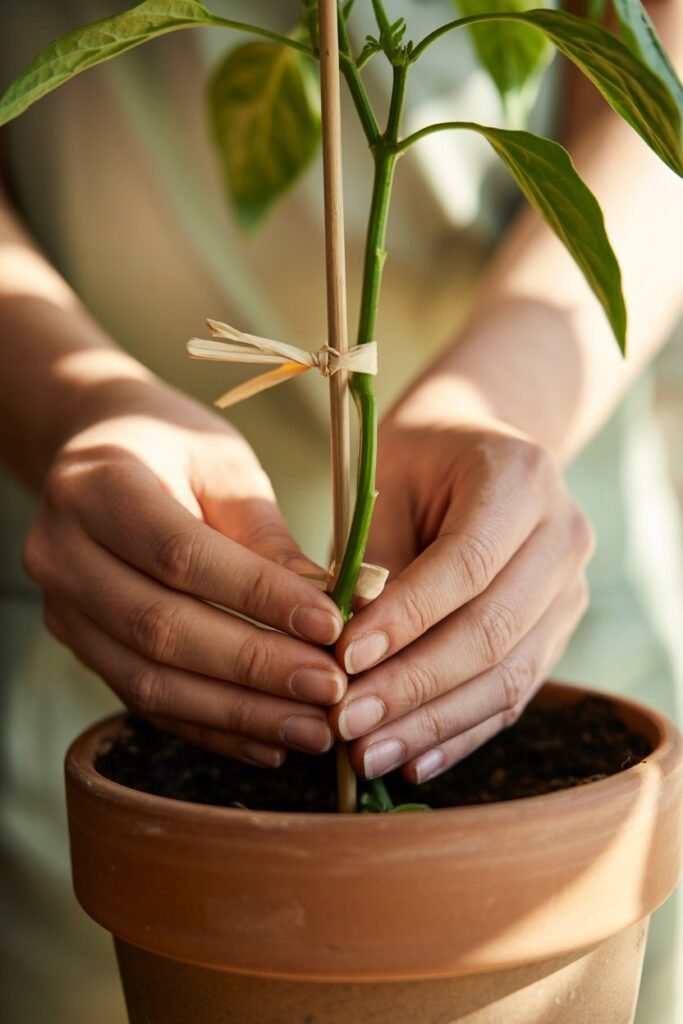
Even though jalapeños are compact compared to bell peppers, a mature plant heavy with fruit will lean, bend, or snap branches.
Types of Support
- Small tomato cages
- Bamboo stakes
- Trellis rings
How to Use This Tactic
Insert your support system early — when the plant is still small. This prevents damaging the root system later.
Gently tie stems using:
- Soft twine
- Velcro plant ties
- Strips of fabric (my favorite!)
7: Prune for Bigger Harvests
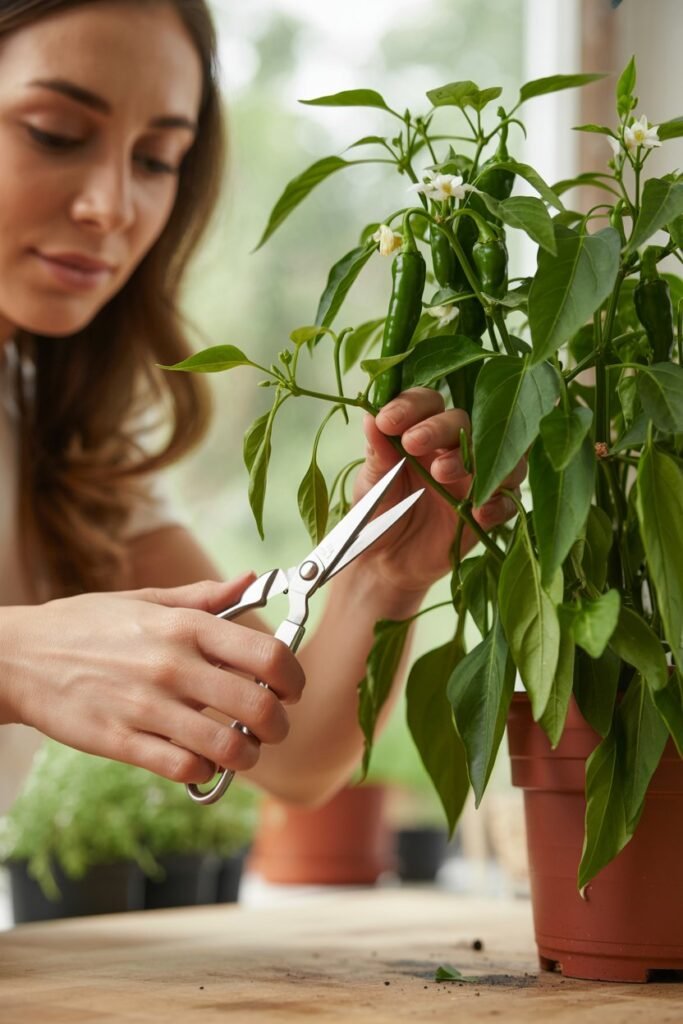
Pruning jalapeños in pots helps them focus energy on productive branches rather than unnecessary leafy growth.
How to Prune
- Remove the bottom leaves (up to 3–4 inches from the soil)
- Pinch early flowers if the plant is under 8 inches tall
- Trim weak, crossing, or damaged branches
- Remove suckers growing between leaf nodes if the plant becomes bushy
Benefits
- Better airflow
- Reduced disease
- Bigger, healthier peppers
- Fuller shape
Feminine tip:
Think of pruning as giving your plant a little shaping and self-care. A trim goes a long way.
8: Manage Pests Gently but Firmly
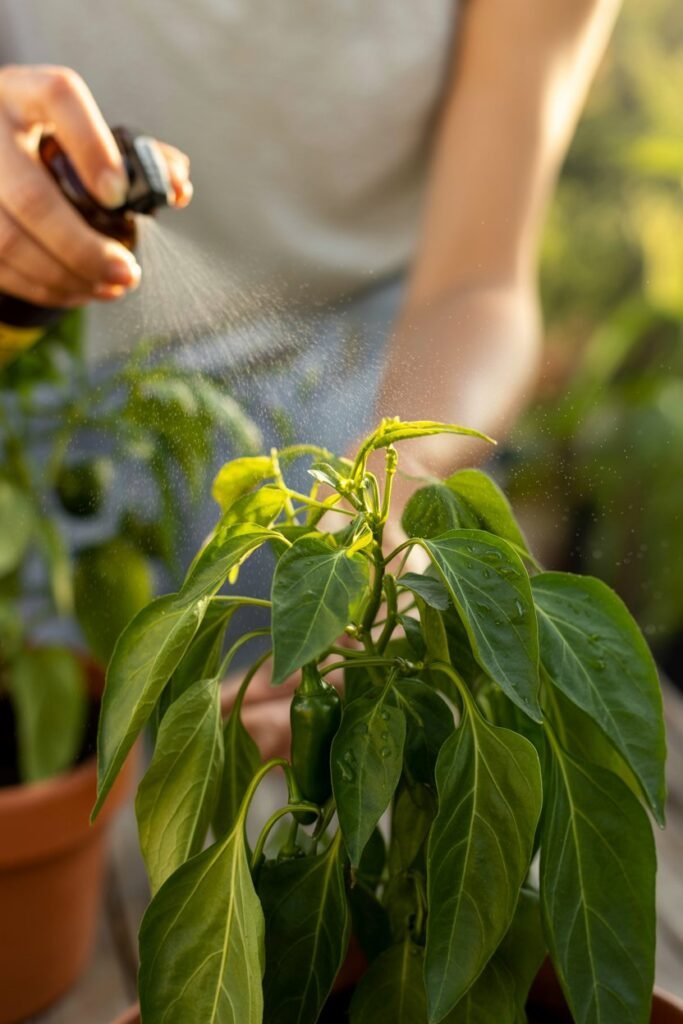
Jalapeños are usually tough, but container plants can attract pests quickly.
Common Pests
- Aphids
- Spider mites
- Whiteflies
- Caterpillars
Non-toxic Control Methods
- Neem oil spray (weekly prevention)
- Soapy water spray (1 tsp mild soap per 1 liter of water)
- Wipe leaves with a damp cloth
- Introduce ladybugs if outdoors
How to Use This Tactic
Inspect leaves weekly — especially the undersides. The sooner you catch pests, the easier they are to remove.
9: Encourage Flowering & Proper Pollination
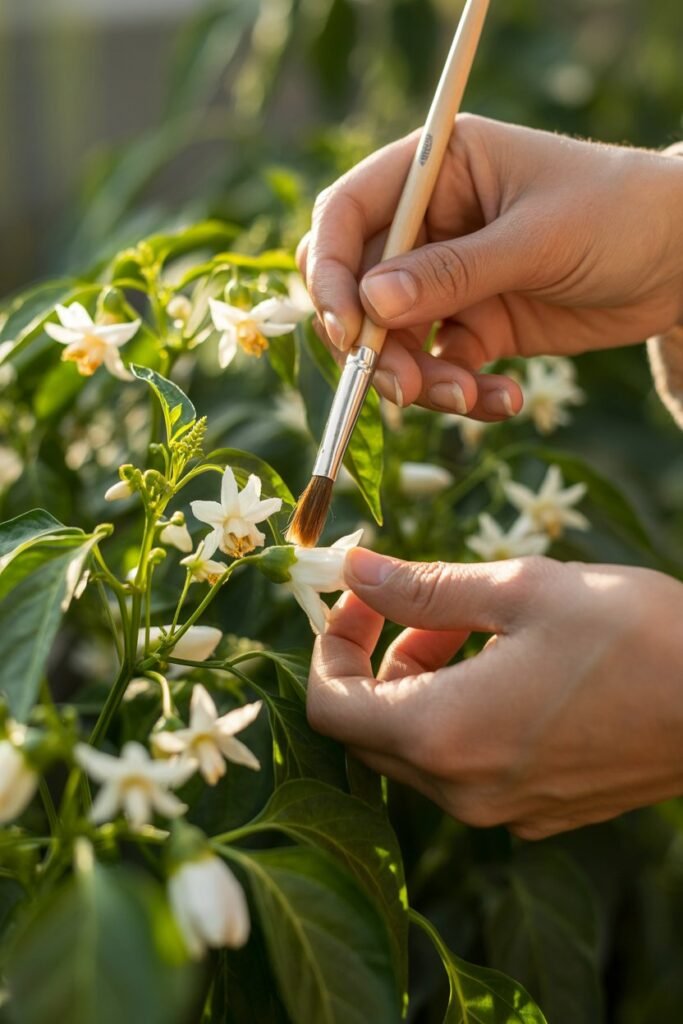
Without pollination, the flowers simply dry up and fall. Pots on balconies or indoors need a little help.
How to Improve Pollination
- Gently shake the plant every morning
- Use a small paintbrush to move pollen between flowers
- Increase sunlight exposure
- Keep temperatures 70–85°F (21–29°C)
When Flowers Drop
This often happens because of:
- Heat stress
- Low humidity
- Too much nitrogen
How to Use This Tactic:
Be gentle and consistent in pollination. You can even place the plant near flowering herbs like basil to attract bees.
10: Harvest at the Right Time (and Keep Harvesting!)
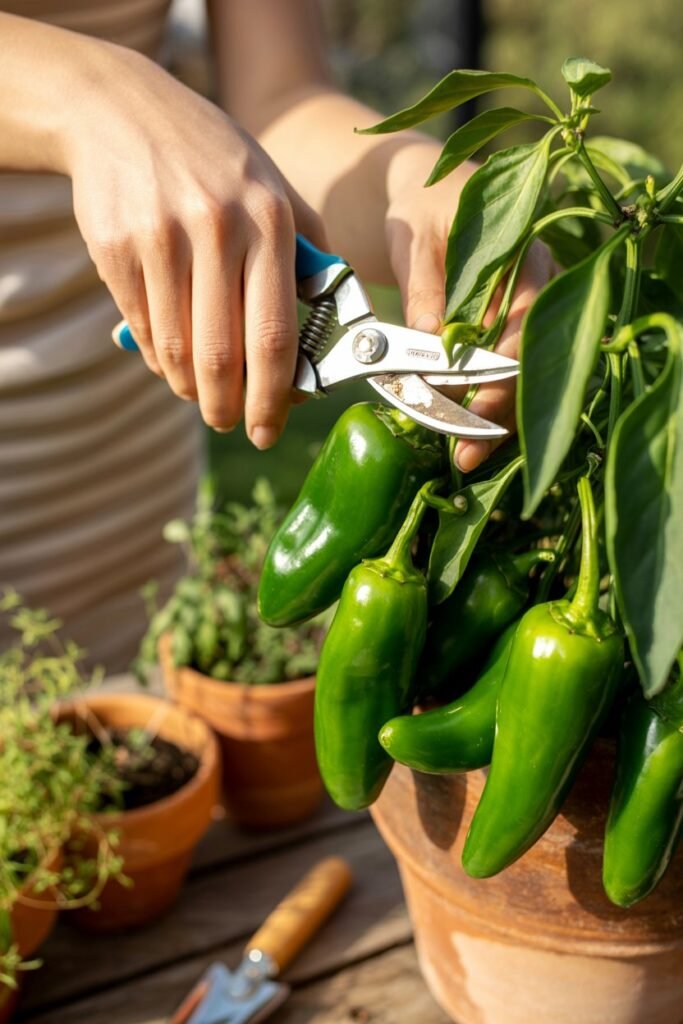
Harvesting encourages your plant to produce even more peppers.
Signs Your Jalapeño Is Ready
- 3–4 inches long
- Firm
- Glossy
- Deep green — or turning red if you want sweeter heat
How to Harvest
Use scissors or pruning shears to cut the pepper cleanly. Pulling by hand can damage the stem.
Green or Red?
- Green jalapeños: Sharp, fresh heat
- Red jalapeños: Sweeter, fruitier, slightly hotter
Pro Tip:
The key to higher yield is to pick peppers frequently so the plant keeps producing new ones.
Extra Care Tips for Thriving Potted Jalapeños
Rotate Your Pots
Every 3–4 days, turn the pot slightly so sunlight hits all sides evenly.
Warm Soil = Happy Jalapeños
These peppers LOVE heat. If your climate is cooler:
- Use black pots
- Place them on warm stones
- Use a heat mat early in the season
Don’t Overcrowd the Plant
Jalapeños need airflow. Avoid surrounding them with too many other plants.
Companion Plants for Pots
You can grow these alongside:
- Basil
- Marigold
- Chives
- Cilantro
They repel pests and add beauty.
Final Thoughts
Growing jalapeños in pots is easier than most people imagine and incredibly rewarding. With the right pot size, proper soil, consistent watering, and gentle, loving care, you can harvest dozens of spicy, flavorful peppers from just one container.
Whether you’re gardening on a balcony, patio, or small backyard, these ten tactics will help you grow strong, productive jalapeño plants you’ll be proud of.
You’re not just growing peppers you’re growing confidence, presence, and a little spice in your gardening journey.
