
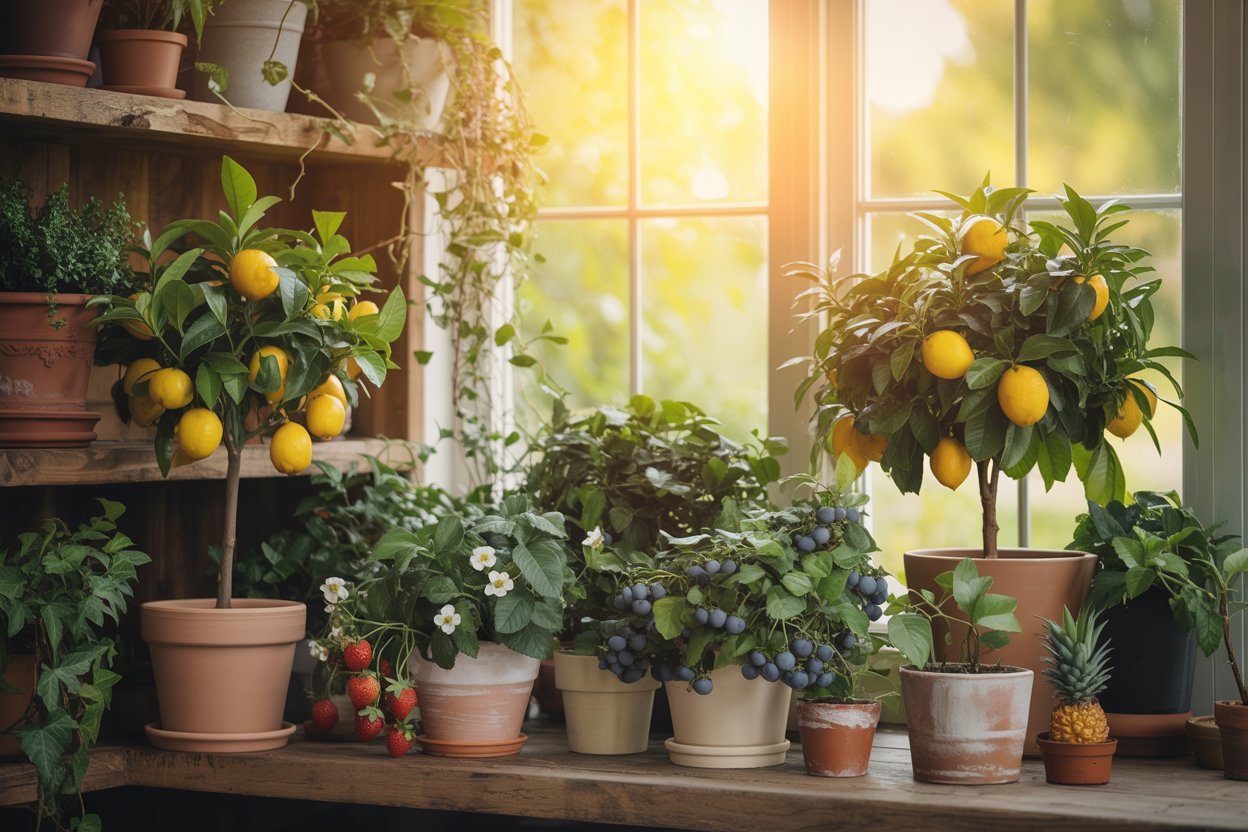

When winter sets in or you simply don’t have a backyard, that doesn’t mean your fruit-growing dreams have to wait. Bringing fruit plants indoors is one of the most rewarding ways to keep your home green, fresh, and full of life.
The truth is you don’t need a large garden to enjoy homegrown lemons, strawberries, or even pineapples. With a bit of sunlight, the right pots, and your loving care, these little plants will thrive right beside you.
Growing fruit indoors isn’t just about the harvest it’s about nurturing something beautiful, watching it grow, and celebrating every tiny bud and blossom. So grab your gloves, pour yourself a cup of tea, and let’s explore 15 excellent indoor fruit plants that can brighten your home, one leaf and fruit at a time.
1. Meyer Lemon (Citrus × meyeri)
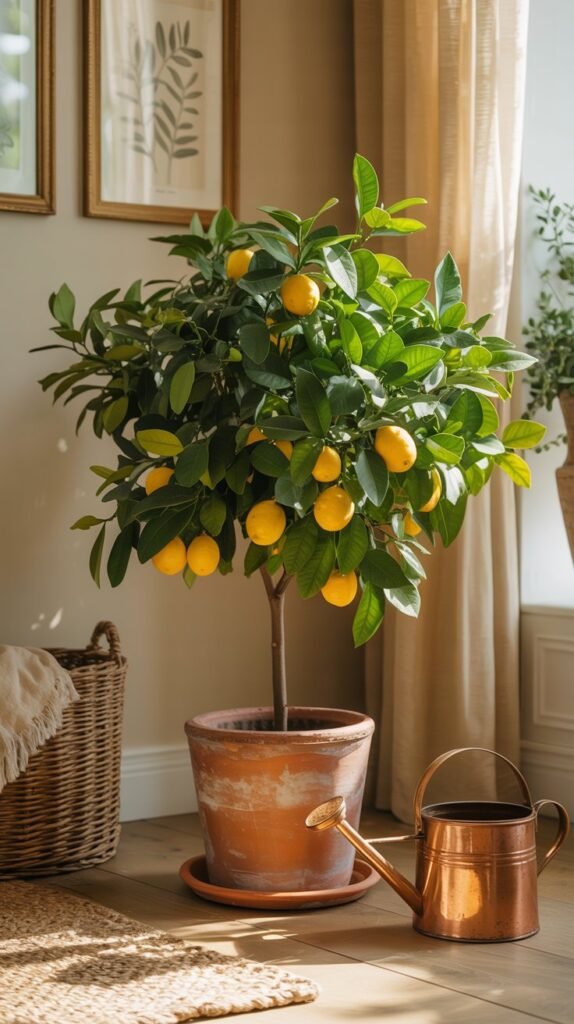
There’s a reason every indoor gardener eventually falls in love with the Meyer lemon tree. It’s hardy, beautiful, and fills your home with the most heavenly scent when in bloom.
How to Plant
- Choose a grafted dwarf Meyer lemon tree (they bear fruit faster).
- Pick a 12–14-inch pot with several drainage holes.
- Fill it with a citrus-specific potting mix, or make your own blend:
- 2 parts peat-free potting soil
- 1 part compost
- 1 part perlite or sand for aeration
- Gently remove the plant from its nursery pot and place it so the root ball sits just above the pot rim.
Light & Temperature
Lemons are sunshine lovers. They need 8–10 hours of light daily, preferably from a south-facing window. If you don’t get that much light naturally, a full-spectrum grow light works wonders.
Keep your room between 65–75°F (18–24°C), and protect your lemon from cold drafts.
Water & Feeding
Water deeply when the top inch of soil feels dry lemons hate soggy roots.
Feed monthly during the growing season with citrus fertilizer or a balanced 10-5-5 blend.
Extra Care Tips
- Mist leaves daily or use a humidifier to prevent leaf curl.
- Wipe dust off leaves every few weeks so they can “breathe.”
- When blooming, gently shake flowers to help pollinate indoors.
Pro Tip: “When your Meyer lemon blooms, pause to enjoy the scent it’s like bottling up a piece of summer sunshine right in your kitchen.”
2. Strawberries (Fragaria × ananassa)
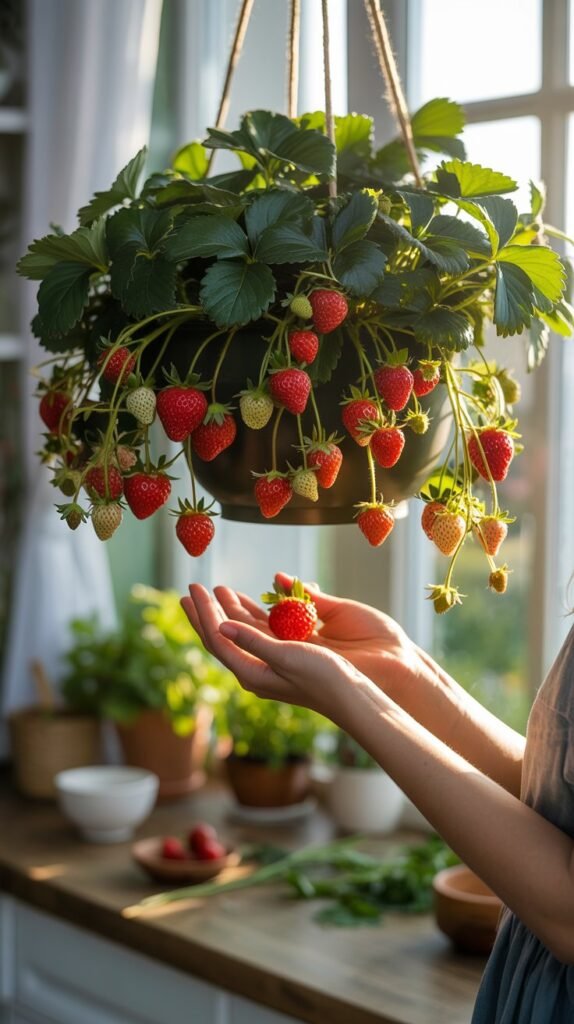
Few things feel more rewarding than plucking a ruby-red strawberry you’ve grown yourself especially when it’s from your windowsill.
How to Plant
- Choose everbearing strawberry varieties such as ‘Seascape’, ‘Albion’, or ‘Tristar’.
- Use a wide, shallow pot or hanging basket with drainage holes.
- Fill it with a light, rich mix: 2 parts soil, 1 part compost, and 1 part perlite.
Light & Temperature
Strawberries thrive in 6–8 hours of direct light. If you don’t have a sunny spot, place them under a grow light for 12 hours daily.
Ideal temperature: 60–75°F (15–24°C).
Water & Feeding
Keep soil moist but not soggy water at the base, never from above, to avoid fungal issues.
Feed every two weeks with a balanced organic liquid fertilizer during the growing season.
Care & Harvest
- Trim runners (long stems that grow out) to focus energy on fruiting.
- Hand-pollinate by brushing the flower centers gently.
- Replace plants every 2–3 years for best yields.
Pro Tip: “Treat strawberries like house guests — give them warmth, light, and care, and they’ll reward you with sweetness.”
3. Pineapple (Ananas comosus)

Yes, you can grow pineapples indoors! They’re bold, tropical, and surprisingly easy once you understand their rhythm.
How to Start
You can start a pineapple from a store-bought fruit:
- Twist off the leafy crown.
- Peel off the bottom leaves to expose about an inch of stem.
- Let it dry for a day or two.
- Plant it in a pot with sandy, well-draining soil — mix equal parts cactus mix, compost, and sand.
Light & Temperature
Pineapples love at least 8 hours of sunlight a day.
Keep them in a warm spot above 70°F (21°C) year-round.
Water & Feeding
They’re drought-tolerant, so water lightly. Allow the soil to dry between waterings.
Feed monthly with a diluted, balanced fertilizer.
Care & Patience
It can take 18–24 months for your pineapple to fruit, but the glossy leaves and tropical look make it worth it. Once it fruits, new “pups” grow at the base replant them to start again.
Pro Tip: “Growing a pineapple indoors is a slow dance but every leaf, every new root is a little victory.”
4. Calamondin Orange (Citrus mitis)

This charming citrus tree produces tiny oranges that fill your home with color and fragrance all year round.
How to Plant
- Choose a dwarf Calamondin and re-pot it into a 10–12-inch pot with a citrus potting mix.
- Ensure the container drains freely.
Light & Temperature
Calamondins thrive in 6–8 hours of bright light.
Keep them at 65–80°F (18–27°C) and away from cold drafts or air conditioners.
Water & Feeding
Keep soil slightly moist, but never waterlogged.
Feed every 4 weeks with a citrus fertilizer.
Care & Harvest
- Rotate weekly to promote even growth.
- Prune in early spring to keep the shape neat.
- The fruits are small, tart, and perfect for marmalade or drinks.
Pro Tip: “Calamondins bloom when they’re happy give them warmth, sunlight, and a kind word or two.”
5. Cherry Tomatoes (Solanum lycopersicum var. cerasiforme)
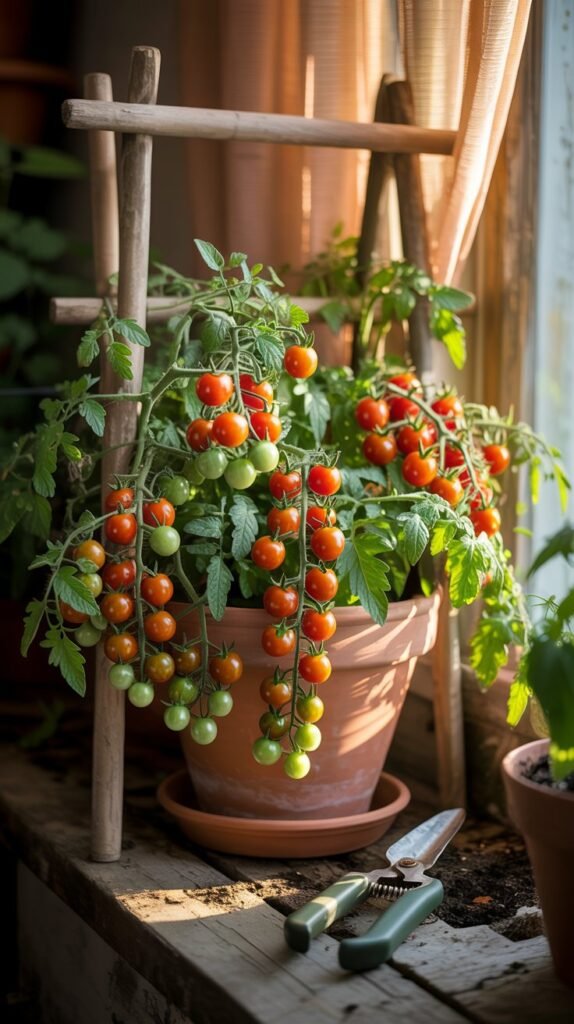
Cherry tomatoes bring color, fragrance, and life into your kitchen — and nothing beats eating one right off the vine.
How to Plant
- Pick compact varieties like ‘Tiny Tim’ or ‘Micro Tom’.
- Use a deep pot (10–12 inches) filled with rich potting mix and compost.
- Stake or cage your plant gently for support.
Light & Temperature
Tomatoes crave light 10–12 hours daily.
If sunlight is limited, use a grow light positioned 6 inches above the top leaves.
Water & Feeding
Keep the soil evenly moist (never soggy).
Feed with a tomato fertilizer high in potassium every two weeks.
Care Tips
- Gently shake flowers to pollinate.
- Pinch off suckers (small shoots) to focus growth.
- Harvest often to encourage more fruit.
Pro Tip: “Tomatoes are happiest when warm and well-fed think of them as your sun-loving kitchen companions.”
6. Dwarf Fig Tree (Ficus carica ‘Petite Negra’)
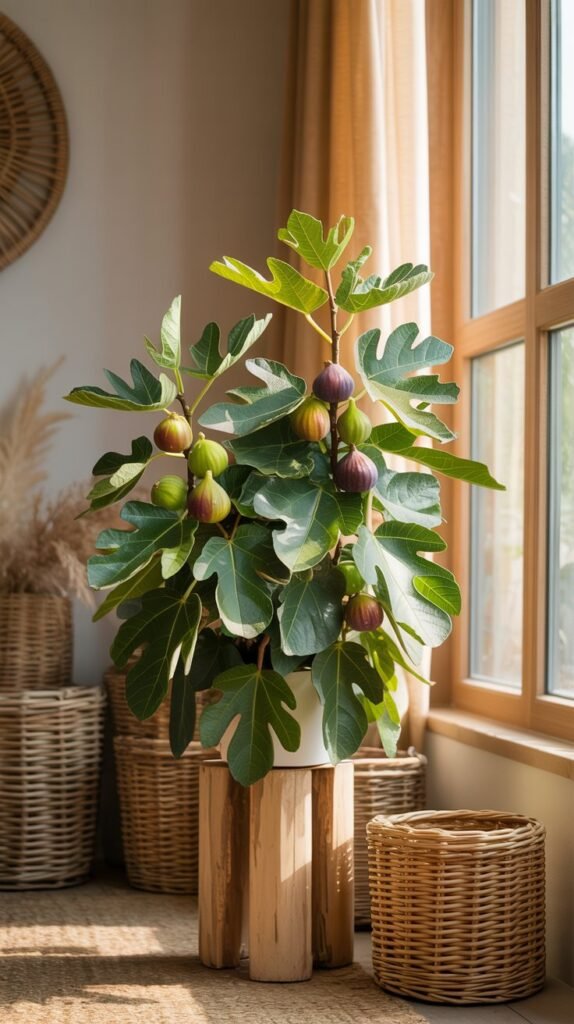
A touch of the Mediterranean indoors! The Dwarf Fig is compact, fragrant, and surprisingly productive.
How to Plant
- Choose a dwarf variety like ‘Petite Negra’ or ‘Little Miss Figgy’.
- Use a 10–12 inch container with drainage.
- Fill with a rich mix of potting soil, perlite, and compost.
Light & Temperature
Place near a sunny window bright, indirect light is perfect.
Ideal temperature: 65–75°F (18–24°C).
Water & Feeding
Water when the top 2 inches of soil dry out.
Feed monthly with organic fruit fertilizer during spring and summer.
Care & Pruning
- Prune yearly to maintain size and encourage new shoots.
- Figs may lose leaves in winter it’s normal; they’ll regrow.
- Mist occasionally to raise humidity.
7. Dwarf Apple Tree (Malus domestica)

Imagine picking a crisp apple from a tree growing beside your kitchen window it’s possible!
How to Plant
- Choose self-pollinating dwarf varieties like ‘Honeycrisp Mini’ or ‘Golden Sentinel’.
- Use a 14-inch pot with loamy, well-draining soil.
Light & Temperature
Apples love 8 hours of full sun.
Keep in a bright room, or supplement with a grow light during winter.
Water & Feeding
Water deeply once the top inch of soil is dry.
Feed every 6 weeks with a balanced fruit tree fertilizer.
Care & Pollination
- Mimic pollination by using a small brush to move pollen between blooms.
- During winter, allow your tree a “rest” period in a cooler area to encourage next year’s fruiting.
Pro Tip: “Even indoors, apples love rhythm let them rest in winter and they’ll bless you with blossoms in spring.”
8. Kumquat (Fortunella japonica)

A cheerful citrus that’s easier to care for than most, the kumquat produces tiny, sweet-tart fruits that you can eat whole peel and all!
How to Plant
- Plant in a 10-inch pot with citrus soil mix.
- Position near a bright window that gets 6–8 hours of sunlight daily.
Water & Feeding
Keep soil slightly moist and mist leaves often.
Fertilize monthly with citrus fertilizer.
Care & Harvest
- Kumquats are self-pollinating, so one plant is enough.
- They thrive in cooler indoor air compared to other citrus.
- Fruit matures in late winter just when you need a touch of sunshine.
Pro Tip: “Keep a kumquat near your kitchen window its golden fruit will light up even the gloomiest morning.”
9. Dwarf Watermelon (Citrullus lanatus ‘Sugar Baby’)
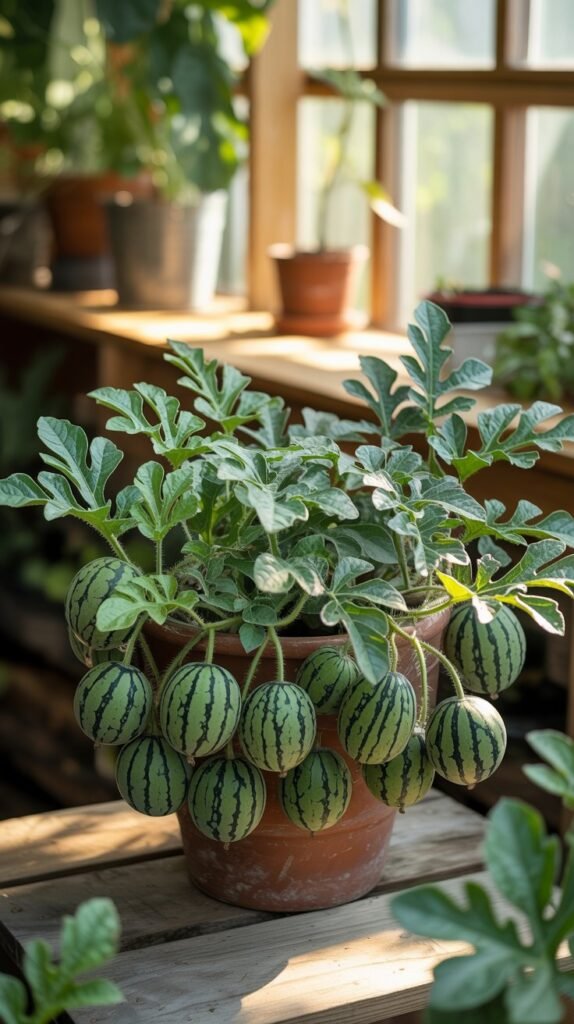
Yes you can actually grow watermelons indoors! Dwarf varieties like ‘Sugar Baby’ or ‘Mini Love’ are compact, fast-growing, and surprisingly manageable when trained on a small trellis.
How to Plant
- Start seeds in a 10–12-inch deep container with loose, sandy soil.
- Mix equal parts potting soil, compost, and perlite for drainage.
- Plant two seeds per pot, and thin to one healthy seedling once sprouted.
Light & Temperature
Watermelons need 10–12 hours of strong light daily they’re sun worshippers! A grow light is often essential for indoor growing.
Keep temperatures between 70–85°F (21–29°C) for best results.
Water & Feeding
- Water deeply whenever the top 2 inches of soil are dry.
- Once fruits start forming, reduce watering slightly to enhance sweetness.
- Feed weekly with a high-potassium fertilizer (like tomato feed).
Care & Harvest
- Train vines on a small trellis or stake system.
- Hand-pollinate flowers using a small brush to move pollen from male to female blooms.
- Harvest when the tendril nearest the fruit turns brown and the underside turns creamy yellow.
Pro Tip: “Watermelons remind us that sweetness takes patience the wait makes every bite even juicier.”
10. Goji Berry (Lycium barbarum)
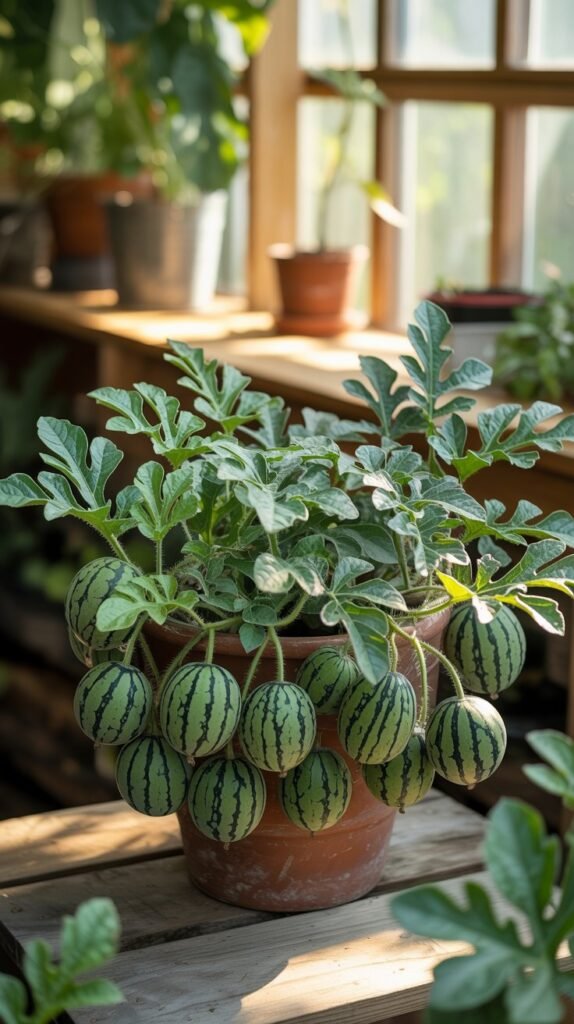
The goji berry, also known as the “longevity fruit,” is perfect for health-conscious gardeners. It grows well indoors and adds a burst of antioxidant-rich berries to your diet.
How to Plant
- Start with a young goji plant (seedlings can be slow).
- Use a 12-inch pot with sandy, well-drained soil.
- Add compost for organic nutrients and mix in a little perlite for aeration.
Light & Temperature
Goji berries need 6–8 hours of bright light each day.
They tolerate a wide range of temperatures but prefer 65–75°F (18–24°C) indoors.
Water & Feeding
Keep soil lightly moist. Too much water can cause root rot.
Feed every 4–6 weeks with a general-purpose organic fertilizer.
Care & Harvest
- Trim lightly in early spring to encourage bushier growth.
- Goji berries begin to fruit in their second year.
- Harvest when berries turn bright red and slightly soft.
Pro Tip: “Goji berries love the sun give them light and they’ll return the favor with vitality and color.”
11. Dwarf Grape Vine (Vitis vinifera ‘Pixie’ or ‘Canadice’)
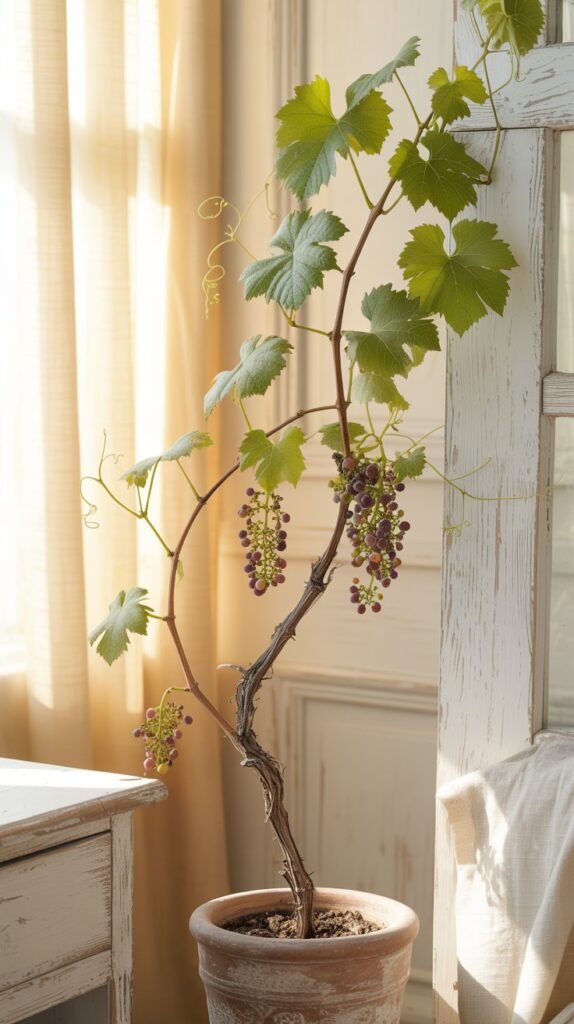
The thought of growing grapes indoors feels romantic and with dwarf varieties, it’s completely possible!
How to Plant
- Choose a compact variety like ‘Pixie Grape’ or ‘Canadice.’
- Use a 12-inch pot and install a mini trellis or bamboo stakes.
- Fill with a mix of loamy potting soil, compost, and a handful of sand for drainage.
Light & Temperature
Grapes thrive under 8–10 hours of full sunlight or grow lights.
Maintain a temperature of 65–80°F (18–27°C).
Water & Feeding
Water consistently but allow the top inch of soil to dry between sessions.
Feed monthly with balanced organic fertilizer.
Care & Pruning
- Grapes need yearly pruning in late winter to stay compact and productive.
- Train vines along the trellis gently to prevent tangles.
- Fruit usually appears in the second year.
Pro Tip: “Train your grapevine with care a gentle touch yields the sweetest clusters.”
12. Dwarf Peach Tree (Prunus persica ‘Bonanza’ or ‘Golden Glory’)
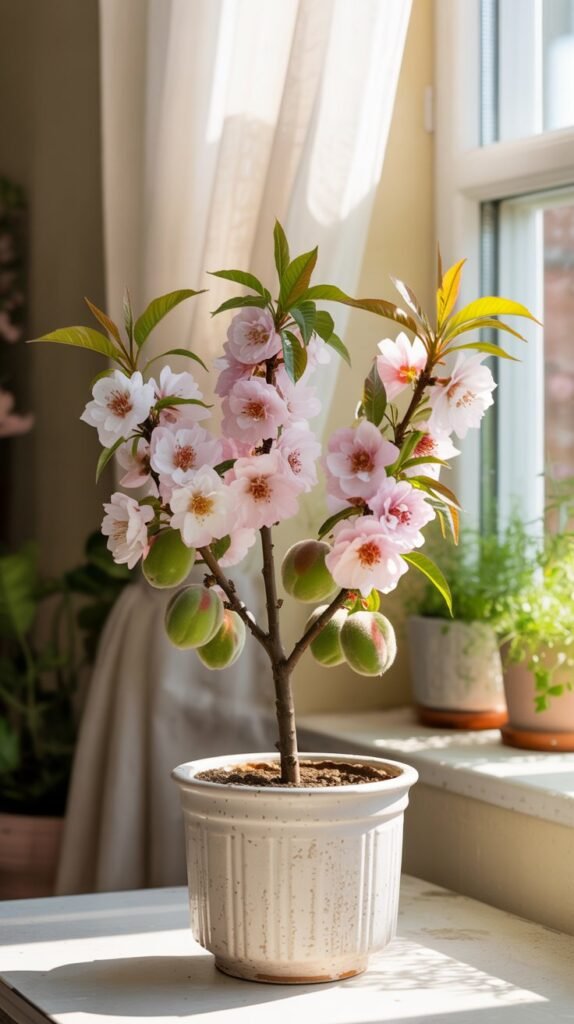
A fruit tree that’s both ornamental and fruitful the dwarf peach is perfect for indoor gardeners who love a challenge. Its blossoms alone are worth growing for.
How to Plant
- Pick a dwarf variety such as ‘Bonanza’ or ‘Golden Glory’.
- Use a 12–14-inch pot with well-draining, loamy soil (mix compost, sand, and potting mix).
- Place near a bright window with 6–8 hours of sunlight daily.
Water & Feeding
Keep soil consistently moist but not soggy.
Feed with organic fruit fertilizer every 4–6 weeks during growth season.
Care & Pollination
- Hand-pollinate blossoms using a soft brush.
- Prune right after fruiting to encourage next year’s blooms.
- In winter, move to a cooler space to mimic dormancy.
Harvest
Peaches are ready when slightly soft and fragrant.
Harvest carefully they bruise easily.
Pro Tip: “Peaches teach patience the blossoms are a promise, and the fruit is the reward for your care.”
13. Dwarf Lime Tree (Citrus aurantiifolia or ‘Bearss’ Lime)

Limes bring zest, fragrance, and joy into any home. They’re one of the most rewarding citrus trees for indoor gardeners.
How to Plant
- Use a 10-inch pot with citrus soil mix.
- Ensure great drainage line the bottom with pebbles or coarse sand.
Light & Temperature
Needs 8–10 hours of bright light per day.
Ideal indoor temperature: 68–80°F (20–27°C).
Water & Feeding
Water when the top inch of soil feels dry.
Feed monthly with citrus fertilizer or a mix high in nitrogen.
Care Tips
- Mist leaves often to boost humidity.
- Prune lightly to shape.
- Rotate the pot weekly for even light exposure.
Pro Tip: “A happy lime tree smells like sunlight after rain — keep it near your kitchen, and you’ll feel it every day.”
14. Dwarf Cherry Tree (Prunus cerasus ‘Carmine Jewel’ or ‘North Star’)
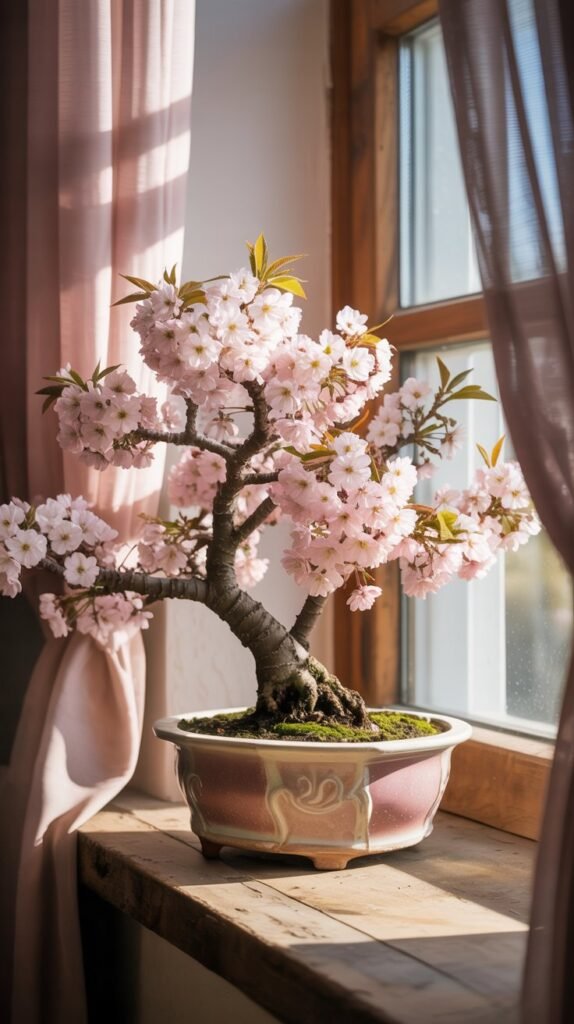
Indoor cherry trees are pure joy — their soft pink blossoms brighten your space long before the fruit arrives.
How to Plant
- Choose self-pollinating varieties like ‘Carmine Jewel’ or ‘North Star.’
- Use a 14-inch pot with rich, well-draining soil.
- Add compost for nutrients and perlite for air circulation.
Light & Temperature
Cherries thrive under 8 hours of sunlight or 12 under a grow light.
Keep temperatures moderate 65–75°F (18–24°C).
Water & Feeding
Water when the top 2 inches of soil are dry.
Feed every 4 weeks with a balanced fruit fertilizer.
Care & Pruning
- Prune after harvest to maintain size.
- Hand-pollinate flowers with a soft brush.
- If leaves yellow, check for overwatering or lack of nutrients.
Pro Tip: “When cherry blossoms appear, stop and admire — they’re nature’s reminder that beauty always returns.”
15. Blueberries (Vaccinium spp.)
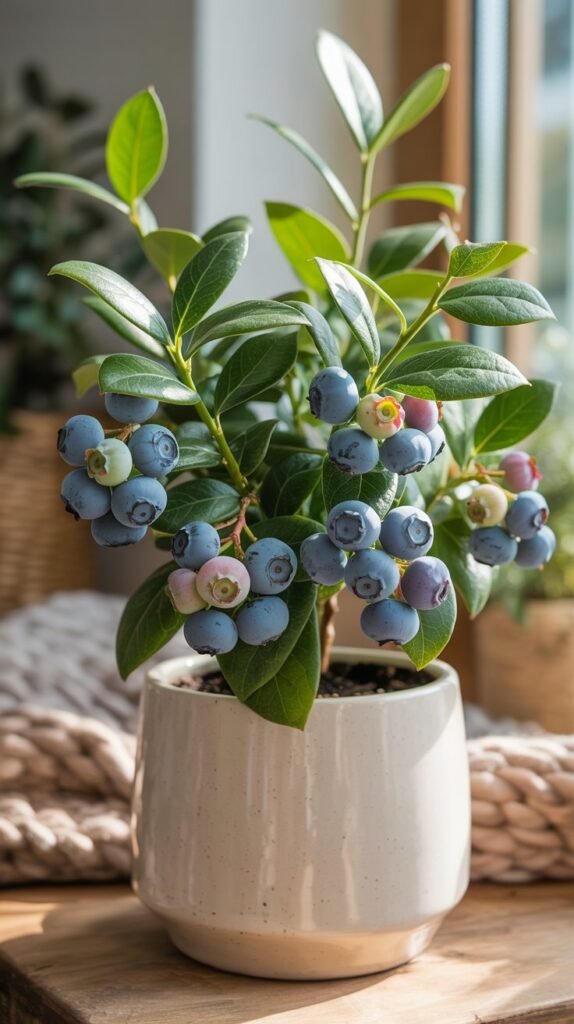
Blueberries are small, resilient, and absolutely delightful. Their glossy leaves, white bell-shaped flowers, and sweet fruit make them perfect for bright corners.
How to Plant
- Choose compact varieties like ‘Top Hat’ or ‘Northsky.’
- Use an acidic soil mix: 1 part peat moss, 1 part pine bark, 1 part sand.
- Pot in a 12-inch container with good drainage.
Light & Temperature
Blueberries need 6–8 hours of direct light daily.
Keep room temperature around 60–75°F (15–24°C).
Water & Feeding
Use rainwater or filtered water to maintain acidity.
Water deeply when the top inch is dry.
Feed every 4–6 weeks with fertilizer for acid-loving plants (like azalea mix).
Care & Harvest
- Grow two different varieties for better pollination.
- Prune old stems annually to encourage new growth.
- Berries are ready to pick when fully blue and easily detach.
Pro Tip: “Blueberries love companionship plant two together, and they’ll reward you with sweeter harvests.”
Final Thoughts: Your Indoor Orchard Awaits
Caring for fruit plants indoors isn’t just about growing food it’s about growing joy. Each plant adds a touch of life, color, and scent to your space. Some will challenge your patience, others will bloom effortlessly, but all of them will connect you to something beautiful and grounding.
So, whether you start with a lemon tree by your window or a pot of strawberries in your kitchen, remember every drop of water, every new leaf, every tiny bud is a piece of your love reflected back at you.
