
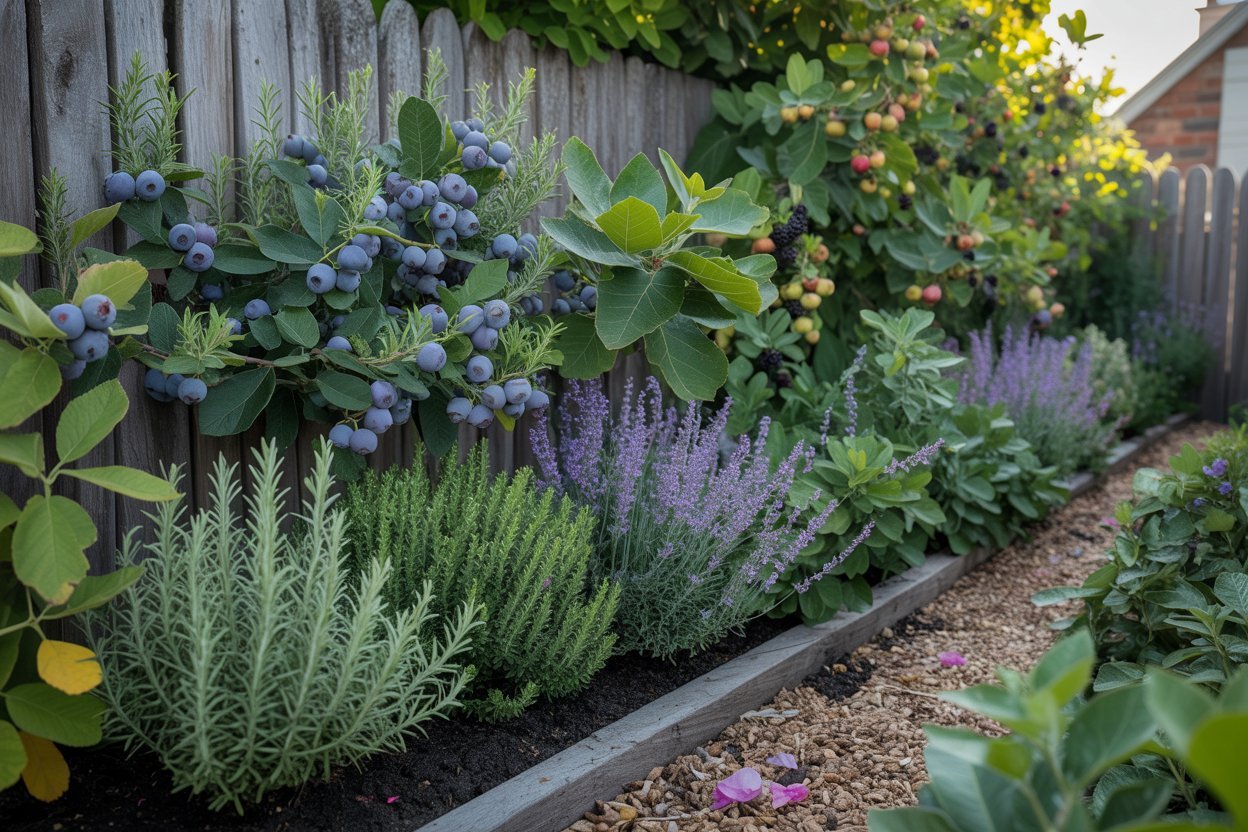

I still remember the first time I realized my garden hedge could be more than just a boundary. Years ago, I planted a row of shrubs simply to soften the edge of my yard and create a little privacy from the road.
At the time, I was focused on beauty lush green leaves, seasonal flowers, and that cozy feeling of being wrapped in nature. But one afternoon, while harvesting herbs for dinner, it struck me: why not let my hedge feed me too?
That single thought changed the way I gardened forever. Over time, my once purely ornamental hedge became a living pantry berries for breakfast, leaves for tea, blossoms for salads, and branches that hummed with pollinators.
An edible hedge doesn’t just mark space; it nourishes your body, supports wildlife, and turns everyday gardening into a deeply satisfying ritual.
In this post, I’ll walk you through 21 of the best edible hedge garden ideas, all thoughtfully chosen for beauty, productivity, and practicality.
Whether you have a sprawling backyard or a modest home garden, these ideas will help you design a hedge that’s as delicious as it is beautiful.
What Is an Edible Hedge Garden?
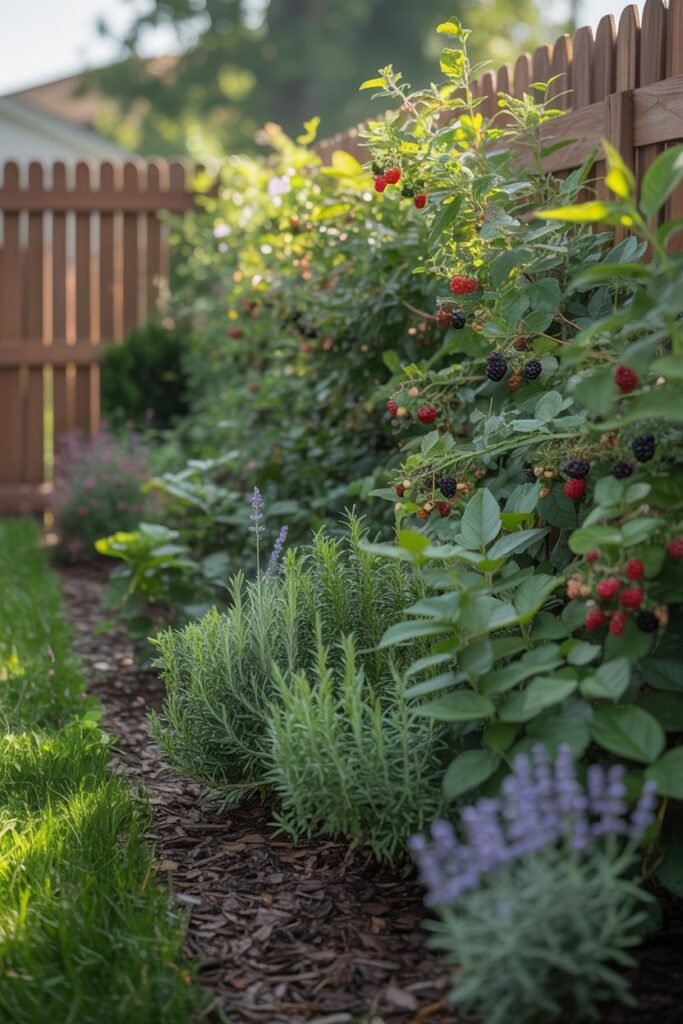
An edible hedge garden is a living fence or border made primarily from plants that produce food fruits, nuts, leaves, flowers, or medicinal parts while still functioning as a hedge.
Unlike traditional hedges that are trimmed purely for shape, edible hedges balance form and function.
They can be:
- Formal or informal, depending on pruning style
- Dense for privacy or loose and layered for biodiversity
- Decorative year-round, with flowers, foliage, and harvests across seasons
The magic of an edible hedge lies in its efficiency. One planting gives you privacy, wind protection, habitat for beneficial insects, and fresh food all in the same footprint.
Benefits of Growing an Edible Hedge
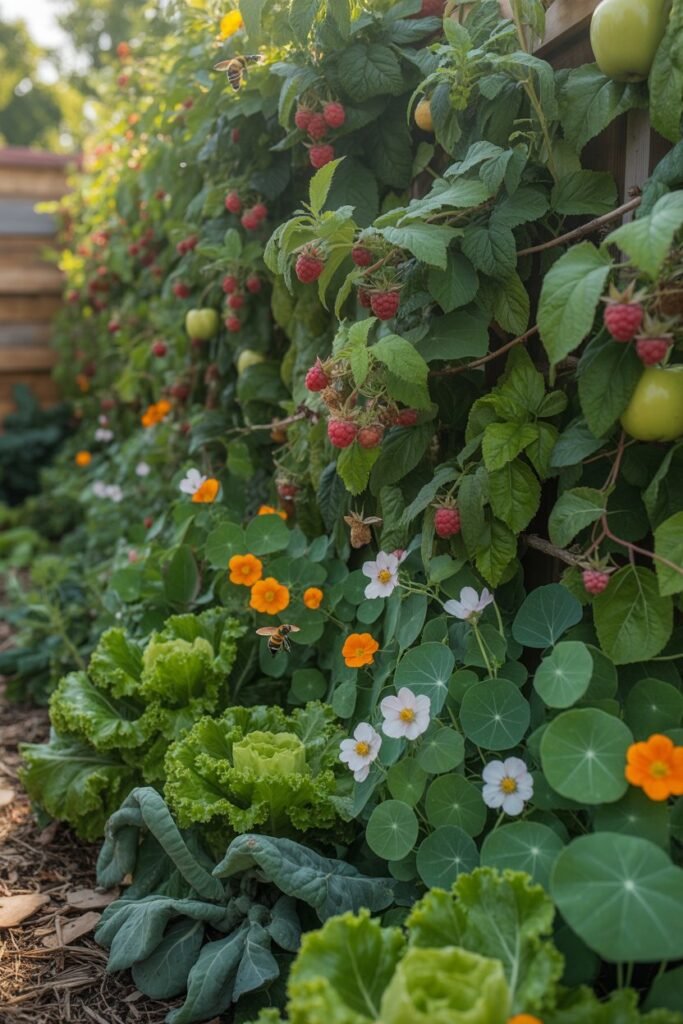
Before diving into the ideas, it’s worth understanding why edible hedges are such a powerful addition to a home garden.
1. Space-Saving Productivity
Edible hedges grow vertically and along boundaries, making them perfect for maximizing food production without sacrificing open garden space.
2. Natural Privacy and Security
Dense edible hedges can block views, reduce noise, and even deter intruders especially when planted with thorny or vigorous varieties.
3. Year-Round Beauty
Many edible hedge plants offer multi-season interest: spring flowers, summer fruit, autumn color, and winter structure.
4. Support for Pollinators
Flowering edible shrubs provide nectar and pollen, strengthening your entire garden ecosystem.
5. A Deeper Connection to Food
Harvesting from a hedge feels intimate and grounding. It’s food grown slowly, thoughtfully, and right outside your door.
How to Choose the Right Plants for Your Edible Hedge
When planning an edible hedge, consider these key factors:
- Climate and hardiness zone
- Sun exposure along the hedge line
- Soil quality and drainage
- Desired height and width
- Maintenance level you’re comfortable with
A successful edible hedge often combines multiple plant types shrubs, herbs, climbers, and small trees to create layers of abundance.
1. Rosemary Hedge
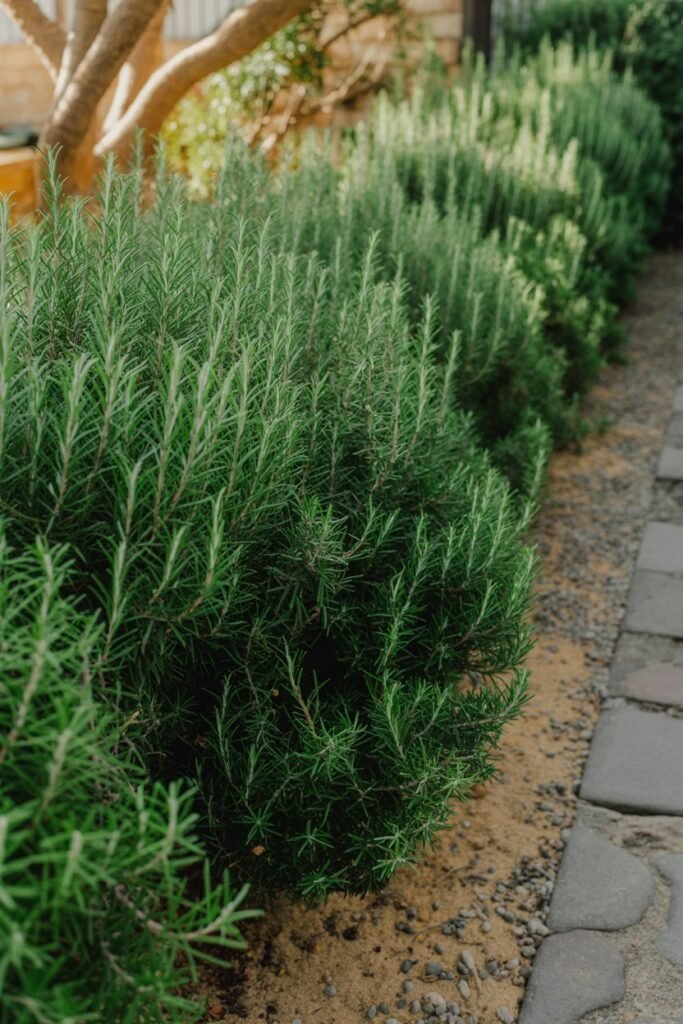
A rosemary hedge brings instant structure and soul to a garden. Its needle-like evergreen leaves stay beautiful year-round, and when brushed against, they release a grounding, piney fragrance that feels almost therapeutic.
Beyond its beauty, rosemary is one of the most useful culinary herbs you can grow. It thrives in full sun, tolerates drought once established, and responds well to regular trimming making it ideal for hedging.
Why I love it: It’s a hedge you harvest while you prune, turning maintenance into a gift.
2. Elderberry Hedge
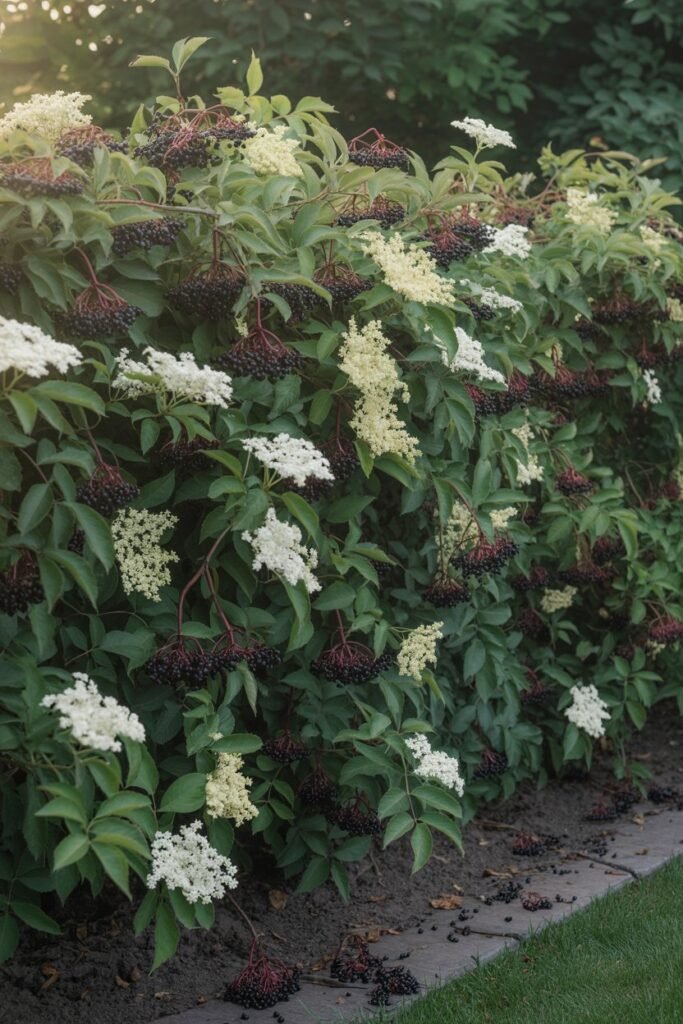
Elderberry hedges feel generous and wild in the best possible way. Their tall, arching branches create privacy quickly, while spring brings creamy flower clusters that glow softly in evening light.
As summer fades, those flowers turn into deep purple berries prized for syrups, teas, and immune-supporting remedies. Elderberries thrive in moist soil and can handle imperfect conditions.
Why I love it: It feels like planting both medicine and mystery along your property line.
3. Blueberry Hedge
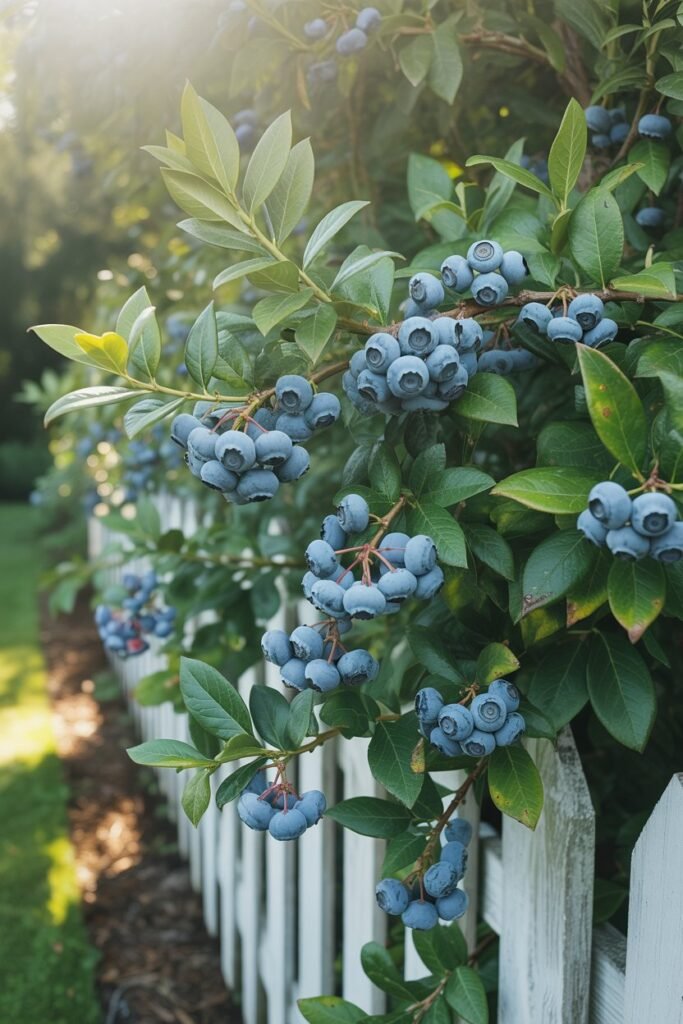
Blueberries make one of the most elegant edible hedges you can grow. Their glossy green leaves, delicate white flowers, and fiery fall color make them stunning in every season.
Beyond beauty, blueberries are incredibly productive. Once established, a mature hedge can provide bowls of sweet berries each summer.
They prefer acidic soil and consistent moisture, but with the right conditions, they’re surprisingly low-maintenance.
Why I love it: It feels like planting a dessert border pretty, practical, and deeply rewarding.
4. Bay Laurel Hedge
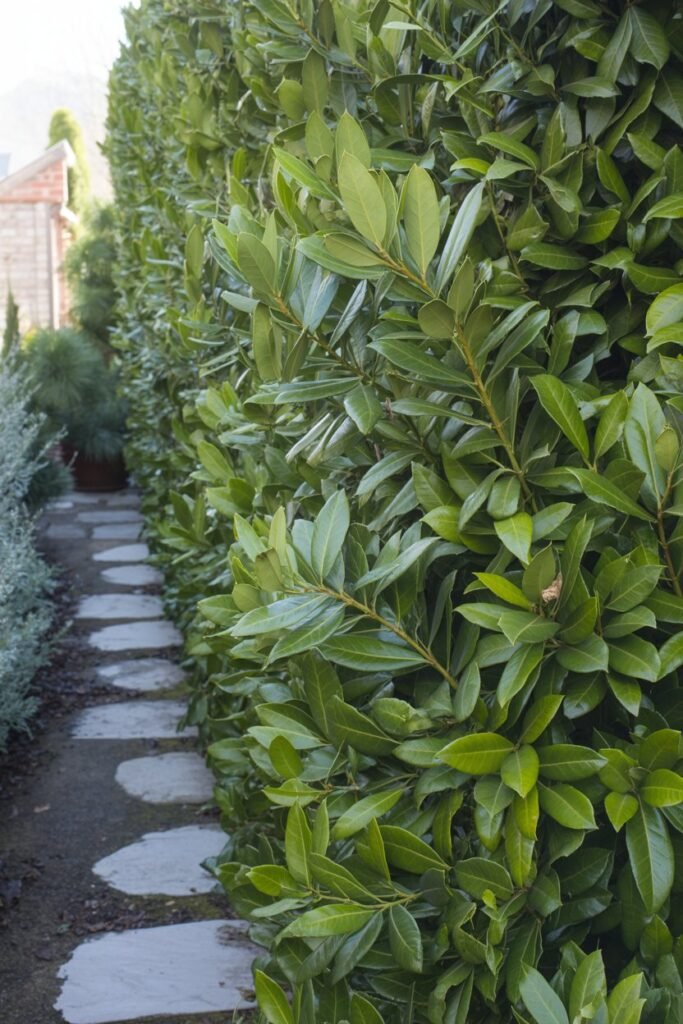
Bay laurel creates a refined, almost formal hedge with its deep green, glossy leaves. It clips beautifully, making it ideal for gardeners who appreciate tidy lines and structure.
Those same leaves are harvested for cooking, dried slowly, and stored for year-round use. Bay prefers mild climates and good drainage, but once settled, it’s remarkably resilient.
Why I love it: It’s elegance you can season your food with.
5. Raspberry Hedge
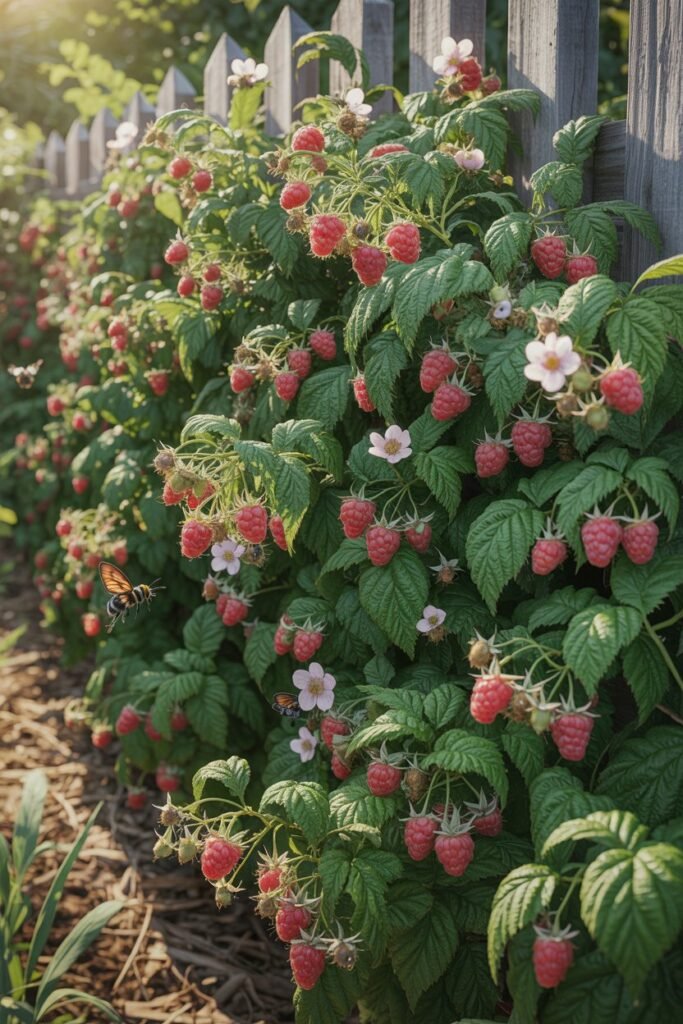
Raspberry hedges are energetic and abundant, forming dense canes that naturally define space. In spring, their soft white flowers attract pollinators, and by summer, the berries arrive in waves.
They spread readily, which makes them perfect for informal hedges or boundary planting. Regular pruning keeps them productive and manageable.
Why I love it: It’s a hedge that reminds you to snack while gardening.
6. Tea Camellia Hedge (Camellia sinensis)
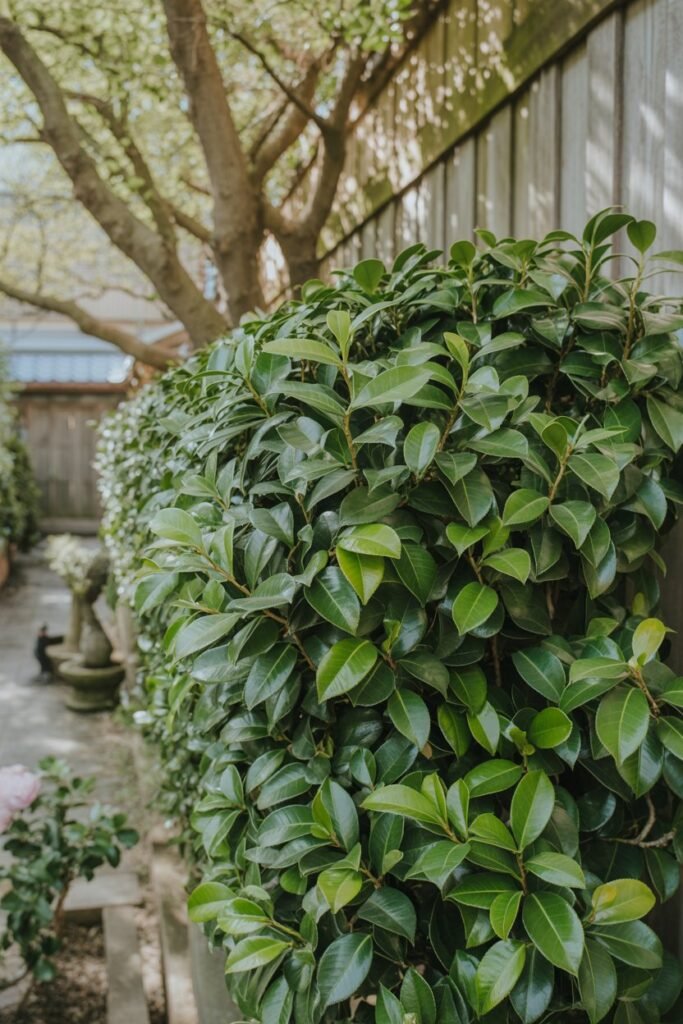
A tea hedge feels quietly luxurious. These evergreen shrubs form a neat, glossy hedge that looks ornamental even before you harvest a single leaf.
With patience, you can harvest young leaves and process them into homemade tea. Camellias prefer acidic soil and partial shade, thriving in calm, protected spaces.
Why I love it: It turns morning tea into a deeply personal ritual.
7. Currant Hedge (Red, Black, or White)
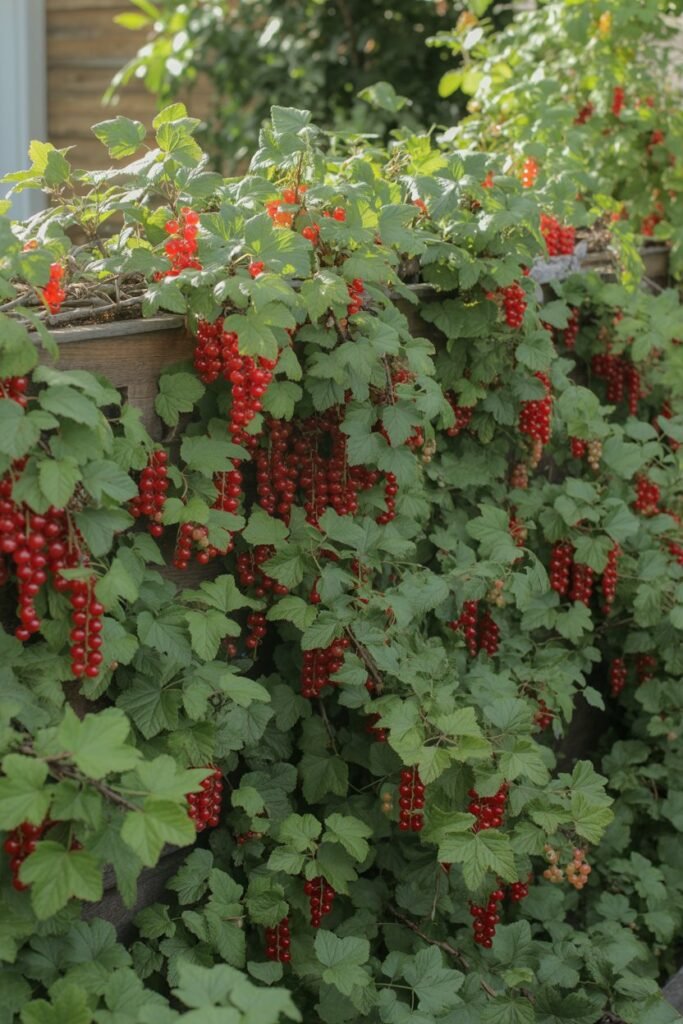
Currants form wonderfully tidy, soft-edged hedges that feel both intentional and generous.
In early spring, their delicate flowers quietly emerge easy to miss at first glance but soon they transform into cascading strings of jewel-toned berries that feel almost ornamental.
What makes currants especially valuable is their adaptability.
They tolerate cooler climates and partial shade far better than many fruiting shrubs, which makes them perfect for north-facing edges or areas where sunlight is limited.
With light annual pruning, they remain compact, productive, and graceful for many years.
Why I love it: It’s quiet abundance nothing flashy, just steady nourishment you can count on.
8. Fig Hedge
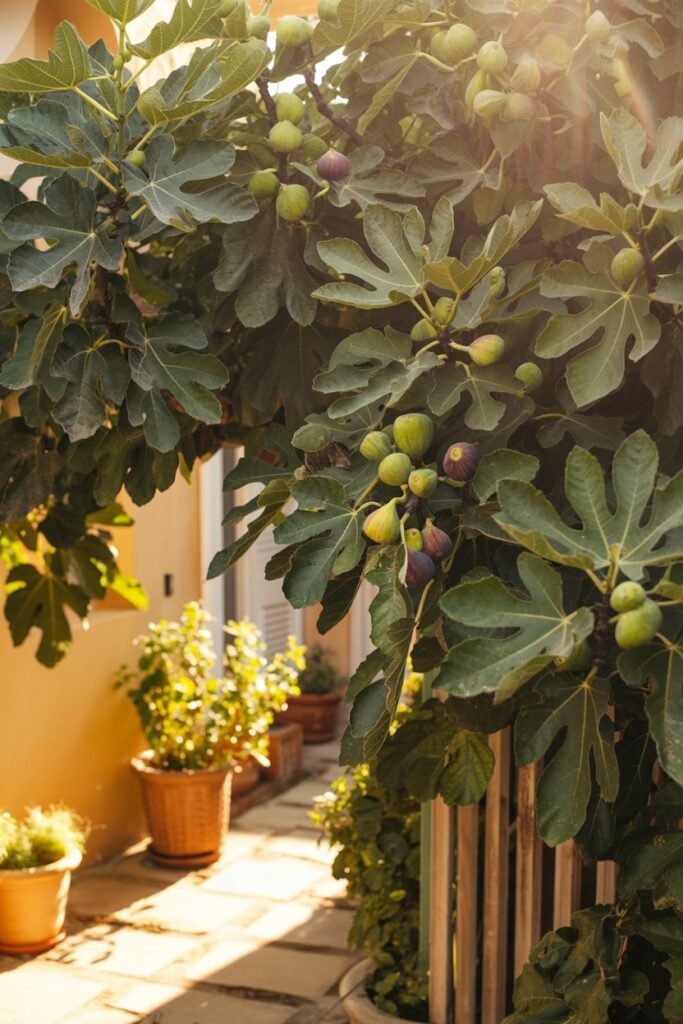
Fig hedges feel lush, grounding, and slightly dramatic, thanks to their large, textured leaves that create instant privacy and shade.
When trained as a hedge, figs soften hard boundaries and give the garden a relaxed, almost timeless feel.
In warm climates, figs thrive with minimal fuss, producing sweet, tender fruit that tastes incomparable when harvested straight from the branch. Regular pruning keeps growth manageable while encouraging better fruiting along accessible branches.
Why I love it: It feels like bringing a Mediterranean garden home warm, generous, and deeply satisfying.
9. Lavender & Culinary Herb Hedge
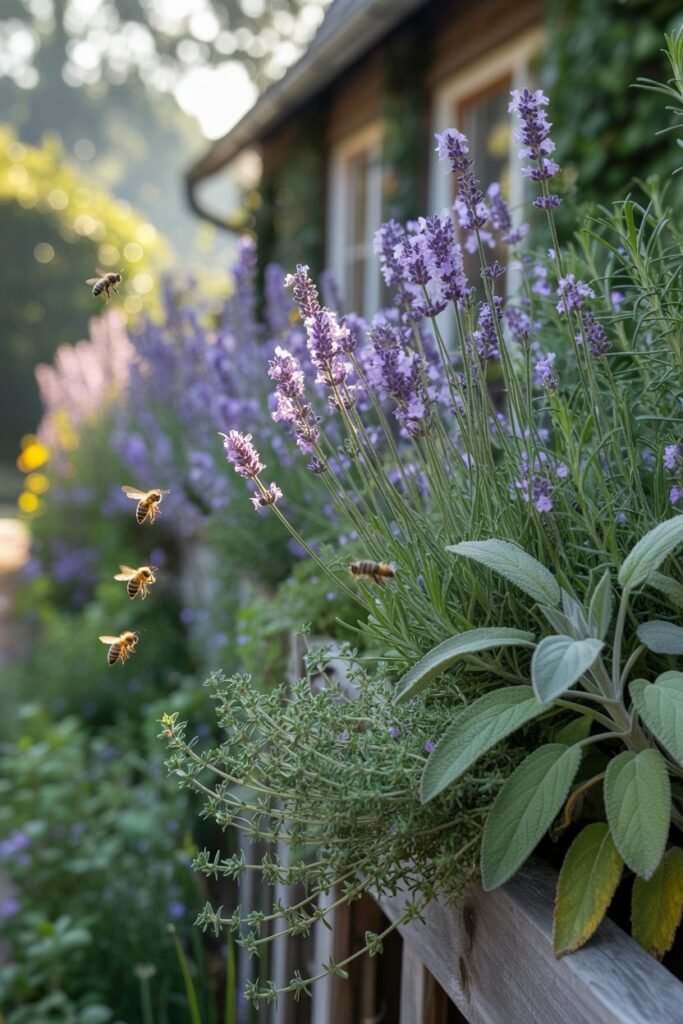
This soft, silvery hedge blends lavender with sage, thyme, and oregano to create a border that’s as romantic as it is practical.
When in bloom, the hedge hums with bees and releases calming fragrance into the air, turning even simple pathways into sensory experiences.
Most culinary herbs thrive in full sun and well-drained soil, making this hedge ideal for dry or low-water gardens. Regular harvesting keeps the plants compact while encouraging fresh, flavorful growth.
Why I love it: It feeds the senses as much as the kitchen, making everyday moments feel intentional.
10. Hazelnut Hedge
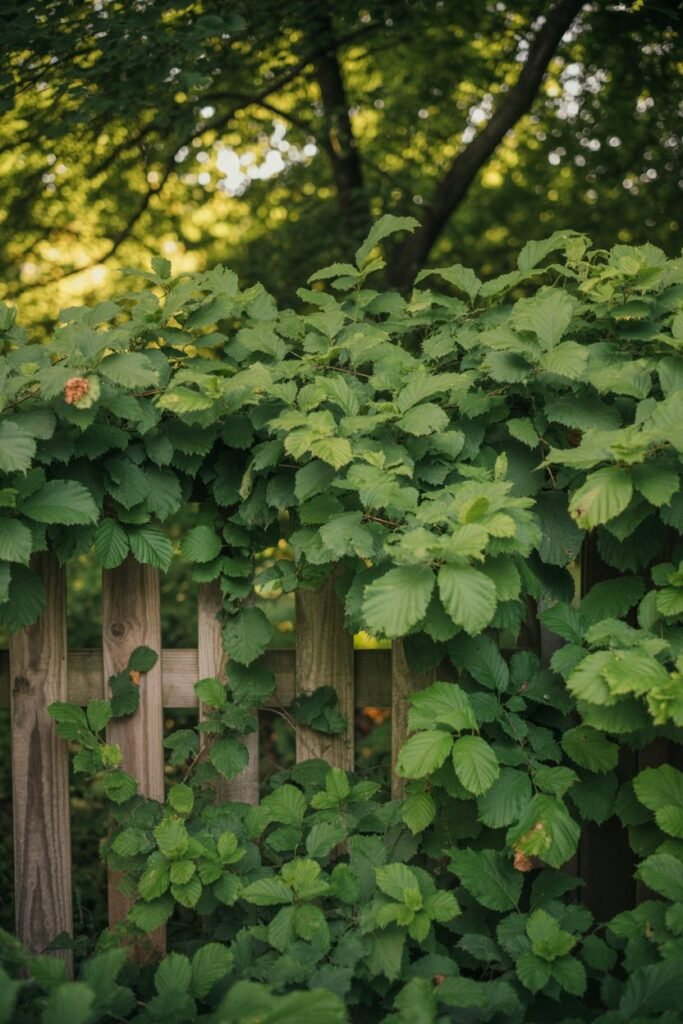
Hazelnuts grow into strong, multi-stemmed shrubs that create excellent natural screening.
Their broad leaves give a soft woodland feel, while their dense growth makes them ideal for long-term boundary planting.
Though hazelnuts take time to mature, they reward patience with nutrient-rich nuts and valuable habitat for wildlife. Once established, they’re resilient, low-maintenance, and long-lived.
Why I love it: It feels like planting for future generations rather than instant gratification.
11. Gooseberry Hedge
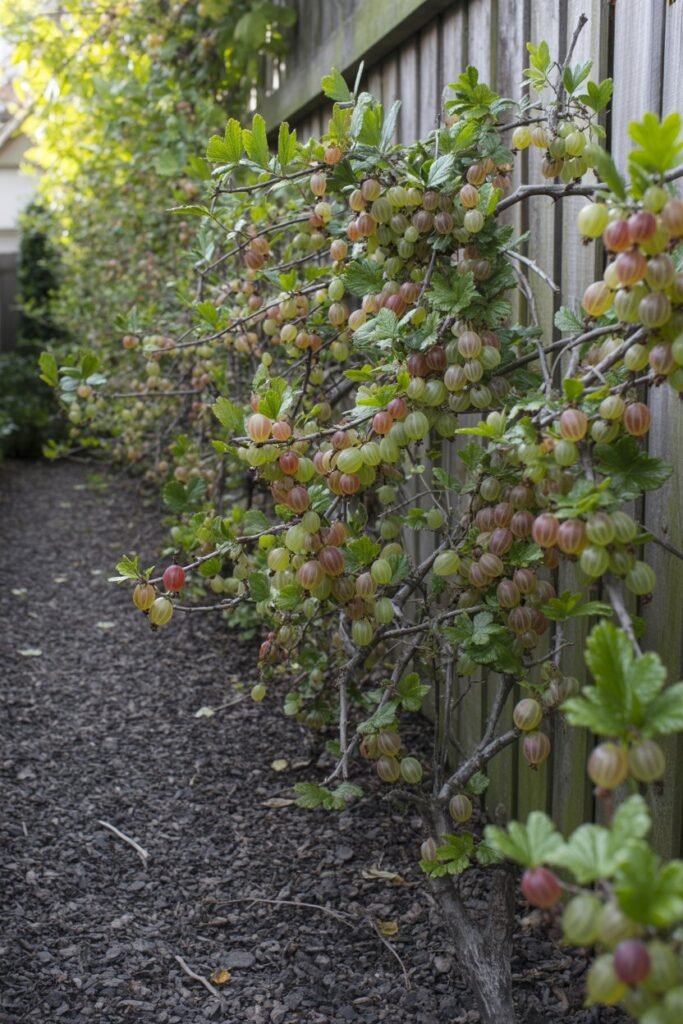
Gooseberries form compact, thorny hedges that naturally define space and deter unwanted foot traffic.
Their fruit varies from sweet to pleasantly tart, making them perfect for fresh eating, jams, and traditional desserts.
They handle partial shade better than many berry plants and stay manageable with simple pruning, which makes them ideal for smaller gardens or awkward spaces.
Why I love it: It’s small-space friendly with a bold, confident personality.
12. Serviceberry Hedge
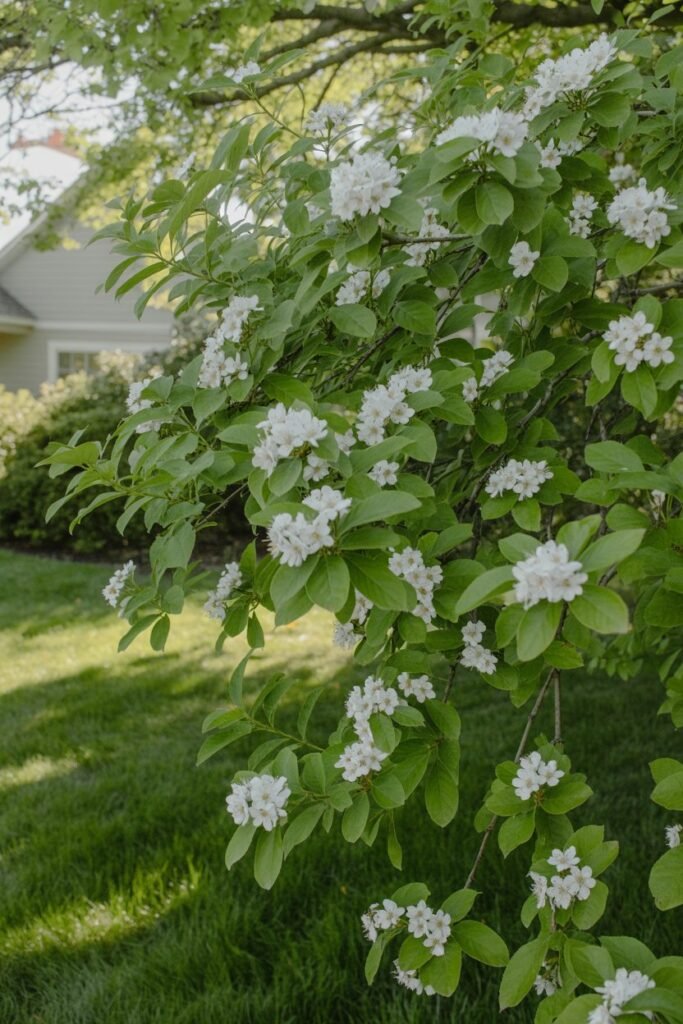
Serviceberries bring an airy elegance to edible hedging. In early spring, they erupt in clouds of white blossoms, followed by sweet berries and some of the most beautiful fall color you’ll ever see.
Rather than forming a heavy wall, serviceberries create a light, welcoming hedge that frames space without closing it in perfect for front yards or shared boundaries.
Why I love it: It’s a hedge that evolves gracefully with the seasons.
13. Citrus Hedge (Warm Climates)
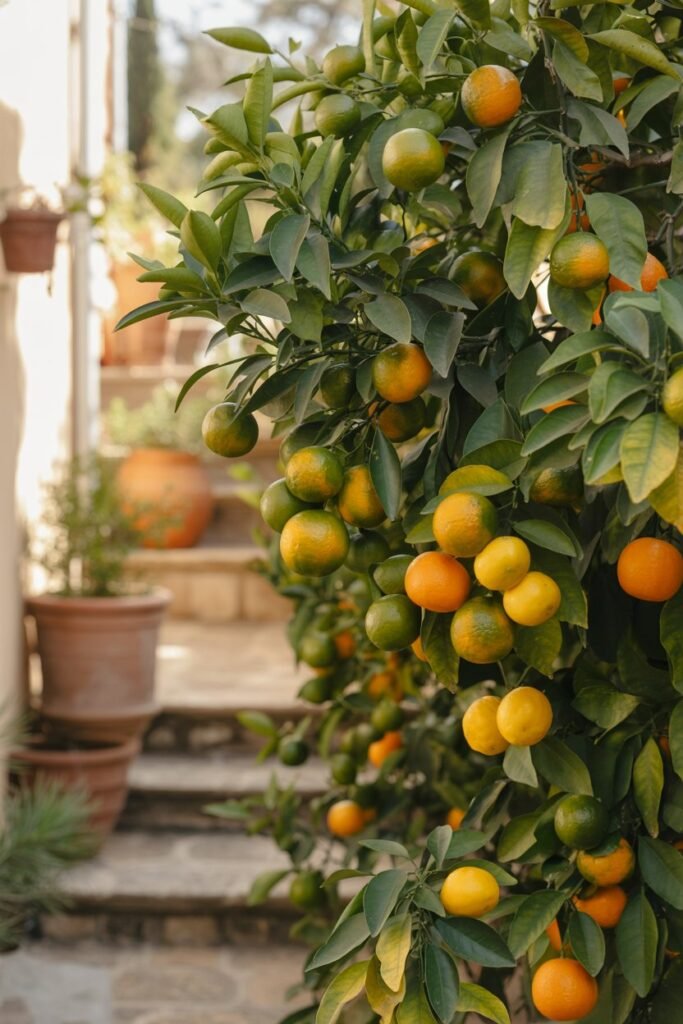
Citrus hedges are evergreen, glossy, and endlessly cheerful. Their fragrant blossoms perfume the air long before fruit appears, adding beauty even when the hedge isn’t in harvest season.
Compact varieties thrive best when planted in sunny, sheltered locations. With proper spacing and pruning, citrus can form a dense yet elegant edible screen.
Why I love it: It feels joyful and alive year-round, even in winter.
14. Rosehip Hedge
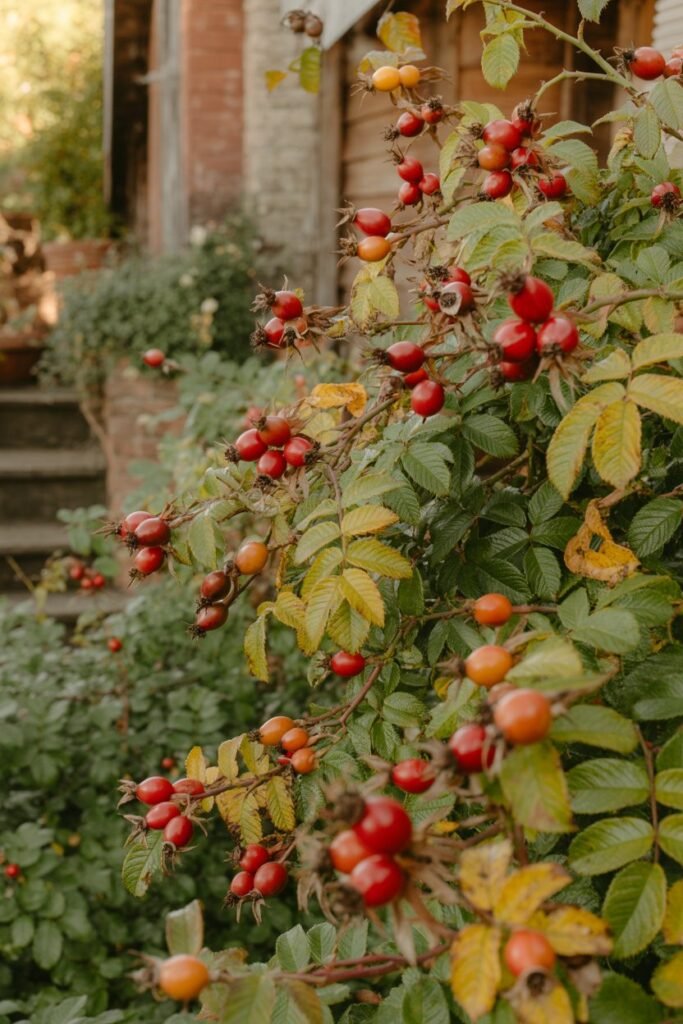
Rosehip hedges combine old-world romance with rugged resilience. Delicate spring blooms give way to vivid hips that glow against fading foliage in autumn.
These hedges tolerate poor soil, wind, and neglect better than many fruiting plants, making them ideal for exposed or challenging sites.
Why I love it: It’s a love letter to traditional gardens and forgotten nourishment.
15. Mulberry Hedge
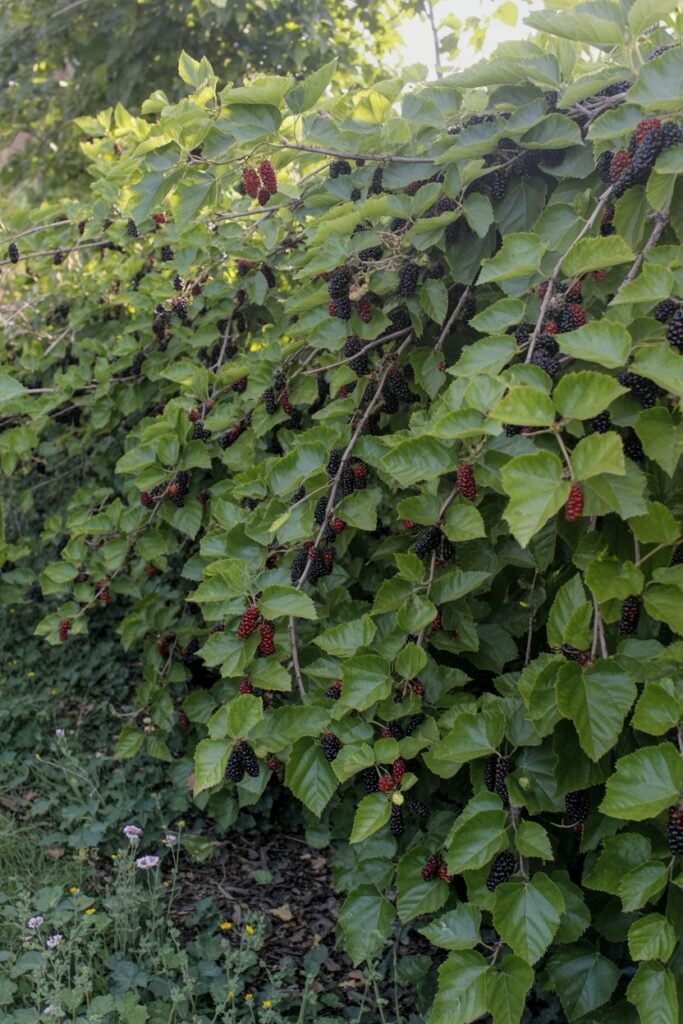
Mulberries grow quickly and produce fruit generously, often with very little encouragement. With regular pruning, they adapt beautifully to hedge form rather than becoming towering trees.
They’re especially well-suited for wildlife-friendly gardens, offering food for birds while still providing plenty for the gardener.
Why I love it: It’s joyful, slightly messy abundance just like nature intended.
16. Aronia (Chokeberry) Hedge
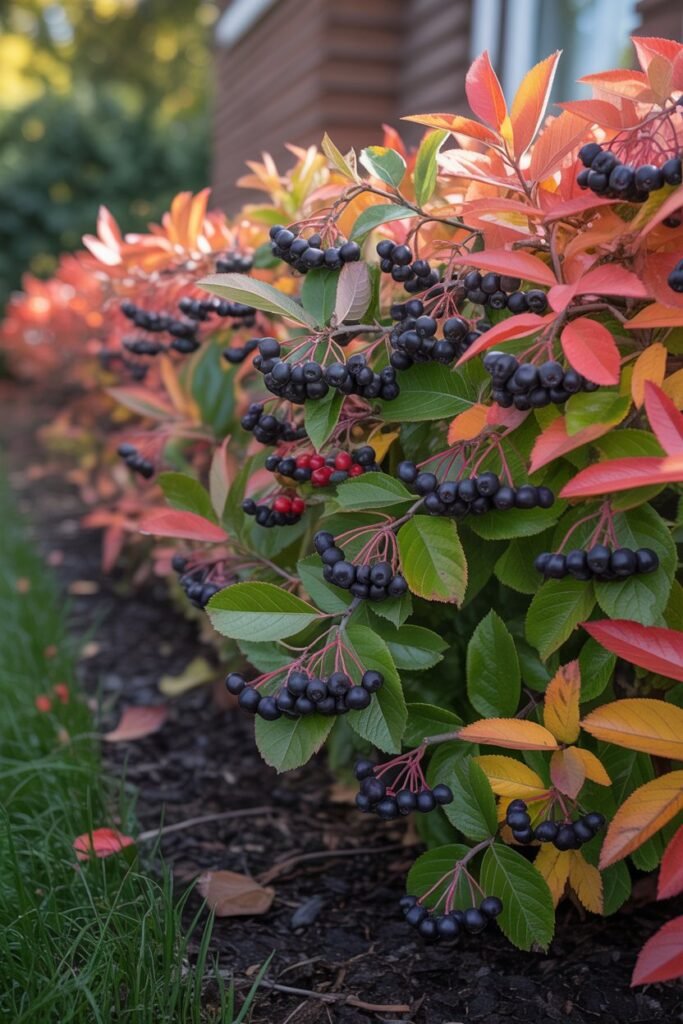
Aronia shrubs are incredibly tough, making them ideal for gardeners who want beauty without constant upkeep. Their glossy leaves and dramatic fall color give them strong ornamental value.
The berries are tart but packed with nutrients, perfect for juices, syrups, and preserves.
Why I love it: It thrives even when life gets busy.
17. Pomegranate Hedge
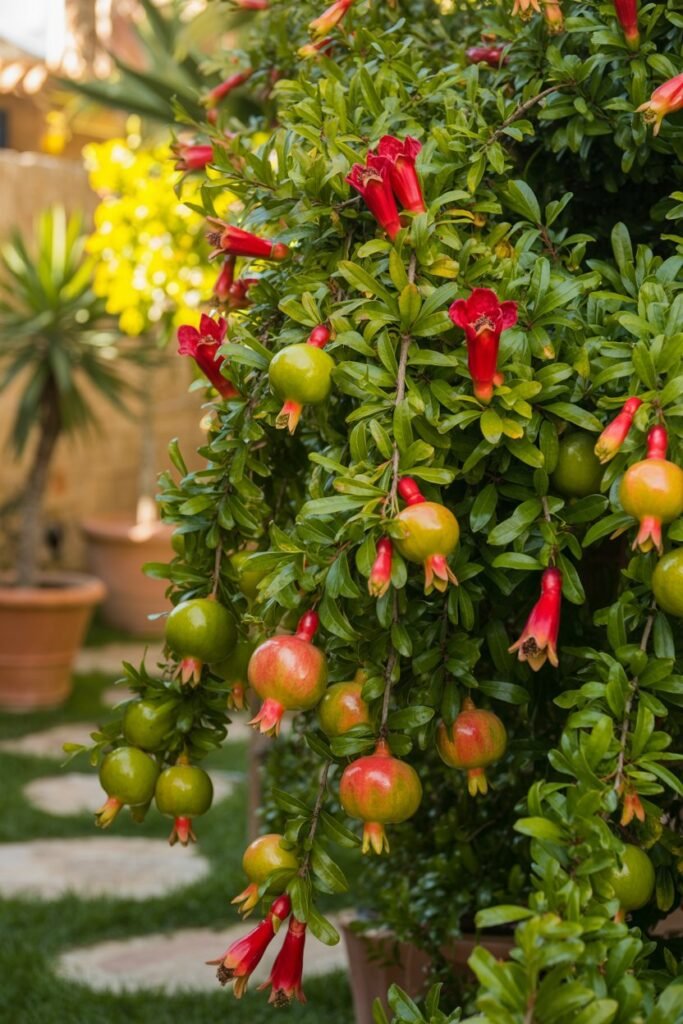
Pomegranates create bold, unforgettable hedges in warm climates. Their bright flowers feel celebratory, while the fruit adds a jewel-like quality to the garden.
Once established, they tolerate drought well and respond beautifully to shaping.
Why I love it: It feels festive, bold, and unapologetically abundant.
18. Bamboo Shoot Hedge (Edible Varieties Only)
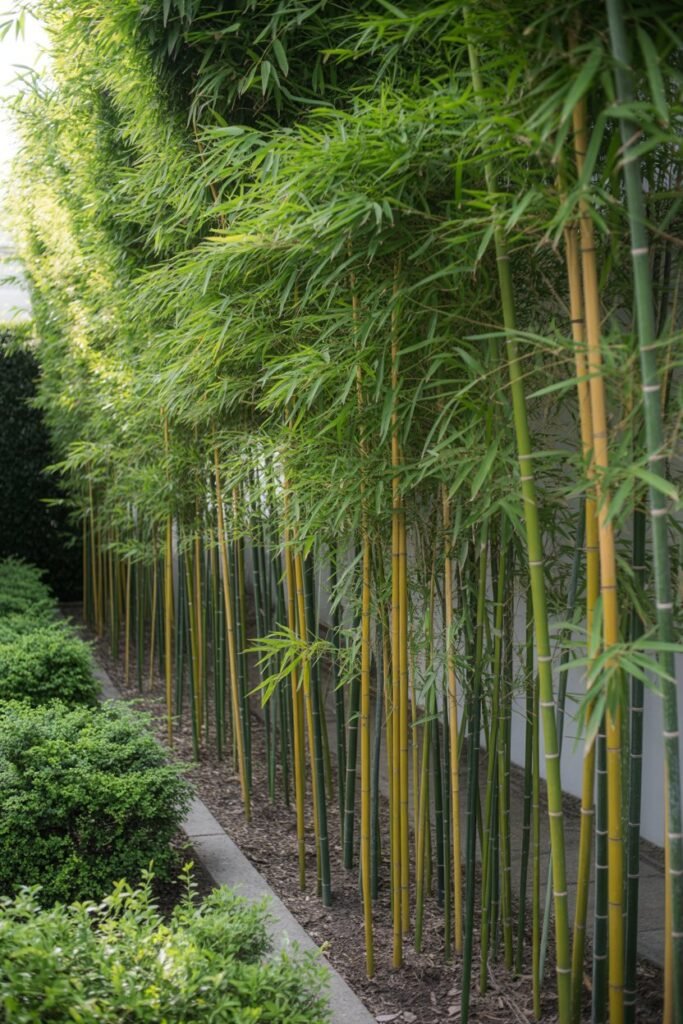
Edible bamboo creates fast-growing privacy while also producing tender shoots prized in cooking. When properly contained, it can be both striking and practical.
This hedge is best for gardeners who enjoy active management and bold design choices.
Why I love it: It’s dramatic, architectural, and deeply functional.
19. Perennial Green Hedge
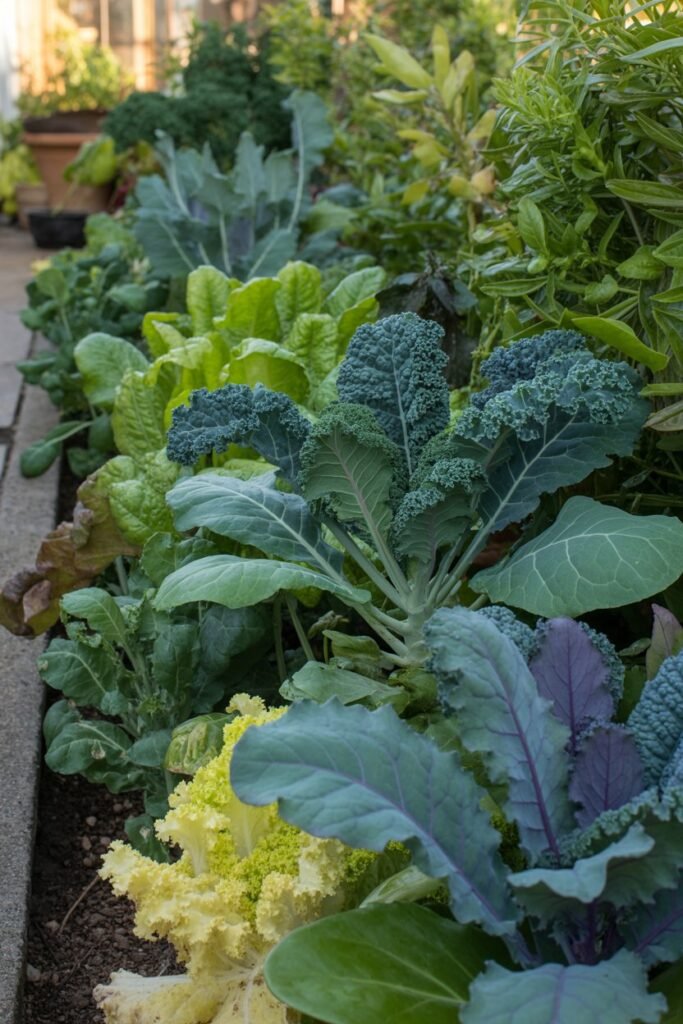
Perennial greens like sorrel, perennial kale, and tree spinach form soft, harvestable hedges that provide daily nourishment. Their leafy texture feels gentle and approachable.
Placed near kitchens or walkways, they encourage frequent harvesting and mindful eating.
Why I love it: It’s everyday food within arm’s reach.
20. Mixed Berry Hedge
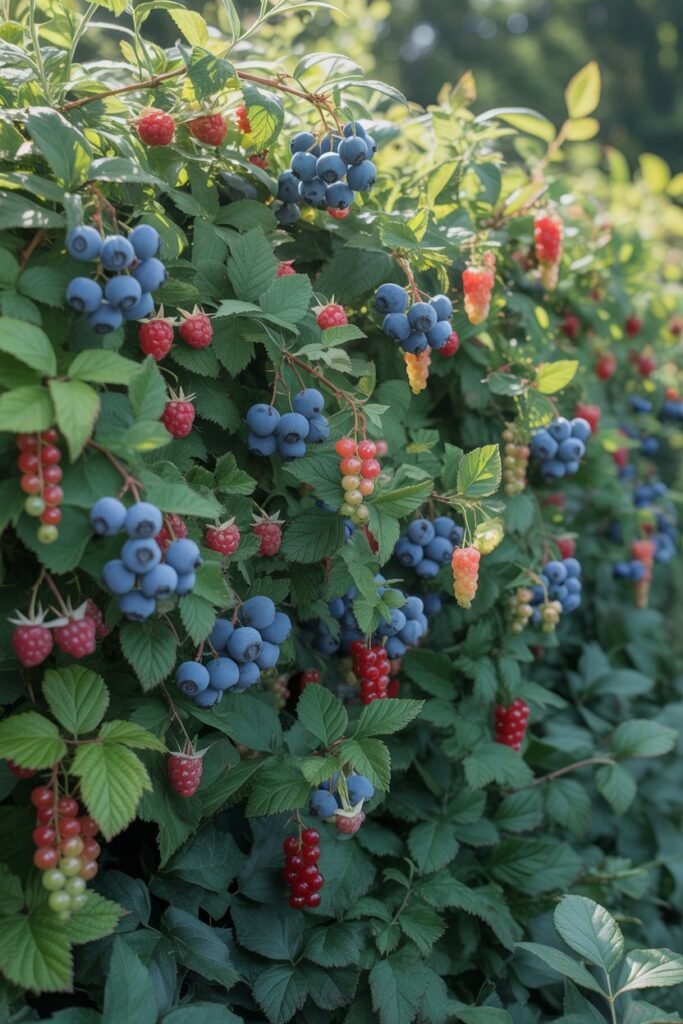
A mixed berry hedge combines different species to create resilience and extended harvests. Flowering times overlap, pollination improves, and pests are less of an issue.
This layered approach mimics natural ecosystems while offering a steady stream of fruit throughout the season.
Why I love it: It’s diversity doing the hard work for you.
21. Forest-Style Edible Hedge
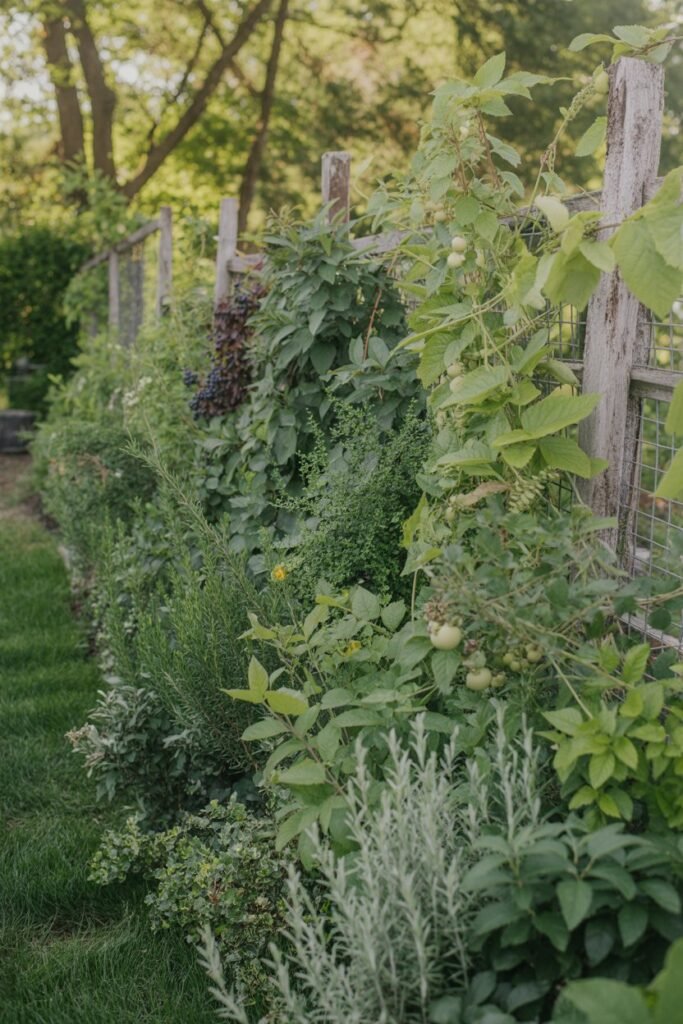
Inspired by woodland edges, this hedge blends fruiting shrubs, herbs, climbers, and groundcovers into one living boundary. It’s loose, layered, and full of life.
Rather than strict pruning, it relies on balance and observation, creating abundance that feels effortless.
Why I love it: It feels alive, intuitive, and deeply nourishing.
Final Thoughts: A Hedge That Truly Gives Back
An edible hedge is more than a boundary it’s a relationship you build over time.
With every season, it offers nourishment, beauty, and quiet reassurance that abundance can live right at the edges of our lives.
