
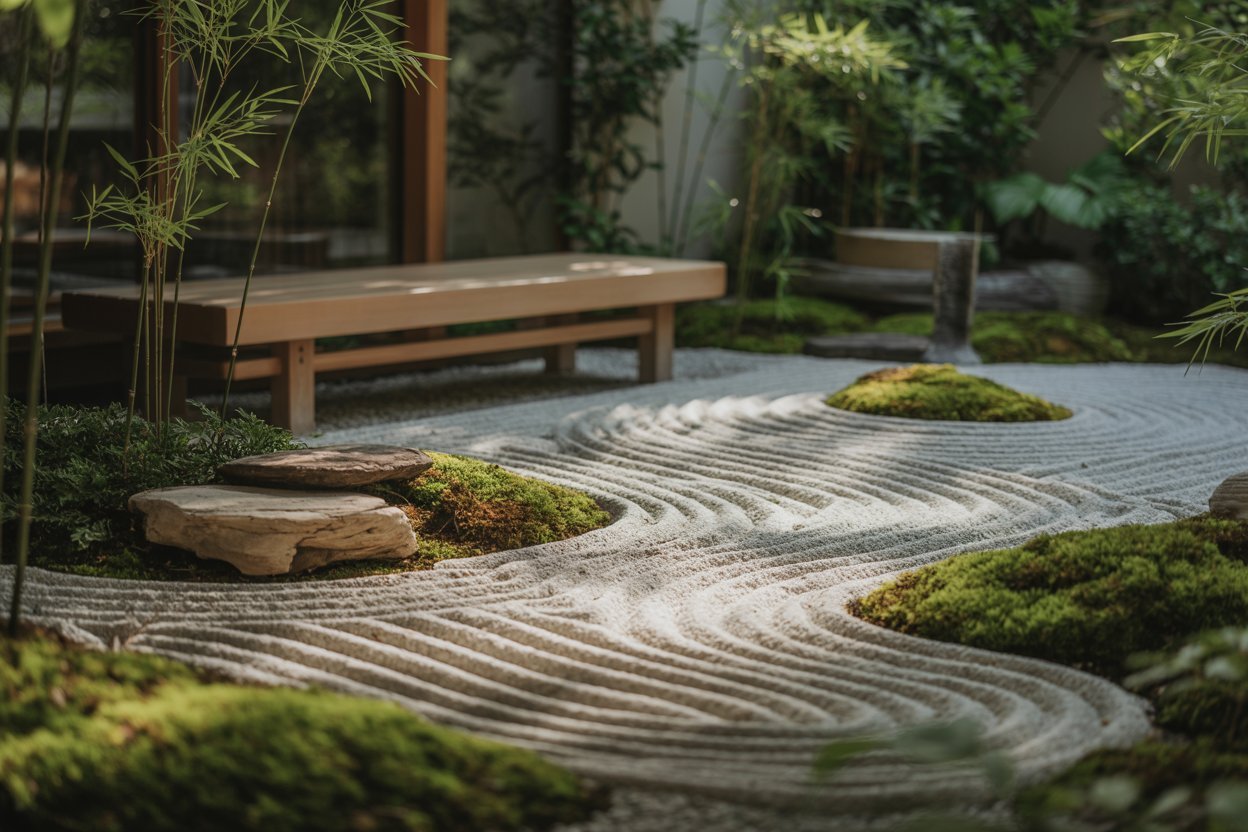

My love for Zen gardens didn’t begin with design books or Pinterest boards. It started on a quiet afternoon when I noticed how different my body felt after spending time tending a small gravel corner in my garden.
No bright flowers. No loud colors. Just raked lines, a single stone, and the soft whisper of bamboo leaves overhead.
That tiny space became my refuge a place where the noise of life softened and my thoughts finally slowed down.
Over the years, as I’ve designed gardens for myself and others, I’ve learned that Zen gardens aren’t about perfection or expensive materials.
They’re about intention. Every stone has a reason. Every plant has a purpose. Every empty space is just as meaningful as what fills it.
In this post, I’m sharing 18 stylish Zen garden design ideas that balance beauty with stillness.
These are designs that work in real homes small backyards, courtyards, side yards, patios, and even quiet corners that need a sense of peace.
I’ll walk you through what each design represents, why it works, and exactly what you need to bring it to life.
Let’s begin with the first five the foundations of Zen-inspired outdoor spaces.
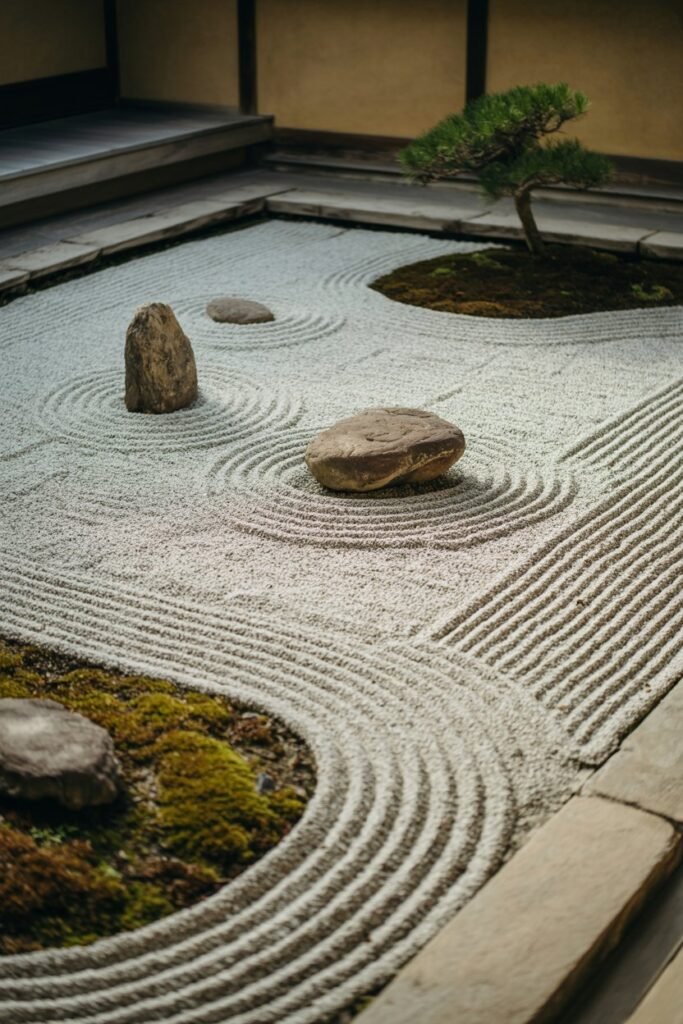
1. Classic Raked Gravel Zen Garden
Why This Design Is So Powerful
This is the heart of Zen garden design simple, grounding, and deeply symbolic. Raked gravel represents water, movement, and the flow of life.
The repetitive motion of raking is meditative, making this garden as healing to maintain as it is to admire.
I always recommend this style to gardeners who crave calm but don’t want high maintenance plants. It teaches you to slow down and be present, even on busy days.
What You Need to Achieve This Design
- Fine gravel or crushed granite (white, cream, or light gray works best)
- Large natural stones or boulders (odd numbers feel more organic)
- A wooden or bamboo rake with wide tines
- A defined border (wooden edging, stone edging, or concrete curb)
- Minimal greenery (optional moss or low ground cover near stones)
Design Tips from Experience
- Avoid symmetry. Nature never places stones in straight lines.
- Leave generous empty space restraint is the beauty here.
- Rake patterns slowly and intentionally; straight lines feel calm, while curved lines feel fluid.
This design works beautifully in front yards, side gardens, or quiet backyard corners where silence feels welcome.
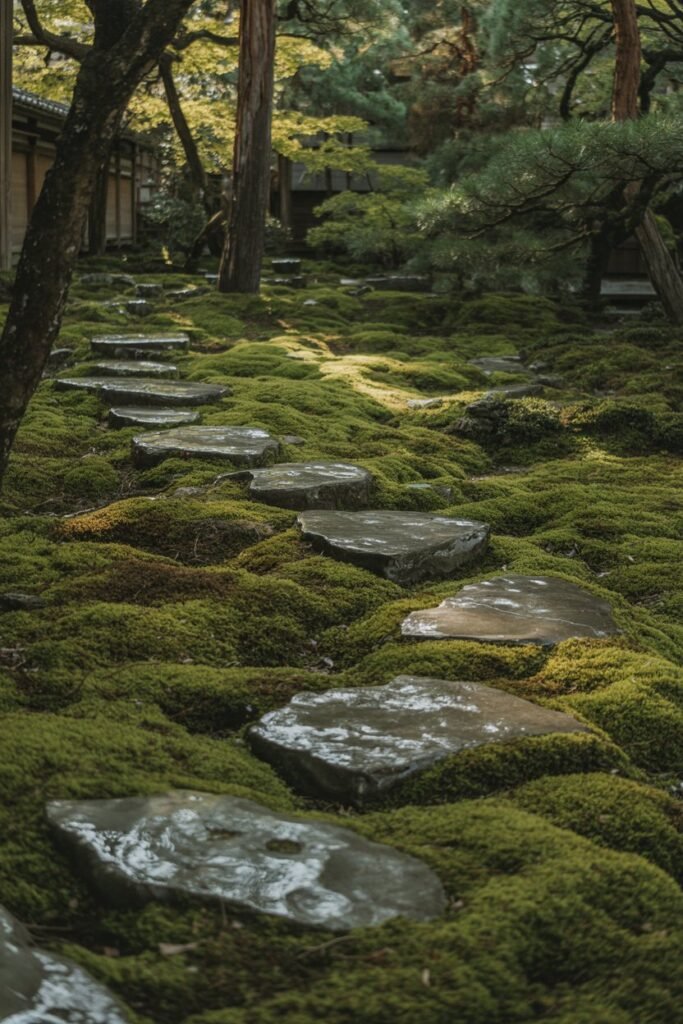
2. Moss and Stone Zen Retreat
Why This Design Feels So Sacred
Moss gardens feel ancient, like they’ve existed long before us. They soften the landscape and invite quiet contemplation.
I often suggest this design for shaded gardens where grass struggles to grow it transforms a challenge into something magical.
This style feels deeply feminine to me nurturing, gentle, and alive in subtle ways.
What You Need to Achieve This Design
- Shade-tolerant moss varieties (sheet moss or cushion moss)
- Flat stepping stones or irregular stone slabs
- Moist, well-prepared soil with good drainage
- A consistent water source (mist sprayer or drip irrigation)
- Natural stone lantern or small statue (optional but beautiful)
Design Tips from Experience
- Moss thrives in calm, shaded areas avoid full sun.
- Keep foot traffic limited; stepping stones protect the moss.
- Let leaves fall naturally they add to the aged beauty.
This Zen garden design is perfect for wooded backyards, courtyards, or spaces beside a meditation room or reading nook.
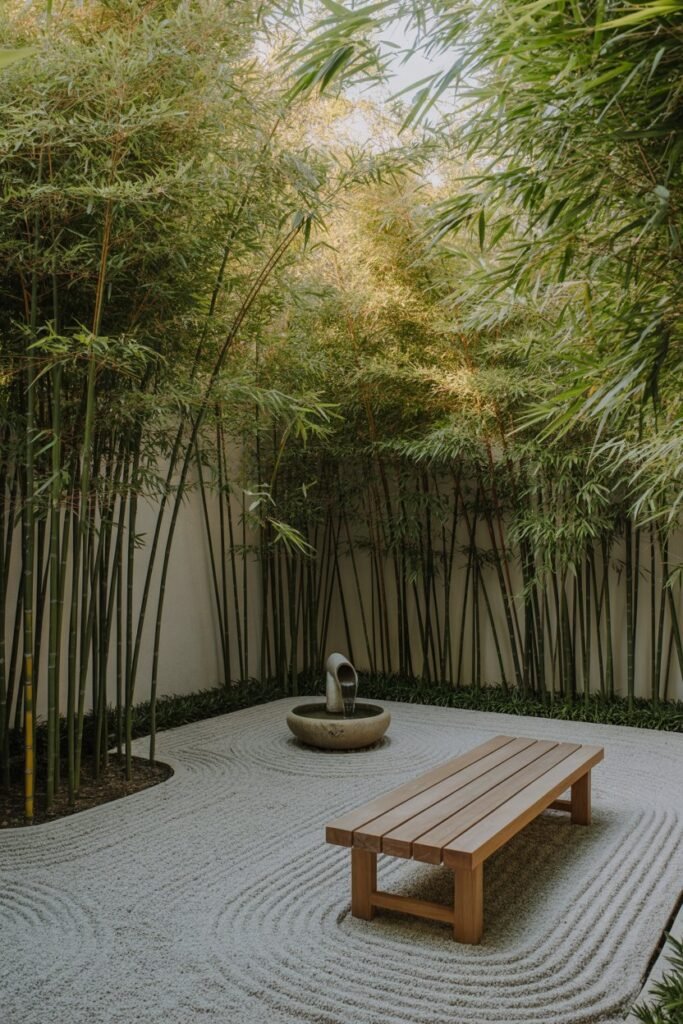
3. Bamboo Privacy Zen Garden
Why This Design Works So Well
Zen gardens often need a sense of enclosure to feel peaceful. Bamboo creates a living wall that blocks noise, movement, and distraction while adding gentle sound as it sways in the breeze.
I’ve used bamboo gardens for clients who wanted privacy without feeling boxed in and the result is always calming and elegant.
What You Need to Achieve This Design
- Clumping bamboo varieties (never running bamboo)
- Planters or in-ground planting beds
- Gravel or natural stone ground cover
- Simple bench or wooden seat
- Water feature (optional) like a bamboo fountain
Design Tips from Experience
- Always choose clumping bamboo to avoid invasiveness.
- Space plants carefully overcrowding reduces airflow.
- Pair bamboo with stone to keep the design balanced and grounded.
This design is ideal for urban gardens, small backyards, or homes close to neighbors.
4. Stone Pathway Meditation Garden
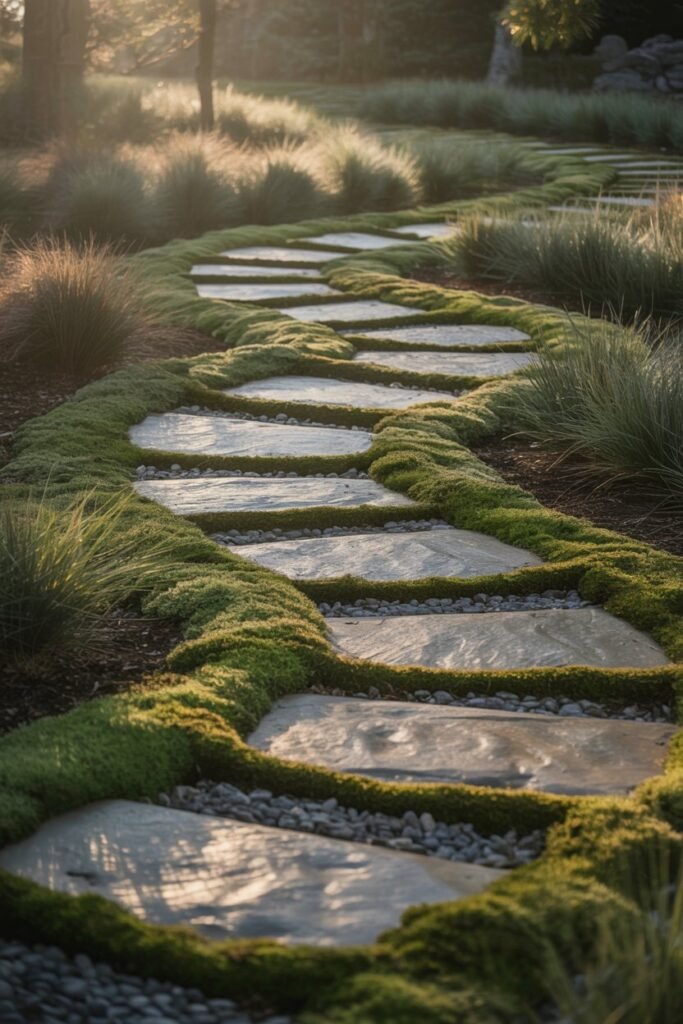
Why This Design Encourages Mindfulness
Walking slowly along a stone path forces you to be present. Each step becomes intentional. I love this design for people who struggle to “switch off” movement helps quiet the mind.
Stone pathways are symbolic of life’s journey, making this Zen garden deeply personal.
What You Need to Achieve This Design
- Stepping stones or flagstone slabs
- Gravel, moss, or sand between stones
- Low plants (Japanese forest grass, dwarf mondo grass)
- Soft lighting (solar lanterns or low-voltage lights)
- Clear start and end point (bench, statue, or tree)
Design Tips from Experience
- Space stones to slow your pace, not rush it.
- Curve the path gently straight lines feel rigid.
- Keep surrounding plants low and uncluttered.
This style works beautifully in long narrow gardens, side yards, or leading to a quiet seating area.
5. Minimal Water Feature Zen Garden
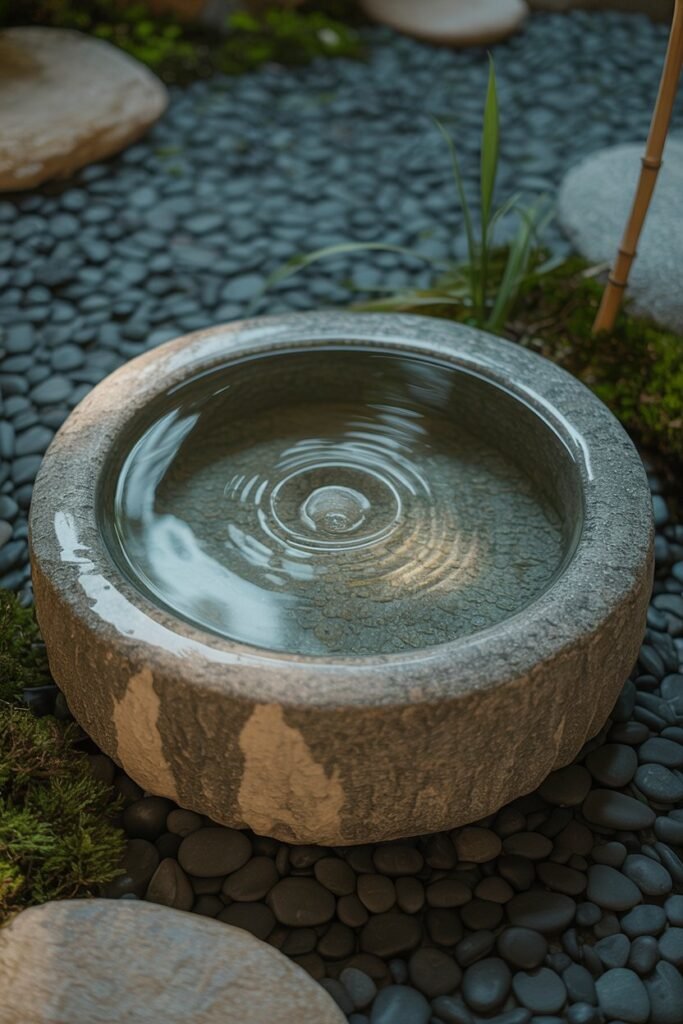
Why Water Changes Everything
Even the softest trickle of water transforms a space. It masks noise, cools the air, and invites stillness. In Zen philosophy, water represents renewal and flow something we all need more of.
I’ve seen stressed homeowners visibly relax the moment they hear water in their garden.
What You Need to Achieve This Design
- Small fountain, basin, or bamboo water spout
- Submersible pump
- Smooth river stones or pebbles
- Simple plant accents (ferns, grasses, or bonsai)
- Electrical or solar power source
Design Tips from Experience
- Keep water features simple avoid dramatic splashes.
- Hide pumps and cords for a clean look.
- Regular cleaning keeps water clear and peaceful.
This design fits beautifully in courtyards, patios, or meditation spaces near the home.
6. Courtyard Zen Garden with Central Stone Feature
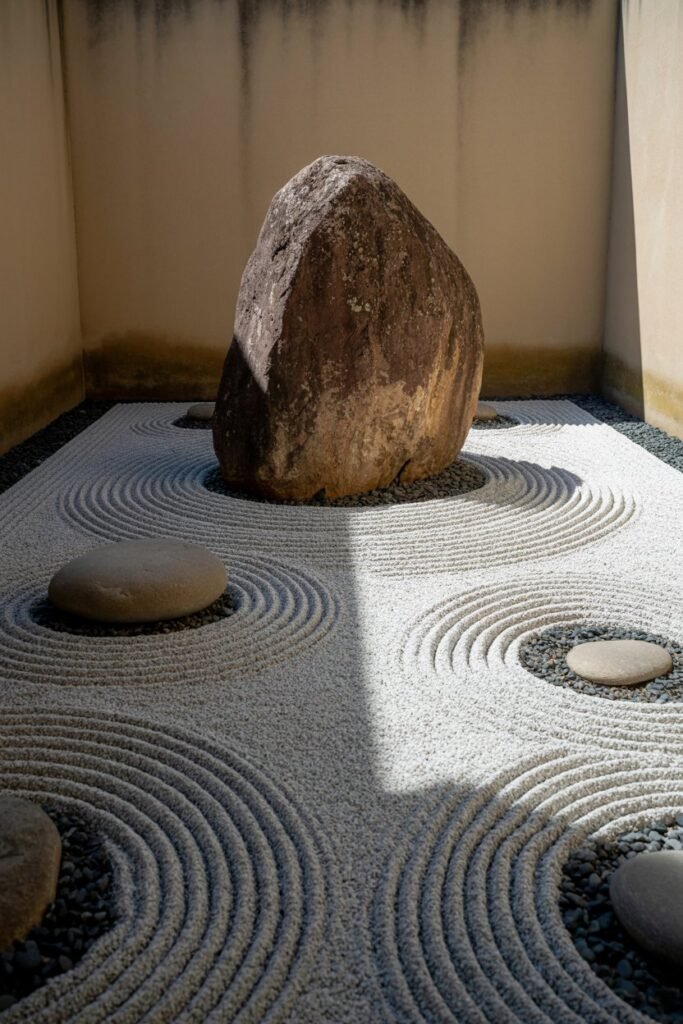
Why This Design Feels So Grounding
A central stone feature acts like an anchor emotionally and visually. In Zen design, stones symbolize strength, permanence, and stability.
I’ve always found that having one dominant stone in a courtyard helps the space feel complete, even when everything else is minimal.
This design is especially comforting for homes where the courtyard is visible from multiple rooms. No matter where you stand, your eyes rest on something steady and calm.
What You Need to Achieve This Design
- One large natural stone or sculptural boulder
- Gravel or sand base (neutral tones)
- Low surrounding stones for balance
- Defined courtyard walls or fencing
- Soft accent plants (moss, dwarf shrubs, or ferns)
Design Tips from Experience
- Choose a stone with natural character cracks, texture, or asymmetry.
- Keep surrounding elements lower than the centerpiece.
- Rake gravel outward from the stone to emphasize its importance.
This design works beautifully in inner courtyards, atriums, and enclosed patios.
7. Zen Garden with Wooden Deck and Seating
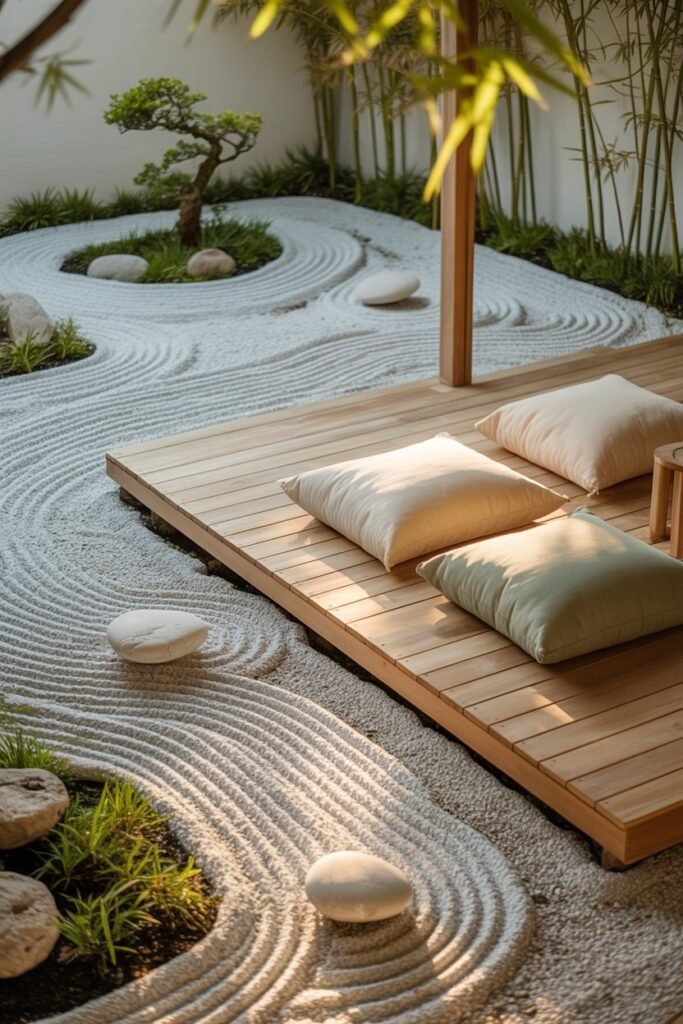
Why This Design Feels Inviting
Zen gardens don’t need to be admired from afar they should be lived in. A wooden deck brings warmth and allows you to sit, breathe, and stay awhile.
I love this design for morning tea rituals or quiet evenings when the garden becomes part of daily life.
Wood adds a feminine softness that balances stone and gravel perfectly.
What You Need to Achieve This Design
- Natural wood decking (cedar, teak, or treated pine)
- Low-profile seating or floor cushions
- Gravel or stone border around the deck
- Minimal plants (ornamental grasses or bonsai)
- Soft outdoor lighting
Design Tips from Experience
- Keep the deck low to maintain a grounded feeling.
- Avoid bulky furniture simplicity keeps the energy calm.
- Regular oiling preserves the wood’s natural beauty.
This Zen garden design is ideal for backyards, patios, or transitional indoor–outdoor spaces.
8. Japanese Lantern Zen Garden
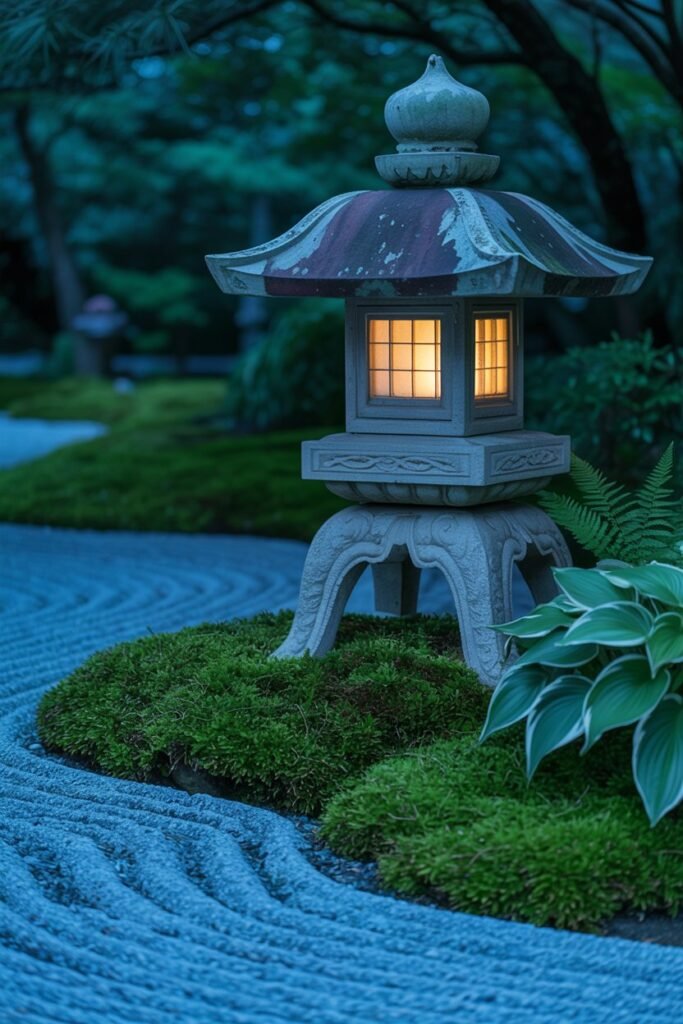
Why This Design Feels So Timeless
Stone lanterns carry deep symbolism light in darkness, guidance, and quiet wisdom. Every time I add one to a garden, the space instantly feels older, calmer, and more intentional.
Lantern gardens are especially beautiful at dusk, when shadows stretch and the garden feels almost sacred.
What You Need to Achieve This Design
- Traditional stone lantern (granite or concrete)
- Gravel or moss ground cover
- Flat stones for footing
- Low-growing plants (hostas, ferns, moss)
- Soft LED or candle-style light
Design Tips from Experience
- Place lanterns off-center for a natural look.
- Avoid over-lighting subtle glow is best.
- Let plants partially surround the lantern over time.
This design suits shaded gardens, meditation corners, and pathways beautifully.
9. Zen Garden with Natural Rock Border
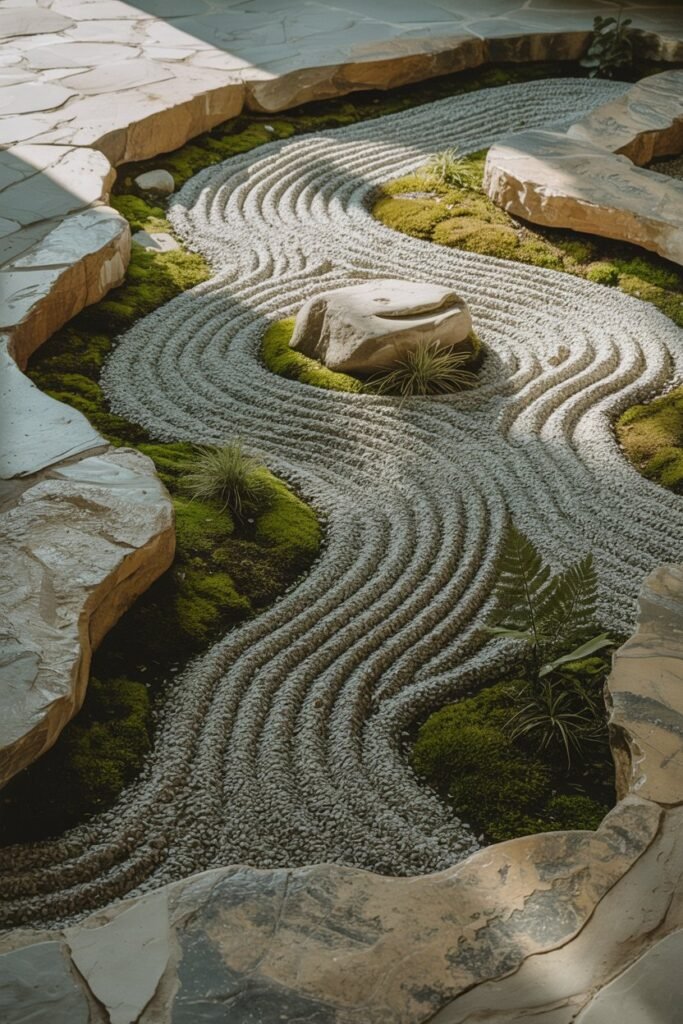
Why This Design Feels Balanced
Borders define energy. Natural rock borders create gentle separation without feeling rigid. I often use this design when homeowners want structure but still crave an organic, flowing feel.
It’s one of the easiest Zen garden designs to maintain and adapt.
What You Need to Achieve This Design
- Irregular natural rocks or stones
- Gravel, sand, or moss interior
- Clear garden outline
- Minimal plant accents
- Hand tools for placement
Design Tips from Experience
- Vary stone sizes for visual interest.
- Partially bury stones to make them feel rooted.
- Keep lines soft and curved, never sharp.
This design works well for front yards, side gardens, and along walkways.
10. Indoor–Outdoor Zen Transition Garden
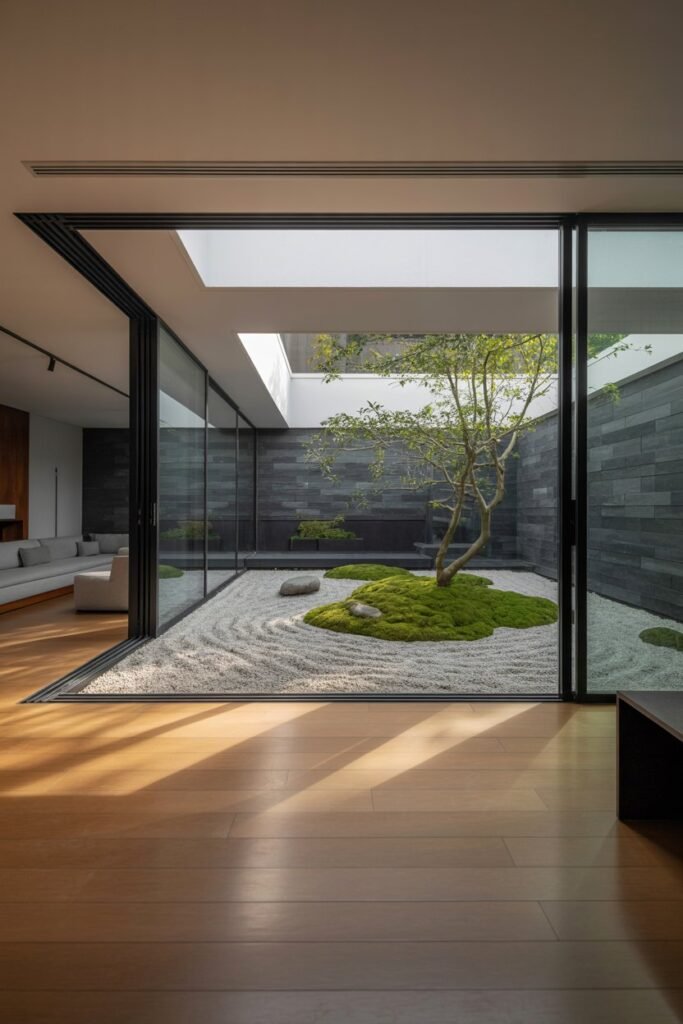
Why This Design Feels So Harmonious
This design blurs the line between inside and outside, making the home feel larger and calmer. I’ve seen how powerful it can be to glance out a window and see a space designed purely for peace.
It’s perfect for modern homes or anyone who values quiet visual moments throughout the day.
What You Need to Achieve This Design
- Large glass doors or windows
- Matching indoor and outdoor materials (stone, wood)
- Gravel or moss garden outside
- Minimal furniture or floor cushions
- Consistent color palette
Design Tips from Experience
- Keep materials consistent to unify the space.
- Avoid clutter on both sides of the glass.
- Let the garden be the artwork.
This Zen garden design shines in modern homes, apartments with patios, and courtyards visible from living spaces.
11. Zen Garden with Bonsai Focus
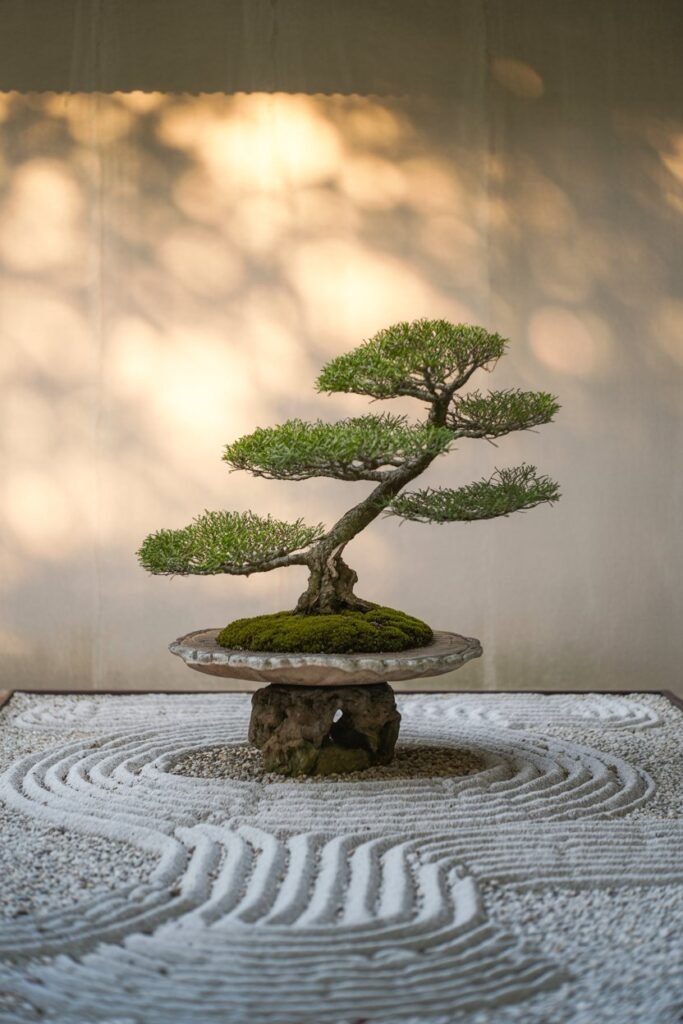
Why This Design Feels Deeply Personal
Bonsai gardening teaches patience in the most beautiful way. Every tiny branch tells a story of time, care, and quiet observation.
When I include bonsai in a Zen garden, it instantly becomes more intimate like the garden is sharing a secret with you.
This design is ideal for gardeners who enjoy hands-on care but still want a serene, uncluttered space.
What You Need to Achieve This Design
- One or two bonsai trees (juniper, ficus, pine, or maple)
- Low display table or stone pedestal
- Gravel or sand base
- Simple backdrop (wall, bamboo screen, or fence)
- Basic bonsai care tools (shears, watering can)
Design Tips from Experience
- Keep bonsai placement intentional never crowded.
- Protect trees from harsh afternoon sun.
- Rotate the bonsai seasonally to maintain balance and health.
This Zen garden works beautifully in courtyards, patios, or sheltered outdoor spaces.
12. Sand and Stone Circle Zen Garden
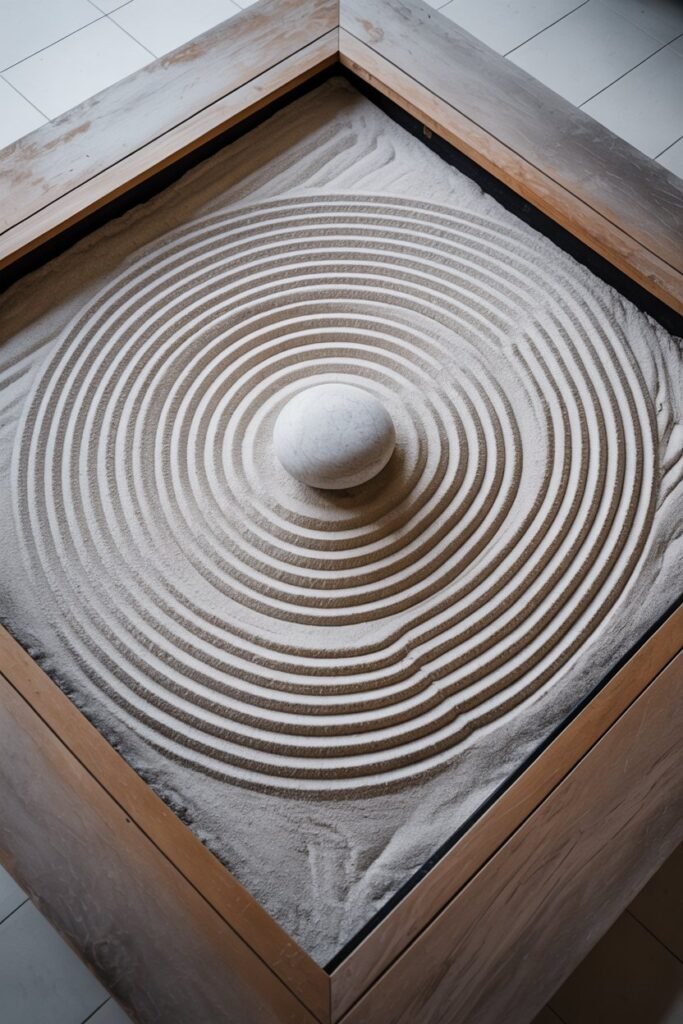
Why This Design Encourages Reflection
Circles represent wholeness, unity, and infinite flow. I often recommend this design for people navigating life transitions — it gently reminds us that everything moves in cycles.
Raking circular patterns is soothing and emotionally grounding.
What You Need to Achieve This Design
- Fine sand or light gravel
- One central stone or small rock grouping
- Circular border (metal edging, stones, or wood)
- Rake designed for Zen gardens
- Clear open space around the circle
Design Tips from Experience
- Start raking from the center outward.
- Keep the circle perfectly round for visual calm.
- Reset patterns often change is part of the practice.
This design fits well in small gardens, meditation zones, and quiet corners.
13. Zen Garden with Soft Green Layers
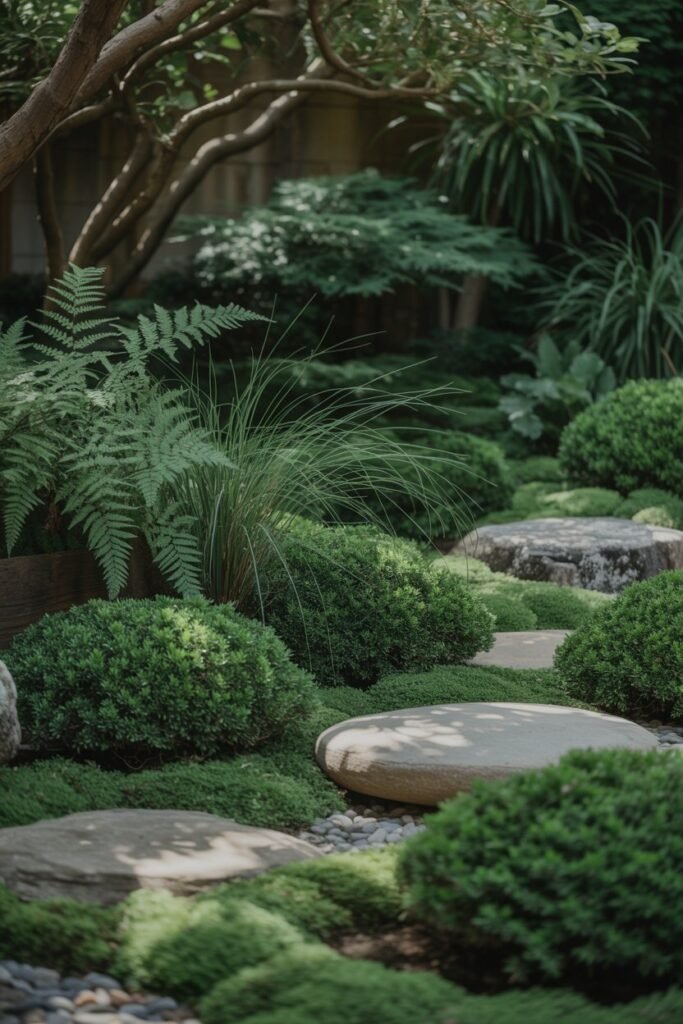
Why This Design Feels So Nurturing
Some Zen gardens lean heavily on stone, but this one embraces softness. Layers of green plants create a sense of safety and quiet enclosure.
I love this design for people who feel most at peace surrounded by life and growth.
It’s especially welcoming and gentle in appearance.
What You Need to Achieve This Design
- Layered greenery (ferns, grasses, dwarf shrubs)
- Natural stone accents
- Mulch or moss ground cover
- Defined garden edges
- Consistent watering system
Design Tips from Experience
- Use different shades of green for depth.
- Avoid flowering plants to keep the palette calm.
- Trim regularly to maintain shape and airflow.
This Zen garden design is perfect for shaded yards, woodland gardens, or relaxing backyard spaces.
14. Zen Garden with Low Wall Enclosure
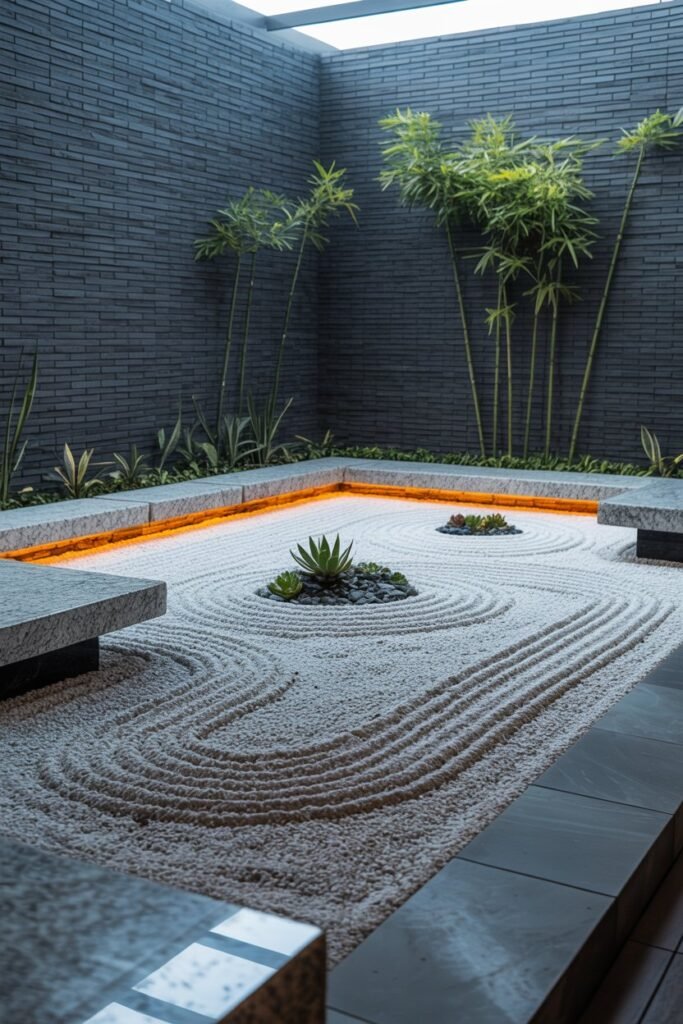
Why This Design Creates Peace
Enclosure makes us feel held. A low wall adds privacy without blocking light or air, creating a sanctuary-like atmosphere. I often suggest this design for people who want their garden to feel like a retreat from the world.
It’s a beautiful balance of protection and openness.
What You Need to Achieve This Design
- Low stone or concrete wall
- Gravel or sand interior
- Minimal plantings (ornamental grasses, moss)
- Simple bench or seating stone
- Soft lighting (optional)
Design Tips from Experience
- Keep walls under waist height for openness.
- Match wall materials with garden stones.
- Let plants soften the edges naturally over time.
This design works wonderfully in urban gardens, patios, and enclosed yards.
15. Zen Garden with Sculptural Stone Art
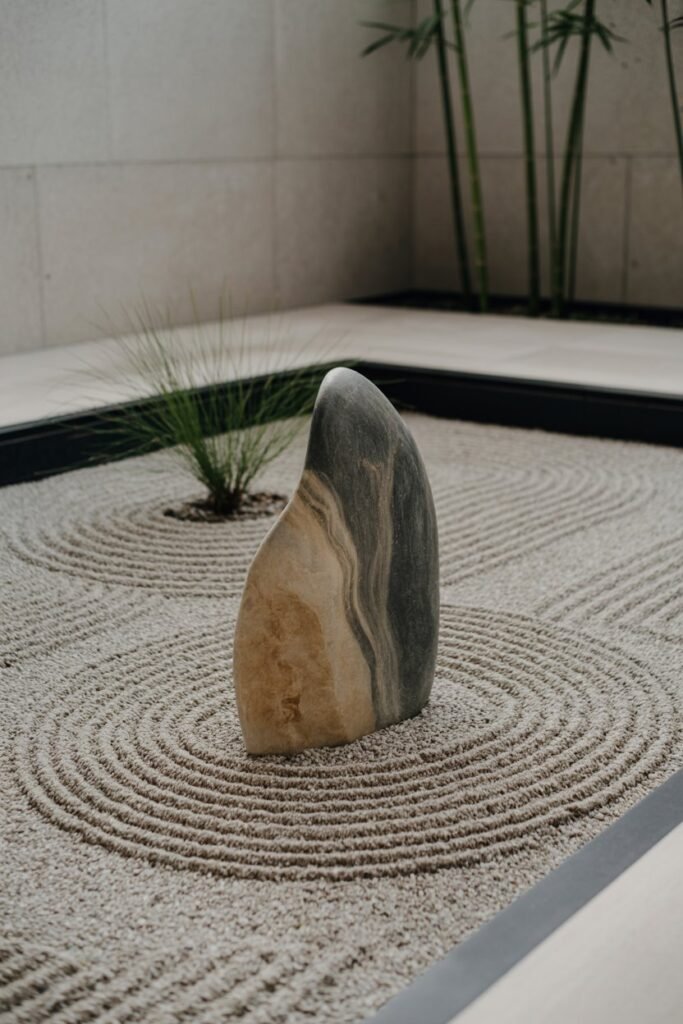
Why This Design Feels Expressive
Sometimes, a single sculptural element is enough to define an entire space. Stone art adds personality while staying grounded in Zen principles.
I love using this design for gardeners who want a calm space that still reflects individuality.
It becomes a quiet conversation between art and nature.
What You Need to Achieve This Design
- One sculptural stone or abstract stone piece
- Neutral gravel or sand base
- Open surrounding space
- Subtle plant accents
- Thoughtful lighting
Design Tips from Experience
- Choose art that feels organic, not polished.
- Give it space clutter diminishes impact.
- Let natural weathering add character over time.
This Zen garden design is ideal for modern landscapes, minimalist yards, or gallery-style outdoor spaces.
16. Zen Garden Designed for Morning Rituals
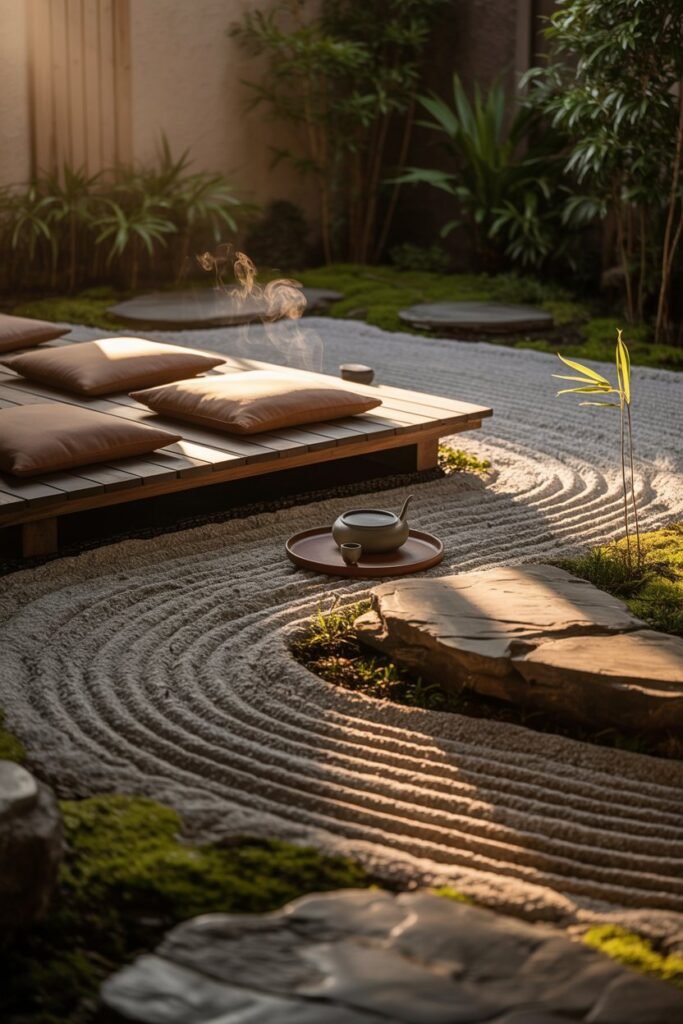
Why This Design Feels So Life-Giving
Some gardens are meant to be admired, others are meant to be lived in.
This design was inspired by my own quiet mornings bare feet on cool stone, warm tea in my hands, and the garden slowly waking with me.
A Zen garden designed for morning rituals becomes part of your daily rhythm, not just a visual backdrop.
It’s not about decoration it’s about presence.
What You Need to Achieve This Design
- Flat stone or wooden platform
- Comfortable low seating or floor cushions
- Gravel or sand base
- Soft greenery (grasses, moss, or ferns)
- Simple focal point (stone, bowl, or plant)
Design Tips from Experience
- Orient seating toward the sunrise if possible.
- Keep the space uncluttered mornings crave simplicity.
- Store cushions indoors to keep them fresh and intentional.
This design is perfect for backyards, patios, balconies, or private garden corners.
17. Zen Garden with Asymmetrical Balance
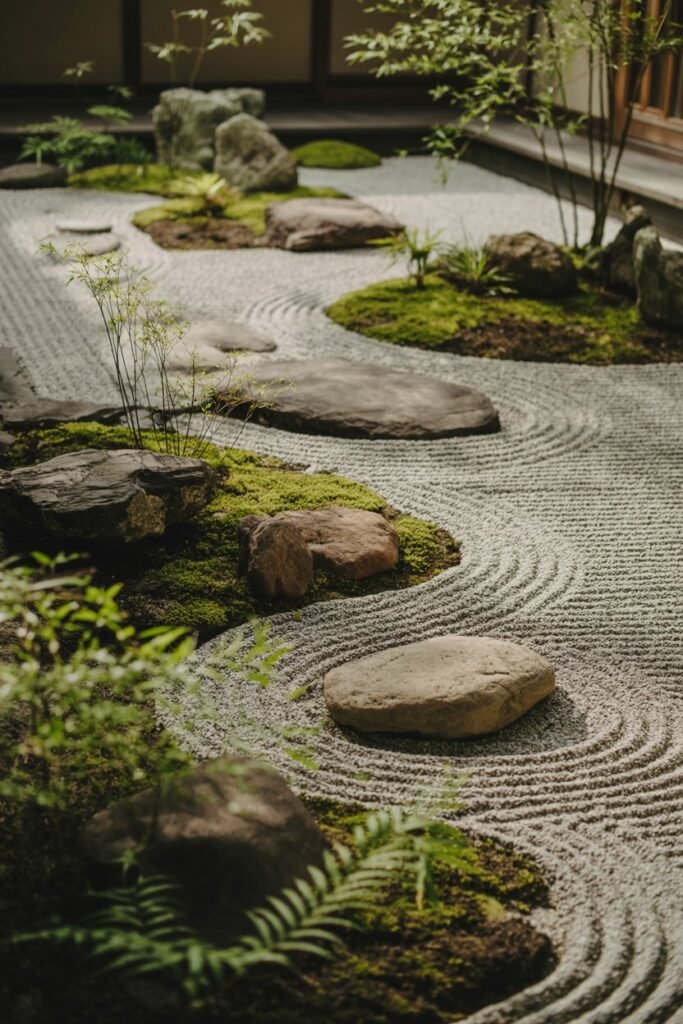
Why This Design Feels So Natural
Perfection can feel tense. Asymmetry, on the other hand, feels like nature exhaling.
This design uses uneven placement to create harmony without stiffness a lesson I’ve learned after years of fighting symmetry instead of embracing flow.
This garden feels relaxed, organic, and emotionally freeing.
What You Need to Achieve This Design
- Uneven stone groupings
- Gravel or sand
- Plants of varying heights
- Open negative space
- Natural edging
Design Tips from Experience
- Step back often while designing trust your intuition.
- Let one side feel heavier than the other.
- Resist the urge to “fix” imbalance that’s the beauty.
This Zen garden style suits artistic gardeners and free-flowing outdoor spaces.
18. Zen Garden with Earth-Tone Palette
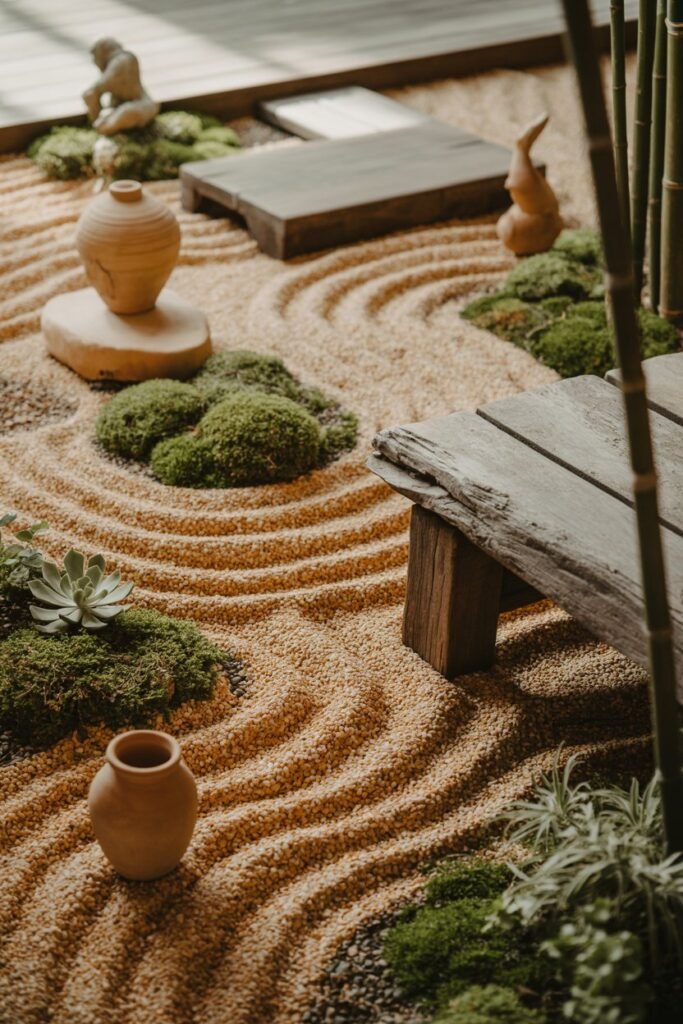
Why This Design Feels So Grounded
Earth tones speak quietly but deeply. Browns, soft grays, warm beige, and muted greens create a sense of safety and belonging.
I recommend this design to anyone feeling overstimulated by color it’s like resting your eyes and your heart at the same time.
What You Need to Achieve This Design
- Earth-colored gravel or sand
- Natural wood or stone elements
- Muted green plants
- Clay or stone accents
- Consistent, soft textures
Design Tips from Experience
- Avoid stark white warmth feels more nurturing.
- Repeat colors to build cohesion.
- Let weathering enhance the palette over time.
This design works beautifully in rustic homes, natural landscapes, and serene retreats.
19. Zen Garden with Sound as a Design Element
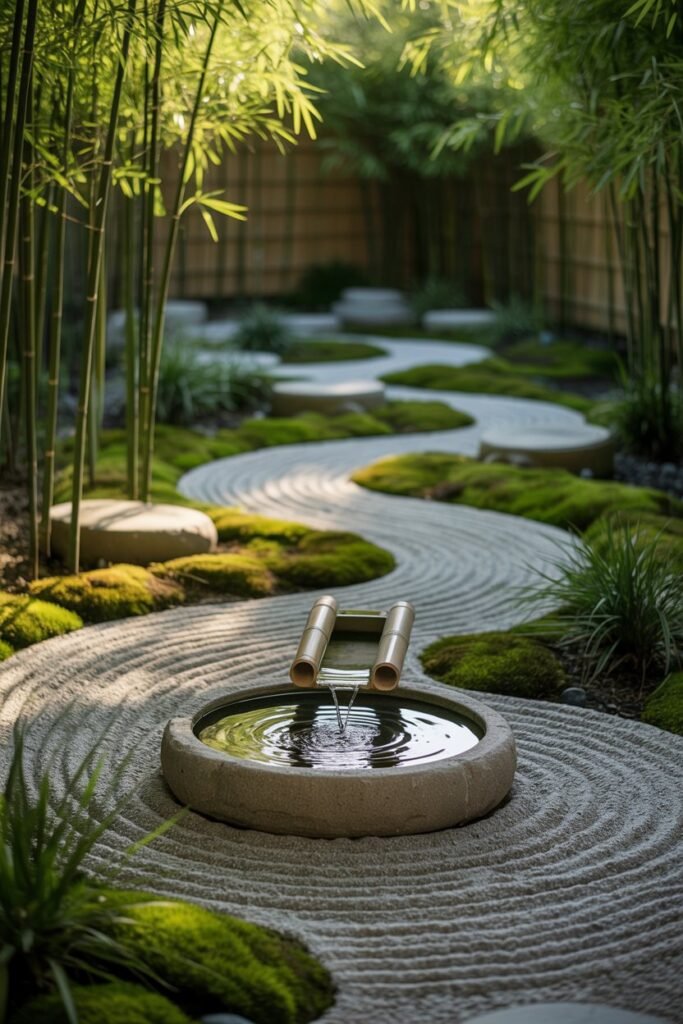
Why This Design Changes Everything
Sound shapes how a space feels just as much as visuals. This design focuses on subtle, calming sounds water, leaves, gravel underfoot. I’ve watched tension melt away in gardens like this without a single word spoken.
What You Need to Achieve This Design
- Small water feature or bamboo fountain
- Gravel paths
- Wind-responsive plants (bamboo, grasses)
- Stone or wood surfaces
- Quiet surroundings
Design Tips from Experience
- Test sound levels before final placement.
- Gentle movement creates the best music.
- Avoid loud splashes or mechanical noise.
This Zen garden design is ideal for stress relief spaces and meditation gardens.
20. Deeply Minimal Zen Sanctuary
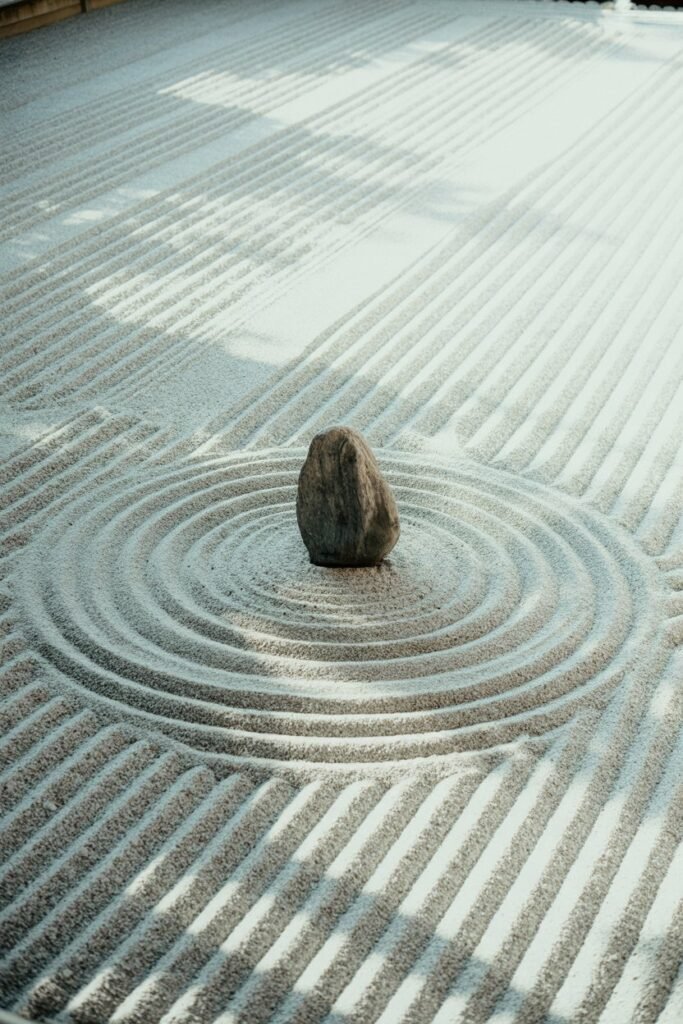
Why This Design Feels Like Coming Home
This is the most refined expression of Zen almost nothing, yet everything feels complete. I saved this design for last because it takes the most courage.
Letting go of excess is a practice, and this garden teaches that lesson softly every day.
What You Need to Achieve This Design
- One or two stones only
- Gravel or sand
- Clear boundaries
- No unnecessary plants
- Intentional emptiness
Design Tips from Experience
- Remove elements slowly until only the essential remains.
- Sit in the space before finalizing it.
- Trust silence — it’s part of the design.
This Zen garden works best in small spaces, courtyards, or highly intentional homes.
Final Thoughts: Creating a Zen Garden That Truly Feels Like Yours
After years of gardening, designing, pruning, re-arranging, and sometimes starting over, I’ve learned this truth:
A Zen garden isn’t something you finish it’s something you grow into.
Your garden will change as you do. Stones may shift. Patterns will be erased and redrawn. Plants will grow, rest, and sometimes fade away. And that’s exactly the point. Zen gardens teach us to release control, embrace impermanence, and find beauty in simplicity.
Whether your space is large or small, elaborate or minimal, what matters most is how it makes you feel when you step into it. Calm. Safe. Present. At peace.
Design slowly. Choose intentionally. And let your Zen garden become a quiet reflection of the life you’re creating — one mindful moment at a time.
