
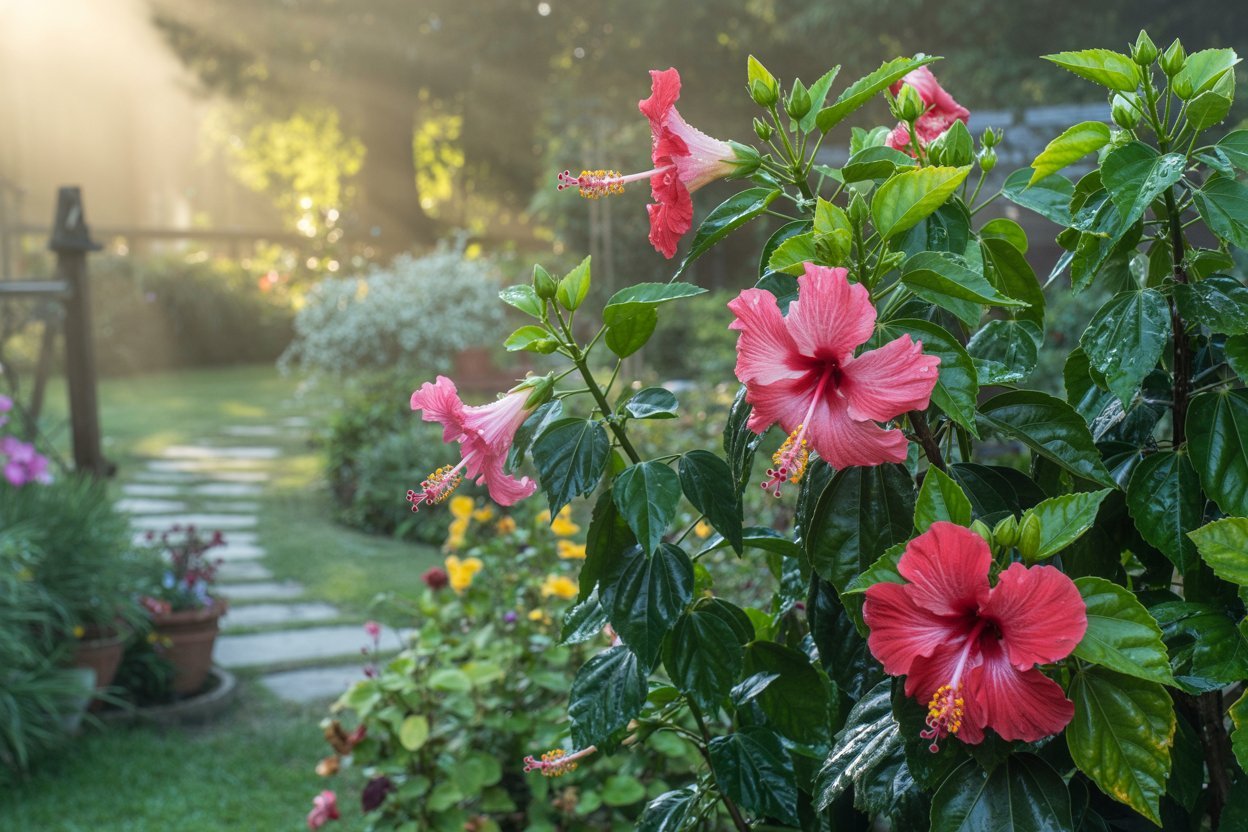

I still remember the first hibiscus I ever grew. It wasn’t perfect. The leaves yellowed, buds dropped before opening, and I questioned whether I had made a mistake bringing such a “dramatic” plant into my garden.
But when that first oversized bloom finally opened soft petals glowing in the morning light I understood why gardeners fall in love with hibiscus so deeply.
Growing hibiscus has since become one of my favorite gardening experiences. It taught me patience, observation, and how deeply plants respond when we truly listen to their needs.
In this guide, I’ll walk you through everything I’ve learned about growing hibiscus successfully, whether you’re planting one in the ground, keeping it in a pot, or nurturing it indoors.
This isn’t just a care guide it’s a conversation, from one gardener to another.
Understanding Hibiscus: Getting to Know the Plant
Before planting hibiscus, it helps to understand what kind of plant you’re welcoming into your space.
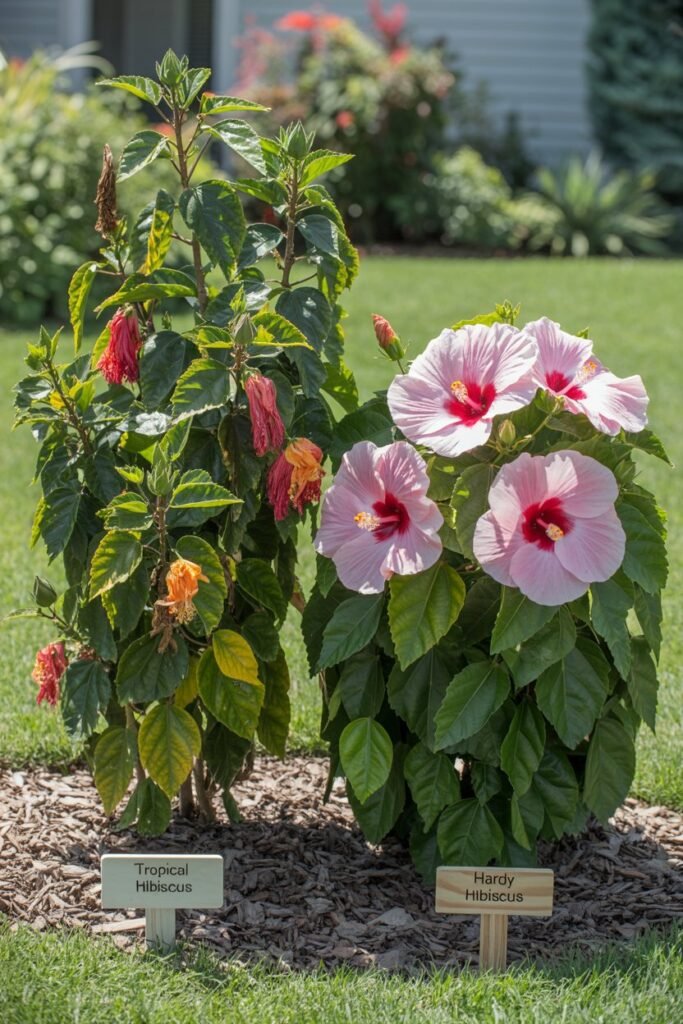
Hibiscus belongs to a large family of flowering plants, but the most common garden types fall into two main categories:
Tropical Hibiscus (Hibiscus rosa-sinensis)
- Loves warm temperatures
- Sensitive to cold
- Grown as houseplants or outdoor plants in warm climates
- Produces glossy leaves and vibrant flowers in reds, pinks, yellows, oranges, and whites
Hardy Hibiscus (Hibiscus moscheutos and others)
- Can survive freezing winters
- Dies back in winter and regrows in spring
- Produces enormous dinner-plate-sized blooms
- Perfect for garden beds in cooler regions
Knowing which type you have will guide every decision you make from where you plant it to how you care for it seasonally.
Choosing the Right Location: Sun Is Everything
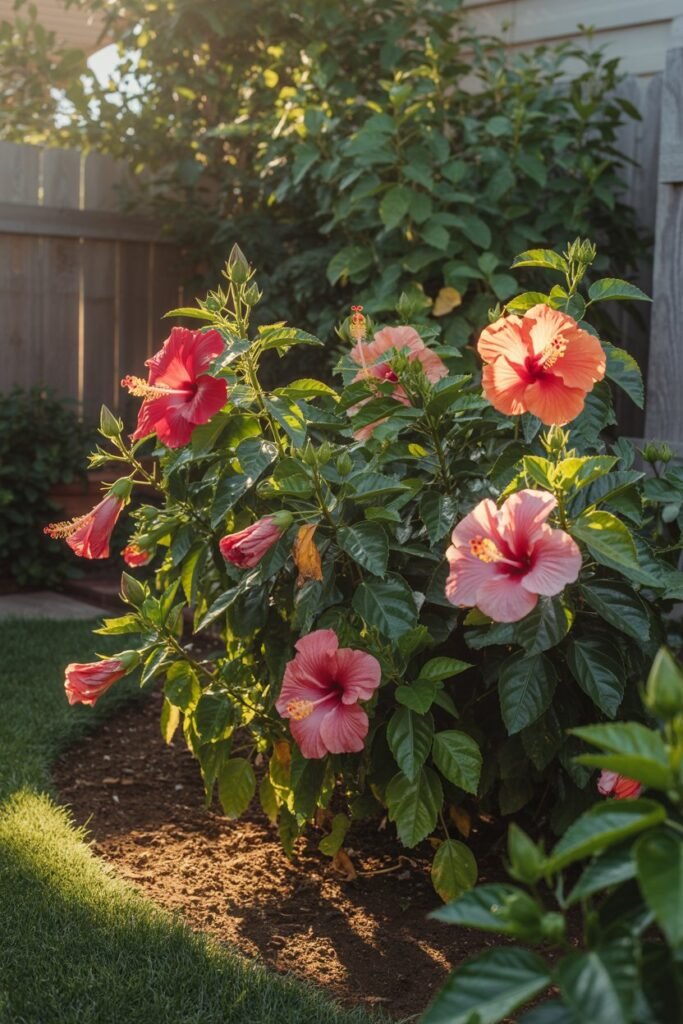
If there’s one thing hibiscus has taught me, it’s that sunlight is non-negotiable.
Hibiscus thrives in:
- Full sun to partial sun
- At least 6–8 hours of direct sunlight daily
When my first hibiscus struggled to bloom, I realized it was receiving morning light but missing afternoon sun. Once I moved it to a brighter spot, the difference was remarkable more buds, richer leaf color, and stronger growth.
Outdoor Placement Tips
- Choose a spot protected from strong winds
- Allow space for airflow to prevent disease
- Avoid areas where water pools after rain
Indoor Placement Tips
- Place near a bright south- or west-facing window
- Rotate the plant weekly for even growth
- Supplement with grow lights if natural light is limited
Soil Requirements: Creating the Perfect Foundation
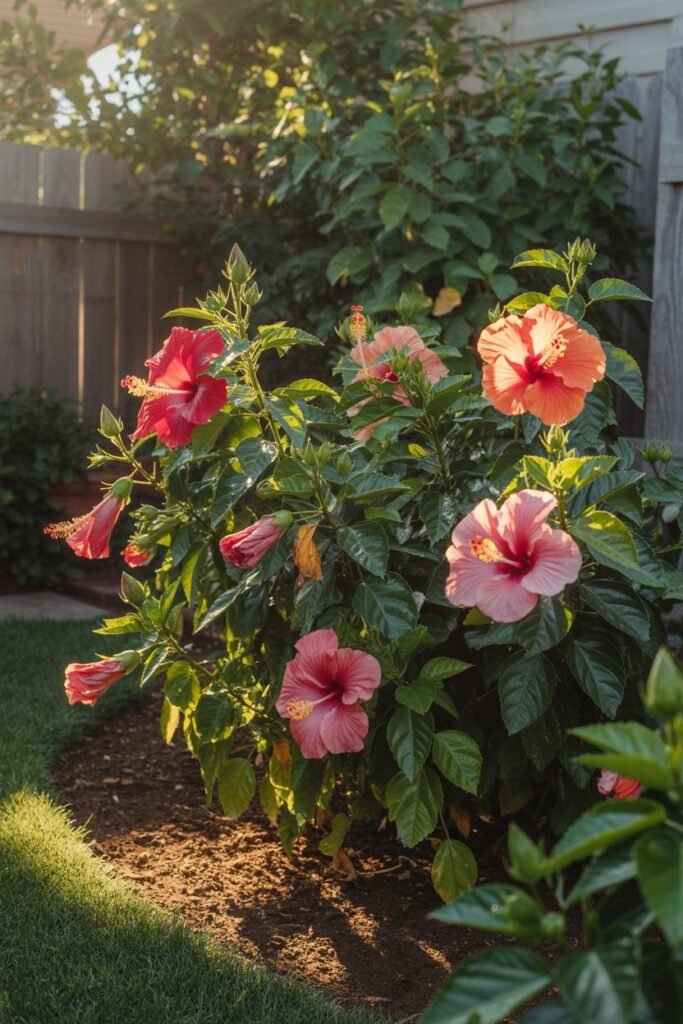
Healthy soil is the quiet hero of a thriving hibiscus plant.
Ideal Soil Characteristics
- Well-draining
- Rich in organic matter
- Slightly acidic to neutral (pH 6.0–7.0)
I’ve learned that hibiscus roots hate sitting in water. One season of soggy soil nearly cost me a plant. Since then, I always improve my soil before planting.
My Favorite Soil Mix
- Garden soil or high-quality potting mix
- Compost or well-rotted manure
- Perlite or sand for drainage
For potted hibiscus, never use heavy garden soil alone it compacts too easily and suffocates roots.
Planting Hibiscus: Starting Strong
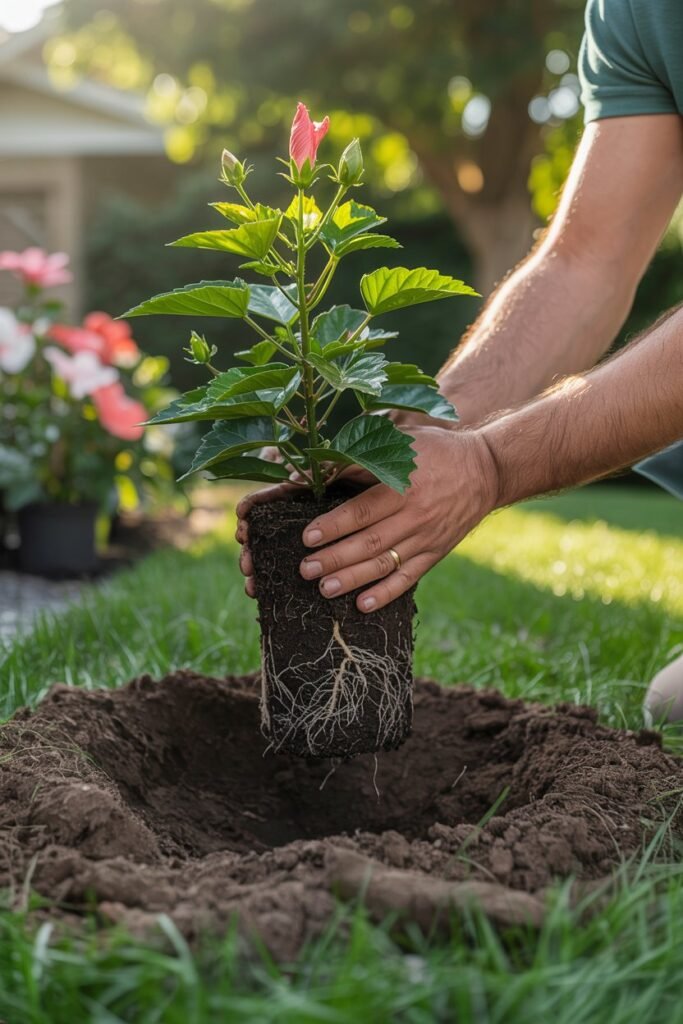
Whether you’re planting a nursery plant or transplanting one into a larger container, gentleness matters.
How I Plant Hibiscus
- Dig a hole twice as wide as the root ball
- Loosen the roots gently if they’re root-bound
- Place the plant at the same depth it was growing before
- Backfill with amended soil
- Water deeply to settle the roots
I always talk to my plants during planting it may sound silly, but gardening is as much emotional as it is physical.
Watering Hibiscus: The Art of Balance
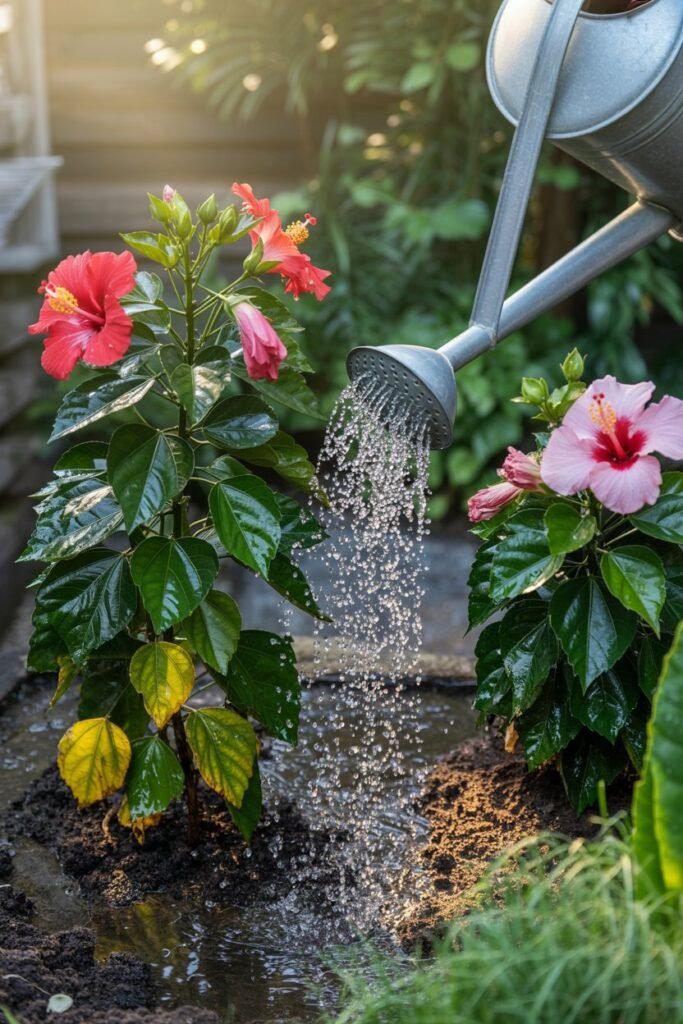
Hibiscus loves moisture but not drowning.
General Watering Guidelines
- Water deeply when the top inch of soil feels dry
- Increase watering during hot, blooming periods
- Reduce watering in cooler months
When hibiscus doesn’t get enough water, it lets you know quickly drooping leaves and bud drop are common signs. On the other hand, overwatering leads to yellow leaves and root problems.
Over time, I’ve learned to trust my fingers more than a schedule.
Feeding Hibiscus: Encouraging Endless Blooms
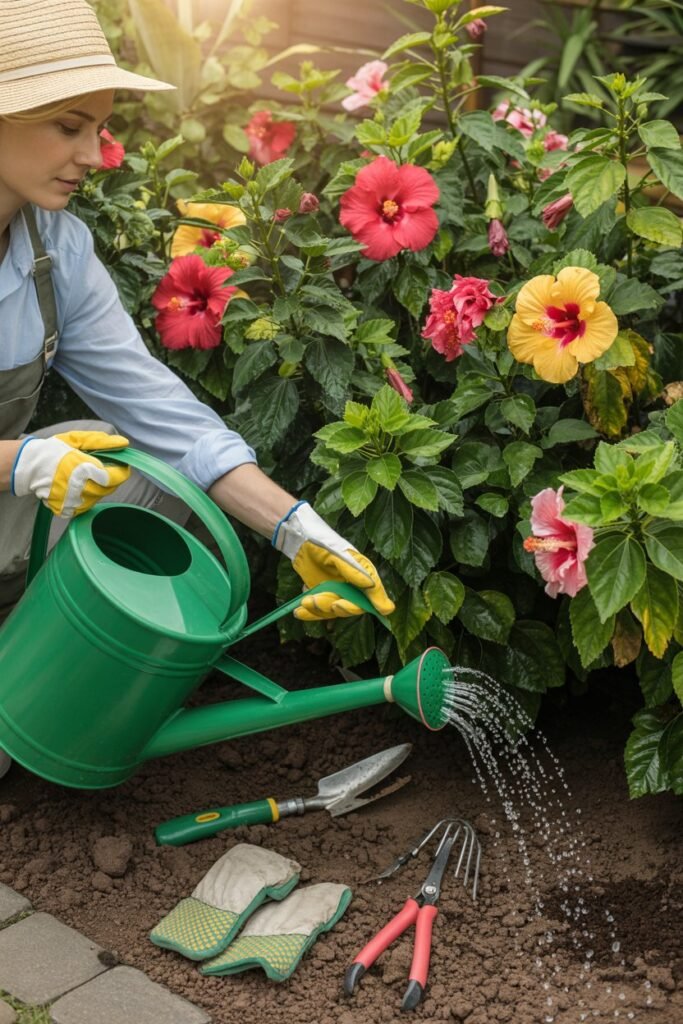
Hibiscus is a heavy feeder, especially when blooming.
Best Fertilizer Choices
- Balanced fertilizer (10-10-10 or 12-12-12)
- Slightly higher potassium for flowering
- Slow-release or liquid fertilizer
My Feeding Routine
- Every 2 weeks during active growth
- Monthly during cooler seasons
- Pause feeding during dormancy
I’ve found that under-feeding leads to lush leaves but fewer blooms, while over-feeding causes leaf burn. Moderation truly is key.
Pruning Hibiscus: Shaping and Strengthening
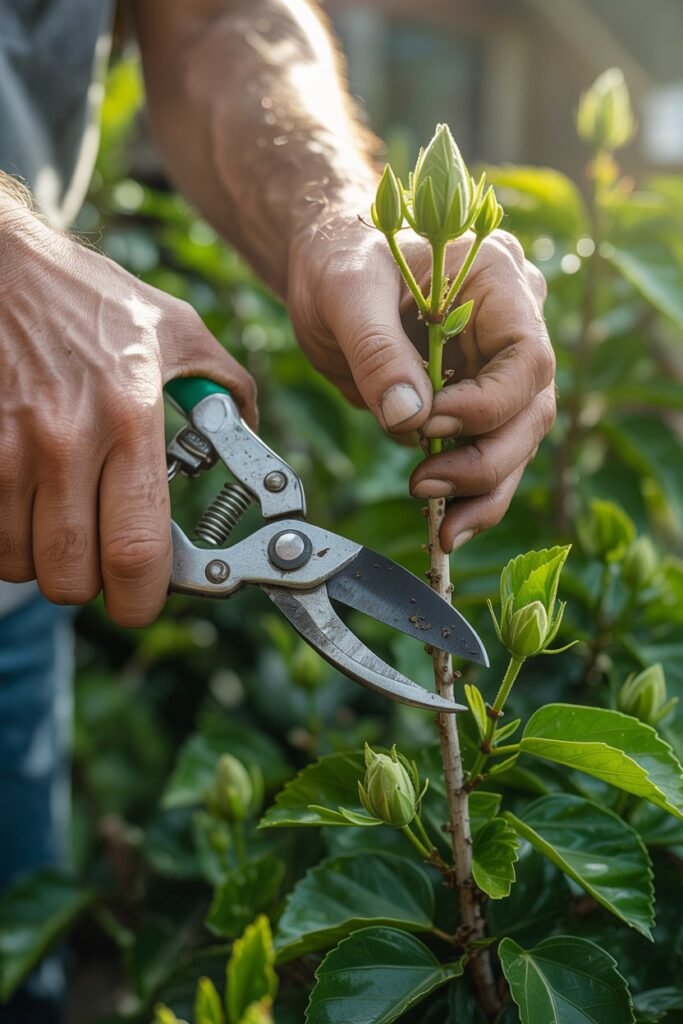
Pruning used to intimidate me, but hibiscus taught me how healing it can be for both plant and gardener.
Why Pruning Matters
- Encourages bushier growth
- Increases flower production
- Removes weak or diseased branches
When and How to Prune
- Early spring for major pruning
- Light pruning throughout the growing season
- Cut just above a leaf node
Every time I prune, new growth follows within weeks it’s a reminder that letting go often creates room for something better 🌸
Growing Hibiscus in Pots
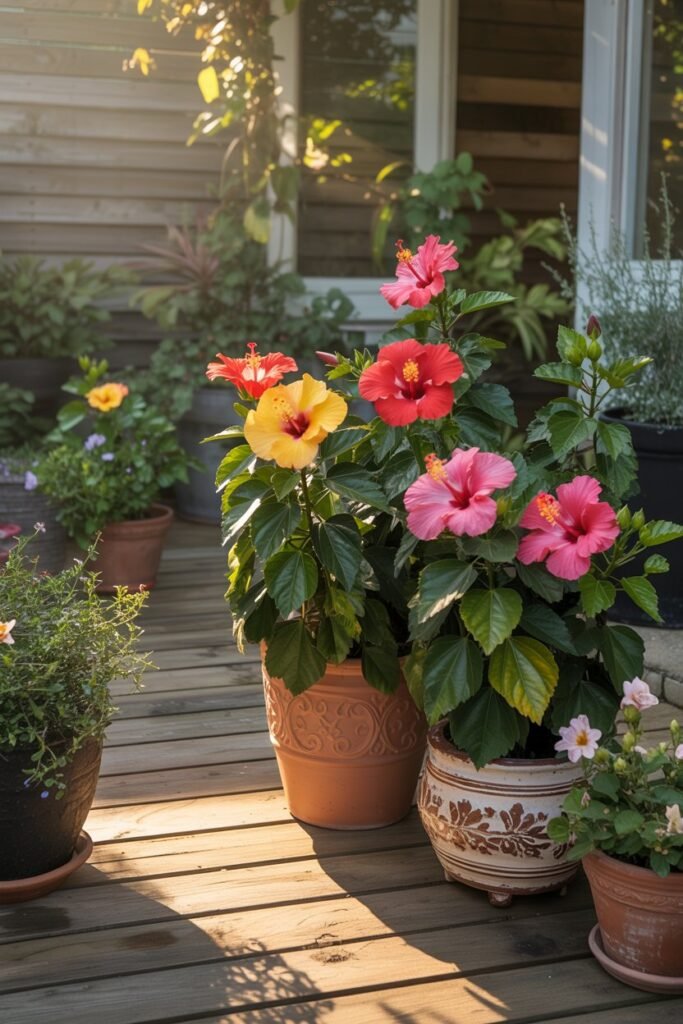
One of the joys of hibiscus is how beautifully it adapts to container life.
Pot Requirements
- Drainage holes are essential
- Choose a pot 2–4 inches larger than the root ball
- Use lightweight containers for mobility
Potted hibiscus allows you to:
- Move the plant with the seasons
- Protect it from cold
- Control soil quality more easily
My patio hibiscus has followed me through multiple homes it’s become part of my gardening story.
Hibiscus Indoors: A Blooming Houseplant
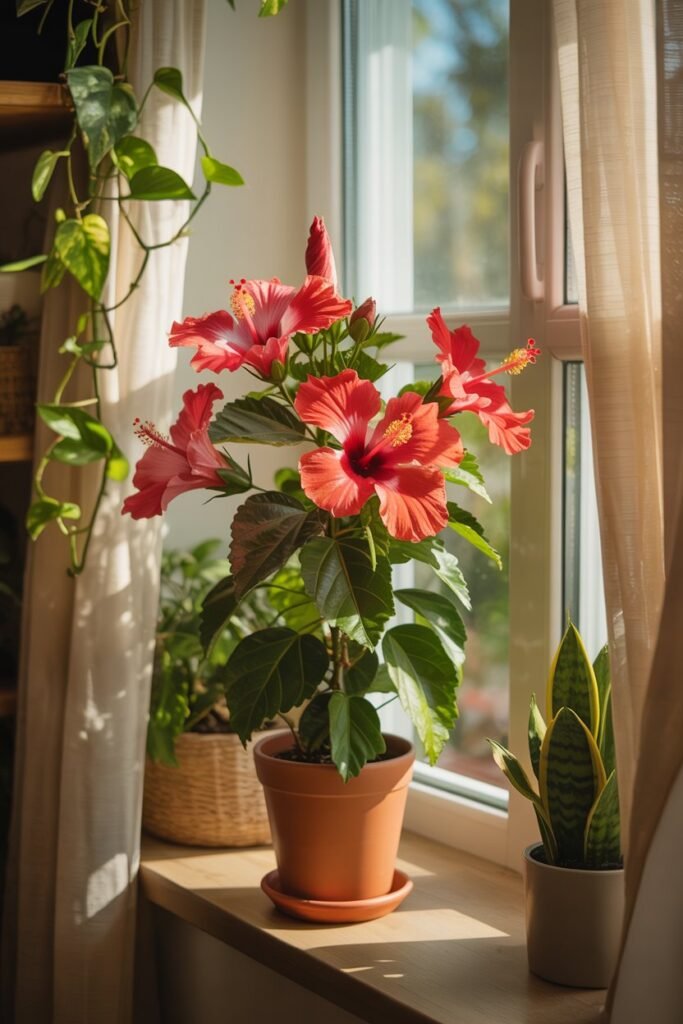
Yes, hibiscus can bloom indoors with the right care.
Indoor Care Essentials
- Bright light (natural or artificial)
- Consistent watering
- Regular feeding
- Humidity support (mist or pebble tray)
Indoor hibiscus may rest during winter, and that’s okay. I’ve learned not to panic when blooms pause it’s just part of its rhythm.
Common Hibiscus Problems (and How I Solved Them)
Bud Drop
- Caused by stress, drought, or sudden temperature changes
- Solution: stabilize watering and environment
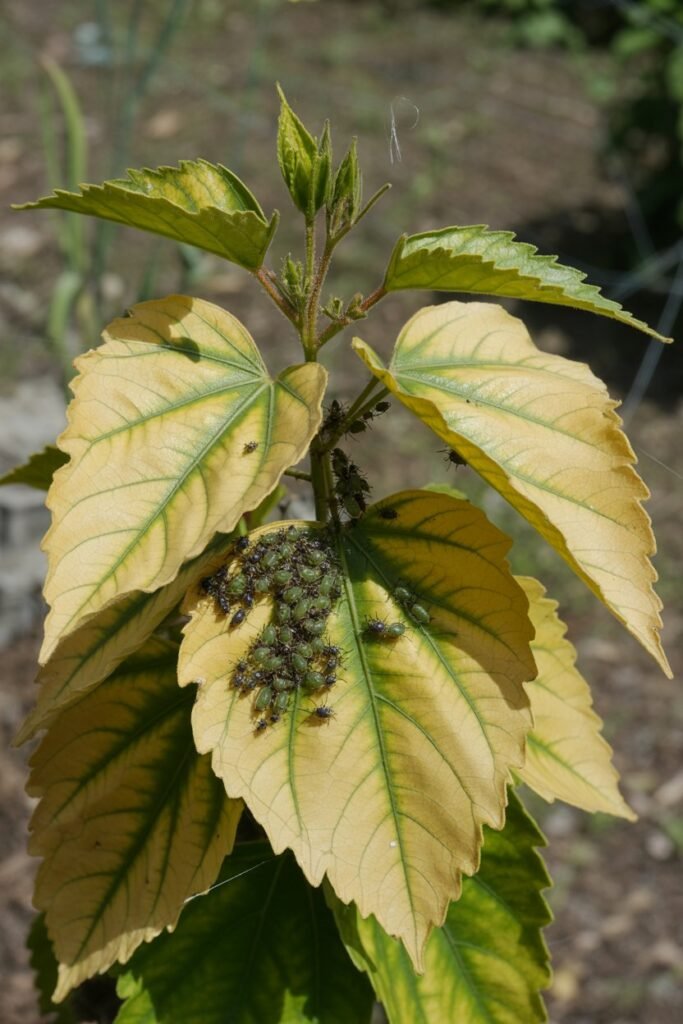
Yellow Leaves
- Often from overwatering or nutrient imbalance
- Solution: check drainage and feeding routine
Pests (Aphids, Spider Mites, Whiteflies)
- Use neem oil or insecticidal soap
- Rinse leaves regularly
Every problem taught me something. Gardening isn’t about perfection it’s about learning.
Overwintering Hibiscus
For tropical hibiscus, winter care is essential.
What I Do Each Fall
- Bring plants indoors before frost
- Reduce watering
- Stop fertilizing
- Provide bright light
Hardy hibiscus simply needs mulching and patience—it will return when the weather warms.
Propagating Hibiscus: Sharing the Beauty
One of the most rewarding experiences is growing hibiscus from cuttings.
Simple Cutting Method
- Take a healthy 4–6 inch cutting
- Remove lower leaves
- Dip in rooting hormone (optional)
- Plant in moist soil
- Cover lightly to retain humidity
Watching roots form feels like witnessing magic and it’s a wonderful way to share plants with friends.
Final Thoughts: Why Hibiscus Is Worth the Effort
Hibiscus has taught me that gardening is a relationship. It asks for attention, care, and patience but gives back beauty, color, and joy in return.
Every bloom feels like a small celebration. Every challenge feels like a lesson. If you’re willing to listen to your plant and grow alongside it, hibiscus will reward you generously.
If you’ve been thinking about growing hibiscus, I encourage you to try. Start small. Observe often. And don’t be afraid to learn as you go just like I did.
Happy gardening
