
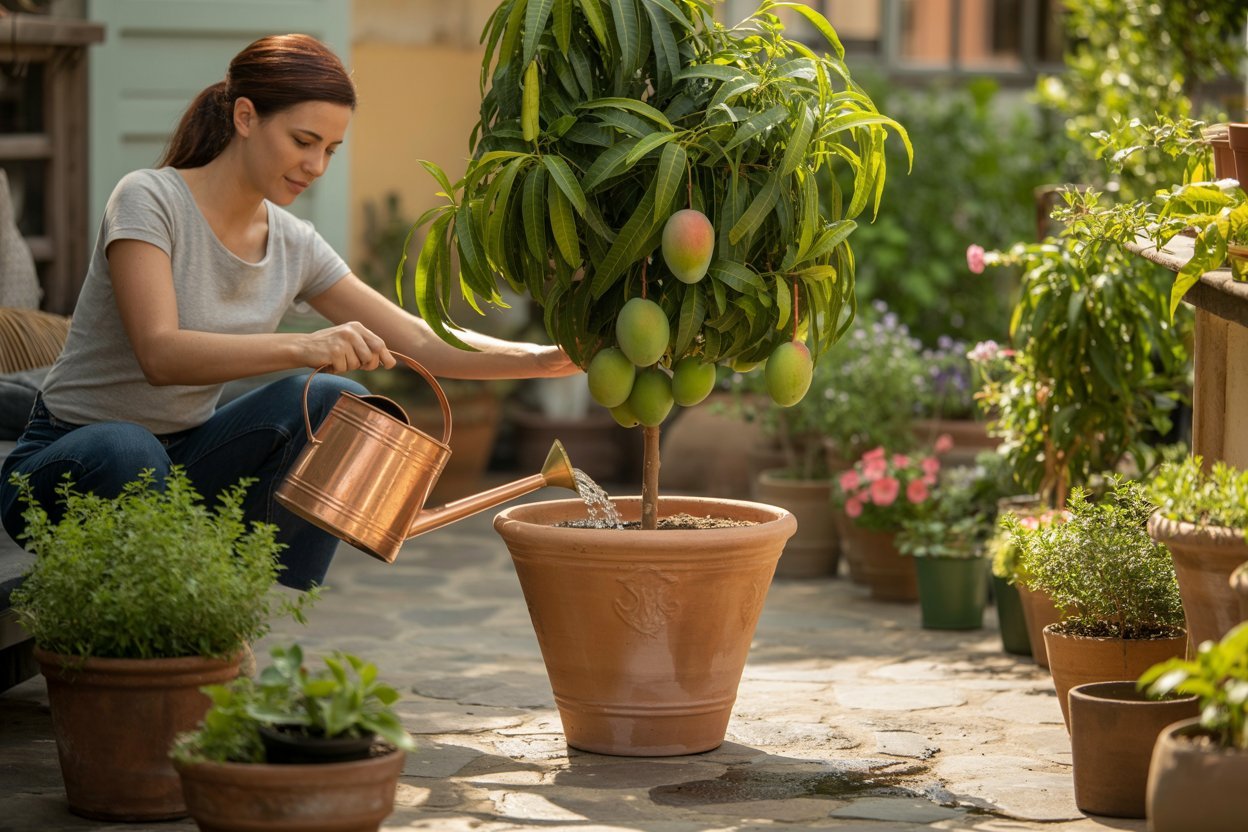

There’s nothing quite like the joy of picking your own juicy, golden mango from a tree you’ve lovingly raised especially when that tree is growing right on your patio or balcony.
You might think mango trees belong in vast tropical orchards, but guess what? With the right variety and care, you can grow your own mango tree in a container even if you live in a small apartment or a cooler climate.
It’s easier than it looks, and the rewards are absolutely worth it: lush greenery, fragrant blossoms, and eventually, the sweetest fruit you’ve ever tasted.
Let’s walk through it together from pot to harvest the easy, smart, and heartwarming way.
Shop my amazon essentials
- Mango Seeds or Seedling
- Large Grow Bag
- Potting Soil
- Compost
- Citrus & Fruit Tree Fertilizer
- Hand Trowel
- Watering Can
- Gardening Gloves
- Pruning Shears
- Plant Support Stake
Why Grow Mango Trees in Containers?
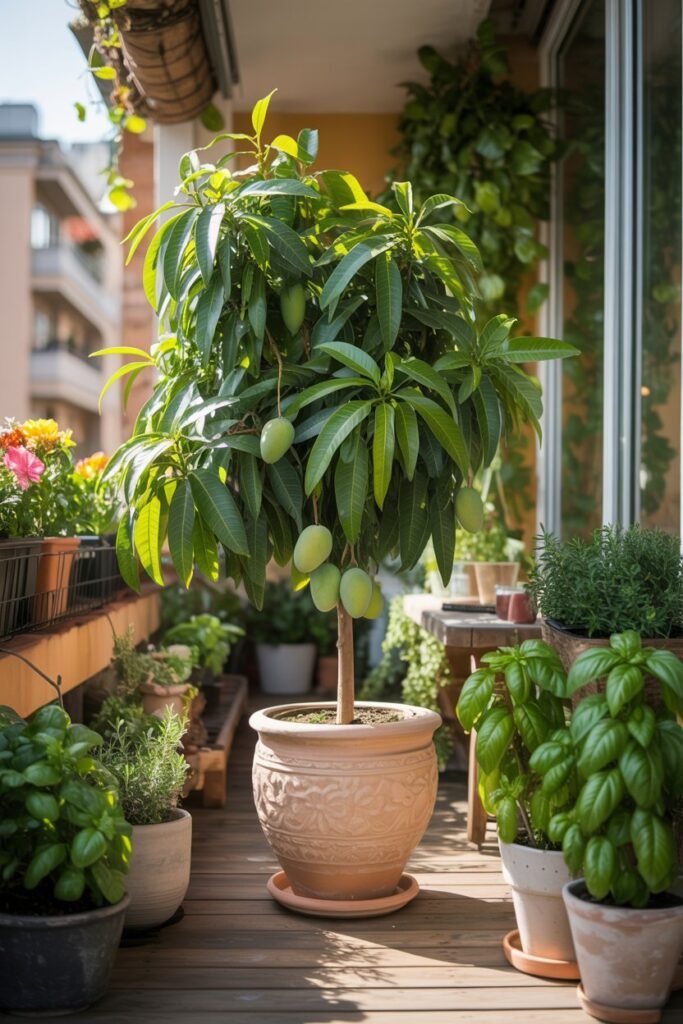
Container gardening gives you control. You control:
- Sunlight exposure
- Water levels and drainage
- Soil composition and nutrients
- Protection from frost and pests
This flexibility makes mango trees surprisingly adaptable to life in pots. Plus, dwarf mango varieties stay compact and manageable, so you can prune, move, and care for them without heavy lifting or yard space.
Pro Tip: Growing mango trees in containers also makes it easier to overwinter them indoors protecting them from cold snaps or heavy rains.
Best Mango Varieties for Container Growing

Not all mango trees are suited to pots. Here are some of the most container-friendly, easy-care varieties you’ll love:
| Variety | Traits | Fruit Flavor |
|---|---|---|
| ‘Pickering’ | Compact, bushy habit, early producer | Fiberless, sweet, rich |
| ‘Nam Doc Mai’ | Naturally small, elegant tree | Fragrant, honey-sweet |
| ‘Carrie’ | Slow grower, easy to manage | Intense tropical flavor |
| ‘Cogshall’ | Dwarf variety, colorful fruit | Mild, smooth, aromatic |
| ‘Julie’ | Caribbean favorite, low maintenance | Spicy-sweet and soft |
Pro Tip: Always buy grafted trees, not seed-grown ones. Grafted mangoes bear fruit faster (within 2–4 years) and stay true to their variety.
What You’ll Need (Materials List)
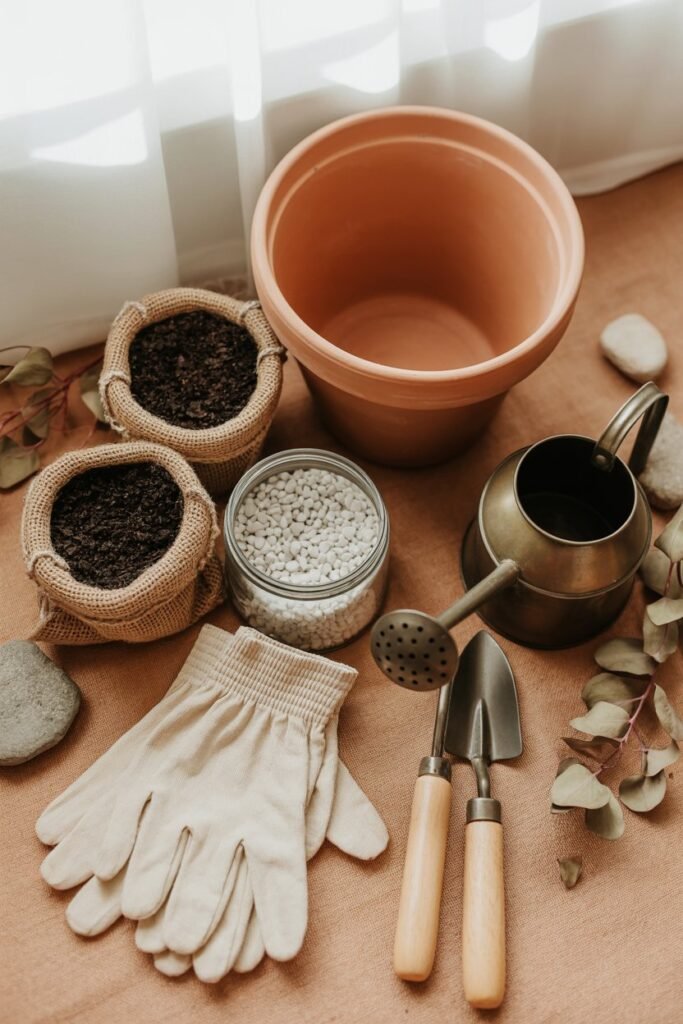
Here’s everything you’ll need to start your mango tree off right think of this as your “container mango starter kit”
Container & Setup
- 1 large pot (minimum 20–25 gallons or 24 inches wide)
- Choose terracotta, fiberglass, or durable plastic.
- Must have at least 4–6 drainage holes.
- Plant stand or saucer (to elevate and drain excess water)
- Mesh or small gravel (to cover drainage holes and prevent soil loss)
Soil Mix
A healthy mango tree needs well-draining, nutrient-rich soil. Here’s a perfect blend:
- 40% Loamy potting mix
- 30% Compost or well-rotted manure
- 20% Coarse sand or perlite
- 10% Coconut coir or peat moss (for water retention)
- A handful of bone meal or slow-release organic fertilizer
Pro Tip: Avoid heavy garden soil it compacts easily and suffocates mango roots in containers.
Watering & Feeding Tools
- Watering can with a fine spout
- Liquid fertilizer or slow-release granules
- Neem oil or insecticidal soap (for pest control)
Optional (But Helpful)
- Mulch (straw, bark, or dried leaves)
- Grow light (for low-sunlight homes or winter months)
- Hand pruners and gloves
- Moisture meter (to prevent overwatering)
Step-by-Step: Planting Your Mango Tree
1. Prepare the Pot

Place a mesh screen or small pebbles at the bottom to keep soil from washing out.
Add a few inches of your soil mix as a base.
2. Position Your Mango Tree
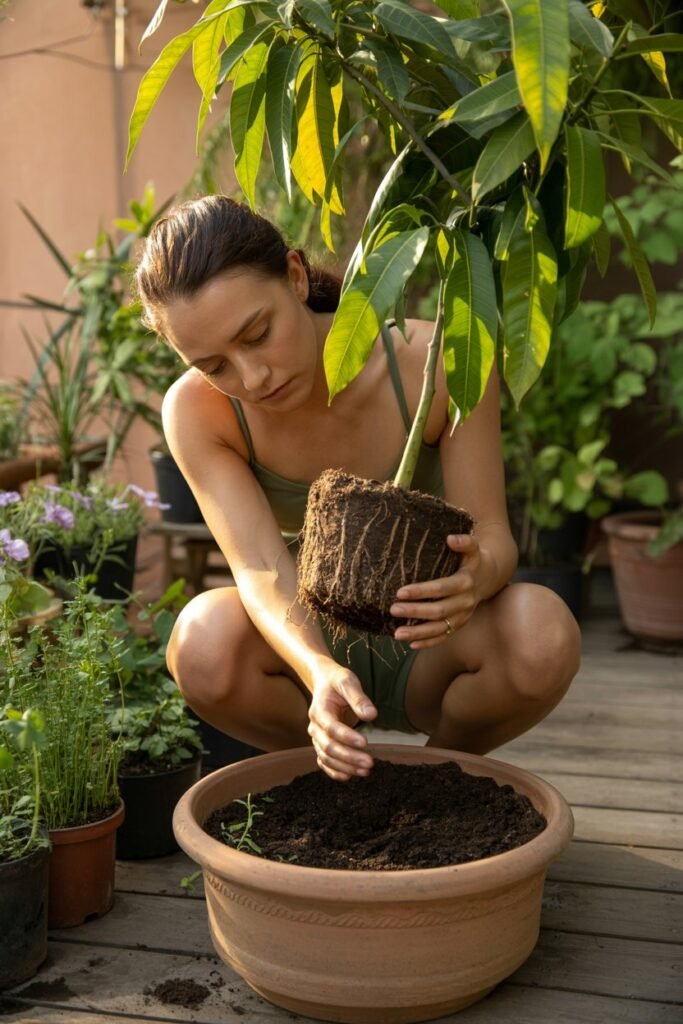
Gently remove your tree from its nursery pot. Loosen the root ball lightly and set it in the new pot. The top of the root ball should sit 1–2 inches below the rim of the container.
Pro Tip: Never bury the graft line (the small bulge near the base). Keep it slightly above the soil surface to prevent rot.
3. Fill & Firm
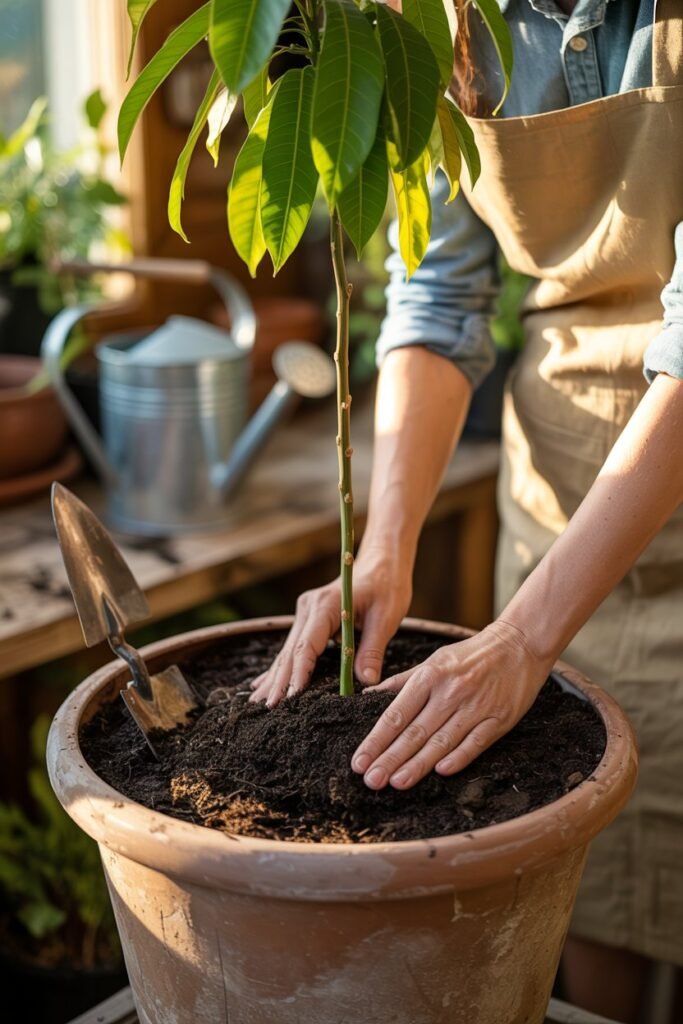
Backfill with your potting mix. Tap the pot gently to remove air pockets. Don’t compact it too tightly mango roots love air!
Water deeply until it drains out the bottom.
Sunlight and Placement

Mangoes are sun-hungry plants the more sunshine, the happier they are.
They need at least 8 hours of full sun daily.
Place your pot:
- Near a south-facing window if indoors.
- On a balcony, terrace, or patio with full sun exposure.
Pro Tip: Rotate your container every 2–3 weeks so all sides get equal sunlight it helps maintain even growth.
Watering and Moisture Care

Watering is key too much leads to rot, too little stunts growth.
How to Water Correctly:
- Water deeply until it drains out the bottom.
- Allow the top 1–2 inches of soil to dry before watering again.
- In hot weather, water 2–3 times per week.
- In cooler months, reduce to once weekly.
Pro Tip: Use room-temperature water. Cold water shocks the roots.
Mulch around the base to conserve moisture and protect roots from temperature swings.
Feeding Your Mango Tree

Like most fruit trees, mangoes are heavy feeders during growth and fruiting.
Feeding Schedule:
- Spring to Summer: Use a balanced fertilizer (10-10-10) every 4–6 weeks.
- Before Flowering: Switch to a low-nitrogen, high-potassium formula (0-10-10) to promote flowering and fruit set.
- Winter: Pause feeding when growth slows.
Pro Tip: Liquid seaweed or fish emulsion boosts micronutrients and strengthens root health.
Pruning and Training
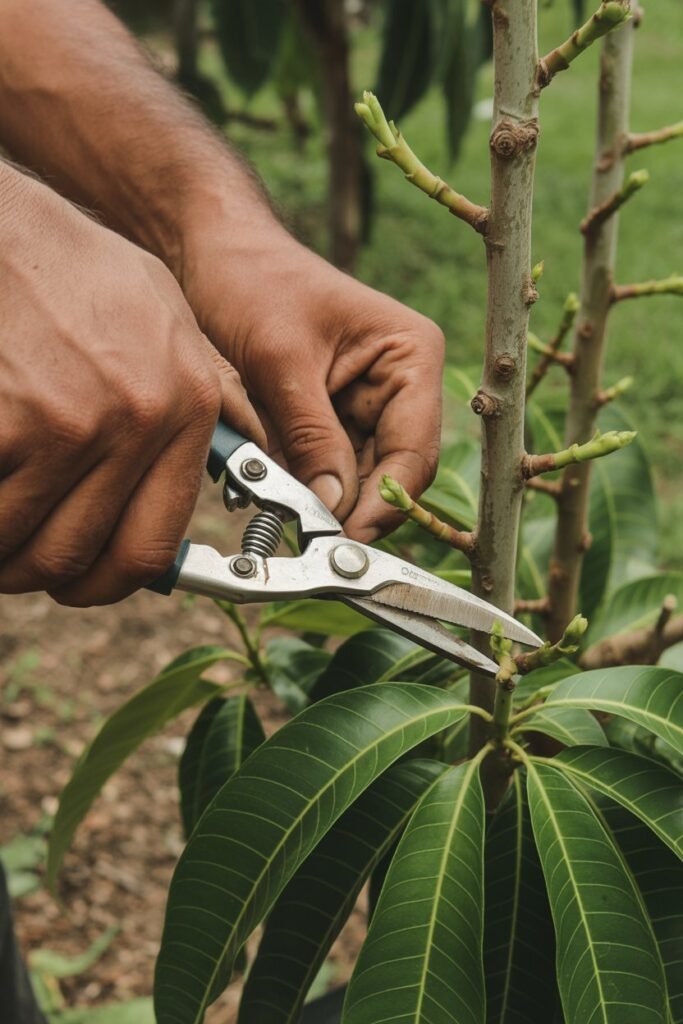
Pruning helps your mango stay compact, beautiful, and productive.
When to Prune:
- Right after harvest or at the start of spring.
How to Prune:
- Remove dead, crossing, or weak branches.
- Cut back long shoots to maintain size (under 6 feet if possible).
- Pinch young tips to encourage bushy growth.
Pro Tip: Don’t over-prune young trees leave enough leaves for photosynthesis.
You can also train your mango to grow as a small bush or miniature tree by shaping early.
Pollination & Fruiting

Most mango varieties are self-pollinating, but pollinators like bees can increase fruit yield.
If you’re growing indoors, gently shake the flowers or use a soft paintbrush to hand-pollinate.
Fruit typically forms within 2–4 years (faster for grafted trees).
Pro Tip: When fruits appear, thin out clusters to prevent branch breakage and help the tree focus on quality over quantity.
Pest and Disease Care
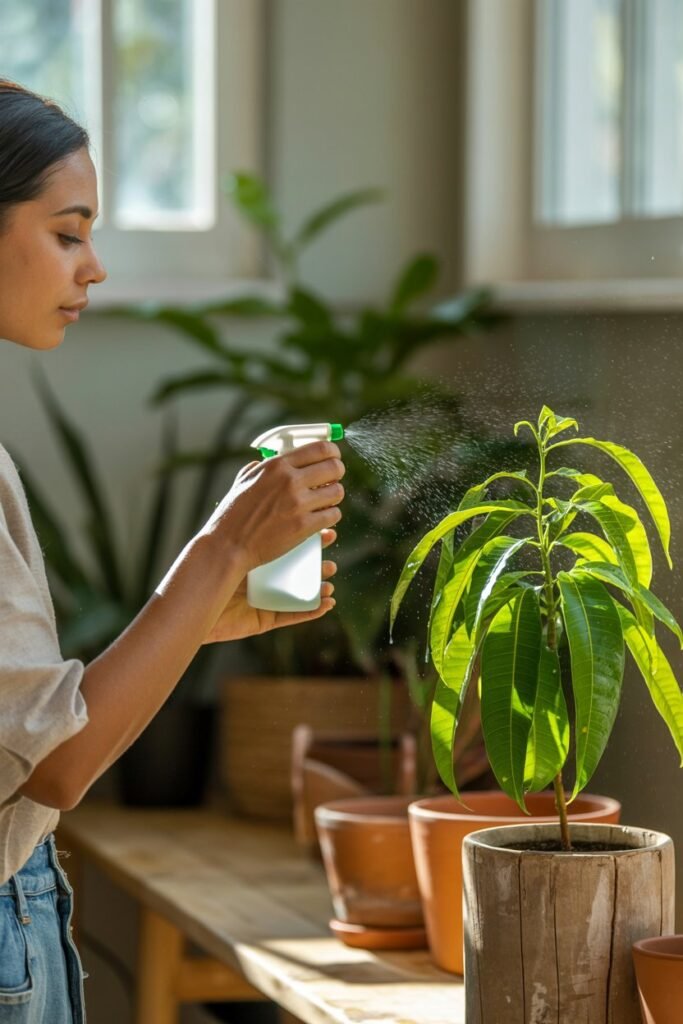
Mango trees in pots are less prone to pests but not immune. Keep an eye out for:
- Aphids, scale insects, or mealybugs
- Fungal leaf spots from excess moisture
Natural Solutions:
- Spray leaves weekly with diluted neem oil.
- Wipe leaves with damp cloths to remove dust.
- Ensure good airflow around the plant.
Pro Tip: Healthy leaves = happy fruit. Clean leaves photosynthesize better.
Overwintering Mango Trees
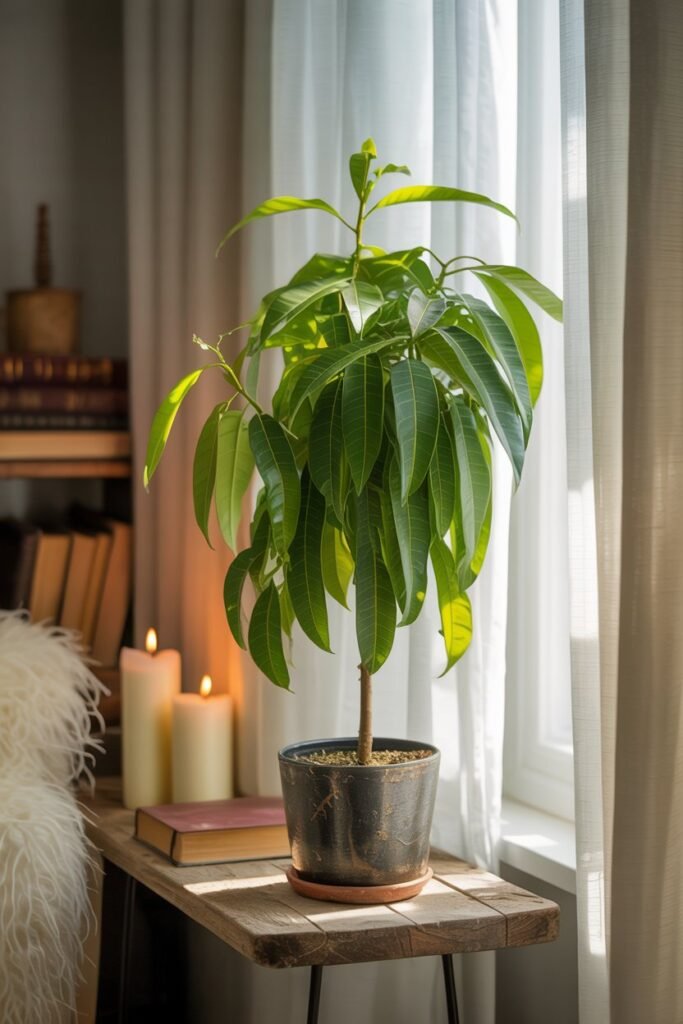
If you live in a region that drops below 50°F (10°C):
- Bring your pot indoors before frost.
- Place near a sunny window or grow light.
- Mist the leaves regularly to prevent dryness.
- Water sparingly growth slows in winter.
Pro Tip: Don’t fertilize in winter; let your tree rest.
Harvesting Mangoes
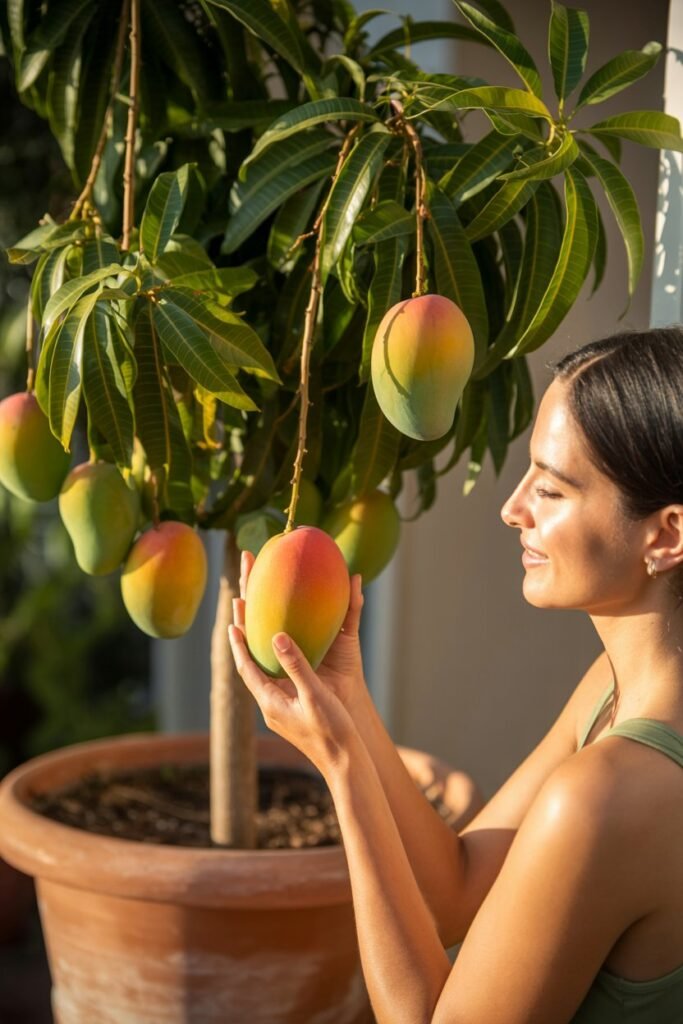
Your first harvest will feel magical. Fruits are ready when they:
- Change color (green to yellow/orange)
- Soften slightly to the touch
- Give off a sweet, floral aroma
Cut the fruit with pruning shears instead of twisting to avoid damaging branches.
Let mangoes ripen off the tree for maximum sweetness.
Pro Tip: A little patience pays off tree-ripened mangoes are far sweeter than store-bought ones.
Common Problems & Fixes
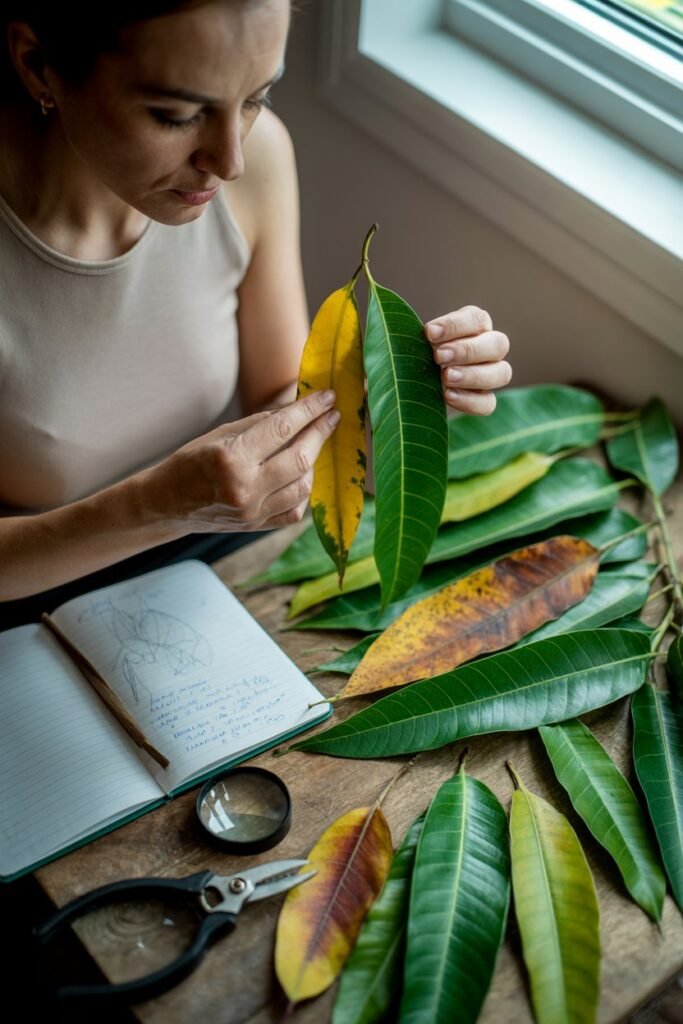
| Issue | Likely Cause | Solution |
|---|---|---|
| Yellow leaves | Overwatering | Improve drainage, let soil dry |
| No fruit | Lack of sunlight or too much nitrogen | Move to full sun, adjust fertilizer |
| Black spots on leaves | Fungal infection | Neem oil or copper fungicide |
| Leaf drop | Temperature stress | Gradual acclimation when moving indoors/outdoors |
Final Thoughts
Growing a mango tree in a container is more than a project it’s a relationship. You nurture it, watch it respond to your care, and one day, it rewards you with fruit that tastes like sunshine and love.
Every new leaf feels like a victory. Every bloom, a whisper of hope.
When you grow a mango tree in a pot, you’re not just growing a plant you’re growing a piece of summer that lives with you all year long.”
So don’t wait for the perfect garden create your own tropical paradise, right where you are.
