
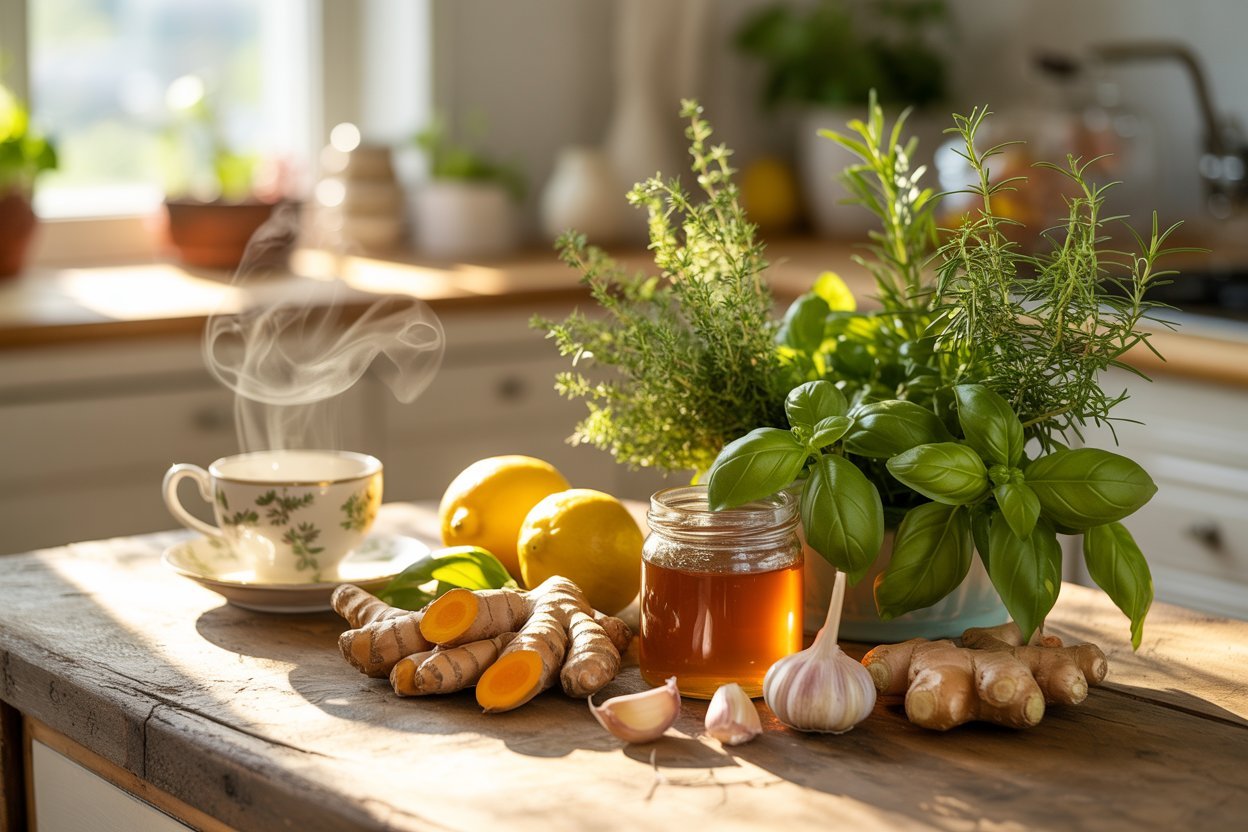

There is something quietly powerful about natural remedies. They don’t shout. They don’t promise miracles. They simply work alongside the body, supporting it in ways that feel gentle, familiar, and deeply rooted in tradition.
Long before shelves were lined with brightly labeled medications, healing often began in the kitchen, the garden, or the wild edges of a home.
Women passed down knowledge in hushed conversations how to simmer roots when the stomach felt uneasy, how to soothe sore throats with honey and herbs, how certain spices could protect food and the body. This wisdom wasn’t written in textbooks. It lived in daily life.
Today, many of us are finding our way back to that quieter form of care.
Not because modern medicine isn’t important it absolutely is but because our bodies are asking for balance.
We are more aware than ever of gut health, immune support, antibiotic resistance, and the long-term effects of what we consume.
Natural antibiotics have gently re-entered the conversation as supportive tools, especially for everyday wellness, early discomfort, and prevention.
This guide is not about replacing doctors or prescriptions.
It’s about understanding how certain foods, herbs, and natural substances have been traditionally used to support the body’s defenses, help maintain microbial balance, and create environments where unwanted bacteria, fungi, or viruses struggle to thrive.
Think of this as a warm conversation over tea. No fear. No pressure. Just knowledge, respect for the body, and a deep appreciation for what nature quietly offers us.
In this guide, we’ll explore:
- What natural antibiotics truly are
- How they’re traditionally prepared and used
- When and how to approach them safely
- Twenty powerful natural antibiotic foods and herbs
- Gentle remedies for common concerns
- The role of essential oils
- And how to grow your own healing plants at home
Let’s begin at the root by understanding what we really mean when we say natural antibiotics.
What Are Natural Antibiotics?
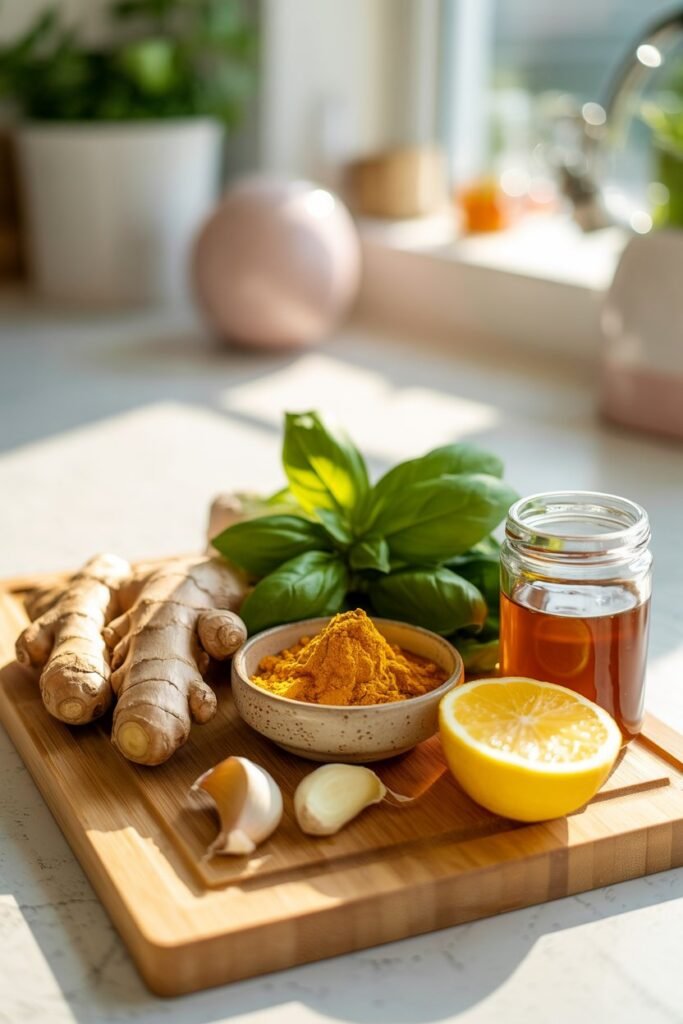
Natural antibiotics are foods, herbs, and natural substances that contain antibacterial, antifungal, antiviral, or antimicrobial properties.
Rather than targeting bacteria in a fast and aggressive way like pharmaceutical antibiotics, they tend to work more subtly supporting the body’s natural defenses and helping maintain balance within the immune and digestive systems.
They are not a modern invention. In fact, they predate modern medicine by thousands of years.
Across cultures and continents, people relied on plants not just for nourishment, but for protection. Certain herbs were known to preserve food longer.
Some roots soothed infections. Spices warmed the body and discouraged illness. Honey was prized not only for sweetness, but for its remarkable ability to resist spoilage and soothe wounds.
What makes these substances special is not that they “kill everything.” Instead, many of them:
- Help slow the growth of harmful microorganisms
- Create environments where pathogens struggle to survive
- Support beneficial bacteria rather than destroy them
- Work in harmony with digestion, immunity, and inflammation
This gentler action is one reason natural antibiotics are often associated with fewer disruptions to gut health when used appropriately.
Natural Antibiotics vs. Pharmaceutical Antibiotics
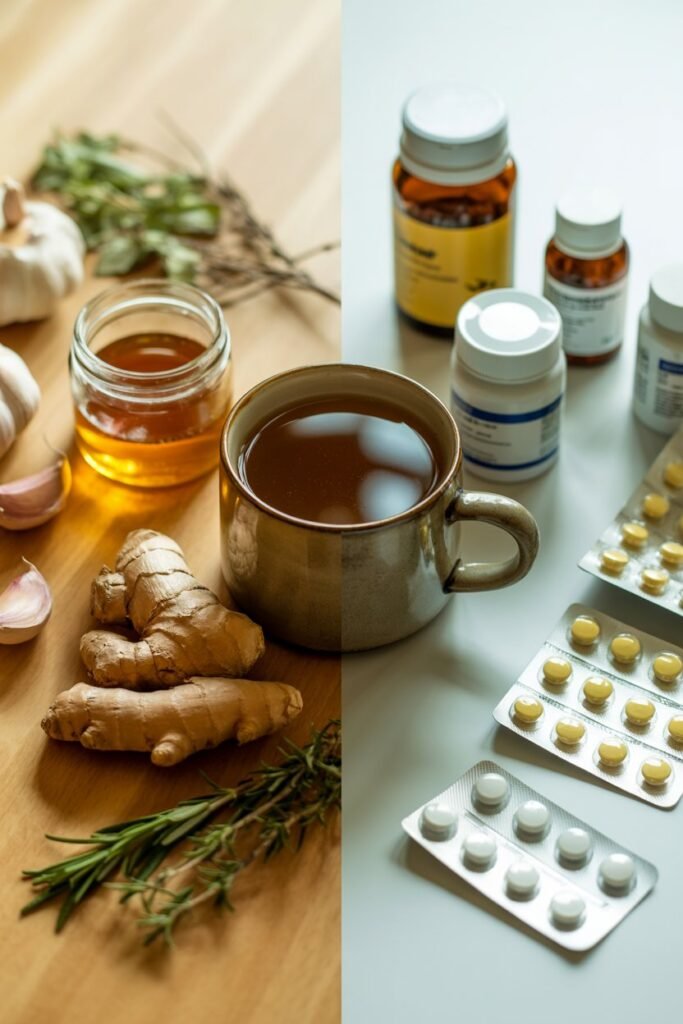
It’s important to understand the difference.
Pharmaceutical antibiotics are designed to treat specific bacterial infections, often quickly and aggressively. They can be lifesaving and essential in serious or advanced infections. However, they may also:
- Disrupt beneficial gut bacteria
- Contribute to antibiotic resistance when overused
- Cause digestive upset or sensitivity in some people
Natural antibiotics, on the other hand, are supportive rather than dominant. They are most commonly used:
- As part of daily nutrition
- During early signs of imbalance
- For mild or recurring discomfort
- To support the immune system naturally
They do not replace prescribed medication, and they should never be relied on for severe infections. Instead, they act as companions to wellness, often working best when used thoughtfully and in moderation.
Why Interest in Natural Antibiotics Is Growing

In recent years, there has been a renewed interest in natural antibiotics, and it’s not just a trend it’s a response.
Many people are becoming more conscious of:
- The impact of repeated antibiotic use on gut health
- Rising antibiotic resistance worldwide
- The desire for gentler, more preventative approaches to health
- A deeper connection to food as medicine
There is also comfort in familiarity. Turmeric in a pot of soup. Ginger steeped in hot water. Garlic crushed into warm oil. These are not foreign substances—they are part of everyday life in many homes.
Natural antibiotics remind us that healing doesn’t always need to feel clinical. Sometimes it can feel warm, nourishing, and grounding.
How Natural Antibiotics Work in the Body
Natural antibiotics often contain compounds such as:
- Polyphenols
- Essential oils
- Alkaloids
- Sulfur compounds
- Flavonoids
These compounds may help:
- Inhibit the growth of certain bacteria or fungi
- Reduce inflammation that allows infections to worsen
- Support immune cell activity
- Maintain healthy microbial balance in the gut
Rather than overpowering the body, they often work alongside it, strengthening natural resilience over time.
A Gentle Word on Responsibility
Because natural antibiotics come from foods and plants, it’s easy to assume they are always safe. But natural does not automatically mean harmless.
Dosage, preparation, frequency, and individual sensitivity all matter. Pregnancy, chronic conditions, medications, and allergies should always be considered. This is why traditional use emphasizes moderation, observation, and respect for the body’s signals.
In the sections ahead, we’ll explore not just what to use, but how and when—with care, wisdom, and intention.
Taking Natural Antibiotics: Traditional & Practical Ways to Use Them
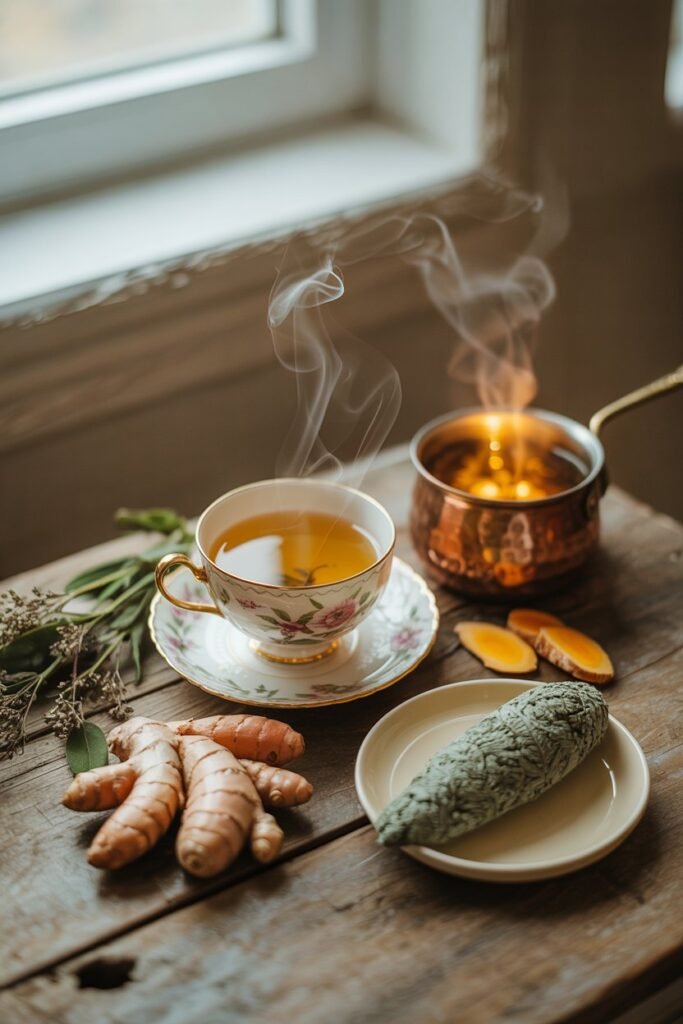
One of the most important things to understand about natural antibiotics is that how you take them matters just as much as what you take.
Preparation influences strength, absorption, and how the body responds. This is where traditional wisdom truly shines because long before capsules and labels, people learned how to work with plants rather than against them.
Natural remedies were rarely rushed. They were steeped, simmered, crushed, warmed, and applied with care.
These methods weren’t complicated, but they were thoughtful, and they respected the nature of the plant itself.
In this section, we’ll explore the most common and time-honored ways natural antibiotics are traditionally taken.
Each method serves a different purpose, and choosing the right one can make your experience safer, gentler, and more effective.
Infusions (Herbal Teas)
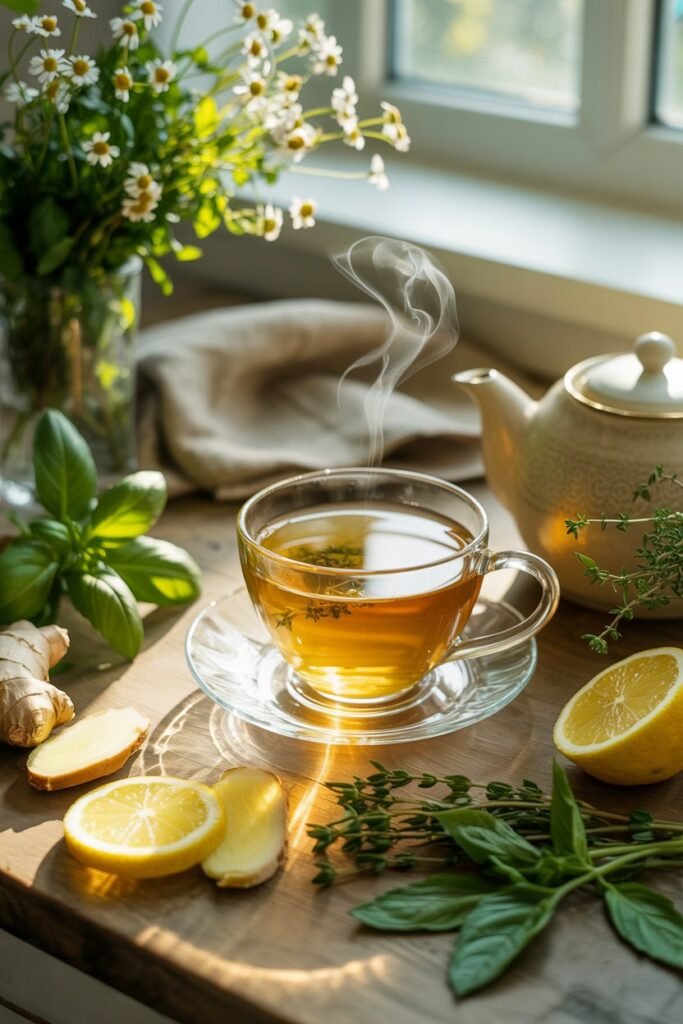
Infusions are perhaps the most familiar and comforting way to take natural antibiotics. They are gentle, accessible, and deeply soothing especially when the body feels run down or sensitive.
An infusion is made by pouring hot water over herbs and allowing them to steep. This method works best for:
- Leaves
- Flowers
- Soft stems
These parts of plants release their beneficial compounds easily with heat, making infusions ideal for everyday support.
Why Infusions Are So Loved
Infusions are gentle on the digestive system and naturally hydrating. They allow the body to absorb antimicrobial compounds slowly, which makes them particularly suitable for:
- Immune support during seasonal changes
- Mild digestive discomfort
- Throat and respiratory irritation
- Daily wellness routines
Many herbs with natural antibiotic properties such as thyme, chamomile, sage, ginger, and basil shine when prepared this way.
Creating a Ritual
There is something deeply nurturing about holding a warm cup of herbal tea. It invites rest, presence, and mindfulness. This pause alone supports healing by calming the nervous system, which is closely connected to immune health.
Infusions remind us that healing does not always need urgency. Sometimes, it needs warmth and patience.
Decoctions (Simmered Herbal Preparations)
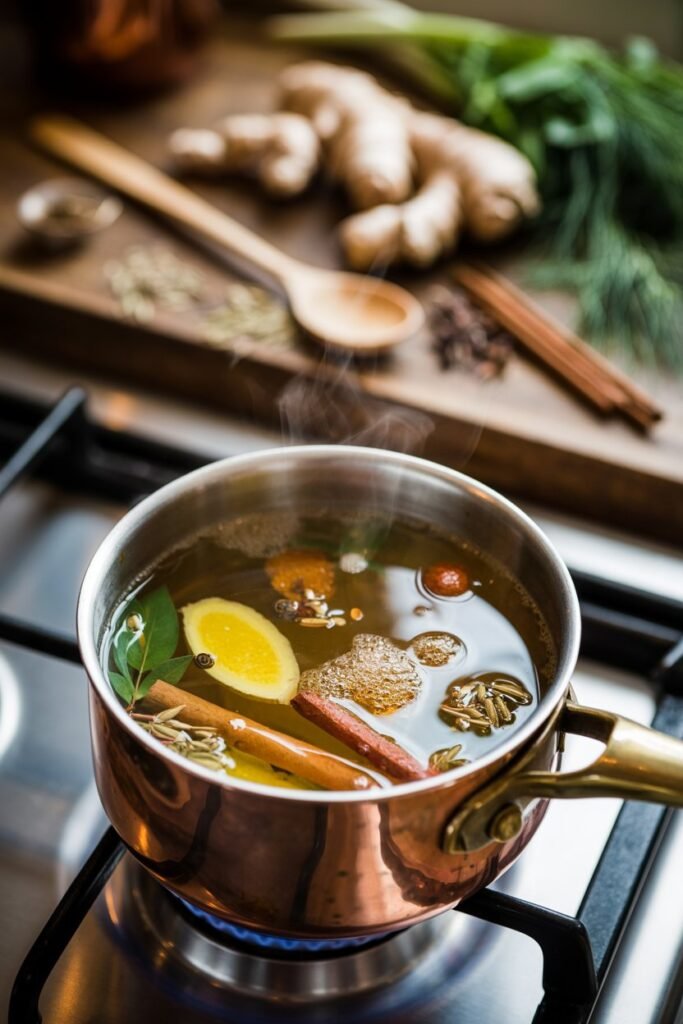
Decoctions are a stronger, more concentrated preparation than infusions. Instead of simply steeping herbs, decoctions involve simmering tougher plant materials in water for a longer period of time.
This method is best suited for:
- Roots
- Bark
- Seeds
- Hard spices
Think cinnamon sticks, cloves, ginger root, fennel seeds, and turmeric root. These parts of plants hold their medicinal compounds tightly, and gentle simmering helps draw them out.
When Decoctions Are Traditionally Used
Decoctions are often chosen when:
- Deeper immune support is desired
- Digestive discomfort feels stubborn
- Warming the body is important
- Stronger antimicrobial action is traditionally needed
Because decoctions are more potent, they are typically taken in smaller amounts and for shorter periods.
The Beauty of Slow Simmering
There’s a grounding quality to preparing a decoction. The gentle bubbling, the rising steam, the deepening color of the liquid—it feels intentional. This method invites us to slow down and treat healing as a process, not a shortcut.
Poultices (External Herbal Applications)
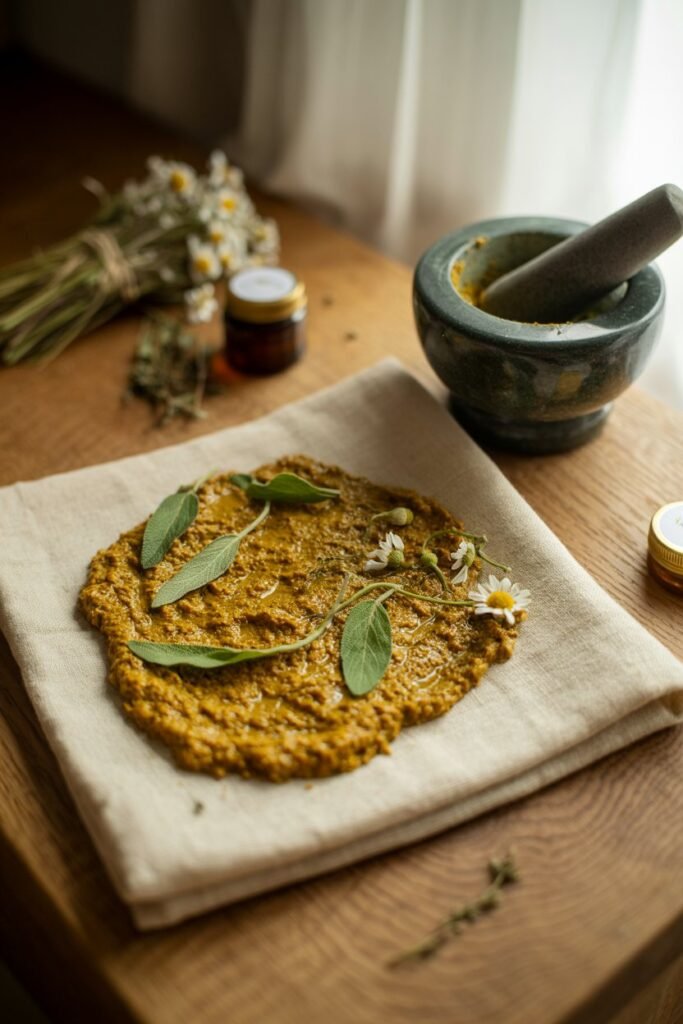
Poultices are one of the oldest forms of natural healing, yet they are often forgotten in modern wellness conversations.
A poultice is made by crushing or warming herbs and applying them directly to the skin, usually wrapped in cloth.
This method is traditionally used for external concerns, such as:
- Localized skin irritation
- Muscle tension
- Swelling
- Minor wounds
Natural antibiotics like garlic, ginger, turmeric, and herbs infused in oils have long histories of being used this way.
How Poultices Support Healing
The skin is highly absorbent. When applied carefully, poultices allow plant compounds to interact directly with the affected area, rather than traveling through digestion.
However, this method requires special care.
Some herbs especially garlic are very strong and can irritate or burn the skin if applied directly or left on too long. Traditional use always emphasized:
- Dilution
- Short application times
- Listening closely to the skin’s response
A gentle approach is essential here.
Topical Treatments (Oils, Balms & Natural Applications)

Topical treatments are one of the most versatile ways to use natural antibiotics. These include:
- Herbal-infused oils
- Honey
- Coconut oil
- Herbal pastes and balms
Topical use is especially helpful for:
- Skin concerns
- Minor cuts or abrasions
- Fungal imbalances
- Oral and lip care
Honey, for example, has been used for centuries on wounds due to its ability to create an environment that discourages bacterial growth. Coconut oil is prized for its soothing texture and natural antimicrobial fatty acids.
The Importance of Boundaries
One of the most important things to remember with topical treatments is this:
External use does not equal internal safety.
Some substances that are safe on the skin are not appropriate for ingestion. Keeping clear boundaries between internal and external use protects both the body and the integrity of natural remedies.
Choosing the Right Method for Your Body
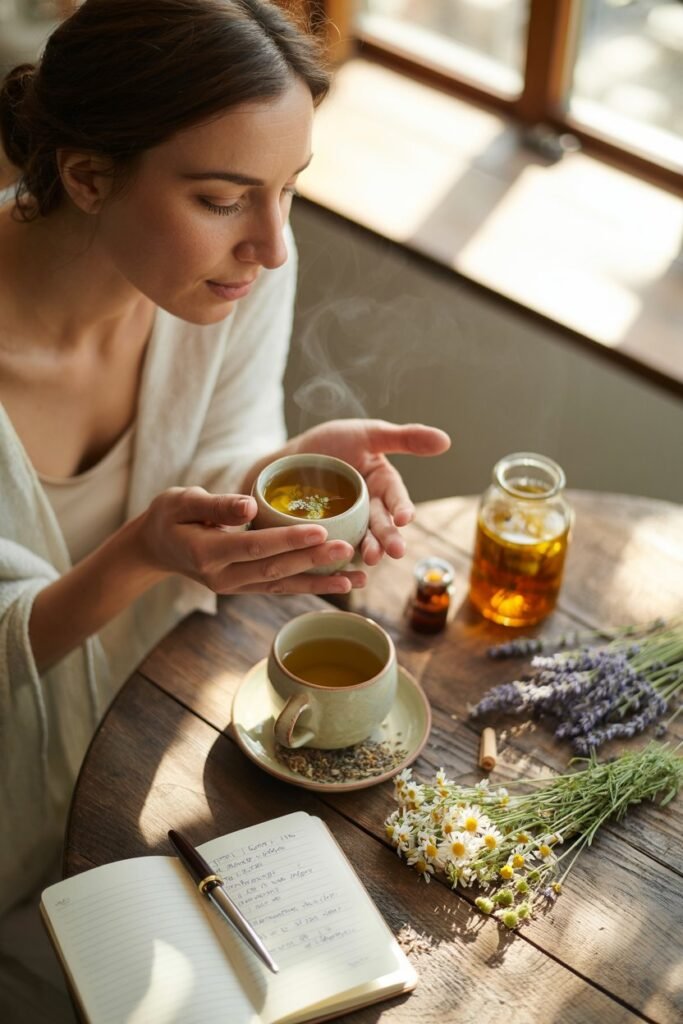
Every body responds differently. What feels comforting and effective for one person may feel too strong or unnecessary for another. Traditional healing always honored individuality paying attention to:
- Sensitivity
- Comfort
- Timing
- Overall health
The goal of natural antibiotics is not to overpower the body, but to support it gently, allowing its natural intelligence to lead the way.
In the next section, we’ll explore timing when natural antibiotics are traditionally taken and how timing can influence how the body receives them.
The Best Times to Take Natural Antibiotics
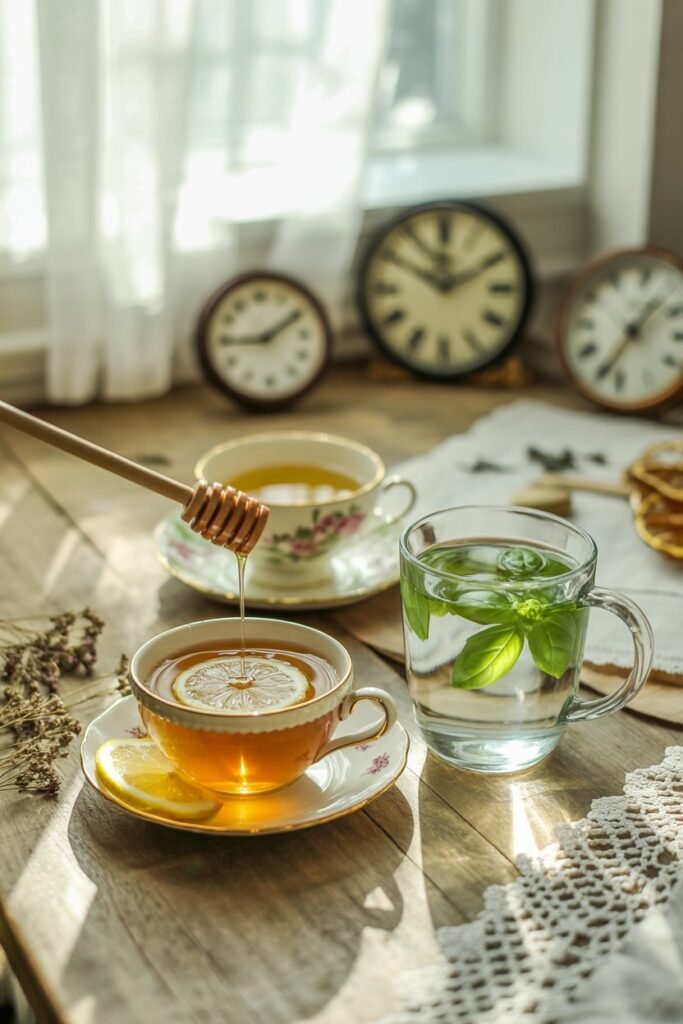
When it comes to natural antibiotics, timing is a quiet but powerful ally. Traditional healing systems have always understood that the body moves in rhythms daily, seasonal, and emotional.
Working in harmony with those rhythms can gently influence how well natural remedies are received and utilized.
Unlike conventional medications that often follow strict schedules, natural antibiotics are usually guided by observation and intuition, supported by simple principles.
The goal is not precision down to the minute, but awareness of how the body feels and responds.
This section will help your readers understand when natural antibiotics are traditionally taken, and why timing matters.
Taking Natural Antibiotics in the Morning
Morning is often associated with cleansing and renewal. After hours of rest, the digestive system begins to awaken, and the body naturally shifts toward elimination and energy.
Natural antibiotics taken in the morning are traditionally chosen to:
- Support digestion
- Gently stimulate the immune system
- Help the body clear lingering waste
Warm preparations such as herbal infusions or mild decoctions are especially favored in the early hours. Ginger, lemon, honey, or turmeric in warm water are often used to awaken the system without overwhelming it.
Morning use is generally considered helpful when:
- Supporting gut balance
- Easing mild digestive discomfort
- Beginning immune support at the first signs of imbalance
The key here is gentleness. The body is still waking up, and strong remedies are traditionally avoided first thing in the morning unless specifically needed.
Taking Natural Antibiotics During the Day
Daytime use of natural antibiotics often aligns with active support. This is when the body is most engaged with digestion, movement, and environmental exposure.
Natural remedies taken during the day are commonly used:
- With meals or shortly after
- To support digestion and absorption
- To gently discourage unwanted microbes in the gut
Herbs and foods such as garlic, oregano, basil, rosemary, cumin, and fennel seeds are traditionally incorporated into meals rather than taken separately. This approach:
- Reduces digestive irritation
- Enhances flavor and enjoyment
- Supports consistent, moderate intake
This is one of the safest and most natural ways to include antibiotic-rich foods in daily life simply by cooking with intention.
Taking Natural Antibiotics in the Evening
Evening is associated with rest, repair, and restoration. The body begins to slow down, shifting its focus from activity to healing.
In the evening, natural antibiotics are often chosen to:
- Soothe inflammation
- Support respiratory and throat comfort
- Calm the nervous system
- Encourage restful sleep
Gentler herbs such as chamomile, sage, and warm honey-based preparations are traditionally favored. Strong, stimulating remedies are usually avoided late at night, as they may disrupt sleep or digestion.
Evening use is particularly helpful when:
- The body feels run down
- Throat or sinus discomfort appears at night
- Rest and relaxation are part of the healing goal
Taking Natural Antibiotics at the First Sign of Discomfort
One of the most common traditional approaches to natural antibiotics is early support. Rather than waiting for symptoms to intensify, people often turn to herbs and foods at the first subtle signs:
- Fatigue
- Digestive unease
- Mild throat irritation
- General feeling of being “off”
At this stage, natural antibiotics may help create an environment that is less welcoming to harmful microbes, giving the body space to rebalance itself.
This early, gentle response is one reason natural remedies are so beloved they encourage awareness and self-care rather than urgency and fear.
Seasonal Timing and Natural Antibiotics
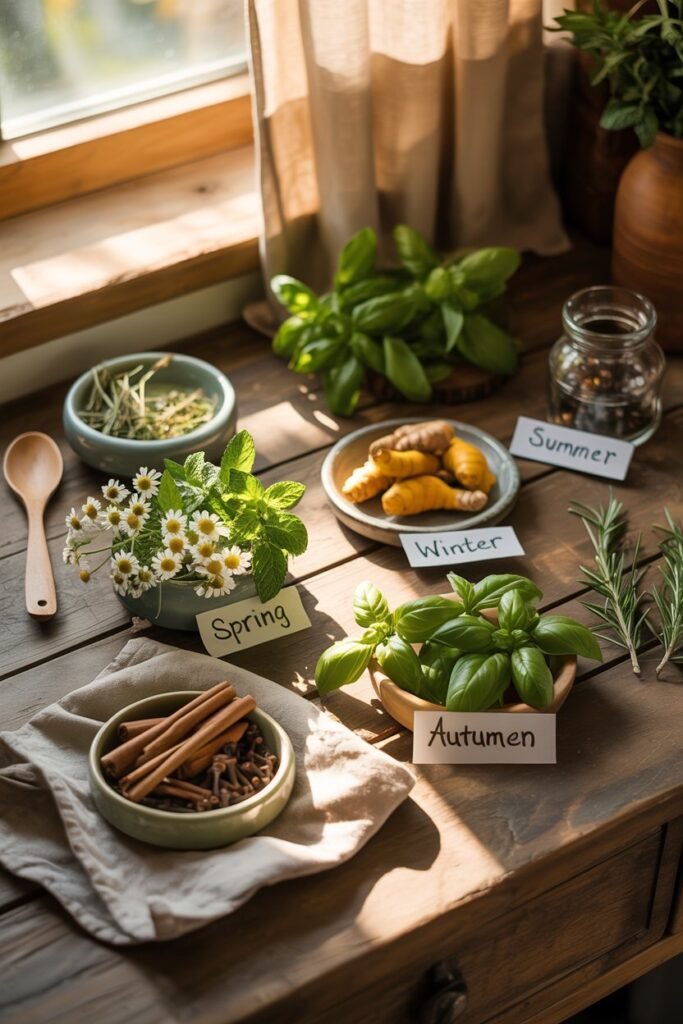
Traditional healing systems also emphasize seasonal awareness.
- In cooler months, warming spices like ginger, cinnamon, cloves, and black pepper are commonly used.
- In warmer months, lighter herbs and foods such as basil, cilantro, lemon, and chamomile are favored.
- During seasonal transitions, immune-supportive herbs may be used more intentionally for short periods.
This seasonal approach helps prevent overuse and keeps remedies aligned with the body’s natural needs.
Listening to Your Body’s Signals
Perhaps the most important guidance of all is this: your body speaks softly, but clearly.
Signs that timing is supportive may include:
- Comfort after use
- Gentle improvement
- No digestive upset or irritation
Signs that timing or the remedy itself may not be right include:
- Discomfort
- Fatigue
- Irritation
- A sense of heaviness
Traditional wisdom teaches that healing is not forced. If something doesn’t feel right, it’s a signal to pause, adjust, or stop.
A Gentle Reminder
Natural antibiotics are best used:
- Thoughtfully
- In moderation
- For short periods
- As part of an overall wellness approach
They are not meant to be taken constantly or without purpose. Respecting timing helps preserve their effectiveness and supports the body rather than stressing it.
How Much Natural Antibiotics Should We Take?
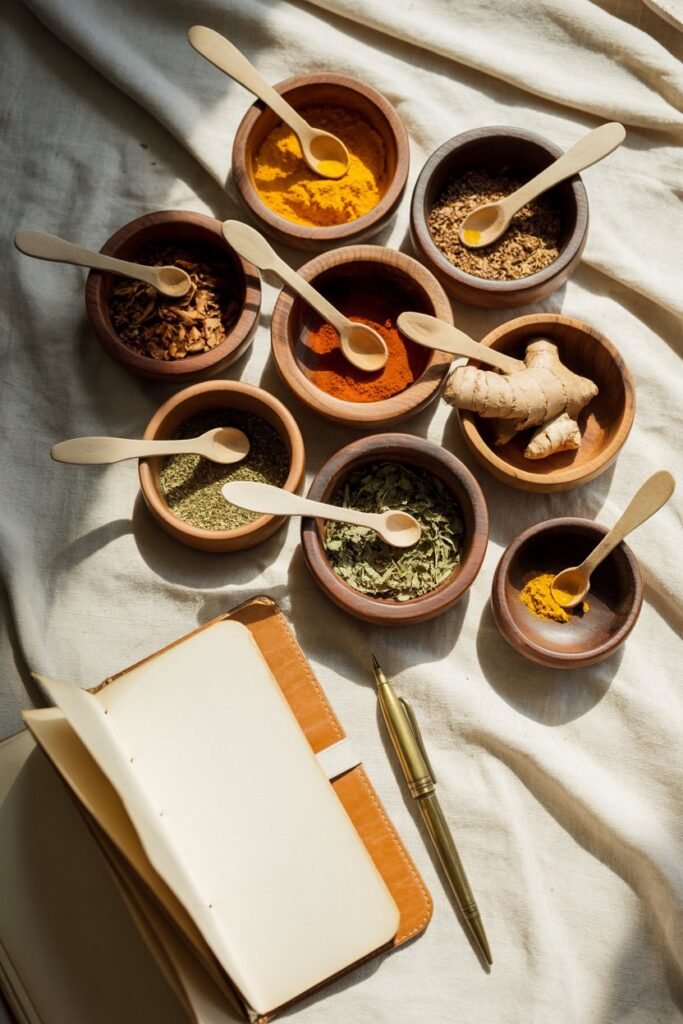
When it comes to natural antibiotics, more is not better. This is one of the most important lessons passed down through traditional healing practices and one that often gets lost in modern wellness culture.
Natural remedies are powerful not because they are aggressive, but because they work in harmony with the body.
Using them thoughtfully, in appropriate amounts, allows the body to respond without becoming overwhelmed or irritated.
This section is not about numbers or strict rules. Instead, it’s about learning how to recognize balance, respect limits, and approach natural antibiotics with intention rather than urgency.
Understanding Moderation in Natural Healing
In traditional herbal wisdom, remedies were rarely used continuously or excessively. They were brought in when needed, then gently set aside once balance returned.
Natural antibiotics are best understood as:
- Short-term supporters
- Seasonal helpers
- Gentle nudges rather than forceful interventions
Using too much even of something natural can lead to:
- Digestive discomfort
- Irritation of the stomach or gut lining
- Sensitivity reactions
- Disruption of beneficial bacteria
This is especially true for strong herbs and spices such as garlic, oregano, cloves, and cinnamon.
Food-Based Natural Antibiotics vs. Concentrated Forms
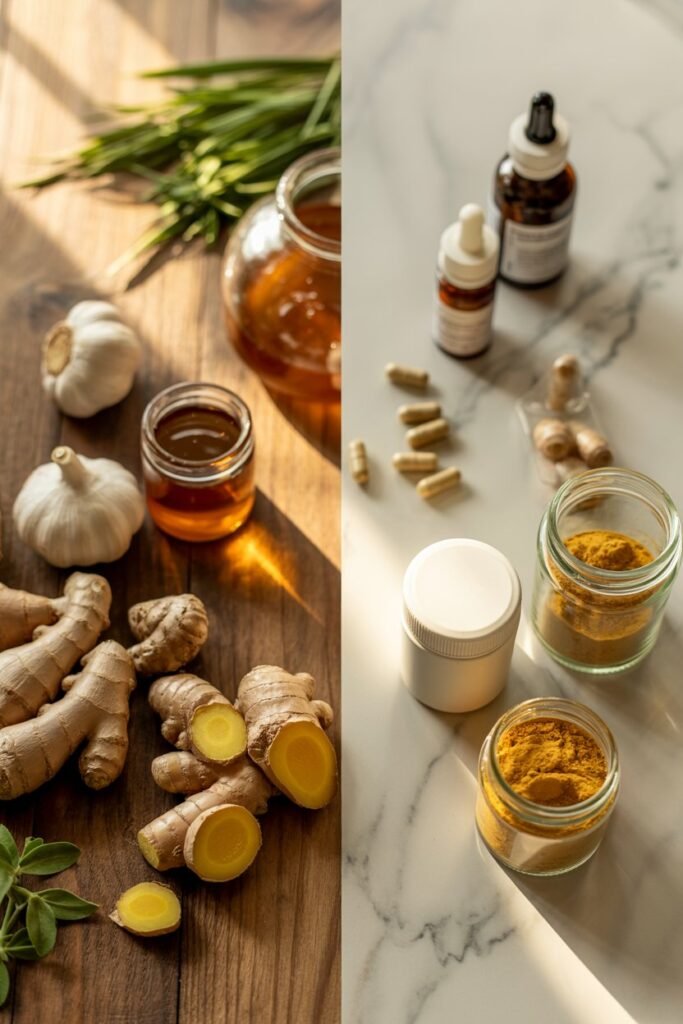
One of the safest and most traditional ways to consume natural antibiotics is through food.
When herbs and spices are used:
- In cooking
- As part of meals
- In small, consistent amounts
the body tends to receive them well. This approach allows for:
- Gentle daily exposure
- Lower risk of irritation
- Support of overall digestion
Concentrated forms such as strong decoctions, raw preparations, or extracts are traditionally used for shorter periods and with more care.
The difference lies in intention:
- Food nourishes over time
- Concentrated remedies intervene briefly
Both have their place, but they are not interchangeable.
Listening to Your Body’s Response
The body is incredibly wise, and it often signals when something is too much.
Signs that a natural antibiotic is being well tolerated may include:
- A sense of warmth or comfort
- Improved digestion
- Gradual easing of discomfort
- Feeling supported rather than strained
Signs that it may be time to reduce or stop include:
- Burning or irritation
- Nausea or bloating
- Fatigue or heaviness
- Skin reactions
Traditional healing encourages pausing at the first sign of discomfort, not pushing through it.
Duration Matters More Than Quantity
Rather than focusing on “how much,” it’s often more helpful to think in terms of how long.
Natural antibiotics are commonly used:
- For a few days
- For a short seasonal period
- At the onset of mild symptoms
They are not typically meant for long-term, daily use unless they are part of regular food intake.
Once balance begins to return, remedies are gently reduced or stopped. This prevents dependency and allows the body to regain its own rhythm.
Individual Differences Matter
No two bodies are the same. Factors that influence how much natural antibiotics a person may tolerate include:
- Age
- Digestive sensitivity
- Existing health conditions
- Pregnancy or breastfeeding
- Current medications
This is why traditional healing has always emphasized personal experience over rigid rules. What feels supportive for one person may feel too strong for another.
If there is ever uncertainty especially in the presence of ongoing health concerns it’s wise to consult a healthcare professional before using concentrated natural remedies.
A Note on Children and Natural Antibiotics
When it comes to children, traditional wisdom becomes even gentler.
Children’s bodies are more sensitive, and remedies are typically:
- Milder
- Food-based
- Used externally rather than internally
Strong herbs, essential oils, and concentrated preparations are traditionally avoided unless guided by a knowledgeable professional.
Respecting the Wisdom of the Body
Natural antibiotics are not meant to control the body they are meant to support it. Respect, patience, and awareness create far better outcomes than intensity or excess.
When used thoughtfully, these remedies can feel like a quiet conversation with the body rather than a command.
20 Natural Antibiotics
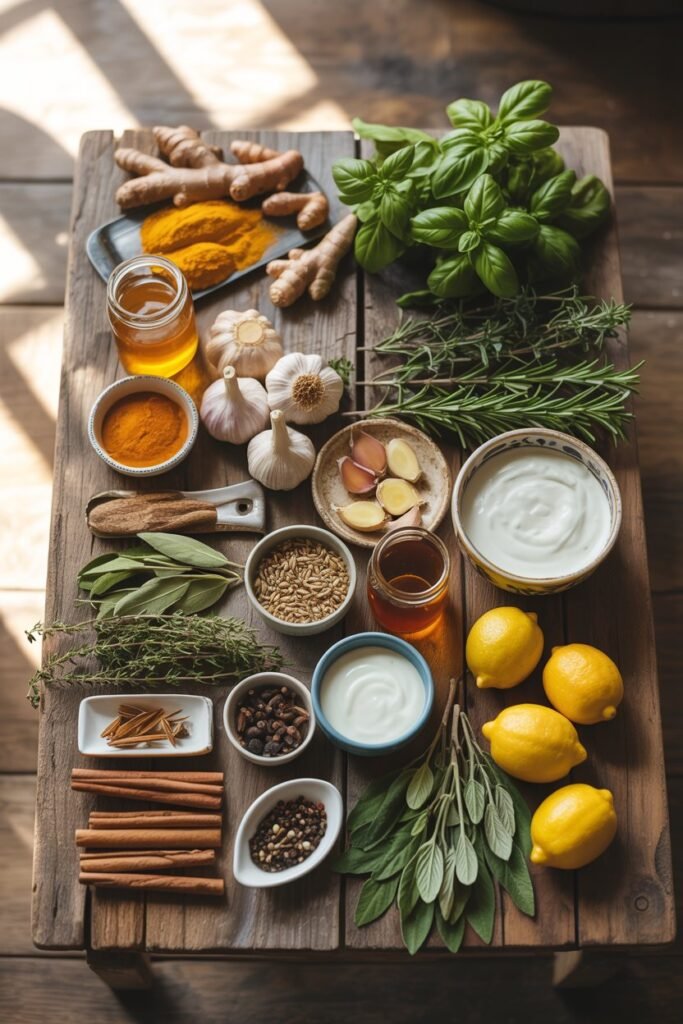
Natural antibiotics don’t arrive loudly. They come through warmth, aroma, flavor, and familiarity. Many of them already live in our kitchens, woven into daily meals and cultural traditions.
Their strength lies not in force, but in consistency and respect for the body’s natural rhythms.
Each of the natural antibiotics below has been traditionally valued for its ability to help discourage harmful microbes while supporting overall wellness.
None of them are miracle cures but together, they form a gentle, powerful foundation for everyday health.
1. Turmeric
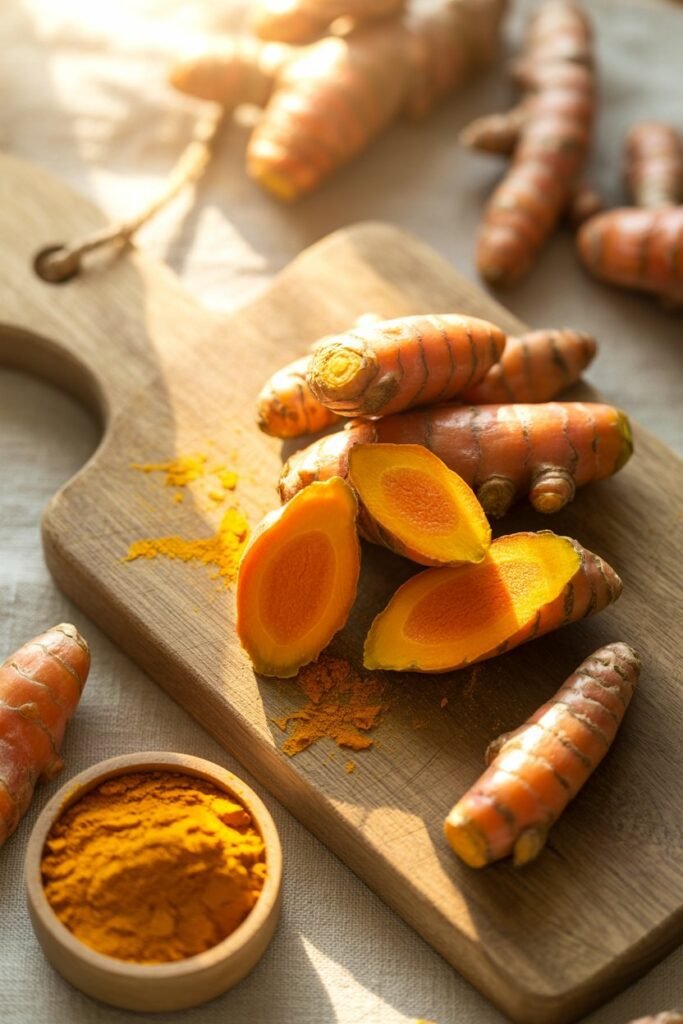
The Golden Root of Quiet Strength
Turmeric is often called the golden healer, and for good reason. With its deep yellow-orange hue and earthy warmth, turmeric has been treasured for centuries in traditional healing systems across Asia and beyond.
At the heart of turmeric’s power is curcumin, a compound known for its antimicrobial and anti-inflammatory properties.
Rather than acting aggressively, turmeric supports the body by helping reduce inflammation an environment where harmful bacteria often thrive.
Traditional Uses
- Supporting immune balance
- Encouraging digestive comfort
- Helping the body respond to internal inflammation
Turmeric has long been used in warm drinks, soups, stews, and pastes. In many cultures, it’s also applied externally as part of skin rituals, always with care and dilution.
How It’s Commonly Enjoyed
- Stirred into soups and broths
- Blended into warm milk or plant-based alternatives
- Added to rice, vegetables, and slow-cooked meals
Turmeric is best appreciated as a daily food ally, rather than a short-term remedy. Its magic builds slowly and gently.
Gentle Safety Note
Turmeric is generally well tolerated in culinary amounts. Those with sensitive digestion or specific health conditions often find it best enjoyed as part of meals rather than on an empty stomach.
2. Oregano
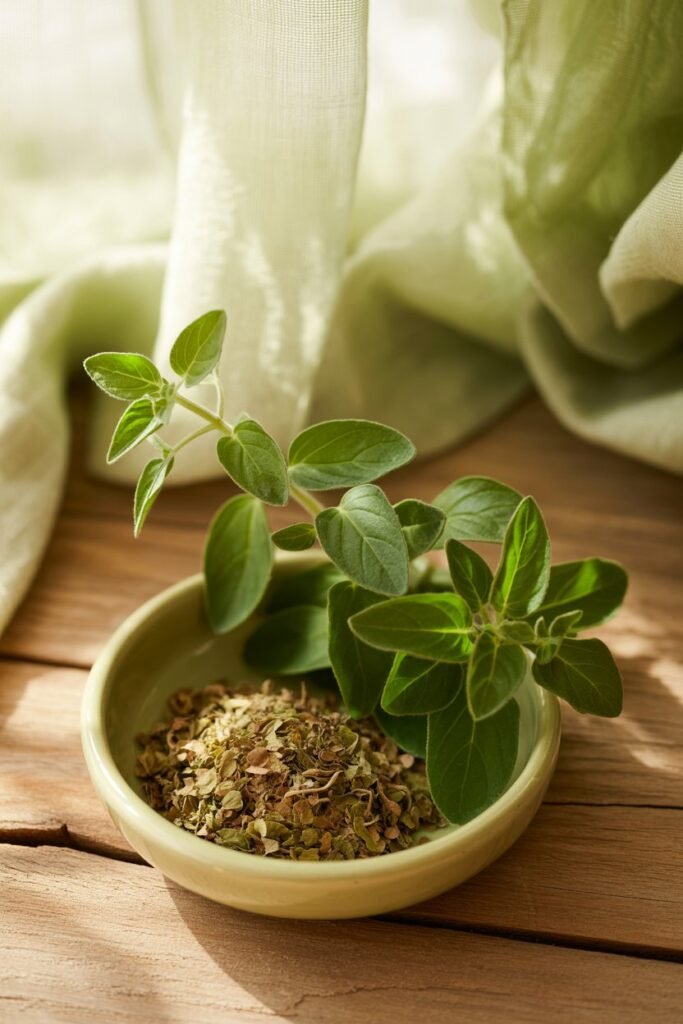
Bold, Aromatic, and Deeply Protective
Oregano may seem like a simple kitchen herb, but beneath its familiar flavor lies a powerful plant with a long history of traditional use.
Oregano contains natural compounds that have been studied for their ability to discourage bacterial and fungal growth. Its strength is unmistakable sharp, warming, and assertive which is why traditional wisdom treats oregano with respect rather than excess.
Traditional Uses
- Supporting respiratory comfort
- Encouraging digestive balance
- Helping the body resist seasonal challenges
In traditional kitchens, oregano was often used generously during colder months, when immune support was most needed.
How It’s Commonly Enjoyed
- Cooked into savory dishes
- Steeped gently as an herbal infusion
- Used fresh or dried rather than highly concentrated forms
When oregano is part of food, its intensity is naturally balanced by other ingredients.
Gentle Safety Note
Because oregano is strong, traditional use favors moderation. Concentrated preparations are not meant for long-term or casual use, especially for sensitive individuals.
3. Thyme
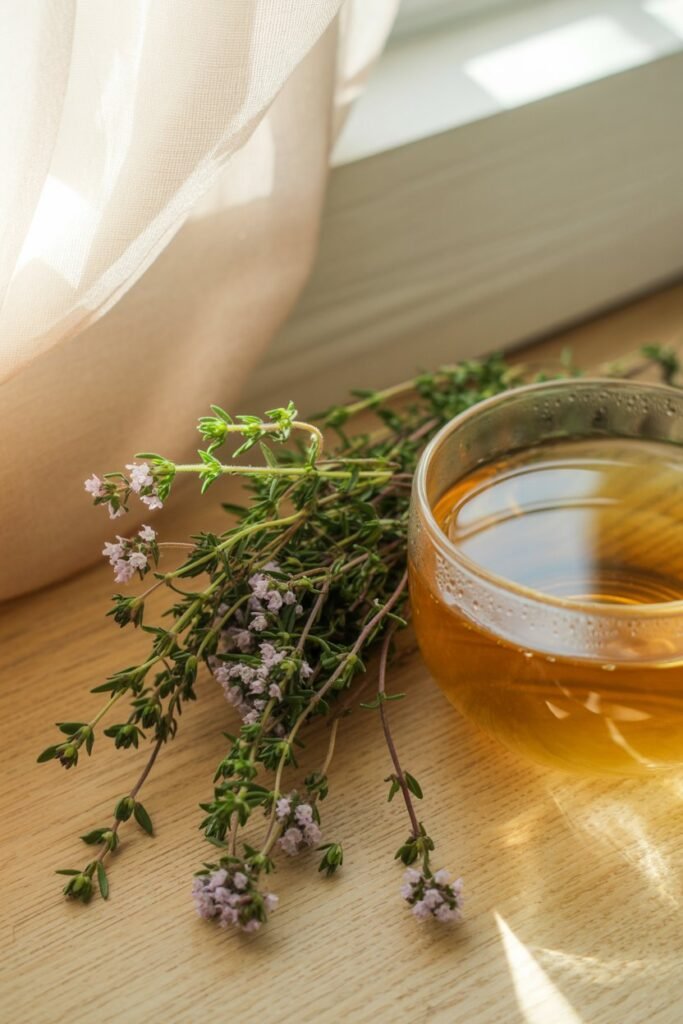
Small Leaves, Remarkable Strength
Thyme may be delicate in appearance, but it carries a surprising depth of antimicrobial support. Its aroma alone feels cleansing and clarifying.
Traditionally, thyme has been associated with respiratory and throat comfort. Its natural compounds help create an environment where unwanted microbes struggle to settle, especially in the upper respiratory tract.
Traditional Uses
- Supporting throat and chest comfort
- Encouraging clear breathing
- Gentle immune support during seasonal shifts
Thyme has been valued not only for its healing properties, but for its calming presence. It’s one of those herbs that feels both protective and nurturing.
How It’s Commonly Enjoyed
- Steeped as a warm herbal tea
- Added to soups, stews, and roasted vegetables
- Combined with honey for soothing preparations
Thyme works beautifully in gentle, repeated use rather than intense bursts.
Gentle Safety Note
Thyme is generally mild when used in food and teas. Its traditional use emphasizes warmth and comfort, not intensity.
4. Ginger
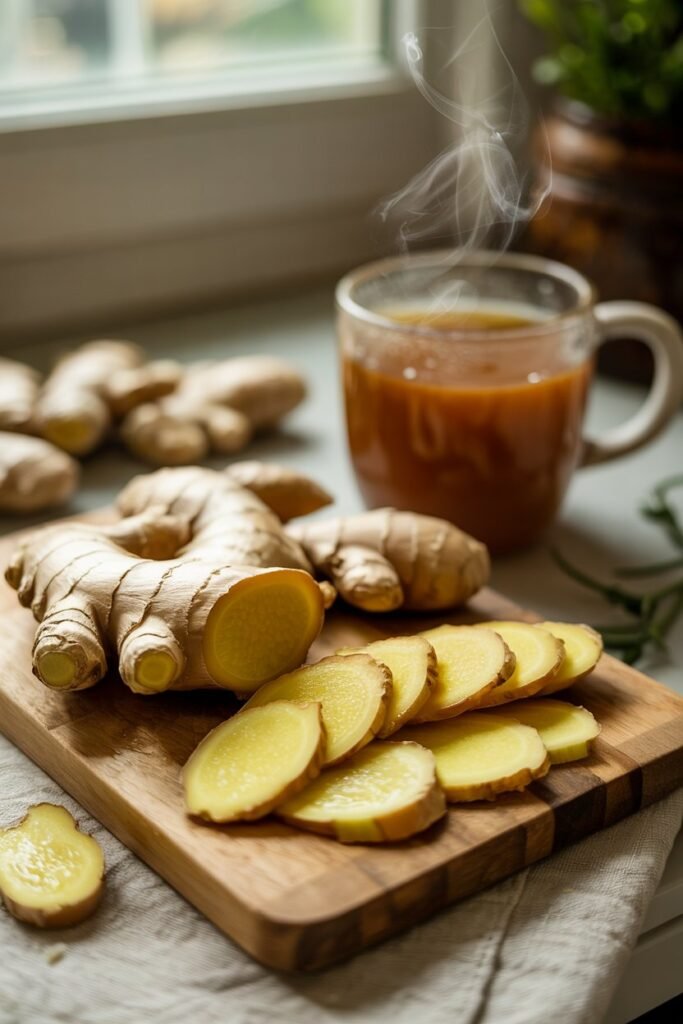
Warming, Grounding, and Comforting
Ginger is one of the most universally loved natural antibiotics and one of the most comforting. Its warmth spreads slowly through the body, encouraging circulation, digestion, and immune responsiveness.
Ginger has been traditionally used to support the body during times of digestive upset and seasonal vulnerability. Its antimicrobial properties are paired with a soothing effect that helps the body feel supported rather than stressed.
Traditional Uses
- Supporting digestion and gut balance
- Warming the body during chills or fatigue
- Encouraging circulation and immune response
Ginger is often the first herb people reach for when something feels “off,” and for good reason it meets the body where it is.
How It’s Commonly Enjoyed
- Fresh ginger steeped in hot water
- Added to soups, stir-fries, and teas
- Paired with honey and lemon
Ginger feels especially nurturing when taken warm and slowly.
Gentle Safety Note
Ginger is widely tolerated, though traditional wisdom suggests keeping amounts moderate for those with very sensitive digestion.
5. Sage
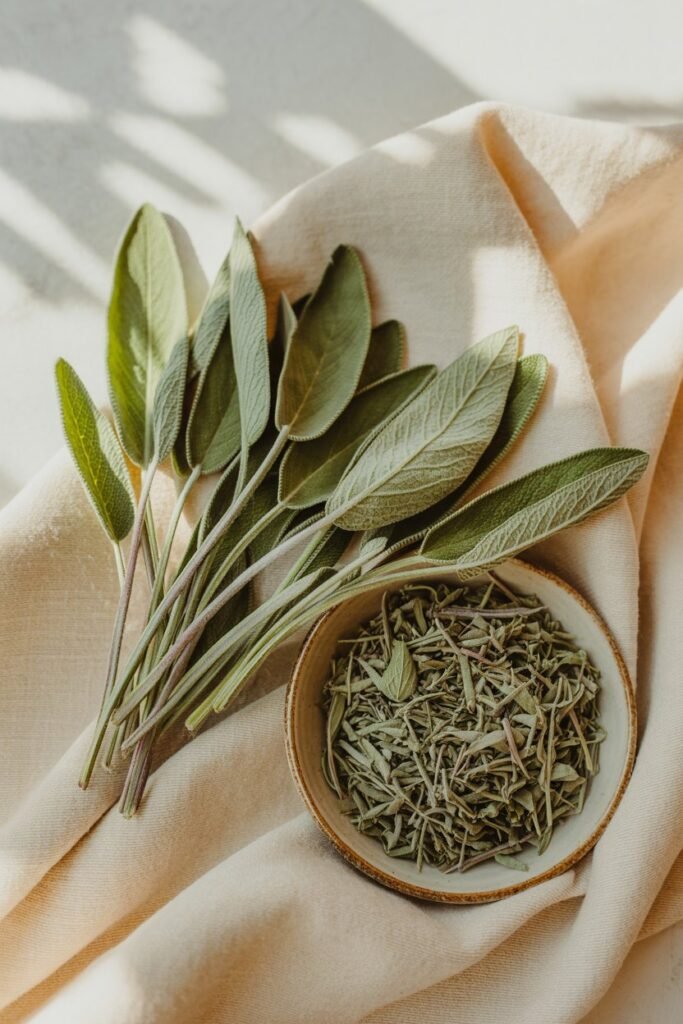
Calming, Cleansing, and Wise
Sage carries an air of quiet wisdom. Traditionally associated with cleansing and protection, sage has been used for both internal and external support across many cultures.
Its antimicrobial properties are often linked to oral and throat comfort, making it a traditional favorite for gargles and warm teas.
Traditional Uses
- Supporting oral and throat health
- Encouraging balance in the body
- Gentle immune and digestive support
Sage feels grounding and stabilizing an herb often chosen when the body needs calm rather than stimulation.
How It’s Commonly Enjoyed
- Steeped as a mild herbal tea
- Used in savory cooking
- Combined with honey for throat comfort
Gentle Safety Note
Sage is best used in moderation and traditionally not consumed in large amounts over long periods.
6. Honey
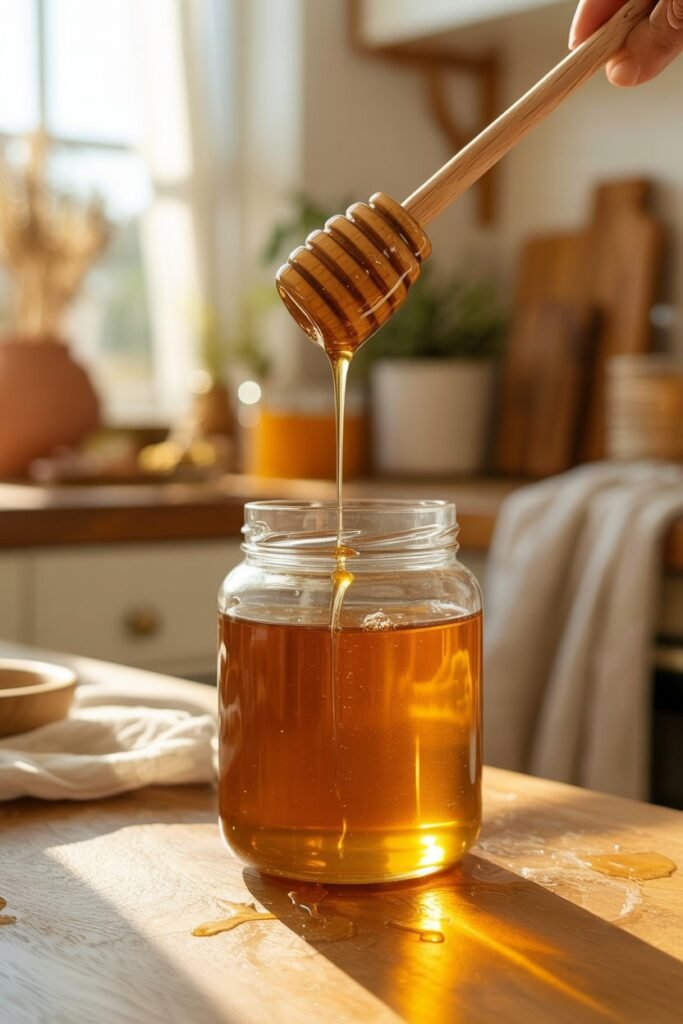
Nature’s Gentle Preserver
Honey is one of the oldest natural antibiotics known to humanity. Long before refrigeration or preservatives, honey was treasured for its ability to resist spoilage and support healing both internally and externally.
What makes honey unique is its ability to create an environment that is unfriendly to harmful bacteria while remaining soothing to human tissue.
Traditional Uses
- Supporting throat and respiratory comfort
- Soothing digestive irritation
- External application for minor skin concerns
Honey has long been used to coat and calm bringing relief without harshness.
How It’s Commonly Enjoyed
- Stirred into warm (not hot) tea
- Taken by the spoon during throat discomfort
- Combined with herbs like ginger or thyme
Its sweetness is not just pleasant it signals nourishment and comfort to the body.
Gentle Safety Note
Honey is traditionally avoided for infants. For others, moderation is key, especially for those sensitive to sugars.
7. Basil
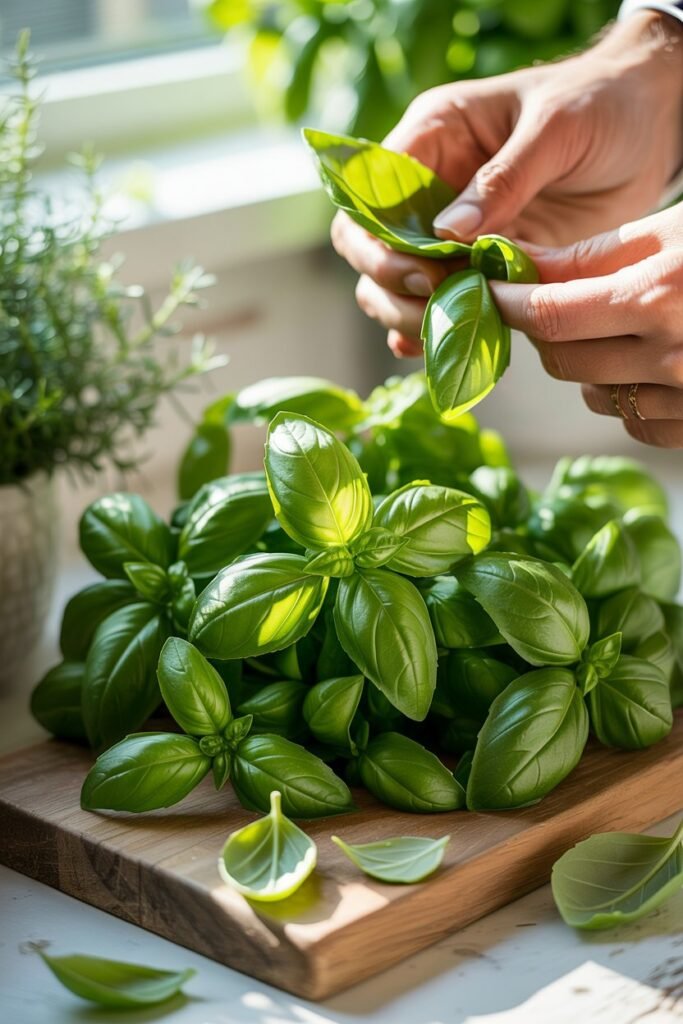
Fresh, Uplifting, and Quietly Protective
Basil is often associated with freshness and vitality, and its antimicrobial qualities reflect that energy.
Traditionally, basil has been used to support digestion and immune balance, especially when the body feels sluggish or heavy.
Its aroma alone feels cleansing, making it a favorite in both culinary and healing traditions.
Traditional Uses
- Supporting digestive comfort
- Encouraging immune resilience
- Light respiratory support
Basil is gentle enough for regular use, yet powerful enough to make a difference.
How It’s Commonly Enjoyed
- Fresh in salads and sauces
- Steeped lightly as an infusion
- Added at the end of cooking to preserve its properties
Basil reminds us that healing can feel fresh and joyful.
8. Rosemary
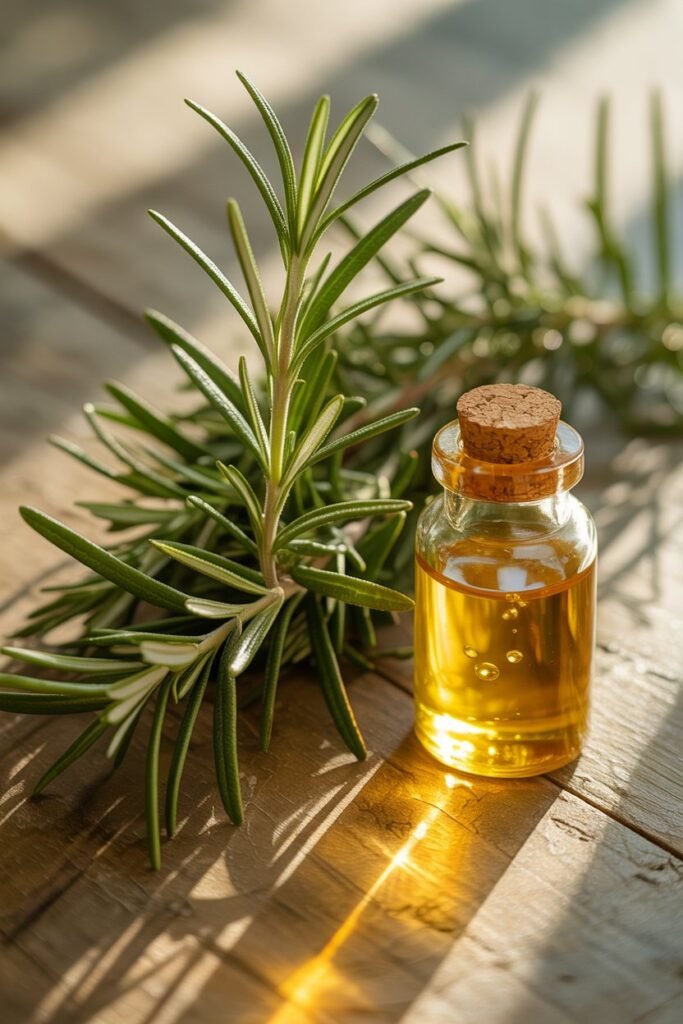
Awakening and Clarifying
Rosemary carries a bright, energizing quality. Traditionally associated with memory, circulation, and clarity, rosemary also holds natural antimicrobial properties that support both digestion and immune function.
It is often used when the body feels foggy or stagnant.
Traditional Uses
- Supporting circulation
- Encouraging digestive flow
- Gentle immune support
Rosemary has long been used in kitchens and healing spaces alike valued for its aroma as much as its properties.
How It’s Commonly Enjoyed
- Infused into oils for topical use
- Added to roasted vegetables and meats
- Steeped gently as tea in small amounts
Gentle Safety Note
Rosemary is best used moderately and traditionally avoided in excess.
9. Garlic
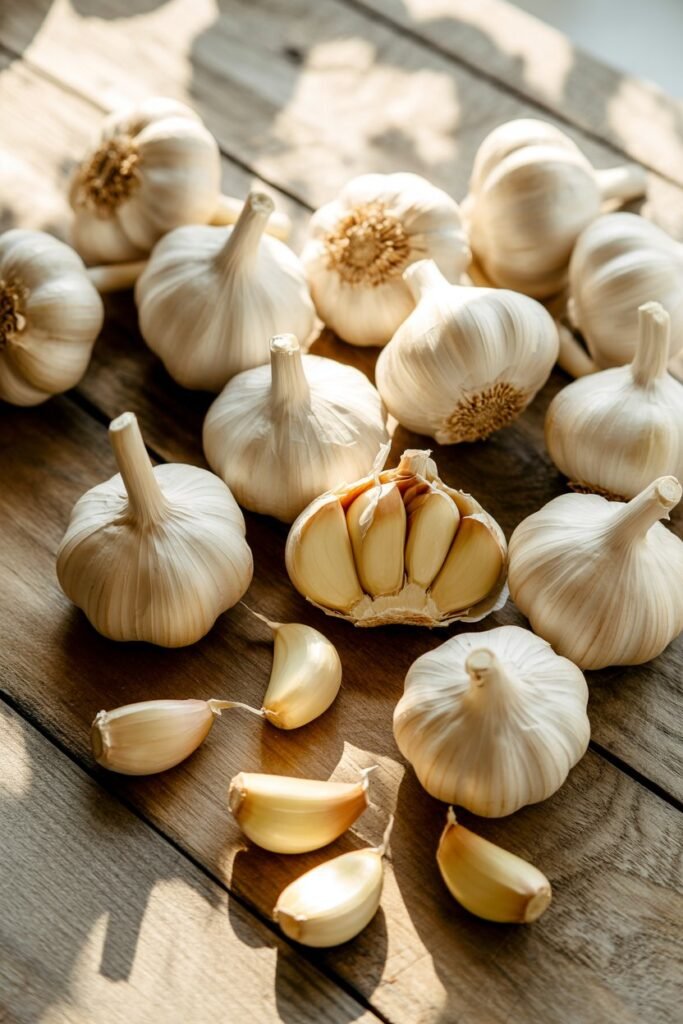
Strong, Protective, and Deeply Respected
Garlic is one of the most powerful natural antibiotics found in nature and one of the most respected.
For centuries, garlic has been used to support the body’s defenses. Its unmistakable aroma signals strength, and its traditional use reflects that potency.
Traditional Uses
- Supporting immune response
- Encouraging gut balance
- Helping the body resist unwanted microbes
Garlic is often turned to when deeper support is needed, especially during seasonal challenges.
How It’s Commonly Enjoyed
- Lightly crushed and added to meals
- Cooked gently into soups and sauces
- Mixed with honey or oil in traditional preparations
Cooking garlic slightly softens its intensity while preserving much of its benefit.
Gentle Safety Note
Raw garlic can be very strong. Traditional wisdom emphasizes small amounts and listening carefully to the body.
10. Fennel Seeds
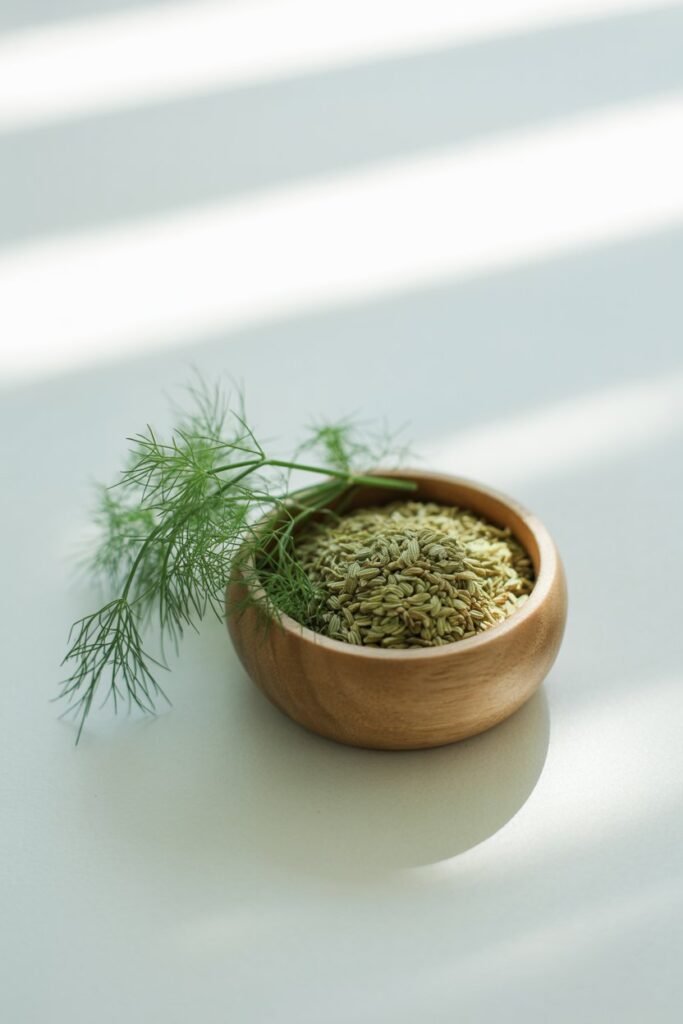
Soothing, Warming, and Digestive-Friendly
Fennel seeds are often overlooked, but they carry gentle antimicrobial properties paired with exceptional digestive support.
Traditionally, fennel has been used to ease bloating, support gut comfort, and encourage balance after meals.
Its mild sweetness makes it especially soothing.
Traditional Uses
- Supporting digestive health
- Encouraging gut balance
- Gentle antimicrobial support
Fennel seeds are often used when digestion feels heavy or unsettled.
How It’s Commonly Enjoyed
- Lightly chewed after meals
- Steeped as a mild infusion
- Added to cooking, especially vegetable dishes
Fennel reminds us that healing does not need to be harsh to be effective.
These next natural antibiotics are often associated with comfort, warmth, and everyday nourishment.
They are the kinds of remedies that don’t feel medicinal at all yet they have quietly supported human health for generations.
11. Cilantro & Coriander
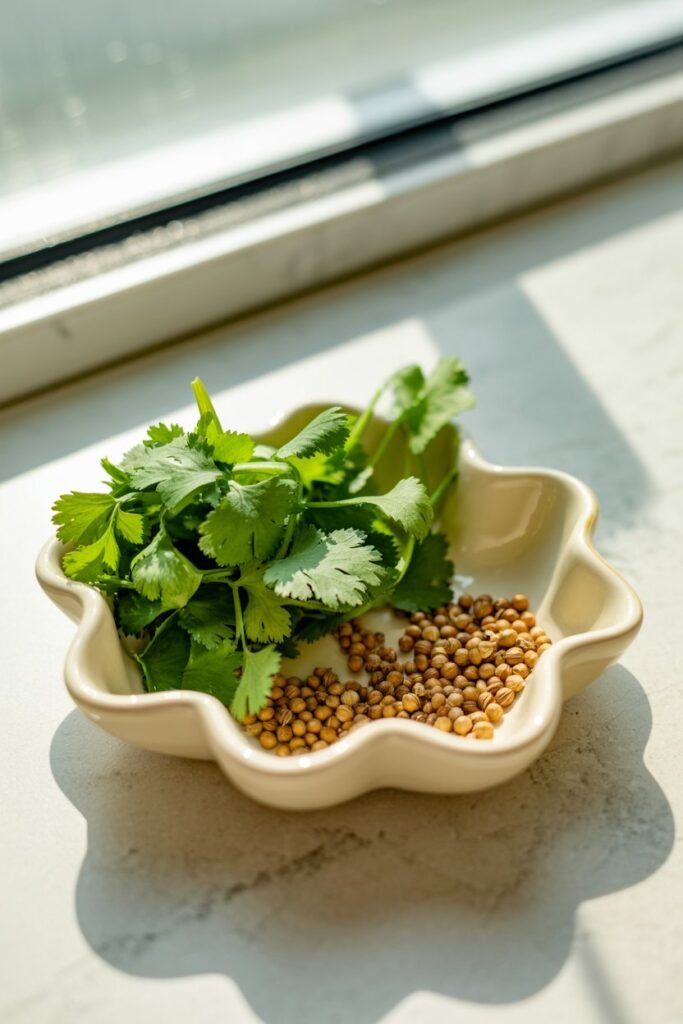
Fresh Cleansing and Gentle Balance
Cilantro (the fresh leaves) and coriander (the dried seeds) come from the same plant, yet they offer slightly different qualities.
Together, they have been traditionally valued for their cleansing and balancing effects on the body.
Cilantro is often associated with freshness and lightness, while coriander seeds bring warmth and digestive comfort.
Traditional Uses
- Supporting digestive balance
- Encouraging gentle detoxification
- Helping maintain microbial harmony
These herbs are often used when the body feels heavy or sluggish.
How They’re Commonly Enjoyed
- Fresh cilantro added to meals just before serving
- Coriander seeds gently crushed and cooked into dishes
- Coriander tea after meals
Their gentle nature makes them suitable for frequent culinary use.
Gentle Safety Note
Both are typically well tolerated in food amounts. Traditional use emphasizes consistency over intensity.
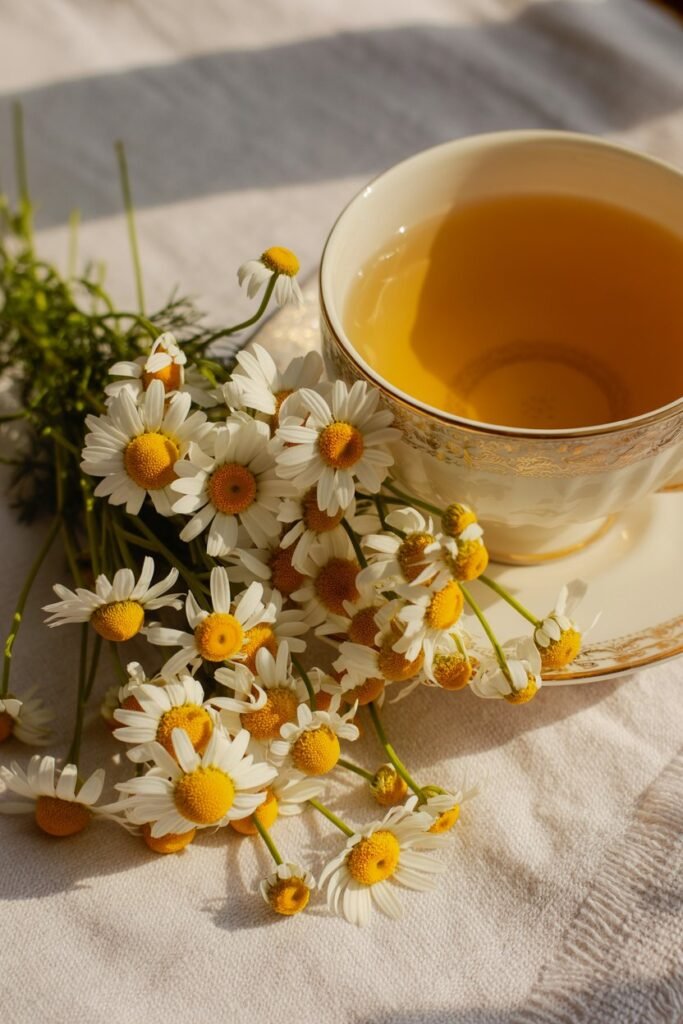
12. Chamomile
Soothing, Soft, and Quietly Protective
Chamomile is often associated with calm and comfort, but beneath its gentle nature lies subtle antimicrobial support.
Traditionally, chamomile has been used when the body needs rest, softness, and reassurance.
Its effects are not forceful but deeply nurturing.
Traditional Uses
- Supporting digestive comfort
- Calming inflammation
- Gentle immune support
Chamomile is especially loved for its ability to soothe both the body and the nervous system.
How It’s Commonly Enjoyed
- Steeped as a warm evening infusion
- Combined with honey
- Used externally in gentle skin preparations
Chamomile teaches us that softness can be powerful.
Gentle Safety Note
Chamomile is widely considered gentle. Those with sensitivities to certain plants may wish to introduce it slowly.
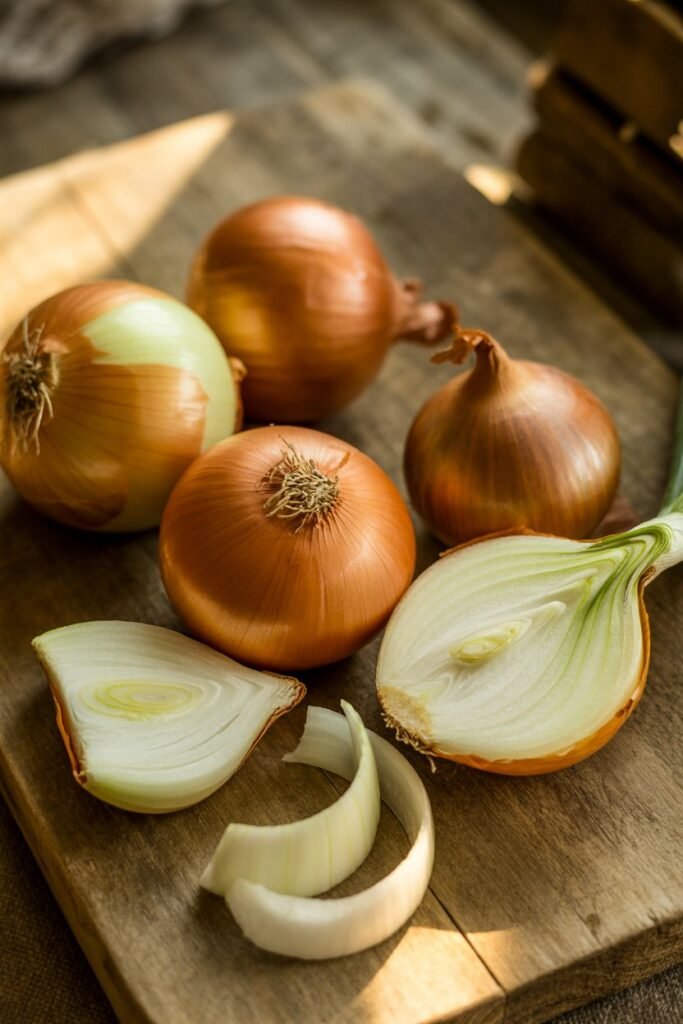
13. Onions
Everyday Protection in Layers
Onions are one of the most humble yet powerful natural antibiotics. Found in nearly every kitchen, onions have been traditionally valued for their ability to support immune health and discourage bacterial growth.
Their strength lies in compounds released when they are chopped or cooked.
Traditional Uses
- Supporting respiratory comfort
- Encouraging immune resilience
- Everyday antimicrobial nourishment
Onions have long been included in broths and soups during times of seasonal discomfort.
How They’re Commonly Enjoyed
- Cooked slowly into meals
- Added to soups and stews
- Used raw in small amounts
Their layered nature mirrors their layered benefits.
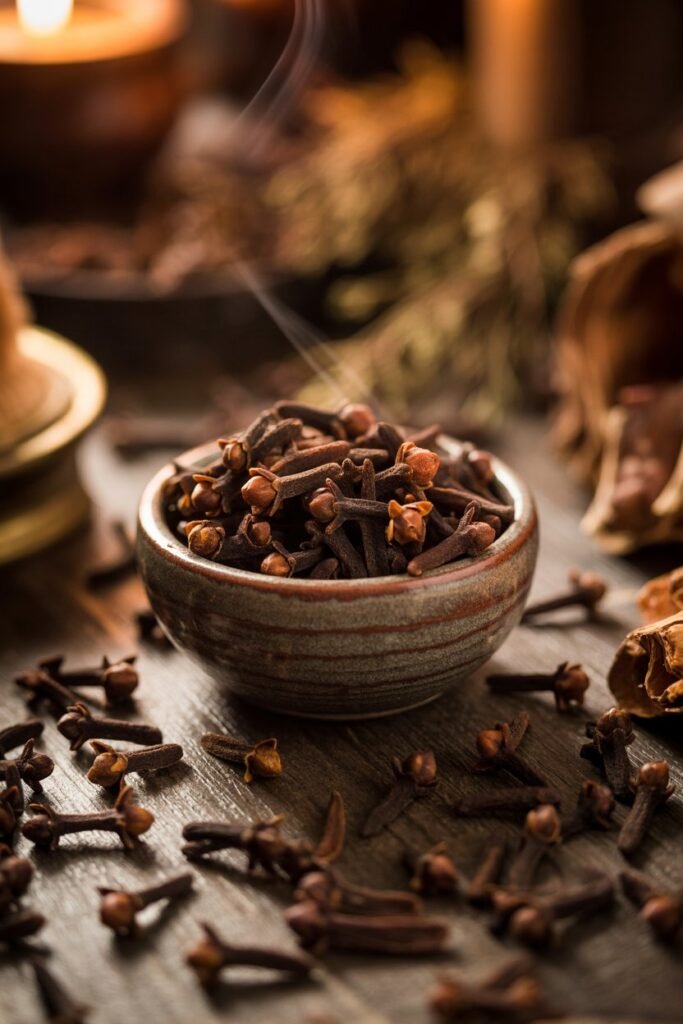
14. Cloves
Small, Potent, and Deeply Warming
Cloves are tiny, aromatic powerhouses. Traditionally, they have been used sparingly due to their strong antimicrobial properties.
Cloves are especially associated with oral health and digestive support.
Traditional Uses
- Supporting oral comfort
- Encouraging digestive balance
- Warming the body
Cloves are often used when warmth and strength are needed but in very small amounts.
How They’re Commonly Enjoyed
- Added whole to teas or decoctions
- Used in spiced dishes
- Gently simmered with cinnamon
Gentle Safety Note
Cloves are strong and traditionally used sparingly. More is never better with this spice.
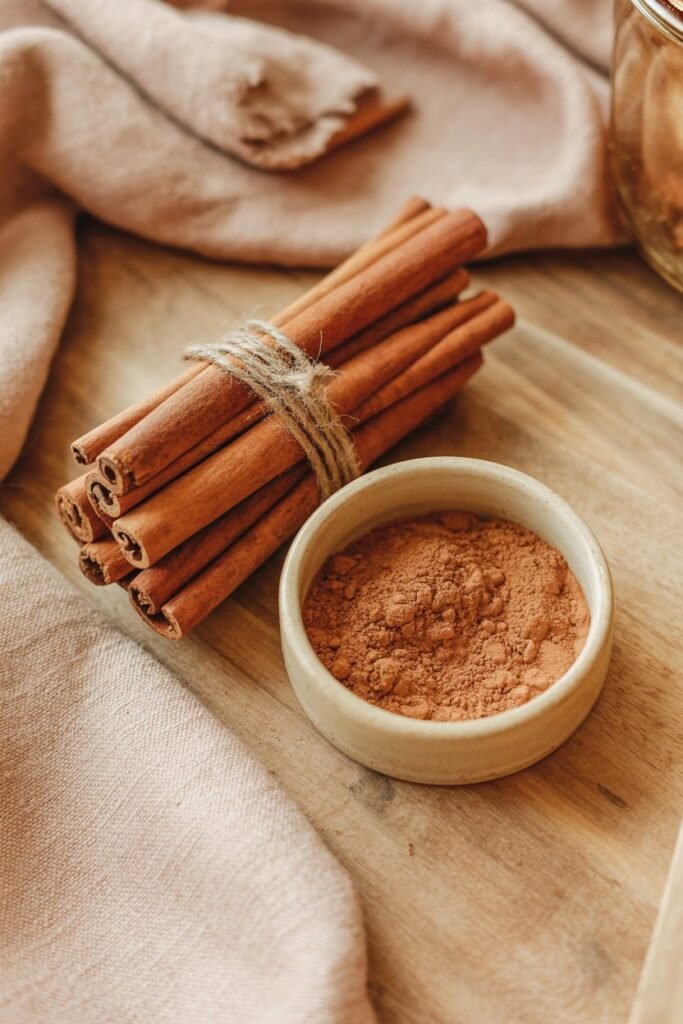
15. Cinnamon
Sweet Warmth with Protective Power
Cinnamon is comforting, aromatic, and deeply grounding. Traditionally, it has been used to warm the body, support digestion, and discourage microbial growth.
Its sweetness makes it especially beloved in both food and healing traditions.
Traditional Uses
- Supporting digestive health
- Encouraging circulation
- Gentle immune support
Cinnamon is often used during colder months or when the body feels chilled.
How It’s Commonly Enjoyed
- Simmered as a decoction
- Added to teas and warm drinks
- Used in cooking and baking
Gentle Safety Note
Cinnamon is best enjoyed in culinary amounts. Traditional wisdom emphasizes warmth, not excess.
These final natural antibiotics bring everything together.
They support digestion, circulation, and balance reminding us that true wellness is not just about fighting microbes, but about creating harmony within the body.
16. Cumin
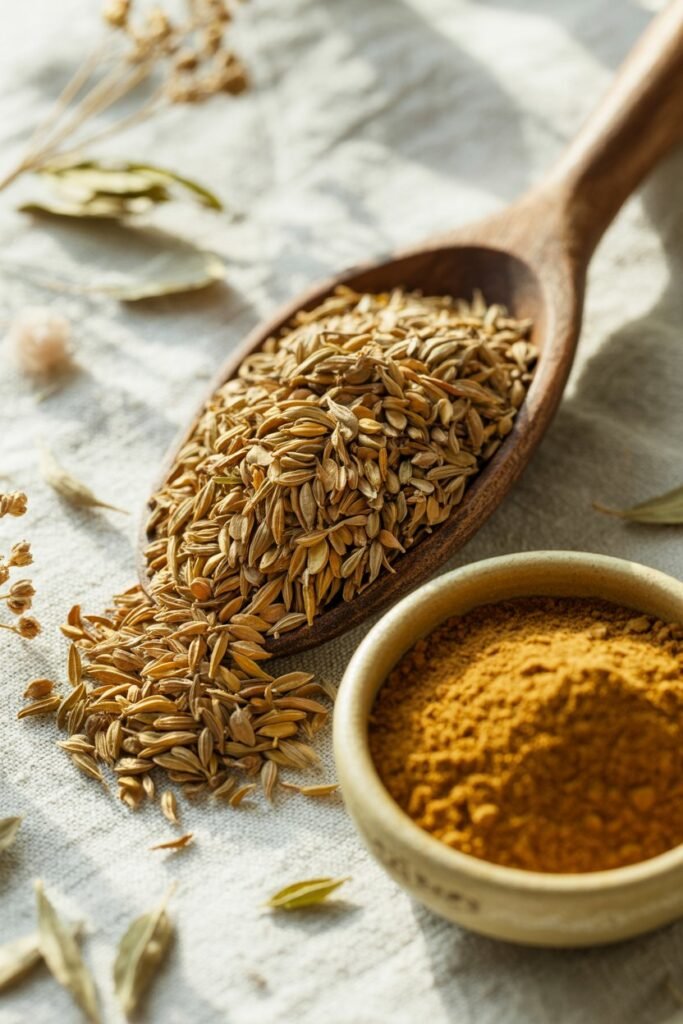
Earthy, Warming, and Digestive-Supportive
Cumin has been used for centuries in traditional cooking and healing, particularly for digestive comfort. Its warming nature supports the gut, where much of the immune system resides.
Cumin’s antimicrobial properties work quietly, supporting balance rather than disruption.
Traditional Uses
- Supporting digestion
- Encouraging gut comfort
- Gentle antimicrobial nourishment
Cumin often appears in healing meals designed to soothe the stomach.
How It’s Commonly Enjoyed
- Toasted lightly and added to food
- Simmered gently in soups
- Used in digestive teas
Cumin works best as a consistent culinary ally.
17. Black Pepper
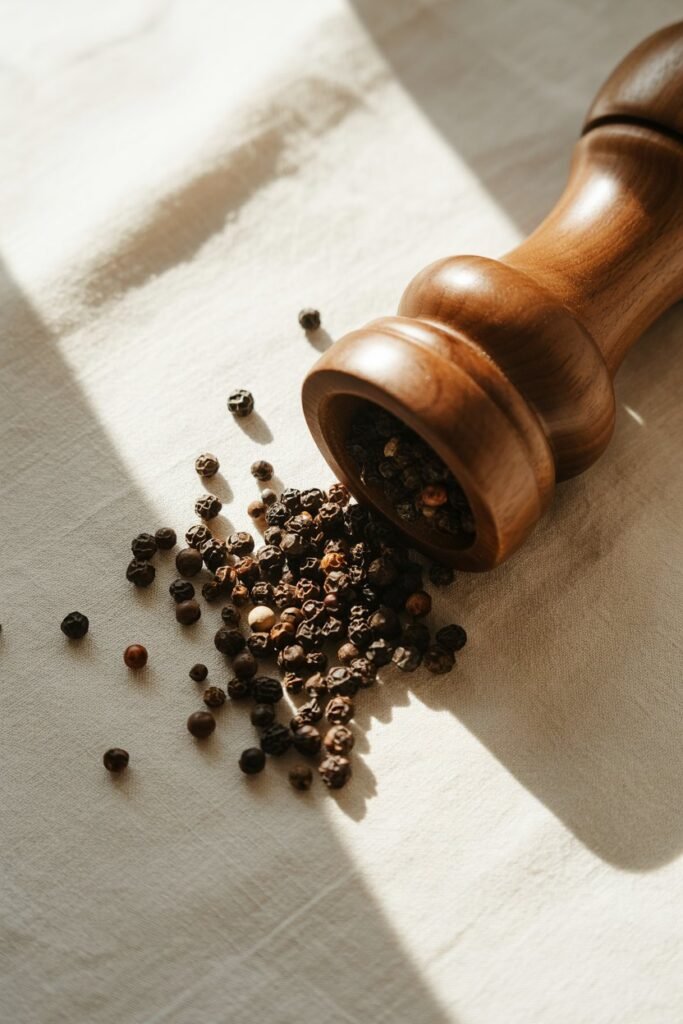
Awakening and Enhancing
Black pepper is often thought of as a simple seasoning, but traditionally it has been used to stimulate digestion and circulation.
Its antimicrobial effects are enhanced when combined with other herbs especially turmeric.
Black pepper helps the body absorb and activate beneficial compounds.
Traditional Uses
- Supporting digestion
- Enhancing the effects of other herbs
- Encouraging circulation
It is often used as a supporting ingredient rather than a standalone remedy.
How It’s Commonly Enjoyed
- Freshly ground over meals
- Combined with turmeric
- Used sparingly but consistently
18. Lemon
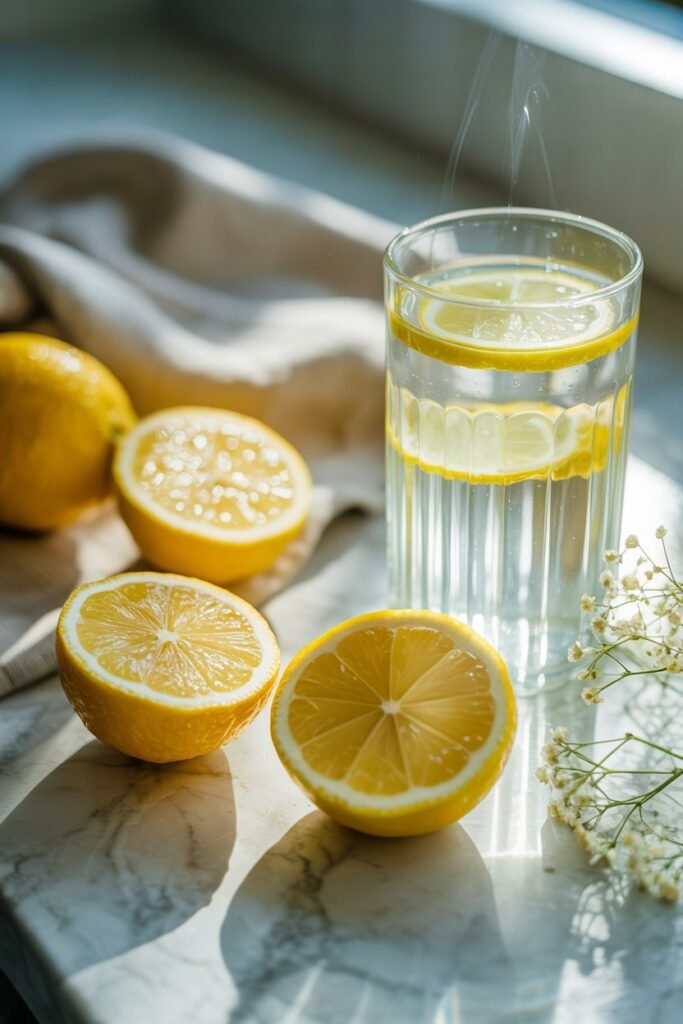
Bright, Cleansing, and Refreshing
Lemon brings lightness and freshness to natural healing. Traditionally valued for its cleansing properties, lemon helps create an environment that supports immune balance.
Its acidity and natural compounds work gently, especially when diluted.
Traditional Uses
- Supporting digestion
- Encouraging hydration
- Gentle immune support
Lemon is often associated with morning rituals and renewal.
How It’s Commonly Enjoyed
- Added to warm water
- Combined with honey
- Used fresh in food
Gentle Safety Note
Lemon is best diluted to protect teeth and digestion.
19. Coconut Oil
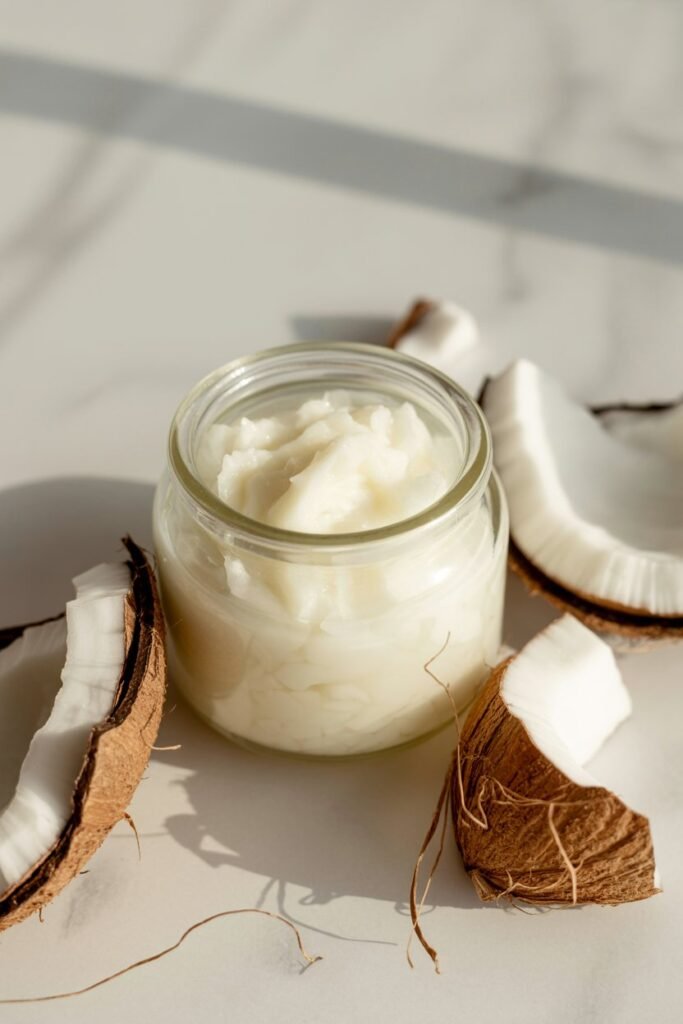
Soothing, Nourishing, and Protective
Coconut oil has gained attention for its natural antimicrobial fatty acids. Traditionally, it has been used both internally and externally to support skin, digestion, and balance.
Its richness feels deeply nourishing.
Traditional Uses
- Supporting gut comfort
- External skin care
- Gentle microbial balance
Coconut oil is especially loved for its soothing texture and versatility.
How It’s Commonly Enjoyed
- Used in cooking
- Applied topically
- Incorporated into oral care traditions
Moderation is key, especially for digestion.
20. Yoghurt
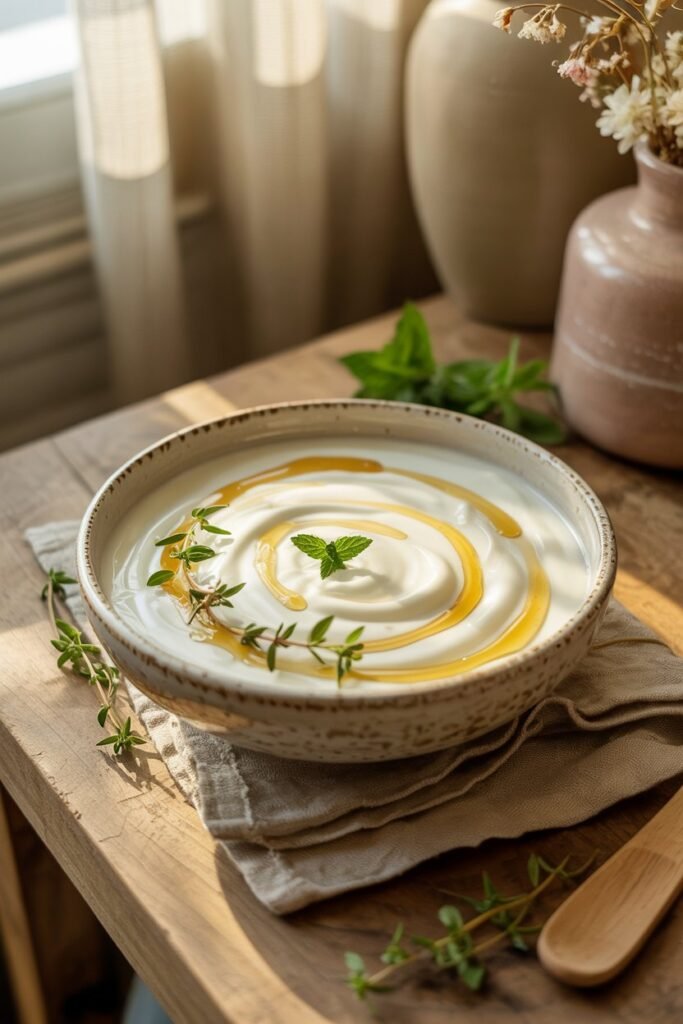
The Companion That Restores Balance
Yoghurt may not directly fight microbes the way herbs do, but it plays a crucial role in restoring balance. Traditionally valued for its probiotic content, yoghurt supports beneficial bacteria in the gut.
Healthy gut flora helps naturally regulate harmful microbes.
Traditional Uses
- Supporting digestion
- Restoring gut balance
- Complementing antimicrobial foods
Yoghurt reminds us that healing isn’t just about removal it’s about replenishment.
How It’s Commonly Enjoyed
- Plain and unsweetened
- Combined with spices like cinnamon
- Used regularly rather than intensively
Closing Thought on the 20 Natural Antibiotics
Together, these foods and herbs form a gentle, powerful foundation for everyday wellness.
They remind us that healing doesn’t always arrive in dramatic ways sometimes it comes quietly, through nourishment, warmth, and consistency.
Natural Antibiotic Remedies
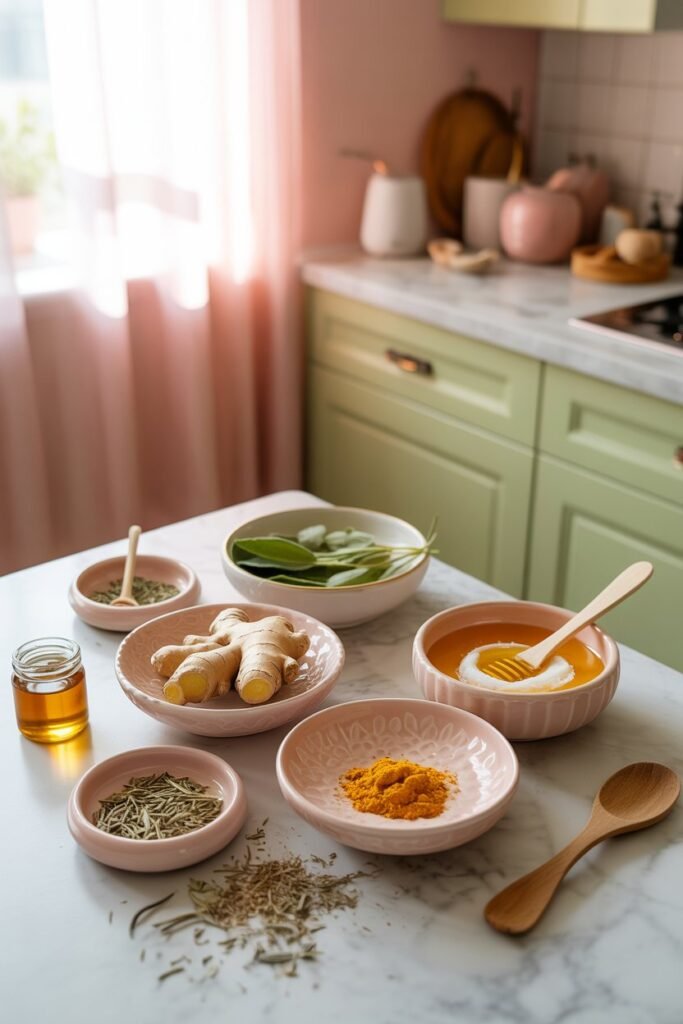
Supporting the Body Through Common Imbalances
Natural antibiotics have traditionally been chosen not by diagnosis, but by how the body feels.
Discomfort, imbalance, irritation, and fatigue were signals not enemies and remedies were selected to gently guide the body back toward harmony.
This section is not about treating disease. It’s about understanding which natural antibiotics have traditionally been used to support certain areas of the body, and how they may help create an environment where balance can return.
Think of these remedies as companions, not cures.
Digestive Infections & Gut Imbalance
The digestive system is often the first place imbalance appears. Bloating, discomfort, irregularity, and sensitivity can all signal that the gut needs gentle support.
Traditionally, natural antibiotics used for digestive balance focus on:
- Warming digestion
- Discouraging harmful bacteria
- Supporting beneficial gut flora
Commonly Chosen Natural Allies
- Ginger – warms and soothes the digestive tract
- Garlic – traditionally used to discourage harmful microbes
- Fennel seeds – calm bloating and discomfort
- Cumin – supports digestive flow
- Yoghurt – replenishes beneficial bacteria
These remedies are most often incorporated into meals or taken as warm preparations rather than concentrated doses.
Gentleness is key. The digestive system responds best to warmth, consistency, and moderation.
Ear, Nose & Throat Discomfort
The ears, nose, and throat are closely connected, and traditional remedies often aim to soothe irritation while supporting immune balance.
Natural antibiotics chosen here are usually warming, calming, and protective.
Commonly Chosen Natural Allies
- Honey – coats and soothes irritated tissue
- Thyme – traditionally used for throat and respiratory comfort
- Sage – valued for oral and throat support
- Ginger – supports circulation and warmth
- Lemon – used diluted for gentle cleansing
Warm infusions, gargles, and steam-supported remedies are often favored, as they bring comfort while encouraging relaxation.
Oral Infections & Mouth Imbalance
Oral health has always been closely tied to overall wellness. Traditional cultures paid great attention to the mouth, knowing it was the gateway to the body.
Natural antibiotics used for oral balance are often:
- Cleansing
- Astringent
- Gentle but effective
Commonly Chosen Natural Allies
- Cloves – traditionally used for oral comfort
- Sage – supports mouth and gum health
- Coconut oil – used in traditional oral care practices
- Honey – soothing and protective
External use is most common here rinses, topical application, or oral care rituals rather than swallowing concentrated remedies.
Skin Infections & External Irritations
The skin is both a barrier and a communicator. When it feels irritated, inflamed, or imbalanced, traditional healing often turns to topical natural antibiotics.
These remedies aim to:
- Calm inflammation
- Protect damaged skin
- Discourage microbial overgrowth
Commonly Chosen Natural Allies
- Honey – traditionally applied to minor skin concerns
- Coconut oil – soothing and protective
- Turmeric – used externally in diluted preparations
- Garlic (with caution) – historically used in highly diluted forms
Traditional wisdom strongly emphasizes patch testing, dilution, and short application times when working with the skin.
Fungal Imbalances
Fungal imbalances often thrive in warm, moist environments. Traditional approaches focus on drying, balancing, and strengthening the body’s natural defenses rather than aggressive elimination.
Commonly Chosen Natural Allies
- Garlic – traditionally respected for its strength
- Oregano – used carefully and in moderation
- Coconut oil – applied externally for comfort
- Thyme – supportive in gentle preparations
Consistency and patience are often emphasized, as fungal imbalances tend to shift gradually rather than overnight.
Parasite Support (Traditional Context)
In traditional healing systems, certain herbs and spices were believed to help create environments that discouraged unwanted organisms in the digestive tract.
These approaches were always cautious, short-term, and food-based.
Commonly Chosen Natural Allies
- Garlic – used sparingly
- Cloves – traditionally valued for digestive balance
- Cumin – supports gut health
- Ginger – encourages digestive movement
Modern readers should approach this area with extra care and professional guidance if concerns persist.
Viral Support & Immune Balance
Viruses behave differently than bacteria, and traditional remedies focus not on elimination, but on strengthening the body’s resilience.
Natural antibiotics used here aim to:
- Support immune response
- Reduce inflammation
- Encourage rest and recovery
Commonly Chosen Natural Allies
- Honey – soothing and supportive
- Ginger – warming and comforting
- Turmeric – supports inflammation balance
- Chamomile – encourages rest and calm
Rest, hydration, and warmth are often considered just as important as any remedy.
A Gentle Reminder
Natural antibiotic remedies work best when:
- Used early
- Used gently
- Used with awareness
- Supported by rest and nourishment
If symptoms are severe, persistent, or worsening, modern medical care is essential. Natural remedies are companions not replacements.
Natural Antibiotics & Essential Oils

Potent Helpers That Require Respectful Use
Essential oils have become incredibly popular in modern wellness but traditional wisdom reminds us that potency is a double-edged sword.
These concentrated plant extracts can offer antimicrobial support, but they are strong and must be used thoughtfully.
Unlike food-based herbs, essential oils are highly concentrated, meaning a few drops contain the power of an entire plant. This makes them effective in small amounts but also potentially irritating or unsafe if misused.
This section will guide readers through the basics of traditional use, safety considerations, and practical applications.
How Essential Oils Work as Natural Antibiotics
Essential oils contain volatile compounds that can support the body in different ways:
- Antimicrobial properties: Certain oils have historically been used to discourage bacterial, viral, and fungal growth.
- Anti-inflammatory support: Many oils help calm irritation, supporting the body’s natural healing processes.
- Aromatic influence: The smell of essential oils can influence mood, nervous system balance, and perception of wellness.
Some essential oils historically associated with antimicrobial support include:
- Tea Tree Oil – for external use and skin care
- Oregano Oil – strong antimicrobial properties
- Thyme Oil – traditionally used for respiratory support
- Clove Oil – oral care and local comfort
- Lavender Oil – gentle antimicrobial and soothing properties
Methods of Traditional Use
- Topical Application (Diluted)
- Essential oils should almost always be diluted in a carrier oil (coconut, olive, or jojoba) before touching the skin.
- Used for small areas of irritation, minor wounds, or fungal imbalances.
- Never applied directly in full strength.
- Inhalation / Aromatherapy
- A few drops in warm water for steam inhalation
- Diffused in the air for gentle respiratory support
- Aromatic use supports calming and immune awareness rather than aggressive treatment
- Oral Use (With Extreme Caution)
- Only certain essential oils can be ingested safely, and always under guidance from a trained professional.
- Misuse can cause irritation or harm. Traditional wisdom often favors external and aromatic routes over ingestion.
Safety Principles
Essential oils are wonderful allies, but traditional and modern wisdom agree on key safety practices:
- Always dilute never apply full-strength
- Avoid ingestion unless guided by a professional
- Patch-test before applying to skin
- Keep away from eyes, mucous membranes, and sensitive areas
- Use sparingly and for short periods, especially with children, pregnant individuals, or sensitive skin
Respecting essential oils ensures they act as supportive partners, not accidental irritants.
Combining Essential Oils with Herbs
Traditionally, essential oils were rarely used alone. They often complemented other natural antibiotics:
- Oregano or Thyme oils with warm infusions for steam inhalation
- Lavender with chamomile poultices for skin soothing
- Clove oil diluted in coconut oil for gentle oral care
This combined approach allows their power to be channeled gently, supporting the body without overwhelming it.
Gentle Reminder
Essential oils are helpers, not heroes. They can enhance the effects of natural antibiotics, but they should never replace food-based remedies, hydration, rest, or professional care.
The key principle is the same across all natural antibiotics: moderation, respect, and observation.
Integrating Natural Antibiotics Into Everyday Life
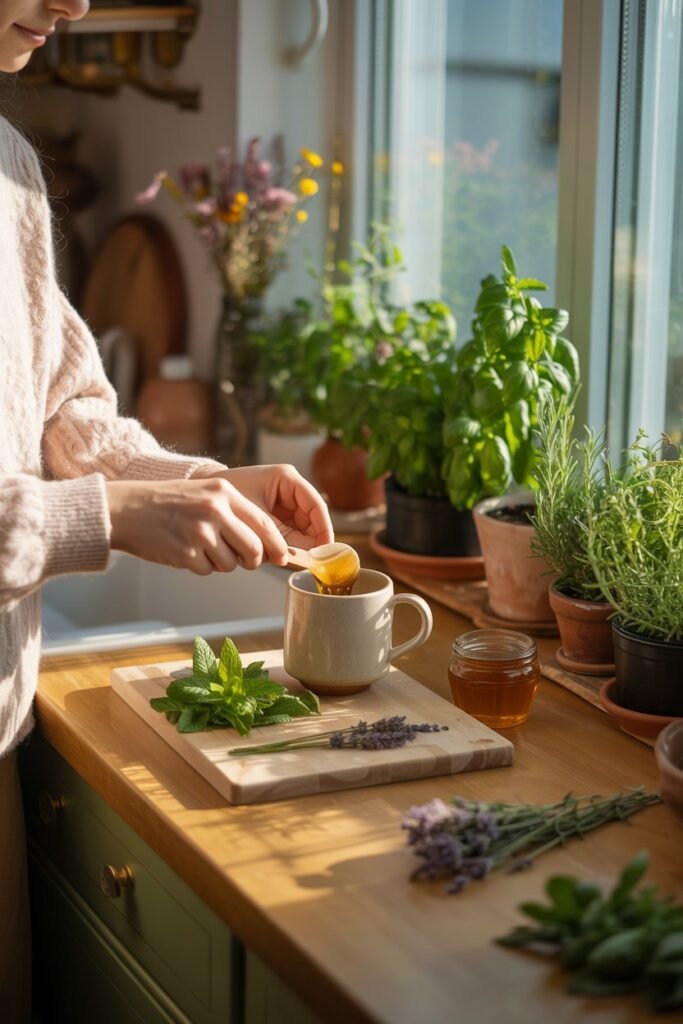
A Gentle, Thoughtful Approach to Wellness
By now, you’ve learned about what natural antibiotics are, how to take them, the best timing, safe amounts, the 20 most effective herbs and foods, remedies for common discomforts, essential oils, and even how to grow your own.
The final step is making these allies part of your daily rhythm, so wellness becomes a practice, not a project.
1. Start With Food
Many natural antibiotics are already in your kitchen:
- Garlic, onions, ginger, turmeric, cinnamon, and black pepper
- Herbs like basil, rosemary, thyme, sage, and oregano
- Honey, yoghurt, and coconut oil
Incorporating them daily in meals is the safest, most nourishing way to benefit from their properties. Cooking with intention turns ordinary meals into gentle healing rituals.
2. Gentle Preparations
Remember:
- Infusions – for warmth and comfort, especially in the morning or evening
- Decoctions – when you need a deeper, concentrated support
- Poultices & Topical applications – for localized care
- Essential oils – only diluted, external, or aromatic use unless professionally guided
Rotate these methods based on your needs, season, and what feels nourishing.
3. Observe & Adjust
Your body is your most trusted guide:
- Notice how your digestion, skin, energy, and mood respond
- Reduce or pause any remedy that feels too strong
- Honor rest, hydration, and seasonal rhythm
Traditional wisdom reminds us that healing is a conversation, not a battle.
4. Make It a Ritual
The act of preparing teas, infusing oils, chopping herbs, and tending your garden can become deeply nurturing:
- Warm water with lemon and honey in the morning
- Ginger or chamomile infusion in the evening
- Crushing fresh herbs for cooking or poultices
- Breathing in the aroma of rosemary, thyme, or lavender
These rituals are more than wellness—they’re moments of presence, self-care, and connection to nature.
5. Seasonal & Home-Grown Awareness
- Grow your own herbs when possible; nothing is fresher or more potent
- Rotate herbs and spices based on seasonal needs
- Use home-grown ingredients to honor the cycle of the year
This approach makes natural antibiotics sustainable, accessible, and beautiful.
6. Respect & Moderation
Finally, remember that less is often more:
- Use herbs and natural antibiotics with mindfulness
- Avoid long-term overuse of concentrated forms
- Combine them with nourishment, hydration, rest, and professional care when needed
The goal is balance, not force.
Closing Reflection
Natural antibiotics are more than remedies—they are companions for a mindful, nurturing life. They remind us that health is built slowly, quietly, and with attention to both body and spirit.
By weaving these herbs, foods, and practices into your life, you create a rhythm of gentle self-care, resilience, and connection to the natural world.
Your body, like a garden, thrives when tended with patience, respect, and love.
