
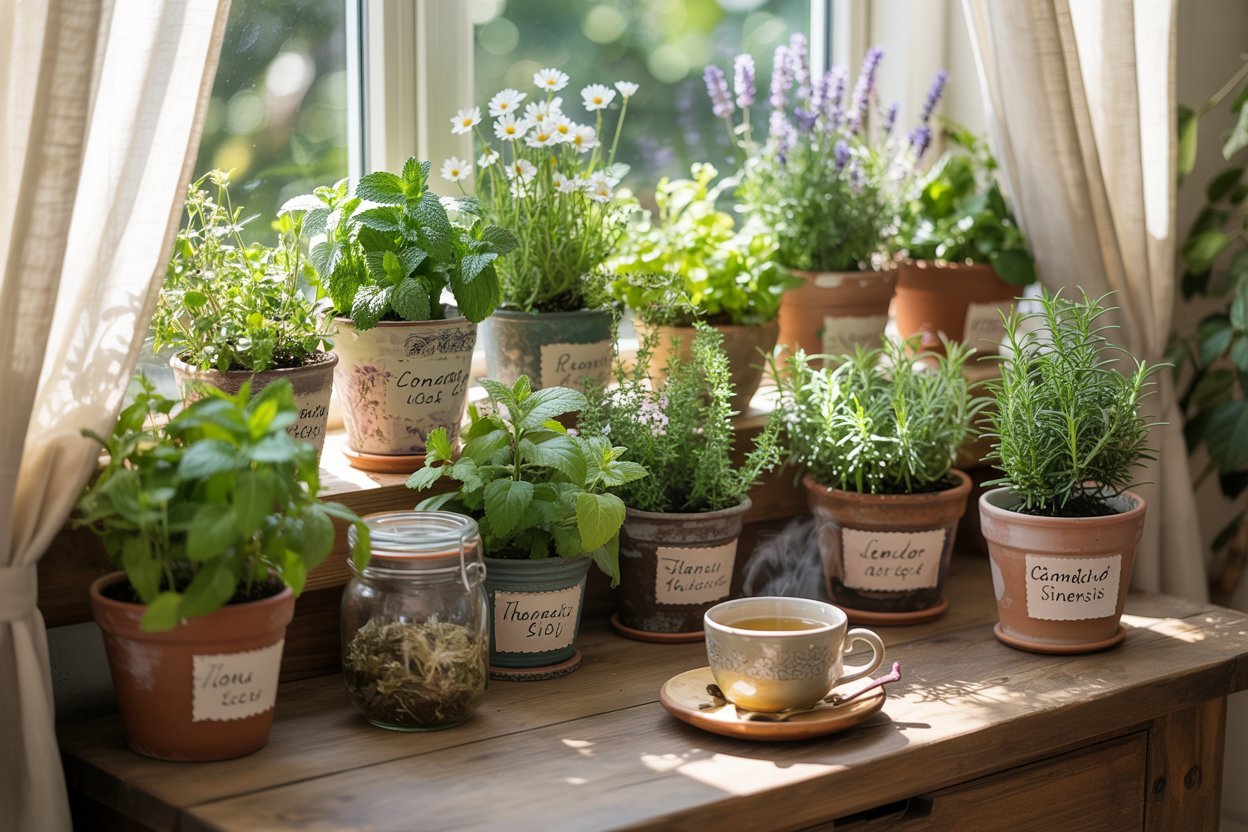

Creating an indoor tea garden completely changed the way I experience both gardening and self-care.
I used to think tea was just something I bought in little paper sachets from the store. Now, I reach for fresh leaves that I’ve grown with my own hands, and every cup feels more intentional.
Growing tea indoors is not complicated it’s simply about choosing the right plants, understanding their light and water needs, and creating a small, nurturing space in your home.
A sunny window, a few good pots, quality soil, and patience that’s really where it begins.
Below are 13 beautiful, practical teas you can grow indoors, with full planting and care guides for each.
1. Mint (Peppermint & Spearmint)
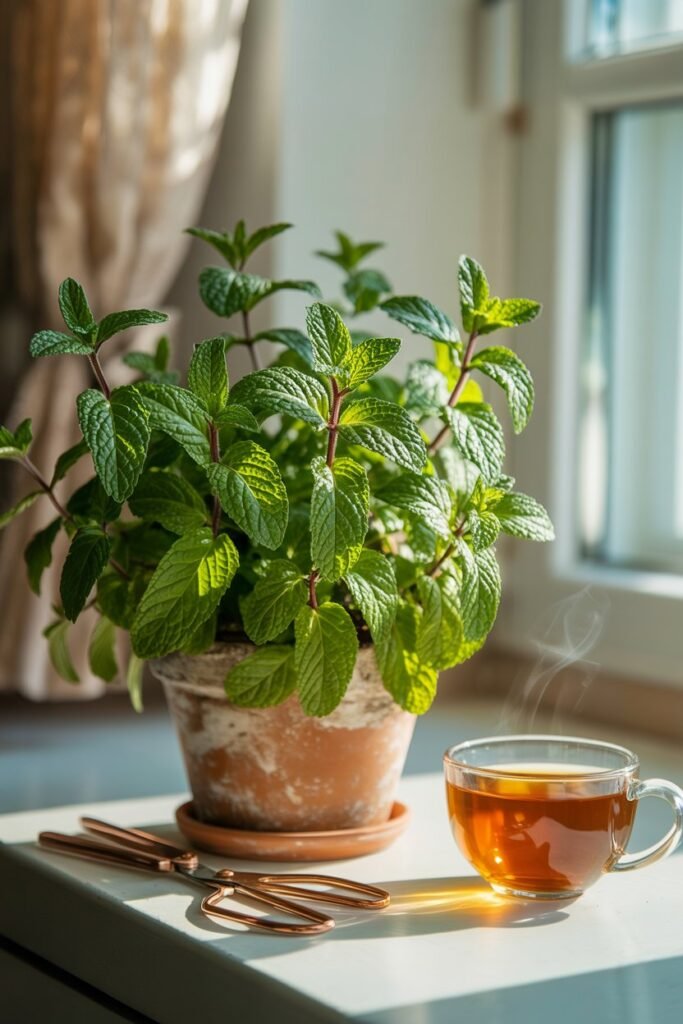
Mint was the first tea plant I ever grew indoors, and it instantly boosted my confidence as a beginner.
What You’ll Need
- A medium pot (8–10 inches wide)
- Well-draining potting mix
- Mint cuttings or starter plant
- A sunny windowsill (4–6 hours light)
- Drainage holes in the pot
How to Plant Mint
Mint grows best from cuttings or a nursery plant.
- Fill your pot with moist, well-draining soil.
- Plant your mint cutting about 2 inches deep.
- Press soil gently around the base.
- Water thoroughly.
Mint spreads quickly, so I always grow it in its own pot rather than mixing it with other plants.
How to Care for Mint Indoors
- Keep soil slightly moist but never soggy.
- Trim regularly to encourage bushy growth.
- Pinch off flower buds to keep leaves flavorful.
- Rotate the pot weekly for even growth.
Harvesting for Tea
Harvest once the plant is at least 6–8 inches tall. Snip stems just above a leaf node. Fresh leaves make vibrant tea, but you can also air-dry them for storage.
2. Chamomile (German Chamomile for Tea)
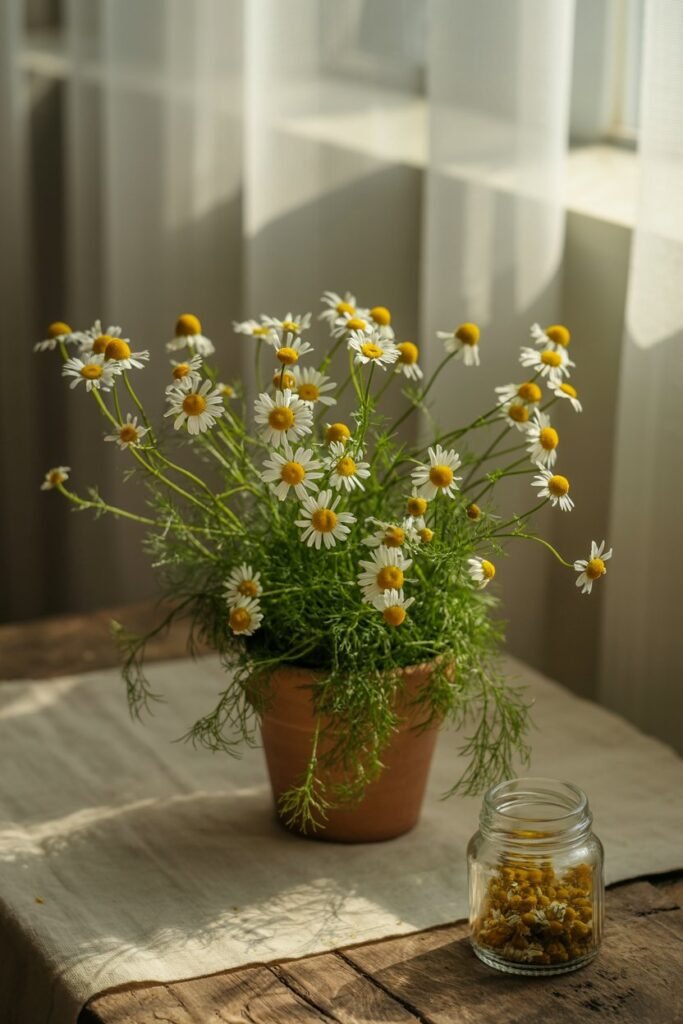
Chamomile always feels like a quiet evening in plant form. Soft, daisy-like flowers and delicate foliage make it one of the most charming additions to an indoor tea garden.
What You’ll Need
- A shallow container (6–8 inches deep)
- Light, well-draining potting mix
- German chamomile seeds (best for tea)
- Spray bottle for misting
- Bright indirect light (6 hours daily)
German chamomile grows better for tea indoors than Roman chamomile because it produces more flowers.
How to Plant Chamomile Indoors
Chamomile grows beautifully from seed, and I personally love watching it sprout.
- Fill your pot with loose, airy soil.
- Lightly sprinkle seeds over the surface.
- Press seeds gently into the soil (do not bury deeply they need light to germinate).
- Mist the surface lightly with water.
- Cover loosely with plastic wrap until germination (optional).
Seeds usually sprout in 7–14 days.
Once seedlings reach 2 inches tall, thin them so each plant has breathing space.
Indoor Care Guide
- Light: 6 hours of bright light daily. A south-facing window works best.
- Water: Keep soil slightly moist but never soggy.
- Temperature: 65–75°F is ideal.
- Feeding: Light feeder. Compost-rich soil is usually enough.
Chamomile dislikes wet roots. I always check soil moisture with my finger before watering.
Common Indoor Problems
- Leggy growth = not enough light.
- Moldy soil = overwatering or poor airflow.
- Yellow leaves = water stress.
Harvesting for Tea
Harvest flowers once fully open, when petals lie flat.
- Snip flowers gently.
- Spread on a clean tray.
- Air-dry for 1–2 weeks.
Use 1 tablespoon dried flowers per cup of tea.
3. Lemon Balm
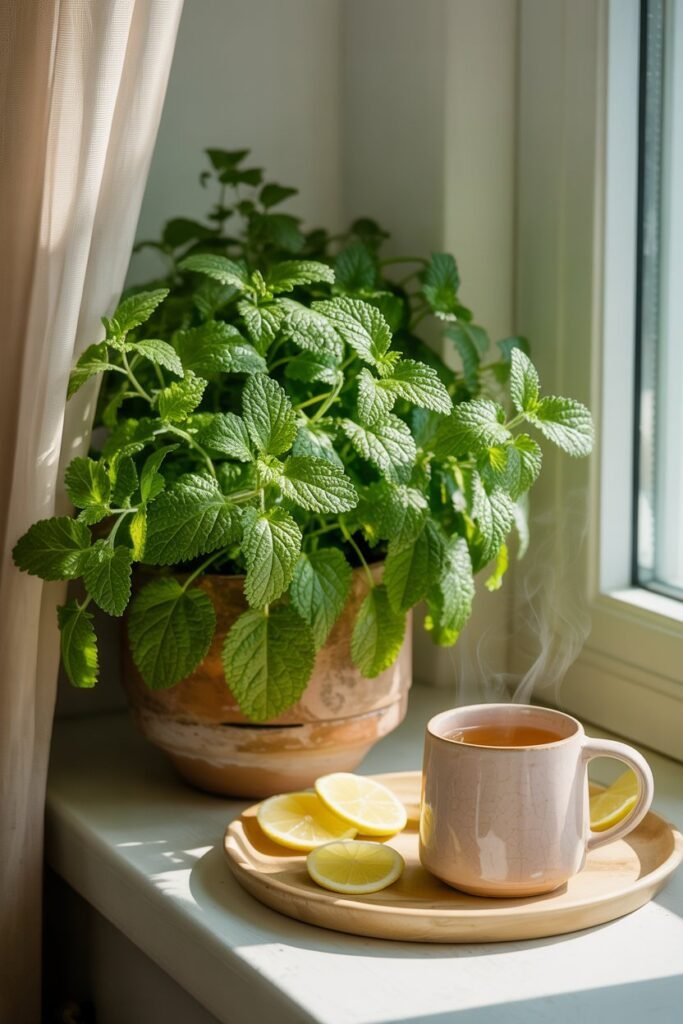
Lemon balm feels like sunshine bottled into leaves. Every time I brush against it, the soft citrus scent fills the room.
What You’ll Need
- 8–10 inch pot
- Rich, well-draining soil
- Seeds or starter plant
- Sunny window
Planting Lemon Balm
From Seed:
- Fill container with moist soil.
- Sprinkle seeds lightly on top.
- Cover with a thin layer of soil.
- Keep consistently moist until germination (7–14 days).
From Starter Plant:
Plant at the same depth as the nursery pot and water well.
Indoor Care
- Light: 5–6 hours of bright light.
- Water: Keep soil lightly moist.
- Humidity: Normal indoor levels are fine.
- Feeding: Light feeding every 4–6 weeks with diluted organic fertilizer.
Trim frequently to encourage bushy growth.
Harvesting
Pick leaves before flowering for the best flavor.
Fresh lemon balm makes a light, uplifting tea. It also dries beautifully.
4. Lavender (Best for Calm Evening Tea)
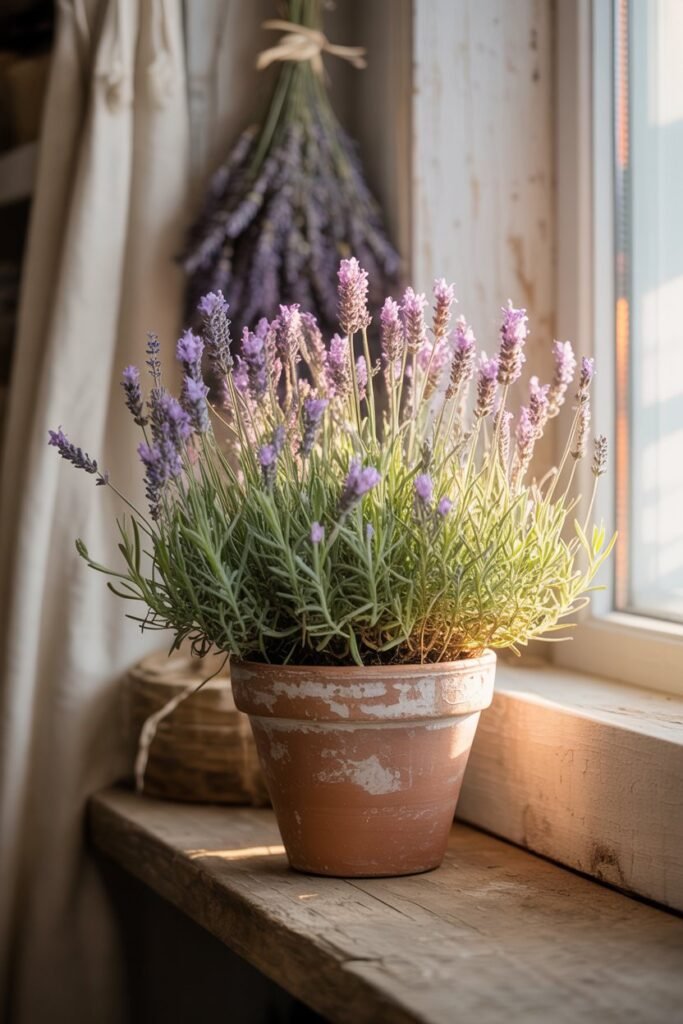
Lavender was one of the plants that truly tested my patience indoors. It’s not difficult it’s just particular. Once I understood what it needed, it became one of the most rewarding herbs in my tea garden.
What You’ll Need
- 8–12 inch terra cotta pot (must have drainage holes)
- Sandy, well-draining soil mix
(2 parts potting soil + 1 part sand or perlite) - Lavender starter plant (English lavender is best for tea)
- South-facing window (6–8 hours direct light)
- Small fan (optional for airflow)
Lavender absolutely hates soggy roots, so drainage is everything.
How to Plant Lavender Indoors
Starting from a nursery plant is much easier than from seed.
- Fill your terra cotta pot with sandy soil mix.
- Gently remove lavender from its nursery container.
- Loosen roots slightly if compacted.
- Plant at the same depth it was growing before.
- Water lightly just enough to settle soil.
Avoid heavy watering at planting time.
Indoor Care Guide
- Light: 6–8 hours of direct sun. A grow light may be necessary in winter.
- Water: Allow top 2 inches of soil to dry before watering again.
- Humidity: Prefers dry indoor air.
- Temperature: 60–75°F.
- Feeding: Very light feeder. Fertilize once in early spring only.
If leaves start turning yellow, overwatering is usually the cause.
Pruning & Maintenance
- Pinch back new growth to keep plant compact.
- Remove faded blooms.
- Avoid cutting into woody stems.
Harvesting for Tea
Harvest when flower buds are just about to open.
- Cut long stems.
- Bundle and hang upside down in a dry space.
- Dry for 2 weeks.
Lavender blends beautifully with chamomile or lemon balm for nighttime tea.
5. Ginger (Warming Root Tea)
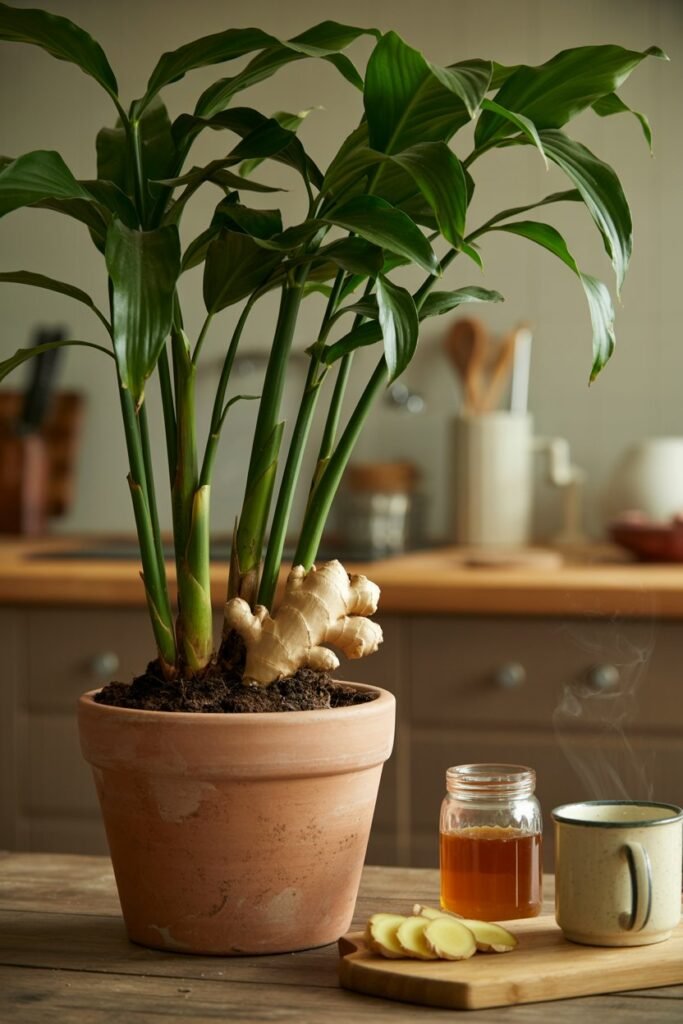
Growing ginger indoors feels almost magical because the harvest happens beneath the soil like a hidden gift waiting patiently.
What You’ll Need
- Wide, shallow pot (at least 12 inches wide)
- Rich, compost-heavy potting mix
- Organic ginger root with visible “eyes”
- Warm indoor location
How to Plant Ginger Indoors
- Soak ginger root overnight in room-temperature water.
- Cut into 2-inch pieces (each with a growth bud).
- Let cut ends dry for 24 hours.
- Plant 2 inches deep with buds facing up.
- Water lightly.
Indoor Care Guide
- Light: Bright indirect light.
- Water: Keep soil consistently moist but never waterlogged.
- Temperature: 70–85°F ideal.
- Humidity: Prefers moderate humidity.
- Feeding: Monthly balanced organic fertilizer.
Ginger grows slowly expect visible shoots in 2–4 weeks.
Harvesting
Harvest in 8–10 months.
To partially harvest:
- Gently dig along the edge.
- Cut off a section.
- Re-cover soil.
Fresh ginger slices steeped in hot water create a strong, warming tea perfect for cold evenings.
6. Lemongrass (Bright Citrus Tea)
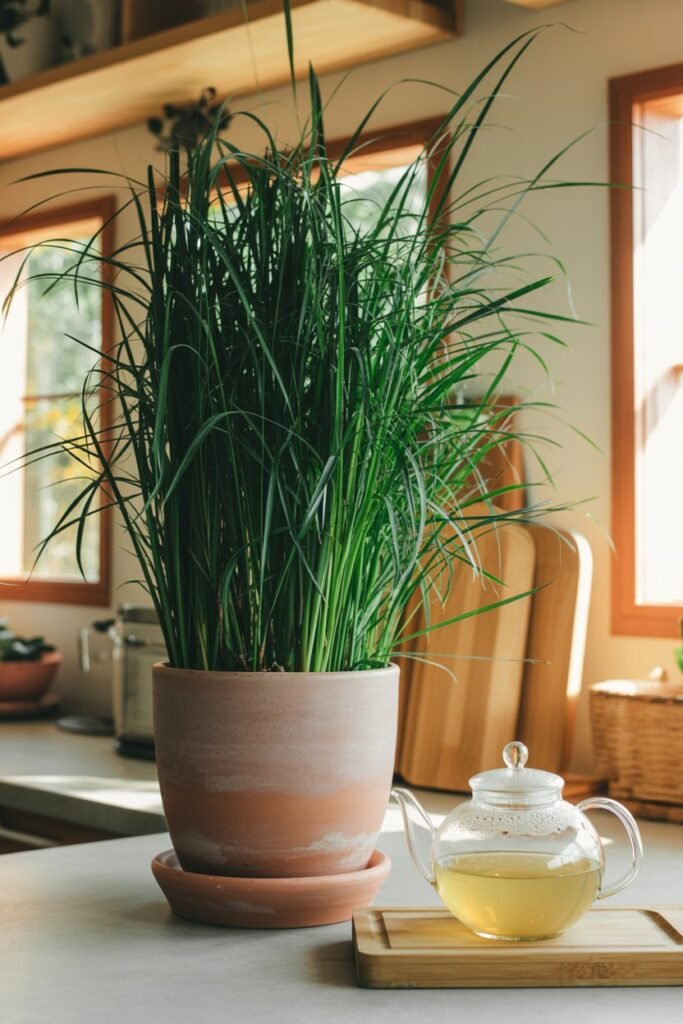
Lemongrass brings energy into an indoor space. Its tall, grassy leaves make it feel tropical and lively.
What You’ll Need
- Large pot (12–14 inches wide)
- Fresh lemongrass stalks with root base
- Rich, well-draining soil
- Bright window
How to Plant Lemongrass
- Place stalk base in a jar of water.
- Wait 7–14 days until roots grow 1 inch long.
- Transfer to soil and plant 1 inch deep.
- Water thoroughly.
Indoor Care Guide
- Light: Full sun (6–8 hours).
- Water: Keep soil evenly moist.
- Temperature: Warm conditions preferred.
- Feeding: Feed monthly during active growth.
Harvesting
Harvest outer stalks once plant reaches 12 inches tall.
Peel tough outer layer and slice inner core for tea.
7. Holy Basil (Tulsi) – The Sacred, Soothing Tea
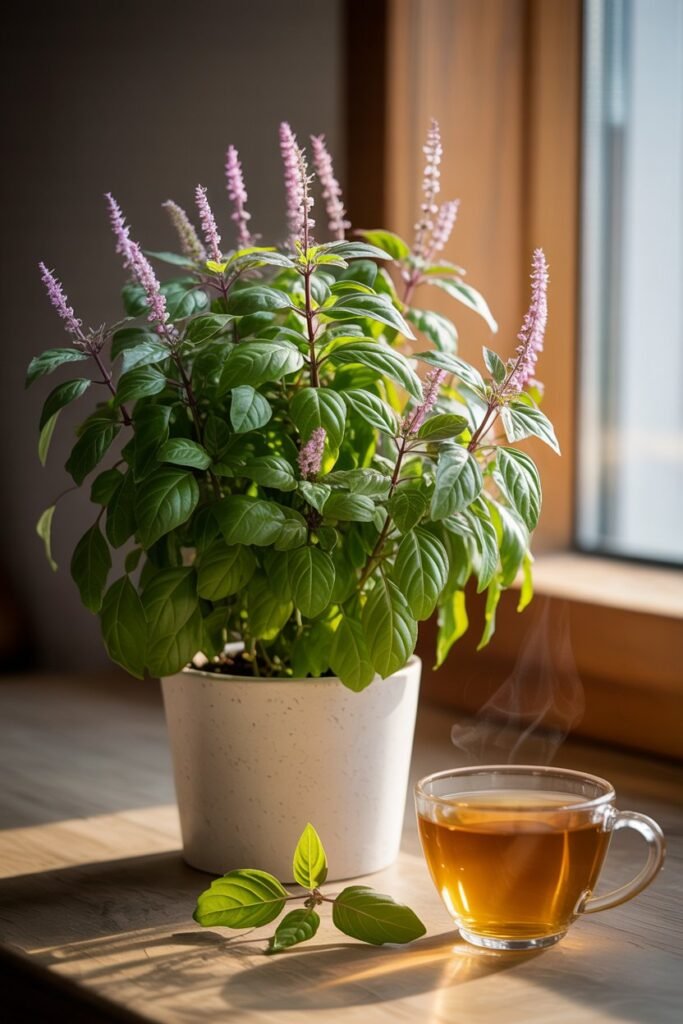
Tulsi feels different from other herbs in my indoor garden. It grows with such presence.
The scent is slightly spicy, slightly sweet, and deeply grounding. Having it indoors feels calming in a way that’s hard to explain until you grow it.
What You’ll Need
- 8–10 inch pot with drainage holes
- Rich, airy potting soil (add a handful of compost)
- Tulsi seeds (Rama or Krishna variety for tea)
- Bright sunny window (south or west-facing)
- Spray bottle for misting
Tulsi grows quickly, so give it room from the beginning.
How to Plant Tulsi Indoors
Tulsi grows beautifully from seed indoors.
- Fill your pot with moist, well-draining soil.
- Sprinkle seeds evenly across the surface.
- Cover lightly with a thin layer of soil (about ¼ inch).
- Mist gently avoid heavy watering.
- Place in warm, bright location.
Seeds usually sprout within 7–14 days.
Once seedlings are about 3 inches tall, thin them so each plant has breathing space.
Indoor Care Guide
- Light: 6+ hours of bright sunlight daily.
- Water: Keep soil lightly moist. Do not allow to fully dry out.
- Temperature: Prefers warmth (70–85°F).
- Humidity: Average indoor humidity works fine.
- Feeding: Light organic fertilizer once every 4 weeks.
Tulsi loves warmth. If your space runs cool, placing it near a slightly warmer area (but not near heating vents) helps tremendously.
Pruning & Growth Management
Tulsi becomes bushier when regularly pinched.
- Pinch the top leaves once plant reaches 6 inches.
- Remove flower buds if you want stronger leaf flavor.
- Never remove more than one-third at a time.
Common Indoor Issues
- Drooping leaves = inconsistent watering.
- Pale leaves = insufficient sunlight.
- Leggy growth = needs brighter light.
Harvesting for Tea
Begin harvesting once the plant reaches 8–10 inches tall.
- Snip the top few sets of leaves.
- Use fresh or dry for storage.
To dry:
- Lay leaves flat on a tray.
- Allow 5–7 days in a dry, airy space.
Tulsi tea has a warm, slightly peppery, calming flavor.
8. Rosemary – Bold and Invigorating
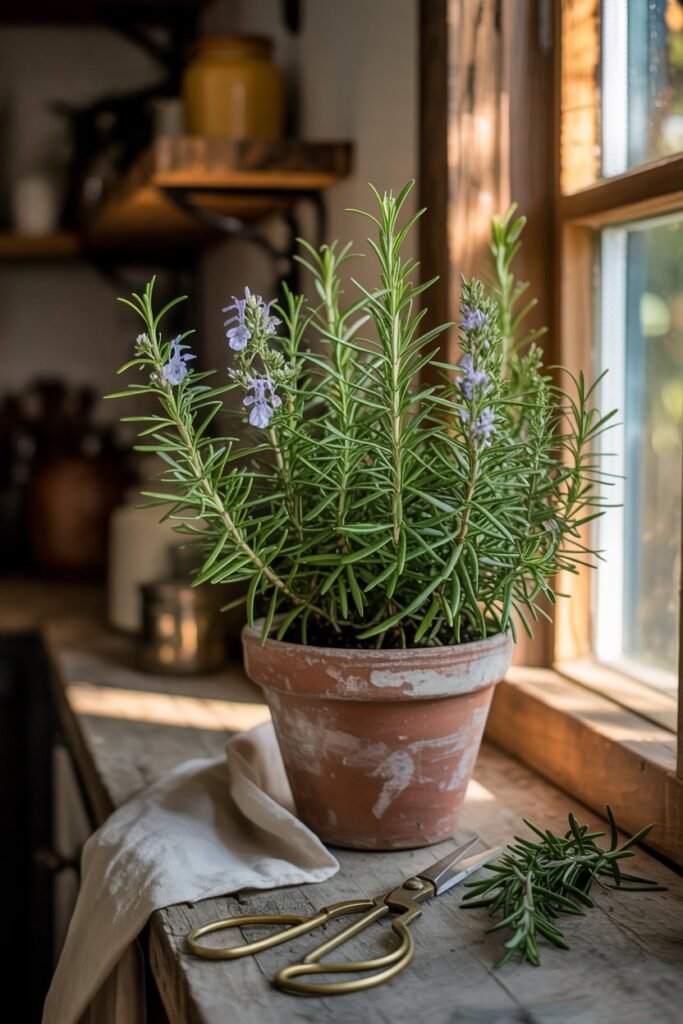
Rosemary feels strong and structured compared to softer herbs. Growing it indoors requires attention to light and drainage once I understood that, it became much easier.
What You’ll Need
- 10–12 inch terra cotta pot
- Sandy soil mix (2 parts potting soil + 1 part sand or perlite)
- Rosemary starter plant
- South-facing window
Planting Rosemary Indoors
Rosemary grows slowly from seed, so I recommend starting with a nursery plant.
- Fill pot with sandy soil mix.
- Plant at original depth.
- Press soil gently around roots.
- Water lightly to settle soil.
Avoid compacting the soil too tightly.
Indoor Care Guide
- Light: 6–8 hours direct sunlight.
- Water: Allow top 2 inches to dry before watering.
- Humidity: Prefers dry air.
- Temperature: 60–75°F.
- Feeding: Very light feeding in spring only.
Rosemary struggles in low light. If your windows are not bright enough, a grow light makes a huge difference.
Pruning & Maintenance
- Trim soft tips regularly.
- Avoid cutting into woody stems.
- Rotate pot weekly for even growth.
Harvesting for Tea
Harvest once plant is well established (at least 6 months old).
Snip small sprigs and strip leaves from stems.
Fresh rosemary tea is bold and herbal use lightly at first.
9. Sage – Earthy & Comforting
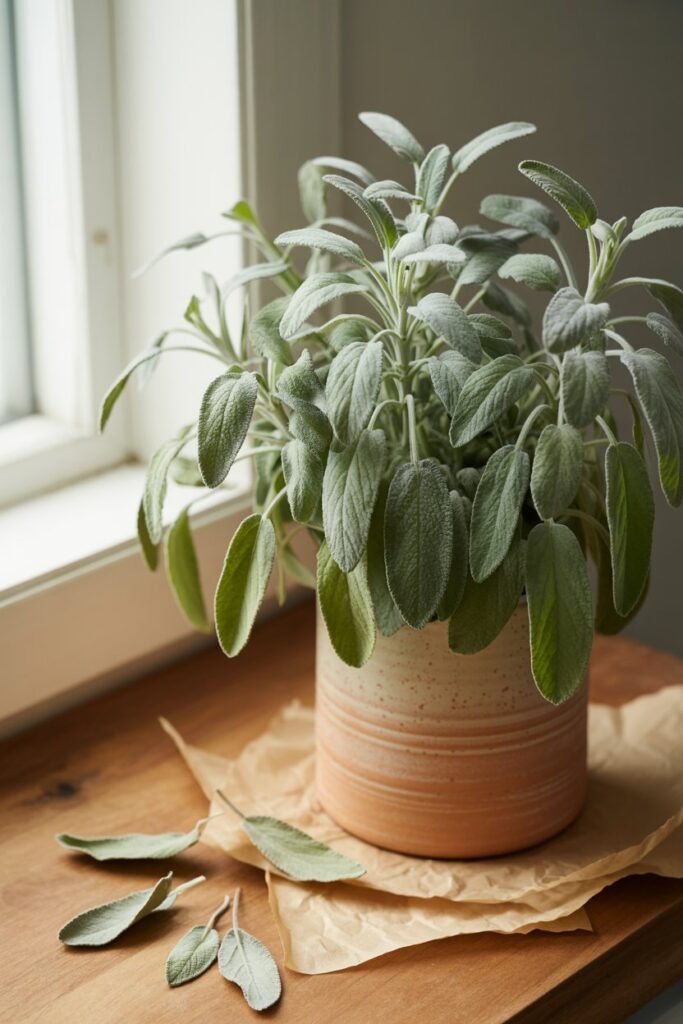
Sage feels grounding. It grows slower indoors but rewards patience.
What You’ll Need
- 8–10 inch pot
- Well-draining potting mix
- Sage starter plant
- Bright window
Planting Sage
Plant at same depth as nursery container.
Water gently after planting.
Indoor Care Guide
- Light: 6 hours sunlight minimum.
- Water: Allow soil to dry slightly between watering.
- Humidity: Prefers drier air.
- Feeding: Feed lightly once during growing season.
Overwatering is the most common mistake.
Pruning
- Pinch tips regularly.
- Remove flower buds if growing for tea.
- Trim leggy stems.
Harvesting
Harvest leaves before flowering.
Dry leaves flat for 7–10 days.
Sage tea has a strong, earthy flavor and is best enjoyed mildly steeped.
10. Thyme – Small but Powerful
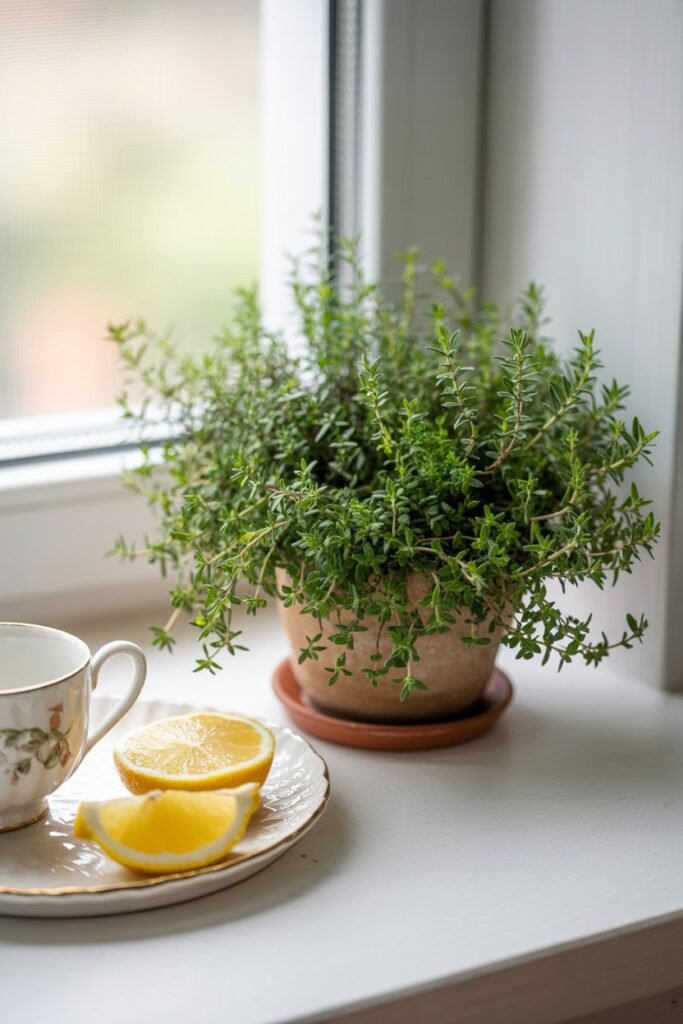
Thyme is perfect for small indoor tea gardens because it stays compact and manageable.
What You’ll Need
- 6–8 inch pot
- Sandy, well-draining soil
- Thyme starter plant
- Bright window
Planting
Plant thyme at original soil level.
Water lightly.
Indoor Care Guide
- Light: At least 6 hours bright light.
- Water: Allow soil to dry between watering.
- Feeding: Minimal fertilizer required.
- Temperature: 65–75°F.
Pruning
Trim lightly to encourage compact growth.
Harvesting
Snip small sprigs once plant is established.
Thyme tea is gentle and slightly minty with an earthy undertone.
11. Stevia – Naturally Sweet Leaves
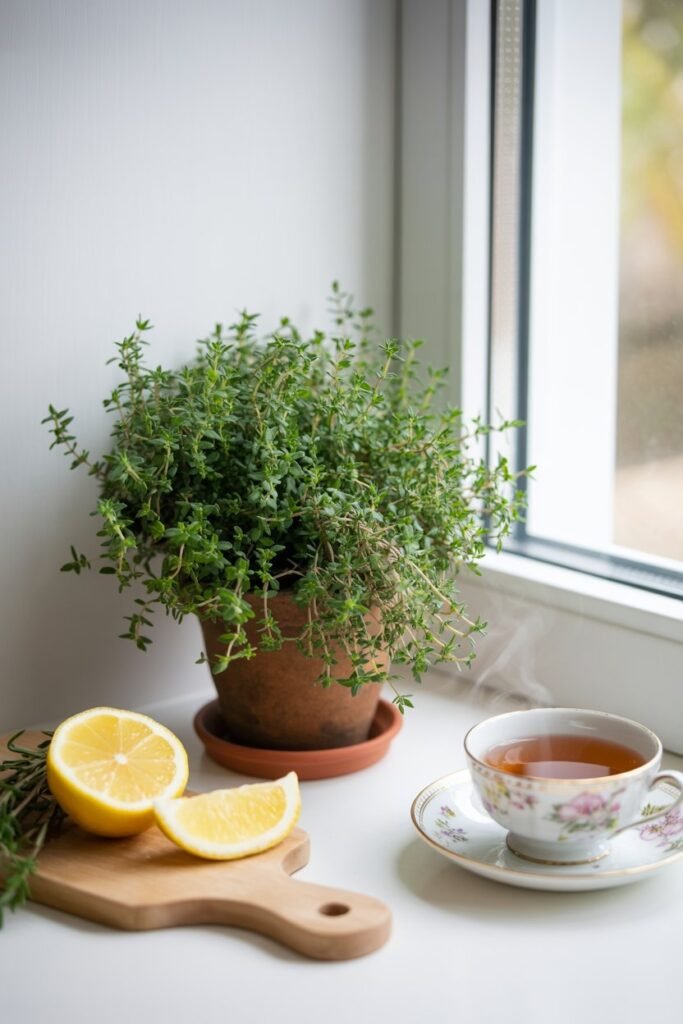
Stevia completely changed how I sweeten my tea blends. Growing it indoors means I always have fresh natural sweetness available.
What You’ll Need
- 8–10 inch pot
- Rich potting soil
- Stevia starter plant or seeds
- Bright sunny window
Planting
From seed:
- Sprinkle lightly on soil.
- Cover very lightly.
- Keep moist until germination.
From starter:
Plant at original depth.
Indoor Care Guide
- Light: 6+ hours sunlight.
- Water: Keep soil consistently moist.
- Feeding: Monthly light feeding.
- Temperature: Warm conditions preferred.
Pruning
Pinch regularly to prevent legginess.
Harvesting
Harvest before flowering for best sweetness.
Dry leaves thoroughly and crumble into powder.
A little stevia goes a long way in tea.
12. Hibiscus – Vibrant Ruby Tea
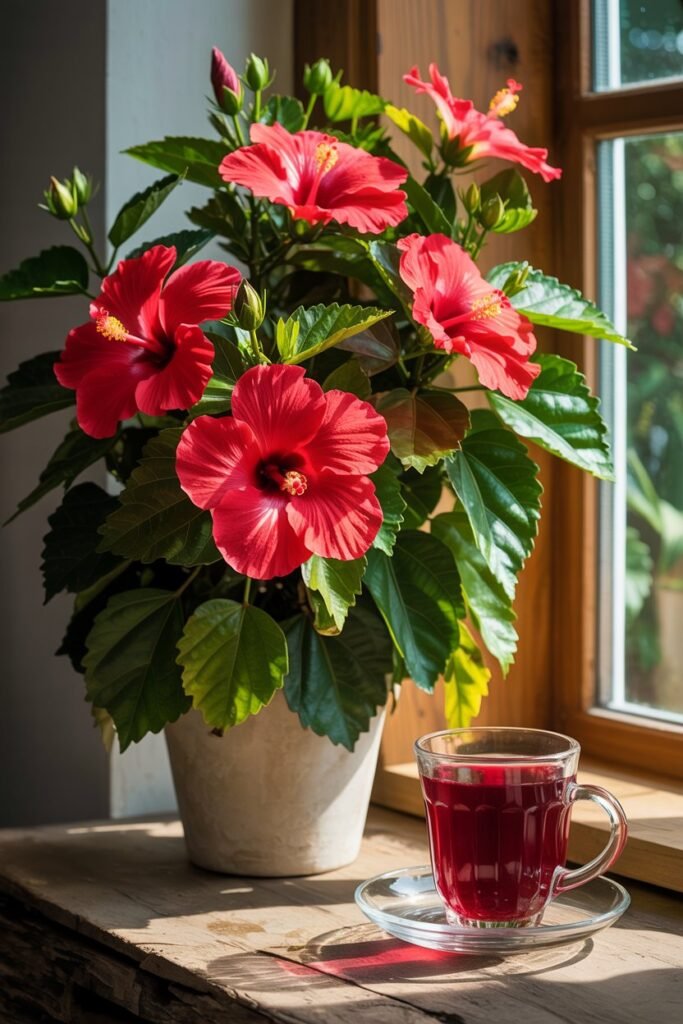
Hibiscus brings color and drama into an indoor tea garden. Watching the flowers open feels like a daily event.
What You’ll Need
- 12–14 inch container
- Rich compost-heavy soil
- South-facing window
- Balanced fertilizer
Planting
Plant hibiscus at same depth as nursery pot.
Water deeply after planting.
Indoor Care Guide
- Light: 6–8 hours direct sunlight.
- Water: Keep soil consistently moist.
- Humidity: Moderate humidity preferred.
- Feeding: Fertilize monthly during active growth.
Pruning
Lightly prune after flowering to maintain shape.
Harvesting
Pick flowers once fully open.
Remove petals and dry for 1–2 weeks.
Hibiscus tea has a tart, cranberry-like flavor.
13. Camellia sinensis – The True Tea Plant
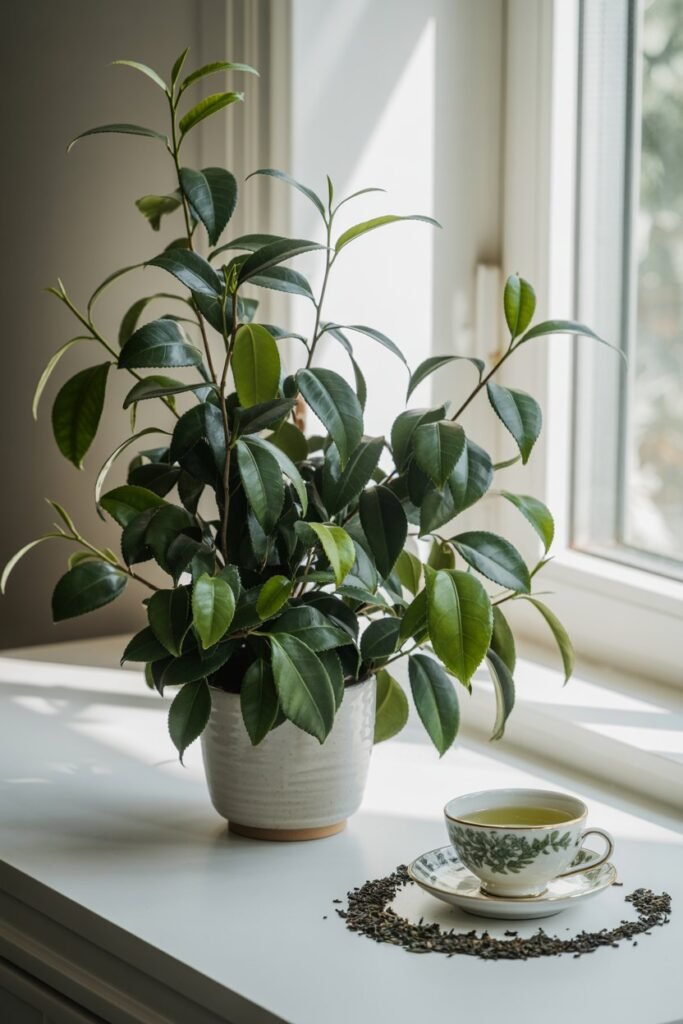
Growing the actual tea plant indoors feels like stepping into a completely different level of tea gardening.
What You’ll Need
- 10–12 inch pot
- Acidic soil mix (azalea or camellia mix)
- Pebble tray for humidity
- Bright indirect light
Planting
- Fill pot with acidic soil.
- Plant at same depth as nursery container.
- Water gently but thoroughly.
Indoor Care Guide
- Light: Bright indirect light (avoid harsh midday sun).
- Water: Keep soil consistently moist.
- Humidity: Moderate humidity helps leaf production.
- Feeding: Acid-loving fertilizer every 6 weeks.
Pruning & Maintenance
Light pruning encourages new flush growth.
Rotate pot regularly.
Harvesting for Real Tea
Harvest the top two leaves and a bud.
For green tea:
- Steam leaves lightly.
- Roll gently.
- Dry completely.
For black tea:
- Allow leaves to wilt.
- Roll to release juices.
- Oxidize before drying.
Watching leaves transform into real tea is incredibly satisfying.
Final Thoughts
Growing an indoor tea garden has gently changed the way I experience both gardening and rest.
Instead of reaching for a box from a shelf, I now reach for fresh leaves, soft petals, and herbs I’ve cared for day after day. Every cup feels more meaningful because I watched it grow.
An indoor tea garden doesn’t require a huge space or perfect conditions. A bright window, a few well-draining pots, good soil, and consistent care are enough to begin.
Some plants will grow quickly and reward you within weeks. Others will take patience. Each one teaches something different about rhythm, timing, and attentiveness.
What I’ve learned most is that tea gardening indoors is not just about the drink. It’s about slowing down. It’s about tending something living in the middle of busy days. It’s about creating a small, peaceful ritual inside your home.
If you start with just one plant maybe mint or chamomile that’s more than enough. Let it grow. Learn its needs. Build from there.
Soon, your windowsill won’t just hold pots. It will hold comfort, flavor, and a quiet kind of joy that only comes from growing something with your own hands.
