
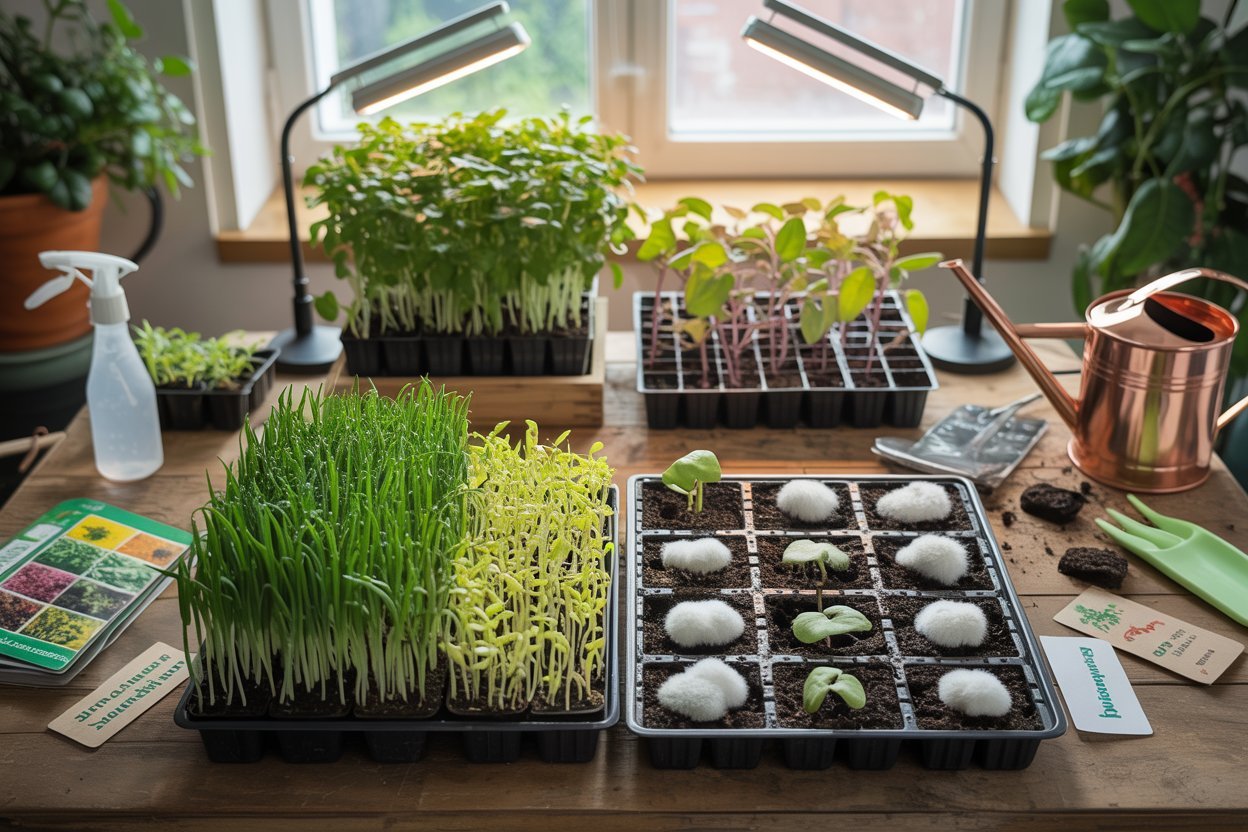

Every gardener remembers the excitement of planting seeds for the first time. Tiny packets filled with possibility, trays lined up near a sunny window, fresh soil ready to nurture life it all feels magical.
I still remember checking my seed trays every morning, convinced I would wake up to a lush forest of seedlings overnight. Instead, I found moldy soil, weak stems, patchy germination, and a lot of confusion.
Seed starting can feel simple on the surface: plant seeds, water them, and wait. But anyone who has tried it knows that many little problems can show up along the way.
Seeds fail to sprout, seedlings stretch toward the light, leaves turn yellow, stems collapse, and growth slows for no obvious reason.
The good news is that nearly every seed starting issue has a solution. Once you understand what young plants need and what commonly goes wrong you can correct mistakes quickly and grow stronger, healthier seedlings.
This guide covers the most common seed starting problems and practical ways to fix them. Whether you are starting vegetables, herbs, flowers, or houseplants from seed, these tips will help you avoid frustration and raise thriving young plants with confidence.
Why Seed Starting Problems Happen
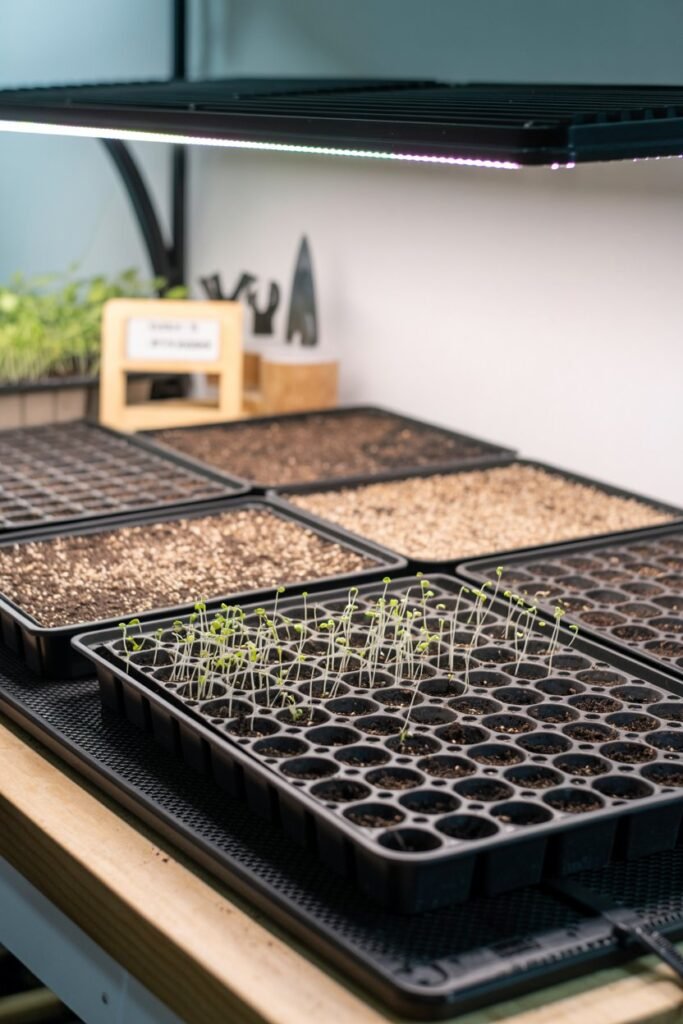
Seeds are living organisms in a resting state. To wake up and grow, they need the right balance of:
- Moisture
- Warmth
- Oxygen
- Light (for some seeds after sprouting)
- Proper soil conditions
- Time
If even one of these factors is off, problems can appear. Since seedlings are delicate in their earliest stage, small mistakes can have a big effect.
The encouraging part is that seedlings grow quickly and respond fast when conditions improve.
Problem 1: Seeds Are Not Germinating
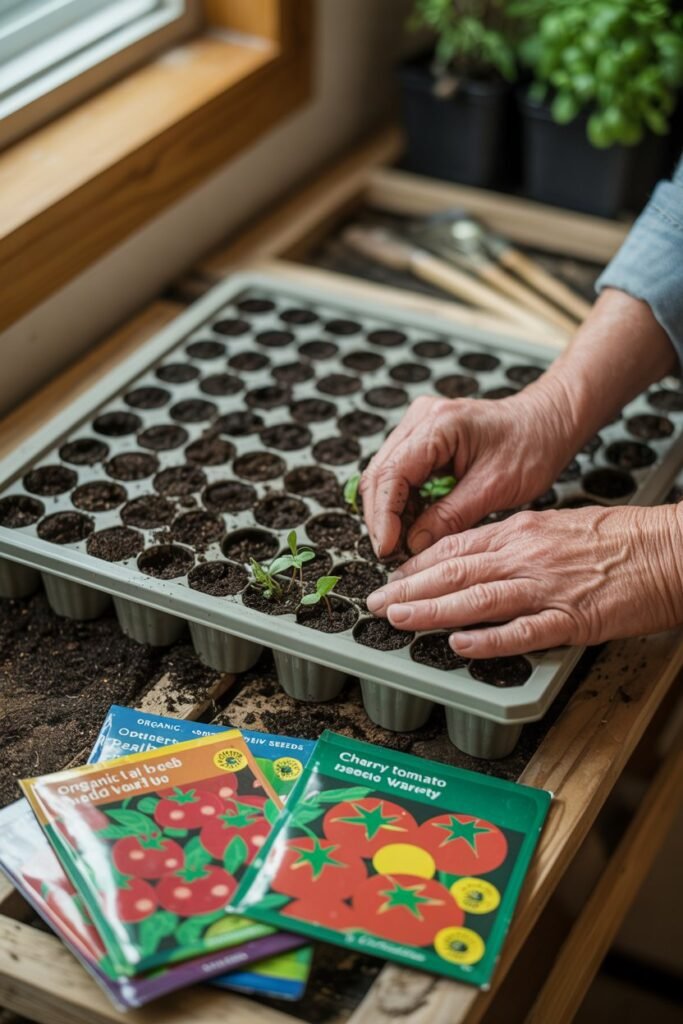
Few things are more disappointing than waiting days or weeks and seeing empty trays.
Common Causes
- Old or expired seeds
- Soil too dry
- Soil too wet
- Temperatures too cold
- Seeds planted too deep
- Poor seed-to-soil contact
- Seeds needing light to germinate but covered with soil
How to Fix It
Check Seed Freshness
Some seeds remain viable for years, while others lose strength quickly. Always test older seeds before planting large amounts.
Maintain Proper Moisture
Seed-starting mix should feel like a wrung-out sponge—moist but not dripping wet.
Use Correct Temperatures
Most vegetable seeds germinate best between 65°F and 80°F (18°C to 27°C). Heat-loving crops like peppers and tomatoes often sprout faster with bottom heat.
Plant at Proper Depth
A good rule: plant seeds about twice as deep as their width. Tiny seeds often need only light surface coverage.
Read the Packet
Many packets specify whether seeds need darkness, light, soaking, scarification, or chilling.
Prevention Tip
Label trays with sowing dates so you know whether seeds are late or simply still germinating.
Problem 2: Uneven Germination
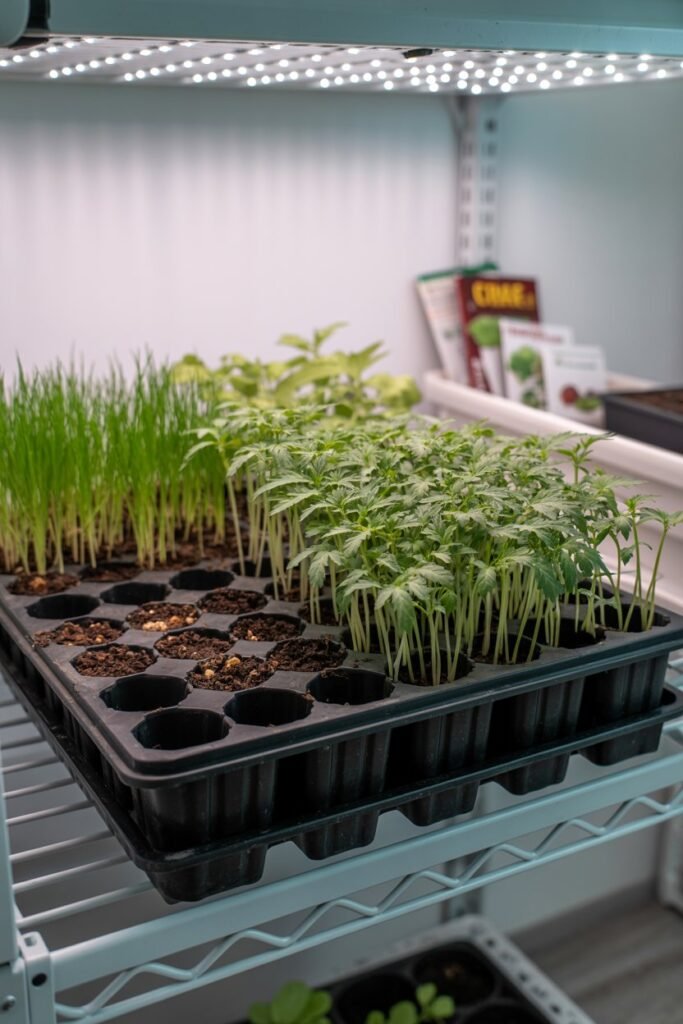
Some cells sprout immediately while others remain empty.
Common Causes
- Inconsistent watering
- Uneven temperatures
- Poor-quality seed mix
- Seeds planted at different depths
- Variable seed quality
How to Fix It
- Rotate trays daily if one side gets more heat or light.
- Water evenly across the tray.
- Re-sow empty cells if needed.
- Use fresh, fine-textured seed-starting mix.
Prevention Tip
Sow seeds carefully and consistently. Uniform depth creates uniform sprouting.
Problem 3: Seedlings Are Tall, Thin, and Weak (Leggy)
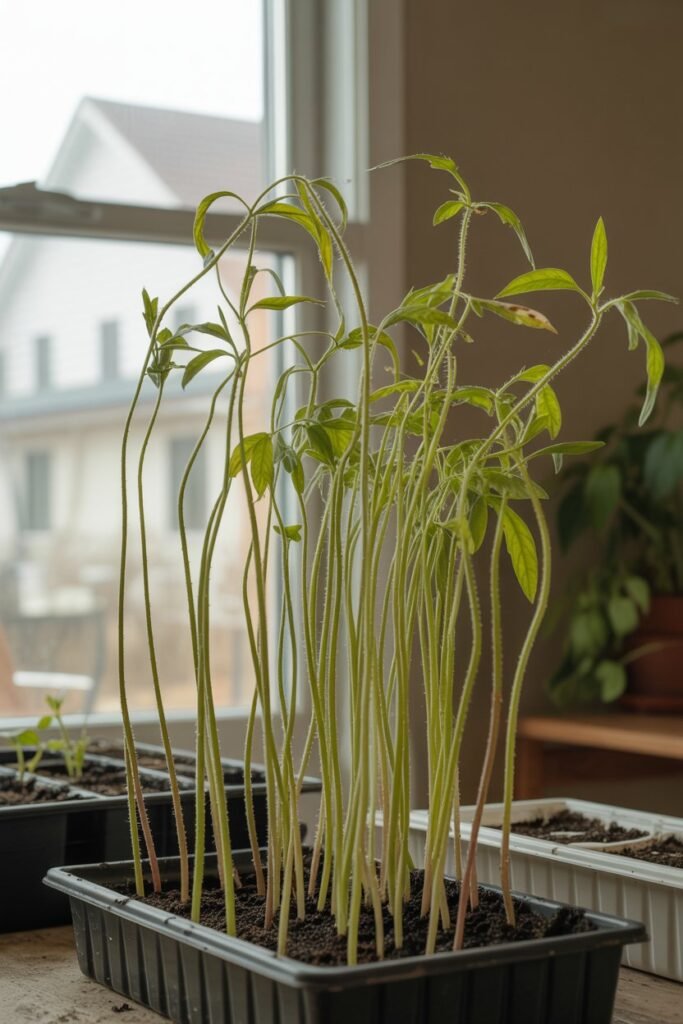
This is one of the most common seed-starting issues.
Why It Happens
Seedlings stretch toward light when they do not receive enough brightness. They grow long stems searching for better conditions.
How to Fix It
Increase Light Immediately
Use grow lights placed 2–4 inches above seedlings. Keep lights on 12–16 hours daily.
Rotate Window-Grown Plants
If using a sunny window, turn trays daily.
Reduce Overcrowding
Crowded seedlings compete for light.
Add Gentle Airflow
A small fan helps strengthen stems.
Prevention Tip
Start lights before seeds even sprout so seedlings receive strong light from day one.
Problem 4: Seedlings Fall Over at Soil Line (Damping Off)
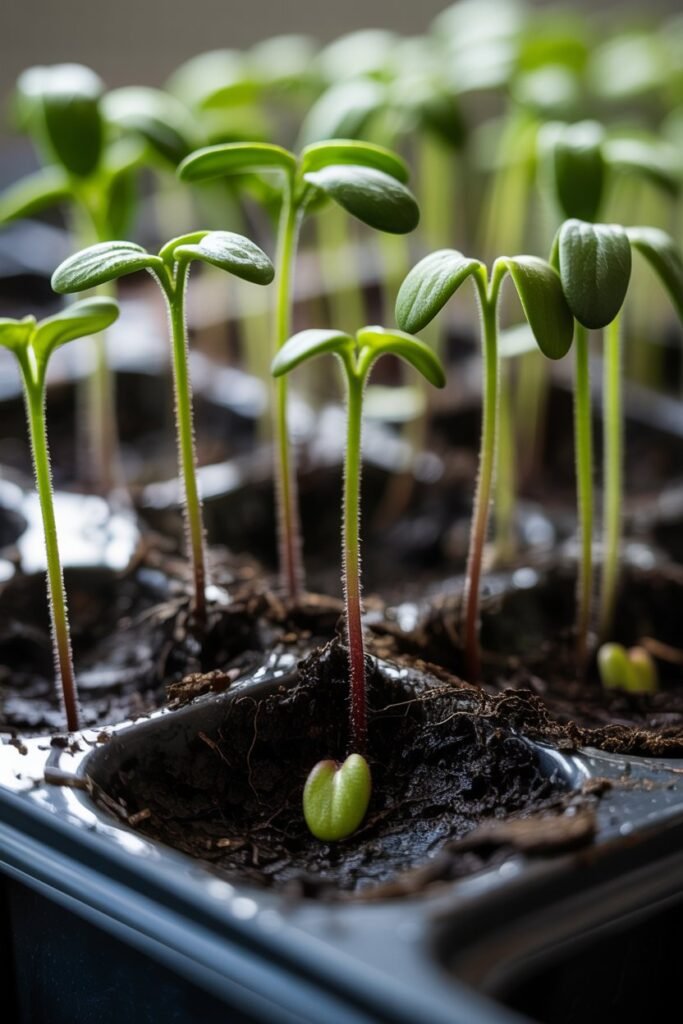
Healthy seedlings suddenly collapse and die at the base.
What Causes It
Damping off is caused by fungi or fungus-like organisms thriving in cool, wet, stagnant conditions.
How to Fix It
Unfortunately, infected seedlings usually cannot be saved.
Remove Affected Plants
Discard collapsed seedlings immediately.
Improve Air Circulation
Use a fan nearby for gentle airflow.
Water Less Frequently
Allow the surface to dry slightly between waterings.
Use Clean Containers
Sanitize trays before reusing them.
Prevention Tip
Always start with sterile seed-starting mix rather than garden soil.
Problem 5: Mold Growing on Soil Surface
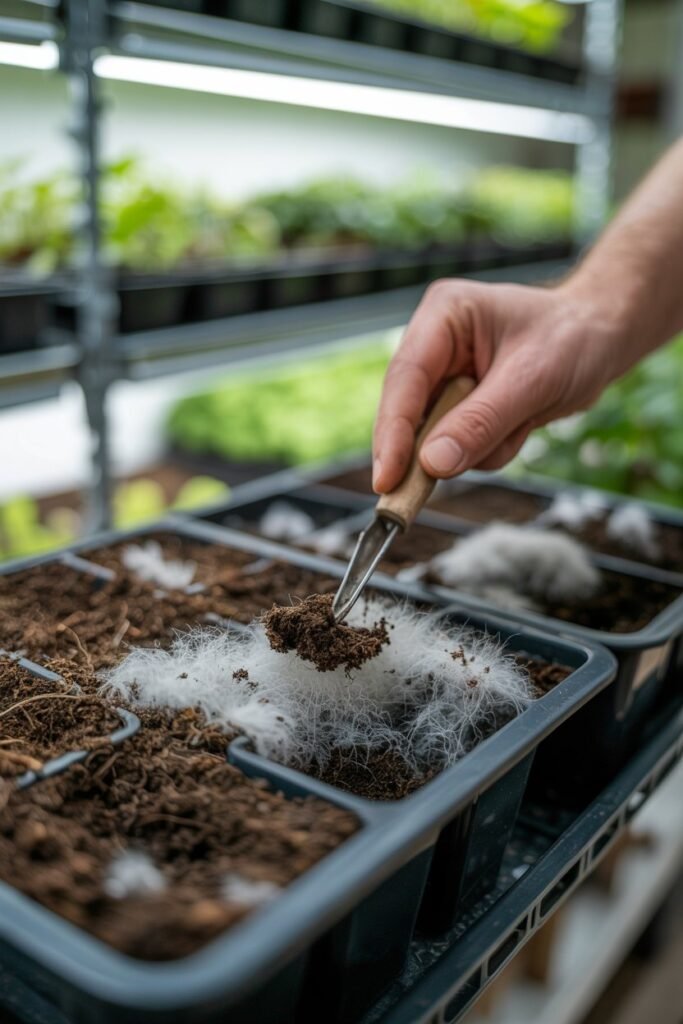
White fuzzy growth often appears on constantly damp trays.
Why It Happens
- Excess moisture
- Poor airflow
- Organic matter staying wet too long
- Cool temperatures
How to Fix It
- Scrape off surface mold gently.
- Improve ventilation.
- Reduce watering frequency.
- Increase warmth slightly.
- Sprinkle a thin fresh layer of dry mix on top.
Prevention Tip
Bottom water trays instead of soaking from above repeatedly.
Problem 6: Yellow Seedling Leaves
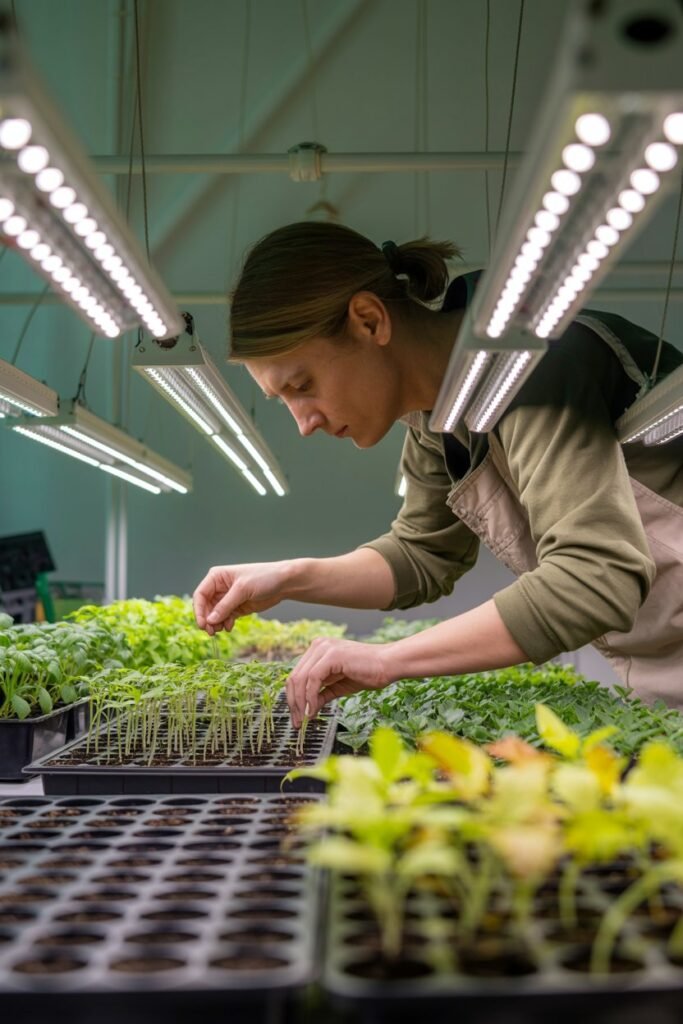
Yellowing can happen for several reasons.
Common Causes
- Overwatering
- Underwatering
- Nutrient deficiency
- Poor drainage
- Root stress
- Lack of light
How to Fix It
If Soil Is Soggy
Allow partial drying and improve drainage.
If Soil Is Bone Dry
Water thoroughly and more consistently.
If Seedlings Have True Leaves
Begin feeding with diluted balanced fertilizer at quarter strength.
Increase Light
Weak light often causes pale growth.
Prevention Tip
Once seedlings develop their first true leaves, regular light feeding helps maintain healthy color.
Problem 7: Seedlings Stop Growing
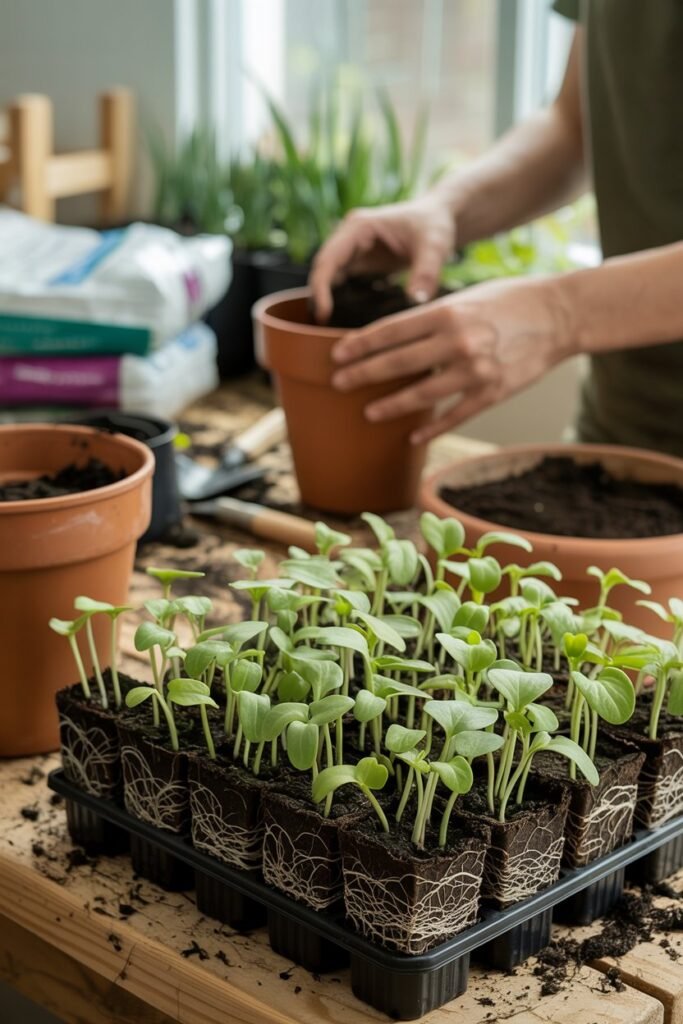
Seedlings sprout well, then seem frozen in place.
Common Causes
- Roots outgrowing cells
- Low nutrients
- Cold temperatures
- Poor light
- Water stress
How to Fix It
Pot Up Seedlings
Move them into larger containers if roots are crowded.
Feed Gently
Use diluted liquid fertilizer.
Raise Temperatures
Warm-loving plants stall in chilly rooms.
Improve Lighting
Slow growth often links to insufficient light.
Prevention Tip
Monitor roots weekly once seedlings gain size.
Problem 8: Purple Leaves or Stems
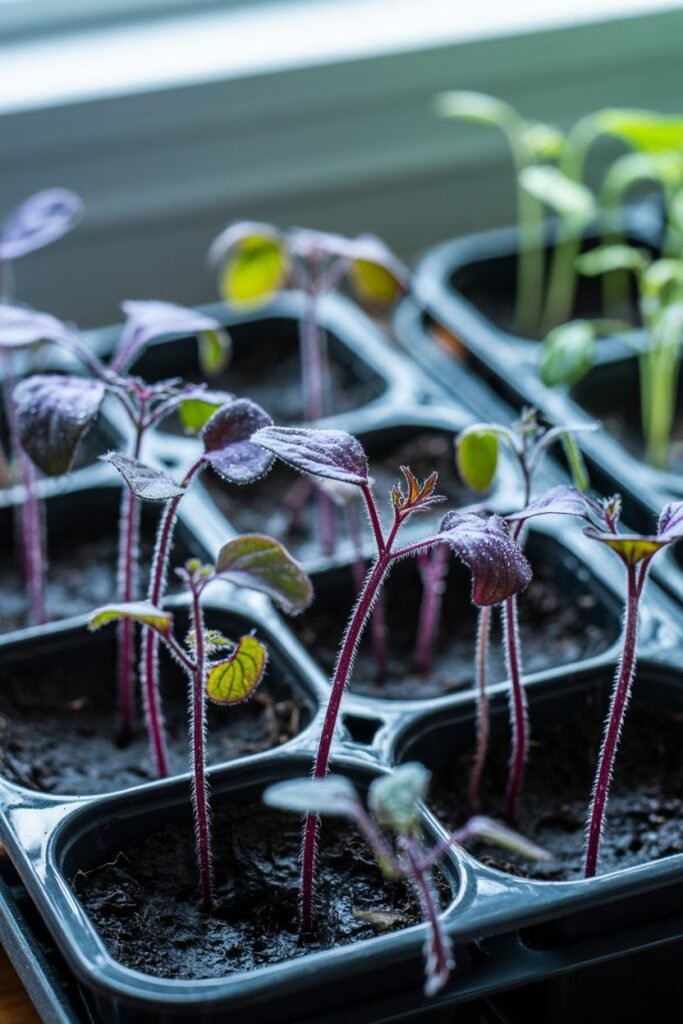
Purple tones can be normal for some varieties, but sudden discoloration often signals stress.
Common Causes
- Cold soil
- Phosphorus uptake issues
- Genetic pigmentation
- Stress after transplanting
How to Fix It
- Keep seedlings warmer.
- Ensure balanced nutrition.
- Avoid waterlogged soil.
- Wait and monitor if variety naturally colors purple.
Prevention Tip
Keep trays off cold windowsills or concrete floors.
Problem 9: Seedlings Dry Out Too Fast
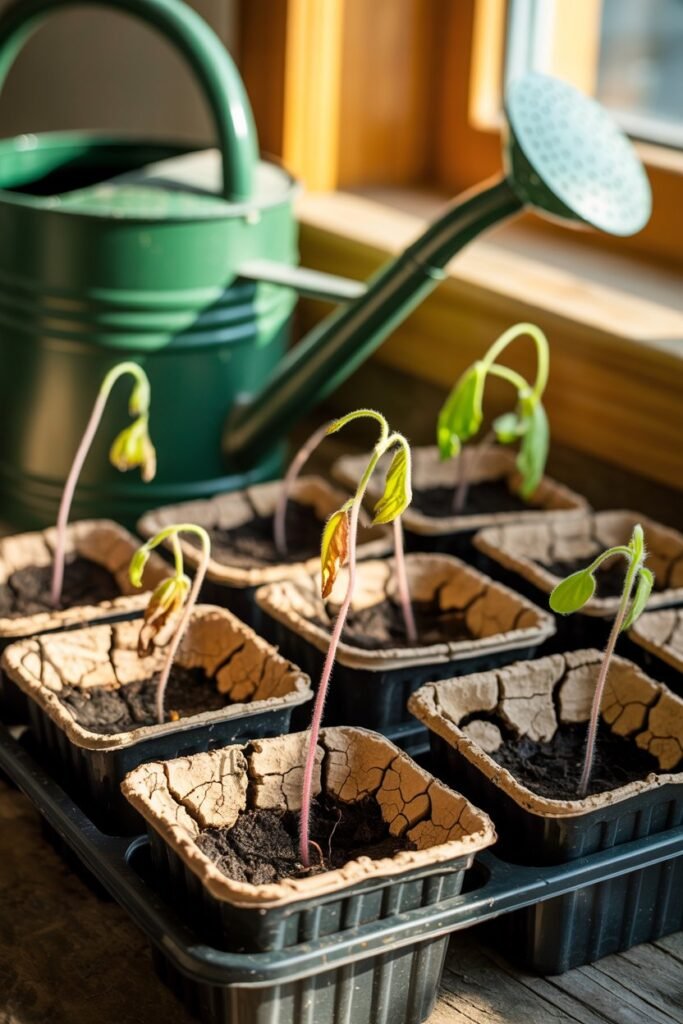
Tiny cells can go from moist to dry quickly.
Why It Happens
- Warm indoor air
- Fans blowing directly
- Small cells with little soil volume
- Strong sun exposure
How to Fix It
- Check moisture daily.
- Water deeply when needed.
- Move trays away from heating vents.
- Pot up larger seedlings sooner.
Prevention Tip
Use humidity domes only until germination, then remove them.
Problem 10: Seedlings Look Burned or Crispy
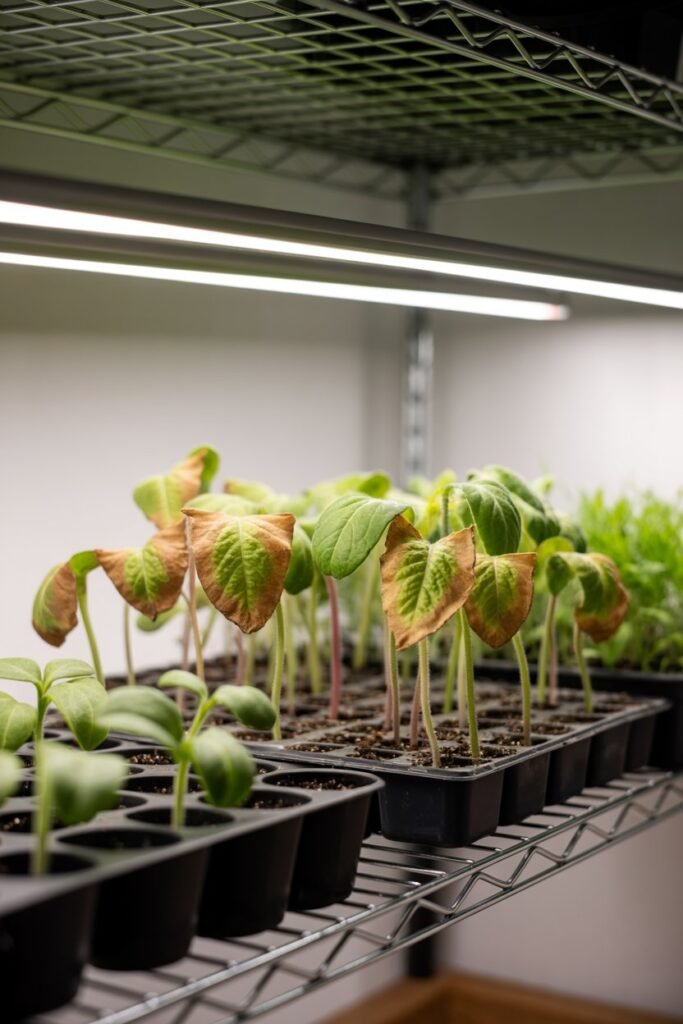
Brown edges or scorched leaves can appear.
Common Causes
- Grow lights too close
- Fertilizer too strong
- Heat stress
- Dry soil combined with bright light
How to Fix It
Adjust Lights
Raise fixtures slightly if leaves touch bulbs or LEDs.
Flush Excess Fertilizer
Water thoroughly to rinse salts.
Monitor Temperature
Lights can generate warmth in enclosed spaces.
Prevention Tip
Feed weakly and regularly rather than heavily all at once.
Problem 11: Roots Tangled and Bound
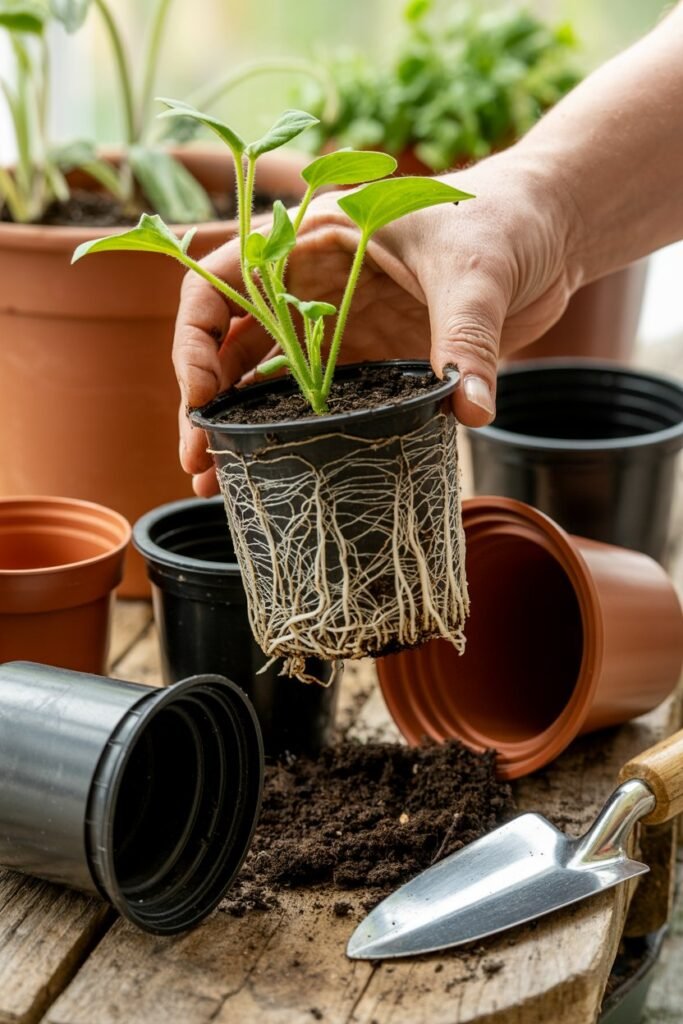
When seedlings stay too long in trays, roots circle tightly.
Signs
- Water runs straight through
- Plants wilt quickly
- Growth stalls
- Roots visible from drainage holes
How to Fix It
Transplant into larger pots immediately.
Loosen circling roots gently during transplanting.
Prevention Tip
Pot up before roots become dense mats.
Problem 12: Seedlings Wilt After Transplanting
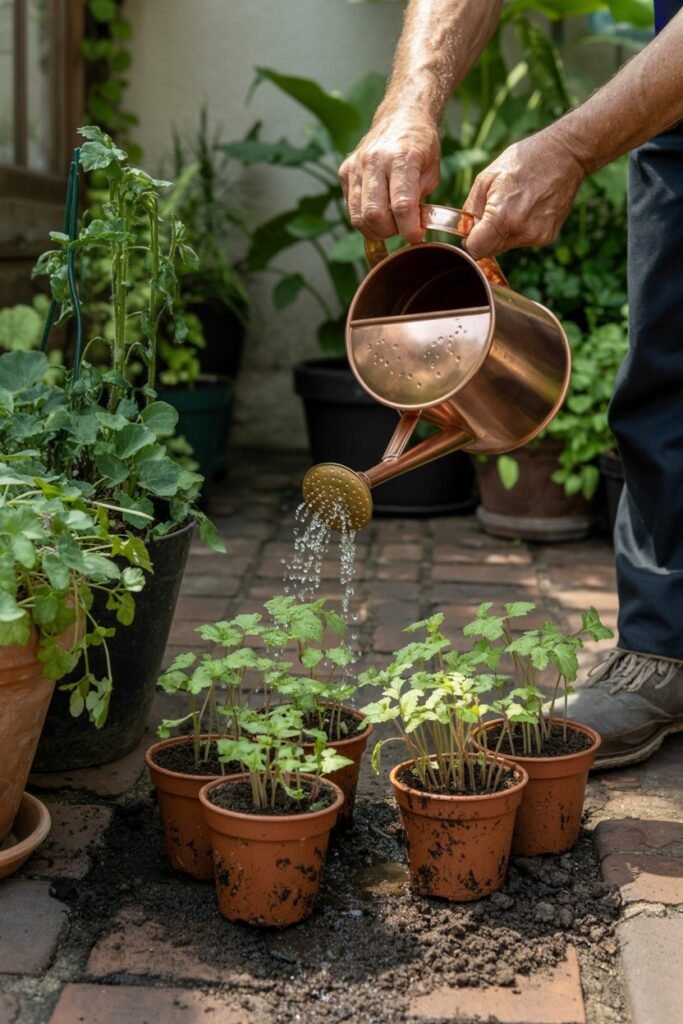
Moving seedlings to larger pots or outdoors can cause temporary shock.
Common Causes
- Root disturbance
- Sudden sun exposure
- Wind stress
- Dry roots during transplanting
How to Fix It
- Water right after transplanting.
- Shade for a day or two.
- Handle by leaves, not stems.
- Keep roots moist during transfer.
Prevention Tip
Transplant during cooler parts of the day.
Problem 13: Seedlings Die Outdoors After Planting
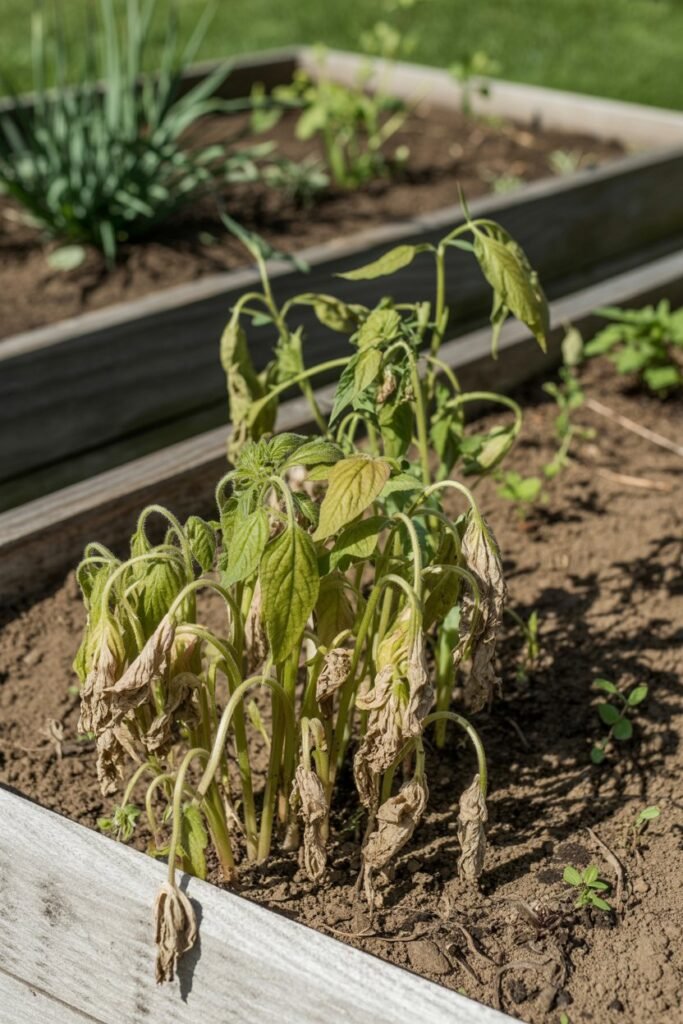
Indoor-grown seedlings need time to adjust outside.
Why It Happens
Indoor plants are soft and sheltered. Outdoor sun, wind, and temperature swings can overwhelm them.
How to Fix It: Harden Off Properly
Over 7–10 days:
- Place outside in shade for 1–2 hours.
- Increase outdoor time daily.
- Gradually introduce morning sun.
- Protect from strong wind.
- Leave out longer each day.
Prevention Tip
Never move tender seedlings straight from grow room to garden bed.
Problem 14: Fungus Gnats Around Seed Trays
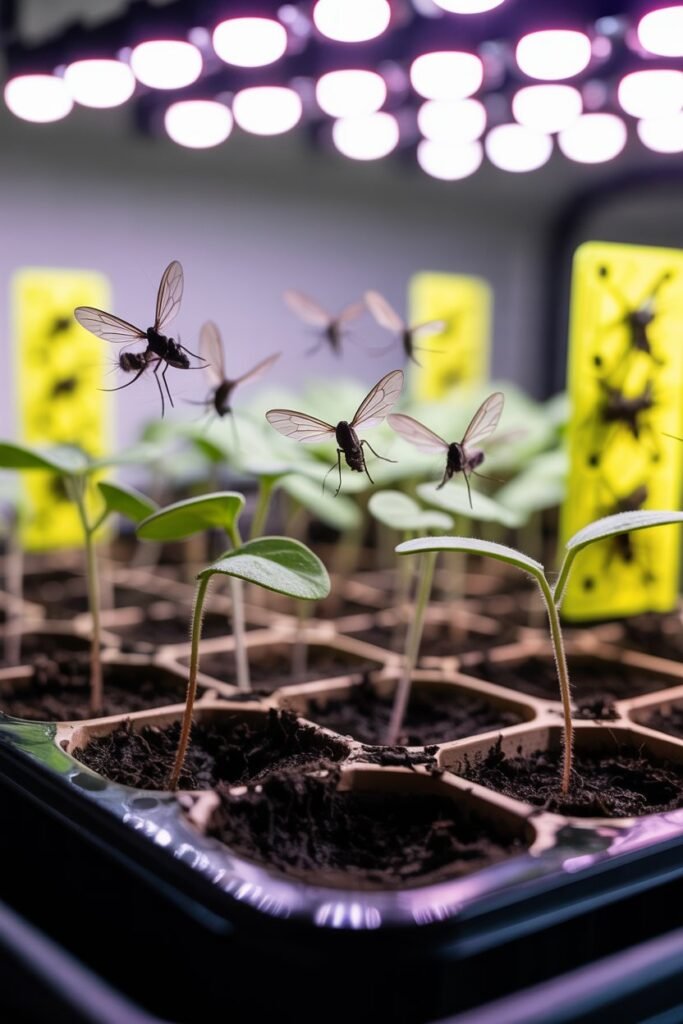
Tiny black flying insects hover over moist soil.
Why They Appear
They are attracted to wet growing media rich in organic matter.
How to Fix It
- Let topsoil dry slightly between watering.
- Use sticky traps.
- Improve airflow.
- Water from below.
- Remove algae or decaying debris.
Prevention Tip
Avoid constantly saturated trays.
Problem 15: Algae Growing on Soil Surface
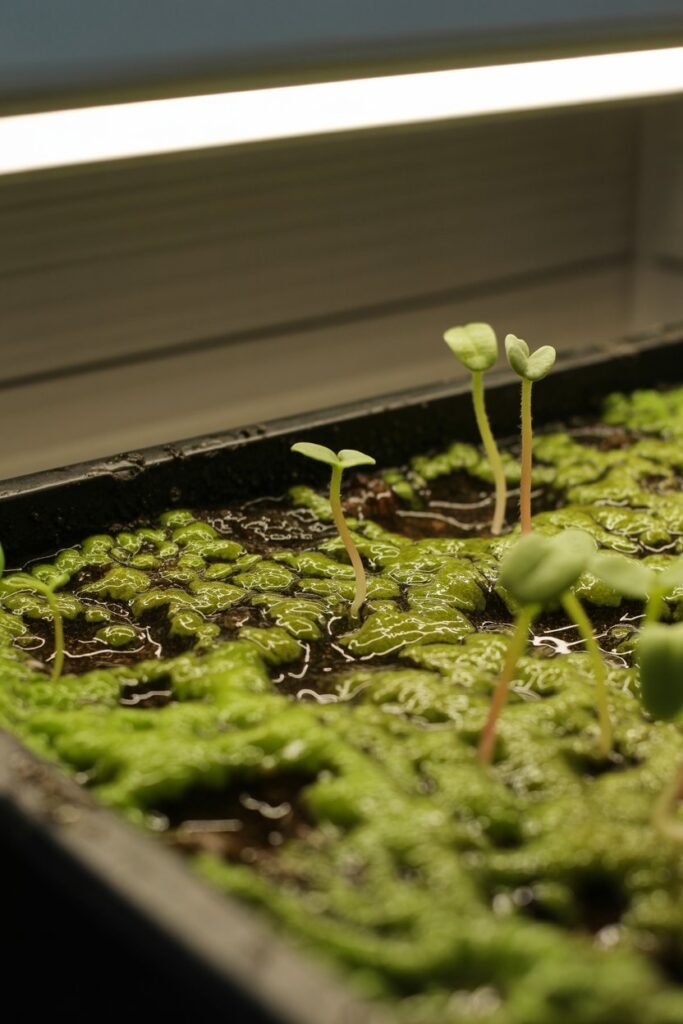
Green slime or crust can form.
Causes
- Constant moisture
- Bright light
- Poor airflow
How to Fix It
- Scrape top layer lightly.
- Reduce watering.
- Increase air movement.
- Add fresh dry mix.
Prevention Tip
Allow the surface to dry slightly between waterings.
Best Practices for Healthy Seed Starting
Use the Right Growing Mix
Choose light, fluffy seed-starting mix. Garden soil compacts too much indoors.
Provide Strong Light
Even sunny windows are often weaker than expected. Supplemental lights produce sturdier plants.
Water Carefully
Too wet causes rot. Too dry kills roots. Aim for even moisture.
Label Everything
Many seedlings look similar early on.
Thin Crowded Seedlings
Give strongest plants room to grow.
Feed at the Right Time
Once true leaves appear, begin gentle feeding.
Keep Records
Write down sowing dates, germination times, and problems. Each season gets easier.
Troubleshooting Quick Guide
| Problem | Likely Cause | Quick Fix |
|---|---|---|
| No germination | Cold or dry soil | Warm and moisten |
| Leggy seedlings | Low light | Add grow lights |
| Collapsing stems | Damping off | Improve hygiene/airflow |
| Yellow leaves | Water or nutrient issue | Adjust watering/feed |
| Stalled growth | Rootbound or low light | Pot up/improve light |
| Mold on soil | Too wet | Dry surface, add airflow |
| Wilting after transplant | Shock | Water and shade |
My Most Important Lesson From Seed Starting
The biggest mistake I made early on was trying to “help” seedlings too much.
I watered too often, fussed constantly, moved trays around daily, and overcorrected every tiny change. Seedlings do better with stable, simple care than constant interference.
Give them light, moisture, warmth, and patience. Then let them grow.
Final Thoughts
Seed starting problems happen to beginners and experienced gardeners alike. Even seasoned growers lose trays, misjudge watering, or battle weak light now and then.
That does not mean you failed it means you are learning one of gardening’s most valuable skills.
Once you understand the signals seedlings give you, troubleshooting becomes much easier. Yellow leaves, stretching stems, slow growth, moldy soil these are all messages, not disasters.
With each season, you will recognize issues faster, fix them sooner, and grow stronger plants from the start. Before long, seed starting becomes one of the most rewarding parts of gardening.
Healthy gardens often begin with tiny trays on a windowsill and a gardener willing to keep learning.
