
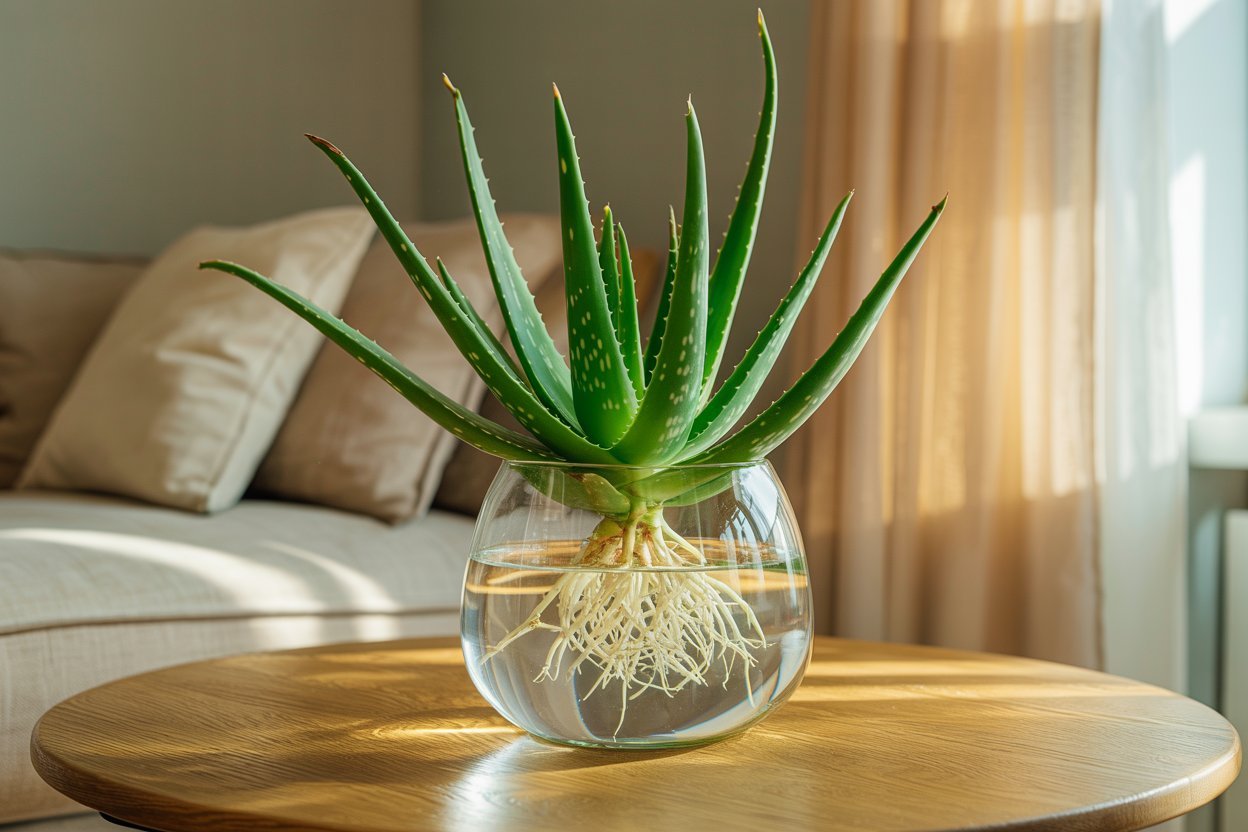

Aloe vera is one of those plants that seems to fit beautifully into almost any home. It is elegant, low-maintenance, useful, and wonderfully forgiving.
Known for its soothing gel and sculptural green leaves, aloe vera has long been loved as both a decorative houseplant and a practical healing plant.
If you have ever wondered whether you can grow aloe vera in water, the answer is a little more nuanced than a simple yes or no.
Aloe vera is naturally a succulent, which means it is adapted to dry climates and stores water inside its thick leaves. Because of this, it does not naturally thrive in water the same way pothos or lucky bamboo might.
However, aloe vera can be rooted and grown in water for a period of time when done carefully.
Many gardeners enjoy growing aloe in glass containers for decorative purposes, propagation, or experimenting with hydroponic-style growing. The secret is understanding how aloe works and giving it the right care.
In this guide, you will learn exactly how to grow aloe vera in water, how to avoid root rot, what container to use, how to maintain a healthy plant, and whether long-term water growing is truly the best option.
Let’s explore everything you need to know.
Can Aloe Vera Really Grow In Water?
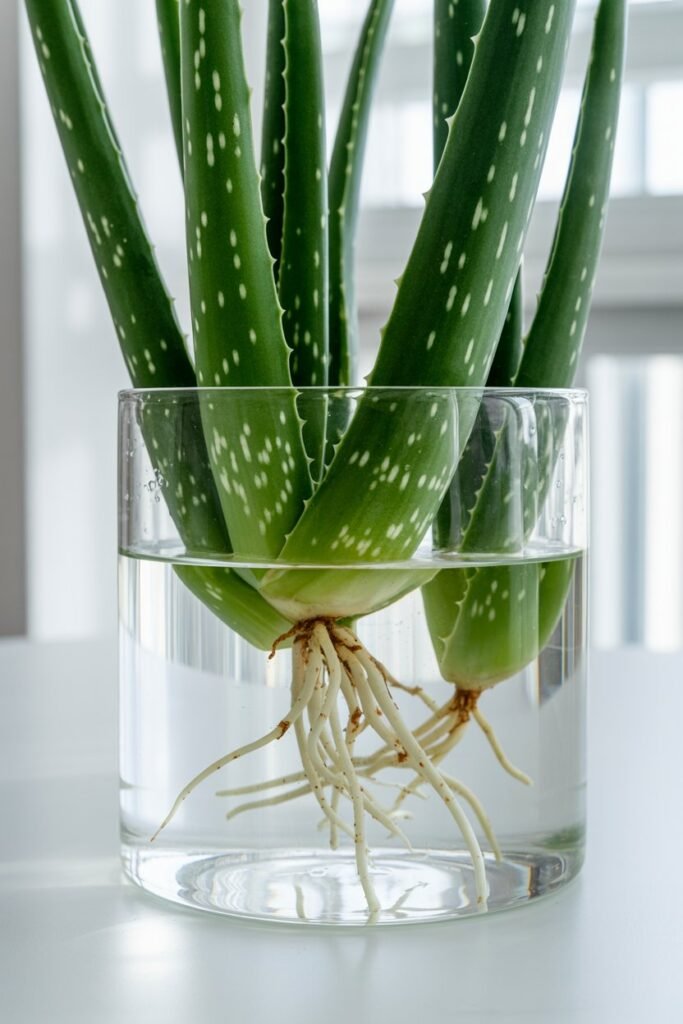
Yes, aloe vera can grow in water temporarily or semi-hydroponically, but it is not naturally a full aquatic plant.
Unlike many common houseplants that root easily in water and stay happy for years, aloe vera prefers dry, airy soil with excellent drainage. Its roots need oxygen as much as they need moisture.
When roots stay submerged constantly without enough airflow, rot can happen quickly.
That said, many plant lovers successfully grow aloe vera in water by:
- Using only the roots in water
- Keeping the crown above water
- Changing water regularly
- Providing bright indirect light
- Watching closely for rot or stress
- Using healthy offsets or pups rather than mature stressed plants
So yes, it is possible but it requires a thoughtful touch.
Why People Grow Aloe Vera In Water
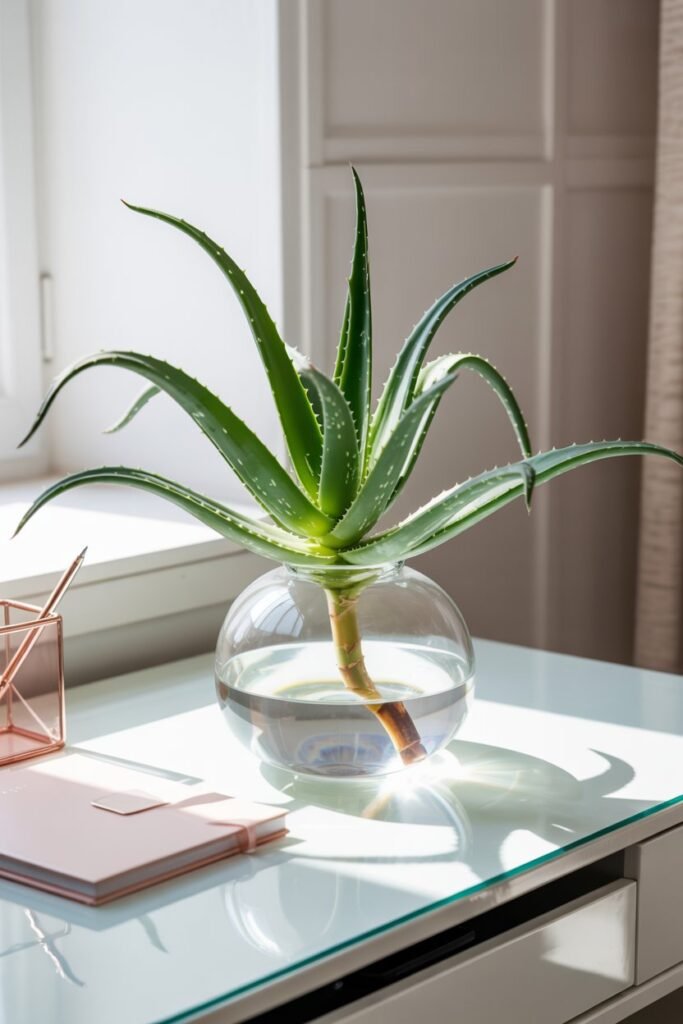
There are several lovely reasons people choose to grow aloe vera this way.
1. Beautiful Decorative Display
A clear glass vase with visible roots can look clean, modern, and elegant in kitchens, offices, or windowsills.
2. Easy Propagation Experiment
Water rooting allows you to observe root development, which can be fun and educational.
3. Cleaner Indoor Gardening
No spilled soil, fungus gnats, or dusty pots.
4. Space Saving
A small aloe cutting in a slim jar can fit almost anywhere.
5. Beginner-Friendly Curiosity Project
If you enjoy trying new plant methods, aloe in water is a rewarding experiment.
Is Growing Aloe Vera In Water Better Than Soil?
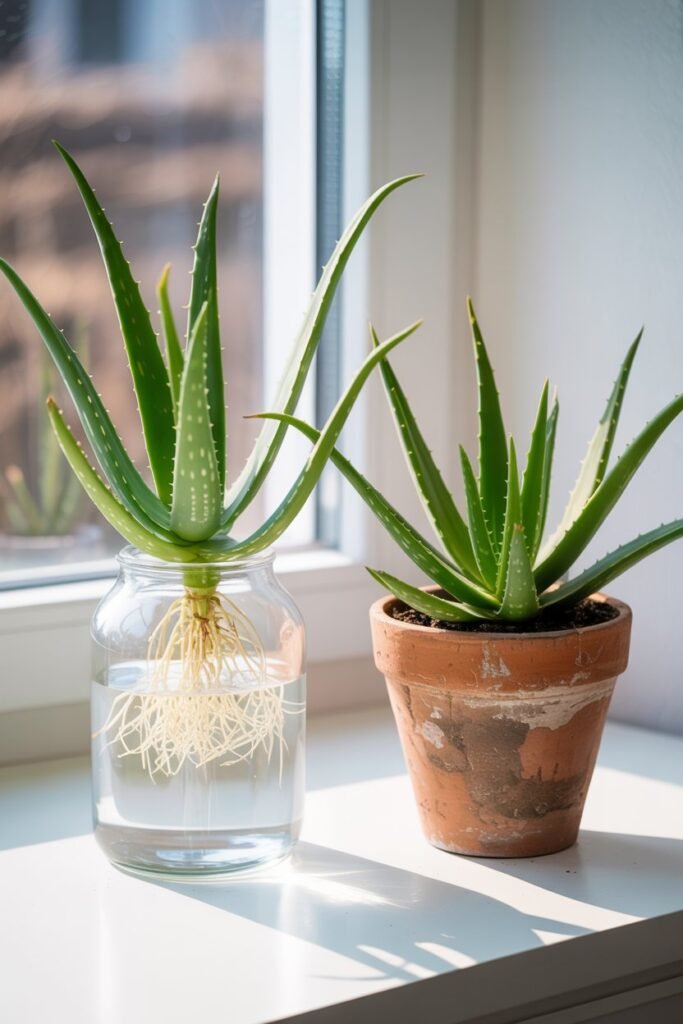
Honestly, soil is still the best long-term home for aloe vera.
Aloe evolved in dry, sandy environments. Its roots are designed for quick drainage, not permanent soaking.
Water Growing Pros
- Attractive appearance
- No messy soil
- Fun propagation method
- Easy to monitor roots
- Minimal cleanup
Water Growing Cons
- Higher risk of root rot
- Slower growth over time
- Nutrient deficiency risk
- More maintenance
- Not ideal long term for many plants
If your goal is a thriving mature aloe plant, soil wins. If your goal is a stylish experiment or short-term propagation, water can work beautifully.
Best Aloe Vera Plants To Use
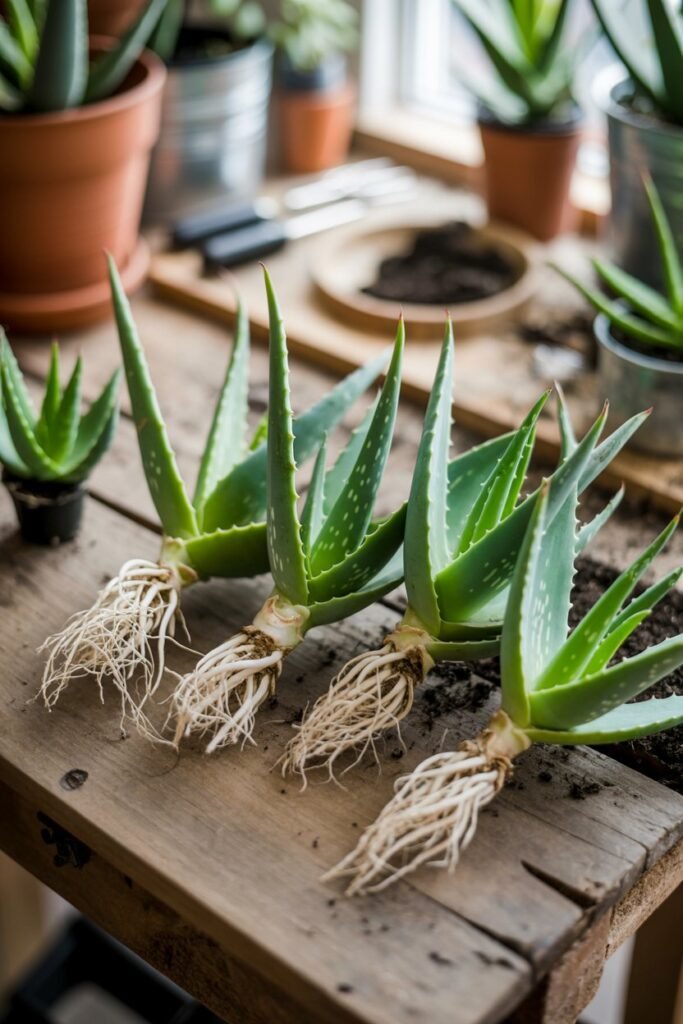
Not every aloe plant is ideal for water growing.
Choose:
- Healthy young plants
- Aloe pups (baby offsets)
- Plants with firm green leaves
- Roots free of mush or damage
- Disease-free specimens
Avoid:
- Weak yellowing plants
- Plants with black roots
- Overwatered aloe from stores
- Very large mature stressed plants
Aloe pups are usually the best choice because they adapt faster.
Supplies You Will Need
Gather these simple items before you begin.
- Healthy aloe vera pup or small plant
- Clear glass jar, vase, or bottle
- Clean scissors or pruning shears
- Filtered or distilled water
- Pebbles or marbles (optional for support)
- Paper towel
- Mild liquid fertilizer (optional later)
How To Choose The Right Container
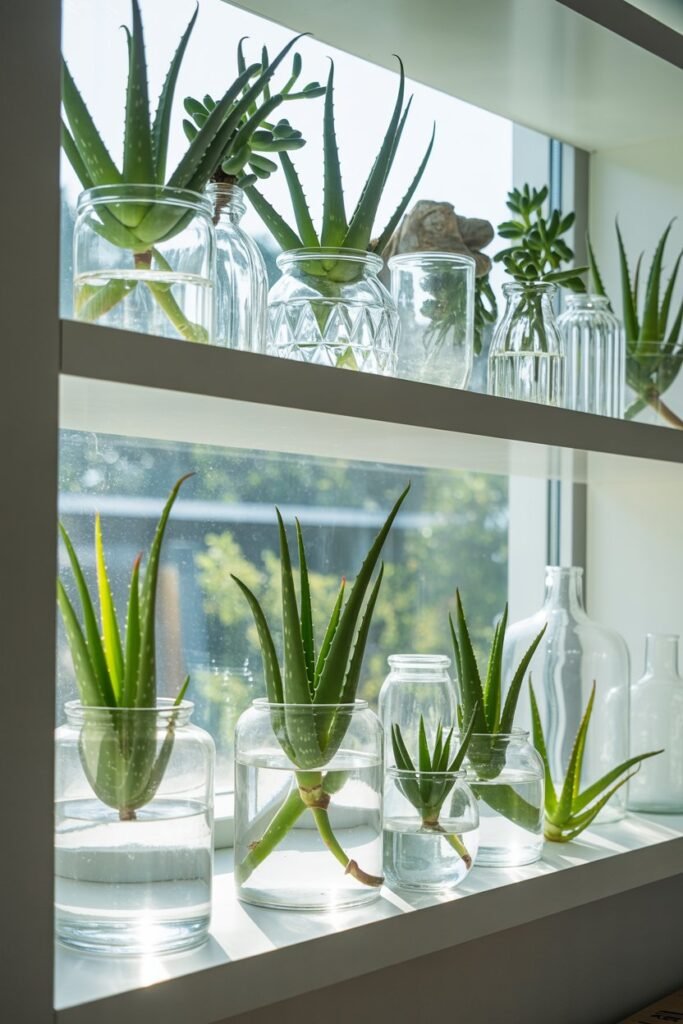
The right container makes all the difference.
Best Container Features
- Narrow neck or top for support
- Clear sides to monitor roots
- Clean and smooth interior
- Stable base that won’t tip easily
- Sized to fit roots comfortably
Great Options
- Mason jars
- Glass propagation vases
- Small cylinders
- Decorative glass bottles with wide base
Avoid
- Deep oversized containers
- Dirty reused jars with residue
- Containers that trap leaves in moisture
- Opaque containers where roots cannot be checked easily
Step-By-Step: How To Grow Aloe Vera In Water Properly
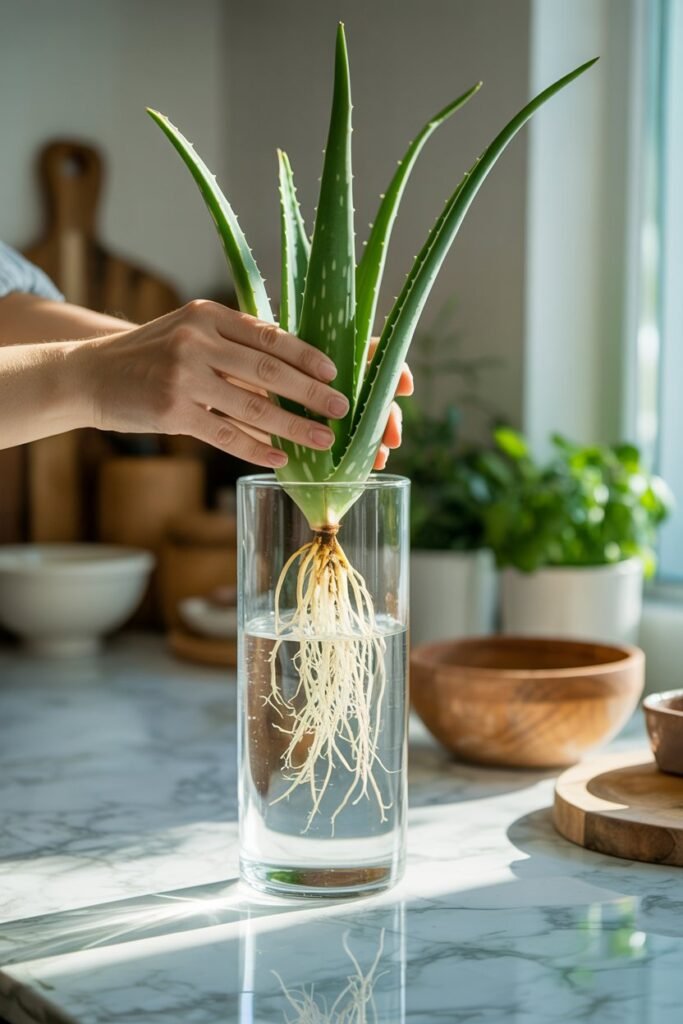
Step 1: Remove A Healthy Pup Or Plant
Choose a healthy aloe pup from the mother plant if possible.
Gently separate it with roots attached. If using a potted aloe, remove it carefully from soil.
Shake away loose soil.
Step 2: Clean The Roots
Rinse roots gently under lukewarm water.
Remove all soil particles because leftover soil in water can cause bacteria and cloudiness.
Be gentle. Aloe roots can be delicate.
Step 3: Trim Damaged Roots
Use sterilized scissors to trim:
- Black roots
- Mushy roots
- Broken roots
- Rotten sections
Healthy roots should feel firm and look pale tan or white.
Step 4: Let Roots Dry Briefly
Allow the plant to sit out for a few hours so trimmed areas can callus slightly.
This small step may help reduce rot risk.
Step 5: Add Water To Container
Fill the jar so only the roots touch the water.
Do not submerge the stem base or leaf crown.
This is one of the most important rules.
Step 6: Position The Plant
Place aloe so:
- Roots sit in water
- Stem stays above water
- Leaves remain dry
- Plant stands upright
Use pebbles if needed for support.
Step 7: Place In Bright Indirect Light
Choose a bright room with filtered sunlight.
Good locations:
- East-facing window
- Bright kitchen counter
- Sunny shelf with curtain-filtered light
Avoid harsh afternoon sun immediately after transferring.
What Type Of Water Is Best?
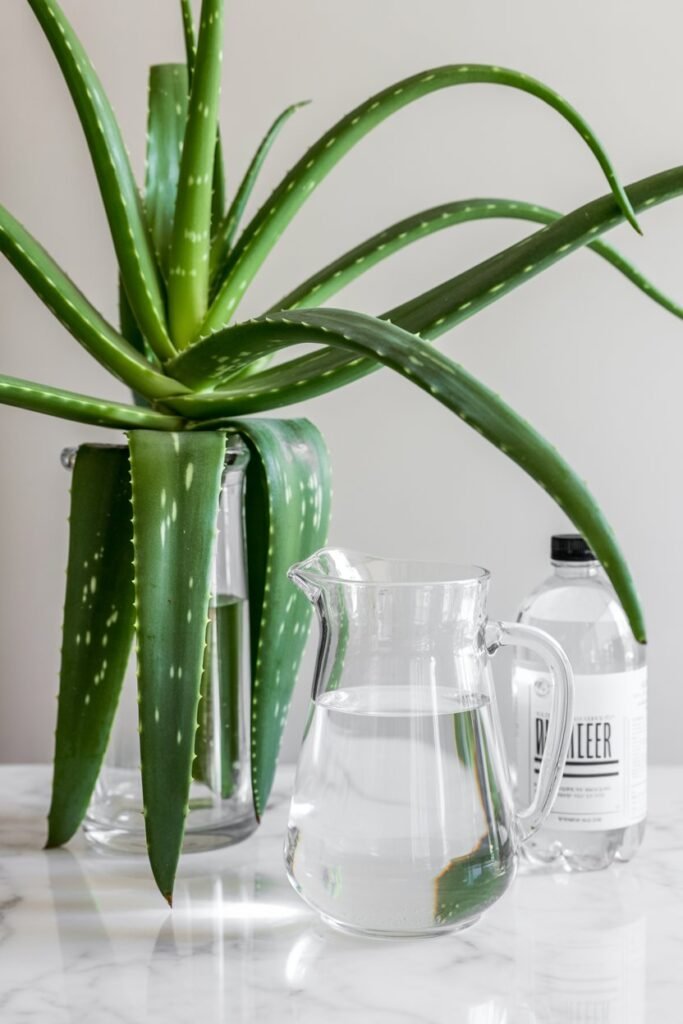
Aloe can be sensitive to heavy minerals or chlorine.
Best Choices
- Distilled water
- Filtered water
- Rainwater (clean source)
- Tap water left out 24 hours
Less Ideal
- Hard mineral-heavy tap water
- Softened water with salts
If leaf tips brown, your water quality may be the issue.
How Often To Change The Water
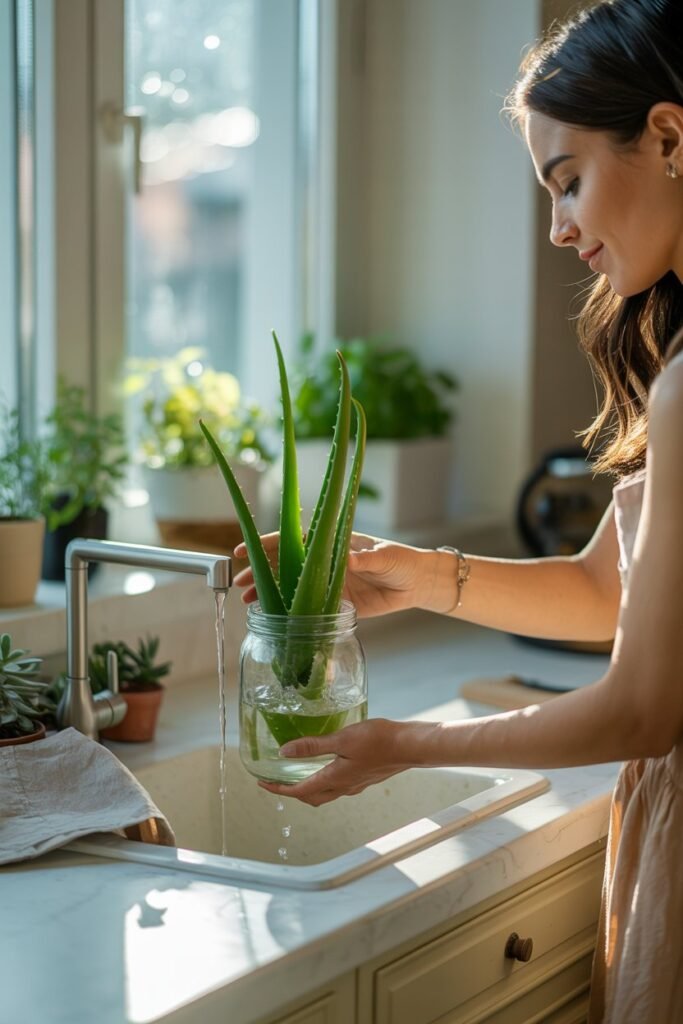
Fresh water keeps roots healthier.
Ideal Schedule
- Every 5 to 7 days normally
- Every 3 to 4 days in warm weather
- Immediately if cloudy or smelly
Each time you change water:
- Rinse container
- Check roots
- Refill with clean water
Light Requirements For Aloe In Water
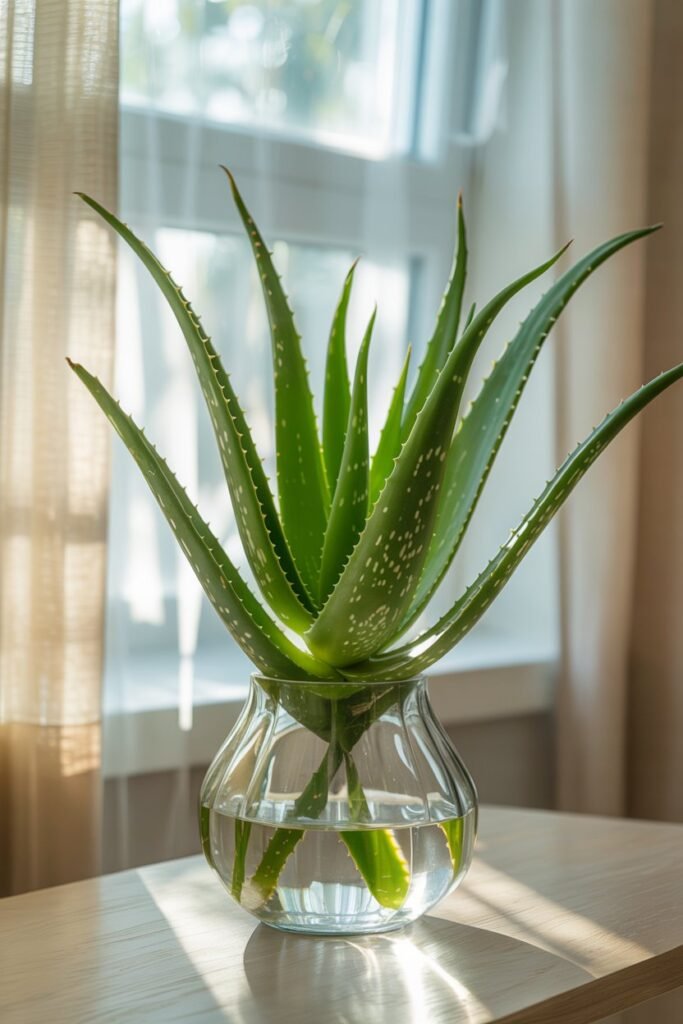
Light is essential for strong growth.
Best Light
- Bright indirect light
- Morning sun for a few hours
- Well-lit indoor spaces
Too Little Light Causes
- Weak floppy leaves
- Pale color
- Slow growth
- Stretching
Too Much Harsh Sun Causes
- Leaf scorch
- Brown patches
- Stress after transition
Rotate the container weekly for even growth.
Temperature Needs
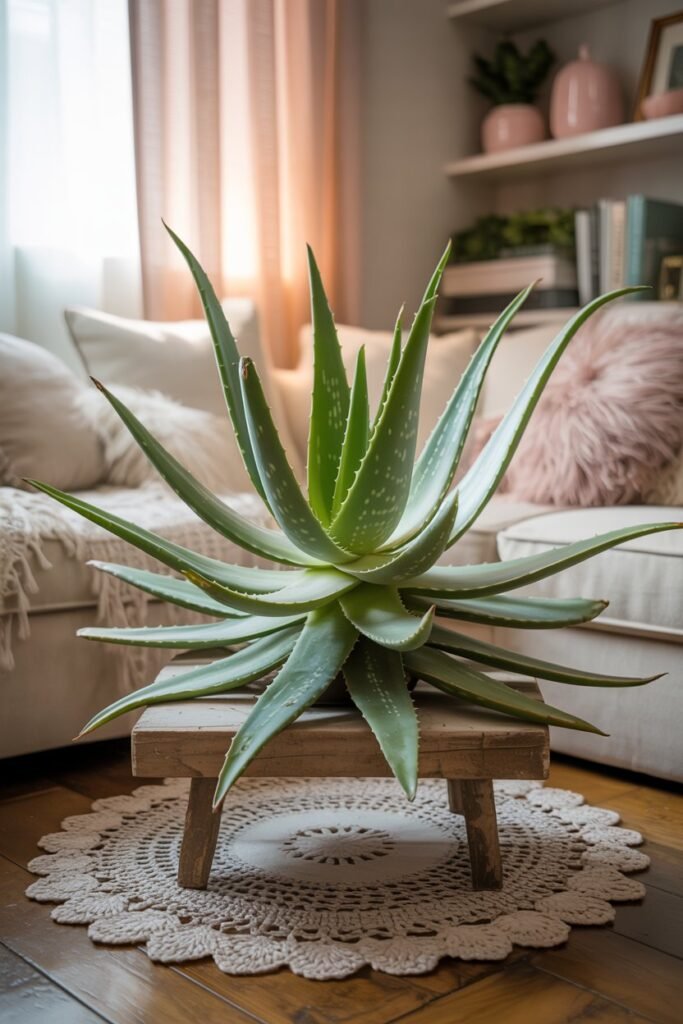
Aloe prefers warmth.
Best Temperature Range
60°F to 80°F (16°C to 27°C)
Avoid
- Cold drafts
- Frost
- AC vents
- Sudden temperature swings
- Hot radiators
Warm stable rooms are ideal.
Should You Add Fertilizer?
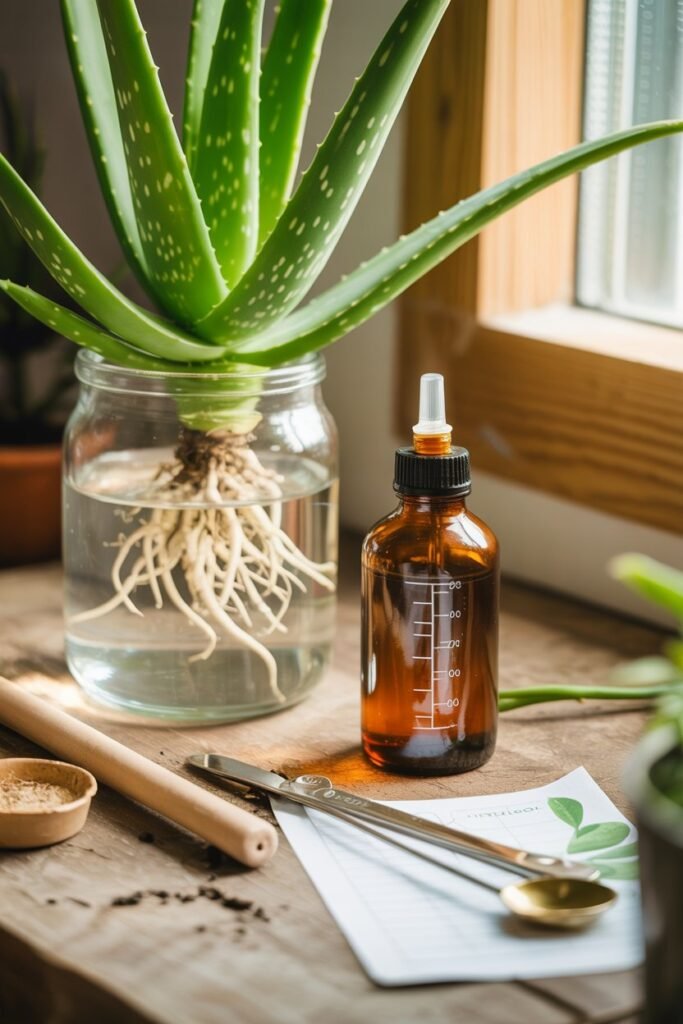
Eventually yes but gently.
Water contains no nutrients, so long-term aloe may need feeding.
Best Method
Use a balanced liquid houseplant fertilizer diluted to one-quarter strength once every 4 to 6 weeks during active growth.
Avoid Overfeeding
Too much fertilizer in water can burn roots.
When in doubt, use less.
Signs Your Aloe Vera Is Happy In Water
Your plant may be adjusting well if you notice:
- Firm upright leaves
- Fresh root growth
- Rich green color
- Slow but steady new leaves
- No odor from water
- Clear healthy roots
Signs Something Is Wrong
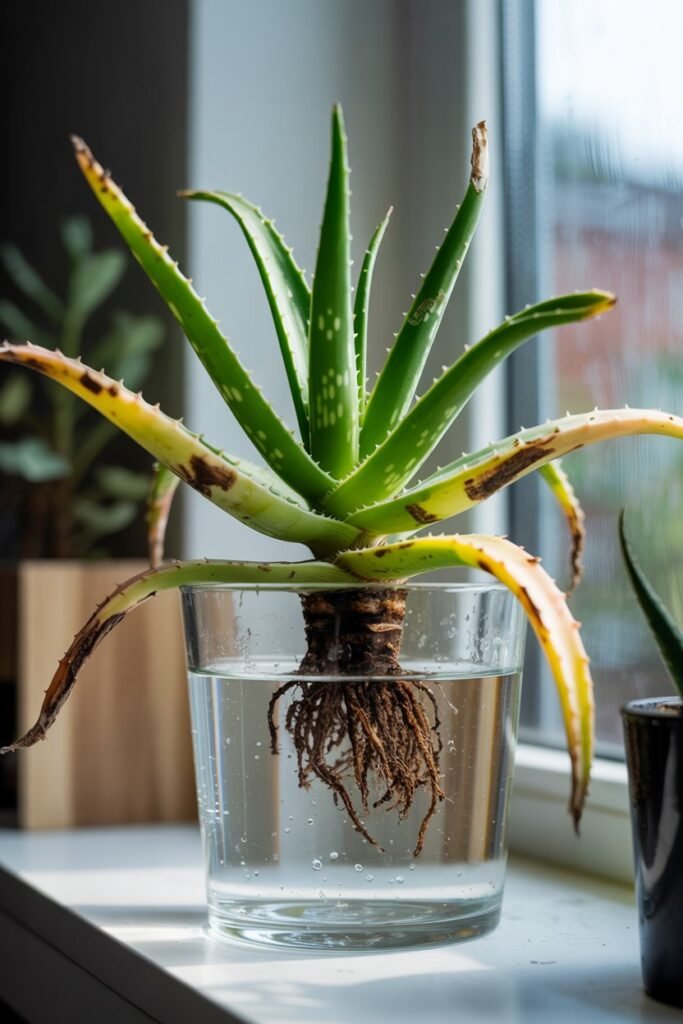
Yellow Leaves
Usually from stress, too much direct sun, or root issues.
Mushy Base
Often caused by stem sitting in water.
Brown Roots
Possible rot.
Soft Wrinkled Leaves
Roots not functioning well.
Foul Smell
Water needs immediate changing and roots need inspection.
How To Prevent Root Rot
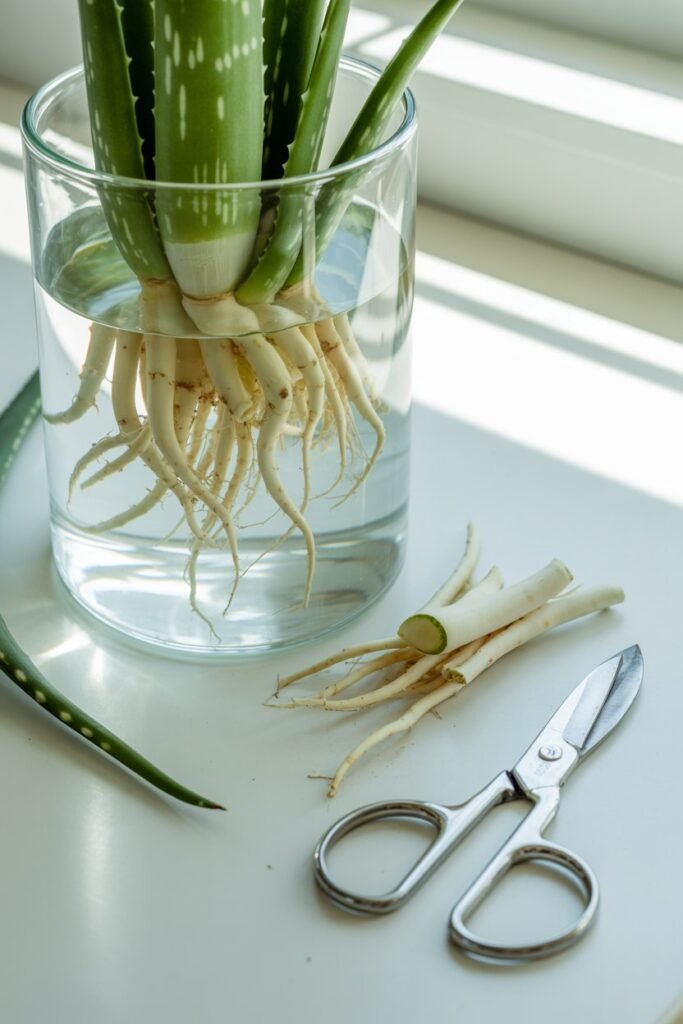
Root rot is the biggest challenge with aloe in water.
Do This Instead
- Keep stem above water
- Change water weekly
- Use clean container
- Remove damaged roots quickly
- Give bright light
- Avoid overcrowding roots
- Maintain warm temperatures
If Rot Starts
- Remove plant immediately
- Trim mushy roots
- Let roots dry several hours
- Clean container thoroughly
- Restart with fresh water
Can Aloe Vera Stay In Water Forever?
Sometimes for a while but often not ideally.
Many aloe plants eventually weaken in constant water because they are built for arid conditions.
You may notice after months:
- Slower growth
- Thinner leaves
- Nutrient issues
- Root stress
For best long-term success, many gardeners use water temporarily, then move aloe back to soil.
Best Hybrid Method: Semi-Hydro Aloe
If you love the water look, try semi-hydro growing.
Use:
- LECA clay balls
- Pebbles
- Net pot or glass vessel
- Water reservoir below roots
This gives moisture plus airflow often better than full water culture.
How To Move Aloe From Water Back To Soil
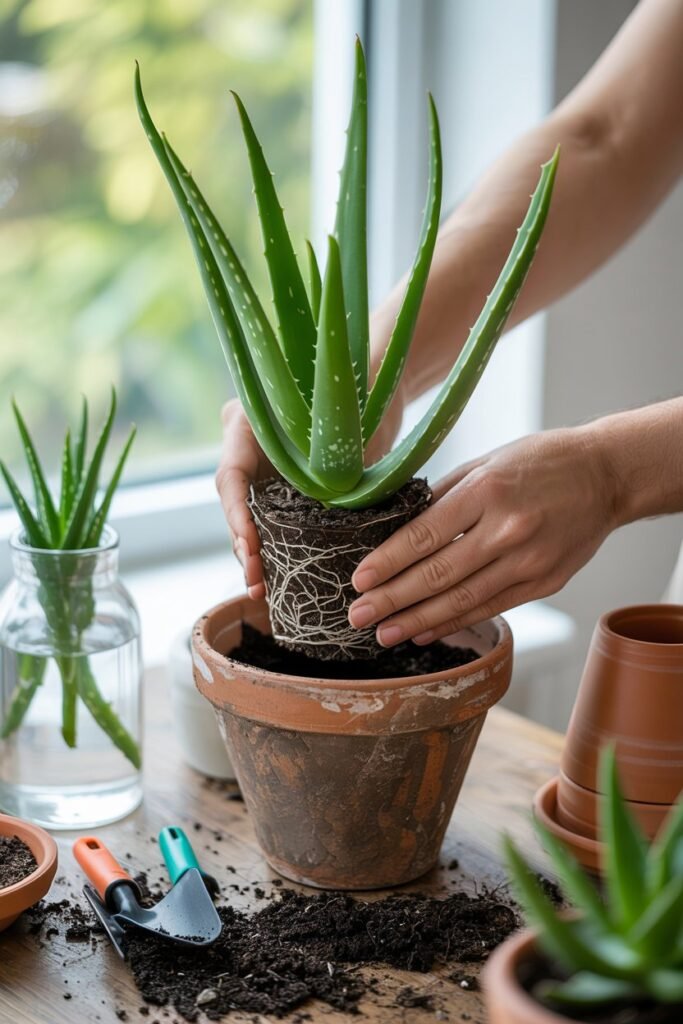
If your aloe seems tired, soil can help revive it.
Step 1
Choose cactus or succulent mix.
Step 2
Let roots air dry for a few hours.
Step 3
Plant gently in dry soil.
Step 4
Wait 3 to 5 days before watering lightly.
Step 5
Place in bright indirect light.
This transition often works well.
Common Mistakes To Avoid
1. Submerging The Crown
This quickly causes rot.
2. Using Dirty Water
Leads to bacteria.
3. Too Much Sun Immediately
Can shock the plant.
4. Never Feeding Nutrients
Water alone is not enough forever.
5. Ignoring Root Changes
Check roots weekly.
6. Using Huge Containers
Too much stagnant water can be harmful.
Frequently Asked Questions
Can I Grow Aloe Vera Leaf Cuttings In Water?
Usually aloe leaf cuttings do not root reliably like pothos. Aloe pups with roots are much better.
How Long Does It Take To Grow Roots?
If using a pup with roots, it adapts quickly. New root growth may appear in a few weeks.
Can Aloe Vera Grow Faster In Water?
Usually no. Soil-grown aloe often grows better long term.
Can I Use Decorative Colored Glass?
Yes, but clear glass helps monitor roots.
Can I Keep It In My Bathroom?
Only if the bathroom gets bright natural light.
Best Places To Display Aloe In Water
- Kitchen windowsill
- Bright desk
- Coffee table near light source
- Bathroom with sunny window
- Bedroom dresser near east-facing window
Its clean modern look fits beautifully almost anywhere.
Why Readers Love This Method
Growing aloe vera in water feels fresh, stylish, and simple. It lets you enjoy greenery without bags of soil or messy repotting. Watching roots grow through glass can be surprisingly calming and satisfying.
For plant lovers who enjoy experimenting, it is a delightful project.
Final Thoughts
Growing aloe vera in water is absolutely possible when done with care. While aloe naturally prefers well-draining soil, it can adapt for decorative short-term growing or propagation if the roots stay healthy and the crown stays dry.
The biggest keys to success are clean water, bright light, careful root monitoring, and patience.
If you are looking for a graceful indoor plant display with a touch of botanical charm, aloe in water is worth trying. And if your plant ever seems unhappy, you can always transition it back to soil where it naturally thrives.
Sometimes gardening is about experimenting, learning, and enjoying the beauty of the process. Aloe vera in water offers all three.
Quick Success Checklist
- Use a healthy aloe pup
- Clean roots fully
- Keep crown above water
- Change water weekly
- Give bright indirect light
- Feed lightly monthly
- Watch for rot
- Move to soil if stressed
With these gentle steps, your aloe vera can grow beautifully and bring fresh green elegance to your home.
