
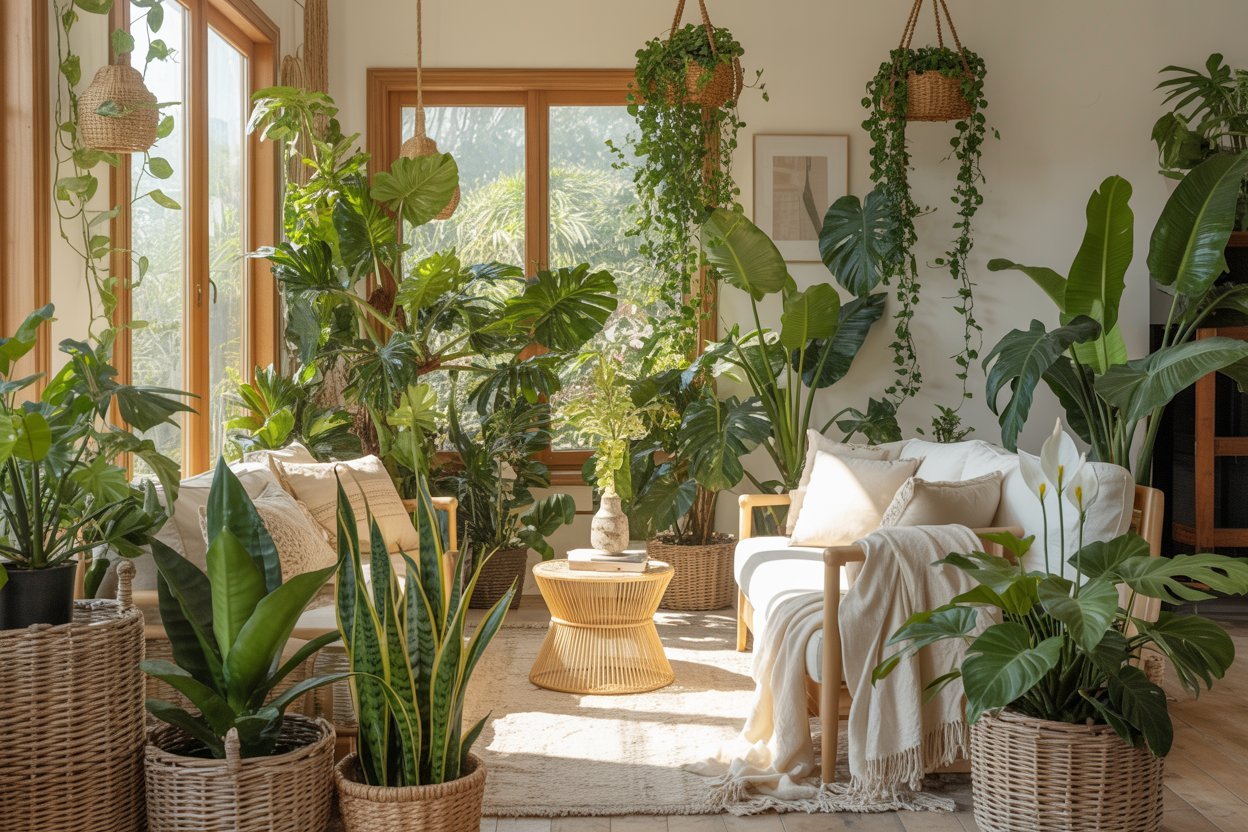

Walking into a home filled with thriving greenery feels like stepping into a peaceful little sanctuary.
The air feels fresher, the rooms look softer, and even the busiest days somehow become calmer when surrounded by beautiful houseplants.
An indoor jungle is more than just decorating with greenery it’s about creating a living space that feels cozy, vibrant, healthy, and deeply connected to nature.
The wonderful thing about building an indoor jungle is that you do not need to be an expert gardener to begin.
Even if you are buying your very first plant today, you can absolutely learn how to create a lush indoor oasis that feels warm and welcoming.
With the right guidance, a few beginner-friendly plants, and a little patience, anyone can transform an ordinary room into a thriving green retreat.
In this guide, you’ll learn everything you need to know about indoor jungle mastery from choosing the right plants and understanding lighting to watering routines, styling ideas, humidity tips, and beginner mistakes to avoid.
Whether you live in a tiny apartment or a spacious home, this post will help you confidently create an indoor plant paradise that flourishes beautifully.
shop my amazon essentials
- Indoor Watering Can
- Soil Moisture Meter
- Indoor Potting Mix
- Terracotta Pots with Drainage Holes
- LED Grow Light
- Plant Pruning Shears
- Cool Mist Humidifier
- Macrame Plant Hanger
- Rolling Plant Stand
- Decorative Plant Drainage Tray
What Is an Indoor Jungle?
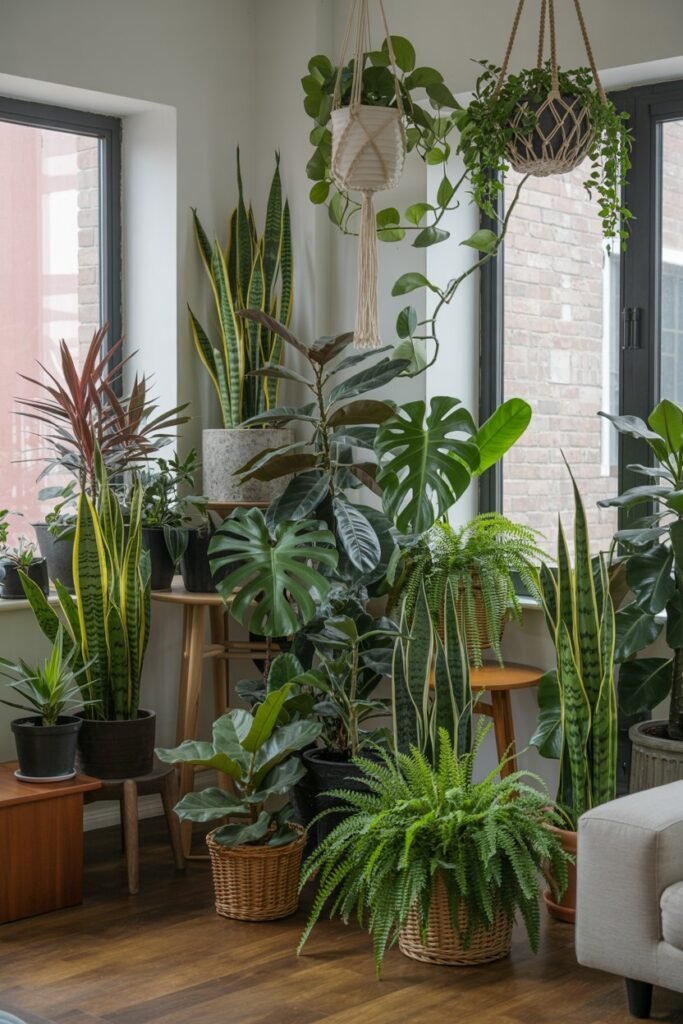
An indoor jungle is a home filled intentionally with houseplants arranged in a way that creates a lush, layered, nature-inspired atmosphere.
Instead of having one or two lonely plants in a corner, an indoor jungle uses a mix of foliage textures, heights, colors, and plant styles to make the space feel alive and abundant.
Indoor jungles often include:
- Large statement plants
- Hanging vines
- Plants grouped together
- Shelves filled with greenery
- Trailing plants cascading from baskets
- Humidity-loving tropical plants
- Natural materials like wood, wicker, and terracotta
The goal is not perfection. A true indoor jungle feels organic, relaxed, cozy, and full of life.
Why People Love Indoor Jungles
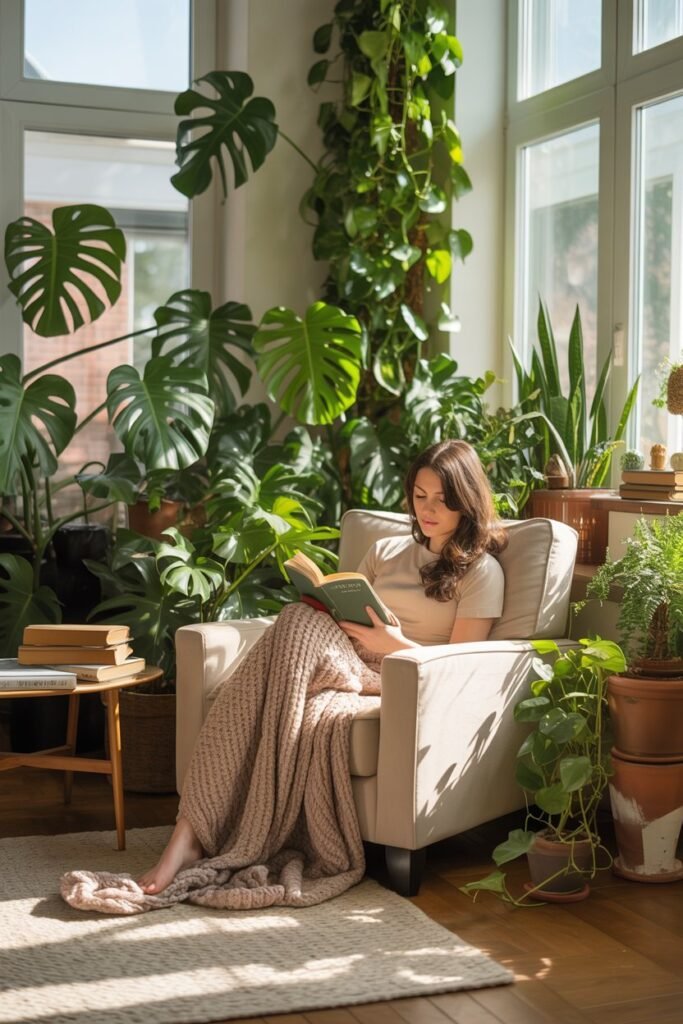
Houseplants offer so much more than beauty. They can completely transform how a home feels emotionally and visually.
1. They Create a Calming Environment
Greenery naturally brings a sense of peace into indoor spaces. Many people find that spending time around plants helps reduce stress and creates a more relaxing atmosphere after a long day.
2. Plants Make Homes Feel Alive
Empty rooms can sometimes feel cold or unfinished. Plants instantly soften spaces and add movement, texture, and warmth.
3. They Encourage Mindful Living
Caring for plants teaches patience, observation, and consistency. Even simple routines like watering and pruning can become calming daily rituals.
4. Indoor Plants Improve Air Quality
While houseplants are not magical air purifiers, they can help contribute to fresher indoor spaces and better humidity levels.
5. They Turn Decorating Into a Creative Hobby
Creating an indoor jungle allows you to experiment with:
- Plant styling
- Decorative pots
- Shelving
- Hanging displays
- Plant propagation
- Color combinations
It becomes both gardening and interior design combined.
Start Small and Build Slowly
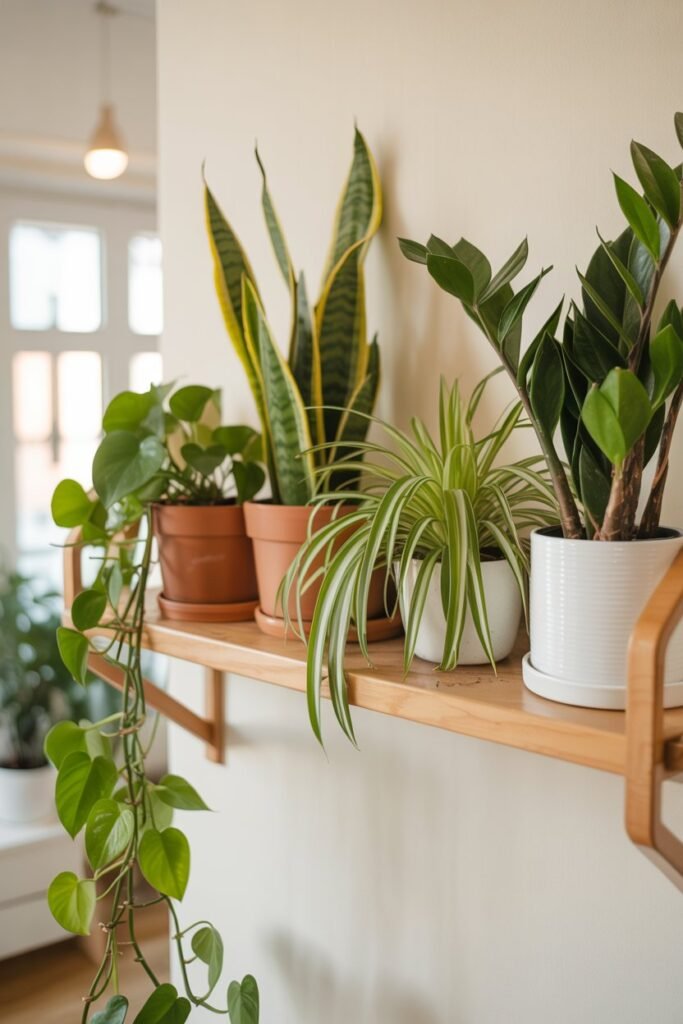
One of the biggest beginner mistakes is buying too many plants at once. A giant plant haul may look exciting at first, but suddenly caring for 20 unfamiliar plants can become overwhelming.
The best indoor jungles are usually built slowly over time.
Start with:
- 3 to 5 beginner-friendly plants
- One room or small corner
- Easy-care varieties
- Simple watering routines
As your confidence grows, you can gradually expand your collection.
Remember: healthy plants always look better than too many struggling plants.
Understanding Light: The Secret to Healthy Houseplants
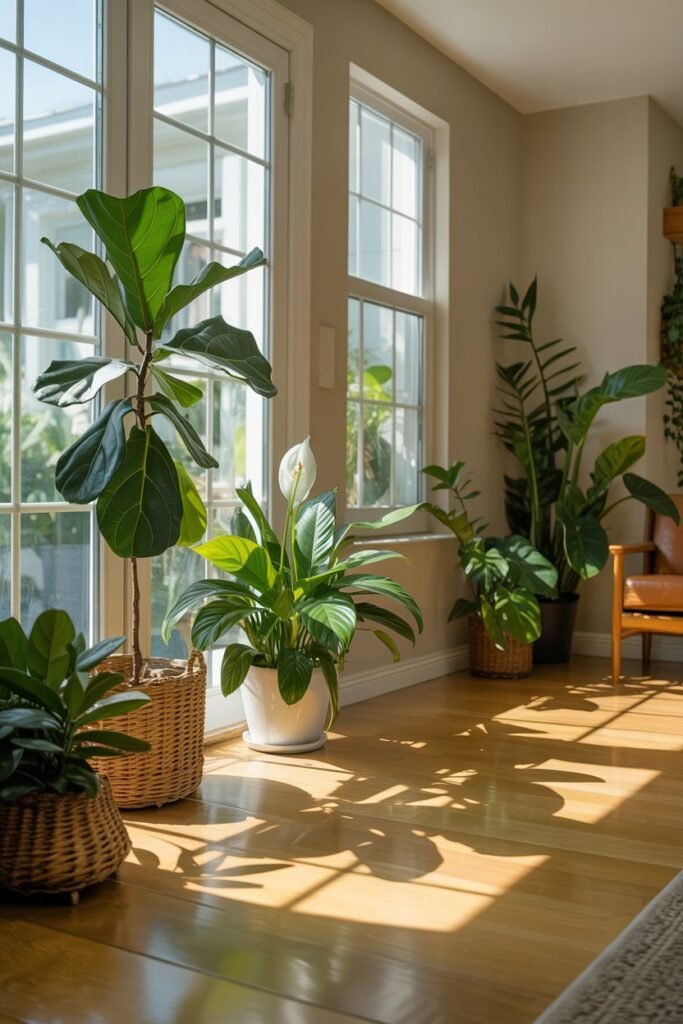
Light is one of the most important parts of indoor plant care. Before buying plants, you need to understand the type of light your home receives.
Bright Direct Light
This means sunlight shines directly onto the plant for several hours daily.
Best for:
- Succulents
- Cacti
- Snake plants
- Aloe vera
Usually found near:
- South-facing windows
- Sunny balconies
Bright Indirect Light
This is the sweet spot for many tropical houseplants. The room feels bright, but harsh sun rays do not hit the leaves directly.
Best for:
- Monstera
- Pothos
- Philodendron
- Peace lily
- Rubber plant
Usually found:
- Near bright windows
- Behind sheer curtains
Low Light
Low light does not mean no light. It simply means the space receives limited natural brightness.
Best for:
- ZZ plants
- Snake plants
- Cast iron plants
Usually found:
- Hallways
- Bathrooms with small windows
- Offices
How to Check Your Home’s Light
Spend a day observing your windows:
- Which rooms stay bright longest?
- Which rooms receive harsh afternoon sun?
- Which corners stay dim?
This simple observation helps you place plants where they will thrive naturally.
Best Beginner Plants for an Indoor Jungle
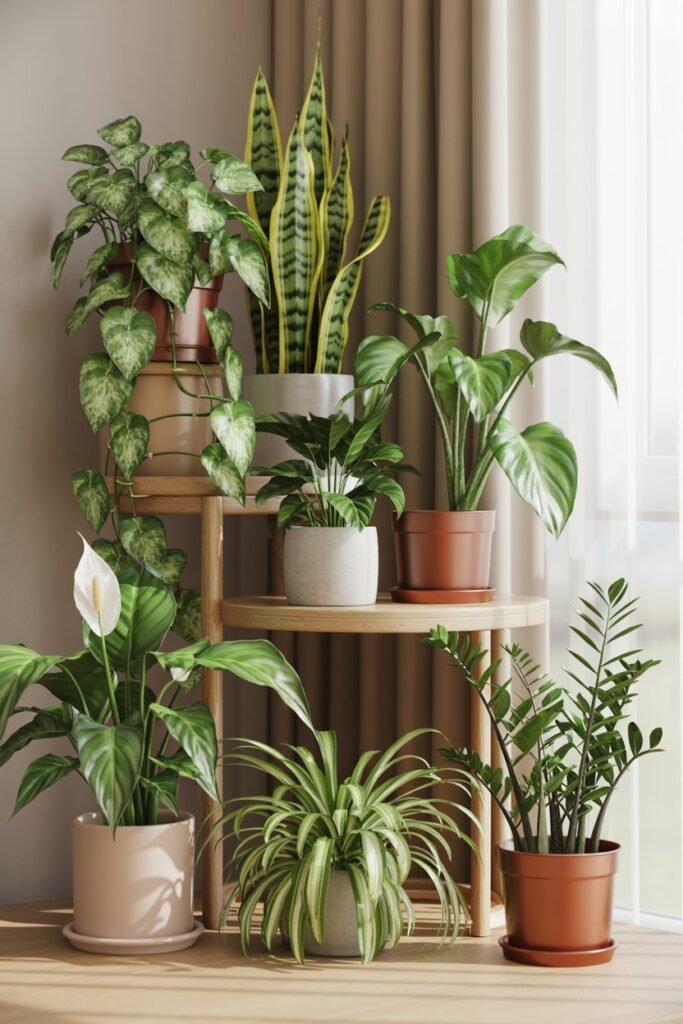
If you are new to houseplants, start with forgiving varieties that adapt easily indoors.
Pothos
Pothos is one of the easiest trailing plants to grow.
Why beginners love it:
- Fast-growing
- Tolerates missed watering
- Grows in many light conditions
- Easy to propagate
Perfect for:
- Shelves
- Hanging baskets
- Bookcases
Snake Plant
Snake plants are incredibly hardy and stylish.
Benefits:
- Low maintenance
- Tolerates low light
- Needs little watering
- Great architectural shape
Perfect for:
- Bedrooms
- Offices
- Minimalist spaces
Monstera Deliciosa
This stunning tropical plant instantly creates jungle vibes.
Why it’s popular:
- Large dramatic leaves
- Fast-growing
- Beautiful statement plant
Needs:
- Bright indirect light
- Moderate watering
- Some space to spread
ZZ Plant
The ZZ plant is nearly indestructible.
Why it works for beginners:
- Handles neglect well
- Thrives in low light
- Rarely needs watering
Excellent for busy plant owners.
Peace Lily
Peace lilies add elegance and softness to indoor spaces.
Benefits:
- Beautiful foliage
- White blooms
- Helps indicate thirst by drooping slightly
Needs:
- Moderate watering
- Indirect light
Spider Plant
Spider plants are cheerful and easygoing.
Why they’re wonderful:
- Pet-friendly
- Easy to propagate
- Fast-growing
- Great hanging plant
Read How to Grow Wandering Jew (Tradescantia) — A Gardener’s Complete, Hands-On Guide
Choosing the Right Pots and Containers
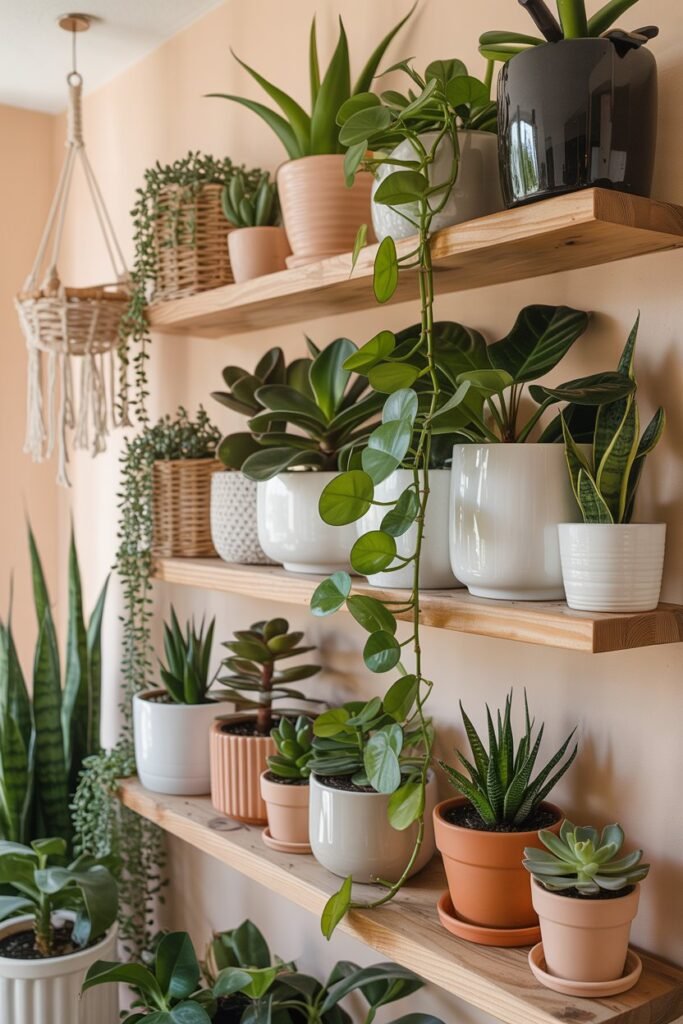
The right planter matters more than many beginners realize.
Always Prioritize Drainage
Drainage holes are essential because they prevent root rot caused by trapped water.
Without drainage:
- Soil stays soggy
- Roots suffocate
- Plants decline quickly
If you love decorative pots without holes, use them as outer cachepots and keep the plant inside a nursery pot.
Best Pot Materials
Terracotta Pots
- Breathable
- Excellent for beginners
- Helps prevent overwatering
Ceramic Pots
- Stylish and decorative
- Retains moisture longer
Plastic Pots
- Lightweight
- Affordable
- Good moisture retention
Each type works beautifully depending on your watering habits and home style.
The Right Soil Makes a Huge Difference
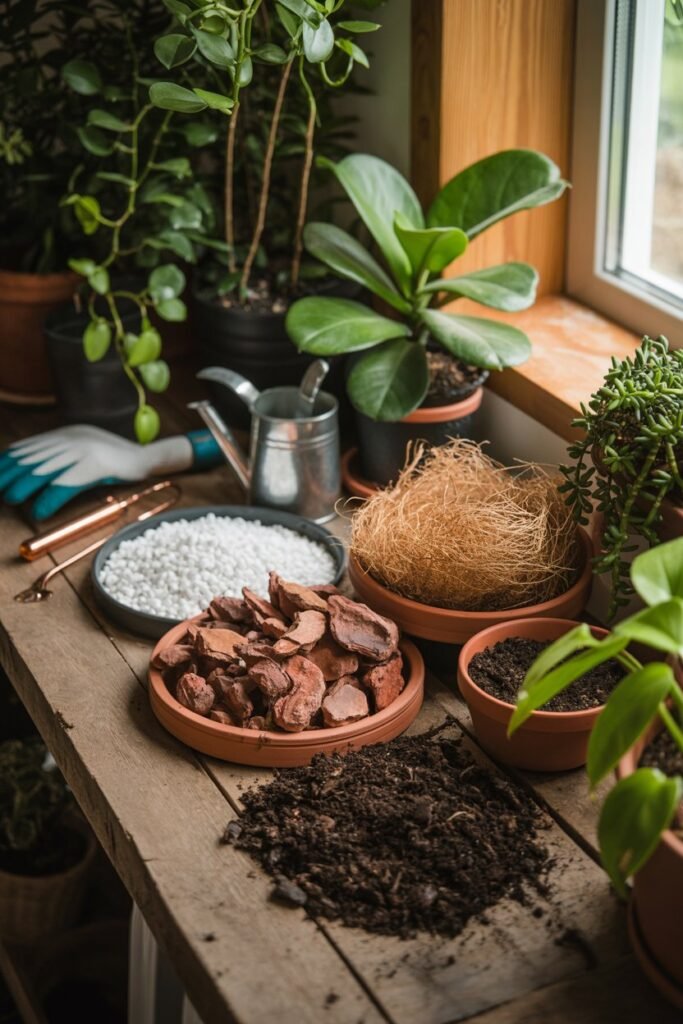
Indoor plants need loose, airy soil that drains properly.
A good indoor mix should:
- Hold some moisture
- Drain excess water
- Allow oxygen around roots
Basic Tropical Houseplant Mix
A beginner-friendly mix often includes:
- Potting soil
- Perlite
- Orchid bark
- Coco coir
Avoid using heavy outdoor garden soil indoors because it compacts too easily.
Watering Houseplants Properly
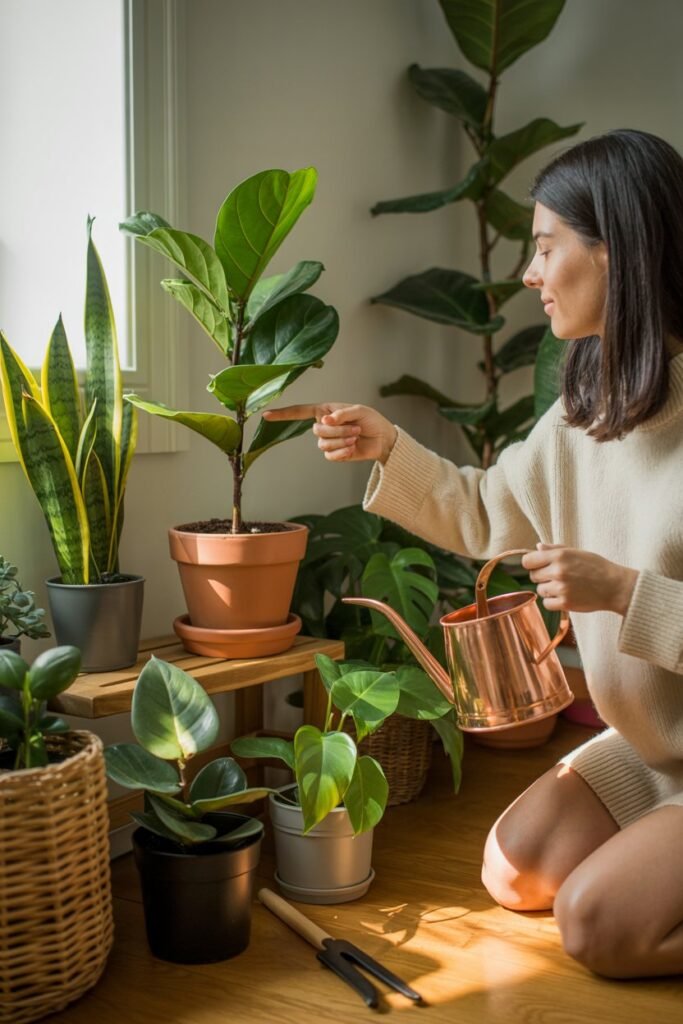
Overwatering is the number one reason houseplants die indoors.
Many beginners water on a schedule instead of checking the soil first.
The Finger Test
Insert your finger about 1–2 inches into the soil:
- If it feels dry, water
- If still damp, wait
This simple habit prevents many plant problems.
Signs of Overwatering
- Yellow leaves
- Mushy stems
- Moldy soil
- Fungus gnats
- Drooping despite wet soil
Signs of Underwatering
- Crispy brown edges
- Dry compact soil
- Wilting leaves
- Slow growth
Learning to observe your plants is one of the most important indoor gardening skills.
Humidity: The Secret Behind Tropical Plants
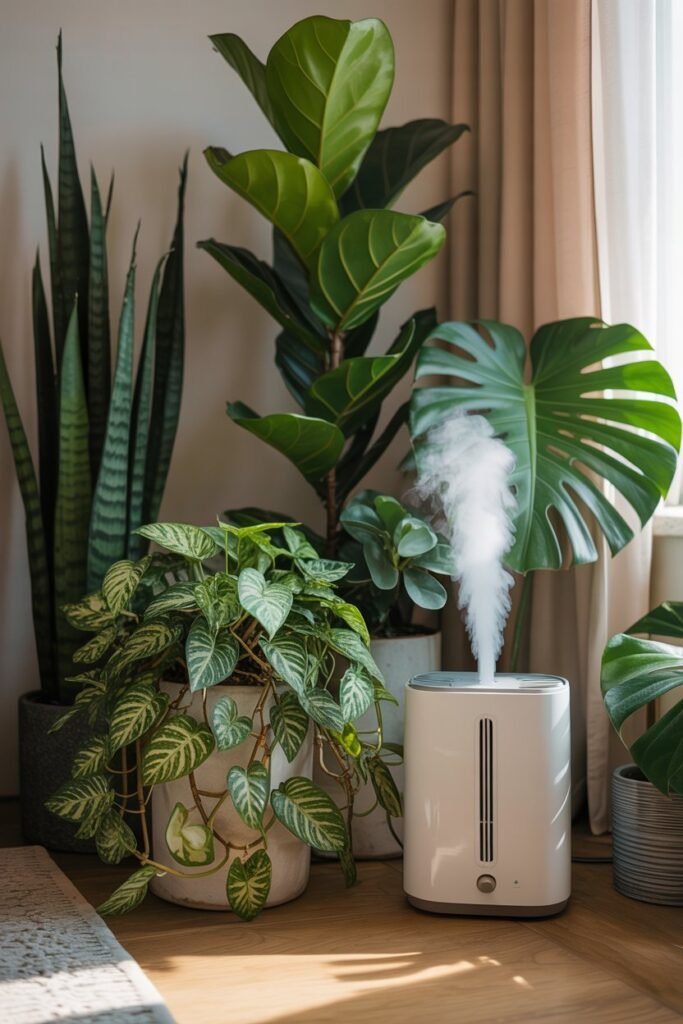
Many popular houseplants come from tropical regions where humidity is naturally high.
Dry indoor air can sometimes cause:
- Brown leaf edges
- Curling leaves
- Crispy tips
Easy Ways to Increase Humidity
Group Plants Together
Plants naturally release moisture into the air, helping nearby plants.
Use a Humidifier
This is one of the best solutions for tropical plant lovers.
Pebble Trays
Place pebbles and water beneath pots to create gentle humidity.
Bathroom Placement
Bathrooms with windows can be wonderful for humidity-loving plants.
How to Arrange Plants Like an Indoor Jungle
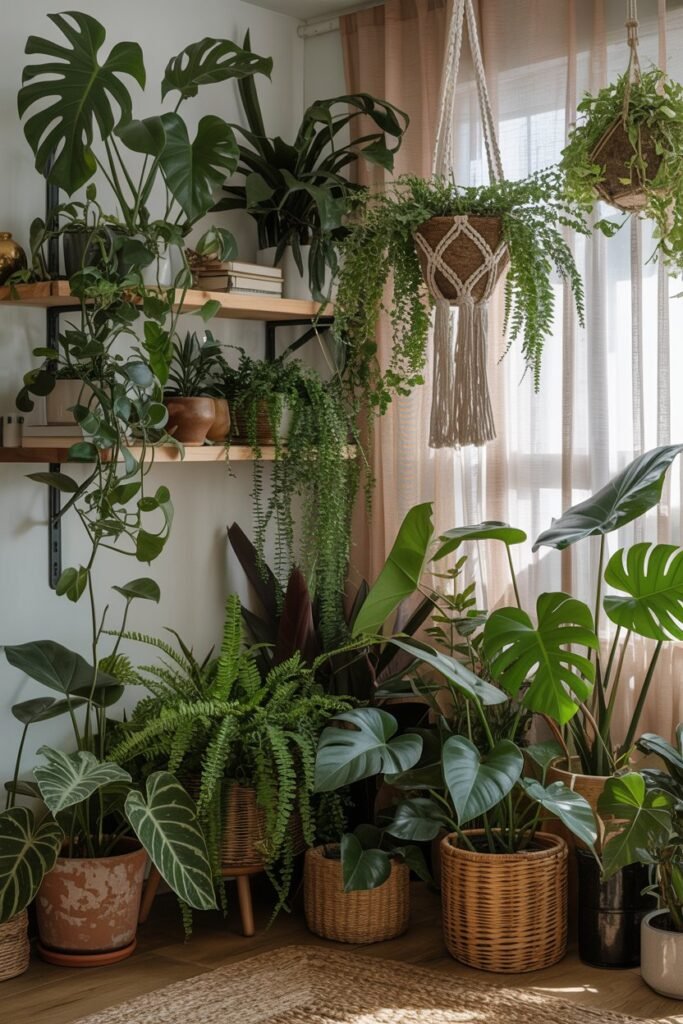
Plant styling is where the real fun begins.
Use Different Heights
Combine:
- Tall floor plants
- Medium tabletop plants
- Hanging vines
- Tiny shelf plants
This layered effect creates a lush jungle appearance.
Group Plants in Odd Numbers
Groups of 3 or 5 often look more natural and balanced visually.
Mix Leaf Shapes and Textures
Combine:
- Large leaves
- Delicate vines
- Upright plants
- Feathery foliage
Texture variation makes displays look rich and interesting.
Use Vertical Space
Indoor jungles do not need huge rooms.
Use:
- Wall shelves
- Hanging baskets
- Plant ladders
- Macrame hangers
Vertical styling helps small spaces feel abundant.
Create Plant Corners
Instead of scattering plants randomly everywhere, create intentional “green zones” inside your home.
A plant corner may include:
- One large floor plant
- Smaller layered plants
- A grow light
- Decorative baskets
- Natural textures
This creates maximum visual impact.
Understanding Plant Growth and Patience
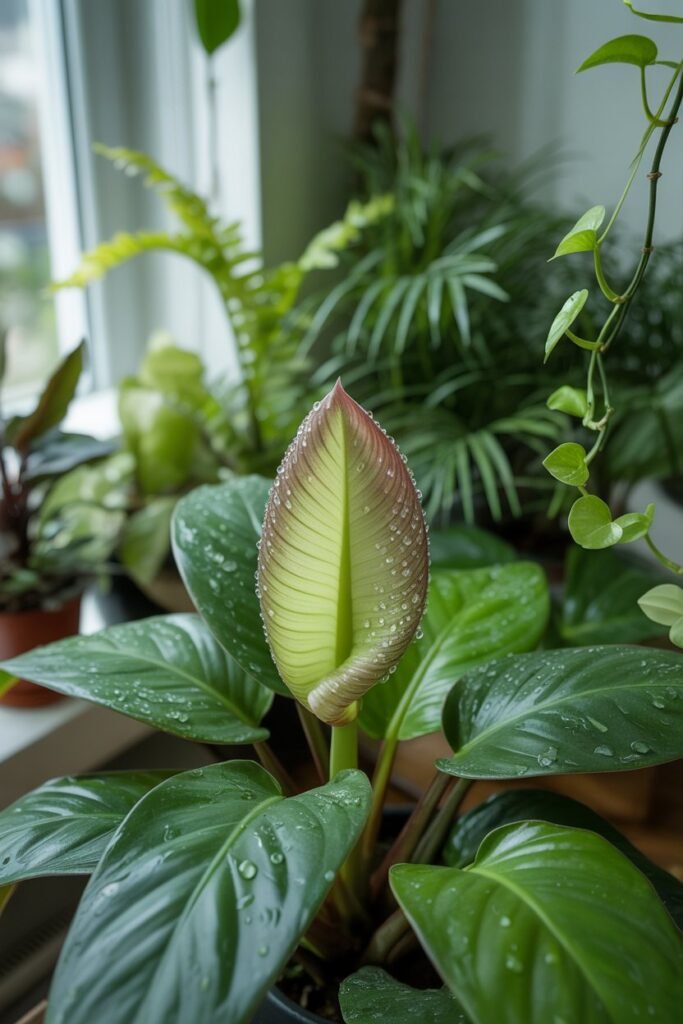
One important lesson every plant lover learns is patience.
Plants grow gradually. Some weeks you may see dramatic growth, while other times growth slows naturally.
Healthy plant care means:
- Consistency
- Observation
- Small adjustments over time
Do not panic if:
- A leaf yellows occasionally
- Growth slows in winter
- New plants need time to adjust
Plant care is a journey, not a race.
Common Indoor Plant Problems and Solutions
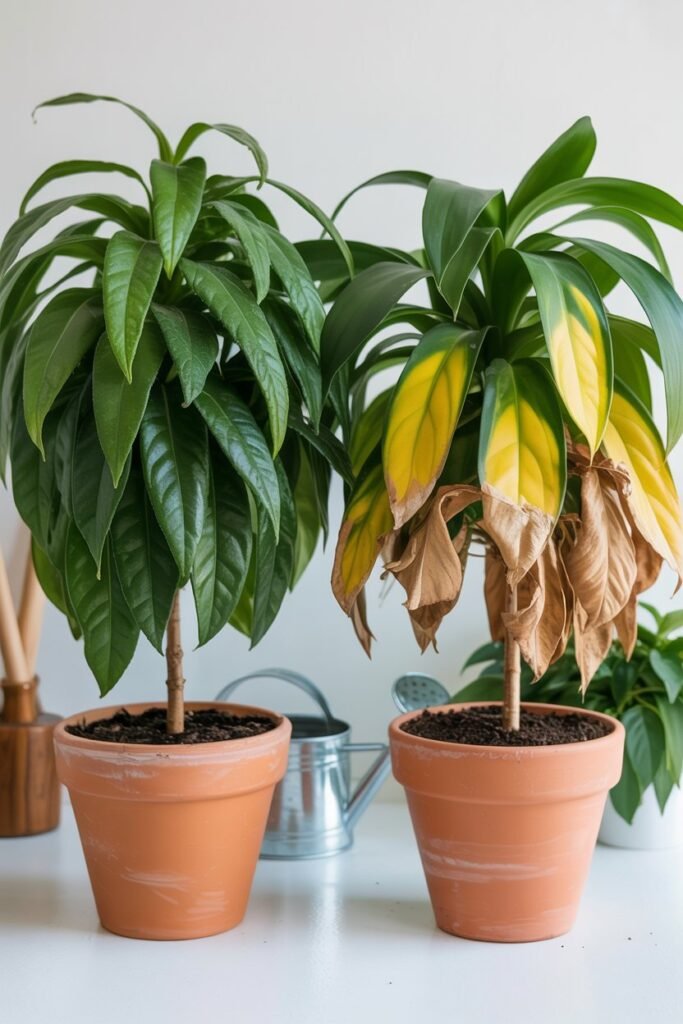
Yellow Leaves
Possible causes:
- Overwatering
- Poor drainage
- Lack of light
Solution:
- Check soil moisture
- Adjust watering routine
- Improve lighting
Brown Crispy Tips
Possible causes:
- Low humidity
- Underwatering
- Mineral buildup
Solution:
- Increase humidity
- Water consistently
- Occasionally flush soil
Leggy Growth
This happens when plants stretch toward light.
Solution:
- Move plant closer to brighter light
- Rotate regularly
- Prune if necessary
Fungus Gnats
Tiny flying insects often appear in overly wet soil.
Solution:
- Let soil dry slightly
- Improve airflow
- Avoid constant soggy soil
Root Rot
This is caused by excess moisture around roots.
Signs include:
- Mushy stems
- Black roots
- Foul smell
Solution:
- Remove damaged roots
- Repot into fresh dry soil
- Reduce watering
Fertilizing Indoor Plants
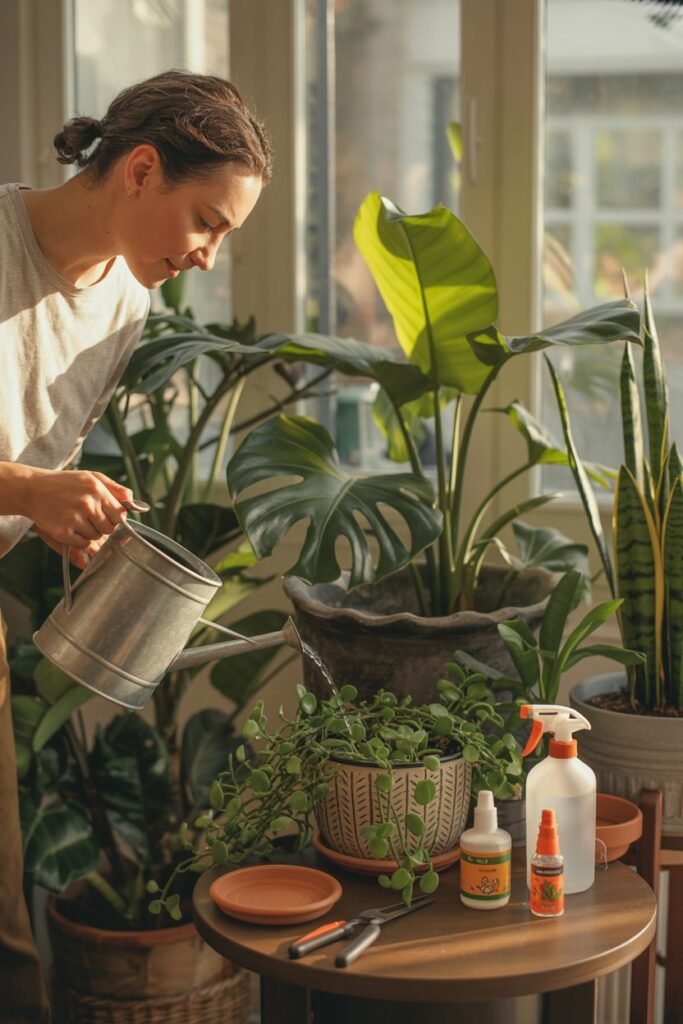
Houseplants benefit from occasional feeding during active growing seasons.
Best Time to Fertilize
Usually:
- Spring
- Summer
- Early fall
Most plants grow slower during winter and need less fertilizer.
Beginner Fertilizer Tips
- Use diluted fertilizer
- Avoid overfeeding
- Follow package directions carefully
- Fertilize moist soil, not dry soil
Too much fertilizer can damage roots.
Easy Plant Propagation for Beginners
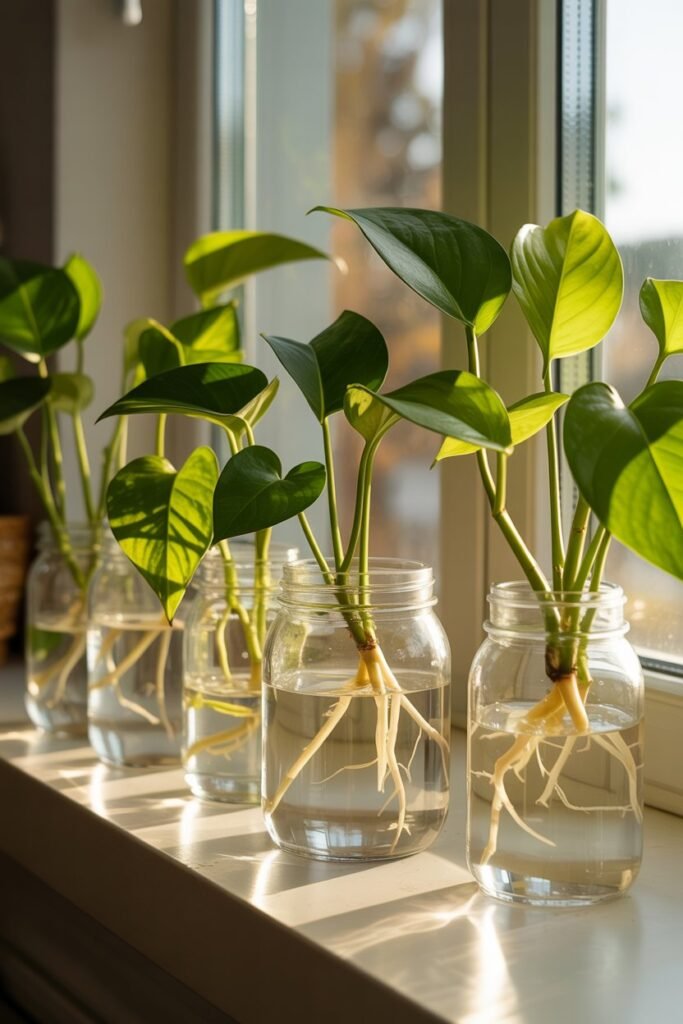
Propagation allows you to grow new plants from existing ones.
It is one of the most rewarding parts of indoor gardening.
Easiest Plants to Propagate
- Pothos
- Spider plants
- Philodendron
- Tradescantia
Simple Water Propagation Method
- Cut below a leaf node
- Place stem in water
- Keep in bright indirect light
- Wait for roots to grow
- Transfer to soil
Watching roots develop is incredibly satisfying for beginners.
Seasonal Indoor Plant Care
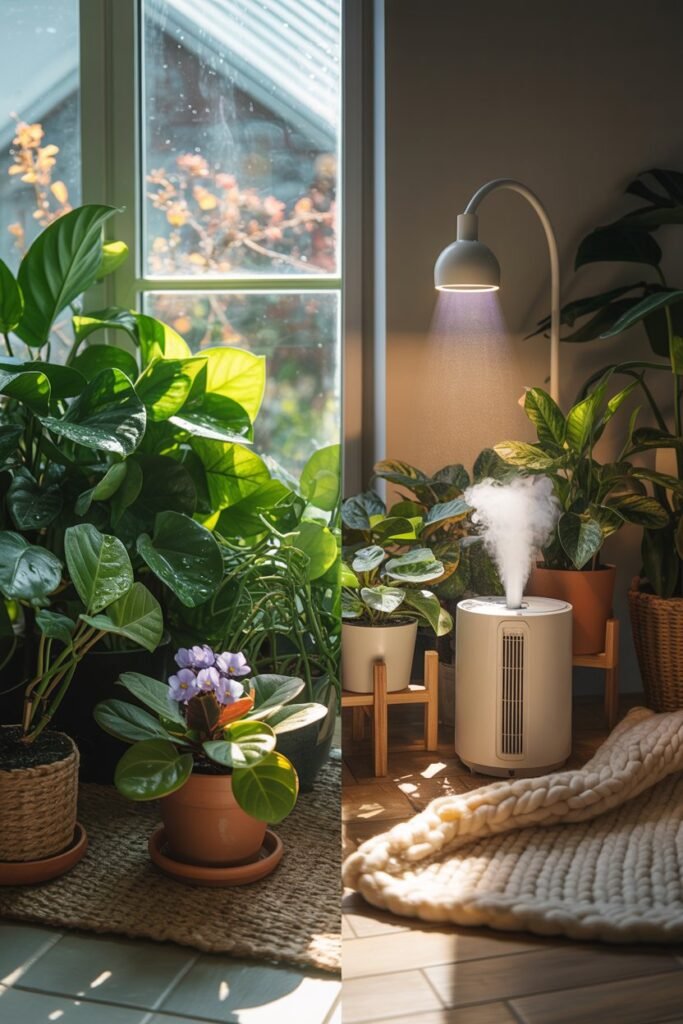
Houseplants need slightly different care throughout the year.
Spring and Summer
Plants actively grow during warmer months.
You may notice:
- Faster growth
- More watering needs
- New leaves appearing
This is the best time for:
- Repotting
- Fertilizing
- Propagation
Fall and Winter
Growth slows naturally.
Plants may need:
- Less water
- Less fertilizer
- Extra humidity indoors
Avoid overwatering during colder months.
Indoor Jungle Styling Ideas
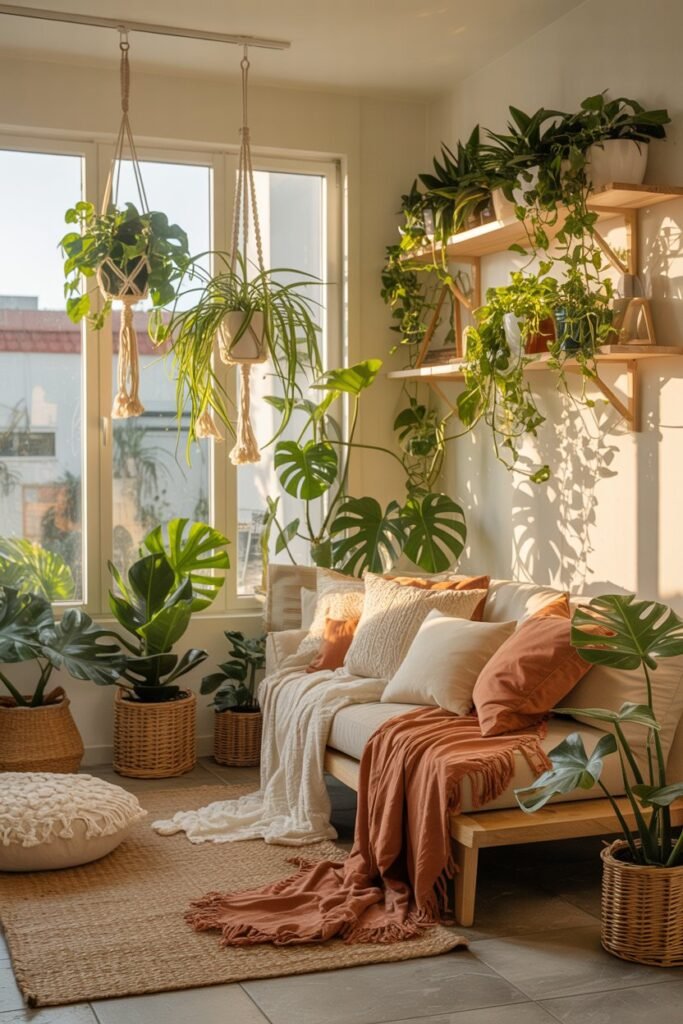
Cozy Boho Jungle
Features:
- Wicker baskets
- Hanging vines
- Warm earthy colors
- Macrame holders
Modern Minimal Jungle
Features:
- Clean lines
- Statement plants
- Neutral pots
- Simple arrangements
Tiny Apartment Jungle
Perfect for small homes using:
- Wall shelves
- Hanging planters
- Window ledges
- Compact plants
Bathroom Jungle
Humidity-loving plants thrive beautifully here.
Best choices:
- Ferns
- Pothos
- Peace lilies
- Calatheas
Tools Every Indoor Gardener Should Have
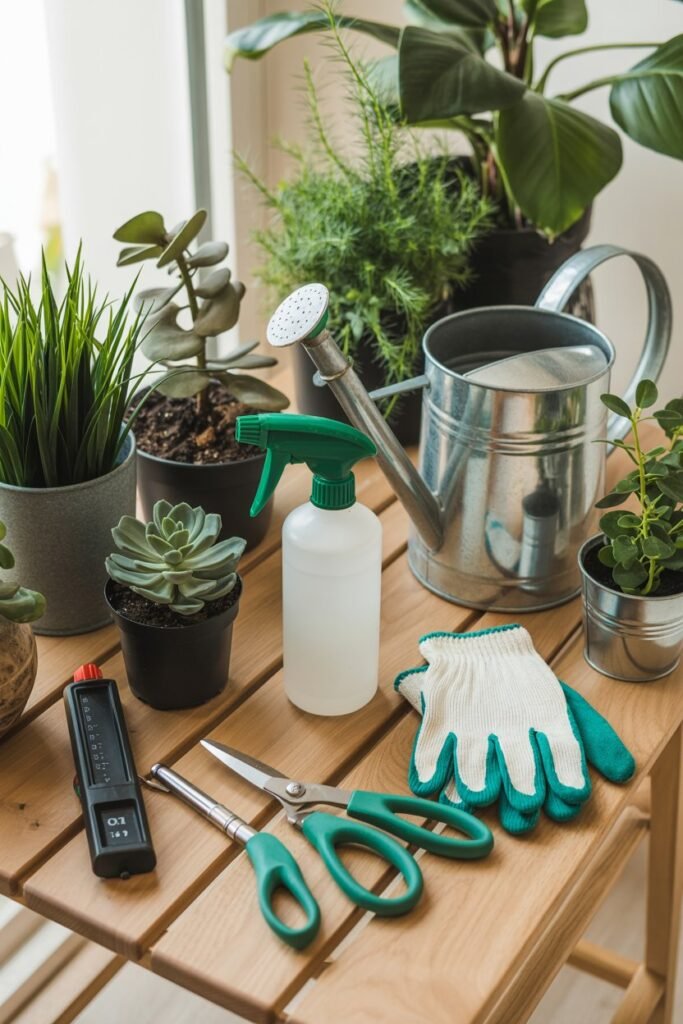
You do not need expensive equipment to start.
Helpful basics include:
- Watering can
- Pruning scissors
- Spray bottle
- Moisture meter
- Small trowel
- Plant trays
Start simple and build gradually.
Beginner Mistakes to Avoid
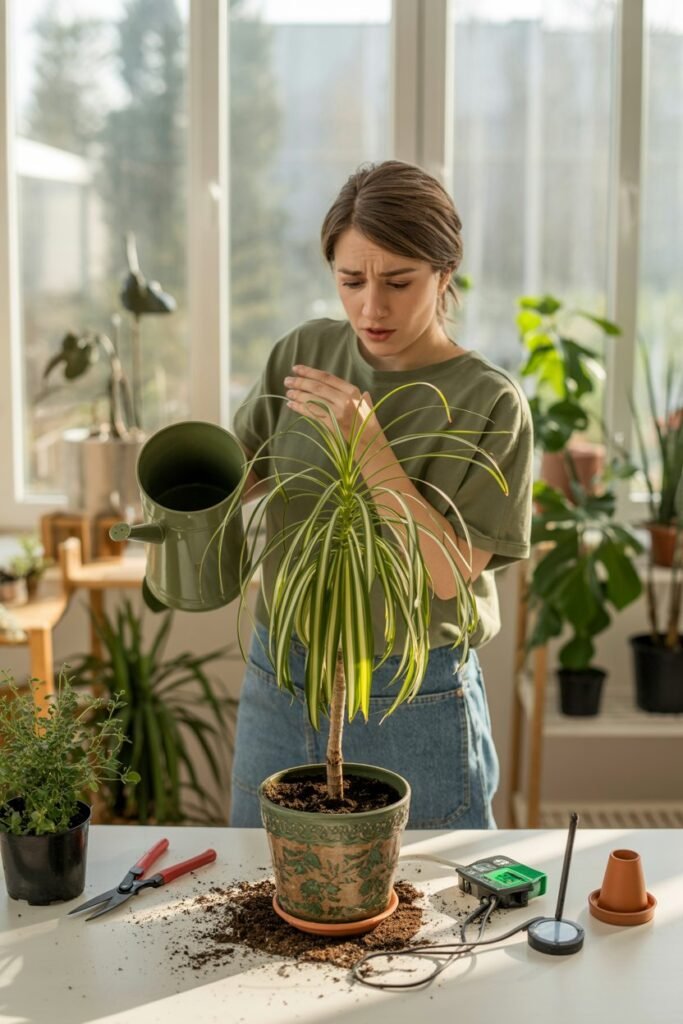
Buying Difficult Plants Too Early
Some plants require advanced humidity or lighting care.
Start easy first.
Ignoring Light Conditions
A beautiful plant placed in the wrong light will struggle.
Always match plants to your space.
Watering Too Frequently
Most indoor plants prefer drying slightly between waterings.
Repotting Too Often
Plants do not need constant repotting.
Only repot when:
- Roots outgrow container
- Soil breaks down
- Drainage becomes poor
Comparing Your Plants to Social Media
Online plant photos are often heavily styled or professionally maintained.
Focus on learning and enjoying your own plant journey.
Creating a Relaxing Plant Care Routine
One of the loveliest parts of indoor gardening is the peaceful routine it creates.
You might:
- Water plants on Sunday mornings
- Rotate pots weekly
- Wipe leaves monthly
- Check soil while drinking tea
- Rearrange displays seasonally
These little rituals make a home feel nurturing and alive.
Final Thoughts
Creating an indoor jungle is not about perfection. It is about building a home that feels comforting, vibrant, and connected to nature. Every new leaf, trailing vine, and thriving plant becomes part of your space and your daily life.
The beauty of indoor gardening is that anyone can begin, no matter their experience level. Start with a few easy plants, learn your home’s lighting, practice gentle consistency, and allow your confidence to grow naturally over time.
Before long, your shelves will overflow with greenery, your rooms will feel softer and calmer, and your indoor jungle will become a beautiful reflection of your care and creativity.
Every thriving plant starts with a beginner who simply decided to try.
