
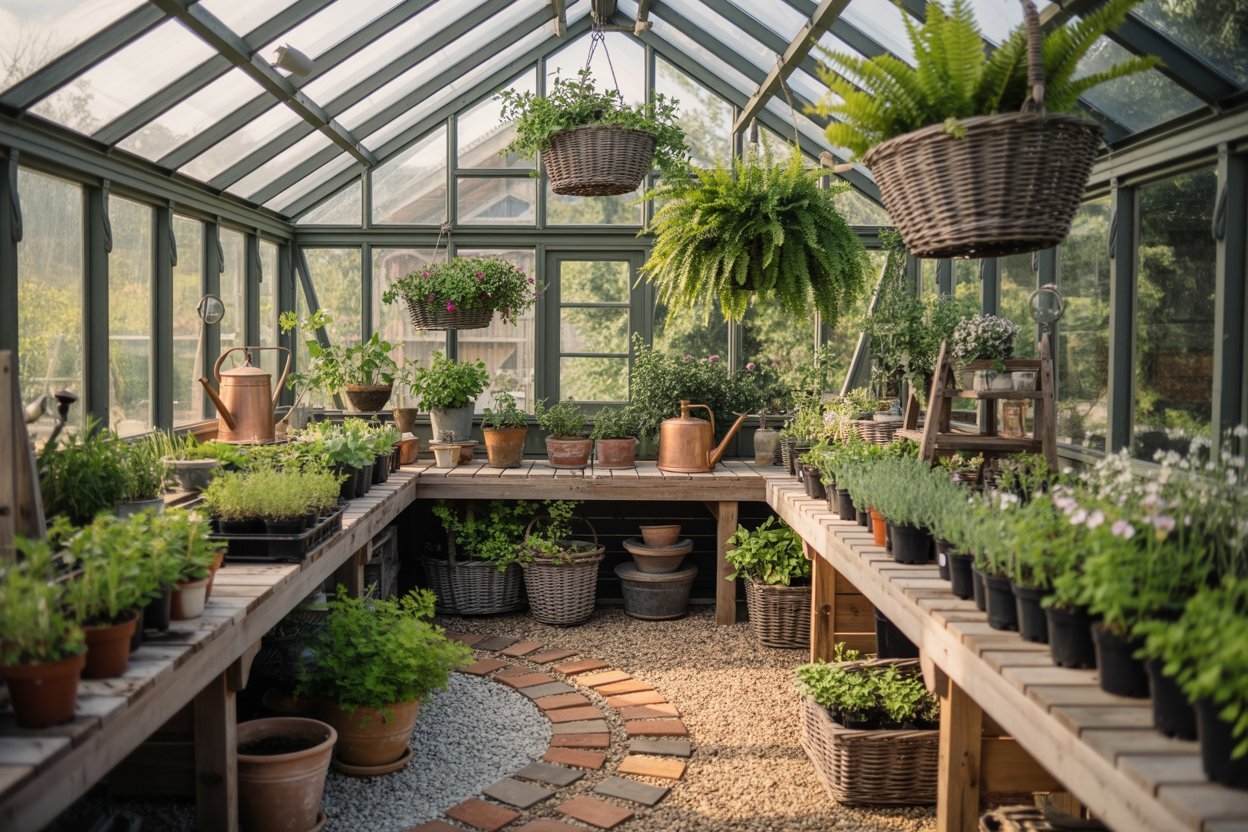

Stepping into a greenhouse should feel peaceful, inspiring, and practical all at once. Warm sunlight filters through the panels, trays of seedlings wait for watering, and every corner holds the promise of fresh growth.
Yet one detail many gardeners overlook in the beginning is the flooring beneath their feet. Greenhouse flooring does far more than simply cover the ground it affects drainage, humidity, weed growth, cleanliness, comfort, and even the long-term health of your plants.
Choosing the right greenhouse flooring can completely change how enjoyable your gardening experience feels day after day. Some materials create a cozy cottage-style atmosphere, while others are built for durability and heavy gardening work.
The best choice depends on your climate, gardening style, budget, and how you plan to use your greenhouse throughout the seasons.
This guide will walk you through every important detail so you can confidently choose flooring that supports both your plants and your gardening dreams.
Why Greenhouse Flooring Matters More Than Most Gardeners Realize
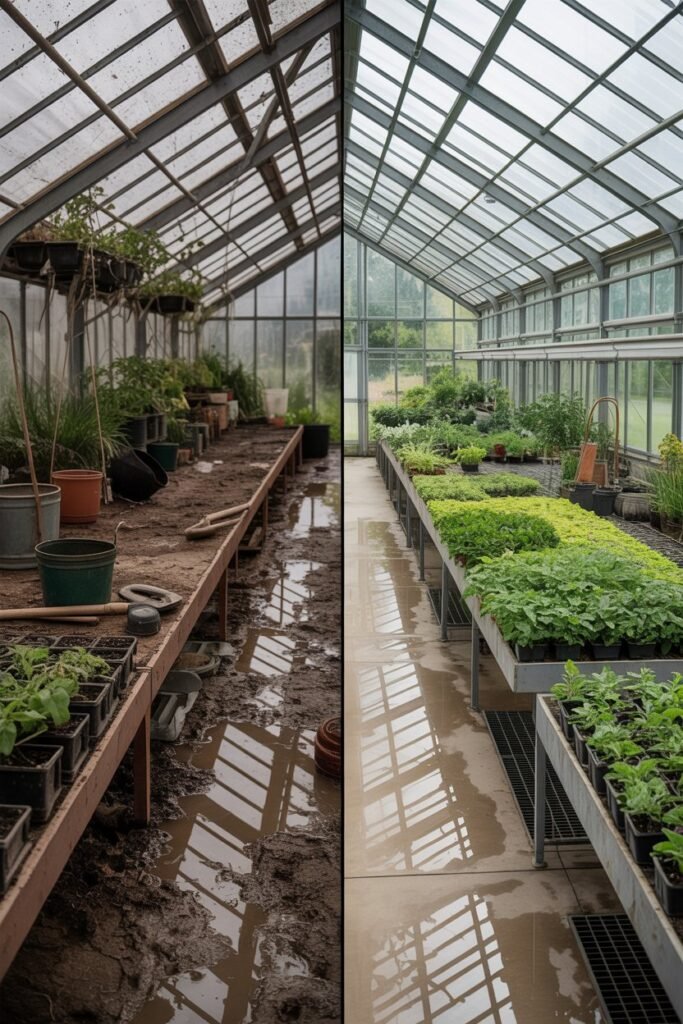
Many beginner gardeners focus heavily on greenhouse frames, shelving, and plant containers while forgetting about the floor entirely. Unfortunately, poor flooring choices can create constant frustrations later on.
The right greenhouse floor helps with:
- Proper drainage
- Weed prevention
- Temperature regulation
- Moisture control
- Pest reduction
- Easier cleaning
- Comfortable walking surfaces
- Long-term durability
Without proper flooring, greenhouses can quickly become muddy, slippery, humid, and difficult to maintain.
Standing water encourages algae growth, attracts insects, and increases the risk of fungal diseases. Over time, this can negatively affect both plants and the overall gardening experience.
A thoughtfully chosen floor transforms your greenhouse into a cleaner, healthier, and more organized growing space.
Questions to Ask Before Choosing Greenhouse Flooring
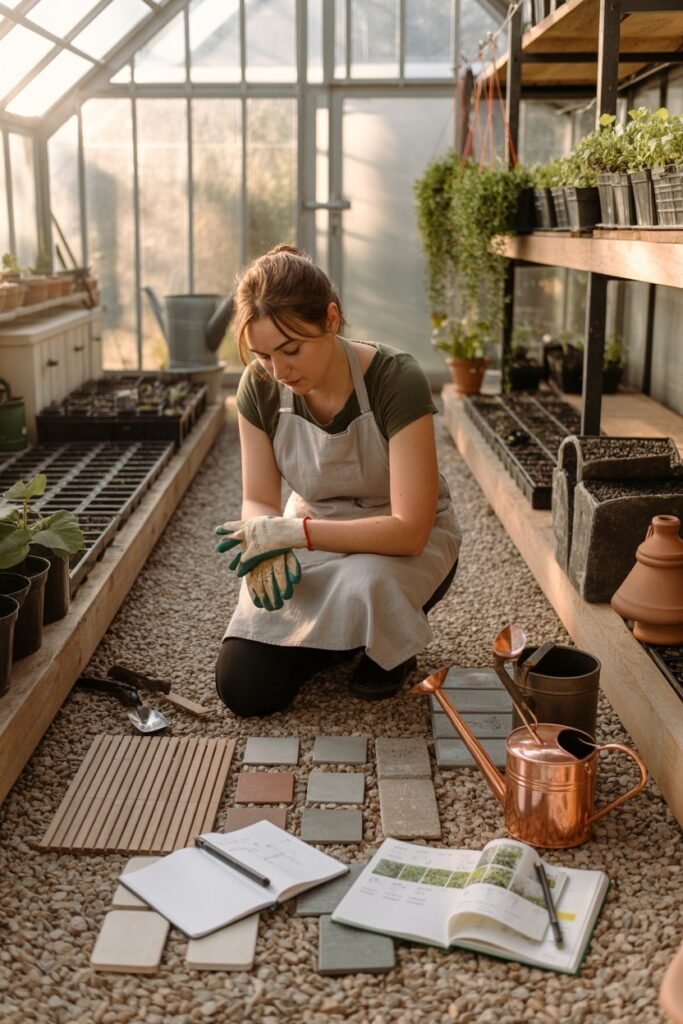
Before comparing materials, spend a little time thinking about how you actually use your greenhouse. Every gardener has different needs, and flooring should reflect that.
Ask yourself:
1. Will the Greenhouse Be Used Year-Round?
A year-round greenhouse needs flooring that handles changing temperatures, moisture, and heavy use.
Seasonal greenhouses may not require expensive permanent flooring.
2. How Much Moisture Will Be Present?
If you frequently water plants, use misters, or grow tropical plants, drainage becomes extremely important.
3. Will You Move Heavy Pots or Equipment?
Large ceramic pots, wheelbarrows, and shelving require strong, stable flooring.
4. Do You Want a Decorative or Functional Look?
Some gardeners prioritize beauty, while others want maximum practicality.
5. What Is Your Budget?
Greenhouse flooring ranges from inexpensive gravel to professionally installed concrete or paving stones.
Thinking through these questions first makes the entire decision process much easier.
The Most Popular Greenhouse Flooring Options
Every flooring type comes with advantages and disadvantages. Understanding how each one performs will help you choose wisely.
1. Gravel Flooring
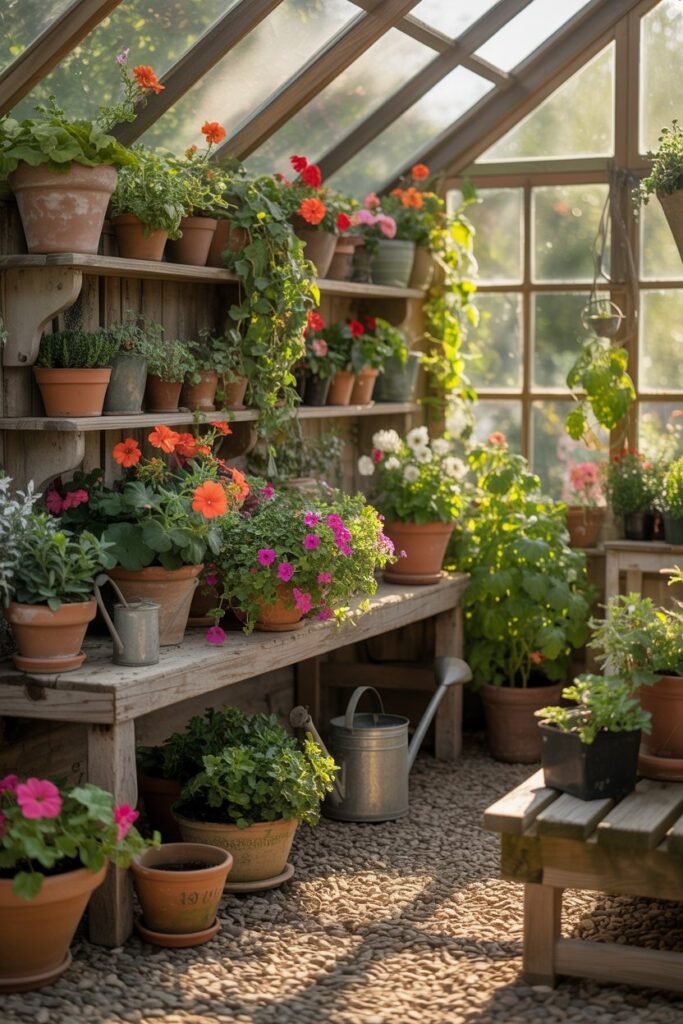
Why Gardeners Love Gravel
Gravel is one of the most popular greenhouse flooring choices for good reason. It provides excellent drainage, is relatively inexpensive, and creates a natural garden feel.
Pea gravel is especially loved because it feels softer underfoot and gives greenhouses a charming cottage-garden appearance.
Benefits of Gravel Flooring
Excellent Drainage
Water drains quickly through gravel, preventing puddles and soggy conditions.
Affordable Option
Gravel is budget-friendly compared to concrete or pavers.
Easy DIY Installation
Most gardeners can install gravel flooring themselves over a weekend.
Natural Appearance
It blends beautifully into outdoor garden spaces.
Reduces Mud
Unlike bare soil, gravel keeps the greenhouse cleaner.
Drawbacks of Gravel Flooring
- Small stones may shift over time
- Difficult for rolling carts or wheelbarrows
- Weeds can eventually appear underneath
- May need occasional replenishing
Best For
- Hobby greenhouses
- Cottage-style greenhouses
- Budget-conscious gardeners
- Humid climates needing strong drainage
2. Concrete Flooring
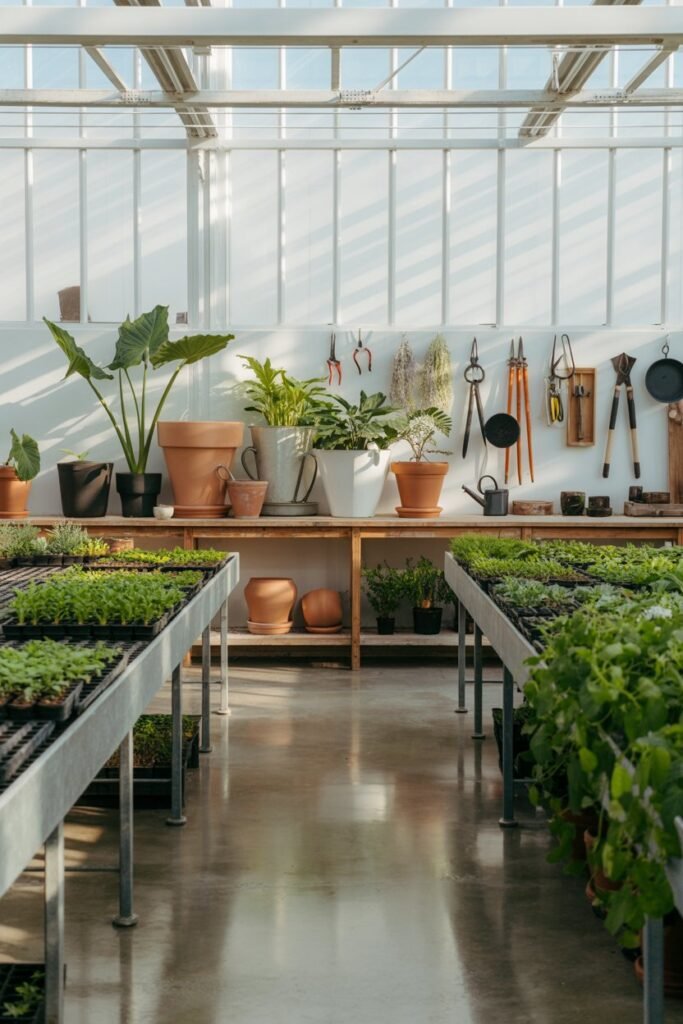
Why Some Gardeners Prefer Concrete
Concrete is one of the most durable greenhouse flooring materials available. It creates a clean, professional, and highly functional workspace.
Commercial growers often prefer concrete because it handles heavy use extremely well.
Benefits of Concrete Flooring
Extremely Durable
Concrete lasts for decades when installed properly.
Easy to Clean
Sweeping and disinfecting become much simpler.
Supports Heavy Equipment
Perfect for large pots, shelving, and gardening tools.
Weed-Free Surface
Weeds rarely become an issue.
Excellent Foundation
Creates a stable greenhouse structure.
Drawbacks of Concrete Flooring
- More expensive initially
- Hard surface may feel uncomfortable
- Can become slippery when wet
- Poor drainage unless designed carefully
Tips for Better Concrete Floors
Many gardeners improve concrete floors by:
- Adding textured finishes
- Installing floor drains
- Using anti-fatigue mats
- Combining concrete with gravel drainage sections
Best For
- Large greenhouses
- Professional growers
- Cold climates
- Permanent greenhouse structures
3. Paver Flooring
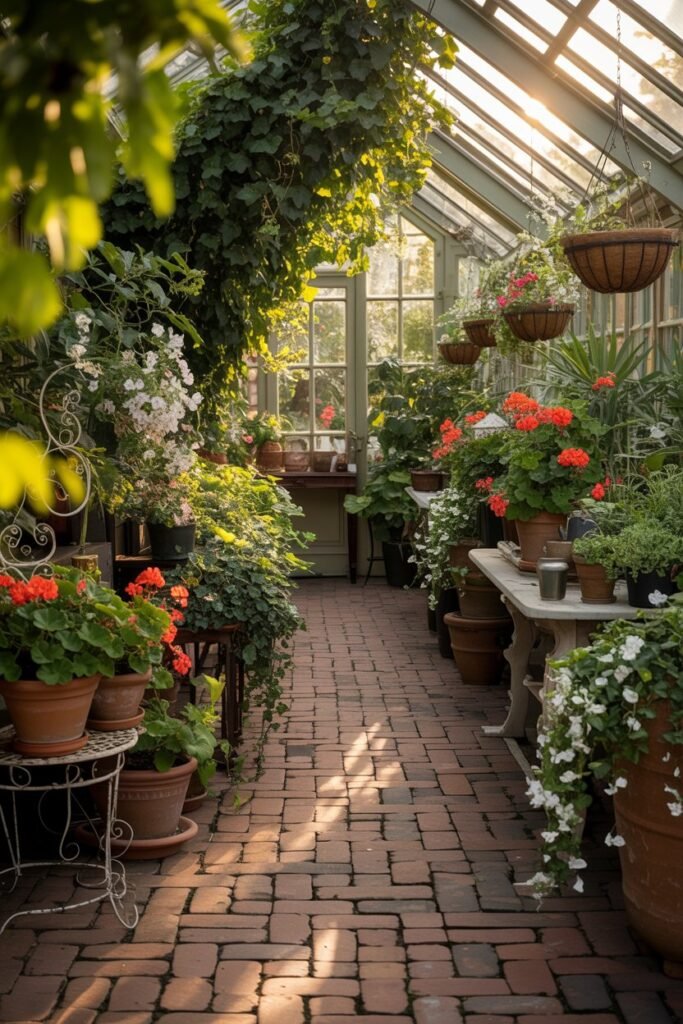
A Beautiful Blend of Function and Style
Pavers create one of the most visually stunning greenhouse floors. Brick, stone, or concrete pavers bring warmth and character while still offering durability.
For gardeners who want their greenhouse to feel like a cozy retreat, pavers are often the dream choice.
Benefits of Paver Flooring
Beautiful Appearance
Pavers instantly elevate the greenhouse aesthetic.
Good Drainage
Water can drain between gaps.
Long-Lasting
Quality pavers withstand years of use.
Custom Designs
You can create patterns and decorative layouts.
Easier Repairs
Damaged pavers can be replaced individually.
Drawbacks of Paver Flooring
- More labor-intensive installation
- Higher cost
- Weeds may grow between joints
- Uneven surfaces possible over time
Best For
- Decorative garden greenhouses
- Backyard greenhouse retreats
- Gardeners who value aesthetics
- Traditional garden styles
4. Bare Soil Flooring
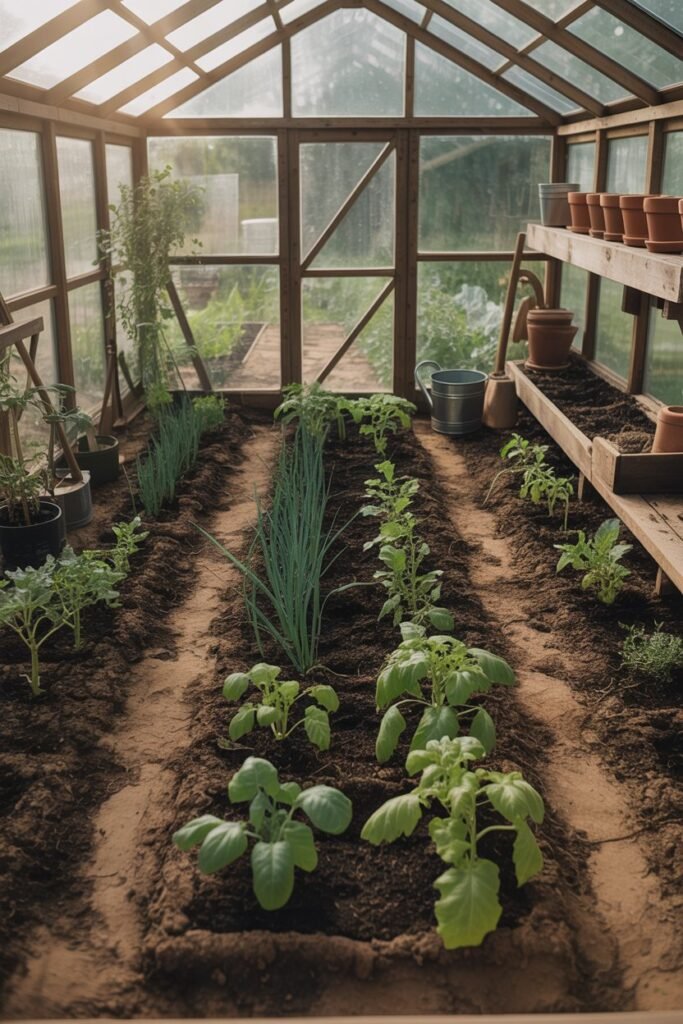
The Simplest Option
Some gardeners choose to leave the greenhouse floor as natural soil. This is especially common in simple hoop houses or growing tunnels.
Benefits of Soil Flooring
Very Affordable
Minimal cost involved.
Natural Growing Environment
Allows direct in-ground planting.
Easy Moisture Absorption
Water naturally sinks into the soil.
Beginner-Friendly
No installation required.
Drawbacks of Soil Flooring
- Muddy conditions
- Weed growth
- Insects and pests
- Difficult cleaning
- Uneven walking surface
- Increased disease risk
Best For
- Temporary greenhouses
- Simple growing tunnels
- Direct soil gardening
- Very low-budget setups
5. Landscape Fabric With Gravel
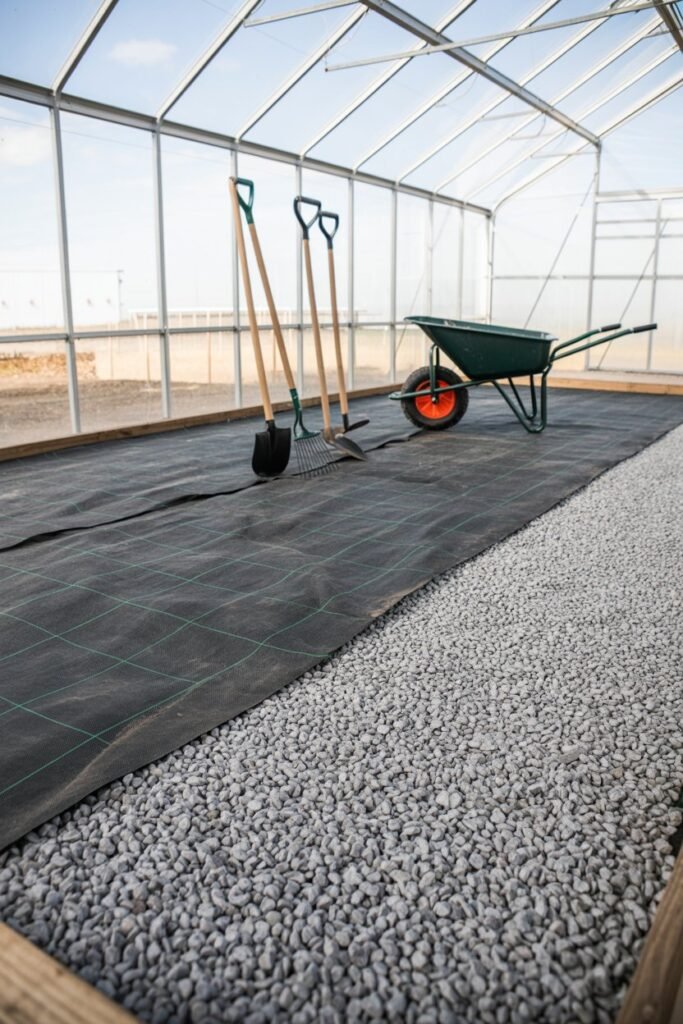
A Practical Combination
Many experienced gardeners combine landscape fabric with gravel to improve weed control and drainage simultaneously.
The fabric blocks weeds while the gravel keeps the space clean and functional.
Benefits
- Better weed prevention
- Improved drainage
- Affordable
- Easier maintenance
- Cleaner appearance
Drawbacks
- Fabric may degrade over time
- Requires proper installation
- Gravel still shifts occasionally
Best For
- Most home greenhouses
- DIY greenhouse projects
- Medium-budget gardeners
6. Rubber Mats or Flooring Tiles
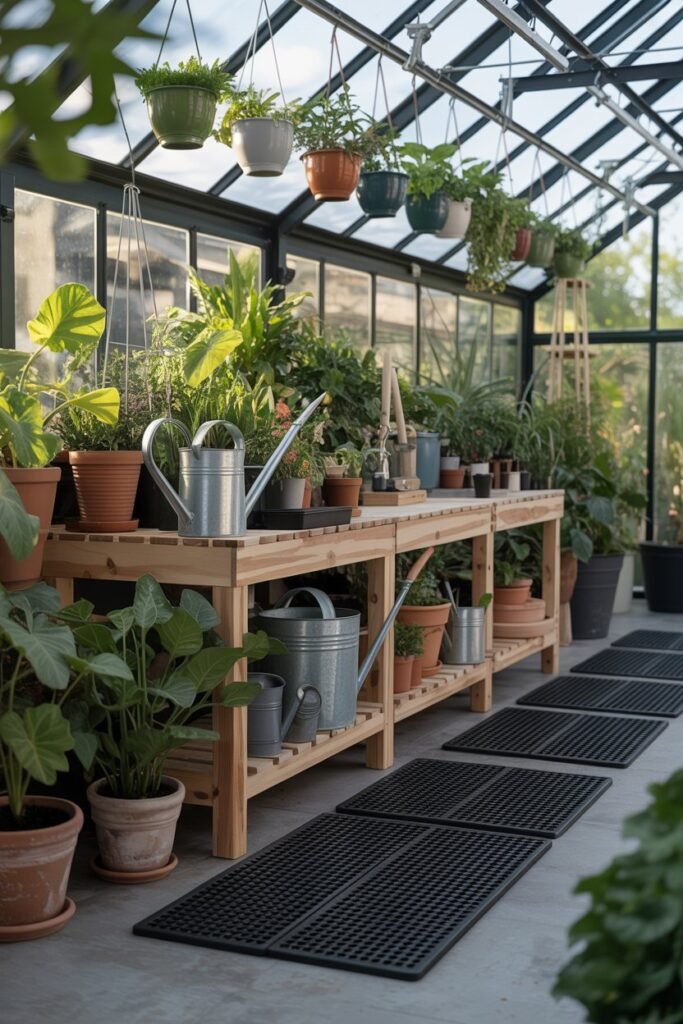
Comfort Meets Functionality
Rubber flooring creates a softer surface that feels easier on knees and feet during long gardening sessions.
This option is becoming increasingly popular in modern greenhouses.
Benefits of Rubber Flooring
Comfortable Underfoot
Excellent for gardeners who spend long hours inside.
Slip Resistant
Safer in wet conditions.
Easy Installation
Most tiles snap together easily.
Insulating Properties
Provides some temperature buffering.
Easy Cleaning
Can be rinsed and disinfected.
Drawbacks
- Higher cost
- Can trap moisture underneath
- Less natural appearance
- May fade over time
Best For
- Small greenhouse workspaces
- Potting stations
- Gardeners with joint pain
- Multi-purpose greenhouses
7. Wood Flooring
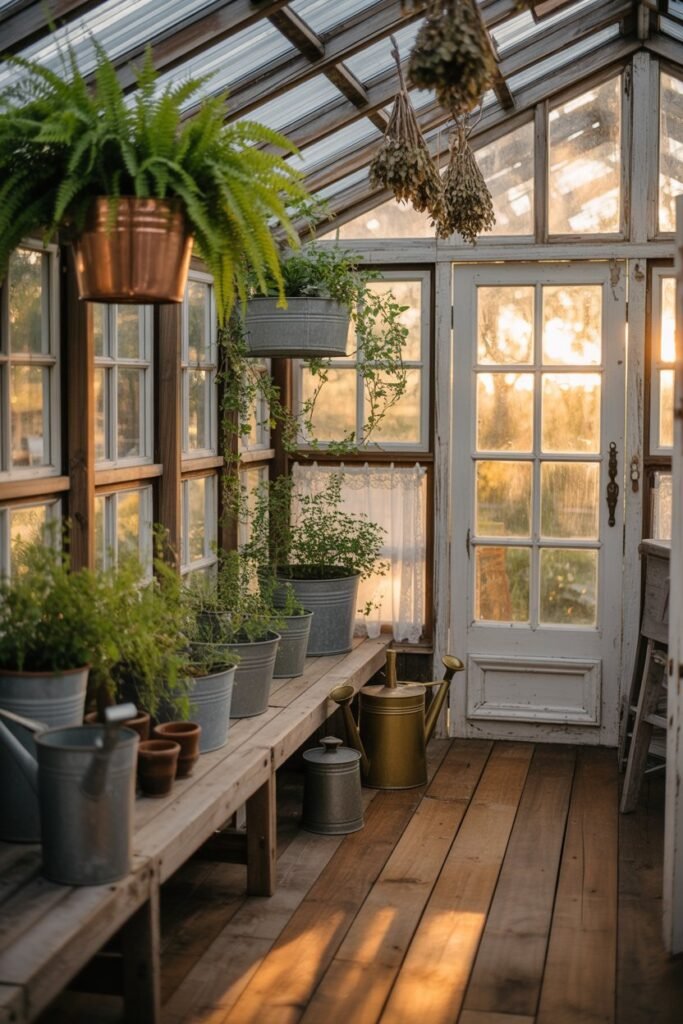
Rustic Greenhouse Charm
Wood floors create a warm and inviting greenhouse atmosphere that feels incredibly cozy.
Cedar and pressure-treated lumber are commonly used because they resist moisture better than untreated wood.
Benefits
Attractive Appearance
Wood adds natural warmth and charm.
Comfortable Surface
Softer and warmer than concrete.
Easier DIY Installation
Many gardeners can build wooden floors themselves.
Drawbacks
- Rot risk
- Moisture damage
- Requires maintenance
- Can become slippery
- Higher long-term upkeep
Best For
- Decorative greenhouse spaces
- Garden studios
- Relaxation-focused greenhouses
How Climate Affects Your Flooring Choice
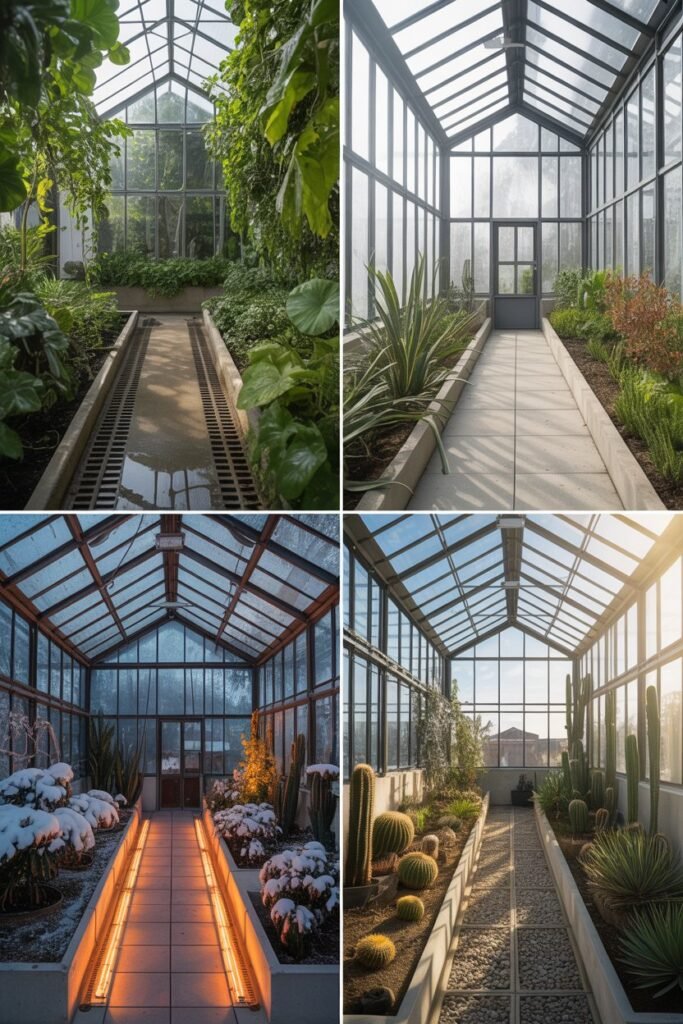
Climate plays a huge role in greenhouse flooring performance.
Hot and Humid Climates
Gardeners in humid areas should prioritize:
- Excellent drainage
- Mold resistance
- Air circulation
- Slip-resistant surfaces
Best options:
- Gravel
- Pavers
- Landscape fabric combinations
Cold Climates
Cold-region gardeners often benefit from:
- Heat-retaining materials
- Stable foundations
- Insulated surfaces
Best options:
- Concrete
- Stone pavers
- Rubber mats over concrete
Dry Climates
Dry regions allow more flexibility because excess moisture is less of a concern.
Understanding Drainage in a Greenhouse
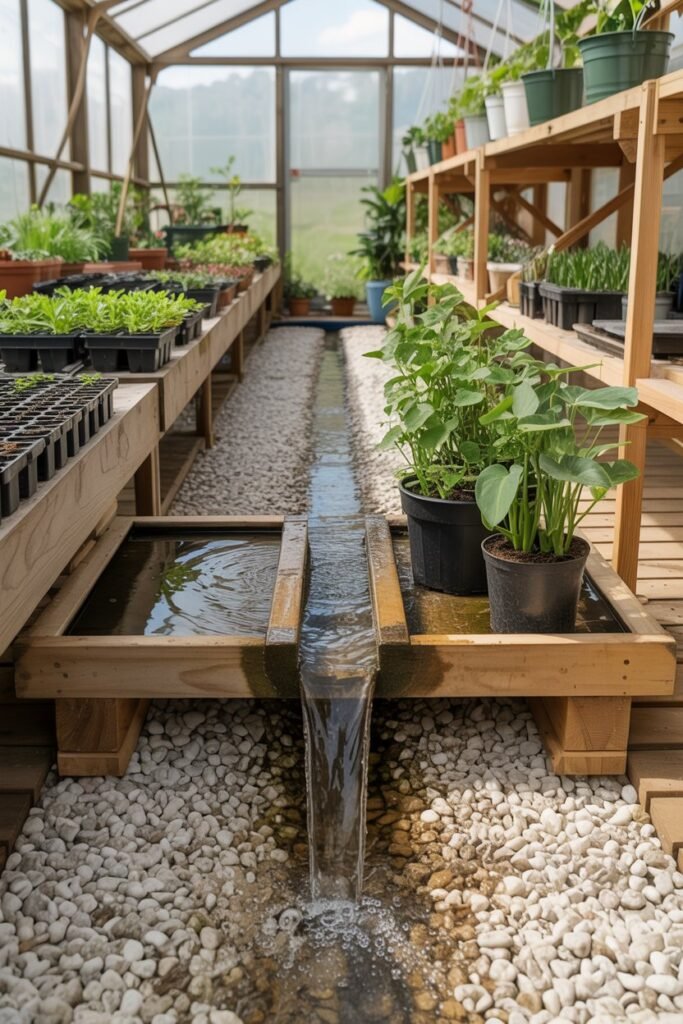
Drainage is one of the most important factors in greenhouse design.
Poor drainage can lead to:
- Root rot
- Mold growth
- Mosquitoes
- Slippery algae buildup
- Structural damage
Signs of Poor Greenhouse Drainage
- Standing puddles
- Musty smells
- Green algae on surfaces
- Constant humidity buildup
- Waterlogged plant containers
Ways to Improve Drainage
Add a Slight Floor Slope
Professional greenhouses often include gentle slopes directing water outward.
Install Drainage Channels
Useful for large greenhouses or heavy watering systems.
Use Permeable Materials
Gravel and pavers naturally improve water movement.
Weed Prevention Tips for Greenhouse Floors
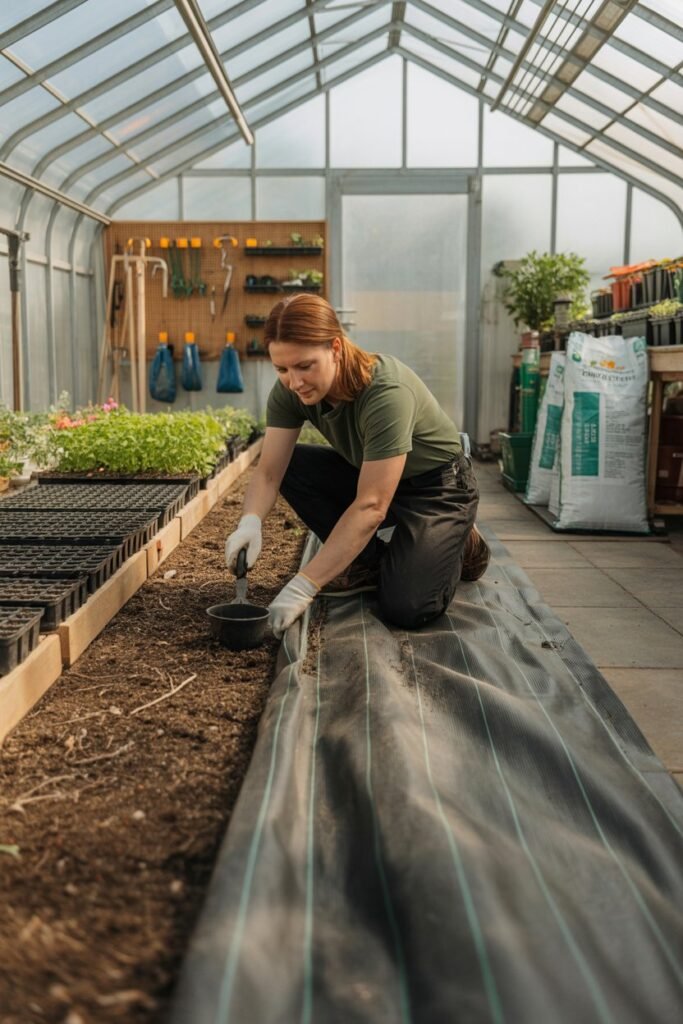
Weeds quickly become frustrating inside greenhouses because warm temperatures encourage rapid growth.
Best Weed Prevention Methods
Use Landscape Fabric
Creates a strong weed barrier beneath flooring.
Install Proper Edging
Prevents weeds from creeping inward.
Remove Weeds Early
Young weeds are much easier to manage.
Avoid Bare Soil Pathways
Exposed soil encourages constant weed problems.
How Flooring Affects Greenhouse Temperature
Flooring materials influence how heat moves and stays inside the greenhouse.
Heat-Absorbing Materials
Concrete and stone absorb daytime warmth and slowly release it overnight.
This helps stabilize temperatures.
Cooler Flooring Materials
Gravel and soil remain cooler and may not retain warmth as effectively.
Insulating Options
Rubber mats and wooden flooring provide some insulation for gardeners standing inside during colder months.
The Best Flooring for Small Greenhouses
Small greenhouses benefit from flooring that balances comfort, drainage, and affordability.
Top choices include:
- Gravel with landscape fabric
- Pavers
- Rubber tiles
- Concrete with drainage mats
For tiny backyard greenhouses, many gardeners enjoy combining decorative pathways with practical work areas.
The Best Flooring for Large Greenhouses
Large structures usually require stronger, more permanent flooring.
Best options include:
- Concrete
- Concrete with drainage systems
- Commercial rubber flooring
- Heavy-duty pavers
Durability becomes much more important in large spaces with heavy traffic.
Combining Multiple Flooring Types
Many beautiful and functional greenhouses use more than one flooring material.
For example:
- Gravel under plant benches
- Pavers along walking paths
- Concrete at potting stations
- Rubber mats in work areas
This layered approach creates a greenhouse that feels both practical and welcoming.
Budget-Friendly Greenhouse Flooring Ideas
Creating a lovely greenhouse floor does not always require a huge budget.
Affordable Options
Pea Gravel
One of the cheapest long-term flooring solutions.
Recycled Bricks
Adds character while saving money.
Mulch Pathways
Works temporarily in seasonal greenhouses.
Salvaged Pavers
Many gardeners find secondhand materials locally.
DIY Concrete Pavers
A creative and cost-effective project.
Common Greenhouse Flooring Mistakes
Avoiding common mistakes can save significant money and frustration later.
Choosing Appearance Over Function
Beautiful floors still need proper drainage and durability.
Ignoring Drainage
Even gorgeous flooring fails if water cannot escape properly.
Forgetting Weed Barriers
Skipping weed prevention often creates constant maintenance problems.
Using Slippery Materials
Wet greenhouse conditions require safe walking surfaces.
Underestimating Weight
Large pots and shelves become extremely heavy over time.
Cleaning and Maintaining Greenhouse Flooring
Every flooring type requires some maintenance to stay healthy and attractive.
Gravel Maintenance
- Rake occasionally
- Remove weeds
- Replenish gravel yearly if needed
Concrete Maintenance
- Sweep regularly
- Disinfect periodically
- Repair cracks quickly
Paver Maintenance
- Pull weeds between joints
- Re-level shifted stones
- Wash dirt buildup
Rubber Flooring Maintenance
- Lift occasionally for drying
- Sanitize surfaces
- Replace worn tiles
Eco-Friendly Greenhouse Flooring Choices
Sustainable gardening often includes environmentally thoughtful flooring choices.
Eco-Friendly Options
Recycled Rubber Tiles
Made from repurposed materials.
Reclaimed Brick or Stone
Reduces waste beautifully.
Locally Sourced Gravel
Minimizes transportation impact.
Permeable Pavers
Supports natural water drainage.
Many gardeners appreciate flooring that aligns with their environmentally conscious gardening lifestyle.
Creating a Comfortable Greenhouse Workspace
Greenhouses are not only for plants — they are also places where gardeners spend meaningful time nurturing creativity and peace.
Comfort matters.
Ways to Improve Comfort
- Add soft anti-fatigue mats
- Include seating areas
- Choose non-slip surfaces
- Maintain clean pathways
- Use flooring that feels pleasant underfoot
A thoughtfully designed greenhouse becomes more than a growing space. It becomes a personal sanctuary.
Recommended Flooring Combinations for Different Gardening Styles
For Beginner Gardeners
- Landscape fabric + pea gravel
Simple, affordable, and forgiving.
For Decorative Greenhouses
- Brick pavers + gravel accents
Beautiful and timeless.
For Heavy Plant Collectors
- Concrete + rubber mats
Strong and easy to maintain.
For Tropical Greenhouses
- Gravel + drainage channels
Excellent moisture management.
For Cozy Backyard Retreats
- Wood pathways + potted plants
Warm and inviting atmosphere.
Final Thoughts
Choosing greenhouse flooring may not seem glamorous at first, yet it quietly shapes nearly every part of your gardening experience. The right floor keeps your greenhouse cleaner, healthier, safer, and far more enjoyable to spend time in throughout the year.
Whether you love the rustic charm of gravel, the polished durability of concrete, or the timeless beauty of brick pavers, the best flooring choice is the one that supports your gardening habits and makes your greenhouse feel welcoming every single day.
A greenhouse should feel like an extension of your love for plants — peaceful, practical, and full of life. Thoughtful flooring helps create that foundation, both literally and emotionally.
Once the floor is in place, everything else becomes easier: watering, organizing, cleaning, and simply enjoying the quiet joy of tending your plants. Investing time into choosing the right greenhouse flooring now will reward you with years of comfort, beauty, and thriving growth ahead.
