

My grandmother swore some people are born with a “black thumb,” like it’s permanent, like being left-handed.
I believed her for years. I drowned a fern in college, crisped a peace lily into a skeleton, and once killed a cactus by loving it too hard with a watering can.
Then I started growing tougher plants and realized the truth: it was never my thumb. It was the wrong plant for my life.
Fifteen years and a lot of dead leaves later, here’s my real, tested shortlist of houseplants that forgive almost everything plus exactly how to keep them thriving.
Why Some Plants Are Nearly Indestructible
Before we get into individual plants, it helps to understand what makes a plant tough in the first place. The hardiest houseplants tend to share a few traits:
- They store water efficiently. Plants with thick, waxy leaves or rhizomes (underground stems) can go a long time between drinks because they’re not relying on constant soil moisture.
- They evolved in variable conditions. Many of our toughest houseplants originally grew as understory plants in forests, tolerating dappled light, or in semi-arid regions where rainfall was unpredictable.
- They have simple root systems that resist rot. This is a big one. The number one killer of houseplants isn’t neglect — it’s overwatering, which suffocates roots and invites rot. Plants that tolerate “wet feet” for short periods, or that dry out quickly, are far more forgiving of an eager watering hand.
- They photosynthesize efficiently in low light. Some plants have adapted to make the most of very little light, which means your dim hallway or north-facing bedroom isn’t a death sentence.
Keep these traits in mind, and you’ll start to recognize tough plants even at the garden center, before you ever read a tag.
The Tools You Actually Need
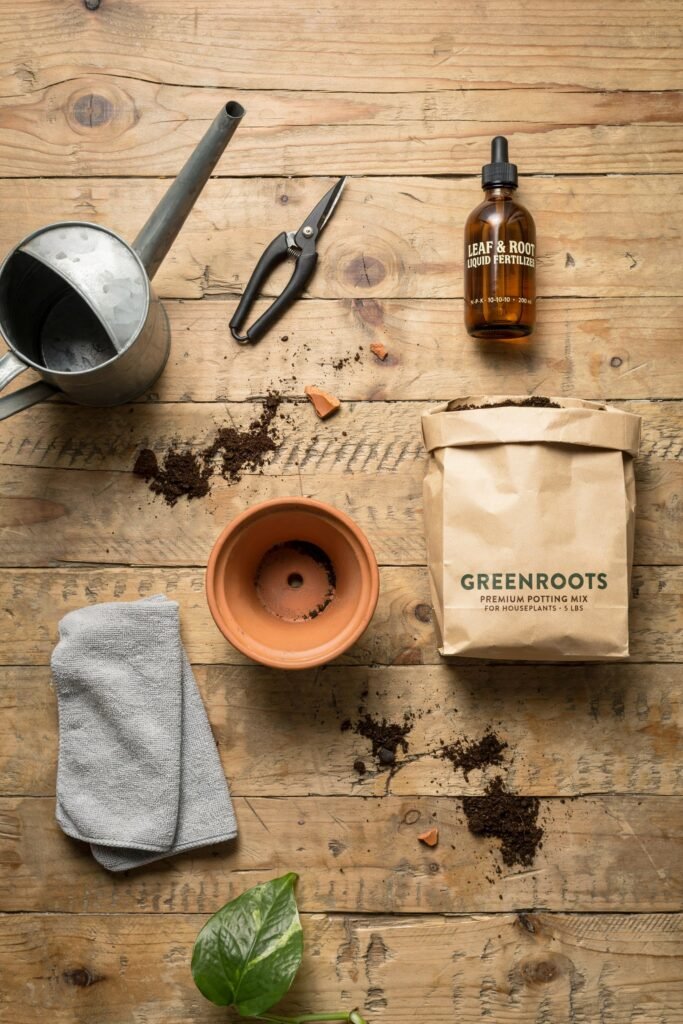
You do not need a potting shed full of gadgets to keep these plants alive. Here’s my honest, no-fluff list of what earns a permanent spot on my windowsill:
- A watering can with a narrow spout. Precision matters more than volume. You want to direct water to the soil, not the leaves or the crown of the plant.
- A moisture meter or your own finger. I genuinely just use my index finger most of the time. Stick it into the soil up to the second knuckle — if it’s dry, water; if it’s damp, wait. A cheap meter is a nice backup if you don’t trust your instincts yet.
- Well-draining potting mix. Regular garden soil is too dense and holds too much water for containers. A mix labeled “indoor potting mix” or, for succulents and snake plants, a “cactus and succulent mix,” will save you more plants than any other single purchase.
- Pots with drainage holes. This is non-negotiable. Even the toughest plant will eventually rot if it’s sitting in a sealed pot with no way for excess water to escape. If you love a decorative pot without holes, use it as a cachepot and keep the plant in its plastic nursery pot inside.
- A pair of clean, sharp scissors or pruning snips. For trimming yellowed leaves, taking cuttings to propagate, and general tidying.
- A soft cloth or duster. Dust on leaves blocks light and slows photosynthesis. Wiping leaves down every few weeks keeps your plant breathing easier — and it’s oddly satisfying.
- A basic all-purpose liquid fertilizer. Optional but helpful during the growing season (spring and summer). Diluted to half-strength, it supports growth without pushing the plant too hard.
That’s genuinely it. No grow lights required for most of these, no humidifiers, no fuss.
1. Pothos (Epipremnum aureum)
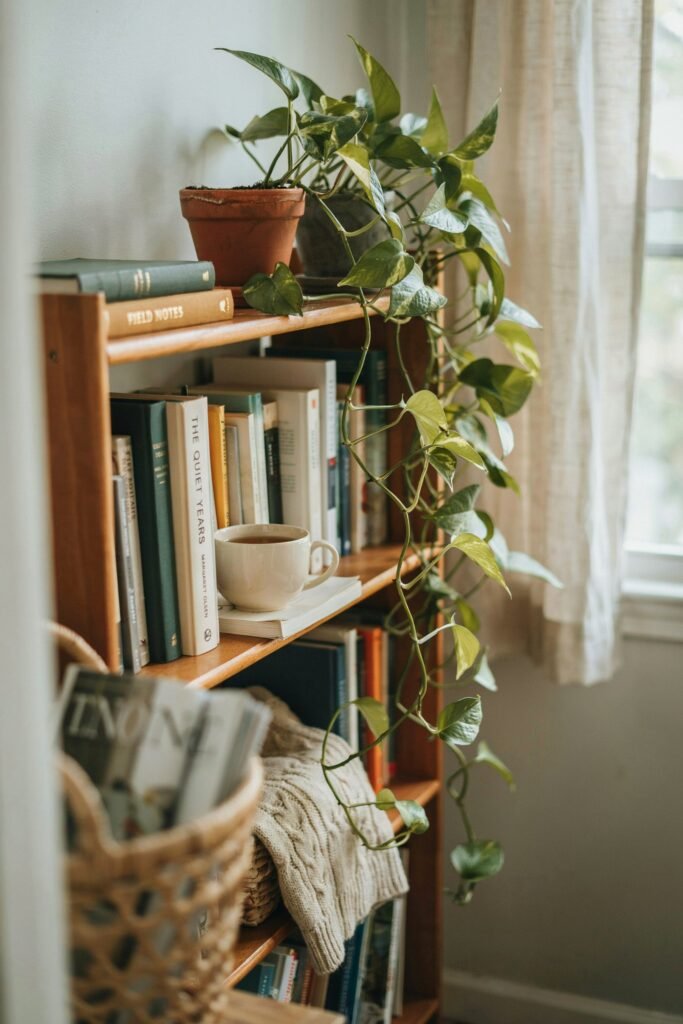
If I could only recommend one houseplant to a total beginner, it would be pothos. I’ve grown pothos in a bathroom with one small window, in a dim office cubicle, and trailing six feet down a bookshelf in full sun. It has never once let me down.
Why it’s nearly impossible to kill: Pothos tolerates an enormous range of light conditions, from low indirect light to bright indirect light.
Its trailing vines store some moisture in their stems, so it bounces back readily from a missed watering. It’s also remarkably resistant to common pests when kept reasonably healthy.
Light: Low to bright indirect light. Avoid direct, scorching sun, which can bleach the leaves.
Water: Let the top two inches of soil dry out between waterings. In my experience, this usually means once every one to two weeks, depending on light and season.
Drooping leaves are actually pothos’s way of asking for water it perks back up within hours of a good drink, which makes it very forgiving.
Soil and pot: Standard indoor potting mix with good drainage. Any pot with a drainage hole works.
Care tips:
- Pinch back leggy vines to encourage bushier growth.
- Wipe the leaves occasionally so the plant can photosynthesize efficiently.
- Propagate constantly. Cut a vine below a node (the little bump where a leaf meets the stem), pop it in a glass of water, and you’ll have roots within a couple of weeks. This is the cheapest way to fill your home with plants.
- If your pothos develops yellow leaves, it’s very often a sign of overwatering rather than underwatering. Check the soil before assuming the plant needs more water.
2. Snake Plant (Dracaena trifasciata, formerly Sansevieria)
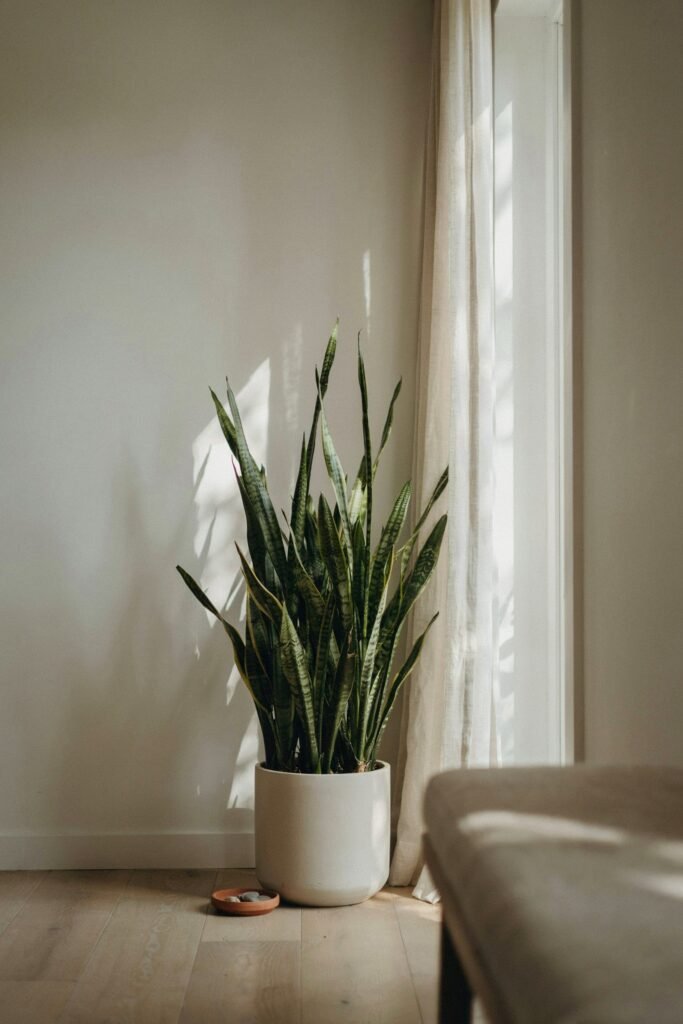
The snake plant is the houseplant equivalent of that one friend who’s unbothered by everything. I once left a snake plant in a moving box for three weeks by accident. It was fine. Slightly annoyed, perhaps, but fine.
Why it’s nearly impossible to kill: Snake plants are succulents at heart, storing water in their thick, upright leaves.
They use a specialized form of photosynthesis (CAM photosynthesis) that lets them conserve water efficiently, which is also why they’re famously good at tolerating dry indoor air and irregular watering.
Light: Extremely adaptable tolerates low light corners as well as bright, indirect sun. It’s one of the very few plants that genuinely does well in a dim hallway.
Water: This is where most people go wrong with snake plants they overwater them. Let the soil dry out completely between waterings, then water thoroughly. In winter, you may only need to water once a month or even less.
Soil and pot: A cactus/succulent mix is ideal because it drains fast. A pot with a drainage hole is essential here, more than with almost any other plant on this list, because snake plant roots and rhizomes rot quickly in soggy soil.
Care tips:
- Resist the urge to water on a schedule. Water based on how dry the soil actually is.
- Snake plants can live in the same pot for years; they actually seem to flower more readily when slightly root-bound.
- Dust the stiff, upright leaves occasionally they’re large enough that dust buildup is noticeable.
- If a leaf gets damaged or bent, you can cut it off at the base; it won’t regrow from that spot, but it won’t harm the rest of the plant either.
3. ZZ Plant (Zamioculcas zamiifolia)
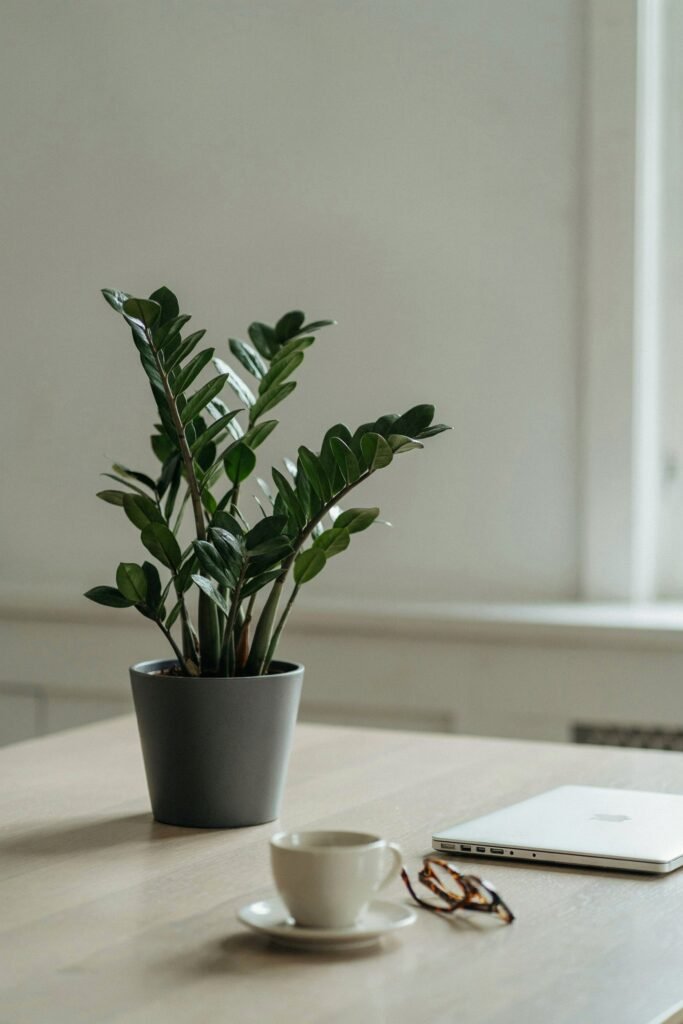
The ZZ plant looks almost artificial with its glossy, deep green leaves, and its resilience is just as remarkable.
This plant grows from thick, potato-like rhizomes underground that store water and nutrients, which is the secret to its toughness.
Why it’s nearly impossible to kill: Those underground rhizomes act like a reservoir, allowing the ZZ plant to go weeks, sometimes over a month, without water and barely notice. It also tolerates low light beautifully, making it a favorite for offices with only fluorescent lighting.
Light: Low to bright indirect light. It will grow faster in brighter conditions but survives happily in dim rooms.
Water: Water only when the soil is completely dry, roughly every two to three weeks. If you’re a chronic over-waterer, this is one of the best plants to retrain your habits on.
Soil and pot: Well-draining potting mix, ideally with some perlite mixed in. A pot with drainage holes is a must.
Care tips:
- Never let the pot sit in standing water. This is the fastest way to rot the rhizomes.
- New growth emerges as tightly curled, almost black-green shoots that unfurl over a few weeks. Don’t panic if a new shoot looks strange at first; it’s completely normal.
- ZZ plants are toxic if ingested, so keep them away from curious pets and small children.
- Every part of this plant is glossy by nature; you don’t need leaf shine products, just a damp cloth now and then.
4. Spider Plant (Chlorophytum comosum)
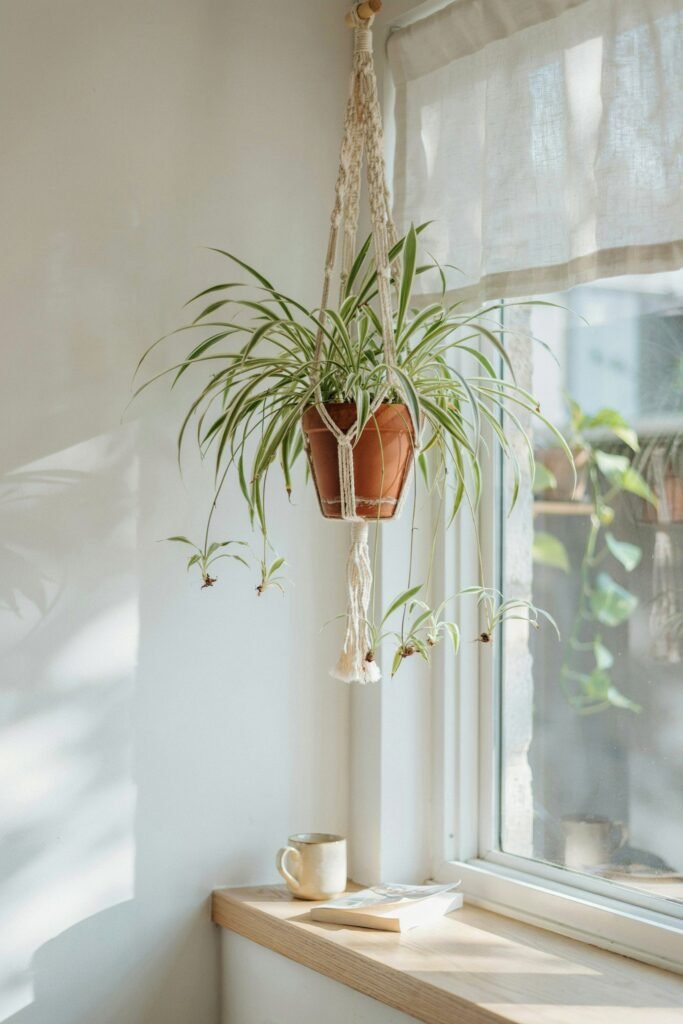
Spider plants have a cheerful, slightly wild look, with arching variegated leaves and little “pups” (baby plants) dangling on long stems. They’re one of the most classic beginner plants for good reason.
Why it’s nearly impossible to kill: Spider plants have thick, fleshy roots that store water, giving them a buffer against inconsistent watering. They also adapt to a wide range of light levels and recover quickly from stress.
Light: Bright, indirect light is ideal, but they tolerate medium and even lower light, though variegation (the white stripes) may fade in very low light.
Water: Keep soil lightly moist during the growing season, allowing the top inch to dry out between waterings.
They’re more forgiving of underwatering than overwatering, but honestly tolerate both reasonably well.
Spider plants are also sensitive to fluoride and chlorine in tap water, which can cause brown leaf tips if you notice this, try switching to filtered or distilled water.
Soil and pot: Standard potting mix with good drainage.
Care tips:
- Brown tips are common and mostly cosmetic; simply trim them off with clean scissors at an angle to maintain the natural leaf shape.
- Once your spider plant sends out pups, you can snip them off and root them in water or directly in soil for endless new plants to gift to friends.
- These plants like being slightly root-bound and will flower and produce more pups when snug in their pot.
- They’re also non-toxic to cats and dogs, which makes them a great pick for pet owners.
5. Cast Iron Plant (Aspidistra elatior)
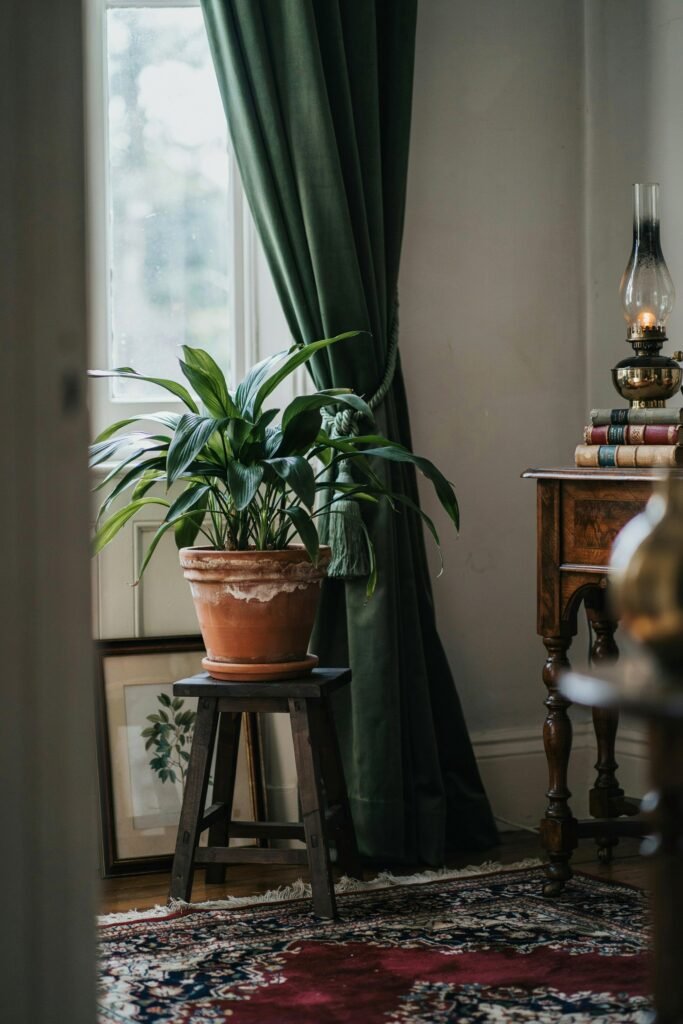
The name says it all. Victorian households prized this plant precisely because it tolerated the gas lighting, coal smoke, and poor ventilation of the era conditions that would kill most other houseplants outright.
Why it’s nearly impossible to kill: Cast iron plants grow slowly and steadily, tolerating deep shade, temperature swings, dry air, and irregular watering with a shrug. Their tough, leathery leaves are also naturally resistant to most pests.
Light: Low to medium indirect light. It’s one of the few houseplants that genuinely thrives in a shady corner with no direct sun at all.
Water: Allow soil to dry out between waterings. It tolerates both drought and occasional overwatering better than most plants, but well-draining soil is still important for long-term health.
Soil and pot: Any standard potting mix with drainage.
Care tips:
- Patience is the name of the game — this plant grows slowly, so don’t expect rapid, dramatic growth. What you’re buying is reliability, not speed.
- Dust the broad leaves periodically; because it tolerates low light, keeping leaves clean helps it use what little light it gets.
- Division is the easiest way to propagate: when repotting, you can gently separate the rhizome clumps into smaller sections.
6. Chinese Evergreen (Aglaonema)
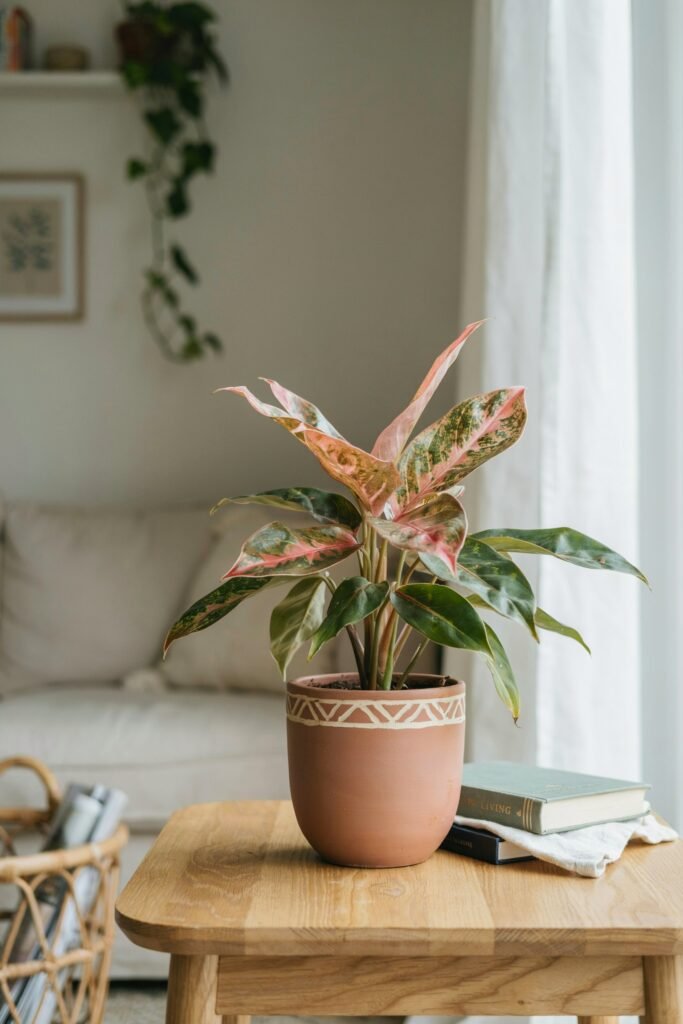
Chinese evergreens bring color into low-light spaces in a way that most tough plants can’t, with leaves patterned in silver, pink, red, or cream depending on the variety.
Why it’s nearly impossible to kill: Aglaonema tolerates low light and irregular watering, and it’s naturally resistant to many common pests. It also handles the dry air of centrally heated or air-conditioned homes better than many tropical plants.
Light: Low to medium indirect light for darker green varieties; the more colorful, variegated types appreciate a bit more brightness to keep their color vivid, but still no direct sun.
Water: Water when the top inch or two of soil is dry. It’s fairly tolerant of both under- and overwatering compared to more delicate tropicals, though soggy soil for extended periods will eventually cause root rot.
Soil and pot: Well-draining potting mix; a pot with drainage holes.
Care tips:
- Keep it away from cold drafts and windows in winter — Aglaonema is sensitive to chilly temperatures below about 60°F (15°C).
- Wipe leaves regularly to keep the patterns vibrant and the plant photosynthesizing well.
- It’s toxic if ingested, so keep it out of reach of pets and children, like many aroids.
7. Philodendron (Heartleaf Philodendron, Philodendron hederaceum)
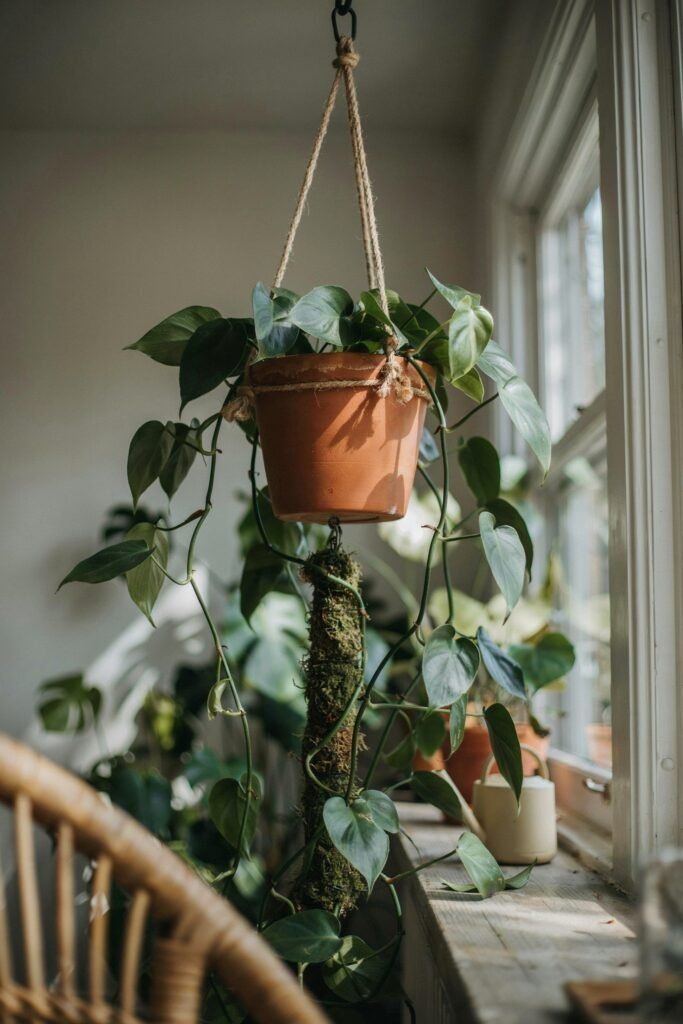
Heartleaf philodendron is often confused with pothos, and honestly, if you can grow one, you can grow the other. It’s a trailing vine with glossy, heart-shaped leaves that seems to thrive on being ignored.
Why it’s nearly impossible to kill: Like pothos, it tolerates a wide range of light and stores some water in its stems and leaves, buffering it against inconsistent watering. It’s also quick to signal when it needs water — drooping leaves perk right back up.
Light: Low to bright indirect light. It grows fastest in medium to bright light but survives in dimmer corners.
Water: Let the top inch or two of soil dry out between waterings. Roughly once a week in bright conditions, less often in low light.
Soil and pot: Standard, well-draining potting mix; drainage holes recommended but this plant is somewhat tolerant either way if you’re careful.
Care tips:
- Give it something to climb, like a moss pole, if you want larger leaves — philodendrons often produce bigger foliage when allowed to climb rather than trail.
- Propagate from stem cuttings in water; roots typically appear within one to two weeks.
- Yellow leaves usually mean overwatering; sparse, small new leaves usually mean it wants more light.
8. Jade Plant (Crassula ovata)
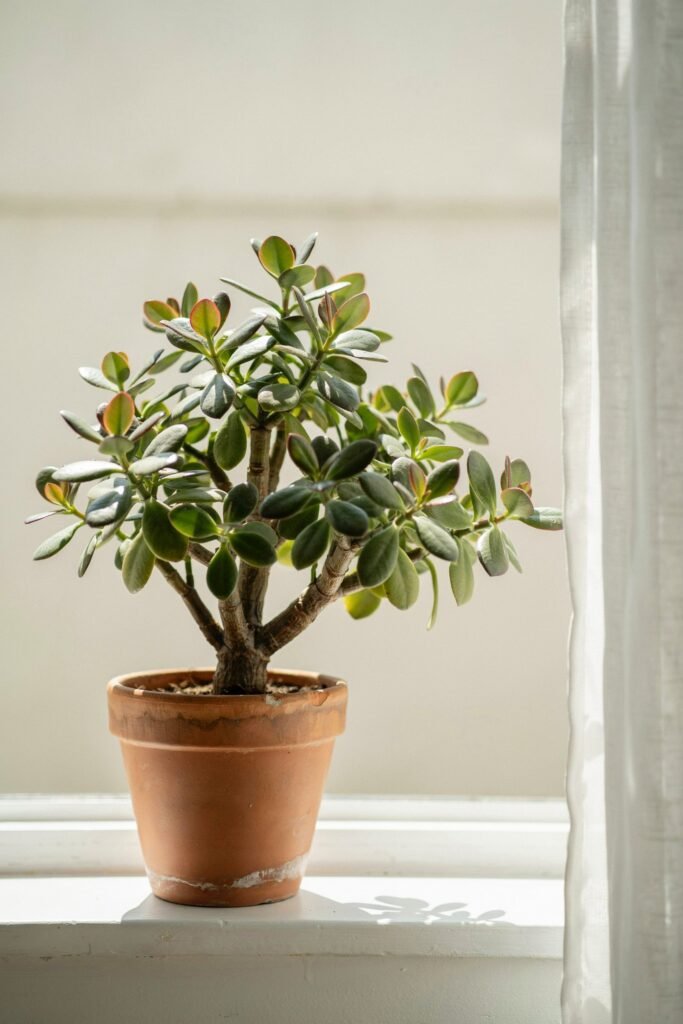
The jade plant is a classic succulent with thick, glossy, coin-shaped leaves and a woody stem that thickens like a little tree trunk over time. Some jade plants live for decades and are passed down through families like heirlooms.
Why it’s nearly impossible to kill: As a true succulent, jade plants store water in their fleshy leaves and stems, letting them go long stretches without watering. They’re also remarkably tolerant of neglect once established.
Light: Bright light is important here this is one of the few plants on this list that genuinely wants a sunny windowsill, ideally with a few hours of direct morning or afternoon sun.
Water: Let the soil dry out completely between waterings, then water deeply. In winter, cut back significantly, watering only once every three to four weeks.
Soil and pot: Cactus/succulent mix is essential, along with a pot that has drainage holes.
Care tips:
- If leaves start to shrivel and wrinkle, that’s a sign of underwatering; if they turn translucent, soft, or fall off with a gentle touch, that’s overwatering.
- Rotate the pot occasionally so the plant grows evenly rather than leaning toward the light source.
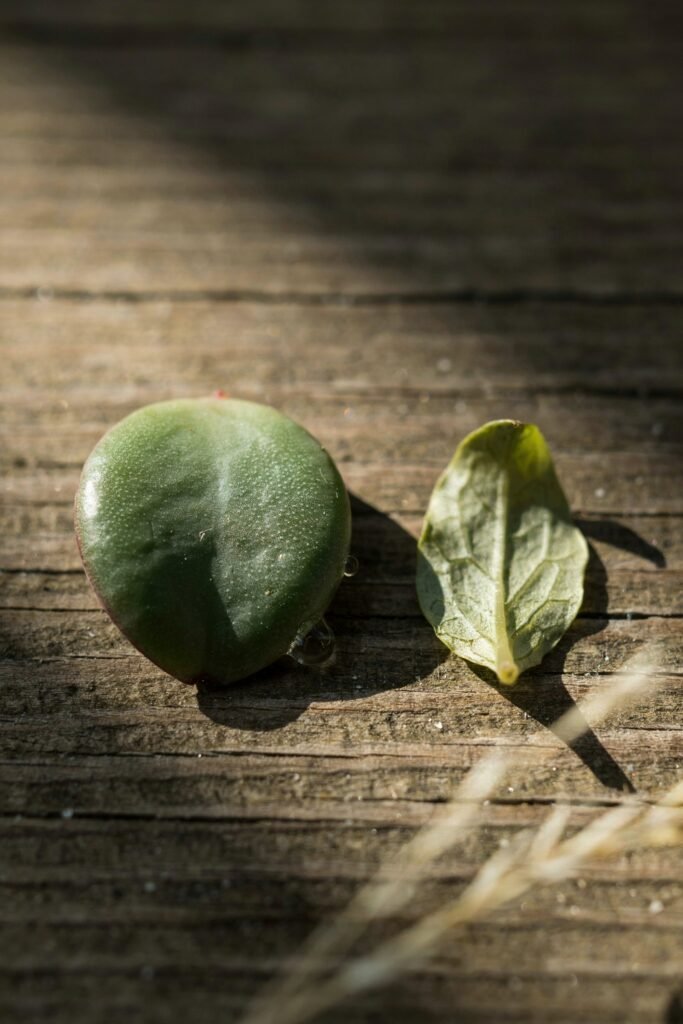
- Jade plants propagate easily from a single leaf. Let a fallen leaf callous over for a day or two, then rest it on top of moist succulent soil until it roots.
9. Peace Lily (Spathiphyllum)
I’ll admit the peace lily is slightly less bulletproof than the others on this list, but I’m including it because it’s one of the most forgiving flowering houseplants, and it gives you the clearest possible signal when it’s thirsty.
Why it’s nearly impossible to kill: Peace lilies dramatically droop their leaves when they need water, then perk back up fully within hours of a good drink, essentially telling you exactly what they need. This visual cue makes it very hard to accidentally let one die of thirst.
Light: Low to medium indirect light. It tolerates shade well, though it flowers more reliably with brighter indirect light.
Water: Keep soil lightly moist, watering when the top inch feels dry, or simply whenever you see the leaves start to droop.
Soil and pot: Standard potting mix with good drainage; a pot with drainage holes is important since peace lilies dislike sitting in water.
Care tips:
- Brown leaf tips often indicate tap water sensitivity (fluoride/chlorine) or low humidity; filtered water and occasional misting can help.
- It’s toxic to pets if chewed, so place it thoughtfully if you have curious cats or dogs.
- Deadhead spent flowers by cutting the stem at the base to encourage more blooms.
10. Dracaena (Dracaena fragrans, “Corn Plant,” and relatives)
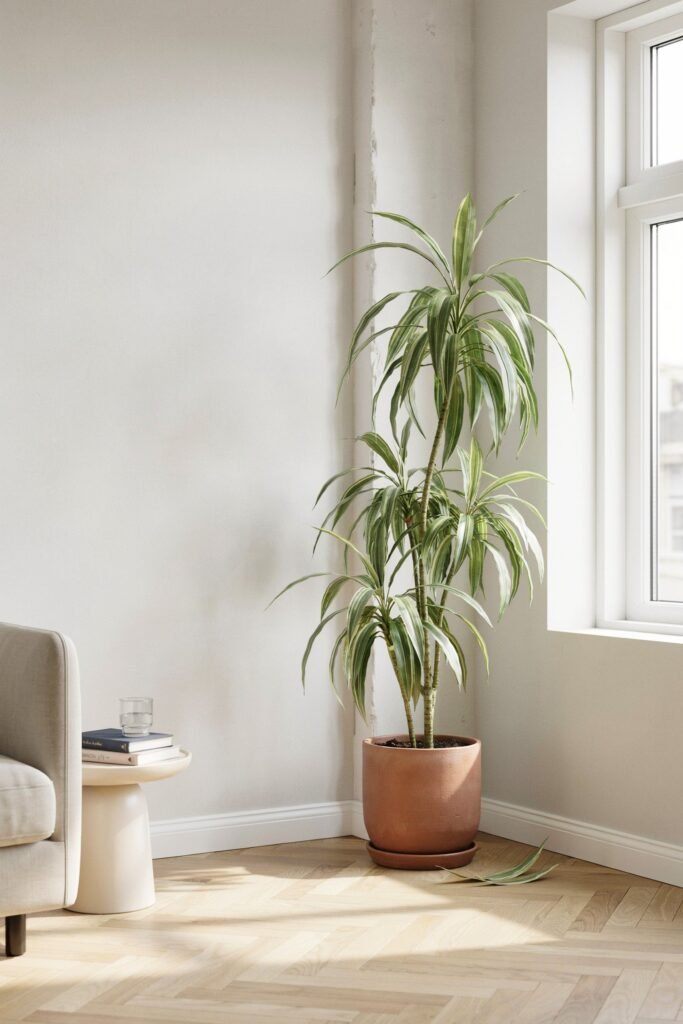
Dracaenas are the reliable, tree-like backbone of many offices and hotel lobbies for a reason: they ask for very little and deliver a lot of visual presence in return.
Why it’s nearly impossible to kill: Dracaenas are drought-tolerant, adapt to a range of light conditions, and grow slowly enough that missed care windows rarely cause lasting damage.
Light: Low to bright indirect light, though variegated varieties hold their color best with more brightness.
Water: Allow the top half of the soil to dry out between waterings, roughly every one to two weeks. Dracaenas are notably sensitive to fluoride in tap water, which can cause brown leaf-tip streaking, so filtered water is a nice upgrade if you notice this.
Soil and pot: Well-draining potting mix; pot with drainage holes.
Care tips:
- Trim brown tips with scissors, cutting at an angle to match the natural leaf shape.
- These plants can grow tall over the years and can be pruned back hard if they outgrow their space; they’ll usually resprout from the cut point.
- Toxic to cats and dogs if ingested, so plan placement accordingly.
Common Mistakes That Kill “Unkillable” Plants
Even the toughest plants have their limits, and in my experience, the same few mistakes account for almost every houseplant death I’ve witnessed or caused myself.
Watering on a fixed schedule instead of checking the soil. “Every Sunday” sounds organized, but plants don’t care what day it is. Light, temperature, humidity, and season all change how quickly soil dries out. Check before you water, every time.
Using pots without drainage holes. I understand the appeal of a beautiful ceramic pot with no hole, but excess water has nowhere to go, and roots sitting in stagnant water will rot no matter how tough the plant is. Use a nursery pot with drainage inside a decorative one instead.
Overcorrecting after a mistake. If a plant looks droopy, the instinct is often to drown it in water immediately. Take a breath, check the soil first, and give a measured response instead of a panicked one.
Ignoring the difference between low light and no light. “Low light tolerant” does not mean “no light needed.” Even the toughest plants need some ambient daylight to survive long-term; a windowless closet will eventually starve any plant.
Forgetting about seasonal changes. Most houseplants slow their growth dramatically in fall and winter, when daylight hours shrink. This means they need less water and no fertilizer during these months. Continuing summer watering habits into winter is one of the most common ways to accidentally rot a plant’s roots.
Building Your Foolproof Plant Collection
If you’re just starting out, I’d suggest picking two or three plants from this list rather than all ten at once.
Get comfortable reading their signals the way pothos droops when thirsty, the way a snake plant’s soil stays dry for weeks before expanding your collection.
Once you’ve killed the anxiety around plant care (pun very much intended), you’ll find that adding more becomes second nature.
My own windowsill started with a single pothos cutting from a coworker’s desk plant, rooted in a jam jar of water. Years later, that same lineage of plants has been propagated dozens of times, gifted to friends, and now fills three rooms of my home.
That’s the real gift of these unkillable houseplants: they don’t just survive your care, they reward it generously, multiplying into new plants you can share.
Gardening indoors isn’t about having perfect conditions or a natural gift. It’s about matching the right plant to your actual life your light, your schedule, your habits and letting that plant do what it’s evolved to do.
Start with one of these, pay attention to what it’s telling you, and I promise you’ll surprise yourself with just how green your thumb can become.
