
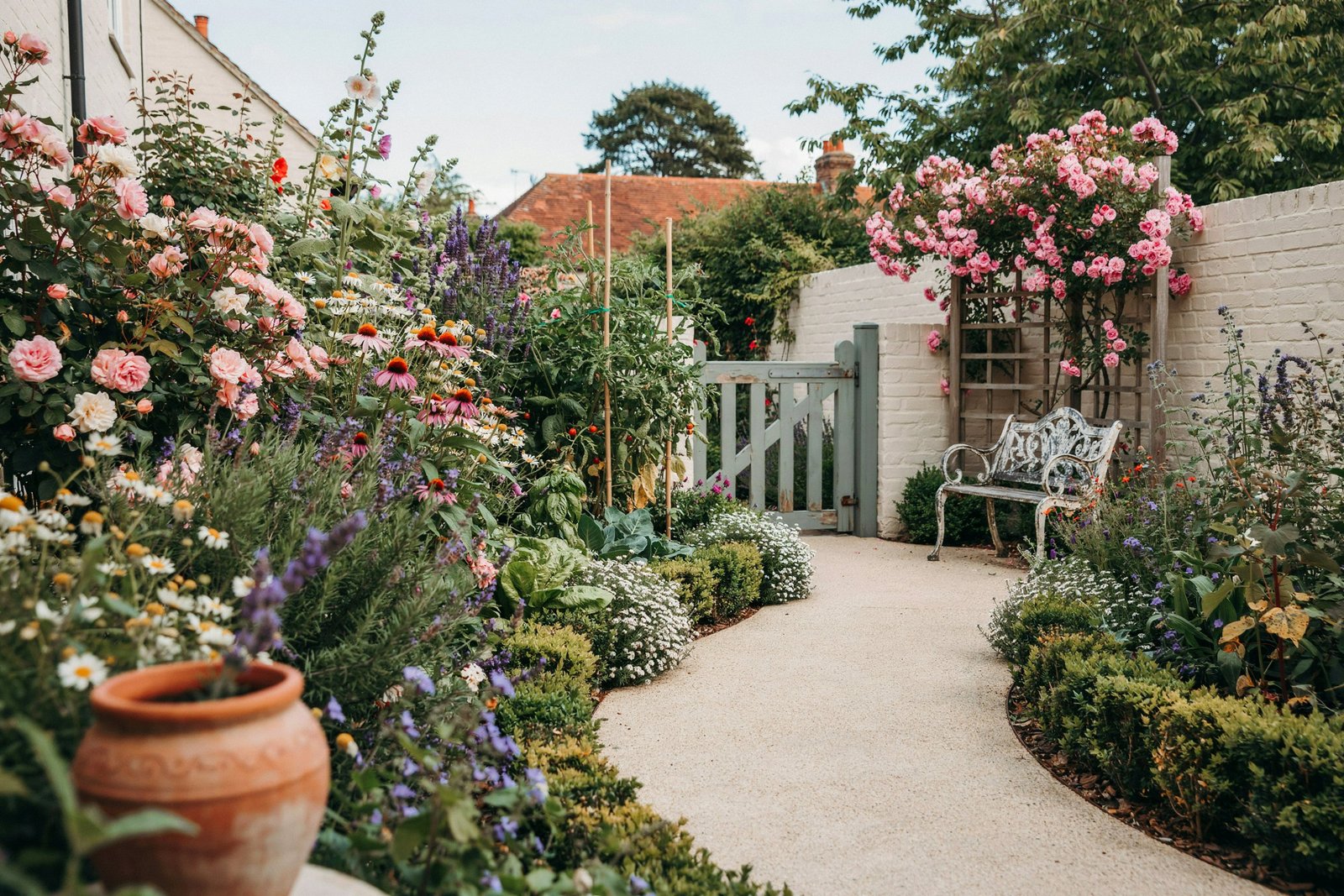

I have always loved gardens that feel a little imperfect in the most beautiful way flowers spilling over paths, herbs tucked beside vegetables, and climbing plants softening every corner.
When I picture a cottage garden, I imagine a space that feels welcoming rather than overly designed. You do not need a huge yard or an expensive landscaping budget to create that feeling.
With the right layout, even a small garden can become a colorful, productive retreat filled with texture, fragrance, and seasonal interest.
In this guide, I’ll walk you through practical cottage garden layout plans that you can adapt to your own space, sunlight, budget, and gardening style.
What Is a Cottage Garden?
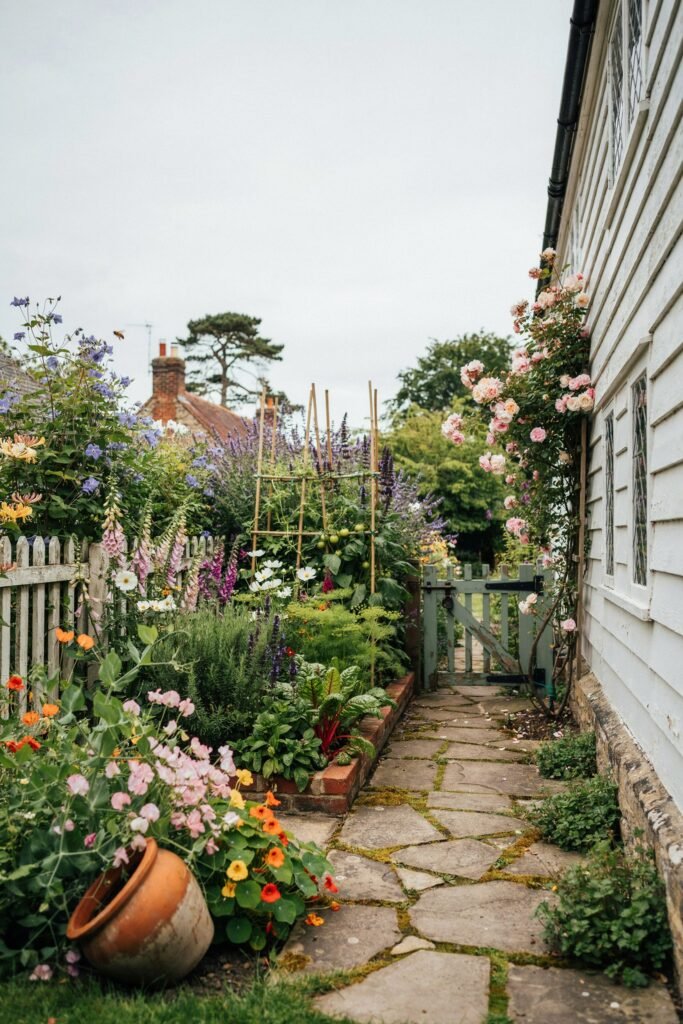
A cottage garden is a relaxed garden style that combines flowers, herbs, vegetables, shrubs, climbing plants, and other useful or ornamental plants in an informal arrangement.
Unlike a highly structured formal garden, a cottage garden usually feels natural and abundant. Plants are often grouped closely together, paths may curve gently through planting beds, and flowers are allowed to spill toward walkways.
The goal is not to make everything perfectly symmetrical.
Instead, cottage gardening is about creating a garden that feels full, welcoming, useful, colorful, and slightly wild.
Traditional cottage gardens often included plants that served practical purposes. Flowers attracted pollinators, herbs were used in cooking, vegetables supplied food, and flowering shrubs added beauty around the home.
Today, you can create the same feeling while adapting the garden to your own lifestyle.
You might want:
- A flower-filled front garden
- A vegetable and herb cottage garden
- A tiny backyard cottage garden
- A cottage garden around a patio
- A cutting garden for bouquets
- A pollinator-friendly garden
- A romantic garden around a garden shed
- A narrow cottage border along a fence
- A low-maintenance cottage-style garden
The layout you choose should depend on how you want to use the space.
What Makes a Cottage Garden Layout Work?
Before choosing a specific layout, it helps to understand the basic principles behind this gardening style.
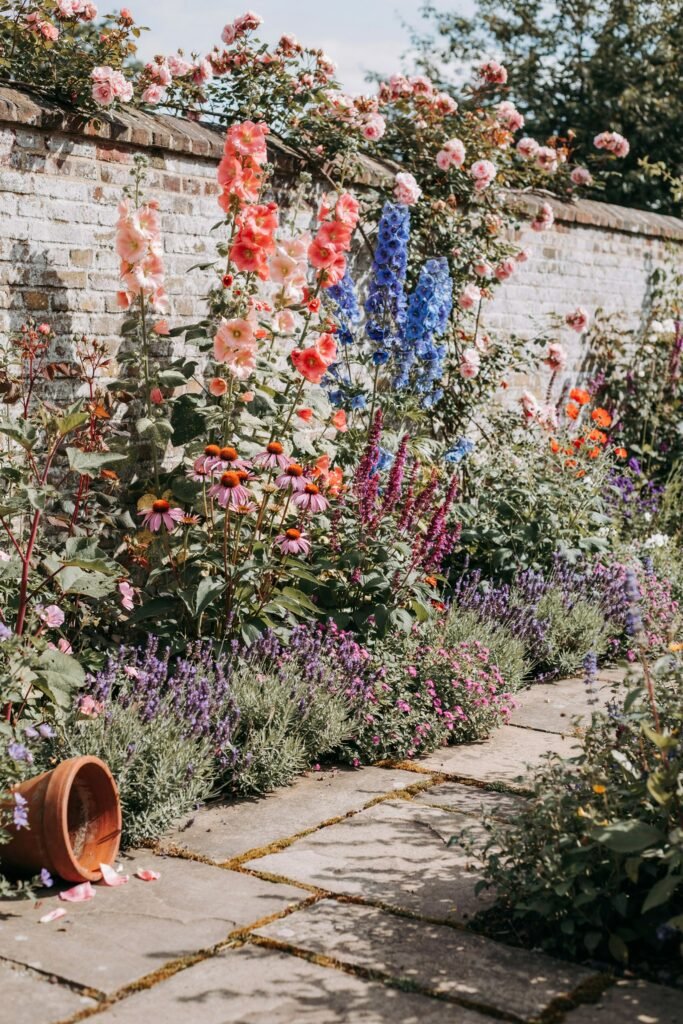
1. Layer Plants at Different Heights
One of my favorite tricks for making a cottage garden feel lush is to use several plant heights.
Think of your planting area as a series of layers.
Back layer
Place taller plants toward the back of borders or against fences.
Examples include:
- Hollyhocks
- Delphiniums
- Sunflowers
- Foxgloves
- Tall ornamental grasses
- Climbing roses
- Trellised beans
Middle layer
Use medium-height plants to fill the center.
Examples include:
- Coneflowers
- Shasta daisies
- Yarrow
- Lavender
- Salvia
- Cosmos
- Coreopsis
Front layer
Choose shorter plants to soften the edges.
Examples include:
- Thyme
- Sweet alyssum
- Creeping plants
- Low-growing herbs
- Marigolds
- Compact salvias
- Small ornamental grasses
Layering prevents the garden from looking flat.
2. Repeat Plants Throughout the Garden
Although cottage gardens look informal, repetition helps them feel intentional.
For example, instead of planting one lavender plant in one corner, you could repeat small groups of lavender along different parts of the garden.
You can repeat:
- Lavender
- Roses
- Salvia
- Daisies
- Marigolds
- Ornamental grasses
- Herbs
- Flower colors
Repeating plants creates visual connections throughout the space.
3. Leave Room for Movement
A beautiful cottage garden still needs practical pathways.
You should be able to reach your plants for:
- Watering
- Weeding
- Pruning
- Harvesting
- Deadheading
- Pest inspection
- Composting
- General maintenance
Avoid creating beautiful planting beds that you cannot comfortably reach.
A narrow path can work wonderfully in a small garden, while larger spaces can accommodate wider winding paths.
4. Mix Edibles With Ornamentals
You do not have to separate your vegetable garden from your flower garden.
Cottage gardening traditionally works beautifully with edible plants.
Try combining:
- Tomatoes with marigolds
- Basil with flowers
- Chives with roses
- Lettuce with alyssum
- Sage with ornamental flowers
- Beans with climbing flowers
- Strawberries along borders
- Herbs around pathways
The result can be both productive and beautiful.
11 Cottage Garden Layout Plans to Try
Now let’s get into the fun part.
These cottage garden layouts can be adapted to different garden sizes and styles. You can copy one exactly, combine several ideas, or use them as inspiration for creating your own plan.
1. Classic Cottage Garden Border
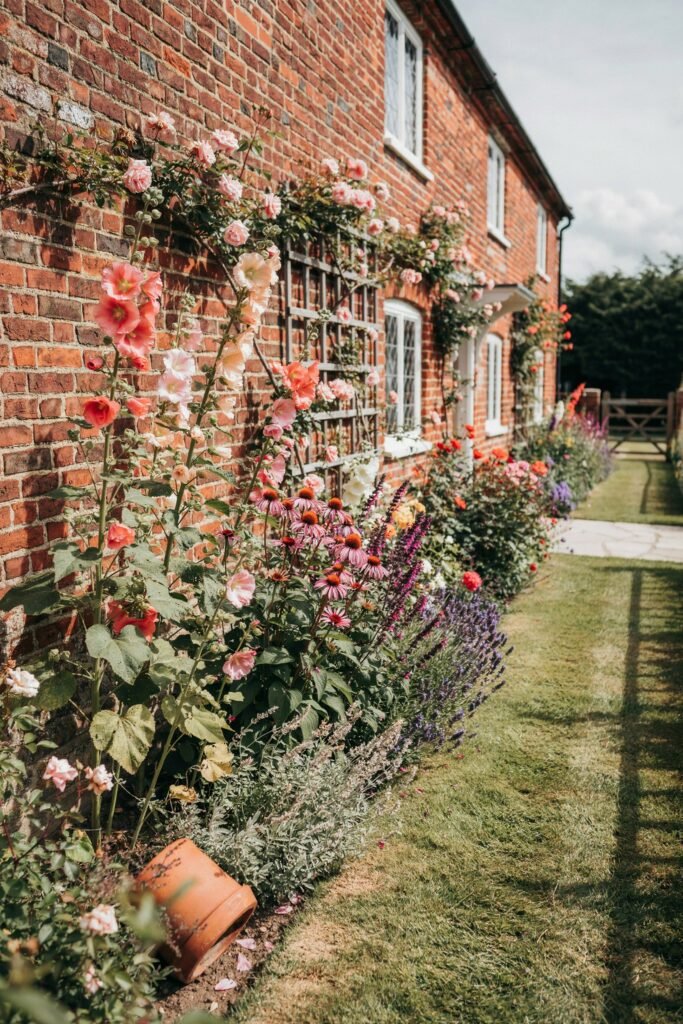
A classic cottage border is one of the easiest ways to bring cottage-garden character into an ordinary yard.
This layout works particularly well along:
- House walls
- Fences
- Driveways
- Walkways
- Garden boundaries
- Porches
Layout
Create a long planting bed with taller plants toward the back, medium plants in the middle, and low-growing plants along the front edge.
For example:
Back: Hollyhocks → climbing roses → tall flowers
Middle: Coneflowers → salvia → daisies
Front: Lavender → thyme → alyssum
Leave a small pathway in front of the border if you need regular access.
What to Plant
You could combine:
- Roses
- Lavender
- Salvia
- Coneflowers
- Daisies
- Yarrow
- Marigolds
- Thyme
- Chives
- Sweet alyssum
Try grouping plants rather than placing every plant individually.
Three or five plants of the same variety can make a stronger visual impact than one plant scattered randomly.
Best For
This layout is ideal if you have a narrow garden area but want a classic cottage appearance.
2. Cottage Garden With a Curved Path
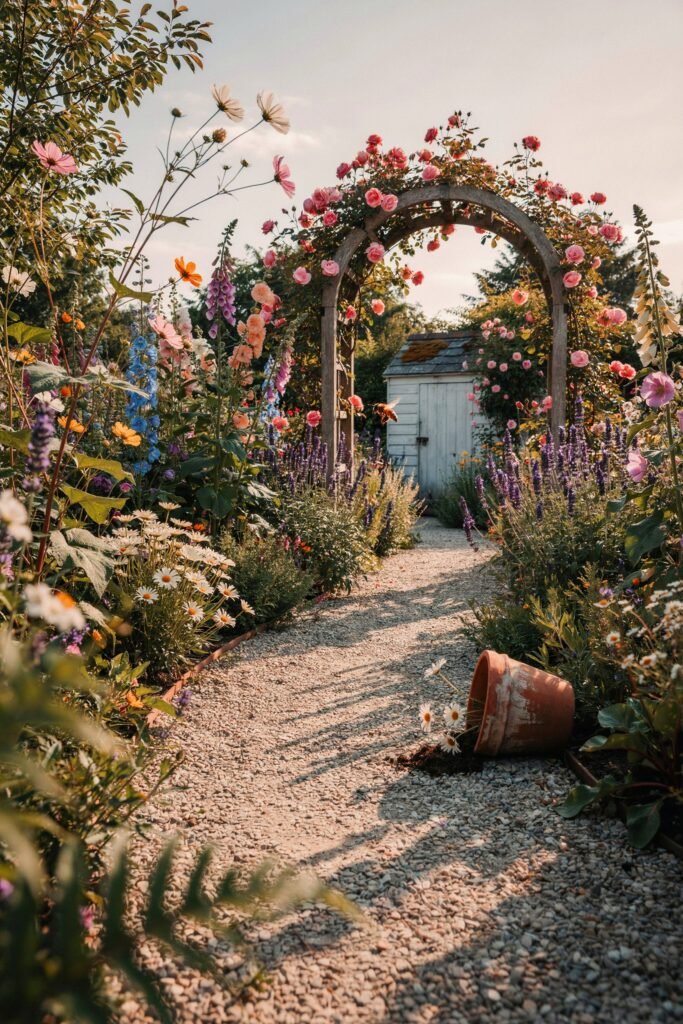
A curved path can make a small garden feel more interesting and can give a larger garden a sense of discovery.
Instead of creating a straight walkway from one end to another, gently curve the path through the planting area.
Layout
Imagine the garden divided into two large planting areas with a winding path moving between them.
Plant flowers close to the pathway so that some foliage and blooms gently soften its edges.
The path should remain wide enough for comfortable walking and maintenance.
Plants to Use
Near the path, consider:
- Lavender
- Thyme
- Chamomile
- Alyssum
- Low-growing salvias
- Marigolds
- Small ornamental grasses
Behind these plants, add taller flowers such as:
- Cosmos
- Coneflowers
- Hollyhocks
- Sunflowers
- Foxgloves
A Simple Design
FENCE
🌻 🌸 🌿 🌸 🌻 🌿
      ╲
       ╲ 🌿 🌸
        ╲
🌸 🌿     ╲ 🌻 🌸
            ╲
🌿 🌸 🌻 🌿  ╲
               DOOR
The exact shape does not matter.
The important idea is that the path creates movement.
3. Small Cottage Garden Layout
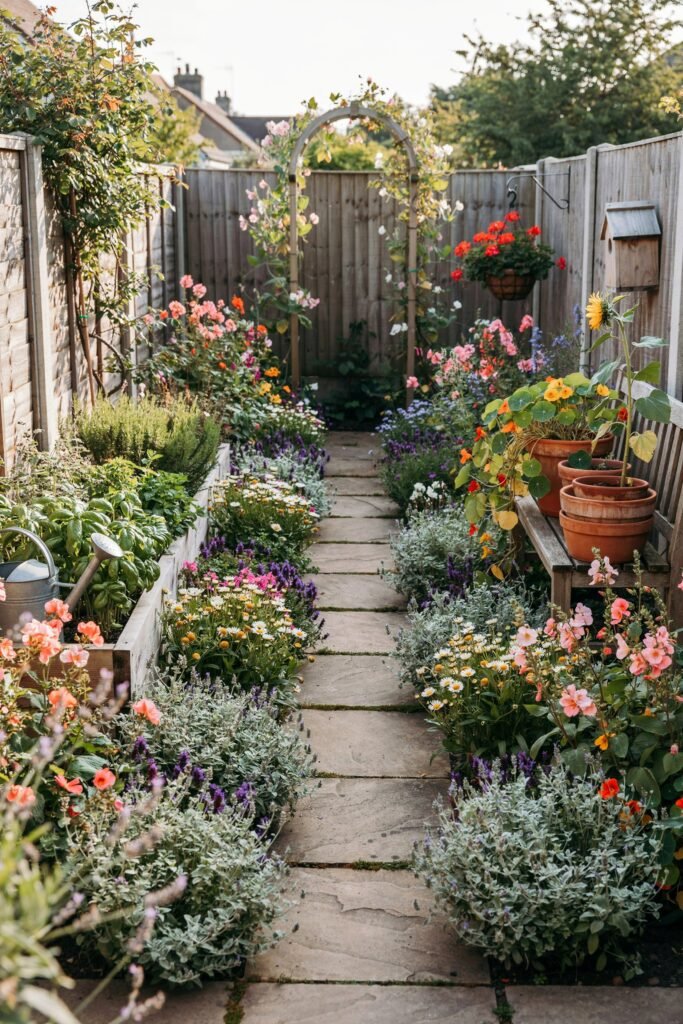
You absolutely do not need a large yard for a cottage garden.
A small space can actually be easier to maintain because you can concentrate your favorite plants into a compact area.
Layout
For a small garden, use one main planting bed around the perimeter and leave a small central area for movement or seating.
You can also use vertical space.
Add:
- Trellises
- Obelisks
- Wall planters
- Hanging baskets
- Window boxes
- Climbing plants
Suggested Planting Arrangement
Back
Use vertical plants:
- Climbing rose
- Clematis
- Beans
- Small trellised vines
Middle
Use:
- Salvia
- Lavender
- Coneflowers
- Cosmos
- Herbs
Front
Use:
- Thyme
- Alyssum
- Strawberries
- Chives
- Compact flowers
Small-Space Tip
Choose plants that provide more than one benefit.
For example, herbs can provide fragrance, flowers, food, and pollinator habitat.
4. Cottage Vegetable and Flower Garden
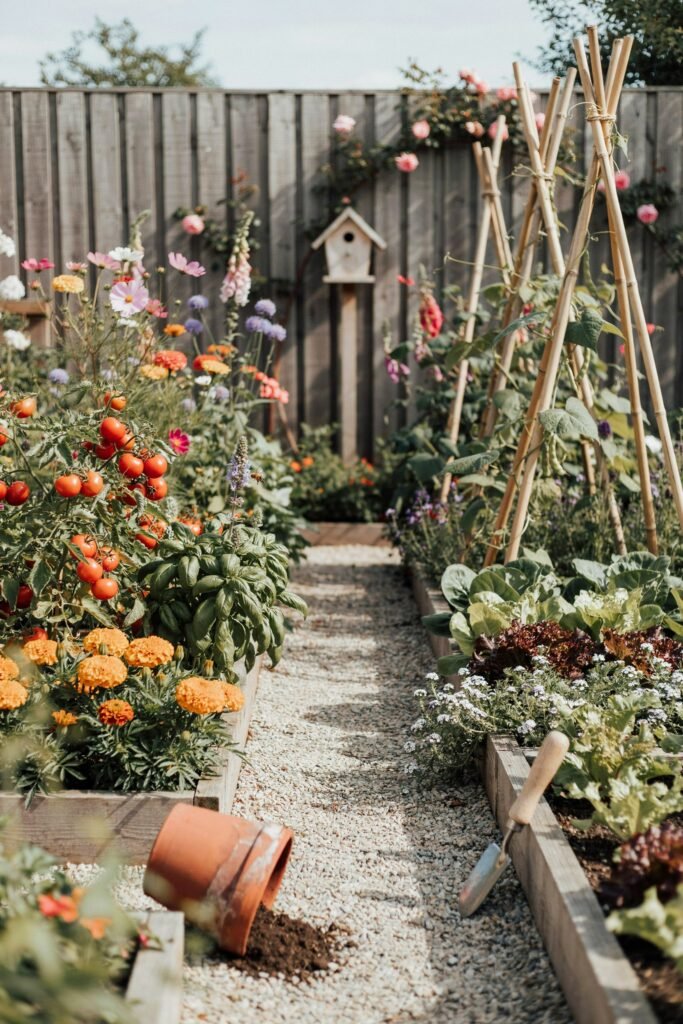
This is one of my favorite layouts because it combines beauty with productivity.
Instead of creating a vegetable garden that looks completely separate from the rest of your landscape, blend edible plants into your flower beds.
Layout
Create several informal beds separated by narrow paths.
Each bed can contain a mixture of:
- Vegetables
- Herbs
- Flowers
- Edible flowers
For example:
Bed 1
Tomatoes + basil + marigolds
Bed 2
Lettuce + chives + alyssum
Bed 3
Beans + nasturtiums + herbs
Bed 4
Peppers + flowers + oregano
This approach creates a colorful kitchen garden that still feels like a cottage garden.
Important Planning Tip
Make sure each edible crop receives the light and growing conditions it needs.
Do not choose plant combinations solely because they look pretty.
Plant compatibility, spacing, water requirements, and sunlight should always come first.
5. Four-Section Cottage Garden Layout
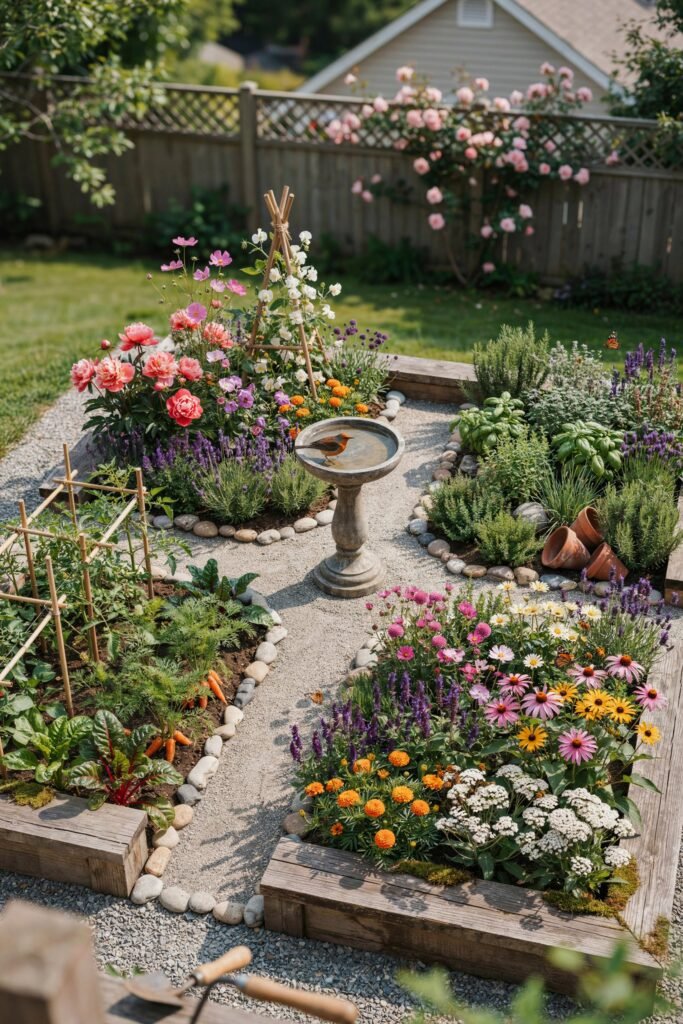
If you prefer a slightly more organized garden while keeping the relaxed cottage look, divide your space into four sections.
This is particularly useful for a square or rectangular yard.
Layout
Create four planting areas around a central point.
You could use:
- A birdbath
- Small tree
- Garden bench
- Fountain
- Large planter
- Decorative obelisk
as the focal point.
Then create four surrounding beds.
Bed One: Flowers
Fill with colorful seasonal flowers.
Bed Two: Herbs
Plant culinary herbs such as:
- Basil
- Thyme
- Sage
- Rosemary
- Chives
- Oregano
Bed Three: Vegetables
Grow compact vegetables appropriate for your climate.
Bed Four: Pollinator Garden
Fill the space with nectar- and pollen-rich flowers suited to your area.
This design gives you structure without making the garden feel overly formal.
6. Cottage Garden Around a Seating Area
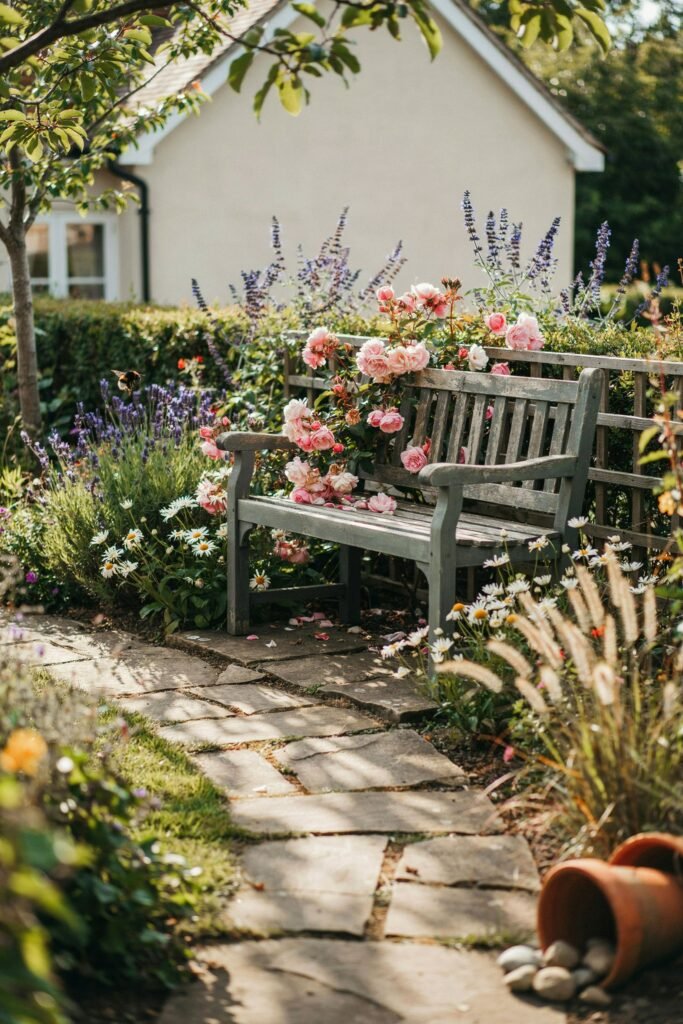
If you want your garden to become an outdoor retreat, build the layout around a small seating area.
This can work beautifully around:
- A bench
- Bistro table
- Small patio
- Pergola
- Porch
- Garden chair
Layout
Place your seating area near the center or toward the back of the garden.
Surround it with plants.
Use taller plants behind the seating area to create a sense of enclosure.
Place fragrant plants nearby where you can enjoy them.
Good choices can include:
- Lavender
- Roses
- Mint in containers
- Lemon balm in containers
- Jasmine where suitable
- Herbs
- Fragrant flowering plants suited to your climate
Why This Layout Works
Instead of simply looking at your garden, you become part of it.
A small chair surrounded by flowers can turn an ordinary corner into a place where you actually want to spend time.
7. Cottage Garden Along a Fence
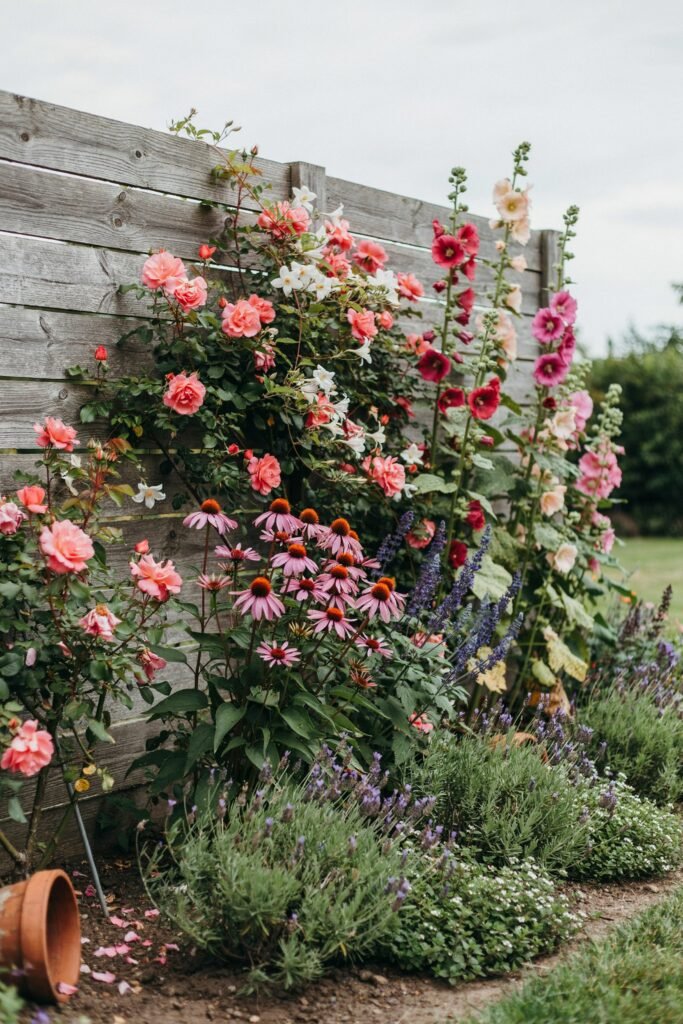
A plain fence can become one of the most useful structures in a cottage garden.
Use it as a backdrop for layered planting.
Layout
Plant taller species near the fence.
Add climbing plants using appropriate supports.
Then gradually decrease plant height toward the front.
For example:
Fence
Climbing rose
↓
Clematis
↓
Hollyhocks
↓
Coneflowers
↓
Lavender
↓
Thyme
This creates a gradual transition from tall to short.
Add Vertical Interest
You can install:
- Wooden trellises
- Arches
- Obelisks
- Simple plant supports
Make sure climbing plants have suitable support and that the structure is strong enough for mature plant growth.
8. Cottage Garden With a Central Focal Point
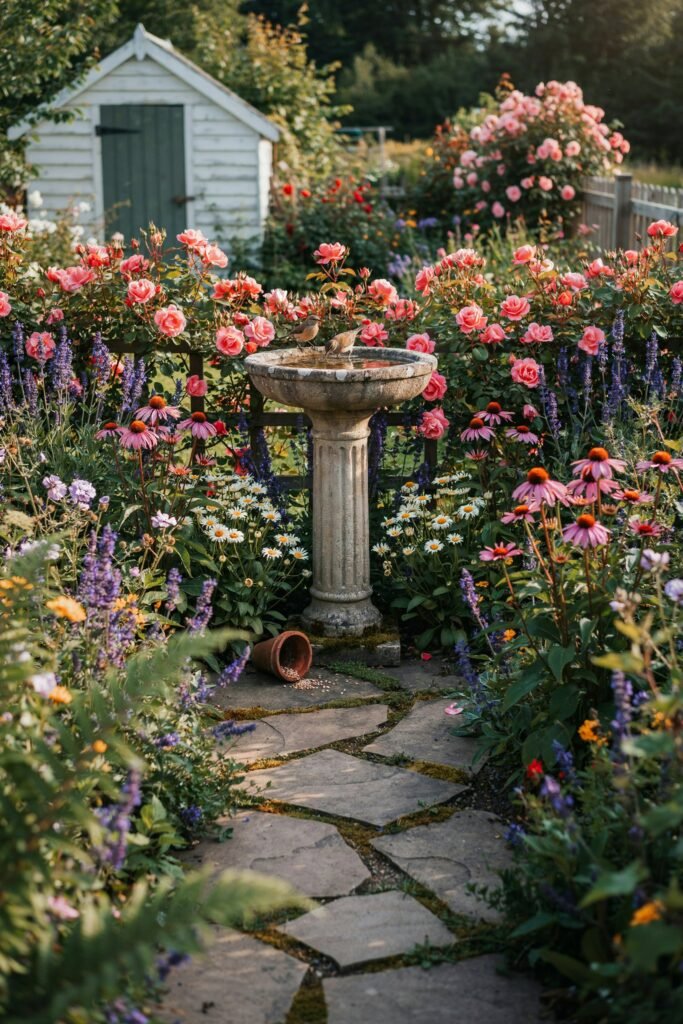
A focal point can help prevent a cottage garden from looking visually chaotic.
Choose one main feature.
It could be:
- A birdbath
- Small ornamental tree
- Garden bench
- Fountain
- Large planter
- Sculpture
- Obelisk
- Decorative arch
Then arrange your plants around it.
Layout Idea
Place the focal point toward the center or at the end of a path.
Use repeated flowers to visually lead the eye toward it.
For example:
Lavender → roses → daisies → central birdbath
The plants do not need to form perfectly symmetrical lines.
They simply need to create a visual connection.
9. Cottage Cutting Garden Layout
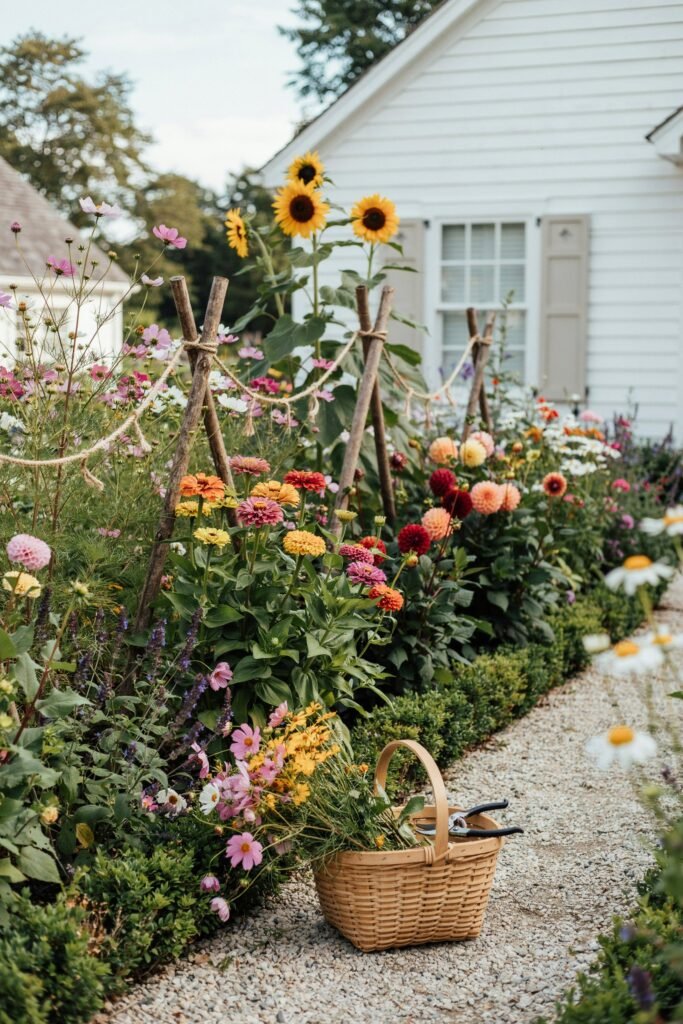
If you love bringing flowers indoors, consider designing your cottage garden around cutting flowers.
Instead of treating flowers only as decoration, grow varieties specifically for bouquets.
Layout
Create several long planting rows or informal blocks.
Group flowers according to height and harvesting needs.
Tall Flowers
- Sunflowers
- Cosmos
- Zinnias
- Tall varieties of other suitable annuals
Medium Flowers
- Coneflowers
- Snapdragons
- Celosia
- Dahlias where suitable
Supporting Plants
- Herbs
- Foliage plants
- Ornamental grasses
Planting in groups makes harvesting easier.
It also allows you to succession-plant some annual flowers for a longer supply of blooms.
10. Cottage Garden With a Garden Shed
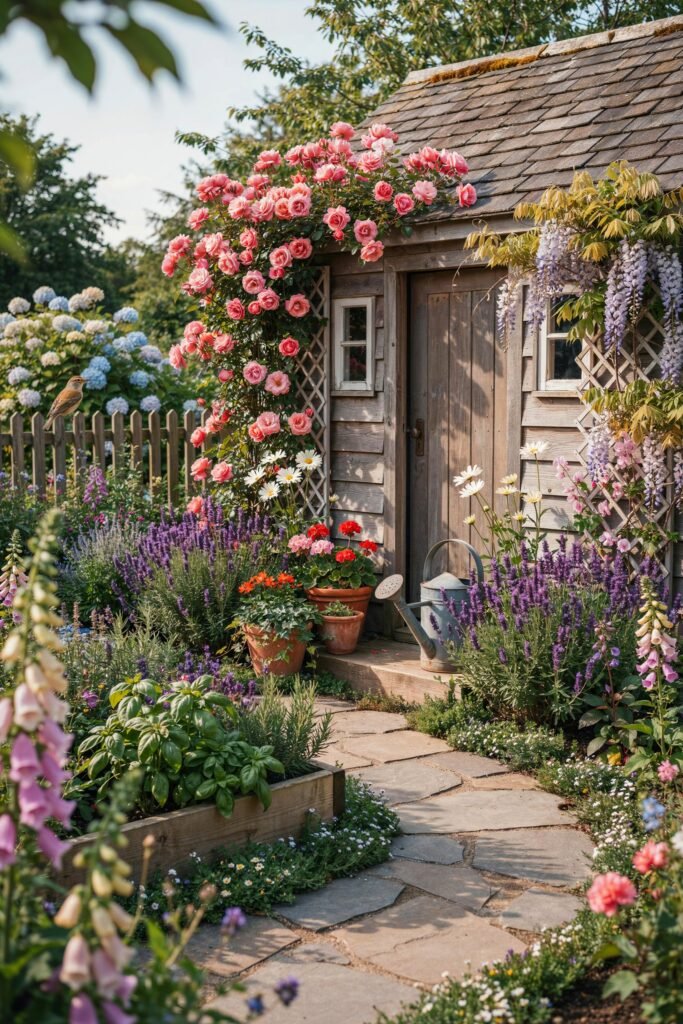
A garden shed can become a beautiful focal point rather than something you try to hide.
Plant around the shed to make it feel integrated into the landscape.
Layout
Place taller plants behind or beside the shed.
Use climbing plants around appropriate supports.
Create a small path leading toward the shed.
Then soften the entrance with low-growing plants.
Around the Shed
Consider:
- Roses
- Clematis
- Lavender
- Herbs
- Daisies
- Salvia
- Climbing beans
- Seasonal flowers
Keep plants away from doors, windows, vents, and structures that need regular access.
Also leave enough clearance for painting, repairs, cleaning, and maintenance.
11. Romantic Cottage Garden Layout
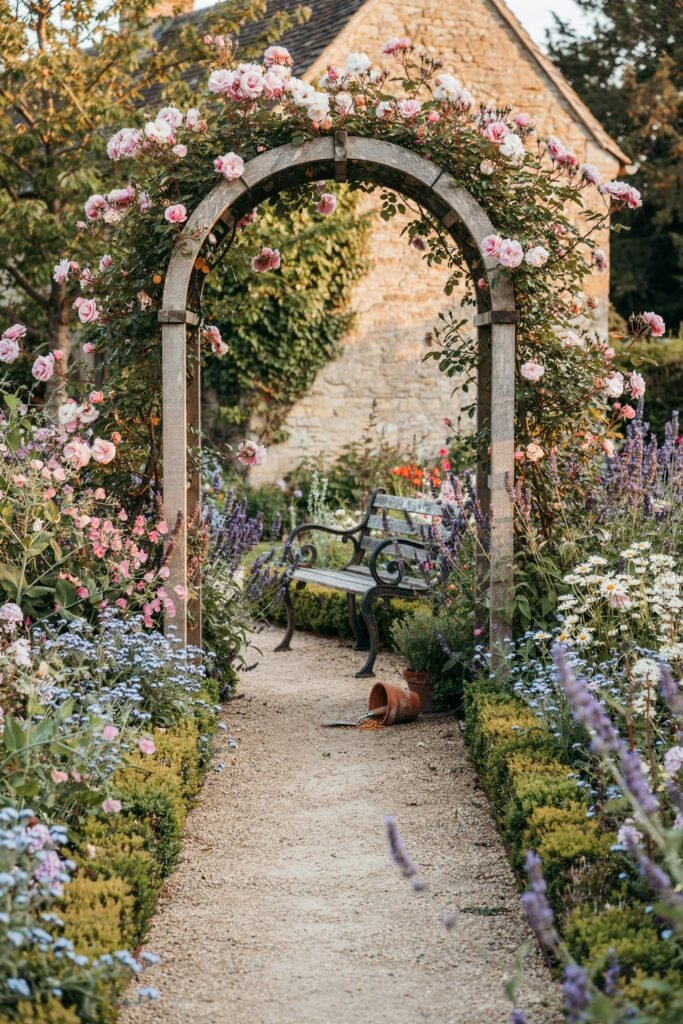
For a softer, more romantic garden, focus on gentle colors, fragrance, climbing plants, and curved pathways.
Color Palette
You could use combinations of:
- Soft pink
- White
- Lavender
- Blue
- Cream
- Pale yellow
You can add occasional stronger colors for contrast.
Layout
Start with a curved pathway.
Place flowering plants on both sides.
Use climbing plants to frame a gate or arch.
Add a bench at the end of the path.
Plant flowers around the seating area so the garden feels enclosed.
This layout can create a beautiful destination within even a relatively modest yard.
How to Plan Your Cottage Garden Before Planting
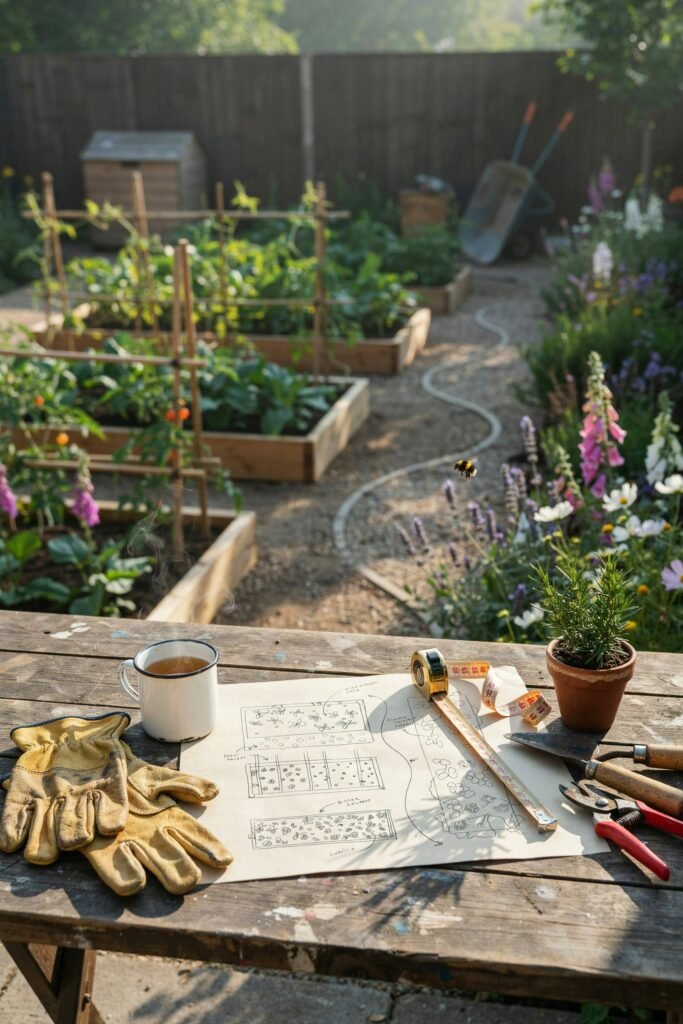
Before buying plants, take some time to plan.
I know it can be tempting to visit a garden center, fall in love with everything, and bring home far more plants than you have room for.
I’ve found that a little planning first saves money, time, and frustration later.
Step 1: Measure Your Garden
Measure:
- Length
- Width
- Existing beds
- Paths
- Fences
- Walls
- Doors
- Windows
- Existing trees
- Utility areas
Draw the measurements on paper.
It does not have to be perfect.
A simple sketch is enough to begin.
Step 2: Observe the Sun
Watch how sunlight moves through your garden.
Ideally, observe the area at different times of day.
Record:
- Morning sun
- Afternoon sun
- Evening sun
- Full shade
- Partial shade
This is important because plants have different light requirements.
Do not simply copy a garden layout from a photograph.
A beautiful plant combination will not perform well if it is placed in the wrong growing conditions.
Step 3: Check Your Soil
Before planting, learn what kind of soil you have.
Look at:
- Drainage
- Texture
- Organic matter
- Soil pH where relevant
A soil test can give you useful information about pH and nutrient levels.
Instead of automatically adding fertilizer, use your soil information to decide what amendments, if any, are actually appropriate.
Step 4: Identify Your Garden’s Main Purpose
Ask yourself:
What do I want this garden to do for me?
Maybe you want:
- Fresh herbs
- Cut flowers
- Pollinator habitat
- Privacy
- A relaxing seating area
- Vegetables
- Fragrant flowers
- A beautiful entrance
- A garden for children
- A combination of everything
Your answer should influence your layout.
Step 5: Choose Your Focal Point
A garden usually feels more cohesive when the eye has somewhere to land.
Your focal point might be:
- A bench
- Tree
- Fountain
- Arch
- Shed
- Large container
- Birdbath
You do not need an expensive feature.
Sometimes a simple wooden bench surrounded by flowers is enough.
Necessary Tools for Creating a Cottage Garden Layout

You do not need every gardening tool available.
For most cottage garden projects, a practical collection of basic tools will be enough.
Planning Tools
- Measuring tape
- Graph paper or garden planning paper
- Pencil
- Ruler
- Garden markers
- Notebook
- Plant labels
- Smartphone or camera for recording sunlight and progress
Soil Preparation Tools
- Garden spade
- Hand trowel
- Garden fork
- Hand cultivator
- Garden rake
- Soil scoop
- Wheelbarrow or garden cart
- Soil testing kit or access to a soil-testing service
Planting Tools
- Hand trowel
- Dibber or planting tool
- Garden gloves
- Bucket
- Watering can
- Garden hose with adjustable nozzle
Maintenance Tools
- Pruning shears
- Long-handled pruners if needed
- Weeding tool
- Garden rake
- Garden kneeler or pad
- Compost fork
- Mulch fork
Layout and Construction Tools
If you are creating paths, edging, trellises, or raised features, you may also need:
- Wooden stakes
- Garden twine
- Rubber mallet
- Level
- Shovel
- Wheelbarrow
- Measuring tape
- Hand saw for suitable garden construction projects
- Screwdriver or drill for assembling garden structures
- Appropriate screws or fasteners
- Safety glasses when using power tools
You do not need to purchase all of these at once.
Start with the basic tools and add specialized equipment only when your project requires it.
How to Mark Out Your Cottage Garden
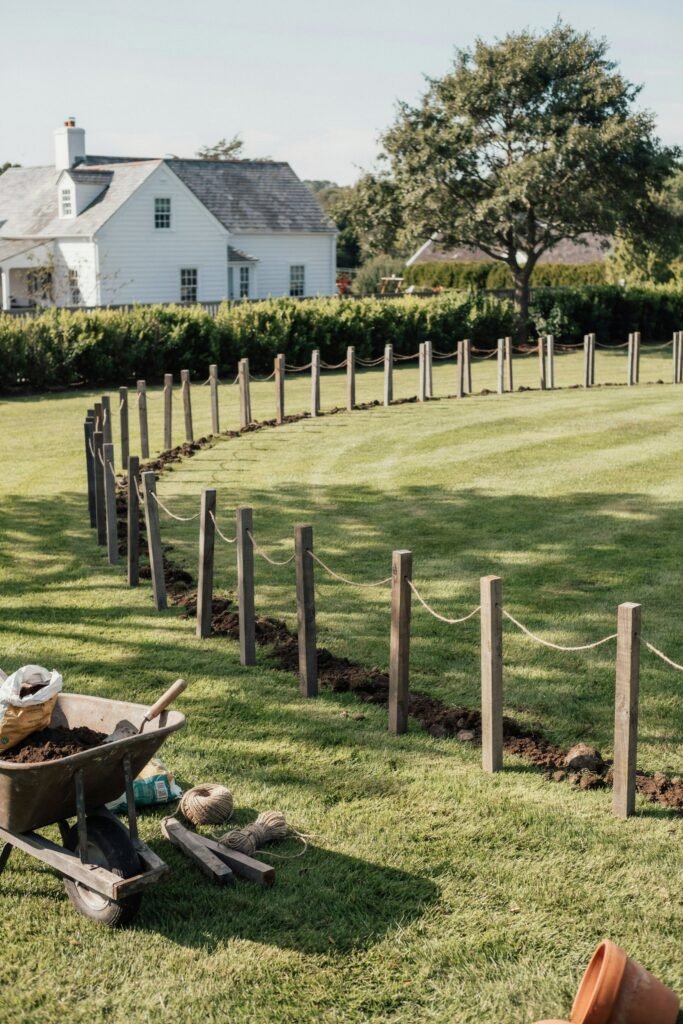
Once you have your design, mark the layout on the ground before digging.
This is one of the steps I recommend most because it lets you change your mind while everything is still easy to move.
Use Garden Stakes and Twine
For straight beds, place stakes along the boundaries and connect them with garden twine.
For curved beds, use a flexible garden hose to temporarily outline the shape.
Stand back and look at it from different angles.
Ask:
- Does the shape look natural?
- Is the path wide enough?
- Can I reach the plants?
- Does the bed interfere with doors or walkways?
- Is there enough room for mature plants?
- Does the layout work with sunlight?
Adjust the outline until you are happy.
How Wide Should Cottage Garden Beds Be?
The ideal width depends on whether you can access the plants from one side or both.
If a bed can only be reached from one side, keeping it relatively narrow makes maintenance easier.
If you can reach it from both sides, you can generally make it wider.
The key rule is simple:
Do not make a planting bed so deep that you cannot comfortably reach the middle.
You want enough space to weed, prune, water, inspect, and harvest without constantly stepping into the bed.
How to Arrange Plants in a Cottage Garden
One mistake beginners often make is planting everything in straight rows.
That can work for a vegetable garden, but cottage gardens usually benefit from more natural groupings.
Use Groups
Instead of:
Flower → flower → flower → flower
Try:
Three flowers → gap → five flowers → foliage → three flowers
The groups can overlap visually.
Repeat Colors
If you use lavender-purple flowers in one section, repeat that color elsewhere.
The repetition makes the garden feel connected.
Mix Textures
Combine:
- Round leaves
- Fine foliage
- Tall flower spikes
- Large flower heads
- Soft grasses
- Trailing plants
Texture is especially important when flowers are not blooming.
Choosing Plants for Your Cottage Garden
The best plants for your garden depend on your climate, soil, sunlight, available space, and local growing conditions.
Instead of choosing plants simply because they look good in a photograph, check their mature size and growing requirements.
Flowers
Popular cottage-style choices can include:
- Roses
- Coneflowers
- Daisies
- Cosmos
- Hollyhocks
- Foxgloves
- Salvia
- Yarrow
- Marigolds
- Zinnias
- Snapdragons
- Lavender
Not every plant will suit every climate, so choose varieties that are appropriate for your growing region.
Herbs
Useful cottage-garden herbs include:
- Thyme
- Sage
- Chives
- Oregano
- Basil
- Rosemary
- Parsley
Some herbs can spread aggressively, so consider growing vigorous spreaders in containers.
Vegetables
Depending on your climate and season, you can incorporate:
- Lettuce
- Beans
- Peppers
- Tomatoes
- Carrots
- Radishes
- Beets
- Kale
- Onions
Again, choose crops suited to your local growing conditions.
Cottage Garden Planting Spacing
A cottage garden may look crowded in photographs, but mature plants still need enough room.
When planting, check the recommended mature width rather than relying only on the size of the plant when you buy it.
Give plants enough room for:
- Air circulation
- Root development
- Mature foliage
- Maintenance
- Harvesting
- Disease prevention
A garden that is slightly sparse at first can become wonderfully full as plants mature.
Adding Pathways to Your Cottage Garden
Pathways are both practical and decorative.
Possible materials include:
- Gravel
- Stepping stones
- Brick
- Pavers
- Bark or suitable organic mulch
- Natural stone
Choose a material that fits your budget, climate, drainage needs, and overall garden style.
For a traditional cottage feel, informal materials often work beautifully.
Avoid creating paths that become slippery or difficult to navigate when wet.
Creating Cottage Garden Edges
Cottage gardens usually look best when their boundaries are soft rather than extremely rigid.
You can create gentle edges using:
- Low-growing flowers
- Herbs
- Stone
- Brick
- Timber edging
- Naturalistic planting
Plants that spill slightly toward a path can create the relaxed cottage appearance.
Just make sure they do not block the walkway.
Adding Vertical Elements
When horizontal space is limited, look upward.
Vertical gardening is especially useful in small cottage gardens.
Use:
- Trellises
- Arches
- Obelisks
- Pergolas
- Fence panels
- Plant supports
Climbing plants can turn an otherwise plain wall or fence into a dramatic garden feature.
Always select climbing plants based on their mature size and the strength of the support structure.
How to Make Your Cottage Garden Look Full Without Overspending
You do not have to purchase dozens of mature plants.
One of the most budget-friendly approaches is to build the garden gradually.
Start With Structure
Begin with:
- Paths
- Existing trees or shrubs
- Trellises
- Main focal point
- Permanent planting areas
Then add plants.
Buy Smaller Plants
Smaller plants often cost less and can establish well when planted at the appropriate time.
Grow From Seed
Many annual cottage-garden flowers are easy to grow from seed.
Examples can include:
- Cosmos
- Zinnias
- Marigolds
- Sunflowers
- Alyssum
Choose varieties appropriate for your climate and growing season.
Propagate Suitable Plants
Some plants can be divided or propagated, depending on the species.
This can gradually help you expand your garden without purchasing every plant individually.
Common Cottage Garden Layout Mistakes to Avoid
Even a beautiful design can become difficult to maintain if the layout is not practical.
Mistake 1: Planting Too Many Varieties
A huge collection of unrelated plants can make the garden feel messy rather than charming.
Instead, choose a manageable plant palette and repeat your favorites.
Mistake 2: Ignoring Mature Size
A tiny nursery plant may eventually become much larger.
Always check mature height and width before planting.
Mistake 3: Forgetting Access
Make sure you can reach every important part of the garden.
You should not have to step on delicate plants to reach the back of a bed.
Mistake 4: Choosing Plants Only for Appearance
A plant that looks gorgeous may not tolerate your soil, climate, sunlight, or rainfall.
Growing conditions come first.
Mistake 5: Making Every Section Different
Cottage gardens can be diverse, but repetition creates harmony.
Repeat plants, colors, textures, and shapes throughout the garden.
Mistake 6: Forgetting Winter and Off-Season Interest
Think beyond peak summer.
Include plants with interesting:
- Foliage
- Seed heads
- Bark
- Evergreen structure
- Winter form
This keeps the garden attractive for more of the year.
A Simple Cottage Garden Layout You Can Copy
If you want a straightforward starting point, try this basic design.
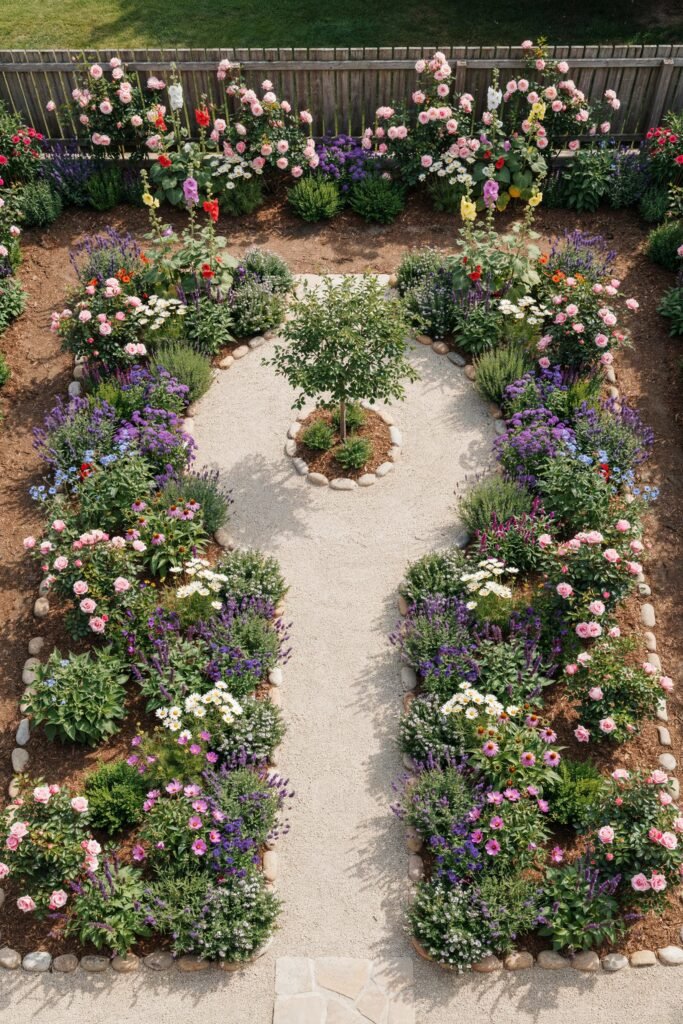
The back border contains taller plants.
The middle contains layered flowering plants.
The front contains shorter plants.
A central tree, bench, planter, or other feature provides a focal point.
A curved pathway creates movement.
You can scale this concept up or down depending on your available space.
Cottage Garden Maintenance
A cottage garden may look carefree, but it still needs regular attention.
The good news is that maintenance can become much easier when the layout is designed properly.
Weekly Tasks
Depending on your climate and season:
- Check soil moisture
- Remove weeds while they are small
- Inspect plants for pests
- Harvest vegetables and herbs
- Deadhead flowers where appropriate
- Check supports
- Look for damaged foliage
Monthly Tasks
You may need to:
- Prune selected plants
- Refresh mulch
- Tie climbing plants to supports
- Divide suitable perennials when appropriate
- Remove declining annuals
- Adjust watering
- Add compost where needed
Always tailor maintenance to the individual plants in your garden.
Watering Your Cottage Garden
Watering requirements vary greatly between plants and climates.
Newly planted plants generally need more attention while they establish.
Established plants may require less frequent watering depending on rainfall, soil, temperature, and species.
The goal is not simply to water everything every day.
Instead, check the soil and understand the requirements of each plant.
Water at the root zone rather than continually wetting foliage when practical.
Mulching can also help reduce evaporation and moderate soil temperatures.
Using Mulch in a Cottage Garden
A suitable organic mulch can make your garden easier to maintain.
Mulch can help:
- Reduce weed growth
- Retain soil moisture
- Moderate soil temperatures
- Add organic matter as it decomposes
Keep mulch away from direct contact with plant stems and trunks.
Avoid creating thick, wet layers around the base of plants.
How to Keep a Cottage Garden Looking Intentional
The secret to a beautiful cottage garden is not controlling every plant.
It is creating enough structure that the relaxed planting still feels deliberate.
Use:
Repetition
Repeat favorite plants.
Structure
Include paths, trees, shrubs, arches, fences, or focal points.
Layers
Combine tall, medium, and low plants.
Rhythm
Repeat colors and shapes throughout the garden.
Negative Space
Leave some breathing room.
Practicality
Make sure you can maintain everything.
When these elements work together, your garden can look abundant without becoming overwhelming.
Final Thoughts
Creating a cottage garden is less about following a strict formula and more about designing a space that feels like you. I love the idea that a garden can be colorful, productive, imperfect, and welcoming all at once. Start with your sunlight, soil, available space, and the way you actually want to use the garden. Then build your layout around those realities. Whether you choose a winding flower border, a productive vegetable-and-herb garden, a romantic seating nook, or a tiny cottage garden beside your home, give yourself permission to let the garden evolve. Plant thoughtfully, repeat your favorite plants, leave room for growth, and enjoy the process. The most charming cottage gardens are rarely created overnight—they become beautiful little stories season by season.
