
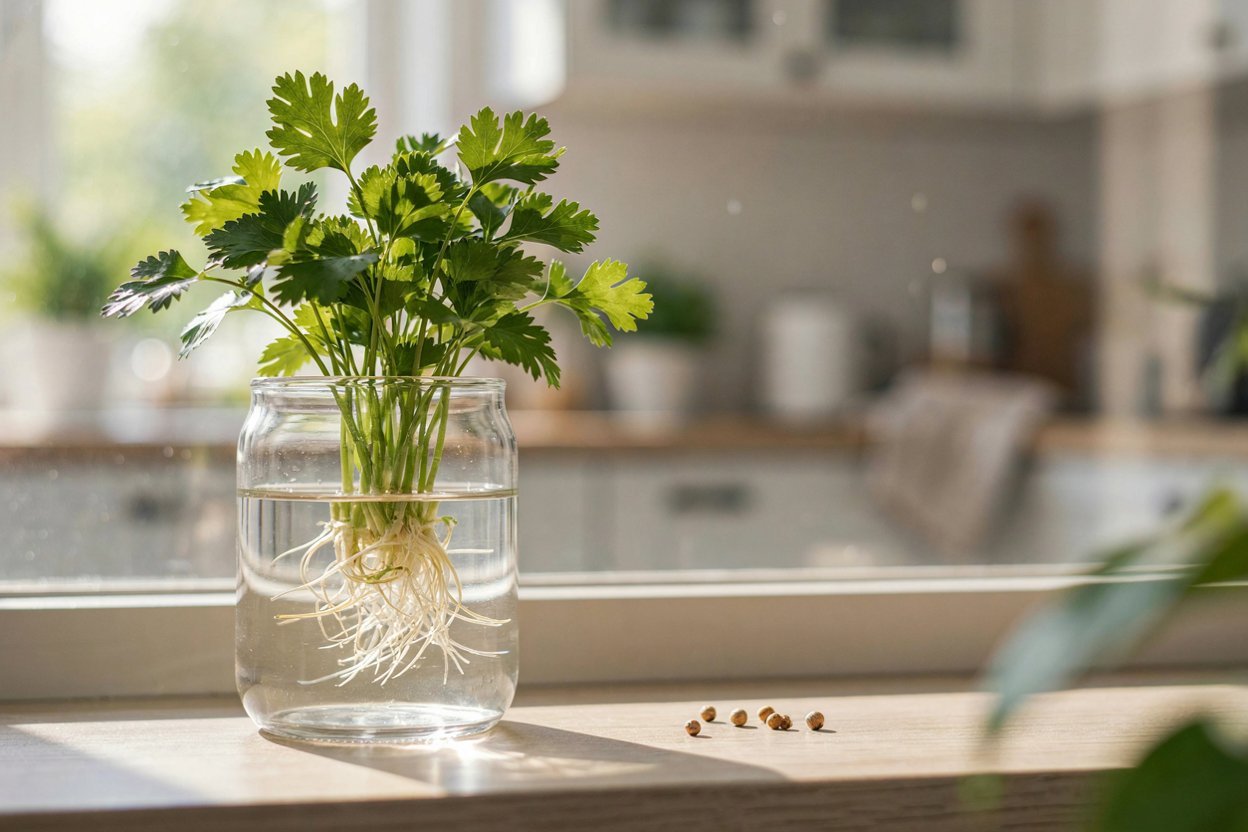

I love having fresh cilantro within easy reach, especially when I’m making salsa, soups, rice dishes, or a quick homemade sauce.
The problem is that cilantro can wilt surprisingly fast after bringing it home.
Growing it in water gives me another option: a simple, space-saving way to keep fresh green growth nearby without dealing with a traditional pot of soil.
In this guide, I’ll show you how to start cilantro from coriander seeds using a simple water-based setup, how to care for the young plants, when to harvest, and what to do when problems appear.
I’ll also explain the limitations of growing cilantro in plain water so you know exactly what to expect.
Can You Really Grow Cilantro in Water?
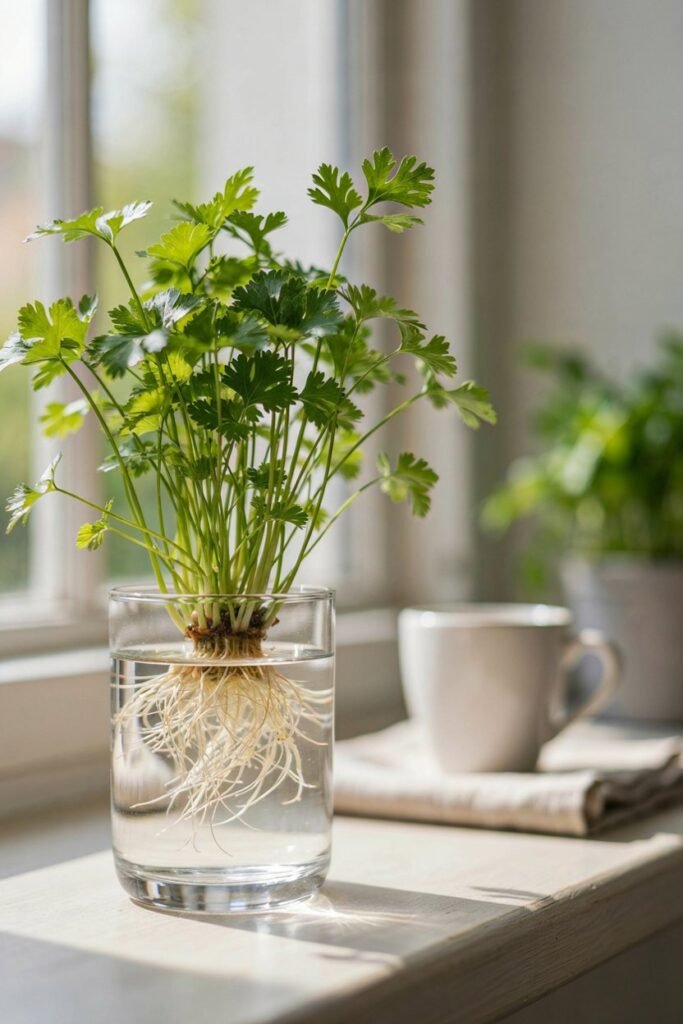
Yes, but there is an important difference between starting cilantro in water and growing a mature plant hydroponically.
Cilantro (Coriandrum sativum) can be grown using water-based methods, and simple setups can encourage seeds to germinate and develop roots without conventional garden soil.
A popular beginner method uses a perforated container or colander positioned above a small reservoir of water.
However, plain water doesn’t contain everything a plant needs indefinitely. As cilantro grows, it needs access to nutrients. A true hydroponic system therefore uses water plus a suitable nutrient solution.
So, think of this project in two ways:
- Simple water-growing experiment: Great for beginners and short-term growing.
- True hydroponic cilantro: Better for producing larger, healthier plants over a longer period.
- Water propagation: Useful for keeping or rooting certain cuttings, but not necessarily the best way to produce a mature cilantro crop.
If your goal is simply to experiment with growing cilantro without soil, the basic method below is an easy place to begin.
What You’ll Need
One of the best things about this project is that you don’t need a complicated indoor garden.
Basic supplies
- Coriander/cilantro seeds
- A clean colander or container with small holes
- A bowl or container that can hold water
- Clean water
- Paper towel or clean cloth
- Small scissors for harvesting
- Optional: a hydroponic nutrient solution if you want to grow the plants beyond the earliest stage
The original simple water method uses a colander positioned over a container of water, with the seeds kept moist during germination.
Choose the right seeds
Use seeds sold as coriander seeds or cilantro seeds for planting.
Remember that cilantro and coriander come from the same plant. The fresh leafy portion is commonly called cilantro, while the dried seeds are called coriander.
If possible, use fresh seeds intended for growing rather than relying on old kitchen spices, because germination can vary considerably.
Step 1: Prepare Your Cilantro Seeds
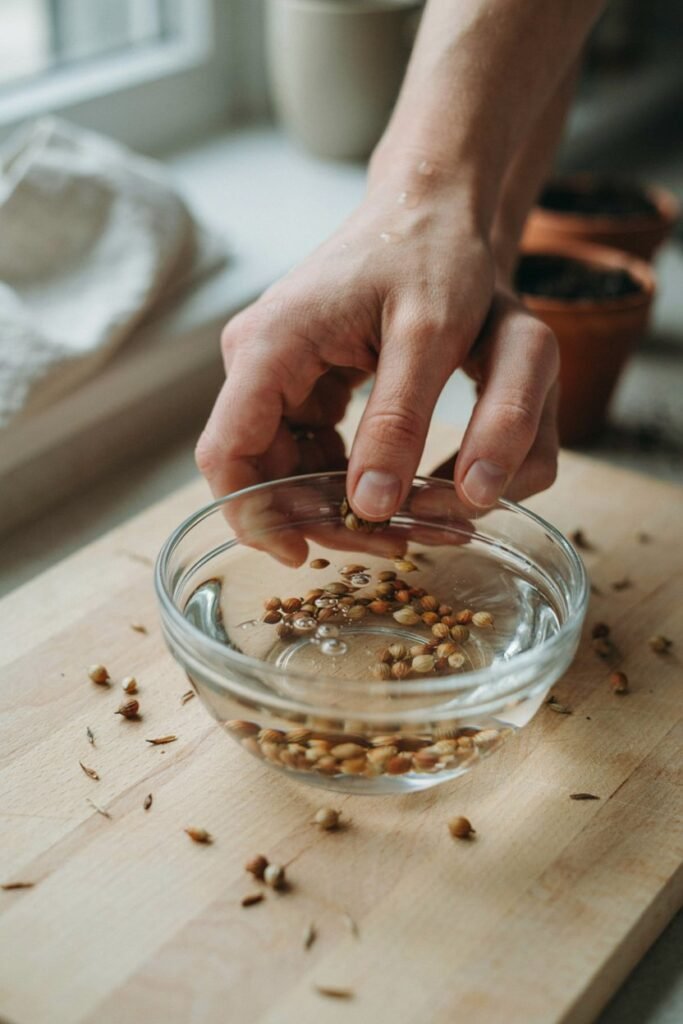
Start by measuring out the amount of coriander seed you want to grow.
You don’t need a huge quantity.
For a small indoor experiment, a handful of seeds is enough.
Place the seeds in clean water and allow them to soak for several hours.
The purpose is to thoroughly hydrate the seeds before you begin the growing process.
Should you crack the seeds?
Coriander seeds are actually dry fruits containing two seed portions. Some gardeners gently crush or split them before planting.
The simple method described by DIY Joy involves soaking the seeds and gently cracking them before placing them in the growing container.
If you try this, be very gentle.
You don’t want to crush the seed into pieces. The goal is simply to loosen the outer structure.
If you’d rather not do this, you can also experiment with planting whole seeds. Germination may simply take some patience.
Step 2: Set Up Your Water Container
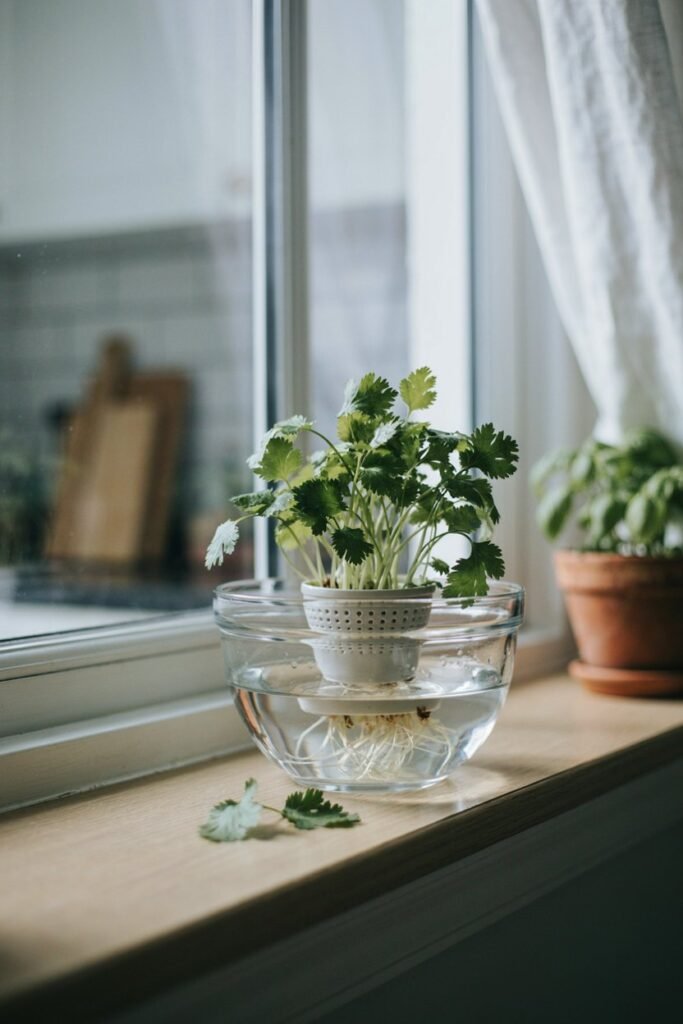
Take your bowl or reservoir and fill it with clean water.
Then place your colander or perforated growing container above it.
The important thing is that the bottom of the growing container should have access to moisture without having the entire growing medium or all of the seeds submerged.
You want moisture.
You don’t want a stagnant underwater environment covering everything.
Why does this matter?
Seeds need moisture, but they also need oxygen.
Completely submerging seeds can create poor conditions for germination and may encourage rotting.
A setup that allows moisture to reach the seeds while maintaining airflow is much more useful.
Step 3: Place the Seeds in the Container
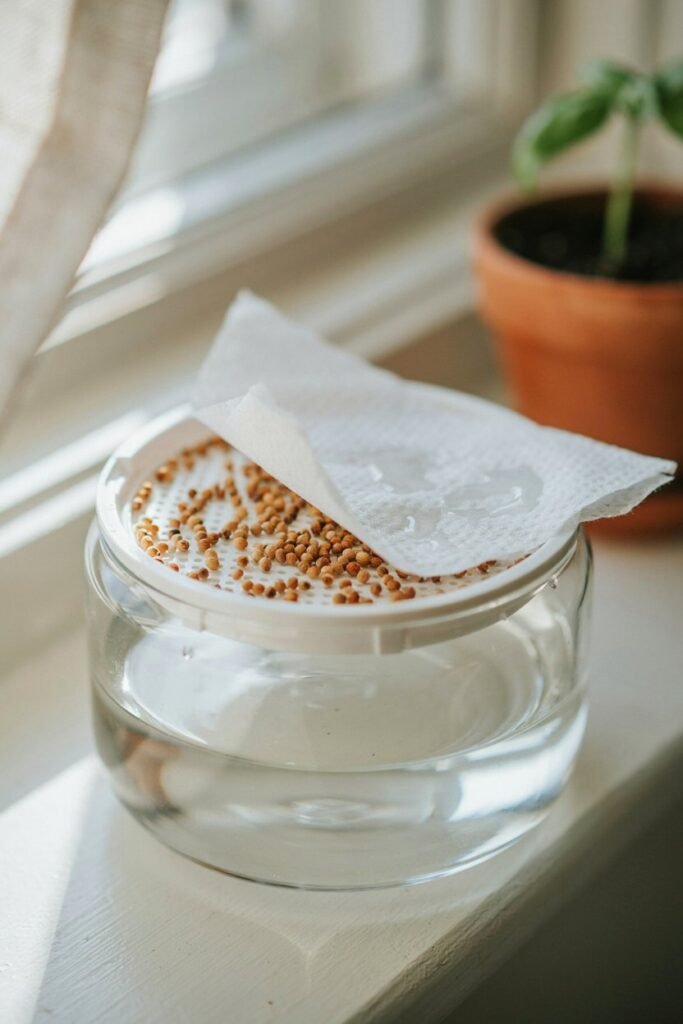
Spread your prepared coriander seeds across the bottom of the colander.
Try not to create a huge pile of seeds.
A relatively even layer gives emerging seedlings room to develop.
You can then cover the seeds with a clean, damp paper towel.
The towel helps maintain consistent moisture during the earliest stage.
Check it regularly.
If it starts drying out, moisten it again with clean water.
You don’t want it dripping wet.
Step 4: Give the Seeds Time to Germinate
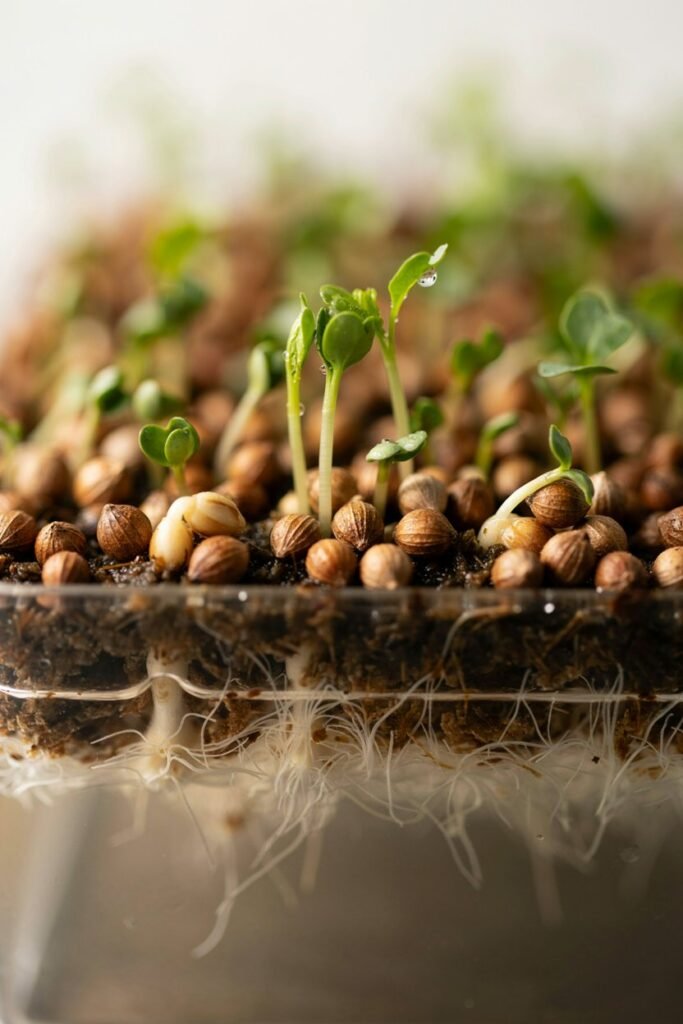
This is the stage where patience becomes important.
Cilantro isn’t necessarily going to appear overnight.
Garden references commonly report germination in roughly two to three weeks under suitable conditions, although actual timing varies with seed quality and growing conditions.
The simple water-growing method described by DIY Joy reports young cilantro becoming lush in around 22 days, although your results can be different.
During this period:
- Keep the seeds consistently moist.
- Don’t let them dry completely.
- Avoid excessive standing water.
- Give them adequate light once shoots begin appearing.
- Check for unpleasant odors or signs of decay.
Eventually, tiny roots and green shoots should begin developing.
Step 5: Remove the Paper Towel
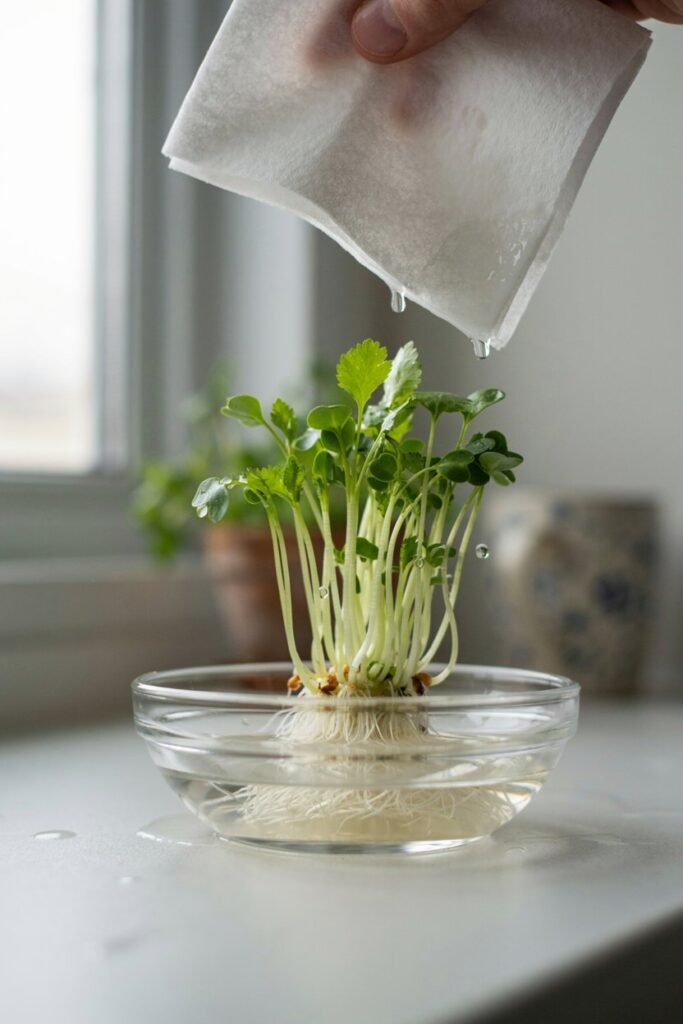
Once you see the seedlings emerging, carefully remove the paper towel.
Do this gently.
The young roots can become attached to the towel, so pulling it away quickly could damage them.
At this point, the seedlings need:
- Light
- Moisture
- Air circulation
- Room to grow
- Eventually, nutrients if you intend to continue growing them hydroponically
This is where your little experiment starts looking like a real indoor herb garden.
Step 6: Give Your Cilantro Plenty of Light
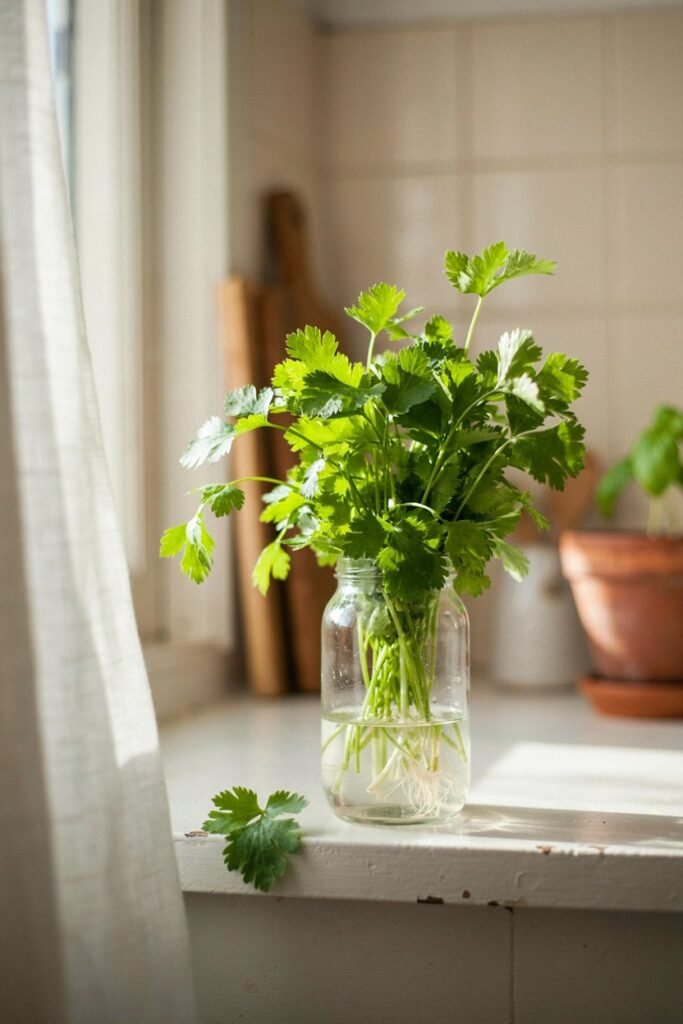
Light is one of the biggest factors affecting indoor cilantro.
Place the plants somewhere bright.
A sunny window can work, although very strong heat through a window may not be ideal.
Cilantro generally performs best in cooler conditions and can bolt quickly when exposed to high temperatures. Oregon State University notes that cilantro can bolt quickly when temperatures rise above about 80°F (27°C).
That means your brightest location isn’t automatically your best location if it becomes extremely hot.
Look for:
- Bright natural light
- Several hours of good light each day
- A relatively cool location
- Good air circulation
- Protection from intense afternoon heat
If your home doesn’t receive enough natural light, an appropriate indoor grow light can make the project much easier.
Why Cilantro Sometimes Bolts So Quickly
If you’ve grown cilantro before, you’ve probably experienced this frustrating moment.
Your plant looks beautiful.
Then suddenly it starts producing a tall flowering stem.
That’s called bolting.
Cilantro is naturally a short-lived annual herb, and temperature and day length influence when it begins flowering. Hot weather can speed up the process considerably.
Once cilantro begins flowering, it gradually shifts its energy toward producing seeds instead of maintaining lots of tender leaves.
How to slow bolting
You can help extend the leafy harvest by:
- Keeping the plant in a cooler location
- Avoiding excessive heat
- Providing appropriate light
- Harvesting leaves regularly
- Growing new batches rather than relying on one plant indefinitely
- Choosing slow-bolting varieties when available
No variety is completely immune to bolting under unfavorable conditions.
Does Cilantro Need Nutrients If It’s Growing in Water?
Yes, if you want to grow it for an extended period.
This is one of the most important things to understand about water-based gardening.
Water provides hydration, but it isn’t a complete food source.
Plants require mineral nutrients to develop healthy roots, stems and leaves.
A simple seed-germination setup may support the plant for a while because the seed itself contains stored nutrients. But as the seedling grows, those reserves become less important and the plant increasingly depends on its surroundings.
For long-term hydroponic growing, use a properly formulated hydroponic nutrient solution according to its label directions.
Don’t assume that adding random household ingredients to water will create a balanced fertilizer.
A controlled nutrient solution is much more predictable.
How Often Should You Change the Water?
Don’t simply leave the same stagnant water sitting around indefinitely.
Fresh water helps keep the growing environment cleaner.
For a very simple setup, check the reservoir regularly and replace water when it becomes cloudy, develops an unpleasant smell, or has visible debris.
If you’re using a true hydroponic nutrient solution, follow the instructions supplied with that particular system or nutrient product rather than using a generic schedule.
Also clean the container periodically.
A clean growing environment reduces the chance of problems developing around the roots.
What Should Healthy Cilantro Roots Look Like?
Healthy roots generally look:
- Light-colored
- Creamy white
- Firm
- Fresh
- Free from a rotten smell
Don’t panic if the roots aren’t perfectly bright white.
The more important warning signs are:
- Slimy roots
- Dark, mushy tissue
- Strong unpleasant odor
- Rapid root deterioration
- Plant leaves wilting despite having plenty of water
If the roots become slimy or foul-smelling, inspect the entire setup and clean the container.
Good airflow and clean water are especially important in a small water-growing system.
How to Keep Cilantro Growing Bushy
Cilantro naturally has a relatively upright growth habit, so don’t expect it to behave exactly like basil.
Still, regular harvesting can help you make better use of the plant.
Once the plant is established, harvest some of the outer stems while leaving the younger central growth intact.
Don’t remove everything at once.
A useful rule is to harvest gradually rather than stripping the plant bare.
This gives the remaining plant tissue a chance to continue growing.
When Should You Harvest Cilantro?
You can begin harvesting once the plants have developed enough usable foliage.
Extension resources commonly recommend harvesting when plants are around 4–6 inches tall, depending on the growing conditions and intended use.
For the best flavor and continued growth:
- Choose the larger outer stems.
- Cut them cleanly.
- Leave younger inner growth.
- Avoid removing the entire plant unless you’re ready to start over.
- Harvest regularly.
Fresh cilantro leaves are generally most useful when young and tender.
How to Harvest Without Killing the Plant
One mistake I see beginners make with herbs is taking too much at once.
You don’t need to harvest half the plant every time you cook.
Instead, take only what you need.
For example, if a recipe calls for a small handful, harvest a few stems and leave the rest growing.
You can use both leaves and tender stems in cooking.
The goal is to turn your container into a small living herb supply rather than harvesting everything in one day.
What If Your Cilantro Starts Flowering?
Don’t throw it away.
Flowering is a normal part of cilantro’s life cycle.
Once cilantro bolts, you have two options.
Option 1: Harvest the remaining leaves
If the leaves still taste good to you, use them.
Option 2: Let it produce coriander seeds
After flowering, the plant develops seeds.
Allow the seed heads to mature and turn brown before collecting them.
The mature seeds can be dried and used as coriander spice or saved for another planting.
This gives you another reason not to immediately discard a flowering cilantro plant.
Can You Regrow Cilantro From Grocery Store Stems?
This is where expectations need to be realistic.
You may be able to keep fresh cilantro stems in water temporarily, and some cuttings can develop roots.
But rooting a grocery-store bunch isn’t the same thing as reliably producing a mature, long-lived cilantro plant.
Cilantro has a taproot and is not particularly easy to transplant. Extension guidance generally favors direct sowing because disturbing its root system can be problematic.
So if your goal is reliable cilantro production, growing from seed is usually the better approach.
Common Problems When Growing Cilantro in Water
1. The Seeds Don’t Germinate
Possible causes include:
- Old seeds
- Poor seed quality
- Excessively wet conditions
- Seeds drying out
- Unsuitable temperatures
Give the seeds time before deciding the experiment has failed.
Cilantro can take around two to three weeks to germinate under suitable conditions.
2. The Seedlings Are Tall and Weak
This usually points toward insufficient light.
Move the container to a brighter location.
If natural light isn’t adequate, supplemental grow lighting may help.
Avoid placing the seedlings somewhere extremely hot just because it happens to be sunny.
3. The Leaves Turn Yellow
Yellowing can have several causes.
Consider:
- Insufficient nutrients
- Poor light
- Root problems
- Stress
- Excessive moisture
- Aging foliage
If you’re attempting long-term hydroponic growth using plain water, lack of nutrients becomes an especially important possibility.
4. The Roots Smell Bad
A foul smell isn’t something to ignore.
Check for:
- Stagnant water
- Dead roots
- Poor airflow
- Excessive submersion
- Dirty containers
Clean the setup and inspect the roots.
If roots are severely damaged, starting a fresh batch may be easier than trying to rescue the entire plant.
5. The Plant Bolts Too Quickly
Heat is often the biggest issue.
Cilantro naturally prefers cooler growing conditions, and warm weather encourages flowering.
Try moving the plant away from hot afternoon sunlight.
You can also start another batch so that you always have younger plants coming along.
The Best Way to Keep a Continuous Supply of Cilantro
Instead of expecting one cilantro plant to provide leaves forever, think of cilantro as a succession crop.
Plant or start small batches at regular intervals.
Extension recommendations commonly suggest new cilantro sowings every 2–4 weeks to maintain a more continuous supply of young leaves.
For a home water-growing setup, you can adapt the idea:
Batch 1
Start your first group.
Batch 2
Start another group a couple of weeks later.
Batch 3
Start another group after that.
As the first batch becomes older or begins bolting, the younger batch is ready to take over.
This approach is much more reliable than trying to keep a single cilantro plant alive indefinitely.
Cilantro Growing Timeline
Here’s a simple idea of what you might expect.
| Stage | What to Expect |
|---|---|
| Day 1 | Soak and prepare seeds |
| Days 1–3 | Keep seeds consistently moist |
| First 1–2 weeks | Germination may begin |
| Weeks 2–3 | Young seedlings develop |
| Weeks 3–4 | More leafy growth develops |
| Around 4–6 weeks | Larger harvests may become possible depending on conditions |
| Later | Plants may eventually bolt |
| After flowering | Seeds develop into coriander |
Don’t treat these dates as guarantees. Temperature, light, seed quality and growing conditions can change the timeline considerably.
Cilantro’s leaf harvest commonly falls somewhere around 45–70 days from sowing in extension crop guides, while simple hydroponic demonstrations may report earlier small harvests.
Tips for Growing Cilantro Indoors
If you’re keeping your cilantro inside, a few simple habits can make the experience much easier.
Keep it near a bright window
Cilantro needs good light to produce strong foliage.
Avoid excessive heat
A very hot windowsill can encourage bolting.
Don’t overcrowd seedlings
Crowding increases competition for light and space.
Keep your growing equipment clean
Wash the container before starting a new batch.
Harvest regularly
Use the leaves while they’re young and flavorful.
Start replacement plants
Don’t wait until the first plant has completely bolted before starting the next one.
Can You Grow Cilantro in Water Year-Round?
Potentially, yes, but not necessarily in plain water alone.
If you’re serious about year-round water-based cilantro, a more complete hydroponic system is the better choice.
You’ll need to manage:
- Water
- Nutrients
- Light
- Temperature
- Root oxygenation
- Cleanliness
- Harvesting
- Succession planting
The advantage is that you don’t need traditional garden soil.
The disadvantage is that hydroponic growing requires more attention to the growing environment.
For beginners, I’d start with a small setup before investing in a complicated system.
Simple Water-Growing Setup vs. Full Hydroponic Setup
| Feature | Simple Water Method | Hydroponic System |
|---|---|---|
| Soil | No | No |
| Easy to start | Yes | Moderate |
| Seeds can germinate | Yes | Yes |
| Nutrients required long-term | Yes | Yes |
| Equipment | Minimal | More specialized |
| Best for | Experimenting | Longer-term production |
| Maintenance | Low initially | Moderate |
| Control over nutrients | Low | High |
This distinction is important because many online tutorials make water growing look as simple as placing seeds in a bowl and waiting for a full harvest.
The reality is a little more nuanced.
Seeds can start in a simple water setup, but sustained plant growth requires access to the nutrients the plant needs.
7 Mistakes to Avoid
1. Keeping everything completely submerged
Seeds and roots need oxygen as well as moisture.
2. Using dirty containers
Clean equipment is much easier to manage.
3. Ignoring light
Water alone won’t make cilantro grow well.
4. Keeping the plant too hot
Heat can encourage premature bolting.
5. Expecting one plant to last forever
Cilantro naturally has a relatively short productive life.
6. Harvesting everything at once
Leave enough foliage for continued growth.
7. Forgetting nutrients
Plain water isn’t a complete long-term food source for a mature plant.
How to Make Your Cilantro Last Longer
The biggest secret isn’t actually a special fertilizer or complicated container.
It’s succession planting.
Because cilantro naturally moves toward flowering as it ages in warm conditions having younger plants coming behind your older plants is the easiest way to maintain a steady supply.
I would rather have three small batches at different stages than one huge batch that all bolts at the same time.
You can also choose cultivars described as slow-bolting, such as ‘Santo,’ ‘Leisure,’ or ‘Slo-Bolt,’ although even these varieties can eventually flower when conditions encourage bolting.
Frequently Asked Questions
Can cilantro grow completely without soil?
Yes, cilantro can be grown using water-based and hydroponic systems. However, mature plants need access to mineral nutrients, so plain water alone isn’t an ideal complete growing medium for long-term production.
How long does cilantro take to grow in water?
The timeline varies. Seeds may take roughly two to three weeks to germinate, while harvest timing depends on light, temperature, variety and the growing system.
Can I use tap water?
Tap water can sometimes work, but its mineral content varies by location. For more controlled hydroponic growing, gardeners may choose filtered or otherwise suitable water depending on their nutrient system.
Does cilantro need sunlight?
It needs good light. A bright window can work indoors, while supplemental lighting can help when natural light is insufficient.
Why is my cilantro flowering?
Cilantro naturally bolts as part of its life cycle, and heat and long days can speed up flowering.
Can I eat cilantro after it flowers?
Yes, the plant remains edible, although the leaves may become less desirable as the plant transitions toward seed production.
Can I collect seeds from my cilantro?
Yes. Allow the seed heads to mature and turn brown, then collect and dry the seeds. The mature seeds are coriander.
Can I grow cilantro from a grocery-store bunch?
You can place stems in water to keep them fresh and may see some rooting, but this isn’t as dependable for producing a mature plant as starting from seed.
Does cilantro need fertilizer in water?
For long-term hydroponic growth, yes. A suitable hydroponic nutrient solution supplies minerals that plain water doesn’t provide.
Final Thoughts
Growing cilantro without soil is a fun little project, especially if you’re short on garden space or simply want to experiment with a different way of growing herbs.
The easiest place to begin is with coriander seeds, a simple perforated container, clean water, and plenty of light.
But don’t let the simplicity of the setup fool you. Healthy long-term growth is about more than keeping roots wet. Light, temperature, oxygen, cleanliness and nutrients all matter.
And remember that cilantro has a short growing cycle. Rather than fighting its natural tendency to bolt, work with it. Start new batches regularly, harvest the young leaves often, and let a few plants go to seed if you’d like your own coriander.
With a little planning, you can turn a small water-growing setup into a convenient source of fresh cilantro right in your home.
