
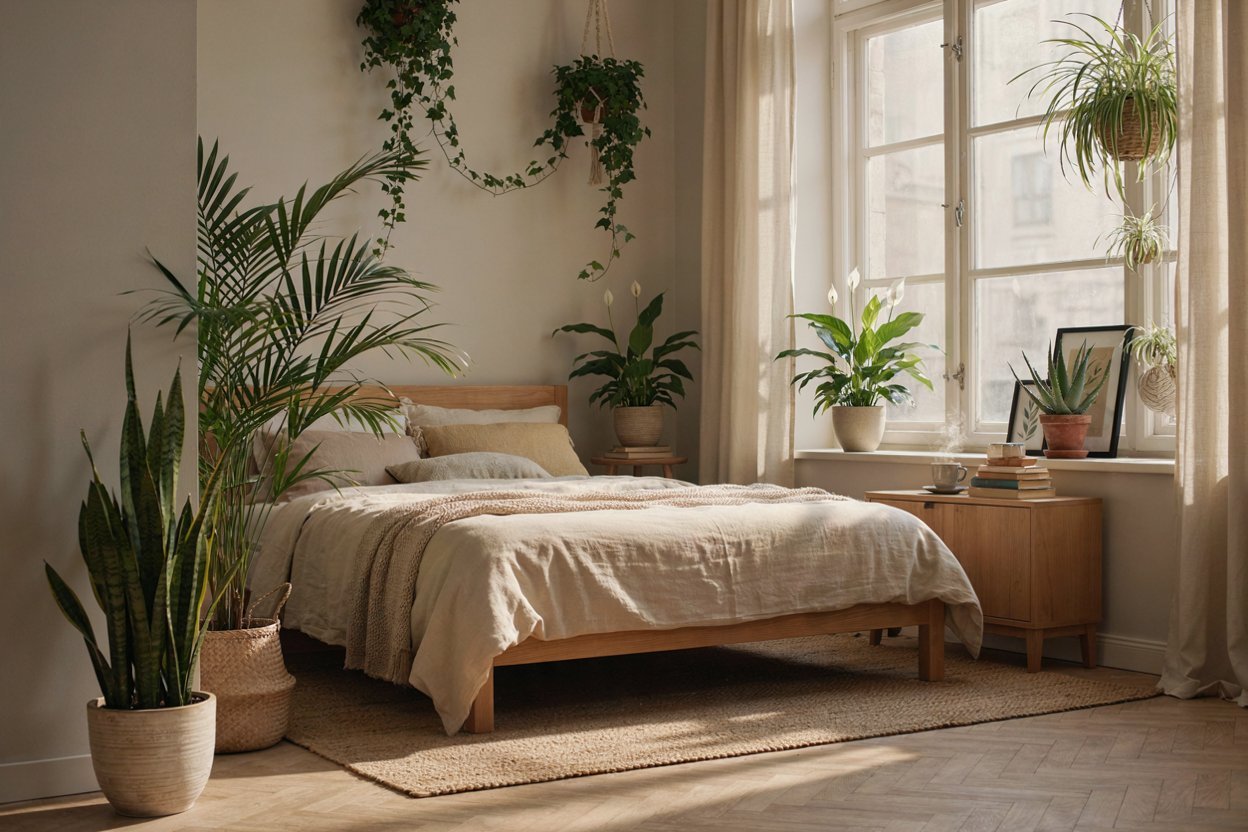

I love the feeling of bringing a little more greenery into the bedroom. A beautiful plant can make a space feel calmer, fresher, and much more inviting, especially after a long day.
While plants aren’t a magic solution for better health or cleaner indoor air, they can be a lovely part of a comfortable wellness-focused home.
Some are wonderfully easy to care for, tolerate lower light, and add natural beauty without taking over your space.
If you’re looking for bedroom plants that are attractive, beginner-friendly, and potentially beneficial to your indoor environment, these six are some of my favorite choices.
Can Bedroom Plants Really Improve Your Health and Wellness?
Before filling your bedroom with plants, it’s worth clearing up a common misconception.
You may have heard that certain houseplants can completely purify the air in your home. The idea comes partly from NASA research showing that plants could remove certain volatile organic compounds, or VOCs, under controlled laboratory conditions.
However, normal bedrooms are very different from sealed laboratory chambers. Extension experts point out that ordinary houseplants have a relatively small effect on indoor air quality in typical homes.
So, why grow them?
Plants can still make a bedroom feel more pleasant and connected to nature. They can add beauty, provide a calming visual element, and encourage us to spend a little more time caring for our surroundings.
The key is to think of bedroom plants as one small part of a healthy, comfortable home, rather than as air-purifying machines.
1. Snake Plant
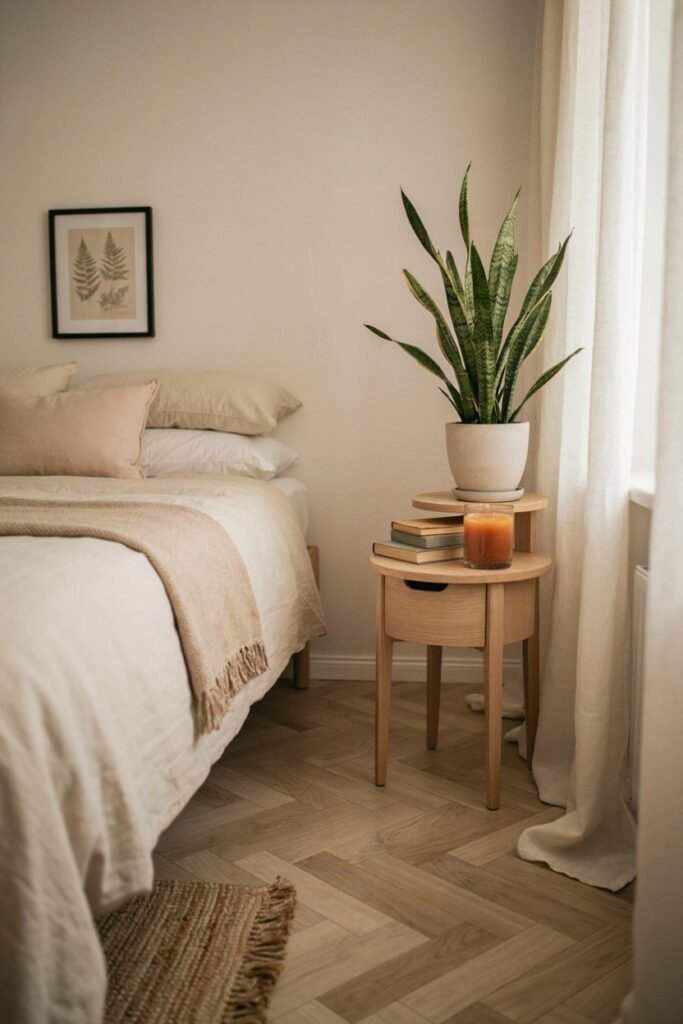
The snake plant is one of my favorite choices for anyone who wants a beautiful bedroom plant without a complicated care routine.
Its tall, upright leaves give it a clean, modern appearance, making it especially lovely in bedrooms with limited floor space.
Why I Love It
Snake plants are extremely adaptable and can tolerate lower-light conditions better than many tropical houseplants.
They’re also relatively drought tolerant, which makes them useful if you’re sometimes forgetful about watering.
The plant was also included in NASA’s research into plants and indoor pollutants, although those laboratory findings shouldn’t be interpreted as meaning one snake plant will dramatically clean the air in your bedroom.
How to Care for a Snake Plant
- Place it in bright, indirect light or lower light.
- Allow the soil to dry between waterings.
- Use a pot with drainage holes.
- Avoid constantly wet soil.
- Wipe the leaves occasionally to remove dust.
Best For
Busy gardeners, beginners, and bedrooms with limited space.
Important Pet Note
If you have cats or dogs, take extra care with snake plants. The ASPCA lists snake plants as toxic to both cats and dogs if ingested.
2. Spider Plant
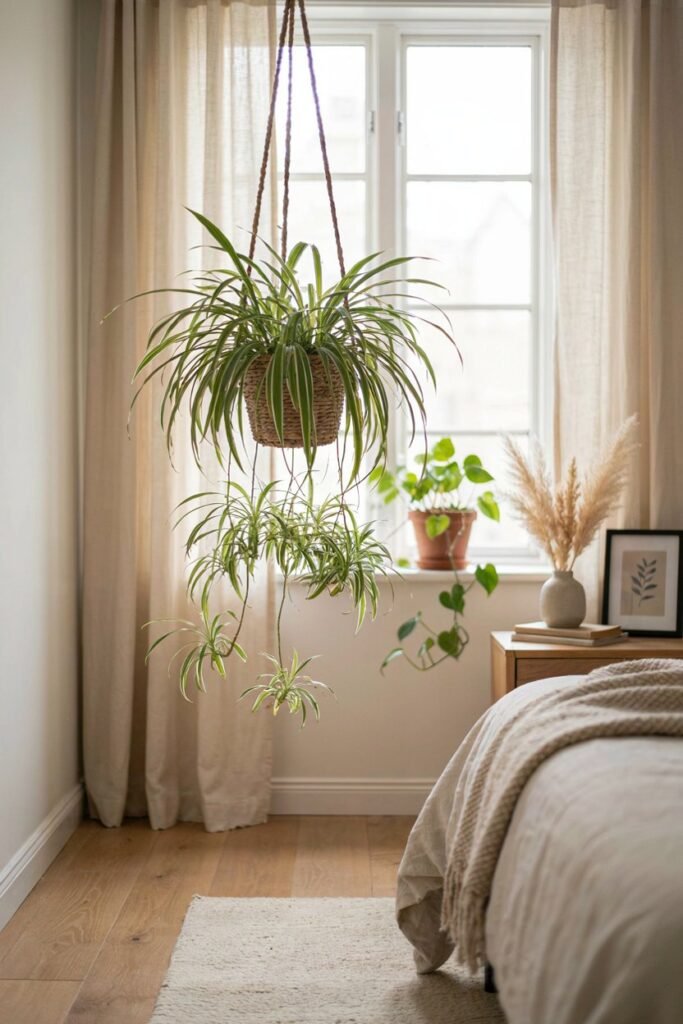
If you’re looking for something cheerful and easygoing, the spider plant is hard to beat.
Its long, arching leaves look beautiful in a hanging basket, on a shelf, or sitting on a bedroom dresser.
Why It’s a Great Bedroom Plant
Spider plants are known for being forgiving, making them a wonderful choice for beginners.
They can also produce small plantlets, often called “spiderettes,” that hang from the mother plant and can eventually be propagated.
Spider plants have also been studied for their ability to interact with indoor pollutants under controlled conditions.
How to Care for a Spider Plant
- Give it bright, indirect light.
- Water when the top portion of the soil begins to dry.
- Avoid leaving the roots sitting in water.
- Use well-draining potting soil.
- Trim brown leaf tips when necessary.
One of the best things about spider plants is that they don’t require perfection. With reasonable light and watering, they can remain attractive for a long time.
Best For
Beginners, hanging planters, shelves, and small bedrooms.
Another bonus: the ASPCA lists spider plants as non-toxic to cats and dogs.
3. Peace Lily
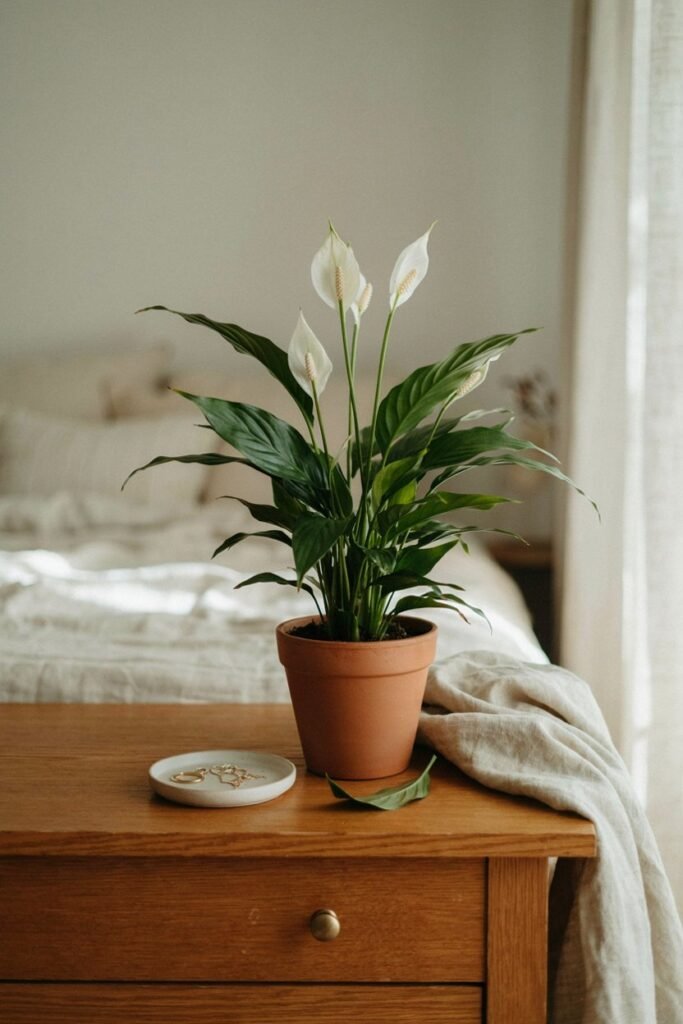
The peace lily brings a softer, more elegant look to the bedroom.
Its dark green foliage and white flowers can make even a simple bedroom feel more finished and peaceful.
Why Grow a Peace Lily?
Peace lilies were among the plants investigated in NASA’s indoor-air-pollution research, where plants were tested for their ability to remove certain compounds from controlled environments.
Again, I wouldn’t rely on a peace lily as your bedroom’s air purifier. Think of it primarily as a beautiful houseplant that can contribute to a pleasant indoor environment.
How to Care for It
- Give it bright, indirect light.
- Keep the soil lightly moist but not waterlogged.
- Avoid placing it directly beside strong sunlight.
- Increase humidity if the air is particularly dry.
- Remove faded flowers and yellow leaves.
Peace lilies can also be helpful for gardeners who like plants that visibly communicate when they’re thirsty. Their leaves may droop when they need water and perk back up after watering.
Best For
Bedrooms with indirect light and gardeners who enjoy flowering houseplants.
Pet Safety
Peace lilies are toxic to cats and dogs if eaten. The ASPCA notes that they contain insoluble calcium oxalates that can cause oral irritation and other symptoms.
4. Aloe Vera
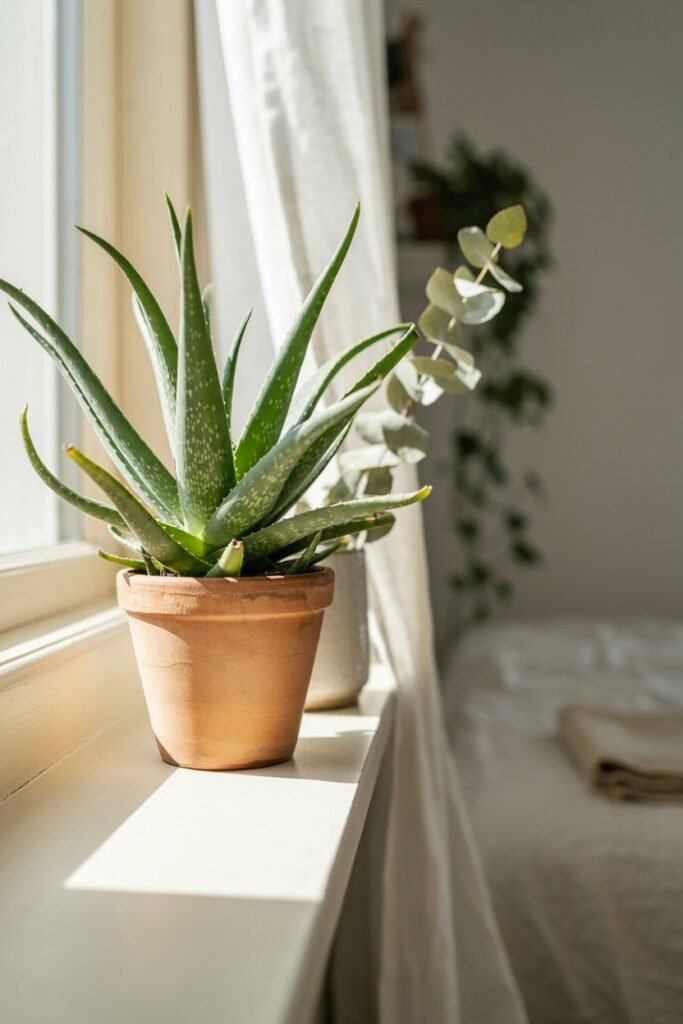
Aloe vera is another wonderful plant to consider if your bedroom receives plenty of natural light.
Its thick, upright leaves give it a simple, fresh appearance that works beautifully with minimalist, natural, or boho bedroom decor.
Why Grow Aloe Vera?
Aloe is a succulent, so it stores water in its leaves and doesn’t need frequent watering.
NASA research also included aloe among plants studied for their ability to remove certain pollutants under controlled conditions.
The bigger practical benefit for most home gardeners, though, is that aloe is attractive and relatively easy to maintain.
Aloe Vera Care
- Give it plenty of bright light.
- A sunny windowsill can work well.
- Let the soil dry between waterings.
- Use a cactus or succulent potting mix.
- Always use a container with drainage.
One mistake I see beginners make is treating aloe like a tropical plant and watering it too frequently. That’s usually unnecessary.
Best For
Sunny bedrooms and people who enjoy low-maintenance succulents.
5. English Ivy
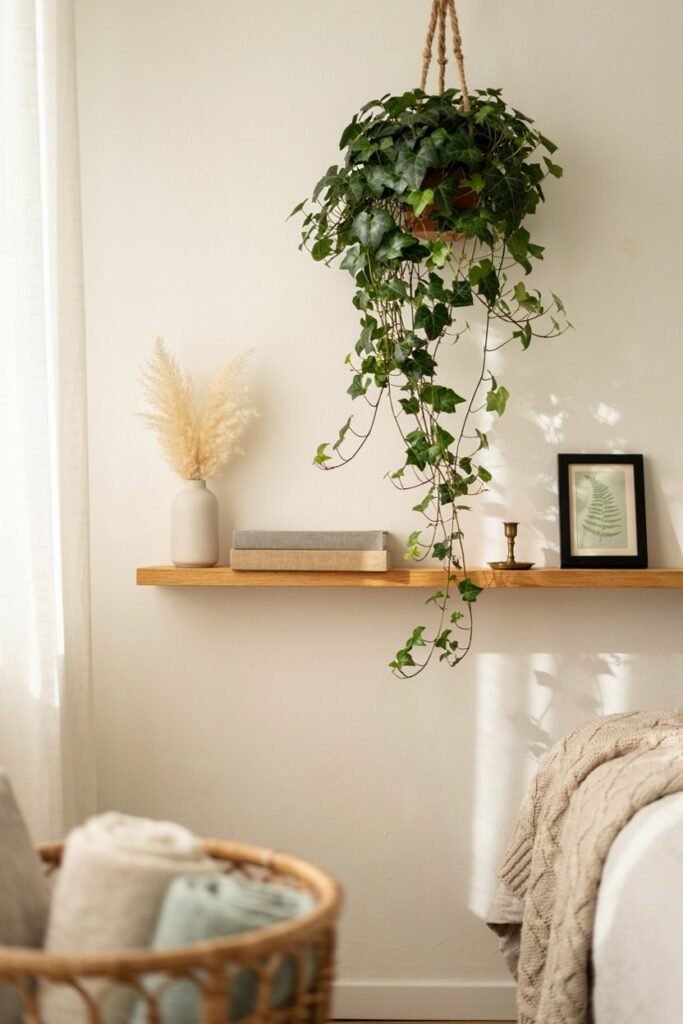
English ivy can bring a beautiful trailing effect to a bedroom.
I especially like it in a hanging planter where the vines can naturally cascade downward.
Why Grow English Ivy?
English ivy was among the plants examined in research into indoor pollutants.
But its greatest everyday appeal is probably visual. The trailing foliage can soften shelves, windowsills, and bedroom corners.
How to Care for English Ivy
- Give it bright, indirect light.
- Keep the soil moderately moist.
- Don’t let the pot remain waterlogged.
- Provide good air circulation.
- Trim long vines when necessary.
English ivy can grow vigorously indoors, so occasional pruning will help keep it neat.
Best For
Hanging baskets, shelves, and bedrooms where you want trailing greenery.
Pet Safety
English ivy can be harmful if eaten by pets, so keep it away from curious cats and dogs. The ASPCA includes English ivy on its pet plant toxicity information.
6. Areca Palm
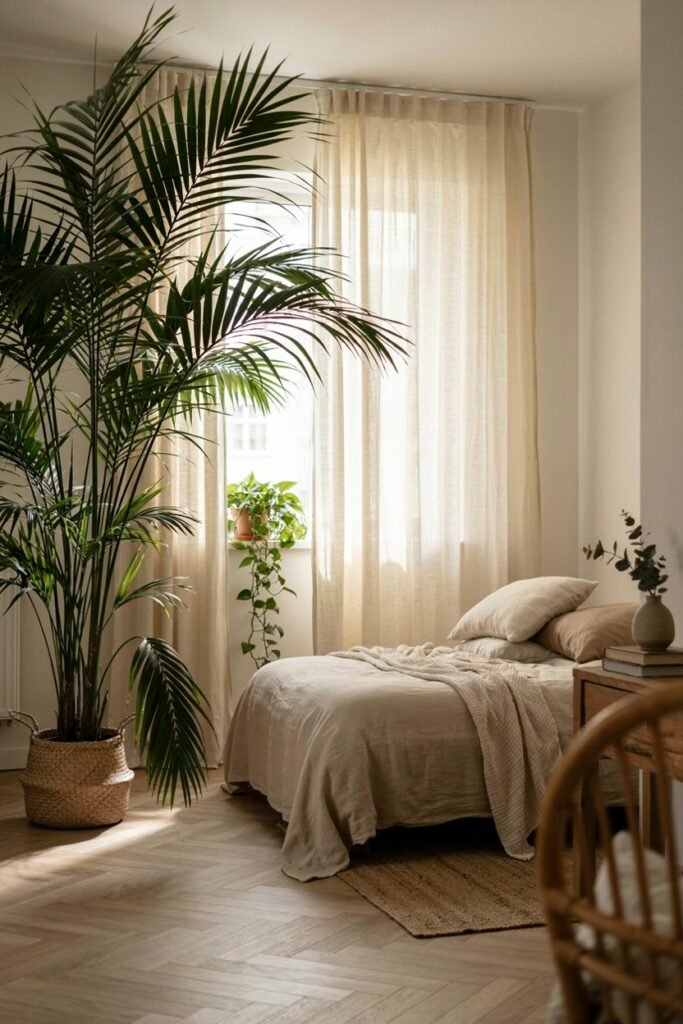
If you want your bedroom to feel like a peaceful indoor garden, consider an areca palm.
Its feathery green fronds create a softer, tropical appearance and can make an empty bedroom corner feel much more alive.
Why I Love Areca Palms
Areca palms are especially useful when you’re looking for a larger plant rather than a tiny windowsill specimen.
They can also contribute to a more pleasant-feeling indoor environment, although it’s important not to exaggerate their air-cleaning abilities.
How to Care for an Areca Palm
- Give it bright, indirect light.
- Water when the upper layer of soil begins to dry.
- Avoid completely drying it out for long periods.
- Provide good drainage.
- Keep it away from cold drafts.
- Rotate the pot occasionally for even growth.
Brown leaf tips can sometimes appear when conditions aren’t ideal, particularly when the plant is experiencing inconsistent moisture or dry indoor air.
Best For
Larger bedrooms, bright rooms, and anyone who loves a tropical look.
How to Choose the Right Bedroom Plant
Not every bedroom has the same conditions, so choosing a plant based on your room will save you plenty of frustration.
For Low Light
Choose:
- Snake plant
- Spider plant
- Peace lily
Remember that “low light” doesn’t mean complete darkness. Plants still need some usable light to grow.
For Bright Bedrooms
Try:
- Aloe vera
- Spider plant
- Areca palm
- Snake plant
Aloe vera especially appreciates bright conditions.
For Small Bedrooms
Choose compact plants such as:
- Snake plant
- Spider plant
- Aloe vera
You can also use shelves or hanging planters to save floor space.
For a Tropical Look
My favorites are:
- Areca palm
- Peace lily
- Spider plant
Together, these can create a soft indoor-garden feeling without needing dozens of plants.
Simple Bedroom Plant Care Tips
You don’t need a complicated routine to keep bedroom plants healthy.
1. Don’t Overwater
Overwatering is one of the most common problems with houseplants.
Instead of watering according to a strict calendar, check the soil first. Different plants and different rooms dry out at different rates.
2. Give Plants Enough Light
Even plants advertised as low-light tolerant need some light.
A dark corner may look beautiful, but it isn’t necessarily a good growing environment.
3. Keep Leaves Clean
Dust can accumulate on broad leaves over time.
Gently wipe larger leaves with a clean, damp cloth when needed. This also gives you a chance to check for pests.
4. Use Pots With Drainage
Drainage holes make it easier for excess water to escape.
This simple detail can prevent many problems associated with constantly wet soil.
5. Don’t Crowd Your Plants
Give your plants enough space for air to circulate around the foliage.
A crowded collection can make watering, cleaning, and spotting pests more difficult.
Are Bedroom Plants Safe for Everyone?
Before bringing any plant into your bedroom, consider pets and young children who might be able to reach the leaves.
Plant toxicity varies considerably. For example, the ASPCA lists spider plants as non-toxic to cats and dogs, while snake plants and peace lilies are listed as toxic to them.
If you have pets, always check the specific plant before purchasing it rather than assuming a popular houseplant is automatically safe.
And remember that good ventilation still matters. Opening windows when appropriate, keeping the room clean, controlling excessive moisture, and addressing sources of indoor pollution are much more important than relying on plants alone for air quality.
Final Thoughts
Adding a few plants to my bedroom is one of those small changes that can make the entire space feel more welcoming.
Whether you choose the easygoing snake plant, cheerful spider plant, elegant peace lily, useful aloe vera, trailing English ivy, or tropical areca palm, the goal isn’t to turn your bedroom into a jungle overnight.
Start with one or two plants that match your light and watering habits, then let your little indoor garden grow naturally.
Plants aren’t a replacement for good ventilation or healthy indoor habits, but they can certainly add beauty, nature, and a calming touch to the room where you begin and end each day.
