
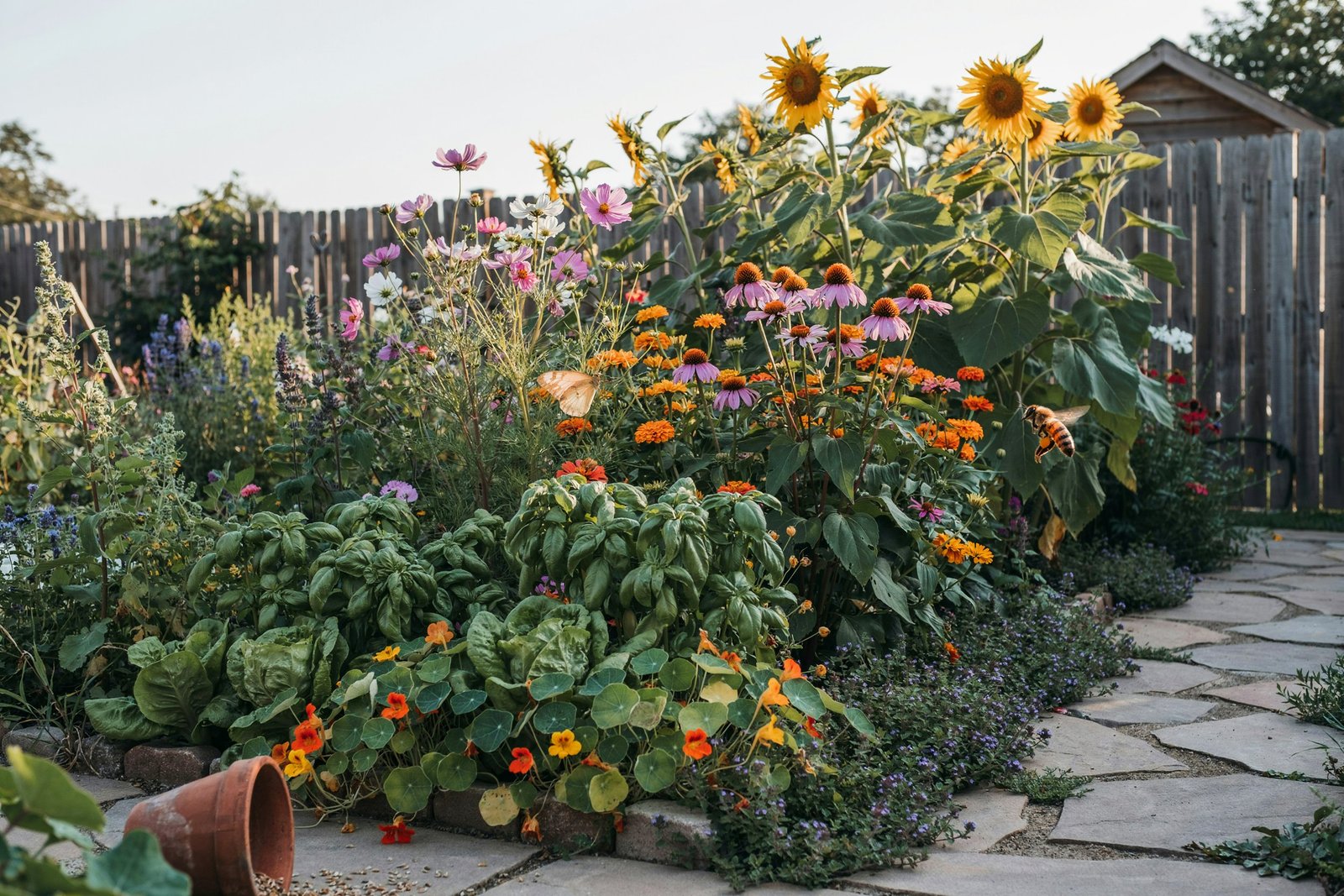

I used to think a beautiful garden needed straight rows, carefully planned borders, and every plant in its proper place.
Then I started letting a few plants grow where they wanted, and something surprising happened.
My garden became more alive. Flowers popped up in unexpected corners, pollinators visited more often, and I spent less time trying to make everything perfect.
That little experiment introduced me to chaos gardening and I quickly understood why gardeners love it.
What Is Chaos Gardening?
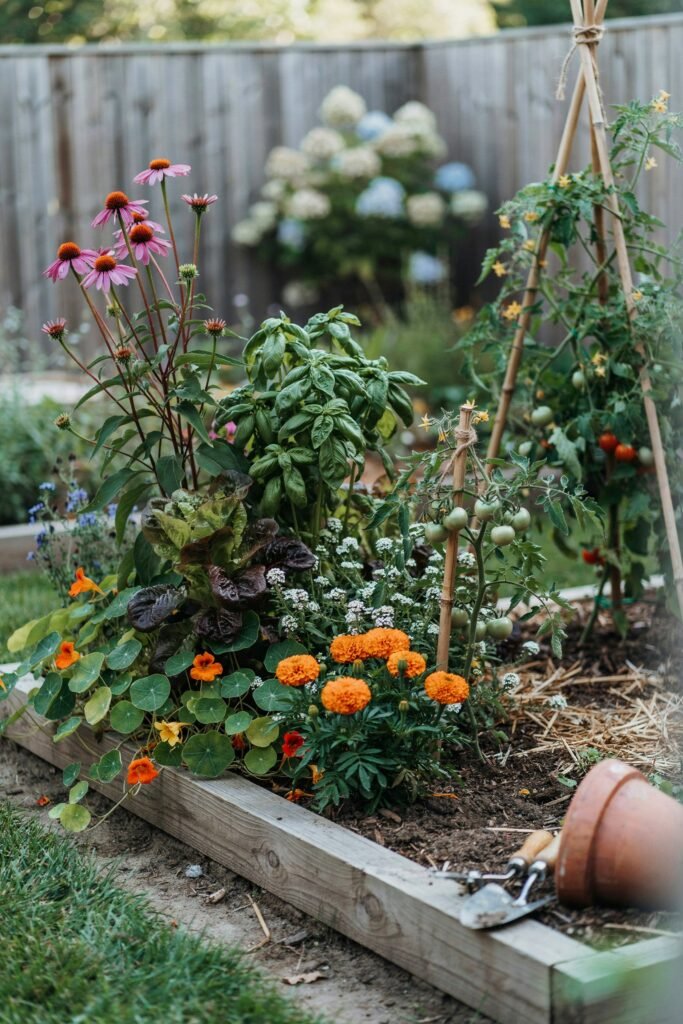
Chaos gardening is a relaxed approach to gardening where plants are allowed to grow in a more natural, informal arrangement instead of being planted in perfect rows or carefully separated beds.
The idea is simple: plant, observe, and let nature have some control.
Instead of deciding exactly where every flower, herb, or vegetable must grow, you give plants room to spread, reseed, mingle, and surprise you.
Chaos gardening does not mean completely ignoring your garden. You still need to water, remove invasive weeds, improve the soil, and take care of plants when necessary. The difference is that you stop trying to control every little detail.
A chaos garden might contain:
- Flowers growing between vegetables
- Herbs spreading around the garden
- Self-seeding annuals returning each year
- Different plant heights mixed together
- Plants growing in unexpected places
- A combination of edible and ornamental plants
- Natural-looking pathways and borders
- Volunteer plants that appear without being intentionally planted
The result can look wild, colorful, and wonderfully unpredictable.
Why Try Chaos Gardening?
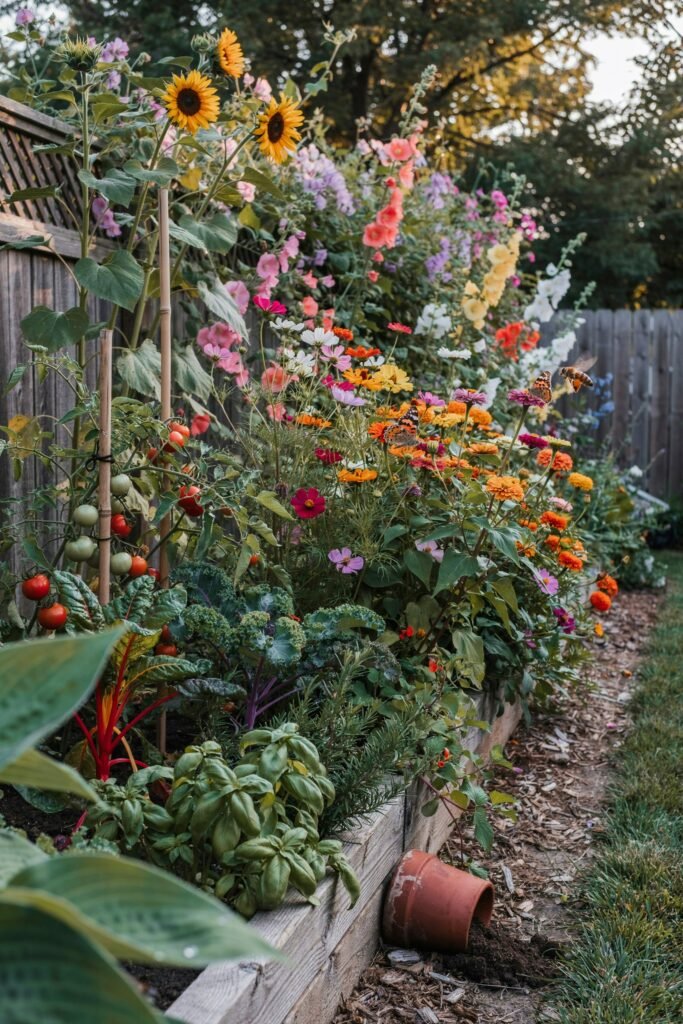
One of the biggest reasons I enjoy this style of gardening is that it takes some pressure away.
Traditional gardening can sometimes feel like a long list of rules. Plant this here. Space that plant exactly this far apart. Keep these flowers together. Remove anything growing outside the bed.
Chaos gardening gives you more freedom.
1. It Encourages Biodiversity
A mixture of different plants can create a more varied environment for insects, birds, and other garden visitors.
Flowers provide nectar and pollen, while leafy plants offer shelter. Herbs and vegetables can add another layer of useful vegetation.
Instead of having one large area filled with a single plant, you can create a small ecosystem with many different plants growing together.
2. It Attracts Pollinators
A relaxed garden can be particularly welcoming to bees, butterflies, hoverflies, and other beneficial insects.
Growing flowers with different colors, shapes, and blooming periods means pollinators can find food throughout more of the growing season.
Try combining plants such as:
- Coneflowers
- Zinnias
- Marigolds
- Sunflowers
- Lavender
- Cosmos
- Bee balm
- Yarrow
Choose plants suited to your local growing conditions rather than trying to grow everything on the list.
3. It Can Reduce Garden Work
A perfectly manicured garden requires regular maintenance.
Chaos gardening can reduce some of that work because you are not constantly trying to keep everything looking identical.
Once plants become established, you can allow some natural reseeding and spreading to happen.
You will still need to maintain the garden, but you may spend less time correcting every small imperfection.
4. It Makes Gardening More Interesting
One of my favorite parts of a less structured garden is not knowing exactly what will happen.
A flower may appear in a place you never expected.
A herb might reseed itself.
A volunteer tomato plant may show up beside another crop.
Instead of seeing these things as mistakes, chaos gardening encourages you to become curious.
How to Start a Chaos Garden
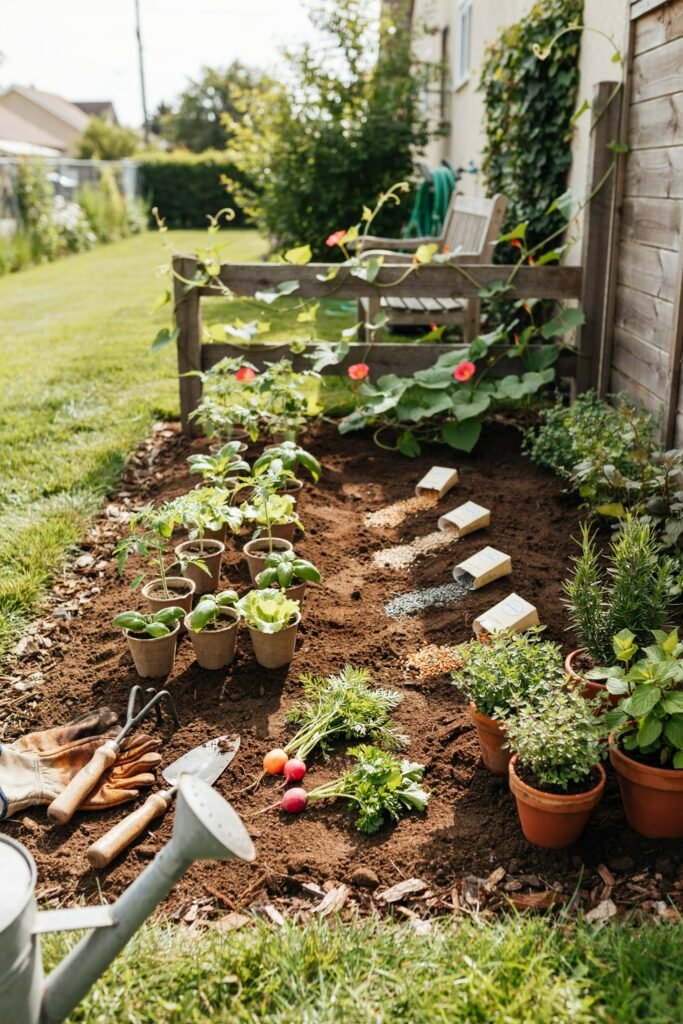
You don’t need a huge backyard to try chaos gardening.
A small flower bed, raised bed, container, or unused corner can become your first experiment.
Step 1: Choose a Suitable Area
Look around your garden for an area that receives enough sunlight for the plants you want to grow.
Most flowering plants and vegetables need several hours of sunlight each day, although the exact requirement depends on the plant.
You can also create a chaos garden in partial shade using plants that naturally tolerate lower light.
Avoid starting in an area where water regularly collects unless you are intentionally growing moisture-loving plants.
Step 2: Prepare the Soil
You don’t need perfectly prepared soil, but healthy soil gives your plants a much better start.
Remove large pieces of debris and aggressive weeds. Then add compost if your soil needs more organic matter.
Avoid turning the soil unnecessarily deep every year. A simple approach is often enough:
- Clear the area.
- Loosen compacted soil if needed.
- Add a layer of compost.
- Mix lightly into the upper soil if appropriate.
- Smooth the surface.
A soil test can also help you understand what your garden actually needs instead of adding fertilizers blindly.
Step 3: Choose a Mixture of Plants
This is where the fun begins.
Instead of planting one type of flower in a neat block, choose several plants with different heights, textures, colors, and bloom times.
For example, you could combine:
Tall plants: sunflowers, cosmos, hollyhocks
Medium plants: coneflowers, zinnias, marigolds
Low-growing plants: alyssum, creeping thyme, calendula
You can also mix in herbs such as basil, dill, parsley, oregano, and chives.
For an edible chaos garden, combine vegetables with flowers and herbs.
Tomatoes can grow near basil and marigolds. Lettuce can be tucked beneath taller plants. Herbs can fill small spaces between larger crops.
The goal isn’t to create a perfect combination. It is to create a useful mixture while paying attention to each plant’s basic needs.
Don’t Be Afraid of Volunteer Plants
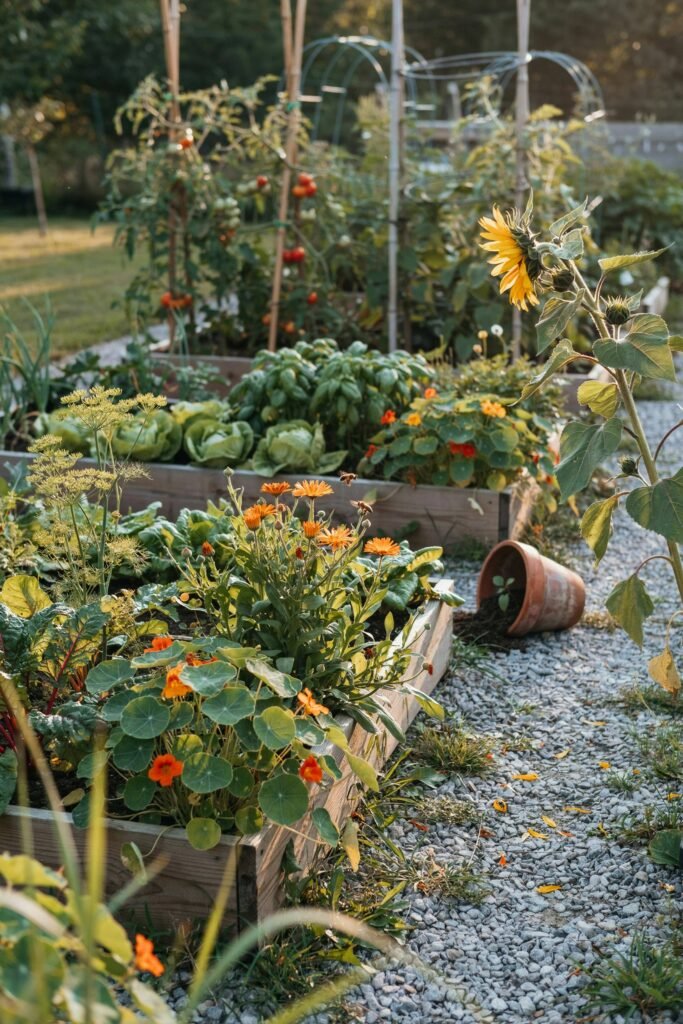
One of the most enjoyable parts of chaos gardening is learning to recognize volunteer plants.
A volunteer is a plant that appears without you intentionally planting it in that particular spot.
Seeds can move through wind, birds, animals, water, compost, or natural seed dropping.
You might suddenly find:
- A sunflower near your fence
- A tomato plant beside a compost area
- Calendula growing between vegetables
- Dill appearing in an old herb bed
- Cosmos returning from last year’s flowers
Before pulling out an unexpected plant, identify it first.
If you know what it is and it isn’t harmful or invasive, you can decide whether to keep it.
Sometimes the best plants in the garden are the ones you didn’t plan.
How to Make a Chaos Garden Look Beautiful
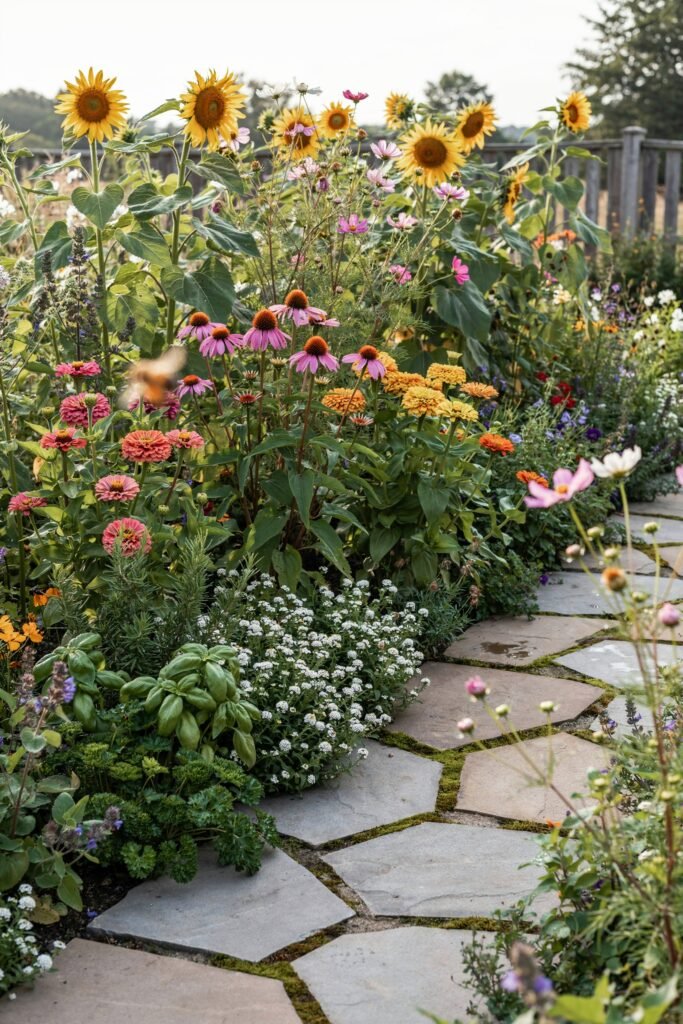
Chaos doesn’t have to mean ugly.
A successful chaos garden can still have visual structure.
The trick is to create a few simple anchors while allowing the plants between them to grow naturally.
Use Repeating Colors
Choose a few colors that appear throughout the garden.
For example, purple, yellow, and white flowers can create a connected look even when the plants are scattered.
Mix Plant Heights
Place taller plants toward the back or center and shorter plants around them.
This prevents tall plants from completely blocking smaller ones.
Add Paths
A simple stepping-stone path can make a wild garden easier to navigate.
You don’t need a perfectly straight path.
A curved path can actually complement the informal appearance of the garden.
Keep One Area Tidy
If the whole garden feels too wild, create one clearly defined area.
A clean border, small seating space, or neat container arrangement can give the garden a visual resting point.
Chaos Gardening With Vegetables
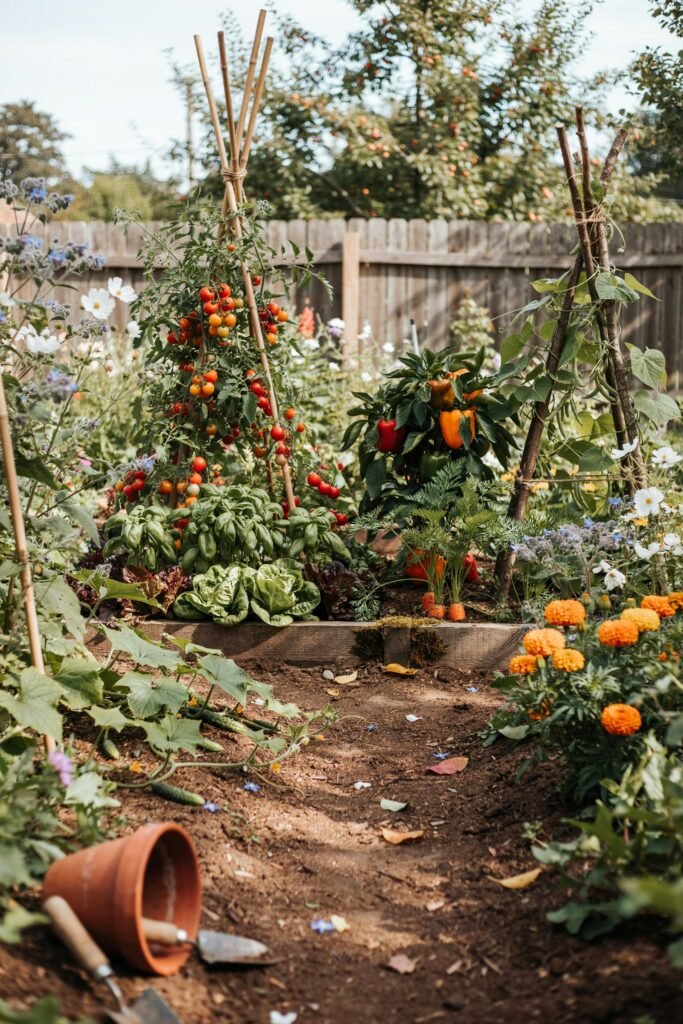
Chaos gardening works especially well in edible gardens.
Instead of separating every vegetable into its own section, mix compatible crops together.
For example, you could grow:
- Tomatoes with basil
- Lettuce beneath taller plants
- Carrots between flowers
- Cucumbers near flowering plants
- Peppers alongside herbs
- Beans near flowers
- Radishes around slower-growing crops
Remember that companion planting is not a magic solution for pests or plant diseases. The biggest benefit is creating a diverse growing space while making efficient use of your garden area.
Also consider plant size.
A large zucchini plant can quickly take over a small space, while lettuce can fit comfortably into smaller gaps.
Let Some Plants Go to Seed
If you want your chaos garden to become more natural over time, allow selected plants to produce seeds.
Once flowers finish blooming, resist the urge to immediately remove every faded flower.
Some plants will drop seeds naturally.
The following season, you may see new plants appearing.
Good candidates can include:
- Cosmos
- Calendula
- Nigella
- Zinnias
- Sunflowers
- Dill
- Cilantro
- Poppies, where legal and appropriate for your region
Always check whether a plant is invasive or problematic in your area before intentionally allowing it to spread.
Managing Weeds Without Destroying the Chaos
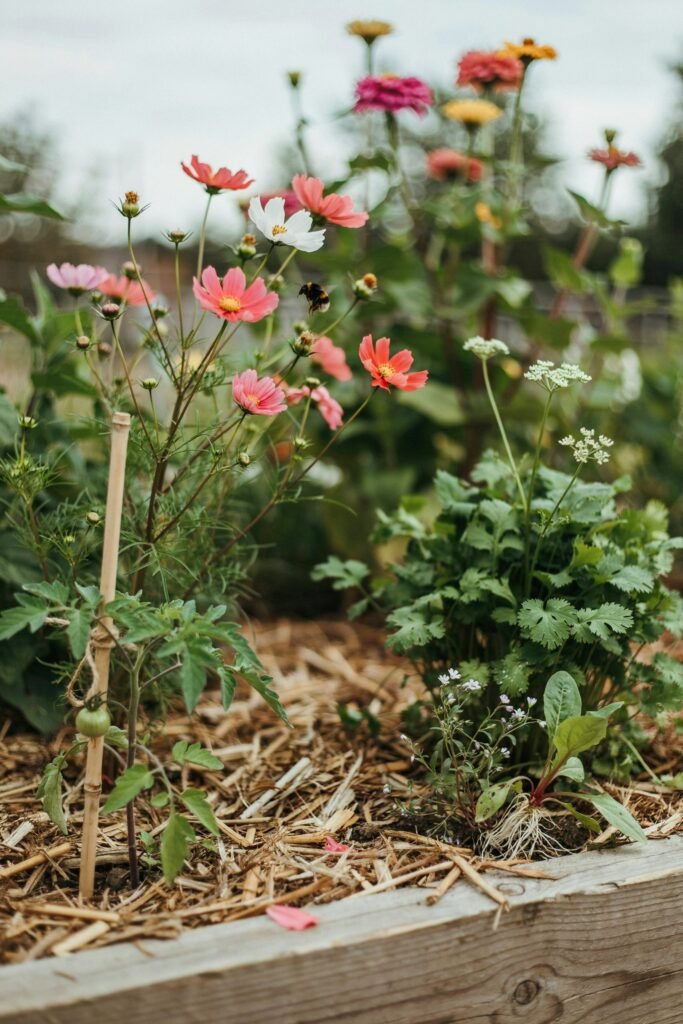
This is one area where chaos gardening needs a little judgment.
Not every plant growing where you didn’t plant it is a weed.
But not every volunteer should stay either.
Learn the difference between:
A welcome volunteer: a desirable plant that appeared naturally.
A weed: a plant that competes with your crops or spreads where you don’t want it.
An invasive plant: a species that can spread aggressively and cause ecological problems.
If you’re unsure what something is, identify it before removing or keeping it.
Pull weeds while they are young and easier to control.
Mulching around established plants can also reduce unwanted growth.
The goal is not to eliminate every wild plant. The goal is to keep aggressive plants from overwhelming the garden.
Watering a Chaos Garden
A mixed garden can have different watering requirements, so don’t assume everything needs the same amount of water.
Newly planted seeds and seedlings generally need more consistent moisture while they establish.
Once plants are established, water according to their individual needs and your weather conditions.
Water deeply when appropriate rather than constantly giving plants tiny amounts.
Mulch can help the soil hold moisture and reduce evaporation.
Organic mulch such as shredded leaves, compost, or straw can also contribute organic matter as it breaks down.
Fertilizing Your Chaos Garden
Don’t automatically fertilize everything just because the garden looks busy.
Too much fertilizer can encourage excessive leafy growth and may cause other problems.
Start with healthy soil and compost.
If plants show signs of nutrient deficiencies or growth problems, determine the cause before adding fertilizer.
A soil test can be especially helpful if you are growing vegetables.
Remember that different plants have different nutritional needs.
A chaos garden may look informal, but the plants still have individual requirements.
What to Do When Plants Become Too Crowded
Sometimes chaos really does become too chaotic.
Plants may grow so close together that air circulation becomes poor.
This can increase the risk of certain fungal problems, especially in humid conditions.
If plants become overcrowded:
- Remove weak or unwanted seedlings.
- Thin plants when necessary.
- Prune plants that are blocking everything around them.
- Move suitable young plants to another area.
- Harvest vegetables regularly.
- Remove diseased plant material promptly.
You don’t need to restore perfect rows.
Simply create enough breathing room for plants to remain healthy.
Chaos Gardening in Containers
You can even try this method on a balcony, patio, or small porch.
Choose a large container with drainage holes and fill it with suitable potting mix.
Then combine plants that have similar growing requirements.
For example, a large container could contain herbs and edible flowers.
Another could contain several annual flowers with different heights.
Avoid combining plants with completely different watering needs.
A small container can become a miniature chaotic garden that changes throughout the season.
A Simple Chaos Garden Planting Plan
If you don’t know where to begin, try this basic approach.
Back Layer
Plant a few taller flowers such as sunflowers or cosmos.
Middle Layer
Add medium-height flowers such as coneflowers, zinnias, calendula, or marigolds.
Front Layer
Add shorter flowers or herbs such as alyssum, thyme, basil, or parsley.
Fill the Gaps
Add vegetables, additional herbs, or flowers wherever there is suitable space.
Then allow some plants to reseed naturally.
Don’t worry if the final result doesn’t look like your original plan.
That’s part of the fun.
Common Chaos Gardening Mistakes
Planting Everything Too Close
Chaos does not mean overcrowding.
Plants still need room for their roots, leaves, and airflow.
Ignoring Plant Size
A tiny seedling can become a large plant surprisingly quickly.
Check mature plant sizes before placing aggressive spreaders beside smaller plants.
Keeping Every Volunteer
Some volunteer plants are wonderful.
Others are weeds.
Identify unexpected plants before deciding to keep them.
Forgetting Accessibility
Leave enough space to water, harvest, prune, and inspect your plants.
A garden that is impossible to walk through quickly becomes frustrating.
Using Invasive Plants
Avoid intentionally introducing invasive species simply because they spread quickly.
A good chaos garden works with nature rather than causing problems for the surrounding environment.
The Beauty of Letting Go
Chaos gardening has changed the way I look at imperfections in the garden.
A crooked flower stem isn’t necessarily a problem.
A plant growing slightly outside its original area isn’t automatically a mistake.
A collection of different flowers can be more interesting than a perfectly uniform bed.
The garden becomes less about controlling every detail and more about watching what happens.
You learn which plants thrive in certain corners, which ones reseed themselves, which flowers attract pollinators, and which combinations simply don’t work.
Over time, your garden starts teaching you.
Final Thoughts
Chaos gardening is not about abandoning your garden or allowing everything to grow unchecked. It is about finding a comfortable middle ground between planning and letting nature participate.
Start small. Choose a few reliable plants, prepare the soil, give them enough space, and allow some natural surprises.
You may end up with a garden that looks completely different from what you imagined—and that may be the best part.
Sometimes the most beautiful garden isn’t the one where everything goes according to plan. It’s the one where plants, pollinators, and a little bit of unpredictability are allowed to share the space.
