
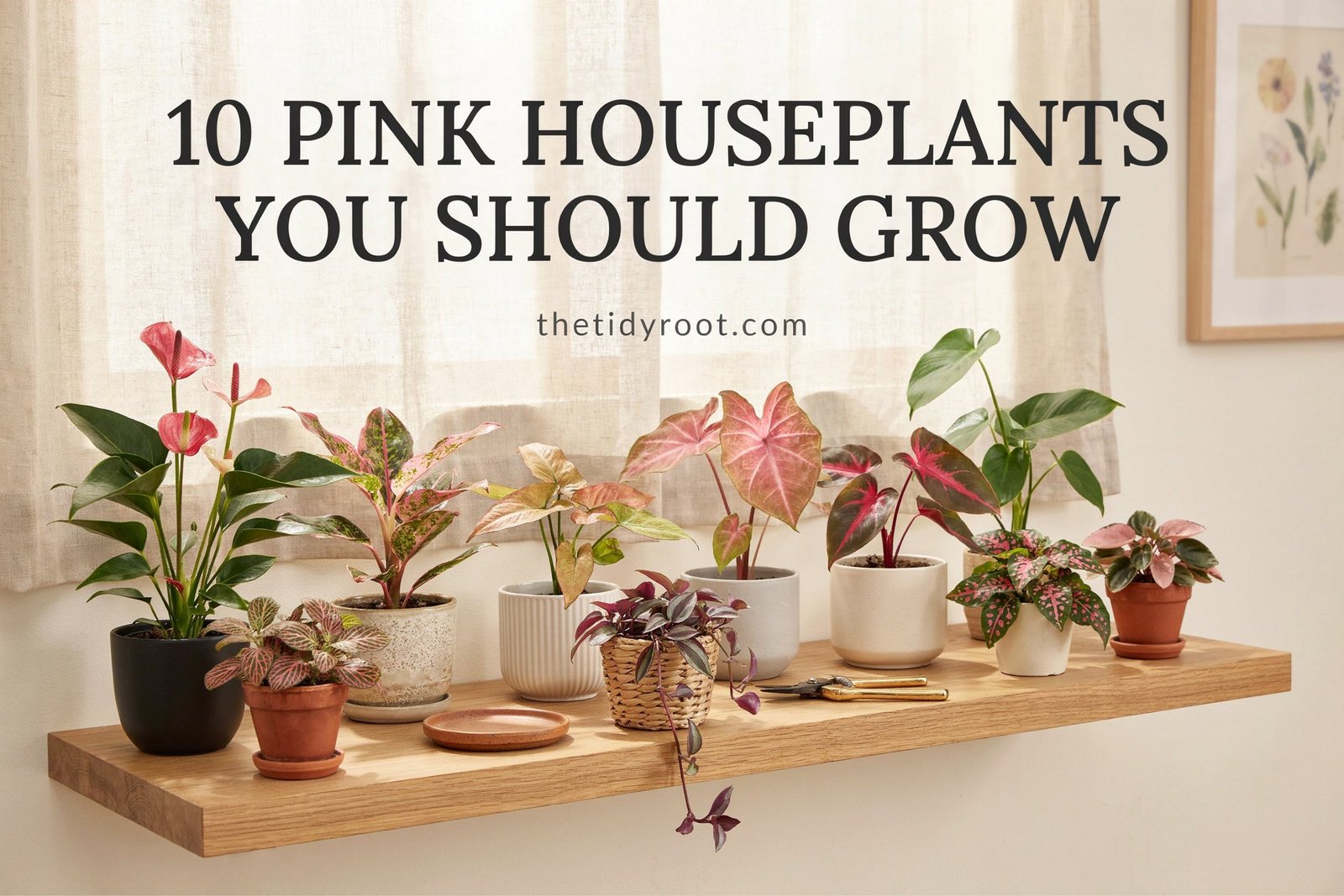

I’ve always loved the way a little pink can completely change the feeling of a room.
After adding a few pink-toned plants to my own indoor plant collection, I noticed how much more cheerful and lively my space felt.
From soft blush leaves to bright pink patterns, these plants can bring beautiful color indoors without needing a huge amount of space.
If you’re looking for houseplants that are a little different from the usual green varieties, these 10 pink houseplants are worth growing.
Why Grow Pink Houseplants?
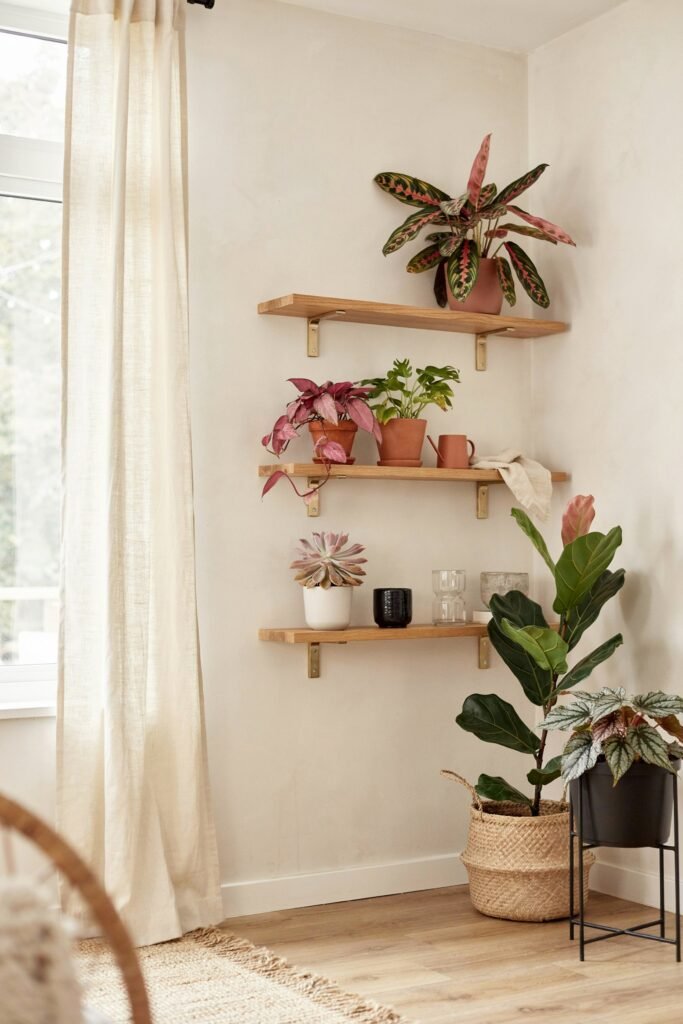
Green plants are beautiful, but pink houseplants can add something completely different to your indoor garden. Their colorful foliage can become a natural focal point on a shelf, desk, windowsill, or plant stand.
Many pink houseplants are also surprisingly easy to care for once you understand what they need.
One important thing to remember is that pink colouring often comes from natural pigments in the leaves. Because of this, many colourful plants need bright, indirect light to maintain their best colour.
Too little light can cause the pink markings to fade, while harsh direct sunlight can scorch delicate leaves.
Before choosing a plant, think about where you plan to put it. A bright bedroom, living room, kitchen windowsill, or home office may provide very different growing conditions.
Here are 10 beautiful pink houseplants to consider.
1. Pink Princess Philodendron
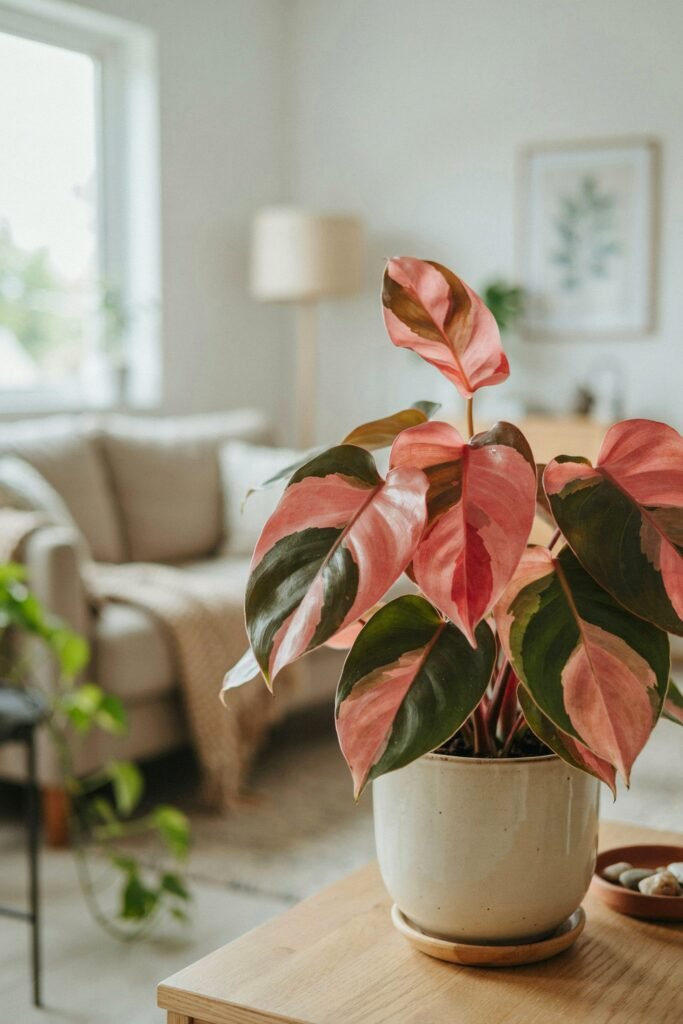
The Pink Princess Philodendron is one of the most recognizable pink houseplants around. Its dark green leaves are decorated with splashes of pink, creating a dramatic contrast that makes the plant stand out immediately.
The amount of pink can vary from leaf to leaf. Some leaves may have small pink patches, while others can develop much larger areas of pink.
How to Care for a Pink Princess Philodendron
Light: Bright, indirect light is best.
Water: Water when the upper part of the soil feels dry.
Soil: Use a loose, well-draining houseplant mix.
Humidity: Moderate to high humidity is helpful.
Temperature: Keep it somewhere warm and away from cold drafts.
One mistake I would avoid is placing this plant in a dark corner simply because it is labeled a low-maintenance houseplant. Its beautiful coloring usually looks best when the plant receives plenty of filtered light.
Avoid keeping the soil constantly wet. Philodendrons can suffer when their roots remain in soggy soil for too long.
2. Pink Nerve Plant
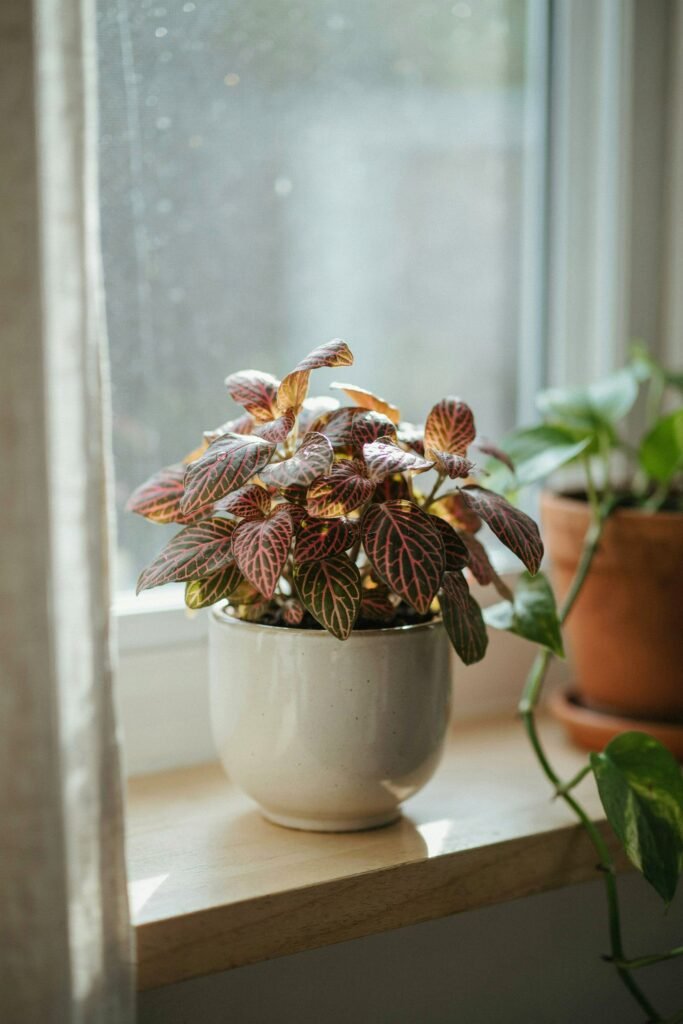
Pink Nerve Plant, also known as Fittonia, is a fantastic choice if you want a smaller houseplant with lots of color.
Its leaves are usually green with delicate pink or reddish veins running throughout them. The effect almost looks like someone carefully painted the leaf by hand.
This plant is especially useful for small spaces because it stays relatively compact.
Pink Nerve Plant Care
Light: Bright, indirect light or filtered light.
Water: Keep the soil lightly and consistently moist.
Humidity: High humidity is preferred.
Soil: Choose a rich but well-draining potting mix.
Fittonia is a plant that can quickly let you know when it needs water. Its leaves may droop dramatically when the soil becomes too dry.
Thankfully, it can often recover after being watered properly, although repeated drying can stress the plant.
A bathroom with good natural light can be a wonderful location because the extra humidity can help the plant thrive.
3. Pink Princess Syngonium
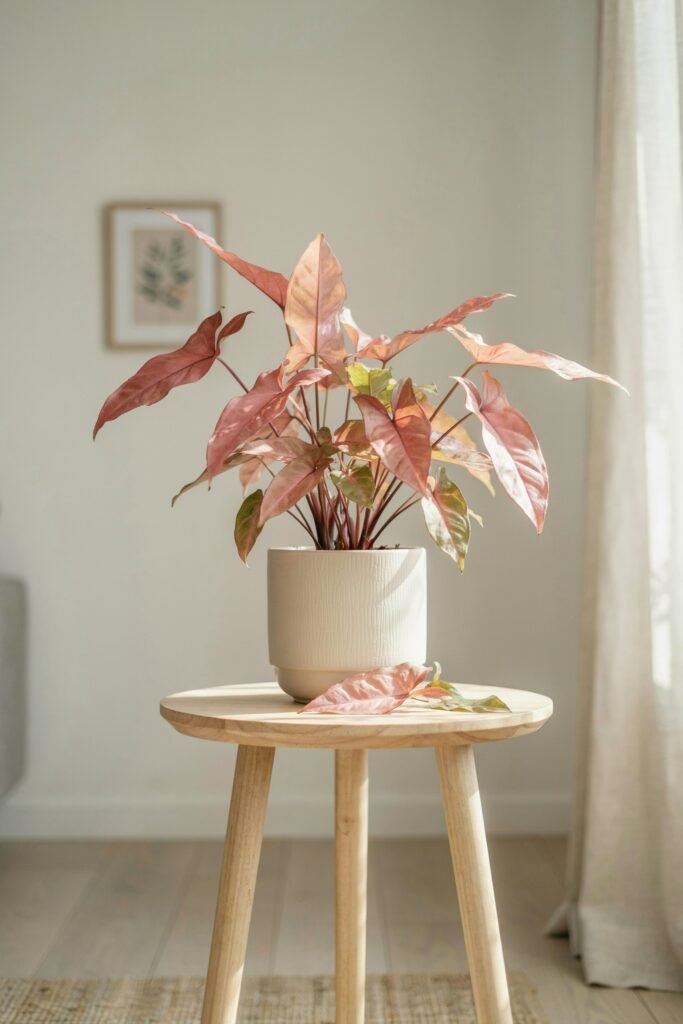
Syngonium is already a popular houseplant because of its attractive arrow-shaped leaves, but pink varieties make it even more interesting.
Pink Syngoniums can develop soft pink, blush, or green-and-pink foliage depending on the variety.
They are also versatile plants. You can grow them as compact tabletop plants when young or allow them to trail or climb as they mature.
How to Grow Pink Syngonium
Give your Syngonium bright, indirect light for the best foliage color. Avoid strong afternoon sunlight through an uncovered window because it can damage the leaves.
Allow the top layer of soil to dry slightly between waterings. Your pot should always have drainage holes.
If the plant starts becoming long and sparse, move it closer to a brighter window or trim the stems to encourage fuller growth.
Regular pruning can also help keep a young Syngonium looking bushy and attractive.
4. Pink Aglaonema
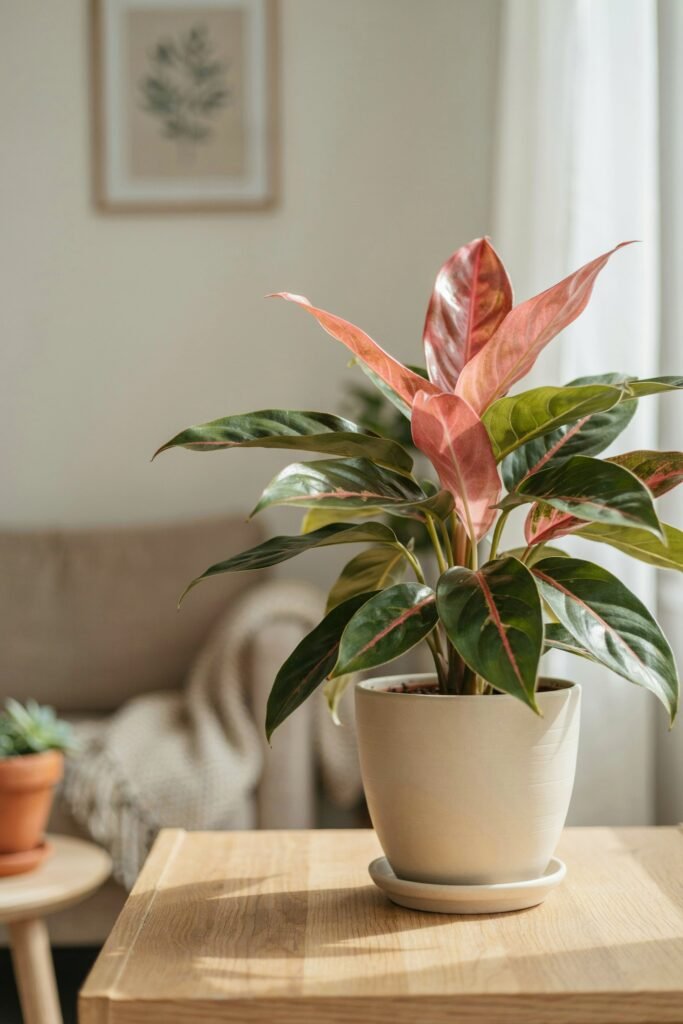
Aglaonema is one of my favorite choices for anyone who wants colorful foliage without spending all day caring for their plants.
Pink Aglaonema varieties can have green leaves decorated with beautiful pink centers, edges, speckles, or patches.
They are especially useful for adding color to indoor spaces where you want something decorative but don’t want a plant that demands constant attention.
Pink Aglaonema Care
Light: Bright, indirect light is ideal, although some varieties tolerate lower light.
Water: Allow the upper portion of the soil to dry before watering again.
Humidity: Average household humidity is usually acceptable.
Soil: Use a well-draining indoor potting mix.
Avoid overwatering. Yellowing leaves combined with constantly wet soil can be a warning that the roots are staying too damp.
If you notice the pink coloring becoming less noticeable, try moving the plant to a brighter location with filtered light.
5. Pink Caladium
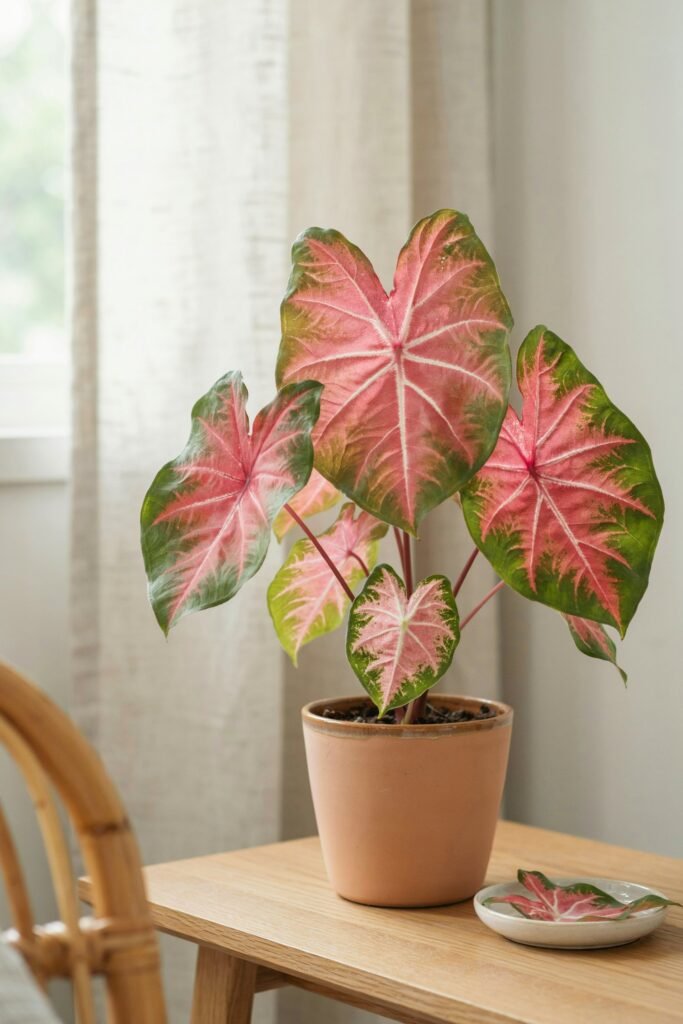
If you want a houseplant that looks like a living piece of artwork, a pink Caladium deserves a spot on your list.
Caladiums can produce large, heart-shaped leaves decorated with pink, green, white, and sometimes red markings.
Their bright foliage can instantly bring color to a room.
Growing Pink Caladium Indoors
Caladiums prefer bright, filtered light. Too much direct sunlight can burn their delicate leaves, while too little light may reduce their vibrant coloring.
They also appreciate warmth and humidity.
Keep the soil evenly moist but never waterlogged. A container with good drainage is essential.
One thing to know about Caladiums is that they can naturally enter a dormant period. The leaves may fade or disappear as the plant rests. This does not necessarily mean the plant has died.
With proper care, it can return when its growing conditions become favorable again.
6. Pink Tradescantia
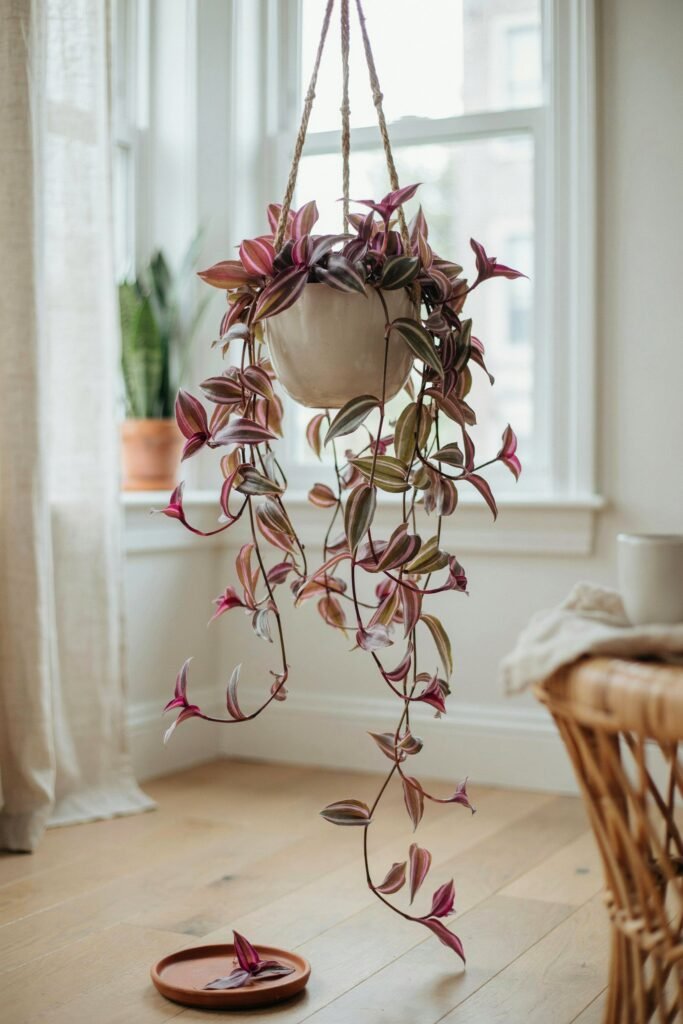
Tradescantia is a wonderful option if you love trailing houseplants.
Some varieties have green, pink, purple, and cream coloring all mixed across their leaves. The long stems can spill beautifully over the edge of a hanging planter or shelf.
This makes Tradescantia especially useful when you want to add color at different heights in a room.
Pink Tradescantia Care
Give it plenty of bright, indirect light. Good lighting helps maintain the colorful foliage.
Water when the top of the soil begins to dry.
Tradescantia grows quickly, so don’t be afraid to trim long stems. Regular trimming can encourage the plant to become fuller instead of producing only long, thin vines.
You can also use healthy cuttings to grow new plants.
If the plant becomes mostly green, it may need more light.
7. Pink Polka Dot Plant
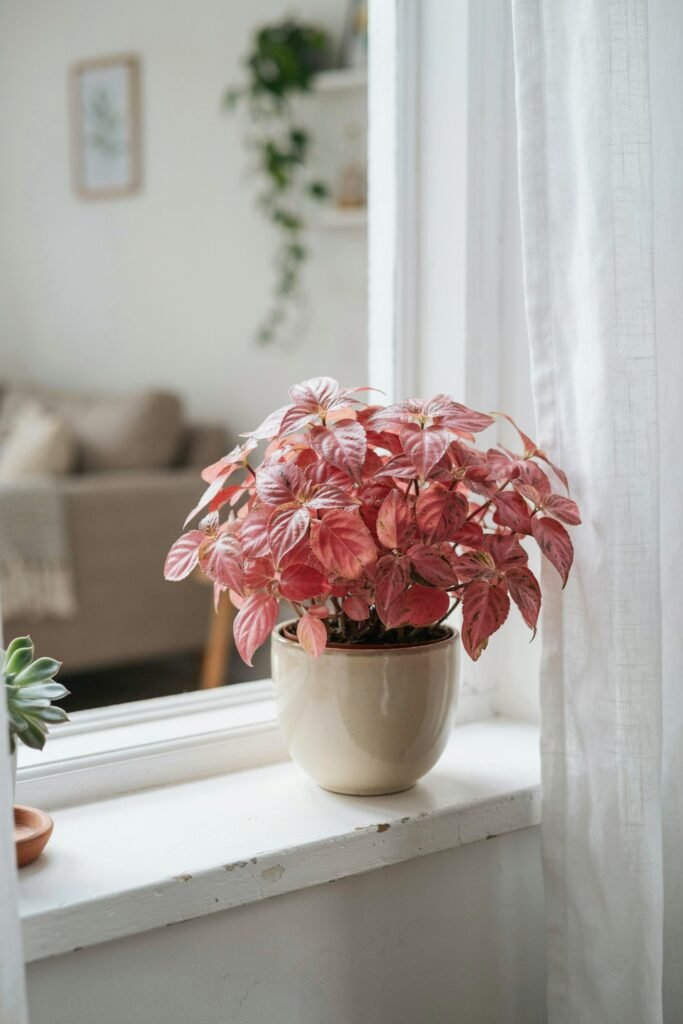
The Polka Dot Plant is almost impossible to miss.
Its leaves can feature bright pink backgrounds covered with green spots, giving the plant a fun and playful appearance.
It is a great choice for anyone who wants a colorful plant for a small table, windowsill, or indoor plant arrangement.
How to Care for a Polka Dot Plant
Polka Dot Plants prefer bright, indirect light and evenly moist soil.
Don’t let the soil become bone dry for long periods.
They also benefit from regular pinching and pruning. Without pruning, the stems can become leggy and the plant may lose its compact appearance.
When you pinch back the growing tips, you encourage new branching and create a fuller plant.
This is one of those small plants that can make a surprisingly big difference when grouped with other houseplants.
8. Pink Anthurium
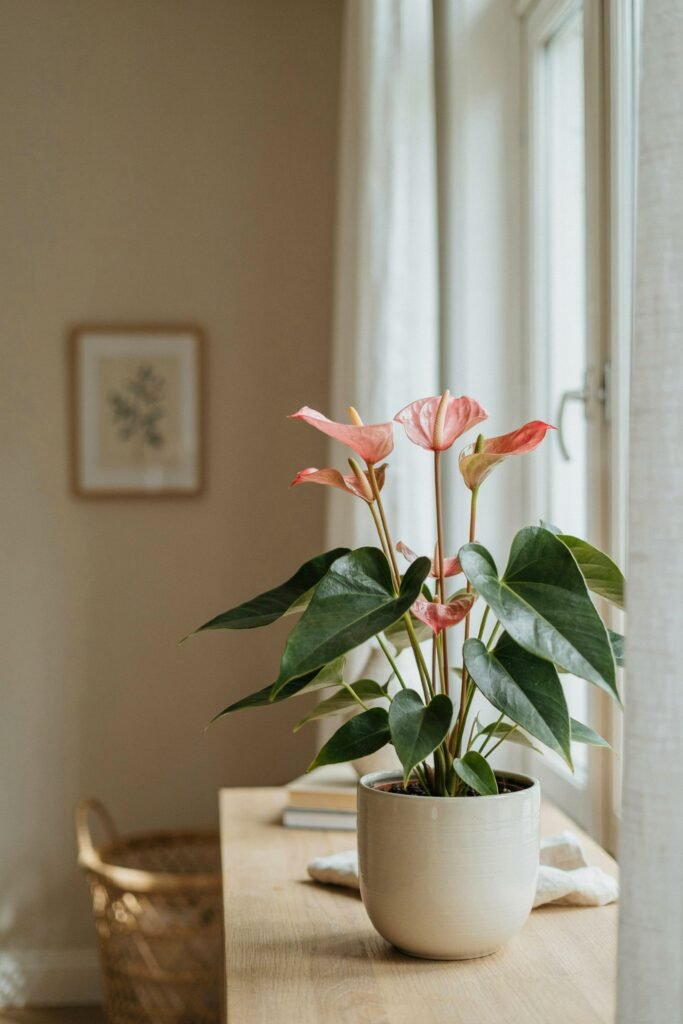
Anthuriums are best known for their glossy leaves and colorful, heart-shaped flowers.
Pink-flowering Anthuriums can bring a soft and elegant touch to your indoor garden.
Unlike plants grown primarily for colorful leaves, Anthuriums can provide their color through their flowers, making them a great choice if you want blooms rather than just pink foliage.
Pink Anthurium Care
Give your Anthurium bright, indirect light.
Water when the top portion of the potting mix starts to dry, but don’t allow the roots to sit in standing water.
They appreciate humidity, so placing the plant near other tropical houseplants can help create a more comfortable environment.
Remove old flowers and damaged leaves as needed. This keeps the plant looking tidy and allows you to monitor its health.
With the right conditions, an Anthurium can reward you with colorful blooms repeatedly.
9. Pink Fittonia
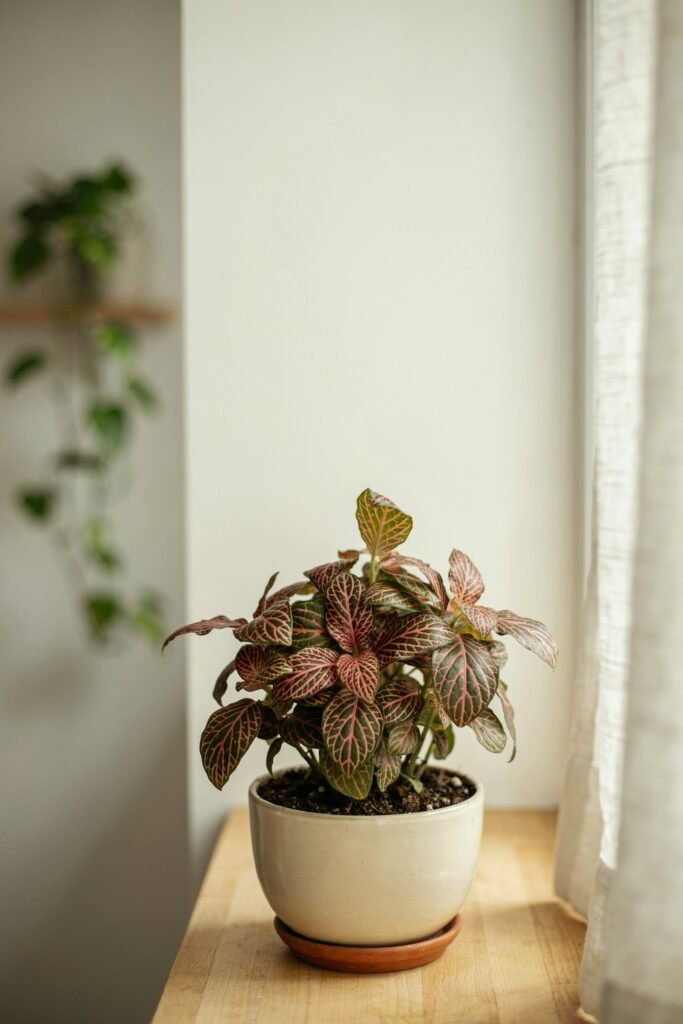
Another beautiful option for small indoor gardens is a pink Fittonia.
Although Fittonia is often called the Nerve Plant, different varieties can have dramatically different coloring. Some have strong pink veins, while others can appear almost entirely pink from a distance.
This makes them particularly attractive when planted in decorative pots.
Fittonia Care Tips
Fittonias love humidity and consistent moisture.
Keep them away from extremely dry air and hot, direct sunlight.
A bright bathroom or humid plant shelf can work well if enough filtered light is available.
If the leaves begin to droop, check the soil. A very dry plant may need water.
However, don’t use drooping alone as a reason to water every time. Always feel the soil first.
Because Fittonia stays small, it can also be used in terrariums or grouped with other humidity-loving plants.
10. Pink Peperomia
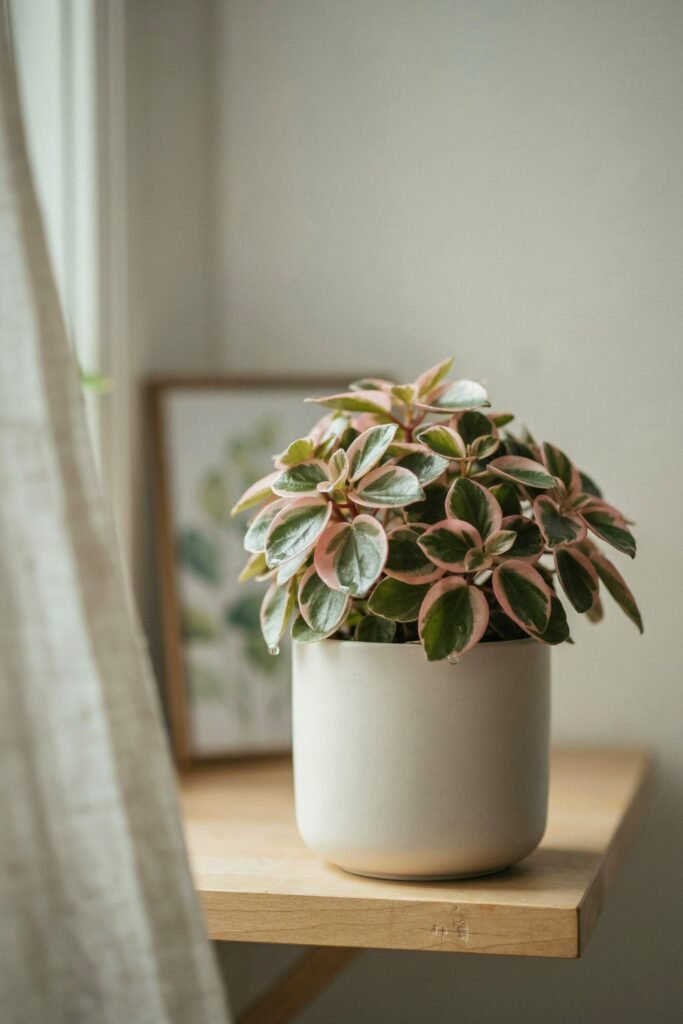
Peperomia is another excellent choice for people who want a colorful houseplant that doesn’t take up much room.
Some pink-toned Peperomia varieties have green and pink leaves, while others develop soft reddish or pink coloration along their foliage.
They are generally compact and work beautifully on desks, shelves, bedside tables, and small plant stands.
How to Care for Pink Peperomia
Peperomia prefers bright, indirect light.
Let the soil dry somewhat between waterings because its thick leaves can hold moisture.
Overwatering is one of the easiest ways to cause problems with Peperomia.
Use a light, well-draining potting mix and a container with drainage holes.
If your home doesn’t have much space, this is one plant I would definitely consider because it gives you plenty of visual interest without becoming a huge floor plant.
How Much Light Do Pink Houseplants Need?
Light is one of the biggest factors affecting the appearance of colorful houseplants.
Most pink houseplants do best with bright, indirect light.
A good location might be near an east-facing window or a few feet away from a brighter south- or west-facing window where the plant is protected from intense direct rays.
If you notice:
- Faded pink coloring
- Long, weak stems
- Large gaps between leaves
- Slow growth
- Smaller new leaves
your plant may not be getting enough light.
On the other hand, brown patches, crispy edges, or bleached-looking areas can indicate too much intense sunlight.
If natural light is limited, a suitable grow light can help.
How Often Should You Water Pink Houseplants?
There isn’t one watering schedule that works for every pink houseplant.
Your home’s temperature, humidity, pot size, soil, season, and amount of light all affect how quickly the soil dries.
Instead of watering on a strict calendar, check the soil.
Push your finger gently into the top layer. If it feels dry and the particular plant prefers some drying between waterings, it may be time to water.
Plants that prefer more consistent moisture, such as Fittonia, should not be allowed to dry out as much.
Always make sure excess water can escape through the drainage holes.
How Can You Keep Pink Foliage Bright?
If your plant’s pink coloring starts disappearing, don’t immediately assume something is wrong.
First, check the lighting.
Many variegated and colorful plants need enough light to maintain their patterns. Move the plant gradually toward a brighter location with filtered or indirect light.
Also check the plant for other signs of stress.
Make sure you’re providing:
- Appropriate light
- Correct watering
- Good drainage
- Suitable humidity
- Adequate nutrients
- Warm, stable temperatures
Avoid trying to force more pink coloring by exposing a plant to harsh direct sunlight. More light isn’t always better.
Common Problems With Pink Houseplants
Brown Leaf Tips
Brown tips can happen for several reasons, including dry air, inconsistent watering, or too much fertilizer.
Check the plant’s growing conditions before changing several things at once.
Yellow Leaves
One or two older yellow leaves can be normal, but widespread yellowing may indicate stress.
If the soil is constantly wet, overwatering could be a problem.
Faded Color
Insufficient light is a common reason colorful foliage loses some of its intensity.
Try a brighter location with indirect light.
Leggy Growth
When stems become long and stretched out, the plant may be searching for more light.
Pruning and moving the plant to a brighter location can help.
Tips for Growing Pink Houseplants Successfully
If you’re new to colorful houseplants, don’t feel like you need to buy every plant on this list at once.
Start with one or two plants and learn what they like.
A few simple habits can make indoor gardening much easier:
1. Check the Soil Before Watering
Don’t automatically water because it is the same day every week. Check the soil first.
2. Give Plants the Right Light
Colorful foliage usually looks best when the plant receives enough bright, indirect light.
3. Use Pots With Drainage
Drainage holes help prevent excess water from collecting around the roots.
4. Rotate Your Plants
Turn your plants occasionally so that different sides receive light. This can encourage more balanced growth.
5. Clean Dusty Leaves
Dust can build up on foliage and make colorful leaves look dull. Gently wiping appropriate leaves with a clean, slightly damp cloth can help keep them looking fresh.
6. Watch for Pests
Check underneath leaves and around new growth regularly. Catching pests early makes them much easier to manage.
7. Don’t Overfertilize
More fertilizer doesn’t automatically mean more growth. Follow the fertilizer label and the needs of the particular plant.
Which Pink Houseplant Should You Choose?
The best pink houseplant depends on your space and how much care you want to provide.
If you want dramatic variegated foliage, Pink Princess Philodendron is a beautiful option.
If you have a small space, try Pink Nerve Plant, Polka Dot Plant, or Pink Peperomia.
If you want large, colorful leaves, Pink Caladium can make a wonderful statement plant.
For trailing growth, Pink Tradescantia is a great choice.
And if you prefer flowers, a Pink Anthurium can bring long-lasting color to your indoor garden.
You don’t need a huge collection to make your home feel greener and more colorful. Even one beautiful pink plant on a shelf or table can completely change the look of a room.
Final Thoughts
Pink houseplants are such a fun way to bring more personality into your indoor garden.
Whether you prefer soft blush tones, bright pink patterns, or green leaves touched with pink, there is a plant to suit almost every space.
The most important thing is to choose a plant that matches the conditions you can provide.
Give it the right light, water carefully, use well-draining soil, and pay attention to changes in its leaves. With a little patience, your pink houseplants can become some of the most eye-catching plants in your home.
