
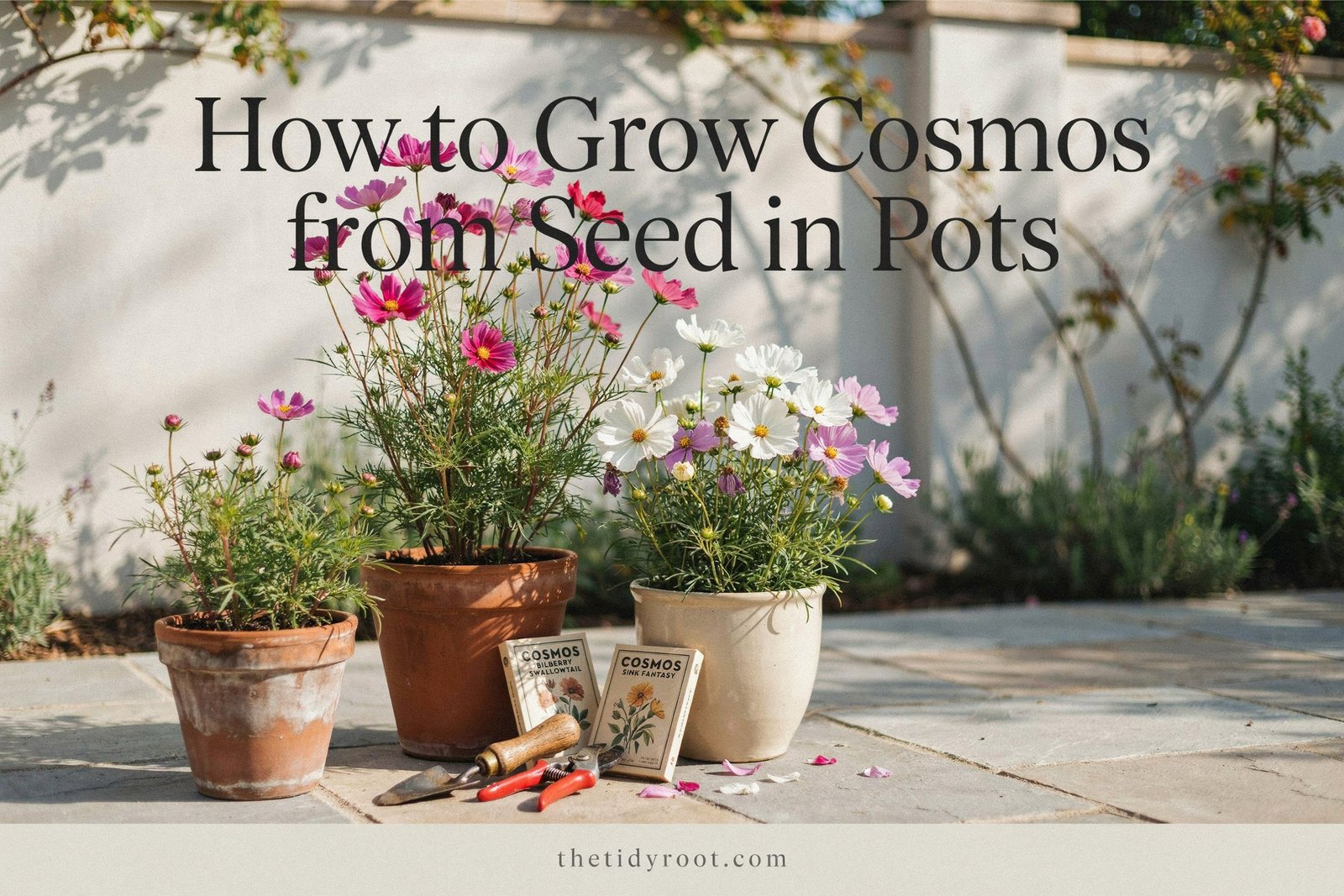

Growing cosmos from seed in pots has become one of my favorite ways to add a little color to a small garden space.
I love how quickly those tiny seeds turn into airy green plants covered with cheerful, daisy-like flowers.
You don’t need a huge backyard to enjoy them, either.
With a sunny spot, a suitable container, good drainage, and a little patience, you can grow beautiful cosmos on a balcony, patio, porch, or even a small doorstep garden.
Why Grow Cosmos in Pots?
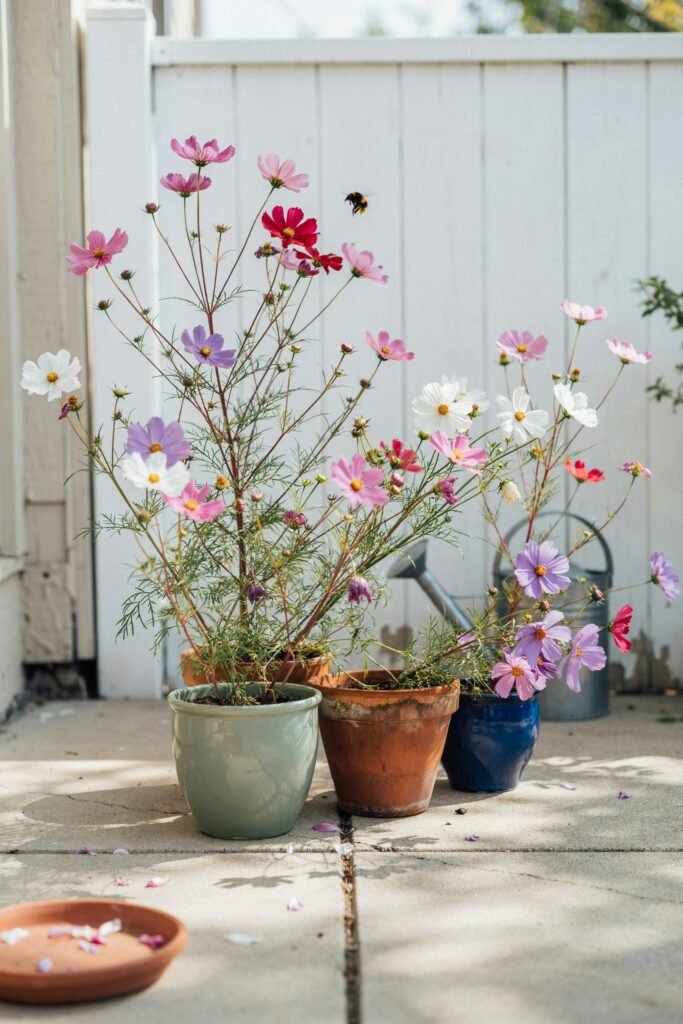
Cosmos are wonderfully forgiving flowers, which makes them a great choice if you are new to growing flowers from seed.
They can be started directly from seed, tolerate less-than-perfect soil, and generally need little attention once established.
Growing them in containers also gives you more control over where they grow.
You can move your pots around to find the sunniest position, brighten up a plain patio, create a small pollinator garden, or grow flowers even if you don’t have suitable garden beds.
Cosmos also come in a range of colors, including pink, white, red, orange, yellow, and burgundy, depending on the species and variety.
For pots, compact or dwarf varieties can be especially convenient, although taller varieties can also work when given a sufficiently large, stable container.
Choose the Right Cosmos Variety
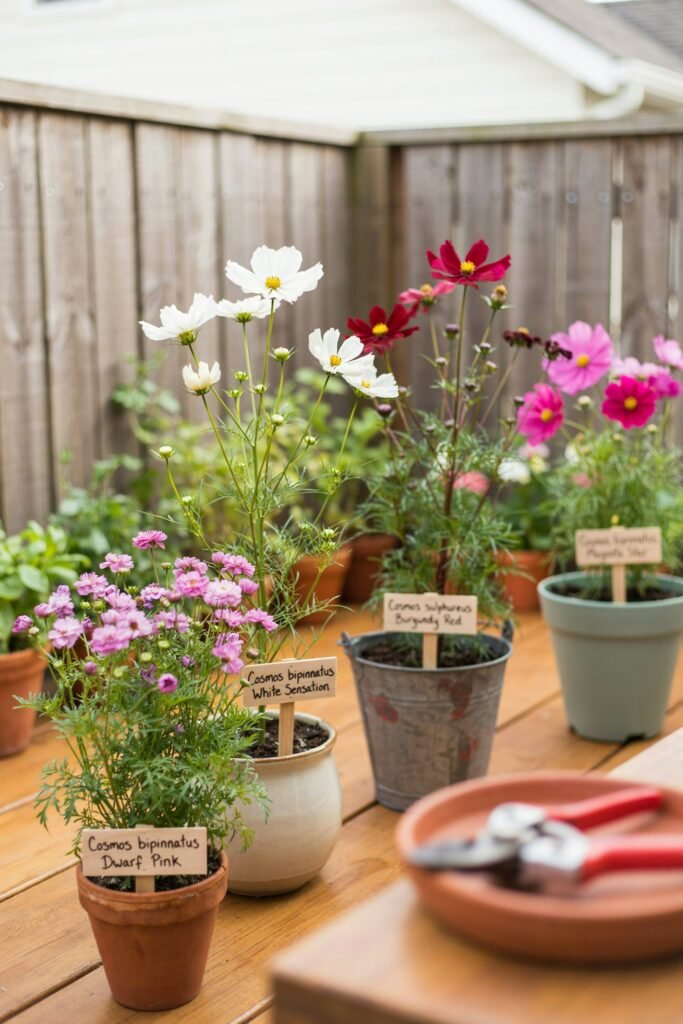
Before planting, check the seed packet for the mature height of the variety you’re growing.
This matters because some cosmos can become surprisingly tall. Cosmos bipinnatus, for example, can grow several feet tall, while some cultivated varieties are much shorter.
For containers, look for descriptions such as:
- Dwarf
- Compact
- Patio
- Short
- Bushy
- Container-friendly
Shorter varieties are easier to manage on balconies and small patios.
If you already have taller cosmos seeds, don’t worry. You can still grow them in pots. Just choose a heavier container, provide enough root space, and be prepared to support the stems if they begin leaning.
1. Pick a Container With Good Drainage
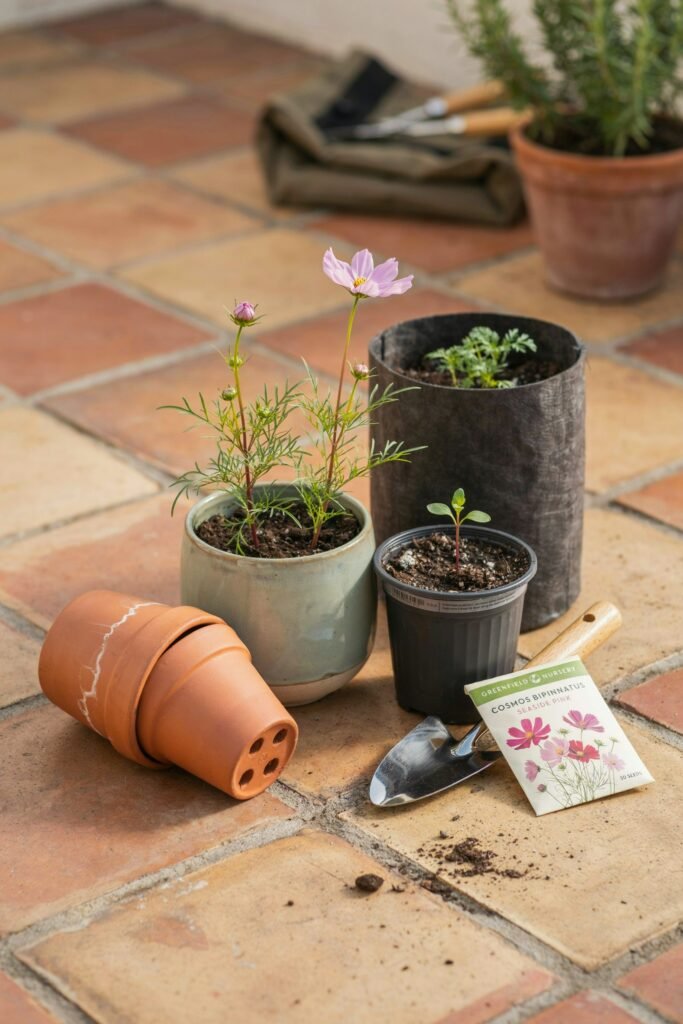
The container you choose can make a huge difference.
I recommend using a pot that is at least about 12 inches deep and 12 inches wide for a substantial cosmos plant.
A larger container can be even better for tall varieties because it provides more root room and makes the finished plant less likely to become top-heavy.
Most importantly, your pot needs drainage holes.
Cosmos don’t appreciate sitting in constantly soggy soil. Poor drainage can create problems for the roots, especially when you’re watering frequently while the seedlings are young.
Good container choices include:
- Terracotta pots
- Plastic pots
- Ceramic planters with drainage holes
- Fabric grow bags
- Large balcony planters
- Repurposed containers with proper drainage
If you are growing several compact cosmos plants together, use a wider container rather than crowding too many plants into a small pot.
2. Use a Light, Well-Draining Potting Mix
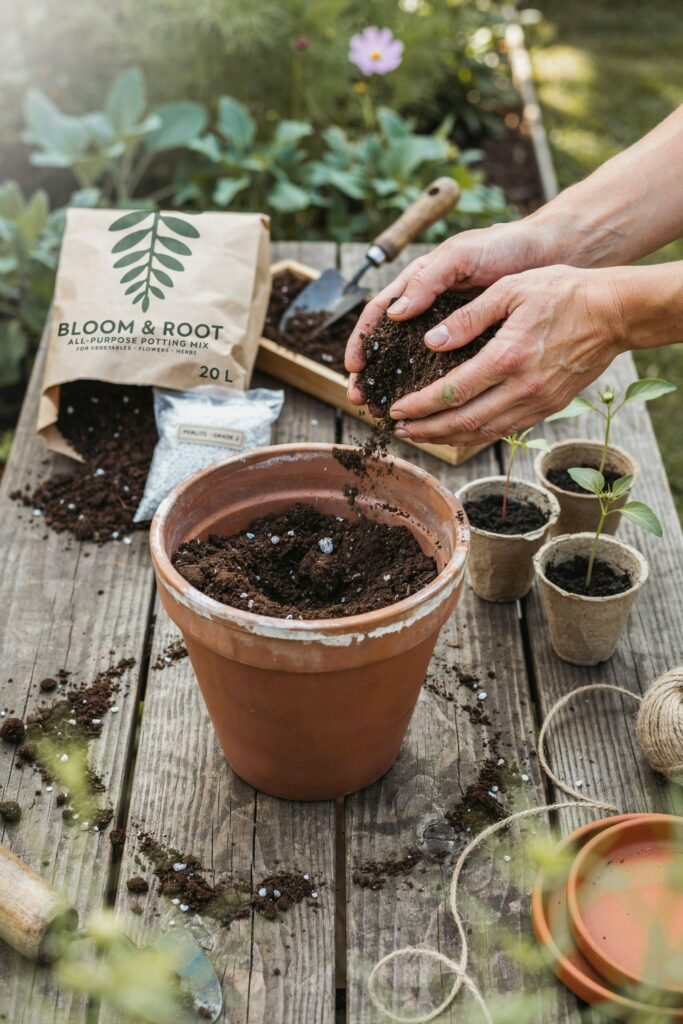
One of the biggest mistakes I would avoid is filling your container with heavy garden soil.
Garden soil can become compacted inside a pot and make it harder for water and air to move around the roots.
Instead, use a quality potting mix.
Cosmos naturally prefer average to relatively poor soil rather than extremely rich soil. Too much fertility can encourage lots of leafy growth while reducing flower production.
For a simple container mix, you can use:
- 2 parts quality potting soil
- 1 part compost
- 1 part perlite
The goal is a mix that holds enough moisture for young seedlings but drains excess water quickly.
You don’t need to create an extremely rich growing medium. Cosmos are actually happier when you resist the urge to overfeed them.
3. Sow Cosmos Seeds at the Right Time
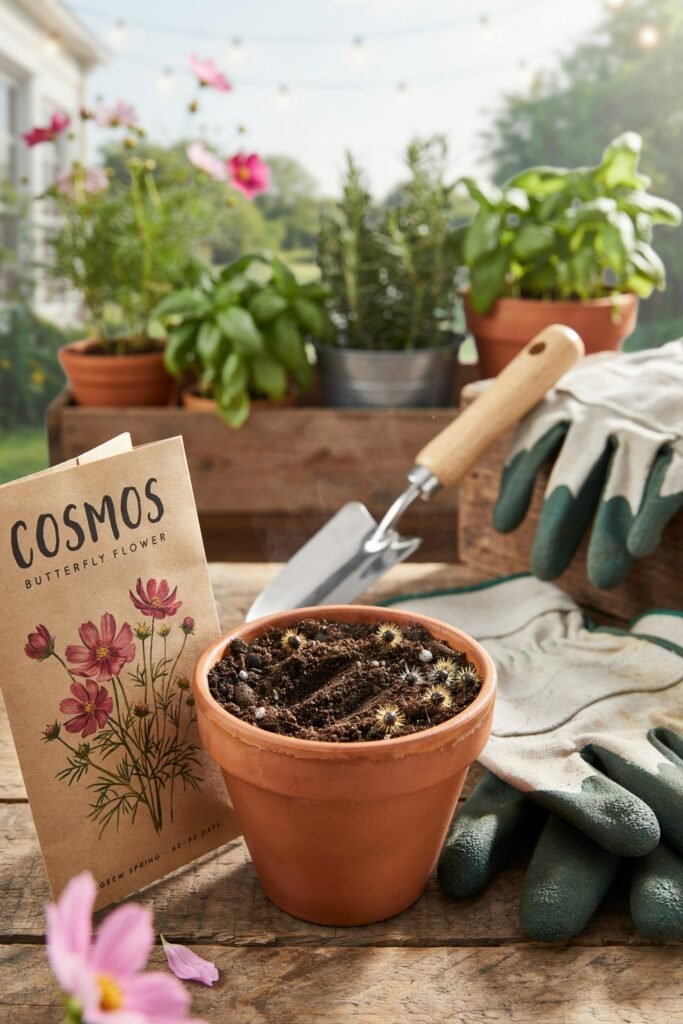
Cosmos are warm-season flowers.
If you’re sowing them outdoors, wait until the danger of frost has passed and the soil has warmed. Extension guidance recommends sowing when soil temperatures are around 65°F or warmer.
If your climate doesn’t experience frost, your timing will depend more on your local temperatures and growing season.
You can also start cosmos indoors several weeks before outdoor conditions are suitable, then transplant them later.
However, direct sowing is often the easiest approach because cosmos don’t require complicated seed-starting techniques.
4. Plant the Seeds Shallowly
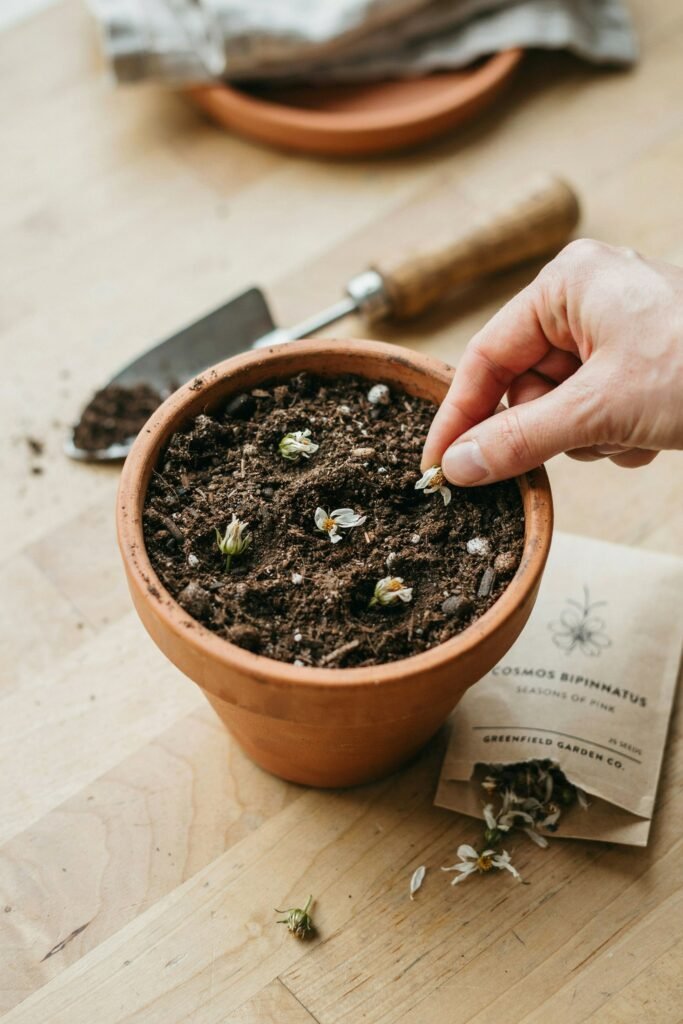
This is an important step.
Cosmos seeds should not be buried deeply.
Fill your pot with moistened potting mix and gently level the surface. Scatter the seeds over the soil, then press them lightly into the surface.
Cover them with only a very thin layer of soil.
Extension recommendations put the planting depth around 1/8 inch, noting that planting too deeply can reduce germination.
After sowing, gently water the container.
Avoid blasting the surface with a strong stream of water because it can wash the seeds into one corner of the pot.
5. Keep the Soil Moist While Seeds Germinate
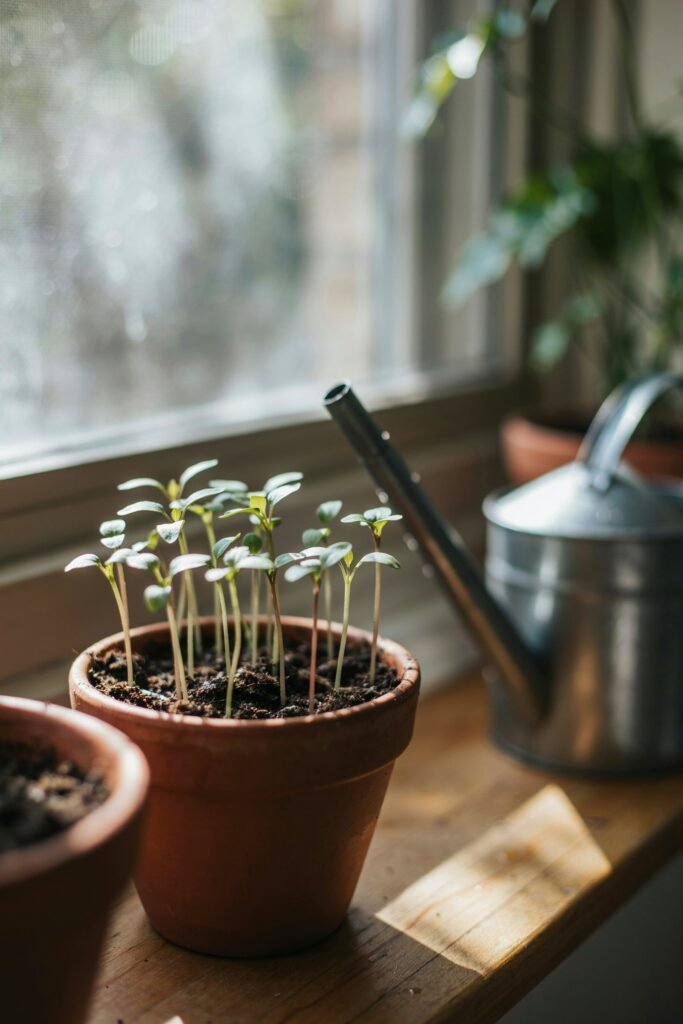
The first few days are when I pay the most attention to watering.
The soil should remain lightly and consistently moist while the seeds are germinating, but it should never become waterlogged.
Cosmos seeds can germinate in roughly 7 to 21 days, depending on conditions.
During this stage:
- Check the soil every day.
- Water gently when the surface begins drying.
- Keep the container somewhere warm.
- Give the seeds plenty of light once seedlings appear.
- Make sure excess water can escape through the drainage holes.
Once you see those first green seedlings, reduce your tendency to water constantly. Young plants need moisture, but they also need oxygen around their roots.
6. Give Cosmos Plenty of Sunlight
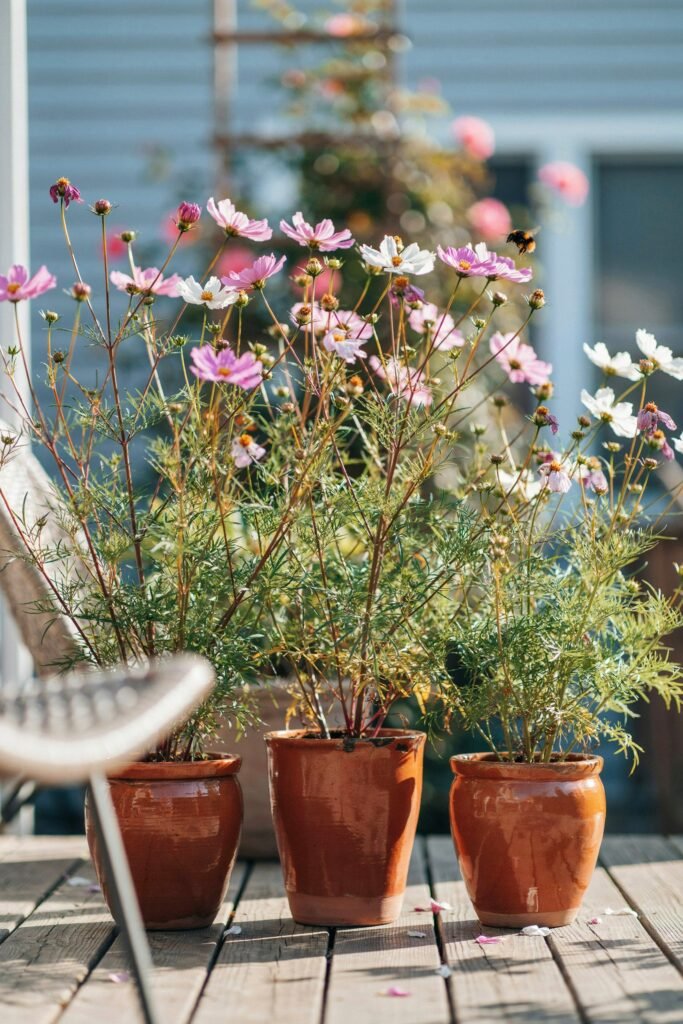
Cosmos are sun-loving plants.
For the best flowering, place your pot somewhere that receives at least 6 hours of direct sunlight, with more sun generally being beneficial. Some extension guidance recommends around 8 hours for optimum growth.
Good locations include:
- Sunny patios
- South-facing balconies
- Sunny porches
- Decks
- Open terraces
- Bright garden borders
If your cosmos receives too little light, the plants may stretch toward the light and become tall and weak.
If you are growing tall varieties in pots, also think about wind. A sunny but extremely exposed balcony may cause tall plants to bend or topple.
7. Thin the Seedlings
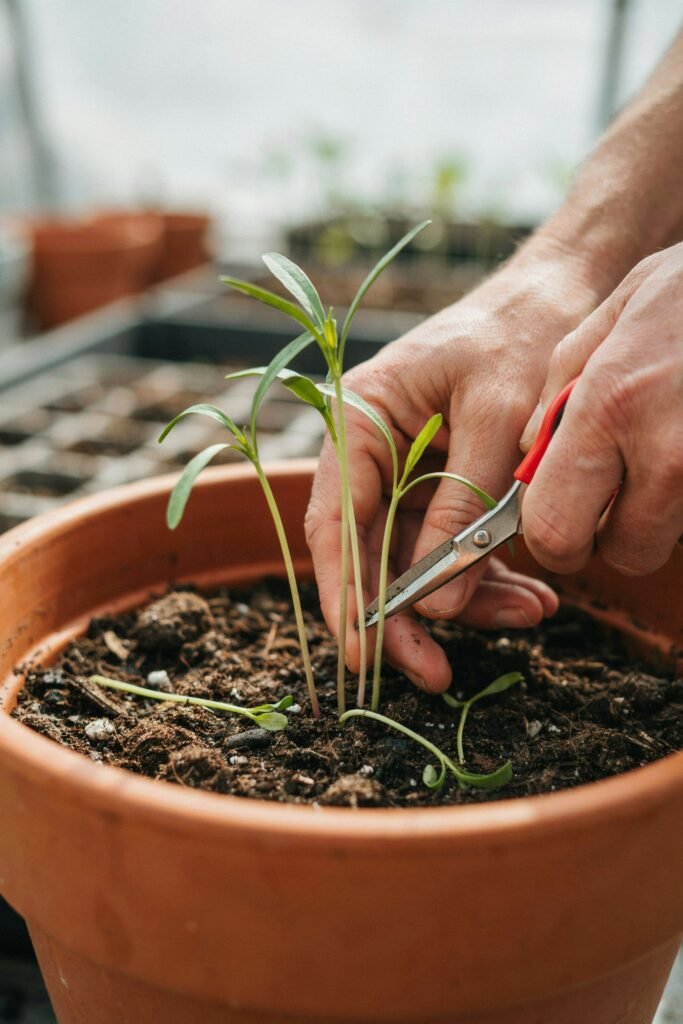
When several seedlings emerge close together, you may need to thin them.
It can be tempting to keep every little plant, but overcrowding can eventually lead to weak growth and poor airflow.
If your container is intended for one large cosmos plant, keep the strongest seedling.
For dwarf varieties, you can grow multiple plants together, provided the container is large enough and the seed packet’s spacing recommendations allow it.
When thinning, I prefer snipping unwanted seedlings at soil level instead of pulling them out aggressively. This reduces the chance of disturbing the roots of the seedling you want to keep.
8. Water Cosmos Correctly
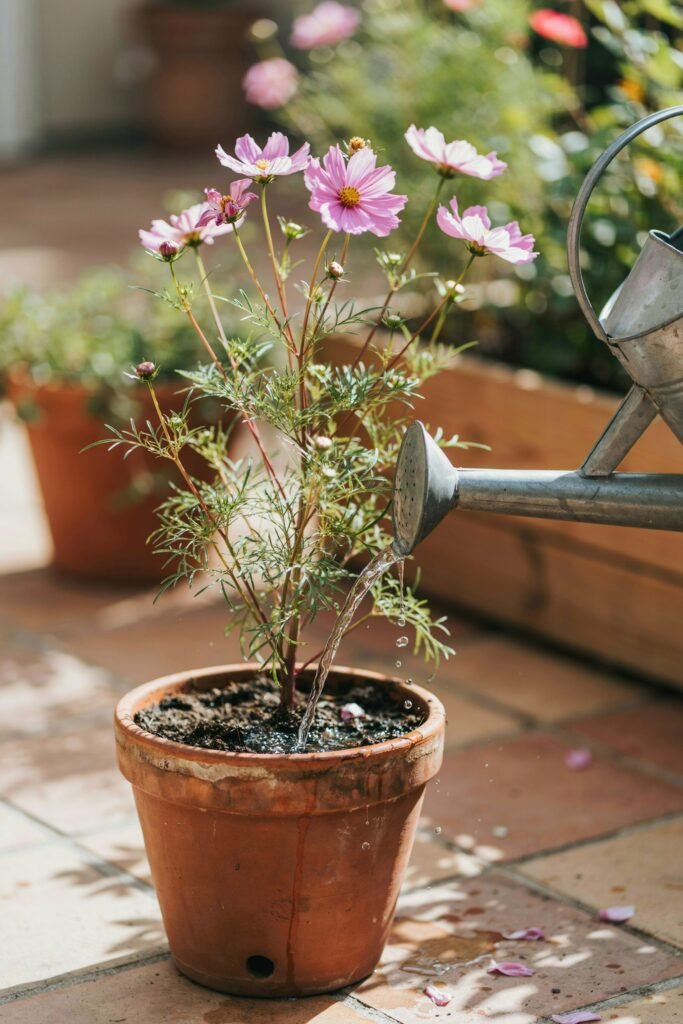
Cosmos become more drought-tolerant after they are established, but plants growing in pots can dry out much faster than those growing in the ground.
This is particularly important during hot weather.
Check your container regularly by touching the soil.
If the upper portion of the soil has dried out, water thoroughly until you see a little water draining from the bottom of the pot.
Then allow excess water to drain away.
Avoid keeping the soil constantly saturated.
Established cosmos generally prefer less water than many gardeners expect, and overwatering can actually work against flowering.
During extremely hot weather, container-grown plants may need watering more frequently because their limited soil volume dries quickly.
9. Don’t Overfertilize Your Cosmos
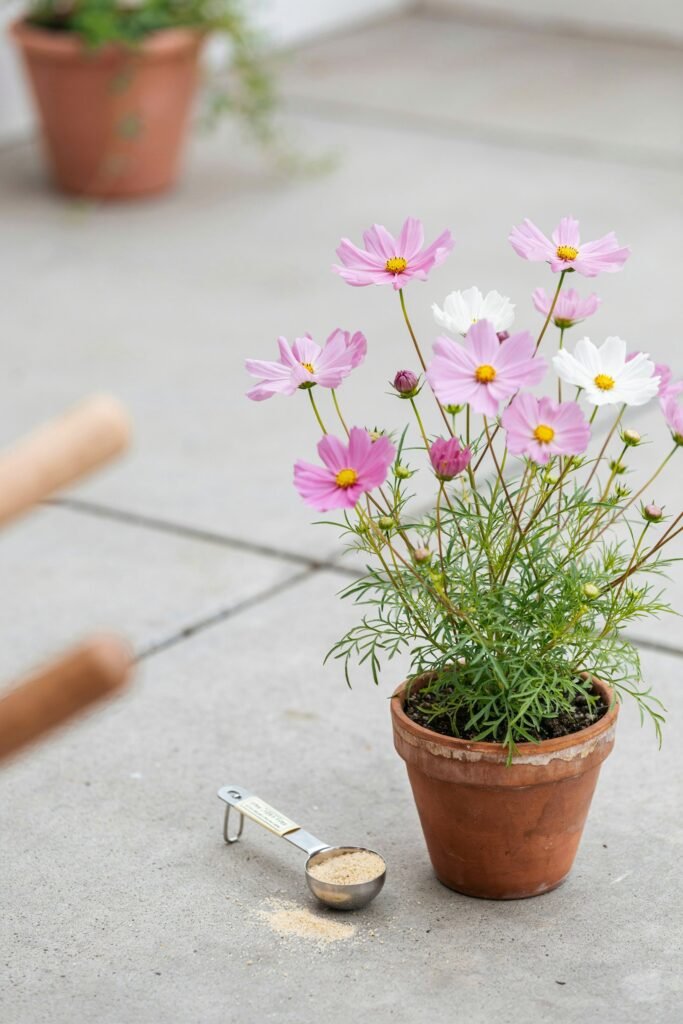
This is one of my favorite cosmos-growing tips because it saves both money and effort.
You don’t need to constantly feed cosmos.
In fact, too much fertilizer—particularly nitrogen—can produce lots of foliage without giving you the abundance of flowers you’re hoping for. Extension sources specifically warn that over-fertilizing can reduce flower production.
If your potting mix already contains some compost, you may not need additional fertilizer at all.
If your plants genuinely appear to need feeding, use a mild, balanced fertilizer according to the product directions rather than repeatedly applying strong fertilizer.
With cosmos, more food doesn’t necessarily mean more flowers.
10. Pinch Young Plants for Bushier Growth
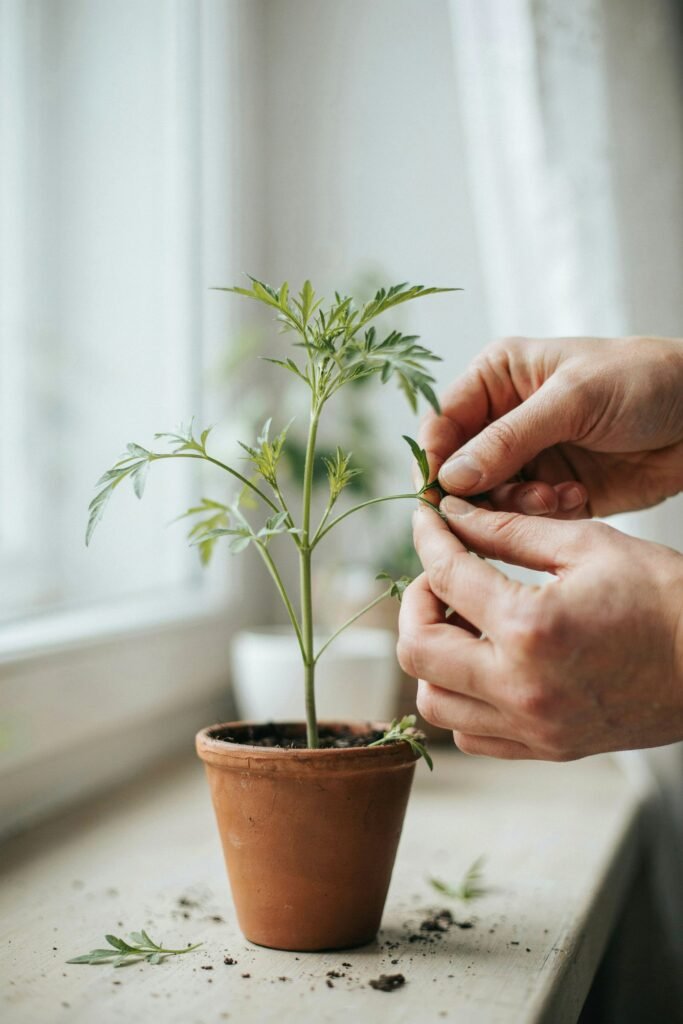
If your cosmos are becoming tall and narrow, pinching can help create a fuller plant.
Once a young plant has become established and has reached roughly 12 inches tall, you can pinch out the growing tip.
This encourages the plant to branch instead of continuing to grow straight upward.
The result can be:
- More side branches
- A bushier appearance
- More flowering stems
- A sturdier-looking plant
This is particularly useful when growing cosmos in containers where you want a fuller display rather than one very tall stem.
11. Support Tall Cosmos Plants
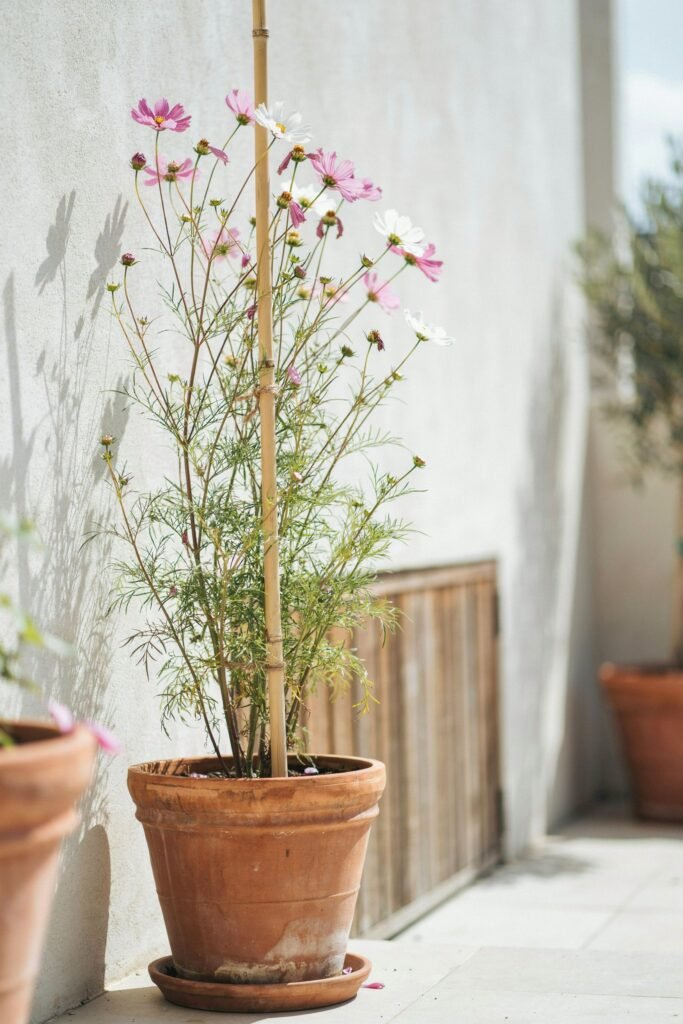
Some cosmos varieties can become several feet tall.
That’s beautiful in a garden, but a tall plant growing in a container can become top-heavy.
If your plant begins leaning, add support before it falls over.
You can use:
- A small garden stake
- A decorative plant support
- A simple bamboo stake
- Twig supports
- A small plant cage
Place the support early rather than waiting until the plant is already sprawling across the patio.
Also position large containers somewhere sheltered from strong winds.
12. Deadhead for More Flowers
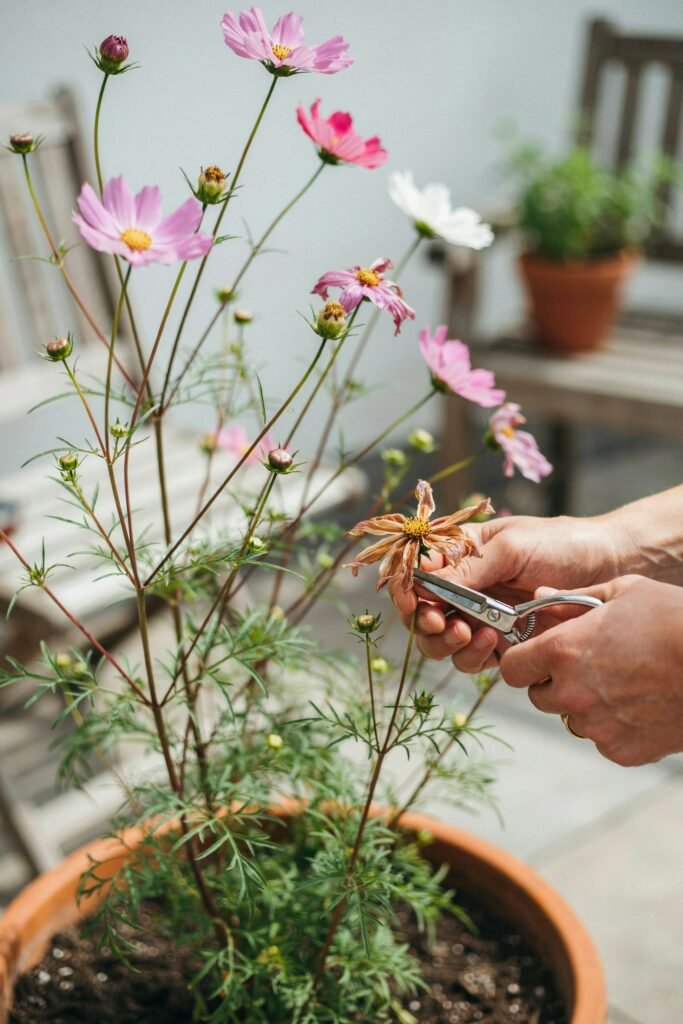
One of the easiest ways to keep your cosmos looking fresh is to remove faded flowers.
Once a flower has finished blooming and begins to fade, snip it off with clean scissors or pruning shears.
Regular deadheading helps keep the plant focused on producing additional flowers rather than allowing every flower to mature into seed. Cosmos are known for flowering through much of the growing season with basic care.
I especially like deadheading container cosmos because it keeps the whole pot looking tidy.
If you want your cosmos to self-seed, however, leave a few flowers alone toward the end of the season so they can produce seeds.
13. Harvest Cosmos for Bouquets
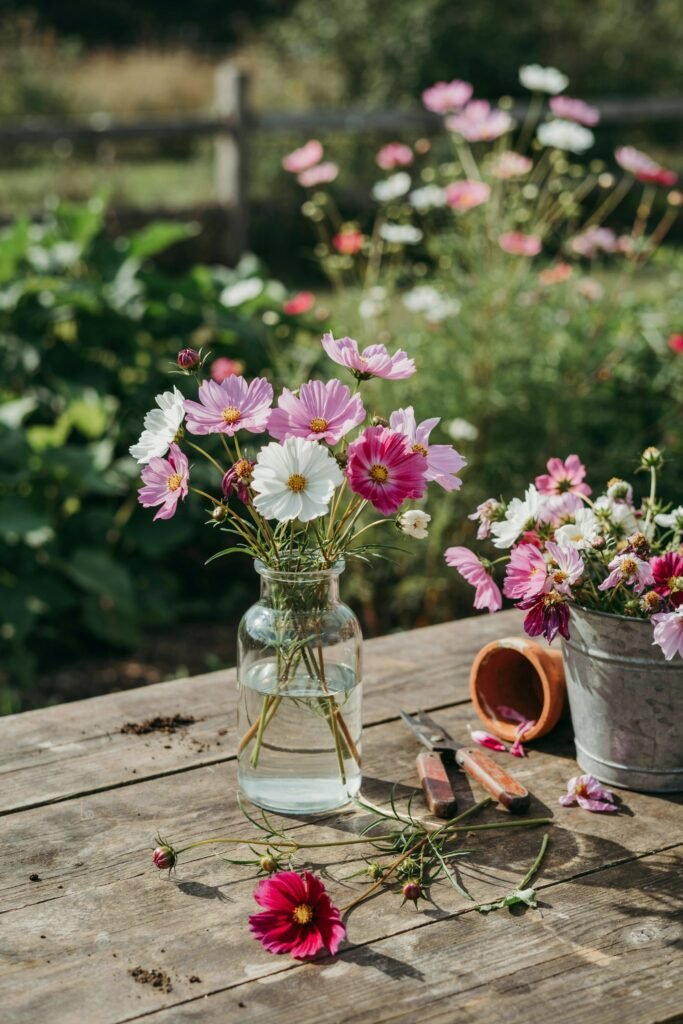
Don’t be afraid to cut your cosmos flowers.
They make lovely casual cut flowers, and harvesting can also encourage the plant to produce more flowering stems.
Choose flowers that are freshly opened and cut the stem cleanly.
Bring them indoors and place them in a clean vase filled with fresh water.
A pot full of cosmos can give you flowers for both your outdoor space and simple indoor arrangements.
Common Problems When Growing Cosmos in Pots
Cosmos Are Tall and Floppy
This usually means the plant isn’t getting enough light, the variety naturally grows tall, or the plant needs support.
Move the container into a sunnier location if possible and consider pinching young plants earlier in the season.
Lots of Leaves but Few Flowers
Think about fertilizer and sunlight.
Too much fertility can encourage foliage at the expense of flowers, while insufficient sunlight can also reduce blooming.
Seedlings Aren’t Appearing
Check whether the seeds were planted too deeply.
Cosmos seeds need to be planted very shallowly, and overly wet or unsuitable temperature conditions can also affect germination.
The Pot Dries Out Too Quickly
Container plants can dry quickly, especially during hot weather.
Try moving the pot away from intense reflected heat, using a slightly larger container, and checking soil moisture more frequently.
Plants Keep Falling Over
The container may be too small or lightweight for a tall variety.
Move the pot to a sheltered location and add a stake or plant support.
Can You Grow Cosmos in Pots From Seed Successfully?
Absolutely.
In fact, growing cosmos from seed in containers is one of the simplest ways to create a colorful flower display when you don’t have much garden space.
The key is not to overcomplicate things.
Choose a container with good drainage, use a loose potting mix, sow the seeds shallowly, give them plenty of sunshine, water carefully while they’re getting established, and avoid excessive fertilizer.
Once the plants begin flowering, regular deadheading can keep your container looking fresh and colorful for much of the season.
And if you have a little extra space, consider growing several pots with different cosmos colors. A combination of pink, white, orange, and burgundy blooms can create a beautiful little container garden without requiring a traditional flower bed.
Final Thoughts
Growing cosmos from seed in pots is one of those gardening projects that gives you a lot of beauty without demanding too much work.
I especially love it for small gardens because a single sunny container can become a cheerful display of delicate flowers and feathery foliage.
Start with the right pot, keep the seeds shallow, give your plants plenty of sunshine, and don’t spoil them with too much fertilizer or water.
Once established, cosmos are wonderfully low-maintenance and can reward you with flowers throughout the growing season.
For a beginner gardener, they are hard to beat.
