


Pineberries are one of those little garden surprises that made me curious the first time I saw them.
They look almost like strawberries wearing their colors backward, with creamy white fruit and tiny red seeds.
I love the idea of growing something unusual without needing a completely different gardening routine. If you already know how to grow regular strawberries, you’re halfway there.
With the right sunlight, soil, watering, pollination, and a little patience, you can grow these beautiful berries at home too.
What Are Pineberries?

Pineberries are a type of strawberry, botanically known as Fragaria × ananassa. They are sometimes called white strawberries because their fruit develops a creamy white to pale pink color instead of the familiar bright red.
The berries are usually smaller and softer than many common red strawberries. Their flavor is often described as strawberry-like with a mild pineapple or citrus note, although the exact flavor can vary from one plant to another.
One thing that makes pineberries especially interesting is their appearance. As they develop, the berries remain pale while the seeds change from green to reddish. That gives you a useful clue when deciding when they are ready to pick.
Pineberries can be grown in:
- Garden beds
- Raised beds
- Containers
- Patio planters
- Small-space gardens
They are generally grown much like other everbearing strawberries, but pollination is an important consideration if you want a good harvest.
What You Need Before Planting Pineberries
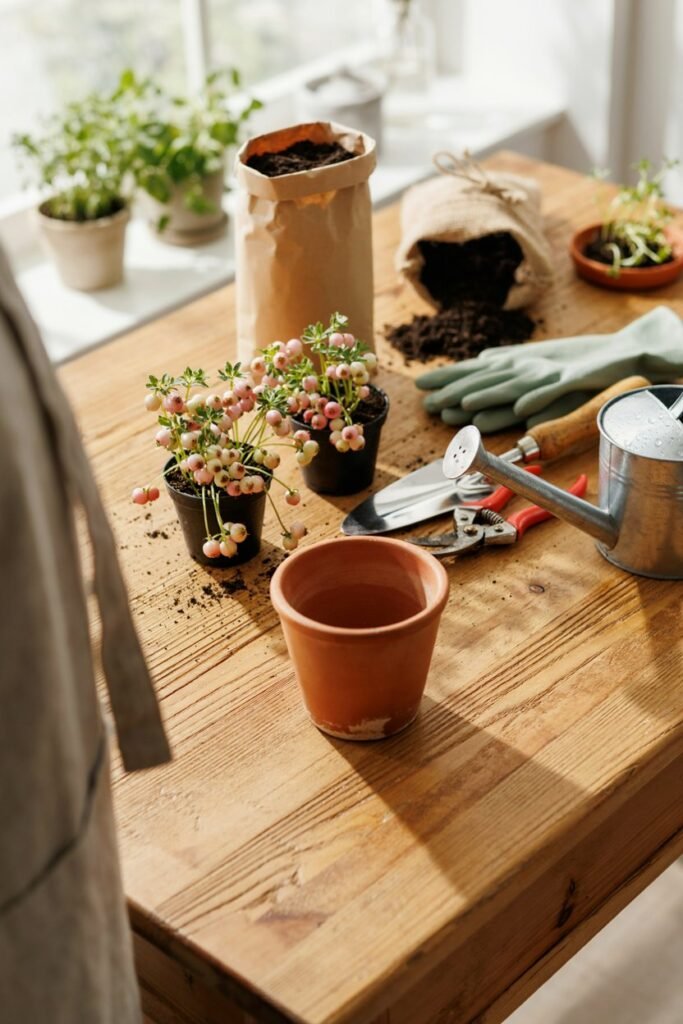
You don’t need a complicated setup to get started. A few basic things can make a big difference.
You’ll need:
- Healthy pineberry plants
- A sunny growing location
- Well-draining soil
- Compost or other organic matter
- A compatible red strawberry plant for pollination
- Mulch such as clean straw
- A watering can or garden hose
- Container or garden bed if growing in a small space
I recommend starting with healthy nursery plants rather than trying to grow pineberries from saved seeds.
Pineberries are hybrids, and growing them from seed won’t reliably give you plants with the same characteristics as the parent plant. Illinois Extension specifically recommends buying pineberries as transplants for this reason.
1. Choose the Right Growing Location

The first thing I would focus on is sunlight.
Pineberries grow best in a location that receives full sun, although gardeners in very hot climates may find that some afternoon protection helps prevent the fruit from becoming overly soft.
A good strawberry-growing site should also have plenty of air movement and should not remain soggy after rain. University of Minnesota Extension recommends full sunlight and well-drained soil for strawberries because poor drainage can contribute to plant and root problems.
Try to avoid planting pineberries:
- Beneath large trees
- In constantly shaded areas
- In places where rainwater collects
- In heavy, poorly drained soil
- In areas with very little air circulation
If your garden has heavy soil, a raised bed or container can make growing much easier.
Read Best Dwarf Citrus Fruits to Brighten Up Your Indoor Winter Garden
2. Prepare the Soil

Pineberries aren’t particularly difficult about soil, but they do best when their roots have access to moisture, nutrients, and good drainage.
Before planting, loosen the soil and mix in plenty of mature compost or other well-rotted organic matter.
The goal is to create soil that is:
- Fertile
- Loose
- Well-drained
- Moist but not waterlogged
- Rich in organic matter
Avoid planting directly into compacted soil. Strawberry roots need a healthy growing environment, and water sitting around the roots can create problems.
If you’re using containers, choose a quality potting mix rather than garden soil. Garden soil can become heavy and compacted inside containers.
3. Plant Pineberries at the Correct Depth
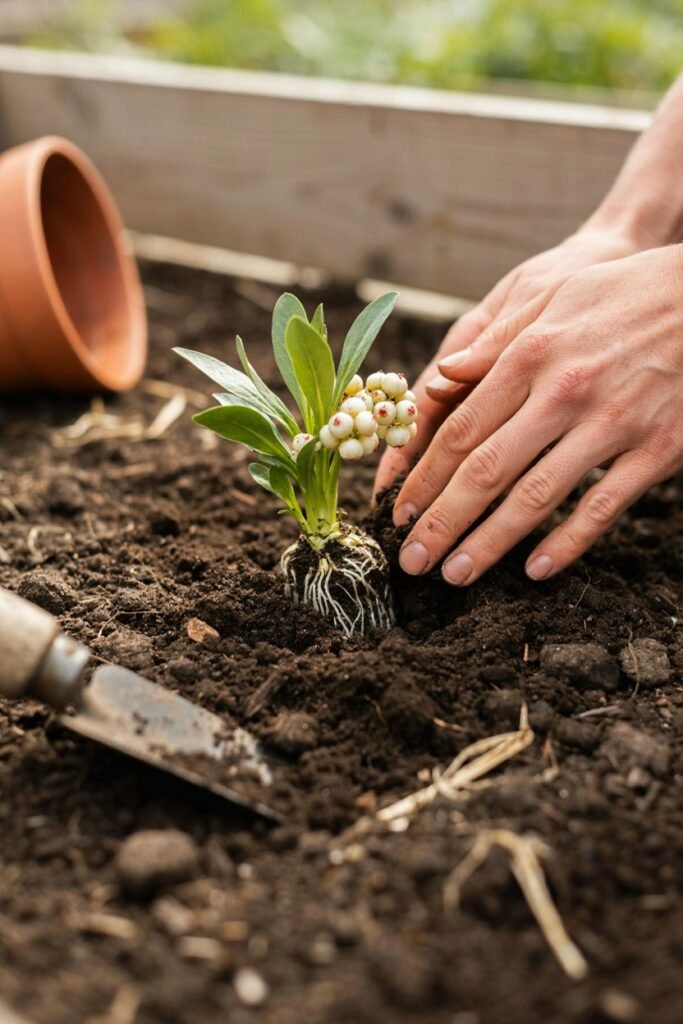
This is one of the easiest steps to get wrong.
Look closely at your pineberry plant before planting. You’ll see the crown, which is the short central section between the roots and leaves.
Keep the crown at soil level.
Don’t bury the crown deeply because excess moisture around it can cause problems. At the same time, don’t leave the roots exposed.
Make a planting hole wide enough to spread the roots naturally. Place the plant in the hole, cover the roots with soil, and gently firm the soil around the plant.
Then water thoroughly.
For garden planting, Illinois Extension recommends spacing pineberries about one foot apart within a row.
Giving plants enough room also helps improve air circulation around the foliage.
Read How to Make Banana Peel Liquid Fertilizer (Step-by-Step Guide)
4. Don’t Forget the Pollinator Plant

This is probably the most important thing to understand before growing pineberries.
Many pineberry cultivars need pollen from another compatible strawberry variety to produce a reliable crop. Illinois Extension notes that pineberries are not self-fertile and recommends one pollinator strawberry for every four pineberry plants.
So, if you plant four pineberries, add a compatible red-fruited strawberry nearby.
You don’t need to create a separate strawberry garden. You can simply mix the plants together.
For example:
4 pineberry plants + 1 compatible red strawberry plant
The flowers of the plants attract pollinating insects, which transfer pollen between flowers.
If you’re growing your pineberries in containers, keep the pollinator strawberry close enough for bees and other pollinating insects to easily visit both plants.
Good pollination is especially important because beautiful flowers don’t automatically mean you’ll get lots of fruit. Pollinating insects are an important part of fruit production.
5. Water Pineberries Regularly
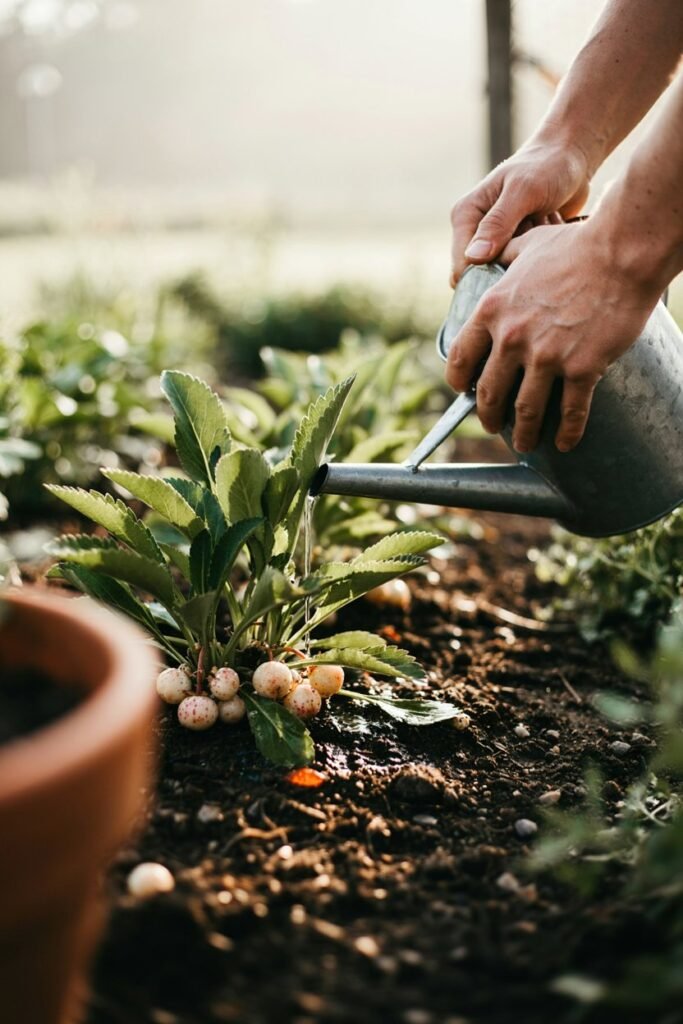
Pineberries have relatively shallow roots, so I don’t like letting the soil become completely dry for long periods.
Water deeply enough to moisten the root zone, then allow excess water to drain away.
During hot or dry weather, check the soil more frequently.
A simple trick is to push your finger into the soil. If the surface feels dry and the soil underneath is beginning to dry out, it’s time to water.
Try to:
- Water near the base of the plant
- Avoid constantly soaking the leaves
- Water in the morning when possible
- Keep moisture consistent during flowering and fruit development
In containers, you’ll probably need to check moisture more often because pots dry out faster than garden beds.
At the same time, don’t keep the soil permanently wet. Pineberries appreciate moisture, but their roots still need oxygen.
6. Add Mulch Around the Plants
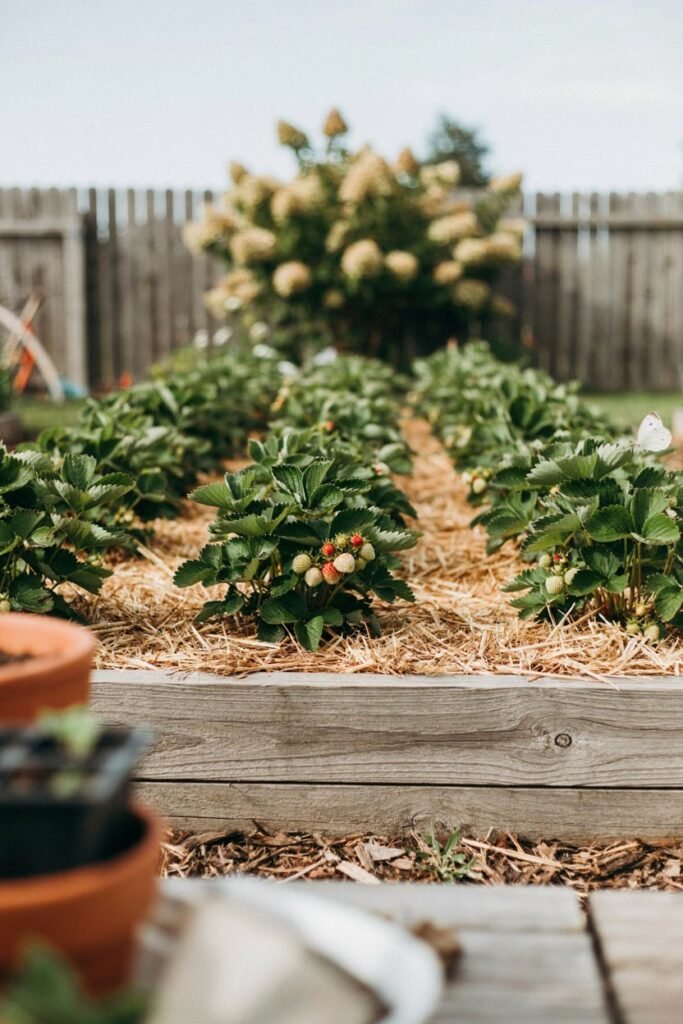
Mulching is one of those simple gardening jobs that can make everything easier.
A layer of clean straw around your pineberries can:
- Reduce weeds
- Help the soil retain moisture
- Keep berries cleaner
- Reduce soil splashing onto the fruit
- Provide some protection during cold weather
Illinois Extension recommends a layer of weed-free straw for pineberries and notes that it can help with moisture retention, weed suppression, and winter protection.
Keep mulch away from directly covering the crown.
As the berries develop, the mulch also gives the fruit a clean surface to rest on instead of sitting directly against wet soil.
7. Feed Your Pineberry Plants

If you prepared the soil well with compost, your plants should have a good foundation.
Avoid going overboard with fertilizer, especially high-nitrogen fertilizers. Too much nitrogen can encourage lots of leafy growth without giving you the fruit production you’re hoping for.
Instead, use a balanced fertilizer according to the product instructions if your plants appear to need additional feeding.
Compost added before planting can also help maintain healthy soil.
Watch the plants rather than automatically feeding them every few weeks. Healthy plants should produce fresh green leaves, flowers, runners, and eventually fruit.
8. Encourage Bees and Other Pollinators

Since pollination is so important, I like to make the garden welcoming to bees and other beneficial insects.
You can plant flowers near your strawberry bed that bloom around the same time as your pineberries.
Good garden choices include flowers and herbs that attract pollinating insects.
Try to avoid unnecessary pesticide use around plants that are flowering because you don’t want to discourage the insects you need for pollination.
If your pineberries produce lots of flowers but very little fruit, poor pollination is one possibility to consider.
Cold, wet, or windy weather can also reduce insect activity and interfere with pollination.
9. Remove Unwanted Runners
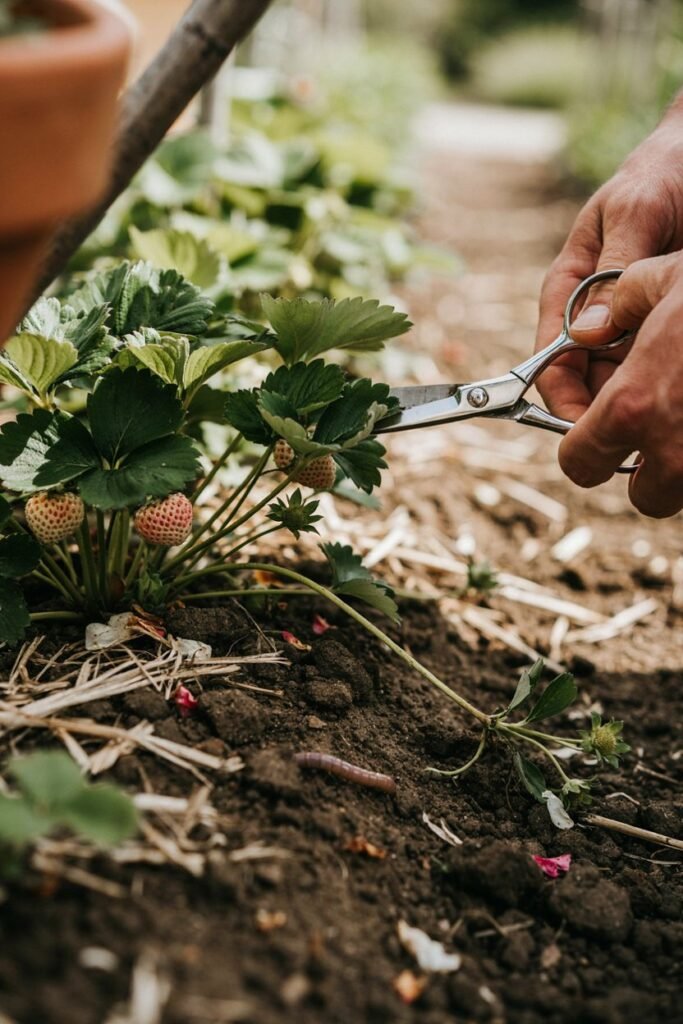
Pineberries can produce runners, just like many other strawberries.
A runner is a long stem that grows from the mother plant and eventually produces a new plant.
Runners can be useful if you want to expand your strawberry patch. However, if your main goal is producing fruit, allowing the plant to put lots of energy into runners can reduce the energy available for flowering and fruiting.
For a tidy fruit-producing bed, remove unwanted runners while they’re young.
If you want more plants, you can allow selected runners to root and establish new plants.
This is an easy way to expand your garden without buying a new plant every time.
10. Growing Pineberries in Containers

If you don’t have a large garden, don’t worry.
Pineberries can be grown in containers, making them a lovely option for patios, balconies, and small gardens.
Choose a container with:
- Good drainage holes
- Enough depth for the roots
- Quality potting mix
- Space for the plant to spread
Don’t overcrowd the container.
Remember that container-grown plants dry out faster than plants growing in the ground, especially during hot weather. Check the soil regularly and water when needed.
You’ll also still need to think about pollination. Keep a suitable red strawberry plant nearby rather than growing pineberries completely on their own.
11. How to Know When Pineberries Are Ready to Harvest

This is one of my favorite things about growing pineberries because you can’t rely on the usual strawberry-red color.
Pineberries generally develop from green fruit into pale or white fruit, with the seeds becoming red as the berry ripens. Some may develop a soft pink blush.
Look for:
- Creamy white fruit
- Red seeds
- A mature-looking berry
- A pleasant fragrance
- A slightly softer texture
Don’t pick them simply because they have reached a certain size.
The seeds changing from green toward red can be a much more useful visual clue.
Once ripe, gently pick the fruit rather than pulling aggressively on the plant.
12. Harvest Pineberries Carefully

Pineberries tend to be softer and more delicate than many red strawberries.
That means I would harvest them carefully and avoid piling lots of berries on top of each other.
Pick them when they are ripe and handle them as little as possible.
Because of their softer texture, pineberries are best enjoyed fresh rather than stored for long periods. Their delicate nature also means you should check the plants frequently once fruit begins to ripen.
You can enjoy freshly harvested pineberries:
- Straight from the garden
- With yogurt
- Over oatmeal
- In fruit salads
- On pancakes
- As a dessert topping
- With other fresh berries
Common Pineberry Problems
Even though pineberries are relatively easy to grow, they can experience many of the same problems as ordinary strawberries.
Flowers but no fruit
Start by checking pollination.
If you’re growing only pineberries without a compatible strawberry nearby, adding a pollinator plant may make a significant difference.
Also consider whether bees and other pollinating insects can reach the flowers.
Small or weak plants
Poor soil, insufficient sunlight, overcrowding, or inconsistent watering can all affect plant growth.
Check the basics before adding more fertilizer.
Mushy berries
Pineberries are naturally soft, but excessive moisture, poor airflow, or berries sitting against wet soil can increase problems with fruit rot.
Use clean mulch, improve air circulation, and remove damaged fruit promptly.
Lots of leaves but few berries
Too much nitrogen can encourage leafy growth. Also check whether the plants are receiving enough sunlight and whether pollination is taking place.
Slugs and insects
Slugs, aphids, spider mites, strawberry weevils, and other pests can affect strawberries, and pineberries can experience many of the same pest problems.
Regularly inspect the underside of leaves and around the crown.
Early detection makes problems much easier to manage.
Can You Grow Pineberries From Seeds?
I wouldn’t recommend starting pineberries from seeds if your goal is to get predictable pineberry fruit.
Because pineberries are hybrids, seeds won’t reliably produce plants identical to the parent plant. Buying healthy plants or using runners from a desirable plant is a much more dependable approach.
Runners are particularly useful because the new plants are vegetatively produced from the mother plant.
If you already have a healthy pineberry plant, allowing a few strong runners to establish can help you build your own patch over time.
Do Pineberries Really Taste Like Pineapple?
The name can create some big expectations!
Pineberries are often described as having a pineapple-like flavor or aroma, but the experience isn’t identical for everyone.
Recent University of Illinois Extension observations found that people differed in how strongly they perceived the pineapple flavor. Some noticed it clearly, while others mainly experienced a sweet strawberry flavor.
So I would think of pineberries as white strawberries with a possible tropical twist, rather than expecting them to taste exactly like a pineapple.
That’s part of the fun of growing them yourself you get to decide what you think!
My Simple Pineberry Growing Routine
If you want to keep things easy, here’s the routine I would follow:
Before planting:
Choose a sunny location, prepare well-drained soil, and add compost.
At planting:
Plant healthy pineberry starts with their crowns at soil level. Space them properly and add a compatible red strawberry pollinator.
During growth:
Keep the soil consistently moist, watch for pests, remove weeds, and keep the plants mulched.
During flowering:
Encourage bees and other pollinators to visit the garden.
During fruiting:
Check the berries regularly and watch for creamy white fruit with red seeds.
After harvest:
Remove damaged fruit, tidy the plants, and decide which runners you want to keep for future plants.
Final Thoughts
Growing pineberries is a fun way to add something a little different to a strawberry garden.
What I love most is that you don’t need to completely change the way you garden to grow them.
Give them sunlight, fertile well-drained soil, regular moisture, good airflow, and the right pollination partner, and they can reward you with unusual little berries that look beautiful in the garden and on the plate.
The biggest thing to remember is don’t plant pineberries alone and expect a heavy crop.
A compatible strawberry pollinator can be an important part of your setup. Once you’ve got that covered, the rest is mostly about giving your plants steady, simple care.
And when those first creamy white berries with bright red seeds begin appearing, you’ll have a pretty satisfying little harvest to enjoy.
