
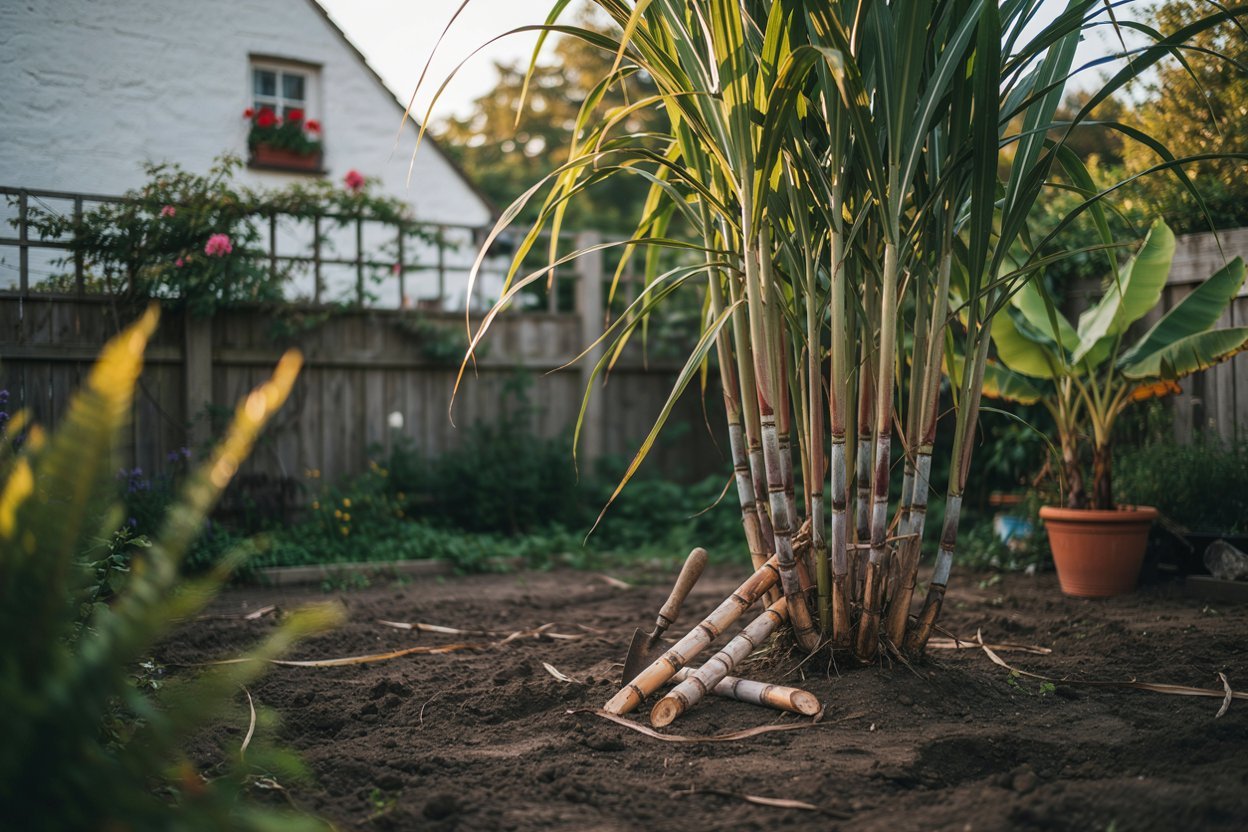

Sugar cane is one of those plants that feels a little unusual to grow at home, but I love how simple and rewarding it can be.
Once established, those tall green stalks create a beautiful tropical look while giving you something sweet to harvest later. You don’t need a huge farm to grow it, either.
With plenty of sunshine, good soil, regular moisture, and a little patience, sugar cane can grow surprisingly well in a home garden.
In this guide, I’ll walk you through planting, watering, feeding, propagating, harvesting, and caring for sugar cane so you can grow it successfully.
What Is Sugar Cane?
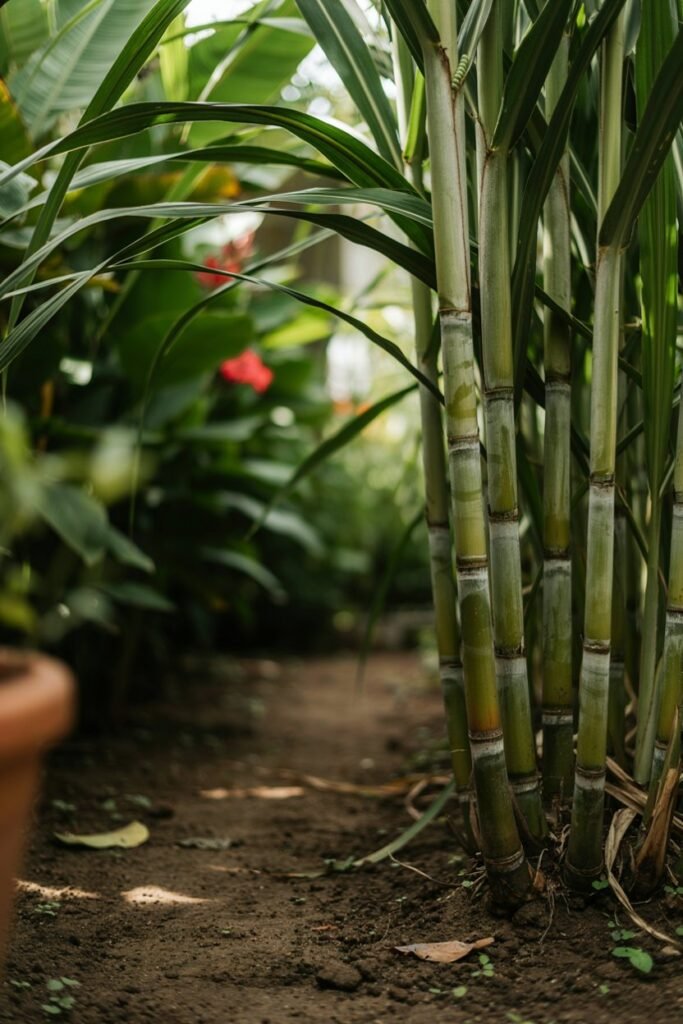
Sugar cane (Saccharum officinarum) is a tall, perennial grass grown mainly for the sweet juice stored inside its thick stems. It is a tropical plant and grows especially well in warm, sunny conditions.
Unlike many garden crops, sugar cane is not normally started from seeds. Instead, gardeners usually grow it from sections of mature stalks. Each section contains nodes, and those nodes can produce new shoots and roots.
Sugar cane can become quite tall when conditions are right. In warm climates, it can also continue growing for several years, producing new shoots after the mature stalks are harvested.
Besides being useful as an edible crop, I think sugar cane can be surprisingly attractive in the garden. Its tall stems and long leaves can add a tropical feel to a sunny corner or even provide some screening.
Where Should You Grow Sugar Cane?
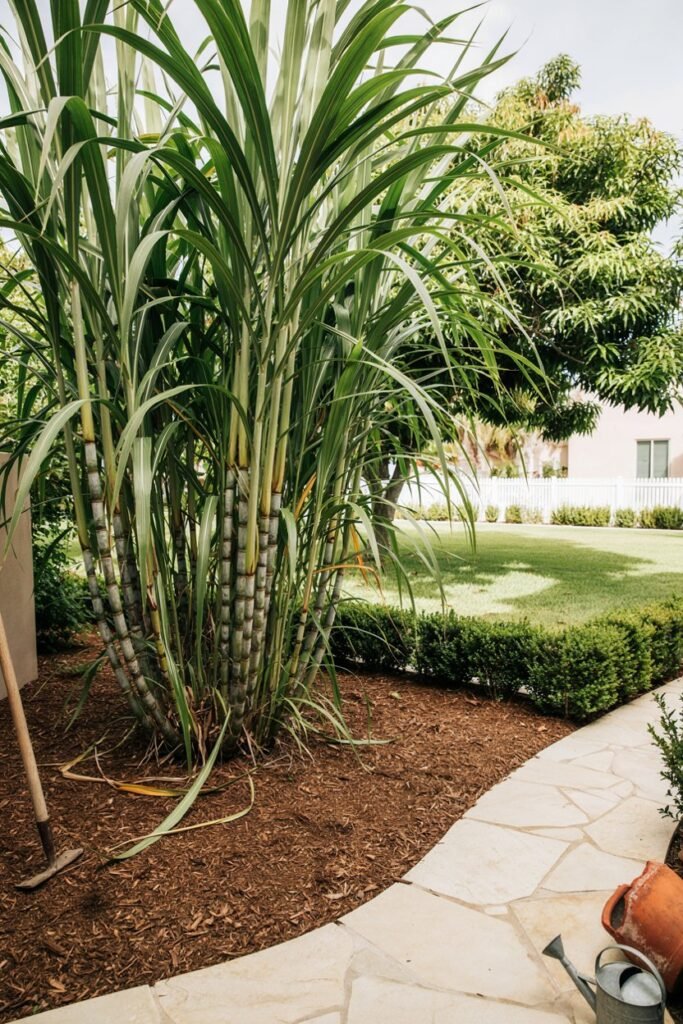
The first thing I would consider is space.
Sugar cane grows much taller and wider than many vegetables, so it isn’t something I would tuck into a small garden bed between your tomatoes and lettuce.
Give it room to grow and place it somewhere where its leaves won’t constantly brush against people walking past.
The leaf edges can be sharp, so a low-traffic area is best.
Sugar cane is also a warm-weather plant. It performs best in tropical and subtropical conditions and does not tolerate frost well.
In suitable warm climates, it can be grown as a perennial. In colder areas, you may need to grow it as an annual or protect it from cold weather.
If you live somewhere warm, your growing conditions may actually be ideal for sugar cane. In Nigeria and other tropical regions, for example, the long warm growing season can make sugar cane a practical home-garden crop.
Read How to Grow Honeyberry Plants: Homestead Survival Guide
How Much Sun Does Sugar Cane Need?
Sugar cane loves sunshine.
Choose a location that receives at least six hours of direct sunlight each day, although more sunlight is generally even better.
A sunny location helps the plant produce strong stems and encourages vigorous growth. If your sugar cane is planted somewhere shaded by a building, large tree, or tall fence for most of the day, you may notice slower or weaker growth.
When choosing your planting spot, think about how much sunlight that area receives throughout the entire growing season rather than just when you’re planting.
What Kind of Soil Does Sugar Cane Need?
Thankfully, sugar cane isn’t extremely fussy about soil.
The most important thing is finding the balance between moisture and drainage. Sugar cane likes consistent moisture, but its roots should not sit in stagnant water.
A fertile, well-draining soil enriched with organic matter is a great place to start.
Before planting, I like to loosen the soil well and mix in mature compost. This gives the roots a soft growing environment while adding organic matter and nutrients.
A slightly acidic to neutral soil works well. A pH around 6.0 to 6.5 is commonly recommended for sugar cane.
If your garden soil is heavy clay, improve drainage with organic matter rather than planting directly into a spot where water regularly collects.
How to Plant Sugar Cane
One of the easiest things about growing sugar cane is that you don’t need to start with seeds.
You need a healthy piece of sugar cane stalk with one or more viable nodes.
Step 1: Choose a Healthy Stalk
Start with a fresh, healthy sugar cane stalk. Look for firm sections without obvious rot, severe damage, or signs of disease.
The nodes are the slightly raised joints around the stalk. These are very important because new shoots develop from them.
Step 2: Cut the Stalk Into Sections
Using a clean, sharp cutting tool, divide the stalk into sections containing about two or three nodes.
Each section can potentially produce a new plant.
Step 3: Prepare the Soil
Create a shallow planting furrow in your prepared soil.
Sugar cane cuttings can be laid horizontally in the furrow and lightly covered with soil. The nodes should remain positioned so they can send shoots upward.
Epic Gardening recommends planting cuttings in furrows about six inches deep and spacing plants generously because mature sugar cane needs plenty of room.
For a home garden, avoid overcrowding. Giving each plant adequate space makes watering, weeding, and harvesting much easier.
Step 4: Water Thoroughly
After planting, water the area well.
Keep the soil consistently moist while the cutting begins to root. Avoid allowing the soil to become bone dry, but don’t keep it saturated either.
With warmth and moisture, the nodes will eventually begin producing new growth.
Can You Grow Sugar Cane in a Container?
Yes, you can grow sugar cane in a large container, especially if you’re working with limited garden space.
Choose a large, sturdy container with drainage holes. Sugar cane becomes tall and can produce multiple shoots, so a tiny pot will quickly become cramped.
Fill the container with a good-quality, well-draining potting mix enriched with compost.
Keep in mind that container-grown sugar cane usually needs closer attention to watering because containers dry out faster than garden soil.
A container can also be useful if you live somewhere with colder winters and need to move your plant to a protected location.
How to Water Sugar Cane
Water is one of the most important parts of growing healthy sugar cane.
The soil should remain consistently moist during active growth. As a general guide, sugar cane may need around 1 to 2 inches of water per week, depending on weather, soil, and temperature.
During very hot weather, check the soil more frequently.
Instead of giving the plant a tiny splash of water every day, water deeply enough to moisten the root zone. Mulching around the plants can also help slow moisture loss and reduce competition from weeds.
I especially like mulch for crops such as sugar cane because it makes the garden easier to manage. A layer of organic mulch can help the soil stay moist while keeping weeds from taking over.
Just keep mulch slightly away from the base of the stalks rather than piling it directly against them.
Read Best Vegetables for Hanging Baskets (From My Own Small-Space Garden)
How to Fertilize Sugar Cane
Sugar cane grows quickly when it has the right nutrients, so fertile soil is important.
Nitrogen is particularly useful for supporting leafy growth, while phosphorus and other nutrients also contribute to overall plant development.
Start with compost or a balanced fertilizer rather than automatically using large amounts of fertilizer.
As the plant becomes established, you can provide additional fertilizer during active growth. Sugar cane can be sensitive to excessive fertilizer, so more isn’t necessarily better.
Always follow the instructions on the fertilizer package and water after applying granular fertilizer.
If your soil is already rich, you may need less fertilizer than you would in poor soil.
Keep the Area Around Sugar Cane Weed-Free
Young sugar cane can struggle when surrounded by aggressive weeds.
Weeds compete with the plant for water, nutrients, light, and growing space. This is especially important while newly planted cuttings are becoming established.
Regularly check around the base of your plants and remove weeds before they become large.
Mulching makes this much easier.
I would rather spend a few minutes pulling small weeds than wait until they’re large enough to become a major problem.
Temperature and Humidity
Warm temperatures are ideal for sugar cane.
The plant thrives in tropical conditions and grows particularly well during hot weather. It does not handle frost well, so gardeners in colder climates need to plan for winter protection.
If temperatures are expected to become unusually cold, container-grown plants can be moved into a protected area.
For plants growing in the ground, heavy mulch around the root area can offer some protection, but don’t expect it to make sugar cane frost-proof.
In warm climates, simply providing plenty of sunshine, water, and fertile soil is usually much easier.
How to Propagate Sugar Cane
Propagation is one of my favorite things about sugar cane because it is so straightforward.
Once you have a healthy mature stalk, you can use sections of it to produce new plants.
Cut a healthy stem into sections containing several nodes. Lay the sections horizontally on moist soil and cover them lightly.
The buds at the nodes eventually produce new shoots while roots develop underneath.
Another option is to place a cutting in water with at least one node submerged. Once roots and new growth develop, it can be transferred into soil.
When propagating, always start with healthy plant material. A diseased or damaged stalk can give you problems before your new plant even gets established.
Common Sugar Cane Problems
Sugar cane is generally vigorous, but it isn’t completely free from pests and diseases.
Some problems that may affect sugar cane include:
- Sugarcane borers
- Grubs
- Aphids
- Mealybugs
- Spider mites
- Termites
- Fungal diseases
- Mosaic virus
- Sugarcane smut
The best first step is to inspect your plants regularly.
Look closely at the leaves, stalks, and new shoots. Watch for unusual spots, distorted growth, holes, insects, or sudden changes in color.
Healthy growing conditions can also help plants tolerate minor pest pressure.
Avoid allowing plants to become severely stressed from drought or poor nutrition, and remove badly affected plant material when appropriate.
When Is Sugar Cane Ready to Harvest?
Sugar cane takes patience.
For many home gardeners, the first harvest may take around a year, although the exact timing depends on the variety, climate, growing conditions, and how the plant is being grown.
Rather than harvesting too early, give the stalks plenty of time to mature.
The stalks should be well developed and firm before harvesting.
If you’re growing sugar cane in a tropical climate, you may be able to leave it growing longer and harvest mature stalks as needed.
How to Harvest Sugar Cane
Harvesting mature sugar cane requires a strong cutting tool and some care.
Cut the mature stalk close to the ground, leaving the root system in place if you want the plant to regrow.
Wear gloves when handling the plant because the leaves can have sharp edges.
After cutting, remove the leaves and clean the stalks before using them.
In warm climates, the remaining root system can produce new shoots called ratoons. These shoots can develop into another crop, although later harvests may be smaller than the original crop.
Can You Eat Homegrown Sugar Cane?
Yes, depending on the variety, sugar cane can be enjoyed by chewing the peeled stalk to release its sweet juice.
Some varieties are better suited to chewing, while others are grown primarily for sugar or syrup production.
If you want to grow sugar cane specifically for eating fresh, choose a variety known for good chewing quality rather than simply planting any ornamental cane you find.
And remember that the fibrous material left after chewing isn’t meant to be swallowed.
My Best Tips for Growing Sugar Cane
If you’re trying sugar cane for the first time, these are the things I would focus on most:
Give it plenty of sun. A sunny location will help your plants grow strongly.
Don’t let the soil dry out completely. Consistent moisture is important, especially during active growth.
But don’t drown it. Good drainage is just as important as watering.
Start with healthy stalks. Good planting material gives you a much better beginning.
Give it room. Sugar cane can become surprisingly large.
Mulch around the plants. This helps conserve moisture and suppress weeds.
Be patient. Sugar cane is not a quick vegetable crop, and mature stalks can take about a year to develop.
Handle the leaves carefully. The edges can be surprisingly sharp.
Final Thoughts
Growing sugar cane at home is a fun project if you have warmth, sunshine, and enough room for this tall-growing plant.
I especially love that you can start new plants from pieces of an existing stalk instead of relying on seeds.
The biggest things to remember are simple: give sugar cane plenty of sunlight, keep the soil evenly moist, provide fertile and well-draining soil, protect it from cold weather, and give it enough time to mature.
Once those tall stalks begin filling out your garden, you’ll have a beautiful tropical-looking plant and, eventually, your own sweet harvest to enjoy.
