
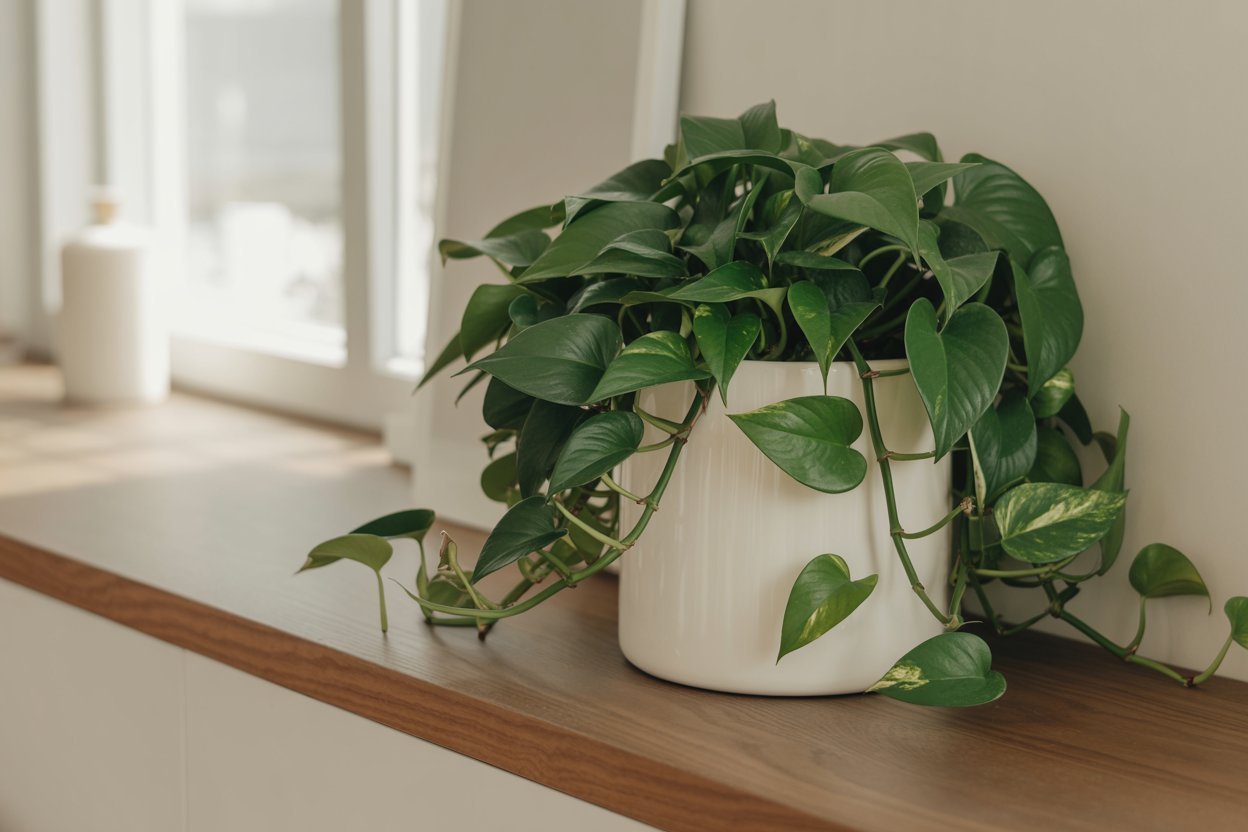

I still remember the morning I placed my very first pothos on the corner of my tiny apartment shelf.
It looked delicate two trailing vines, five leaves, and a kind of quiet charm that made the whole room feel softer.
But like many beginner plant lovers, I waited and waited for it to grow fuller. Weeks passed, and instead of growing bushy, it stretched longer, thinner, and a little sparse.
That became my first lesson: pothos don’t become lush by accident. They become lush with intention.
Over the years through trial, mistakes, and some surprisingly simple plant psychology I’ve learned exactly how to train a pothos to grow thick, leafy, and bushy without ever picking up pruning shears.
Whether you’re growing yours on a shelf, letting it trail along a bookcase, or encouraging it to climb, these techniques work beautifully.
Below, I’ll walk you through seven gentle but powerful tricks that help your pothos grow fuller, healthier, and dramatically denser all without cutting a single vine.
1. Give Your Pothos Strong, Indirect Light

If there is one secret I wish I had learned earlier, it’s this:
Light is the real reason pothos grow full or stay thin.
Pothos may be known as “low-light tolerant,” but low light does not mean ideal light.
When a pothos isn’t receiving enough light, it puts all its energy into reaching for brightness. That leads to:
- Long spacing between leaves
- Thin vines
- Smaller new leaves
- Sparse, unbushy growth
To encourage fuller growth, place your pothos in bright, indirect light where the entire plant not just one side can absorb energy.
What “bright, indirect light” really means
- Near a window but not in harsh, direct sun
- Enough light to comfortably read a book without switching on a lamp
- The shadows look soft not crisp or dark
Signs your pothos needs more light
- Leaves getting smaller with each new growth
- Long naked spaces between leaves on the vine
- Faded variegation or loss of color
- Slow growth even during warm months
When your pothos gets enough light, something magical happens:
It naturally increases leaf production, shortens internodes, and becomes dense without you trimming anything.
2. Let the Soil Fully Dry Before Watering Again
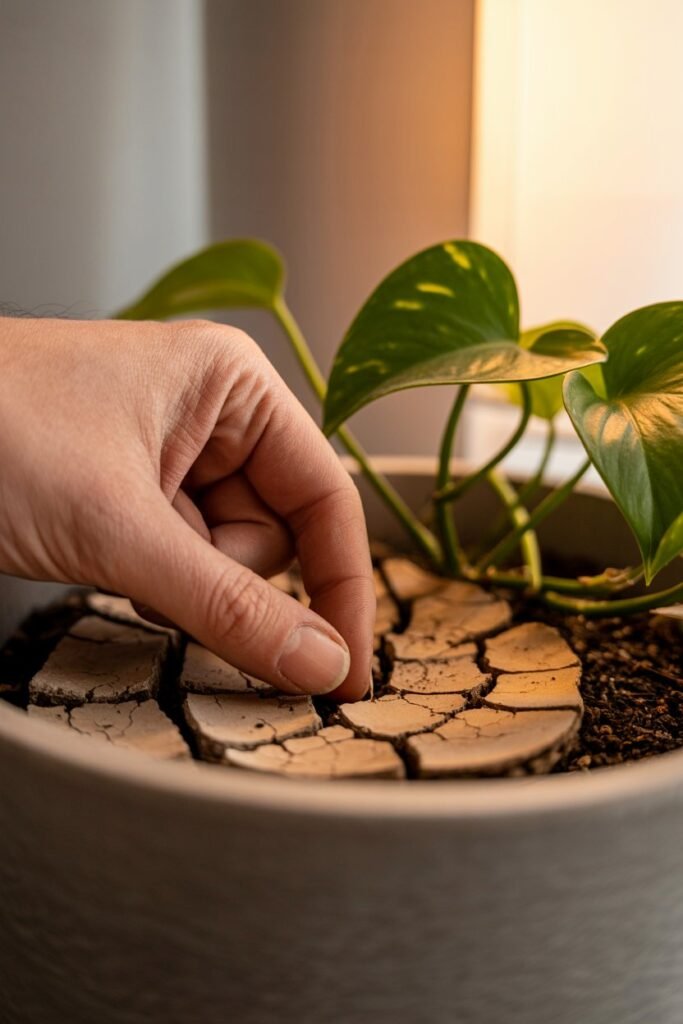
This one took me years to truly master. I used to water my plants on a schedule every Saturday morning thinking consistency was the key.
But pothos don’t want clock-based watering. They want dry-and-rewet cycles.
Letting the soil dry out encourages:
- stronger roots
- faster new growth
- thicker vines
- more frequent leaf production
Overwatering, on the other hand, creates soft, lazy roots that sit in moisture and don’t spread widely resulting in weak top growth.
How to master watering for bushier growth
Use the finger test:
Insert your finger 2 inches into the soil.
- If it feels dry → Water thoroughly.
- If it feels slightly cool or moist → Wait.
The perfect pothos watering cycle
Water deeply until you see water drain from the bottom of the pot.
Then leave the plant alone until the soil is fully dry again.
This dry period encourages roots to expand, and stronger roots support fuller, bushier vines.
3. Rotate Your Pothos Every 1–2 Weeks

Pothos are a little like us they lean toward what gives them life. In this case, light.
When a pothos keeps leaning toward one direction, the opposite side becomes sparse, and the whole plant grows unevenly.
A simple rotation solves this.
How rotation helps bushiness
- Light reaches all sides evenly
- Growth becomes balanced
- Vines don’t thin out or stretch in one direction
- The plant produces more leaves overall
Try rotating your pothos about ¼ turn every week or two, depending on how strongly it leans. This tiny habit creates fuller growth across the entire plant.
4. Choose a Pot That Isn’t Too Big

If your pothos is looking long and straggly, take a look at the pot. Oversized pots cause pothos to spend months growing roots instead of leaves.
Why pot size matters
Pothos like slightly snug roots. A pot that is too large:
- Keeps soil wet for too long
- Slows leaf production
- Encourages long vines with fewer leaves
A properly sized pot boosts bushy growth by directing the plant’s energy upward.
How to pick the correct pot
Move up only 1–2 inches in diameter when repotting.
Example:
If your pothos pot is 4 inches, the next size should be 5 or 6 inches not 8 or 10.
A pot that’s just right encourages dense foliage and steady leaf production.
5. Feed with a Balanced Fertilizer During Growth Season

Once I started fertilizing correctly, I noticed something remarkable:
my pothos didn’t just grow longer they grew fuller, especially at the base.
Pothos aren’t heavy feeders, but they do appreciate nutrients when they’re actively growing (spring through early fall).
What to use
Choose a gentle, balanced fertilizer:
- 10-10-10
- 20-20-20 diluted
- Organic liquid fertilizers (fish emulsion, seaweed, compost tea)
How often
Feed every 4–6 weeks during the warm months.
Hold fertilizer during winter.
Why this increases bushiness
Nutrients support:
- New leaf formation
- Stronger vines
- Root expansion
- Shorter spacing between leaves
With consistent feeding, each vine becomes thicker and more vibrant.
6. Train Your Pothos to Climb Instead of Trail
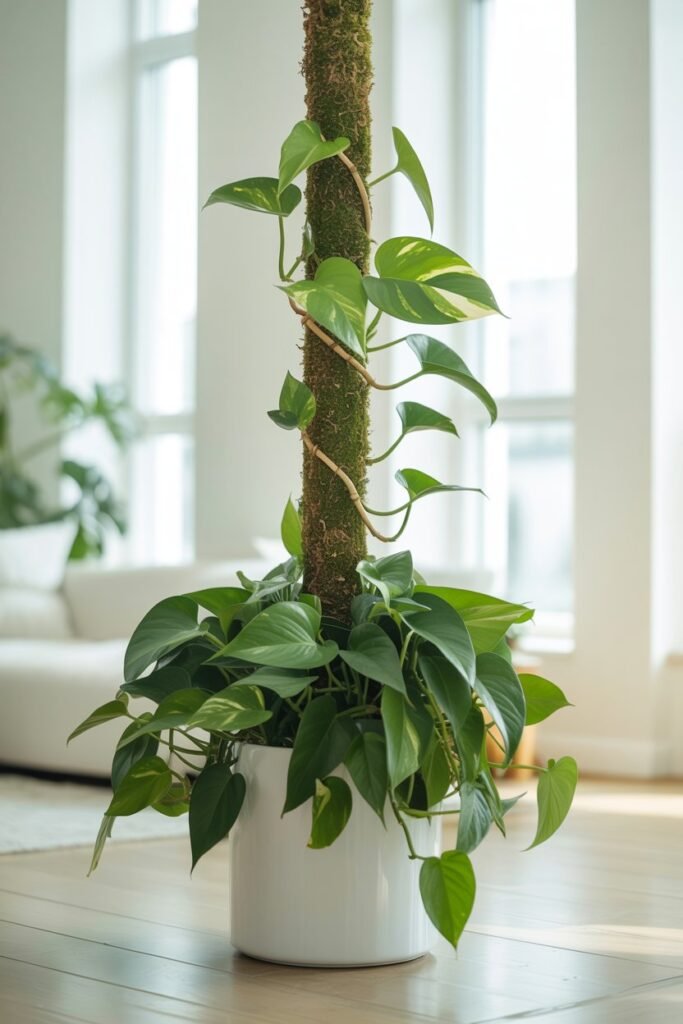
This may be the most overlooked bushiness trick.
Pothos become fuller when they feel like they are growing upward just like in nature.
When they climb, they produce larger, denser leaves. When they trail, leaves become smaller and more spaced out.
How to train your pothos
Give it something to grow on:
- A moss pole
- A coco pole
- A wooden trellis
- A wall hook system
- A bamboo stake
Gently attach the vines with soft ties or clips.
Why climbing increases fullness
When a pothos climbs, it:
- Receives better light exposure on all leaves
- Activates stronger growth hormones
- Produces thicker stems
- Creates new aerial roots
- Grows leaves at shorter intervals
It’s incredible how quickly a trailing pothos transforms once it’s encouraged to climb.
7. Add Fresh Soil to Fill in the Base of the Pot
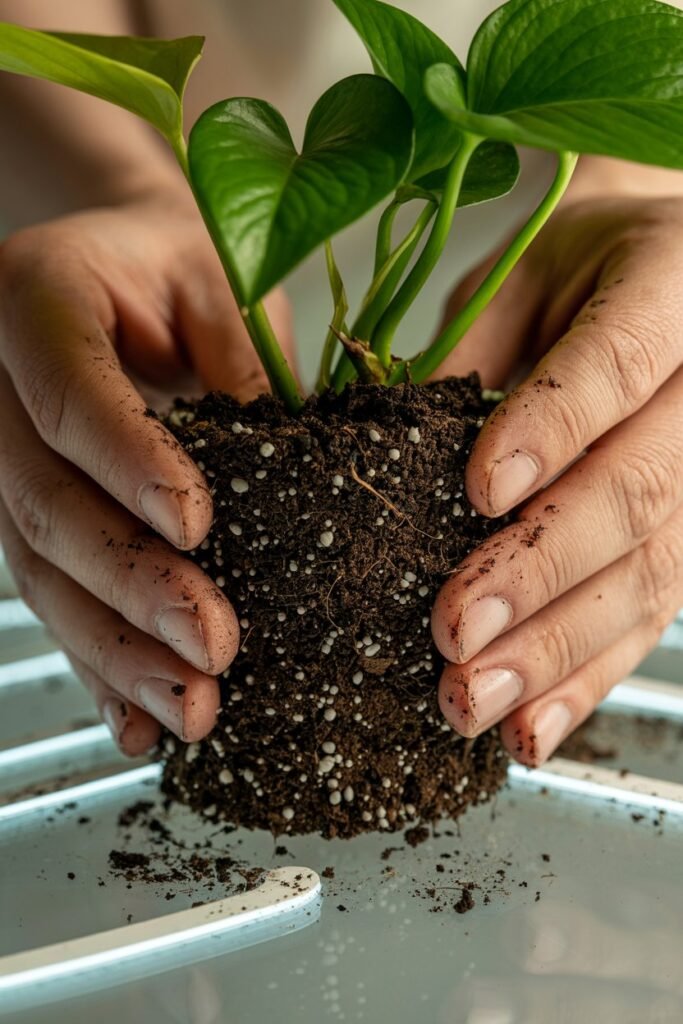
One of the sneakiest tricks I ever learned came from a greenhouse grower:
Top-dressing adding fresh soil to the top of the pot.
Over time, pothos soil compacts, leaving space around the base of the stems. This makes the plant look thinner and sometimes even creates empty gaps.
Adding soil helps by:
- Encouraging buried nodes to root
- Supporting sturdier new stems
- Allowing the plant to sprout new growth from the base
- Boosting moisture retention without overwatering
You don’t need to repot the whole plant. Just add 1–2 inches of fresh, nutrient-rich soil to the top.
This encourages the plant to generate new shoots, making the entire base look thicker and more filled out.
Bonus Tips for Extra Bushiness
Here are a few tiny habits that make a big difference:
✓ Clean the leaves regularly
Dust reduces photosynthesis. Wipe leaves gently with a damp cloth once or twice a month.
✓ Avoid cold drafts or AC vents
Cold stress slows growth and reduces leaf size.
✓ Group your plants
Higher humidity encourages pothos to grow faster and fuller.
Final Thoughts
Growing a bushier pothos without pruning isn’t just possible it’s surprisingly simple once you begin to understand what the plant naturally wants.
With bright light, mindful watering, good soil, balanced feeding, and just a little attention to its natural climbing habits, your pothos can transform dramatically.
That tiny, two-vine plant I started with all those years ago? Today it’s lush, full, and so thick it drapes like a living curtain over the shelf.
And not once did I prune it to force new growth.
Just gentle guidance, the right environment, and consistent care.
Your pothos can do the same and with these seven tricks, it absolutely will.
