
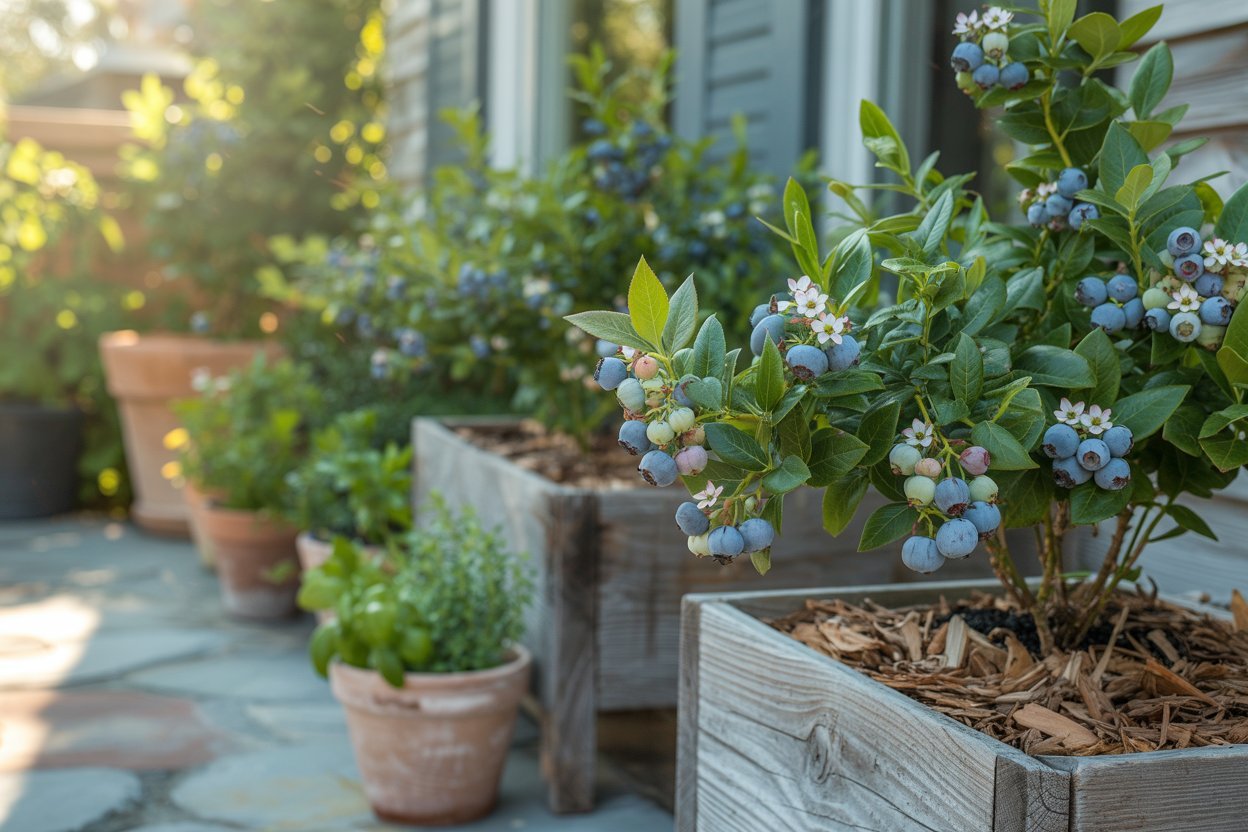

I still remember the quiet satisfaction I felt the first time I noticed tiny green berries forming on my container-grown blueberry plant.
It had taken patience, a bit of learning, and plenty of observation but that moment made everything worthwhile.
Blueberries have a way of teaching you to slow down and pay attention.
They don’t rush, and they don’t tolerate shortcuts, but when cared for properly, they reward you generously.
Growing blueberries in containers is one of the most reliable ways to succeed with this fruit, especially if your garden soil isn’t ideal or you’re working with limited space.
Containers allow you to control the most important factors blueberries care about: soil acidity, drainage, moisture, and sunlight.
This guide will walk you through the correct and proven steps to grow blueberries the right way so your plants stay healthy, productive, and fruitful year after year.
Why Containers Are Ideal for Growing Blueberries
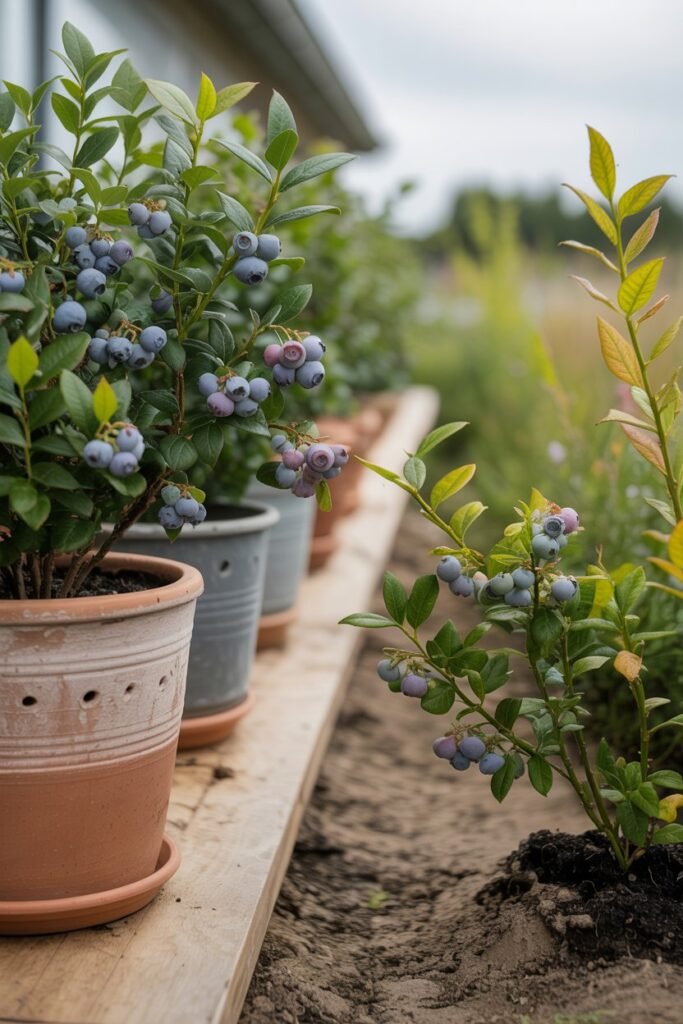
Blueberries are unique compared to many other fruit plants because they are very specific about their growing conditions.
In the ground, unsuitable soil can quietly stunt their growth for years. In containers, however, you’re in control from day one.
Container-grown blueberries benefit from:
- Controlled soil pH, which is essential for nutrient uptake
- Excellent drainage that prevents root rot
- Easy mobility to adjust sunlight exposure
- Protection from invasive weeds and poor native soil
For many gardeners, especially beginners, containers remove most of the common blueberry-growing frustrations.
Step 1: Choosing the Right Blueberry Variety
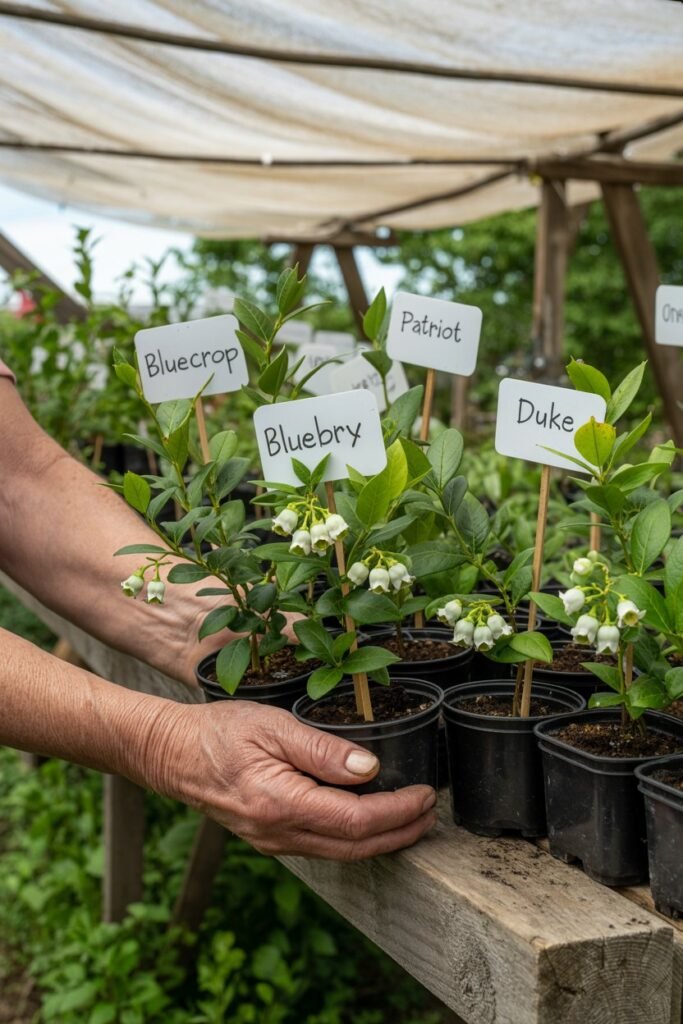
Success begins with choosing a blueberry variety that naturally adapts well to container life.
Large, aggressive varieties can struggle in pots, while compact or well-behaved types thrive.
Best blueberry types for containers:
- Dwarf or patio blueberries – bred specifically for pots
- Compact highbush varieties – productive and manageable
- Rabbiteye blueberries – excellent for warm climates
Whenever possible, choose two compatible varieties. While many blueberries are self-fertile, cross-pollination improves berry size, sweetness, and overall yield.
Step 2: Selecting the Proper Container Size
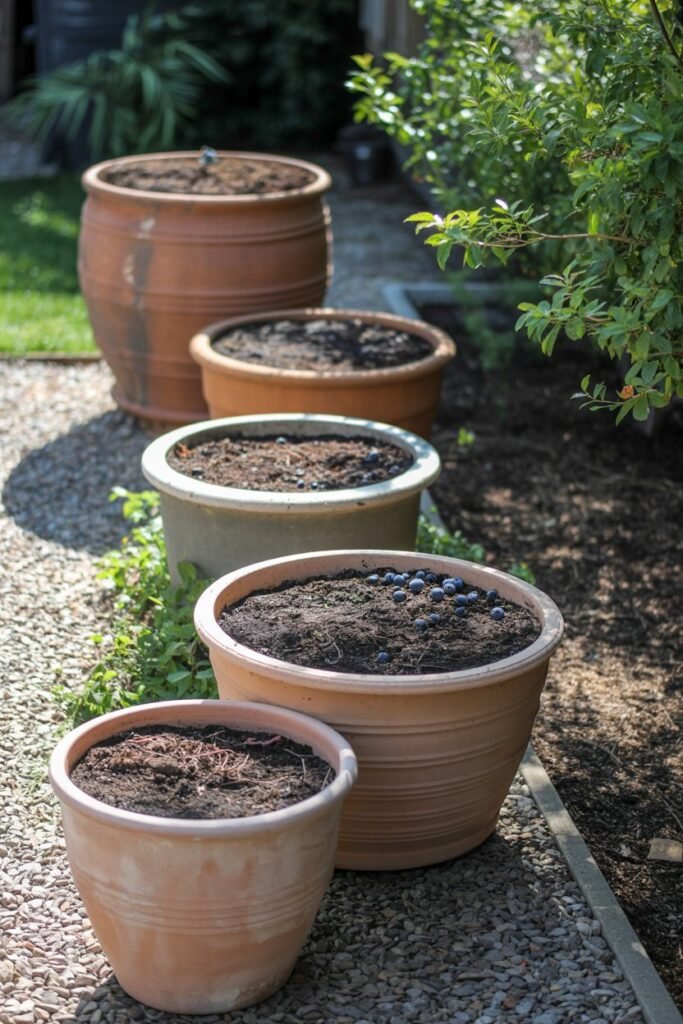
Blueberry roots are shallow but spread outward, which means width is just as important as depth.
Ideal container features:
- Minimum 18–24 inches wide and deep
- Multiple drainage holes at the bottom
- Durable material that won’t crack or overheat easily
As your plant matures over the years, it may need repotting into a slightly larger container to maintain productivity.
Step 3: Creating the Perfect Soil Environment
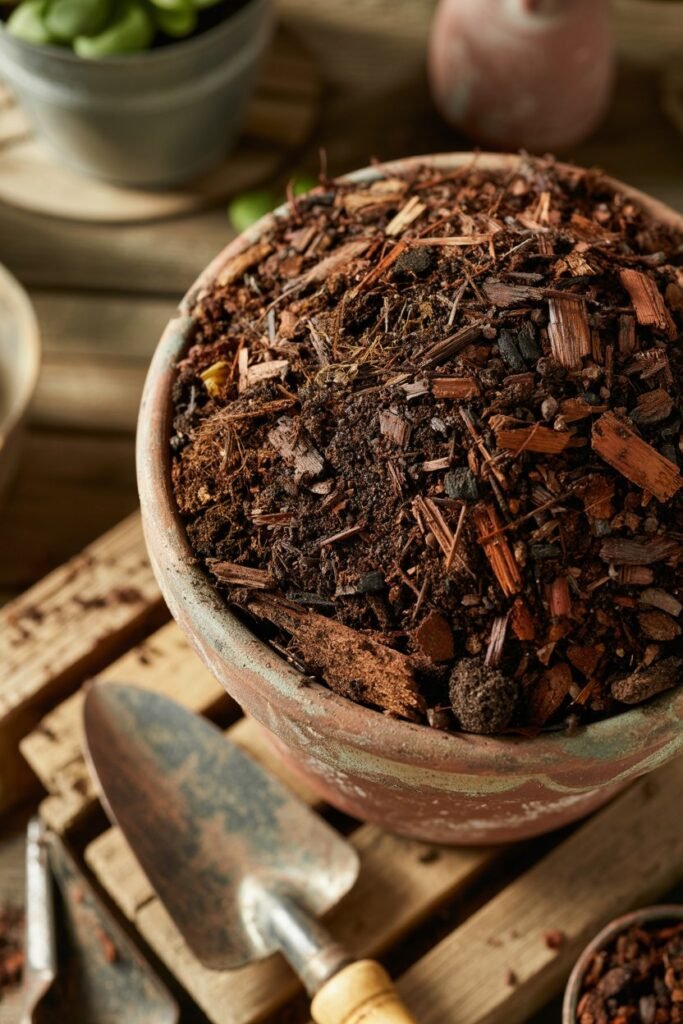
This is the most critical step in growing blueberries successfully.
Blueberries require acidic soil with a pH between 4.5 and 5.5. Without this, the plant cannot absorb nutrients properly even if fertilizer is present.
Recommended soil mix:
- Acid-loving potting mix (for azaleas, camellias, or blueberries)
- Pine bark fines for drainage and acidity
- Peat moss or coco coir to retain moisture
Avoid regular garden soil or compost-heavy mixes. These are usually too alkaline and dense for blueberry roots.
Step 4: Planting Your Blueberry the Right Way
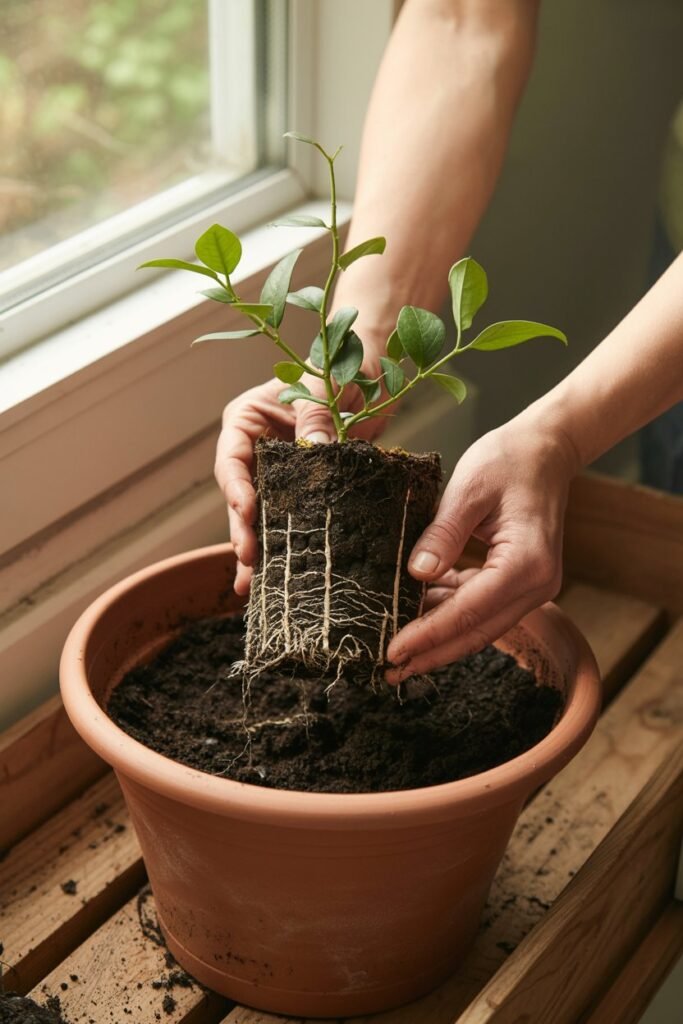
Planting depth and technique matter more than many people realize.
Proper planting steps:
- Fill the container halfway with prepared soil mix
- Gently loosen the roots without tearing them
- Position the plant so the root ball sits slightly above soil level
- Backfill carefully and press lightly to remove air pockets
- Water deeply to settle the soil
Finish with a 2–3 inch layer of pine bark mulch or wood chips, keeping it a few inches away from the stem.
Step 5: Providing the Right Amount of Sunlight
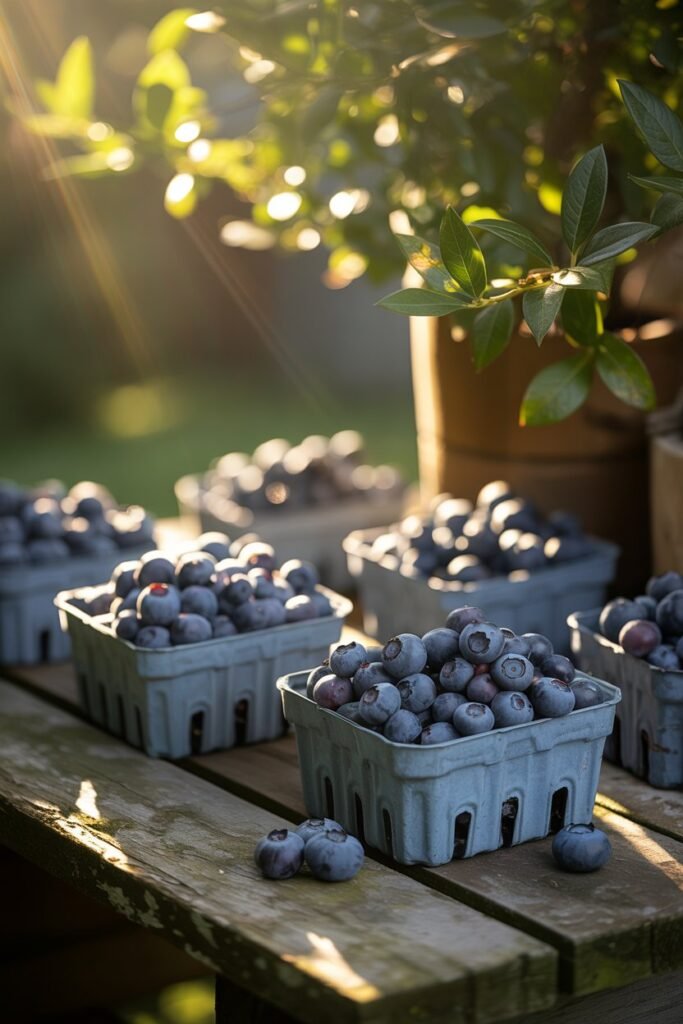
Blueberries love sunlight, but intense heat can stress container plants.
- Aim for 6–8 hours of direct sunlight daily
- Morning sun with afternoon shade is ideal in hot climates
- Too little light leads to poor flowering and weak fruiting
If your container sits on a patio or balcony, rotate it occasionally to ensure even growth.
Step 6: Watering Consistently and Correctly
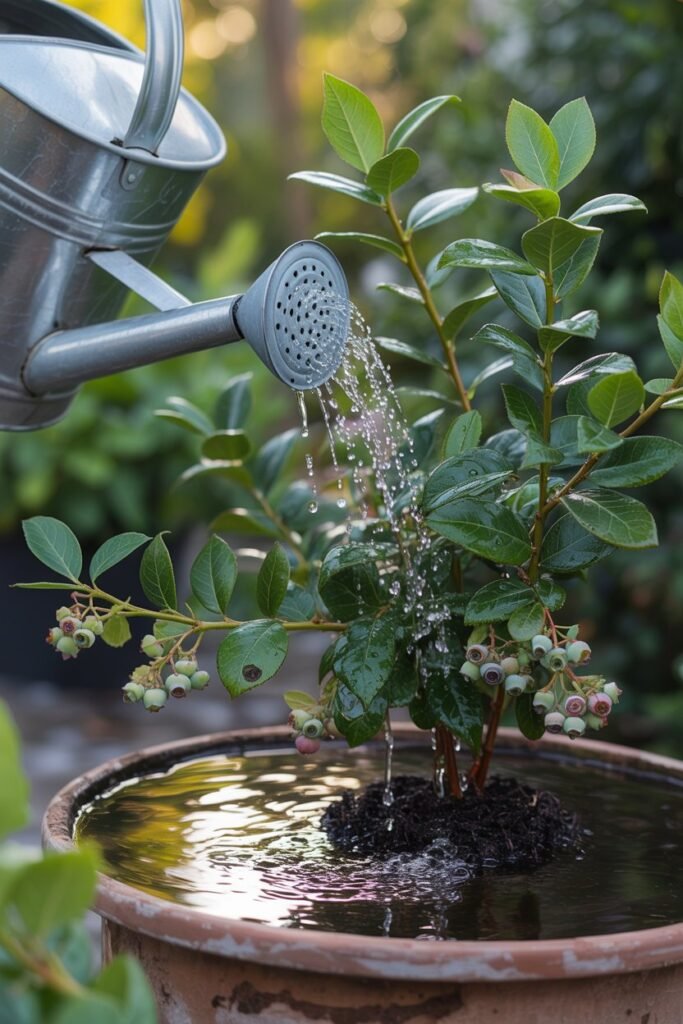
Blueberries have fine, delicate roots that dislike extremes. The goal is consistent moisture, not soggy soil.
Watering guidelines:
- Keep soil evenly moist at all times
- Water deeply when the top inch of soil feels dry
- Avoid letting the pot dry out completely
Rainwater is ideal, as tap water can slowly raise soil pH. During flowering and fruit development, consistent watering is especially important to prevent berry drop.
Step 7: Feeding Blueberries for Healthy Growth and Yield
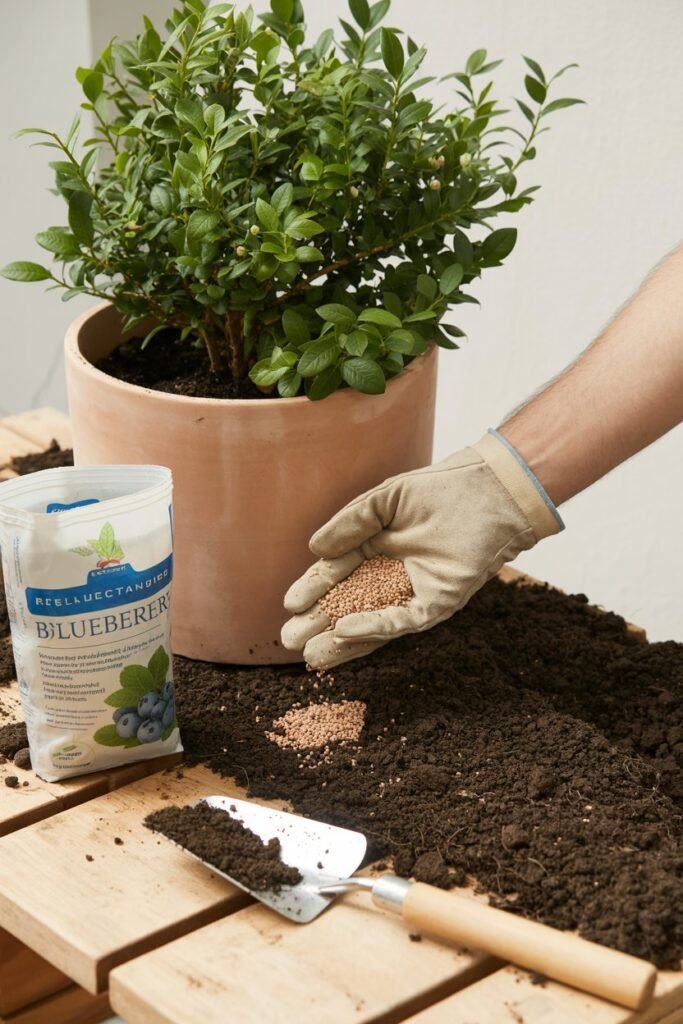
Blueberries are light feeders, and over-fertilizing can do more harm than good.
Fertilizing schedule:
- Begin feeding in early spring when new growth appears
- Use a fertilizer formulated for acid-loving plants
- Apply lightly every 4–6 weeks until mid-summer
- Stop fertilizing once berries begin ripening
Too much nitrogen leads to lush leaves but fewer berries, so moderation is key.
Step 8: Supporting Pollination Naturally
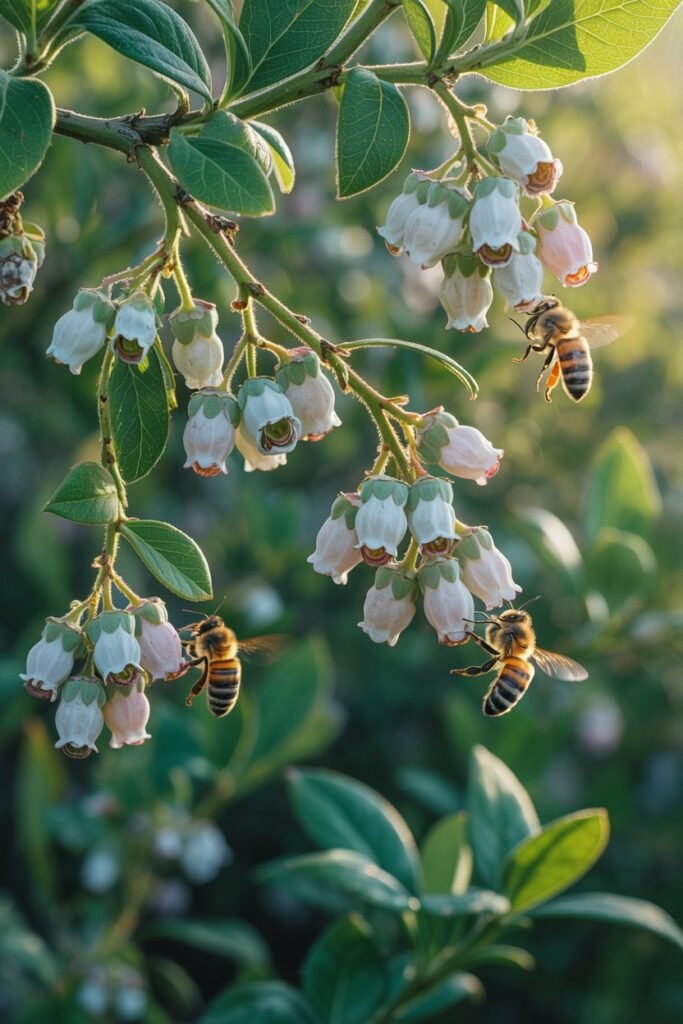
Even self-pollinating blueberries benefit from pollinators.
- Bees improve berry size and uniformity
- Growing two varieties boosts pollination success
- If pollinators are scarce, gently shaking the plant during bloom can help
Healthy flowers lead directly to a stronger harvest.
Step 9: Pruning for Structure, Health, and Productivity
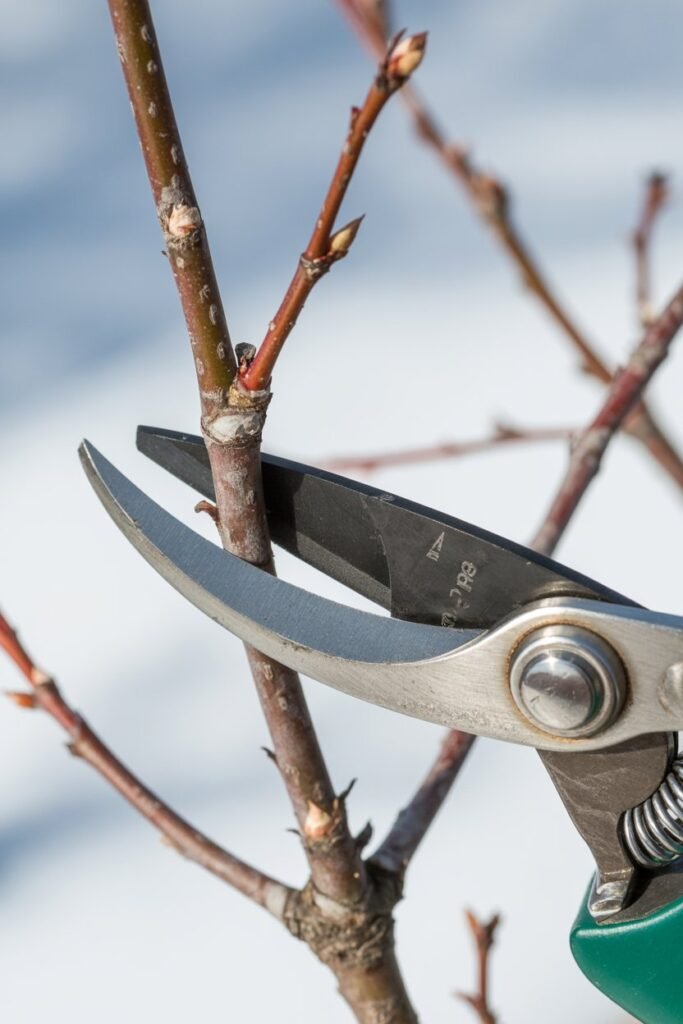
Pruning helps your blueberry plant focus its energy where it matters most.
Pruning tips:
- Remove dead or weak branches annually
- Avoid heavy pruning during the first two years
- After maturity, prune lightly in late winter
Good airflow and balanced structure reduce disease and improve fruit quality.
Step 10: Protecting Your Plant Through the Seasons
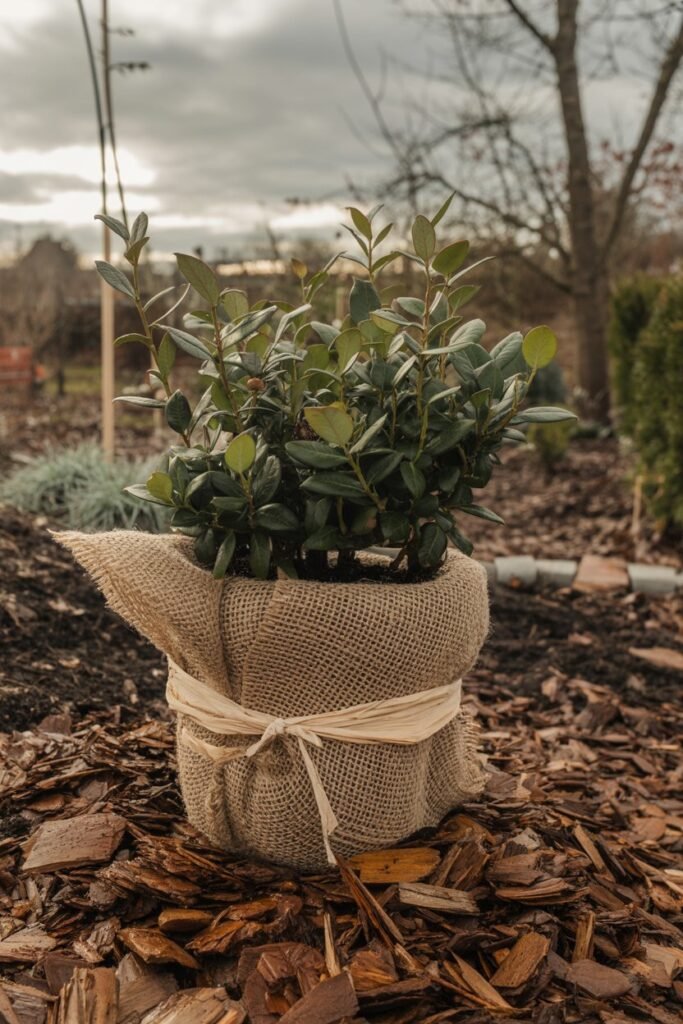
Container blueberries need a bit of seasonal care.
- In winter, protect roots from extreme cold by insulating the pot
- In hot summers, move containers to prevent overheating
- Refresh mulch yearly to maintain soil moisture and acidity
With proper care, container blueberries can remain productive for over a decade.
Step 11: Harvesting for Maximum Flavor
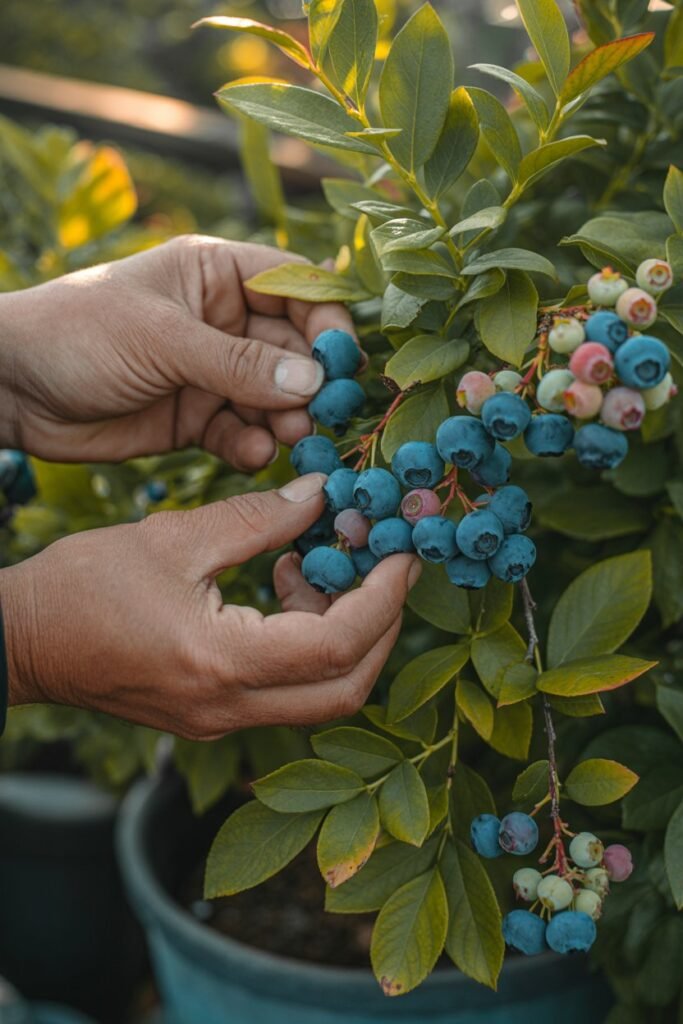
Blueberries ripen gradually, not all at once.
- Wait until berries are fully blue
- Leave them on the plant a few extra days for sweetness
- Harvest gently to avoid damaging future buds
Frequent harvesting encourages continued production throughout the season.
Final Thoughts
Growing blueberries in containers is a lesson in patience and attentiveness. When you meet their needs acidic soil, steady moisture, gentle feeding, and proper light they respond with quiet abundance.
Over time, your plant becomes more than just a container on a patio; it becomes a seasonal companion, marking the year with blossoms in spring and sweet harvests in summer.
With the right care and thoughtful steps, container-grown blueberries can thrive beautifully, rewarding you year after year with healthy plants and bowls full of fruit that taste even sweeter because you grew them yourself.
