
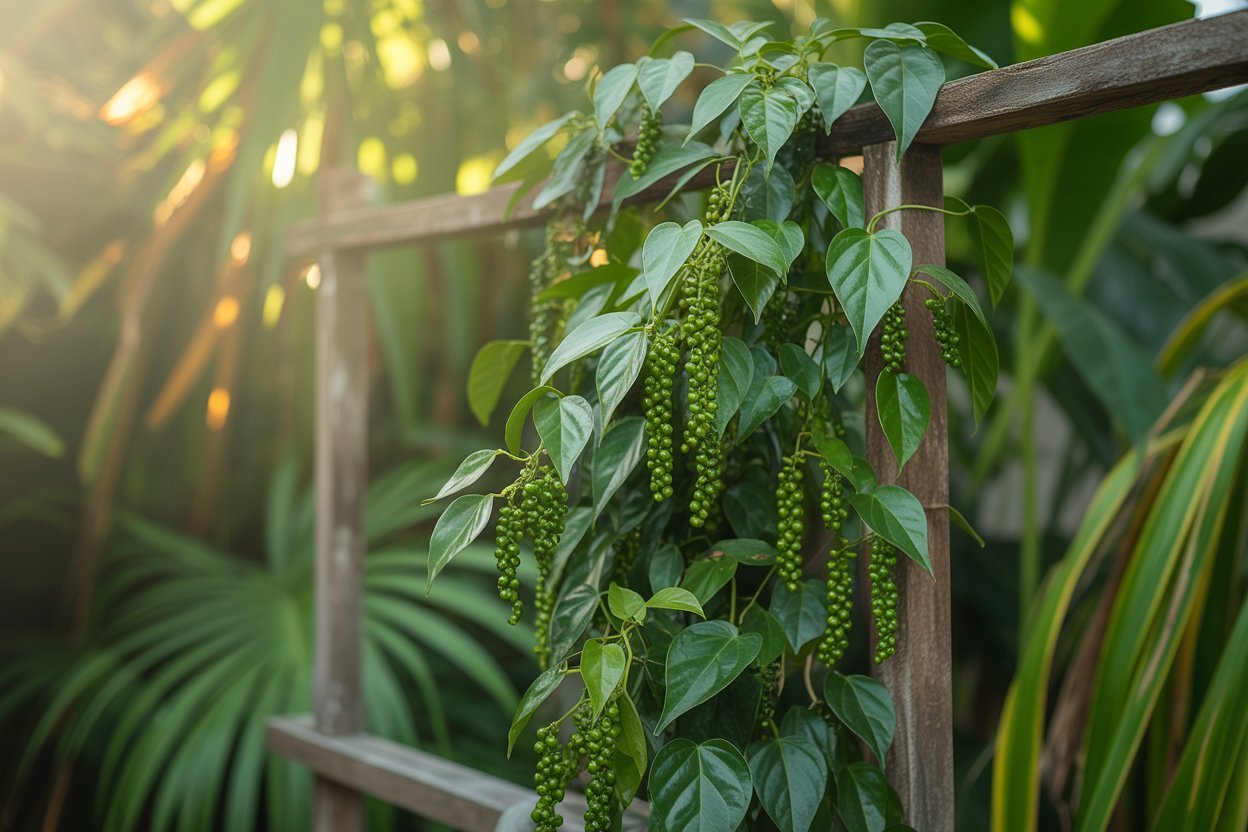

The first time I saw a black pepper plant climbing quietly along a shaded corner of a garden, I remember being surprised by how gentle and leafy it looked.
It didn’t scream “spice.” It didn’t look fiery or bold. Yet those glossy green leaves were holding one of the most important flavors in kitchens around the world.
Growing black pepper at home taught me patience more than anything else and it also taught me that good yields don’t come from rushing, but from understanding what the plant truly needs.
Black pepper (Piper nigrum) is a tropical, climbing vine that thrives when you recreate its natural environment.
When grown the right way, even at home, it can reward you with healthy vines and clusters of peppercorns year after year.
This guide walks you through the proper steps involved in growing black pepper successfully, whether you’re planting it in the ground or in a container.
Understanding the Black Pepper Plant

Before planting anything, it helps to know what you’re working with.
Black pepper is a perennial climbing vine native to tropical regions. In the wild, it grows beneath taller trees, using them for support while staying protected from harsh sunlight.
This explains why black pepper prefers warm temperatures, humidity, filtered light, and rich soil.
Unlike many fast-growing herbs, black pepper takes time. It usually begins producing peppercorns 2 to 3 years after planting, but once it starts, it can continue producing for many years with proper care.
Choosing the Right Climate and Location

Black pepper thrives best in warm, humid environments. If you live in a tropical or subtropical region, growing it outdoors is ideal.
If your climate is cooler, the plant can still be grown in pots and moved indoors when temperatures drop.
Ideal Growing Conditions:
- Temperature: 20–35°C (68–95°F)
- High humidity
- Protection from strong winds
- Partial sunlight or filtered shade
Choose a spot that receives morning sun and afternoon shade. Too much direct sunlight can scorch the leaves, while deep shade can slow growth and reduce yield.
Growing Black Pepper from Cuttings (Best Method)
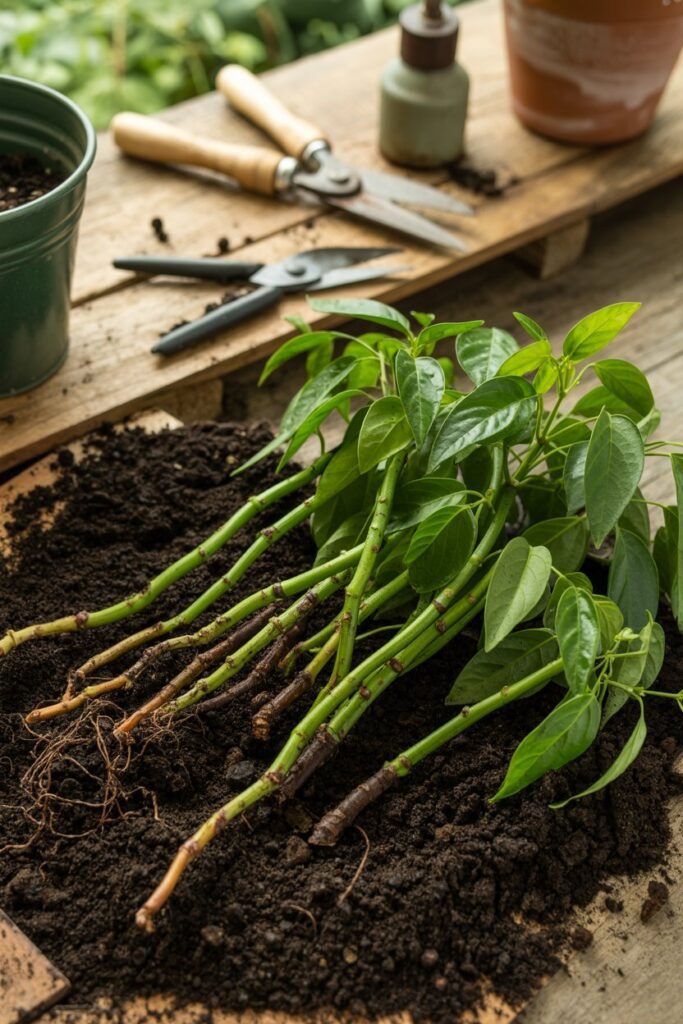
While black pepper can be grown from seeds, stem cuttings are the most reliable and fastest way to get a productive plant.
How to Prepare Black Pepper Cuttings:
- Select a healthy, disease-free vine.
- Cut a stem that has 3–5 nodes.
- Remove the lower leaves, leaving the top ones intact.
- Allow the cut end to dry slightly for a few hours before planting.
Cuttings establish faster and produce earlier compared to seeds, making them the preferred choice for home gardeners.
Soil Preparation: The Foundation for Good Yield

Healthy soil is one of the most important steps toward a good harvest.
Black pepper loves loose, rich, well-draining soil. Heavy or compacted soil can cause root rot and weak growth.
Ideal Soil Mix:
- Garden soil or loamy soil
- Well-rotted compost or aged manure
- Sand or coco peat for drainage
The soil should be slightly acidic, with a pH between 5.5 and 6.5. Adding compost regularly improves both soil structure and nutrient availability.
Planting Black Pepper in the Ground
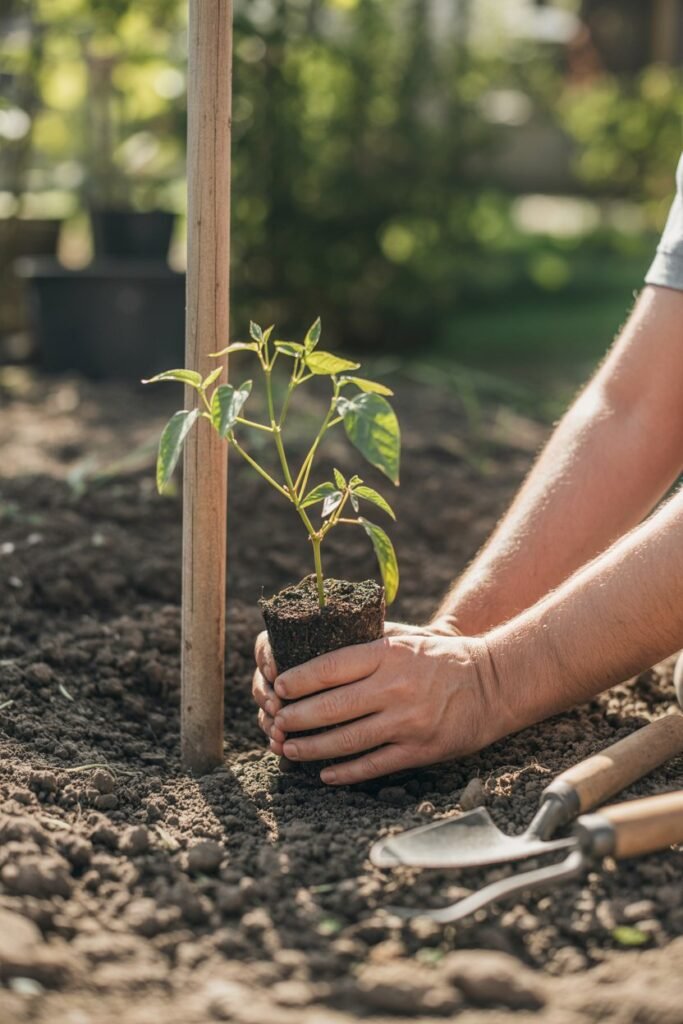
If you’re planting directly in the garden:
- Dig a hole about 30–40 cm deep and wide.
- Mix compost into the soil.
- Place the cutting carefully so at least one node is buried.
- Gently firm the soil around the base.
- Water thoroughly.
Plant black pepper near a support structure, such as a tree, trellis, or pole, because the vine will need something to climb as it grows.
Growing Black Pepper in Pots (Container Method)
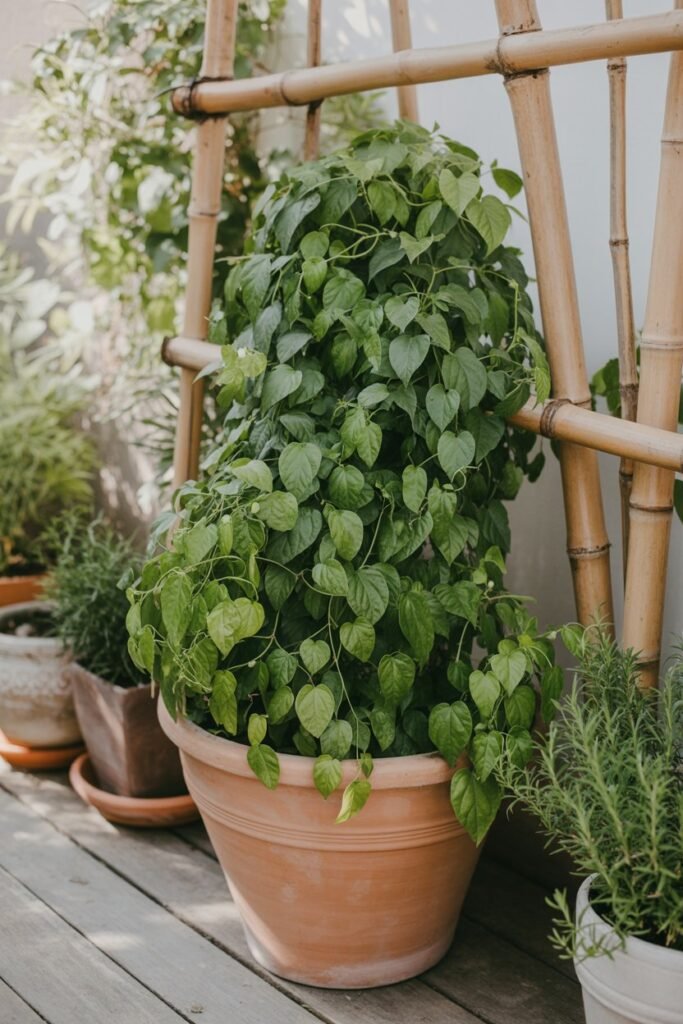
Black pepper grows very well in containers, especially for home gardens and patios.
Pot Requirements:
- Minimum 12–16 inch deep pot
- Drainage holes at the bottom
- Rich, well-draining potting mix
As the plant grows, you may need to repot every 1–2 years to refresh the soil and give the roots space to expand.
Place the pot where the plant receives bright, indirect light and good air circulation.
Providing Proper Support for Climbing
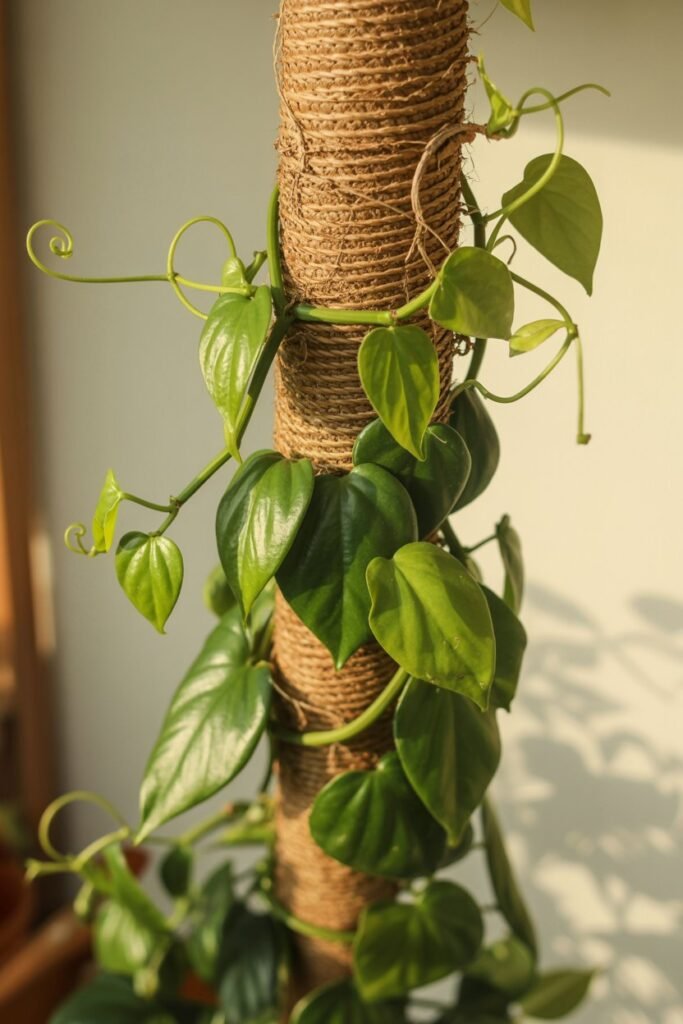
Black pepper is a climber by nature. Without support, the vine will sprawl weakly and produce fewer peppercorns.
Good Support Options:
- Wooden or bamboo poles
- Trellis
- Coir or moss pole
- Small tree or sturdy fence
Train the vine gently by tying it loosely with soft garden ties. Never force it—the plant will naturally wrap itself around the support as it grows.
Watering: Keeping the Balance
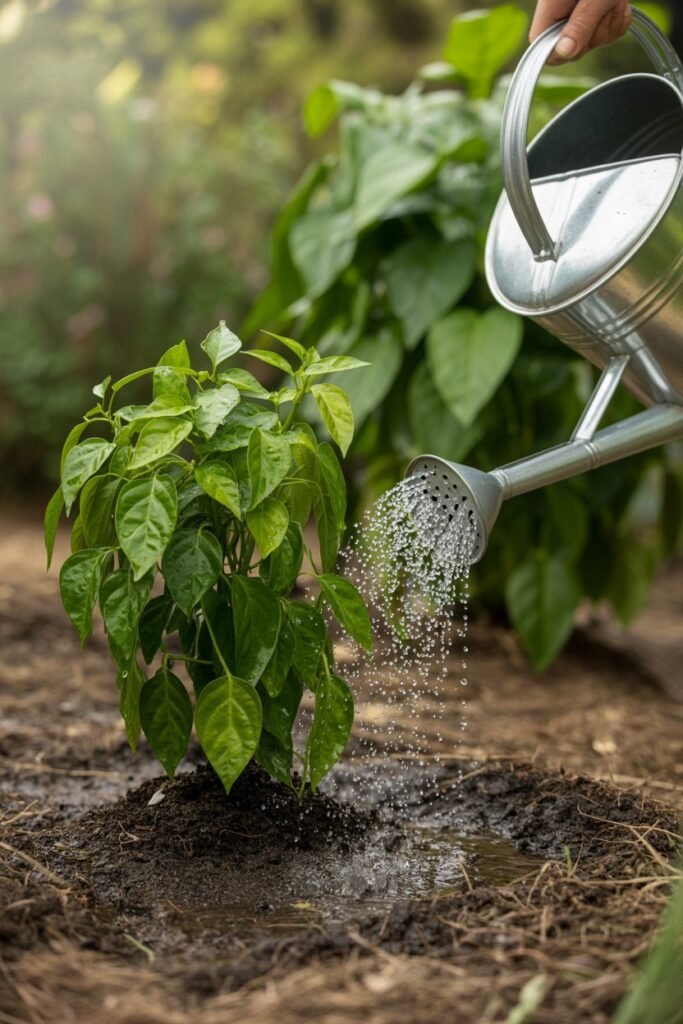
Consistent moisture is key to healthy growth and high yield.
Black pepper prefers evenly moist soil, but it does not tolerate waterlogging.
Watering Tips:
- Water deeply when the topsoil feels slightly dry
- Reduce watering during cooler or rainy periods
- Ensure good drainage at all times
Mulching around the base helps retain moisture, regulate soil temperature, and suppress weeds.
Feeding and Fertilizing for Strong Growth

Black pepper is a moderate feeder that benefits greatly from regular nutrients.
Best Fertilizer Options:
- Compost or vermicompost
- Well-rotted cow or poultry manure
- Balanced organic fertilizer
Apply compost or organic fertilizer every 2–3 months. During active growth, this encourages strong vines, healthy leaves, and better flowering later on.
Avoid excessive nitrogen, as it can cause lush leaves but fewer peppercorns.
Pruning and Training for Better Yield
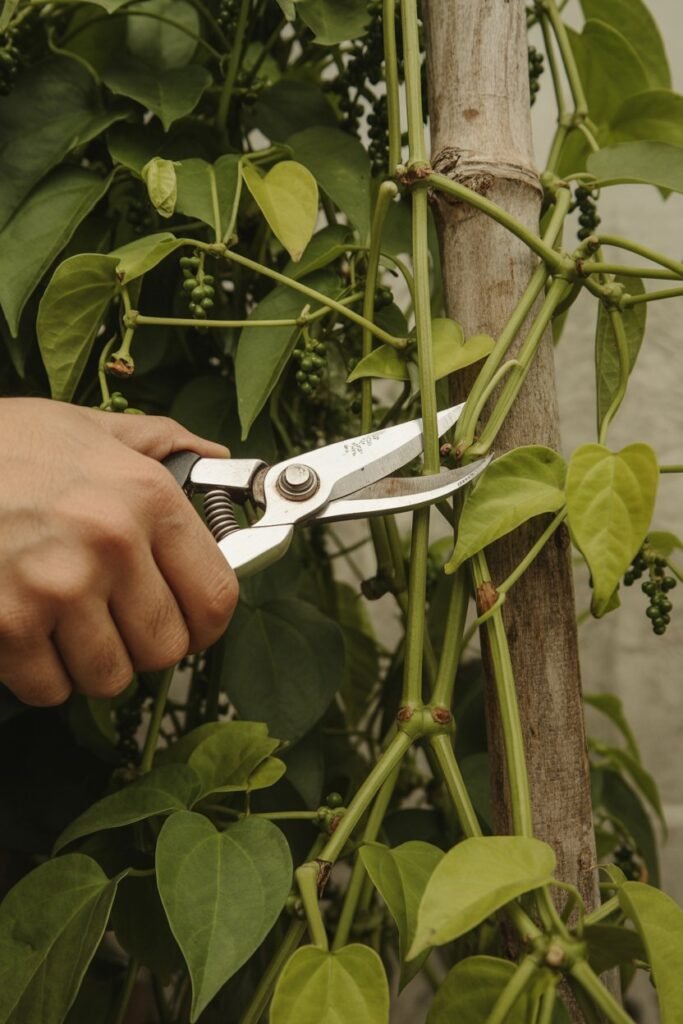
Pruning helps control growth and improves airflow, which reduces disease and encourages fruiting.
Pruning Tips:
- Remove weak, damaged, or overcrowded vines
- Trim excess growth after harvesting
- Shape the plant so energy goes into healthy, productive stems
Light pruning keeps the plant manageable and promotes better pepper cluster development over time.
Flowering and Peppercorn Development
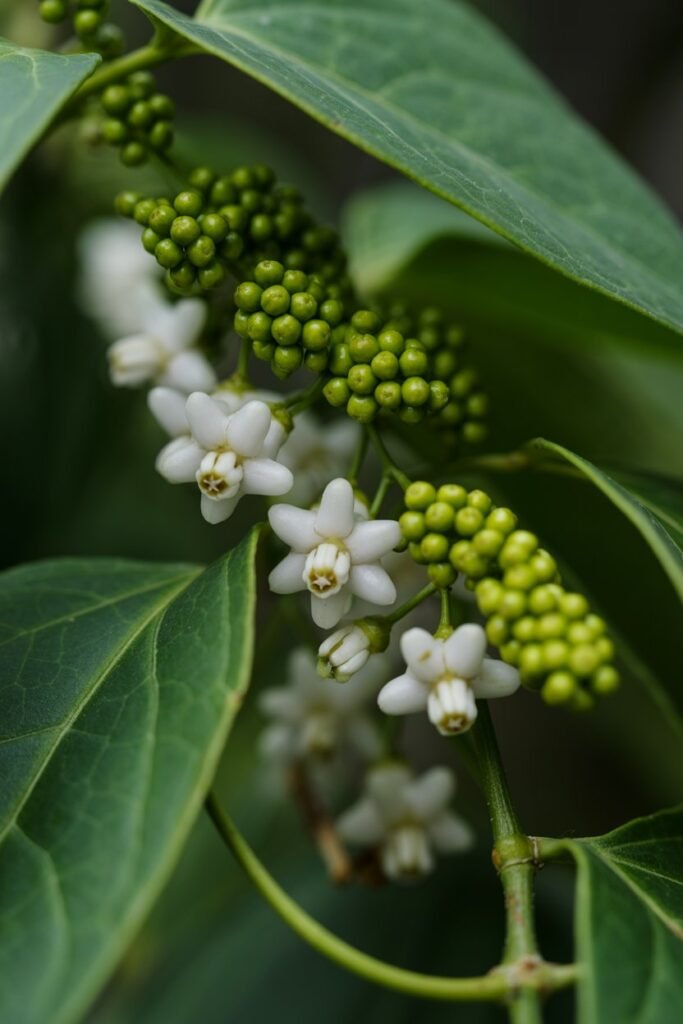
Black pepper plants produce small white flowers that later turn into green peppercorn clusters.
- Flowers usually appear after 2–3 years
- Each spike contains multiple peppercorns
- Green peppercorns mature gradually
Patience is essential here. Once flowering begins, proper watering and feeding are especially important.
Harvesting Black Pepper the Right Way
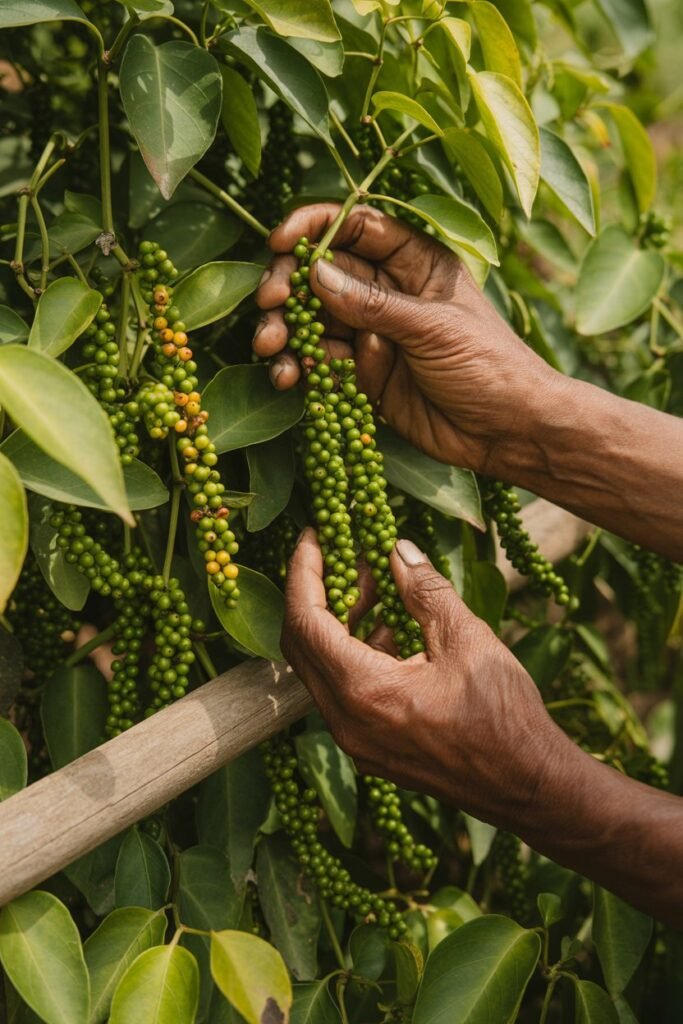
Harvesting at the right time determines the quality of your pepper.
- Green peppercorns turn yellowish-red when mature
- For black pepper, harvest when most berries are still green but starting to change color
- Dry the harvested peppercorns in sunlight for several days until they turn black and shriveled
Proper drying enhances flavor and allows long-term storage.
Common Problems and How to Avoid Them
Yellowing Leaves
- Often caused by overwatering or poor drainage
- Improve soil aeration and reduce watering frequency
Slow Growth
- Usually due to low nutrients or insufficient warmth
- Feed with compost and ensure adequate light and humidity
Pests
- Occasional aphids or mites
- Control with neem oil or mild soap sprays
Healthy plants grown in the right conditions rarely suffer serious problems.
Final Thoughts: Growing Black Pepper Is a Long-Term Reward
Growing black pepper at home isn’t about quick results it’s about creating the right environment and letting the plant grow at its own pace.
With warm temperatures, rich soil, steady moisture, and gentle care, a single vine can reward you for years with fresh, aromatic peppercorns.
Every season, as the vine climbs higher and the leaves grow fuller, you’ll see how small, consistent efforts add up.
And when you finally harvest your own black pepper, it feels less like gardening and more like a quiet achievement earned through patience and care.
