

There’s something so special about bringing a bit of sunshine indoors especially when winter settles in. The soft glow of tiny lemons, the sweet scent of orange blossoms, and that fresh pop of green can completely change the mood of a room.
Dwarf citrus trees are pure joy to grow. They’re small enough to fit by a sunny window, yet full of life, color, and flavor. With the right care, they’ll reward you with fragrant blooms and homegrown fruit even in the heart of winter.
If you’re dreaming of filling your home with fresh air, color, and maybe a few homegrown lemons for your morning tea this list is for you. Here are 10 easy-care dwarf citrus fruits that thrive indoors and bring warmth and beauty to your space all season long.
1. Meyer Lemon (Citrus × meyeri)
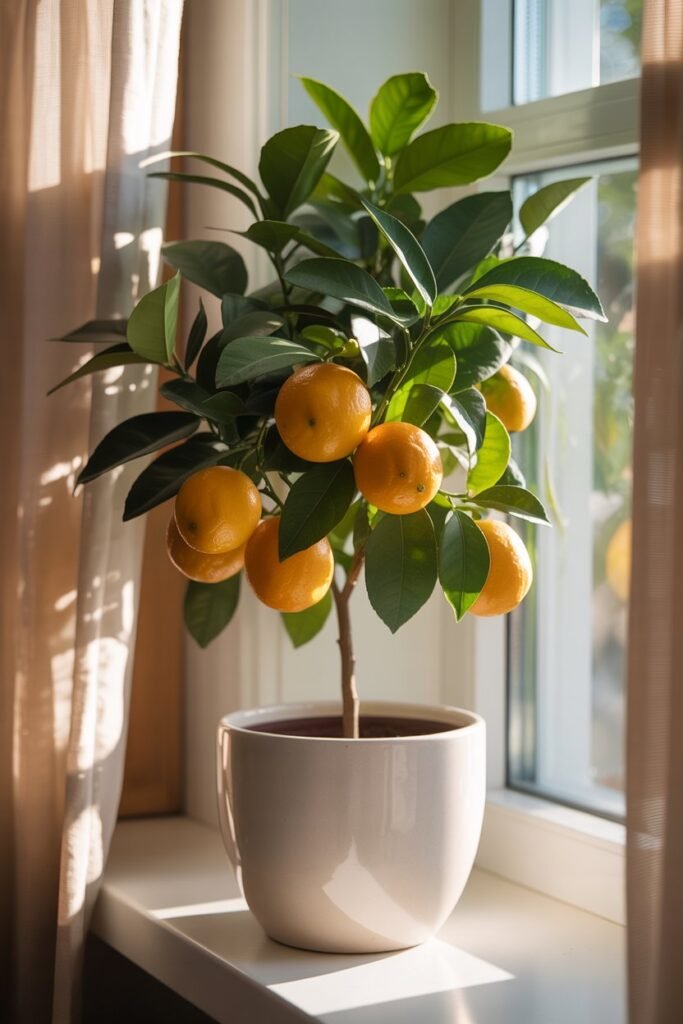
The Meyer lemon is often called the darling of indoor citrus. It’s smaller, sweeter, and softer than traditional lemons, and its blooms smell like heaven floral, honeyed, and bright.
How to Plant
Start with a young grafted dwarf Meyer lemon tree from a trusted nursery seeds can take years to fruit. Use an 8–10 inch pot with ample drainage holes.
Fill with a loose citrus mix (2 parts potting soil, 1 part perlite, and 1 part compost). Set the root ball just below the rim, and water thoroughly after planting.
Place it in the brightest spot you have a sunny window or under a full-spectrum LED grow light.
Care Routine
- Light: 6–8 hours of direct light daily.
- Water: Allow the top inch of soil to dry before watering again.
- Feeding: Fertilize monthly with a nitrogen-rich citrus food (10-5-5 works well).
- Humidity: Mist leaves daily or use a pebble tray.
- Pruning: Trim lightly after fruiting to maintain shape.
Why It Thrives Indoors
Meyer lemons are naturally adaptable. Unlike traditional lemons, they tolerate lower light and cooler indoor air. Their compact root system makes them happy in containers, and they flower multiple times a year.
Pro Tip: “When your Meyer lemon blooms, speak softly around it. Citrus blossoms are delicate and sensitive gentle energy keeps them happy.”
2. Calamondin Orange (Citrus mitis)

If you’re a beginner, start here. The Calamondin is sturdy, fragrant, and forgiving perfect for brightening a kitchen or living room corner. Its small orange fruits glow like marbles and release a sweet-tart aroma when touched.
How to Plant
Choose a dwarf or mini Calamondin tree already established in a pot. Transplant it into a 10-inch terracotta or ceramic container using citrus potting mix with perlite for drainage.
Gently firm the soil around the roots and water well.
Care Routine
- Light: Full sun (south-facing window preferred).
- Water: Keep soil consistently moist but not soggy.
- Fertilizer: Feed every 4 weeks during growth with citrus fertilizer.
- Temperature: Loves warmth (70–80°F). Avoid cold drafts.
- Pruning: Remove crossing branches or leggy growth in spring.
Why It Thrives Indoors
Calamondin oranges handle indoor air like a pro low humidity and fluctuating temperatures don’t faze them. They flower and fruit almost year-round, making them both ornamental and productive.
Pro Tip: “Calamondins love attention. Rotate them weekly, talk to them, and keep their leaves dust-free they’ll respond with nonstop blooms.”
3. Key Lime (Citrus aurantiifolia)

The Key lime is your little piece of the tropics cheerful, aromatic, and generous with fruit. Its thin-skinned limes add a refreshing zing to tea, water, or dessert.
How to Plant
Use a 10–12 inch pot with drainage holes and lightweight soil (potting mix + sand + compost). Start with a grafted dwarf Key lime tree. Position the root ball at the same depth it was growing before, and water until it drains.
Care Routine
- Light: Needs 8 hours daily full sun or a grow light.
- Water: Keep slightly moist; never let roots dry completely.
- Fertilizer: Use a high-nitrogen citrus fertilizer every 6 weeks.
- Humidity: Loves tropical humidity mist often.
- Pruning: Trim after fruiting to encourage branching.
Why It Thrives Indoors
Key limes adore warmth and adapt quickly to pot life. Their smaller leaves and shallow roots make them ideal for containers, and they bloom frequently if kept cozy and sunny.
Pro Tip: “A lime tree that feels sunlight on its leaves will always reward you treat your grow light like a sunrise.”
4. Kumquat (Fortunella japonica)

Kumquats are the most cheerful of all citrus. Their tiny orange fruits look like ornaments and can be eaten whole skin, pulp, and all.
How to Plant
Plant a dwarf Nagami or Meiwa kumquat in a 10-inch clay pot. Use citrus soil mix and add extra perlite for airflow. After planting, water thoroughly and set near a bright window.
Care Routine
- Light: Full sunlight or grow light for 6–8 hours daily.
- Water: Keep soil lightly moist; avoid waterlogging.
- Fertilizer: Apply citrus food every 4 weeks.
- Temperature: Prefers 65–80°F.
- Pollination: Self-pollinating but hand-brushing flowers increases yield.
Why It Thrives Indoors
Kumquats love container life. They have naturally shallow roots, adapt easily to artificial light, and tolerate cooler temps better than most citrus.
Pro Tip: “A kumquat near your breakfast nook will scent your mornings with quiet joy.”
5. Dwarf Mandarin (Citrus reticulata)

Soft, sweet, and deeply fragrant mandarins bring that sunny orchard feel indoors. Dwarf varieties like ‘Clementine’ and ‘Owari Satsuma’ are the easiest to grow.
How to Plant
Use a 10-inch pot with citrus soil, mixing in a handful of compost for nutrients. Gently settle the plant in and water deeply. Place it in the brightest room possible.
Care Routine
- Light: Full sunlight, at least 6 hours daily.
- Water: Moderate; water when the top 2 inches dry.
- Fertilizer: Citrus food high in nitrogen every month.
- Temperature: 65–75°F keep away from cold drafts.
- Pruning: After harvest, remove weak stems.
Why It Thrives Indoors
Mandarins are low-maintenance and resilient. Their compact growth habit and early fruiting cycle make them perfect for windowsills or bright patios.
Pro Tip: “Mandarins bloom better when they ‘settle in.’ Pick a bright spot and leave them there they dislike being moved.”
6. Dwarf Ponderosa Lemon (Citrus limon × medica)
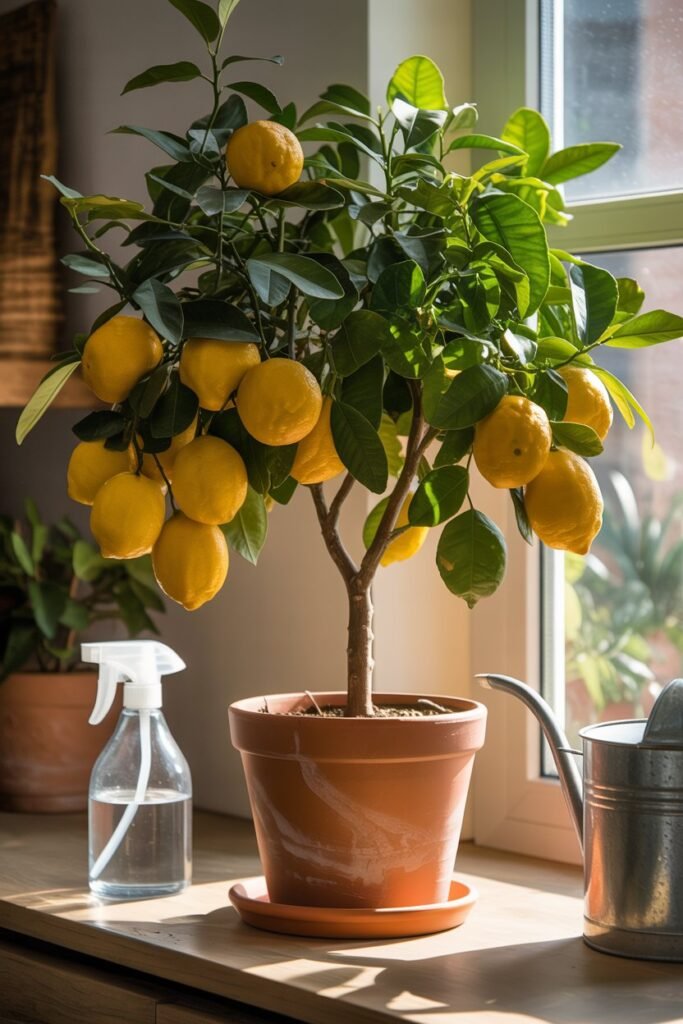
This bold beauty produces lemons the size of softballs, even on a compact frame. The fruit is tart and aromatic perfect for homemade lemonade.
How to Plant
Plant in a large 12-inch pot with coarse soil (2 parts potting mix + 1 part sand + 1 part compost). Ensure excellent drainage. Place near a bright window or under strong grow lights.
Care Routine
- Light: 8 hours of full sunlight.
- Water: Deep watering weekly; allow topsoil to dry first.
- Feeding: Balanced citrus fertilizer every 4–6 weeks.
- Humidity: Mist daily in dry months.
- Support: Stake fruit-heavy branches gently.
Why It Thrives Indoors
The Ponderosa lemon thrives because of its thick, resilient leaves and tolerance for limited light. It adjusts easily to containers and fruits even in cooler indoor climates.
Pro Tip: “Support your lemons with twine when fruiting heavy fruit can pull on delicate branches.”
7. Dwarf Valencia Orange (Citrus sinensis)
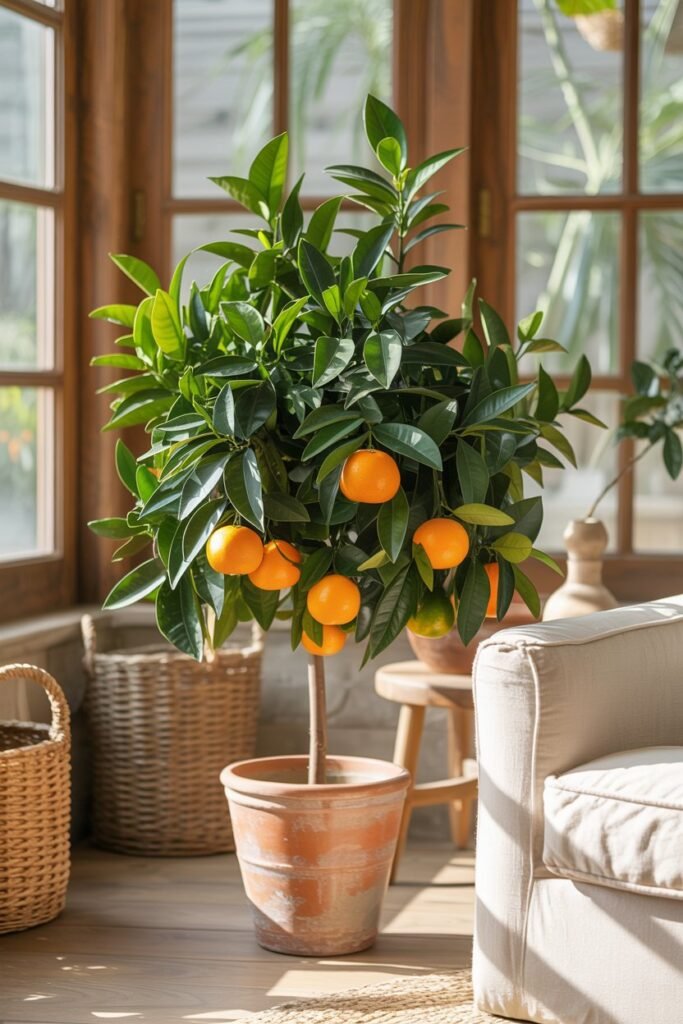
The Valencia orange is a classic for juicing — sweet, tangy, and bursting with sunshine flavor. The dwarf variety stays petite and elegant indoors.
How to Plant
Transplant into a 12-inch ceramic pot with citrus soil and perlite. Keep roots level with soil surface. Water until excess drains out.
Care Routine
- Light: Bright, direct light 6–8 hours a day.
- Water: Keep evenly moist; never soggy.
- Fertilizer: Every 4 weeks in spring and summer.
- Temperature: Loves warmth ideal around 75°F.
- Pruning: Remove crossing stems and shape in early spring.
Why It Thrives Indoors
Valencia oranges enjoy consistent warmth and adapt to limited root space. They’re slow-growing but very steady, making them ideal for apartment dwellers or sunny kitchens.
Pro Tip: “Give your Valencia orange a weekly quarter-turn balanced sunlight keeps its shape full and even.”
8. Dwarf Limequat (Citrus × floridana)
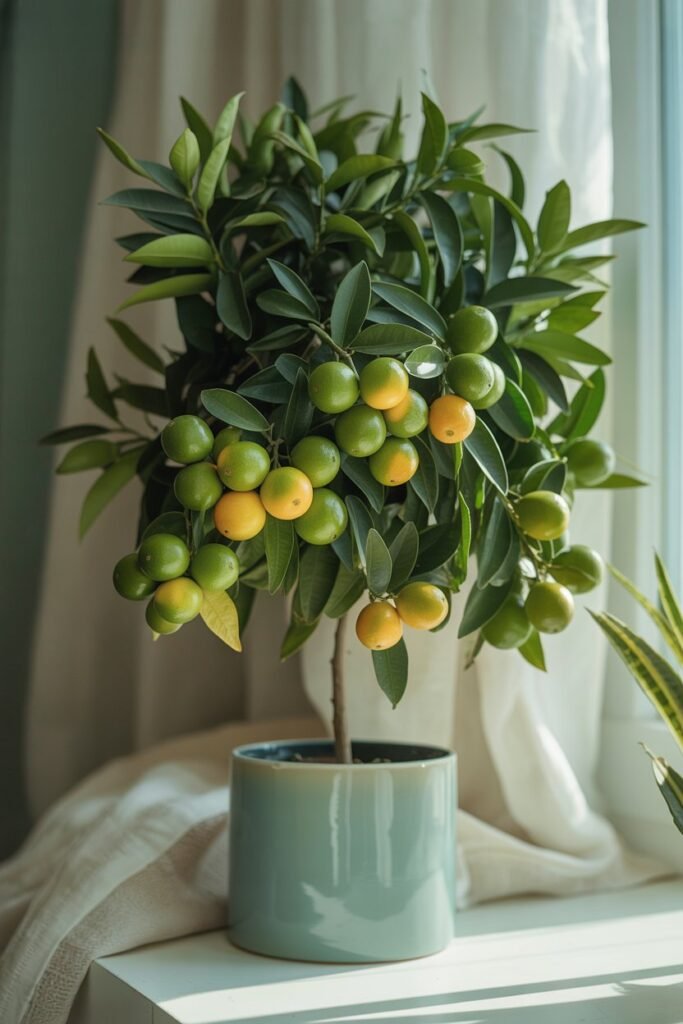
This charming hybrid combines the zest of lime with the sweetness of kumquat. The fruit is edible whole and makes a lovely garnish or marmalade.
How to Plant
Start with a small limequat sapling in an 8–10 inch pot. Use light soil (potting mix + perlite). After planting, water until soil is damp but not soaked.
Care Routine
- Light: Bright, indirect sunlight or grow light.
- Water: Moderate moisture; avoid letting it dry completely.
- Fertilizer: Citrus mix every 5 weeks.
- Humidity: Mist twice a week.
- Pruning: Pinch tips to encourage branching.
Why It Thrives Indoors
Compact and self-pollinating, limequats don’t mind lower light or indoor air. Their roots adjust easily to smaller pots, and they bloom reliably in winter.
Pro Tip: “Keep your limequat near a window where it can see the sky it adores open light and gentle warmth.”
9. Dwarf Trovita Orange (Citrus sinensis ‘Trovita’)
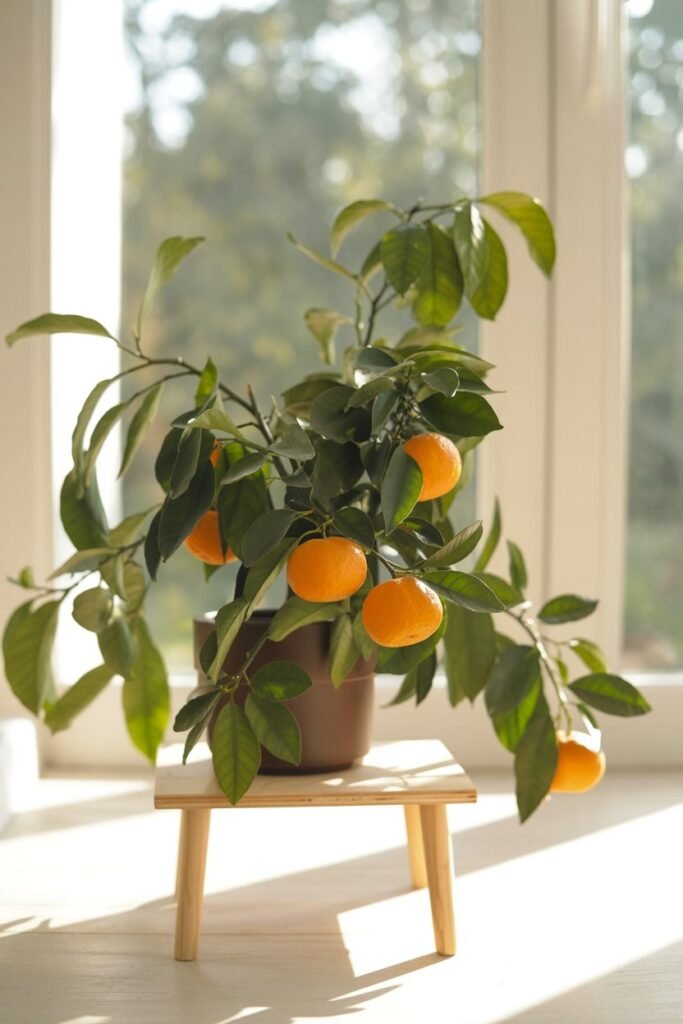
Trovita oranges are sweet and slightly floral, producing juicy fruit that’s ideal for snacking or juicing.
How to Plant
Plant in a 10–12 inch terracotta pot with citrus soil and sand. Water well and set in full light.
Care Routine
- Light: Full sun preferred; supplement with grow light.
- Water: Keep evenly moist, reduce in winter.
- Fertilizer: Citrus food every 4 weeks.
- Temperature: Thrives in 65–80°F.
- Pollination: Hand pollinate for larger yields.
Why It Thrives Indoors
Bred in Arizona’s deserts, Trovita oranges handle dry indoor air beautifully. They adapt to both bright windows and grow lights, and fruit steadily through winter.
Pro Tip: “Dry air is no problem for Trovita but wipe its leaves often to help it breathe.”
10. Dwarf Bearss Lime (Citrus latifolia)
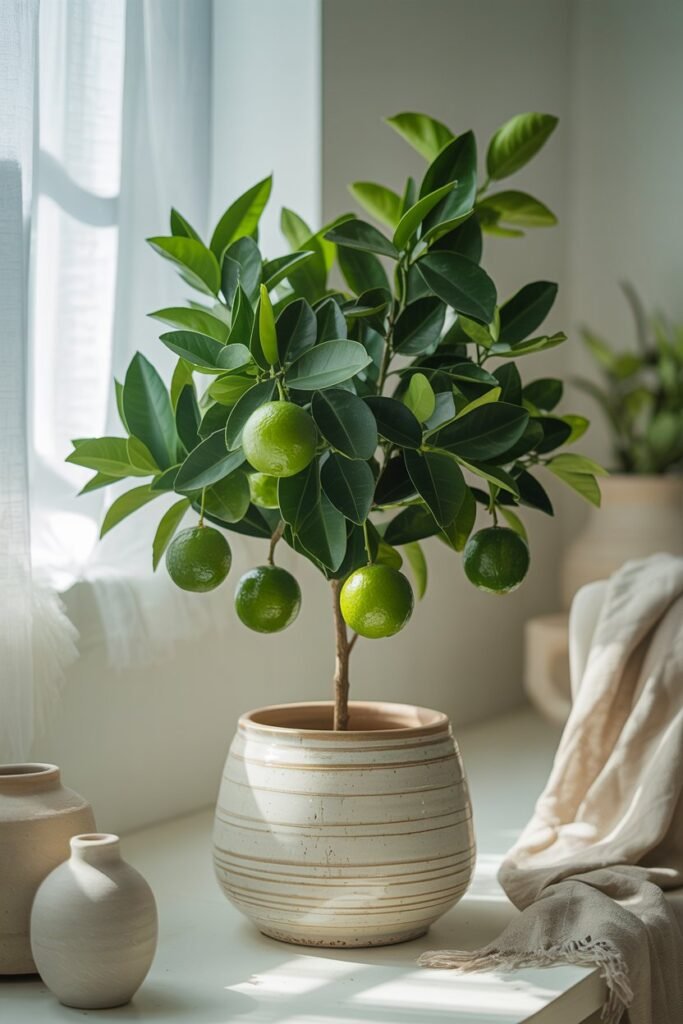
Known for its seedless, juicy limes, the Bearss is a staple in indoor citrus collections. Glossy green leaves, aromatic blossoms, and fast growth make it irresistible.
How to Plant
Plant in a deep 12-inch pot using citrus soil and organic compost. Ensure excellent drainage. Place in a bright, warm location.
Care Routine
- Light: Full sun or bright LED light for 8 hours.
- Water: Let topsoil dry between waterings.
- Fertilizer: Use citrus fertilizer every month.
- Humidity: Likes moderate humidity (40–60%).
- Pruning: Remove inner crowded stems to improve airflow.
Why Grow Citrus Indoors?
Citrus trees are symbols of light and renewal. Indoors, they do more than produce fruit they brighten rooms, purify air, and add that burst of cheerful green that winter often lacks.
They’re also surprisingly resilient. With the right pot, good drainage, and proper light, dwarf citrus trees can thrive indoors as happily as they do outdoors in summer.
Pro Tip: “Citrus doesn’t just grow it glows. Place your tree where it can feel at least six hours of natural sunlight daily, and you’ll see its leaves shine like emerald glass.”
Materials & Tools You’ll Need
Before you start your indoor citrus journey, gather these essentials. Having the right setup ensures strong roots, glossy leaves, and year-round beauty.
Soil & Containers
- Pot size: Start with an 8–10 inch pot for young trees; upgrade gradually as they grow.
- Drainage: Citrus roots hate soggy soil. Always choose a pot with multiple drainage holes.
- Soil mix: A light, fast-draining potting mix — equal parts citrus soil, perlite, and compost is ideal.
Light & Temperature
- Citrus loves bright, direct light. Aim for 6–8 hours daily.
- A south or southwest window is perfect. Supplement with a full-spectrum LED grow light in darker homes.
- Maintain indoor temps between 65–75°F (18–24°C).
Water & Humidity
- Keep soil slightly moist but never soggy.
- Mist leaves often citrus enjoys humidity, especially in heated winter homes.
Fertilizer
- Use a citrus-specific fertilizer rich in nitrogen and micronutrients (iron, zinc, magnesium).
- Feed monthly during active growth (spring–summer), and once every 6–8 weeks in winter.
Other Essentials
- Small pruning shears
- Watering can with a narrow spout
- Humidifier or pebble tray
- Soft cloth for wiping leaves
Pro Tip: “Citrus trees are like houseguests they need light, warmth, and a touch of care. Treat them gently, and they’ll reward you with blossoms and fruit long after winter fades.”
General Care Tips for Indoor Citrus
- Rotate your pot weekly so all sides receive sunlight evenly.
- Pollinate by hand with a soft brush or cotton swab when flowers bloom indoors.
- Prune gently to shape your tree and encourage airflow.
- Wipe leaves with a damp cloth to remove dust and help photosynthesis.
- Repot only when needed usually every 2–3 years.
Pro Tip: “If your citrus drops a few leaves when adjusting to indoor life, don’t panic. It’s simply getting comfortable in its new home.”
Why It Thrives Indoors
Bearss limes grow fast and are naturally compact. They tolerate pruning well, adjust easily to container living, and continue fruiting indoors with good light.
Pro Tip: “Bearss limes love gentle airflow a small fan nearby keeps them vibrant and strong.”
Winter Care Tips for Indoor Citrus
During winter, citrus trees rest a little but with care, they stay vibrant.
- Light: Extend daylight with a grow light if natural light drops below 6 hours.
- Water: Water less frequently, but never let roots dry out completely.
- Humidity: Use pebble trays or humidifiers to combat dry indoor air.
- Temperature: Avoid cold drafts and sudden temperature drops.
- Clean Leaves: Dust can block light wipe leaves with a damp, soft cloth.
Pro Tip: “Winter citrus isn’t about forcing growth it’s about preserving life. Think of it as nurturing quiet strength before the spring bloom.”
Common Problems and How to Fix Them
| Problem | Cause | Solution |
|---|---|---|
| Yellow leaves | Overwatering or nutrient deficiency | Check drainage, use citrus fertilizer |
| Leaf drop | Sudden temperature changes | Keep away from heaters or cold drafts |
| No fruit | Lack of light or pollination | Add grow lights, pollinate with brush |
| Sticky leaves | Aphids or scale insects | Wipe with neem oil solution |
Pro Tip: “Every leaf tells a story listen before you react. Citrus will show you what it needs if you watch closely.”
Final Thoughts
There’s a special joy in growing citrus indoors. Each morning, you’ll be greeted by glossy green leaves, delicate white blossoms, and the promise of fruit that warms your heart even on the coldest days.
Whether it’s a tiny kumquat glowing in a kitchen window or a fragrant Meyer lemon beside your reading chair, each citrus tree becomes more than a plant it becomes a companion, a little burst of life that connects you to nature year-round.
Tend to them with love, patience, and gentle hands, and they’ll return the favor with beauty, fragrance, and fruit.