
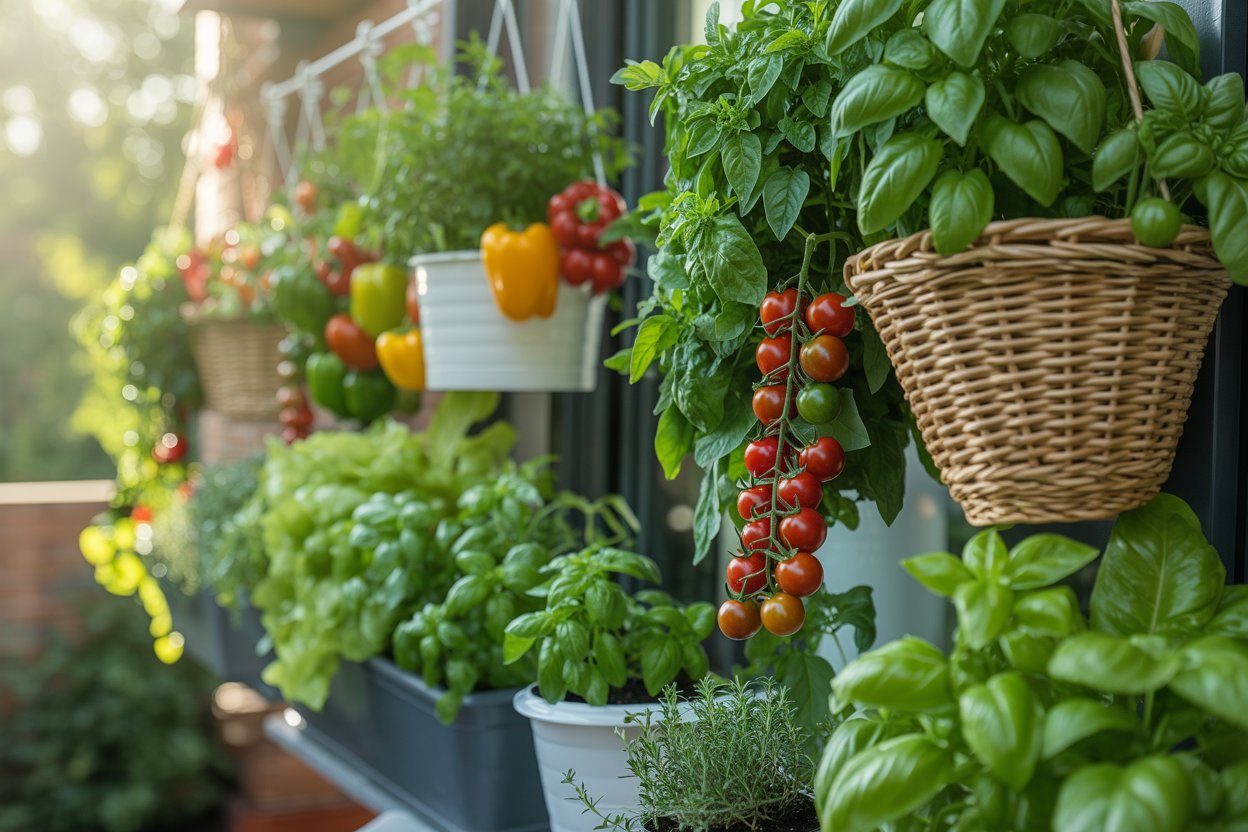

I didn’t start growing vegetables in hanging baskets because it was trendy or Pinterest-pretty. I started because I had no choice.
At the time, I was living with very limited outdoor space no backyard, no raised beds, not even enough room for proper grow bags. What I did have was a small porch, a railing, and a stubborn desire to grow my own food.
I remember standing there one afternoon, holding an empty hanging basket I originally bought for flowers, wondering if it could handle something edible.
That small experiment changed the way I garden forever.
Over time, those baskets became my mini food garden producing fresh vegetables right at eye level, staying cleaner than ground plants, and fitting perfectly into a small urban lifestyle.
Some vegetables failed miserably (I learned the hard way), but others thrived so beautifully that I now prefer growing them this way.
In this post, I’m sharing the 10 best vegetables for hanging baskets — ones I’ve grown myself or confidently recommend — along with honest growing advice, common mistakes to avoid, and why these vegetables are also easy to source on Amazon (both seeds and baskets).
If you’re short on space but big on dreams, this list is for you.
Why Hanging Baskets Work So Well for Vegetables
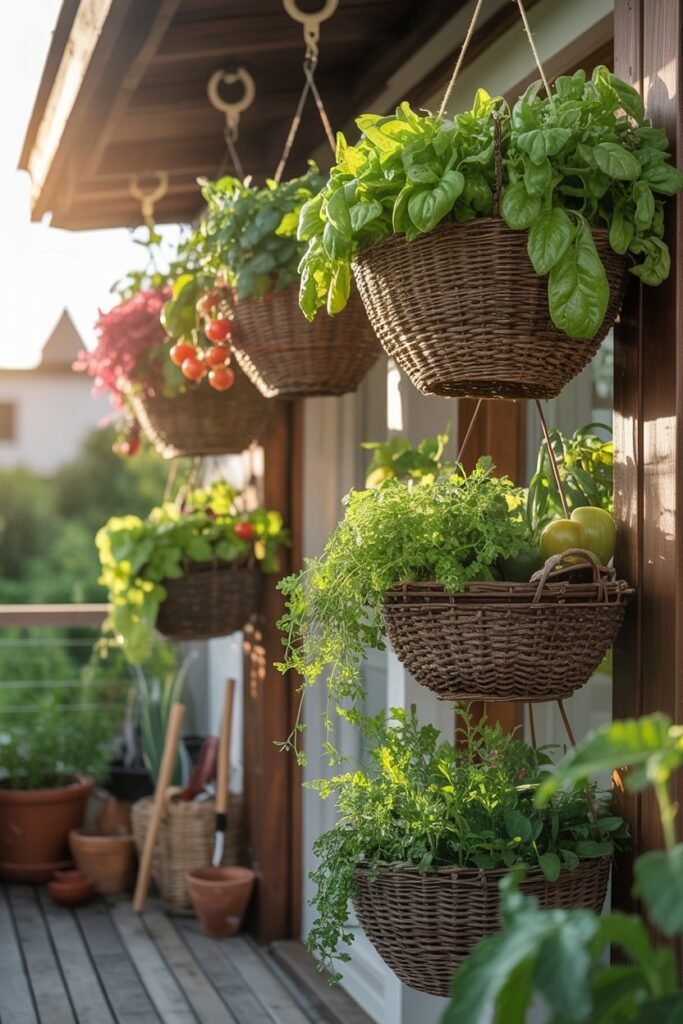
Before diving into the vegetables themselves, it helps to understand why hanging baskets are such a smart option:
- They save floor space (perfect for balconies and patios)
- They reduce pest issues like slugs and soil insects
- They improve airflow, reducing fungal diseases
- They make harvesting easier (no bending!)
- They dry faster after rain, which many veggies love
The key is choosing lightweight baskets, shallow-rooted or trailing vegetables, and being consistent with watering and feeding.
1. Cherry & Micro-Dwarf Tomatoes
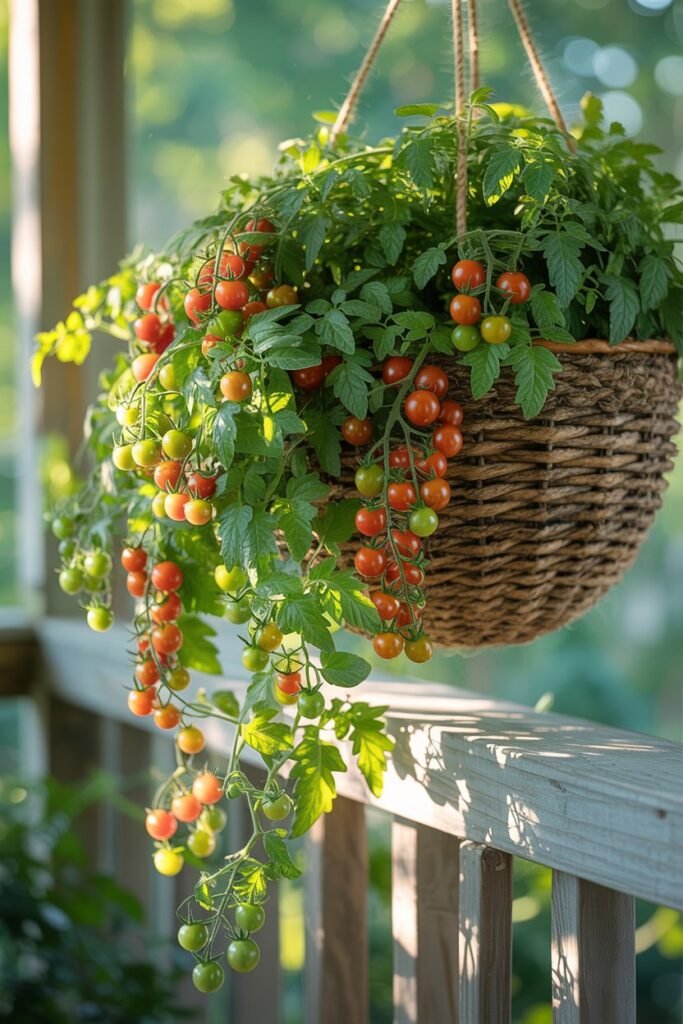
If there is one vegetable that convinced me hanging baskets could actually work, it’s cherry tomatoes.
Micro-dwarf and trailing tomato varieties are naturally compact, meaning they don’t need deep soil or heavy support.
Instead of growing upward like traditional tomatoes, they spill gently over the basket edge, loaded with fruit.
Why they’re perfect for baskets:
- Shallow root system
- Lightweight vines
- Continuous harvest
- Extremely productive in small spaces
Best varieties to look for on Amazon:
- Tiny Tim
- Micro Tom
- Tumbling Tom
- Red Robin
Personal tip:
Tomatoes in hanging baskets dry out faster than ground plants. I water mine every morning during hot weather and feed them weekly with a liquid tomato fertilizer.
Skipping feeding is the fastest way to end up with lots of leaves and no fruit.
2. Mini Bell Peppers
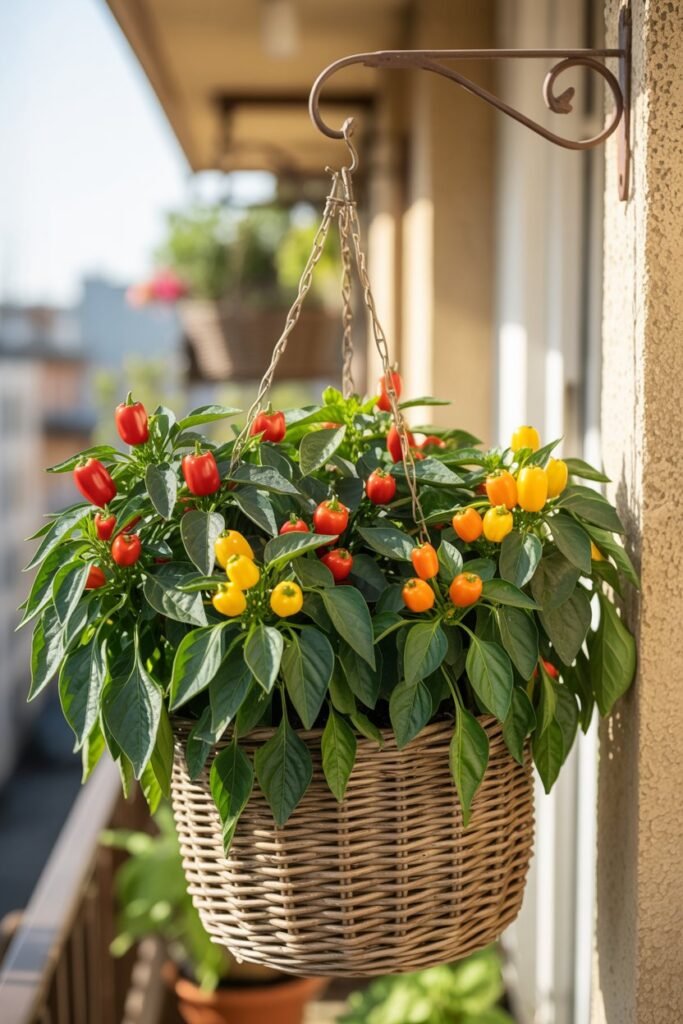
I used to think peppers needed big pots to produce well until I tried compact varieties in hanging baskets.
Mini bell peppers and patio peppers stay small but surprisingly productive. Their glossy leaves and colorful fruits also make them beautiful enough to replace decorative plants.
Why they work well:
- Compact growth habit
- Upright stems (less swinging)
- Thrive in containers
- Great visual appeal
What to know before planting:
- Use a sturdy hanging basket (peppers get top-heavy)
- Place in full sun (6–8 hours)
- Pinch early flowers for stronger plants later
Amazon-friendly varieties:
Mini Belle, Lunchbox Pepper Mix, Patio Sweet Peppers
3. Loose-Leaf Lettuce
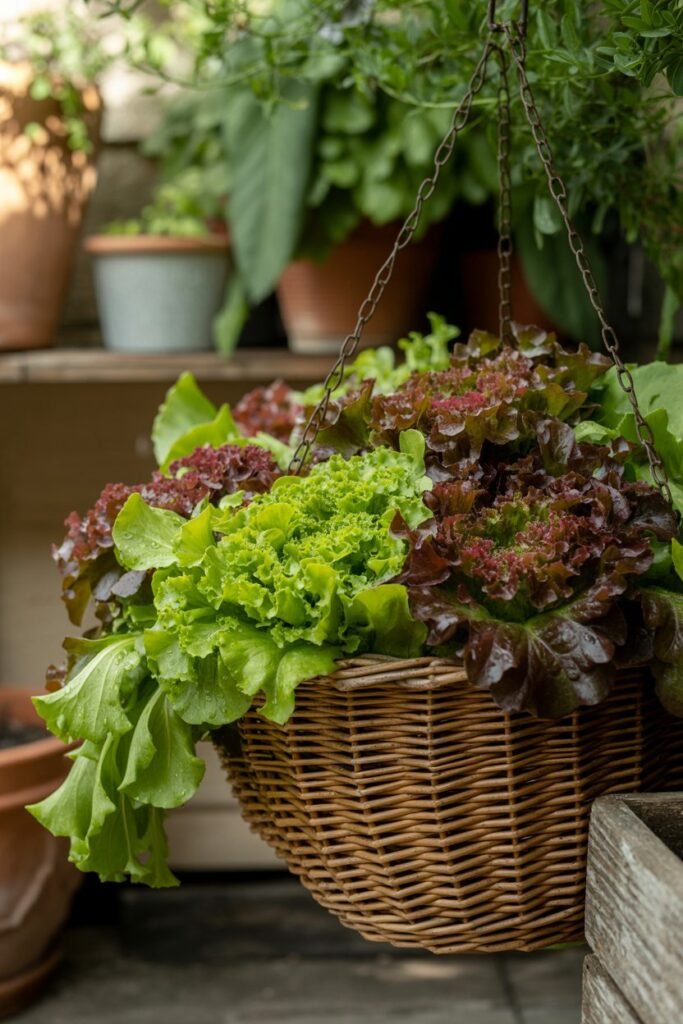
Lettuce is one of the most forgiving vegetables you can grow in hanging baskets, especially if you’re a beginner.
Loose-leaf varieties don’t form heavy heads, which keeps the basket light. You can harvest leaf by leaf without stressing the plant.
Why I love growing lettuce this way:
- Faster growth
- Cleaner leaves
- Fewer pests
- Continuous harvest
Best types for baskets:
- Red Leaf
- Green Leaf
- Butterhead
- Mesclun mixes
Extra tip:
Hang lettuce where it gets morning sun and afternoon shade. Too much heat causes bitterness and bolting.
4. Spinach
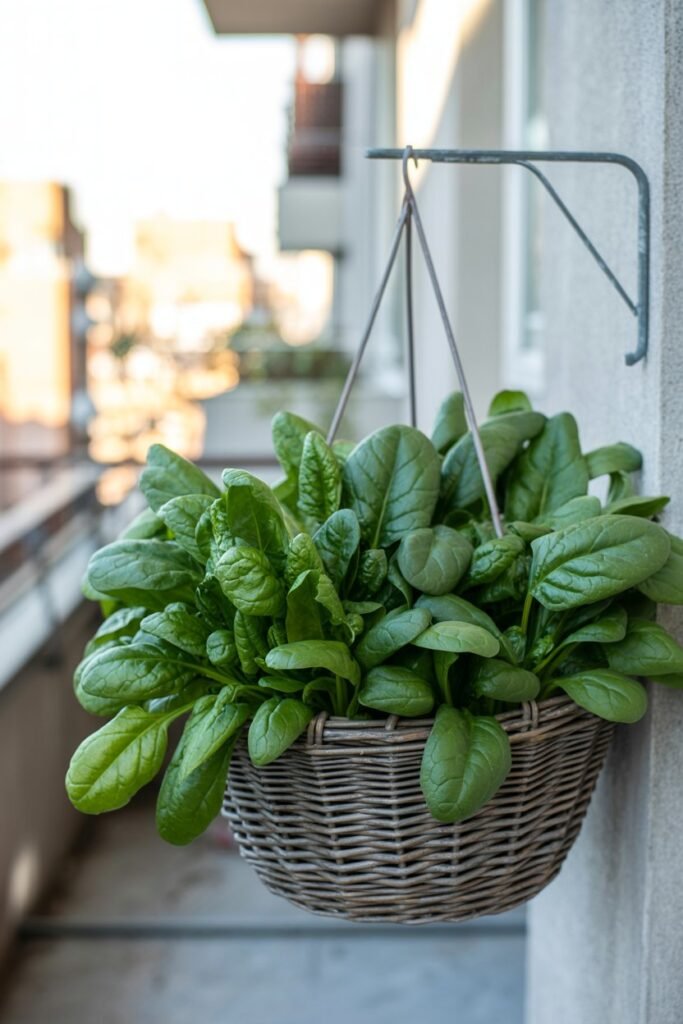
Spinach surprised me. I expected it to struggle in baskets but it actually did better than in my ground containers.
Because spinach prefers cooler temperatures and evenly moist soil, hanging baskets keep it well-ventilated while avoiding soggy roots.
Why spinach thrives in baskets:
- Shallow roots
- Compact growth
- Prefers airflow
- Harvestable multiple times
What most people forget:
Spinach needs consistent moisture. Letting it dry out even once can slow growth or cause bitterness.
5. Radishes
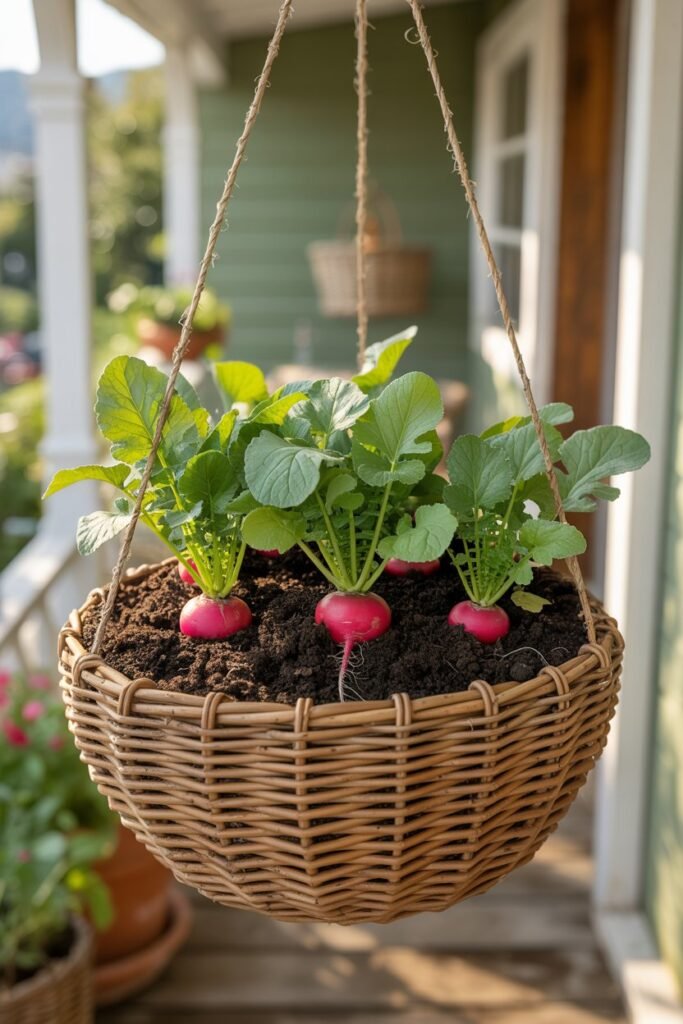
Radishes are perfect if you want quick wins. Some varieties mature in under a month, making them incredibly satisfying for small-space gardeners.
Why radishes work:
- Short growing period
- Small root size
- No heavy foliage
- Minimal maintenance
Best basket tip:
Use a wide basket rather than a deep one. Radishes care more about space than depth.
6. Dwarf Peas
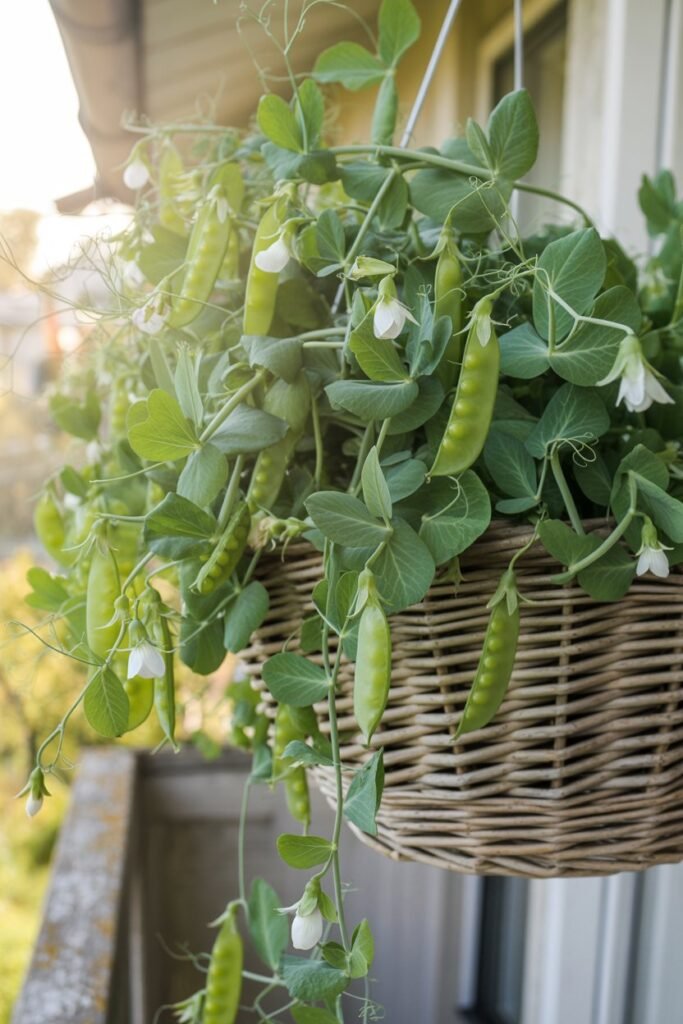
Dwarf peas are delicate, graceful, and incredibly rewarding. Their tendrils trail beautifully over the basket edge, and the flowers are just as charming as the harvest.
Why peas belong in hanging baskets:
- Lightweight vines
- Shallow roots
- Cooler temperature preference
- Minimal pruning
Support idea:
Let the vines trail naturally or add a small internal trellis inside the basket.
7. Bush Cucumbers
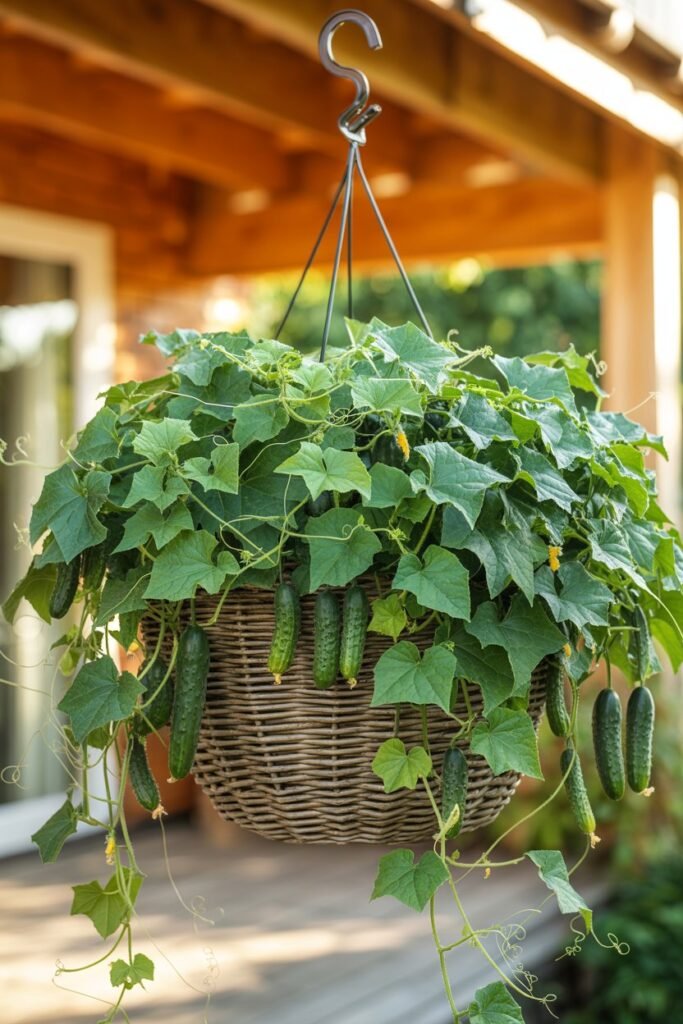
Yes cucumbers can grow in hanging baskets if you choose the right variety.
Bush cucumbers stay compact and produce smaller fruits that won’t weigh down the basket.
Why they work:
- Compact vines
- Fast growth
- Productive in containers
Important note:
Cucumbers are thirsty. If you forget to water, they’ll let you know immediately with droopy leaves.
8. Swiss Chard
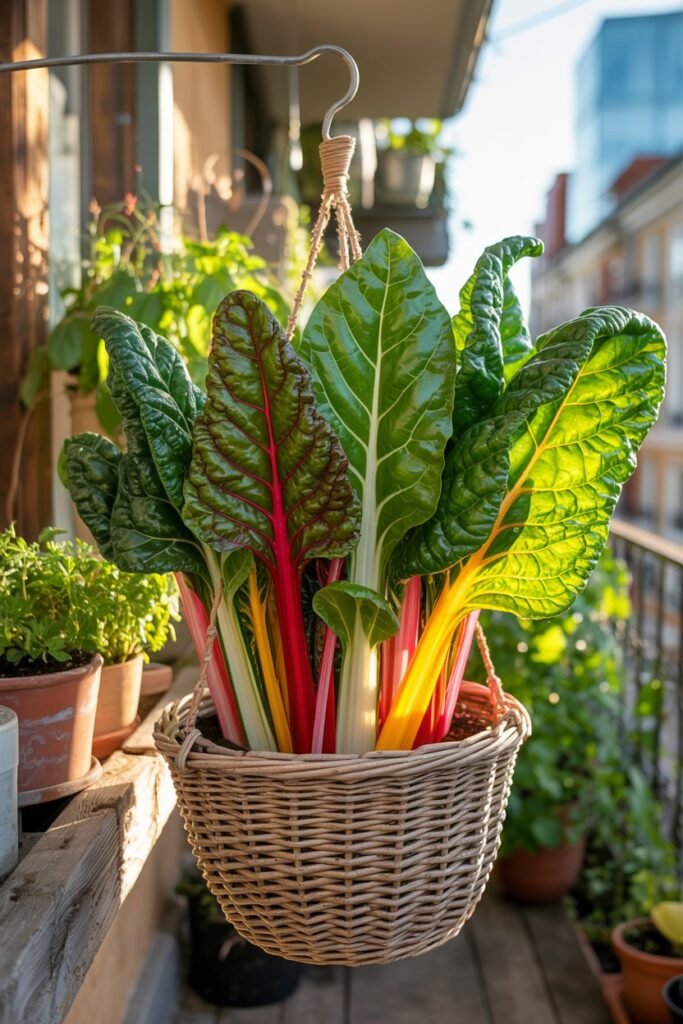
Swiss chard is one of the most underrated hanging basket vegetables. Its colorful stems add visual interest while providing a steady supply of nutritious greens.
Why chard is ideal:
- Long harvest window
- Tolerates heat better than lettuce
- Decorative foliage
- Low maintenance
Harvest tip:
Always pick outer leaves first to keep the plant producing.
9. Chili Peppers
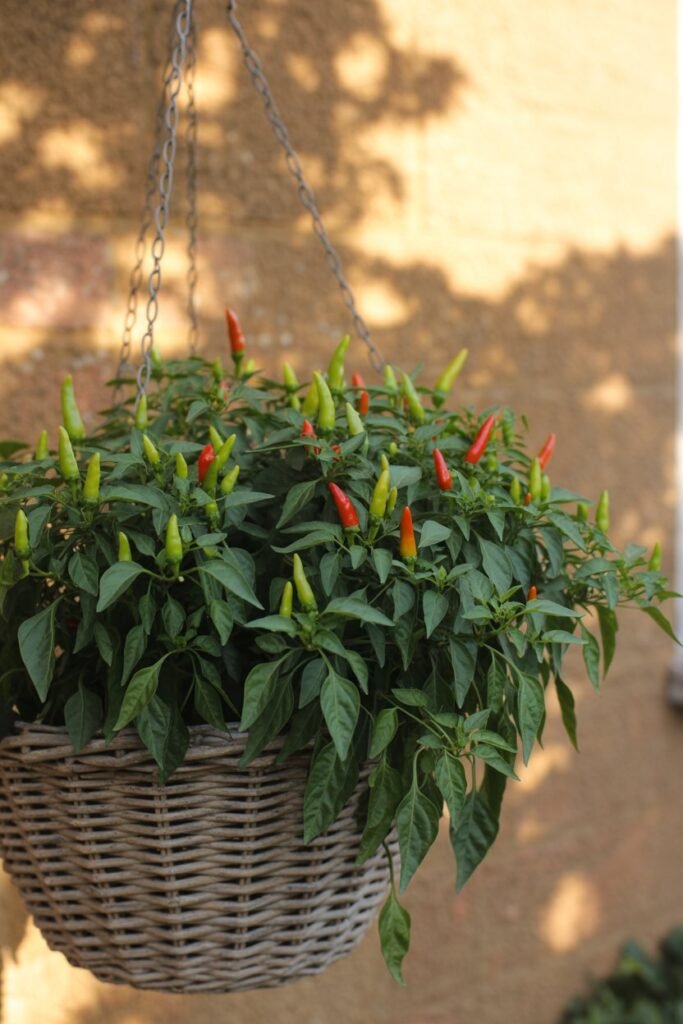
If you enjoy a little heat, chili peppers are perfect hanging basket vegetables.
Compact chili varieties stay small, fruit heavily, and look stunning when peppers start changing colors.
Why they shine in baskets:
- Compact growth
- Heat-loving
- Excellent drainage
- Minimal pest issues
Bonus:
The more sun they get, the spicier the peppers.
10. Spring Onions & Chives
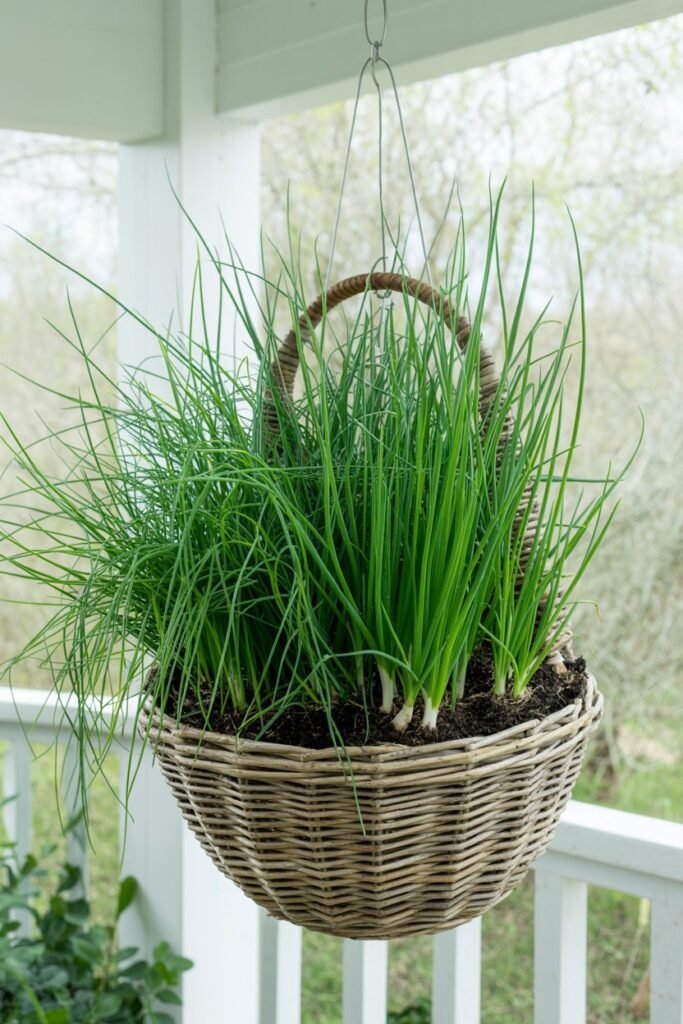
These are my “snip-and-use” vegetables always there when I need them.
They don’t trail much, but they grow upright and thrive in shallow soil, making them ideal for baskets.
Why they’re perfect:
- Extremely low maintenance
- Shallow roots
- Fast regrowth
- Ideal for beginners
Choosing the Right Hanging Basket (This Matters More Than Seeds)
One mistake I made early on was using decorative baskets with poor drainage. Vegetables need airflow and drainage.
What to look for:
- Drainage holes
- Lightweight plastic or resin
- 10–14 inch diameter
- Sturdy hooks
Most quality vegetable-friendly hanging baskets are easy to find on Amazon.
Soil, Feeding & Watering (The Secret to Success)
Hanging baskets fail more often from poor soil and inconsistent feeding than anything else.
My go-to setup:
- Lightweight potting mix
- Added compost or worm castings
- Slow-release fertilizer at planting
- Liquid feed every 1–2 weeks
Water daily during hot weather. Always check moisture with your finger — baskets dry fast.
Final Thoughts
Growing vegetables in hanging baskets didn’t just save space for me it gave me confidence as a gardener.
There’s something deeply satisfying about harvesting food from a basket you once thought was “just for flowers.”
These vegetables prove that you don’t need a backyard to grow real food just a little creativity, the right plants, and a willingness to try.
If you’re short on space but full of intention, hanging basket vegetables might become your favorite way to grow just like they became mine.
