

Have you ever held a warm cup of herbal tea between your hands on a long day and felt your whole body soften almost instantly?
That slow exhale you didn’t even realize you were holding…
that warm wave running through your chest…
that quiet sense of being held by something simple and natural…
Tea does that.
And what makes it even more magical is when the herbs in your cup come from your own home—your garden, your balcony, your little sunny windowsill.
There’s something deeply feminine, grounding, and nurturing about growing herbs specifically for tea.
You plant them with intention.
You harvest them with care.
You brew them with love.
And in return, they soothe you…
support you…
teach you to slow down…
and remind you that caring for small things is its own kind of self-care.
Unlike annual herbs that fade after a season, perennial herbs return year after year—stronger, fuller, and more comforting each time.
They become living companions, part of your wellness routine, part of your space, part of your rituals.
In this guide, I want to share the perennial herbs that create the most calming, flavorful, and healing teas—from classic favorites to lesser-known gems.
These plants don’t just make tea…
they make moments.
Each herb carries its own energy, its own symbolism, its own emotional effect, and its own way of comforting your body and spirit.
Let’s begin with four powerfully supportive perennial herbs that brew beautifully and grow effortlessly.
1. Lemon Balm (Melissa officinalis)
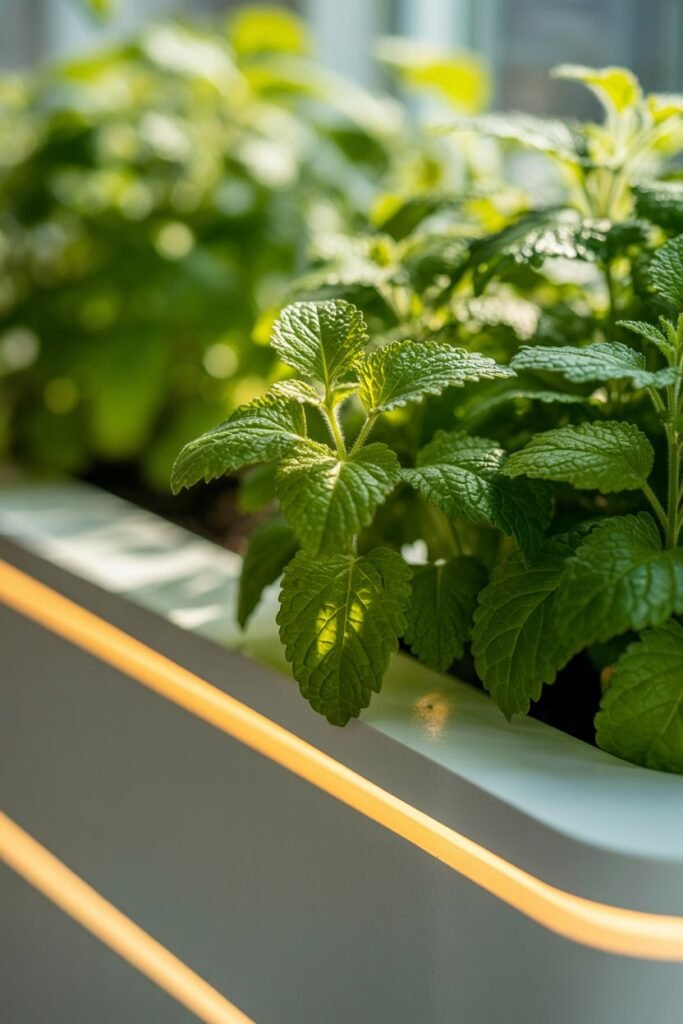
Symbolism: Calm • Upliftment • Emotional Ease • Joy • Lightness
Lemon Balm is a soft, cheerful, heart-lifting herb that feels like sunshine distilled into a leaf.
Its gentle lemon scent is instantly soothing, and many people call it the “comfort herb” because it brings emotional ease the moment you smell it.
Emotional & Energetic Benefits
- Eases anxiety and restless thoughts
- Softens emotional overwhelm
- Promotes gentle happiness and mental clarity
- Supports a calm, relaxing bedtime routine
Lemon Balm tea is perfect for anyone who tends to hold stress in their chest—it unwinds you from the inside out.
Why It’s Perfect for Tea
Lemon Balm’s flavor is soft, lemony, and naturally sweet—even without honey.
Fresh or dried, it makes an incredibly smooth herbal tea with calming properties.
Ideal Placement
- Windowsills with morning sun
- Patio containers
- Near seating areas for calming scent
Care Guide
- Light: Bright, indirect sun or gentle morning light
- Water: Keep soil lightly moist
- Harvest: Pinch stems above leaf nodes for continuous growth
Lemon Balm is one of the easiest perennial herbs—you’ll fall in love instantly.
2. Peppermint (Mentha × piperita)
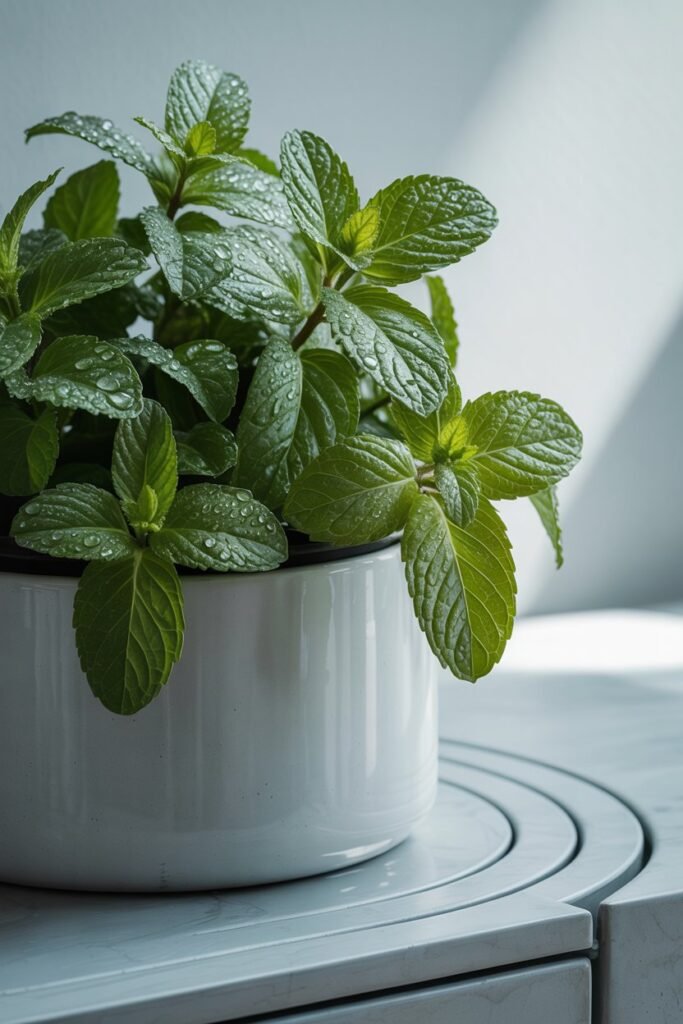
Symbolism: Clarity • Freshness • Renewal • Strength • Movement
Peppermint is bold, refreshing, and revitalizing—the herb you reach for when you need a mental reset or a boost of clarity.
It has a cooling, invigorating presence that wakes up your senses and lifts your energy.
Emotional & Energetic Benefits
- Clears mental fog
- Refreshes the mind
- Supports digestion and comfort
- Encourages focus and renewed motivation
Peppermint feels like a fresh breeze running through your thoughts.
Why It’s Perfect for Tea
Peppermint tea is iconic—cooling, smooth, and wonderfully aromatic.
It’s amazing for after meals, study breaks, or late-night calm.
Ideal Placement
- Anywhere with 3–5 hours of gentle sun
- Containers only (mint spreads aggressively)
Care Guide
- Light: Partial sun or bright shade
- Water: Keep soil evenly moist
- Harvest: Cut stems right above a leaf pair
Peppermint is a generous grower—it will give you fresh tea almost nonstop.
3. Chamomile (Matricaria recutita or Chamaemelum nobile)

Symbolism: Peace • Rest • Healing • Emotional Softness • Surrender
Chamomile is one of the gentlest, most nurturing herbs for tea.
Its tiny daisy-like flowers carry a soft apple-honey fragrance that melts tension and quiets your mind.
Chamomile feels like a warm embrace—especially on nights when sleep feels far away.
Emotional & Energetic Benefits
- Calms the nervous system
- Helps with restful sleep
- Softens irritability and emotional tension
- Grounds you during anxious moments
Chamomile is the herb for nights when you crave emotional stillness.
Why It’s Perfect for Tea
Fresh or dried flower heads make a sweet, floral, deeply soothing tea.
Ideal Placement
- Sunny spots with gentle breezes
- Raised beds, window boxes, or patio containers
Care Guide
- Light: Full sun or very bright indirect light
- Water: Light, consistent moisture
- Harvest: Snip flower heads at full bloom
Chamomile feels delicate, but it’s incredibly resilient.
4. Rosemary (Rosmarinus officinalis)

Symbolism: Memory • Protection • Clarity • Focus • Strength
Rosemary is an uplifting, aromatic powerhouse—perfect for teas that sharpen the mind, warm the body, and brighten your mood.
Its scent is fresh, crisp, herbal, and slightly pine-like—instantly energizing.
Emotional & Energetic Benefits
- Enhances concentration
- Helps clear stagnant thoughts
- Promotes emotional strength
- Refreshes your environment
Rosemary tea is wonderful for mornings, study sessions, or moments when you want to feel awake and steady.
Why It’s Perfect for Tea
Fresh sprigs brew into a warm, aromatic tea with a comforting herbal depth.
Ideal Placement
- Sunny windowsills
- Balconies
- Warm, bright rooms
Care Guide
- Light: 6–8 hours of sunlight
- Water: Allow soil to dry slightly between watering
- Harvest: Clip tender new growth for the sweetest flavor
Rosemary is long-living, loyal, and beautifully fragrant—a perfect perennial tea companion.
5. Lemon Thyme (Thymus × citriodorus)
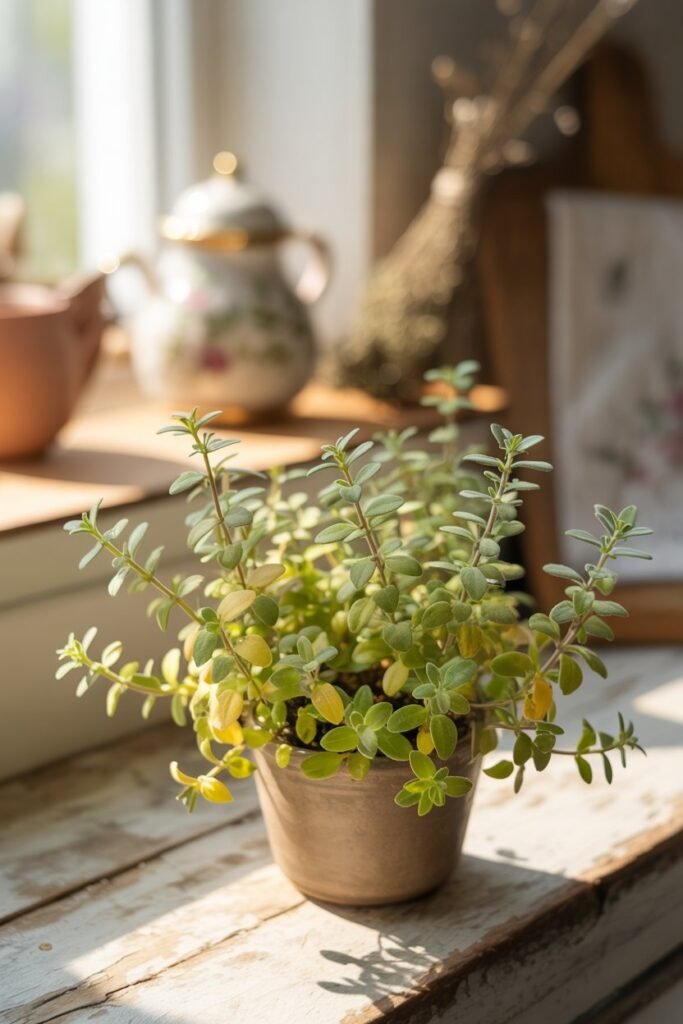
Symbolism: Clarity • Calm • Refreshing Energy • Healing • Lightness
Lemon Thyme combines the uplifting brightness of lemon with the earthy grounding of thyme.
Its fragrance is fresh, lemony, and slightly herbal — an herb that encourages focus and mental lightness.
Emotional & Energetic Benefits
- Clears mental fatigue
- Supports emotional balance
- Lightens heaviness and tension
- Encourages gentle motivation and inspiration
Lemon Thyme tea feels like a soft exhale after a long, busy day, leaving your mind refreshed.
Why It’s Perfect for Tea
Fresh or dried, lemon thyme adds a delicate citrus-herbal flavor to teas.
It pairs beautifully with chamomile, lavender, or honey, giving a layered, fragrant cup.
Perfect for:
- Morning wake-up teas
- Afternoon clarity blends
- Light herbal refreshers
Ideal Placement
- Sunny windowsills
- Patio containers
- Mixed herb gardens
Care Guide
Light: Full sun
Water: Moderate, allow soil to dry slightly between waterings
Soil: Well-draining, sandy or loamy
Harvest: Snip small sprigs regularly for fresh flavor
A resilient perennial, lemon thyme will return year after year, filling your garden with fragrance and warmth.
6. Lemon Verbena (Aloysia citrodora)
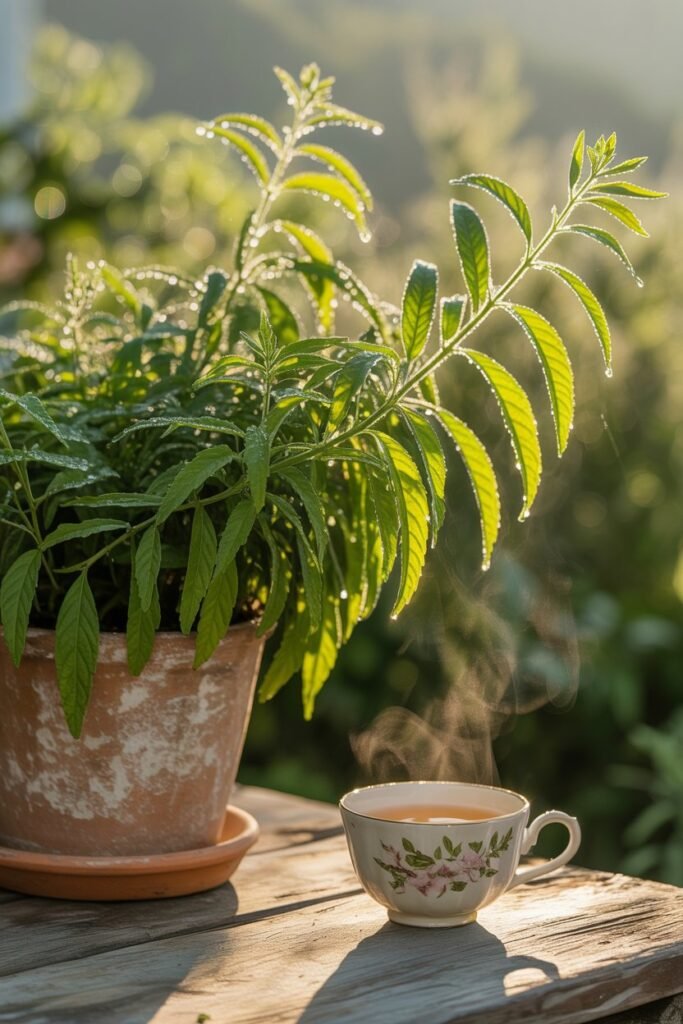
Symbolism: Clarity • Upliftment • Emotional Lightness • Renewal • Soft Energy
Lemon Verbena feels like a breath of fresh morning air—clean, bright, and full of gentle optimism.
Its scent is sharper and more vibrant than lemon balm, almost like sunshine dancing on citrus peels.
This is the herb that clears emotional fog and replaces it with clarity and light.
Emotional & Energetic Benefits
- Lifts heaviness from the heart
- Helps calm the nervous system without creating drowsiness
- Supports mental focus and emotional clarity
- Reduces tension held in the shoulders or stomach
- Brings a sense of “fresh start” energy
Lemon Verbena tea is ideal for anyone who feels mentally cluttered or emotionally weighed down.
It brings you back to yourself — gently, softly, and with loving clarity.
Why It’s Perfect for Tea
Lemon Verbena makes a beautifully fragrant, smooth, almost silky lemon tea.
It’s brighter than lemon balm, more elegant than lemongrass, and naturally refreshing.
Perfect for:
- Morning clarity blends
- Evening calming rituals
- Stress relief teas
- Digestive comfort
- Blending with lavender, mint, or rose
Every sip feels like someone opened a window in your mind.
Ideal Placement
- A warm, sunny patio
- South-facing windowsills
- Large outdoor containers
- Near walkways where you can brush the leaves for fragrance
Care Guide
Light: Full sun for 6–8 hours — the more sun, the stronger the fragrance
Water: Allow soil to dry slightly between waterings; dislikes staying soggy
Soil: Light, well-draining, slightly sandy mixes
Warmth: Protect from frost; grows beautifully in pots
Harvest: Trim tender tips regularly for fuller growth and brighter flavor
7. Holy Basil (Ocimum tenuiflorum / Tulsi)
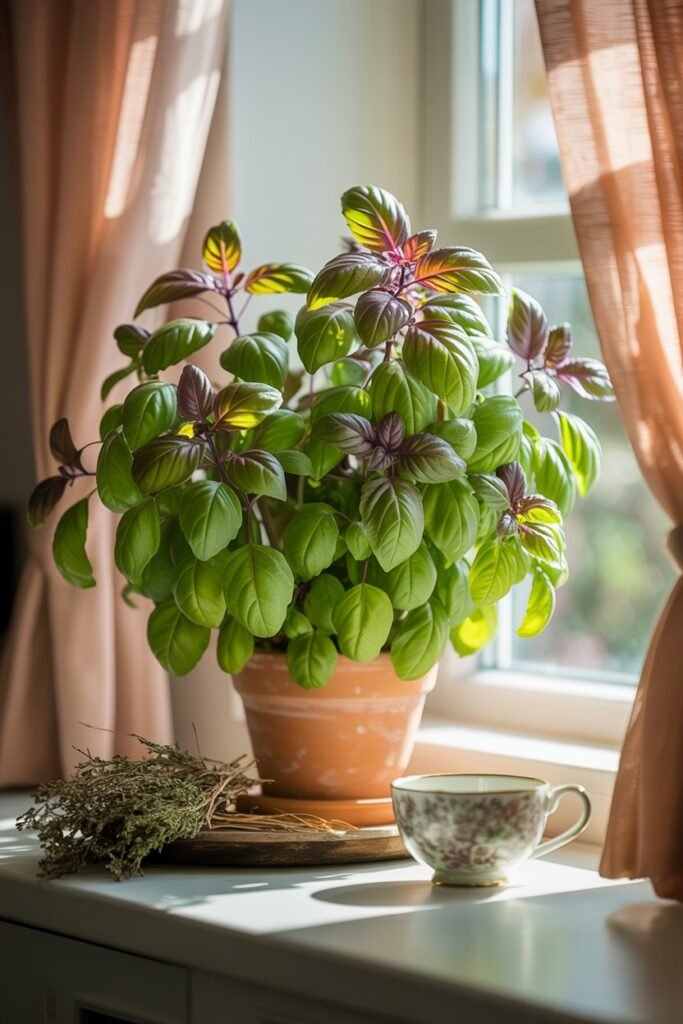
Symbolism: Balance • Protection • Spiritual Calm • Strength • Grounding
Holy Basil, or Tulsi, is revered as a sacred herb, a gentle warrior in your garden that nurtures the mind, body, and spirit.
Its scent is warm, slightly spicy, and herbaceous, carrying an aura of calm and reverence.
Emotional & Energetic Benefits
- Reduces stress and promotes emotional resilience
- Clears mental tension and restlessness
- Strengthens inner calm and grounding
- Enhances mindfulness and spiritual presence
Holy Basil tea is a beautiful daily ritual for anyone seeking balance in a hectic life.
It feels like a gentle, protective hug from nature itself.
Why It’s Perfect for Tea
Tulsi tea is aromatic, slightly sweet with a hint of clove or pepper depending on the variety.
It’s soothing for the mind, supportive for immunity, and deeply relaxing after a long day.
Perfect for:
- Evening wind-down blends
- Stress-relief teas
- Mindful meditation moments
Ideal Placement
- Sunny or lightly shaded spots
- Containers or garden beds
- Near meditation or yoga spaces for energy
Care Guide
Light: 6–8 hours of sun daily
Water: Keep soil moist but not waterlogged
Soil: Well-draining, rich organic soil
Harvest: Clip the leaves regularly to encourage bushier growth
Holy Basil is perennial in warm climates and annual elsewhere, but its gentle energy leaves a lasting impression in any garden.
8. Thyme
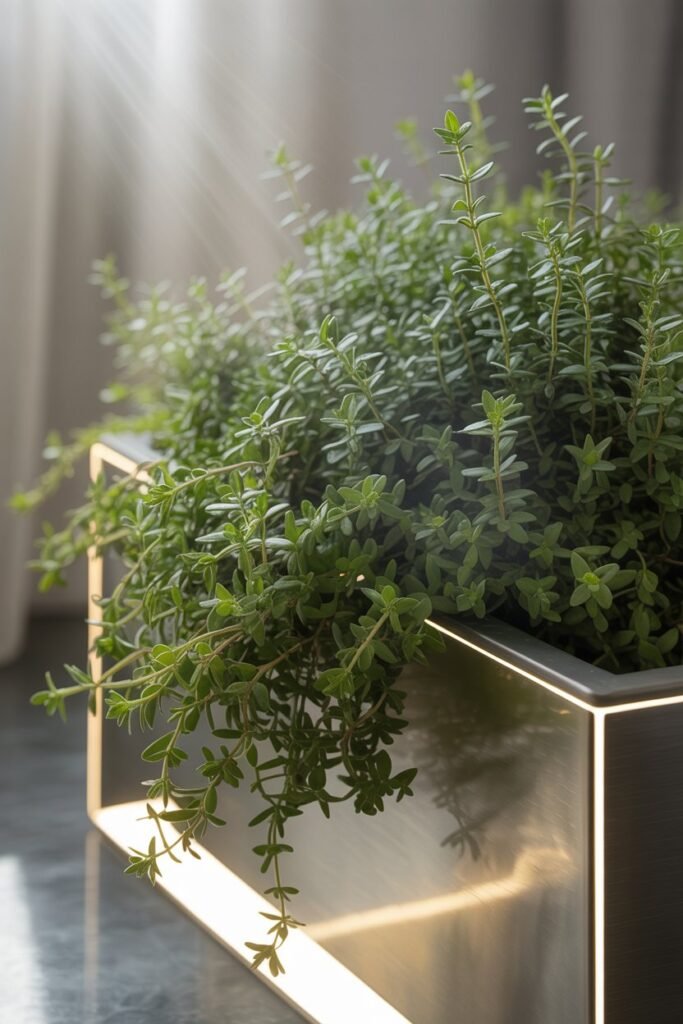
Not everyone thinks of thyme as a tea herb, but herbalists know its magic. This tiny, resilient plant is a powerhouse for respiratory support and cold-season comfort.
Why it’s wonderful for tea:
Thyme tea helps with congestion, sore throats, and seasonal sniffles. It’s earthy, grounding, and surprisingly soothing.
How to grow it:
Give it full sun, sandy or rocky soil, and lots of airflow. Thyme is a survivor — drought-tolerant, heat-loving, and quietly loyal.
Flavor profile:
Warm, herbal, earthy — like the scent of a cozy kitchen.
9. Fennel (Perennial Fennel / Foeniculum vulgare)
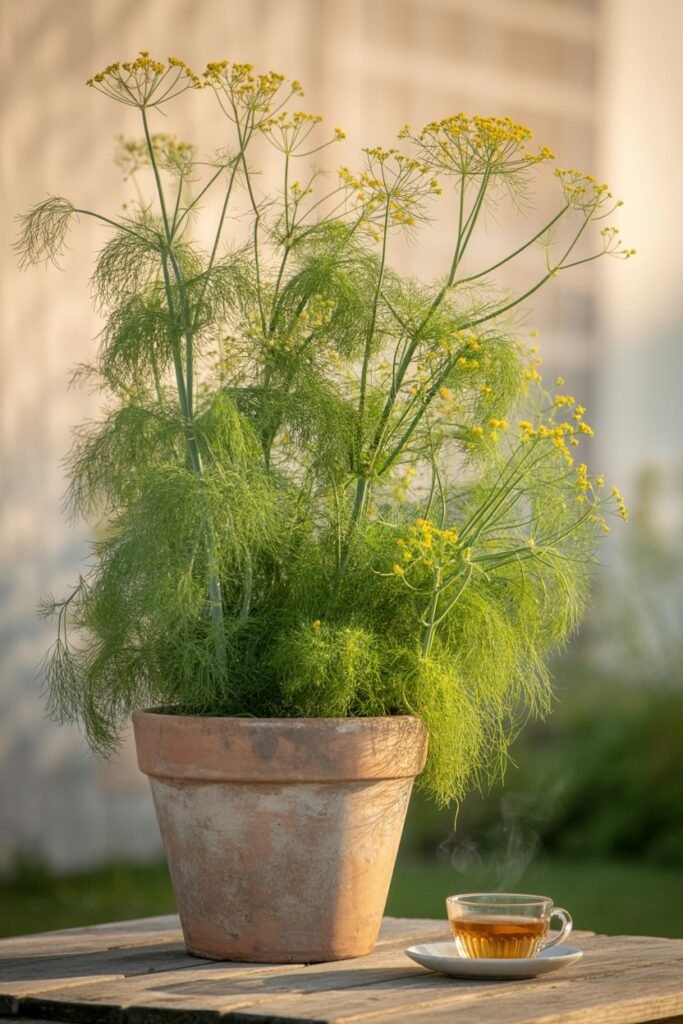
Symbolism: Grace • Ease • Digestive Comfort • Lightness • Flow
Fennel is elegant and airy, with feathery fronds that sway like delicate lace in the breeze.
Its aroma is sweet, mild, and slightly licorice-like, carrying a nurturing, calming presence.
Emotional & Energetic Benefits
- Supports digestion and gentle release of tension
- Creates a sense of calm and nurturance
- Balances emotional heaviness
- Brings a subtle sweetness and lightness to your day
Fennel tea is like a gentle hug for your stomach and a soft whisper to your mind.
Why It’s Perfect for Tea
Fennel’s flavor is subtly sweet, slightly licorice, and soothing for digestion.
It works beautifully solo or blended with chamomile, mint, or lemon balm.
Perfect for:
- Post-meal digestive teas
- Evening relaxation blends
- Herbal wellness blends
Ideal Placement
- Full sun for strongest growth
- Well-draining garden beds or large containers
- Near outdoor seating for soft scent enjoyment
Care Guide
Light: Full sun
Water: Moderate, keep soil lightly moist
Soil: Fertile, well-draining soil
Harvest: Clip fronds as needed; bulbs can be harvested seasonally
Perennial fennel rewards patience with graceful growth, lovely blooms, and a calming aroma perfect for tea lovers.
10. Lavender
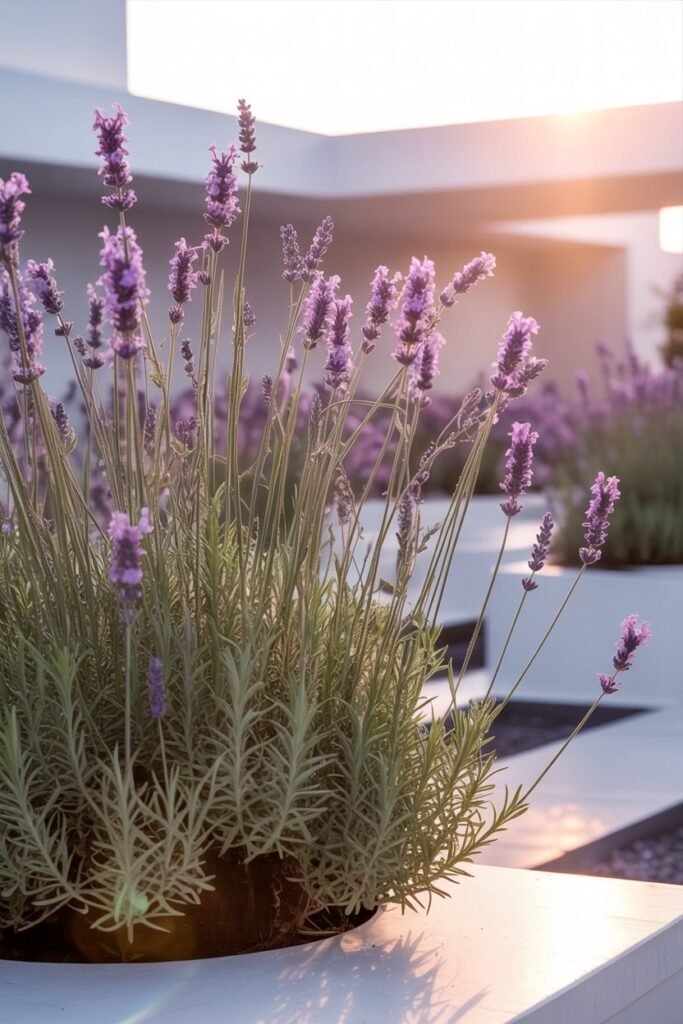
Lavender is the calming queen — elegant, fragrant, and emotionally soothing. Its soft purple blossoms carry natural oils that instantly relax the body and mind.
In the garden, lavender feels like a peaceful border that invites slow breathing and gentle thoughts.
Why it’s wonderful for tea:
Lavender tea is beautiful for easing tension, improving sleep, quieting an overactive mind, and even softening menstrual discomfort. It blends perfectly with chamomile, lemon balm, or mint for evening teas.
How to grow it:
Lavender thrives in full sun and dry, sandy soil with perfect drainage. It hates wet feet. Give it space, air, and sunlight, and it will return year after year with fuller blooms.
Flavor profile:
Floral, soothing, lightly sweet — like a soft-purple sunset.
11. Stevia
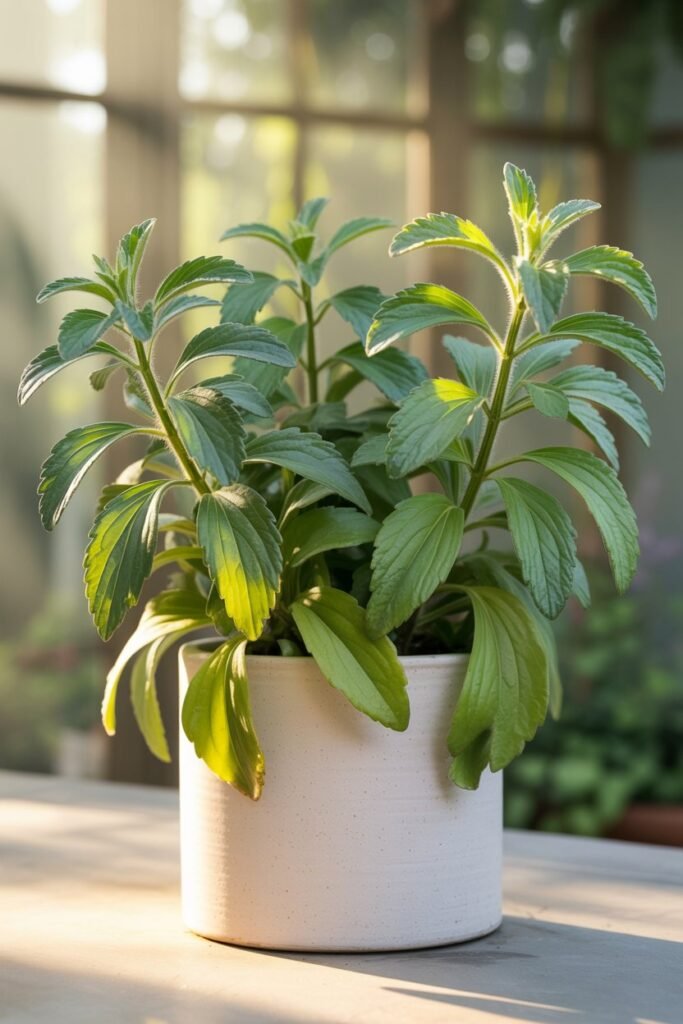
Stevia is the sweet friend every tea garden needs. Technically a perennial in warm climates, it can be grown as a tender perennial elsewhere.
Its leaves taste naturally sweet — so sweet that a few crushed leaves can replace sugar in your tea.
Why it’s wonderful for tea:
Stevia allows you to sweeten your herbal blends without processed sugar.
It’s perfect for kids, for evening tea when you want to avoid heavy sweetness, or for anyone who loves a guilt-free sip.
How to grow it:
It loves warmth, rich soil, and regular moisture. In cooler regions, you can grow it in pots and overwinter it indoors. Stevia grows into a soft, bushy plant with tender, vibrant green leaves.
Flavor profile:
Sweet, clean, smooth — a natural, gentle sweetness with no bitterness when used fresh.
12. Anise Hyssop

Anise hyssop is one of the most enchanting herbs you can grow for tea.
Bees adore it, butterflies float to it, and the leaves smell of soft black licorice and wildflowers. It’s a plant that brings life to the garden and comfort to your cup.
Why it’s wonderful for tea:
Anise hyssop tea helps with digestion, warms the body, calms coughs, and adds natural sweetness. It’s a wonderful tea for fall and winter, especially when paired with thyme or lemon balm.
How to grow it:
Give it full sun and well-drained soil. It’s hardy, resilient, and returns reliably each year — often growing bigger, fuller, and more fragrant. It can self-seed gently, giving you new plants without becoming invasive.
Flavor profile:
Sweet, floral, and softly licorice-like — soothing and slightly warm.
13. Fennel (Perennial Fennel)

Fennel is the graceful, feathery herb that brings movement and softness to a tea garden.
Its leaves look like delicate green lace, and its sweet aroma carries a gentle warmth that feels almost maternal. Fennel grows tall and elegant, swaying lightly in the breeze — always looking ethereal and effortless.
Why it’s wonderful for tea:
Fennel tea is a classic digestive soother. It eases bloating, calms the stomach, relieves menstrual discomfort, and gently relaxes the body after heavy meals.
It’s also subtly sweet on its own, which makes it a perfect base tea for herbal blends.
How to grow it:
Fennel thrives in full sun and fertile, well-drained soil. It needs space to stretch upward, often reaching 4–6 feet tall. Once established, fennel returns every year with even more feathery foliage and golden umbels that attract pollinators.
Flavor profile:
Warm, sweet, lightly spicy — with a whisper of licorice that feels soothing and familiar.
Conclusion: Growing a Tea Garden That Heals You Year After Year
Growing perennial herbs for tea isn’t just gardening — it’s creating a sanctuary you can sip.
These plants return every season not only with fresh leaves, but with comfort, clarity, calmness, and moments of peace that you can harvest whenever you need them.
There is something deeply nurturing about stepping outside, brushing your hand across mint, rosemary, or lemon balm, and knowing that your wellness literally grows at your fingertips.
A perennial tea garden becomes part of your rhythm.
It soothes you in winter.
Energizes you in spring.
Lavenders your evenings.
Peppermints your mornings.
Chamomiles your restless nights.
And the best part?
Once planted, they keep giving — again and again.
Whether you’re brewing a cup for healing, grounding, or simple sweetness, your herbs are always there… growing quietly, faithfully, full of love.