
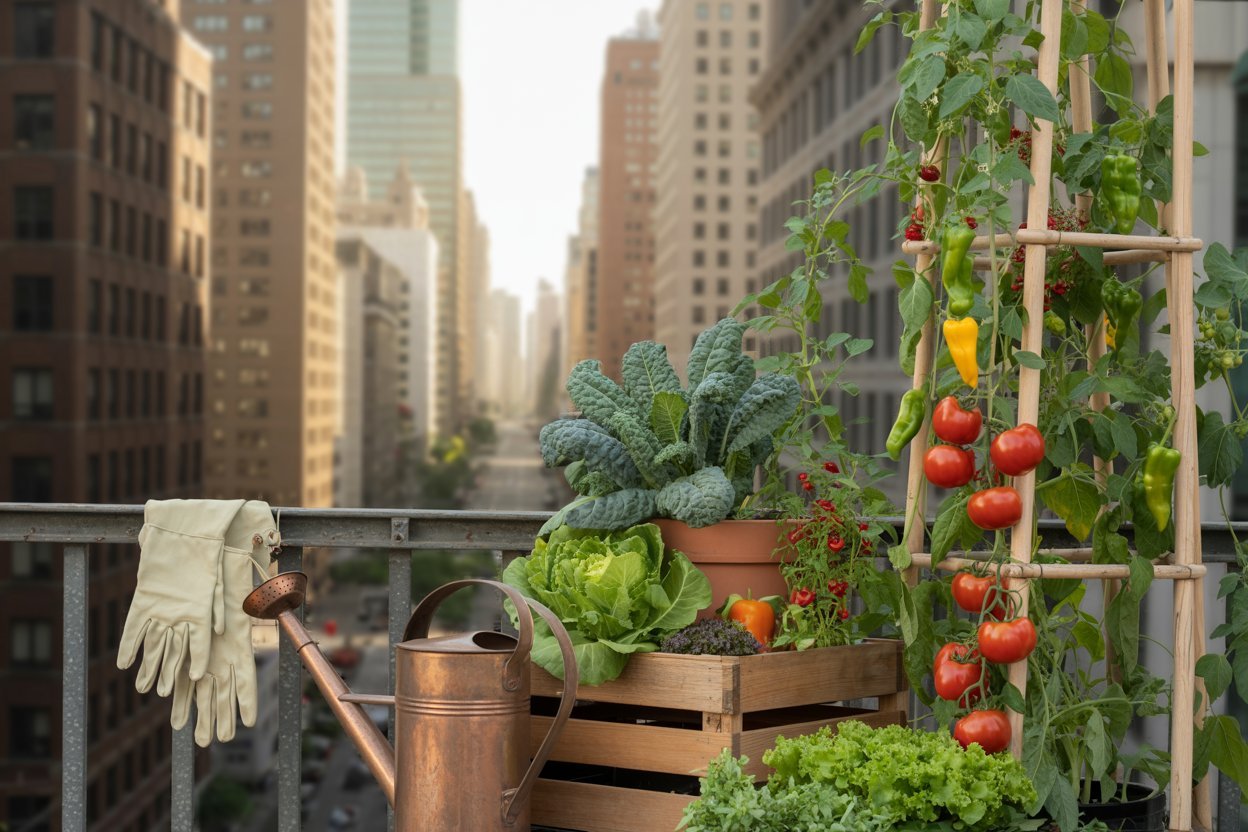

I still remember the first time I tried to grow vegetables in the city.
It wasn’t some dreamy countryside moment with birds chirping and acres of land. It was a tiny balcony overlooking traffic, with laundry lines swaying and car horns interrupting my gardening playlist.
I had exactly three pots, a bag of soil I dragged up two flights of stairs, and a hopeful little tomato seedling that looked far braver than I felt.
That was the beginning.
What I didn’t realize then was that growing a full vegetable garden in the city isn’t about space it’s about intention. It’s about learning to see possibility where concrete once felt final.
It’s about using what you have, nurturing it with care, and discovering that abundance can absolutely bloom between apartment walls, on rooftops, in courtyards, and even beside busy streets.
If you’ve been dreaming about harvesting your own vegetables but live in an urban space, I want you to know something gently and clearly: you can do this.
And not just a few herbs. I’m talking about a full, productive, nourishing vegetable garden right where you are.
Let’s walk through this together, step by step.
How to Grow a Full Vegetable Garden in the City
1. Redefining What “Full” Means in the City
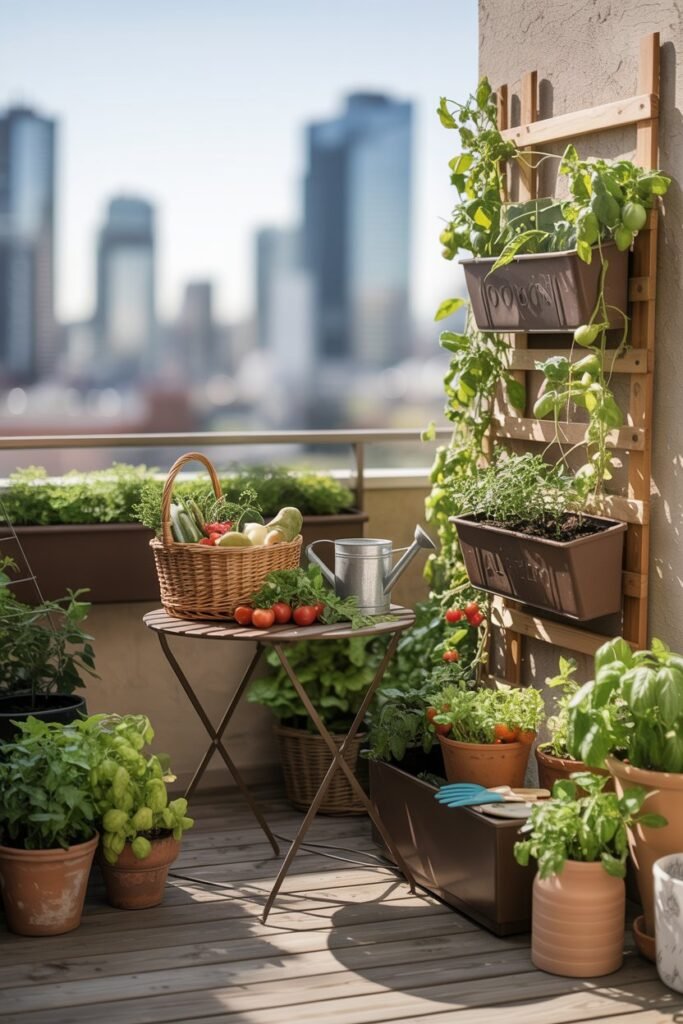
When we think of a “full vegetable garden,” many of us picture sprawling backyard rows. But in the city, fullness looks different and that’s a beautiful thing.
A full city garden means:
- A steady rotation of vegetables
- Harvests throughout multiple seasons
- Efficient use of vertical and horizontal space
- Containers, raised beds, or creative growing systems
- Thoughtful planning instead of random planting
Fullness in the city is about productivity per square foot.
A 6×4 balcony can feed you.
A sunny window can supply greens.
A rooftop can grow enough tomatoes for sauce all season.
The key is intention and smart design.
2. Start With What You Have (Not What You Wish You Had)
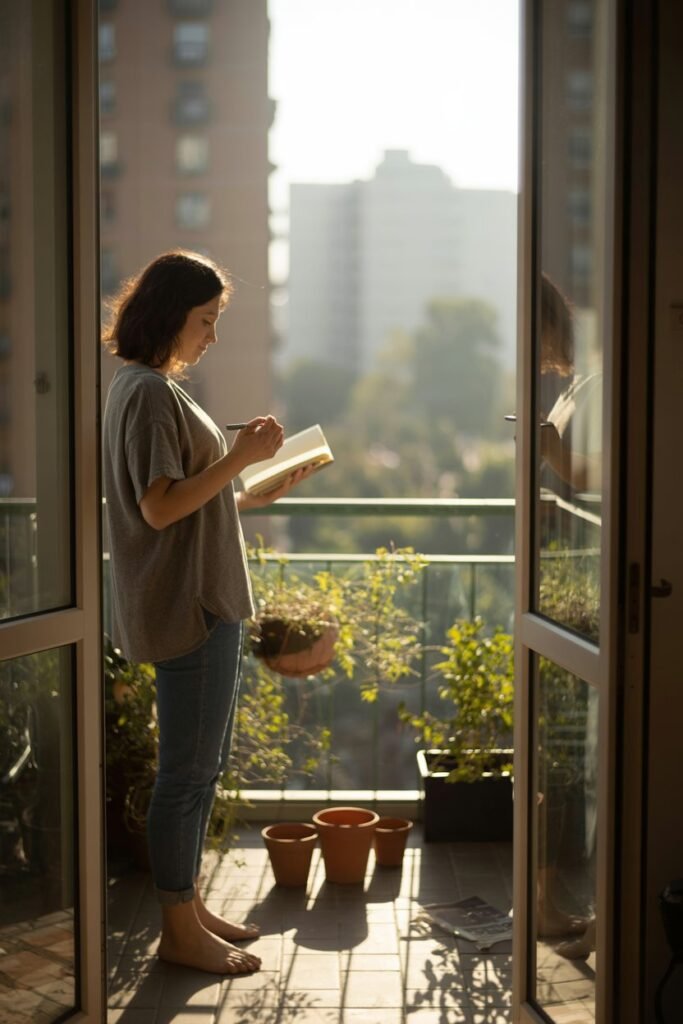
One of the biggest mistakes new urban gardeners make is waiting for “better” conditions.
Better light.
More space.
A bigger budget.
The perfect setup.
Sweet friend, start where you are.
Walk through your space and ask:
- Where does the sun fall?
- How many hours of light do I get?
- Is the space windy?
- Is it shaded by buildings?
- Do I have access to water?
Even in dense cities like New York City or London, people grow thriving vegetable gardens on fire escapes, rooftops, and balconies. It’s about studying your microclimate.
Sunlight Guide
- 6–8 hours: Perfect for fruiting vegetables (tomatoes, peppers, eggplant)
- 4–6 hours: Good for leafy greens and root vegetables
- 2–4 hours: Focus on greens and herbs
Track your sunlight for a few days before buying anything. This single habit can save you so much disappointment later.
3. Choosing the Right Growing Method for Urban Spaces
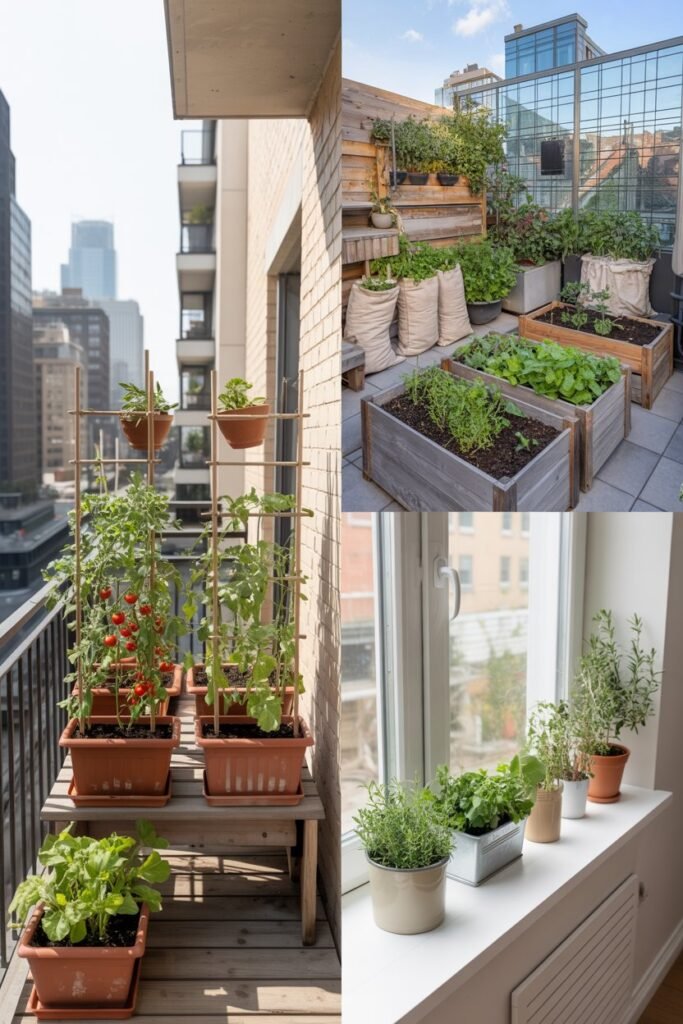
Not all city gardens look the same. Your setup depends on your space.
Balcony Gardens
Perfect for containers and vertical growing.
Use:
- Fabric grow bags
- Large pots (at least 5 gallons for fruiting crops)
- Railing planters
- Trellises
Rooftop Gardens
Amazing potential, but check weight limits first.
Use:
- Raised beds with lightweight soil mixes
- Drip irrigation systems
- Wind barriers
- Mulch to reduce water loss
Windowsill Gardens
Best for:
- Herbs
- Microgreens
- Lettuce
- Spinach
Community Gardens
If you don’t have personal outdoor space, look for local options. In many urban areas, community garden programs are expanding rapidly, even in cities like Toronto and Sydney.
Community gardens give you:
- More soil space
- Shared tools
- Gardening friendships
- Support from experienced growers
4. Building Healthy Soil in Containers
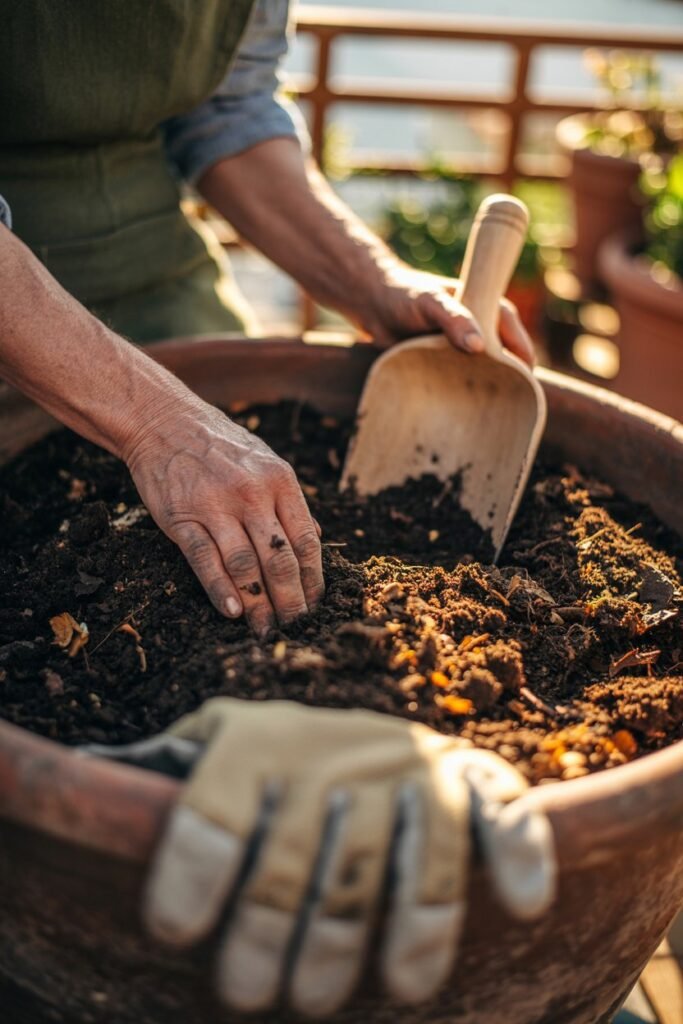
City soil (especially ground soil) can sometimes be contaminated. If you’re growing in urban ground space, testing is important. In containers, you control everything and that’s empowering.
The Ideal Container Soil Mix:
- High-quality potting mix
- Compost (30–40%)
- Perlite or coco coir for drainage
- Organic slow-release fertilizer
Healthy soil equals healthy plants.
And healthy plants mean:
- Better yields
- Fewer pests
- Stronger roots
- Less stress
Refresh container soil every season or amend heavily with compost. Containers lose nutrients faster than in-ground beds.
5. Designing Your Garden for Maximum Yield
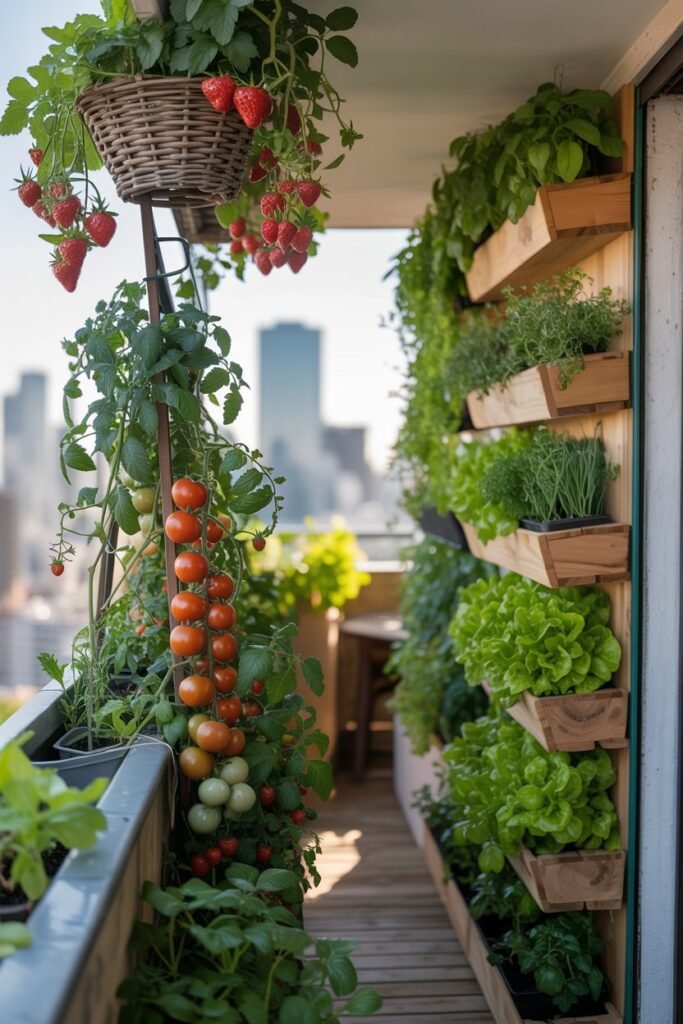
Urban gardening is a design game.
You must think vertically and seasonally.
Grow Up, Not Out
Use:
- Trellises for cucumbers and beans
- Tomato cages
- Wall planters
- Stackable containers
- Hanging baskets
Climbing vegetables like beans and cucumbers can double your harvest without using extra floor space.
Succession Planting
When one crop finishes, plant another immediately.
Example:
- Spring: Lettuce
- Early summer: Bush beans
- Late summer: Spinach
- Fall: Garlic
This rotation keeps your space productive year-round.
6. Best Vegetables for a Full City Garden
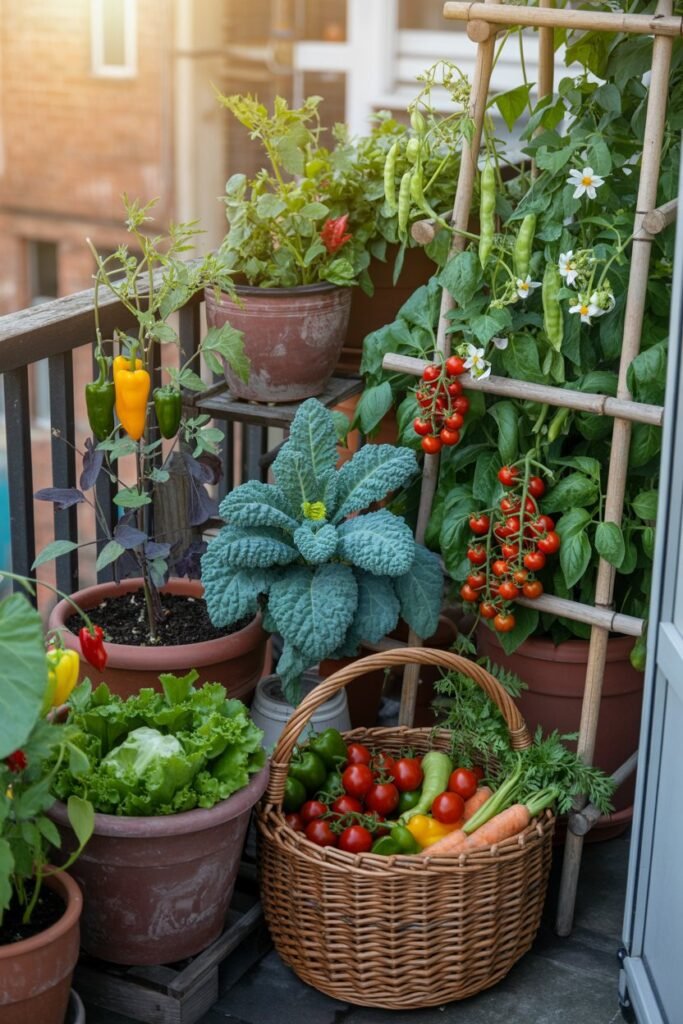
Not all vegetables thrive in small spaces. Choose wisely.
High-Yield, Urban-Friendly Vegetables
Tomatoes (determinate or compact varieties)
Cherry tomatoes are especially productive.
Peppers
Compact and perfect for containers.
Lettuce & Salad Greens
Fast-growing and continuous harvest.
Spinach
Kale
Radishes
Ready in 25–30 days.
Carrots (short varieties)
Bush Beans
Zucchini (compact varieties)
Herbs That Maximize Flavor
Basil
Parsley
Cilantro
Thyme
Mint (in separate containers)
7. Watering in the City (Without Wasting a Drop)
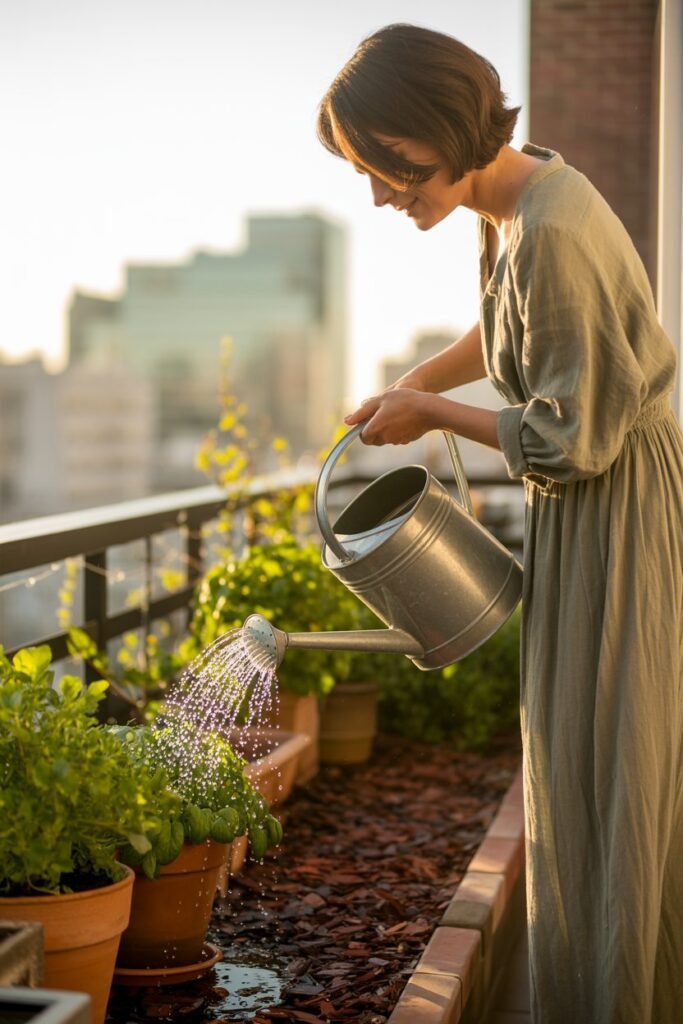
City gardening often means limited water access.
Consider:
- Self-watering containers
- Drip irrigation
- Watering early morning
- Mulching containers
Mulch reduces evaporation by up to 50%. Even in balcony pots, a layer of straw or shredded leaves works beautifully.
8. Feeding Your Plants Organically
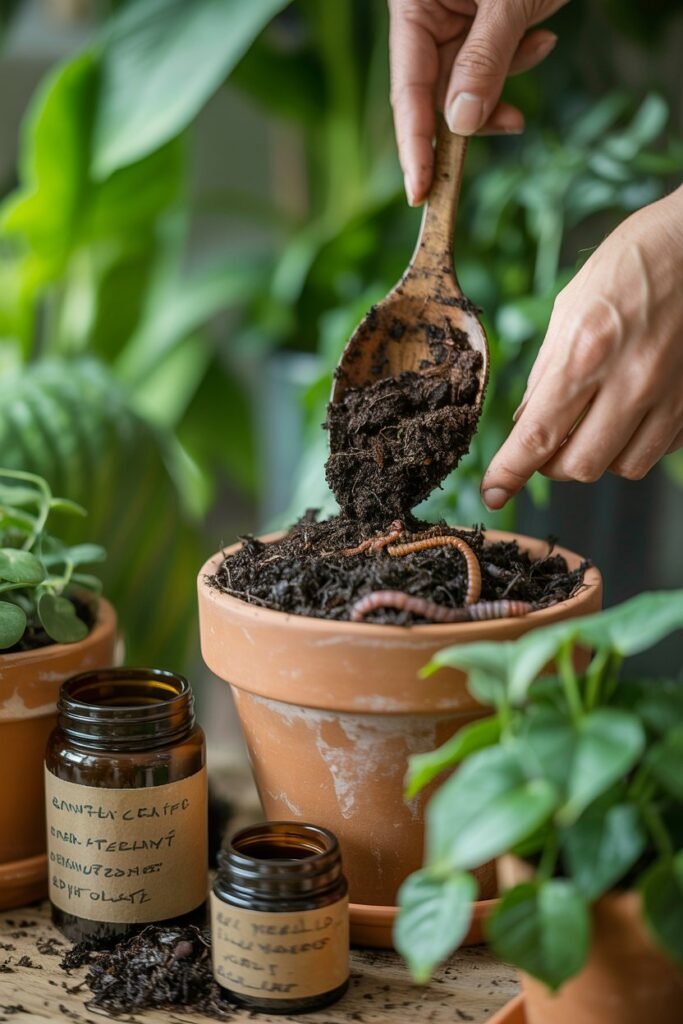
Containers need more feeding than ground gardens.
Use:
- Liquid seaweed every 2–3 weeks
- Compost tea
- Organic granular fertilizer
- Worm castings
Feed lightly but consistently.
Think nourishment, not force.
9. Managing Pests in an Urban Garden
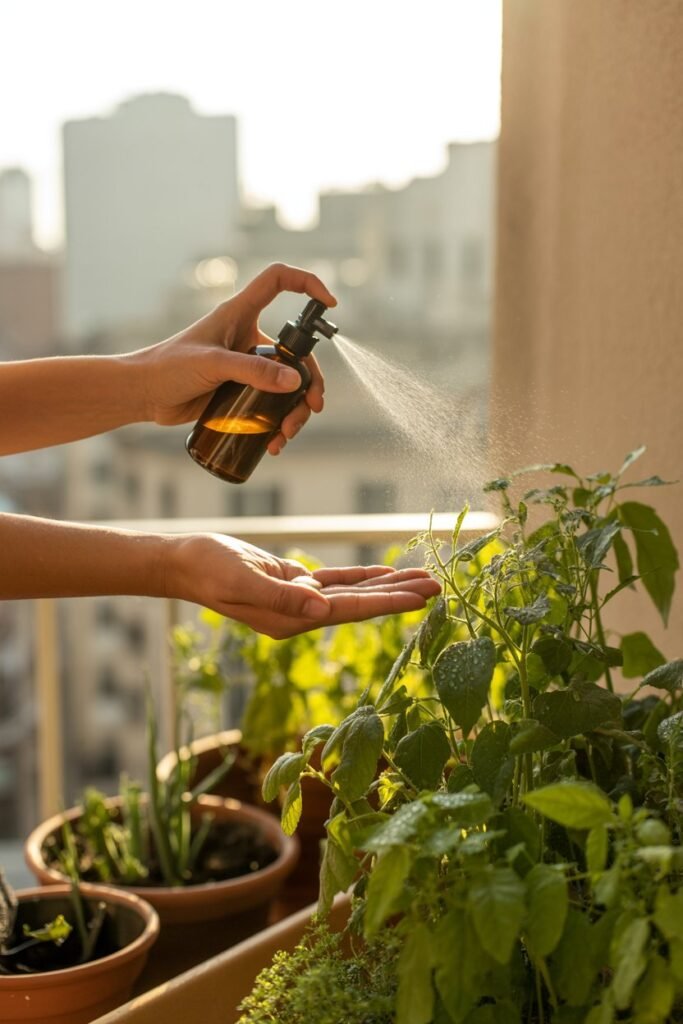
City gardens actually face fewer pest problems than rural ones but they’re not immune.
Common urban pests:
- Aphids
- Spider mites
- Whiteflies
- Squirrels
- Pigeons
Gentle solutions:
- Neem oil spray
- Insecticidal soap
- Companion planting
- Netting for birds
- Hand removal
Healthy plants resist pests better than stressed ones.
10. Composting in Small Spaces
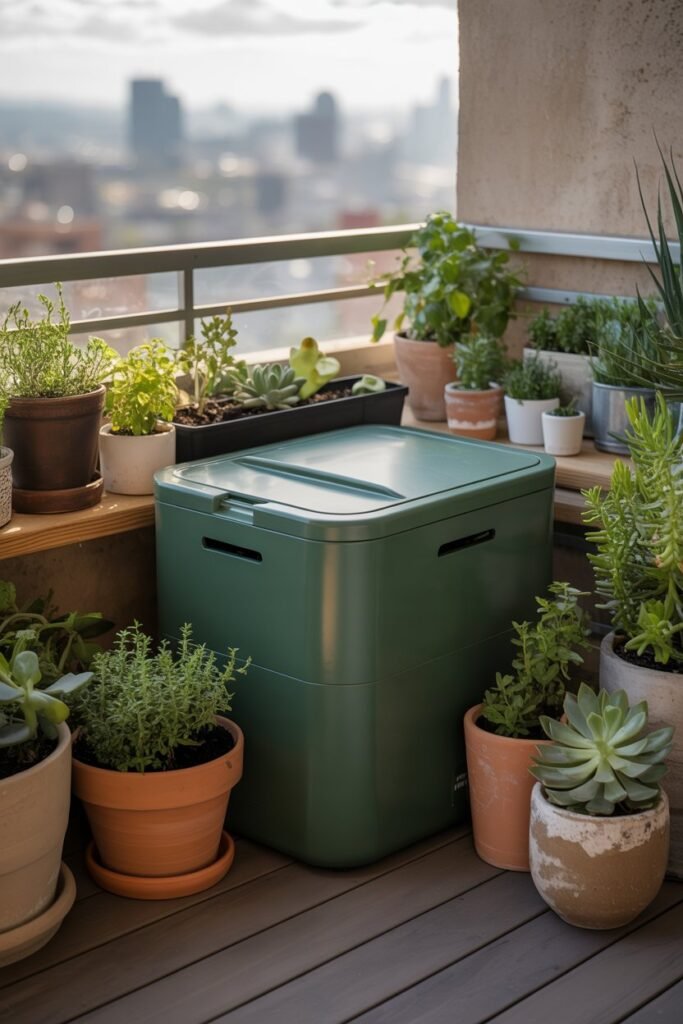
You don’t need a backyard to compost.
Options:
- Bokashi bins
- Worm bins (vermicomposting)
- Countertop composters
Composting reduces waste and feeds your soil beautifully.
11. Planning a Year-Round Urban Vegetable Garden
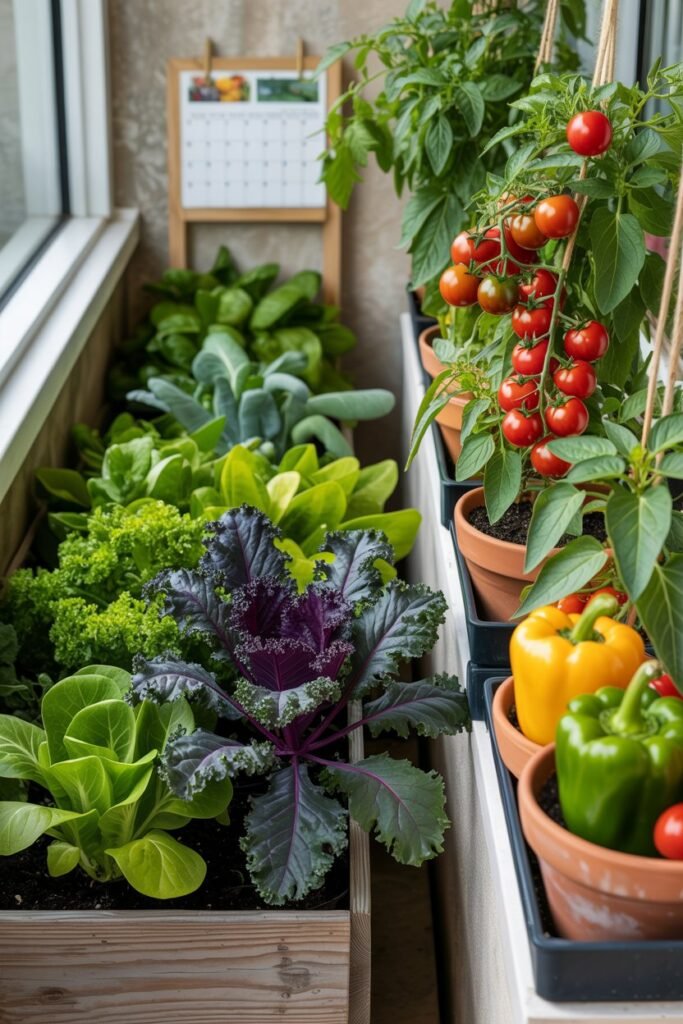
Full gardens aren’t seasonal they’re cyclical.
Cool Season Crops
- Lettuce
- Kale
- Spinach
- Broccoli
- Carrots
Warm Season Crops
- Tomatoes
- Peppers
- Beans
- Cucumbers
- Zucchini
Rotate according to your climate.
Even in colder cities like Chicago, urban gardeners extend seasons using:
- Cold frames
- Row covers
- Mini greenhouses
12. Budgeting for a City Garden
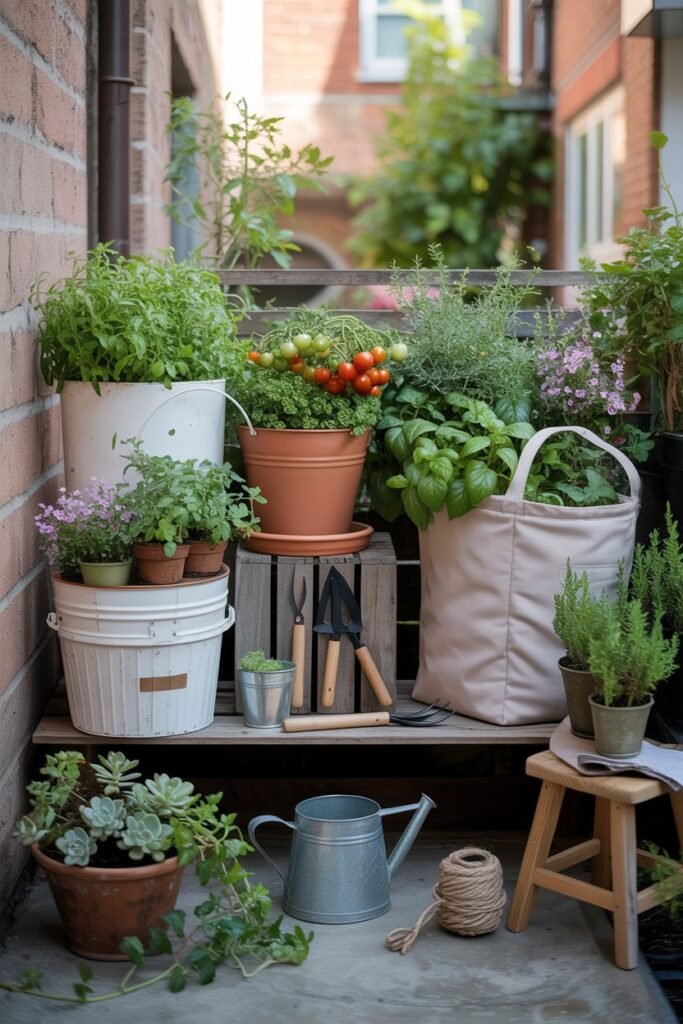
Start small and build slowly.
Initial essentials:
- Containers
- Soil
- Seeds or seedlings
- Watering can
- Hand trowel
- Fertilizer
Many things can be repurposed:
- Buckets
- Storage bins
- Wooden crates
- Old shelves
City gardening doesn’t have to be expensive. It can actually reduce grocery bills over time.
13. Harvesting for Continuous Production
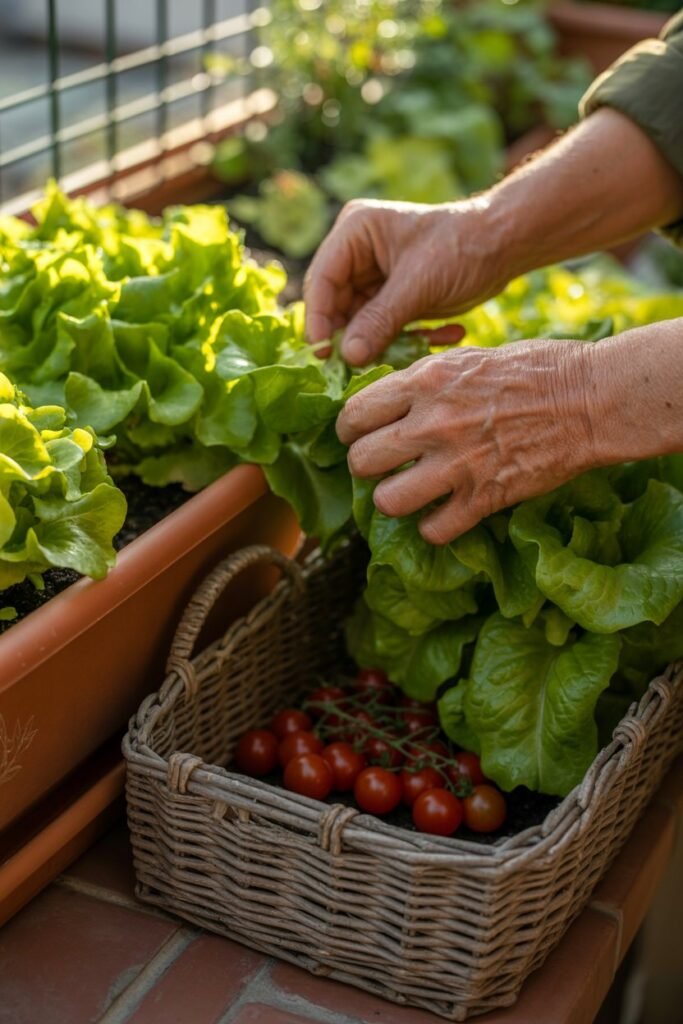
Don’t wait too long to harvest.
Frequent harvesting:
- Encourages new growth
- Prevents bitterness
- Keeps plants productive
Pick lettuce outer leaves.
Harvest beans regularly.
Pinch basil often.
The more you harvest, the more your garden gives.
14. Creating Beauty Alongside Productivity
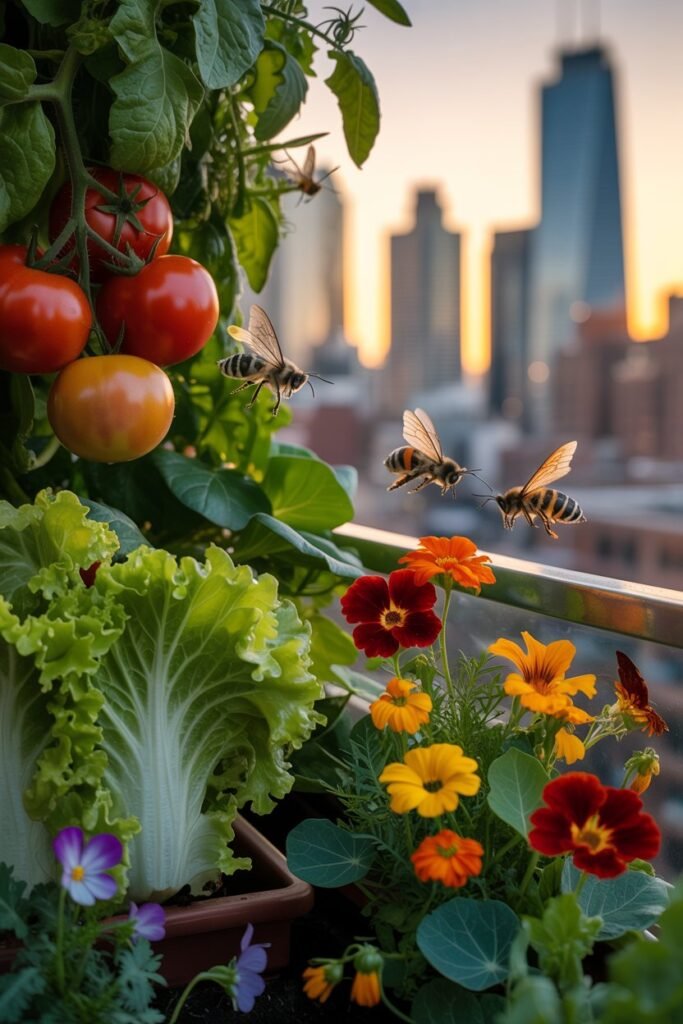
Vegetable gardens can be beautiful.
Mix:
- Marigolds
- Nasturtiums
- Calendula
- Edible flowers
Beauty attracts pollinators and joy.
In the city, that joy matters.
15. The Emotional Side of Urban Gardening
Growing vegetables in the city changes you.
It softens the edges of noise.
It makes you notice sunlight.
It teaches patience in places designed for speed.
It reminds you that life grows upward, even through concrete.
Your garden doesn’t need acres to be meaningful.
It just needs care.
Final Thoughts: Your City Garden Is Possible
I once believed I needed more space to grow a full vegetable garden.
Now I know better.
A balcony can feed you.
A rooftop can nourish you.
A window can surprise you.
Start small.
Stay consistent.
Plant what you love.
Learn as you grow.
