
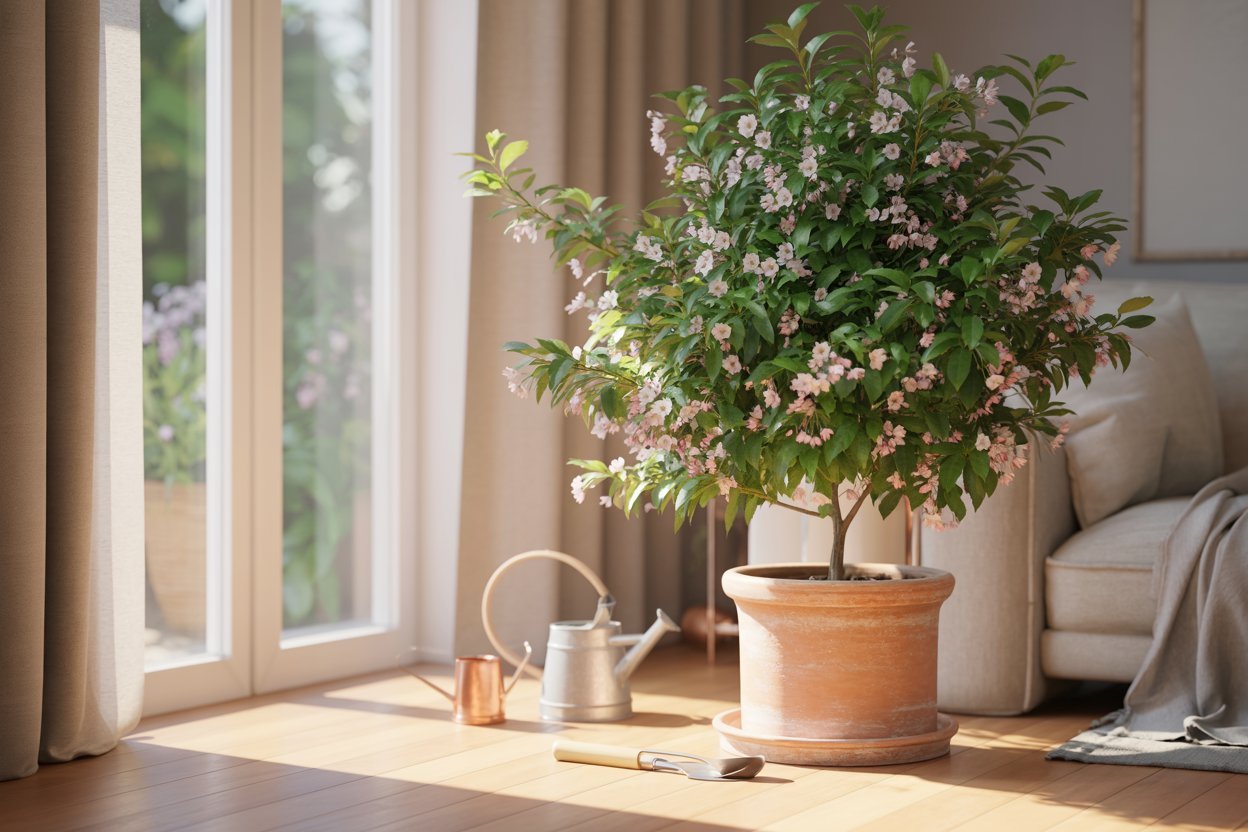

I still remember the first time I wondered if I could grow a cherry tree indoors. It felt a little daring, almost like asking a tree to bloom where it was never meant to.
But as a gardener who loves pushing gentle boundaries, I’ve learned that with the right expectations, care, and patience, growing a cherry tree indoors is not only possible it can be deeply rewarding.
This guide is written for you if you’re a first-time gardener, a small-space grower, or someone who simply dreams of nurturing a cherry tree right inside your home.
I’ll walk you through everything step by step, honestly and clearly, so you know what works, what doesn’t, and how to succeed without frustration.
Let’s grow together
Can You Really Grow a Cherry Tree Indoors?
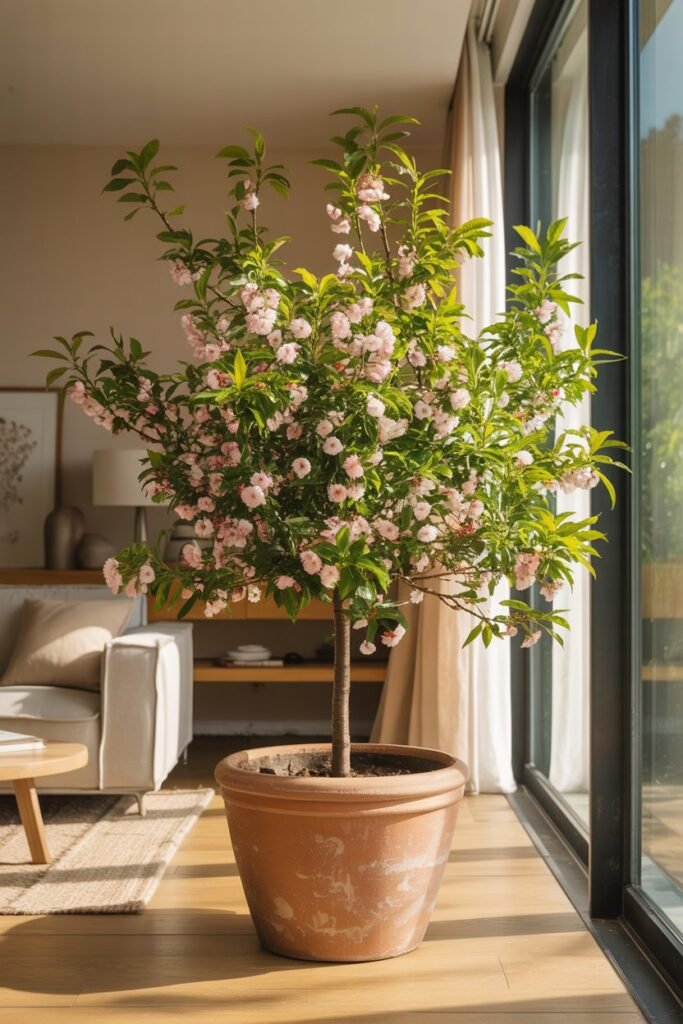
Yes but with important conditions.
Traditional cherry trees are large outdoor fruit trees.
However, dwarf and miniature cherry varieties, when grown in containers and properly maintained, can thrive indoors for many years and even produce fruit under the right conditions.
Indoor cherry trees are best suited for:
- Dwarf or genetic miniature varieties
- Container growing
- Bright indoor spaces with supplemental lighting
- Gardeners willing to prune and care consistently
If you approach indoor cherry growing with realistic expectations, you’ll find it’s one of the most satisfying indoor tree projects you can take on.
Choosing the Right Cherry Tree for Indoors
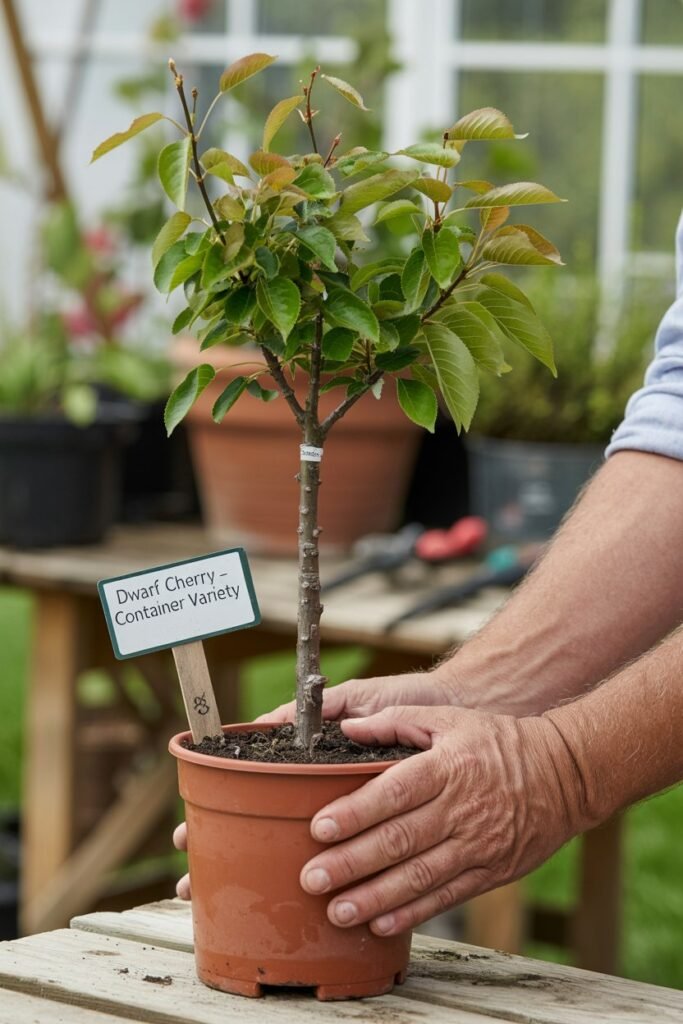
This is the most important decision you’ll make.
Best Cherry Varieties for Indoor Growing
Look specifically for dwarf or self-pollinating varieties:
- Dwarf Stella Cherry
- Compact Stella
- Dwarf Bing
- Dwarf Lapins
- Miniature ornamental cherry (for flowers more than fruit)
✅ Choose a tree grafted onto dwarf rootstock
✅ Self-fertile varieties are easier indoors
❌ Avoid standard or semi-dwarf outdoor trees
Tip from experience: Nurseries sometimes label trees as “patio” or “container cherries”—these are ideal for indoor growing.
Starting From Seed vs. Buying a Young Tree
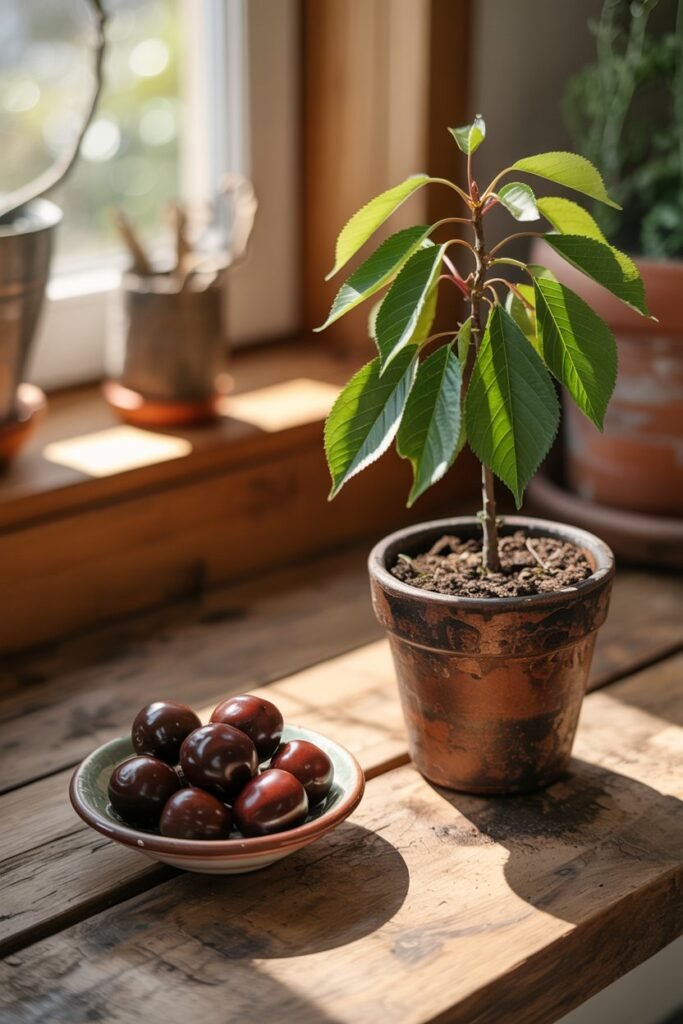
Growing From Seed (Not Recommended for Beginners)
Cherry seeds require cold stratification and may take years to fruit if they fruit at all. Indoors, seed-grown cherries are unpredictable.
Buying a Young Grafted Tree (Best Choice)
For first-time gardeners, I always recommend starting with:
- A 1–2 year old grafted dwarf cherry tree
- Purchased from a reputable nursery
This gives you a healthy head start and a much higher chance of success.
The Best Pot and Container Setup
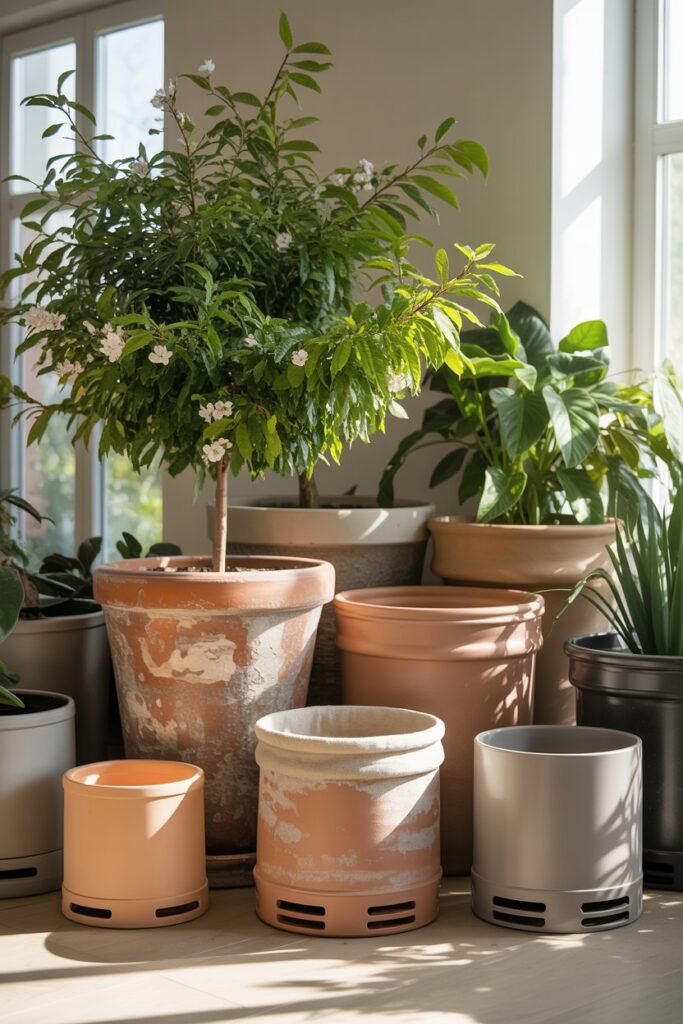
Cherry trees need space for their roots even indoors.
Ideal Pot Size
- Start with 12–15 inches wide
- Eventually move to 18–24 inches as the tree grows
- Must have drainage holes
Pot Material
- Terracotta (excellent airflow)
- Fabric grow bags (lightweight and breathable)
- Heavy plastic (retains moisture better)
I personally love terracotta because it helps prevent overwatering, which is the biggest mistake beginners make.
Soil Requirements (This Matters More Than You Think)
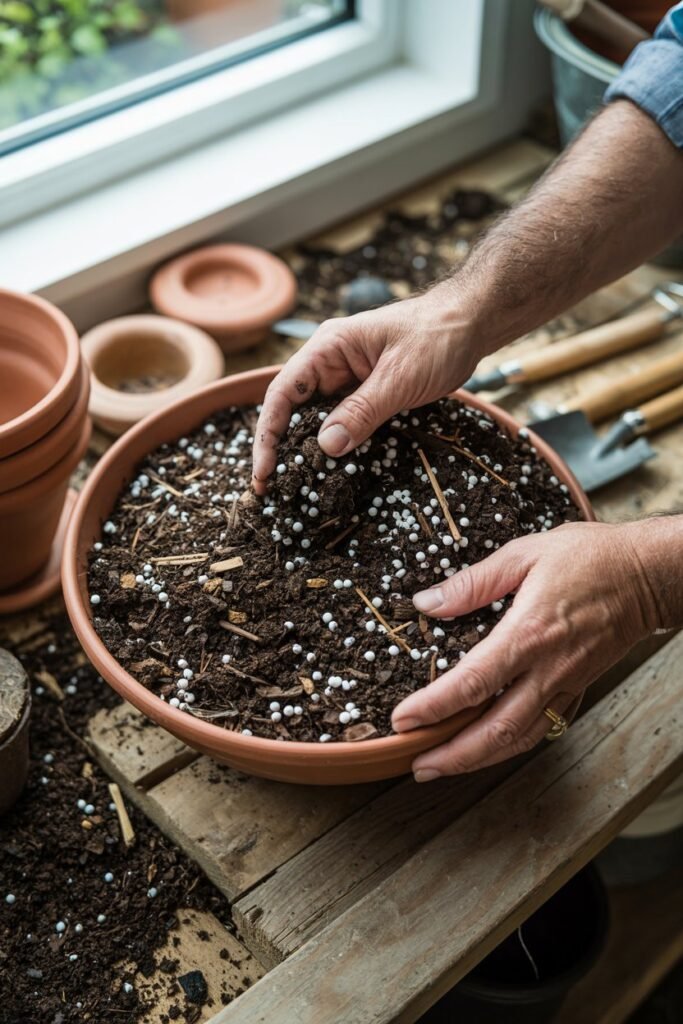
Cherry trees hate soggy roots.
Best Soil Mix for Indoor Cherry Trees
- 50% high-quality potting soil
- 25% perlite or coarse sand
- 25% compost or aged organic matter
This creates:
- Good drainage
- Root aeration
- Long-term nutrient support
Avoid garden soil it compacts and suffocates roots indoors.
Light: The Key to Indoor Success
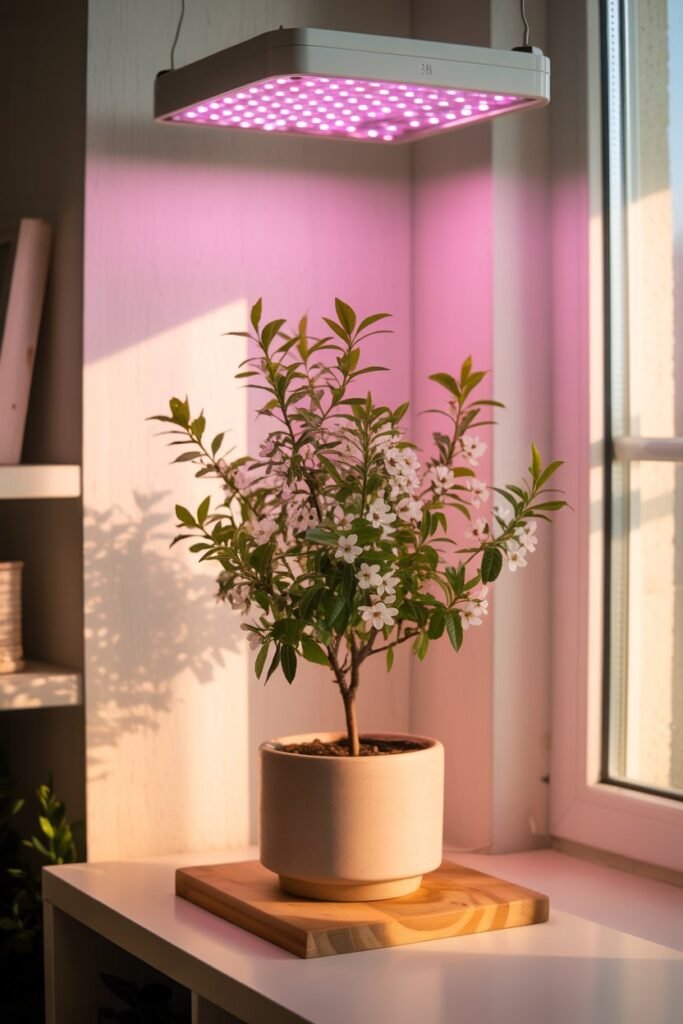
Cherry trees are sun lovers.
How Much Light Do They Need?
- 6–8 hours of direct light daily
- South-facing windows are ideal
- Grow lights are strongly recommended
Grow Light Tips
- Full-spectrum LED grow light
- Positioned 12–18 inches above the tree
- Run for 10–12 hours daily in winter
Without enough light, your tree will survive but it will not flower or fruit.
Watering an Indoor Cherry Tree (Gentle and Consistent)
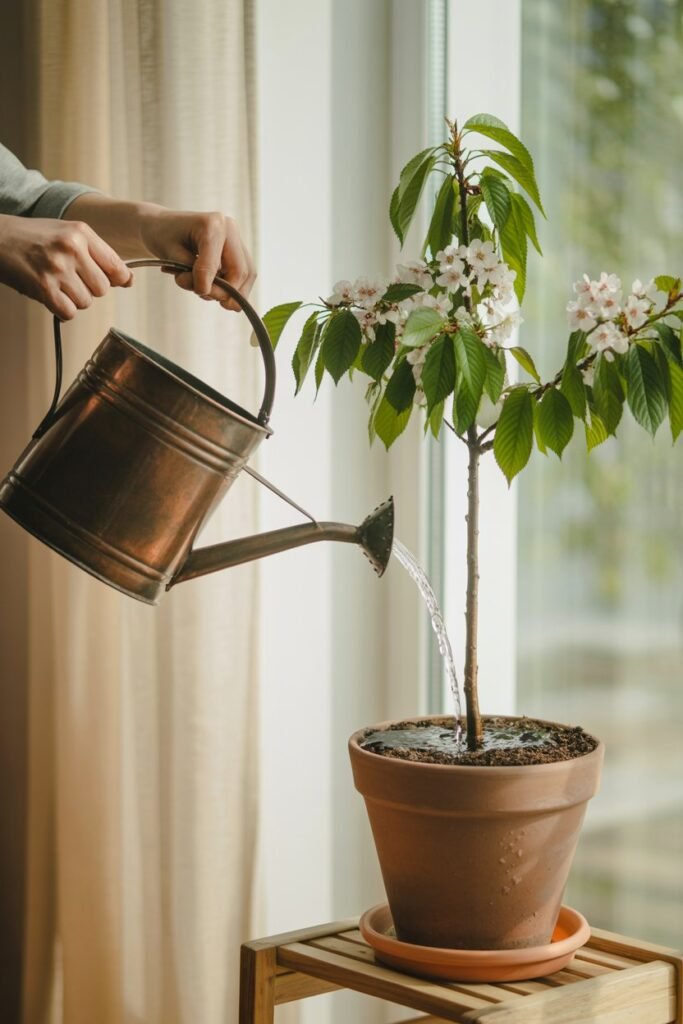
Watering is where most beginners struggle.
How Often to Water
- Water when the top 1–2 inches of soil feel dry
- Never let the pot sit in standing water
Signs of Overwatering
- Yellowing leaves
- Dropping leaves
- Mushy soil smell
Signs of Underwatering
- Crispy leaf edges
- Drooping leaves
- Dry soil pulling away from pot edges
Indoor cherry trees prefer even moisture, not extremes.
Temperature and Humidity Needs
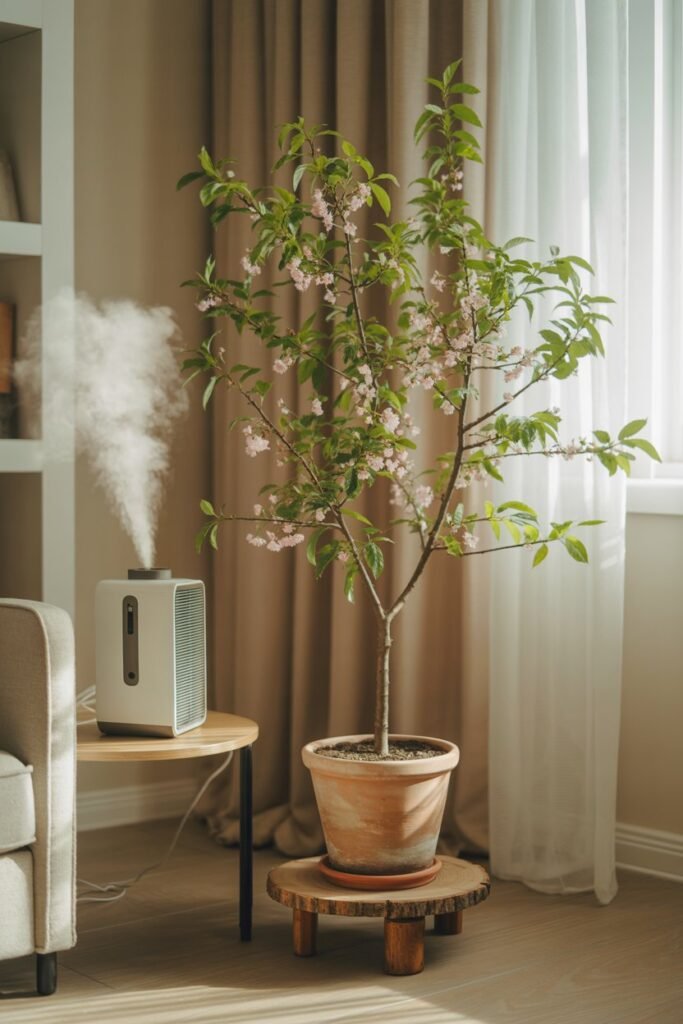
Cherry trees like stability.
Ideal Indoor Temperature
- 60–75°F (15–24°C)
- Avoid heating vents and cold drafts
Humidity Preferences
- Moderate humidity (40–60%)
- Dry indoor air can stress the tree
Helpful solutions:
- Pebble tray with water
- Occasional misting
- Small humidifier nearby
Fertilizing Your Indoor Cherry Tree
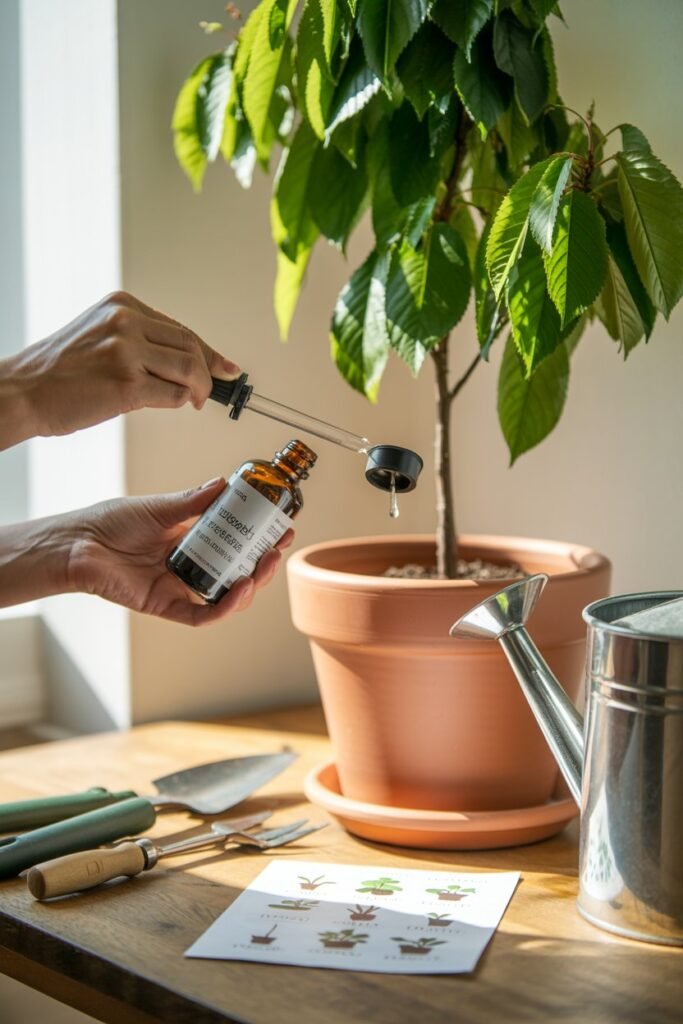
Cherry trees are light feeders indoors.
Best Fertilizer
- Balanced fertilizer (10-10-10 or similar)
- Organic liquid fertilizer works beautifully
When to Fertilize
- Early spring through summer
- Once every 4–6 weeks
- Stop fertilizing in late fall and winter
Over-fertilizing causes leaf growth at the expense of flowers and fruit.
Pruning and Training Indoors
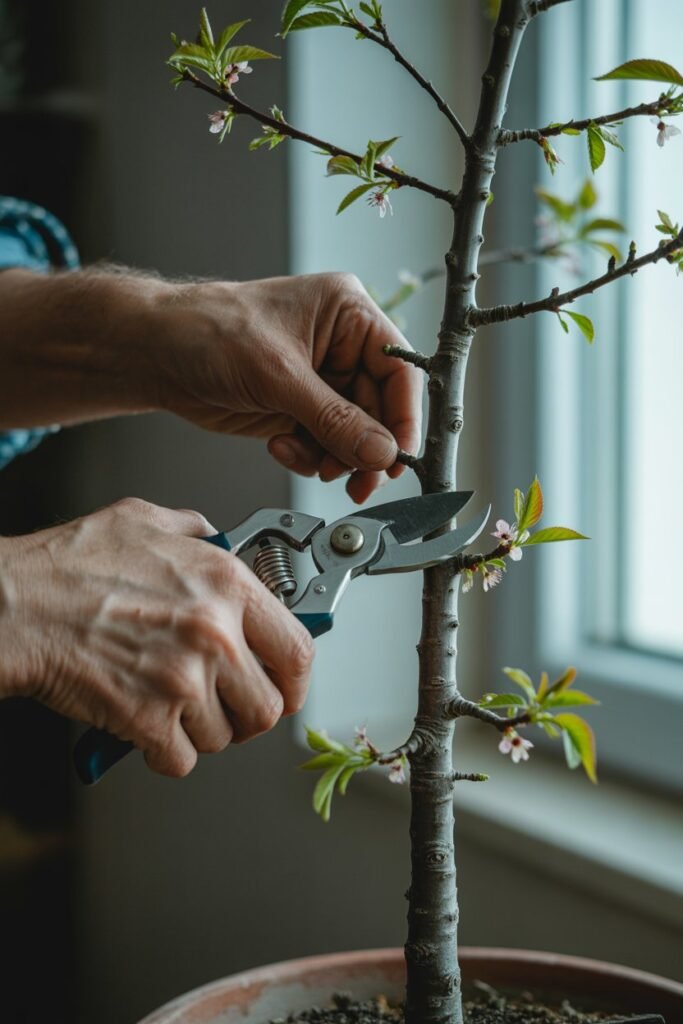
Pruning keeps your tree compact and healthy.
Why Pruning Is Essential
- Controls size
- Encourages airflow
- Promotes flowering
When to Prune
- Late winter or early spring
- Light maintenance pruning year-round
Focus on:
- Removing crossing branches
- Cutting back overly tall growth
- Maintaining a balanced shape
I like to think of pruning as shaping, not cutting it’s an act of care.
Pollination Indoors: How to Do It Manually
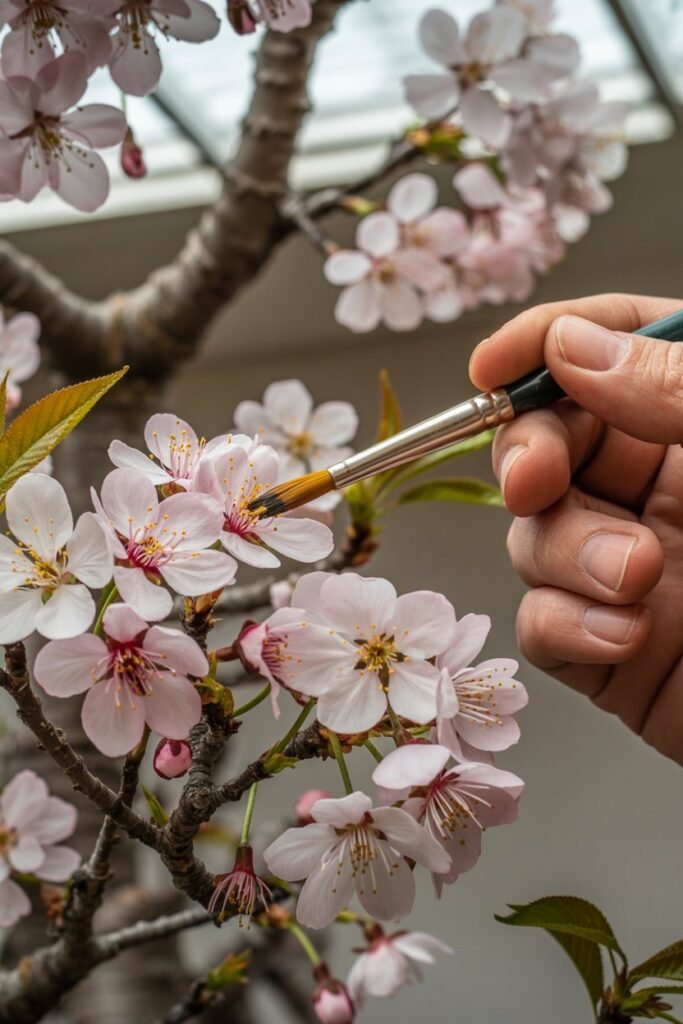
Even self-pollinating cherries benefit from help indoors.
How to Hand Pollinate
- Use a soft paintbrush or cotton swab
- Gently transfer pollen between flowers
- Do this daily while flowers are open
This small ritual can make the difference between flowers falling and fruit forming.
Will an Indoor Cherry Tree Produce Fruit?
Yes but patience is required.
What to Expect
- Flowers may appear after 1–3 years
- Fruit production is lighter than outdoors
- Cherries may be smaller but flavorful
- Many indoor gardeners grow cherry trees primarily for:
- Beautiful spring blossoms
- Lush greenery
- Occasional, precious harvests
And that’s perfectly okay.
Common Problems and How to Fix Them
No Flowers
- Not enough light
- Over-fertilizing
- No winter dormancy
Leaf Drop
- Sudden temperature change
- Overwatering
- Stress from relocation
Pests
- Aphids
- Spider mites
- Scale insects
Use gentle solutions like neem oil or insecticidal soap.
Dormancy: Do Indoor Cherry Trees Need It?
Yes, they do.
Cherry trees require a rest period to bloom properly.
How to Provide Dormancy Indoors
- Move the tree to a cooler space (40–50°F / 4–10°C)
- Reduce watering
- No fertilizing
- 8–10 weeks of rest in winter
This step is often skipped and it’s why many indoor cherry trees never flower.
Is Growing a Cherry Tree Indoors Worth It?
From my experience, absolutely if you enjoy the process.
Growing a cherry tree indoors teaches patience, observation, and respect for a plant’s natural rhythm.
It may not give you bowls of cherries, but it gives you something just as special: a living tree thriving under your care, right in your home.
Final Thoughts from One Gardener to Another
If you’re willing to learn, adjust, and nurture slowly, growing a cherry tree indoors can be a beautiful gardening journey.
Start small, stay consistent, and don’t rush the process. Trees grow on their own time and there’s something deeply comforting about that.
