
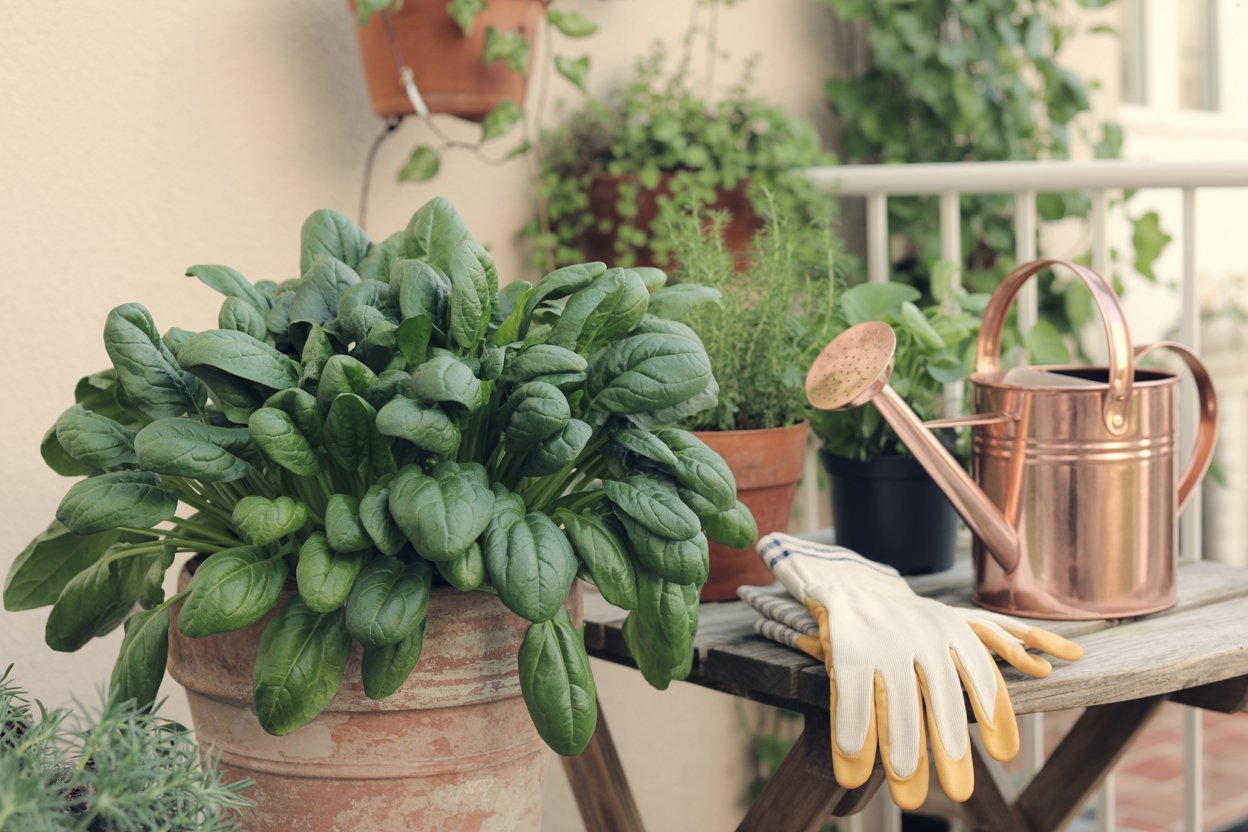

I still remember the first time I grew spinach in a pot.
It wasn’t planned. I had a small balcony, two mismatched containers, and a packet of spinach seeds I picked up on a whim. I wasn’t trying to become “that girl” who harvests her own greens.
I just wanted something soft and alive near my kitchen window. Something I could nurture with my own hands.
Weeks later, I was clipping glossy green leaves into my salad bowl, smiling in disbelief that something so tender and nourishing came from a simple pot of soil.
If you’ve ever wanted to grow your own food but felt limited by space, this is your sign. Spinach is one of the most forgiving, generous crops you can grow in containers.
It doesn’t demand a garden bed. It doesn’t need acres of land. It just needs a little intention and the right setup.
So let’s walk through this together slowly, carefully, and confidently.
This is your complete guide to growing spinach in pots with what to buy, care tips, home hacks, and the kind of gentle encouragement I wish someone had given me when I started.
Why Spinach Is Perfect for Container Gardening
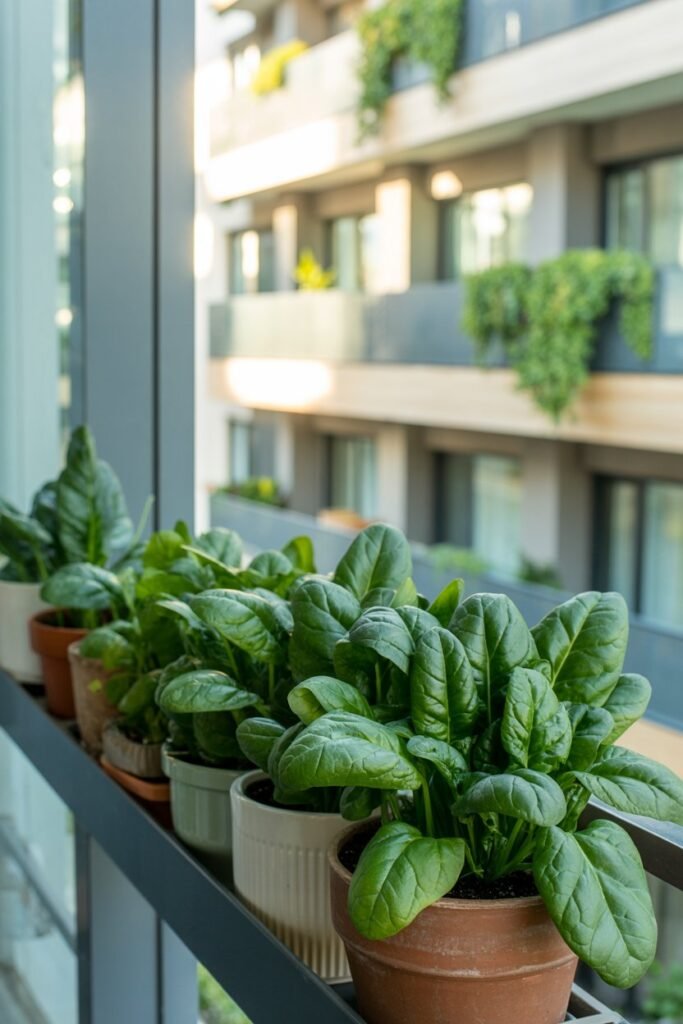
Spinach (botanical name: Spinacia oleracea) is a cool-season leafy green that grows quickly, doesn’t require deep soil, and thrives beautifully in containers.
Here’s why I adore growing it in pots:
- It matures quickly (often within 30–45 days)
- It grows well in small spaces
- It can tolerate partial shade
- You can harvest multiple times
- It’s packed with nutrients (iron, magnesium, folate, vitamin K)
- It’s beginner-friendly
And most importantly? It gives back generously. The more you harvest gently, the more it produces.
Choosing the Right Spinach Variety for Pots
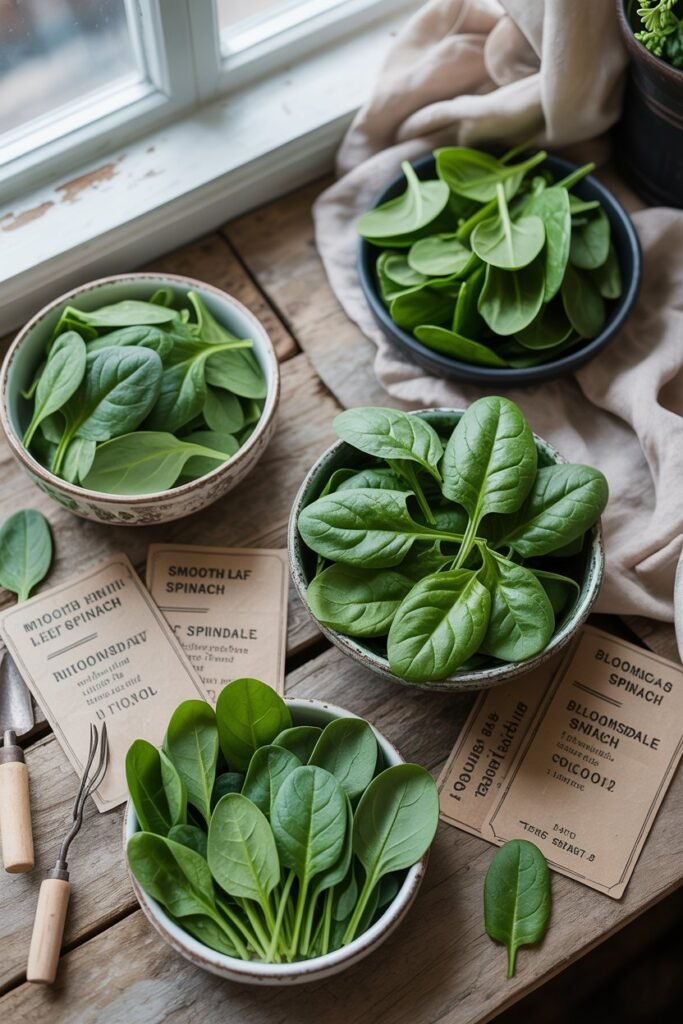
Not all spinach behaves the same way. Some varieties are more heat-tolerant. Others are perfect for baby leaf harvests. Choosing the right one makes everything easier.
Here are container-friendly varieties to look for:
1. Baby Leaf Spinach
Perfect for quick harvests and small pots. Tender and mild.
2. Bloomsdale
A savoy (crinkled) variety with rich flavor. Very productive.
3. Space Spinach
Compact and ideal for containers. Smooth leaves.
4. Tyee
Slower to bolt (go to seed), great for warmer climates.
If you live in a warmer region (like many parts of Africa), look for “bolt-resistant” or “heat-tolerant” on the seed packet.
What You Need to Grow Spinach in Pots (Shopping List)
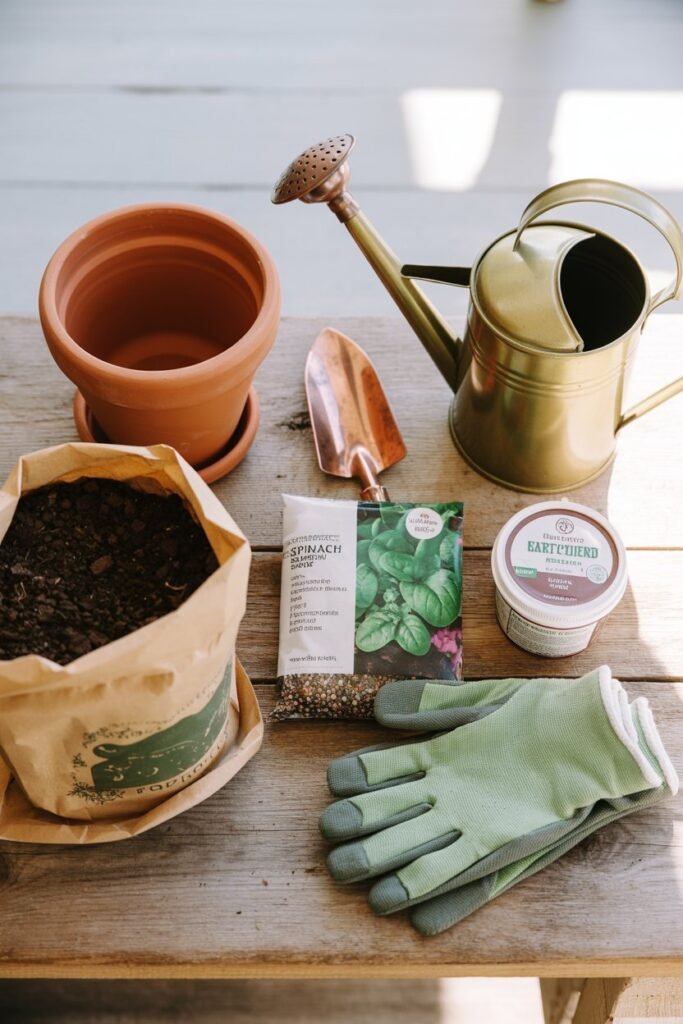
Let’s keep this simple and practical.
1. Container (Pot)
Spinach doesn’t need deep soil, but it does need space for roots.
What to look for:
- At least 6–8 inches deep
- 10–12 inches wide (or larger for more plants)
- Drainage holes at the bottom
You can use:
- Plastic pots
- Terracotta pots
- Grow bags
- Window boxes
- Recycled buckets (just drill drainage holes)
Home Hack: Old rice buckets or paint containers work beautifully once cleaned and drilled.
2. High-Quality Potting Mix
Please don’t use regular garden soil. It compacts and suffocates roots.
Look for:
- Lightweight potting mix
- Good drainage
- Organic compost blend
You can mix your own:
- 60% potting soil
- 30% compost
- 10% perlite or sand for drainage
Home Hack: If perlite is hard to find, use clean river sand in small amounts.
3. Spinach Seeds
Always choose fresh seeds. Spinach seeds lose viability after a year or two.
Tip: Soak seeds in water for 4–6 hours before planting to improve germination.
4. Watering Can with Fine Spout
Spinach seedlings are delicate. A harsh water stream can displace seeds.
5. Organic Fertilizer (Optional but Recommended)
Spinach loves nitrogen.
Look for:
- Compost
- Worm castings
- Fish emulsion
- Balanced organic vegetable fertilizer
Home Hack: Diluted kitchen compost tea works beautifully.
When to Plant Spinach in Pots
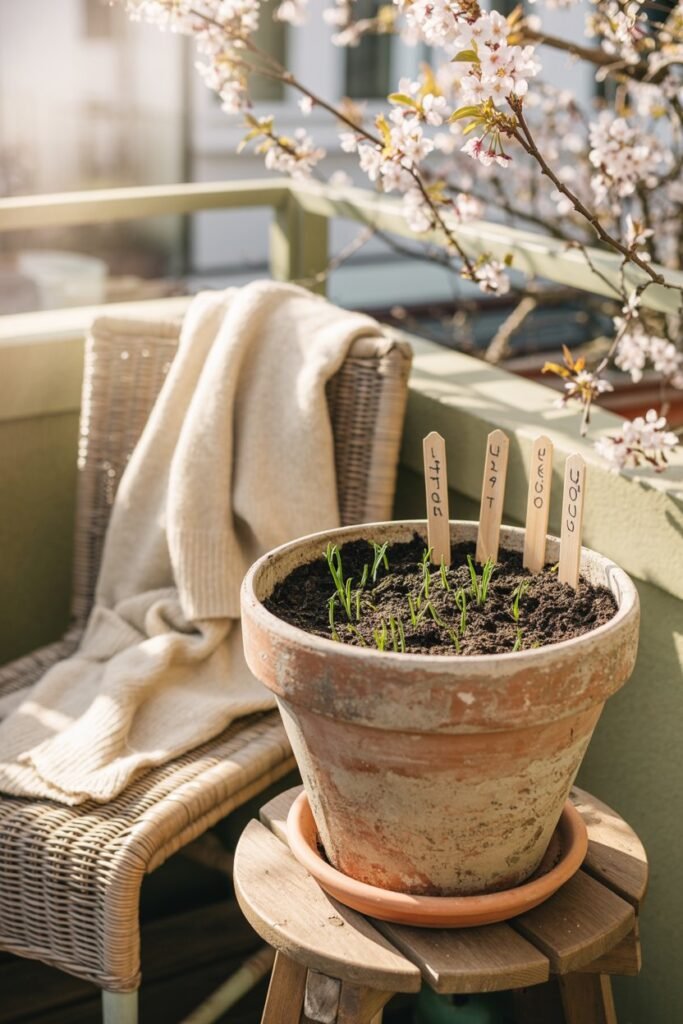
Spinach thrives in cool weather.
Ideal temperature:
10°C – 24°C (50°F – 75°F)
If temperatures go too high, spinach will bolt (flower and turn bitter).
Best planting seasons:
- Early spring
- Late summer
- Early fall
- Cooler dry season in warm climates
If you live in a very hot area, grow spinach during your coolest months and provide afternoon shade.
Step-by-Step: How to Plant Spinach in a Pot
Let’s plant together.
Step 1: Fill Your Container
Fill with potting mix, leaving 1 inch from the top.
Gently press down to remove air pockets but don’t compact heavily.
Step 2: Sow the Seeds
Plant seeds:
- ½ inch deep
- 2 inches apart
If using a large container, space rows about 4–6 inches apart.
Cover lightly with soil.
Step 3: Water Gently
Use a fine spray or watering can with a soft flow.
The soil should be moist not soaked.
Step 4: Place in the Right Location
Spinach needs:
- 4–6 hours of sunlight daily
- Morning sun is best
- Afternoon shade in hot climates
Balconies, patios, rooftops, and windowsills work beautifully.
Germination & Early Growth
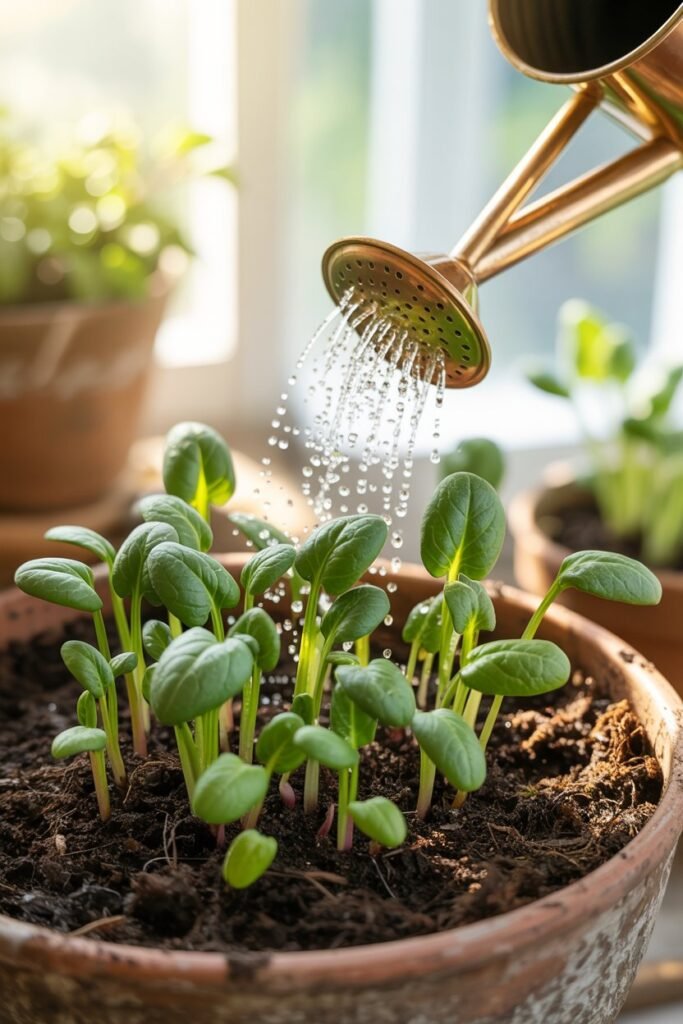
Spinach seeds usually germinate within 5–10 days.
Keep soil:
- Evenly moist
- Not waterlogged
Once seedlings are 2 inches tall, thin them so plants are about 3–4 inches apart.
Yes, thinning feels ruthless. But crowded plants grow weak.
You can eat the thinned baby leaves nothing goes to waste.
Caring for Spinach in Pots
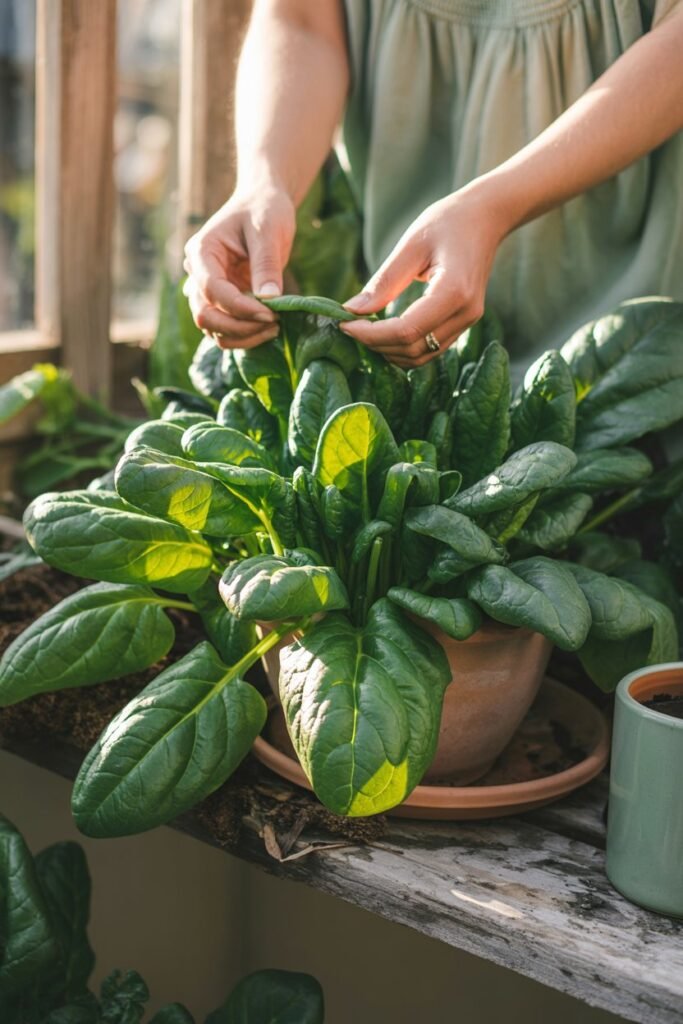
Now the nurturing begins.
Watering
Spinach loves consistent moisture.
Water:
- 2–3 times per week (depending on climate)
- When top inch of soil feels dry
Avoid:
- Letting soil completely dry out
- Overwatering (yellow leaves are a sign)
Home Hack: Insert your finger into soil. If it feels dry at the first knuckle, it’s time to water.
Feeding
Spinach is a leafy crop, which means it loves nitrogen.
Feed every 2–3 weeks with:
- Compost tea
- Liquid organic fertilizer
- Worm casting top dressing
Home Hack: Soak banana peels in water for 24 hours and dilute before using. It adds gentle nutrients.
Mulching
Add a thin layer of:
- Dry grass
- Straw
- Coconut coir
This helps:
- Retain moisture
- Keep roots cool
- Prevent soil splash
Common Problems & How to Fix Them
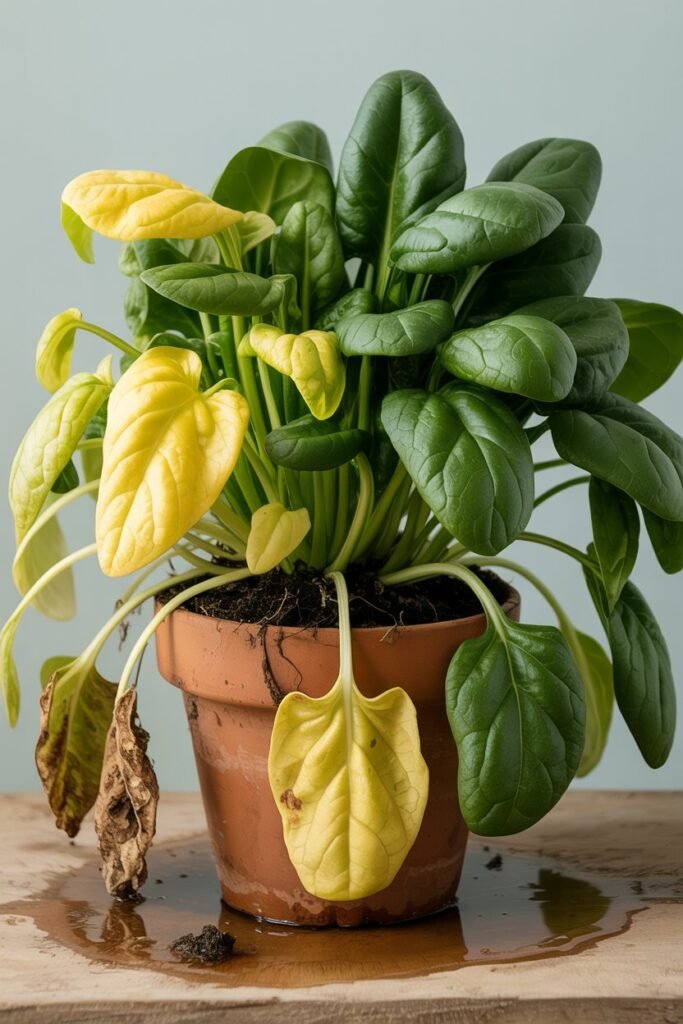
Even gentle plants face challenges.
1. Yellow Leaves
Causes:
- Overwatering
- Poor drainage
- Nitrogen deficiency
Solution:
- Improve drainage
- Reduce watering
- Feed lightly
2. Bolting (Flowering Early)
Triggered by:
- Heat stress
- Long daylight hours
Solution:
- Provide afternoon shade
- Harvest early
- Choose bolt-resistant varieties
Once spinach bolts, leaves become bitter. You can let it flower and collect seeds for next season.
3. Pests
Common spinach pests:
- Aphids
- Leaf miners
- Caterpillars
Natural solutions:
- Neem oil spray
- Soapy water spray
- Handpicking caterpillars
Home Hack: A strong spray of water dislodges aphids easily.
Harvesting Spinach the Right Way
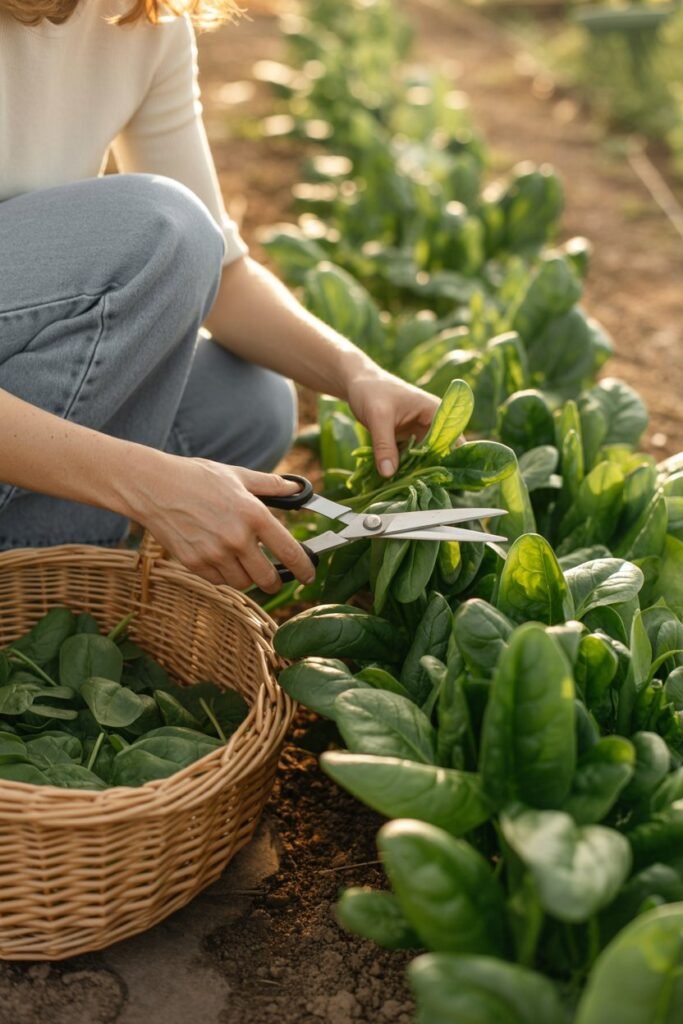
This part feels magical.
You can harvest:
Baby Leaves
At 3–4 weeks.
Cut outer leaves gently.
Full Leaves
At 5–7 weeks.
Harvest outer leaves first.
Never remove the center crown that’s where new growth comes from.
Cut-and-come-again method allows multiple harvests from one plant.
How Long Does Spinach Grow in a Pot?
Typically:
- 30–45 days to harvest
- Productive for 2–3 months in cool weather
After that, replant for continuous supply.
I personally plant new seeds every 2–3 weeks for a steady harvest.
Growing Spinach Indoors
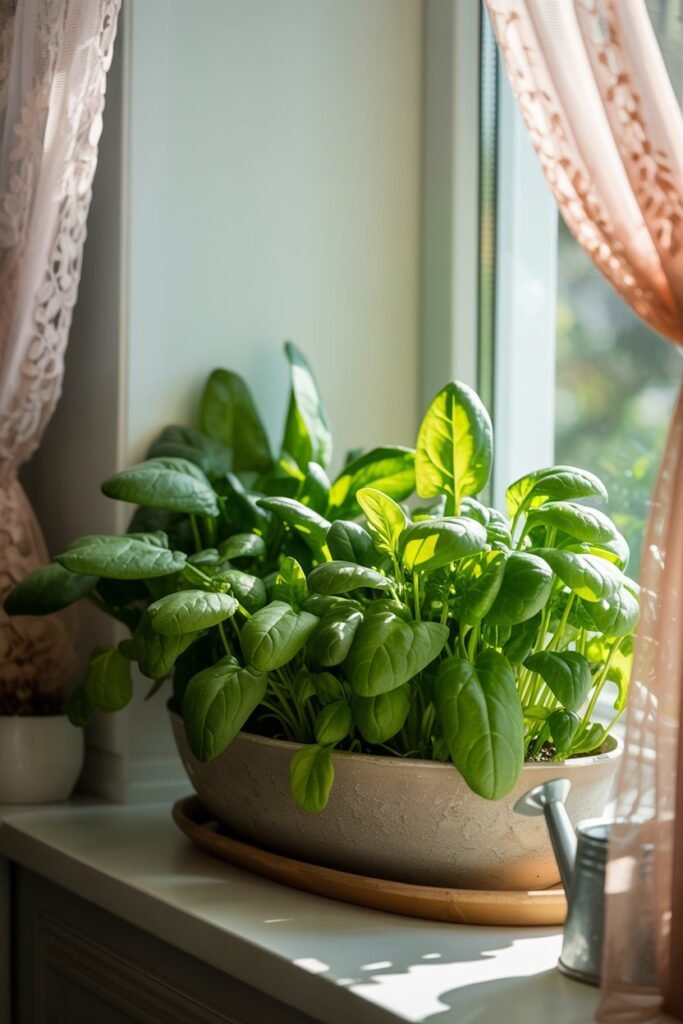
Yes, you can grow spinach inside.
You’ll need:
- Bright window (south-facing is best)
- Grow light if sunlight is limited
- Shallow wide containers
Keep indoor air circulation good to prevent fungal issues.
Companion Planting in Containers
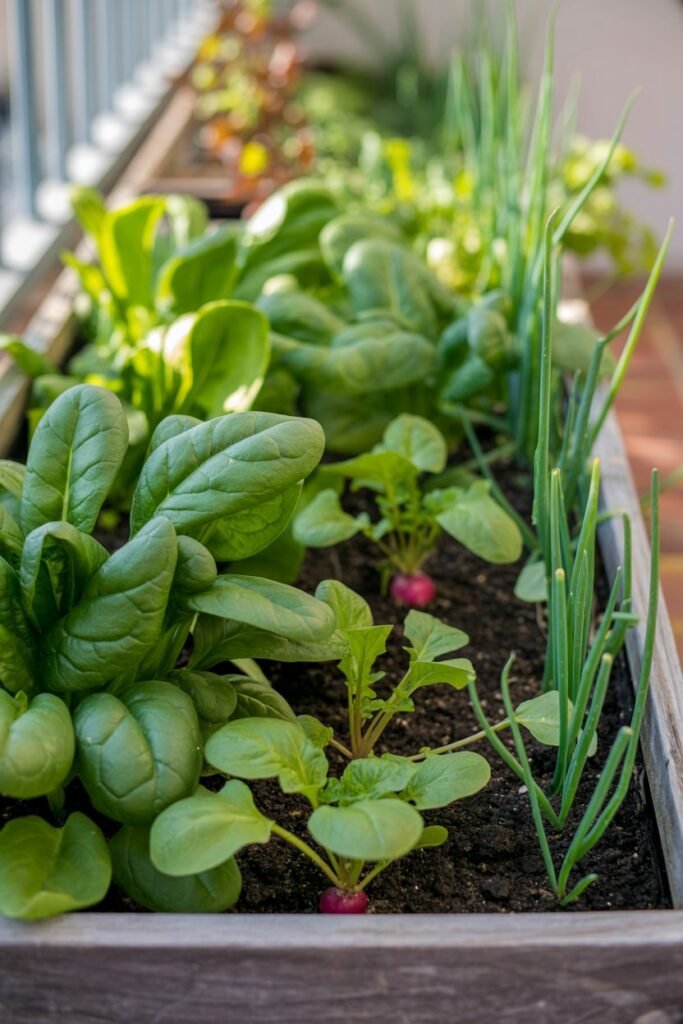
If you have a large container, you can pair spinach with:
- Radishes
- Lettuce
- Green onions
Avoid:
- Large heavy feeders in same small pot
Saving Spinach Seeds
Let one plant flower.
Allow flowers to dry.
Harvest seeds.
Store in cool, dry place.
Seeds remain viable 1–2 years.
Home Hacks That Make Spinach Thrive
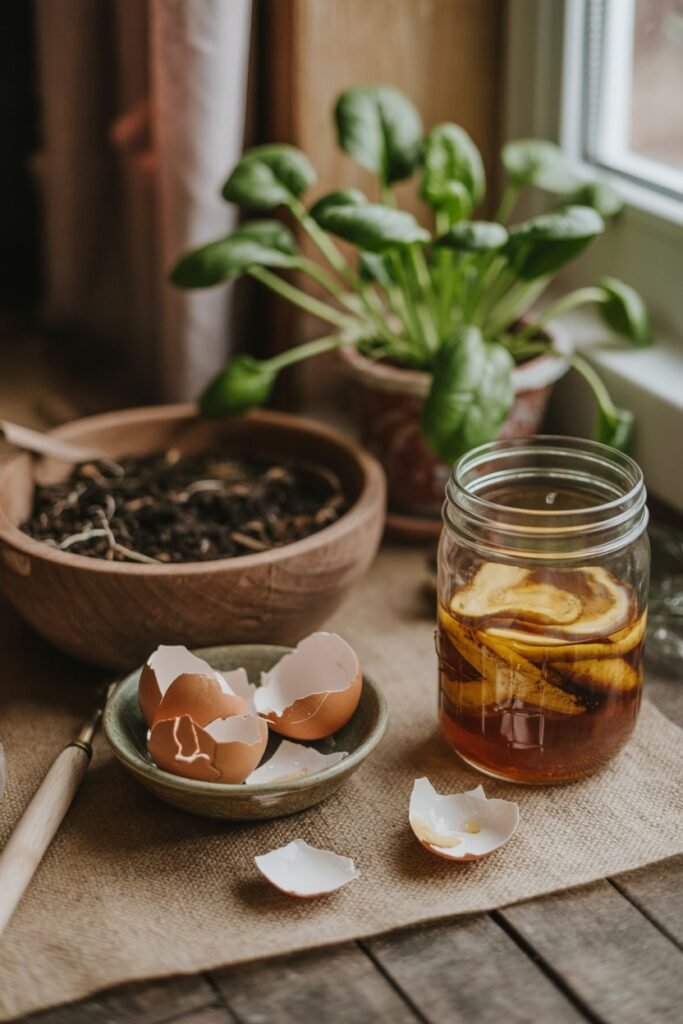
Here are some of my favorite little secrets:
• Use eggshell powder in soil for minerals
• Rotate pot position weekly for even growth
• Harvest in the morning for best flavor
• Keep a shallow tray under pot for humidity
• Add coffee grounds lightly to compost
Nutritional Benefits of Homegrown Spinach
Fresh spinach is incredibly nourishing.
It supports:
- Healthy blood (iron)
- Bone health (vitamin K)
- Skin glow (vitamin A)
- Immunity (vitamin C)
Homegrown spinach often tastes sweeter than store-bought.
Final Thoughts
Growing spinach in a pot changed how I see food.
It made me slow down. It made me pay attention. It reminded me that nourishment doesn’t always come from big gardens or fancy setups.
Sometimes it comes from a simple container on your balcony and a handful of seeds you dared to plant.
If you’ve been waiting for permission to start this is it.
Buy the pot. Fill it with soil. Press those little seeds into the earth. Water gently.
And trust that something beautiful will grow.
