
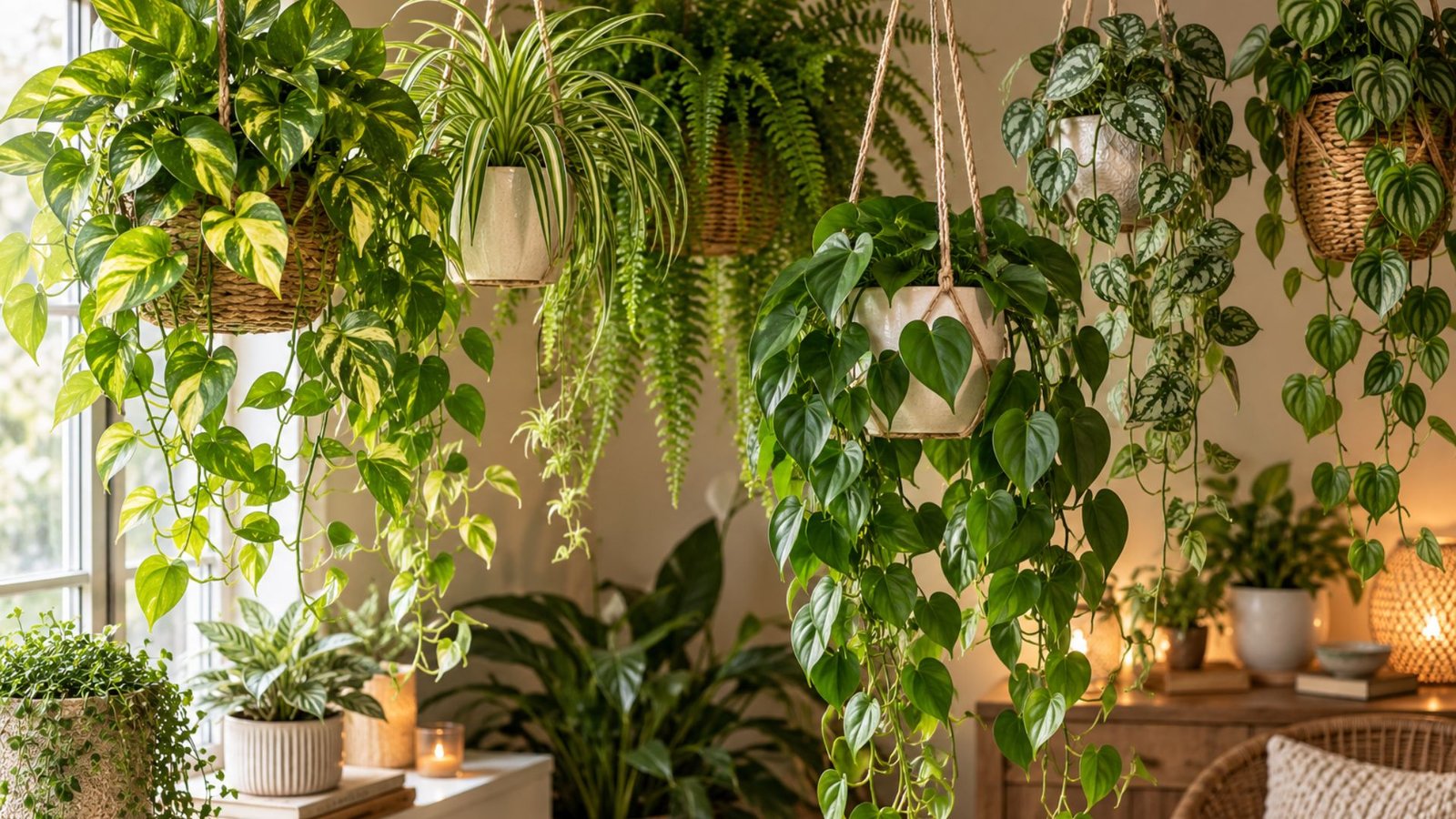

I have always loved the way a hanging plant can completely change a room. Even a small corner that feels a little forgotten can look softer and more inviting when you add a beautiful cascade of green leaves.
The only problem is that not every room gets the bright, sunny light that many houseplants seem to demand.
If you have a north-facing room, a dim hallway, a shaded bedroom, or a corner that sits well away from the nearest window, you don’t have to give up on growing houseplants. You simply need to choose varieties that are more comfortable with lower light.
I especially love hanging plants for these spaces because they add greenery without taking up valuable floor or table space. Here are 12 low-light hanging houseplants worth trying, along with simple care tips to help you keep them looking their best.
What Does Low Light Really Mean for Houseplants?
Before choosing a plant, I think it helps to clear up one common misunderstanding: low light does not mean complete darkness.
Plants still need light to make food and grow. A room can look bright to our eyes while providing much less usable light for a plant, especially when the plant is placed several feet away from a window.
Low-light areas can include:
- North-facing rooms
- Hallways with some reflected daylight
- Bedrooms away from windows
- Shaded corners
- Bathrooms with limited natural light
- Offices with modest daylight
- Shelves several feet from a window
Hanging plants can be particularly tricky because we often place them high on walls or near the ceiling, where they may actually receive less light than a plant sitting closer to a window.
So, when choosing a hanging plant for a dim space, I look for plants that naturally tolerate lower light and don’t require several hours of strong sunshine to remain attractive.
If a space receives almost no natural light at all, a small grow light can make a big difference. Even the toughest low-light houseplant cannot grow indefinitely without a usable source of light.
1. Golden Pothos
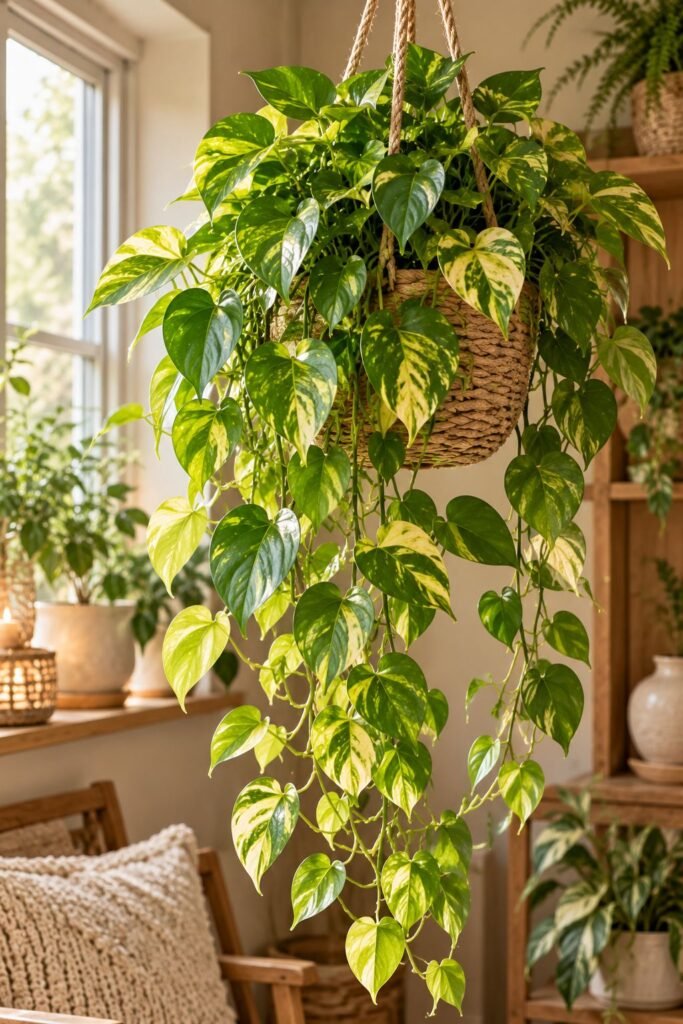
Botanical name: Epipremnum aureum
Golden pothos is one of the first plants I would recommend to someone who wants an easy hanging plant for a dim room.
Its heart-shaped green leaves have beautiful golden-yellow markings, and the long vines naturally spill over the sides of a hanging basket. As the plant grows, those vines can create the lush, cascading look that makes hanging plants so attractive.
Pothos is remarkably adaptable and can tolerate lower light better than many houseplants. However, if you notice that the golden markings are becoming less noticeable, your plant may need a little more light.
I like pothos for busy households because it doesn’t need constant attention. Allow the soil to dry somewhat between waterings, and don’t let the roots sit in soggy soil.
Best for: Beginners, bedrooms, offices, shelves, and hanging baskets.
One thing to remember: Pothos is toxic if chewed by pets, so keep it where curious animals cannot reach it.
Read Overlooked Plants That Can Survive in the (Almost) Dark
2. Heartleaf Philodendron
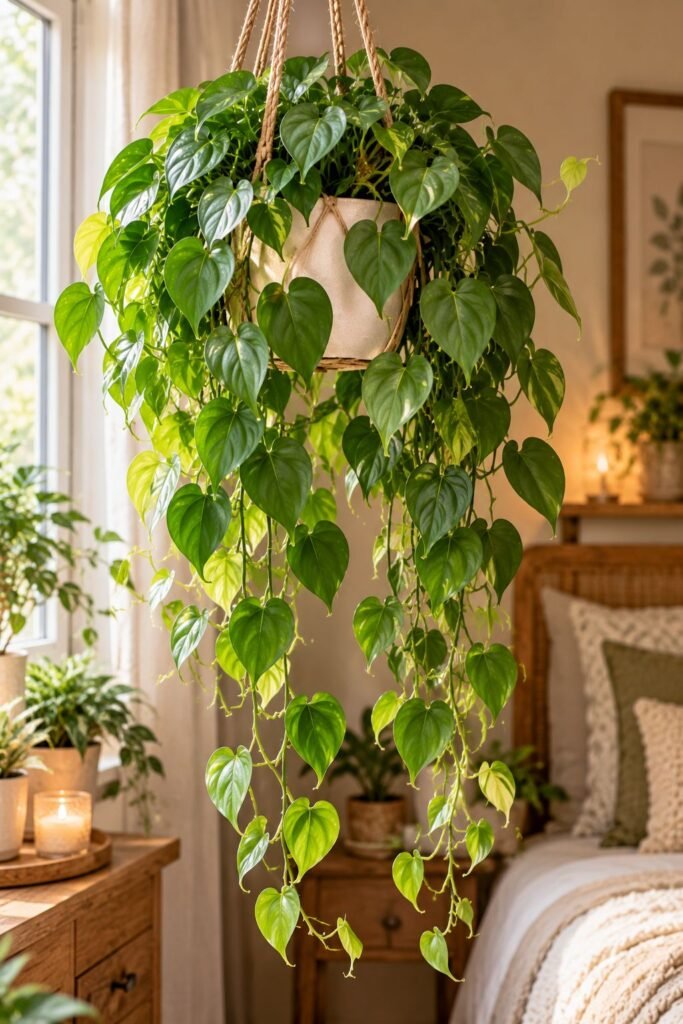
Botanical name: Philodendron hederaceum
If you want a hanging plant with soft, romantic-looking foliage, heartleaf philodendron is one of my favorites.
The leaves are shaped like little green hearts, and the stems naturally trail downward from baskets and shelves. In the right conditions, it can eventually create a beautiful curtain of greenery.
Heartleaf philodendron is also wonderfully forgiving. It can handle lower indirect light and generally prefers to dry slightly between waterings rather than staying constantly wet.
One of my favorite things about this plant is how easy it is to shape. If the vines become too long or sparse, you can trim them back. Regular pruning can also encourage a fuller appearance.
Best for: Darker bedrooms, offices, living rooms, and beginners who want a trailing plant.
Keep in mind that philodendrons are not considered pet-safe, so placement matters if you have cats or dogs.
3. Spider Plant
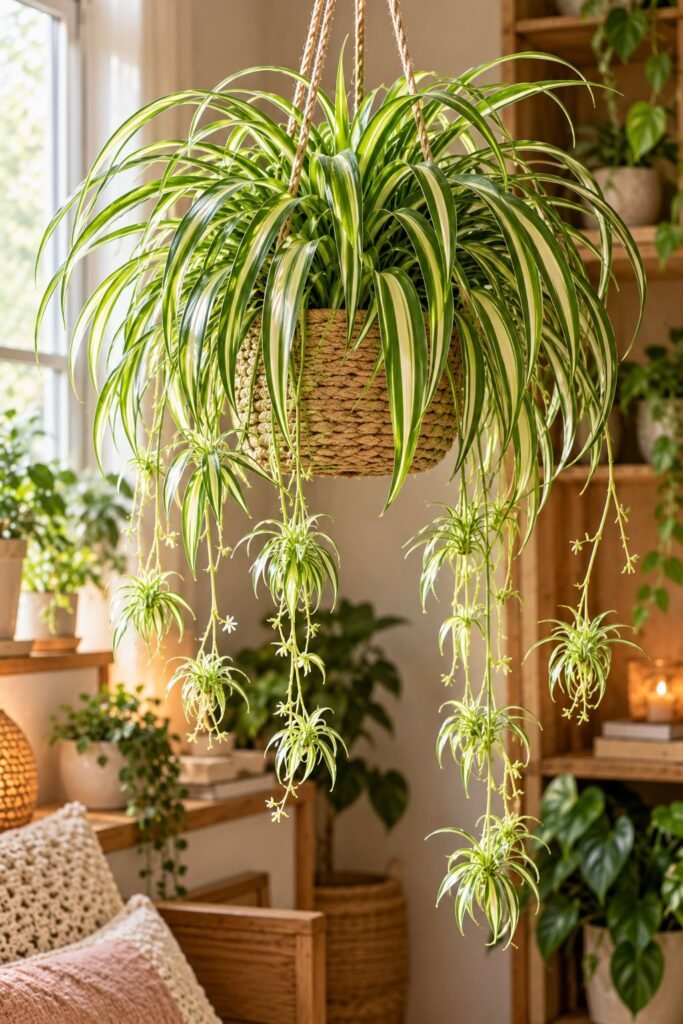
Botanical name: Chlorophytum comosum
Spider plants have such a cheerful personality that they can brighten a room even before they have filled out their basket.
Their long, arching leaves spill naturally over the edges of containers, while mature plants produce long stems with baby plantlets attached. These little plantlets are one of the reasons spider plants are so much fun to grow and share.
Spider plants can tolerate lower-light conditions, although they generally grow more vigorously when given brighter indirect light.
I would choose a spider plant if you want something a little different from the traditional trailing vine. Its long, grass-like leaves create movement without looking heavy.
Best for: Hanging baskets, bedrooms, offices, and homes where you want an easy-care plant.
Another bonus is that spider plants are considered non-toxic to cats and dogs, making them a useful choice for pet-friendly homes.
4. Boston Fern
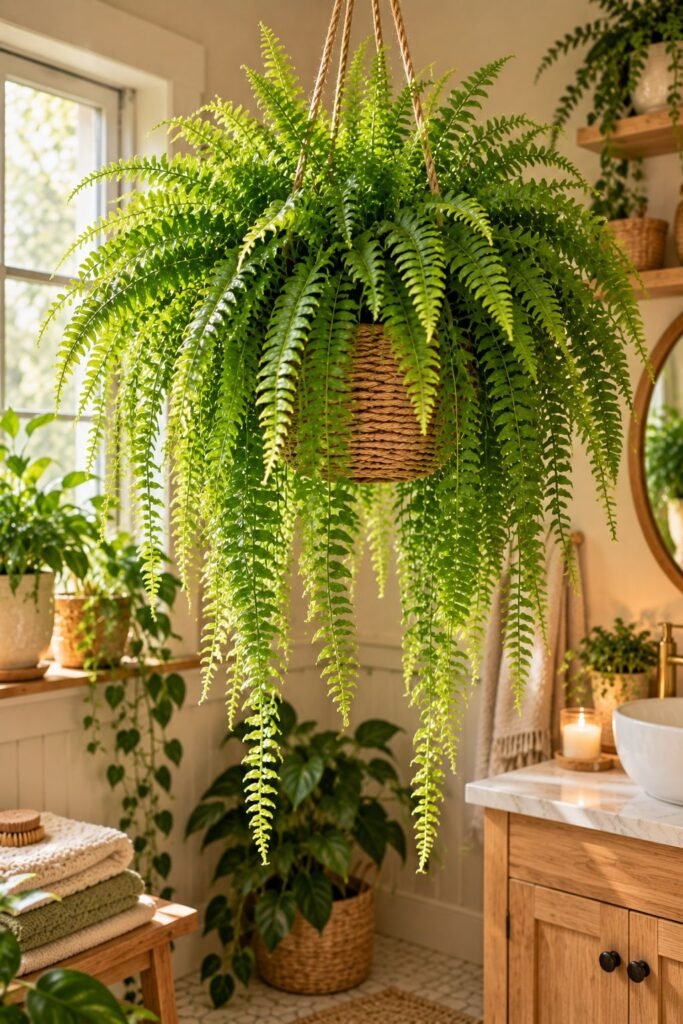
Botanical name: Nephrolepis exaltata
A Boston fern can make a hanging basket look wonderfully full and lush.
Instead of long vines, this plant produces arching fronds that spill outward and downward. It can give a bathroom, bedroom, or shaded sitting area a soft woodland feel.
The main difference between a Boston fern and some of the easier plants on this list is moisture. Ferns generally appreciate higher humidity and evenly moist soil, so I wouldn’t choose one if you regularly forget to water your plants.
A bathroom with some natural light can be a particularly lovely location because the extra humidity can help keep the fronds from becoming dry and crispy.
Avoid placing a Boston fern directly beside a heater or in a very dry, drafty location.
Best for: Humid rooms, bathrooms, and anyone who enjoys giving their plants a little extra attention.
5. English Ivy
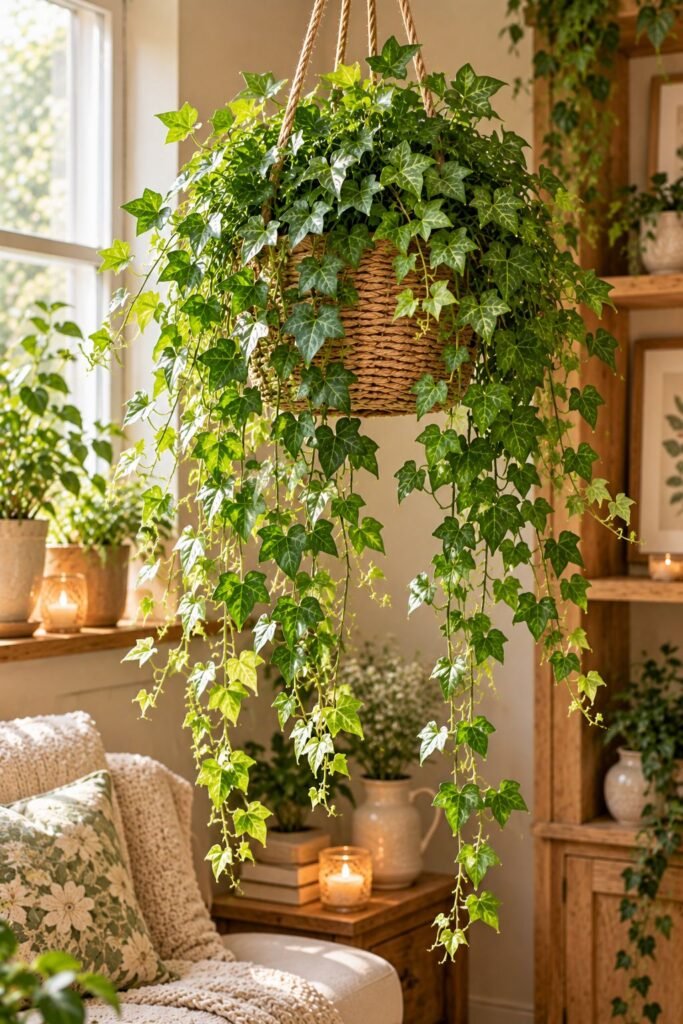
Botanical name: Hedera helix
English ivy is another classic trailing plant that can look beautiful cascading from a hanging basket.
Its small, lobed leaves create a delicate, old-fashioned appearance, and the stems can trail gracefully downward.
English ivy can tolerate lower-light conditions, but it is important not to confuse shade tolerance with a preference for complete darkness. Give it the brightest indirect light available in your dim room.
I also recommend keeping the plant trimmed. Regular pruning helps prevent the vines from becoming excessively long and sparse.
Allow the surface of the potting mix to dry somewhat before watering again, and always use a container with drainage holes.
Best for: Cool rooms, hanging baskets, and people who love classic trailing foliage.
6. Satin Pothos
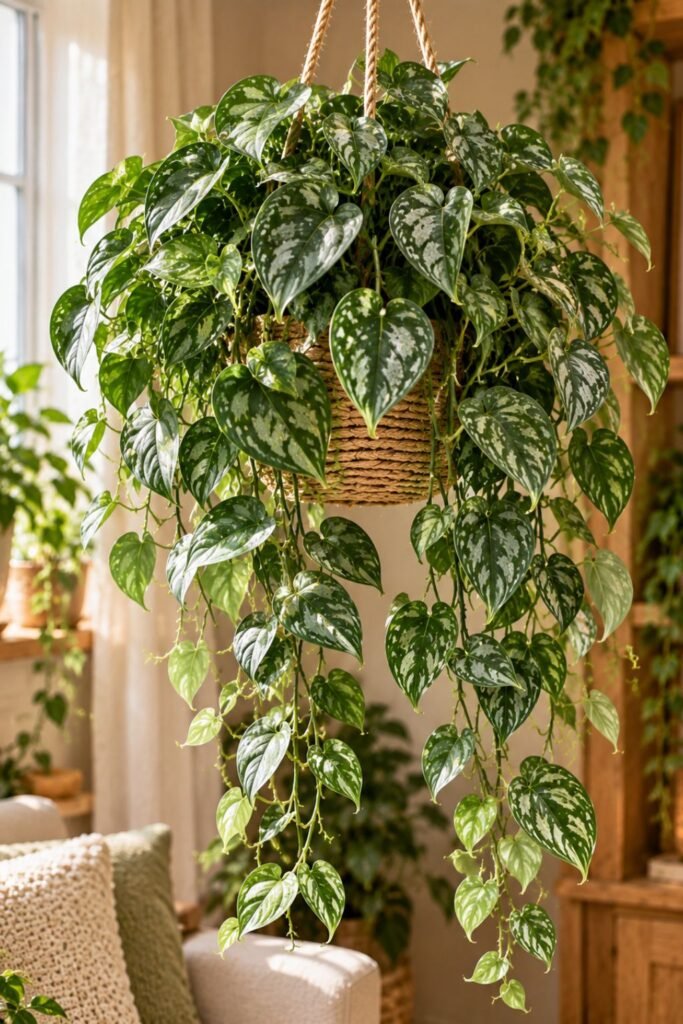
Botanical name: Scindapsus pictus
Satin pothos has a completely different look from golden pothos. Its deep green leaves are decorated with silvery markings that catch the light beautifully.
The trailing stems make it especially attractive in hanging baskets, although I would give it a little more light than I would give a very forgiving green pothos if you want to maintain its attractive leaf pattern.
In a darker room, the plant may grow more slowly and the silver markings may become less dramatic.
I think satin pothos works particularly well in bedrooms and home offices because the foliage looks elegant without taking over the room.
Let the soil dry somewhat between waterings, and avoid keeping the pot constantly wet.
Best for: Decorative hanging baskets and rooms with low to moderate indirect light.
7. String of Hearts
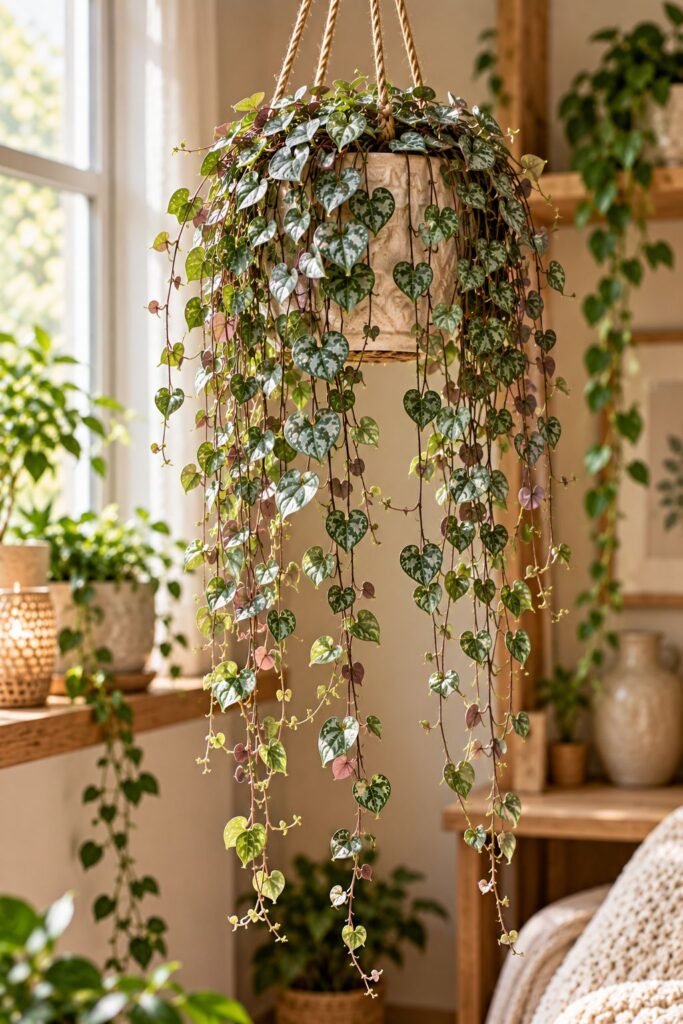
Botanical name: Ceropegia woodii
String of hearts is one of those plants that looks almost too delicate to be real.
Its thin trailing stems are covered with tiny heart-shaped leaves, making it especially pretty when allowed to spill from a hanging basket.
There is one important catch, though: although string of hearts can tolerate some lower light, it generally performs better in brighter indirect light than pothos or heartleaf philodendron.
That means I would place it in a dim room close to the best available natural light rather than putting it in the darkest corner.
Be careful with watering. Its succulent-like leaves and stems hold moisture, so constantly wet soil can cause problems.
Best for: A brighter low-light spot where you want delicate, trailing foliage.
8. Hoya
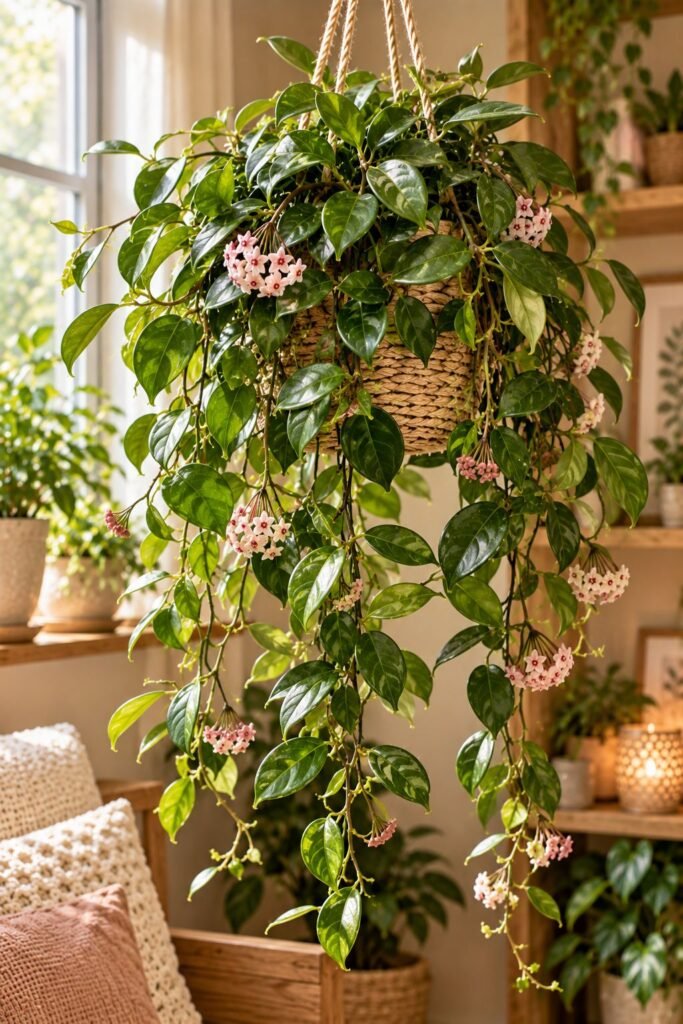
Botanical name: Hoya spp.
Hoyas are beautiful plants with thick, waxy leaves and naturally trailing or climbing stems.
They are particularly appealing if you want a hanging plant that can eventually produce flowers. However, flowering generally requires better light than simply maintaining healthy foliage, so don’t be disappointed if a hoya in a dim room grows without blooming.
For a low-light location, choose a hoya primarily for its foliage and trailing habit.
Allow the potting mix to dry somewhat between waterings, and use a loose, well-draining mix. Avoid leaving the roots sitting in excess water.
If you have a little more light available near a window, that is where I would place a hoya.
Best for: Plant lovers who want interesting foliage and the possibility of flowers.
9. Tradescantia
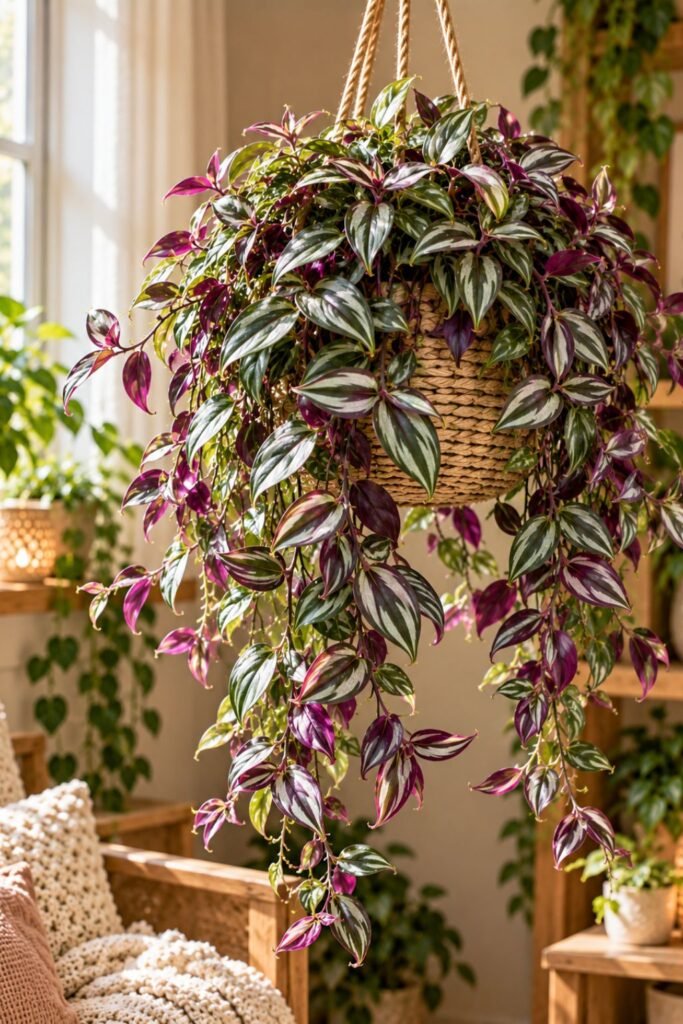
Botanical name: Tradescantia spp.
Tradescantias are fast-growing trailing plants with colorful foliage, depending on the variety.
Some have green leaves, while others feature purple, silver, pink, or striped patterns. Their stems look especially pretty when allowed to spill over a hanging basket.
One thing I have learned with colorful houseplants is that light matters. A very dark location can cause colorful varieties to lose some of their strongest coloring and become stretched.
For that reason, I would choose Tradescantia for a low-to-medium-light location rather than the darkest corner of your home.
Pinching the growing tips occasionally can encourage a bushier plant instead of allowing it to become one long, sparse vine.
Best for: Decorative baskets and rooms with some filtered natural light.
10. Peperomia
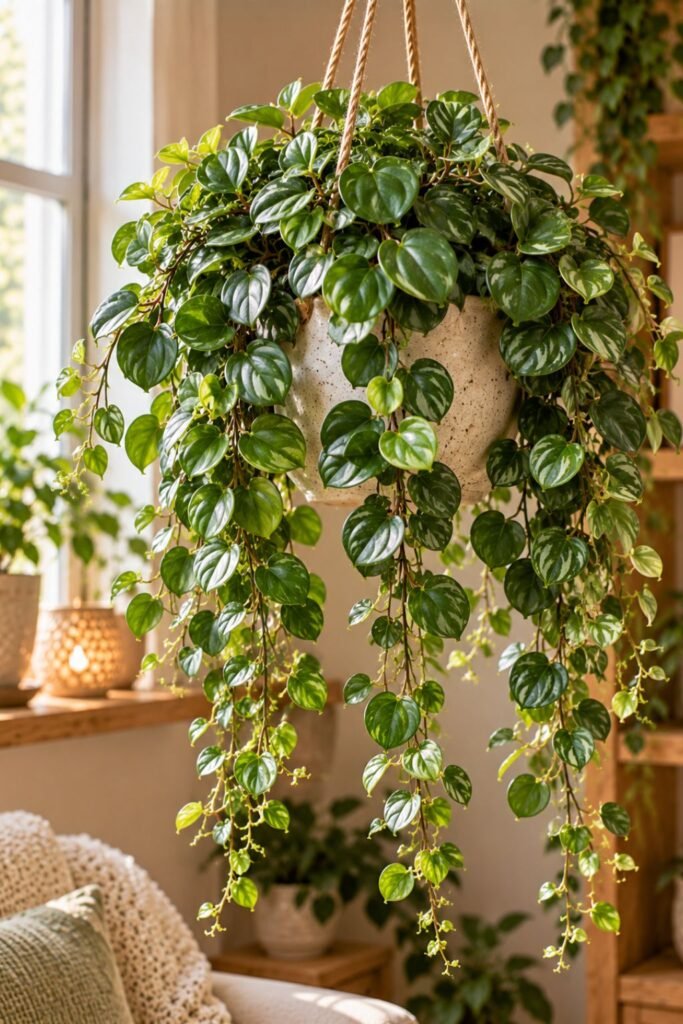
Botanical name: Peperomia spp.
Peperomias are wonderfully versatile little houseplants, and several varieties have a naturally trailing or mounding growth habit that works beautifully in hanging containers.
Their leaves can be thick, rounded, striped, rippled, or glossy depending on the variety.
Peperomia generally doesn’t appreciate being kept constantly wet. In a low-light location, the soil may dry more slowly than you expect, so always check the potting mix before watering.
This is one of those plants where I would rather underwater slightly than automatically water on a strict schedule.
Choose a loose potting mix and a container with drainage holes.
Best for: Small hanging baskets, apartments, shelves, and plant lovers who want something different from pothos.
11. Maidenhair Fern
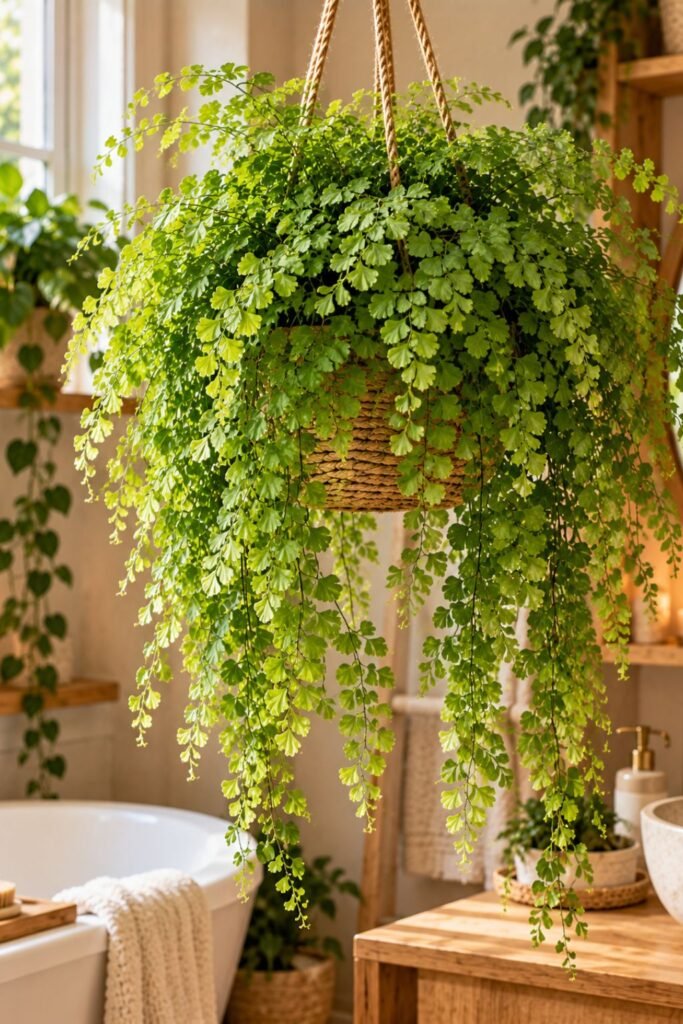
Botanical name: Adiantum spp.
Maidenhair ferns have a wonderfully delicate appearance. Their thin stems and tiny leaflets give them a soft, almost lace-like look.
They can be gorgeous in a hanging basket, particularly in a bathroom or another humid room with filtered light.
However, I would not call maidenhair fern a beginner’s “forget about it” plant. It prefers consistent moisture and humidity, and it can struggle if the soil repeatedly dries out.
If you enjoy checking on your plants and keeping their environment comfortable, this fern can be incredibly rewarding.
Place it away from harsh direct sunlight, strong drafts, and dry heat.
Best for: Humid bathrooms and plant lovers who enjoy a little extra care.
12. Boston Fern Look-Alike: Staghorn Fern
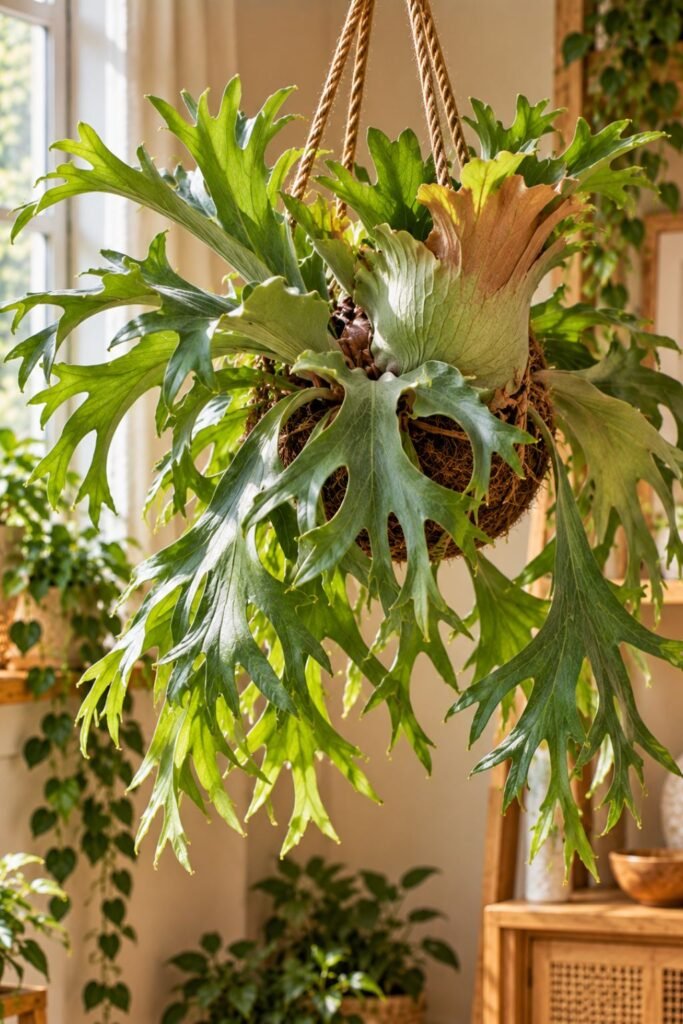
Botanical name: Platycerium spp.
Staghorn ferns are a fascinating option when you want something that looks completely different from an ordinary hanging basket plant.
Instead of producing long trailing vines, staghorn ferns develop unusual fronds that can create a sculptural, woodland-inspired display.
They naturally grow as epiphytes in nature, attaching themselves to trees rather than growing in ordinary garden soil. Indoors, they are often mounted on boards or grown in special hanging arrangements.
They appreciate bright filtered light and humidity, but they can tolerate lower-light conditions better than many decorative tropical plants.
I would give a staghorn fern a spot with good ambient light and plenty of airflow rather than putting it into a completely dark corner.
Best for: Humid rooms, unusual plant displays, and anyone who wants a conversation piece.
How to Care for Hanging Plants in Low Light
Choosing the right plant is only half the job. I have found that low-light plants often need slightly different care than plants sitting beside a bright window.
1. Be Careful With Watering
This is probably the biggest mistake to avoid.
When a plant receives less light, it often grows more slowly and uses water more slowly. That means the potting mix can stay wet for longer.
Instead of watering automatically every few days, check the soil first.
Stick your finger into the top layer of potting mix. If it still feels damp, wait a little longer.
Always use a container with drainage holes whenever possible.
2. Don’t Put Plants in Complete Darkness
A low-light plant is not a no-light plant.
If a room has virtually no natural light, even a shade-tolerant houseplant will eventually struggle.
If you love a particular dark corner, consider adding a small grow light. You don’t need to turn the space into a greenhouse. A simple supplemental light can provide the plant with the extra energy it needs.
3. Watch for Leggy Growth
One of the easiest ways to tell that a hanging plant needs more light is by looking at the new growth.
If the stems become unusually long with large gaps between leaves, the plant may be stretching toward a light source.
Move it closer to a window if possible.
4. Rotate Your Hanging Plants
Plants naturally grow toward available light.
If your hanging basket is always facing the same direction, one side may become fuller than the other.
Every couple of weeks, gently rotate the basket so different sides receive similar exposure.
5. Keep Leaves Clean
Dust can collect quickly on indoor plant leaves, especially when they hang in corners that don’t receive much airflow.
Every so often, gently wipe broad leaves with a clean, damp cloth.
This also gives you an opportunity to inspect the plant for pests or other problems.
6. Choose the Right Hanging Spot
A beautiful hanging basket isn’t much use if the location is uncomfortable for the plant.
Try to avoid placing plants:
- Directly above heaters
- Beside strong air-conditioning vents
- In constantly cold drafts
- In completely dark corners
- Where watering could damage furniture or flooring
Remember that a hanging plant near the ceiling may experience warmer and drier air than a plant sitting lower in the room.
How to Make a Dark Room Feel More Lush With Hanging Plants
One of my favorite tricks is to use hanging plants at different heights rather than putting everything at the same level.
For example, you could place a pothos in a basket near a bookshelf, a spider plant slightly lower beside a window, and a fern in a humid bathroom.
You can also allow a pothos or philodendron to trail from a high shelf rather than hanging it directly from the ceiling.
This gives you the hanging-plant effect without automatically putting the plant in the darkest possible location.
If your room is small, hanging plants can also be a wonderful way to add greenery without filling up your floor space.
Which Low-Light Hanging Plant Should You Choose?
If you are new to houseplants, I would start with golden pothos, heartleaf philodendron, or spider plant. They are forgiving choices and are well suited to the kind of lower-light conditions many homes have.
If you want something more decorative, try satin pothos or peperomia.
For a delicate look, string of hearts can be lovely if you have enough indirect light.
And if your home has a humid bathroom, a Boston fern or maidenhair fern can create a beautiful, lush atmosphere.
The most important thing is to match the plant to the actual conditions in your home rather than choosing a plant simply because it looks pretty in a photograph.
Final Thoughts
I don’t think a dark corner should automatically mean an empty corner.
With the right plant, even a dim bedroom, quiet hallway, shaded office, or unused bathroom can have a little life hanging overhead. The key is remembering that low-light plants still need light, and that watering needs usually decrease when growth slows in dim conditions.
Start with an easy plant like pothos, heartleaf philodendron, or spider plant if you’re unsure where to begin. Once you get comfortable caring for hanging plants, you can experiment with ferns, hoyas, peperomias, and other unusual varieties.
And honestly, one of the nicest things about hanging houseplants is that you don’t need a huge collection to make a difference. Sometimes one healthy basket of trailing greenery is all it takes to make an overlooked corner feel like part of your home again.
