
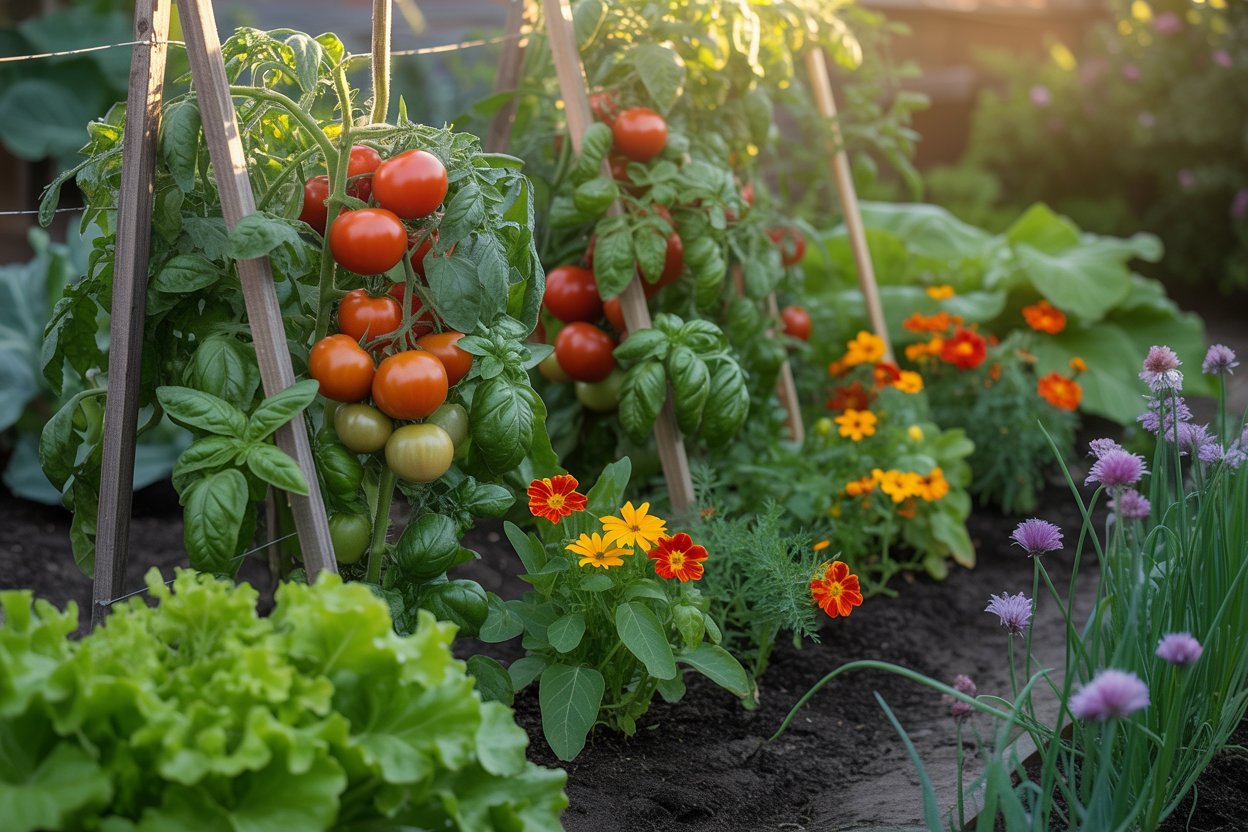

Tomatoes are one of my favorite plants to grow, but I’ve learned they do even better when they’re not growing alone.
Planting the right crops around tomatoes a method called intercropping can help improve soil health, reduce pests, and increase your harvest.
In this guide, I’m sharing 12 plants that grow beautifully with tomatoes, along with simple steps and care tips to help you intercrop them successfully in your garden.
Shop my amazon essentials
- Garden trowel
- Hand pruners
- Watering can or garden hose
- Tomato cages or stakes
- Gardening gloves
- Compost or organic fertilizer
- Mulch
Why Intercropping Tomatoes Works So Well
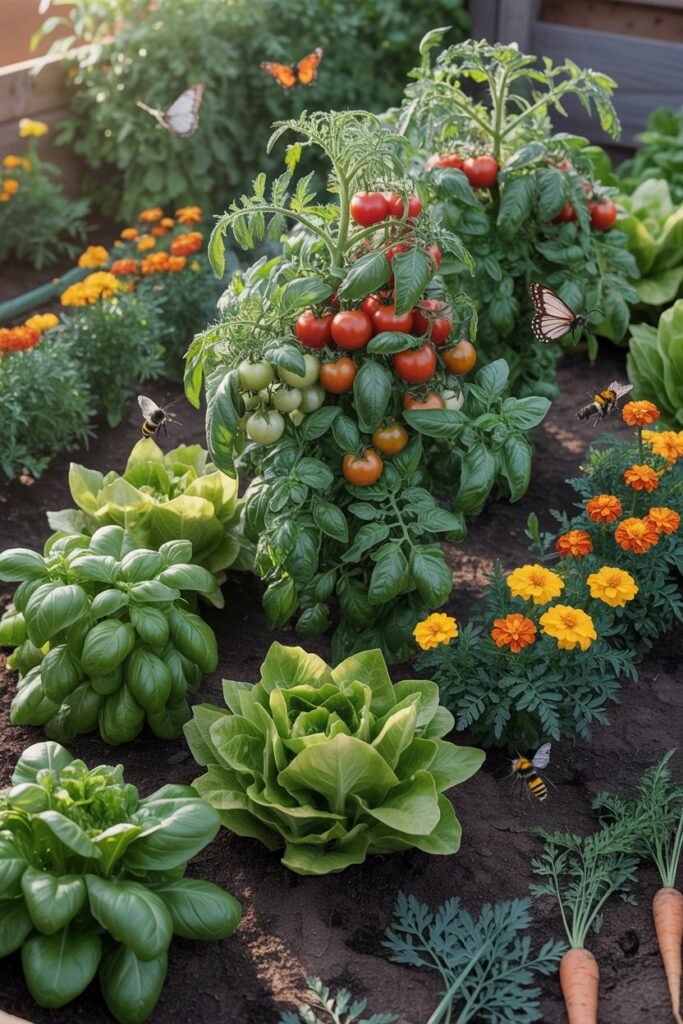
Before jumping into the plant list, it helps to understand why intercropping tomatoes works so beautifully.
Tomatoes are heavy feeders and can attract several pests. When grown alone, they sometimes struggle with pest pressure, soil nutrient depletion, and poor pollination.
Intercropping solves many of these problems naturally.
1. Natural Pest Control
Some plants release scents or compounds that confuse or repel pests. When planted near tomatoes, they can help protect them from insects like aphids, whiteflies, and tomato hornworms.
2. Better Pollination
Flowering plants attract bees and beneficial insects that pollinate your tomato plants. More pollination often means larger and more abundant harvests.
3. Improved Soil Health
Some intercrops fix nitrogen or improve soil structure. Tomatoes love nutrient-rich soil, so these plants act like natural helpers underground.
4. Efficient Use of Space
Intercropping lets you grow multiple plants in the same area without overcrowding. This is especially helpful for small gardens, raised beds, or container gardens.
5. Weed Suppression
Low-growing intercrops can cover bare soil, preventing weeds from taking over your tomato bed.
1. Basil
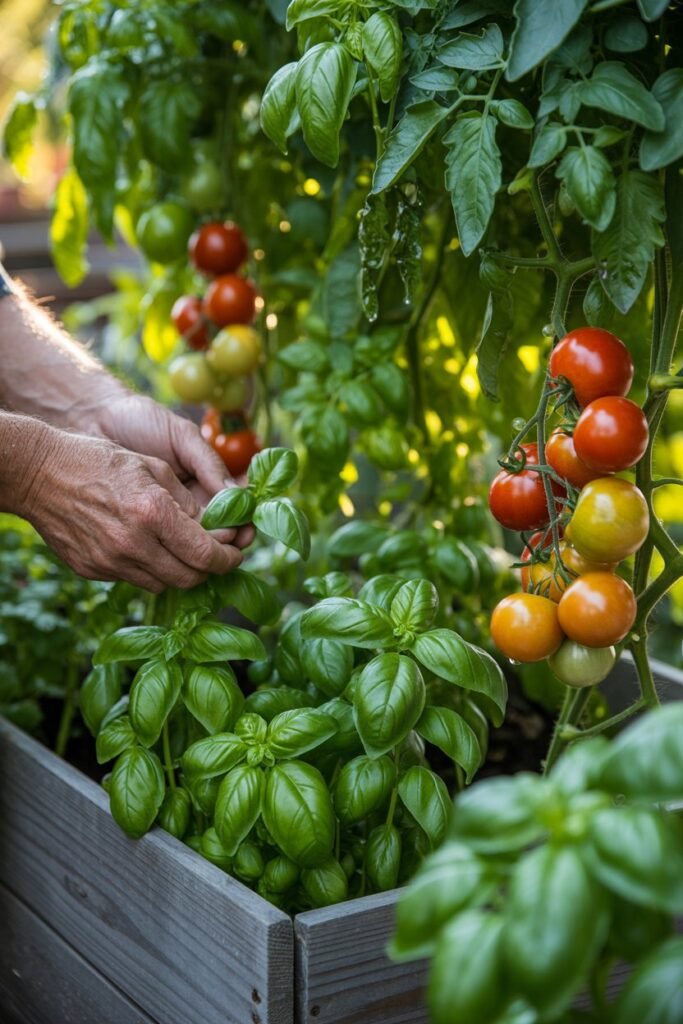
Basil and tomatoes are one of the most famous garden companions and for good reason. They grow beautifully together and even share similar growing conditions.
Many gardeners believe basil improves tomato flavor, but the biggest benefit is pest protection.
Why Basil Helps Tomatoes
Basil helps repel:
- Aphids
- Whiteflies
- Mosquitoes
- Tomato hornworms
Its strong aroma confuses pests that normally target tomato plants.
How to Intercrop Basil With Tomatoes
- Plant basil seedlings 10–12 inches away from tomato plants.
- Place basil plants around the edges of tomato beds.
- Avoid overcrowding basil still needs sunlight.
- Plant basil between tomato rows in raised beds.
Care Tips
- Basil loves warm temperatures and full sun.
- Water consistently but avoid soggy soil.
- Pinch the top leaves regularly to encourage bushier growth.
- Harvest frequently to keep plants productive.
A few basil plants scattered around tomato beds can make a surprisingly big difference in plant health.
2. Marigolds
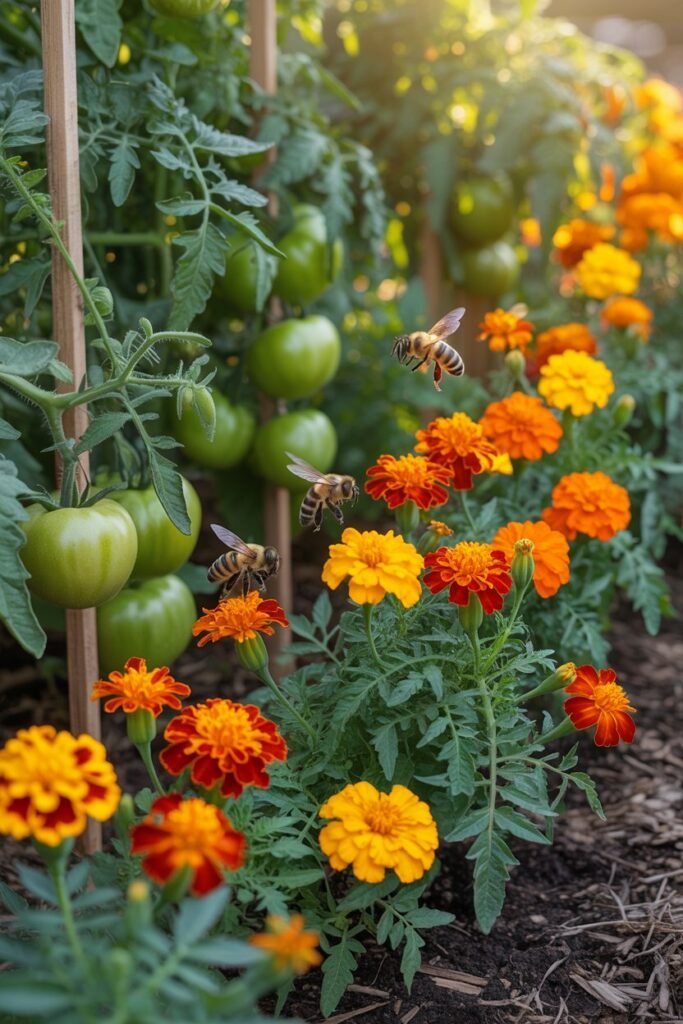
Marigolds are like tiny guardians for tomato plants. Their bright flowers are beautiful, but their roots release natural compounds that help deter harmful pests.
Why Marigolds Help Tomatoes
Marigolds protect tomatoes from:
- Nematodes in the soil
- Aphids
- Whiteflies
- Beetles
They also attract beneficial insects like ladybugs and lacewings.
Steps To Plant Marigolds With Tomatoes
- Plant marigolds around the border of tomato beds.
- Space them 8–10 inches apart.
- Mix a few plants between tomato rows.
- Keep them close but not touching tomato stems.
Care Tips
- Marigolds thrive in full sunlight.
- They tolerate dry soil but grow better with moderate watering.
- Deadhead spent flowers to encourage more blooms.
- Plant new marigolds each growing season.
Marigolds are one of the easiest and most effective tomato companions you can grow.
Read Best Vegetables for Hanging Baskets (From My Own Small-Space Garden)
3. Garlic
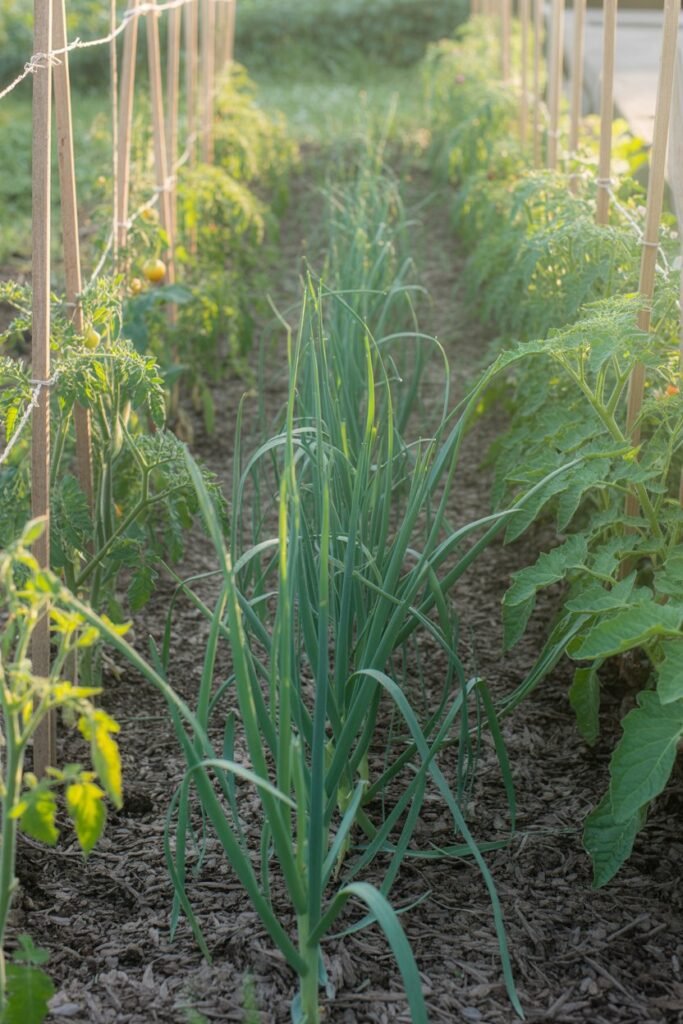
Garlic may not look like a companion plant at first glance, but it plays a powerful role in protecting tomato crops.
Why Garlic Works Well
Garlic repels:
- Spider mites
- Aphids
- Japanese beetles
- Fungal diseases
Its sulfur compounds act like a natural shield against pests and pathogens.
Steps To Intercrop Garlic
- Plant garlic cloves between tomato plants early in the season.
- Space cloves 4–6 inches apart.
- Plant them 1–2 inches deep in the soil.
- Leave enough room for tomato root growth.
Care Tips
- Garlic prefers loose, well-draining soil.
- Water lightly but consistently.
- Remove weeds regularly.
- Harvest when leaves start turning yellow.
Garlic grows quietly beneath the soil while protecting tomatoes above.
4. Lettuce
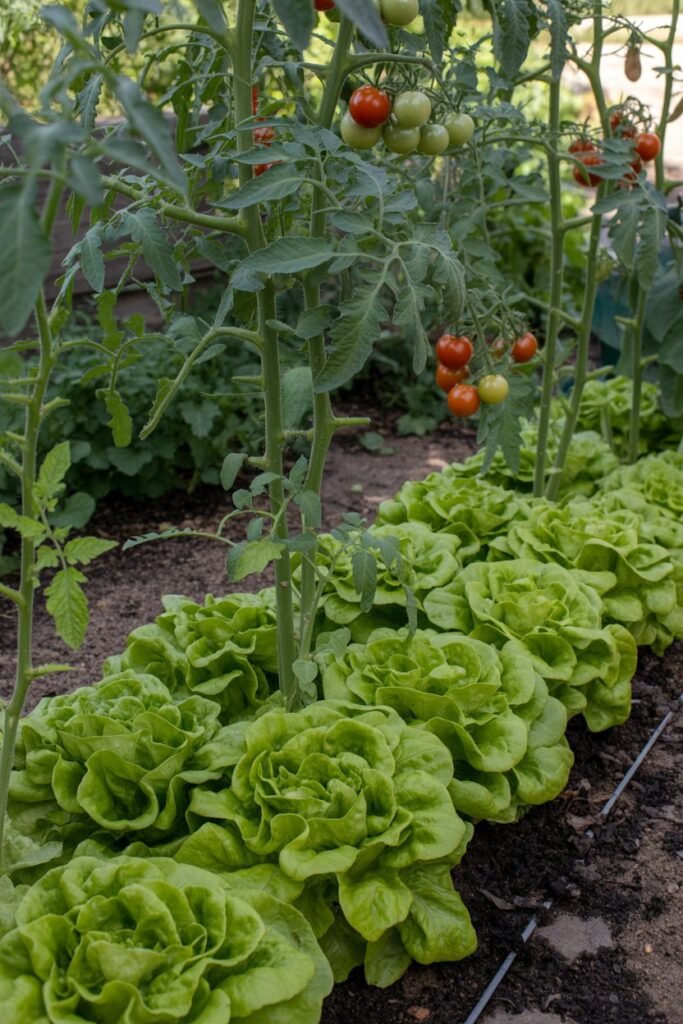
Lettuce is an excellent intercrop because it grows quickly and stays low to the ground.
Why Lettuce Is Helpful
- Shades soil and keeps roots cool
- Reduces weed growth
- Makes use of empty space while tomatoes grow larger
Steps To Intercrop Lettuce
- Plant lettuce between young tomato plants.
- Space lettuce 6–8 inches apart.
- Harvest lettuce before tomato plants become too large.
Care Tips
- Lettuce prefers cooler temperatures.
- Water regularly to prevent bitterness.
- Provide light shade during hot weather.
- Harvest outer leaves continuously.
This pairing works beautifully in raised beds and small gardens.
5. Carrots
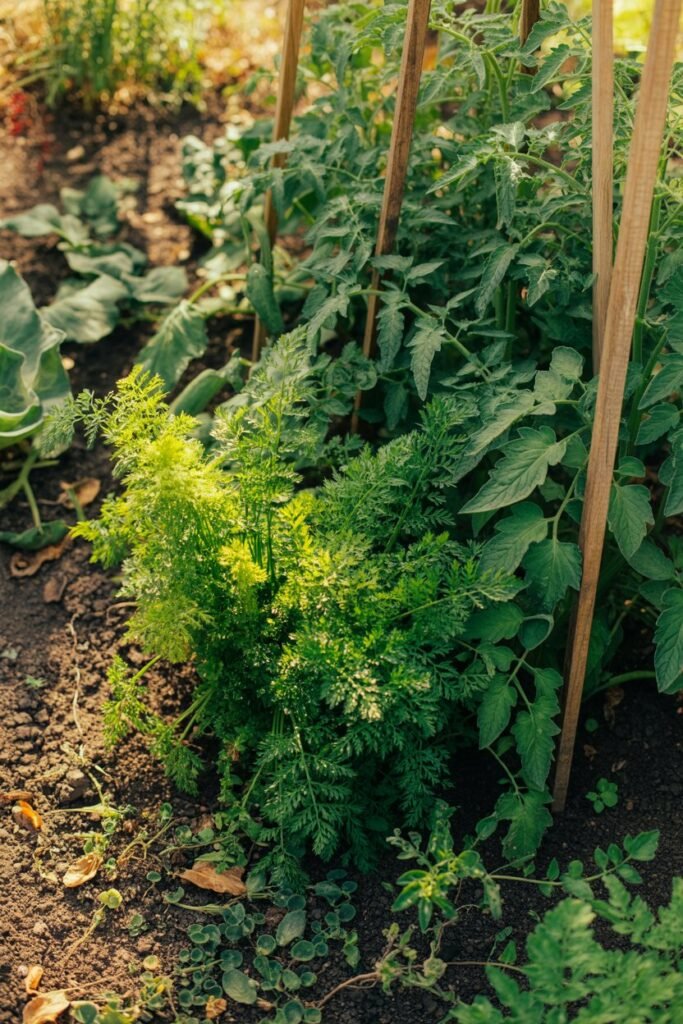
Carrots grow underground and don’t compete with tomatoes for space above ground.
Why Carrots Help
- Break up compact soil
- Improve drainage
- Use deep soil layers that tomatoes don’t fully occupy
Steps To Plant Carrots With Tomatoes
- Sow carrot seeds between tomato rows.
- Plant seeds ¼ inch deep.
- Thin seedlings to 2–3 inches apart.
Care Tips
- Carrots need loose soil to grow straight roots.
- Water consistently for sweet roots.
- Avoid heavy fertilizer.
Carrots and tomatoes complement each other surprisingly well in the garden.
6. Spinach
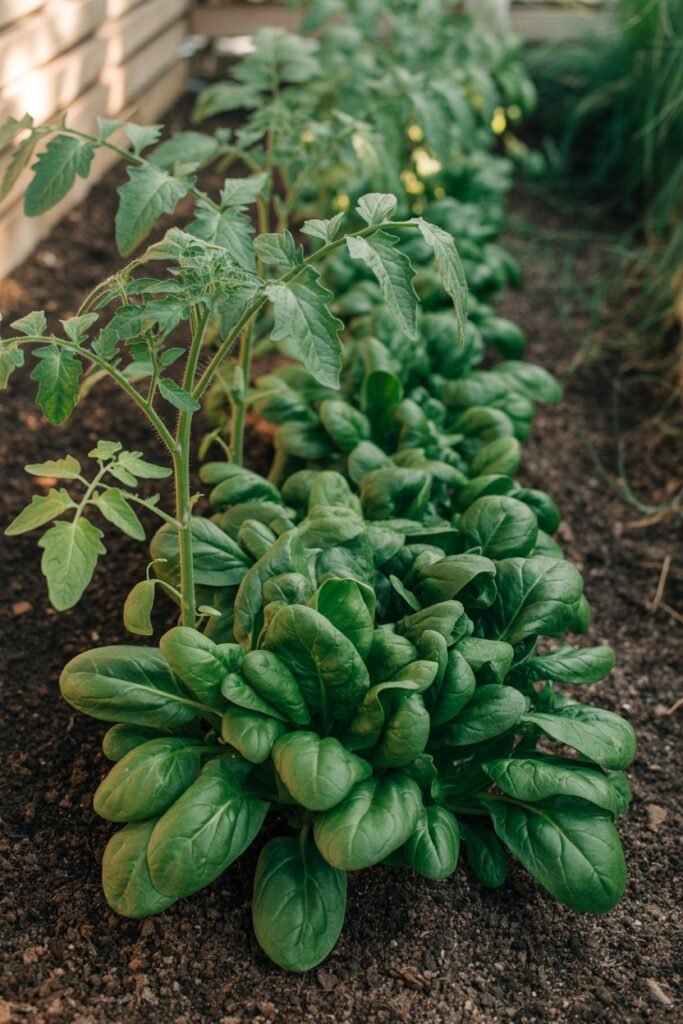
Spinach grows quickly and provides excellent soil cover.
Why Spinach Works
- Protects soil moisture
- Prevents weeds
- Grows before tomatoes fully mature
Steps To Intercrop Spinach
- Plant spinach early in the season around tomatoes.
- Space plants 6 inches apart.
- Harvest before summer heat arrives.
Care Tips
- Spinach prefers cool weather.
- Keep soil moist.
- Use mulch to maintain temperature.
7. Chives
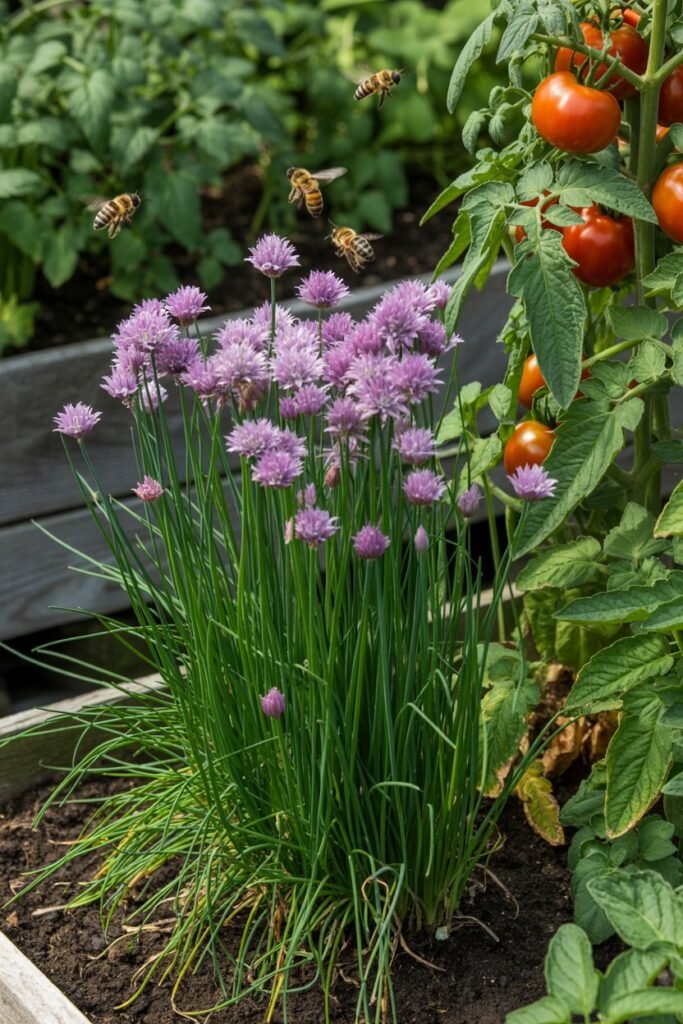
Chives bring both flavor to the kitchen and protection to tomato plants.
Why Chives Help
Chives repel:
- Aphids
- Spider mites
- Japanese beetles
They also attract beneficial pollinators.
Steps To Plant Chives
- Plant chives near tomato stems but not too close.
- Space plants 8–10 inches apart.
- Divide clumps every few seasons.
Care Tips
- Chives thrive in full sun to partial shade.
- Water moderately.
- Cut leaves regularly to encourage fresh growth.
8. Nasturtiums
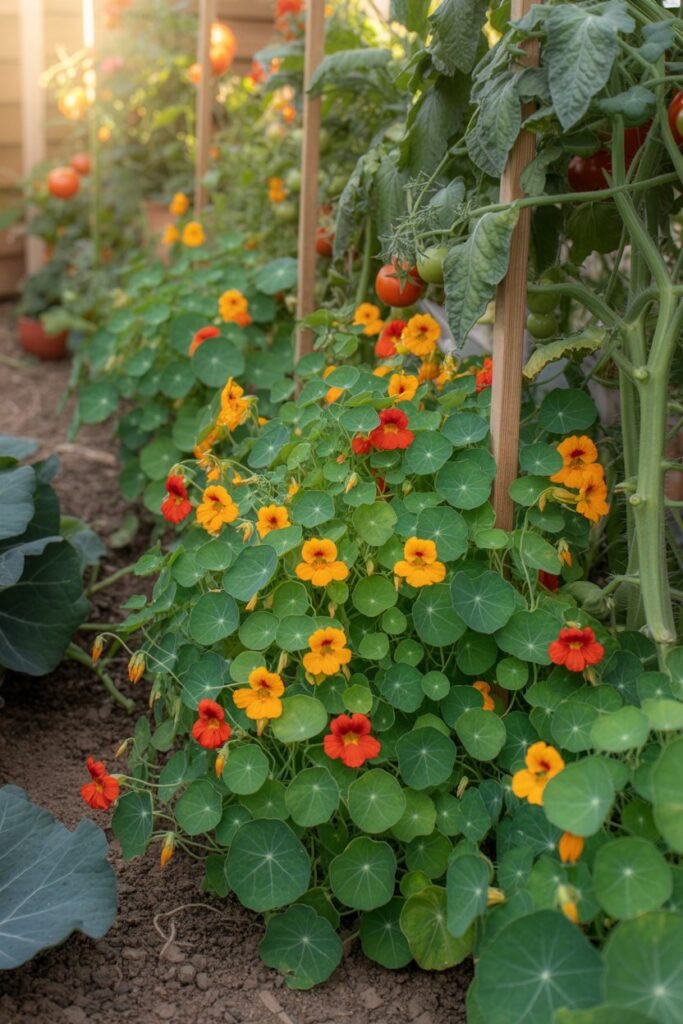
Nasturtiums are wonderful trap crops.
Why They Help
They attract pests away from tomatoes, especially:
- Aphids
- Whiteflies
- Beetles
Steps To Plant Nasturtiums
- Plant them around tomato bed edges.
- Space plants 10–12 inches apart.
- Allow them to trail naturally.
Care Tips
- Nasturtiums prefer poor soil.
- Avoid heavy fertilization.
- Water lightly.
9. Radishes
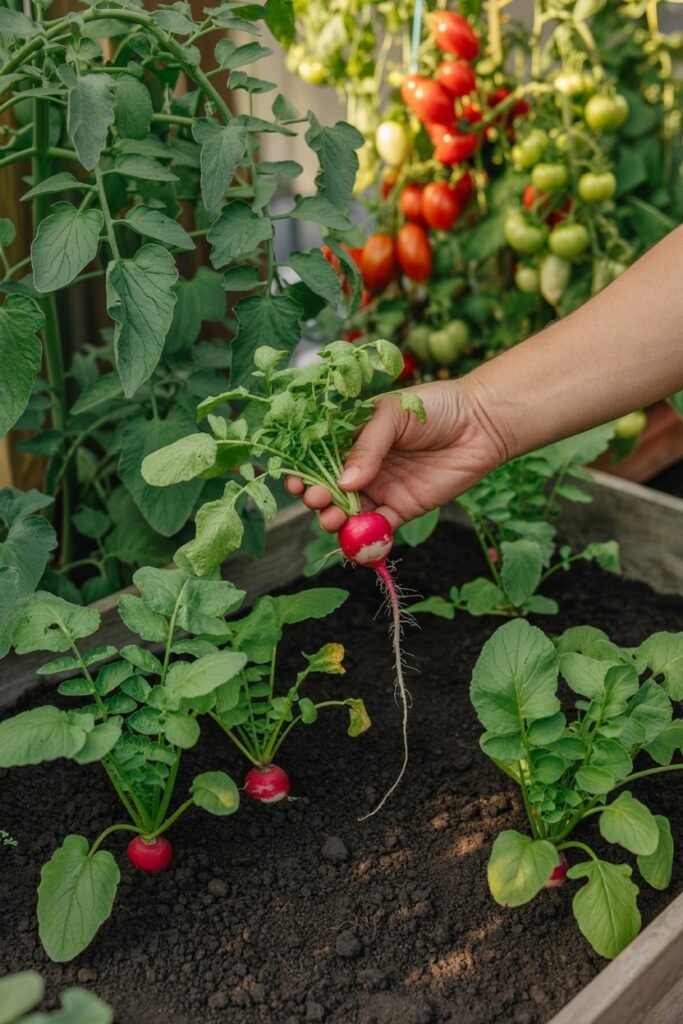
Radishes grow quickly and help loosen the soil.
Why Radishes Work
- Break up compact soil
- Grow quickly before tomatoes mature
- Help deter some pests
Steps To Intercrop Radishes
- Plant seeds between tomato plants.
- Sow seeds ½ inch deep.
- Harvest within 3–4 weeks.
Care Tips
- Water regularly for crisp roots.
- Thin seedlings to 2 inches apart.
10. Borage
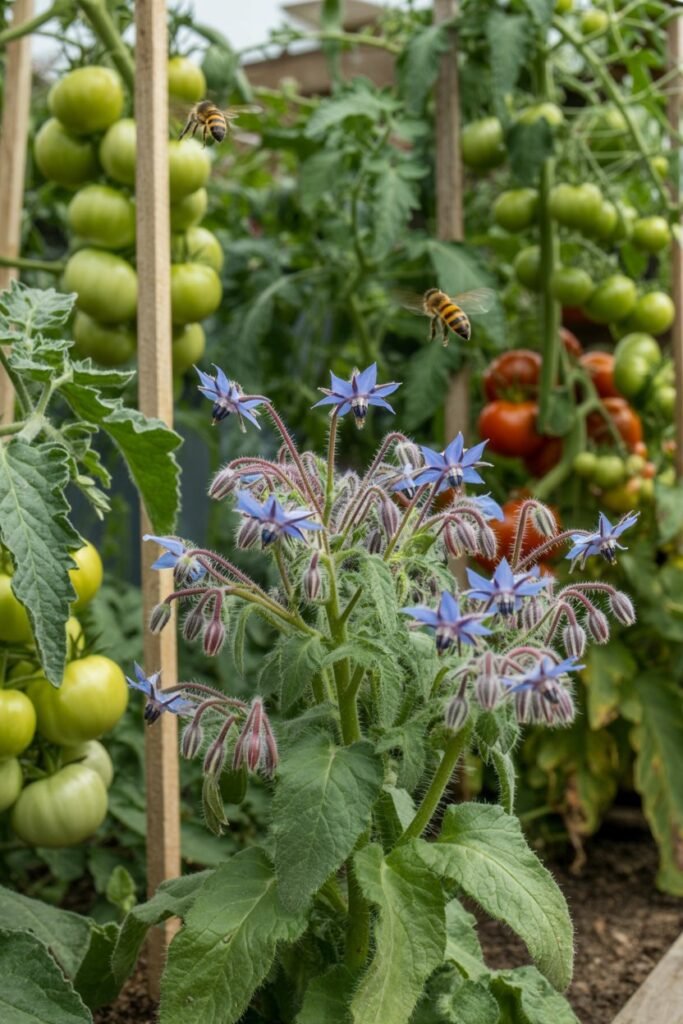
Borage is one of my favorite companion plants for tomatoes.
Why Borage Helps
- Attracts bees and pollinators
- Repels tomato hornworms
- Improves soil health
Steps To Plant Borage
- Plant borage near tomato beds.
- Space plants 18–24 inches apart.
- Allow plants to self-seed if desired.
Care Tips
- Borage grows well in full sun.
- Water moderately.
- Remove old plants if they spread too aggressively.
11. Parsley
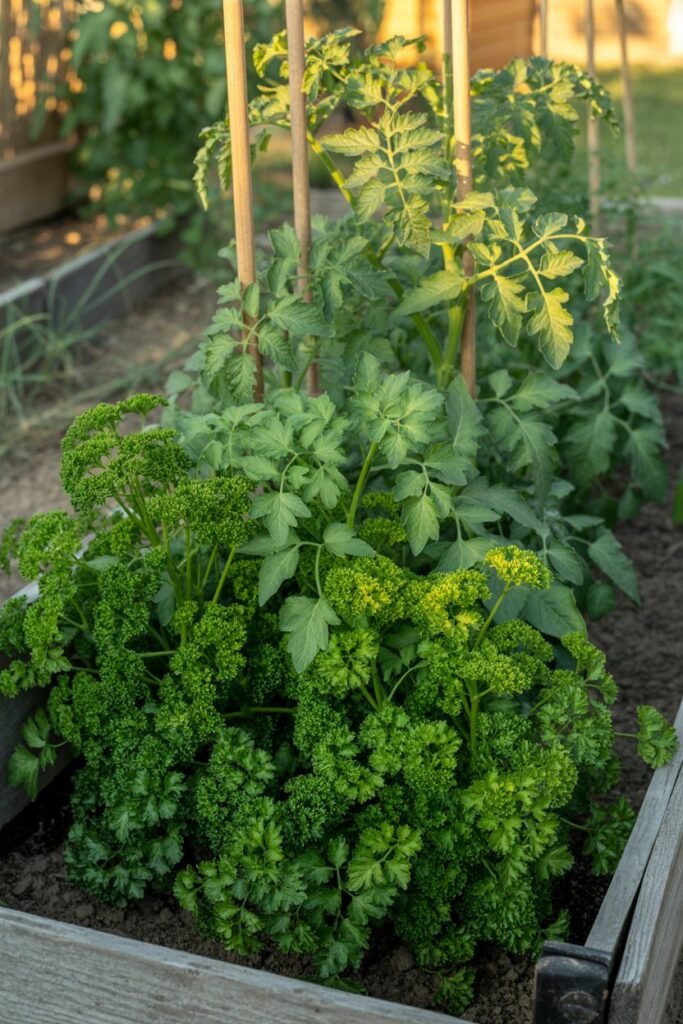
Parsley is an underrated companion plant for tomatoes.
Why Parsley Works
- Attracts beneficial insects
- Makes great use of small spaces
- Helps increase biodiversity in garden beds
Steps To Plant Parsley
- Plant parsley around tomato beds.
- Space plants 8 inches apart.
Care Tips
- Parsley prefers moist soil.
- Provide partial shade in hot climates.
- Harvest regularly.
12. Clover
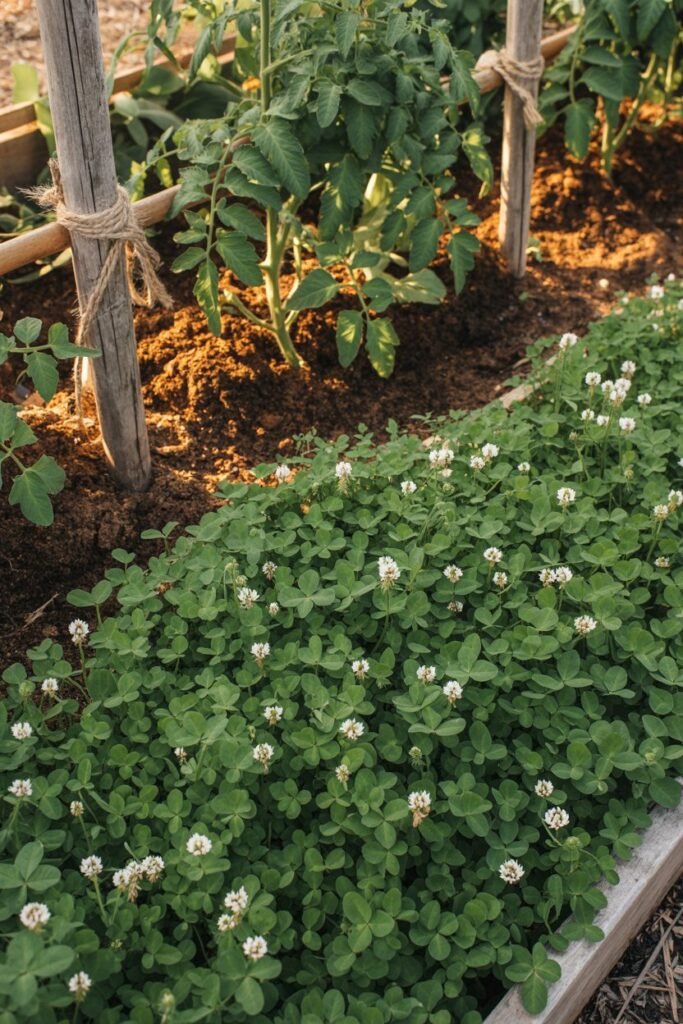
Clover is an amazing soil-building intercrop.
Why Clover Helps Tomatoes
- Fixes nitrogen in soil
- Acts as living mulch
- Improves soil structure
Steps To Plant Clover
- Scatter clover seeds around tomato plants.
- Lightly rake seeds into soil.
- Water gently until established.
Care Tips
- Clover needs consistent moisture during germination.
- Trim occasionally to prevent overgrowth.
Tips for Successful Tomato Intercropping
After years of experimenting in my own garden, these simple tips make intercropping work even better.
1. Avoid Overcrowding
Tomatoes still need airflow and sunlight. Always leave enough space for healthy growth.
2. Combine Different Plant Heights
A balanced garden includes:
- Tall plants (tomatoes)
- Medium plants (basil, parsley)
- Ground covers (lettuce, clover)
3. Rotate Crops
Avoid planting tomatoes in the same spot every year. Crop rotation prevents soil diseases.
4. Add Organic Matter
Healthy soil supports all intercrops. Compost and mulch improve soil fertility naturally.
5. Observe Your Garden
Every garden is slightly different. Pay attention to which combinations work best in your soil and climate.
Final Thoughts
Growing tomatoes doesn’t have to mean dedicating an entire garden bed to a single crop. Intercropping opens up a whole new way of gardening one where plants support each other naturally.
Adding a few well-chosen companions like basil, marigolds, garlic, and borage can make your tomato garden more productive, healthier, and far more resilient against pests and disease.
In my own garden, these plant partnerships have transformed tomato beds into lively little ecosystems filled with helpful insects, thriving plants, and better harvests.
If you’re planning your next tomato garden, try adding a few of these intercrops. You might be surprised at how much stronger, healthier, and more productive your tomatoes become.
And honestly, a garden filled with tomatoes, herbs, flowers, and leafy greens growing happily together feels a little magical.
