


Coneflowers are one of those flowers I always want to see more of in my garden.
Their cheerful petals and raised centers bring so much color to a sunny space, and I love watching bees and butterflies visit them throughout the warm months.
If your coneflowers seem to bloom beautifully for a short time and then slow down, a few simple changes can make a noticeable difference.
From choosing the right spot to deadheading at the right time, these easy care tips can help encourage more flowers and keep your plants looking fresh, healthy, and colorful throughout summer.
Why Coneflowers Are So Wonderful for a Summer Garden
Coneflowers, especially purple coneflower (Echinacea purpurea), are tough, adaptable perennials that can handle heat and periods of dry weather once established.
They generally perform best in sunny locations with well-drained soil and can provide a long flowering season when given suitable growing conditions.
What I especially love about them is that they don’t need constant fussing.
They can fit beautifully into cottage gardens, pollinator borders, perennial beds, cutting gardens, and even more natural-looking landscapes.
Their flowers are also attractive to bees and butterflies, while the mature seedheads can provide food for finches later in the season.
If you want your coneflowers to keep producing flowers instead of giving you one big flush and then stopping, these are the things I would focus on.
1. Give Coneflowers Plenty of Sun

If I had to choose one place for coneflowers, I would always start with a bright, sunny location.
Coneflowers generally flower best when they receive plenty of direct sunlight. Full sun helps the plant produce sturdy stems, healthy foliage, and plenty of flower buds.
Aim for around 6 or more hours of direct sunlight when possible.
A spot that gets morning and afternoon sunshine is particularly useful. If your coneflowers are tucked behind a fence, large shrub, tree, or building, they may receive enough light to survive but not enough to produce the kind of flowering display you’re hoping for.
Watch for these signs of insufficient light:
- Long, weak-looking stems
- Fewer flowers
- Smaller blooms
- Plants leaning toward brighter areas
- More foliage than flowers
If your coneflowers aren’t flowering well, take a look at their surroundings before immediately adding fertilizer. Sometimes the simplest solution is simply giving them more sunlight.
2. Plant Them in Well-Drained Soil

Coneflowers are remarkably adaptable, but they don’t appreciate sitting in constantly soggy soil.
Purple coneflower is generally suited to average, dry-to-medium moisture, well-drained soil.
This is especially important during periods of heavy rain or when you’re watering frequently.
If your garden soil stays wet for days after rainfall, improve the drainage before planting. You can work organic matter into heavy soil and make sure water has somewhere to move away from the plant’s root zone.
A simple soil goal
You want soil that:
- Holds enough moisture for the roots
- Drains excess water
- Isn’t constantly saturated
- Allows roots to breathe
- Supports healthy root growth
Don’t feel that you need to create an extremely rich soil mixture. Coneflowers are not particularly demanding plants, and they can tolerate relatively poor soil once established.
3. Water Deeply Instead of Constantly

One of my favorite things about established coneflowers is that they don’t need to be pampered with little drinks of water all day.
Instead, water deeply when the plant needs it.
During extended hot or dry periods, check the soil around the root zone. If the soil has become noticeably dry, give the plant a thorough watering rather than sprinkling a tiny amount over the surface.
Water directly around the base of the plant so moisture reaches the roots.
Morning is a particularly good time to water because the foliage has time to dry during the day. Avoid keeping the leaves and flowers unnecessarily wet.
Newly planted coneflowers need more attention
A newly planted coneflower doesn’t have the established root system of an older plant. Keep the soil reasonably moist while it settles in.
Once established, coneflowers generally become much more tolerant of dry conditions.
4. Deadhead Spent Flowers Regularly

If you want one practical tip for encouraging more flowers, this is the one I would put near the top of your list.
Deadhead your coneflowers.
Deadheading simply means removing flowers after they have finished blooming.
Instead of allowing every fading flower to immediately move toward seed production, removing spent flowers can encourage the plant to continue producing additional blooms. Missouri Botanical Garden specifically notes that deadheading coneflowers can help keep new flowers coming.
How to deadhead a coneflower
Look for a flower that has faded and lost its fresh appearance.
Follow its stem downward until you reach a healthy set of leaves or a point where another flower bud is developing.
Use clean, sharp garden scissors or pruners to cut the spent flower stem back.
You don’t need to cut the entire plant down.
How often should you deadhead?
Check your plants every few days during peak flowering season.
You don’t have to be obsessive about it. If you miss a few flowers, your coneflowers won’t suddenly stop blooming.
Think of deadheading as a gentle maintenance habit rather than another gardening chore.
5. Don’t Deadhead Every Flower
This might sound like I’m contradicting the previous tip, but there’s an important balance.
You don’t necessarily want to remove every single coneflower flower once it fades.
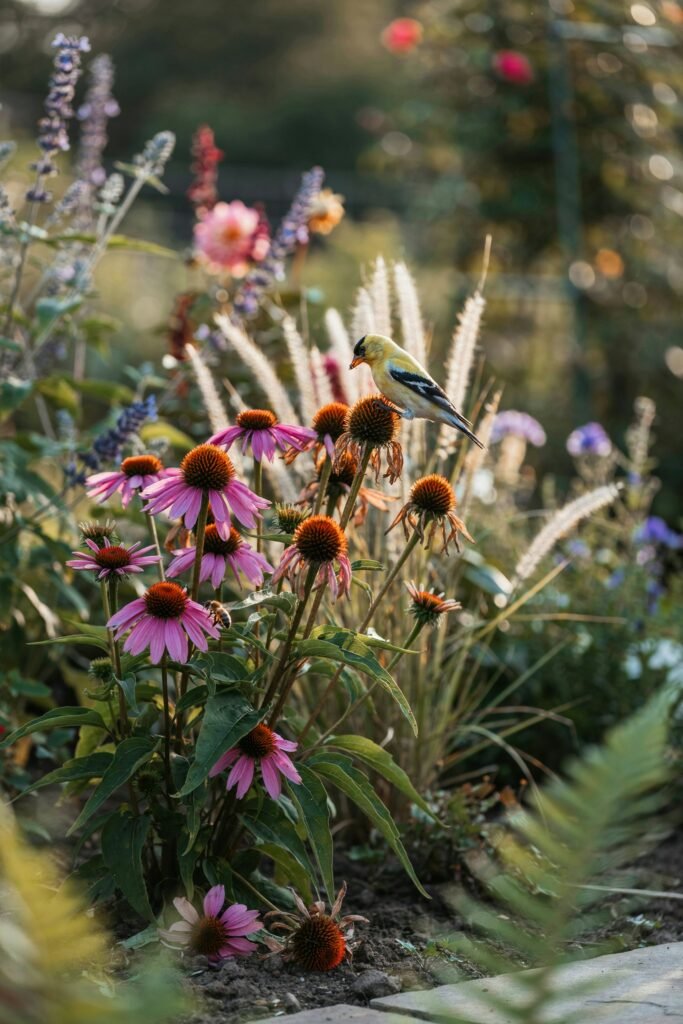
Coneflower seedheads can be valuable for wildlife, especially birds such as goldfinches. They can also provide attractive winter interest in the garden.
I like to leave some of the final flowers of the season alone.
This gives you the best of both worlds:
During summer:
Deadhead regularly to encourage additional flowers.
Toward late summer and fall:
Allow some flowerheads to mature and provide seeds for birds.
This also makes your garden feel a little more natural instead of perfectly manicured.
6. Don’t Overfertilize Your Coneflowers

It’s tempting to think that more fertilizer equals more flowers, but that’s not always how it works.
Coneflowers are fairly adaptable plants, and excessive fertilizer can encourage lots of leafy growth without necessarily giving you the flowering display you wanted.
If your soil is reasonably healthy, you may not need to feed your coneflowers heavily.
Instead of reaching for fertilizer every time the plant looks less than perfect, first check:
- Is it getting enough sunlight?
- Is the soil draining properly?
- Is the plant receiving appropriate water?
- Have I been removing spent flowers?
- Is the plant overcrowded?
Those basic growing conditions usually matter much more than constantly feeding the plant.
If you do fertilize, follow the product label and avoid applying more than recommended.
7. Give Plants Enough Space

Crowded plants can create their own problems.
When coneflowers are planted too close together, air movement around the foliage can be reduced, and the plants may compete for light, water, and nutrients.
Good spacing also makes it easier for you to:
- Water around the base
- Inspect the leaves
- Remove spent flowers
- Spot problems early
- Enjoy the individual shape of each plant
Always check the mature size of the specific coneflower variety you’re growing because different cultivars can vary considerably.
If your established plants have become extremely crowded, division may eventually be helpful. University of Minnesota Extension notes that coneflowers can produce young plants from reseeding and discusses dividing perennials when they are not flowering so the plant can focus energy on rebuilding roots and foliage.
8. Keep Weeds From Competing With Them
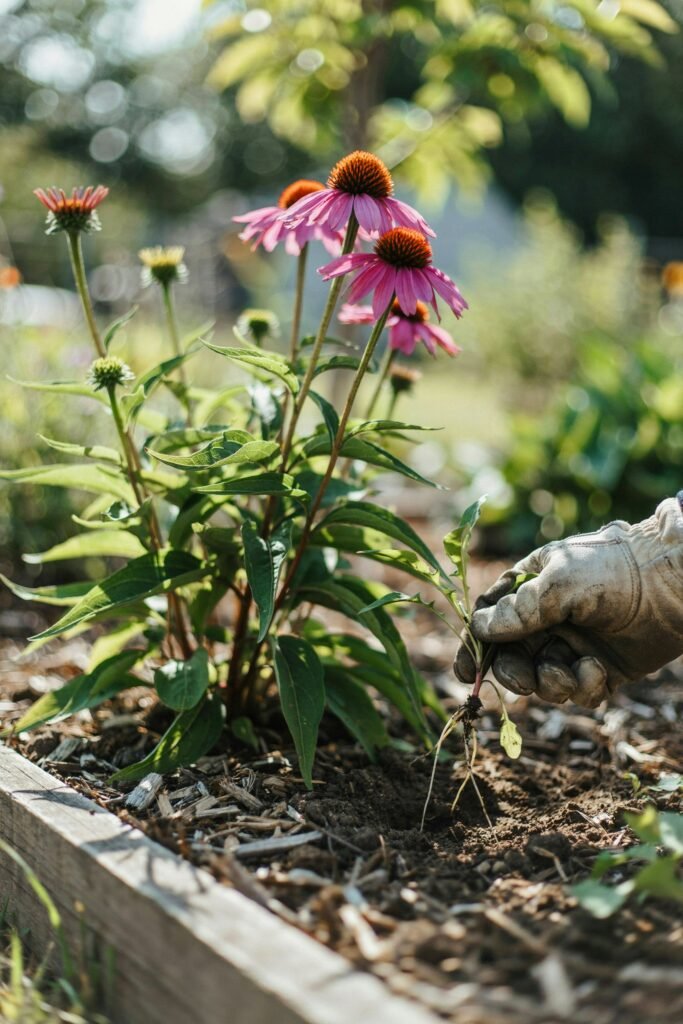
Weeds don’t just make a flower bed look untidy. They also compete with your plants for water, light, nutrients, and growing space.
I like to keep the area immediately around my coneflowers relatively clear.
A layer of organic mulch can also help reduce weed growth and slow moisture loss.
Just don’t pile mulch directly against the crown or stems of the plant.
A little space around the base allows better airflow and reduces the chance of creating a constantly damp environment around the plant.
A simple routine
Once a week, walk around your coneflower bed and pull small weeds before they become established.
It takes much less time to remove a few tiny weeds than to deal with a bed full of mature ones.
9. Mulch Carefully Around the Plants

Mulching can be incredibly useful during summer.
A thin layer of organic mulch can help the soil hold moisture and reduce the amount of time you spend watering.
It can also help keep the soil surface cooler during periods of intense summer heat.
But remember: more mulch isn’t always better.
Keep mulch slightly away from the crown of the coneflower and avoid creating a thick, constantly wet layer around the stems.
If you already have heavy or poorly draining soil, focus on drainage rather than simply adding more mulch.
10. Watch Your Plants for Problems Early

Coneflowers are generally tough, but even tough plants can experience pests and diseases.
The easiest way to protect your plants is to notice changes early.
When you’re watering or deadheading, take a few seconds to look closely at the foliage.
Watch for:
- Yellowing leaves
- Unusual spots
- Distorted growth
- Holes in leaves
- Stunted stems
- Strange-looking flowers
- Sudden changes in plant appearance
University of Minnesota Extension lists several possible causes of coneflower leaf and flower problems, including insect feeding, animal damage, herbicide injury, and aster yellows.
Don’t panic if you notice a few holes in a leaf. Not every imperfection means the plant is in serious trouble.
Instead, look at the overall plant.
Is it growing normally?
Are new leaves healthy?
Are flower buds developing?
Is the damage spreading quickly?
Those observations can help you decide whether you need to take action.
11. Avoid Overwatering During Hot Weather
When summer temperatures climb, it’s easy to assume your plants need huge amounts of water.
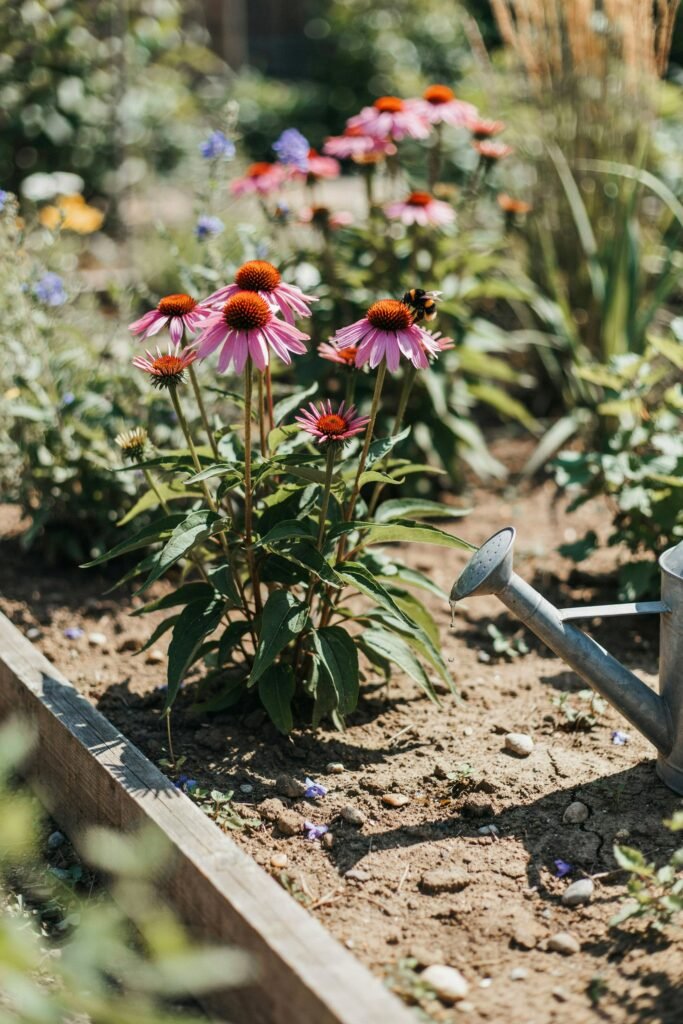
But coneflowers are relatively drought-tolerant once established, and constantly wet soil can be more problematic than allowing the soil to dry somewhat between waterings.
Before watering, check the soil.
If the surface is dry but the soil beneath is still comfortably moist, you may not need to water yet.
If the soil is dry deeper down and the plant is showing signs of drought stress, water thoroughly around the root zone.
This is another reason well-drained soil is so important.
A good summer habit
Rather than watering automatically every day, check your plants and the soil first.
Weather, soil type, plant age, and local conditions all affect how frequently your coneflowers need water.
12. Choose Long-Blooming Varieties and Create a Flowering-Friendly Garden

Sometimes the secret to a garden full of flowers isn’t simply what you do to the plant.
It’s what you plant around it.
Coneflowers already have a reputation for providing a long summer display, and there are many cultivars and hybrids available in different colors and forms.
When choosing plants, look for varieties suited to your climate and growing conditions.
You can also plant coneflowers alongside other long-blooming perennials so that your garden doesn’t depend on one plant to provide all the color.
For example, coneflowers can look beautiful alongside:
- Salvia
- Catmint
- Yarrow
- Bee balm
- Black-eyed Susans
- Ornamental grasses
- Russian sage
This creates layers of color and texture and gives pollinators more flowers to visit throughout the season.
My Simple Coneflower Summer-Care Routine
If you want to keep things easy, you don’t need a complicated schedule.
Here’s the routine I would follow:
Every few days
Check for faded flowers and deadhead those you want to encourage into another bloom.
Once a week
Look over the foliage for unusual spots, holes, insects, or distorted growth.
During dry weather
Check the soil before watering and give established plants a deep drink when they actually need it.
Throughout summer
Pull weeds before they become established and keep the area around the plants tidy.
Late summer into fall
Stop worrying about removing every spent flower. Leave some seedheads for birds and winter interest.
This simple routine can take just a few minutes, but it keeps you connected with what’s happening in your garden.
What If Your Coneflowers Aren’t Blooming?
If your coneflowers are producing lots of leaves but very few flowers, start with the basics.
Too much shade
This is one of the first things I would investigate.
Move the plant to a sunnier location if practical.
Too much fertilizer
Excessive feeding can encourage foliage instead of the flowering performance you’re looking for.
Poor drainage
Constantly wet soil can stress the roots and create unfavorable growing conditions.
Not enough water
Established coneflowers tolerate drought, but newly planted plants and plants experiencing prolonged extreme dryness may still need supplemental watering.
No deadheading
If your goal is to encourage additional flowers, regularly removing spent blooms can help.
Overcrowding
If your plants have become extremely crowded, they may benefit from being divided at an appropriate time.
A Few Coneflower Mistakes I’d Avoid
I’ve found that sometimes good gardening is just as much about knowing what not to do.
Don’t water on autopilot
Check the soil first.
Don’t constantly fertilize
More food doesn’t automatically mean more flowers.
Don’t remove every seedhead
Save some for birds and fall interest.
Don’t ignore sunlight
A beautiful plant in the wrong location can struggle to reach its flowering potential.
Don’t panic over a few damaged leaves
Inspect the entire plant before deciding there’s a serious problem.
Don’t make deadheading complicated
A pair of clean pruners and a few minutes is usually all you need.
The Secret to Longer-Lasting Coneflower Blooms
For me, the biggest lesson with coneflowers is that they don’t need constant attention.
They need the right conditions more than they need constant care.
Give them plenty of sunlight, well-drained soil, appropriate watering, enough space, and occasional deadheading. Then let them do what they naturally do best.
Coneflowers are wonderfully adaptable plants, and their ability to tolerate heat, drought, and less-than-perfect soil is part of their charm.
And don’t forget to enjoy the wildlife they bring with them.
Bees and butterflies can visit the flowers during summer, while mature seedheads can become a useful food source for birds later in the year.
So rather than trying to make your coneflowers bloom perfectly every single day, create conditions where they can thrive naturally.
A little sunshine, thoughtful watering, occasional deadheading, and a watchful eye can go a surprisingly long way.
Final Thoughts
Coneflowers are some of the easiest flowers to love in a summer garden. Their colorful petals brighten sunny borders, their sturdy stems make them wonderful cut flowers, and their blooms bring plenty of activity from pollinators.
If you want flowers to keep appearing throughout summer, focus on the basics first: sunlight, drainage, watering, spacing, and deadheading.
And when fall approaches, don’t feel like you have to clean everything up immediately. Leaving a few coneflower seedheads standing can give birds something to enjoy and add beautiful structure to the garden.
That balance between a little care and a little letting-go is exactly what makes coneflowers such a lovely choice for a relaxed, wildlife-friendly garden.
