
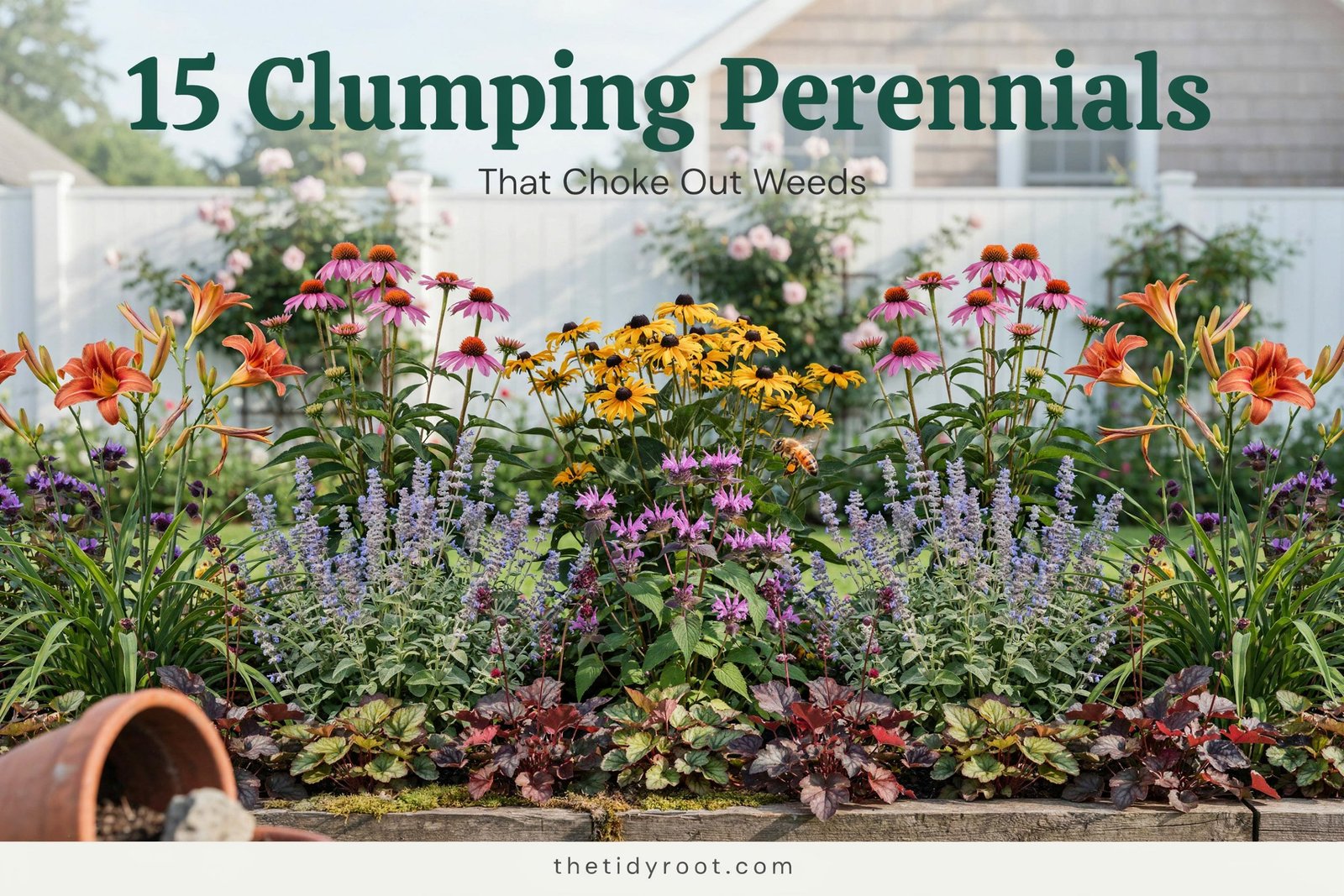

I used to think keeping a flower bed free of weeds meant spending every weekend pulling them out.
After a while, I realized the better approach was to let my plants do more of the work.
Once certain perennials become established, their thick foliage and spreading clumps cover the soil and leave fewer open spaces for weeds to take over.
That doesn’t mean your garden will become completely weed-free, but it can make a huge difference in how much maintenance it needs.
If you want a prettier garden with less bare soil and fewer weeds to pull, these 15 clumping perennials are wonderful places to start.
Why Clumping Perennials Are So Good at Suppressing Weeds
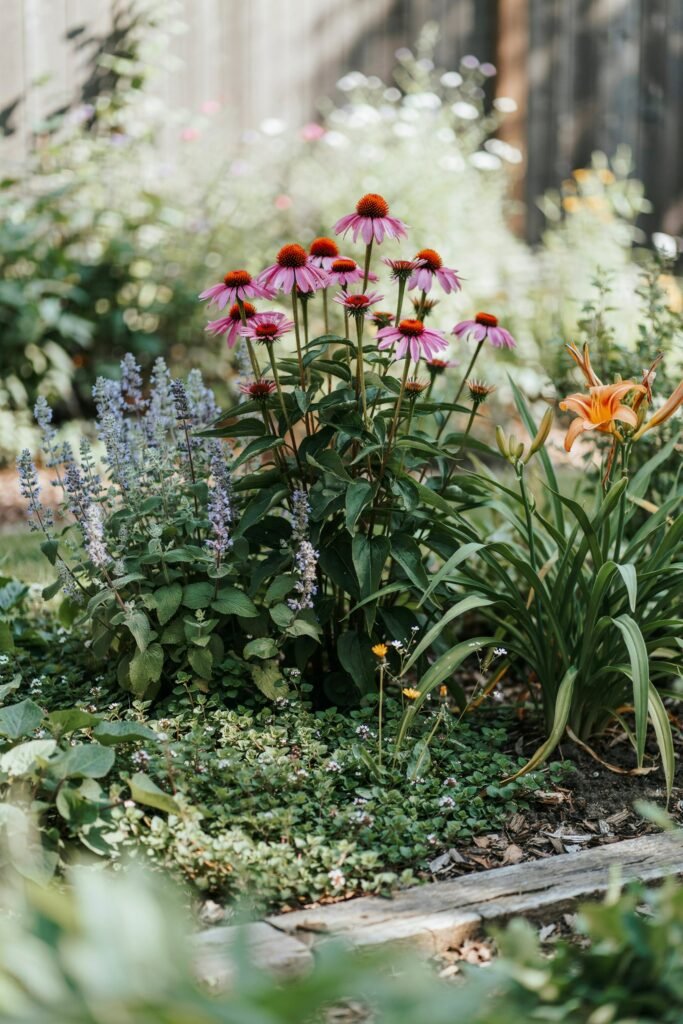
One of the easiest ways to encourage weeds is to leave large areas of bare soil. Weed seeds can settle there, receive sunlight, and quickly begin growing.
Clumping perennials work differently. As they mature, their leaves, stems, and roots occupy more of the available space. Their foliage shades the soil surface, while dense growth makes it harder for new weed seedlings to establish.
The RHS notes that good ground-cover plants are valued specifically because dense coverage can suppress the germination and development of weed seeds.
However, even excellent ground covers need some weeding while they are becoming established.
That’s an important point: these plants don’t magically eliminate every weed. Think of them as part of a low-maintenance weed-control strategy.
I especially like combining them with a layer of organic mulch. Mulch can cover the remaining gaps while your perennials are filling out, and it also helps reduce moisture loss from the soil.
1. Bee Balm (Monarda)
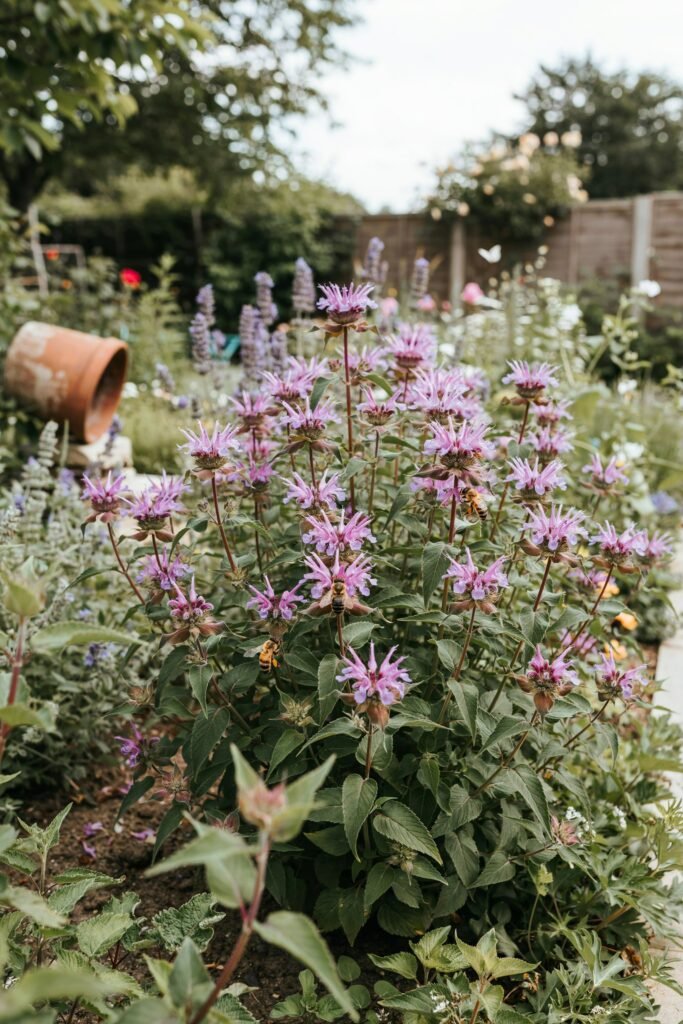
Bee balm is one of those plants I love when I want a garden to feel full, colorful, and alive.
It produces beautiful flowers in shades of pink, red, purple, and other tones depending on the variety. But the flowers aren’t its only advantage.
Bee balm develops vigorous clumps of foliage that can gradually occupy open areas around the garden.
Its flowers are also attractive to bees, butterflies, and other pollinators, making it useful for a wildlife-friendly garden.
Growing tips
- Light: Full sun to partial shade
- Soil: Moist but well-draining
- Spacing: About 18–24 inches apart
- Water: Keep consistently watered while establishing
- Maintenance: Divide overcrowded clumps every few years
Give bee balm enough room to grow and avoid planting it where poor air circulation is likely to be a problem.
Best for: Sunny cottage gardens, pollinator beds, and perennial borders.
2. Coneflower (Echinacea)
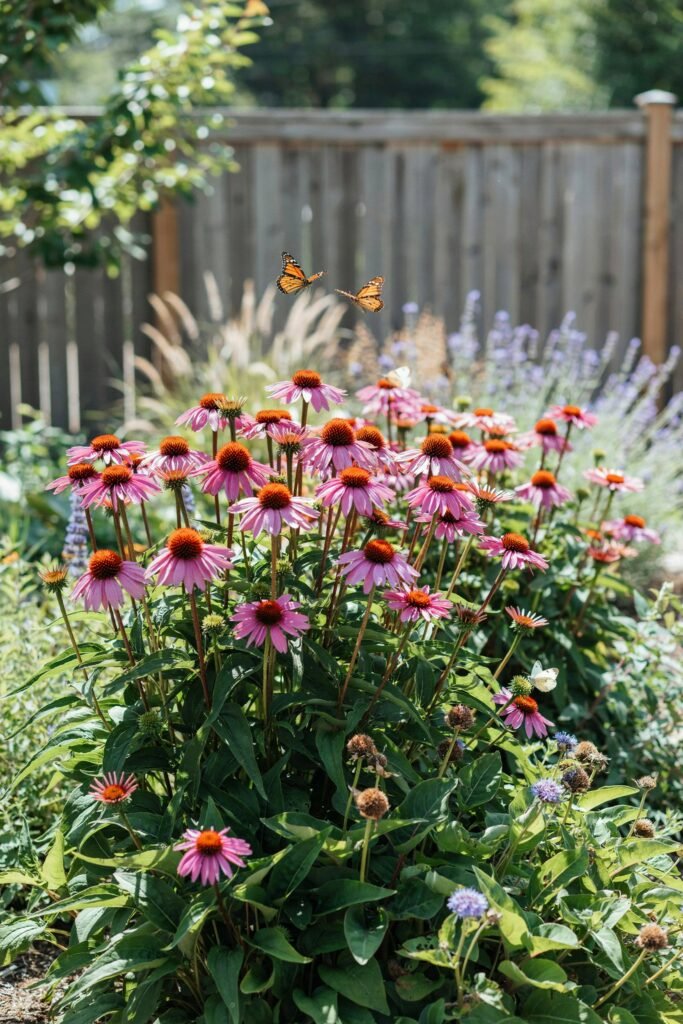
Coneflowers are beautiful, tough, and surprisingly easy to grow.
Their upright stems rise above dense foliage, creating a lovely combination of texture and height. Once established, coneflowers can handle periods of dry weather and continue producing flowers when some other perennials begin to struggle.
The foliage and overall clumping habit help reduce the amount of exposed soil available for weeds.
I particularly like coneflowers because they don’t make a garden look like you’re trying to control weeds. Instead, you simply get a colorful perennial display.
Growing tips
- Light: Full sun
- Soil: Well-draining soil
- Spacing: About 1–3 feet depending on variety
- Water: Water deeply while establishing
- Maintenance: Remove spent flowers if you want to encourage additional blooms
Coneflowers can also provide valuable food sources for pollinators.
Best for: Sunny borders, prairie-style gardens, and low-maintenance landscapes.
3. Black-Eyed Susan (Rudbeckia)
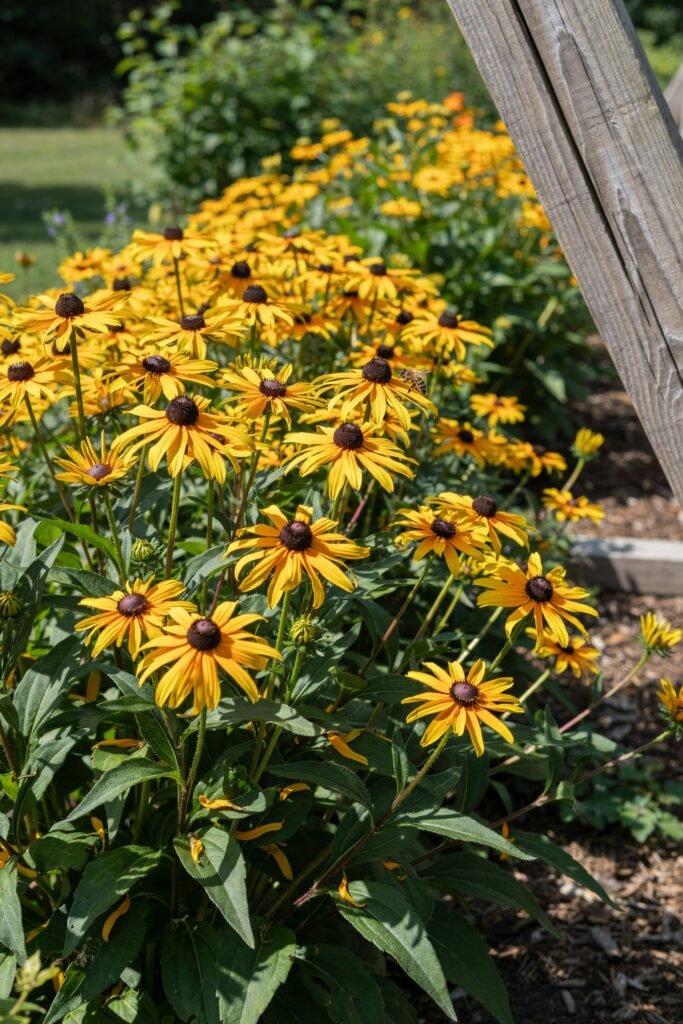
If you want a perennial that brings a cheerful splash of yellow to the garden, Black-Eyed Susan is hard to beat.
Its golden flowers with dark centers are instantly recognizable, but the plant also develops substantial growth that can help fill empty spaces.
As clumps become established, they can make it more difficult for weeds to compete for light and room.
Black-Eyed Susan is also relatively forgiving about soil conditions, making it a useful choice for gardeners who don’t have perfect soil.
Growing tips
- Light: Full sun to light shade
- Soil: Tolerates a variety of soils
- Spacing: Around 18–30 inches
- Water: Water regularly during the first season
- Maintenance: Divide crowded plants when necessary
Don’t be afraid to leave some spent flowers toward the end of the season if you’d like to provide interest for birds.
Best for: Sunny flower beds, wildlife gardens, and beginner-friendly landscapes.
4. Cranesbill (Hardy Geranium)
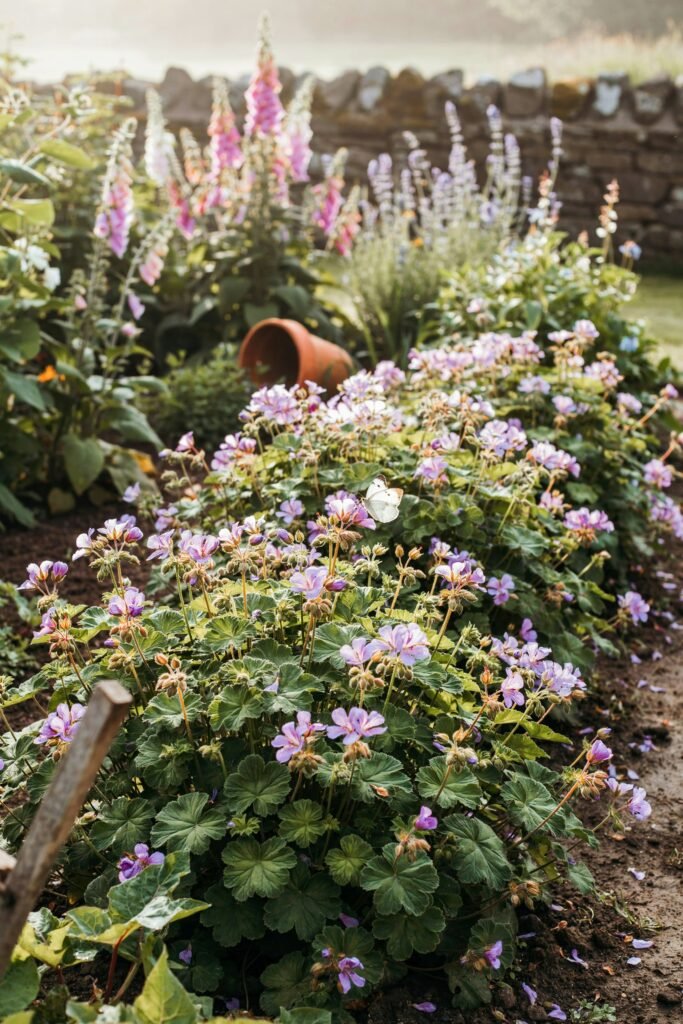
Hardy geraniums are completely different from the tender geraniums commonly grown in containers, and they’re wonderful garden workhorses.
Cranesbill forms attractive mounds of foliage that can spread outward and cover the soil. Depending on the variety, flowers may appear in shades of pink, purple, blue, or white.
I especially like these for areas where I want a softer, more natural-looking ground layer.
Growing tips
- Light: Full sun to partial shade
- Soil: Well-draining soil
- Spacing: About 12–18 inches
- Water: Water regularly while establishing
- Maintenance: Trim after flowering if the plant becomes untidy
Hardy geraniums are particularly useful around taller perennials because they can fill the lower part of the planting.
Best for: Borders, cottage gardens, slopes, and areas beneath taller plants.
5. Daylily (Hemerocallis)
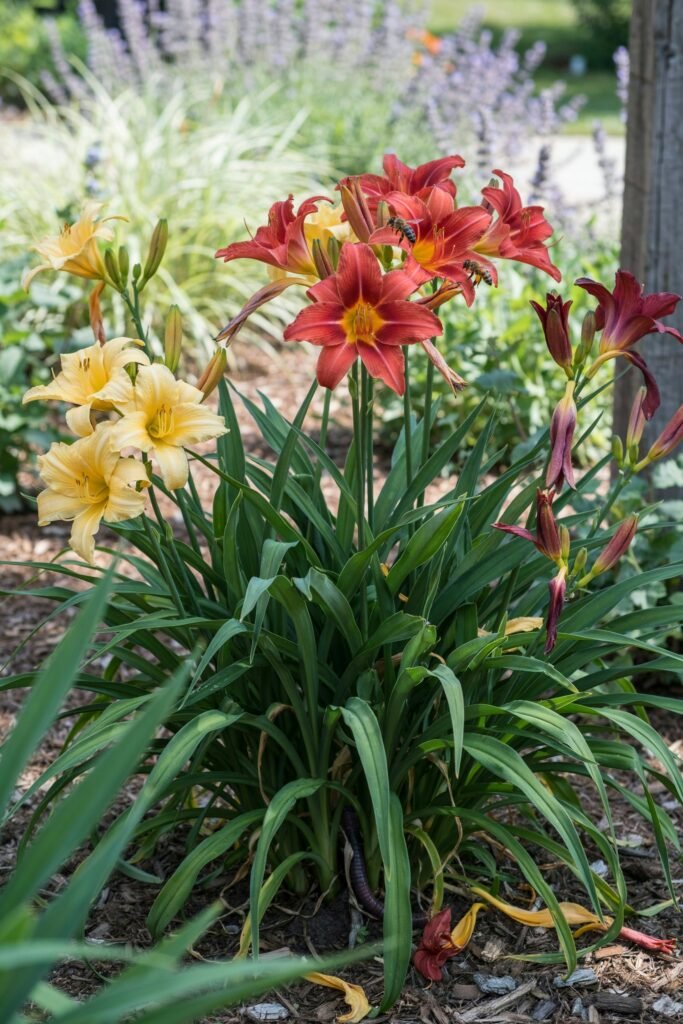
Daylilies are one of my favorite choices when I need something tough and dependable.
Their long, strap-like leaves grow in thick clumps, creating a dense layer close to the ground. Once several plants have established themselves, the foliage can cover a surprisingly large area.
They also come in an enormous range of flower colors.
Daylilies aren’t fussy about much, although they perform best when given enough sunlight and reasonable drainage.
Growing tips
- Light: Full sun to light shade
- Soil: Most reasonably fertile garden soils
- Spacing: About 18–24 inches
- Water: Water deeply during establishment and dry periods
- Maintenance: Divide crowded clumps every few years
If your garden has an area where you don’t want to spend hours weeding, daylilies can be an excellent choice.
Best for: Slopes, borders, driveways, and low-maintenance beds.
6. Stonecrop (Sedum)
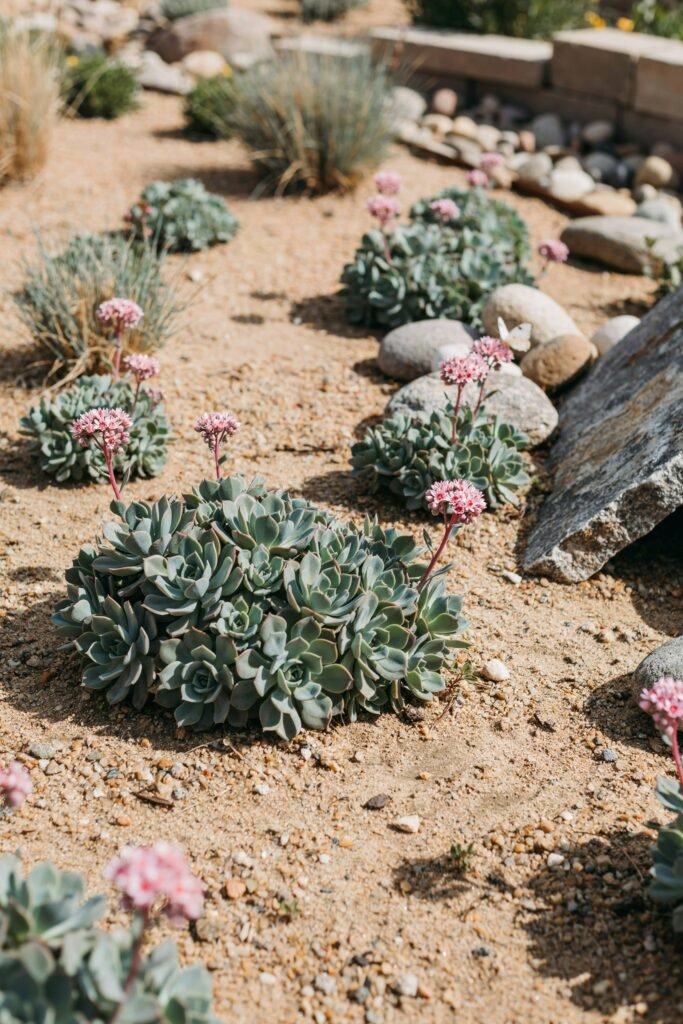
For hot, sunny areas where many plants struggle, stonecrop is one of the first perennials I’d consider.
Sedums vary considerably in size. Some are low-growing and spreading, while others form upright clumps. Many have thick, fleshy leaves that allow them to tolerate dry conditions once established.
Their dense growth can help cover the soil and reduce the amount of space available for weeds.
Growing tips
- Light: Full sun
- Soil: Very well-draining
- Water: Moderate during establishment, then less once established
- Spacing: Depends heavily on the variety
- Maintenance: Remove old growth in early spring if needed
One of the biggest mistakes with sedum is giving it soil that stays constantly wet. Good drainage is much more important than rich, soggy soil.
Best for: Rock gardens, sunny slopes, dry beds, and hot locations.
7. Catmint (Nepeta)
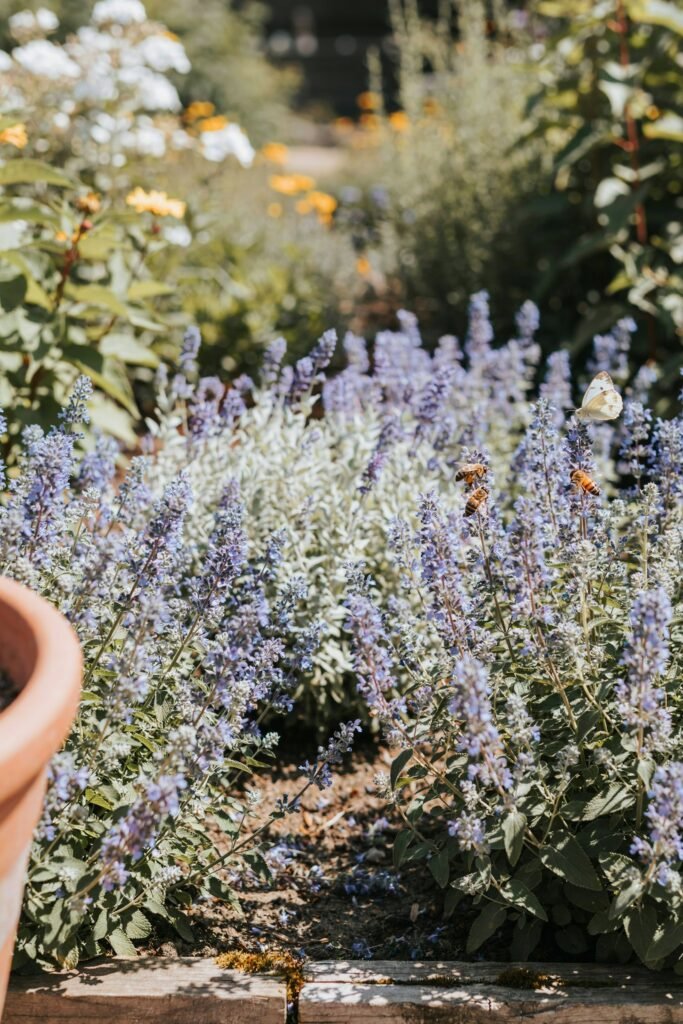
Catmint brings together several qualities I love in a garden plant: pretty flowers, attractive foliage, fragrance, and a long blooming season.
Its soft gray-green foliage develops into rounded, bushy clumps. The lavender-blue flowers add beautiful color and attract pollinators.
Catmint is also useful where you want to reduce weeds without creating a garden that requires constant watering.
The RHS specifically notes that Nepeta can provide ground cover while helping suppress weeds and reduce water loss from the soil surface.
Growing tips
- Light: Full sun
- Soil: Well-draining
- Water: Regularly until established
- Spacing: Around 18–24 inches
- Maintenance: Cut back after the first major flowering period
Don’t plant it in constantly wet soil.
Best for: Sunny borders, dry gardens, pollinator beds, and cottage-style landscapes.
8. Blazing Star (Liatris)
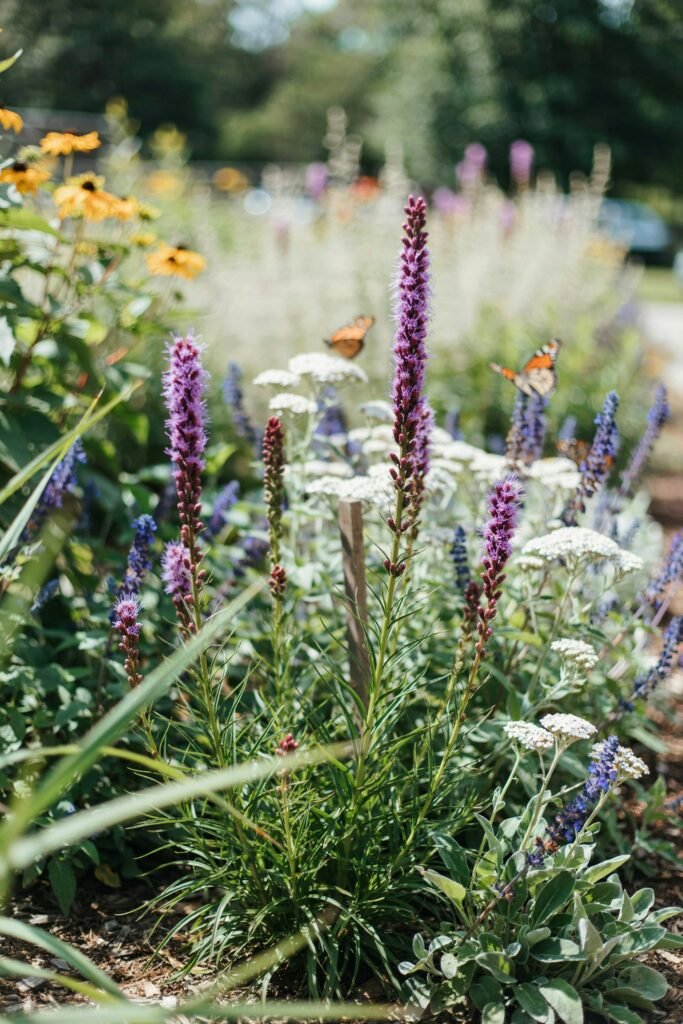
Blazing star is a wonderful choice when you want a weed-suppressing perennial but don’t want everything in your garden to stay low.
Its tall flower spikes add vertical interest while the plant grows from a clumping base.
The purple flowers are particularly attractive to pollinators, so you get beauty and wildlife value at the same time.
Growing tips
- Light: Full sun
- Soil: Well-draining
- Spacing: Around 12–15 inches
- Water: Water deeply while establishing
- Maintenance: Avoid keeping the soil constantly wet
Because blazing star grows upward, it works particularly well when combined with lower-growing plants that cover the soil beneath it.
Best for: Pollinator gardens, prairie-style borders, and sunny perennial beds.
9. Coral Bells (Heuchera)
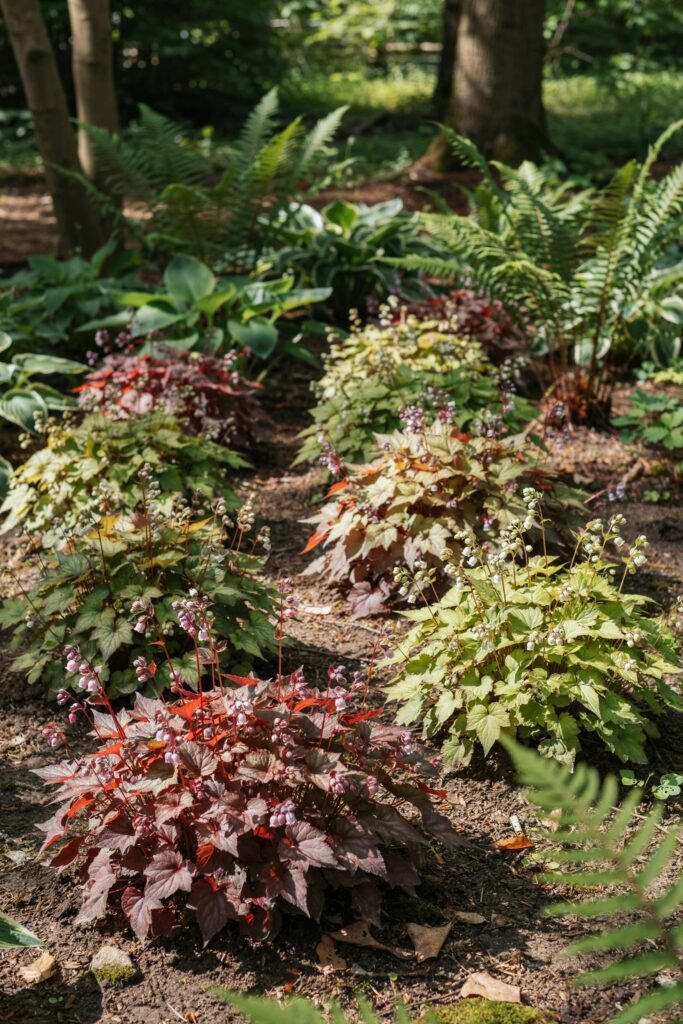
If you have a shady garden, coral bells should definitely be on your list.
Their biggest attraction isn’t necessarily the flowers. It’s the foliage.
Depending on the variety, the leaves may be green, burgundy, purple, bronze, silver, or lime-colored. These leaves form attractive mounds that help cover exposed soil.
This makes coral bells especially useful for filling spaces beneath trees or along shady borders.
Growing tips
- Light: Partial shade to shade, depending on variety
- Soil: Rich and well-draining
- Water: Keep evenly moist while establishing
- Spacing: Around 12–18 inches
- Maintenance: Remove tired foliage as needed
Avoid planting them where water constantly sits around the crown.
Best for: Shade gardens, woodland borders, and spaces beneath taller plants.
10. Garden Phlox (Phlox paniculata)
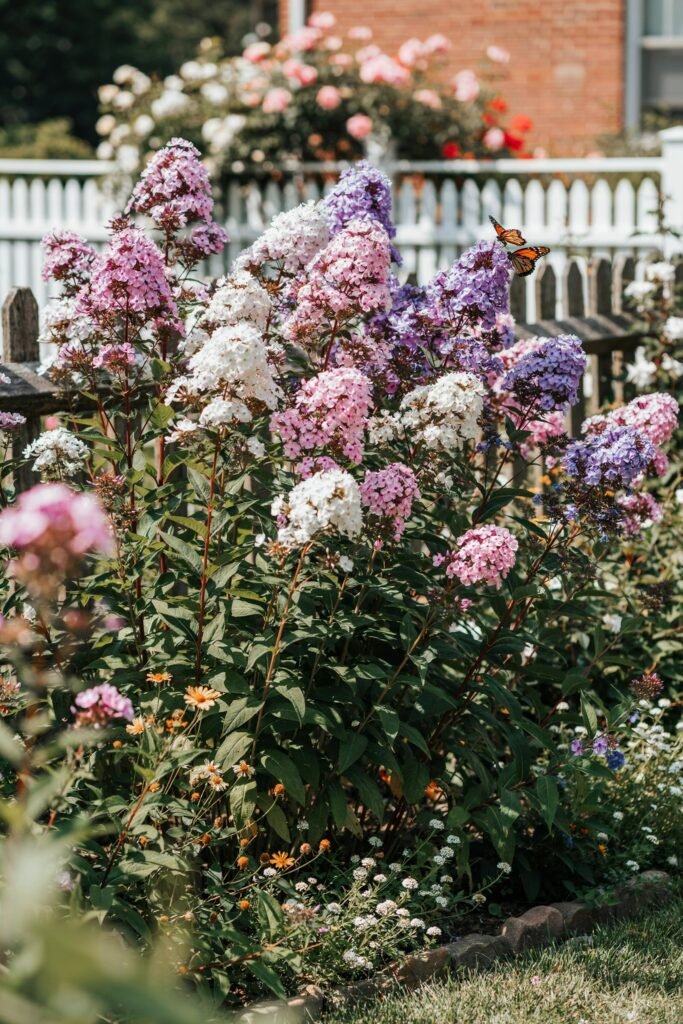
Garden phlox is best known for its beautiful clusters of fragrant flowers, but its dense growth also makes it useful for filling perennial beds.
It develops upright clumps and can reach considerable height, so it works especially well toward the middle or back of a border.
I like combining garden phlox with lower-growing perennials around its base. That way, you can cover several layers of the garden instead of leaving bare soil underneath.
Growing tips
- Light: Full sun to partial shade
- Soil: Fertile and well-draining
- Water: Keep evenly watered during dry weather
- Spacing: Around 18–24 inches
- Maintenance: Provide good air circulation
Good spacing is particularly important because crowded foliage can encourage disease problems.
Best for: Cottage gardens, cutting gardens, and traditional perennial borders.
11. Astilbe
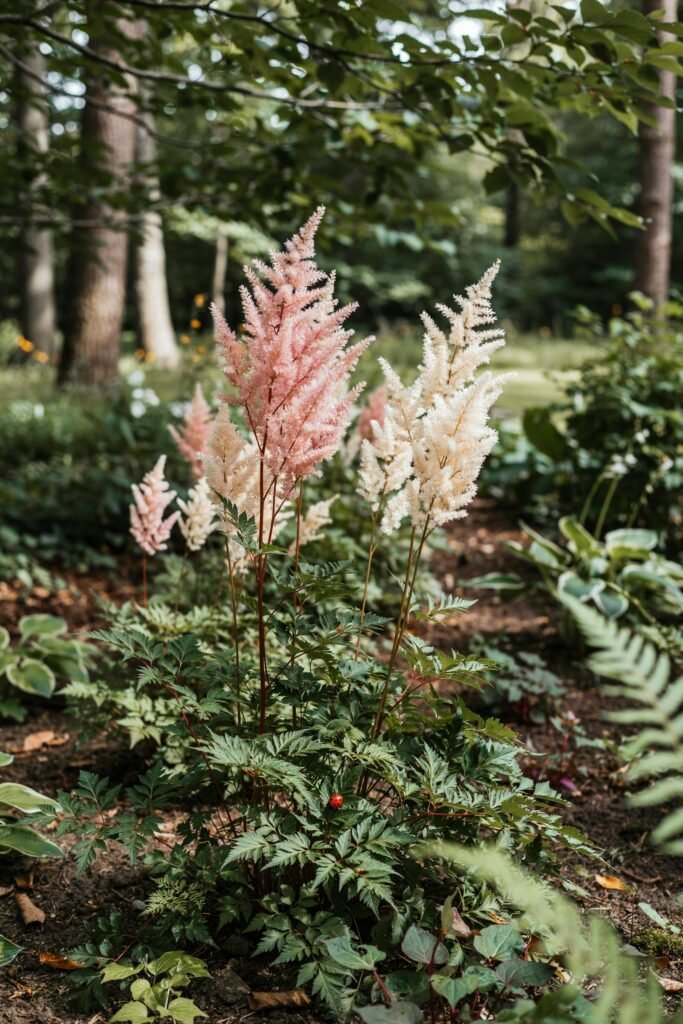
Astilbe is another beautiful option for shady or partially shaded gardens.
Its fern-like foliage creates a soft, full appearance, while its feathery flower plumes add height and color.
Unlike some sun-loving weed-suppressing plants, astilbe prefers consistent moisture. That makes it a good candidate for a shady garden bed where the soil doesn’t dry out quickly.
Growing tips
- Light: Partial to full shade
- Soil: Rich and moisture-retentive but well-draining
- Water: Water regularly
- Spacing: Around 18–24 inches
- Maintenance: Divide overcrowded plants every few years
Astilbe isn’t the plant I’d choose for a hot, dry location. Matching the plant to the conditions is what makes weed-suppressing plantings successful.
Best for: Woodland gardens, shady borders, and moist garden beds.
12. Hosta
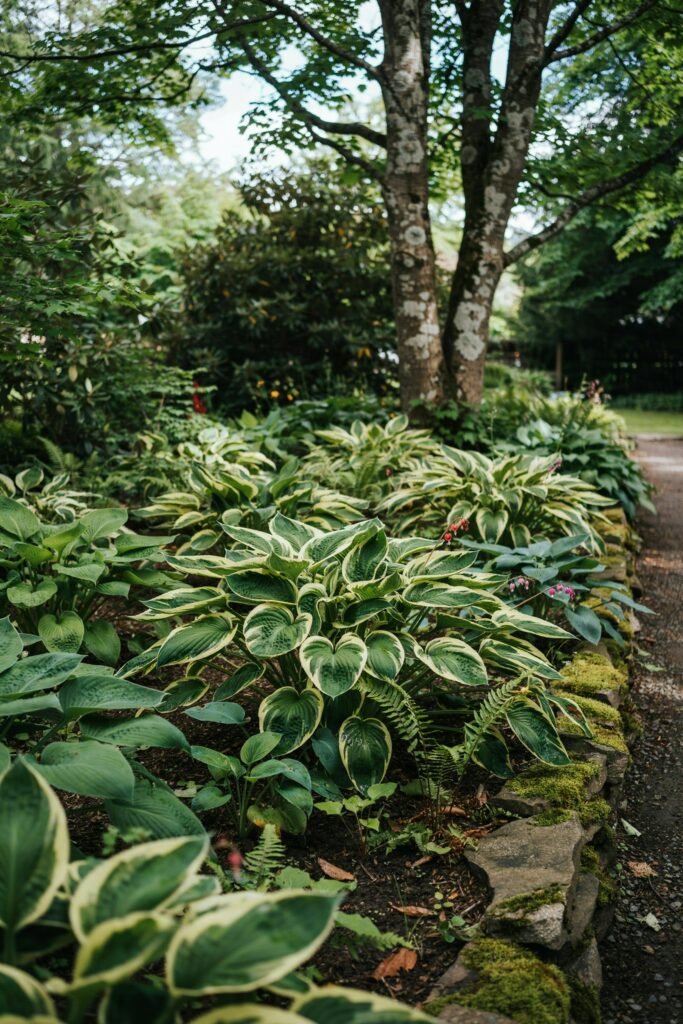
Hostas are almost made for covering bare ground in shady gardens.
Their large leaves overlap as the plants mature, creating a dense canopy over the soil. Some varieties are small and neat, while others become quite large.
The RHS also highlights hostas as particularly effective ground covers, noting that their overlapping leaves can create dense coverage that weeds have difficulty penetrating.
Growing tips
- Light: Partial to full shade
- Soil: Rich, fertile, and well-draining
- Water: Keep evenly watered
- Spacing: Depends on mature size
- Maintenance: Remove damaged foliage and divide only when necessary
One thing to remember is that hostas can be attractive to slugs and snails in suitable conditions, so keep an eye on the foliage.
Best for: Shade gardens, woodland beds, and underneath trees.
13. Tickseed (Coreopsis)
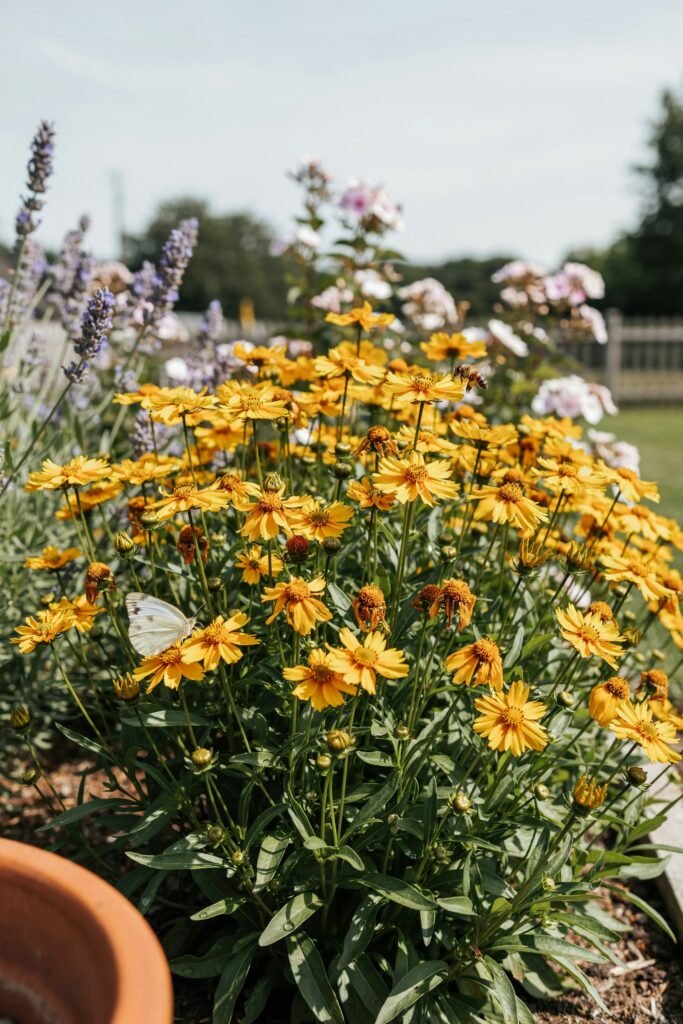
Tickseed is a cheerful perennial that can bring months of bright color to a sunny garden.
Its daisy-like flowers are usually yellow, although different varieties can offer other colors. The foliage forms a reasonably dense clump that helps fill open soil.
It’s also a useful option for gardeners who want plants that can handle periods of dryness once established.
Growing tips
- Light: Full sun
- Soil: Well-draining
- Spacing: Around 12–18 inches
- Water: Regularly during establishment
- Maintenance: Deadhead if you want to encourage more flowers
Plant several together rather than scattering single plants throughout a large bed. A group of plants will cover the ground more effectively as it matures.
Best for: Sunny borders, pollinator gardens, and drought-tolerant landscapes.
14. Salvia
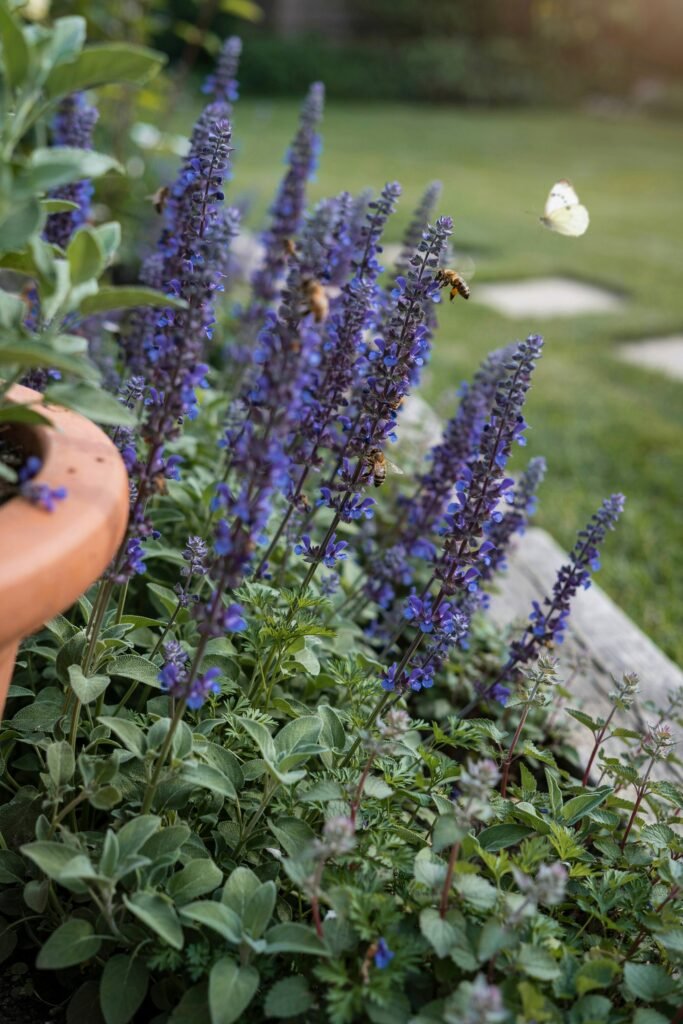
Salvia is another excellent plant for sunny, relatively dry areas.
Depending on the variety, salvias can have purple, blue, pink, red, or white flowers. Their aromatic foliage is another attractive feature.
The plants generally form upright or mounding growth that can help reduce exposed soil around the base.
Growing tips
- Light: Full sun
- Soil: Well-draining
- Water: Deeply during establishment, then according to conditions
- Spacing: About 12–24 inches depending on variety
- Maintenance: Prune lightly to encourage fresh growth
Be sure to check the specific salvia variety you’re buying because mature size and hardiness can vary considerably.
Best for: Sunny borders, herb gardens, pollinator gardens, and dry areas.
15. Lenten Rose (Helleborus)
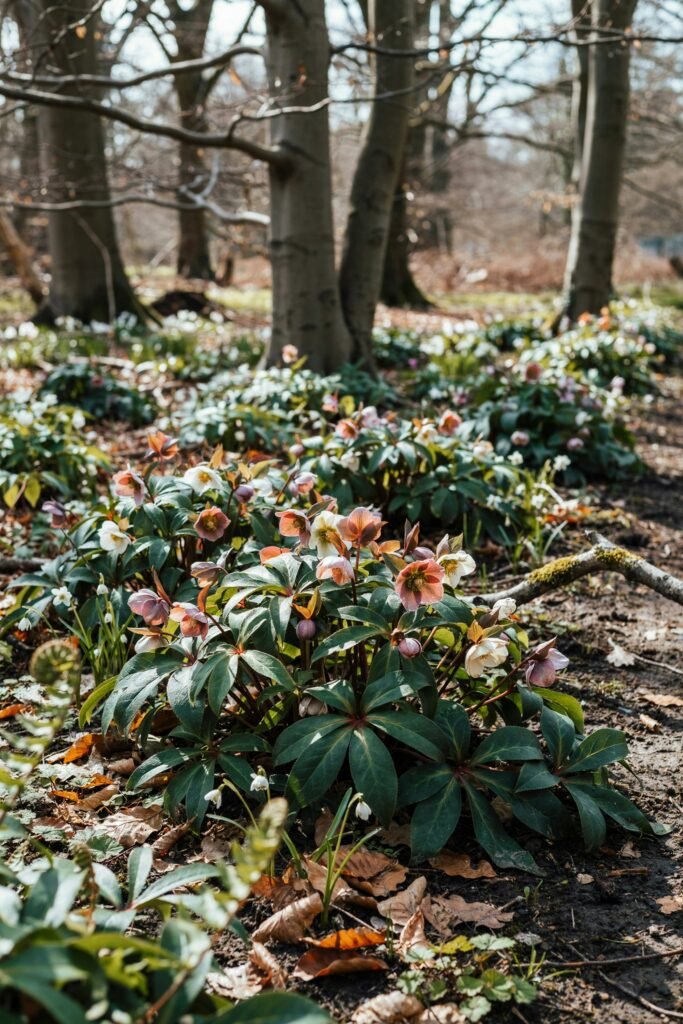
If you have a shady garden and want something that provides interest when many other perennials are dormant, Lenten rose is worth considering.
Its leathery evergreen foliage forms attractive clumps and helps keep soil covered for much of the year.
The flowers appear during late winter or early spring in many climates, giving the garden a welcome burst of color before the main growing season begins.
Growing tips
- Light: Partial shade to shade
- Soil: Rich and well-draining
- Water: Keep watered while establishing
- Spacing: Around 12–18 inches
- Maintenance: Remove old foliage when appropriate to reveal new growth
Because the foliage remains for much of the year, Lenten rose can provide longer-lasting soil coverage than many herbaceous perennials.
Best for: Woodland gardens, shady borders, and areas beneath deciduous trees.
How to Make These Perennials Better at Choking Out Weeds
Choosing the right plants is only half the job. How you plant them matters too.
1. Start with a Weed-Free Bed
Before planting, remove as many existing weeds as possible.
This is especially important if you’re dealing with established perennial weeds. The RHS recommends methods such as hand removal, repeated cutting, and smothering depending on the type of weed.
Don’t simply plant your new perennials directly into a bed full of established weeds and expect them to win immediately.
2. Don’t Leave Huge Gaps
Spacing is important.
If you plant everything extremely far apart, weeds will have plenty of room to grow between your perennials.
On the other hand, don’t automatically plant everything extremely close together. Follow the mature size of the particular variety you’re growing.
As the plants mature, their foliage should gradually close the gaps.
3. Use Mulch While Plants Establish
Mulch is especially helpful during the first year or two.
A layer of organic mulch can cover bare soil between young plants while they’re still small. The RHS recommends mulch as one of the useful methods for reducing weed growth and conserving soil moisture.
Just keep mulch from piling directly against plant crowns or stems.
4. Water Properly
Young perennials need consistent moisture while they’re establishing their roots.
Once established, watering requirements depend on the plant.
For example, sedum and catmint generally prefer drier conditions, while astilbe and some hostas appreciate more consistent moisture.
The easiest mistake to make is treating every perennial the same.
5. Choose Plants for the Right Light
This is one of the most important things you can do.
A shade-loving plant won’t suddenly become a great ground cover in blazing afternoon sun simply because you want it to cover weeds.
Likewise, a drought-tolerant sun perennial may struggle in a constantly wet, shady corner.
The best weed-suppressing perennial is ultimately the one that thrives in the conditions you already have.
Can Clumping Perennials Completely Eliminate Weeds?
Not completely.
I think it’s better to think of these plants as weed suppressors rather than weed killers.
Even dense plantings can have occasional weeds, especially around the edges or during the establishment period.
The goal is to reduce the amount of bare soil and sunlight available to weeds, which can make routine maintenance much easier.
The RHS similarly points out that some weed control is still needed while young ground-cover plants become established.
Once your perennials have filled in, you may find yourself doing much less weeding than you did when the bed was mostly bare.
How to Choose the Best Ones for Your Garden
Rather than planting all 15, I would choose plants according to the conditions in each part of your garden.
For sunny, dry areas:
- Stonecrop
- Catmint
- Coneflower
- Tickseed
- Salvia
For sunny flower borders:
- Bee balm
- Black-Eyed Susan
- Coneflower
- Garden phlox
- Blazing star
For shady areas:
- Hostas
- Coral bells
- Astilbe
- Lenten rose
For a softer cottage-garden look:
- Cranesbill
- Catmint
- Bee balm
- Coneflower
- Garden phlox
For attracting pollinators:
- Bee balm
- Coneflower
- Black-Eyed Susan
- Catmint
- Blazing star
- Tickseed
- Salvia
My Favorite Way to Use Them
One of my favorite approaches is to combine different heights and textures instead of filling an entire bed with one plant.
For example, you could use hostas or coral bells as the lower layer in a shady bed, then place taller astilbe behind them.
In a sunny border, you could combine catmint around the front, coneflowers through the middle, and blazing star toward the back.
This creates a fuller garden while also reducing the amount of exposed soil.
And that’s really the secret.
The goal isn’t simply to plant something that grows aggressively. It’s to create a garden where desirable plants occupy the space that weeds would otherwise take over.
Final Thoughts
If you’re tired of constantly pulling weeds, I wouldn’t start by reaching for stronger weed-control products. I’d start by looking at how much bare soil your garden has and which plants could naturally fill those spaces.
Clumping perennials can make a garden look fuller, provide flowers and foliage, support pollinators, and reduce the opportunities weeds have to establish.
They aren’t a magic solution, and young plants still need some attention, but once they mature, they can take over much of the ground-covering work for you.
My favorites for sunny gardens would be catmint, coneflower, stonecrop, and cranesbill, while hostas, coral bells, astilbe, and Lenten rose are wonderful choices for shade.
Choose plants that match your soil, sunlight, moisture, and climate, give them room to establish, and use mulch to cover the gaps in the meantime. Before long, you’ll have a garden that looks lush and intentional—and hopefully a lot less time spent kneeling down and pulling weeds.
