
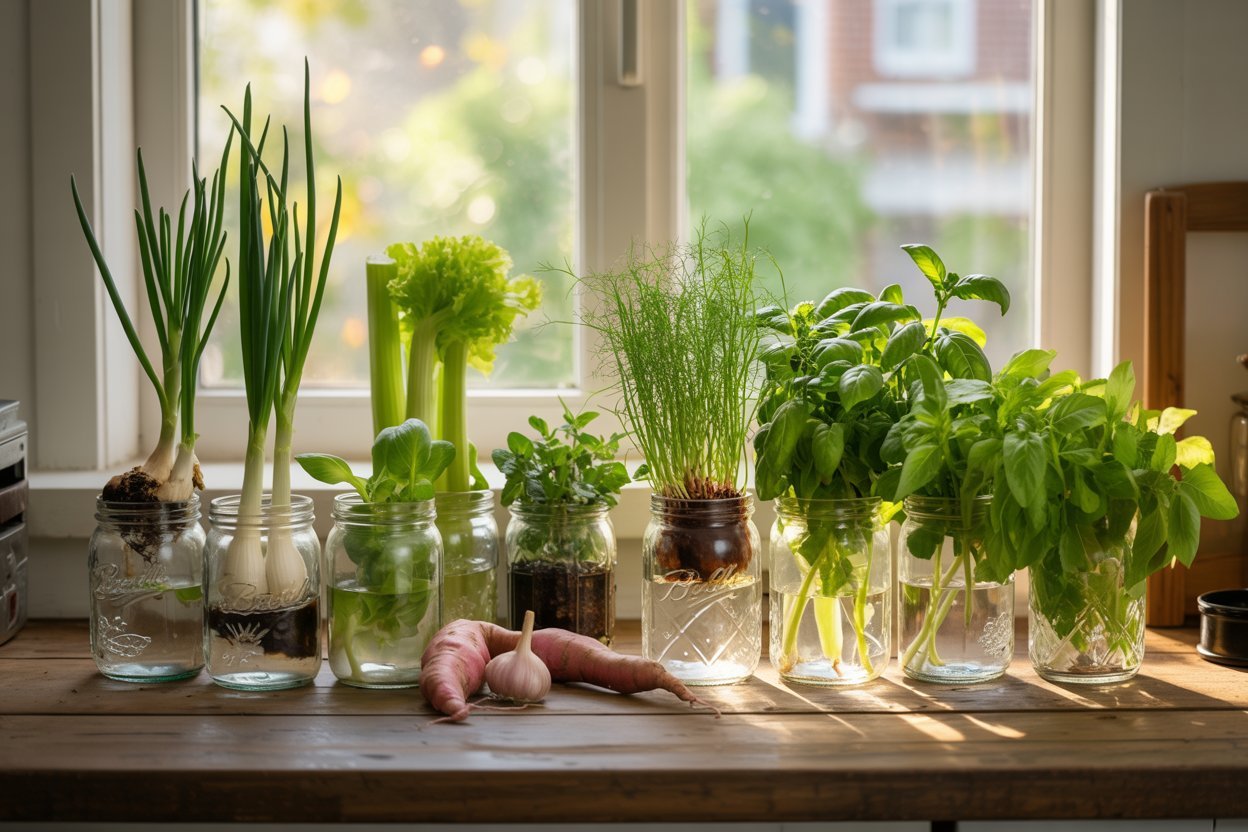

Throwing away vegetable scraps can feel wasteful, especially when many of them can grow all over again with nothing more than a little water, sunlight, and patience.
Regrowing food from kitchen scraps is one of the simplest ways to save money, reduce waste, and bring a touch of greenery into your home.
Even if you don’t have a garden, you can still regrow fresh herbs and vegetables right on your kitchen windowsill.
Some plants will produce new leaves in just a few days, while others can eventually be transferred into soil for a larger harvest.
This guide walks you through 15 Foods That Regrow With Water: Easy Kitchen Scraps You Can Grow Again, including step-by-step instructions, care tips, common mistakes to avoid, and helpful advice to get the best results.
Why Regrowing Food in Water Is Worth Trying
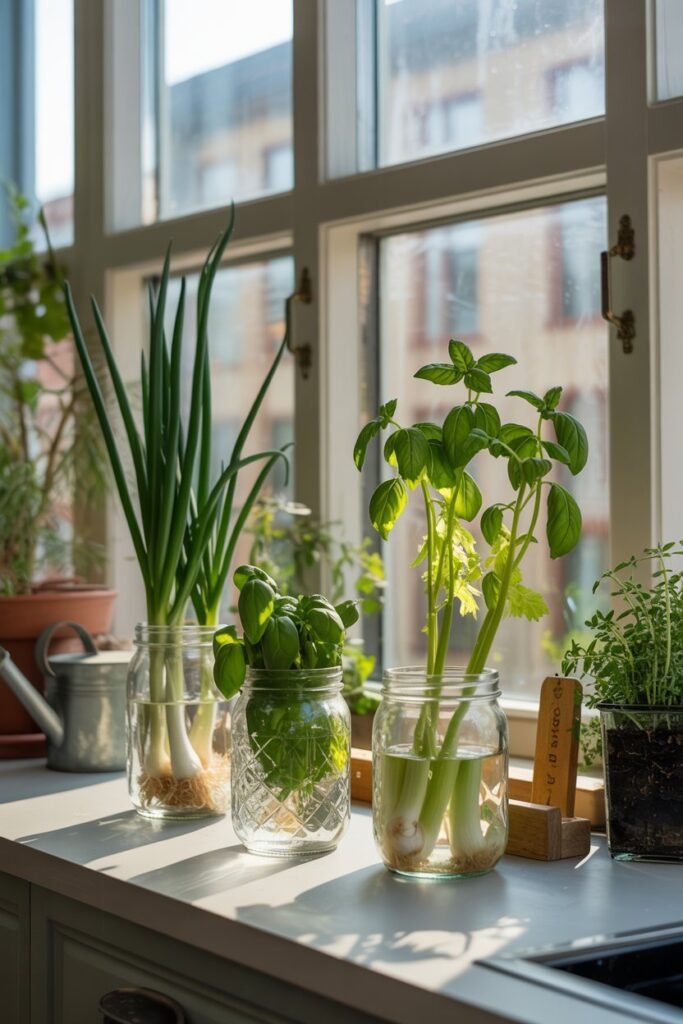
Regrowing vegetables from scraps is more than just a fun experiment. It has several practical benefits that make it worth trying.
Helps Reduce Food Waste
Instead of throwing away stems, roots, and scraps, you give them a second life. This small habit can significantly cut down kitchen waste over time.
Saves Money
Fresh herbs and vegetables can become expensive, especially if you buy them often. Regrowing them at home gives you fresh produce without constantly spending money.
Perfect for Small Spaces
You don’t need a backyard garden to regrow food. A sunny windowsill, balcony, or countertop is often enough.
Great for Beginners
Many of these plants are extremely forgiving and easy to grow, making them ideal for beginners and even kids.
Encourages Sustainable Living
Growing your own food, even in small amounts, helps create a more eco-friendly lifestyle and makes you more mindful about consumption.
What You Need to Start Regrowing Food in Water
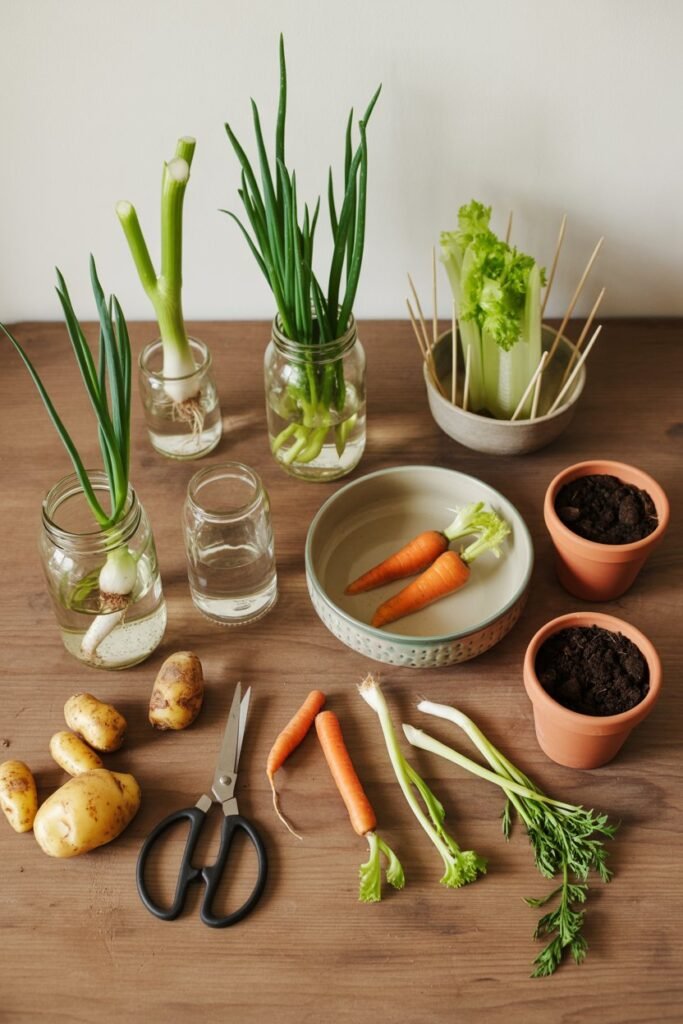
Before you begin, gather a few simple supplies.
- Clear jars, bowls, or glasses
- Fresh water
- Sharp knife
- Sunny window or grow light
- Toothpicks (for avocado)
- Small pots with soil for transplanting later
Most regrowing vegetables need:
- Bright indirect sunlight
- Clean water changed every 2–3 days
- A warm indoor environment
- Patience and consistent care
1. Green Onions
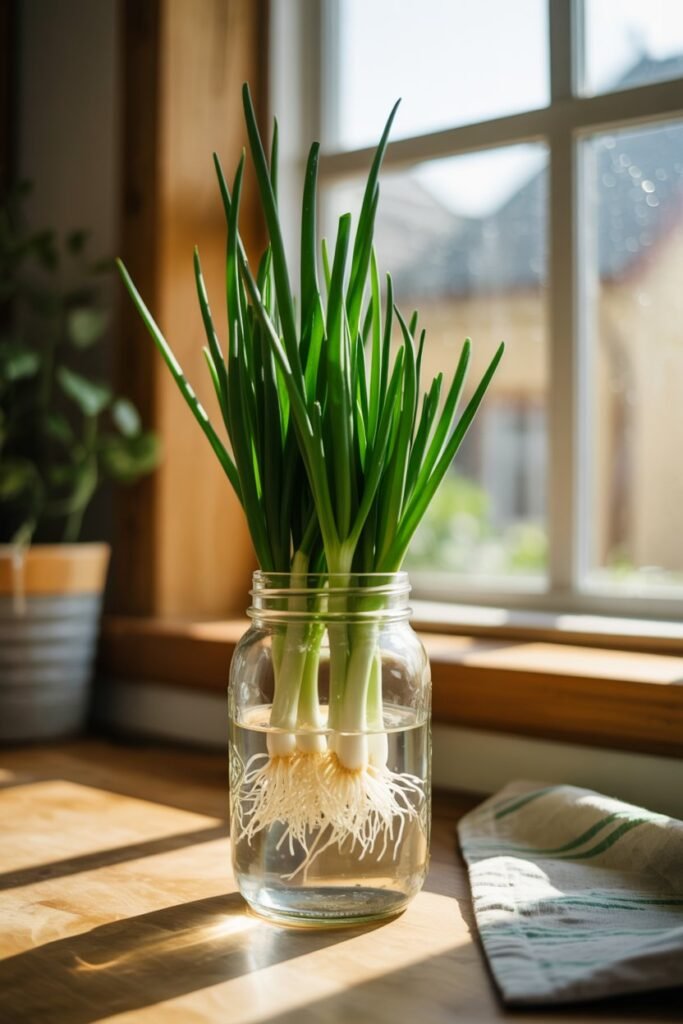
Green onions are one of the fastest and easiest vegetables to regrow in water. They grow so quickly that you can often see noticeable changes overnight.
If you regularly buy green onions for soups, salads, noodles, or stir-fries, regrowing them can save you money while giving you a constant supply of fresh greens.
Why Green Onions Regrow So Easily
The white bulb at the bottom of green onions contains active root tissue and stored energy. As long as the roots remain attached, the plant can continue producing new green shoots.
Step-by-Step Guide to Regrow Green Onions
- Cut the green onions about 1–2 inches above the roots.
- Save the white root ends.
- Place them upright in a small glass or jar.
- Add enough water to cover the roots but not the entire bulb.
- Put the container on a sunny windowsill.
Within 2–3 days, you’ll notice fresh green shoots growing upward.
How to Care for Green Onions in Water
- Change the water every two days to prevent bacteria.
- Rinse the roots occasionally.
- Keep them in bright indirect sunlight.
- Avoid overcrowding multiple onions in one small jar.
When to Harvest
You can trim the green tops once they reach about 6–8 inches tall. Leave the white base intact so the onions continue growing.
Common Problems
Slimy Roots
This usually happens when the water is not changed frequently enough.
Weak Growth
Green onions need sunlight. Move them to a brighter location if growth slows.
Extra Tip
After several weeks, transfer the onions into soil for thicker, healthier growth and an even longer harvest cycle.
2. Romaine Lettuce
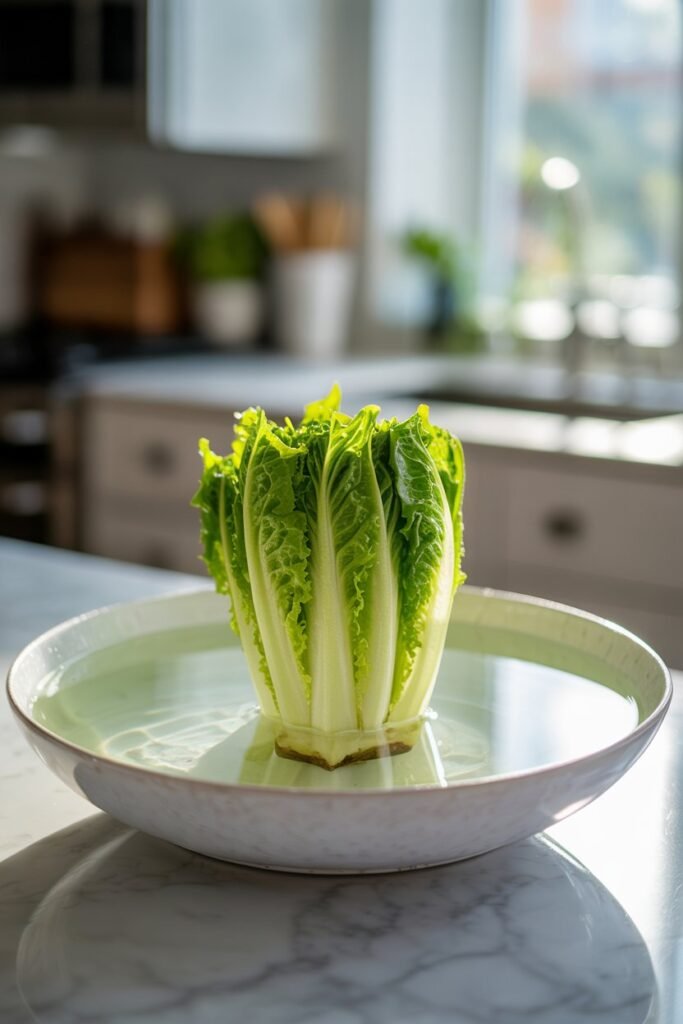
Romaine lettuce is incredibly easy to regrow from scraps. While it won’t form a full new head exactly like the original, it produces tender fresh leaves that are perfect for sandwiches, wraps, and salads.
Why Lettuce Can Regrow
The base of romaine lettuce still contains living cells capable of producing new leaves. Once placed in water, the center begins regenerating.
How to Regrow Romaine Lettuce
- Cut off the bottom 2 inches of the lettuce head.
- Place the base in a shallow bowl.
- Add about half an inch of water.
- Place near bright sunlight.
Within several days, tiny leaves will emerge from the center.
Caring for Regrowing Lettuce
- Change the water every 1–2 days.
- Rotate the bowl occasionally for even sunlight.
- Keep the lettuce cool since excessive heat can cause bitterness.
How Long It Takes
Most lettuce begins showing new growth within 4–7 days.
Best Way to Use It
Regrown lettuce is best harvested young because the leaves stay tender and flavorful.
Common Mistakes
Too Much Water
Submerging the entire base can cause rot.
Not Enough Light
Without sunlight, growth becomes weak and pale.
3. Celery
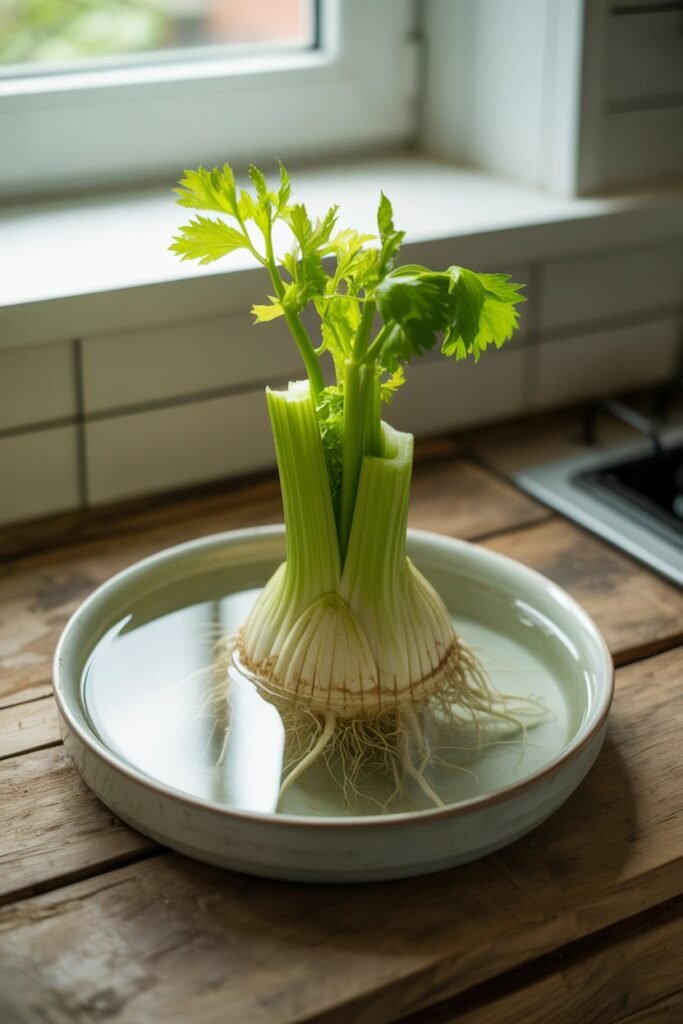
Celery is one of the most rewarding vegetables to regrow because the transformation happens quickly and visibly.
Why Celery Regrows Well
The base of celery contains the plant’s growing center. Once placed in water, it begins producing new leaves from the middle.
Step-by-Step Instructions
- Cut off the celery base, leaving about 2 inches.
- Place it in a shallow bowl with warm water.
- Keep the bowl in bright sunlight.
- Refill and replace water regularly.
Tiny yellow-green leaves often appear within a week.
What Happens Next
As the center grows, small roots begin forming underneath the base.
Moving Celery to Soil
Once roots become visible:
- Plant the base in potting soil.
- Keep the soil moist.
- Continue giving it sunlight.
This allows the celery to develop into a fuller plant.
Helpful Tips
- Use a shallow bowl instead of a deep jar.
- Warm temperatures encourage faster growth.
- Remove any soft or mushy sections immediately.
Common Problems
Rotting Bottom
This happens if the water becomes stagnant.
Drying Out
Celery needs consistent moisture to thrive.
4. Garlic
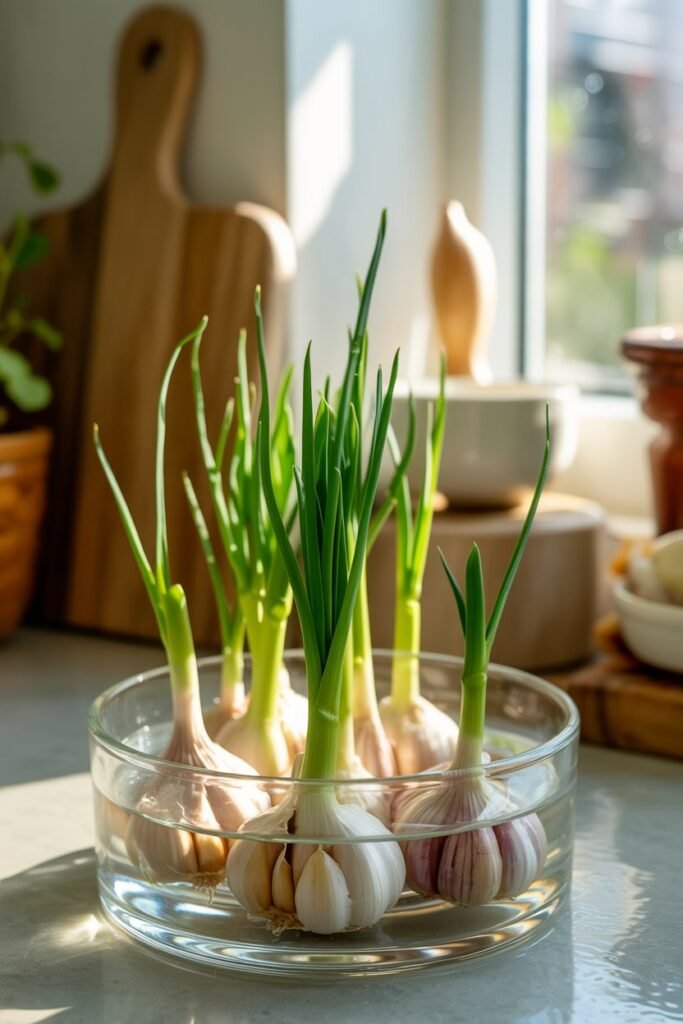
Garlic is incredibly useful to regrow because both the shoots and bulbs are edible.
Understanding Garlic Growth
Each garlic clove contains nutrients and energy that support new growth. When exposed to moisture, it quickly begins sprouting.
How to Grow Garlic Shoots in Water
- Select healthy garlic cloves.
- Place them upright in a shallow dish.
- Add a small amount of water at the bottom.
- Put the container near sunlight.
Bright green shoots usually appear within a few days.
Using Garlic Shoots
Garlic shoots have a milder flavor than full garlic cloves and are excellent in:
- Stir-fries
- Pasta
- Omelets
- Soups
Long-Term Growing
For full garlic bulbs:
- Transfer sprouted cloves into soil.
- Plant with the pointed end upward.
- Keep soil lightly moist.
Common Issues
Mold Growth
Too much moisture can cause mold around the clove.
Rotting
Never fully submerge garlic in water.
5. Bok Choy
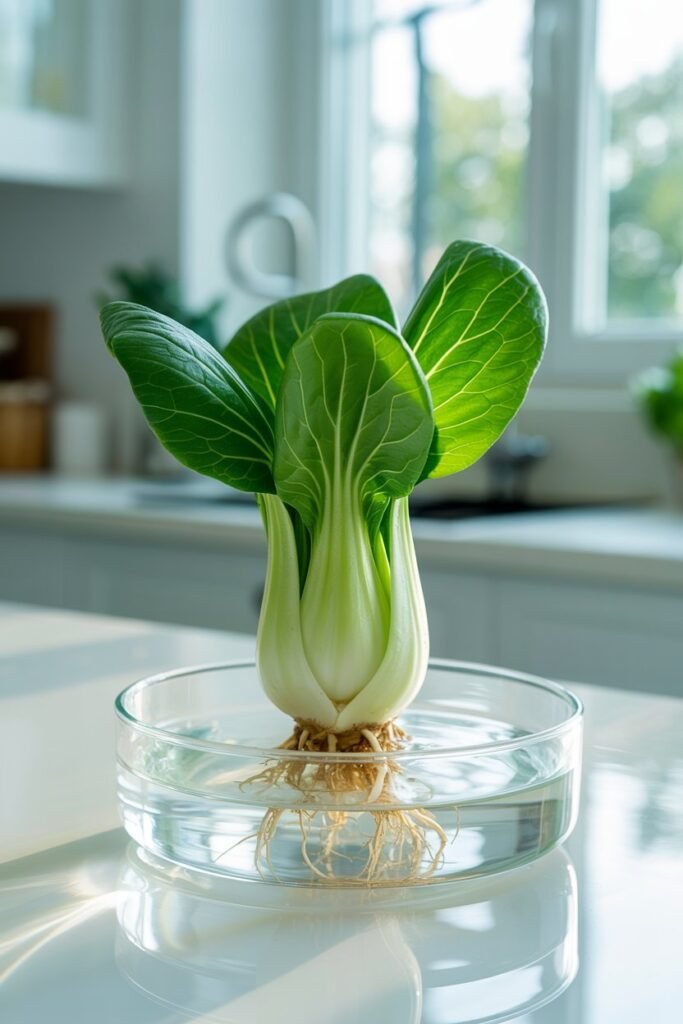
Bok choy is one of the easiest leafy greens to regrow indoors.
Why Bok Choy Regrows Quickly
The base retains the plant’s core growth point, which rapidly produces new leaves in water.
How to Regrow Bok Choy
- Cut off the bottom 1–2 inches.
- Place the base in shallow water.
- Keep it in bright indirect sunlight.
- Change water every few days.
Fresh leaves often appear within a week.
Transplanting Bok Choy
Once roots become longer:
- Move the plant into soil.
- Water consistently.
- Harvest outer leaves first.
Best Growing Conditions
- Cool temperatures
- Bright light
- Clean water
Common Problems
Yellow Leaves
Usually caused by poor lighting.
Mushy Base
Overwatering or stagnant water may be the cause.
6. Carrot Tops
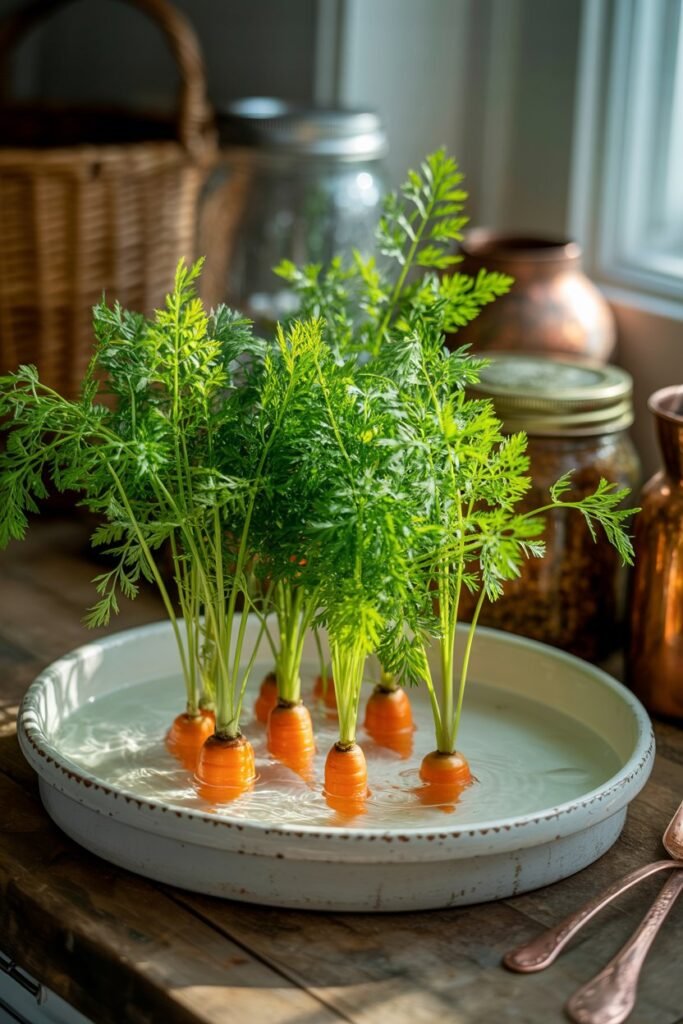
Carrot tops won’t grow new carrots in water, but they do produce beautiful edible greens.
Why Grow Carrot Tops?
The greens are flavorful, nutritious, and attractive enough to use as decorative houseplants.
How to Regrow Carrot Tops
- Slice off the top inch of the carrot.
- Place the tops in a shallow dish.
- Add a small amount of water.
- Keep near a sunny window.
Green leafy growth often appears within days.
Uses for Carrot Greens
Carrot greens can be:
- Blended into pesto
- Added to salads
- Used as soup garnish
- Mixed into smoothies
Care Tips
- Replace water regularly.
- Avoid fully submerging the carrot tops.
- Give them bright sunlight daily.
Common Mistakes
Water Too Deep
Too much water may cause the tops to rot.
7. Leeks
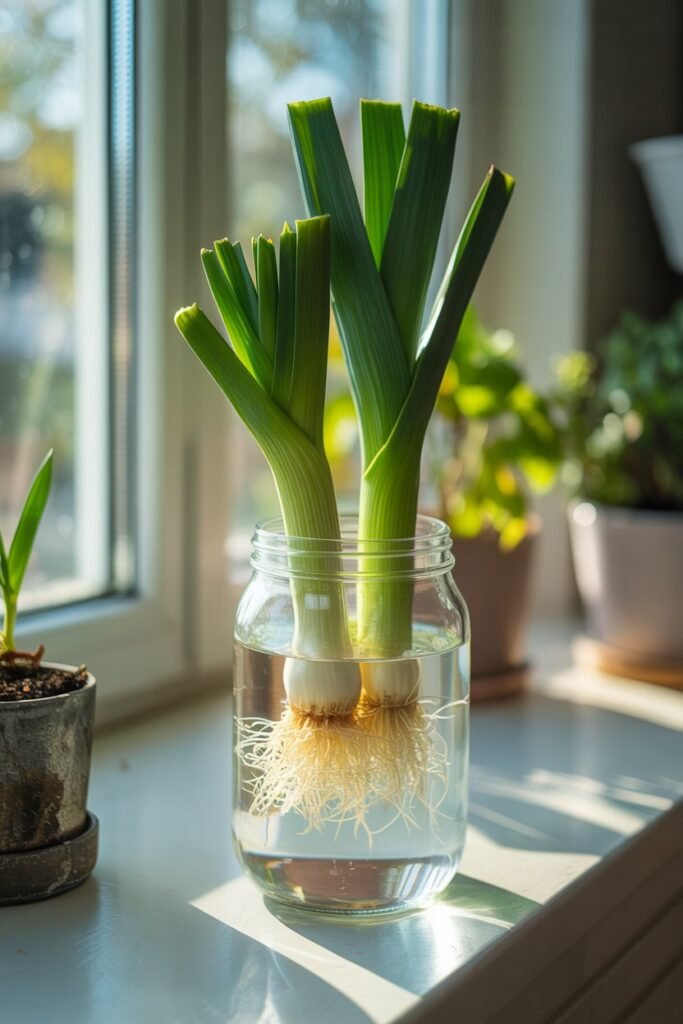
Leeks regrow almost exactly like green onions but produce thicker stems and a milder onion flavor.
How Leeks Regrow
The rooted base contains enough stored nutrients to begin producing fresh leaves again.
How to Regrow Leeks
- Save the white root section.
- Place it in a glass with shallow water.
- Set near sunlight.
New green leaves begin appearing within several days.
Care Instructions
- Change water every 2–3 days.
- Keep roots submerged but stems dry.
- Rotate the glass for even sunlight exposure.
Harvesting Leeks
Trim leaves as needed while leaving the base intact.
Extra Tip
Leeks grow especially well after being transferred into soil outdoors or in containers.
8. Lemongrass
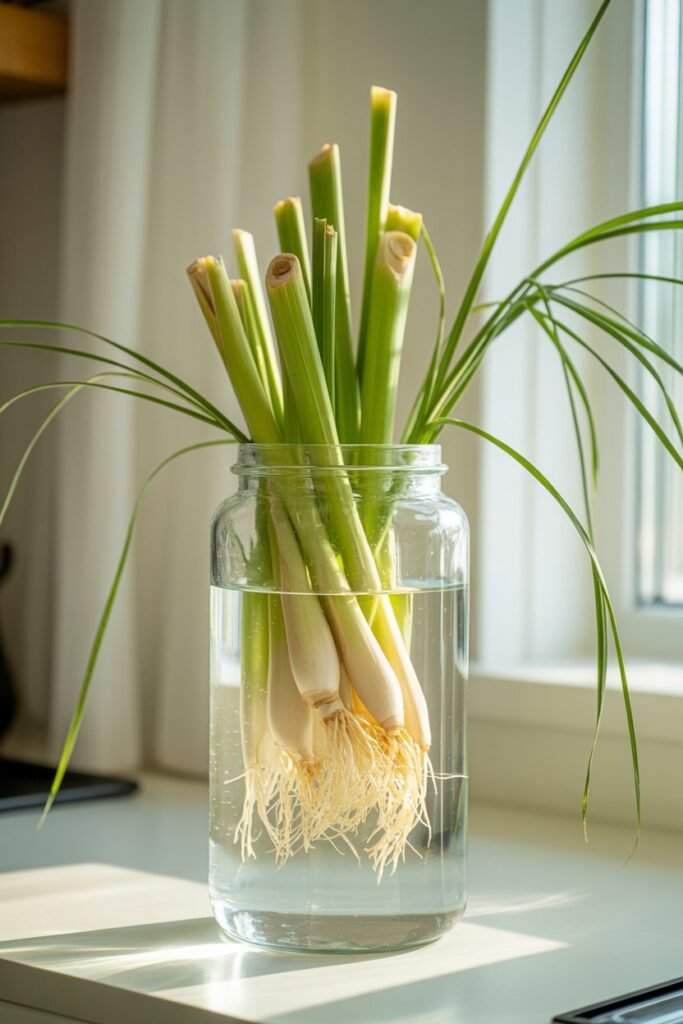
Lemongrass is popular in teas, soups, and Asian dishes, and it roots very easily in water.
Why Lemongrass Regrows Well
The stalk base naturally produces roots when exposed to moisture.
How to Regrow Lemongrass
- Place stalks in a tall jar.
- Add water to cover the bottom inch.
- Put the jar in direct sunlight.
Roots usually appear within 1–2 weeks.
After Rooting
Once roots are several inches long:
- Transfer to soil.
- Water regularly.
- Keep in warm sunny conditions.
Growing Tips
- Lemongrass loves heat.
- It grows best with plenty of sunlight.
- Large containers work best for mature plants.
Common Problems
Brown Stalks
Often caused by insufficient sunlight.
9. Basil
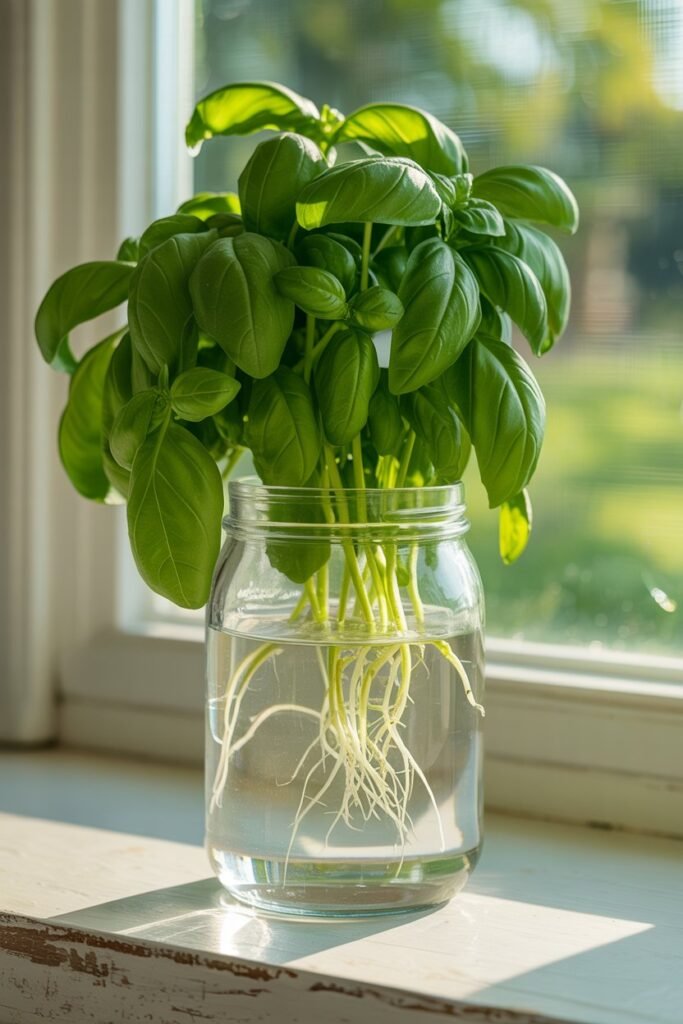
Basil is one of the easiest herbs to propagate in water.
Why Basil Roots Easily
Basil stems naturally produce roots at their nodes when placed in water.
How to Regrow Basil
- Cut a healthy 4–6 inch stem.
- Remove lower leaves.
- Place in a jar of water.
- Keep near bright sunlight.
Roots generally appear within 5–10 days.
Best Care Tips
- Change water every few days.
- Keep leaves above water.
- Pinch flower buds to encourage leaf production.
Moving Basil to Soil
Once roots reach several inches:
- Plant in rich potting soil.
- Keep soil moist but not soggy.
Common Problems
Wilting
This may happen if the cutting receives too much direct heat.
10. Mint
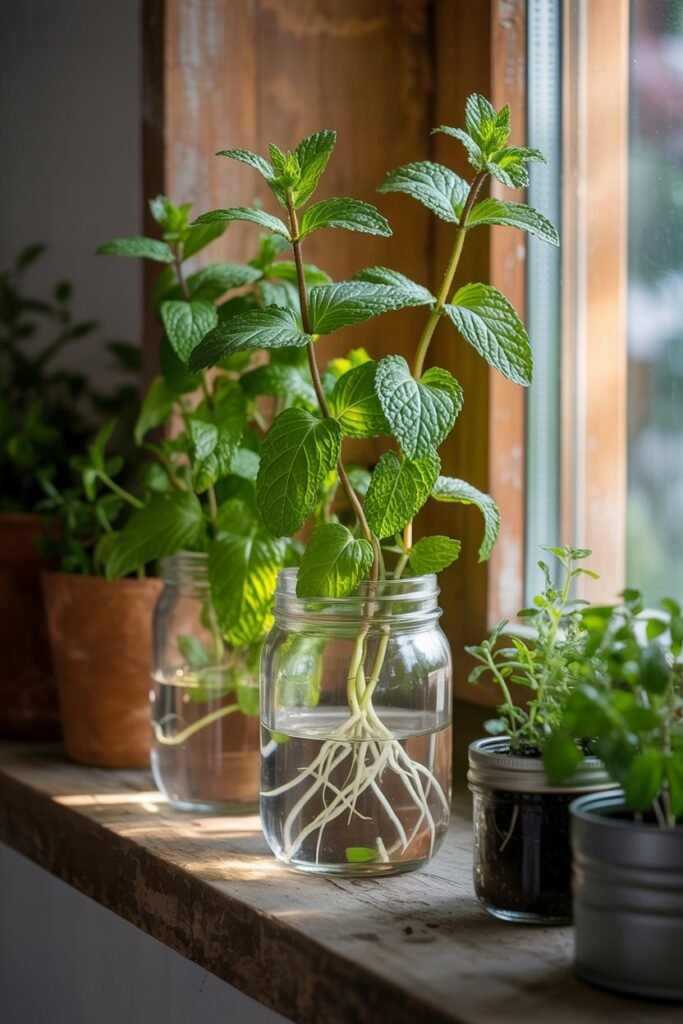
Mint is one of the most beginner-friendly herbs you can grow.
Why Mint Grows So Fast
Mint naturally spreads aggressively through stems and roots.
How to Regrow Mint
- Take fresh mint cuttings.
- Remove lower leaves.
- Place stems in water.
- Put near indirect sunlight.
Roots often appear within days.
Caring for Mint
- Refresh water frequently.
- Keep in bright indirect light.
- Avoid excessive heat.
Moving Mint to Soil
Mint thrives once planted in containers because it spreads rapidly.
Important Tip
Keep mint in its own pot because it can take over other plants quickly.
11. Potato
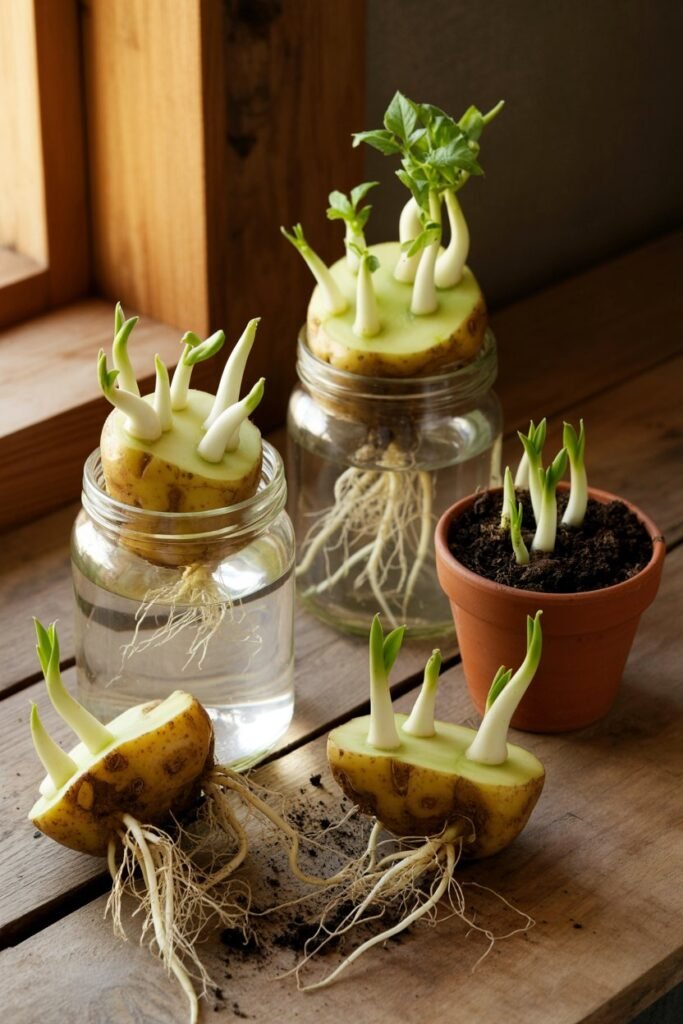
Potatoes regrow from the “eyes,” which are small growing points on the surface.
How Potato Regrowth Works
Each eye can develop into a new potato plant under proper conditions.
How to Start Regrowing Potatoes
- Cut potatoes into chunks.
- Ensure each piece has at least one eye.
- Let pieces dry overnight.
- Place partially in water or directly into soil.
Sprouts will begin emerging from the eyes.
Best Growing Conditions
- Warm temperatures
- Bright light
- Loose soil
Important Warning
Avoid using potatoes that appear green or rotten.
12. Sweet Potato
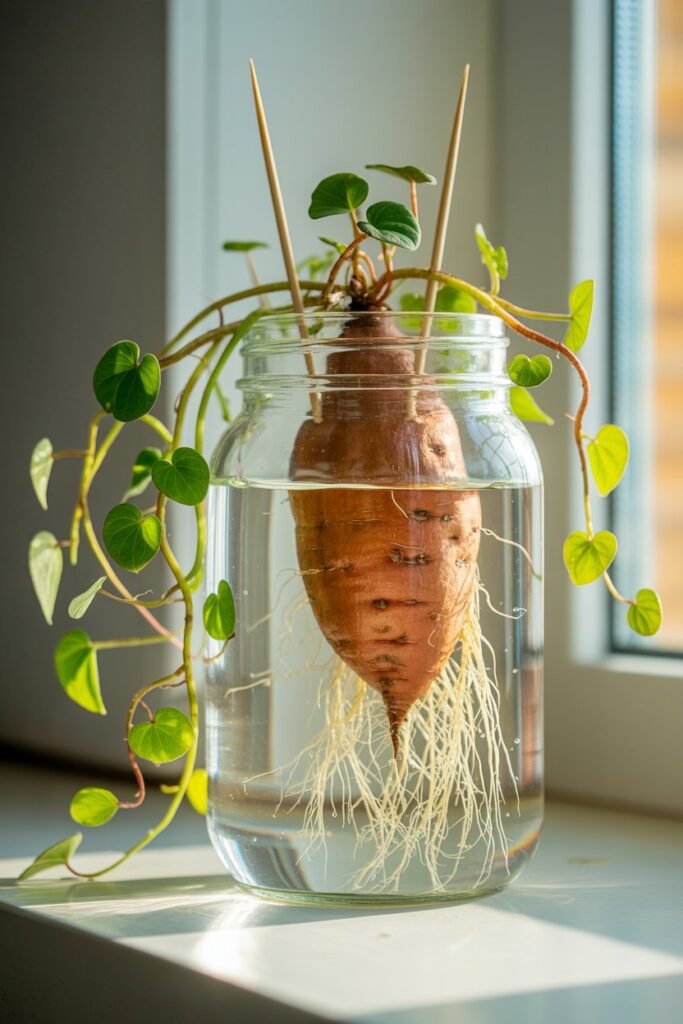
Sweet potatoes are beautiful to grow indoors because they produce long trailing vines.
How to Regrow Sweet Potatoes
- Insert toothpicks into the middle.
- Suspend half the potato in water.
- Place in a sunny location.
Roots form below while shoots grow above.
What Happens Next
The vines produce slips that can later grow into entirely new plants.
Care Tips
- Replace water weekly.
- Use a large healthy sweet potato.
- Give plenty of sunlight.
Decorative Bonus
Sweet potato vines make beautiful indoor plants.
13. Onion
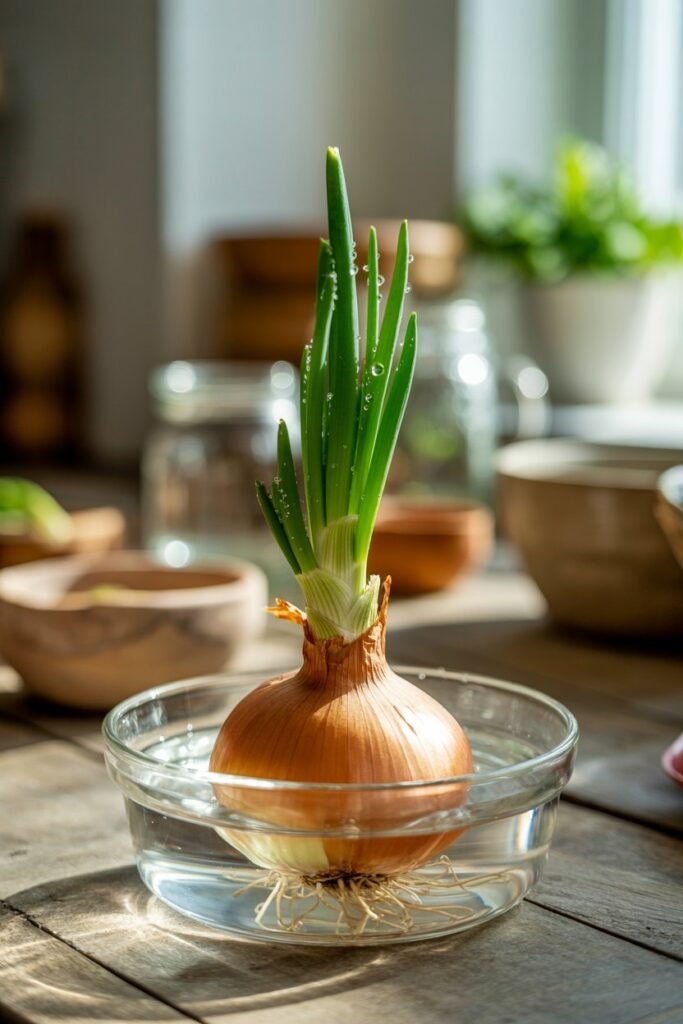
Onions regrow well from root ends and leftover bulbs.
How to Regrow Onions
- Cut off the root end.
- Let it dry for a few hours.
- Place root-side down in shallow water.
Roots and shoots begin forming quickly.
Growing in Soil
After roots appear:
- Plant in soil.
- Keep moist.
- Provide sunlight.
Helpful Tip
Green onion shoots can also grow from regular onions.
14. Fennel
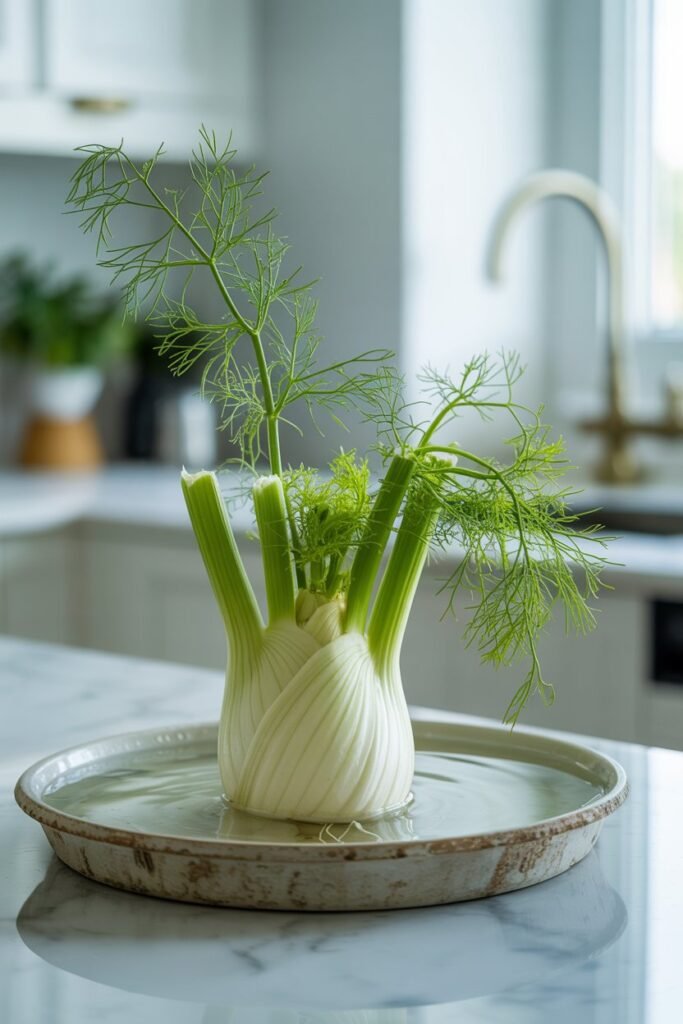
Fennel produces delicate green fronds and has a refreshing flavor.
How to Regrow Fennel
- Save the bulb base.
- Place in shallow water.
- Keep in bright light.
New fronds emerge from the center.
Care Tips
- Replace water regularly.
- Avoid deep water levels.
- Provide consistent sunlight.
Culinary Uses
Fennel fronds are delicious in:
- Salads
- Pasta
- Fish dishes
- Soups
15. Cabbage
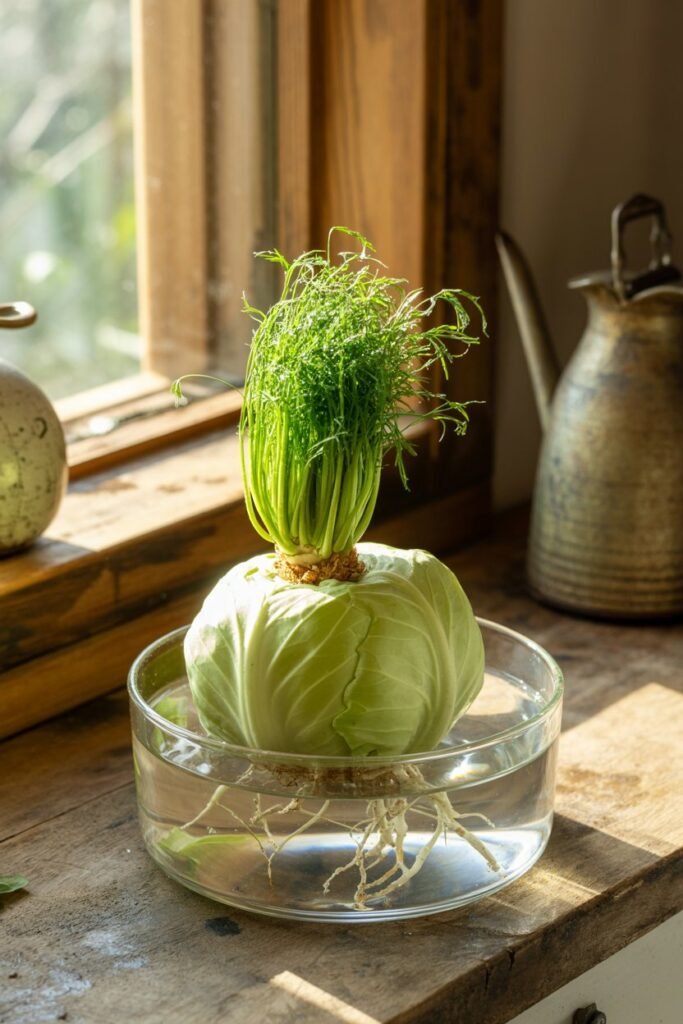
Cabbage can regrow fresh leafy growth from its core.
How to Regrow Cabbage
- Save the bottom core.
- Place in shallow water.
- Set in a sunny location.
Fresh leaves begin growing from the center.
Caring for Regrowing Cabbage
- Change water often.
- Rotate for even growth.
- Move to soil for larger harvests.
What to Expect
Regrown cabbage usually stays smaller than the original plant but still produces usable leaves.
Common Problems
Soft Core
Usually caused by stale water or excessive moisture.
Common Problems When Regrowing Food in Water
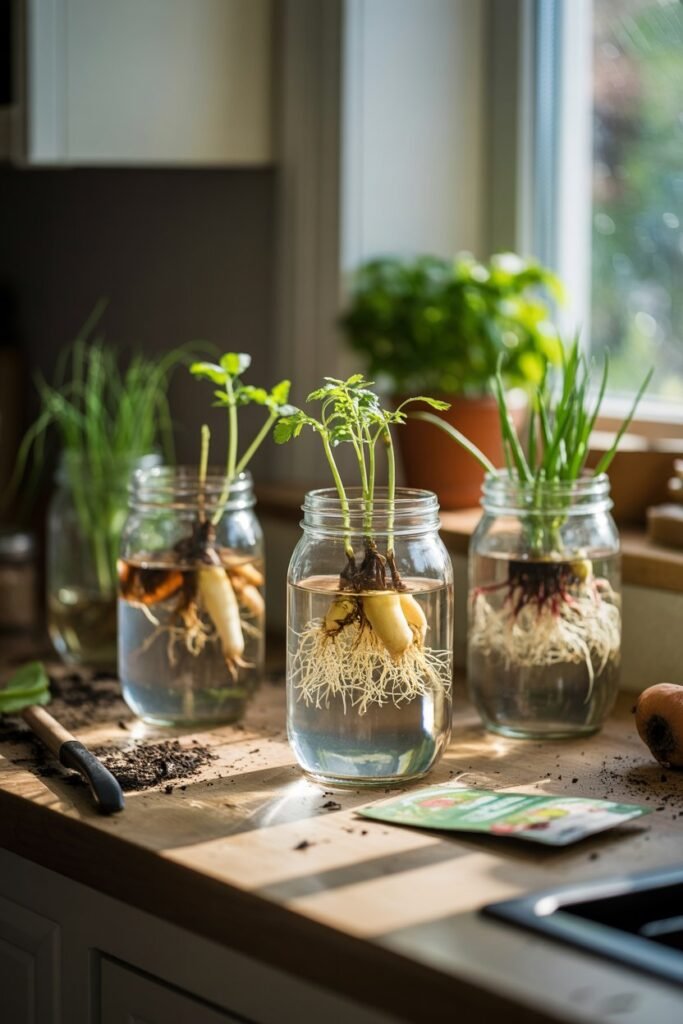
Even easy plants can run into issues. Here are some common problems and solutions.
Cloudy or Smelly Water
This usually means bacteria are growing.
Solution
- Change the water every 2–3 days.
- Rinse containers regularly.
Mold Growth
Too much moisture without airflow can encourage mold.
Solution
- Avoid overcrowding plants.
- Use clean containers.
- Keep plants in bright areas.
Slow Growth
Insufficient light is often the main cause.
Solution
- Move plants to a sunnier location.
- Use a grow light if necessary.
Rotting Scraps
Over-submerging vegetables can cause rot.
Solution
- Only place the roots or base in water.
- Keep upper portions dry.
Tips for Success When Regrowing Food
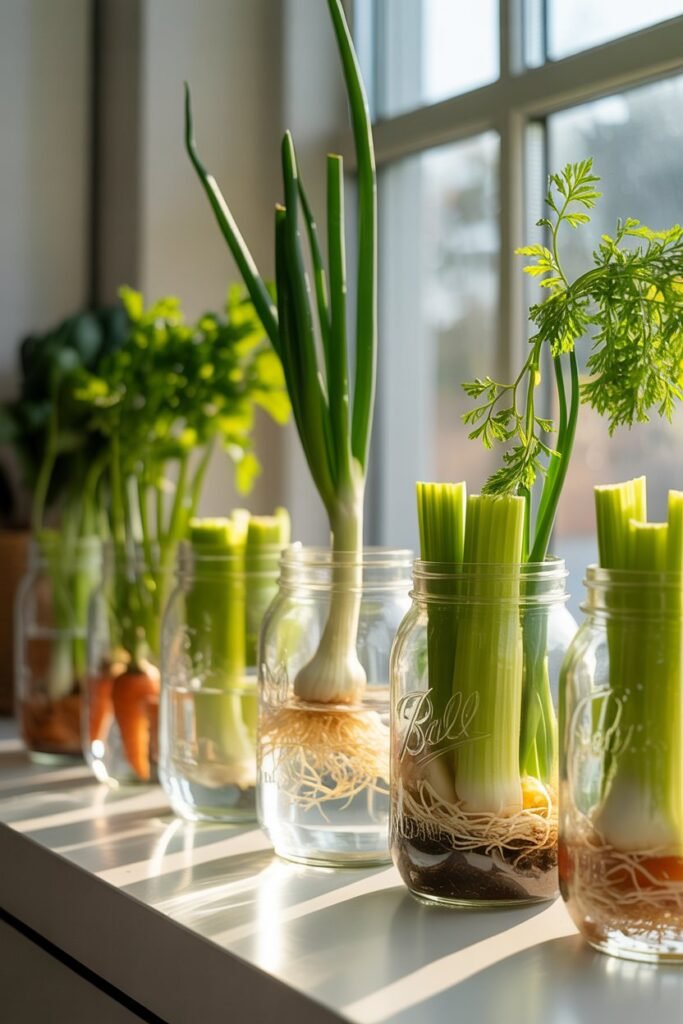
Use Fresh Scraps
Older vegetables may struggle to regrow. Fresh scraps usually perform much better.
Change Water Frequently
Fresh water keeps roots healthy and prevents bacterial growth.
Provide Enough Sunlight
Most regrowing vegetables need at least 4–6 hours of bright light daily.
Move to Soil for Bigger Harvests
Water is excellent for starting growth, but soil provides nutrients for long-term success.
Be Patient
Some plants regrow quickly, while others take several weeks.
Best Foods for Beginners
If you’re completely new to regrowing vegetables, start with these easy options:
- Green onions
- Celery
- Lettuce
- Basil
- Mint
These tend to regrow quickly and require minimal effort.
Can You Grow These Foods Only in Water?
Some plants can survive in water for extended periods, especially herbs like basil and mint. However, many vegetables eventually need soil to grow fully and produce larger harvests.
Water regrowing works best as:
- A way to restart growth
- A temporary growing method
- A way to produce small fresh harvests indoors
For long-term productivity, transferring to soil is usually the best option.
Final Thoughts
Regrowing food in water is one of the easiest and most rewarding ways to start gardening at home. With just a few kitchen scraps and a little patience, you can grow fresh herbs and vegetables right from your countertop.
Whether you want to save money, reduce food waste, or simply enjoy the process of growing something yourself, these regrowable foods make a fantastic starting point.
Many of them sprout surprisingly fast, and watching new growth appear from scraps that would normally be thrown away can feel incredibly satisfying.
Start with one or two easy vegetables like green onions or celery, then gradually experiment with more varieties. Before long, your kitchen windowsill may turn into a thriving mini garden full of fresh, reusable produce.
