

There is something incredibly satisfying about walking through your garden or looking around a natural area and realizing that the plants growing around you can become something beautiful and useful.
I’ve always loved gardening, but learning that simple vines, flexible branches, grasses, and leaves can be transformed into handmade baskets gave me a completely new appreciation for the plants around me.
Basket weaving is a wonderful way to slow down, work with your hands, and connect with nature. If you know what to look for, you may already have several useful basket-making materials growing nearby.
Before You Start: A Quick Note About Foraging
Before gathering any plant material, please remember that responsible foraging is just as important as finding the right material.
Always:
- Get permission before harvesting on private property.
- Check local rules before collecting plants from public land.
- Positively identify every plant before harvesting it.
- Avoid rare, protected, or threatened species.
- Never remove more material than the plant population can comfortably support.
- Leave healthy plants and wildlife habitat behind.
- Be especially careful with invasive plants so you don’t accidentally spread seeds or plant fragments.
Some plants listed below may be invasive in certain regions but native or non-invasive in others. Always check the status of a species where you live before harvesting or moving it.
With those basics covered, let’s look at some wonderful natural materials you can use for basket weaving!
1. Willow
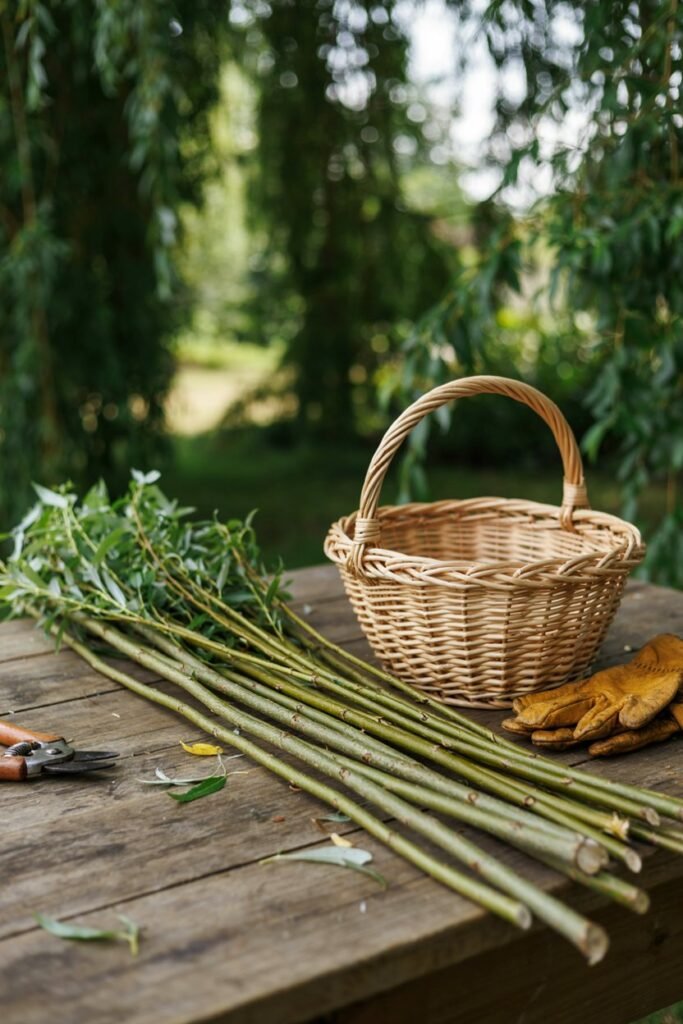
Best for: Traditional woven baskets, handles, frames, and sturdy structures
Willow is probably one of the first plants that comes to mind when people think about traditional basket weaving.
Its long, flexible shoots have been used for generations to create everything from small decorative baskets to large, practical containers.
Young willow shoots are usually the easiest to work with because they are flexible and relatively straight. Basket-making varieties often produce long, slender rods that bend without breaking too easily.
Willow generally grows well in moist locations, so you may find it near streams, wetlands, or other damp areas. However, never assume that you are allowed to harvest from natural areas.
Always get permission and check local regulations first.
How to prepare willow
Fresh willow can sometimes be woven while green, depending on the project. For longer storage, many basket makers dry their willow rods and rehydrate them before weaving.
Choose:
- Long, straight shoots
- Flexible young growth
- Rods without serious damage
- Material that bends smoothly rather than snapping
Willow is especially wonderful for beginners because it creates a strong basket structure.
2. Grapevine
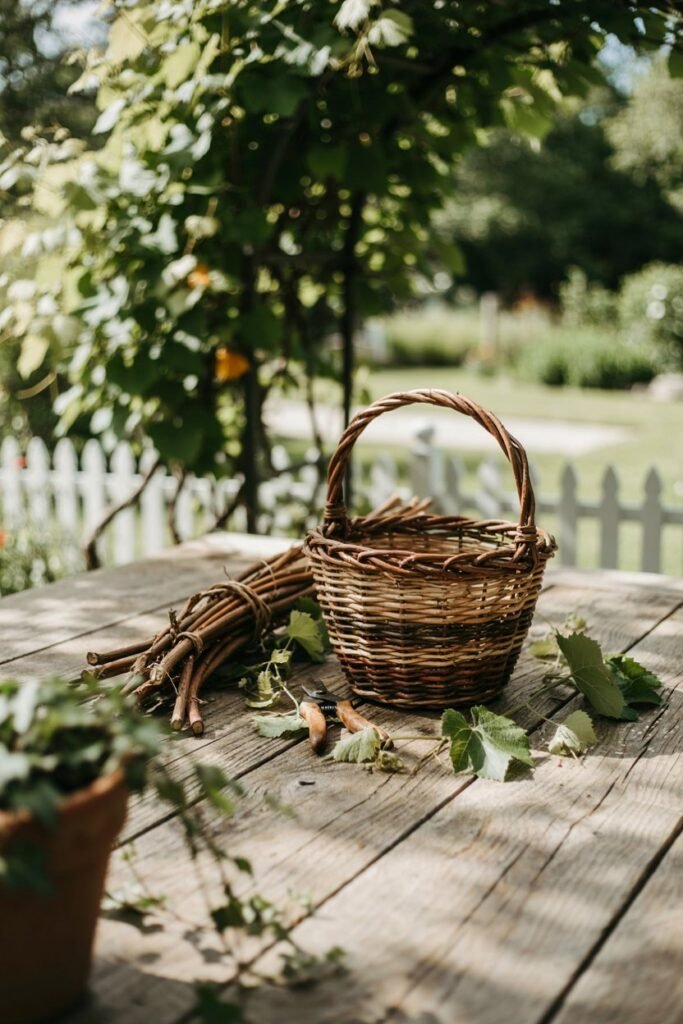
Best for: Rustic baskets, wreath-style baskets, handles, and strong frames
If you have ever seen an old grapevine twisting around a fence or tree, you already know how naturally beautiful this material can be.
Grapevines are strong, woody, and naturally curved, which makes them perfect for rustic basket designs. They are particularly useful for creating basket handles, rims, and thicker structural pieces.
Wild and cultivated grapevines can both provide useful material, but correct identification is important. Never pull vines aggressively from trees, as doing so can damage the tree or cause dead branches to fall.
Why grapevine is so useful
Grapevine offers:
- Excellent strength
- Natural curves
- Interesting texture
- Good material for handles
- A rustic, handmade appearance
Longer, younger vines are generally easier to bend than very old, thick woody stems.
For a beginner-friendly project, grapevine can be used to create a simple rib basket or rustic garden basket.
3. Honeysuckle Vines

Best for: Flexible weaving and rustic basket designs
Long, winding honeysuckle vines can be surprisingly useful for basket weaving. The younger vines are flexible and can be wrapped, twisted, and woven into different shapes.
However, honeysuckle identification is extremely important. Some honeysuckle species are native and valuable parts of local ecosystems, while others are invasive in certain areas.
Never harvest native plants simply because they look similar to an invasive species.
What to look for
Choose vines that are:
- Long and flexible
- Relatively thin
- Free from excessive damage
- Easy to bend
Older vines can become stiff and woody, while younger growth is often easier to work with.
Honeysuckle creates beautiful baskets with a relaxed, natural appearance. It is particularly lovely when combined with other materials, such as willow or grapevine.
4. Wisteria
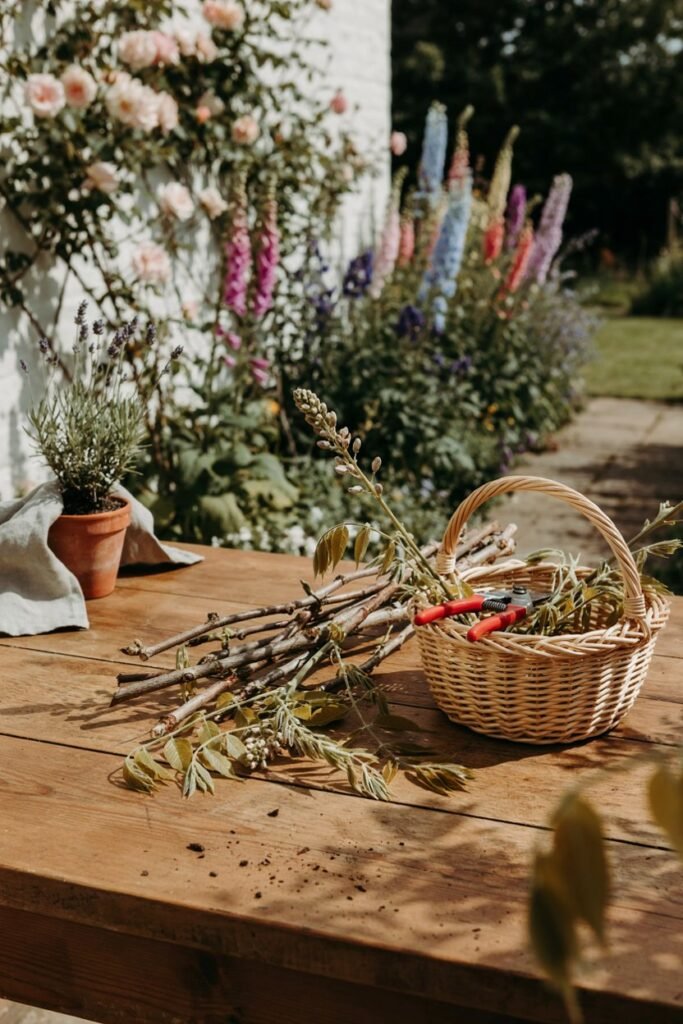
Best for: Strong rustic baskets and decorative weaving
Wisteria is famous for its beautiful cascading flowers, but its long vines can also become excellent weaving material.
If you already have wisteria growing in your garden, pruning can provide plenty of material for craft projects. This makes it a wonderful example of turning ordinary garden maintenance into something creative.
Some wisteria species can be invasive in certain regions, so always check the species you are working with.
Why gardeners love using wisteria
Wisteria vines are:
- Long
- Strong
- Naturally twisting
- Beautifully textured
- Excellent for rustic projects
Freshly cut younger vines tend to be more flexible than older, thicker growth.
I especially love the idea of using pruned wisteria vines to make a garden basket. Instead of throwing away those long cuttings, you can turn them into something useful.
5. Native Grasses
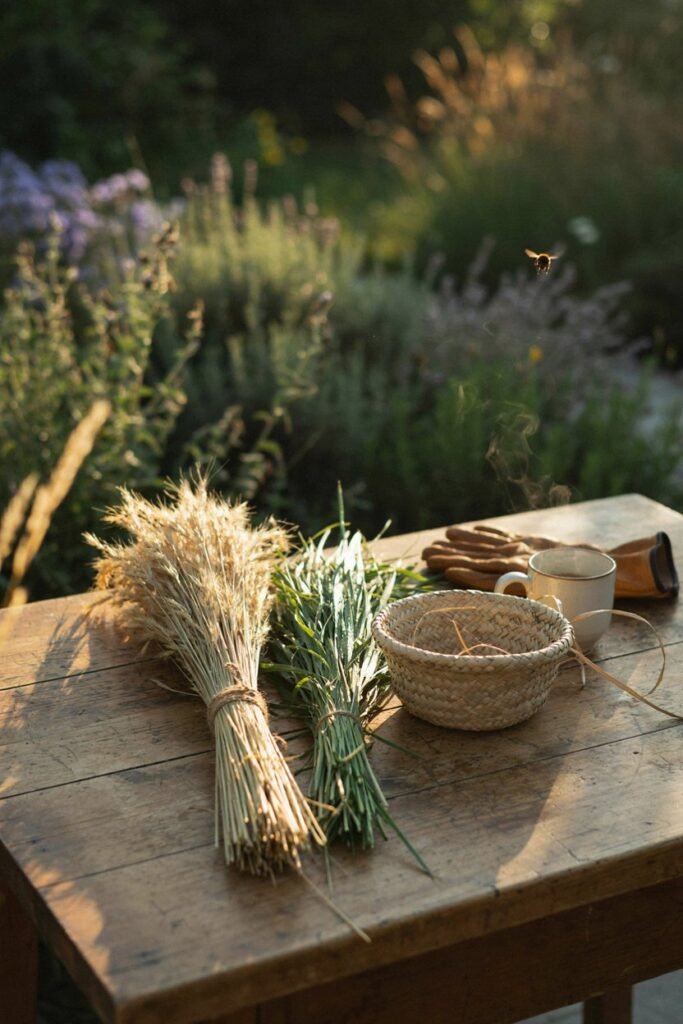
Best for: Coiled baskets, plaiting, and decorative details
Grasses are among the most accessible natural materials for weaving. Depending on where you live, you may have suitable grasses growing right in your garden.
The best grasses for weaving are usually strong enough to hold their shape while remaining flexible enough to bend.
Grasses are particularly useful for:
- Coiled baskets
- Small decorative baskets
- Plaited designs
- Natural basket decorations
Preparing grasses
Allow harvested material to dry thoroughly before storing it. Once you are ready to weave, many dried plant fibers become easier to work with after gentle rehydration.
The exact preparation method depends on the plant, so don’t assume every grass should be treated the same way.
If you’re new to basket weaving, grass is a lovely material for practicing simple coiling techniques.
6. Pine Needles
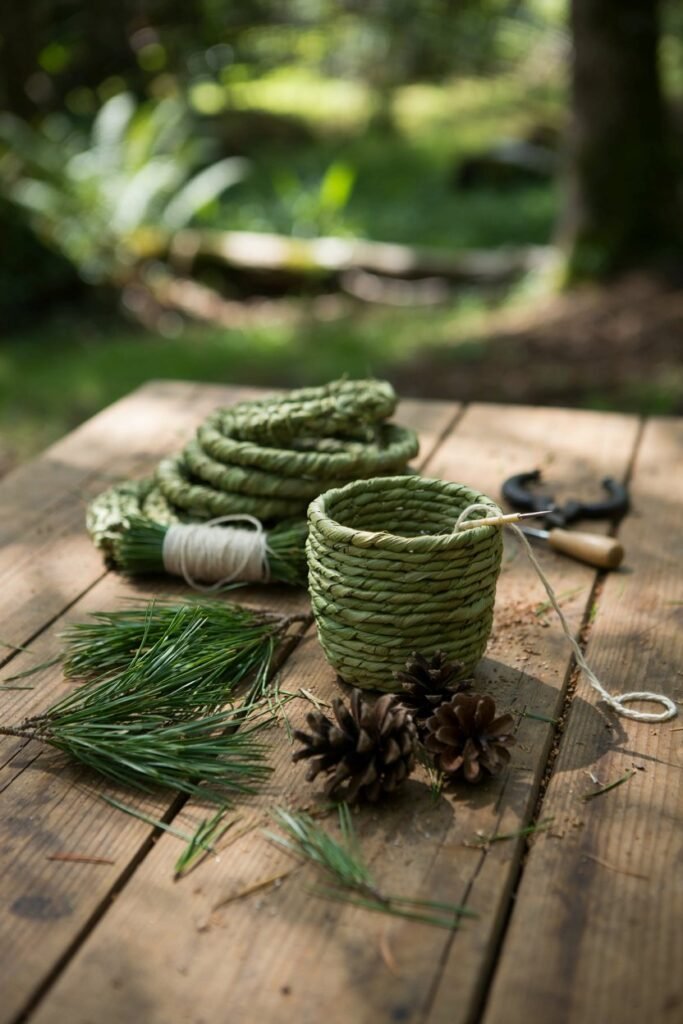
Best for: Coiled baskets
Pine needle basketry is one of the most beautiful forms of natural weaving. The finished baskets often have a detailed, textured appearance that feels both rustic and elegant.
Long needles are generally easier to work with because they allow you to build coils more efficiently.
Different pine species produce needles of different lengths, so the material available in your area may vary.
What makes pine needles special?
Pine needle baskets are usually created by:
- Gathering suitable needles.
- Cleaning and preparing them.
- Creating small bundles or coils.
- Stitching or wrapping the coils together.
This technique is different from traditional over-and-under weaving with vines.
Pine needle basketry takes patience, but the results can be absolutely beautiful.
Tip: Gather only naturally shed needles or material you are legally permitted to collect, especially when working around protected natural areas.
7. Rushes
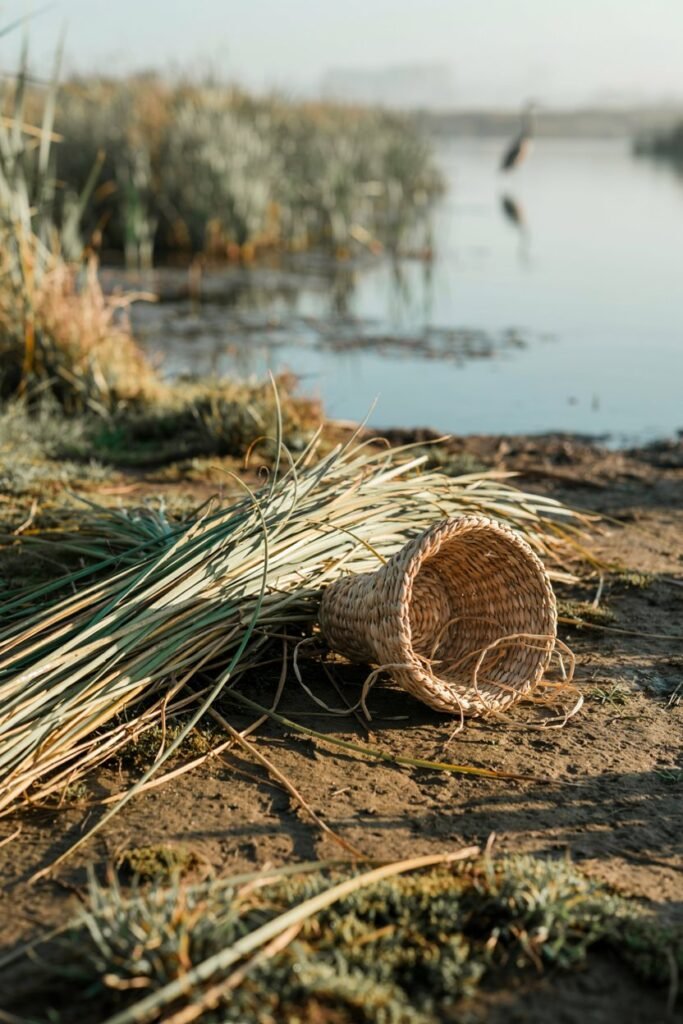
Best for: Traditional weaving and strong natural baskets
Rushes have been used as natural weaving materials for a very long time. Their long, slender stems make them suitable for a variety of basket styles.
Rushes can be found in moist environments, but wetland ecosystems are extremely important habitats. Never strip large quantities of plants from a natural wetland.
If you have access to legally and sustainably grown rush material, it can be a wonderful choice for weaving.
Why rushes work well
They can offer:
- Flexibility
- Strength
- A smooth texture
- A natural golden color when dried
Rushes are useful for beginners who want to experiment with natural plant materials beyond woody vines.
8. Daylily Leaves
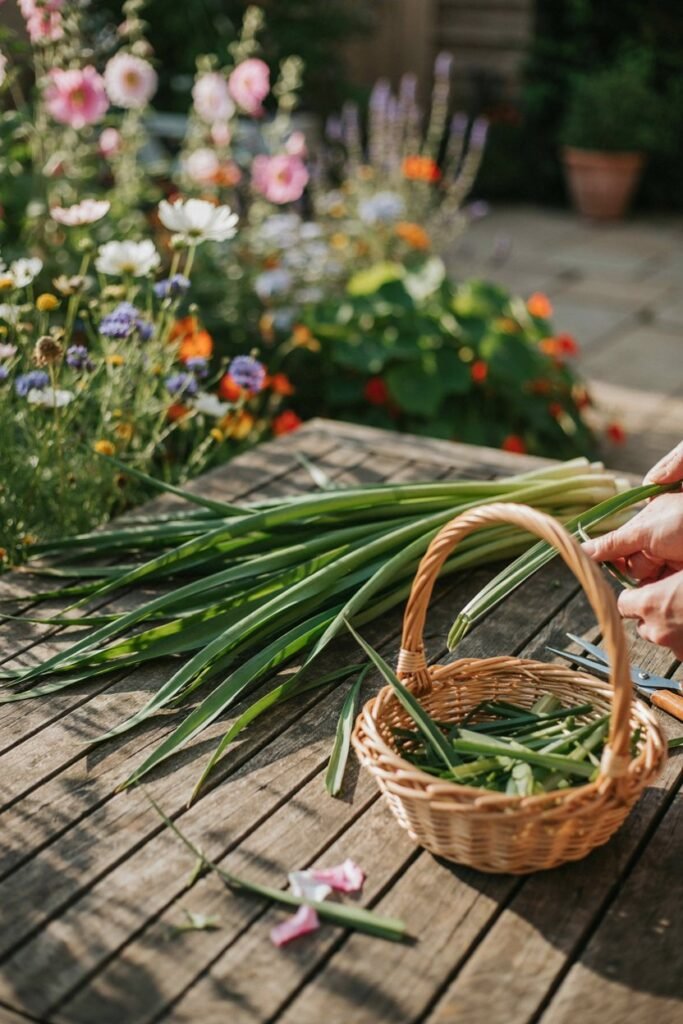
Best for: Small baskets and plaited projects
Daylilies are popular garden plants, and their long leaves can also be used in simple weaving projects.
This is one of my favorite ideas because you may already have daylilies growing in your own garden.
Instead of treating all garden cleanup as waste, some of the plant material can become part of a creative project.
Working with daylily leaves
The leaves are best suited for smaller, lighter basket projects. They can be dried for storage and softened appropriately before weaving.
Daylily leaves work particularly well for:
- Small decorative baskets
- Plaited projects
- Natural craft details
- Practice weaving
Always make sure you are correctly identifying the plant, especially if harvesting outside your own garden.
9. Iris Leaves
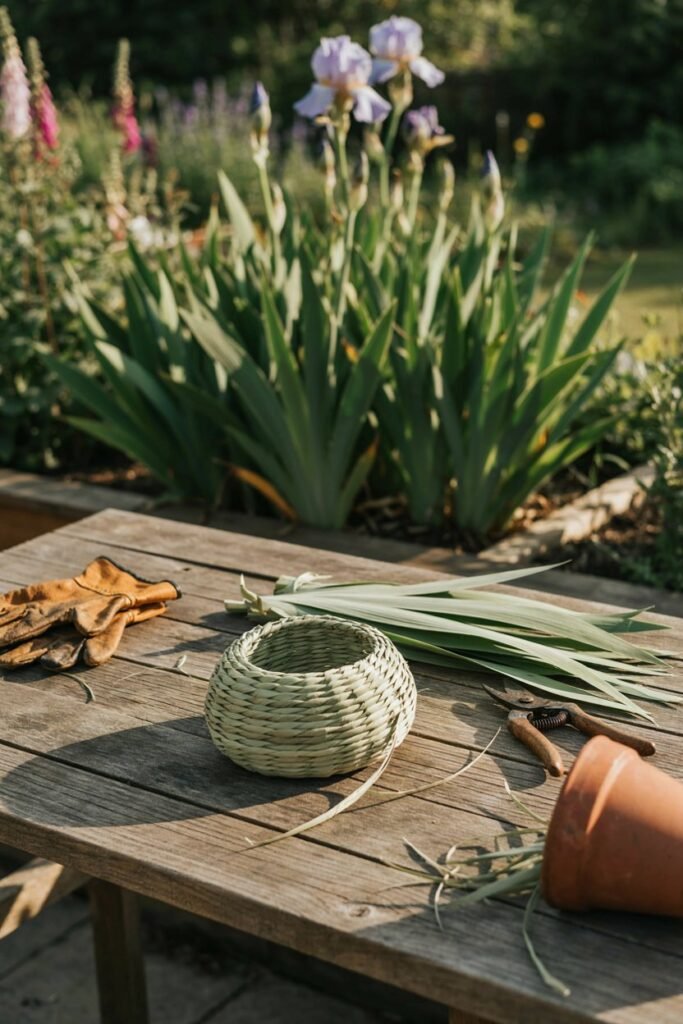
Best for: Plaited baskets and decorative weaving
Iris leaves are long, narrow, and naturally suited to weaving.
If you grow irises in your garden, seasonal pruning may provide material for simple basket projects. This is a wonderful way to use plant material that might otherwise end up in the compost pile.
Why iris leaves are useful
They are:
- Long and narrow
- Easy to arrange into plaited patterns
- Naturally attractive when dried
- Suitable for smaller projects
Because leaves can become brittle when completely dry, they may need to be conditioned before weaving.
Iris leaves are particularly nice for beginners who want to learn simple over-and-under patterns.
10. Corn Husks
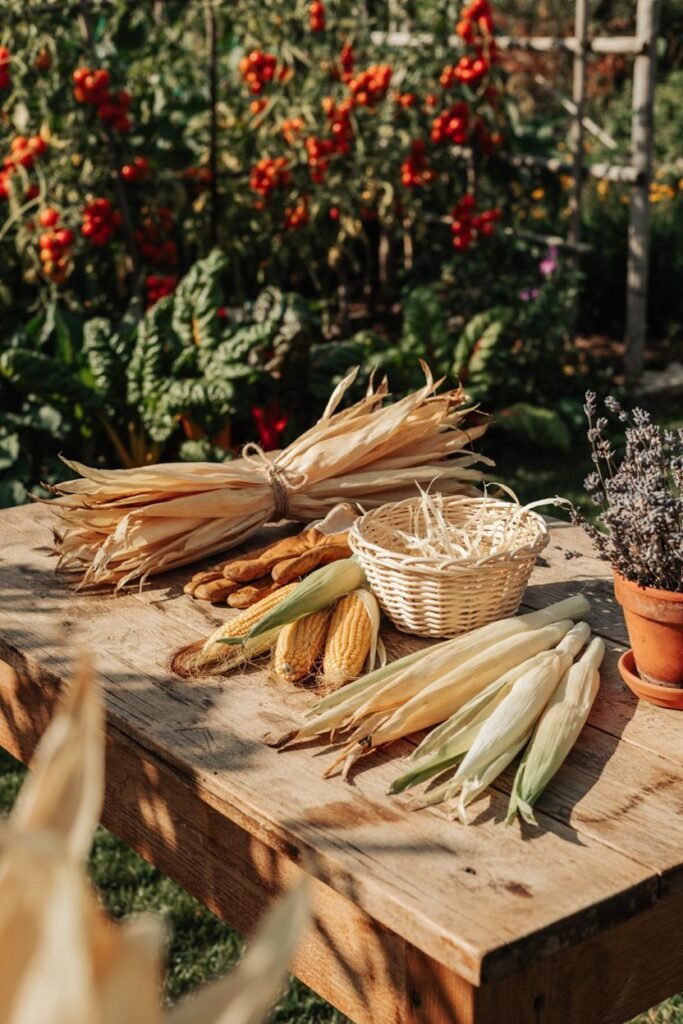
Best for: Soft plaiting and beginner-friendly baskets
Corn husks are a wonderful option because you don’t necessarily need to go into the wild to find them.
If you grow corn, you can save the husks after harvest. You may also have access to dried husks from other sources.
Corn husks are lightweight and easy to work with once properly softened.
What can you make?
Corn husks can be used for:
- Small baskets
- Plaited projects
- Decorative containers
- Natural craft work
Separate wider and narrower husks before you begin weaving. This makes it easier to choose pieces that suit different parts of your project.
Corn husks are a fantastic starting material for someone who wants to try basket weaving without gathering woody vines.
11. Blackberry Canes
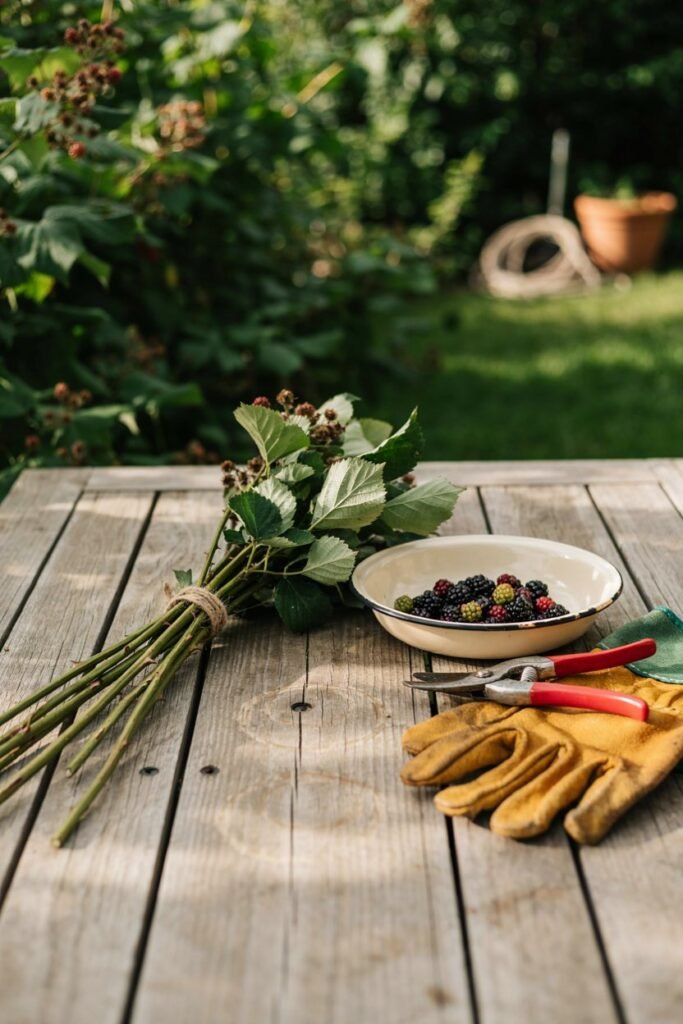
Best for: Rustic weaving and small structural baskets
Blackberry plants produce long canes that can sometimes be used as natural weaving material.
However, these plants can have sharp thorns, so careful handling is essential.
Never harvest blackberry canes from protected areas or without permission. If you grow blackberries in your own garden, pruning material may be a safer and more convenient source.
Choosing suitable canes
Look for material that is:
- Long
- Flexible
- Not excessively thick
- In good condition
Blackberry canes can create interesting texture in rustic basket designs.
Because the material can be challenging to handle, it may be better for gardeners who already have some experience working with natural fibers.
12. Virginia Creeper
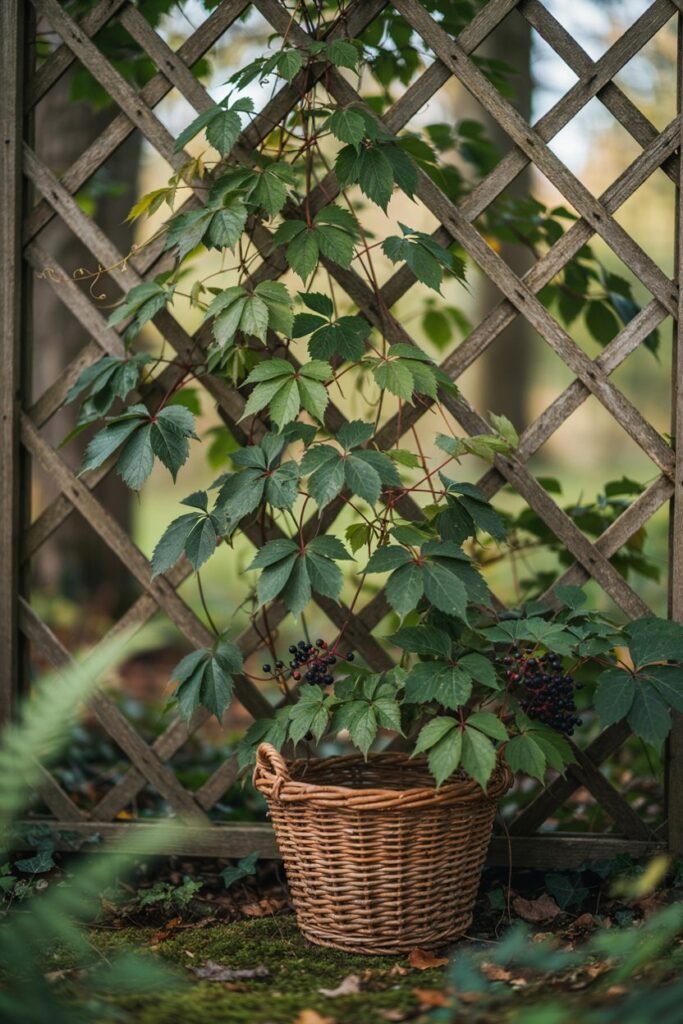
Best for: Flexible vines and rustic weaving
Virginia creeper is a fast-growing climbing plant with long vines that can be useful for basket weaving.
However, correct identification is essential.
Virginia creeper is often confused with poison ivy. One commonly used identification clue is that Virginia creeper typically has five leaflets, while poison ivy commonly has three, but you should never rely on a single quick rule when identifying wild plants.
Use a reliable local plant identification resource before handling unfamiliar vines.
A useful natural material
When correctly identified and safely handled, the vines can provide:
- Flexibility
- Length
- Natural texture
- Good material for rustic projects
Some people may experience skin irritation when handling certain plants, so wear appropriate protective clothing and avoid plants that cause a reaction.
13. Japanese Honeysuckle
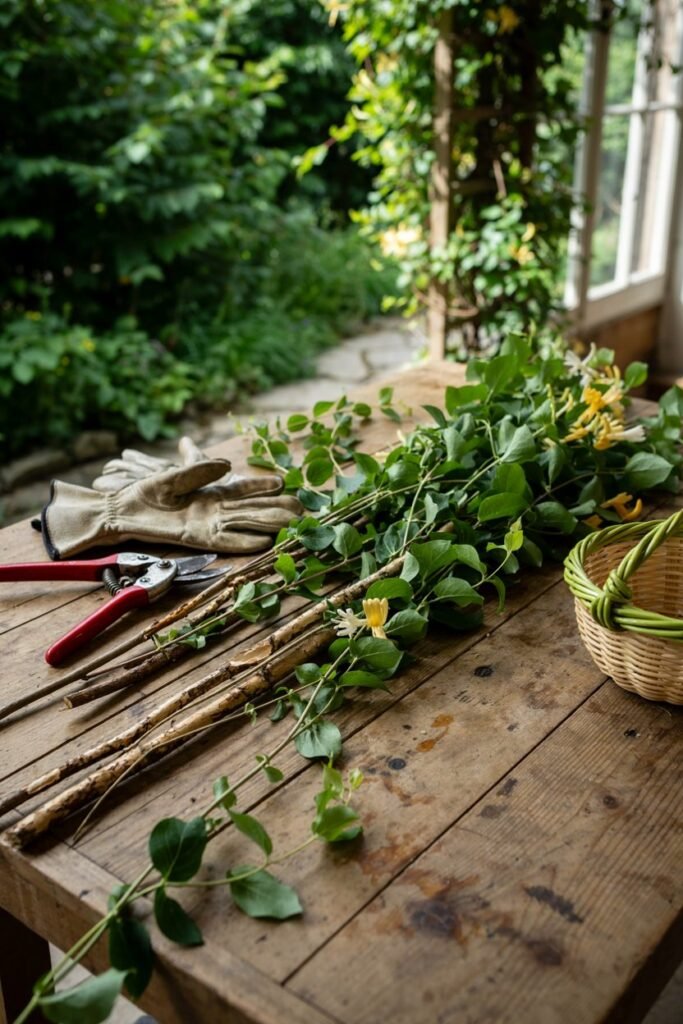
Best for: Flexible weaving where it is legally and responsibly managed
Japanese honeysuckle is considered invasive in some regions.
Where local authorities recommend its removal, harvested material may sometimes be put to practical use. However, this must be done carefully.
The most important rule is do not accidentally spread it.
Avoid transporting berries, seeds, or plant material in ways that could establish new growth. Follow local invasive-species disposal guidance.
Why it can be useful
The vines can be:
- Long
- Flexible
- Easy to coil
- Suitable for rustic weaving
Before harvesting, make absolutely sure you have identified the plant correctly and confirmed its status in your region.
14. Wild Grape Relatives and Other Suitable Woody Vines
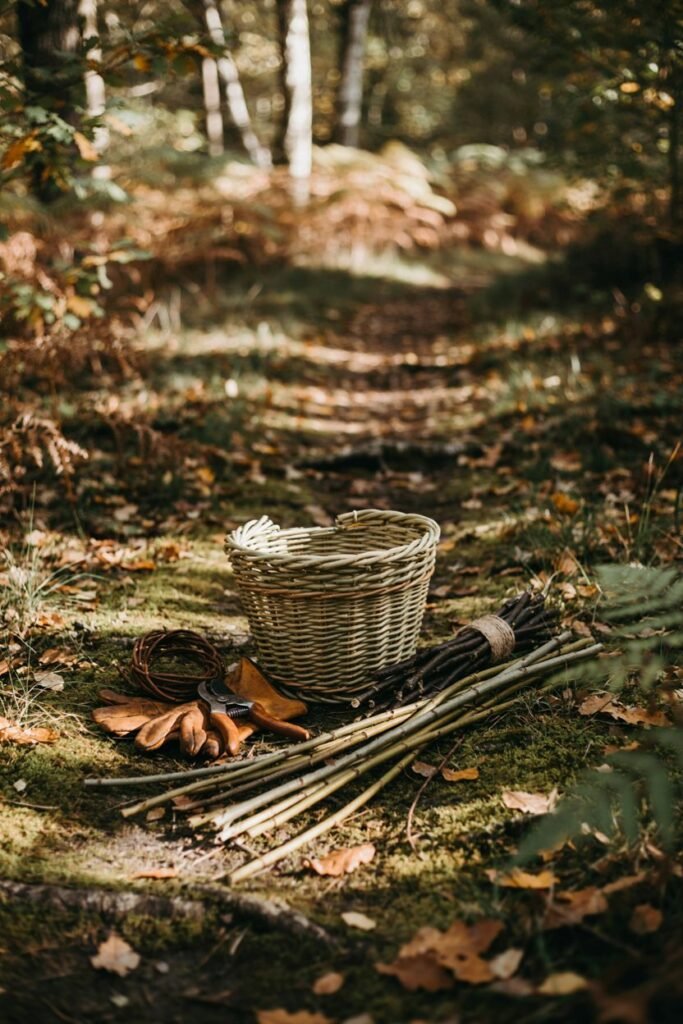
Best for: Frames, handles, and strong basket structures
Many regions have different native climbing plants, and some may provide useful weaving materials.
The important thing is not to assume that every climbing vine is suitable.
A good basket vine should generally be:
- Flexible enough to bend
- Strong enough to hold its shape
- Long enough for your project
- Properly identified
Grapevines are among the best-known examples, but your local area may have other suitable species.
If you’re interested in exploring local basketry traditions, look for educational resources from experienced basket makers and local plant experts.
Indigenous and traditional weaving practices can be especially valuable sources of knowledge, but they should always be approached respectfully and without copying or harvesting culturally important materials without appropriate permission.
15. Cattail Leaves
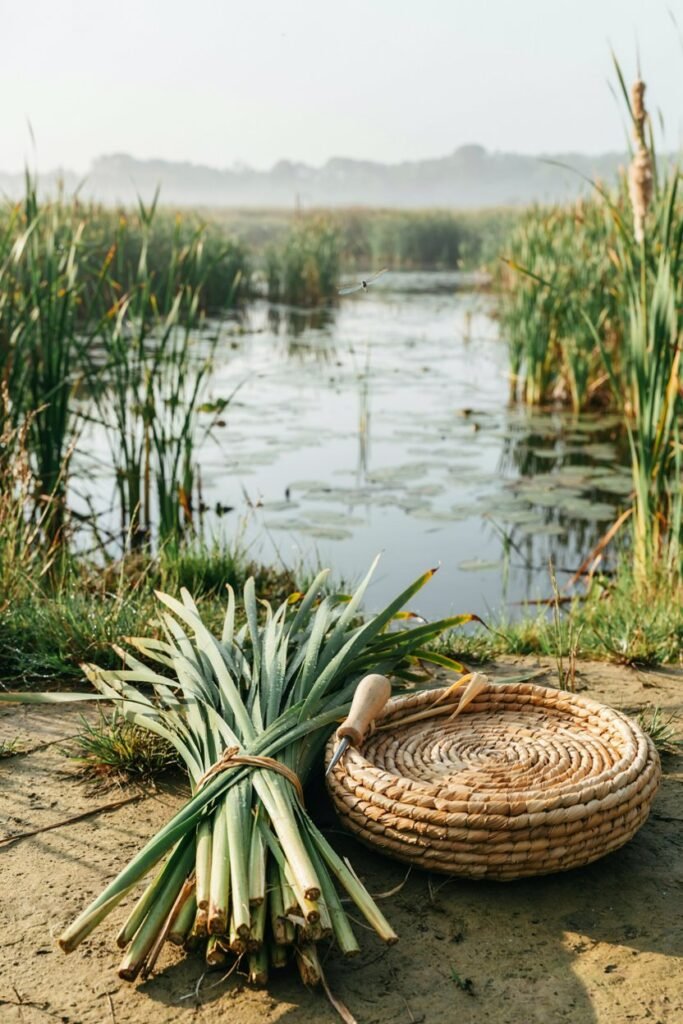
Best for: Plaiting and flat woven projects
Cattails have long leaves that can be used in various traditional weaving projects.
However, cattails often grow in wetlands, and these areas provide essential habitat for birds, insects, amphibians, and other wildlife.
For this reason, avoid harvesting large amounts from natural populations.
Why cattail leaves are useful
Their leaves can be:
- Long
- Flat
- Flexible when properly prepared
- Suitable for plaiting
Cattail weaving can be especially appealing if you enjoy creating flat woven mats, small containers, and naturally textured projects.
Only gather material where it is legal and where harvesting will not damage the habitat.
How to Choose the Best Basket-Weaving Material
Not every plant material will work for every basket.
Before gathering anything, think about what you want to make.
For a strong traditional basket
Try materials such as:
- Willow
- Grapevine
- Wisteria
These are better for structural weaving.
For a rustic decorative basket
Consider:
- Grapevine
- Honeysuckle
- Virginia creeper
These materials often have beautiful natural curves and texture.
For a coiled basket
Consider:
- Pine needles
- Grasses
- Other suitable long natural fibers
For a simple plaited project
Try:
- Corn husks
- Iris leaves
- Daylily leaves
- Cattail leaves
Choosing the right material from the beginning will make your project much easier.
The Best Time to Gather Basket-Weaving Materials
The ideal harvest time depends on the plant.
Woody vines and branches
These are often easier to see and collect when leaves are no longer covering the vines.
Dormant-season pruning can also provide useful material from plants growing in your own garden.
Leaves and grasses
These are generally collected during or near the growing season when the material has reached a useful size.
Garden materials
One of the easiest and most sustainable approaches is to save material from normal garden maintenance.
For example:
- Save grapevine prunings.
- Keep suitable wisteria cuttings.
- Collect daylily leaves during seasonal cleanup.
- Save corn husks after harvest.
This approach allows you to experiment with natural basketry without disturbing wild ecosystems.
How to Prepare Foraged Plant Materials
Preparation is one of the most important parts of successful basket weaving.
Freshly collected material may be too wet, too stiff, or too likely to shrink.
Different plants require different treatment, but these are some general principles.
1. Clean the material
Remove:
- Dirt
- Loose leaves
- Damaged sections
- Insects where appropriate
Don’t use material that appears diseased or heavily damaged.
2. Sort by size
Separate your materials into groups.
For example:
- Thick pieces for structure
- Medium pieces for weaving
- Thin pieces for details
This makes the weaving process much easier.
3. Dry when appropriate
Many natural materials are dried before storage.
Drying can:
- Reduce moisture
- Help prevent spoilage
- Make storage easier
Make sure materials are thoroughly dry before storing them.
4. Rehydrate when needed
Some dried materials become brittle.
Before weaving, they may need to be gently conditioned so they become flexible again.
The amount of moisture needed depends heavily on the material. Avoid soaking everything for the same amount of time without understanding the specific plant you are using.
Simple Basket Weaving Techniques for Beginners
You don’t need to create a complicated basket for your first project.
Start with one simple technique.
Plaiting
Plaiting involves weaving strips over and under one another.
It works well with:
- Corn husks
- Long leaves
- Flat natural fibers
This is one of the easiest techniques for beginners.
Coiling
Coiling involves building a basket shape from a bundle of material arranged in a spiral.
It works well with:
- Pine needles
- Grasses
- Other fine natural fibers
Basic weaving
This technique involves creating a framework and weaving flexible materials through it.
It works especially well with:
- Willow
- Grapevine
- Other suitable woody vines
Start small. A tiny basket or simple decorative bowl is much easier to manage than a large storage basket.
Essential Tools for Working With Natural Basket Materials
You don’t need a huge collection of supplies to get started.
A simple beginner’s setup may include:
- Gardening gloves
- Hand pruners
- A clean container for collected material
- Twine or natural cord for certain projects
- A towel or cloth for conditioning materials
- A plant identification guide or trusted identification resource
Always use tools safely and ask an adult for help when a task involves equipment you are not experienced with.
Important Safety Tips When Foraging
Foraging can be fun and educational, but it requires care.
Always identify plants correctly
Never harvest a plant based only on one characteristic.
Look-alike species can be very different.
Use:
- Multiple identification features
- Reliable local field guides
- Expert advice when available
Watch where you harvest
Avoid collecting plants from:
- Protected areas where harvesting isn’t allowed
- Private property without permission
- Polluted locations
- Roadsides that may have been treated or contaminated
Protect yourself
Wear appropriate clothing and gloves when handling unfamiliar or thorny plants.
Be aware of:
- Thorns
- Skin irritants
- Allergic reactions
- Unstable branches
Respect wildlife
Plants provide food and shelter for many animals.
Take only what you can legally and responsibly gather.
How to Store Your Basket-Weaving Materials
Once your materials are dry and ready for storage, keep them in a suitable location away from excess moisture.
A good storage space should generally be:
- Dry
- Clean
- Protected from pests
- Away from prolonged dampness
Store long vines carefully so they don’t become tangled beyond use.
Labeling your materials is also helpful.
For example, you might write down:
- Plant name
- Date collected
- Location type
- Preparation method
Over time, this can help you learn which materials you enjoy working with most.
Can You Grow Your Own Basket-Weaving Materials?
Absolutely!
In fact, growing your own materials is one of the best ways to enjoy natural basketry sustainably.
Depending on your climate and available space, you might grow:
- Suitable willow varieties
- Grapevines
- Daylilies
- Irises
- Ornamental grasses
Growing your own materials gives you more control over how they are maintained and harvested.
It also creates a wonderful connection between gardening and crafting.
I love the idea of creating a garden where some plants are grown not only for their flowers or foliage but also for future creative projects.
Frequently Asked Questions
What is the best plant for beginner basket weaving?
Willow is often considered an excellent traditional material, while corn husks and long leaves can be easier for beginners learning basic plaiting.
The best choice depends on the type of basket you want to make.
Can I use fresh vines?
Some vines can be worked while fresh, while others are commonly dried and later reconditioned.
Always research the specific material you are using.
Can I forage materials from public parks?
Not necessarily.
Many parks and public lands have rules against removing plants or plant materials. Always check local regulations before harvesting.
Are invasive plants good for basket weaving?
Some invasive plants can provide useful material, but they must be correctly identified and handled responsibly.
Never spread seeds or plant fragments while transporting or disposing of invasive species.
How do I keep natural materials from breaking?
The material may be too dry or naturally too brittle for the technique you’re using.
Proper preparation and gentle conditioning can help, but every plant behaves differently.
Final Thoughts
Foraging plants and vines for basket weaving is one of those hobbies that can make you look at your garden and the natural world in a completely different way.
A simple vine that once seemed like garden clutter can become the frame of a basket, while dried leaves and grasses can be transformed into something beautiful with a little patience.
My favorite part is that you don’t need to begin with a complicated project. Start small, learn how different materials feel in your hands, and experiment with what grows responsibly and legally around you.
Whether you choose willow, grapevine, pine needles, corn husks, or long garden leaves, every material has its own character.
