
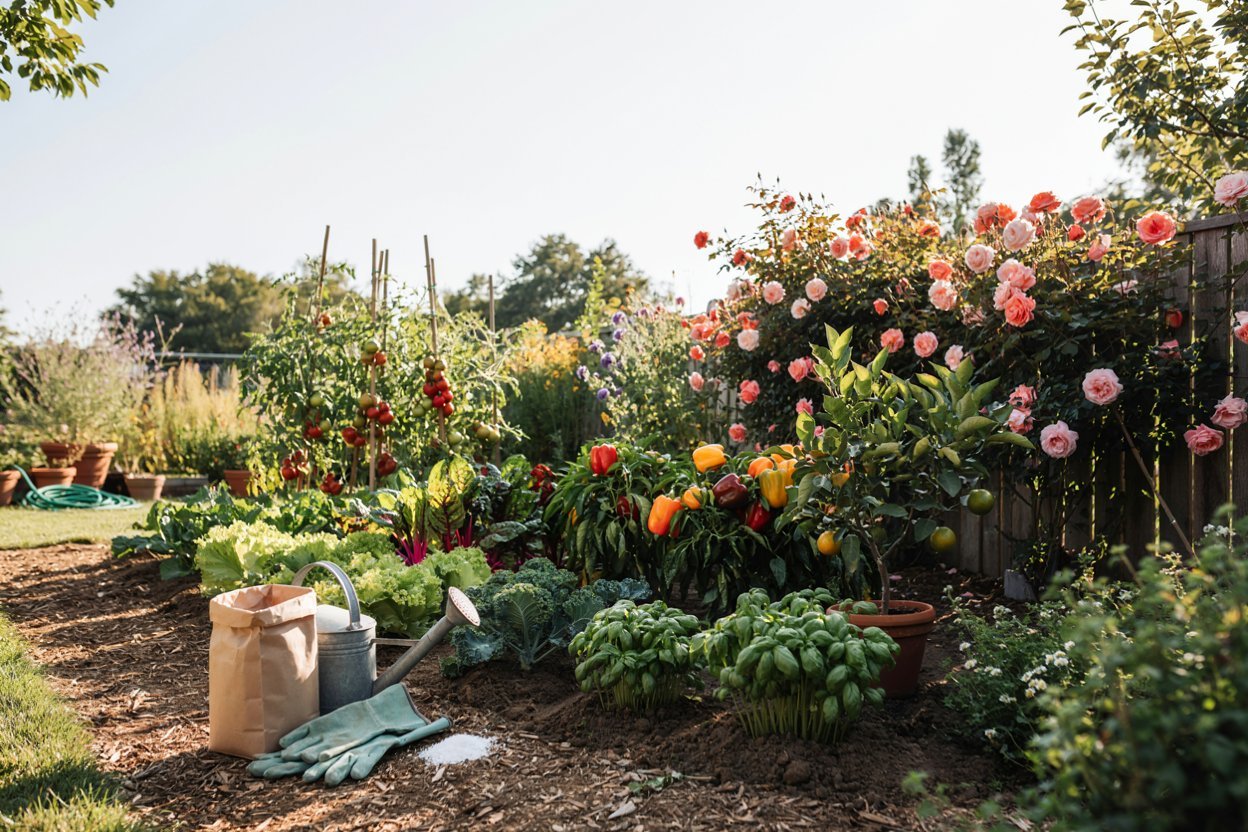

I’ve always loved simple gardening tricks, especially when something already sitting around the house can be useful in the garden.
Epsom salt is one of those ingredients that gardeners often talk about, and when used correctly, it can provide plants with an important nutrient: magnesium.
, it is not a miracle fertilizer, and the secret is knowing which plants may benefit and when to use it.
Some plants respond better when magnesium is lacking, while others need completely different nutrients. In this guide, I’m sharing 15 plants that may grow better with Epsom salt and exactly how to use it wisely.
What Is Epsom Salt and Why Do Plants Like It?
Epsom salt is made from magnesium sulfate, which contains two nutrients plants use:
- Magnesium
- Sulfur
Magnesium is especially important because it plays a role in chlorophyll production. Chlorophyll is what helps plants capture energy from sunlight, and it also gives healthy leaves their beautiful green color.
When a plant does not have enough available magnesium, you may sometimes notice symptoms such as:
- Yellowing between the veins of older leaves
- Slower growth
- Pale-looking foliage
- Poor overall vigor
Sulfur is also an essential plant nutrient and contributes to normal plant growth and development.
That said, one of the most important things I want to mention before we begin is this: Epsom salt should not be used automatically on every plant.
If your soil already contains enough magnesium, adding more may not improve growth. In fact, repeatedly adding unnecessary salts can create nutrient imbalances in the soil.
The best approach is to think of Epsom salt as a supplement for a specific nutrient need, rather than a replacement for balanced fertilizer, compost, healthy soil, water, or sunlight.
1. Tomatoes
Tomatoes are probably the plants most commonly associated with Epsom salt.
These heavy-feeding plants need a balanced supply of nutrients throughout the growing season, including magnesium. If your soil is genuinely low in magnesium, tomatoes may benefit from correcting that deficiency.
Why Epsom Salt May Help
Magnesium supports chlorophyll production and healthy plant growth. A magnesium-deficient tomato plant may develop yellowing between the veins of older leaves.
How to Use It
If a soil test or clear deficiency indicates that magnesium is needed, dissolve a small amount of Epsom salt in water and apply it as directed for your garden conditions.
Avoid adding large amounts repeatedly just because your tomatoes are not producing enough fruit. Problems such as poor fruiting can also be caused by:
- Too little sunlight
- Excess nitrogen
- Heat stress
- Poor pollination
- Inconsistent watering
My Tip
Healthy tomatoes need much more than magnesium. I always focus first on rich soil, full sun, regular watering, and a balanced tomato fertilizer.
2. Peppers
Peppers, including bell peppers and chili peppers, can also benefit when a genuine magnesium deficiency is present.
Like tomatoes, peppers are warm-season plants that grow best when they receive consistent nutrition.
Why Epsom Salt May Help
Magnesium helps support healthy green growth and photosynthesis. If magnesium availability is low, correcting the deficiency can help the plant recover.
How to Use It
Use Epsom salt only when needed and avoid making it a weekly routine without a reason.
Important Tip
If your pepper plants have plenty of leaves but very few peppers, magnesium may not be the problem. Excess nitrogen is often a more likely cause of leafy plants with reduced fruit production.
3. Roses
Roses are another garden favorite often mentioned in connection with Epsom salt.
These beautiful flowering shrubs need fertile, well-balanced soil to produce strong stems, healthy foliage, and plenty of blooms.
Why Epsom Salt May Help
If a rose is growing in soil with insufficient magnesium, correcting the deficiency may support healthier foliage.
How to Use It
A soil test is the most reliable way to determine whether magnesium is actually needed. If you decide to use Epsom salt, use it moderately and avoid overapplying it around the roots.
Remember
Epsom salt is not a replacement for:
- Compost
- Rose fertilizer
- Proper pruning
- Good drainage
- Adequate sunlight
A beautiful rose garden starts with healthy soil.
4. Potatoes
Potatoes require several essential nutrients during their growing season, and magnesium is one of them.
Why Epsom Salt May Help
When magnesium is deficient, potato leaves may show yellowing between the veins. Correcting a confirmed deficiency can help support healthy leaf function.
Healthy leaves are especially important because they produce energy that supports the developing tubers.
My Gardening Advice
Do not assume every yellow potato leaf needs Epsom salt. Yellowing can also result from:
- Nitrogen deficiency
- Disease
- Overwatering
- Poor drainage
- Natural aging of older leaves
Always look at the whole plant and growing conditions before adding anything to the soil.
5. Citrus Trees
Citrus trees, including lemons, oranges, and limes, can sometimes show magnesium deficiency, particularly in certain soil conditions.
Why Epsom Salt May Help
Magnesium deficiency in citrus can cause noticeable yellowing patterns on older leaves.
When magnesium is genuinely lacking, providing an appropriate magnesium source can help correct the deficiency.
How to Use It Wisely
Citrus nutrient problems can be complicated because yellow leaves may also indicate deficiencies in:
- Nitrogen
- Iron
- Manganese
- Other nutrients
For this reason, I would not treat every yellow citrus tree with Epsom salt automatically.
My Tip
A citrus-specific fertilizer is usually a better foundation because it provides a broader range of nutrients than Epsom salt alone.
6. Green Beans
Green beans need fertile soil and a balanced nutrient supply to grow well.
Why Epsom Salt May Help
Like other plants, beans need magnesium for normal plant functions and chlorophyll production.
If the soil is low in available magnesium, correcting the deficiency may support healthier foliage and growth.
Best Growing Conditions
For productive bean plants, focus on:
- Full sun
- Well-draining soil
- Consistent moisture
- Good spacing
- Appropriate fertilization
Epsom salt should only be considered as part of correcting a specific nutrient problem.
7. Spinach
Spinach is grown mainly for its delicious green leaves, which makes healthy foliage especially important.
Why Epsom Salt May Help
Magnesium is a central part of the chlorophyll molecule, so plants need it for healthy green growth.
When spinach is truly deficient in magnesium, correcting the deficiency may help improve its overall health.
My Tip
Spinach grows quickly and also needs important nutrients such as nitrogen. If your leaves are pale, magnesium is only one possible explanation.
Rich, compost-amended soil usually gives spinach a much better foundation than relying on one single nutrient.
8. Lettuce
Lettuce is another leafy crop that needs steady nutrition to produce tender, healthy leaves.
Why Epsom Salt May Help
If magnesium is lacking in the growing medium, correcting that deficiency can support normal chlorophyll production.
Growing Tip
Lettuce is sensitive to stressful growing conditions. Bitter or struggling lettuce is often caused by:
- Hot weather
- Irregular watering
- Poor soil
- Overcrowding
Adding Epsom salt will not solve every lettuce problem, so it is important to identify the real cause first.
9. Broccoli
Broccoli is a heavy-feeding vegetable that benefits from fertile, nutrient-rich soil.
Why Epsom Salt May Help
Magnesium is one of several nutrients broccoli requires for healthy growth.
A confirmed magnesium deficiency may be corrected with an appropriate magnesium source.
What Broccoli Really Needs
Broccoli also requires sufficient amounts of nutrients such as nitrogen and potassium, along with consistent moisture.
I recommend starting with good compost and a suitable vegetable fertilizer rather than depending on Epsom salt as the main plant food.
10. Cabbage
Cabbage grows best when its nutritional needs are consistently met.
Why Epsom Salt May Help
Like other leafy vegetables, cabbage needs magnesium for healthy chlorophyll production.
If the soil is deficient, adding the correct amount of magnesium may help improve plant health.
Important Note
Too much fertilizer of any kind can cause problems.
A balanced approach is always better than repeatedly adding one nutrient without knowing what your soil actually needs.
11. Basil
Basil is one of my favorite herbs to grow because it rewards you with fragrant leaves when given warm weather, sunlight, and good care.
Why Epsom Salt May Help
If basil is growing in a magnesium-deficient medium, correcting the deficiency may support healthier foliage.
My Basil Tip
Before reaching for Epsom salt, check the basics:
- Does the plant get enough sunlight?
- Is the soil draining well?
- Is it being watered correctly?
- Does it need a balanced fertilizer?
Many basil problems are caused by growing conditions rather than a magnesium shortage.
12. Mint
Mint is an enthusiastic grower when it has the right conditions.
Why Epsom Salt May Help
Mint, like all plants, requires magnesium as an essential nutrient.
If a true deficiency exists, providing magnesium may help correct that issue.
But Be Careful
Mint generally does not need gardeners to constantly add Epsom salt.
In fact, mint is often much happier with:
- Moist but well-draining soil
- Partial to full sun
- Regular watering
- Occasional balanced nutrition
Sometimes the simplest care routine works best.
13. Hydrangeas
Hydrangeas are loved for their large, beautiful blooms and lush foliage.
Why Epsom Salt May Help
Magnesium is important for normal plant growth, but Epsom salt should not be viewed as a guaranteed bloom booster for hydrangeas.
If magnesium is deficient, correcting the deficiency may improve overall plant health.
A Common Mistake
Many gardeners add Epsom salt hoping to dramatically change flower color.
However, hydrangea flower color is influenced by several factors, particularly soil chemistry and aluminum availability in certain types of hydrangeas. Epsom salt is not a reliable shortcut for changing bloom color.
My Tip
Give hydrangeas the right amount of sunlight, moisture, and appropriate fertilizer before experimenting with extra supplements.
14. Houseplants
Some houseplants grown in containers may develop nutrient deficiencies over time because potting mix does not contain an unlimited supply of nutrients.
Plants that can experience magnesium deficiency include various popular indoor plants.
Why Epsom Salt May Help
If magnesium deficiency is correctly identified, an appropriate magnesium supplement may help.
However, I would be especially careful with houseplants.
Why?
Containers are different from garden soil. Minerals and salts can accumulate in potting mix, particularly when fertilizer is repeatedly added.
Too much salt buildup can damage roots and create more problems than it solves.
Better Approach
Use a complete houseplant fertilizer as your regular feeding routine. Only add a specific nutrient supplement when there is a clear reason to do so.
15. Palms
Palms can be particularly sensitive to nutrient deficiencies.
Why Epsom Salt May Help
Some palms can experience magnesium deficiency, which may appear as yellowing patterns on older fronds.
In these situations, providing magnesium may be beneficial.
But Here Is the Important Part
Palm nutrition can be more complicated than simply adding Epsom salt.
Palms often need a carefully balanced fertilizer containing several nutrients, including potassium and magnesium. Using only one nutrient may fail to address the actual problem.
My Tip
For palms, I prefer using a fertilizer specifically formulated for palms rather than guessing with individual supplements.
How to Tell If Your Plants Actually Need Magnesium
Before using Epsom salt, look for evidence that magnesium may be lacking.
One possible symptom is interveinal chlorosis, which means the tissue between leaf veins turns yellow while the veins remain greener.
Magnesium is considered a mobile nutrient in plants, so symptoms often appear first on older leaves.
However, this symptom can have other causes, including:
- Other nutrient deficiencies
- Root problems
- Poor soil pH
- Overwatering
- Disease
- Environmental stress
That is why a soil test is one of the best tools a gardener can use.
A soil test can help you understand:
- Soil pH
- Nutrient levels
- Potential deficiencies
- Whether magnesium supplementation is appropriate
I know soil testing may sound a little less exciting than trying a quick garden hack, but honestly, it can save you money, time, and frustrated plants.
How to Use Epsom Salt in the Garden Safely
If you have determined that magnesium supplementation is appropriate, use Epsom salt carefully.
1. Do Not Overapply
More is not better.
Adding excessive magnesium can interfere with the balance of other nutrients in the soil.
2. Dissolve It Properly
Epsom salt dissolves in water, allowing it to be applied in solution when appropriate.
Follow recommendations based on your soil test, crop needs, and product guidance rather than using random large amounts.
3. Avoid Making It Your Main Fertilizer
Epsom salt contains magnesium and sulfur, but it does not provide the full range of nutrients plants need.
It does not replace:
- Nitrogen
- Phosphorus
- Potassium
- Micronutrients
- Organic matter
4. Watch Your Plants
After correcting a confirmed deficiency, monitor new growth.
Healthy new leaves can be a useful sign that the plant is recovering.
5. Start With Healthy Soil
My favorite gardening philosophy is simple: feed the soil, and the soil helps feed the plants.
Compost, organic matter, proper pH, and balanced fertilization create a much stronger foundation than relying on one quick supplement.
Plants That May Not Need Epsom Salt
The truth is that most healthy plants do not automatically need Epsom salt.
If your soil already contains enough magnesium, adding extra may provide little or no benefit.
I would avoid routinely adding Epsom salt to every:
- Flower bed
- Vegetable garden
- Houseplant
- Lawn
- Container
Instead, use it purposefully.
A healthy gardening routine should always begin with understanding what your plants and soil actually need.
Common Epsom Salt Mistakes to Avoid
Using It as a Universal Plant Fertilizer
Epsom salt is not a complete fertilizer.
Plants need a wide range of nutrients, so magnesium sulfate alone cannot meet all their nutritional needs.
Adding It Every Week
Frequent applications without a confirmed need can lead to unnecessary salt and nutrient buildup.
Using It to Solve Every Yellow Leaf Problem
Yellow leaves do not always mean magnesium deficiency.
Check for watering problems, pests, diseases, soil conditions, and other nutrient deficiencies.
Ignoring Soil pH
Soil pH affects nutrient availability.
Sometimes nutrients are present in the soil, but plants struggle to absorb them because the pH is unsuitable.
Expecting Instant Miracles
Gardening is rarely about one magical ingredient.
The healthiest plants usually come from consistently good care.
Frequently Asked Questions About Epsom Salt for Plants
Can I Use Epsom Salt on All Plants?
No. All plants need magnesium, but not all plants need extra magnesium from Epsom salt.
Only use a supplement when there is a good reason to believe your soil or growing medium is deficient.
How Often Should I Use Epsom Salt?
There is no universal schedule that works for every garden.
The correct amount and frequency depend on your soil and the plant’s actual nutrient needs.
Will Epsom Salt Make Plants Grow Faster?
Epsom salt may help a plant recover if magnesium deficiency is limiting its growth. However, it will not automatically make already healthy plants grow dramatically faster.
Does Epsom Salt Replace Fertilizer?
No. Epsom salt is not a complete fertilizer.
Can Too Much Epsom Salt Harm Plants?
Yes. Overusing mineral salts can contribute to nutrient imbalances and salt buildup, particularly in containers.
Final Thoughts
Epsom salt can be a useful gardening supplement, but I believe the best results come from using it for the right reason rather than treating it as a miracle cure.
Plants such as tomatoes, peppers, roses, citrus, potatoes, leafy vegetables, palms, and many others may benefit when magnesium is genuinely deficient.
The key is to understand your soil and pay attention to what your plants are telling you.
For me, the most successful garden always starts with healthy soil, proper watering, enough sunlight, and balanced nutrition.
Think of Epsom salt as one helpful tool in your gardening kit not the entire kit itself. When used carefully and purposefully, it can help correct a specific nutrient problem and support healthier plant growth.
