
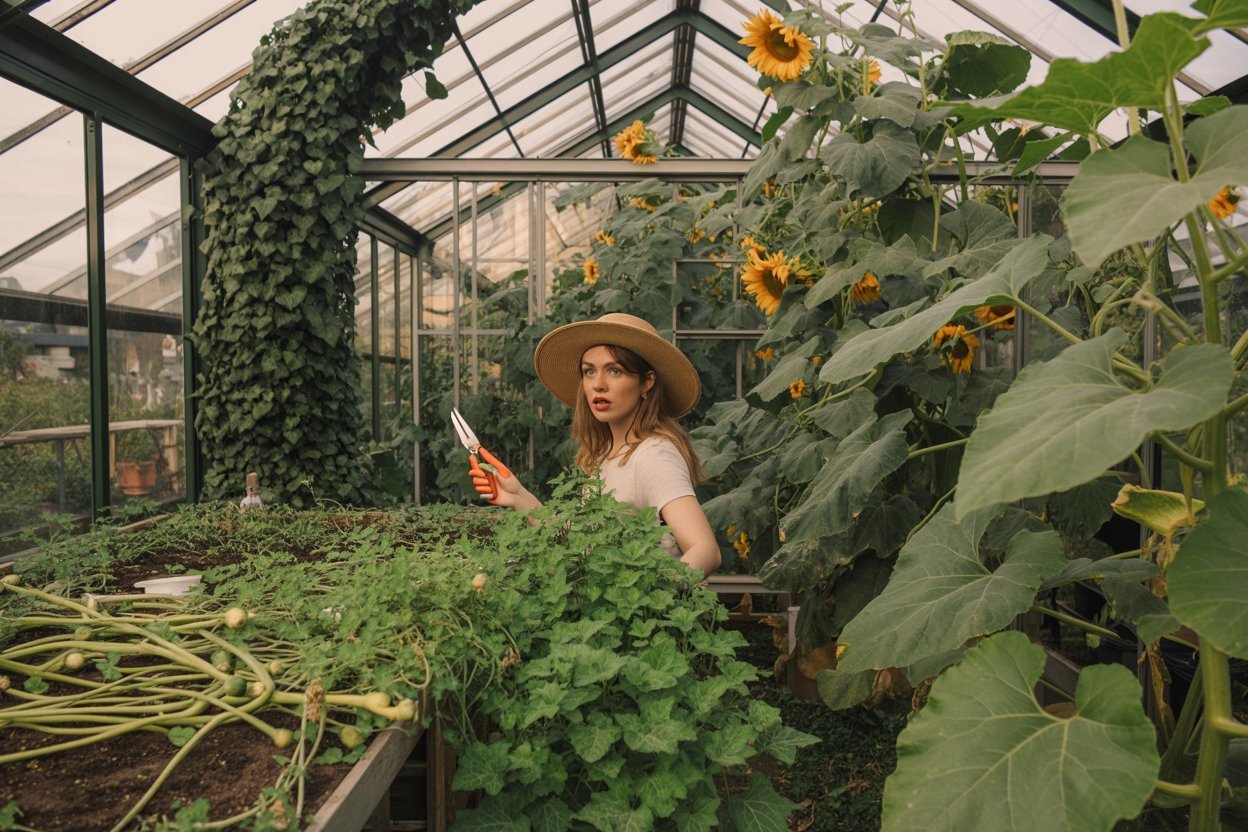

A greenhouse feels like the safest place in the garden. Warm temperatures, protected walls, steady humidity, and shelter from harsh weather can make almost any plant seem happier at first glance.
I used to think the same thing until I learned that some plants simply do not belong inside that cozy environment.
A few become invasive, others attract pests, and some struggle with the trapped heat and moisture that greenhouses naturally create.
Choosing the wrong plants can quickly turn a healthy greenhouse into a crowded, disease-prone space.
Knowing which plants should stay outdoors will save you frustration, protect your healthier crops, and help your greenhouse thrive season after season.
Let dive into this 20 Plants That Should Stay Out of Your Greenhouse
Why Some Plants Don’t Belong in a Greenhouse
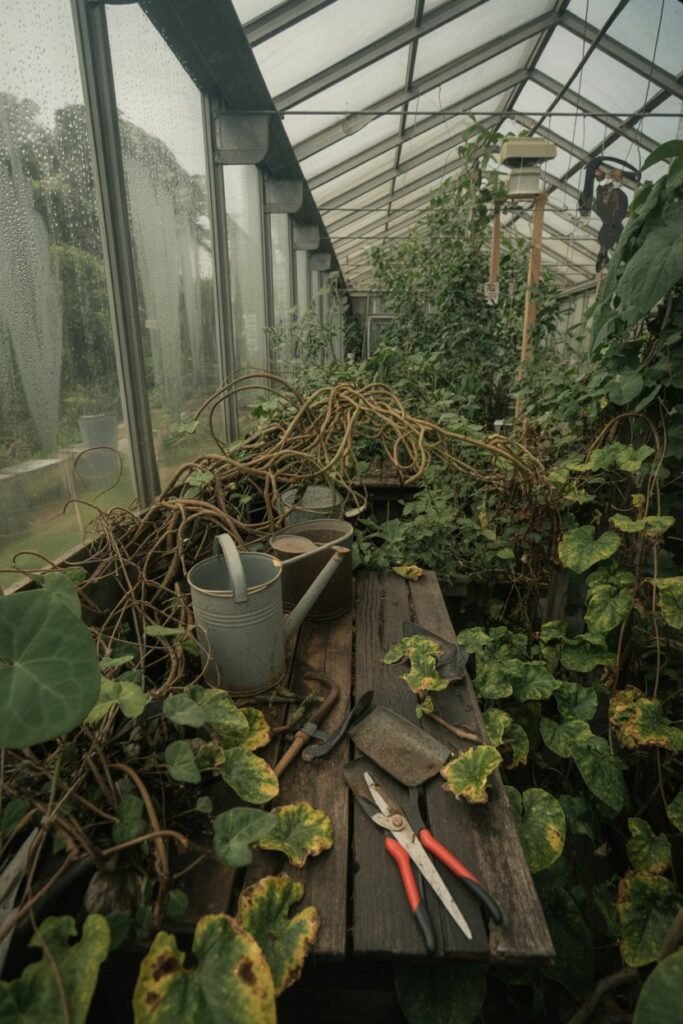
Before filling every empty corner with greenery, it helps to understand why certain plants fail inside a greenhouse environment.
Greenhouses create conditions that are very different from outdoor gardens.
Warm temperatures, limited airflow, high humidity, and contained growing spaces can become problematic for plants that prefer cooler temperatures, dry conditions, or aggressive root expansion.
Some plants:
- Spread too quickly
- Attract harmful pests
- Develop fungal diseases in humid air
- Outgrow the space rapidly
- Compete with delicate greenhouse crops
- Require natural outdoor conditions to stay healthy
Keeping unsuitable plants out of your greenhouse helps maintain balance and reduces long-term maintenance problems.
Mint is one of those herbs that tricks gardeners into thinking it will stay small and tidy. In reality, it becomes a fast-spreading plant that can completely dominate a greenhouse in a surprisingly short time. The warm temperatures and steady moisture inside a greenhouse create the perfect environment for mint to grow nonstop throughout the year.
The biggest problem with mint is its aggressive root system. Underground runners spread rapidly beneath the soil, invading nearby containers, raised beds, and even small cracks between planting spaces. Once established, mint is extremely difficult to remove completely because tiny root pieces can regrow into full plants.
Another issue is airflow. Mint grows dense foliage very quickly, and those thick leaves trap humidity around neighboring plants. In enclosed greenhouse conditions, trapped moisture increases the risk of:
- Powdery mildew
- Fungal leaf spots
- Root rot
- Aphid infestations
Mint can also attract spider mites and whiteflies, which may spread to tomatoes, peppers, cucumbers, and herbs nearby.
Why You Shouldn’t Grow It in a Greenhouse
A greenhouse en
Better Option
Grow mint outdoors in a large container where the roots can be controlled more easily.
2. Bamboo
Bamboo may create a beautiful tropical feel, but it becomes a serious long-term problem inside greenhouses. Many bamboo varieties are known for their aggressive underground runners that spread rapidly through soil and containers.
Inside a greenhouse, bamboo grows even faster because of the warm protected conditions. What starts as a small decorative plant can eventually become a towering wall of stems that shades every nearby crop.
Bamboo creates several greenhouse issues:
- Blocks sunlight from vegetables and seedlings
- Restricts air circulation
- Raises humidity levels
- Damages containers with powerful roots
- Overcrowds smaller plants
Large bamboo varieties can even press against greenhouse panels and structures as they mature.
Another major issue is maintenance. Bamboo drops leaves constantly, creating extra cleanup and increasing moisture buildup on the greenhouse floor.
Why It Should Stay Outdoors
Bamboo needs open outdoor space, deep soil, and strong root barriers to remain manageable. Most greenhouses simply cannot provide enough room for healthy long-term growth.
Better Alternative
Use smaller non-invasive ornamental grasses if you want a similar visual effect inside your greenhouse.
3. Pumpkin Plants
Pumpkin plants may sound fun to grow indoors, but they quickly become overwhelming in greenhouse spaces. Their massive vines spread aggressively across walkways, shelves, and neighboring crops, taking over valuable growing space very fast.
The large leaves create another problem. Pumpkin foliage traps moisture underneath the canopy, reducing airflow around the plant. In humid greenhouse conditions, this creates the perfect environment for fungal diseases like:
- Powdery mildew
- Downy mildew
- Stem rot
- Leaf spot diseases
Pumpkins are also heavy feeders that require large amounts of water and nutrients. In smaller greenhouse beds, they compete aggressively with nearby vegetables.
Pollination becomes another challenge indoors. Pumpkin flowers rely heavily on bees and outdoor pollinators. Without proper pollination, flowers may drop without producing fruit.
Why They Don’t Belong in Greenhouses
Pumpkins simply grow too large and sprawling for most greenhouse environments. Their size, disease risk, and nutrient demands often create more problems than benefits.
Better Option
Grow pumpkins outdoors where vines can spread naturally and pollinators can access the flowers easily.
4. Corn
Corn may seem like a productive greenhouse crop at first, but it rarely performs well indoors for long periods. One of the biggest issues is height. Corn grows tall very quickly and can block sunlight from almost every smaller crop nearby.
Because greenhouses are enclosed, corn often suffers from poor pollination. Corn depends on wind to move pollen from tassels to silks. Without strong outdoor airflow, ears may develop unevenly with missing kernels.
Corn also consumes huge amounts of:
- Water
- Nitrogen
- Space
- Sunlight
In a greenhouse, these demands can stress neighboring crops and reduce overall productivity.
Tall corn stalks additionally reduce ventilation and trap warm humid air around lower plants. This increases the risk of fungal problems and pest outbreaks.
Why It’s a Poor Greenhouse Plant
Corn takes up too much room while producing relatively low yields indoors. Most greenhouse gardeners get far better results using that same space for tomatoes, peppers, or cucumbers.
Better Growing Environment
Corn thrives best outdoors in open garden beds where wind pollination happens naturally.
5. Sunflowers
Sunflowers bring cheerful color to gardens, but most varieties become difficult to manage inside greenhouses. Many sunflowers grow extremely tall, sometimes reaching heights that press directly against greenhouse ceilings.
Their thick stems and giant leaves create shade that blocks sunlight from smaller crops below. This can weaken nearby seedlings and reduce vegetable production.
Sunflowers also attract several greenhouse pests, including:
- Aphids
- Whiteflies
- Beetles
- Caterpillars
Once pests arrive, the enclosed greenhouse environment allows infestations to spread rapidly.
Another issue is airflow. Large sunflower leaves reduce ventilation around surrounding plants, creating warm damp pockets where fungal diseases thrive.
Why Greenhouses Aren’t Ideal
Sunflowers naturally prefer open outdoor conditions with strong sunlight, natural airflow, and plenty of room to grow upward.
Better Alternative
If you truly want sunflowers indoors, stick to dwarf container varieties only.
6. Wisteria
Wisteria is absolutely beautiful when blooming, but it can become destructive inside a greenhouse. This woody climbing vine grows aggressively and wraps tightly around anything nearby, including greenhouse frames, pipes, shelves, and ventilation systems.
In warm greenhouse conditions, wisteria may grow even faster than expected. Over time, the heavy vines place pressure on greenhouse structures and can damage supports.
Another problem is light blockage. Thick wisteria growth creates heavy shade that prevents vegetables and smaller plants from receiving enough sunlight.
Wisteria also becomes difficult to prune indoors because its vines grow in every direction rapidly.
Why It Should Stay Outside
Wisteria needs large outdoor structures like pergolas, fences, or arbors where it has room to spread safely without damaging enclosed spaces.
Major Greenhouse Risk
Its aggressive climbing habit can eventually interfere with greenhouse ventilation and structural stability.
7. Dill
Dill often struggles in greenhouse conditions because it dislikes excessive heat and humidity. While it may grow quickly at first, greenhouse temperatures often cause dill to bolt prematurely.
Bolting happens when the plant suddenly shifts from leafy growth into flower and seed production. Once this happens, the leaves become weaker and less flavorful.
Dill also attracts pests that commonly spread throughout greenhouses, including:
- Aphids
- Spider mites
- Caterpillars
Because dill self-seeds heavily, it can suddenly pop up in nearby containers and planting beds unexpectedly.
Another issue is weak stems. In humid enclosed environments, dill may grow tall and floppy rather than strong and bushy.
Why It Performs Better Outdoors
Outdoor airflow and cooler temperatures help dill grow fuller, healthier foliage with slower bolting.
Best Use
Plant dill outdoors during cooler seasons where pollinators can also enjoy the flowers safely.
8. Fennel
Fennel is one of the worst plants for mixed greenhouse growing because it releases natural chemicals into the soil that interfere with nearby plants. This process is called allelopathy.
Plants commonly affected by fennel include:
- Tomatoes
- Beans
- Peppers
- Basil
- Cucumbers
Inside a greenhouse, where plants grow close together, this issue becomes even more noticeable.
Fennel also develops large feathery foliage that blocks airflow and creates humid pockets around surrounding crops.
Another challenge is size. Fennel grows surprisingly tall and wide, quickly overcrowding smaller vegetables and herbs.
Why Greenhouses Make the Problem Worse
The close spacing inside greenhouses increases the negative effects fennel has on neighboring plants.
Better Growing Method
Grow fennel separately outdoors away from sensitive crops.
9. Horseradish
Horseradish develops extremely aggressive roots that become difficult to control indoors. Even tiny leftover root fragments can regrow into entirely new plants.
In greenhouse beds, horseradish roots spread deeply and compete heavily with nearby crops for nutrients and water.
The plant also requires deep loose soil to develop healthy roots properly. Many greenhouse containers simply are not large enough for long-term growth.
Horseradish leaves can become huge and crowded, reducing airflow around neighboring plants and increasing humidity.
Why It Causes Long-Term Problems
Once horseradish becomes established in a greenhouse bed, removing it completely is frustrating and time-consuming.
Better Option
Plant horseradish outdoors in isolated beds where spreading roots are easier to manage.
10. Morning Glory
Morning glories grow fast — sometimes far too fast for greenhouse spaces. These climbing vines quickly wrap around shelves, support poles, irrigation systems, and ventilation openings.
Inside a greenhouse, morning glories can easily:
- Block sunlight
- Reduce airflow
- Smother nearby crops
- Create excessive shade
The dense vines also trap humidity, increasing fungal disease risks throughout the greenhouse.
Another issue is self-seeding. Morning glories drop seeds aggressively and may return repeatedly in unwanted locations.
Why They Don’t Work Indoors
Their rapid climbing habit becomes difficult to control in enclosed spaces.
Best Growing Location
Grow morning glories outdoors on fences or trellises where they have open vertical space to spread naturally.
1. Mint
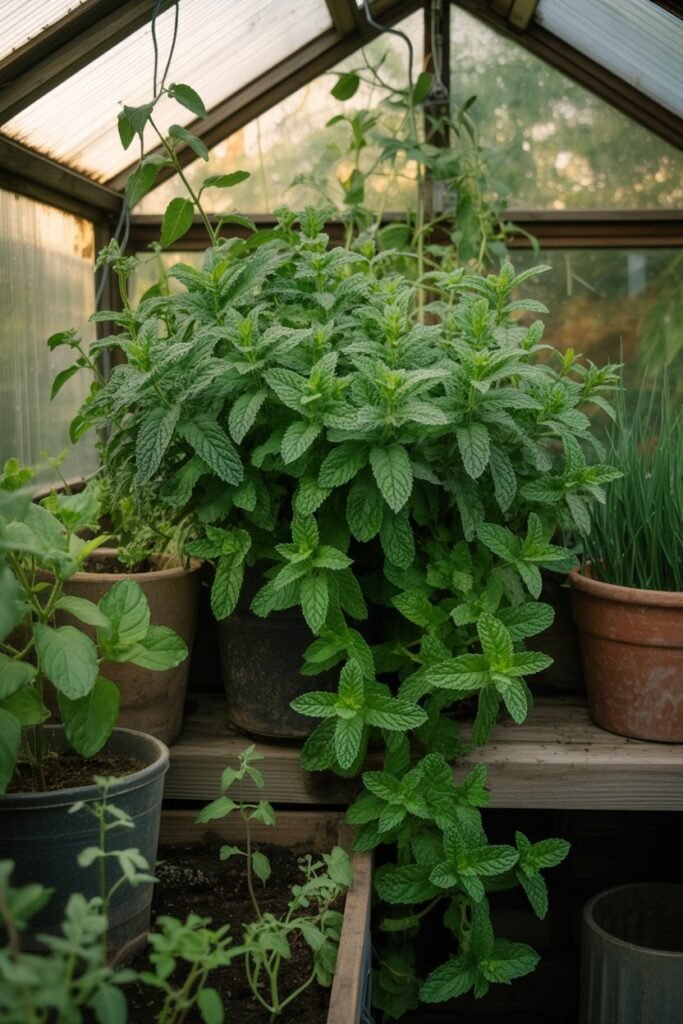
Mint is one of those herbs that tricks gardeners into thinking it will stay small and tidy. In reality, it becomes a fast-spreading plant that can completely dominate a greenhouse in a surprisingly short time.
The warm temperatures and steady moisture inside a greenhouse create the perfect environment for mint to grow nonstop throughout the year.
The biggest problem with mint is its aggressive root system. Underground runners spread rapidly beneath the soil, invading nearby containers, raised beds, and even small cracks between planting spaces.
Once established, mint is extremely difficult to remove completely because tiny root pieces can regrow into full plants.
Another issue is airflow. Mint grows dense foliage very quickly, and those thick leaves trap humidity around neighboring plants. In enclosed greenhouse conditions, trapped moisture increases the risk of:
- Powdery mildew
- Fungal leaf spots
- Root rot
- Aphid infestations
Mint can also attract spider mites and whiteflies, which may spread to tomatoes, peppers, cucumbers, and herbs nearby.
Why You Shouldn’t Grow It in a Greenhouse
A greenhouse encourages mint to become invasive much faster than it would outdoors. It competes aggressively for space, nutrients, and airflow, making it difficult for more delicate greenhouse crops to thrive.
Better Option
Grow mint outdoors in a large container where the roots can be controlled more easily.
2. Bamboo
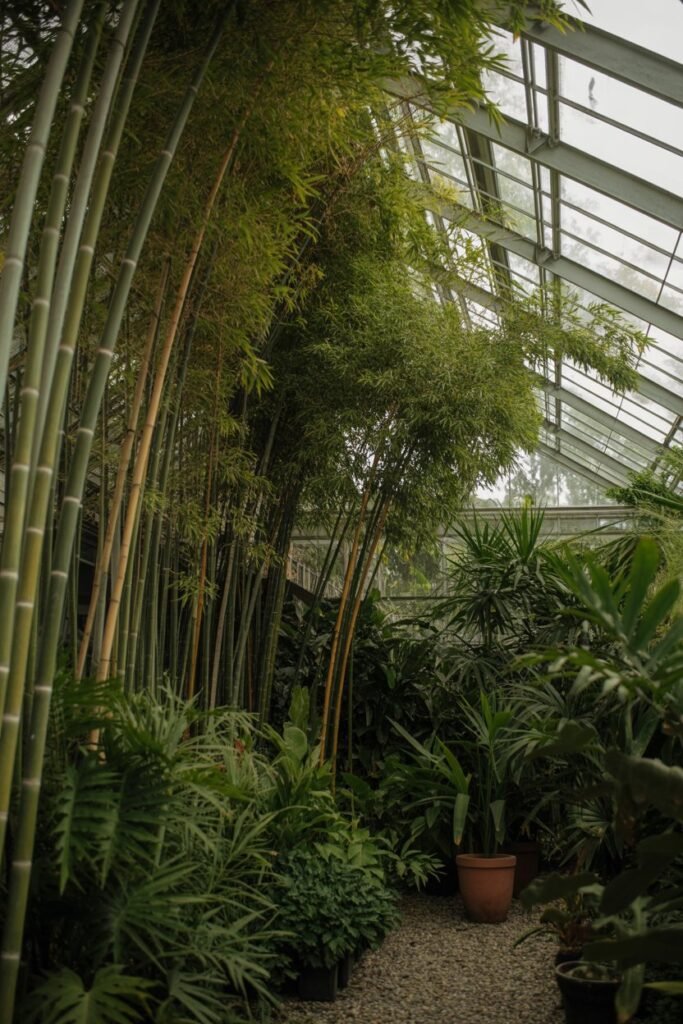
Bamboo may create a beautiful tropical feel, but it becomes a serious long-term problem inside greenhouses. Many bamboo varieties are known for their aggressive underground runners that spread rapidly through soil and containers.
Inside a greenhouse, bamboo grows even faster because of the warm protected conditions. What starts as a small decorative plant can eventually become a towering wall of stems that shades every nearby crop.
Bamboo creates several greenhouse issues:
- Blocks sunlight from vegetables and seedlings
- Restricts air circulation
- Raises humidity levels
- Damages containers with powerful roots
- Overcrowds smaller plants
Large bamboo varieties can even press against greenhouse panels and structures as they mature.
Another major issue is maintenance. Bamboo drops leaves constantly, creating extra cleanup and increasing moisture buildup on the greenhouse floor.
Why It Should Stay Outdoors
Bamboo needs open outdoor space, deep soil, and strong root barriers to remain manageable. Most greenhouses simply cannot provide enough room for healthy long-term growth.
Better Alternative
Use smaller non-invasive ornamental grasses if you want a similar visual effect inside your greenhouse.
3. Pumpkin Plants
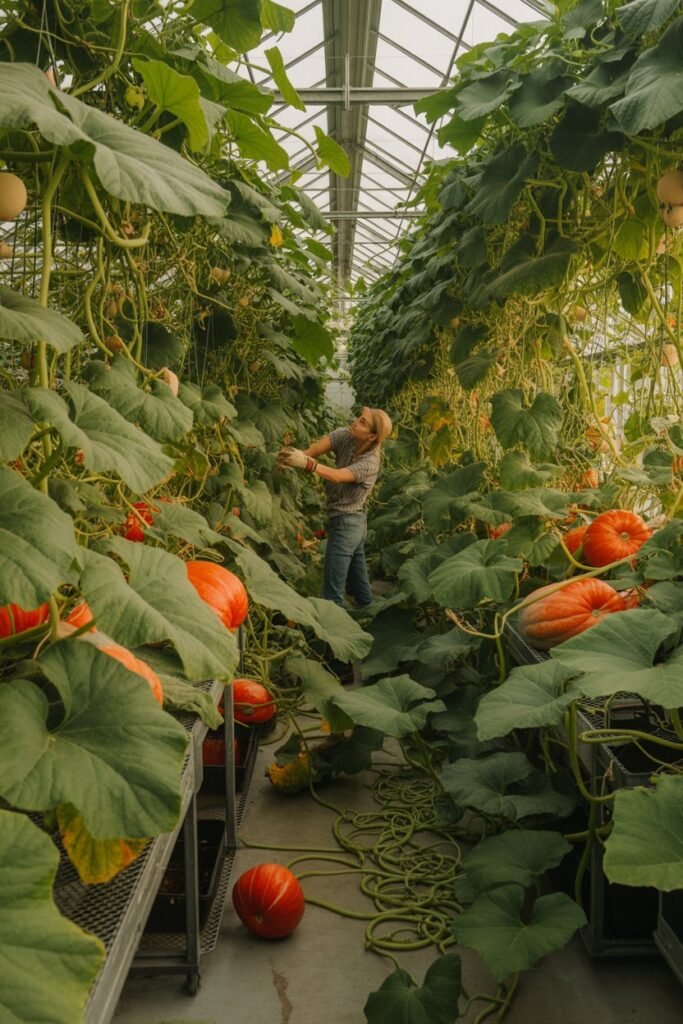
Pumpkin plants may sound fun to grow indoors, but they quickly become overwhelming in greenhouse spaces. Their massive vines spread aggressively across walkways, shelves, and neighboring crops, taking over valuable growing space very fast.
The large leaves create another problem. Pumpkin foliage traps moisture underneath the canopy, reducing airflow around the plant. In humid greenhouse conditions, this creates the perfect environment for fungal diseases like:
- Powdery mildew
- Downy mildew
- Stem rot
- Leaf spot diseases
Pumpkins are also heavy feeders that require large amounts of water and nutrients. In smaller greenhouse beds, they compete aggressively with nearby vegetables.
Pollination becomes another challenge indoors. Pumpkin flowers rely heavily on bees and outdoor pollinators. Without proper pollination, flowers may drop without producing fruit.
Why They Don’t Belong in Greenhouses
Pumpkins simply grow too large and sprawling for most greenhouse environments. Their size, disease risk, and nutrient demands often create more problems than benefits.
Better Option
Grow pumpkins outdoors where vines can spread naturally and pollinators can access the flowers easily.
4. Corn
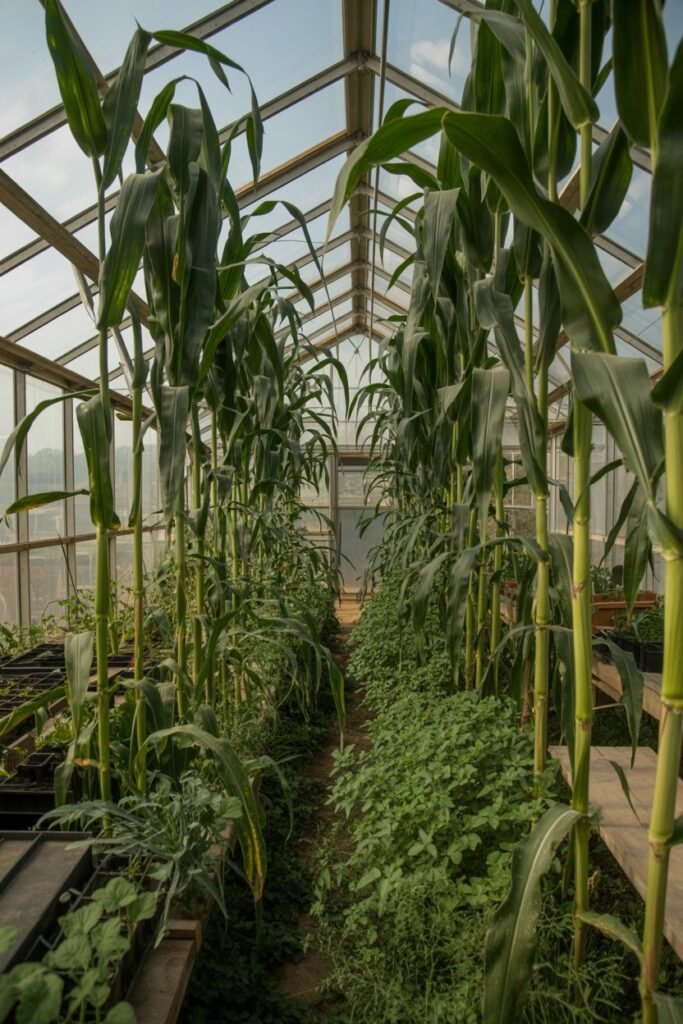
Corn may seem like a productive greenhouse crop at first, but it rarely performs well indoors for long periods. One of the biggest issues is height. Corn grows tall very quickly and can block sunlight from almost every smaller crop nearby.
Because greenhouses are enclosed, corn often suffers from poor pollination. Corn depends on wind to move pollen from tassels to silks. Without strong outdoor airflow, ears may develop unevenly with missing kernels.
Corn also consumes huge amounts of:
- Water
- Nitrogen
- Space
- Sunlight
In a greenhouse, these demands can stress neighboring crops and reduce overall productivity.
Tall corn stalks additionally reduce ventilation and trap warm humid air around lower plants. This increases the risk of fungal problems and pest outbreaks.
Why It’s a Poor Greenhouse Plant
Corn takes up too much room while producing relatively low yields indoors. Most greenhouse gardeners get far better results using that same space for tomatoes, peppers, or cucumbers.
Better Growing Environment
Corn thrives best outdoors in open garden beds where wind pollination happens naturally.
5. Sunflowers
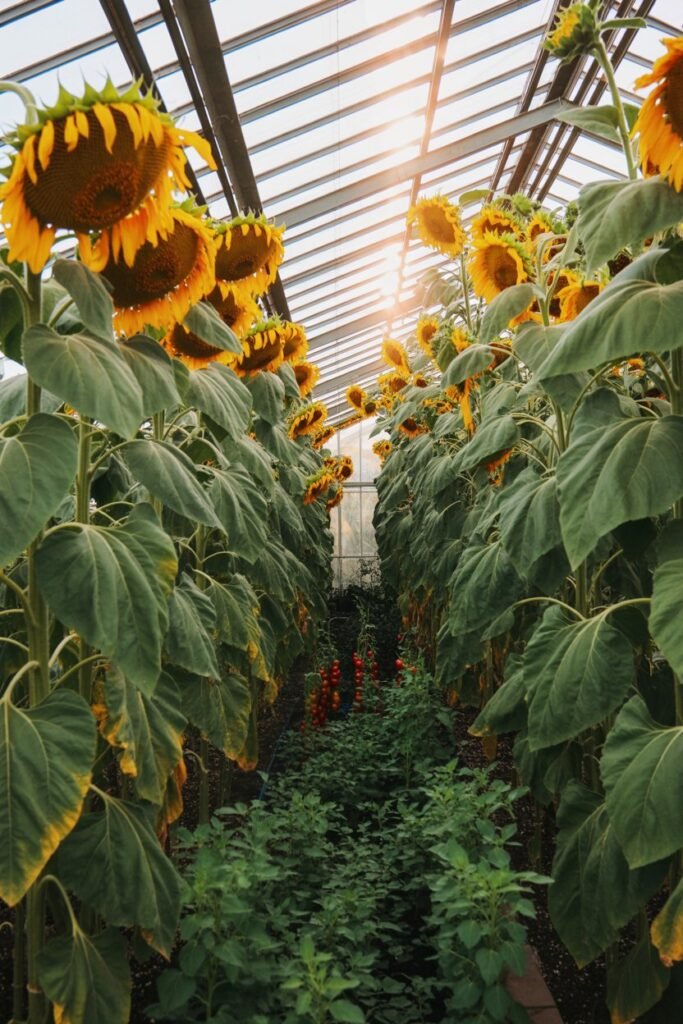
Sunflowers bring cheerful color to gardens, but most varieties become difficult to manage inside greenhouses. Many sunflowers grow extremely tall, sometimes reaching heights that press directly against greenhouse ceilings.
Their thick stems and giant leaves create shade that blocks sunlight from smaller crops below. This can weaken nearby seedlings and reduce vegetable production.
Sunflowers also attract several greenhouse pests, including:
- Aphids
- Whiteflies
- Beetles
- Caterpillars
Once pests arrive, the enclosed greenhouse environment allows infestations to spread rapidly.
Another issue is airflow. Large sunflower leaves reduce ventilation around surrounding plants, creating warm damp pockets where fungal diseases thrive.
Why Greenhouses Aren’t Ideal
Sunflowers naturally prefer open outdoor conditions with strong sunlight, natural airflow, and plenty of room to grow upward.
Better Alternative
If you truly want sunflowers indoors, stick to dwarf container varieties only.
6. Wisteria
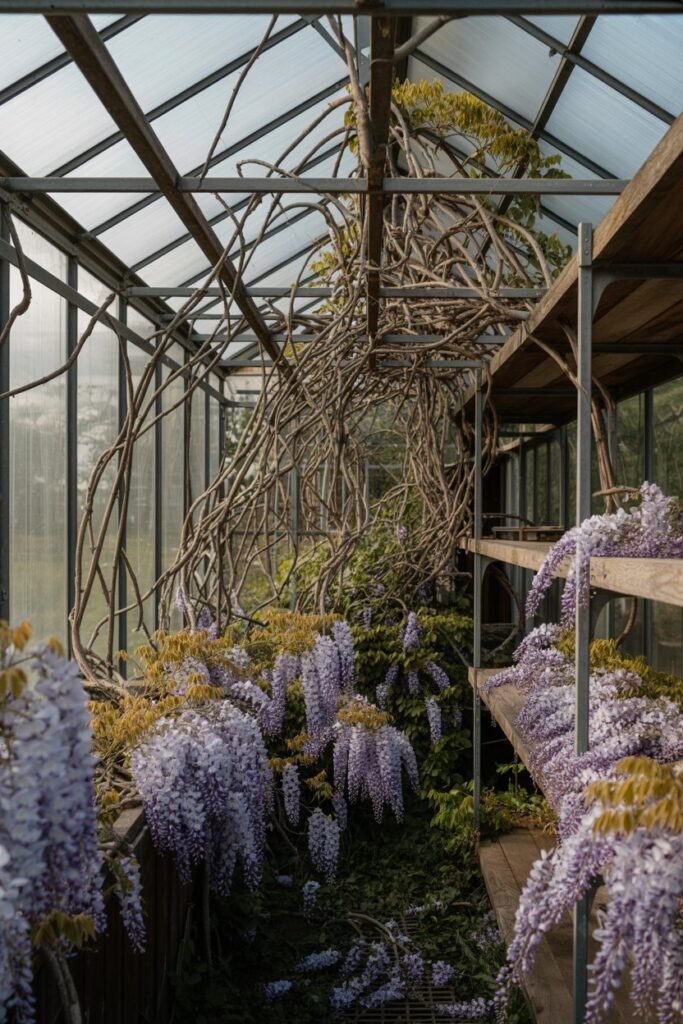
Wisteria is absolutely beautiful when blooming, but it can become destructive inside a greenhouse.
This woody climbing vine grows aggressively and wraps tightly around anything nearby, including greenhouse frames, pipes, shelves, and ventilation systems.
In warm greenhouse conditions, wisteria may grow even faster than expected. Over time, the heavy vines place pressure on greenhouse structures and can damage supports.
Another problem is light blockage. Thick wisteria growth creates heavy shade that prevents vegetables and smaller plants from receiving enough sunlight.
Wisteria also becomes difficult to prune indoors because its vines grow in every direction rapidly.
Why It Should Stay Outside
Wisteria needs large outdoor structures like pergolas, fences, or arbors where it has room to spread safely without damaging enclosed spaces.
Major Greenhouse Risk
Its aggressive climbing habit can eventually interfere with greenhouse ventilation and structural stability.
7. Dill
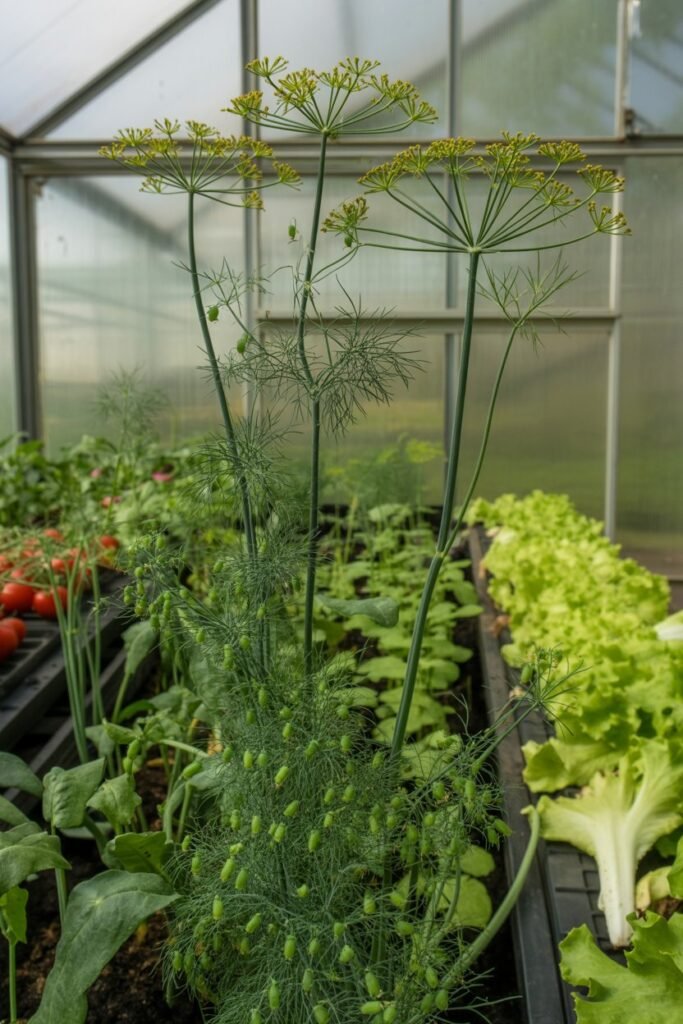
Dill often struggles in greenhouse conditions because it dislikes excessive heat and humidity. While it may grow quickly at first, greenhouse temperatures often cause dill to bolt prematurely.
Bolting happens when the plant suddenly shifts from leafy growth into flower and seed production. Once this happens, the leaves become weaker and less flavorful.
Dill also attracts pests that commonly spread throughout greenhouses, including:
- Aphids
- Spider mites
- Caterpillars
Because dill self-seeds heavily, it can suddenly pop up in nearby containers and planting beds unexpectedly.
Another issue is weak stems. In humid enclosed environments, dill may grow tall and floppy rather than strong and bushy.
Why It Performs Better Outdoors
Outdoor airflow and cooler temperatures help dill grow fuller, healthier foliage with slower bolting.
Best Use
Plant dill outdoors during cooler seasons where pollinators can also enjoy the flowers safely.
8. Fennel
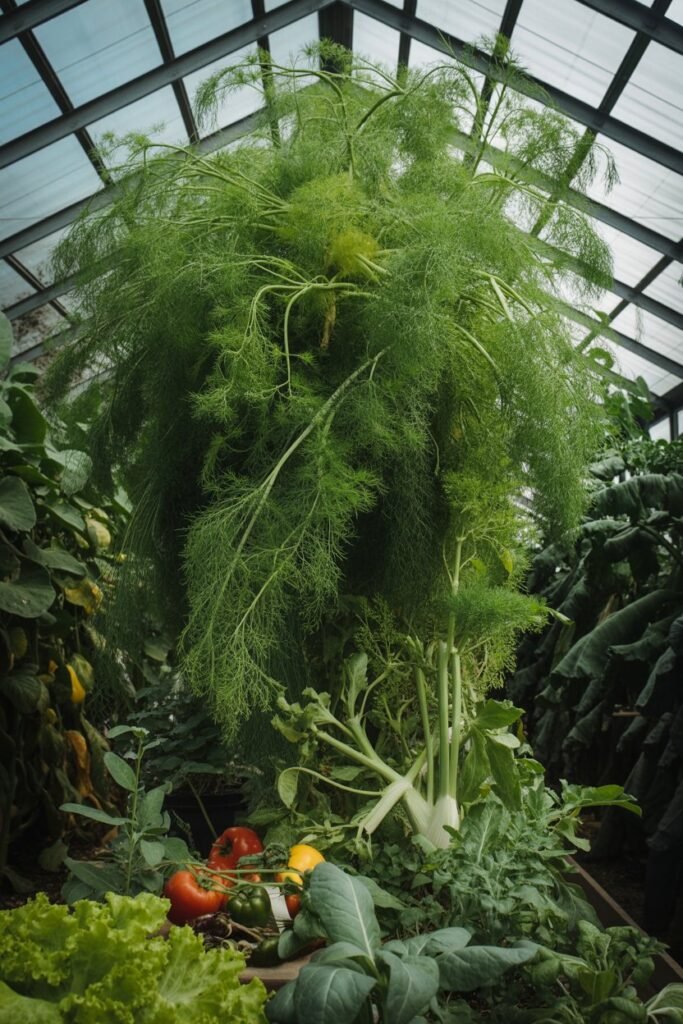
Fennel is one of the worst plants for mixed greenhouse growing because it releases natural chemicals into the soil that interfere with nearby plants. This process is called allelopathy.
Plants commonly affected by fennel include:
- Tomatoes
- Beans
- Peppers
- Basil
- Cucumbers
Inside a greenhouse, where plants grow close together, this issue becomes even more noticeable.
Fennel also develops large feathery foliage that blocks airflow and creates humid pockets around surrounding crops.
Another challenge is size. Fennel grows surprisingly tall and wide, quickly overcrowding smaller vegetables and herbs.
Why Greenhouses Make the Problem Worse
The close spacing inside greenhouses increases the negative effects fennel has on neighboring plants.
Better Growing Method
Grow fennel separately outdoors away from sensitive crops.
9. Horseradish
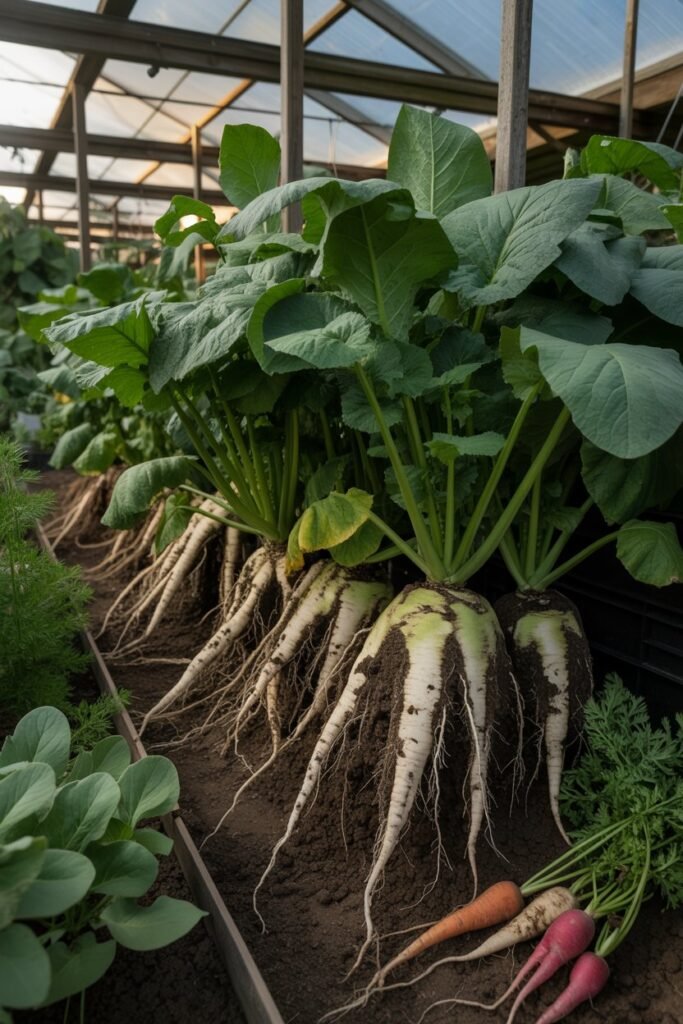
Horseradish develops extremely aggressive roots that become difficult to control indoors. Even tiny leftover root fragments can regrow into entirely new plants.
In greenhouse beds, horseradish roots spread deeply and compete heavily with nearby crops for nutrients and water.
The plant also requires deep loose soil to develop healthy roots properly. Many greenhouse containers simply are not large enough for long-term growth.
Horseradish leaves can become huge and crowded, reducing airflow around neighboring plants and increasing humidity.
Why It Causes Long-Term Problems
Once horseradish becomes established in a greenhouse bed, removing it completely is frustrating and time-consuming.
Better Option
Plant horseradish outdoors in isolated beds where spreading roots are easier to manage.
10. Morning Glory
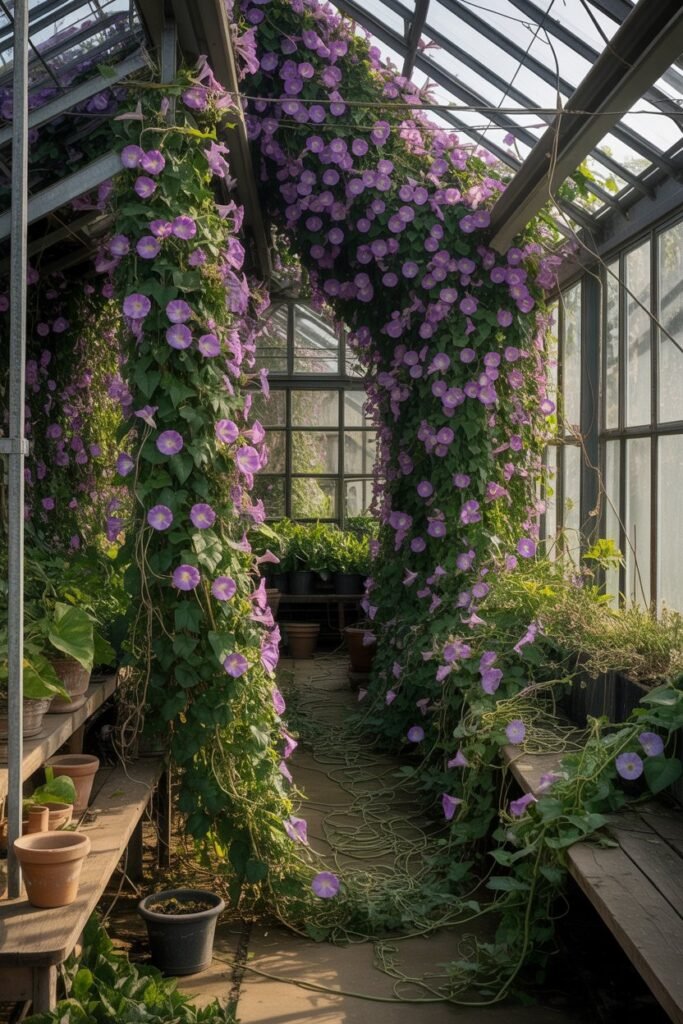
Morning glories grow fast sometimes far too fast for greenhouse spaces. These climbing vines quickly wrap around shelves, support poles, irrigation systems, and ventilation openings.
Inside a greenhouse, morning glories can easily:
- Block sunlight
- Reduce airflow
- Smother nearby crops
- Create excessive shade
The dense vines also trap humidity, increasing fungal disease risks throughout the greenhouse.
Another issue is self-seeding. Morning glories drop seeds aggressively and may return repeatedly in unwanted locations.
Why They Don’t Work Indoors
Their rapid climbing habit becomes difficult to control in enclosed spaces.
Best Growing Location
Grow morning glories outdoors on fences or trellises where they have open vertical space to spread naturally.
11. Large Melons
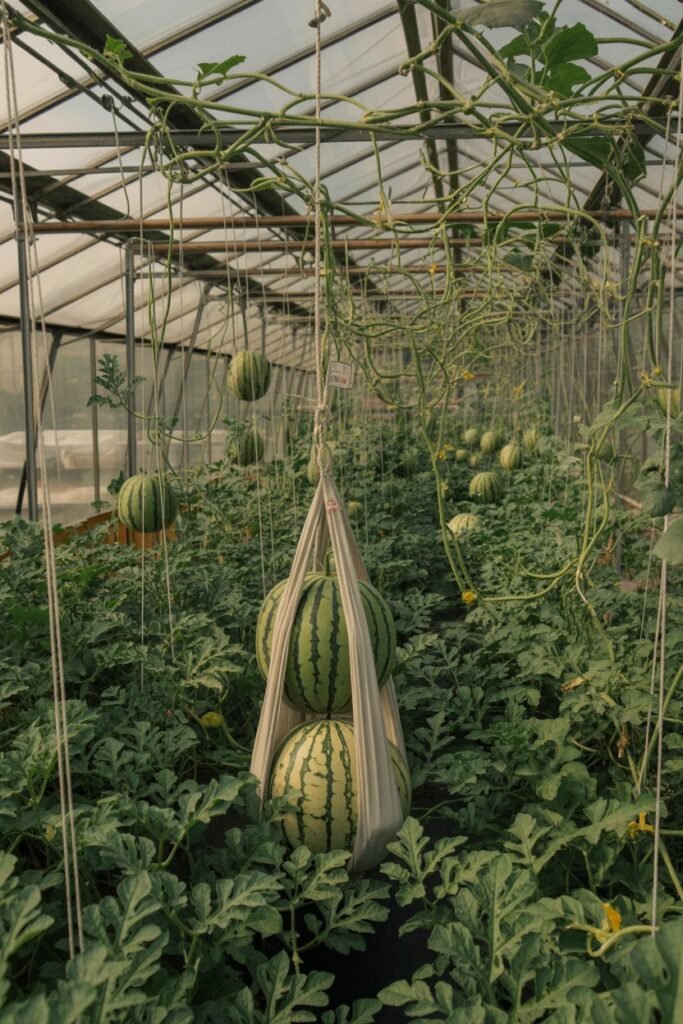
Large melon varieties like watermelon and oversized cantaloupes may seem exciting to grow in a greenhouse, but they often become more trouble than they are worth.
These plants produce long sprawling vines that spread aggressively across floors, benches, and neighboring containers. In smaller greenhouse spaces, the vines quickly create overcrowding and poor airflow.
One of the biggest problems is humidity. Melon plants have large leaves that trap moisture underneath the canopy, especially in enclosed environments. This creates ideal conditions for fungal diseases such as:
- Powdery mildew
- Downy mildew
- Leaf blight
- Stem rot
Large melons are also very heavy feeders. They require constant moisture, nutrient-rich soil, and plenty of sunlight to produce healthy fruit.
In a greenhouse, this can lead to uneven watering conditions and increased humidity levels that affect surrounding plants.
Another challenge is fruit support. Heavy melons hanging on vines indoors often need slings or support systems to prevent stems from snapping under the weight.
Why They Should Stay Outdoors
Large melons naturally need wide open growing space, strong airflow, and natural pollinators. Most greenhouses simply cannot provide enough room for healthy vine growth.
Better Alternative
Choose compact or miniature melon varieties if you want to grow melons inside a greenhouse.
12. Oak Trees
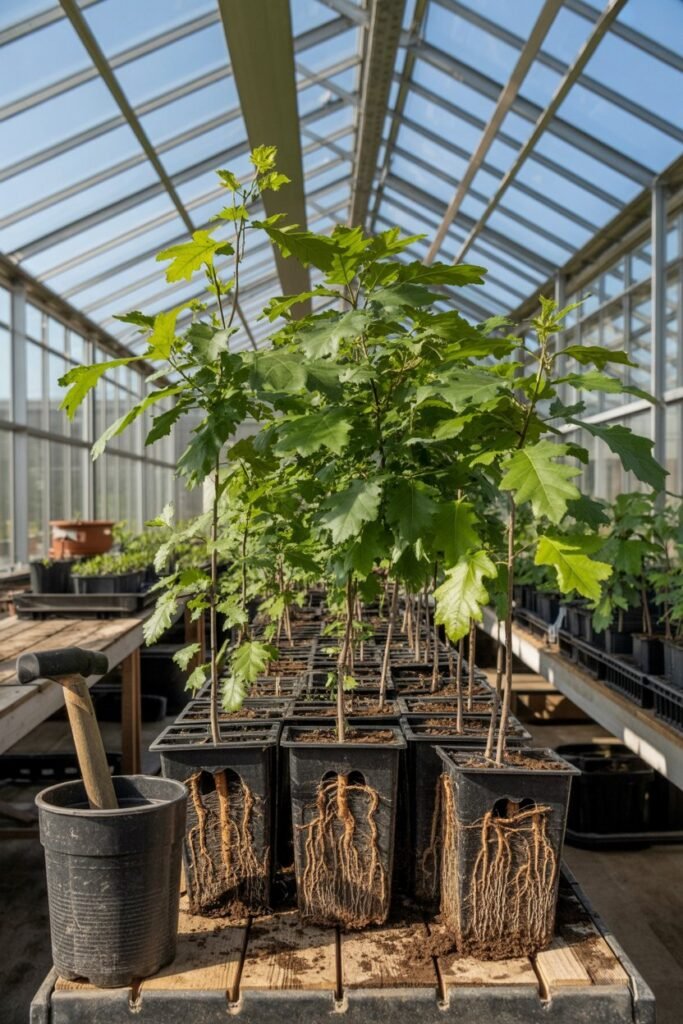
Young oak saplings may look harmless at first, but they are not suitable long-term greenhouse plants.
Oaks eventually become massive trees with deep, spreading root systems and broad canopies that cannot develop properly indoors.
One major issue is restricted growth. Greenhouses limit the natural airflow, sunlight patterns, and seasonal temperature changes that oak trees need to mature correctly.
Keeping oak saplings indoors too long can lead to:
- Weak trunk development
- Poor root structure
- Stunted growth
- Increased disease susceptibility
Oak trees also consume large amounts of water and nutrients as they grow. Over time, their roots can outcompete nearby greenhouse plants.
Another problem is size. Even young oak trees grow surprisingly quickly and eventually become far too large for enclosed structures.
Why Greenhouses Are the Wrong Environment
Oak trees are built for outdoor ecosystems where they can experience natural weather cycles and unrestricted root expansion.
Better Solution
Start saplings outdoors or transplant them into the landscape while they are still young.
13. English Ivy
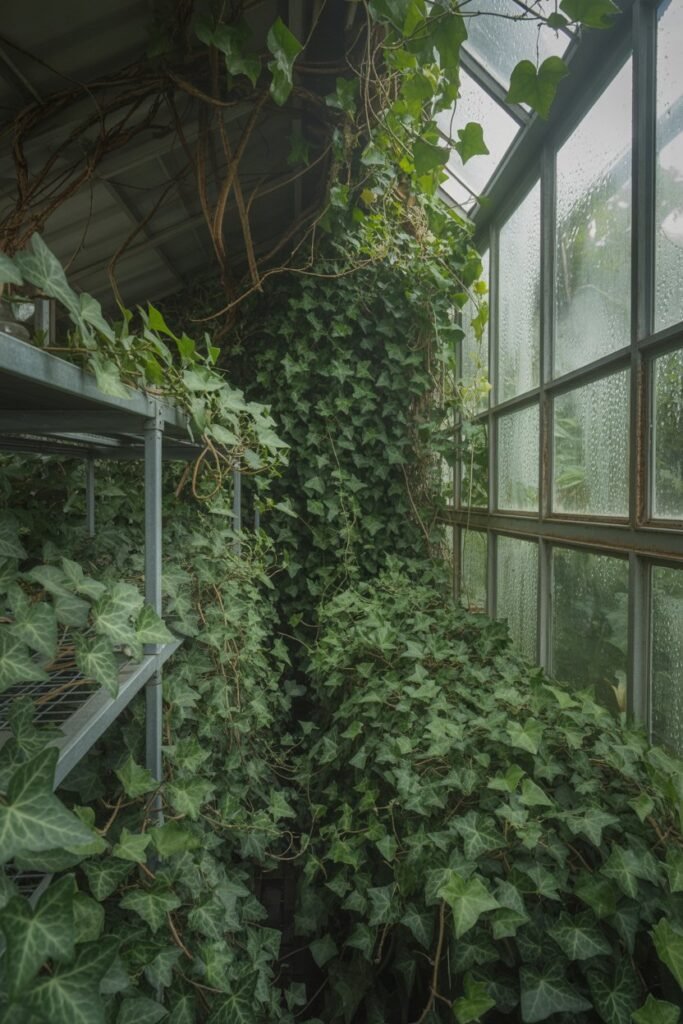
English ivy may look elegant trailing around greenhouse shelves, but it becomes invasive very quickly in warm humid environments.
This plant climbs aggressively and attaches itself to nearly every surface it touches.
Inside a greenhouse, ivy can rapidly spread across:
- Frames
- Walls
- Ventilation systems
- Shelving units
- Irrigation lines
The thick foliage traps moisture and reduces airflow around nearby plants. This creates ideal conditions for fungal diseases and pest infestations.
English ivy is especially known for harboring:
- Spider mites
- Fungus gnats
- Aphids
- Scale insects
Because greenhouses are enclosed, pest populations can spread rapidly once ivy becomes infested.
Another issue is maintenance. Ivy becomes tangled and difficult to remove completely once established indoors.
Why It Doesn’t Belong in a Greenhouse
The fast-growing vines create humidity problems, encourage pests, and quickly become unmanageable in enclosed spaces.
Better Growing Location
Use English ivy outdoors in shaded garden beds or controlled containers.
14. Catnip
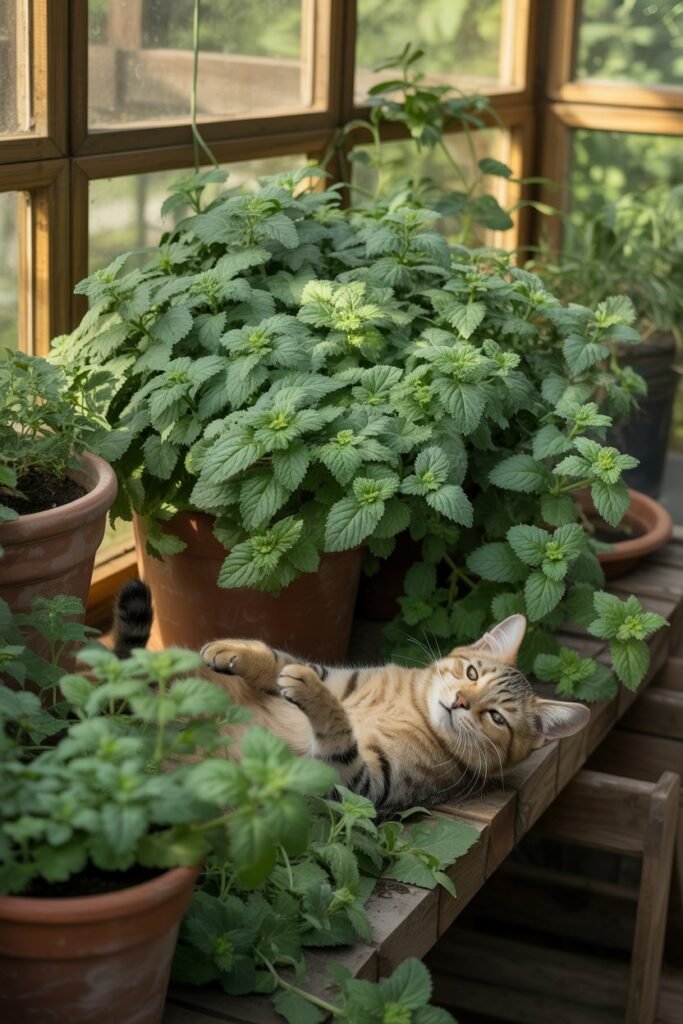
Catnip belongs to the mint family, which means it shares many of the same invasive growth habits. Inside a greenhouse, catnip spreads rapidly through underground roots and self-seeding.
The warm protected environment encourages nonstop leafy growth, causing catnip to crowd nearby herbs and vegetables surprisingly fast.
Another unexpected issue is that catnip attracts cats. If outdoor cats can access your greenhouse, they may dig in beds, knock over containers, or damage delicate seedlings while rolling around the plants.
Catnip can also attract common greenhouse pests like aphids and spider mites.
Why It Creates Problems Indoors
Its invasive growth habit combined with potential pest attraction makes catnip difficult to control in enclosed spaces.
Better Option
Grow catnip outdoors in large containers where spreading roots can be managed more easily.
15. Giant Zucchini Varieties
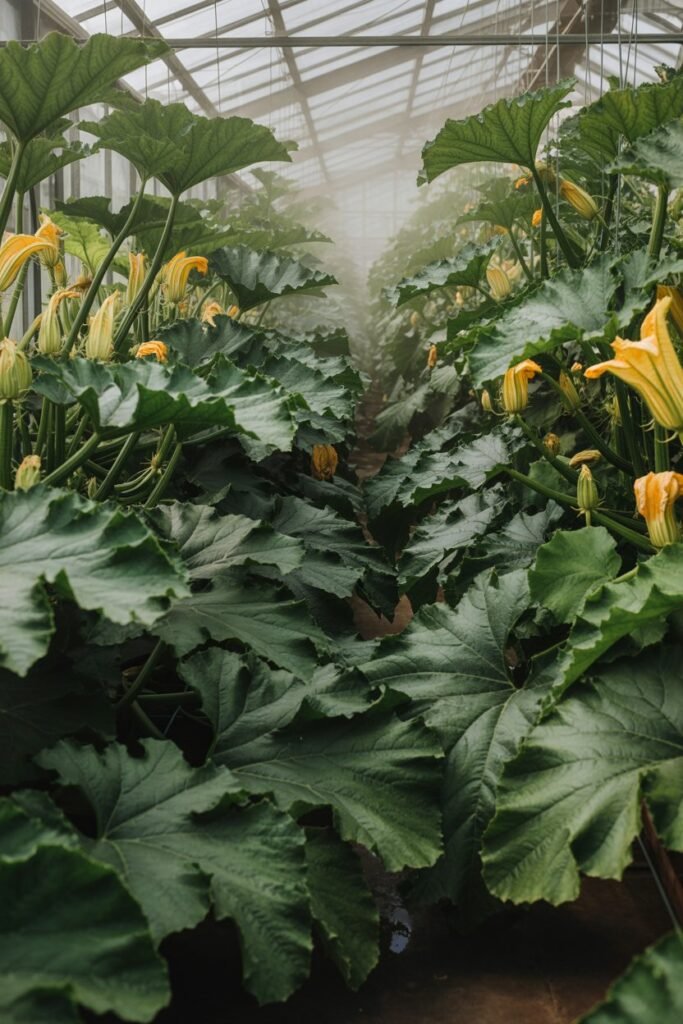
Zucchini already needs generous spacing outdoors, but giant varieties become especially problematic inside greenhouses. Their enormous leaves spread outward rapidly and create dense shaded areas that block airflow.
Poor airflow is one of the biggest greenhouse dangers because it increases moisture buildup around leaves and stems. Giant zucchini plants are highly vulnerable to:
- Powdery mildew
- Downy mildew
- Stem rot
- Fungal leaf diseases
Another issue is overcrowding. Large zucchini plants quickly dominate greenhouse beds and compete aggressively for:
- Water
- Sunlight
- Nutrients
- Root space
These plants also attract pests such as squash bugs, aphids, cucumber beetles, and whiteflies, which can easily spread throughout an enclosed greenhouse.
Why Greenhouses Make Things Worse
The trapped humidity inside greenhouses speeds up disease development on dense zucchini foliage.
Better Alternative
Grow giant zucchini outdoors where natural airflow helps keep leaves dry and healthy.
16. Running Rosemary Varieties
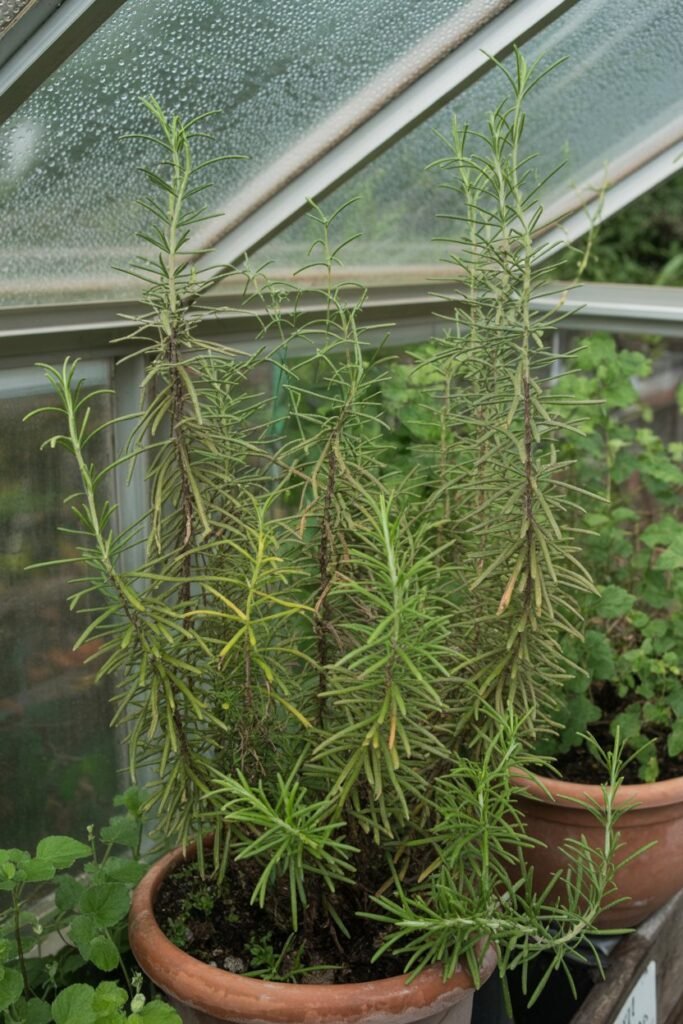
Rosemary generally prefers dry, sunny, and airy conditions, which many greenhouses struggle to provide consistently.
Running or sprawling rosemary varieties become especially problematic because they spread outward aggressively and develop woody stems over time.
High humidity inside greenhouses can cause rosemary to suffer from:
- Root rot
- Fungal diseases
- Weak leggy growth
- Stem dieback
Rosemary hates constantly damp soil, yet greenhouse environments often stay moist longer than outdoor gardens.
Large rosemary plants also reduce airflow around neighboring crops, especially in smaller greenhouses.
Why It’s Better Outdoors
Rosemary thrives in Mediterranean-style conditions with excellent drainage, direct sun, and low humidity.
Common Greenhouse Mistake
Many gardeners accidentally overwater rosemary indoors because greenhouse soil dries more slowly.
17. Russian Sage
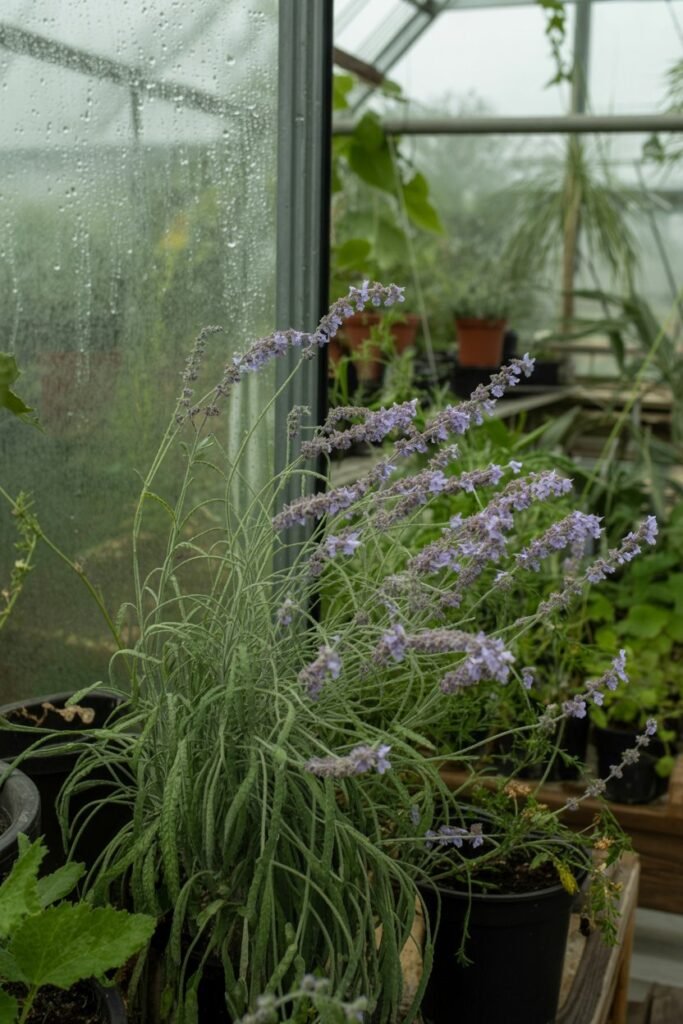
Russian sage is a drought-tolerant plant that thrives in dry, windy outdoor environments. Unfortunately, greenhouses usually create the exact opposite conditions.
Inside humid greenhouses, Russian sage often develops:
- Weak floppy stems
- Root rot
- Mildew problems
- Poor flowering
This plant naturally prefers lean soil and strong airflow. In rich moist greenhouse conditions, it may grow soft and unhealthy instead of strong and upright.
Russian sage also becomes quite large and bushy, taking up valuable space that could be used for productive greenhouse crops.
Why It Should Stay Outside
Russian sage performs best in open outdoor gardens with full sun and dry air circulation.
Better Use
Plant Russian sage outdoors in pollinator gardens or drought-tolerant landscapes.
18. Jerusalem Artichokes
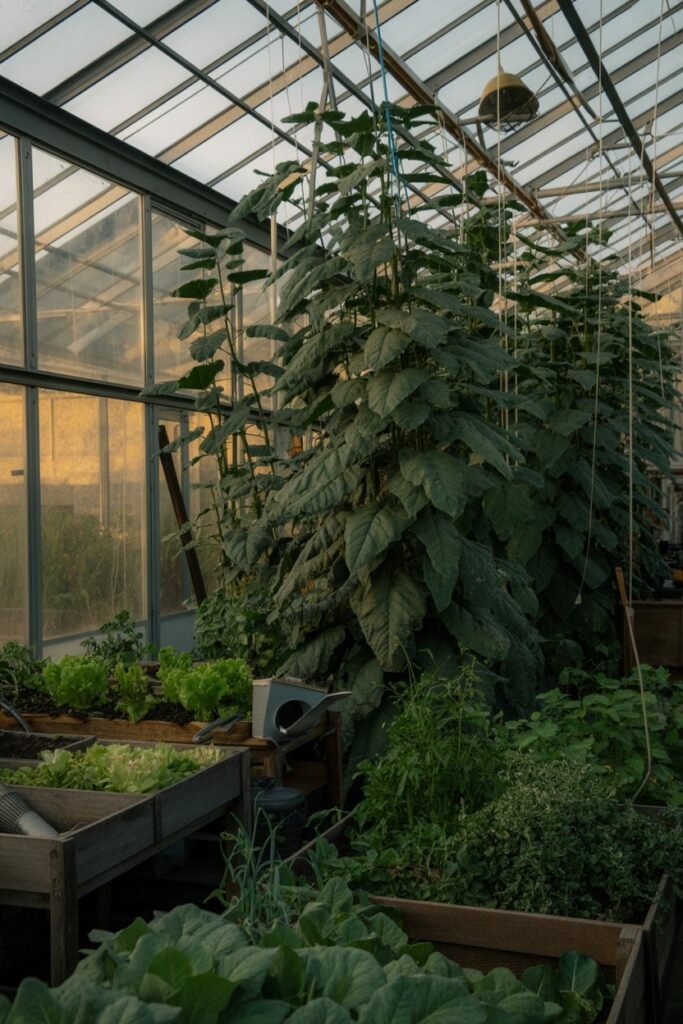
Jerusalem artichokes, also called sunchokes, are extremely aggressive growers that quickly become difficult to control in enclosed spaces. These plants spread through underground tubers, and even tiny leftover pieces can regrow into new plants.
Inside a greenhouse, Jerusalem artichokes create several problems:
- Tall stalks that block sunlight
- Spreading underground tubers
- Heavy nutrient competition
- Overcrowded growing beds
Their height is another issue. Some varieties grow over 8 feet tall, creating shade that affects nearly every nearby crop.
Jerusalem artichokes are also difficult to fully remove once planted. Missed tubers often return season after season unexpectedly.
Why Greenhouses Aren’t Suitable
Their invasive underground growth and towering stems make them too aggressive for most greenhouse environments.
Better Growing Spot
Plant them outdoors in isolated garden areas where spreading tubers are easier to manage.
19. Blackberries
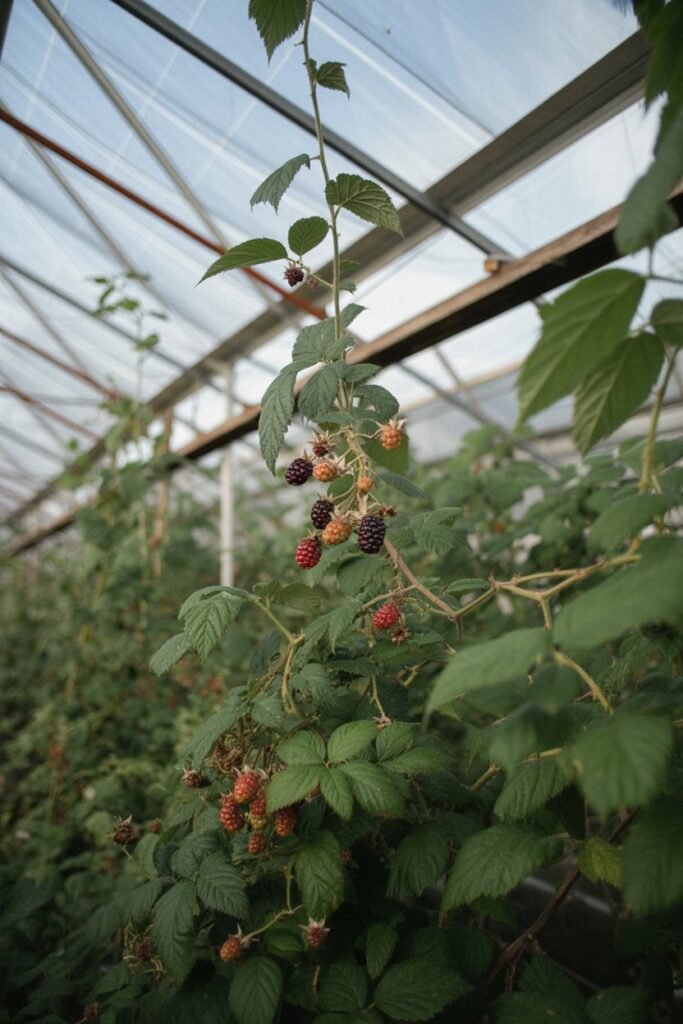
Blackberries can become a nightmare inside greenhouses because of their thorny canes and dense growth habit. While the plants may initially appear manageable, they quickly form tangled branches that reduce airflow and crowd nearby plants.
Poor ventilation around blackberry canes creates ideal conditions for:
- Gray mold
- Powdery mildew
- Cane blight
- Fungal fruit rot
Blackberries also attract pests including aphids, spider mites, and beetles that can spread throughout enclosed greenhouse spaces.
Another major issue is maintenance. Pruning blackberry canes indoors becomes difficult because the thorns snag clothing, gloves, irrigation lines, and nearby plants.
Why They Don’t Belong Indoors
Blackberries require heavy pruning, strong airflow, and plenty of outdoor space to remain healthy and productive.
Better Alternative
Grow blackberries outdoors on trellises where they can spread safely with proper ventilation.
20. Large Fruit Trees
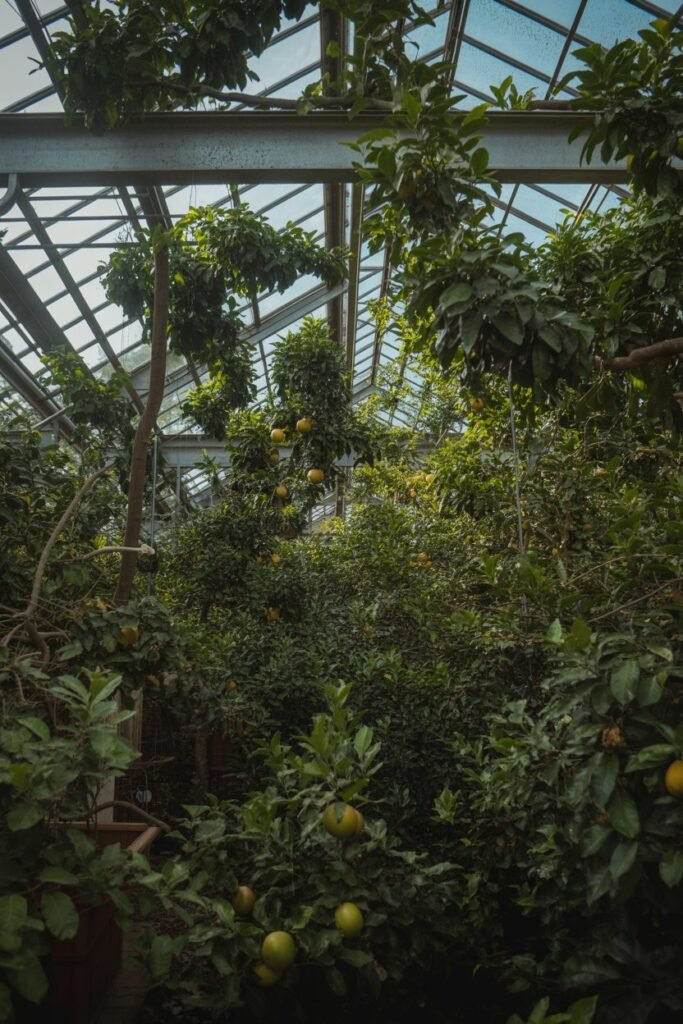
Standard fruit trees like apple, pear, peach, plum, and mango trees eventually outgrow most greenhouses.
While small saplings may survive indoors temporarily, mature trees become too large and demanding for enclosed environments.
Large fruit trees create several greenhouse problems:
- Excessive shade
- High humidity levels
- Increased water consumption
- Poor airflow
- Root overcrowding
Their large canopies block sunlight from vegetables and smaller greenhouse plants below. The trapped humidity around dense foliage also encourages fungal diseases and pest outbreaks.
Pollination may become another issue indoors since many fruit trees rely on insects or wind for proper fruit production.
Why They’re Better Outdoors
Fruit trees naturally need open space, seasonal weather changes, and unrestricted root growth to remain healthy long-term.
Better Greenhouse Choice
If you want indoor fruit production, choose dwarf citrus or compact patio fruit tree varieties specifically bred for containers.
Signs a Plant Doesn’t Belong in Your Greenhouse
Sometimes a plant tells you very quickly that it’s unhappy indoors.
Watch for these warning signs:
- Constant mildew or fungal problems
- Excessive stretching or weak stems
- Rapid uncontrolled spreading
- Persistent pest infestations
- Poor flowering or fruiting
- Yellowing leaves despite proper care
- Overcrowding nearby plants
If one plant repeatedly creates problems, relocating it outdoors may solve the issue immediately.
What Plants Actually Thrive in Greenhouses?
Instead of forcing unsuitable plants into your greenhouse, focus on varieties that genuinely love warm protected environments.
Excellent greenhouse plants include:
- Tomatoes
- Peppers
- Cucumbers
- Basil
- Lettuce
- Orchids
- Seedlings
- Tropical houseplants
- Eggplants
- Strawberries
These plants usually benefit from the stable temperatures and controlled conditions greenhouses provide.
Tips for Keeping Your Greenhouse Healthy
A healthy greenhouse depends just as much on plant selection as watering and fertilizing.
Prioritize Airflow
Good ventilation prevents fungal disease and keeps humidity balanced.
Avoid Overcrowding
Leave enough room between plants for air circulation and growth.
Monitor Humidity
Many greenhouse problems start with trapped moisture.
Separate Aggressive Growers
Fast-spreading plants should stay isolated or outdoors.
Clean Regularly
Remove dead leaves, fallen fruit, and diseased material quickly.
Rotate Crops
Rotating crops helps reduce pest and soil disease buildup.
Final Thoughts
A greenhouse can completely transform the way you garden, but not every plant appreciates life behind glass. Some become invasive, others invite pests, and a few simply struggle in warm humid conditions no matter how carefully you care for them.
Choosing the right plants for your greenhouse saves time, reduces disease problems, and protects the crops you truly want to grow successfully. Sometimes the healthiest gardening decision is knowing which plants should stay outside where nature intended them to thrive.
With thoughtful plant choices and proper greenhouse management, your growing space can stay productive, balanced, and beautiful throughout every season.
