
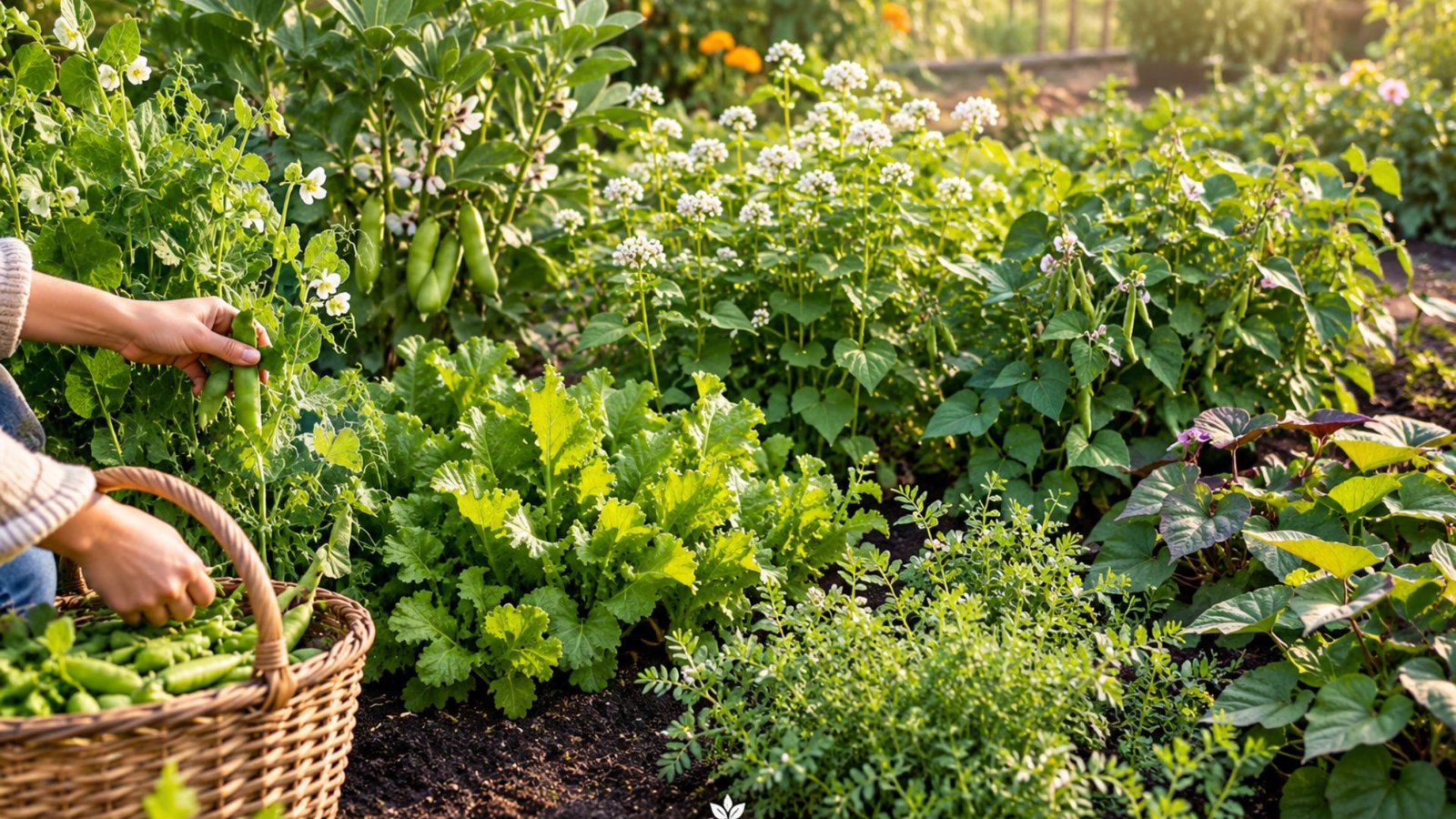

I used to think of cover crops as something reserved for large farms and serious gardeners, but I changed my mind after seeing how useful they can be in a small garden.
Why leave a garden bed empty when you can grow something that protects the soil and gives you food, too? Edible cover crops are one of my favorite ways to make every part of the garden work harder.
They help reduce bare soil, add organic matter, suppress weeds, and can give you greens, beans, peas, or other edible harvests along the way. If you want a healthier garden without wasting space, these crops are worth trying.
What Are Edible Cover Crops?
Cover crops are plants grown mainly to protect and improve the soil rather than simply being grown as your main food crop.
Traditional cover crops might include plants such as clover, vetch, rye, or other grasses. Edible cover crops give you an extra benefit: you can harvest part of the plant for food while it is growing and still use the crop to protect your soil.
This makes them especially useful for home gardeners.
Instead of leaving an empty vegetable bed exposed to rain, wind, weeds, and temperature changes, you can grow a useful crop that keeps the soil covered.
Some edible cover crops can:
- Protect bare soil from erosion
- Reduce weed growth
- Add organic matter when chopped and returned to the soil
- Help improve soil structure
- Provide food for you
- Attract beneficial insects
- Support soil life
- Make better use of garden space
The key is to choose crops that fit your climate, growing season, and garden plans.
1. Peas
Peas are one of my favorite edible cover crops because they give you something delicious to harvest while helping protect the soil.
Peas are legumes, which means they work with beneficial soil bacteria associated with their roots. These bacteria help legumes obtain nitrogen from the atmosphere and contribute to the nitrogen cycle.
Peas also produce plenty of leafy growth that can help cover the soil.
How to grow peas as a cover crop
Sow peas directly into prepared soil when temperatures are suitable for your variety. They prefer cool growing conditions, so they are particularly useful as a fall, winter, or early-spring crop in many climates.
You can allow them to grow across the bed or provide a small trellis if you want easier harvesting.
Harvest young pods regularly while the plants are actively growing. Once the plants begin reaching the end of their useful life, you can cut the remaining vegetation and leave the roots in the soil.
Rather than pulling every root out, leaving the roots underground allows them to break down naturally and contribute organic matter.
Best use
Peas are especially useful when you want an edible crop that can also occupy a garden bed during a cooler season.
2. Buckwheat
Buckwheat may not be the first plant you think about when you hear “edible cover crop,” but it is incredibly useful in the garden.
Although it is commonly grown as a cover crop, buckwheat also produces seeds that can be processed into buckwheat flour.
One reason gardeners like buckwheat is how quickly it grows. It can establish a leafy cover relatively fast, helping shade the soil and compete with many weeds.
Its flowers can also attract pollinators and other beneficial insects.
How to grow buckwheat
Scatter the seeds over prepared soil and lightly cover them. Keep the soil reasonably moist while they establish.
Buckwheat prefers warm conditions and does not tolerate frost well, so it is generally more useful during warmer parts of the growing season.
If you want to use it primarily as a cover crop, cut it before it produces mature seeds. The fresh plant material can be chopped and allowed to decompose on the soil surface or incorporated according to your garden system.
If you want to harvest buckwheat for food, allow the plants to mature and harvest the seeds when they are ready.
Best use
Buckwheat is a great choice when you want fast soil coverage, weed suppression, flowers for beneficial insects, and edible seeds.
3. Fava Beans
Fava beans are another excellent edible cover crop, particularly for gardeners who want a substantial plant that can protect the soil during cooler weather.
Like peas, fava beans belong to the legume family. Their roots form relationships with nitrogen-fixing bacteria, making them useful in crop rotations.
The plants can become quite large, producing plenty of leaves and stems that help cover exposed ground.
And, of course, you can harvest the beans.
How to grow fava beans
Fava beans are usually grown during cooler periods, although the ideal planting time depends on your climate.
Plant the seeds directly into the garden at the recommended depth for your variety. Give them enough space to develop because mature plants can become quite large.
Keep the soil reasonably moist while the plants establish, and harvest the pods when the beans reach the size you prefer.
When the plants finish producing, cut them at soil level instead of pulling them out. Leaving the roots in place allows the underground material to break down naturally.
A simple tip
If you’re growing fava beans mainly for soil improvement, you don’t need to wait until every pod has matured. You can harvest what you need and eventually cut the remaining plants down to return their organic material to the garden.
4. Lentils
Lentils are another legume that can play a useful role in a food-producing garden.
They are not necessarily the easiest crop for every beginner gardener, but they can be worth experimenting with if you have the right growing conditions.
Lentil plants are relatively small compared with some other cover crops, making them suitable for gardeners who don’t have enormous amounts of space.
Growing lentils
Choose a variety suited to your climate and sow the seeds directly into well-drained soil.
Lentils generally prefer relatively cool growing conditions and do not like sitting in soggy soil.
Once the plants flower and begin producing pods, you can allow them to mature for a harvest.
After harvesting, the remaining plant material can be cut down and returned to the soil.
Why I like lentils as a cover crop
They give you two benefits from the same patch of ground: a harvest for the kitchen and plant material that can eventually contribute to the soil.
Just remember that lentils are not a replacement for every traditional cover crop. Their value depends heavily on your climate and growing season.
5. Cowpeas
If you garden somewhere with warm summers, cowpeas are definitely worth considering.
Cowpeas, which include black-eyed peas and related varieties, are warm-season legumes that can produce an impressive amount of leafy growth.
That makes them useful for covering exposed soil during hot weather.
They can also provide edible pods or mature peas, depending on the variety and when you harvest them.
How to grow cowpeas
Plant them once the soil has warmed and frost is no longer a concern.
Choose a sunny location with reasonably well-drained soil. Keep young plants watered while they establish, but avoid keeping the soil constantly soggy.
As the plants grow, their foliage helps shade the ground beneath them.
Harvest the pods at the stage you prefer. You can eat some while allowing the remaining plants to continue growing.
At the end of the season, cut the plants down and leave the roots in the soil.
A useful bonus
Cowpeas can be particularly helpful for gardeners dealing with hot growing conditions because they can produce useful ground coverage when some cool-season crops struggle.
6. Mustard Greens
Mustard greens are an excellent choice when you want an edible cover crop that grows quickly and gives you something useful for the kitchen.
The large leafy plants can provide good soil coverage, while young leaves can be harvested for salads, cooking, or other dishes.
Mustard greens are generally associated with cooler weather, making them useful for filling garden beds between warm-season crops.
How to grow mustard greens
Scatter or sow the seeds into prepared soil and keep them moist while they germinate.
Once the plants become established, you can begin harvesting the outer leaves.
Regular harvesting can give you a continuing supply of greens while keeping the plants productive.
If you’re using mustard primarily as a cover crop, allow enough growth to cover the soil before eventually cutting the plants down.
One important consideration
Don’t automatically assume mustard is suitable for every garden rotation.
Mustard belongs to the brassica family, along with crops such as broccoli, cabbage, kale, and cauliflower. If you have recurring brassica diseases or pests, rotating families is important.
7. Sweet Potatoes
Sweet potatoes are a slightly different option, but they can be surprisingly useful for covering soil during warm weather.
The vines spread across the ground and create a dense leafy canopy.
That can help shade the soil, reduce the amount of bare ground available for weeds, and protect the surface from direct sun.
And underneath those vines, you can eventually harvest sweet potatoes.
How to grow sweet potatoes
Sweet potatoes need warm conditions and a long enough growing season to produce well.
Plant slips into loose, well-drained soil in a sunny location. As the vines grow, they will spread outward across the bed.
You don’t necessarily need to provide a trellis because many varieties naturally grow along the ground.
Keep the plants watered during establishment and through periods of dry weather.
Once the crop is mature, harvest the sweet potatoes carefully so you don’t damage the tubers.
Why they work as a living cover
The spreading vines are what make sweet potatoes especially interesting as a cover crop. Instead of leaving soil exposed between plants, you get a living layer of foliage that protects the surface while producing food underneath.
How to Choose the Right Edible Cover Crop
The best edible cover crop for your garden depends on more than what sounds interesting.
Before planting, consider these five things.
1. Your climate
Some crops prefer cool weather, while others need warm soil.
Peas, fava beans, lentils, and mustard greens are generally better suited to cooler conditions.
Cowpeas and sweet potatoes prefer warmth.
Buckwheat is also primarily a warm-season crop.
2. How long you have
Think about how long the bed will be available.
If you only have a short gap between two vegetable crops, a fast-growing option may make more sense than something that needs a long growing season.
3. Your next crop
Crop rotation matters.
For example, if you plan to grow broccoli or cabbage next, think carefully before using another brassica as your cover crop.
Rotating plant families can help reduce the buildup of certain pests and diseases.
4. How much space you have
Some crops stay relatively compact while others spread aggressively.
Sweet potatoes, for example, can send vines across a considerable area.
If you’re gardening in a small raised bed, choose something that fits the available space.
5. What you actually want to eat
This may sound obvious, but it is easy to get carried away with the soil-building benefits.
I prefer choosing crops that I genuinely enjoy eating.
If a plant gives me better soil and something I can bring into the kitchen, that’s a win.
When Should You Cut Down an Edible Cover Crop?
This depends on whether you’re prioritizing food production or soil improvement.
If food is your main goal, harvest the edible portion first.
If soil protection is your priority, you may want to cut the crop before it becomes overly mature or produces a large amount of seed.
A simple approach is to:
- Harvest what you want.
- Cut the remaining plant material at soil level.
- Leave the roots in the soil when practical.
- Chop larger stems into smaller pieces.
- Leave the plant material on the surface or add it to your compost system.
- Give the bed time to break down before planting your next crop if the material is still fresh and abundant.
Avoid pulling everything out unnecessarily. The roots and remaining organic material can become part of the soil-building process.
Can You Eat an Edible Cover Crop and Still Use It for Soil Improvement?
Absolutely.
That’s one of the biggest reasons I love this idea for a home garden.
You don’t necessarily have to choose between harvesting food and improving your soil.
You can harvest peas while the plants are actively growing, pick fava beans from the pods, collect cowpeas, harvest mustard leaves, or dig sweet potatoes at the end of their growing season.
Afterward, the remaining plant material can still serve a purpose.
The important thing is to avoid removing every bit of organic material from the garden.
The more useful plant material you can return to your soil, the more you can create a natural cycle where the garden gives something back.
A Few Mistakes to Avoid
Edible cover crops are useful, but they aren’t completely maintenance-free.
Don’t let them become weeds
Some crops can spread or reseed themselves if you allow them to mature completely.
If you don’t want volunteers appearing throughout the garden, cut plants before they drop large quantities of mature seed.
Don’t ignore crop rotation
Growing related plants repeatedly in the same soil can increase the risk of certain pest and disease problems.
Rotate plant families whenever possible.
Don’t plant too densely
It can be tempting to sow a cover crop thickly because you want fast soil coverage.
However, overcrowding can increase competition for water, nutrients, and light.
Don’t forget your next crop
A cover crop should work with your garden plan, not interfere with it.
Give yourself enough time to cut the plants and let fresh material begin breaking down before planting a demanding vegetable in the same space.
My Favorite Way to Use Edible Cover Crops
For a home garden, I like to think of edible cover crops as a simple three-part cycle.
Grow → harvest → return.
I grow something useful, harvest the food I want, and then return as much of the remaining plant material as practical to the garden.
This approach makes a garden bed feel much more productive.
Instead of having soil sitting bare for weeks or months, the bed is doing something useful almost all the time.
You are growing food, protecting the soil, feeding soil organisms, and reducing the amount of garden space that goes unused.
Final Thoughts
Edible cover crops are such a lovely option for gardeners who want to get more from their growing space. You don’t always have to choose between growing food and caring for your soil. With the right plants, you can do both at once.
Peas, buckwheat, fava beans, lentils, cowpeas, mustard greens, and sweet potatoes each bring something different to the garden. The best choice depends on your climate, available space, planting schedule, and the foods you enjoy.
For me, the biggest lesson is simple: don’t leave healthy garden soil sitting bare when you can cover it with something useful. A little planning can turn an empty bed into a source of food and healthier soil at the same time.
