
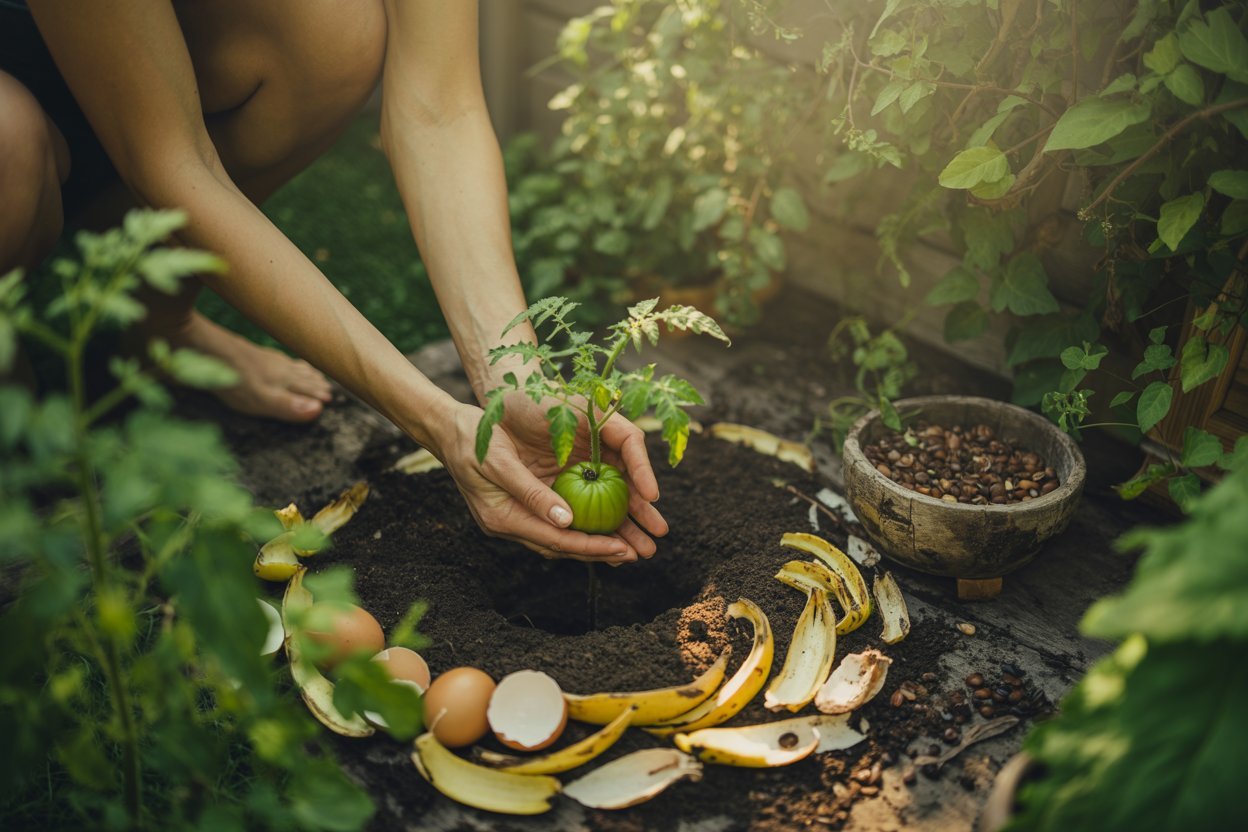

The first time I truly paid attention to what went into my tomato planting holes, everything changed. My plants grew stronger, their leaves stayed lush and green, and the harvest felt almost generous like the garden was quietly thanking me for the extra care.
Tomatoes are heavy feeders, and the moment you tuck that young plant into the soil is your one golden opportunity to give it a deeply nourishing start.
Think of it as preparing a cozy, nutrient-rich home that supports your plant from its very first roots all the way to those juicy, sun-warmed fruits.
Over the years, I’ve gathered a handful of simple, natural additions that consistently make a difference. These aren’t complicated or expensive they’re thoughtful, gentle boosts that work with nature, not against it.
Let’s walk through the seven things I always add to my tomato planting holes and why each one matters so much.
1. Compost (The Heart of Healthy Soil)
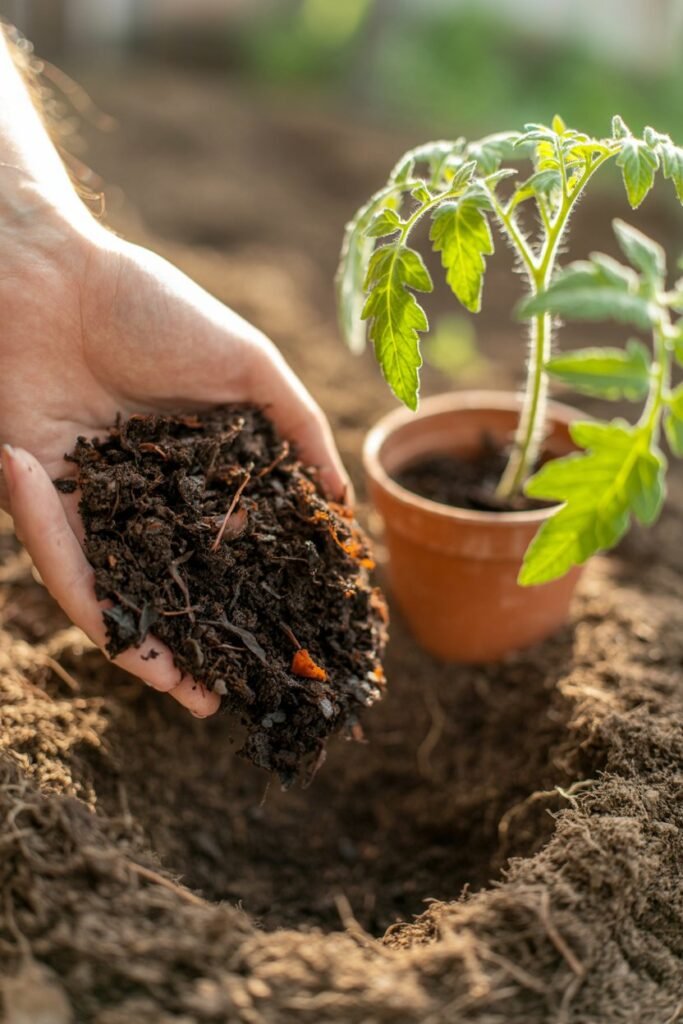
If I had to choose just one thing to add to my tomato planting hole, it would always be compost. It’s the foundation, the quiet hero, the ingredient that brings everything together.
Why Compost Matters
Compost is rich in organic matter and packed with nutrients that tomatoes absolutely love. But more than that, it improves the structure of your soil helping it hold moisture while still draining well.
It also introduces beneficial microorganisms that support root health and nutrient absorption.
How I Use It
When planting tomatoes, I like to:
- Dig a deep hole (deeper than the root ball)
- Add 1–2 generous handfuls of compost at the bottom
- Lightly mix it with the surrounding soil
If your soil is sandy or clay-heavy, compost becomes even more essential it softens, balances, and breathes life into it.
A Gentle Tip
If you make your own compost, make sure it’s fully broken down. It should smell earthy, not sour, and you shouldn’t recognize the original materials anymore.
2. Crushed Eggshells (Calcium for Strong Growth)
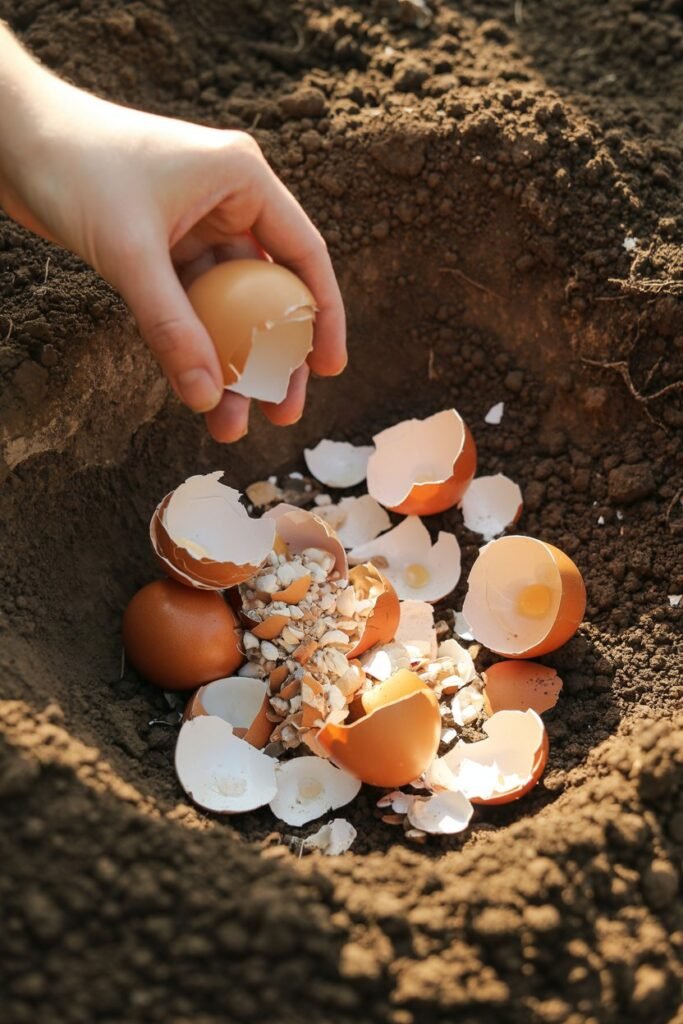
I used to toss eggshells without a second thought until I learned how much tomatoes benefit from the calcium they contain.
Why Tomatoes Need Calcium
Calcium helps prevent blossom end rot that frustrating condition where the bottom of your tomatoes turns black and leathery. It also strengthens cell walls, making plants sturdier and healthier overall.
How I Prepare Eggshells
I like to:
- Rinse the shells
- Let them dry completely
- Crush them into small pieces (almost powder-like)
Then I sprinkle a small handful into the planting hole.
A Gentle Reminder
Eggshells break down slowly, so they’re more of a long-term support rather than an instant fix. But over time, they truly make a difference in soil health.
3. Bone Meal (A Boost for Roots and Flowers)
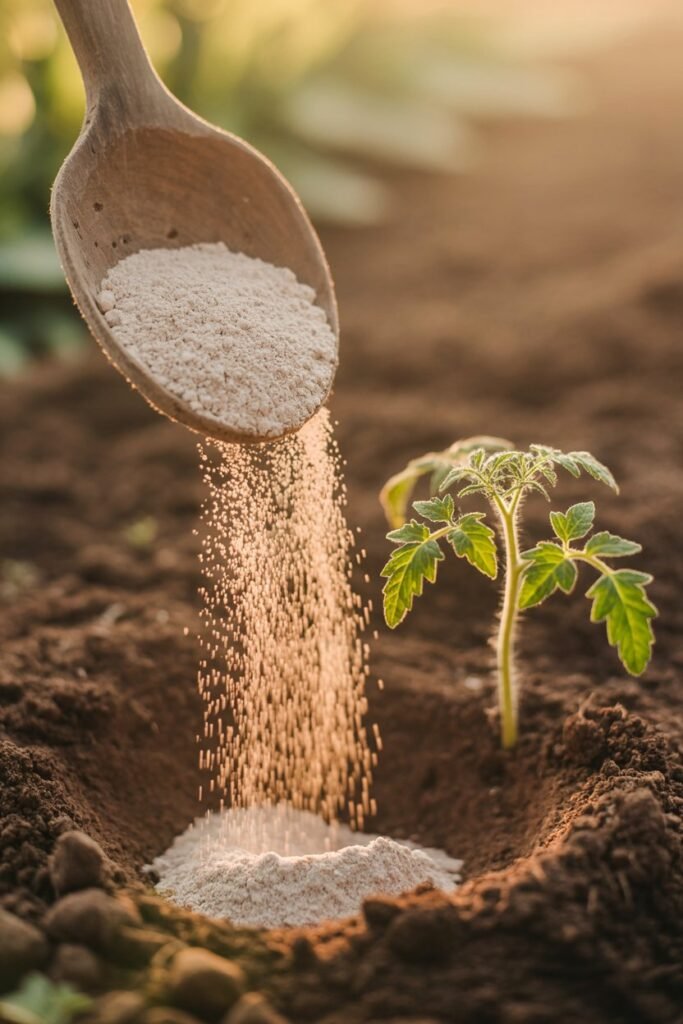
Bone meal feels like a quiet promise beneath the soil it works slowly, steadily, and beautifully.
What Bone Meal Does
It’s rich in phosphorus, which:
- Encourages strong root development
- Supports flowering (and eventually fruiting)
This is especially important in the early stages when your tomato plant is settling in.
How Much to Use
I usually add:
- 1–2 tablespoons of bone meal into the planting hole
Then I gently mix it into the soil so it doesn’t sit directly against the roots.
A Soft Note
Bone meal works best in slightly acidic to neutral soil. If your soil is very alkaline, its effectiveness may be reduced.
4. Epsom Salt (Magnesium for Lush Leaves)
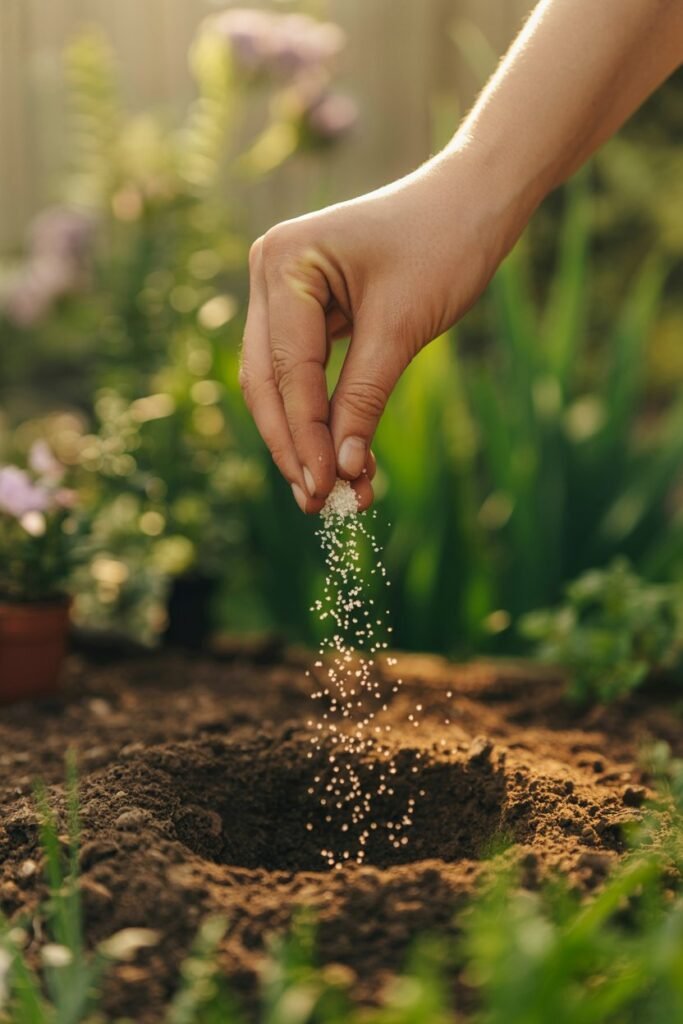
This is one of those little garden secrets that feels almost too simple but it works.
Why Magnesium Matters
Magnesium helps with chlorophyll production, which keeps your tomato leaves:
- Deep green
- Healthy
- Efficient at photosynthesis
It also helps plants absorb other nutrients more effectively.
How I Use It
I add:
- About 1 tablespoon of Epsom salt into the planting hole
Then I mix it lightly into the soil before placing the plant.
A Word of Balance
It’s easy to overdo it. A little goes a long way, and too much magnesium can interfere with other nutrients. I keep it simple and sparing.
5. Banana Peel (A Gentle Potassium Boost)
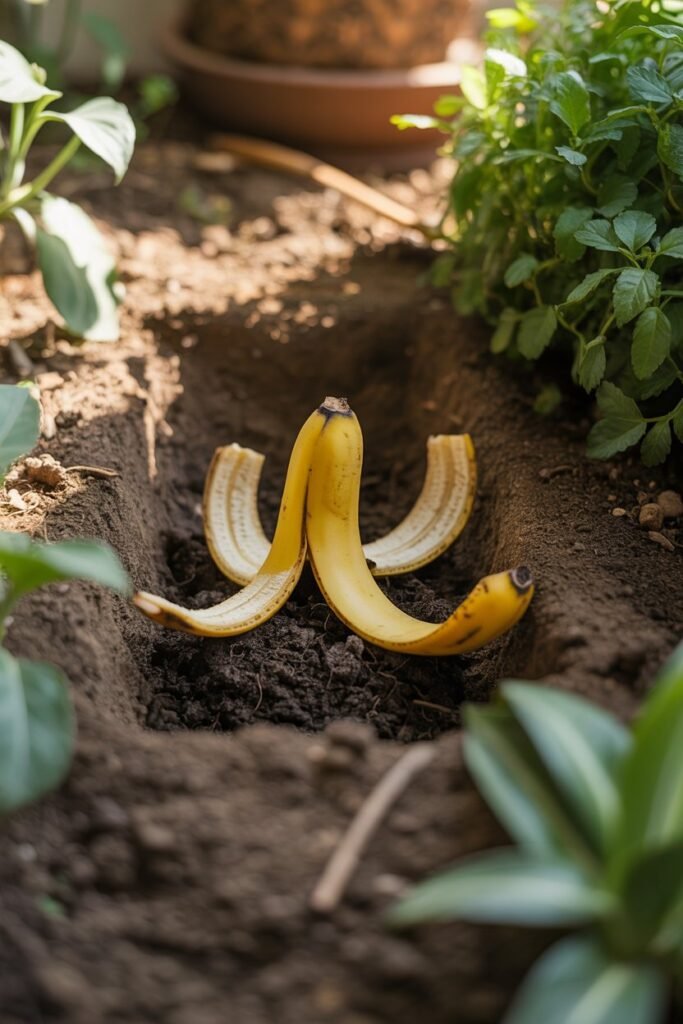
This one always makes me smile. It feels so natural returning something from the kitchen back to the soil.
Why Potassium Is Important
Potassium helps:
- Strengthen plant stems
- Improve fruit development
- Enhance disease resistance
How I Add Banana Peels
You can:
- Chop them into small pieces
- Or bury a whole peel deep in the planting hole
I prefer chopping it helps them break down faster.
A Cozy Tip
Always bury banana peels deep enough so they don’t attract pests. Once covered well with soil, they quietly decompose and feed your plant over time.
6. Used Coffee Grounds (A Gentle Nitrogen Boost)
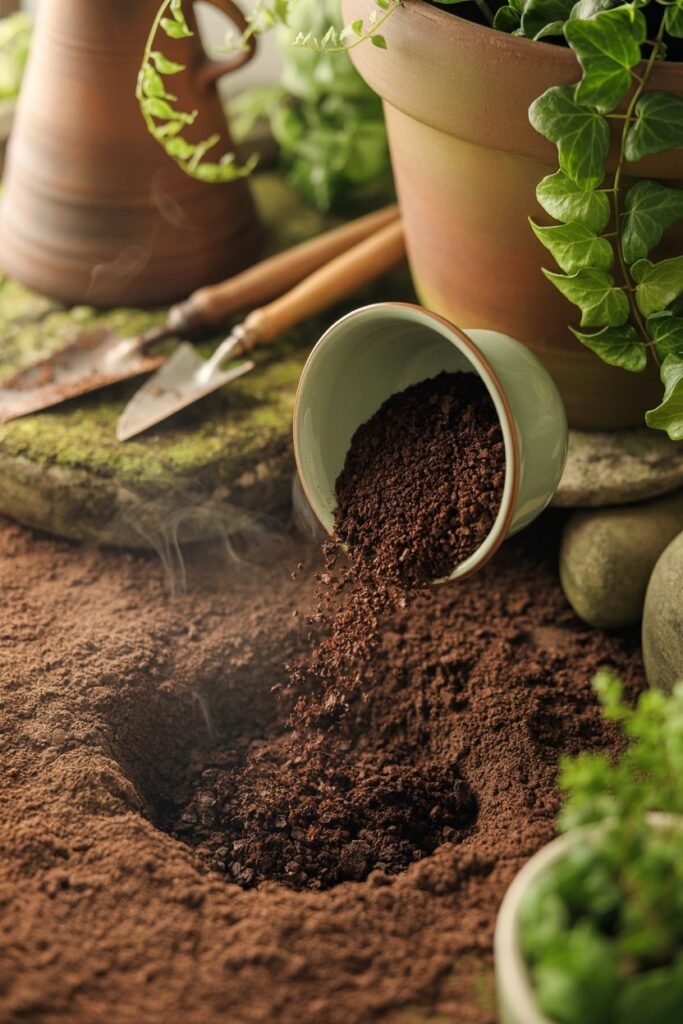
Coffee grounds are one of those garden additions that feel both sustainable and effective.
What They Do
They add a small amount of nitrogen, which supports:
- Leaf growth
- Early plant development
They also improve soil texture and encourage beneficial microbes.
How I Use Them
I add:
- A small handful of used coffee grounds
And mix them lightly into the soil.
A Gentle Warning
Fresh coffee grounds can be too acidic, so always use used ones and don’t overdo it. Tomatoes appreciate balance more than abundance.
7. A Fish Head or Fish Scraps (Deep, Traditional Nourishment)
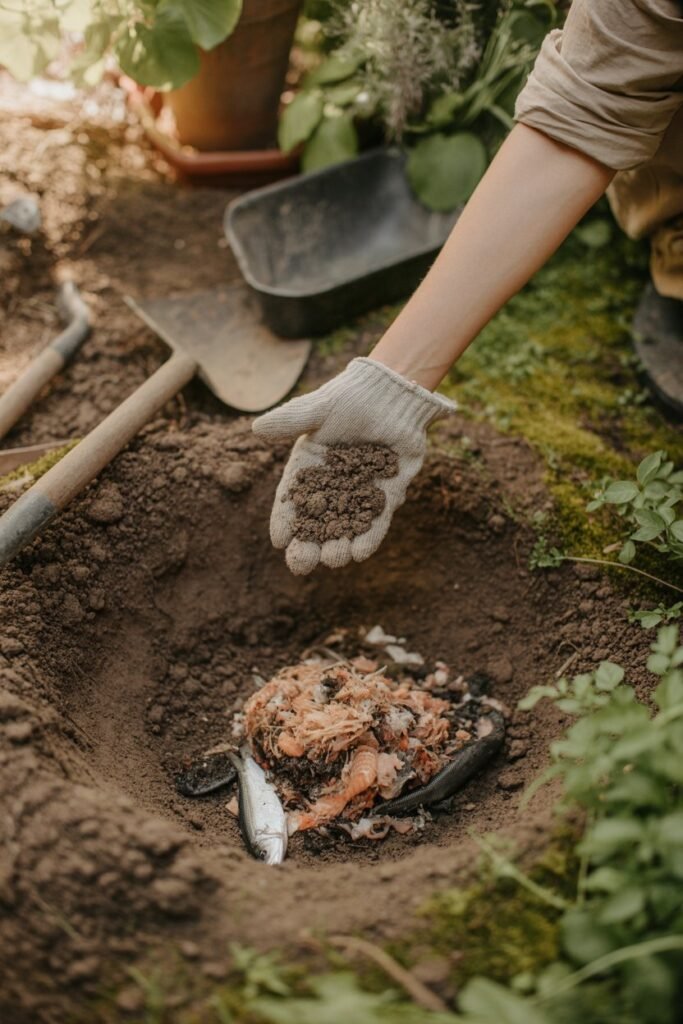
This one might sound unusual at first, but it’s a time-honored gardening practice and incredibly effective.
Why It Works
Fish scraps are rich in:
- Nitrogen
- Phosphorus
- Trace minerals
As they decompose, they release nutrients slowly, feeding your tomato plant over a long period.
How to Use It
If you’re comfortable with it:
- Place a fish head or scraps at the very bottom of a deep planting hole
- Cover it with a layer of soil before placing your plant
A Thoughtful Note
Make sure it’s buried deeply to avoid attracting animals. If this method doesn’t suit you, you can always use fish emulsion as a gentler alternative.
Bringing It All Together
When I prepare a tomato planting hole now, it feels less like a task and more like a ritual. Each layer serves a purpose, each ingredient supports a different part of the plant’s journey.
Here’s a simple way to combine everything:
- Dig a deep hole (deeper than your tomato seedling)
- Add your fish scraps (optional, at the very bottom)
- Layer compost
- Sprinkle bone meal and crushed eggshells
- Add banana peel pieces
- Sprinkle a little Epsom salt
- Mix in a small amount of coffee grounds
- Cover lightly with soil
- Place your tomato plant deep (bury part of the stem)
- Water gently and thoroughly
A Final Garden Thought
Tomatoes have a way of teaching patience and care. They respond to what we give them not just in nutrients, but in attention.
Starting them off with a rich, thoughtful planting hole doesn’t just improve growth it creates resilience. Strong roots, steady development, and a plant that feels supported from the very beginning.
And when harvest season comes, those plump, sun-ripened tomatoes carry a quiet reminder of the care you tucked beneath the soil weeks ago.
