
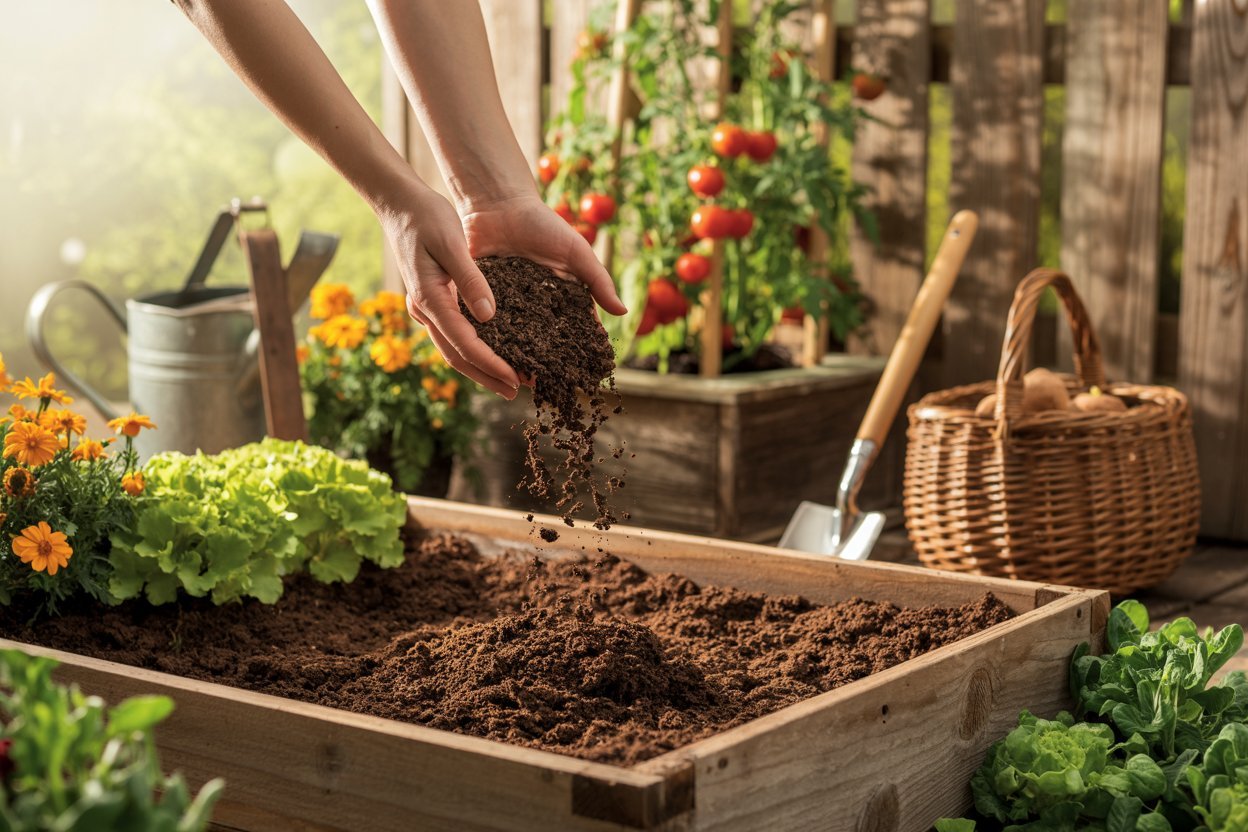

Healthy soil is the quiet magic behind every thriving garden. It holds moisture, feeds roots, supports beneficial organisms, and gives plants the strength to grow lush, productive, and resilient.
Yet many gardeners focus on seeds, fertilizers, and fancy tools while overlooking the one thing that matters most: the soil itself.
The lovely truth is that improving your garden soil does not need to be expensive. You do not need to buy bags of amendments, costly gadgets, or complicated products to create rich, crumbly, fertile soil.
In many cases, the best solutions are already around you fallen leaves, kitchen scraps, grass clippings, old cardboard, and simple gardening habits that work beautifully over time.
Whether you are tending a backyard vegetable patch, flower beds, raised planters, or a few containers, learning how to care for your soil will reward you season after season.
Better soil means stronger plants, fewer pest problems, improved drainage, better moisture retention, and more abundant harvests.
If your garden feels tired, compacted, sandy, heavy, or unproductive, do not worry. Soil can be restored with patience and simple methods. Even small changes can make a noticeable difference.
Here are eight simple and completely free ways to improve your garden soil naturally.
Why Healthy Soil Matters So Much
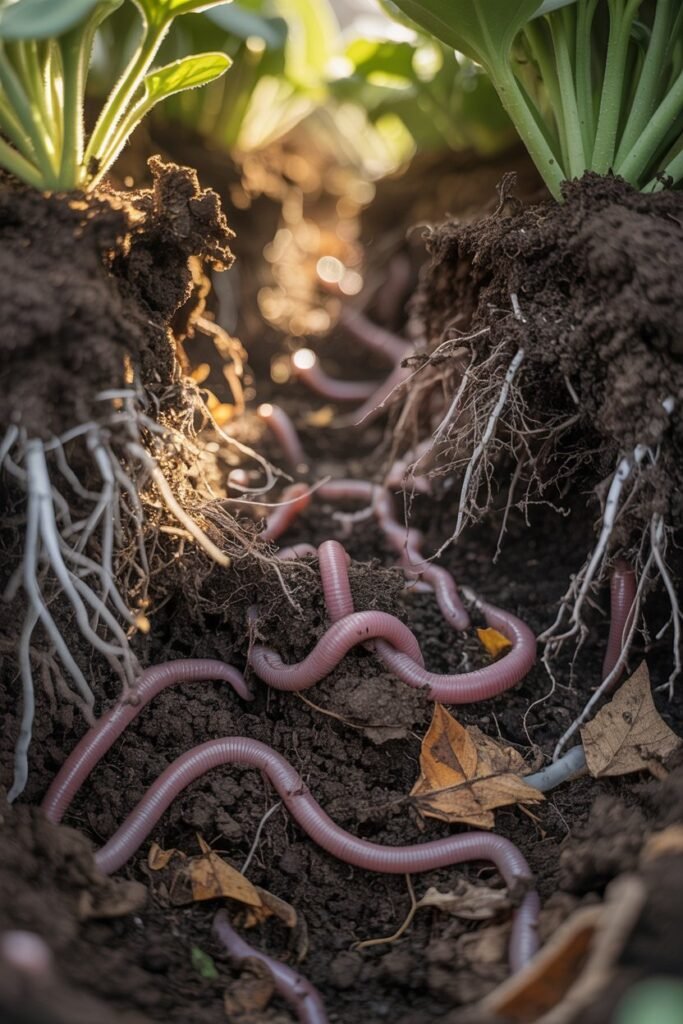
Before we begin, it helps to understand what good soil does for your garden.
Healthy soil:
- Stores water while still draining excess moisture
- Holds nutrients where roots can reach them
- Supports earthworms and beneficial microbes
- Creates air pockets roots need to breathe
- Helps seedlings establish quickly
- Reduces plant stress during heat or drought
- Improves yields, blooms, and plant health
When soil is neglected, plants struggle no matter how often they are watered or fed. That is why building soil should always come first.
1. Add Homemade Compost
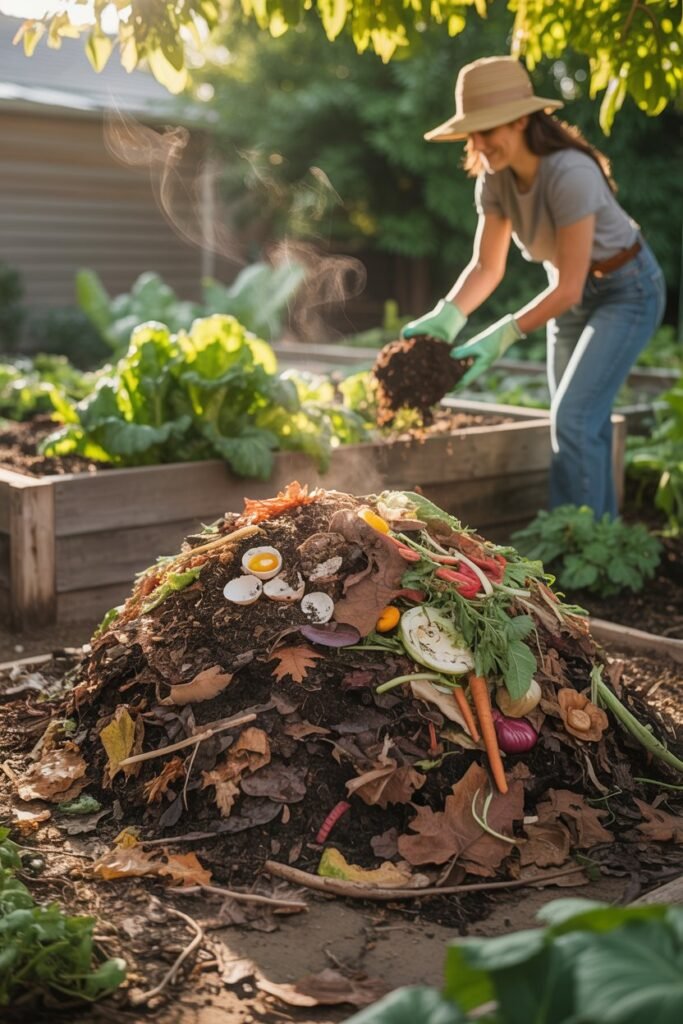
If soil improvement had a queen, compost would wear the crown.
Compost is one of the best free ways to enrich garden soil because it adds organic matter, improves texture, feeds soil life, and slowly releases nutrients. It helps sandy soil hold moisture and loosens heavy clay soil at the same time.
What You Can Compost
Use everyday materials such as:
- Fruit and vegetable scraps
- Coffee grounds
- Tea leaves
- Eggshells
- Dry leaves
- Grass clippings
- Shredded paper
- Cardboard pieces
- Plant trimmings
- Weeds without seeds
Avoid meat, oily food, and diseased plants.
How to Start
Choose a corner of your yard, a simple bin, or a pile. Layer green materials (fresh scraps, grass) with brown materials (dry leaves, paper, cardboard). Keep it lightly moist and turn occasionally.
Over time, everything breaks down into dark, crumbly compost that smells earthy and fresh.
How to Use It
Spread 1 to 3 inches over beds and gently mix into the topsoil, or use it as mulch around plants.
Why Gardeners Love It
Compost improves nearly every soil problem naturally. It is free, effective, and turns waste into garden gold.
2. Use Fallen Leaves as Leaf Mold
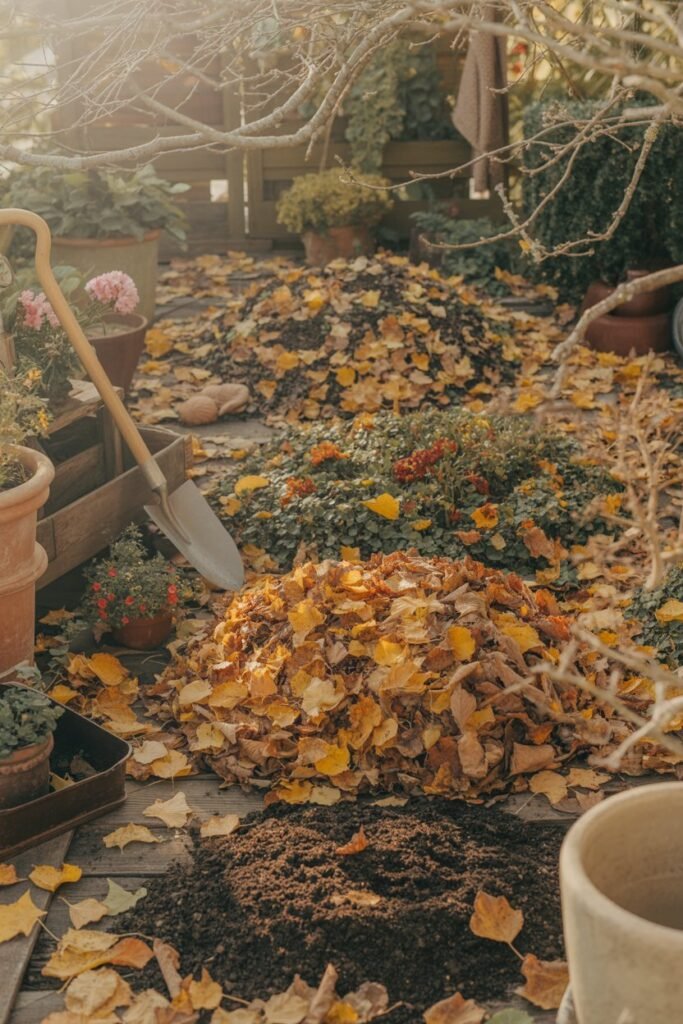
Autumn leaves are often bagged and thrown away, but they are one of the most valuable free soil builders you can collect.
When leaves break down slowly, they become leaf mold a soft, rich material that improves soil structure and moisture retention beautifully.
Best Leaves to Use
Most deciduous tree leaves work well, such as:
- Maple
- Oak
- Birch
- Elm
- Fruit tree leaves
Shred them first if possible so they break down faster.
How to Make Leaf Mold
Pile leaves in a corner, moisten them, and let nature do the work. You can also place them in black bags with air holes.
After several months to a year, they turn dark and crumbly.
Benefits of Leaf Mold
- Helps soil hold moisture
- Encourages earthworms
- Improves texture
- Adds organic matter
- Reduces compaction
A Gentle, Natural Soil Booster
Leaf mold is especially lovely for flower beds, vegetable gardens, and raised beds that dry out quickly.
3. Mulch With Grass Clippings
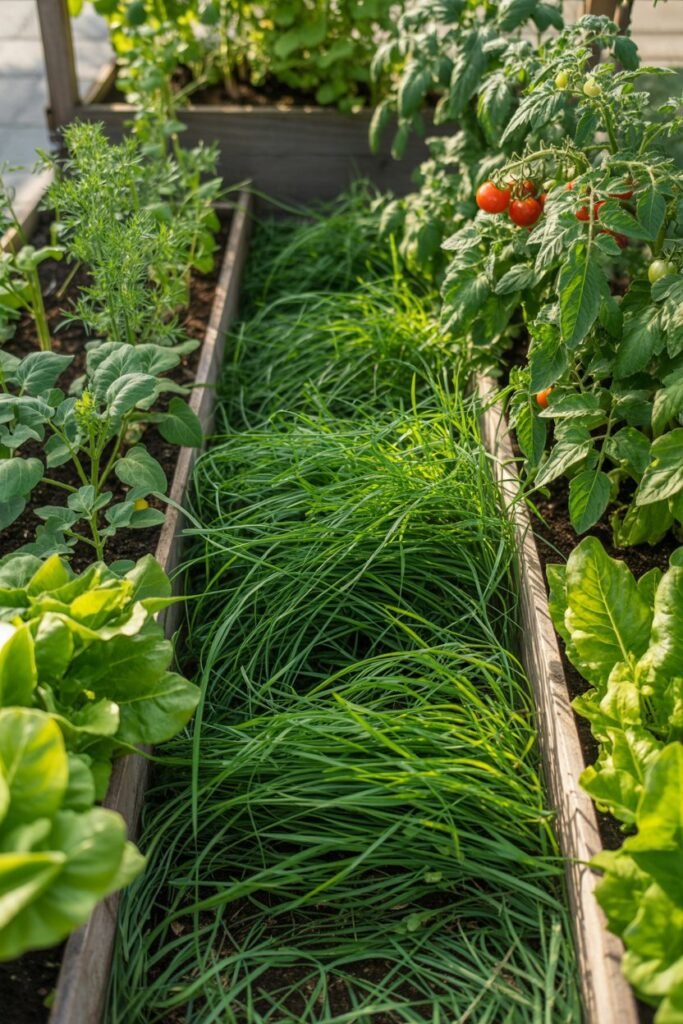
Fresh grass clippings can do much more than fill yard waste bags. Used properly, they make a fantastic free mulch that feeds soil while protecting it.
How to Use Grass Clippings
Spread a thin layer around plants, no more than 1 to 2 inches at a time. Let one layer dry before adding more.
Avoid thick wet piles, which can smell unpleasant and mat together.
Important Tip
Only use untreated grass clippings from lawns that have not been sprayed with herbicides or chemicals.
Soil Benefits
Grass clippings:
- Break down quickly
- Add nitrogen
- Reduce evaporation
- Suppress weeds
- Protect soil from sun damage
- Feed microbes
Best Places to Use Them
- Vegetable beds
- Around tomatoes
- Around corn
- Between rows
- Around shrubs
This is one of the easiest ways to recycle yard waste into healthier soil.
4. Stop Digging So Much
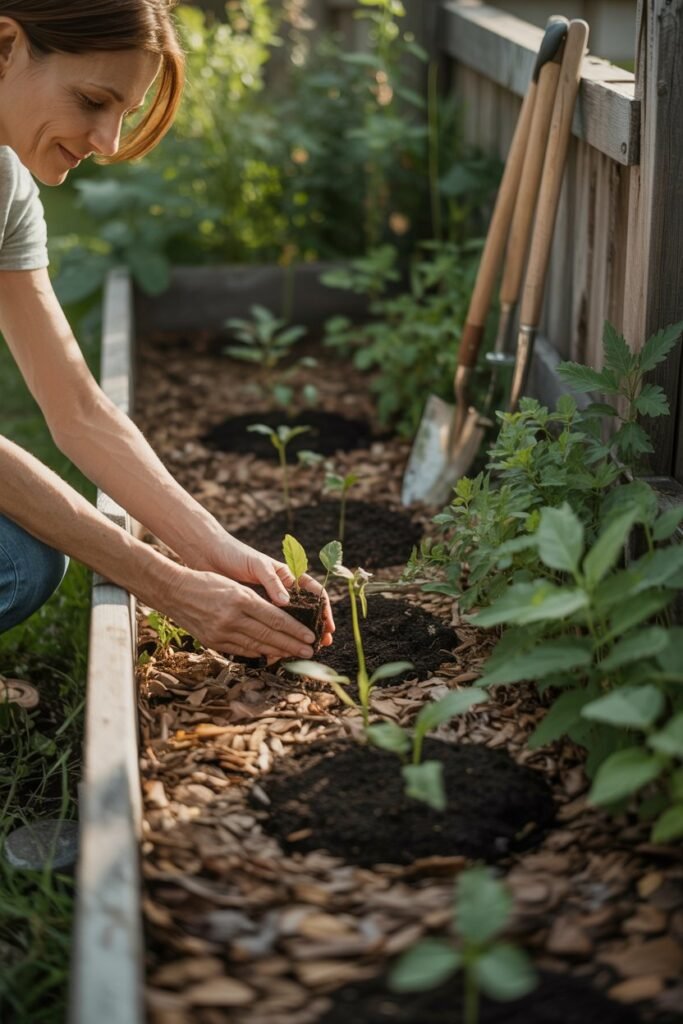
Many gardeners are surprised to learn that too much digging can damage soil structure.
Frequent turning and heavy tilling break apart natural soil networks, disturb earthworms, expose microbes, and increase compaction over time.
Sometimes the best thing you can do for your soil is disturb it less.
Try a No-Dig Approach
Instead of deeply turning beds each season:
- Add compost on top
- Mulch regularly
- Pull weeds gently
- Loosen only where planting is needed
- Let worms incorporate organic matter naturally
Why It Works
Soil contains layers, tunnels, fungi, and tiny life forms working constantly below the surface. Less disturbance allows these systems to thrive.
Benefits You May Notice
- Softer soil over time
- Better moisture retention
- More worms
- Fewer weeds surfacing
- Healthier plant roots
Gentle gardening often creates the richest soil of all.
5. Grow Cover Crops
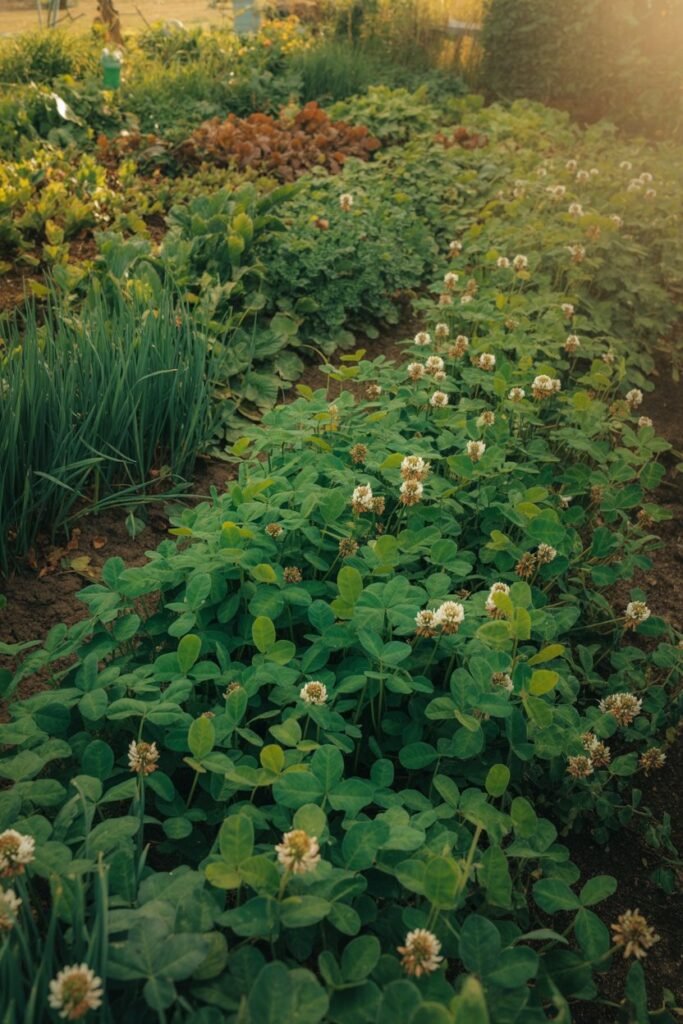
If a bed sits empty between seasons, that bare soil is losing moisture, nutrients, and structure. A better option is to grow cover crops.
Cover crops are plants grown specifically to protect and improve soil.
Free or Low-Cost Options
If you already garden, you may be able to save seeds from certain plants or share seeds with other gardeners.
Popular cover crops include:
- Clover
- Field peas
- Rye
- Buckwheat
- Oats
What They Do
Cover crops:
- Prevent erosion
- Shade soil
- Suppress weeds
- Add roots that loosen soil
- Feed microbes
- Add organic matter when cut down
Legume crops like peas and clover can also help add nitrogen.
How to Use Them
Sow after harvest season or when beds would otherwise be empty. Before they set seed, cut them down and leave roots in place. Lay tops on soil as mulch or compost them.
Why This Method Feels So Smart
Instead of leaving beds bare and tired, you keep the soil alive and improving.
6. Use Kitchen Scraps Directly in the Garden
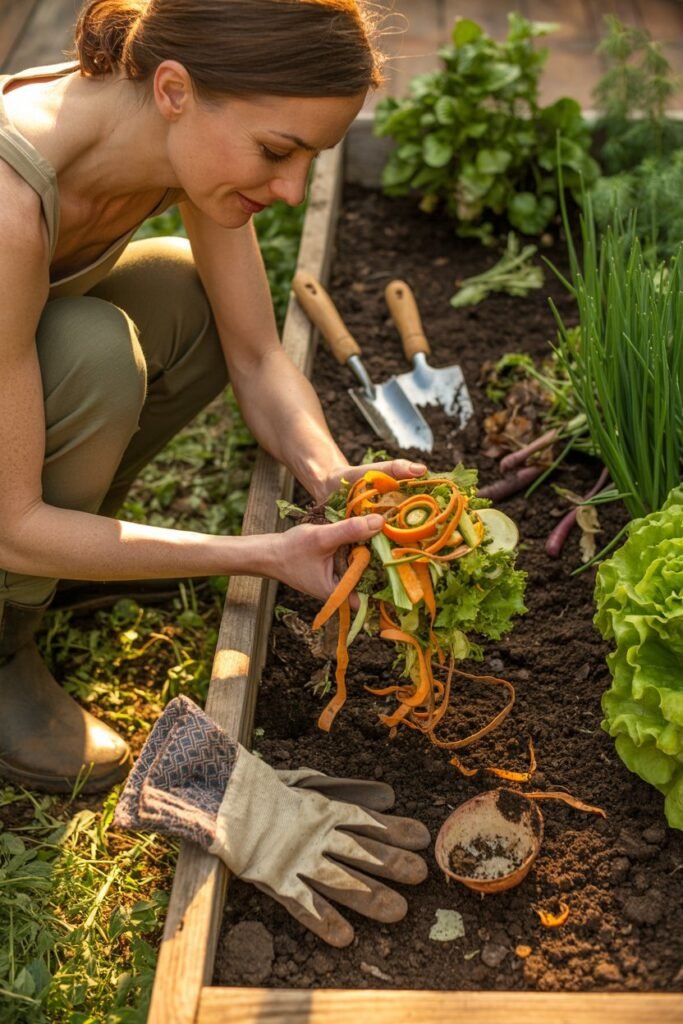
Composting is wonderful, but some kitchen scraps can be buried directly in the garden to break down in place.
This is often called trench composting.
Good Materials to Bury
- Fruit scraps
- Vegetable peels
- Coffee grounds
- Crushed eggshells
- Wilted greens
Avoid meat, dairy, greasy foods, and anything that attracts pests.
How to Do It
Dig a trench or hole 8 to 12 inches deep in an empty section of the bed. Add scraps, cover fully with soil, and let them decompose.
Rotate to different spots over time.
Why It Helps
As scraps break down underground, they feed microbes and enrich the soil naturally.
Perfect for Busy Gardeners
If you do not want to maintain a compost pile, this is a beautifully simple shortcut.
7. Collect and Use Cardboard or Paper
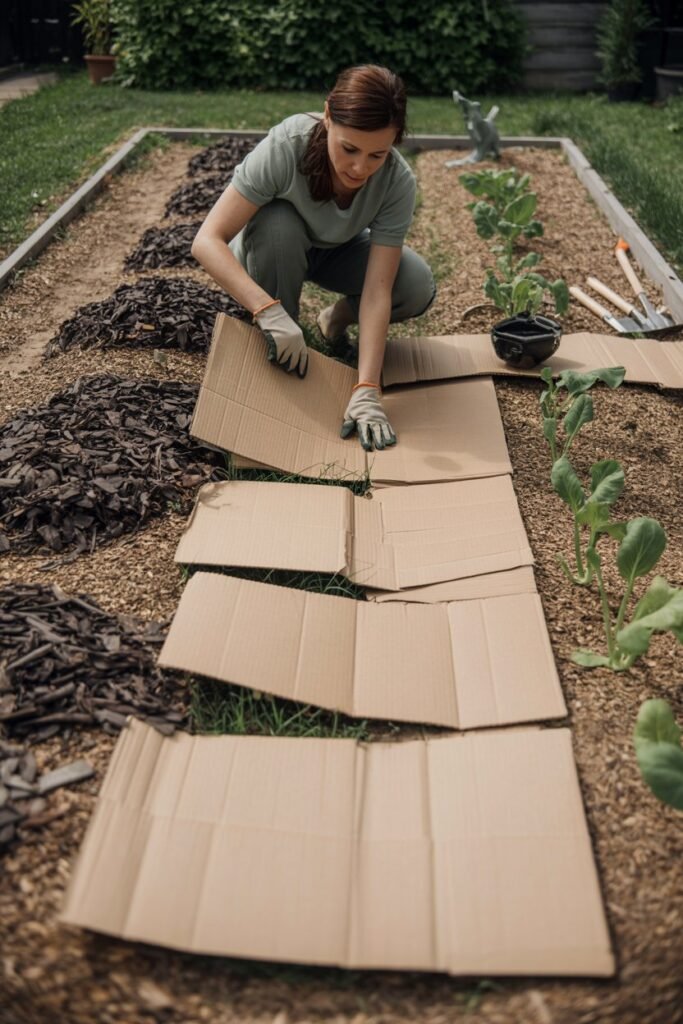
Plain cardboard and non-glossy paper can be incredibly useful in the garden.
They suppress weeds, protect soil, and break down into organic matter over time.
What to Use
- Brown cardboard boxes
- Paper bags
- Newspaper (black ink preferred)
- Plain shredded paper
Remove glossy tape, staples, and labels first.
Ways to Use It
Sheet Mulching
Lay cardboard over weeds, wet it well, and cover with compost, leaves, or mulch. This smothers grass while creating a new planting area.
Pathways
Use cardboard in walkways to reduce weeds and mud.
Compost Browns
Shredded paper and cardboard balance kitchen scraps in compost piles.
Soil Benefits
- Adds carbon
- Improves texture as it breaks down
- Protects soil life
- Conserves moisture
It is a wonderful example of turning household waste into something valuable.
8. Keep Roots Growing Year-Round
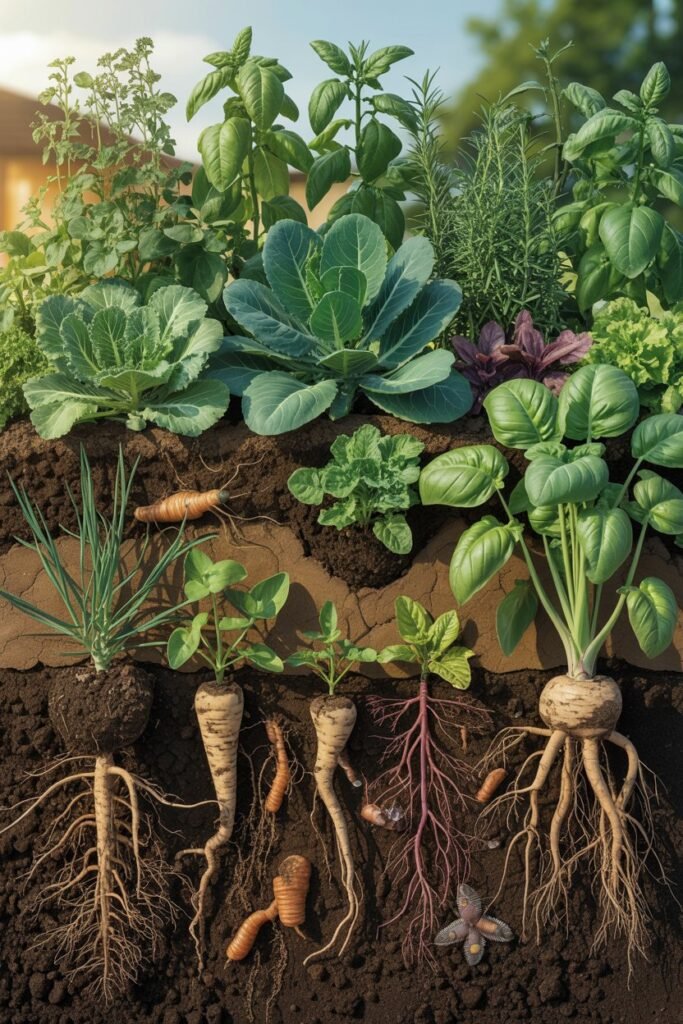
One of the most overlooked ways to improve soil is to keep living roots in it as often as possible.
Roots feed beneficial microbes through natural sugars. When roots decay, they leave channels that improve aeration and water movement.
Bare soil loses life quickly.
Ways to Keep Roots Present
- Grow cool-season greens after summer crops
- Plant herbs in open spots
- Use cover crops
- Interplant flowers and vegetables
- Succession plant fast crops like lettuce or radishes
Why This Matters
Every root system becomes part of the soil-building process.
A Beautiful Long-Term Habit
The more consistently plants grow in your beds, the more active and fertile your soil becomes.
Bonus Tips to Improve Soil Even Faster
If you want even better results, combine several methods together.
For example:
- Add compost, then mulch with leaves
- Grow cover crops after harvest
- Use no-dig methods with cardboard weed suppression
- Bury scraps in one area while growing crops in another
Layered habits build soil faster than one single method.
Signs Your Soil Is Improving
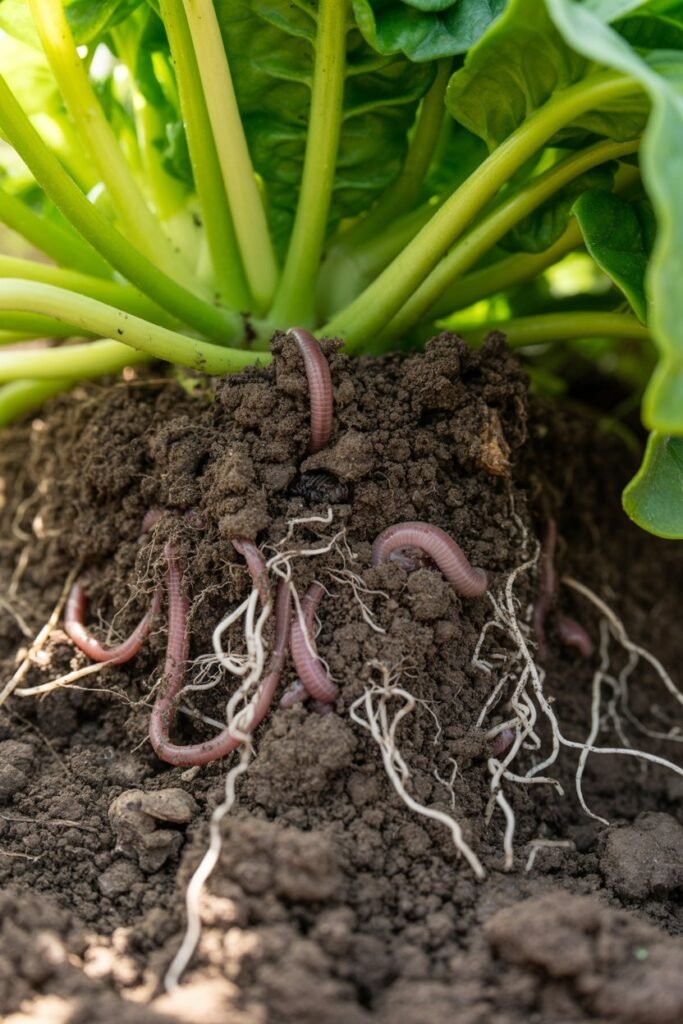
Healthy soil often changes gradually, then suddenly feels transformed.
Watch for these encouraging signs:
- Darker color
- Softer texture
- Easier digging
- More worms
- Better water absorption
- Less crusting on top
- Stronger plant growth
- Fewer stressed plants during heat
Soil healing is a quiet process, but the rewards are real.
Common Mistakes to Avoid
Adding Too Much Fresh Material at Once
Large piles of fresh grass or scraps can smell or tie up nutrients temporarily.
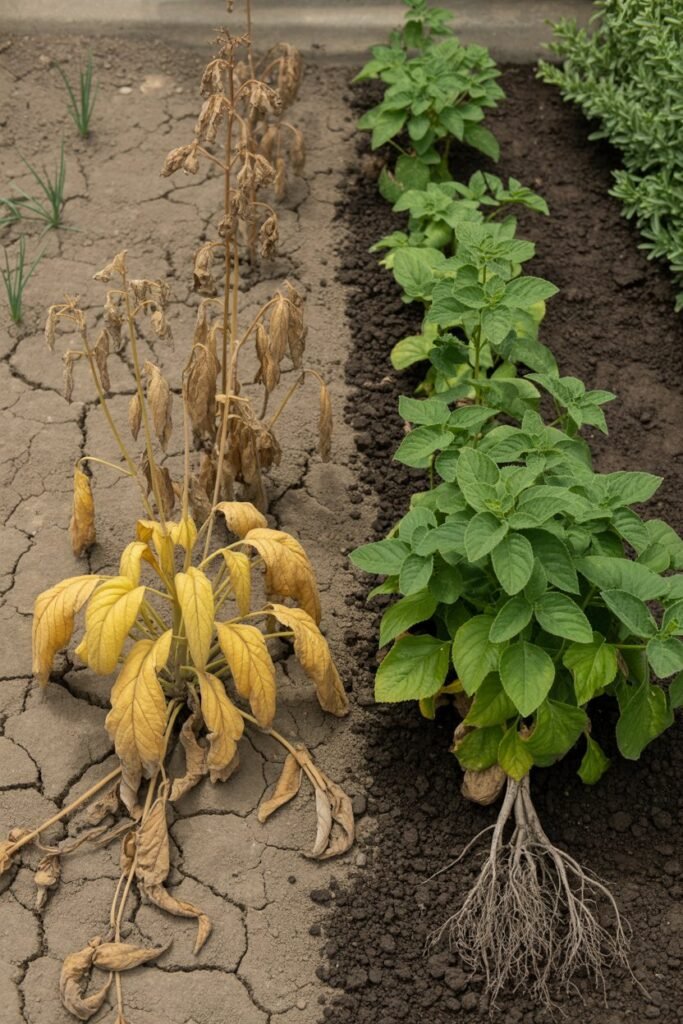
Leaving Soil Bare
Bare ground dries, compacts, and erodes quickly.
Over-Tilling
Too much digging damages structure.
Using Sprayed Materials
Avoid chemically treated grass, leaves, or plant waste.
Expecting Overnight Results
Soil building takes time, but every season gets better.
Seasonal Soil Care Plan
Spring
- Add compost
- Mulch beds
- Plant early crops
Summer
- Use grass clippings
- Water deeply
- Keep beds planted
Autumn
- Collect leaves
- Sow cover crops
- Add compost to empty beds
Winter
- Keep soil covered
- Plan next season
- Continue composting scraps
Final Thoughts
Beautiful gardens begin below the surface.
When you focus on feeding your soil instead of constantly trying to fix plants, everything becomes easier. Vegetables grow stronger. Flowers bloom more generously. Water goes further. Problems become fewer.
And best of all, improving your soil does not have to cost a thing.
With compost, leaves, mulch, kitchen scraps, cardboard, cover crops, and gentler gardening habits, you can turn tired ground into rich, living soil over time.
Start with one or two of these free methods today. Keep going season after season. Your soil will thank you quietly and your garden will show you loudly.
