
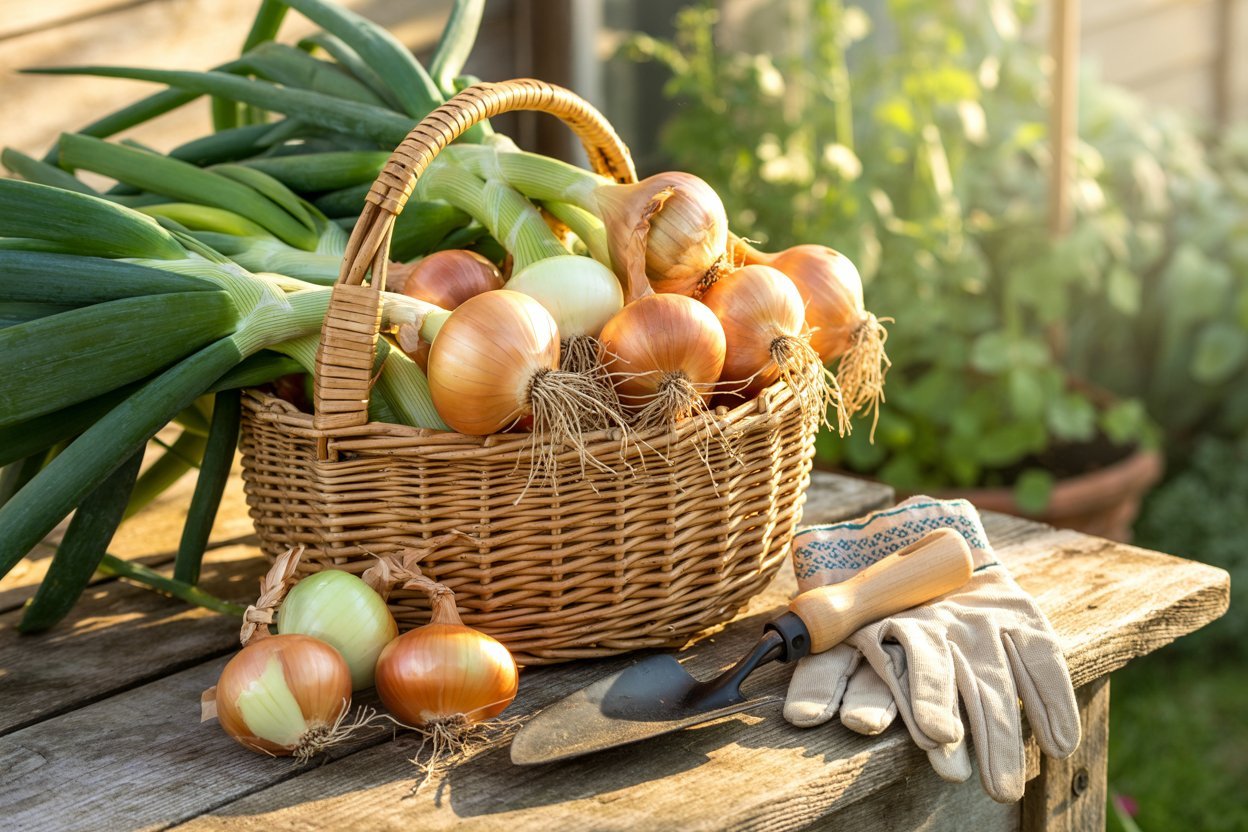

Growing onions has become one of my favorite things to plant each season. Few garden moments feel better than pulling a full, healthy bulb from the soil and knowing it will end up in tonight’s dinner.
Over time, learning the best tips for planting & growing onions helped me turn small, disappointing bulbs into large, flavorful harvests.
In this guide, I’m sharing the simple gardening habits that made the biggest difference for me, along with helpful advice and long-day onion varieties that grow well in northern climates.
Shop my amazon essentials
- Hand Trowel
- Garden Hoe
- Watering Can
- Garden Rake
- Planting Containers
- Gardening Gloves
- Soil pH Tester
- Mulch
- Compost or Organic Fertilizer
- Pruning Scissors
Why Grow Onions?
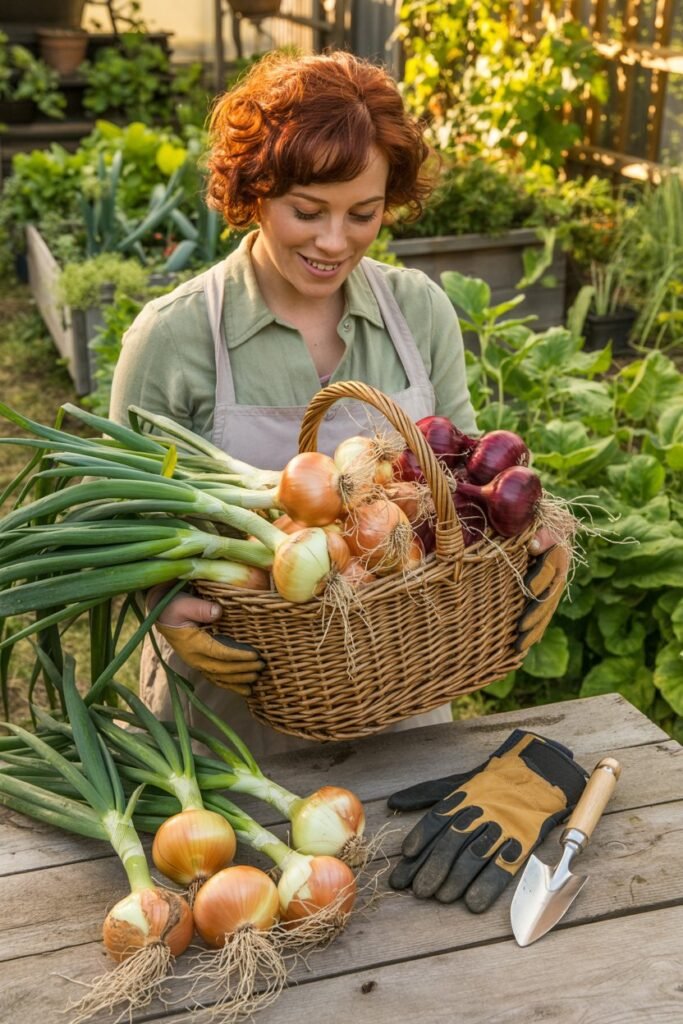
Every garden has that one crop that quietly becomes a staple year after year, and for me, onions have definitely earned that place.
Growing onions may not seem as exciting as harvesting tomatoes or picking sweet berries, but once you experience the convenience of having your own supply of fresh onions, it’s hard to imagine a garden without them.
One of the biggest reasons I always make room for onions in my garden is their incredible usefulness in the kitchen. Onions are one of those ingredients that seem to appear in almost every recipe.
From soups and stir-fries to roasted vegetables and homemade sauces, onions add depth, flavor, and aroma to so many meals. When they come straight from the garden, the flavor is noticeably richer and fresher than anything from the store.
Another reason I love growing onions is how well they store. Unlike many vegetables that need to be eaten quickly, properly cured onions can last for months.
I still remember the first time I harvested a full basket of onions, cured them, and stored them in my pantry. Being able to reach for homegrown onions in the middle of winter felt incredibly satisfying.
Understanding Onion Types
One of the most important things to understand before planting onions is that not all onions grow the same way. In fact, onions are very sensitive to daylight, and the length of the day determines when they begin forming bulbs.
Learning this simple detail can make the difference between harvesting large beautiful onions or ending up with small underdeveloped bulbs.
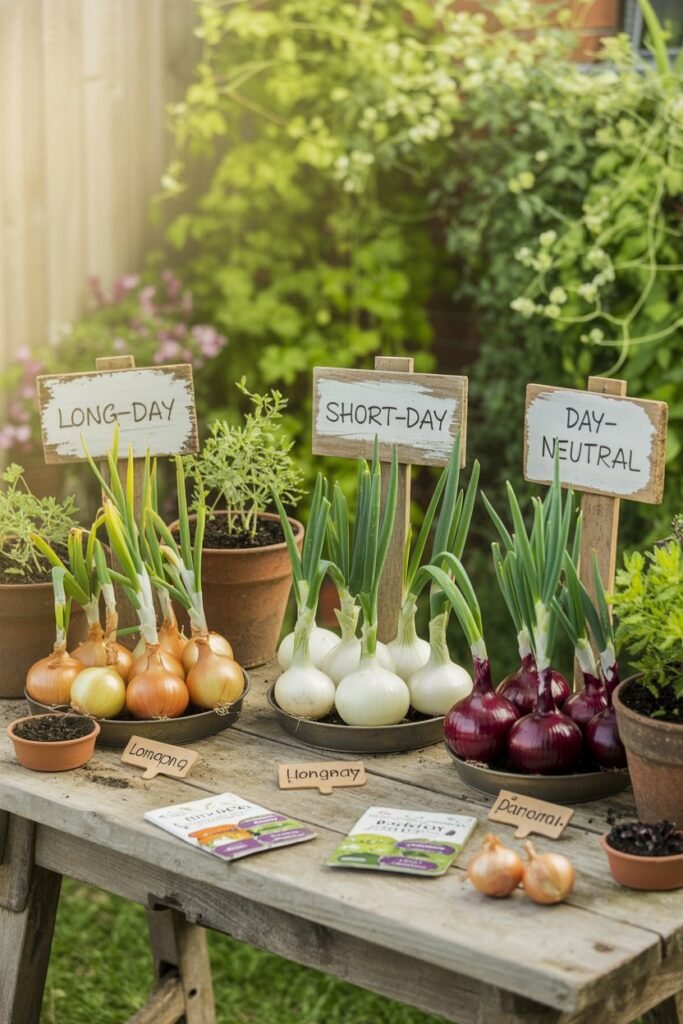
Onions are generally divided into three main categories based on how much daylight they need to form bulbs: long-day onions, short-day onions, and day-neutral onions.
Long-day onions
Long-day onions begin forming bulbs when daylight reaches about 14 to 16 hours. These varieties are best suited for northern regions where summer days are long.
Gardeners in places like Canada, the northern United States, and similar climates usually have the most success with long-day onions. These onions often produce large bulbs and many varieties store very well.
Short-day onions
Short-day onions, on the other hand, begin forming bulbs when days reach around 10 to 12 hours of sunlight.
These varieties are better suited to southern climates where winters are mild and daylight hours are shorter during the growing season.
Day-neutral onions
Day-neutral onions, sometimes called intermediate onions, fall somewhere in the middle. They typically begin forming bulbs with about 12 to 14 hours of daylight, making them adaptable to many regions.
Once I understood this simple concept in my own garden, my onion harvests improved dramatically. Choosing the right type of onion truly sets the foundation for a successful growing season.
My Step-by-Step Guide to Growing Onions Successfully
Step 1: Choose the Right Onion Variety
One of the biggest secrets to growing great onions starts long before planting day it begins with choosing the right variety. I learned this the hard way during my first season growing onions.
I planted a variety that simply wasn’t suited for my climate, and while the plants looked healthy, the bulbs never developed properly.
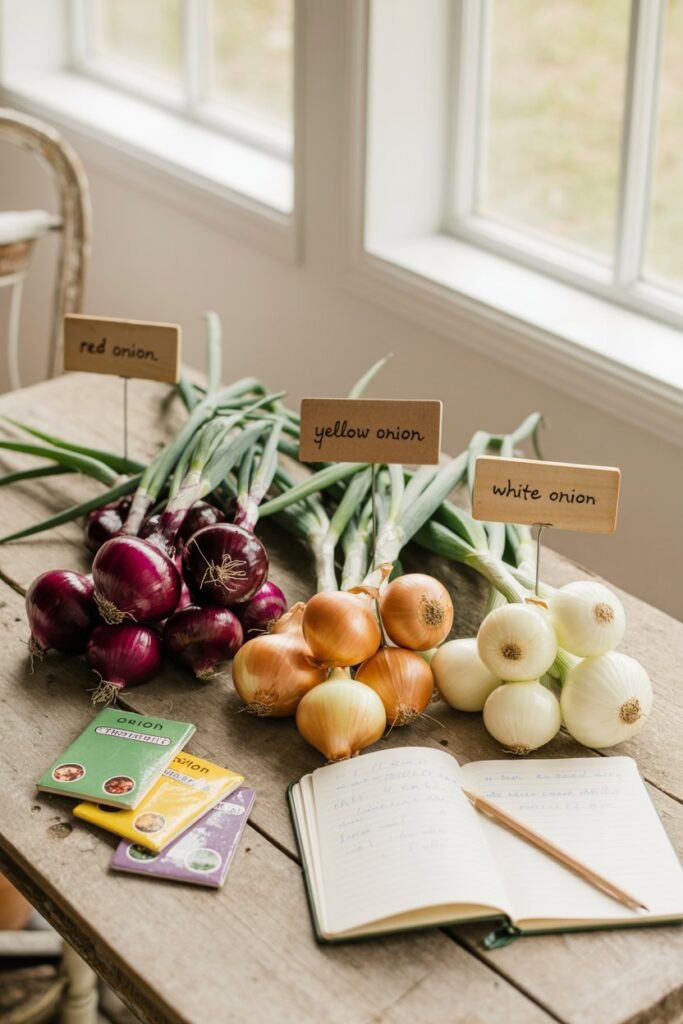
Onions are very sensitive to daylight hours. They form bulbs based on the length of the day, which means choosing the correct type for your region makes all the difference. There are generally three types of onions:
- Long-day onions – Best for northern climates where summer days are long.
- Short-day onions – Grow best in southern regions with mild winters.
- Day-neutral onions – Adaptable to many climates.
If you live in northern regions like Canada or areas with long summer days, long-day onions are usually the best choice. These onions start forming bulbs when daylight reaches about 14–16 hours.
Some of my favorite long-day varieties are wonderfully reliable and produce large, flavorful bulbs. They also tend to store well, which means you can enjoy your harvest for months after the growing season ends.
When choosing onion varieties, consider a few factors:
- Storage ability
- Flavor (sweet vs. strong)
- Bulb size
- Disease resistance
For beginner gardeners, I always recommend starting with a few dependable varieties and expanding later as you gain confidence. Over time, you’ll discover which onions thrive best in your specific garden conditions.
Read Best Vegetables for Hanging Baskets (From My Own Small-Space Garden)
Step 2: Start with Healthy Onion Sets or Seeds
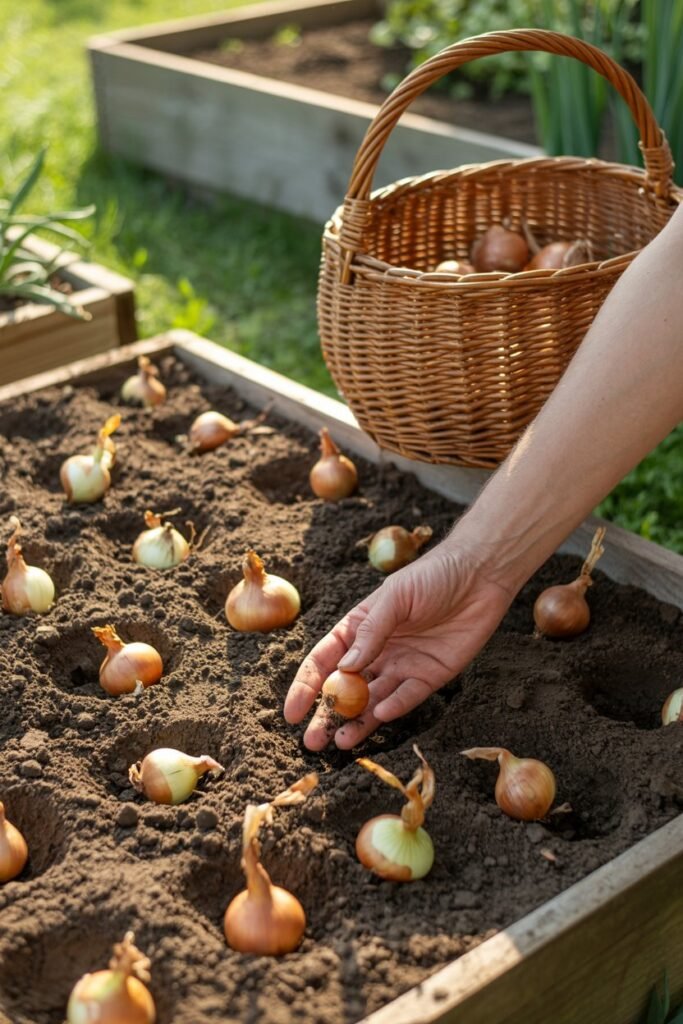
Gardeners can grow onions from seeds, sets, or seedlings, and each option has its own advantages. Personally, I often recommend onion sets to beginners because they make the process much easier and faster.
Onion sets are small bulbs that were started the previous year and allowed to go dormant. When planted, they quickly resume growing and begin forming larger bulbs.
Seeds, on the other hand, take more time and patience. However, they also offer the widest variety of onion types. If you love experimenting with different varieties in your garden, starting onions from seed can be very rewarding.
Seedlings or transplants are another option and give you a nice balance between the two methods.
Here’s how I usually decide:
- Seeds: Best for gardeners who want unique varieties and don’t mind a longer growing season.
- Sets: Perfect for beginners and quick results.
- Transplants: A good middle ground.
Whenever possible, I always choose firm, healthy onion sets. Avoid any that feel soft, moldy, or already sprouting too heavily.
Starting with healthy planting material gives your onions the strong beginning they need to grow into large, beautiful bulbs later in the season.
Step 3: Prepare the Soil Properly
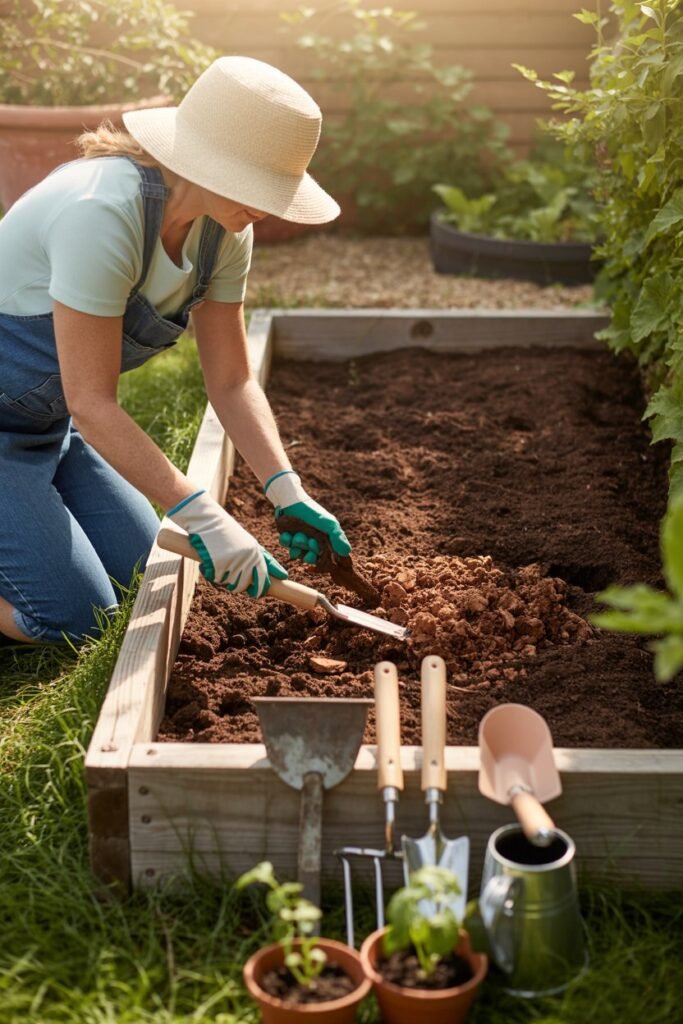
Onions may look simple above the soil, but underground they need a well-prepared home to grow properly. One of the most important lessons I’ve learned over the years is that loose, fertile soil produces the best onions.
Onions grow their bulbs directly beneath the surface, so compact soil can prevent them from expanding. Whenever I prepare a bed for onions, I focus on creating soil that feels soft and crumbly.
Here’s my typical soil preparation routine:
- Loosen the soil about 10–12 inches deep.
- Remove rocks and debris that could block bulb growth.
- Mix in compost or well-aged manure.
- Add organic fertilizer if the soil is poor.
Onions prefer soil that drains well. Waterlogged soil can cause rot, which is one of the quickest ways to lose a crop.
I also like to test the soil pH whenever possible. Onions grow best in slightly acidic to neutral soil, usually around pH 6.0–7.0.
Preparing the soil well before planting day gives onions the best possible start. It may seem like extra work in the beginning, but it pays off when you harvest larger, healthier bulbs later.
Step 4: Plant Onions at the Right Depth and Spacing
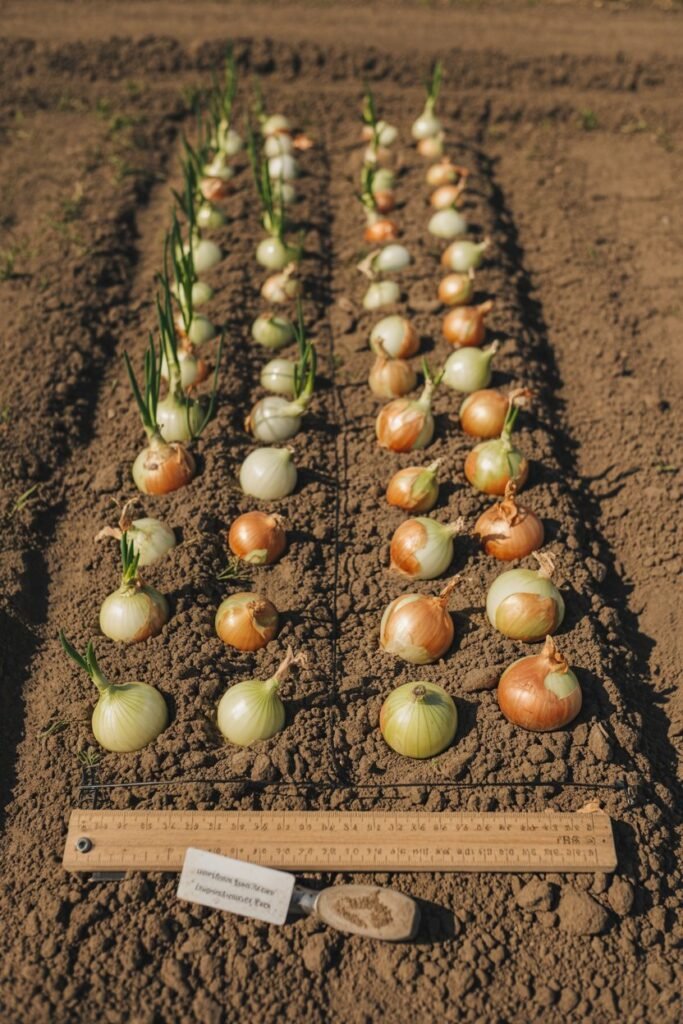
Planting onions correctly might seem simple, but spacing and depth matter more than many gardeners realize. If onions are planted too deep, they may struggle to form bulbs.
If they’re crowded together, they’ll compete for nutrients and stay small.
When I plant onion sets, I follow a simple rule that has worked beautifully in my garden:
- Plant sets about 1 inch deep
- Space them 4–6 inches apart
- Leave 12–18 inches between rows
The pointed tip of the onion set should face upward. This is where the green shoots will emerge.
One mistake I made early on was planting onions too close together. I was trying to fit more plants into a small garden space, but the result was dozens of tiny bulbs instead of large ones.
Giving each onion enough room allows the bulbs to expand naturally.
After planting, I gently firm the soil and give the bed a light watering to help the roots settle into place.
Step 5: Water Consistently
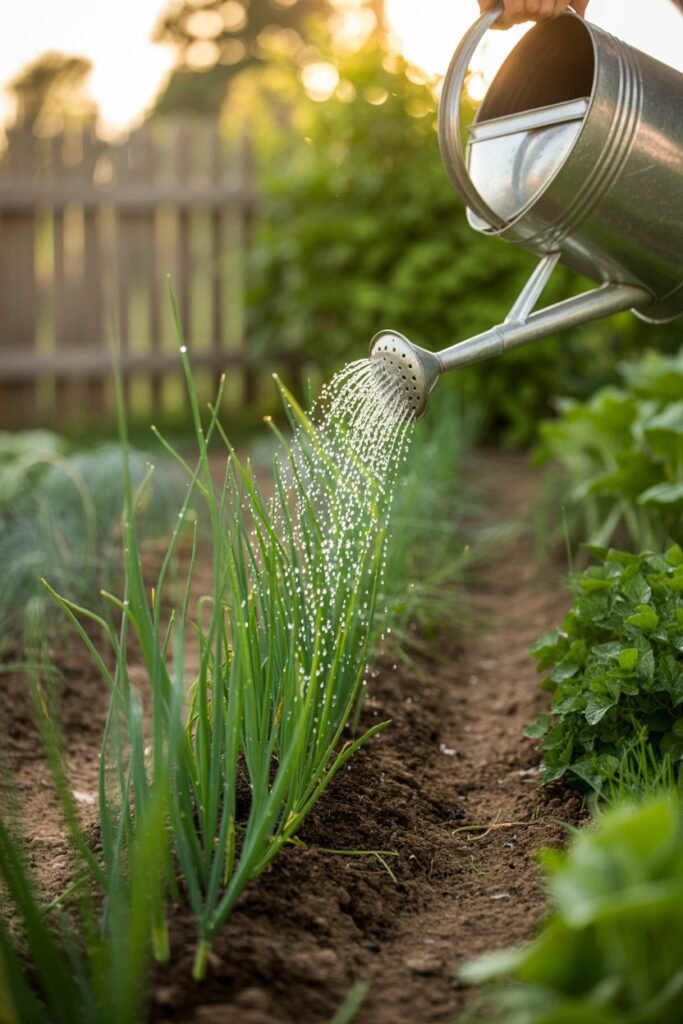
Onions need consistent moisture, especially while bulbs are forming. One of the easiest ways to end up with small onions is letting the soil dry out too often.
In my garden, I try to keep the soil evenly moist but never soggy. A good rule of thumb is to give onions about 1 inch of water per week, either from rainfall or irrigation.
Mulching is something I’ve come to rely on heavily. A thin layer of mulch helps:
- Retain soil moisture
- Suppress weeds
- Keep soil temperatures stable
Straw, shredded leaves, or grass clippings all work beautifully.
However, once the onion bulbs begin to mature and the tops start falling over, it’s important to reduce watering. This helps the onions cure properly and improves their storage life.
Step 6: Control Weeds Early
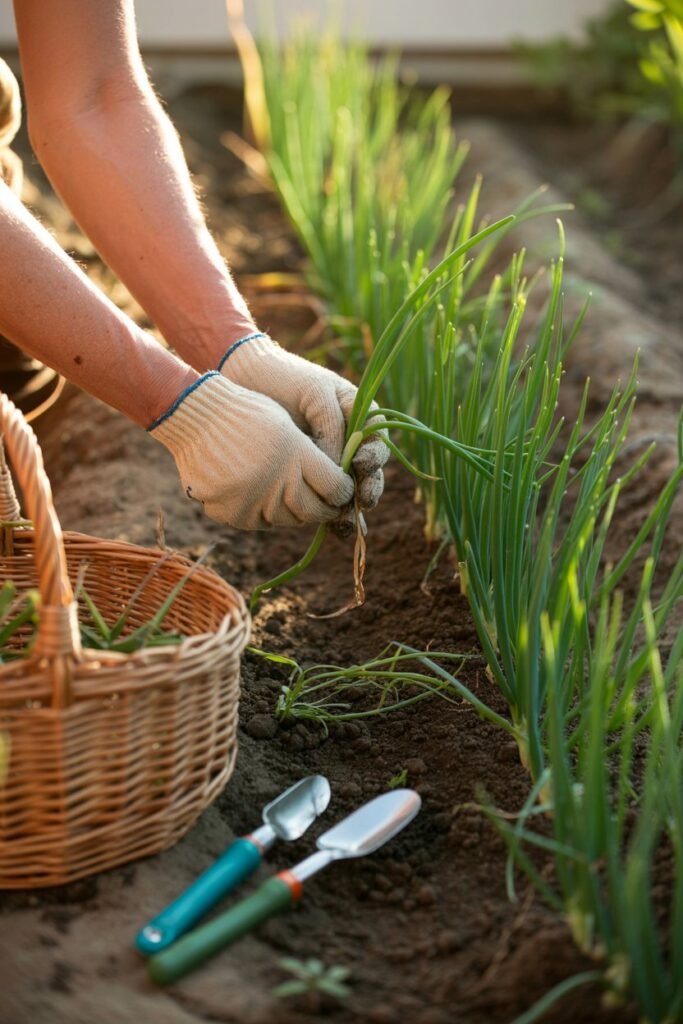
Onions are surprisingly poor competitors when it comes to weeds. Because their roots are shallow and their leaves are narrow, weeds can quickly take over if left unchecked.
I learned this lesson during one particularly busy summer when I ignored my onion bed for a few weeks. By the time I returned, weeds had completely surrounded the plants and the harvest that year was noticeably smaller.
To prevent this, I make weeding a regular part of my gardening routine.
A few simple strategies help keep weeds under control:
- Light hand weeding every week
- Applying mulch early in the season
- Using shallow cultivation tools
Because onion roots are close to the surface, I’m always careful not to dig too deeply around the plants.
Staying on top of weeds early ensures onions get the nutrients, sunlight, and water they need to grow strong.
3 Tips for Growing Bigger Onions
Tip 1: Feed Your Onions Regularly
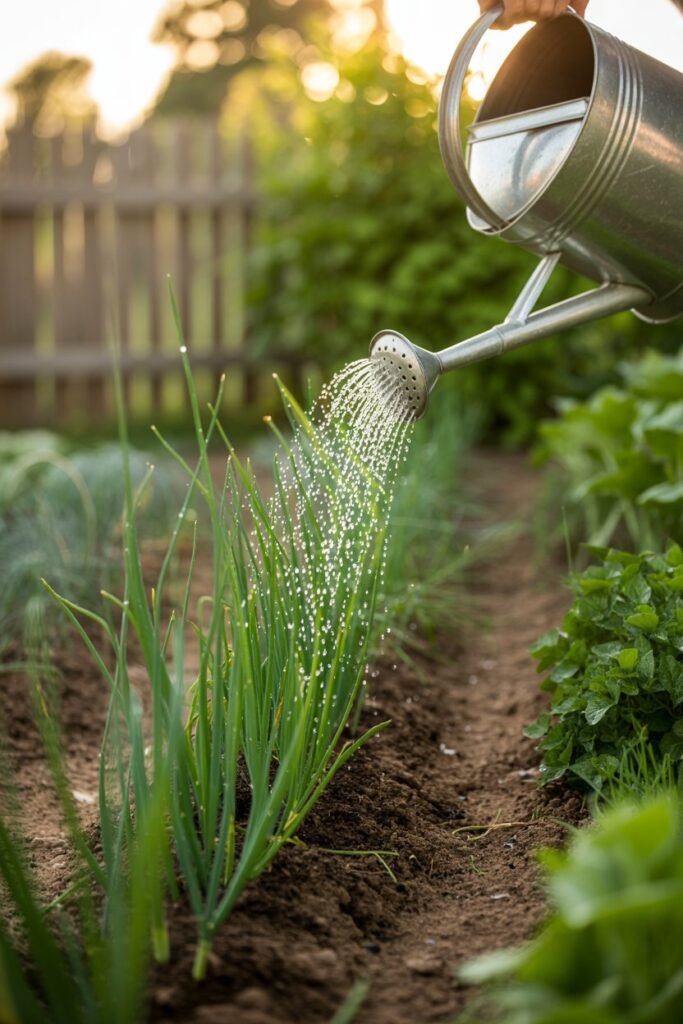
Onions are surprisingly heavy feeders, especially during their early growth stages. If the soil lacks nutrients, the plants may look healthy but the bulbs often remain disappointingly small.
One habit that has helped me grow noticeably larger onions is feeding them consistently throughout the season. Nitrogen plays a particularly important role early on because it supports strong leaf growth and those green leaves are actually what power bulb development later.
In my garden, I usually apply a balanced organic fertilizer every few weeks during the early growth period. Compost tea or diluted fish emulsion also works beautifully if you prefer natural feeding methods.
Healthy green tops are a good sign that your onions are receiving enough nutrients. The stronger the leaves grow, the more energy the plant can send down into forming large bulbs.
However, once the bulbs begin swelling, I slow down on nitrogen fertilizers. Too much feeding at this stage can delay maturation and affect storage quality.
Balanced feeding throughout the season helps onions grow bigger, stronger, and far more productive.
Tip 2: Give Them Plenty of Sun
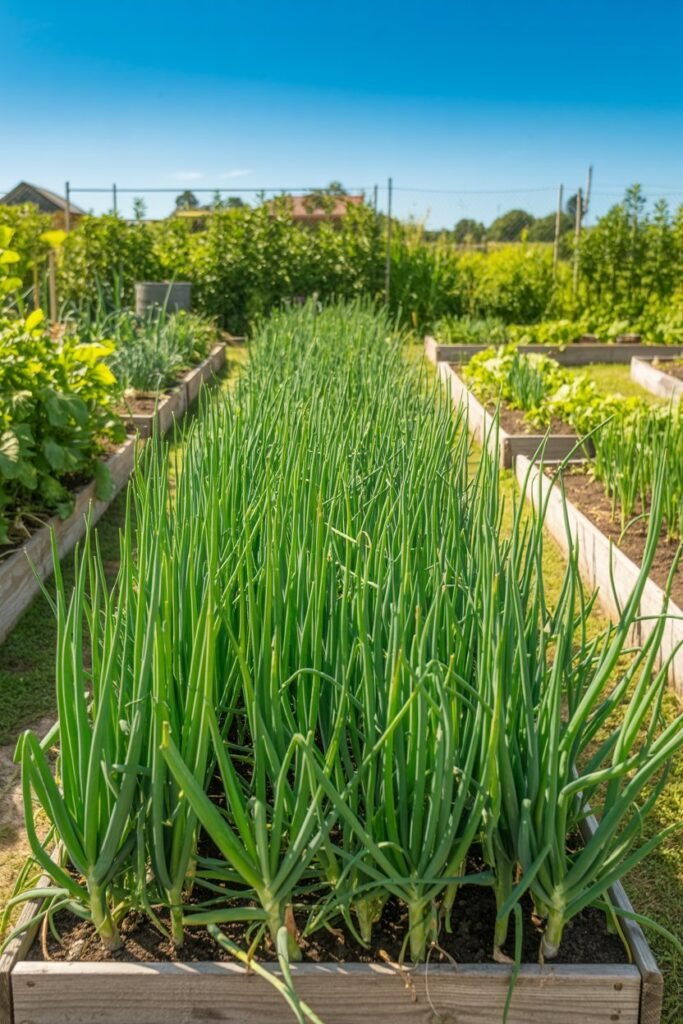
Onions absolutely love sunlight, and one of the best ways to grow larger bulbs is simply giving them as much sun as possible.
In my experience, onions perform best in a location that receives at least 6–8 hours of direct sunlight every day. More sunlight means more photosynthesis, and that extra energy goes straight into bulb growth.
When planning my garden beds each season, I always reserve the sunniest areas for crops like onions, tomatoes, and peppers. These plants really thrive when they have uninterrupted access to bright light.
If onions are planted in partially shaded areas, they often grow tall leafy tops but produce smaller bulbs. This happens because the plant doesn’t have enough energy to fully develop underground.
Spacing also plays a role in sunlight exposure. When onions are crowded, their leaves can shade each other, reducing overall growth.
A bright, sunny location may sound simple, but it’s truly one of the most powerful factors in growing impressive onion harvests.
Tip 3: Don’t Plant Them Too Deep
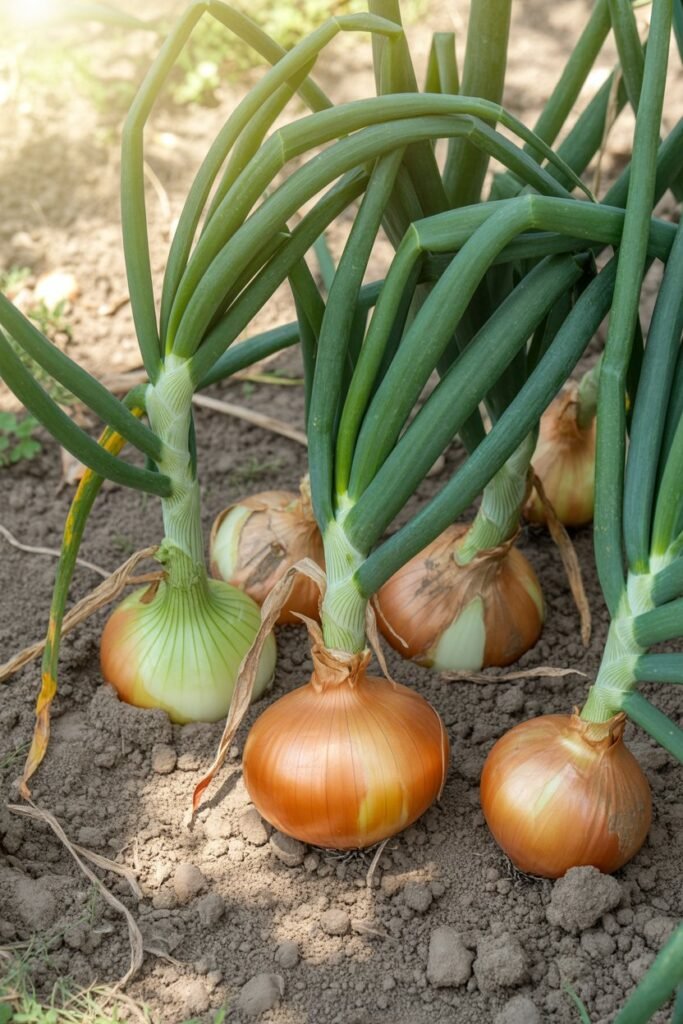
One small mistake can prevent onions from reaching their full size planting them too deep.
Early in my gardening journey, I assumed burying the bulbs deeper would help anchor the plants better. Instead, the onions struggled to form proper bulbs and many remained small.
Onions actually prefer to sit quite close to the soil surface. When planted correctly, the top of the bulb often becomes slightly visible as it grows.
Here’s the general guideline I now follow:
- Onion sets should be planted about 1 inch deep
- The neck of the onion should remain close to the surface
- As bulbs grow, gently brush soil away if they become buried
Allowing the bulbs space near the surface helps them expand naturally.
Sometimes gardeners even notice onions pushing themselves partially out of the soil as they mature. This is perfectly normal and often a sign of healthy growth.
By keeping onions shallow and giving them room to develop, you’ll encourage much larger bulbs by harvest time.
List of Long-Day Onion Varieties That Grow Well in Northern Climates
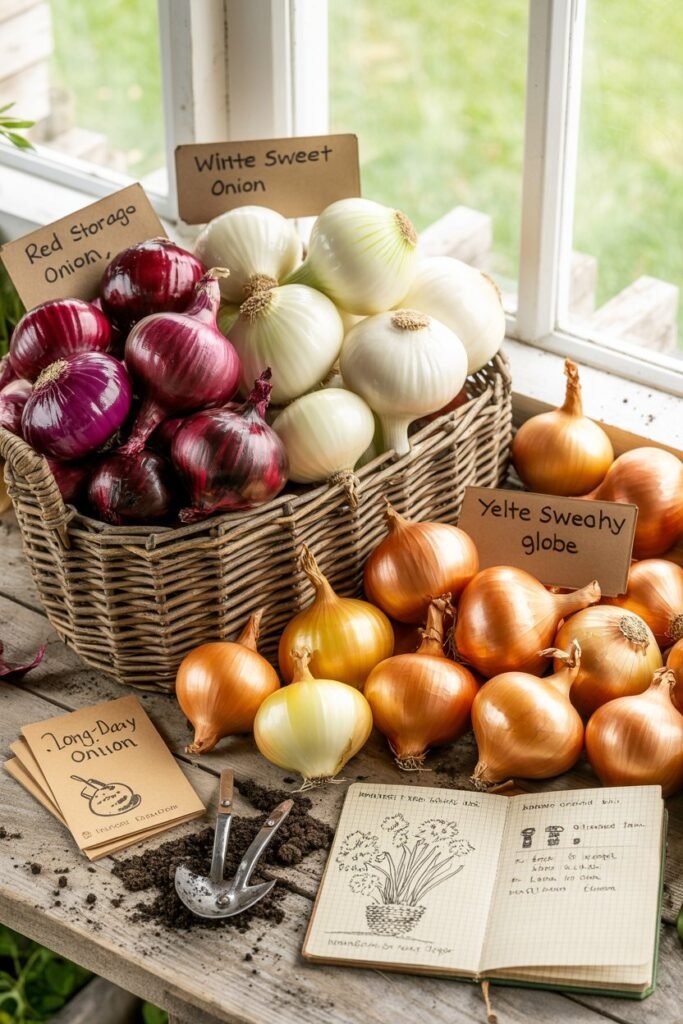
Gardeners in northern climates often rely on long-day onion varieties, which begin forming bulbs when daylight hours reach around 14–16 hours.
These onions are particularly well suited to regions like Canada and other areas with long summer days.
Here is a helpful list of long-day onions known to perform well in cooler northern climates:
- Alisa Craig
- Buffalo
- Copra
- Cortland
- Early Yellow Globe
- First Edition
- Norstar
- Patterson
- Powell
- Redwing
- Red Florence
- Red Carpet
- Red Wethersfield
- Red Wing
- Red Zeppelin
- Ringmaster
- Rossa d’Inverno Rubino
- Southport White Globe
- Southport Red Globe
- Sturon
- Sweet Sandwich
- Sweet Spanish
- Sweet Spanish Utah
- Walla Walla
- White Spanish
- Yellow Sweet Spanish
Many of these varieties are excellent storage onions, while others are known for their sweet flavor and large bulbs.
If you garden in a northern region, experimenting with several of these varieties can help you discover which ones perform best in your local soil and climate.
Final Thoughts
Growing onions has become one of those quiet joys in my garden that I look forward to every season. They don’t demand constant attention, but they do reward a little patience and care with baskets of beautiful, flavorful bulbs.
Following the best tips for planting and growing onions choosing the right varieties, preparing the soil well, spacing them properly, and providing consistent care can make a remarkable difference in your harvest.
Some seasons will always be better than others. Weather, soil conditions, and garden timing all play a role. But with each year in the garden, you learn a little more about what your onions love.
And honestly, few things feel as satisfying as pulling up a perfectly round onion that you grew with your own hands.
If you’re planning to grow onions this season, I hope these tips help you enjoy a bigger, healthier, and more successful harvest.
Happy gardening.
