
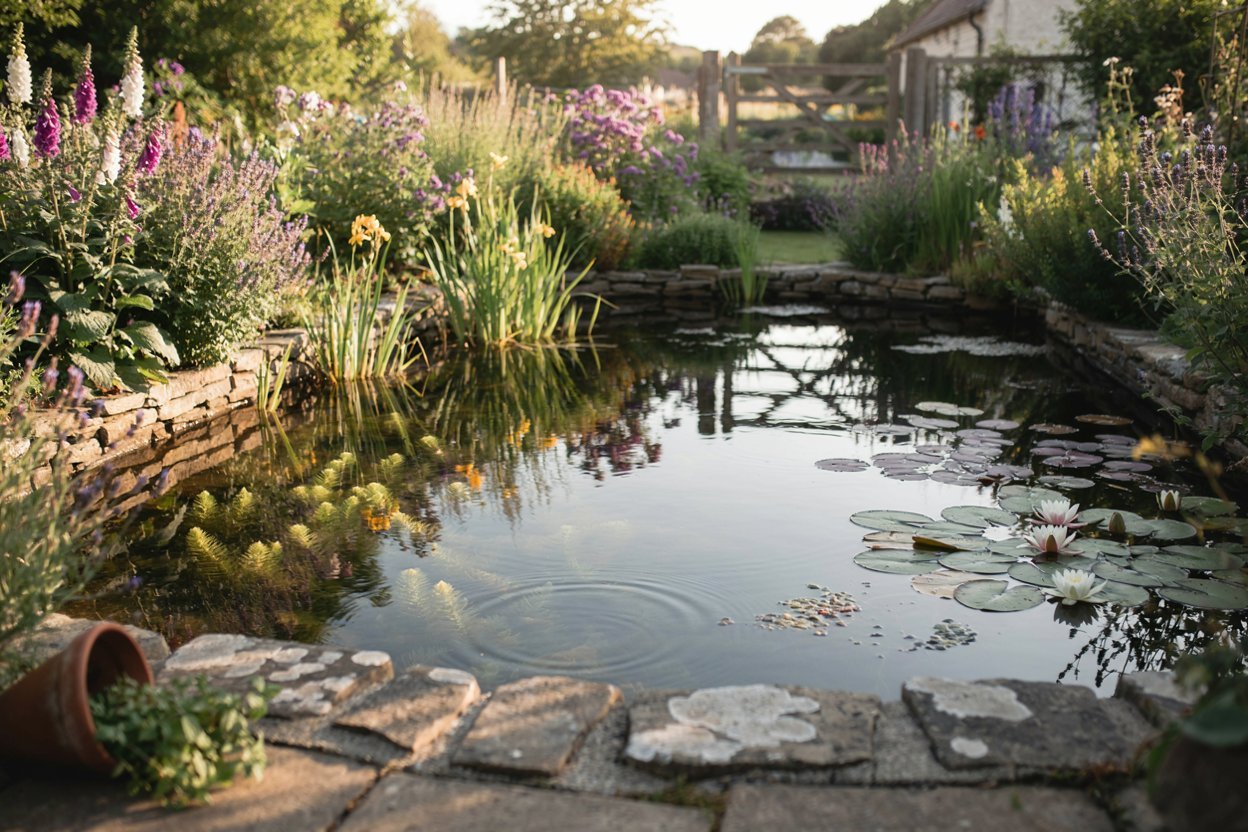

I love the way a planted pond can make a garden feel calmer, greener, and more alive. But pond plants are not only there to make the water look pretty.
The right plants can help absorb excess nutrients, provide shade, support beneficial pond life, and compete with algae for the resources it needs to grow.
If your pond has been looking cloudy, green, or simply a little unbalanced, adding the right mix of aquatic plants can be a surprisingly helpful step toward healthier water.
How Do Pond Plants Help Clean the Water?

Aquatic plants work as part of a living pond ecosystem rather than acting like a chemical water treatment.
Their roots, stems, and leaves can take up nutrients such as nitrogen and phosphorus from the water or wet substrate. Those nutrients are useful to plants, but when too much accumulates in a pond, they can encourage excessive algae growth.
Some plants also provide shade across the water’s surface. This reduces the amount of sunlight reaching the water and can make conditions less favorable for algae.
Submerged plants have another useful job: they can release oxygen into the water during photosynthesis. Oxygen is important for fish, microorganisms, and the beneficial bacteria involved in breaking down organic waste.
The important thing to remember is that plants are part of pond filtration, not necessarily a complete replacement for filtration equipment.
A lightly stocked wildlife pond may function beautifully with natural filtration, while a pond containing lots of koi or other fish can produce more waste than plants alone can handle.
12 Best Plants to Clean and Filter Pond Water
The best pond usually isn’t filled with one type of plant. Instead, I like the idea of combining submerged, floating, and marginal plants so each one performs a different job.
Here are 12 plants worth considering.
1. Hornwort

Botanical name: Ceratophyllum demersum
Hornwort is one of the most useful submerged plants for a pond because it grows entirely underwater and can absorb nutrients directly from the water.
It is also an oxygenating plant, making it particularly useful when you want to improve the underwater environment for fish and other aquatic organisms. Its fine, whorled foliage creates plenty of structure beneath the surface, giving small aquatic creatures somewhere to shelter.
Hornwort can grow quickly when conditions are favorable. That fast growth is helpful because the plant uses nutrients as it produces new stems and foliage.
However, fast growth also means you may need to thin it occasionally. A small amount can become a surprisingly dense underwater mass.
Best for:
- Nutrient uptake
- Underwater oxygenation
- Fish shelter
- Helping compete with algae
Keep in mind: Hornwort can become very vigorous, particularly in warm, nutrient-rich water, so regular thinning may be necessary.
Read 10 Common Garden Pond Mistakes Every Beginner Should Avoid
2. Water Iris
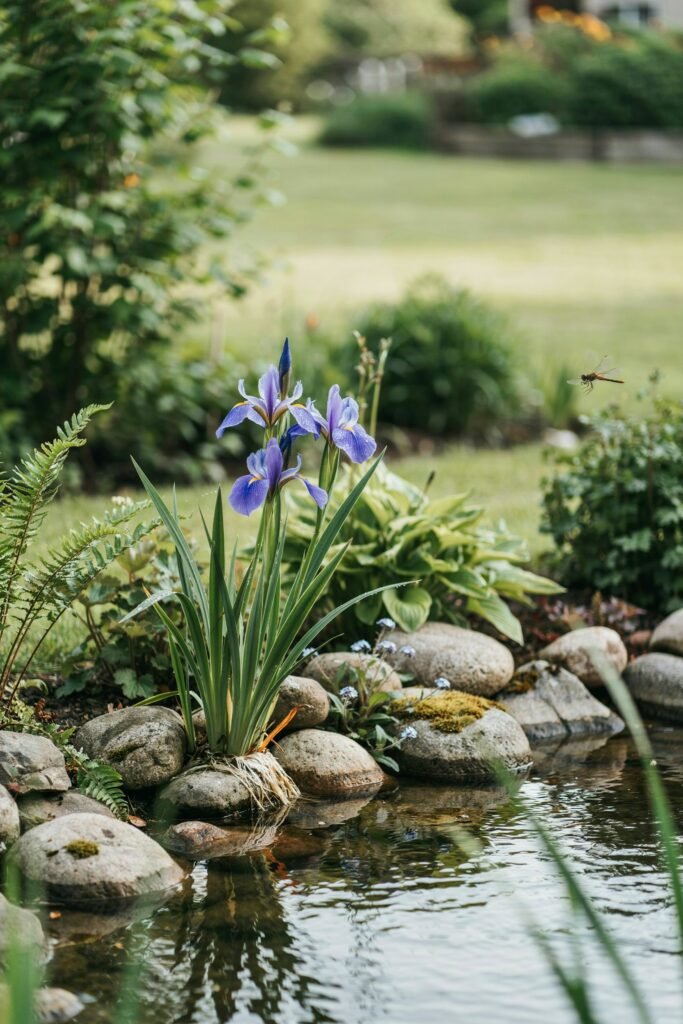
Botanical name: Iris laevigata
If you want a plant that combines water filtration with beautiful flowers, water iris is a lovely choice for the shallow edge of a pond.
Water iris is a marginal plant, meaning it prefers to grow with its roots in wet soil or shallow water while its foliage grows above the surface.
Its roots can take up nutrients from the surrounding substrate, while the dense foliage provides structure around the pond edge.
I especially like marginal plants because they make a pond look more natural. Instead of having a sharp line between your garden and the water, plants such as water iris soften the edges.
Give water iris plenty of sunlight if you want good flowering.
Best for:
- Pond margins
- Nutrient uptake
- Wildlife shelter
- Adding flowers and color
Water iris can also help stabilize the pond edge, making it useful beyond its ornamental value.
3. Water Hyacinth
Botanical name: Eichhornia crassipes
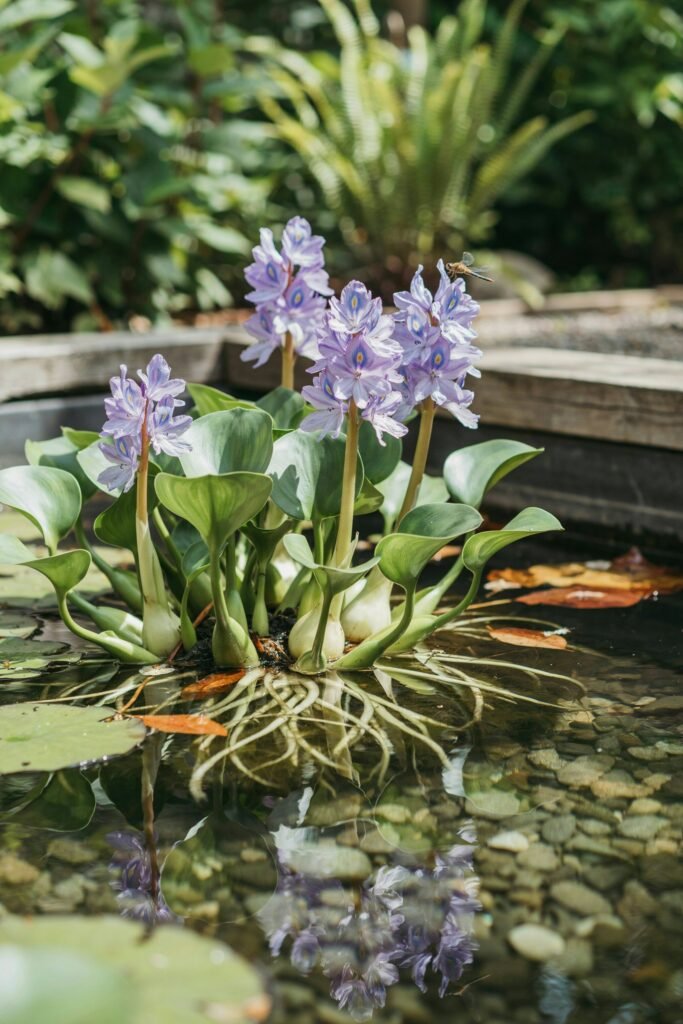
Water hyacinth is a floating plant with an impressive ability to absorb nutrients from water.
Its roots hang beneath the surface while the leafy portion floats above it. This gives the plant direct access to nutrients dissolved in the water.
The problem is that water hyacinth can grow extremely quickly.
In warm, nutrient-rich conditions, it may spread across a pond surprisingly fast. A plant that begins as a small addition can eventually cover a large portion of the surface.
That can be useful when controlled, because the plants provide shade and remove nutrients. But too much floating vegetation can block light and interfere with gas exchange at the water surface.
Before planting water hyacinth, check whether it is legally permitted in your area and whether it is considered invasive locally.
Best for:
- Nutrient-rich ponds
- Surface shading
- Nutrient uptake
Important: Never release water hyacinth or other potentially invasive aquatic plants into natural waterways.
Read Koi Pond Design: 8 Steps to Get It Right the First Time
4. Soft Rush

Botanical name: Juncus effusus
Soft rush is a simple-looking plant, but it can be very useful around the edge of a pond.
It grows in wet conditions and can tolerate shallow standing water. Its roots and the microorganisms living around those roots can help capture nutrients such as nitrogen and phosphorus.
This makes soft rush particularly interesting for ponds that receive runoff from surrounding garden areas.
Instead of allowing nutrient-rich runoff to flow directly into the pond, you can create a planted margin where water slows down and interacts with vegetation.
Soft rush also gives the pond a natural, almost wild appearance.
Best for:
- Pond edges
- Wet areas
- Nutrient uptake
- Natural-looking pond designs
One thing to watch is its tendency to spread, so give it enough room and trim it when necessary.
Read How To Keep Mosquitoes Away From Your Pond (Naturally & Effectively)
5. Water Mint
Botanical name: Mentha aquatica
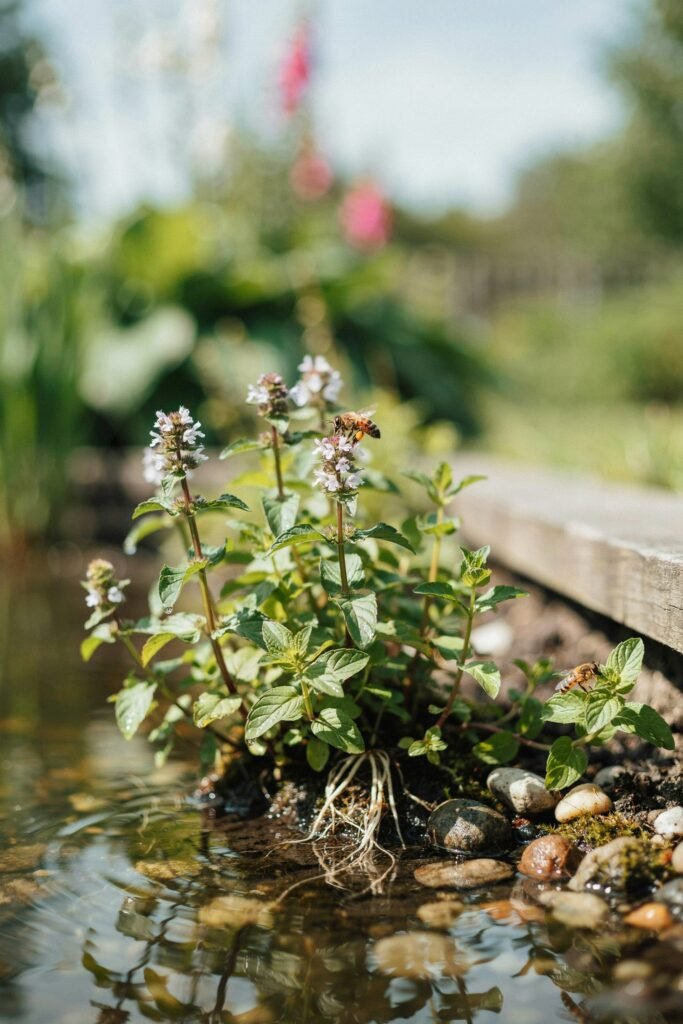
Water mint is another marginal plant that can add both greenery and flowers to a pond.
It prefers moist conditions and can grow along shallow pond edges. Its roots and surrounding microbial communities contribute to nutrient processing, while its flowers can attract pollinating insects.
Water mint spreads through rhizomes, so it can form a generous patch once established.
For a wildlife pond, that spreading habit can actually be useful when managed properly because it creates additional vegetation around the water’s edge.
I would still keep an eye on it and avoid letting it take over the entire pond margin.
Best for:
- Shallow margins
- Wildlife gardens
- Nutrient uptake
- Pollinator-friendly planting
Water mint has also been studied for its potential role in constructed wetland systems and phytoremediation.
6. Fanwort
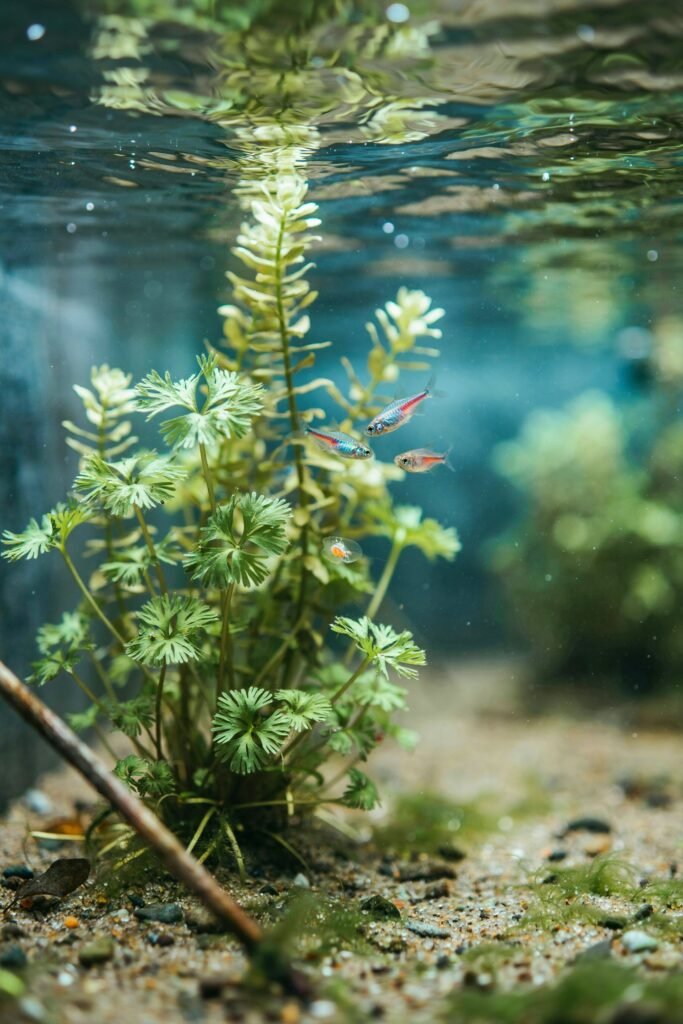
Botanical name: Cabomba aquatica
Fanwort is a delicate-looking submerged plant with finely divided leaves.
It grows underwater and can help oxygenate the pond while taking up nutrients during active growth.
The fine foliage also creates an interesting underwater habitat for small aquatic organisms.
Because fanwort can grow from stem pieces, it can spread readily when conditions are favorable. That makes regular maintenance important.
It is better suited to gardeners who are comfortable keeping an eye on their aquatic plants rather than simply planting them and forgetting about them.
Best for:
- Submerged planting
- Oxygenation
- Underwater habitat
- Nutrient uptake
Always check local regulations before introducing aquatic plants that may spread beyond your pond.
7. Water Lilies
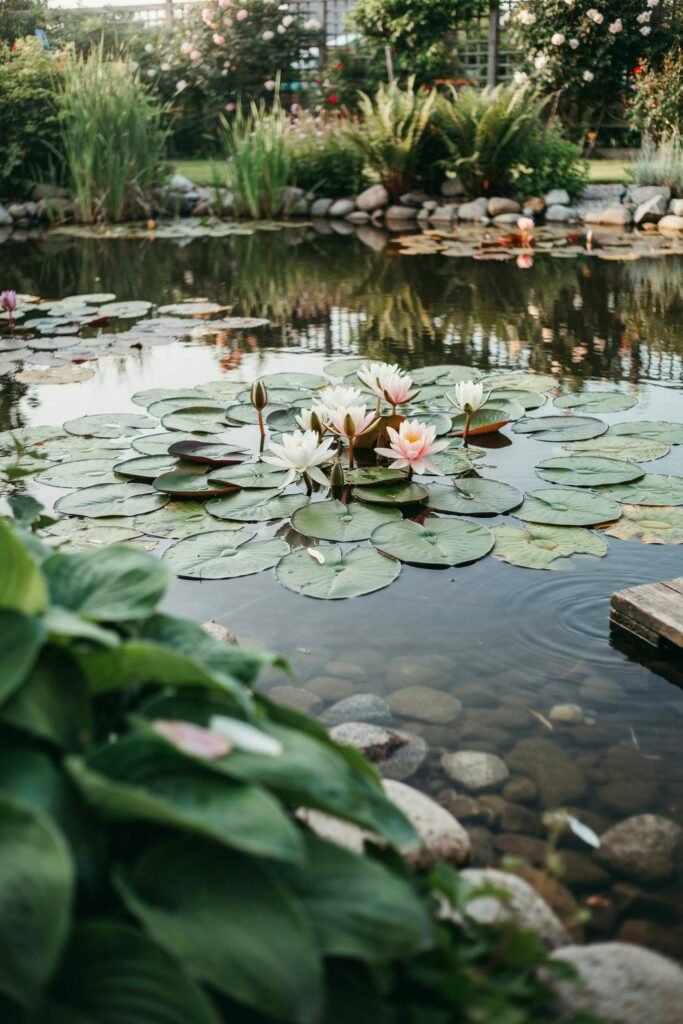
Botanical name: Nymphaea spp.
Water lilies are one of my favorite choices when beauty and function need to work together.
Those broad floating leaves do more than make the pond look beautiful. They create shade across the surface, which can help limit the amount of sunlight reaching the water.
Their plant tissues also take up nutrients, including nitrogen and phosphorus compounds.
The shade provided by lily pads can be particularly helpful in a sunny pond where algae growth becomes a recurring problem.
But don’t let the leaves cover the entire pond.
A healthy pond needs an appropriate balance of open water and vegetation. The RHS recommends aiming for roughly half of the pond surface to be covered with foliage rather than allowing plants to completely blanket the water.
Also remove damaged or decomposing leaves. Dead plant material can break down and return nutrients to the water, working against the filtration benefits you want.
Best for:
- Surface shade
- Nutrient uptake
- Algae management
- Flowers and beauty
8. Cattails
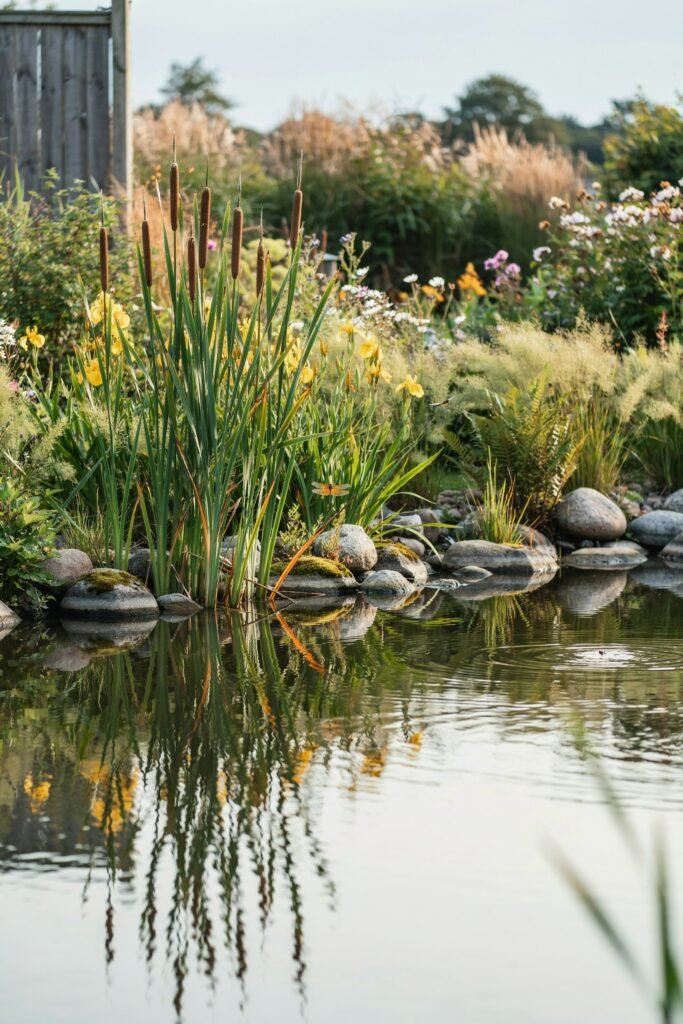
Botanical name: Typha spp.
Cattails are classic wetland plants and can be useful around larger ponds.
They grow along shallow margins and can tolerate wet conditions. Their rapid growth allows them to take up significant amounts of nutrients.
Their root systems also create habitat for microorganisms, while their upright stems give ponds a natural wetland appearance.
For a large natural pond, a carefully managed patch of cattails can be attractive and useful.
For a tiny garden pond, however, I would be more cautious.
Cattails can spread through rhizomes and seeds, eventually becoming difficult to control. If you want to use them, consider planting them in a contained area.
Best for:
- Large ponds
- Wetland-style gardens
- Nutrient removal
- Wildlife habitat
Cattails have also been studied for nitrogen and phosphorus removal in wastewater systems.
9. Watercress

Botanical name: Nasturtium officinale
Watercress is an interesting option because it is both a pond plant and an edible crop.
Its roots can take up nitrogen and phosphorus, particularly when the plant is actively growing.
It prefers shallow, flowing or very wet conditions and can work well around suitable pond edges or controlled water systems.
However, I would be careful about harvesting watercress from an ornamental pond for eating.
Pond water may contain fish waste, pollutants, chemicals, or heavy metals that make the plant unsafe to consume. A plant growing in contaminated water should not be treated like a kitchen vegetable.
If you want edible watercress, grow it in a clean, controlled system specifically intended for food production.
Best for:
- Nutrient uptake
- Shallow wet areas
- Controlled water gardens
Watercress can spread quickly when nutrients are abundant, so keep it contained.
10. Water Lettuce

Botanical name: Pistia stratiotes
Water lettuce is a floating plant with soft, velvety-looking leaves and trailing roots.
Like other floating plants, it can absorb nutrients directly from the water while its foliage provides shade.
It can be particularly productive in warm, nutrient-rich conditions.
That is also its biggest drawback.
Water lettuce can reproduce rapidly and form dense colonies. In areas where it is invasive, releasing even a small amount into natural waterways can cause environmental problems.
Before purchasing it, check your local regulations and invasive-species lists.
If it is permitted where you live, use it carefully and remove excess growth regularly.
Best for:
- Floating filtration
- Nutrient uptake
- Surface shading
- Warm-water ponds
Never dispose of unwanted aquatic plants in rivers, streams, lakes, or drainage channels.
11. Variegated Water Celery

Botanical name: Oenanthe javanica
Variegated water celery is a marginal aquatic plant that can bring interesting foliage to a pond edge.
It grows in shallow, wet conditions and can absorb nutrients through its roots. Higher nitrogen and phosphorus availability can encourage greater plant growth, which is one reason it can contribute to nutrient removal.
Its foliage can also help hide pond liners and soften hard edges.
Because it can spread aggressively under favorable conditions, it should be planted where you can keep it contained.
This is particularly important if you live somewhere where the species is not native.
Best for:
- Shallow pond margins
- Nutrient uptake
- Covering pond edges
- Tropical and warm climates
Its spreading habit means maintenance is part of growing it successfully.
12. Taro

Botanical name: Colocasia esculenta
Taro can make a dramatic statement around a pond.
Its huge leaves bring a tropical look to damp garden spaces, and the plant naturally prefers fertile, consistently moist conditions.
Beyond its appearance, taro can take up nutrients and organic compounds around its root zone. Research has also examined its ability to reduce nitrate and phosphate concentrations in wastewater systems.
For a garden pond, taro works particularly well along the margins rather than fully submerged.
It can be an especially attractive option for warm-climate gardens where tropical foliage fits naturally into the landscape.
As with other plants on this list, avoid assuming that a plant’s ability to absorb pollutants makes contaminated pond water safe for swimming, drinking, or gardening.
Best for:
- Warm climates
- Pond margins
- Nutrient uptake
- Tropical garden designs
Taro’s large leaves also provide excellent visual interest around the water.
How to Choose the Right Pond Plants
You don’t need all 12 plants to create a healthier pond.
In fact, planting everything at once could create a maintenance headache.
Instead, think about the different jobs you want your plants to perform.
For oxygenation
Choose submerged plants such as:
- Hornwort
- Fanwort
Submerged plants are the group that can release oxygen directly into the water during photosynthesis.
For shade
Consider:
- Water lilies
- Appropriate floating plants
Shade can help reduce the amount of sunlight available to algae.
For nutrient removal
Good options include:
- Hornwort
- Water iris
- Soft rush
- Water mint
- Water hyacinth
- Water lettuce
- Taro
For pond edges
Try:
- Water iris
- Soft rush
- Water mint
- Cattails
- Water celery
- Taro
A mixture of plant types generally creates a more diverse pond environment than relying on a single species.
How Many Pond Plants Should You Add?
More plants aren’t automatically better.
An overcrowded pond can develop its own problems.
If floating plants cover almost the entire surface, they can block light from reaching submerged plants and interfere with the open-water area. Dense vegetation can also make maintenance harder.
A good starting point is to introduce a modest amount of vegetation and watch how the pond responds.
The RHS recommends covering around half of a pond’s surface with foliage rather than allowing vegetation to completely cover the water.
You can then thin, divide, or add plants depending on how quickly they grow.
Do Pond Plants Replace a Filter?
This is one of the most important things to understand.
Not always.
A naturally balanced wildlife pond with few or no fish may be able to rely heavily on plants, microorganisms, and natural biological processes.
A pond containing many fish is different.
Fish produce waste, and heavily stocked ponds can accumulate nutrients much faster than plants can remove them. The RHS notes that ponds with substantial fish populations are likely to need filtration to remove debris and waste products and maintain water quality.
For koi ponds especially, I would think of plants as an additional layer of support rather than the entire filtration system.
A good setup can combine:
- Aquatic plants
- Beneficial bacteria
- Mechanical filtration
- Biological filtration
- Adequate water movement
- Proper aeration
- Sensible fish stocking
- Regular maintenance
This gives your pond several different ways to stay balanced.
How to Keep Pond Plants From Making Water Problems Worse
Pond plants can help clean water, but they still need care.
Remove dying leaves
Don’t allow large amounts of dead foliage to accumulate in the pond.
As plant material decomposes, nutrients can return to the water.
Thin fast-growing plants
Plants such as water hyacinth, water lettuce, hornwort, and other vigorous growers may need regular thinning.
Removing excess growth also removes some of the nutrients that the plants have stored in their tissues.
Don’t let floating plants cover everything
Leave some open water.
A completely covered pond isn’t necessarily a healthier pond.
Control fallen leaves
Autumn leaves and other organic debris can add nutrients as they break down.
A pond net can make seasonal cleanup much easier.
Don’t overfeed fish
Uneaten food becomes another source of organic waste and nutrients.
Feed only what your fish can reasonably consume.
Watch the pond after heavy rain
Rain can carry soil, fertilizers, lawn clippings, and other materials into a pond.
A planted buffer around the pond can help slow runoff before it reaches the water.
Create a Planting Zone Around Your Pond
One of the easiest ways to make pond plants more useful is to create different planting zones.
Deep-water zone
This is where plants such as water lilies can grow.
Their leaves reach the surface while their roots remain below.
Submerged zone
This is ideal for plants such as hornwort and fanwort.
These plants live primarily underwater and can contribute to oxygenation and nutrient uptake.
Shallow-water zone
Water iris and other marginal plants can thrive here.
Moist edge zone
Plants such as soft rush, water mint, taro, and water celery can be used around the pond’s margins.
This layered approach creates a more natural environment and allows you to take advantage of different plant functions.
A Simple Healthy Pond Plant Combination
If I were starting with a small garden pond, I wouldn’t try to squeeze 12 different plants into it.
I’d begin with a simple combination such as:
1 submerged plant + 1 flowering marginal plant + 1 surface-shading plant.
For example:
- Hornwort for underwater growth
- Water iris for the pond edge
- A suitable water lily for shade
For a larger pond, you can gradually introduce additional marginal and floating plants.
The goal is not to create a jungle. The goal is to create balance.
Final Thoughts
A healthy pond doesn’t have to be perfectly clear like a swimming pool to be healthy. In fact, a natural pond contains microorganisms, plants, insects, and other life that all play a role in the ecosystem.
What matters is balance.
The right aquatic plants can absorb excess nutrients, provide shade, create habitat, support beneficial organisms, and contribute to better water quality. Submerged plants can also help with oxygenation, while marginal plants can intercept nutrients around the pond’s edges.
My favorite approach is to use several types of plants rather than relying on one “miracle” plant.
Start small, observe how your pond responds, remove excess growth, and always check whether a plant is invasive or restricted in your area before introducing it.
With a thoughtful combination of plants and regular pond care, you can create a water feature that looks beautiful while also supporting a healthier little ecosystem right in your garden.
