
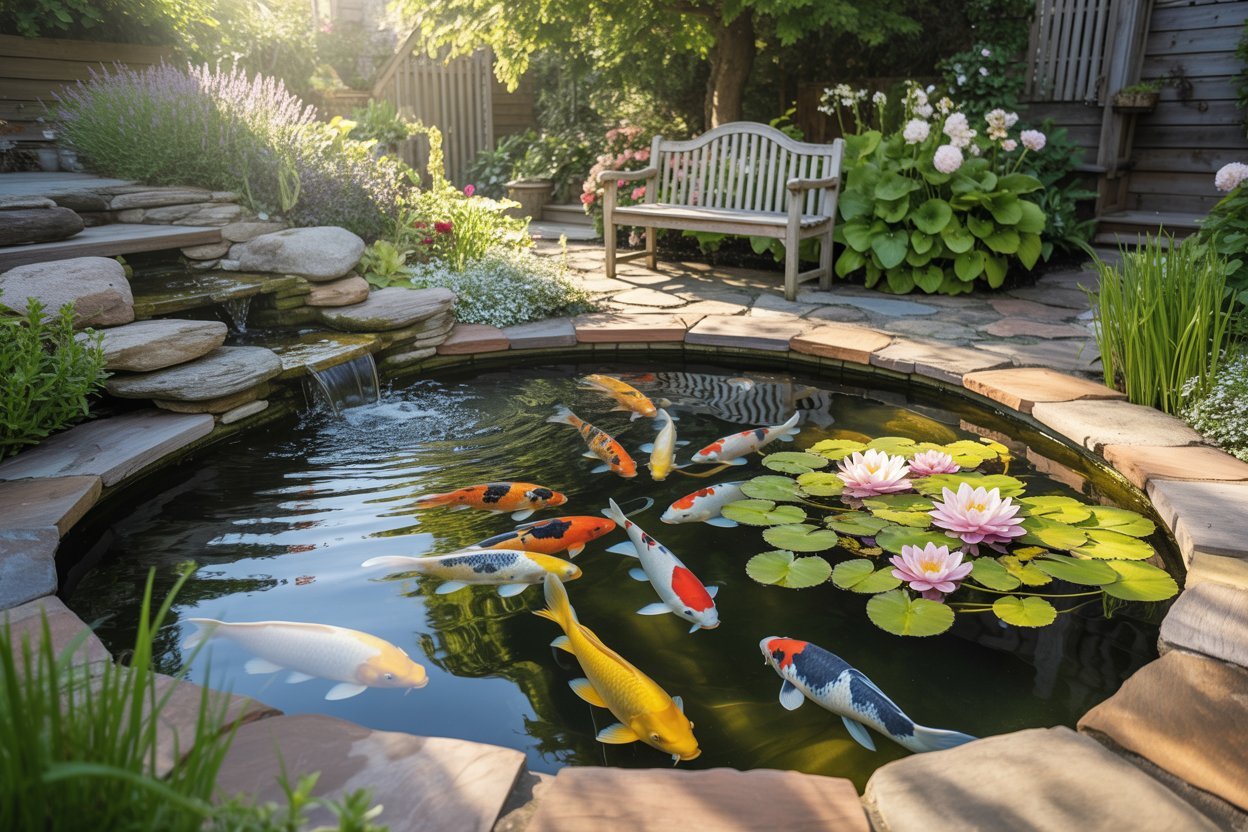

Creating a koi pond is one of the most rewarding ways to transform an outdoor space into something peaceful, elegant, and alive with movement.
A well-designed pond becomes more than a garden feature it becomes a sanctuary where water sparkles in the sunlight, plants sway gently in the breeze, and colorful koi glide gracefully beneath the surface.
But designing a koi pond that truly works takes more than digging a hole and adding water. Koi are living creatures that need room to grow, excellent water quality, proper filtration, shade, safety, and thoughtful design.
When these essentials are handled correctly, your pond becomes easier to maintain, healthier for your fish, and far more beautiful for years to come.
Many beginners make the mistake of focusing only on appearance. They choose shape before depth, fish before filtration, or plants before circulation.
The result can be cloudy water, stressed koi, algae problems, leaks, and costly repairs later on.
The good news is that building a successful koi pond follows a clear and proven path. With the right planning, you can avoid expensive mistakes and create a pond that is both stunning and practical.
If you are dreaming of a relaxing backyard retreat filled with graceful koi, these eight steps will guide you through the process beautifully.
Step 1: Choose the Right Location First
The location of your koi pond will affect everything water quality, fish health, maintenance, viewing enjoyment, and long-term success. This step deserves careful thought.
Aim for Balanced Sunlight
Koi ponds need some sunlight, but too much direct sun can quickly overheat water and encourage algae growth.
The ideal location receives:
- 4 to 6 hours of sunlight daily
- Afternoon shade if possible
- Gentle morning sun
Morning sun helps plants and fish thrive, while afternoon shade keeps temperatures stable.
Keep It Visible
Place your pond where you can enjoy it often:
- Near a patio
- Beside a seating area
- Visible from windows
- Along a garden pathway
A koi pond should be part of daily life, not hidden in a forgotten corner.
Avoid Problem Areas
Do not build under large trees because:
- Falling leaves clog filters
- Roots can damage liners
- Excess shade limits plant growth
- Decaying leaves harm water quality
Also avoid low spots where rainwater runoff may carry soil, fertilizer, or chemicals into the pond.
Think About Utilities
You will likely need:
- Electricity for pumps and UV clarifiers
- Water access for refilling
- Hose access for cleaning
Choosing a convenient location now saves frustration later.
Proven Tip
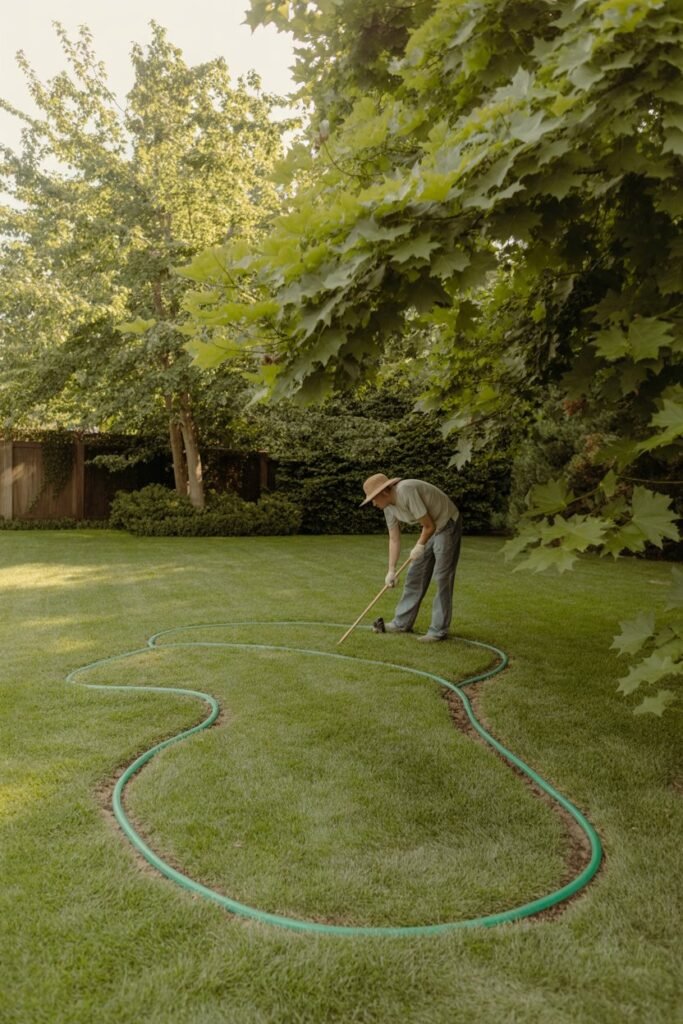
Before digging, place a garden hose on the ground to outline the pond shape. Live with it for several days. Walk around it, view it from windows, and imagine maintenance access.
This simple step prevents design regret.
Step 2: Decide the Proper Size and Depth
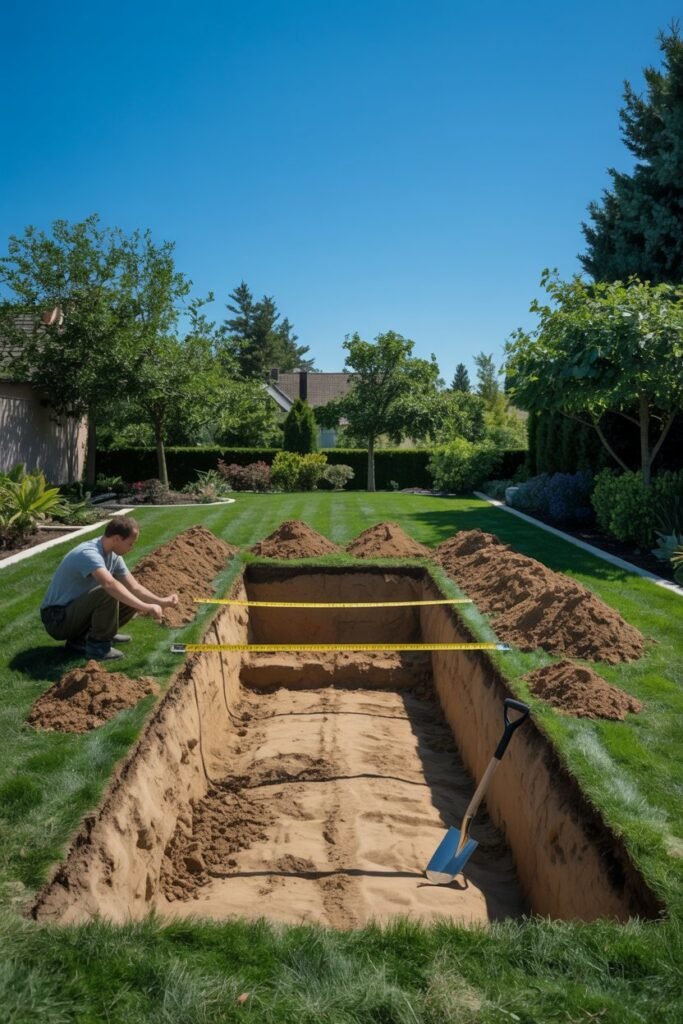
Koi are not tiny fish. They grow large, live for decades, and need generous swimming space.
Why Size Matters
A bigger pond is usually easier to maintain than a tiny one because:
- Water temperature stays more stable
- Waste dilutes more easily
- Fish have room to move
- Water chemistry fluctuates less
Small ponds often create constant problems.
Recommended Minimum Size
For a true koi pond, aim for:
- At least 1,000 gallons for a few young koi
- 1,500 to 3,000 gallons for better long-term success
- Larger if you plan multiple mature koi
Ideal Depth
Depth is essential.
A koi pond should be:
- Minimum 3 feet deep in warm climates
- 4 feet preferred in many regions
- 5 feet if winters are harsh or predators are common
Deeper ponds protect fish from temperature swings and predators like herons.
Shape Considerations
Avoid narrow, shallow decorative ponds if keeping koi. Instead choose:
- Rounded corners
- Wide swimming lanes
- Open central space
- Gradual shelves only where needed for plants
Koi love movement and space.
Proven Tip
When unsure, go larger and deeper than your first idea. Nearly every pond owner wishes they had built bigger.
Step 3: Design Excellent Filtration From Day One
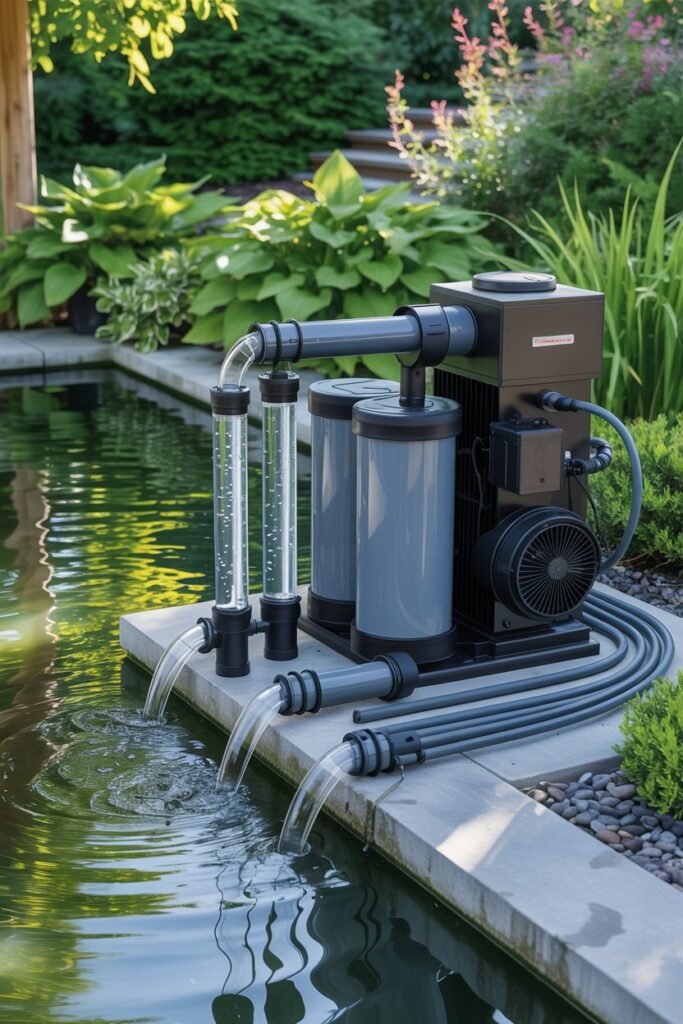
If the pond is the heart of the garden, filtration is the lungs.
This is where many beginners fail. Beautiful ponds become murky, smelly, and stressful when filtration is undersized.
Koi Produce Heavy Waste
Koi are large fish with strong appetites. They create significant waste that must be removed.
Without proper filtration, you may face:
- Cloudy water
- Ammonia spikes
- Fish illness
- Sludge buildup
- String algae outbreaks
Two Essential Filter Types
Mechanical Filtration
This removes physical debris such as:
- Leaves
- Fish waste
- Uneaten food
- Sediment
Examples include sieve filters, settlement chambers, and filter pads.
Biological Filtration
This houses beneficial bacteria that convert toxic waste into safer compounds.
These bacteria break down:
- Ammonia → Nitrite → Nitrate
Without biofiltration, koi can suffer quickly.
Correct Pump Flow
Aim to circulate the full pond volume about once every 1 to 2 hours.
Example:
A 2,000-gallon pond should ideally move 1,000 to 2,000 gallons per hour after accounting for head pressure.
Proven Tip
Always buy filtration one size larger than recommended. Manufacturers often advertise optimistic capacities.
Oversized filtration creates healthier water and less maintenance.
Step 4: Install Proper Bottom Drainage and Water Movement
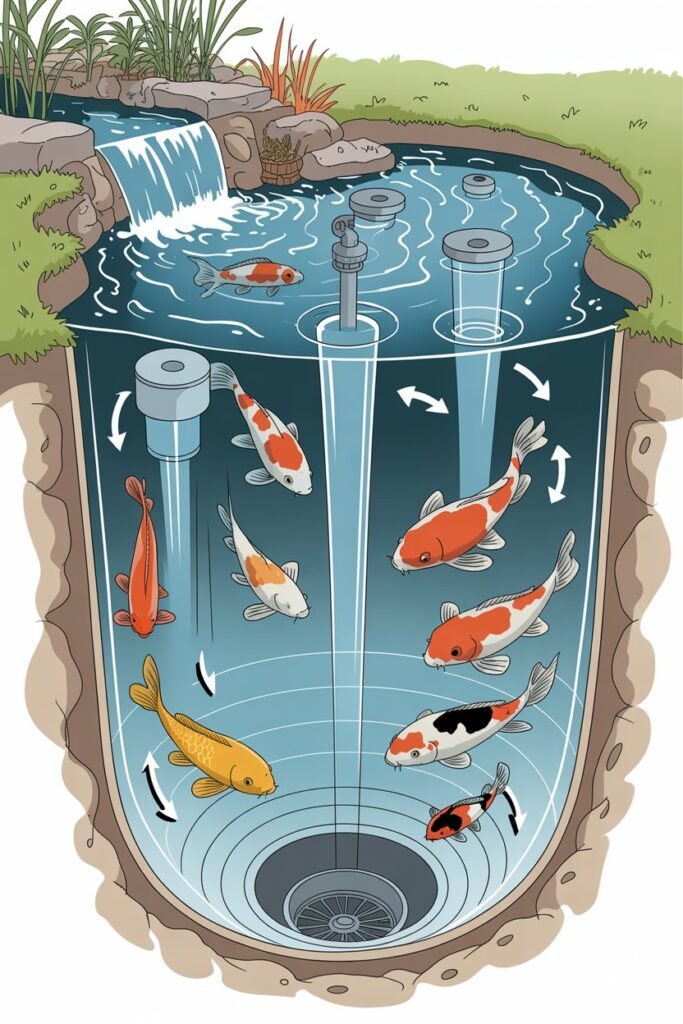
Still water causes problems. Healthy koi ponds need circulation.
Why Movement Matters
Good circulation:
- Delivers oxygen
- Moves debris to filters
- Prevents stagnant zones
- Supports bacteria
- Keeps fish active
Bottom Drains
A bottom drain sits at the pond floor and removes settled waste before it rots.
This is one of the best investments for serious koi keepers.
Benefits include:
- Cleaner pond floor
- Less sludge buildup
- Better water quality
- Easier maintenance
Pond Shape Helps Flow
Design the floor with a gentle slope toward the drain so debris naturally moves there.
Add Returns and Jets
Water returns from the filter can be positioned to create circular movement around the pond.
This creates a slow current that guides waste toward drains and skimmers.
Surface Skimmers
Skimmers remove:
- Leaves
- Pollen
- Floating debris
- Surface film
They also improve appearance immediately.
Proven Tip
Use multiple forms of movement:
- Bottom drain
- Surface skimmer
- Return jets
- Waterfall or aerator
Layered circulation works beautifully.
Step 5: Choose Safe Materials and Build Structure Correctly
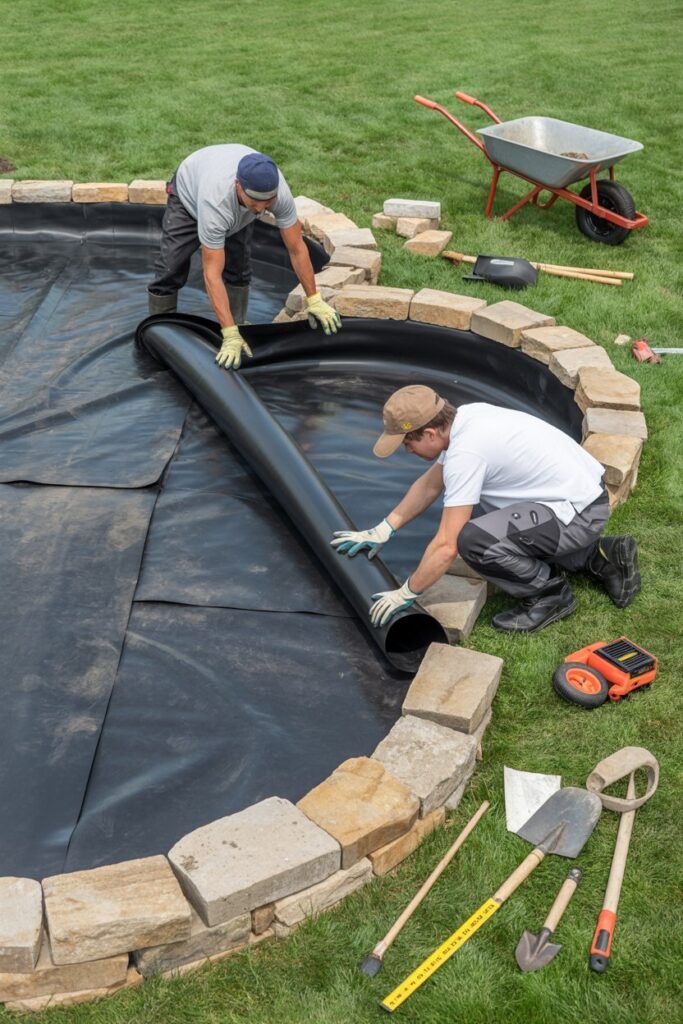
A koi pond must be strong, sealed, and fish-safe.
Common Pond Construction Options
Flexible Liner Ponds
Popular and budget-friendly.
Best materials:
- EPDM rubber liner
- Fish-safe underlayment beneath liner
Benefits:
- Flexible shapes
- Durable
- Easier DIY option
Concrete Ponds
Excellent for formal ponds.
Benefits:
- Permanent structure
- Sharp clean lines
- Very durable when built correctly
Needs proper sealing and expert installation.
Protect the Liner
Always remove:
- Sharp stones
- Roots
- Construction debris
Then add underlayment or sand beneath liner.
Stable Edging
Use stone, brick, coping, or gravel edges that secure the liner and prevent soil wash-in.
Proven Tip
Never use materials that may leach chemicals into water. If unsure, choose products specifically labeled pond-safe.
Step 6: Plan for Fish Health and Safety
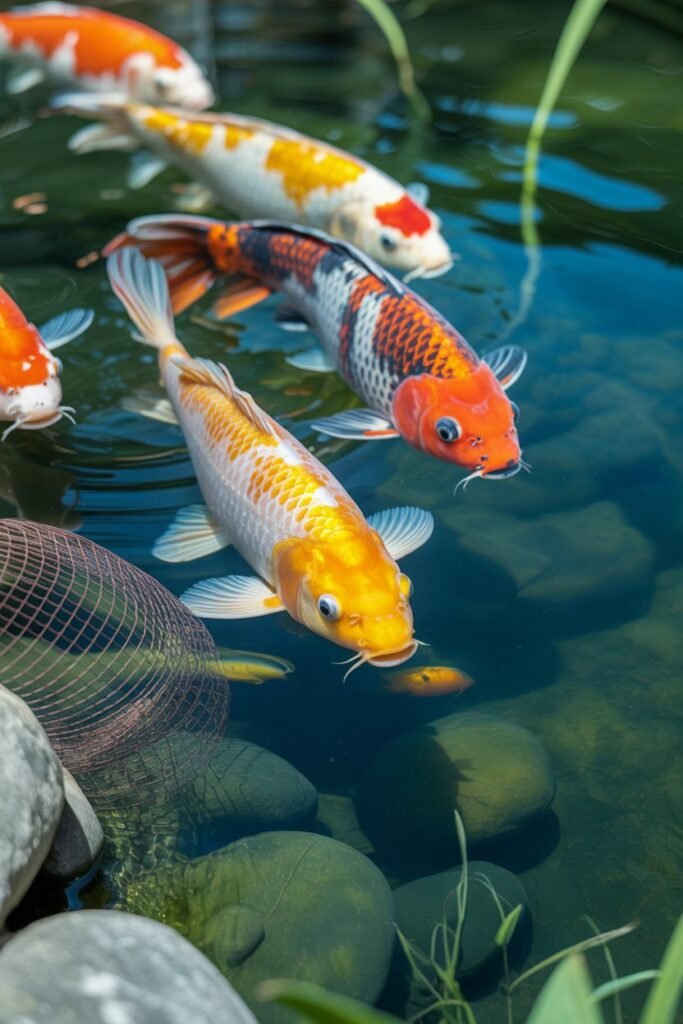
Koi are living pets, not decorations. Their welfare should guide every design decision.
Stock Slowly
Do not overcrowd your pond.
Start with fewer fish than you think you want. As koi grow, their needs increase dramatically.
Quarantine New Fish
Introducing new koi without quarantine can spread disease.
If possible, isolate new arrivals in a separate tank for observation before adding them.
Predator Protection
Koi ponds can attract:
- Herons
- Cats
- Raccoons
- Large birds
Protection methods include:
- Greater depth
- Netting when needed
- Steep sides
- Hiding caves or tunnels
- Motion sprinklers
Water Testing
Regularly test:
- Ammonia
- Nitrite
- Nitrate
- pH
- Temperature
Testing helps solve issues before fish show stress.
Proven Tip
A calm koi swims steadily, eats eagerly, and interacts confidently. Sudden hiding, gasping, clamped fins, or flashing can signal water quality issues.
Step 7: Add Plants and Beauty the Smart Way
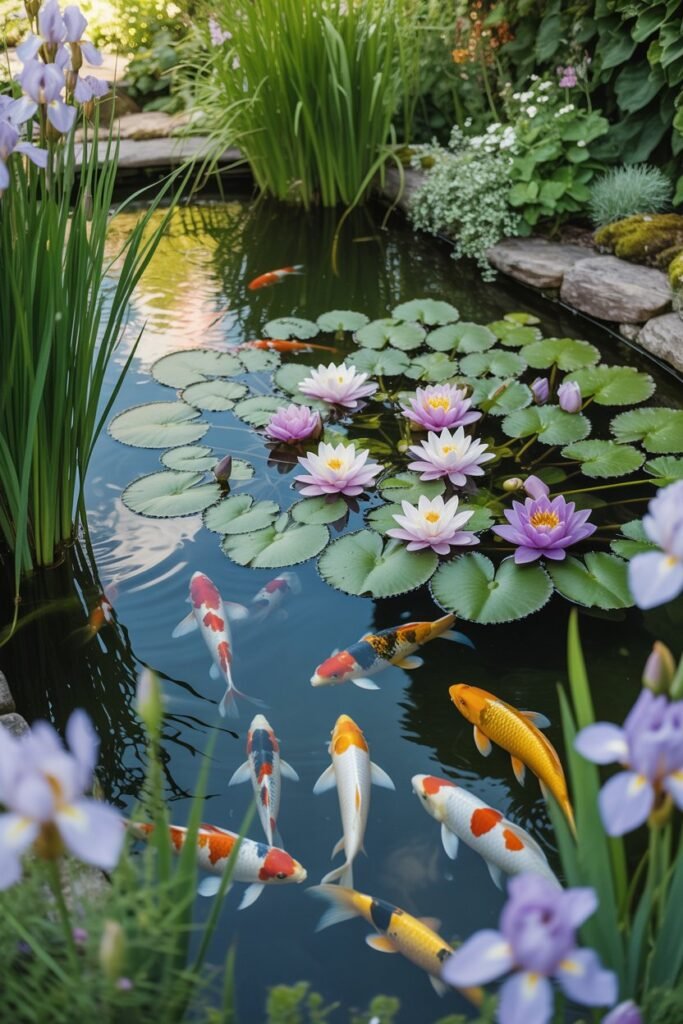
A koi pond should be practical first, beautiful second—but you can absolutely have both.
Benefits of Plants
Aquatic plants help:
- Shade the water
- Compete with algae
- Soften pond edges
- Support wildlife
- Create a natural look
Best Plant Choices Around Koi
Because koi nibble many plants, place delicate species in protected zones.
Good options include:
- Water lilies
- Iris
- Pickerel rush
- Lotus (large ponds)
- Marginal grasses
- Creeping groundcovers around edges
Use Plant Shelves Carefully
Shelves can hold pots, but avoid making them too wide if predator pressure is high.
Hardscape Beauty Ideas
Consider adding:
- Natural stone edging
- Wooden bridge
- Gravel path
- Seating bench
- Accent lighting
- Small waterfall
Proven Tip
Keep the center of the pond open for fish viewing. Place plants around edges and selected corners.
Step 8: Create an Easy Maintenance Routine
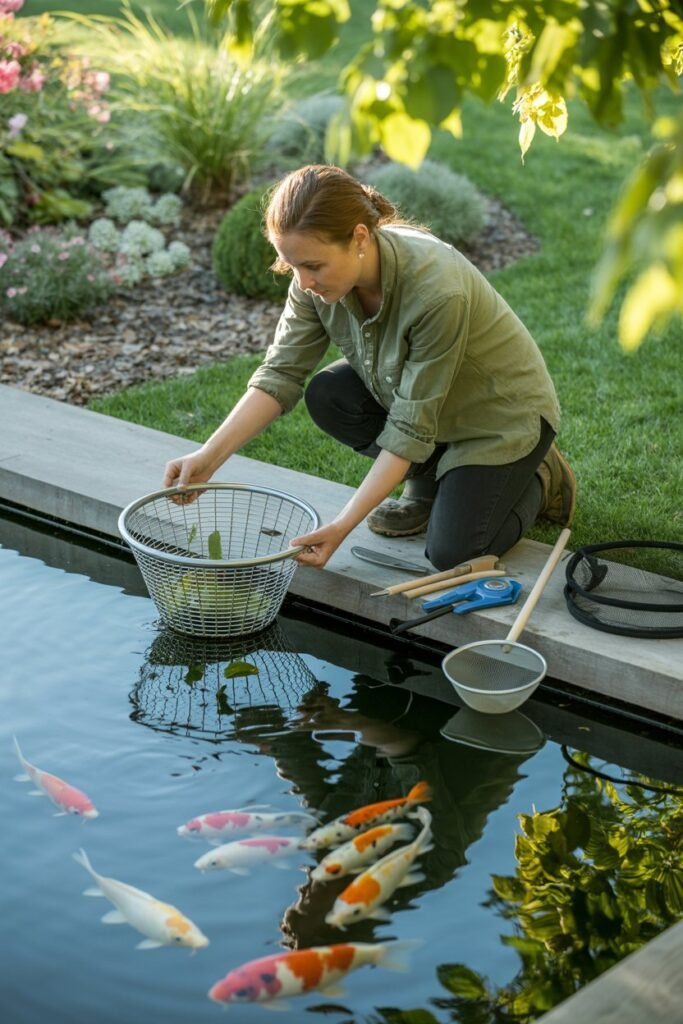
The best koi pond is not the fanciest one it is the one you can maintain consistently.
Weekly Tasks
- Remove leaves
- Check pump flow
- Inspect fish behavior
- Empty skimmer basket
- Test water if needed
Monthly Tasks
- Rinse mechanical filters using pond water
- Inspect hoses and fittings
- Trim dead plant growth
- Check liner edges
Seasonal Tasks
Spring
- Restart systems fully
- Test water often
- Resume feeding gradually
Summer
- Watch oxygen levels
- Top off water from evaporation
- Manage algae early
Autumn
- Net falling leaves
- Reduce feeding as water cools
Winter
- Keep gas exchange opening if climate freezes
- Feed only if appropriate for water temperature
Proven Tip
Ten minutes weekly prevents many hours of repair later.
Common Mistakes to Avoid
Even lovely ponds can fail when these errors happen.
Building Too Shallow
Shallow water overheats, freezes faster, and exposes fish to predators.
Buying Fish Before Filtration Cycles
Let beneficial bacteria establish before adding many fish.
Overstocking
Too many koi create endless water quality struggles.
Ignoring Maintenance Access
Leave room around filters, pumps, and edges.
Prioritizing Looks Over Function
A stunning pond with poor circulation becomes frustrating quickly.
Sample Beginner Koi Pond Plan That Works
If you want a reliable starting model, try this:
- Size: 10 ft x 8 ft
- Depth: 4 ft
- Volume: approx. 2,000 gallons
- Bottom drain: 1
- Skimmer: 1
- Biofilter: oversized external unit
- Pump: matched for full turnover
- Waterfall: moderate flow
- Fish: 4 to 6 young koi initially
- Plants: edge containers only
This size balances beauty, fish health, and manageable upkeep.
How Much Does a Koi Pond Cost?
Costs vary widely depending on size and materials.
Basic DIY Pond
- Liner
- Pump
- Filter
- Stone edging
Can be moderate in cost.
Mid-Range Pond
- Better filtration
- Bottom drain
- Lighting
- Landscaping
Premium Pond
- Concrete construction
- Advanced drum filters
- Premium koi
- Custom stonework
The smartest place to invest is filtration and structure, not ornaments.
Final Thoughts
Designing a koi pond is one of the loveliest projects a gardener can take on. It blends creativity, nature, engineering, and quiet joy into one living feature that changes beautifully through the seasons.
When built with intention, a koi pond becomes easier to care for, healthier for the fish, and more rewarding for you.
Focus on the fundamentals first: proper location, generous size, dependable filtration, healthy circulation, safe construction, thoughtful planting, and realistic maintenance.
Those eight steps truly work because they solve the real causes of pond problems before they begin.
