
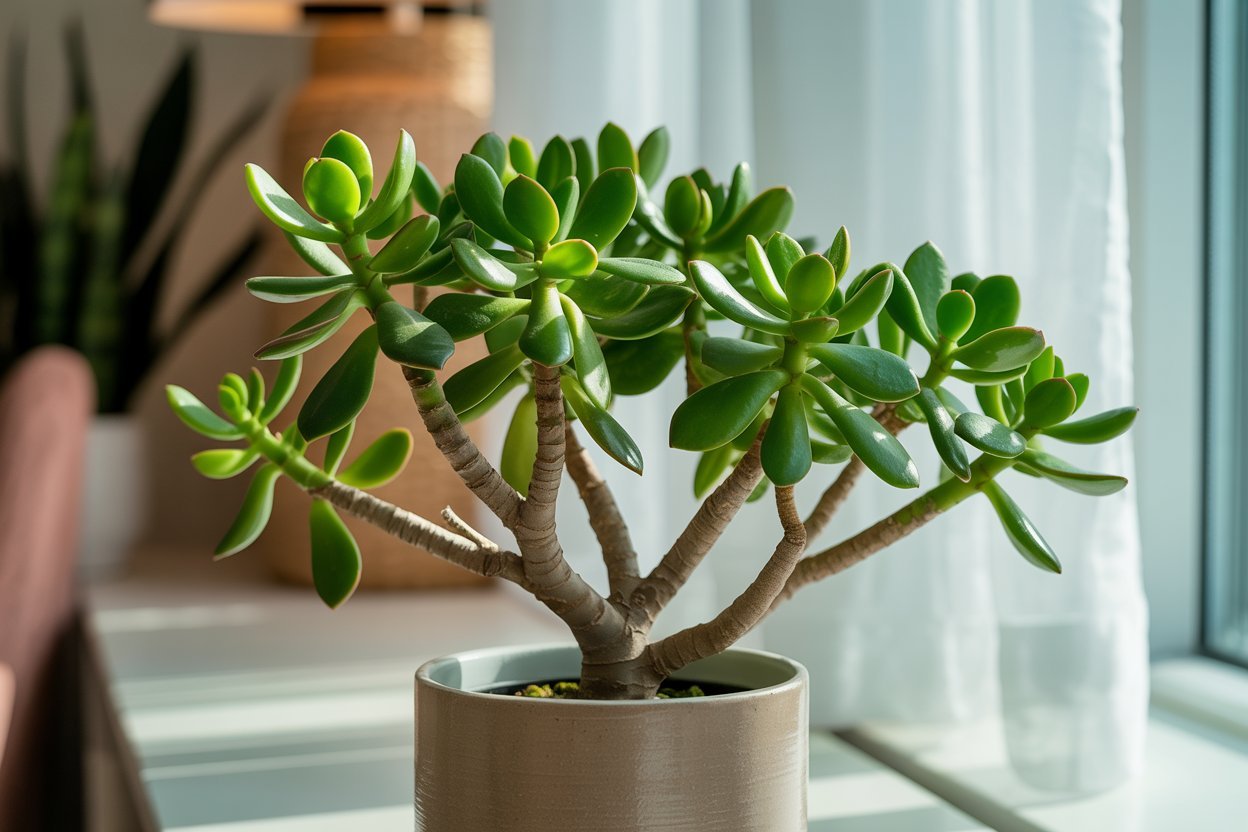

I still remember the first jade plant I brought home. It sat proudly on my windowsill, glossy leaves catching the light, promising abundance and easy care.
Months later, it was still alive but it had grown tall, thin, and a little awkward, like it didn’t quite know what it wanted to be.
That was the moment I realized something important: jade plants don’t become bushy by accident. They need guidance, patience, and the right growing habits.
If your jade plant looks leggy, sparse, or stubbornly one-sided, you’re not doing anything wrong you’re just missing a few key techniques.
This guide is designed to help you grow a full, balanced, bushy jade plant with strong branching and healthy leaf production, whether it’s living indoors or outside on a sunny patio.
Let’s walk through the ten most effective tips that truly make a difference.
Shop my amazon essentials
- Pruning Shears
- Succulent Potting Mix
- Pot with Drainage Holes
- Succulent Fertilizer
- Watering Can
- Grow Light
- Plant Support Stakes
1. Give Your Jade Plant Proper Light (This Is the Foundation)
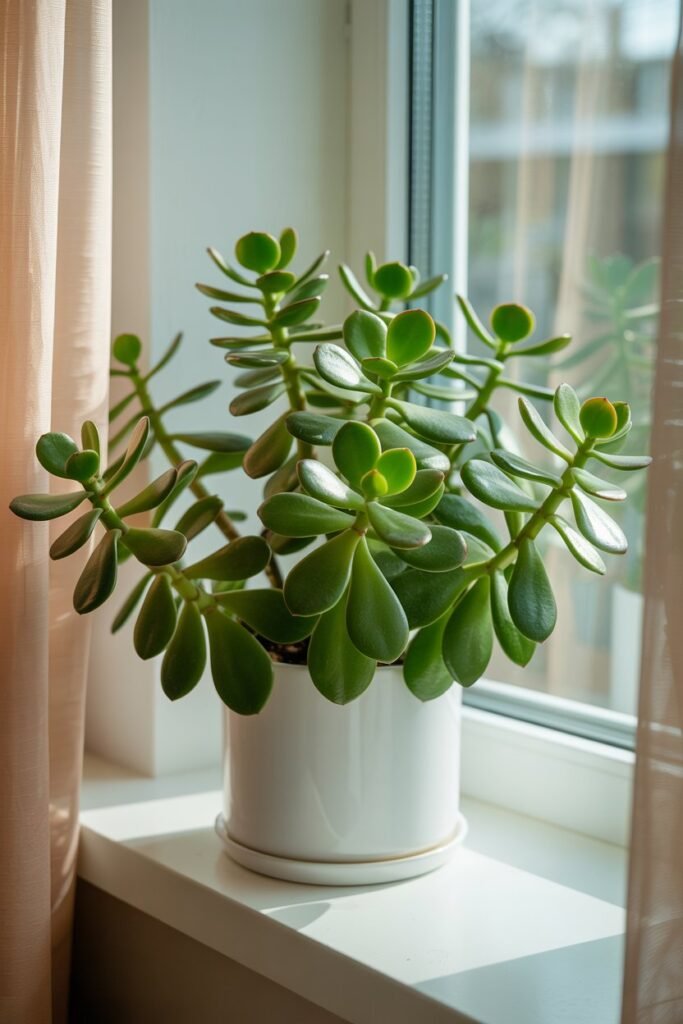
Bushiness starts with light. Without enough of it, jade plants stretch toward the nearest source, producing long, weak stems with wide gaps between leaves.
For compact, branching growth, your jade plant needs:
- 4–6 hours of bright, indirect sunlight daily
- A spot near a south- or west-facing window indoors
- Gentle morning sun if grown outdoors
Too little light causes legginess. Too much harsh sun can scorch leaves. The sweet spot is bright but filtered light.
When light is correct, jade plants naturally produce shorter internodes, meaning leaves grow closer together and stems stay thick.
Extra tip: Rotate the pot every 1–2 weeks so all sides receive equal light. This prevents leaning and encourages even growth.
Read 12 NASA Approved Air-Filtering Plants That Are Cat Safe
2. Prune Strategically (Not Aggressively)

Pruning is one of the most powerful tools for creating a bushy jade plant, but it must be done with intention.
When you prune:
- Cut just above a leaf node
- Use clean, sharp scissors or pruners
- Focus on long, bare stems
Each cut signals the plant to produce two or more new branches from the node below. This is how you multiply fullness without harming the plant.
Best time to prune: Spring or early summer, when the plant is actively growing. Avoid heavy pruning in winter, when growth slows.
Think of pruning as gentle shaping, not punishment. Small, regular trims work far better than dramatic cuts.
3. Don’t Overwater—Bushiness Loves Balance

A jade plant that’s watered too often may look green, but it won’t grow strong branches.
Overwatering weakens roots, reduces oxygen in the soil, and limits nutrient uptake.
For healthy, bushy growth:
- Water only when the top 2–3 inches of soil are dry
- Water deeply, then allow excess to drain fully
- Never let the pot sit in standing water
Slightly dry conditions encourage jade plants to develop thicker stems and sturdier branching, which supports fuller growth over time.
Remember: jade plants store water in their leaves. They prefer less water, not more.
4. Use the Right Soil for Root Strength

Bushy growth above the soil depends on strong roots below it.
Jade plants thrive in:
- Well-draining cactus or succulent mix
- Soil amended with perlite or coarse sand
- Pots with proper drainage holes
Dense, compact soil holds moisture too long and suffocates roots. When roots struggle, growth above ground slows and becomes thin.
Healthy roots = stronger nutrient flow = better branching and leaf production.
Read The Three Ways to Propagate Garlic (A Gentle Gardener’s Guide to Growing Abundance)
5. Choose the Correct Pot Size (Bigger Isn’t Better)
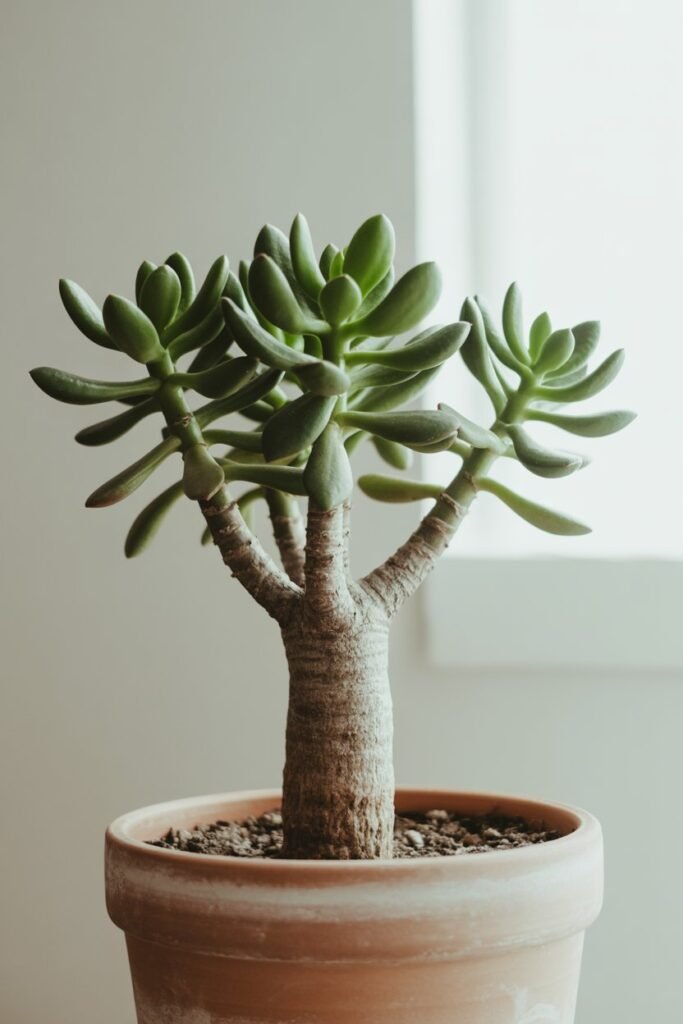
It’s tempting to give jade plants extra space, but oversized pots often work against bushy growth.
Why?
- Too much soil retains excess moisture
- Roots focus on filling space instead of supporting top growth
- Growth becomes slower and less compact
Choose a pot that is:
- Only 1–2 inches wider than the root ball
- Heavy enough to support thick stems (terracotta works beautifully)
A slightly snug pot encourages controlled growth and better structure.
6. Feed Lightly but Consistently
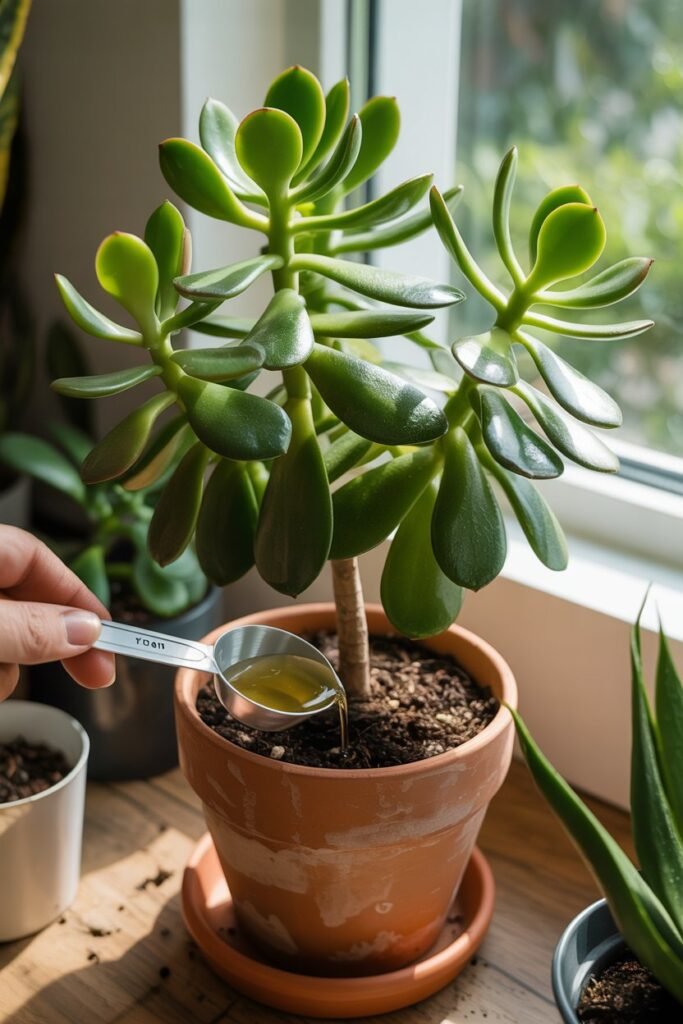
Jade plants don’t need heavy feeding, but they do benefit from gentle nutrition during the growing season.
To encourage bushiness:
- Use a balanced liquid fertilizer (10-10-10 or similar)
- Dilute to half strength
- Feed once every 4–6 weeks in spring and summer
Avoid fertilizing in fall and winter. Overfeeding can cause soft, fast growth that looks lush at first but becomes leggy and weak.
Steady, modest feeding supports thicker stems and denser leaf clusters.
7. Encourage Branching by Pinching New Growth
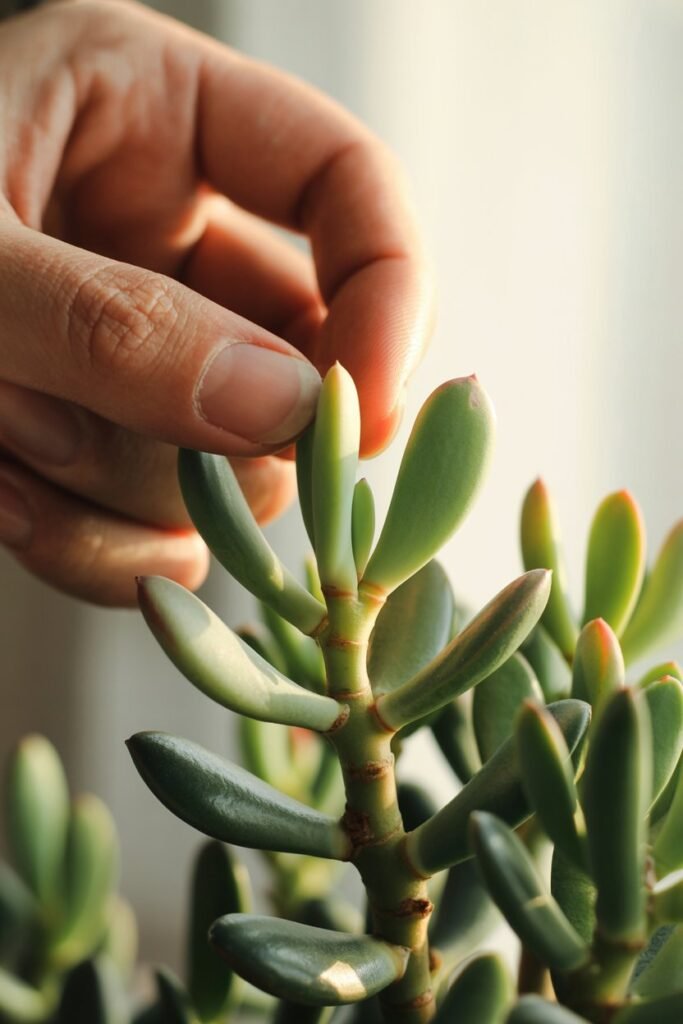
Pinching is a subtle technique that works wonders for jade plants.
When you see:
- Fresh, soft growth at the tips
- New leaves forming tightly together
Gently pinch off the very tip with clean fingers or scissors. This stops upward growth and redirects energy sideways, encouraging the plant to branch.
This method is especially useful for:
- Young jade plants
- Plants you want to shape early
- Maintaining fullness without heavy pruning
Done regularly, pinching keeps jade plants compact and balanced.
Read How to Create a Seed Starting Schedule for Your Vegetable Garden
8. Keep Temperatures Stable

Jade plants grow best when conditions are calm and predictable.
Ideal temperatures:
- 65–75°F (18–24°C) during the day
- Slightly cooler at night
Avoid placing jade plants near:
- Cold drafts
- Air conditioners
- Heaters or radiators
Temperature stress slows growth and causes leaf drop, which works against bushiness.
Stability allows the plant to focus energy on branching and leaf production.
9. Propagate and Replant for Fuller Displays
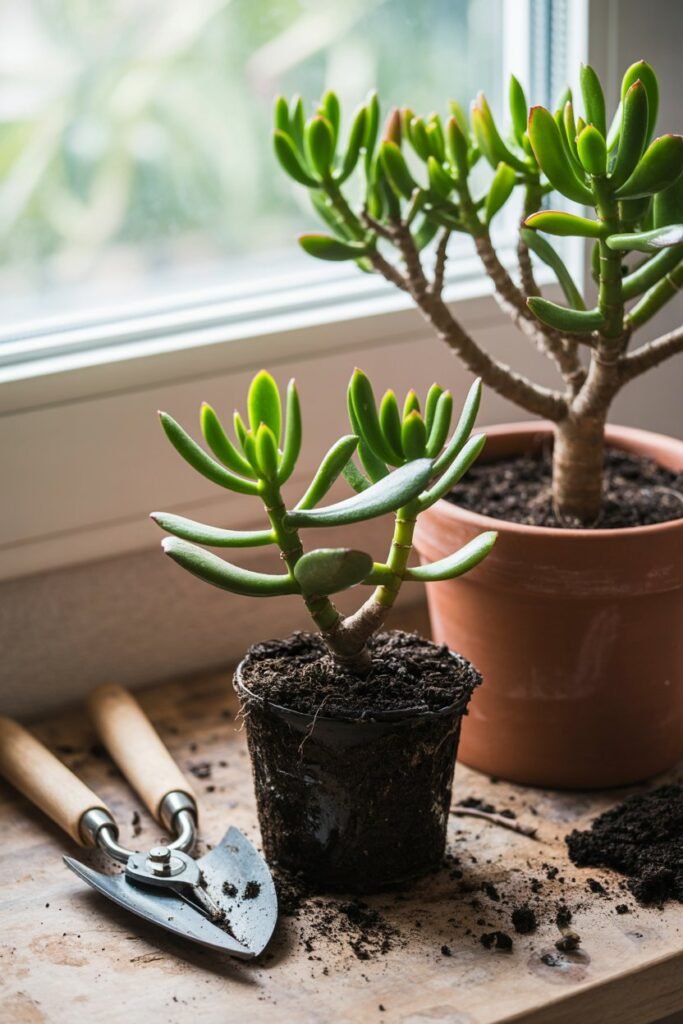
Sometimes bushiness isn’t just about one stem it’s about designing fullness.
You can:
- Propagate healthy cuttings from pruning
- Let cut ends callous for 2–3 days
- Plant them back into the same pot once rooted
This creates a multi-stem look that appears naturally bushy and lush.
Not only does this improve appearance, but it also ensures:
- Balanced growth
- Better light distribution
- A fuller, more mature look over time
10. Be Patient—Jade Plants Reward Consistency
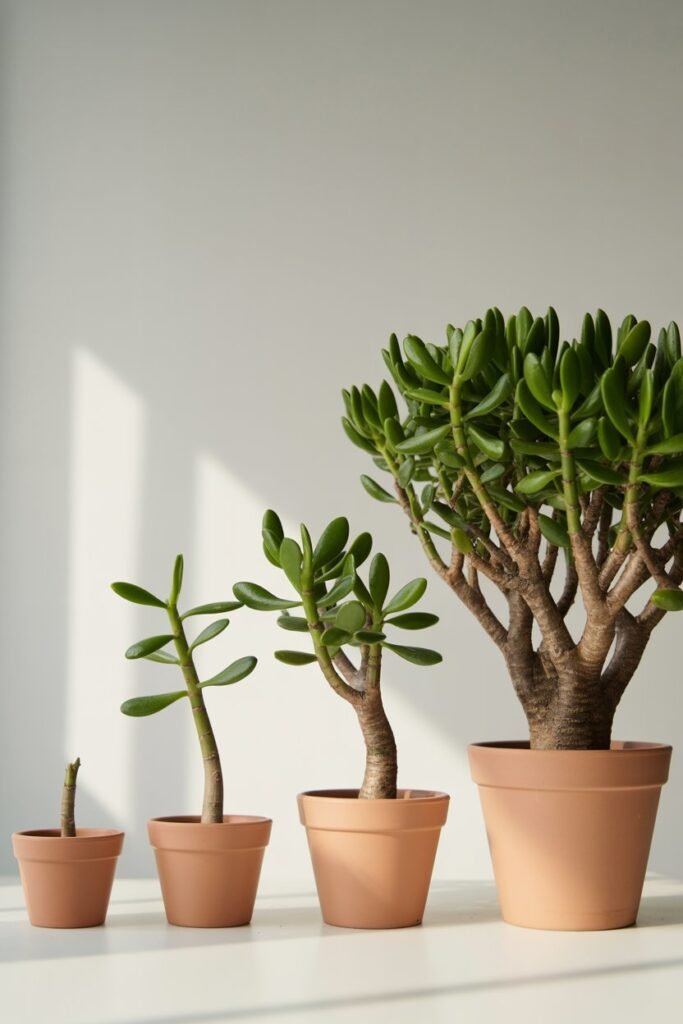
Jade plants don’t rush. Their bushy, tree-like form develops slowly, layer by layer.
Consistency matters more than speed:
- Regular light exposure
- Careful watering habits
- Gentle pruning and feeding
- Stable environment
With time, jade plants respond beautifully. Leaves grow closer together, branches thicken, and the plant begins to look intentional rather than accidental.
Bushiness is not forced it’s earned through attentive care.
Final Thoughts: Growing a Jade Plant You’re Proud Of
A bushy jade plant isn’t about luck or secret tricks. It’s about understanding how this resilient plant grows and supporting it with thoughtful care.
When light, water, pruning, and patience come together, jade plants transform into full, elegant companions that truly live up to their reputation.
If your jade plant looks sparse right now, don’t be discouraged. With these ten tips, you’re not just improving its appearance you’re building a healthier, stronger plant that will reward you for years to come.
And that, in my experience, is one of the quiet joys of gardening: watching a plant flourish because you finally learned how to listen to it.
