
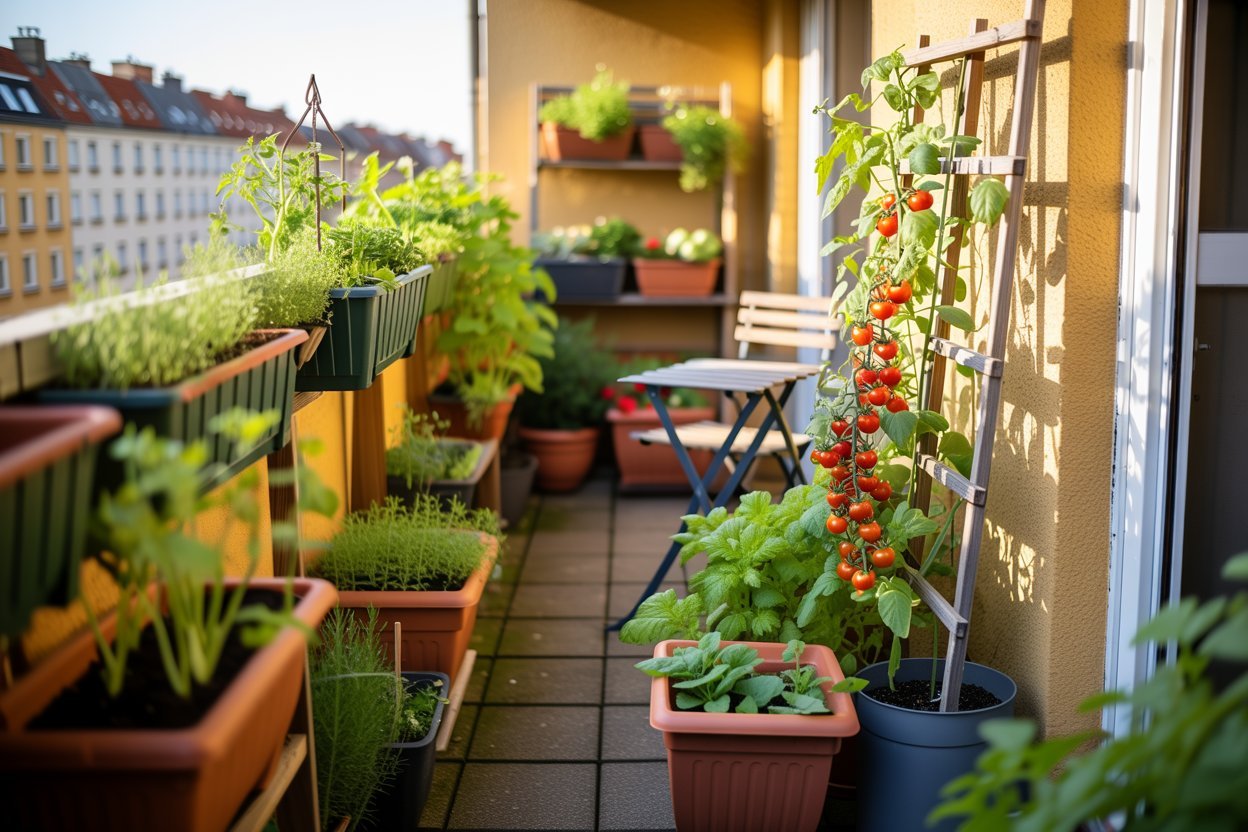

My first apartment had exactly one window that got decent light, a cracked concrete balcony the size of a bath mat, and a landlord who raised an eyebrow every time I mentioned dirt.
I still remember the morning I picked my first cherry tomato off a plant I’d squeezed into a five-gallon bucket wedged between the railing and the wall.
It was warm from the sun, a little lopsided, and honestly the best tomato I’ve ever eaten not because it was perfect, but because I grew it myself in a space everyone told me was too small to grow anything in.
That tomato changed how I thought about gardening forever, and it’s why I want to share everything I’ve learned since.
You Don’t Need a Backyard to Be a Real Gardener
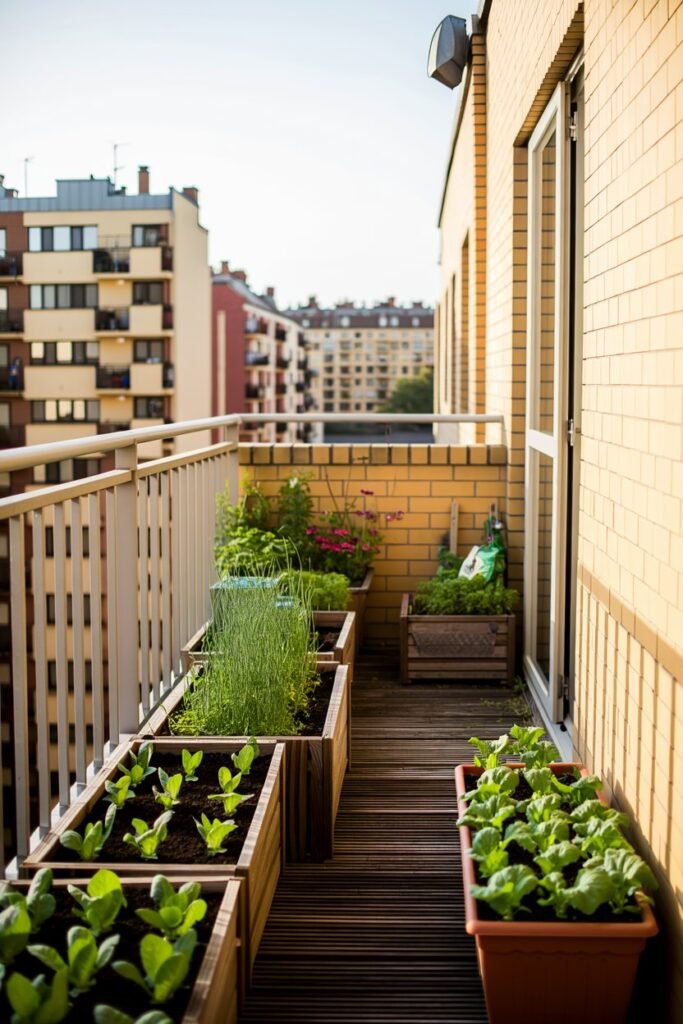
I want to get this out of the way right up front: growing vegetables in an apartment is not a lesser version of “real” gardening. It’s its own discipline, with its own tricks and rewards.
You’re working with containers instead of beds, light instead of acreage, and creativity instead of square footage.
Once you stop comparing your balcony to your grandmother’s farm, you’ll start noticing just how much is actually possible in a small space.
Over the years I’ve grown lettuce on a windowsill, peppers on a fire escape, and a full salsa garden’s worth of tomatoes, peppers, and herbs on a balcony that barely fit two chairs.
Here’s everything I wish someone had told me when I started.
Start With Light, Not Containers
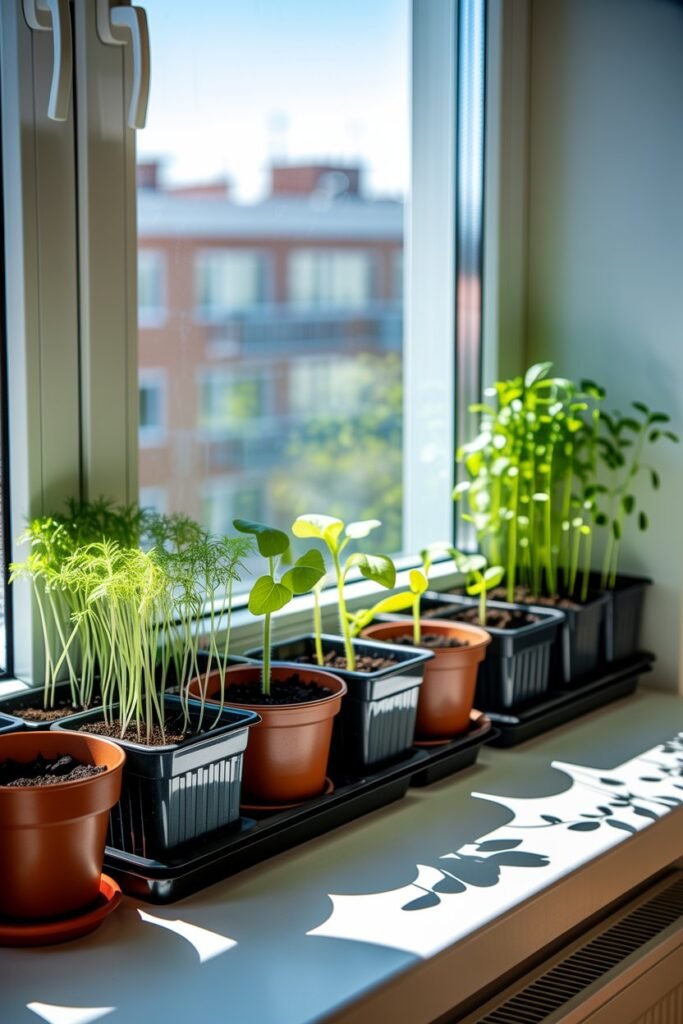
Before you buy a single pot, spend a few days just watching your space.
Light is the single biggest factor in whether your apartment garden thrives or sputters, and it’s the thing new gardeners underestimate the most.
- South-facing windows or balconies get the most consistent light throughout the day and are ideal for fruiting vegetables like tomatoes, peppers, and cucumbers.
- East-facing spots get gentler morning sun, which is perfect for leafy greens, herbs, and anything that tends to wilt in harsh afternoon heat.
- West-facing spaces get strong, hot afternoon sun great for heat-lovers, but you’ll need to watch soil moisture closely.
- North-facing windows are the toughest for vegetables, but they can still support shade-tolerant herbs like mint, chives, and parsley, especially with a little grow light support.
Most fruiting vegetables want six or more hours of direct sunlight a day. If you’re not sure what you’re working with, track it for a week.
I actually kept a little sunlight journal my first year, and it saved me from wasting a whole season on tomatoes in a spot that only got three hours of morning light.
If your space genuinely doesn’t get enough natural light, don’t give up a simple LED grow light can make container gardening possible almost anywhere, including that dim hallway corner or windowless kitchen nook.
Choosing the Right Containers
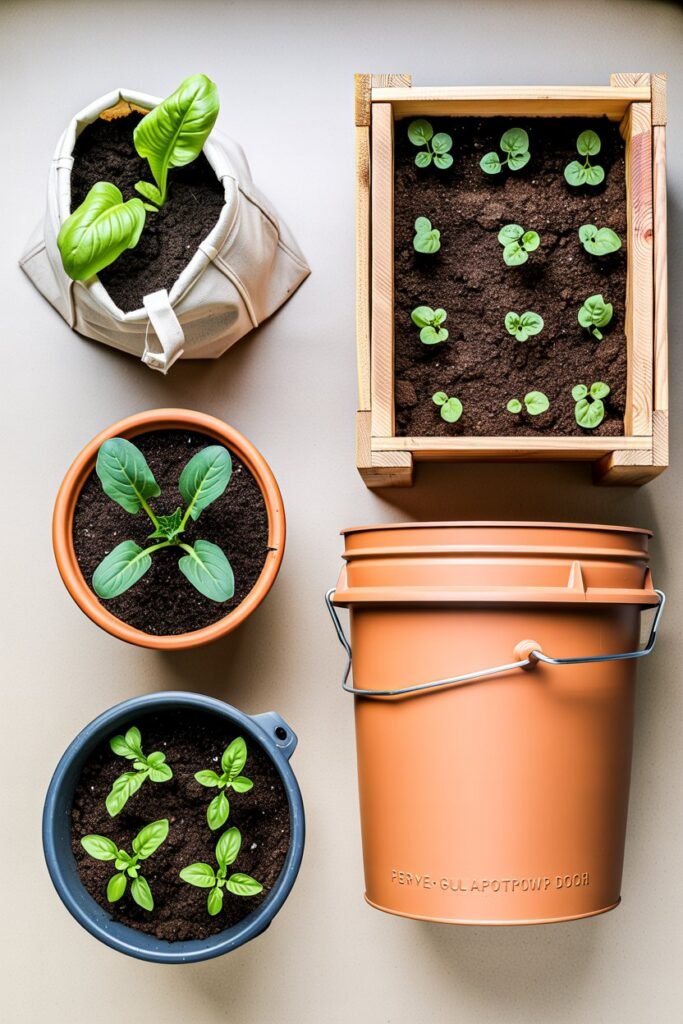
Containers are where apartment gardening really gets fun, because you’re not limited to traditional pots. Almost anything that holds soil and drains water can become a home for vegetables.
Things that work beautifully:
- Five-gallon buckets (drilled with drainage holes) for tomatoes, peppers, and eggplant
- Window boxes for herbs, lettuce, and shallow-rooted greens
- Fabric grow bags, which are lightweight, breathable, and easy to store when empty
- Stacked vertical planters for strawberries, herbs, and trailing vegetables
- Repurposed items like wooden crates, old drawers, or even large coffee cans for smaller herbs
A few rules I’ve learned the hard way:
- Always prioritize drainage. Standing water rots roots faster than almost anything else, and it’s the number one killer of apartment container gardens.
- Match container size to root depth. Tomatoes and peppers need at least 12–18 inches of depth, while lettuce and herbs can thrive in just 6–8 inches.
- Darker containers heat up faster in direct sun, which can stress roots in the height of summer light-colored pots stay cooler.
The Best Vegetables for Small Apartment Spaces
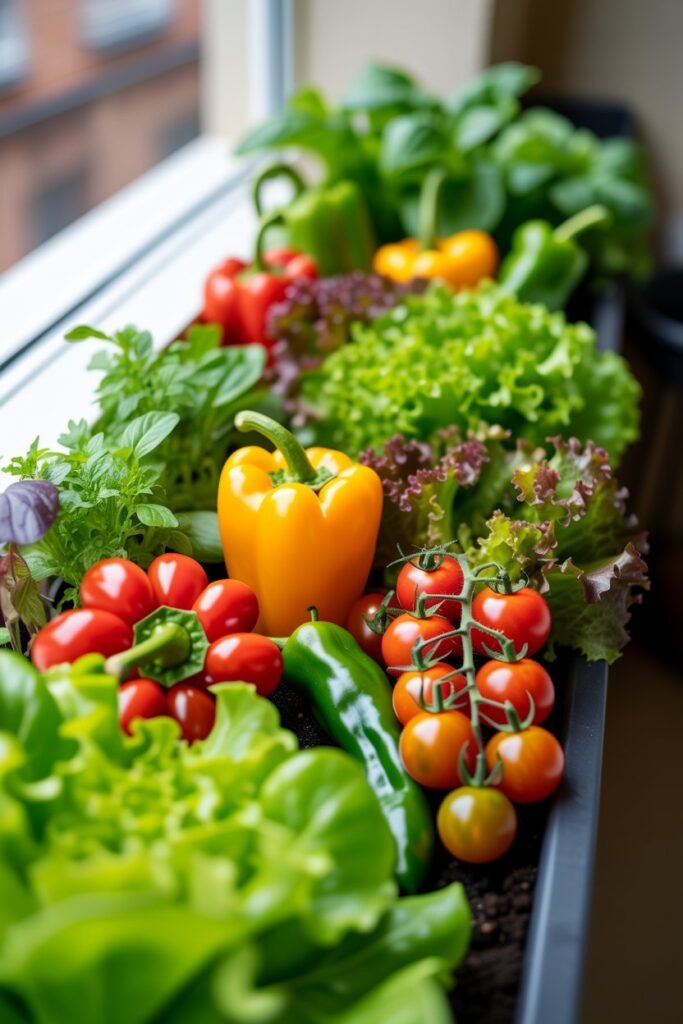
Not every vegetable is cut out for container life, but plenty absolutely thrive in it. These are the ones I come back to season after season.
Leafy Greens
Lettuce, spinach, arugula, and kale are some of the most forgiving apartment vegetables you can grow.
They have shallow roots, don’t need much depth, tolerate partial shade, and can be harvested a few leaves at a time so one plant keeps producing for weeks.
Herbs
Basil, mint, chives, parsley, and thyme are practically made for apartment life.
They’re compact, forgiving, and reward you almost daily. Mint especially should always live in its own container it spreads aggressively and will take over anything it shares soil with.
Cherry and Patio Tomatoes
Skip the giant beefsteak varieties and look for “patio,” “dwarf,” or “determinate” tomato varieties.
These are bred specifically for containers and stay compact while still producing generously. A cherry tomato plant on a sunny balcony is one of the most satisfying things you can grow.
Peppers
Peppers are compact, sun-loving, and genuinely thrive in containers, sometimes even better than in open ground. Bell peppers, jalapeños, and shishitos all do wonderfully in five-gallon buckets or grow bags.
Radishes
If you want fast gratification, radishes are your answer. Many varieties are ready to harvest in as little as three to four weeks, making them perfect for impatient first-time gardeners or for filling gaps between other crops.
Green Beans (Bush Varieties)
Bush beans, unlike their climbing cousins, stay compact and don’t need trellising, making them a great low-maintenance option for a balcony rail planter.
Strawberries
Strawberries do wonderfully in hanging baskets or stacked vertical planters, and they add a lovely trailing element to a balcony garden while giving you sweet, fragrant fruit through the season.
Vertical Gardening: Your Best Friend in Small Spaces
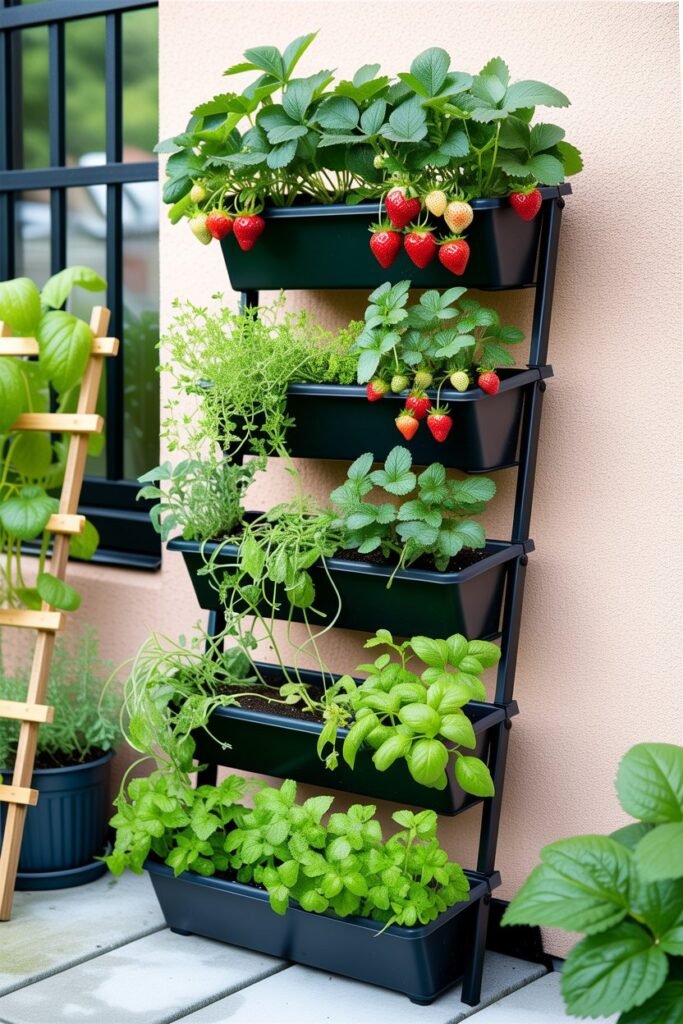
If there’s one lesson I’d pass on above all others, it’s this: think up, not just out. Vertical space is almost always underused in apartment gardens.
- Install a simple trellis against a wall or railing for climbing vegetables like peas, pole beans, or cucumbers.
- Use hanging planters for trailing herbs and strawberries.
- Try a tiered plant stand to fit more pots into less floor space while also giving each layer slightly different light exposure.
- Repurpose an over-the-door shoe organizer with sturdy pockets as a genius vertical herb garden for a sunny wall.
Vertical growing doesn’t just save space it also improves air circulation around your plants, which helps prevent fungal issues that are common in crowded balcony gardens.
Soil and Feeding: The Foundation Nobody Talks About Enough
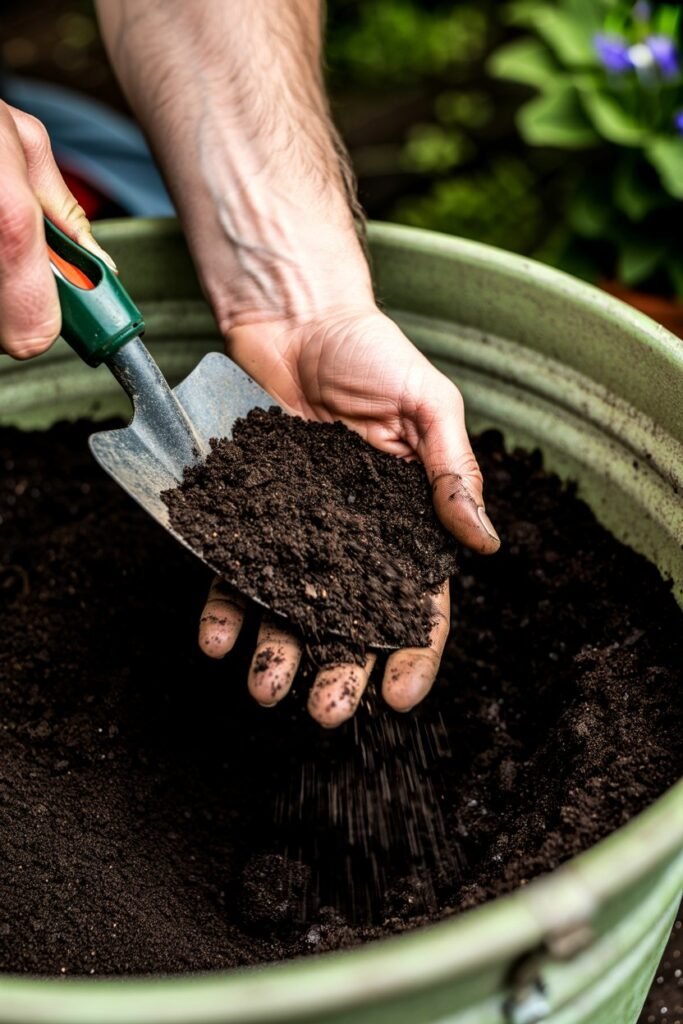
Container gardening drains nutrients out of soil much faster than in-ground gardening, simply because there’s less soil volume to hold onto them. This is one of the most overlooked reasons apartment gardens struggle.
- Use a high-quality potting mix, not garden soil. Garden soil compacts in containers and drains poorly.
- Mix in compost or worm castings at planting time to give your vegetables a nutrient boost from day one.
- Feed regularly. A balanced liquid fertilizer every two to three weeks during the growing season keeps container vegetables productive, since nutrients wash out with each watering.
- Refresh your soil each season rather than reusing the same exhausted mix year after year.
Watering Wisdom for Container Gardens
Containers dry out faster than garden beds, especially in summer heat or on a sun-baked balcony. This was probably my biggest learning curve as an apartment gardener.
- Check soil moisture by pushing a finger about an inch into the soil. If it’s dry at that depth, it’s time to water.
- Water deeply and slowly until it drains from the bottom, rather than giving frequent shallow sips.
- Consider self-watering containers or a simple drip irrigation kit if you travel often or tend to forget they’ve saved more than one of my summer gardens.
- Group containers together where possible. Plants create a bit of shared humidity and shade for each other, which reduces water loss.
Dealing With Pests in a Small Space
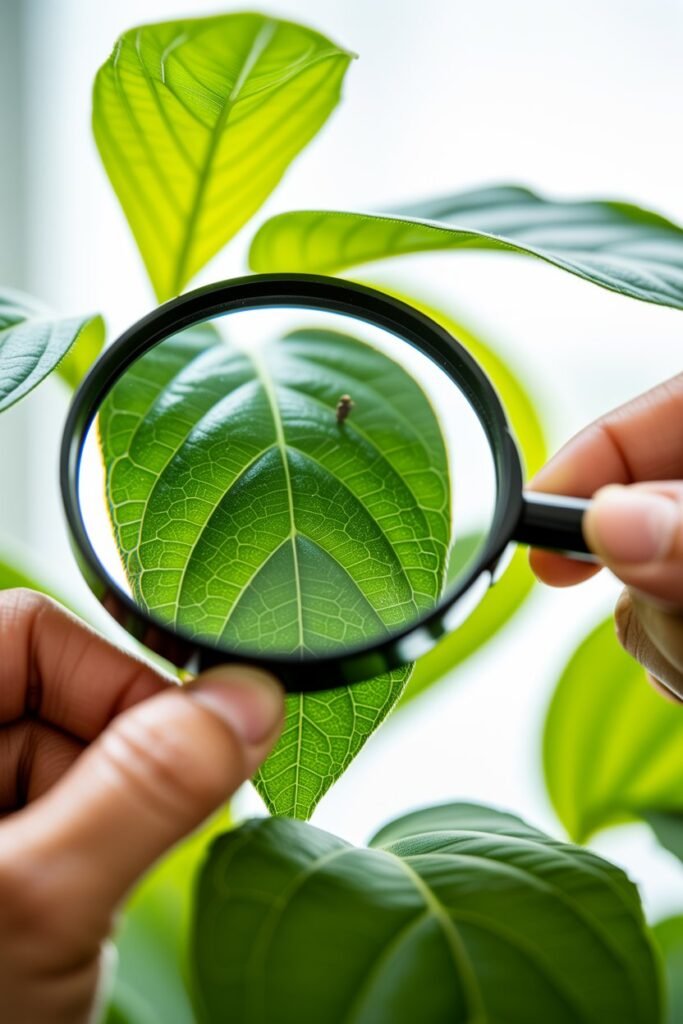
Apartment gardens actually tend to have fewer pest problems than ground-level gardens, especially if you’re a few floors up, but they’re not immune.
- Inspect leaves regularly, especially the undersides, for aphids, spider mites, or whitefly.
- Use insecticidal soap or a strong stream of water to knock pests off without resorting to harsh chemicals in a space you live in.
- Companion planting works in containers too basil planted near tomatoes, or marigolds tucked into pots, can help naturally deter common pests.
- Good airflow between containers goes a long way toward preventing the fungal and pest issues that thrive in cramped, stagnant air.
Working With Balconies, Fire Escapes, and Windowsills
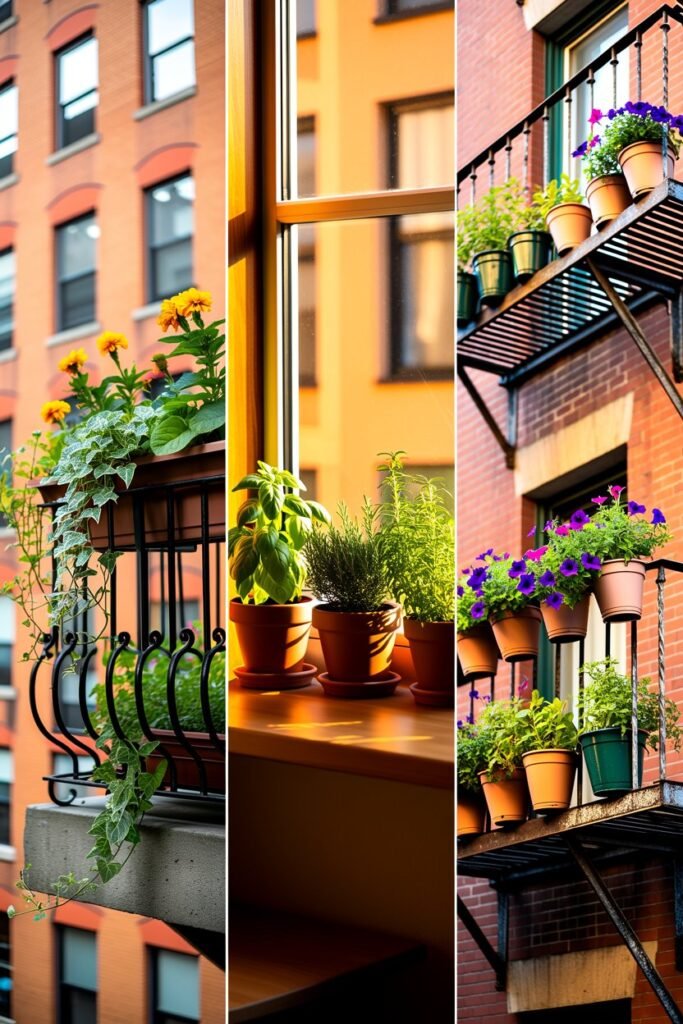
Every type of space has its quirks, and knowing yours will save you a lot of trial and error.
Balconies: Check your building’s weight restrictions before loading up with soil-filled containers, especially larger ones wet soil is heavier than most people expect. Railing planters are a wonderful way to maximize a narrow balcony without eating into your floor space.
Fire escapes: Always check your local fire codes and lease agreement before gardening here, since many cities restrict what can be placed on fire escapes for safety reasons. Where it’s allowed, lightweight containers and hanging planters work best.
Windowsills: Perfect for herbs, small greens, and starting seedlings. A simple tray underneath catches water drips and protects your sill.
Indoor spaces without direct sun: Grow lights open up surprising possibilities here, letting you grow herbs, microgreens, and even compact peppers in a corner that never sees the sun directly.
Succession Planting: Keep the Harvest Coming
One trick that took my apartment garden from “a few tomatoes” to “a genuinely productive little food source” was succession planting staggering plantings so something is always ready to harvest.
- Sow a small batch of lettuce or radish seeds every two weeks instead of all at once.
- Replace spent spring greens with heat-loving summer crops like peppers once the weather warms.
- Keep a small seed-starting tray going year-round so you always have the next round of seedlings ready to slot in as space opens up.
A Few Honest Truths About Apartment Gardening
I think it’s only fair to be honest with you: apartment vegetable gardening has real limits.
You likely won’t grow enough to feed yourself entirely, sprawling vegetables like pumpkins or corn simply aren’t realistic in containers, and some seasons will be more successful than others no matter how carefully you plan. That’s okay. The goal isn’t self-sufficiency it’s connection.
It’s the quiet satisfaction of snipping fresh basil for dinner, watching a pepper plant flower, and eating something you grew with your own hands in a space you were told wasn’t fit for gardening.
Final Thoughts From One Apartment Gardener to Another
Every plant I’ve grown on a balcony or windowsill taught me something a backyard never could patience, resourcefulness, and a deep appreciation for even the smallest harvest.
Your apartment garden doesn’t need to be big to be meaningful. It just needs light, the right containers, a bit of soil know-how, and your willingness to keep showing up and checking on it.
Start small. Pick one or two vegetables from this list, choose your sunniest spot, and give it a real chance this season. I promise that first homegrown tomato, that first snip of your own basil, will make you a believer too. Happy growing.
