
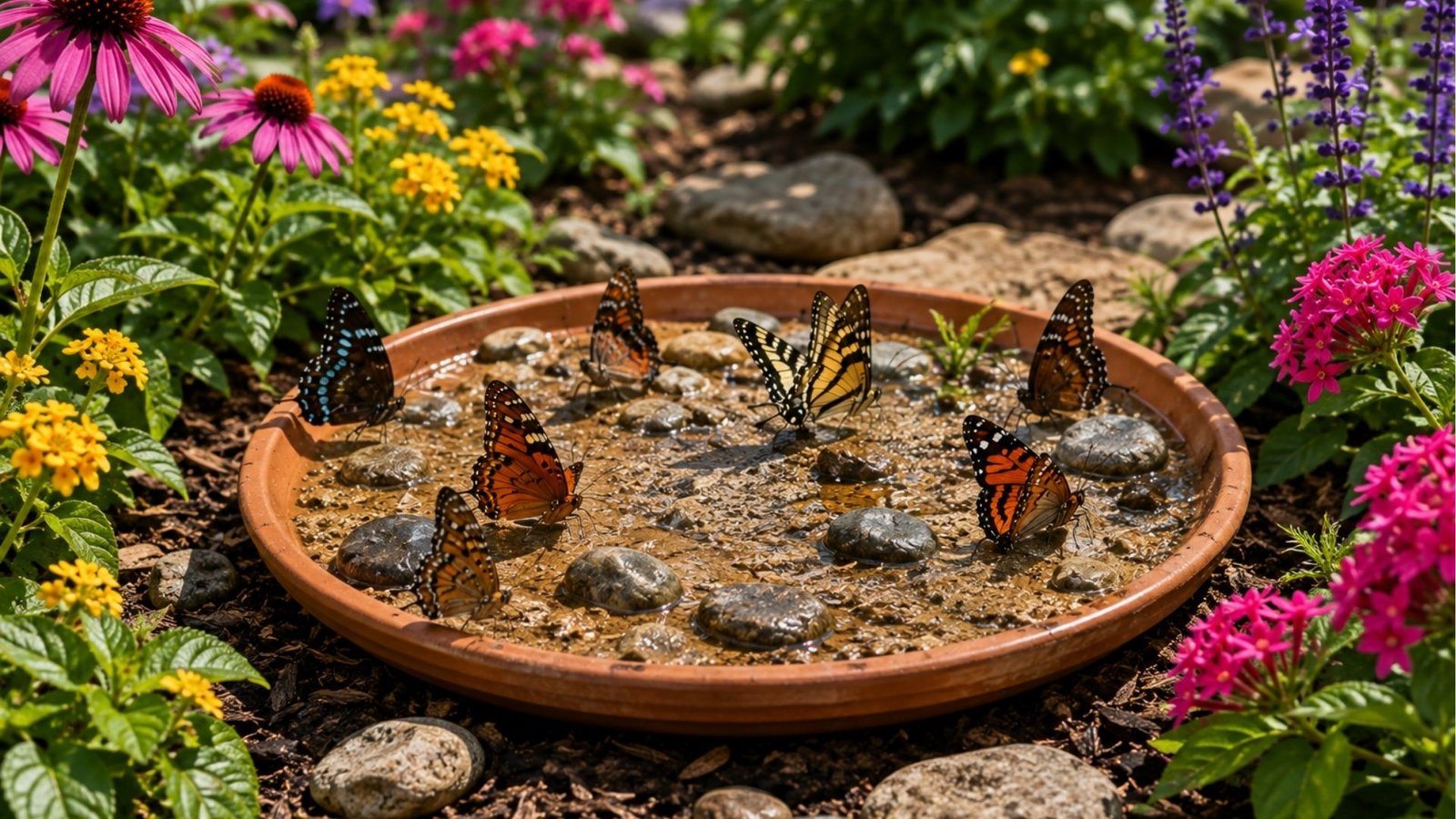

I’ve always loved the little details that make a garden feel truly alive, and one of my favorites is watching butterflies gather in places I never expected.
While flowers get most of the attention, butterflies need more than nectar to thrive.
One simple feature you can add is a butterfly puddling area a small patch of damp sand, soil, or mud where butterflies can stop, drink, and collect minerals.
You don’t need a pond, a huge yard, or expensive supplies to make one. A shallow container, some sand or soil, a few stones, and regular water can be enough to create a useful little butterfly station right in your garden.
What Is a Butterfly Puddling Area?
A butterfly puddling area is a shallow, damp spot where butterflies gather to drink water and take in dissolved minerals and nutrients from wet soil or sand.
The behavior is called puddling. Butterflies, especially males of many species, are known to gather around damp ground, puddles, stream edges, and muddy areas.
They absorb water along with salts and other minerals that can be difficult to obtain from flower nectar alone.
Think of it as a tiny refreshment station for your butterfly garden.
A puddling area can be completely natural, such as a shallow muddy patch in the garden, or you can create one yourself using a container.
I especially like the container method because it is simple to control, easy to maintain, and works well even in small gardens.
Why Do Butterflies Puddle?
Flowers provide butterflies with nectar, but nectar is not their only source of nourishment.
When butterflies puddle, they drink moisture containing dissolved minerals and salts from wet soil, sand, or mud. These minerals are especially important to many male butterflies, which may later transfer nutrients to females during mating.
Puddling is also about hydration. During warm weather, a shallow, damp spot can provide butterflies with a convenient source of water.
This is one reason I recommend thinking about water as part of a complete butterfly garden rather than focusing only on flowering plants.
A beautiful butterfly garden should ideally provide:
- Nectar-producing flowers
- Caterpillar host plants
- Shelter from harsh weather
- Sunny places for basking
- A safe puddling area
Each feature supports a different part of a butterfly’s life.
What You Need to Make a Butterfly Puddling Area
The wonderful thing about this project is that you can keep it very simple.
Basic supplies
You will need:
- A shallow container or plant saucer
- Clean water
- Sand or garden soil
- A few flat rocks or pebbles
- A sunny or partly sunny location
Penn State Extension recommends a shallow vessel, mud, rocks, water, and regular sand for creating a puddling station. Rocks are useful because they give insects places to land and can also provide warm basking surfaces.
Choosing the container
Look around your home before buying anything new.
A shallow plant saucer, old terracotta tray, low plastic container, or another sturdy dish can work well. Avoid deep containers because butterflies need easy access to the damp surface.
The goal is to create a very shallow, wet area, not a miniature pond.
If you use a plastic container, drainage holes placed near the upper edge can help prevent the container from becoming overfilled after rain.
How to Make a Butterfly Puddling Area
Creating one is easier than it sounds. Here’s the method I would use in a home garden.
Step 1: Pick the Right Location
Start by choosing a spot where butterflies naturally spend time.
A sunny area near flowering plants is ideal. Butterflies often use warm, open spaces and also appreciate rocks and other surfaces where they can bask.
Try placing your puddling area near your butterfly flowers, but not directly underneath dense foliage where the ground stays permanently dark and soggy.
A location where you can easily see the station is even better. One of the nicest parts of creating a butterfly garden is actually being able to enjoy the wildlife you’ve invited in.
Step 2: Add Sand or Soil
Fill the bottom of your container with a layer of regular sand, garden soil, or a combination of the two.
You want enough material to hold moisture without turning the container into a deep pool.
Regular sand can also contribute salts to the puddling area. Penn State specifically recommends ordinary sand rather than play sand for this purpose.
Step 3: Add a Few Rocks
Place several small stones or flat rocks on top.
These give butterflies a dry place to stand while they drink. Rocks can also warm up in the sun, creating useful basking spots.
Make sure the stones are stable and not so tall that they make the area difficult for butterflies to reach.
Step 4: Add Water
Slowly add water until the sand or soil becomes thoroughly damp.
You want the surface to resemble wet mud rather than a deep body of standing water.
The dampness is the important part. Butterflies need access to moisture and the minerals dissolved within it.
Step 5: Keep It Damp
Check the puddling area regularly, especially during hot or dry weather.
Add a little water whenever the surface begins to dry out.
At the same time, avoid allowing the container to become stagnant or overly flooded. A shallow, damp surface is much more useful than a deep basin.
Where Should You Put a Butterfly Puddling Area?
The best location depends on your garden, but there are a few features worth looking for.
Choose an area that receives some sunlight, has nearby butterfly-friendly plants, and is easy for insects to approach.
Butterflies often need warm surfaces for basking, so placing a few stones in a sunny location can make the area more useful.
I also like putting puddling stations slightly away from the busiest walking areas. Butterflies are much more likely to settle when the spot feels quiet and undisturbed.
If you have a small garden, you can tuck the container beside flowering plants, along a sunny border, or near the edge of a patio.
Should You Add Salt or Other Minerals?
You may see butterfly gardening instructions online recommending different materials to increase mineral content. However, you do not need to create a complicated recipe.
The basic combination of damp soil or sand and clean water already provides the foundation for natural puddling behavior.
Some butterfly gardening resources discuss adding additional salt or organic materials, but I prefer keeping a home garden puddling station simple. A clean, shallow, damp area is easier to maintain and lets you observe what butterflies naturally prefer.
Instead of constantly adding different ingredients, focus first on keeping the area moist and accessible.
What Plants Should Be Near Your Puddling Area?
A puddling station works best as part of a larger butterfly-friendly garden.
Plant nectar-rich flowers nearby so butterflies have food once they leave the puddling area.
Even better, include host plants that caterpillars can use. Adult butterflies may visit flowers, but caterpillars have very different needs and often depend on specific plant species.
Try creating several layers of habitat with flowering plants, shrubs, grasses, and other garden plants suited to your local climate.
Native plants are particularly valuable because they are closely connected with local insect species. Penn State Extension recommends providing a variety of native flowering plants throughout the season and minimizing pesticide use in butterfly gardens.
Add a Butterfly Basking Spot
A puddling area and a basking spot can work beautifully together.
Butterflies are cold-blooded, so they use warm surfaces to help regulate their body temperature. Flat rocks placed in sunny areas can provide convenient basking spaces.
You can simply place a few stones around the puddling container.
That small addition can turn one little dish into a more useful butterfly station.
How Often Should You Maintain It?
The main job is simple: keep the puddling material damp and clean.
Check the station during hot weather because moisture can disappear quickly. After heavy rain, make sure the container has not become completely flooded.
Also remove leaves, algae, or other debris when necessary.
If mosquitoes become a concern, avoid creating a deep container of stagnant water. A shallow puddling station should be managed differently from a pond or birdbath.
Penn State specifically notes that maintenance is important for preventing unwanted problems such as mosquitoes.
A quick check every few days is usually enough, with more frequent attention during very hot weather.
Can You Make a Natural Butterfly Puddling Area?
Absolutely.
You do not have to use a container.
A naturally low section of your garden can work if you can keep the soil slightly damp. A shallow patch of sandy or muddy ground can become a natural puddling spot.
This approach can look more natural than a dish and blend beautifully into a flower bed.
The downside is that natural areas can dry out more quickly or become difficult to control after heavy rainfall.
For a small backyard, I usually prefer the container method because it gives me more control.
Common Mistakes to Avoid
Making the area too deep
A butterfly puddling area is not supposed to be a deep pool. Keep it shallow and easy to access.
Putting it in full shade
A dark, constantly cool location is less attractive for butterflies that also need warm basking surfaces.
Letting it completely dry out
A puddling area that is supposed to provide moisture needs regular watering during dry weather.
Filling it with standing water
You are creating a damp drinking and mineral-gathering area, not a deep water feature.
Using pesticides nearby
Pesticides can harm beneficial insects, including butterflies. Butterfly gardens are best managed with minimal or no insecticide and herbicide use whenever possible.
How to Encourage More Butterflies to Visit
A puddling area is only one piece of the puzzle.
The easiest way to make it more successful is to build a complete butterfly habitat around it.
Plant flowers that bloom at different times so nectar is available throughout the growing season. Add native plants where they are appropriate for your region, and include host plants for caterpillars.
Provide sunny rocks for basking and leave a few protected areas where insects can shelter.
You may also notice that butterflies prefer one part of the garden over another. Pay attention to where they naturally land, feed, and rest, and place your puddling station nearby.
Sometimes the butterflies will show you exactly what they like.
A Simple DIY Butterfly Puddling Recipe
For an easy beginner setup, I would start with:
1 shallow container
Several handfuls of sand or garden soil
3–5 small rocks
Enough clean water to make the material damp
Place the sand or soil into the container, arrange the rocks so butterflies have easy landing surfaces, and slowly add water until everything is moist.
Set the container in a warm, accessible part of your garden and check it regularly.
That’s it.
You do not need a complicated setup to begin.
Final Thoughts
Creating a butterfly puddling area is one of those tiny garden projects that can make a surprisingly big difference in how alive a space feels.
I love that it doesn’t require much room or money, yet it gives butterflies something flowers cannot provide on their own. A shallow dish of damp sand, a few warm rocks, and a nearby patch of flowers can become a little gathering place for visiting butterflies.
The key is to keep the area shallow, damp, accessible, and free from harmful chemicals. Then let your garden do the rest.
You may not notice butterflies using it on the first day, and that’s completely normal. Give them time to discover it. Once they do, you may find yourself checking that little patch of mud every morning just to see who has stopped by.
