
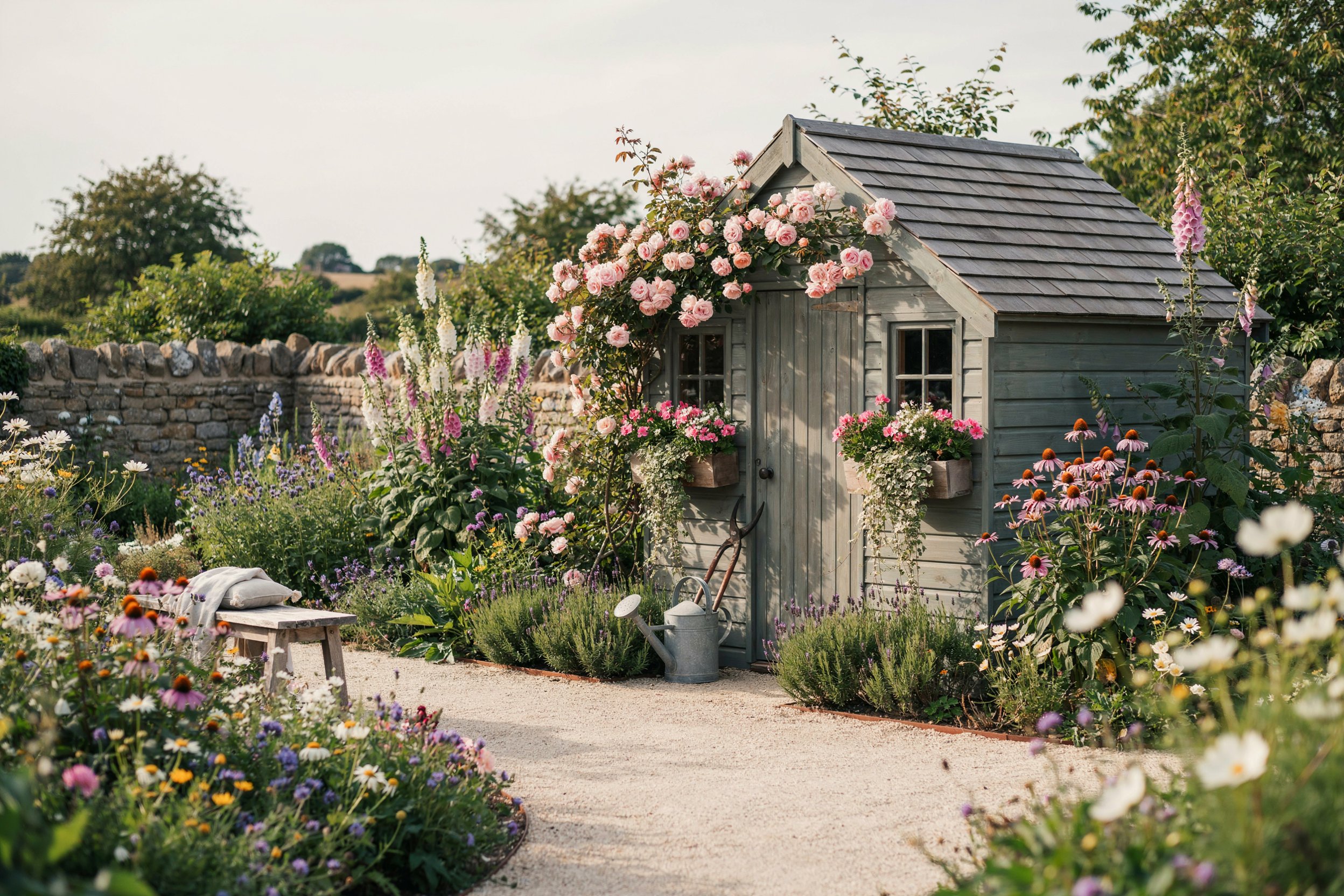

I have always loved the idea of having a little garden retreat tucked among flowers, herbs, and climbing vines.
A cottage garden she shed feels like the perfect place to slow down, enjoy a cup of tea, pot up a few plants, or simply escape the busyness of the day.
What makes these spaces especially charming is how naturally a small shed can blend into a garden when the right plants surround it. From roses climbing over rustic doors to lavender lining a pathway, the possibilities are endless.
In this guide, I’m sharing 11 beautiful cottage garden she shed ideas, along with plant pairings that can help you create a space that feels cozy, romantic, welcoming, and completely your own.
What Makes a Cottage Garden She Shed So Special?
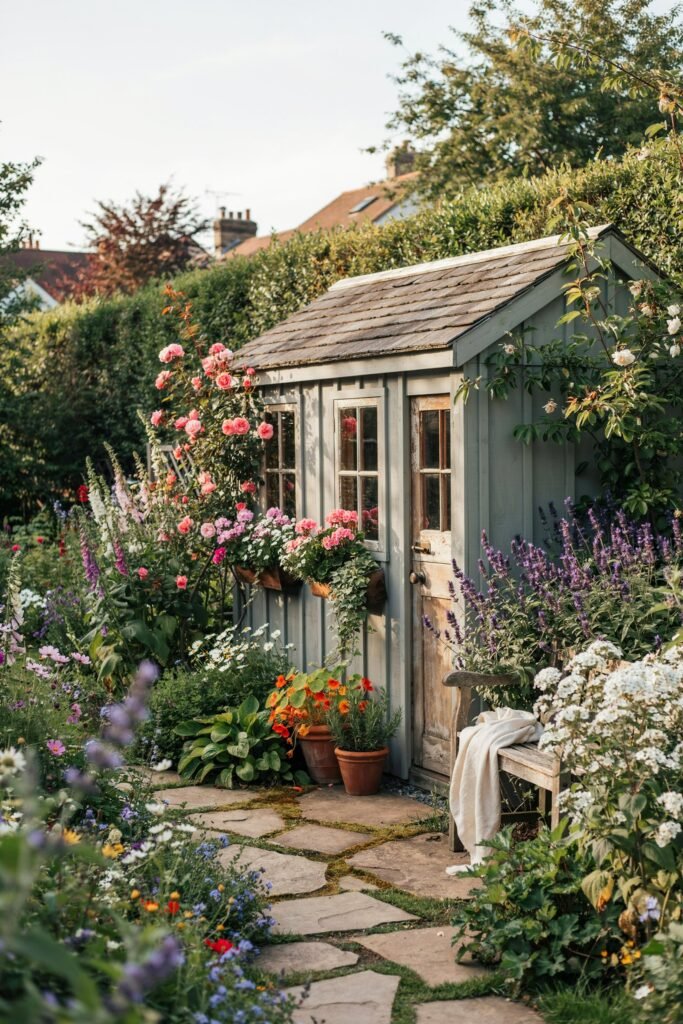
A she shed is more than a small outdoor building. With thoughtful design, it can become a quiet gardening room, reading nook, creative studio, potting space, or peaceful retreat.
The cottage garden style makes a she shed feel even more inviting because it focuses on softness, natural textures, abundant flowers, informal planting, and a slightly relaxed appearance.
Instead of creating perfectly straight flower beds around the shed, cottage gardening allows plants to spill gently around pathways, windows, steps, and corners.
The goal isn’t to make everything look perfectly arranged.
It is to create a garden that feels as though it has grown naturally around your little retreat.
Key Elements of a Cottage Garden She Shed
When planning your own space, consider incorporating:
- A small wooden shed or garden cottage
- Vintage-style windows
- Window boxes filled with flowers
- Climbing roses or flowering vines
- Gravel, brick, or stepping-stone pathways
- Rustic wooden planters
- Cottage-style garden furniture
- Lavender, thyme, sage, and other herbs
- Flowering perennials
- Annuals for seasonal color
- Hanging baskets
- Trellises and arches
- Soft outdoor lighting
- A small seating area
The plants you choose are especially important because they can completely change the character of your she shed.
Below are 11 combinations to inspire you.
1. Classic Rose-Covered Cottage She Shed
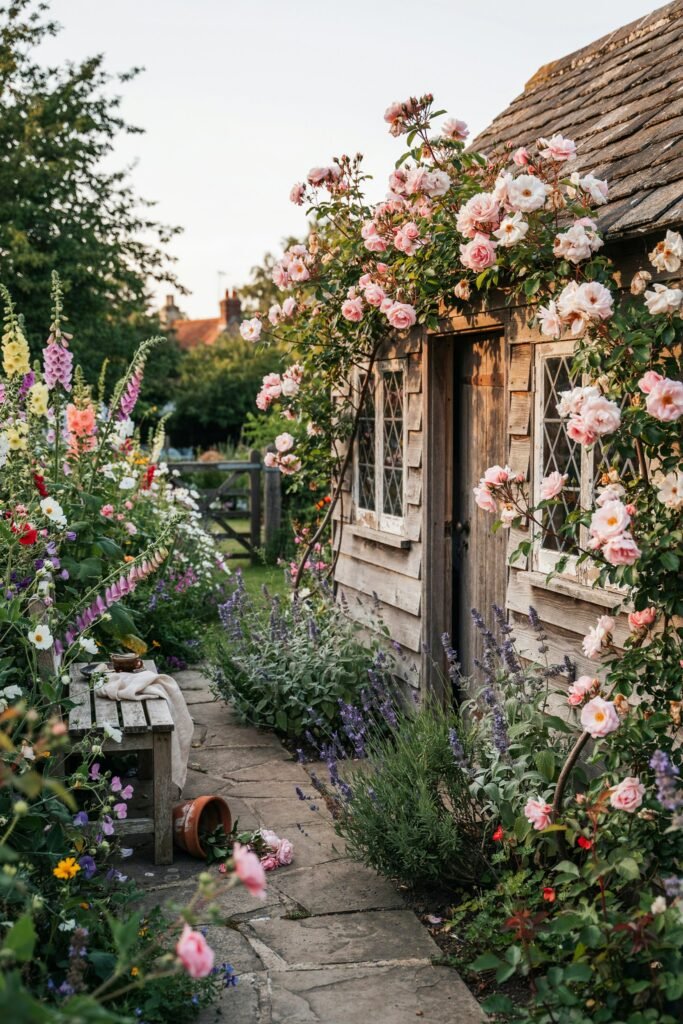
Few plants create a more romantic cottage garden feeling than roses.
A simple wooden she shed can become the centerpiece of the garden when climbing roses are trained around the doorway, windows, or along a nearby trellis.
Imagine a weathered white or natural-wood shed with a small front porch, surrounded by soft pink roses, lavender, and cottage-style flowers. It creates the kind of garden retreat that feels almost storybook-like.
Best Plant Pairing
Climbing roses + lavender + catmint
Climbing roses provide height and drama, while lavender creates a soft purple border beneath them. Catmint fills in the space with delicate flowers and silvery-green foliage.
These plants also create different textures, which helps the planting look more layered.
How to Create the Look
Place the climbing rose beside a sturdy trellis near the entrance.
As the rose grows, gently train the stems onto the support rather than allowing them to grow randomly.
Plant lavender along the pathway or around the front of the shed.
Add catmint between the lavender plants to create a relaxed transition between the taller rose and lower-growing plants.
A small wooden bench outside the door completes the look beautifully.
Helpful Tip
Give climbing roses enough room and provide strong support from the beginning. A mature climbing rose can become surprisingly substantial, so don’t attach it to a flimsy trellis.
2. Lavender and Sage Garden She Shed
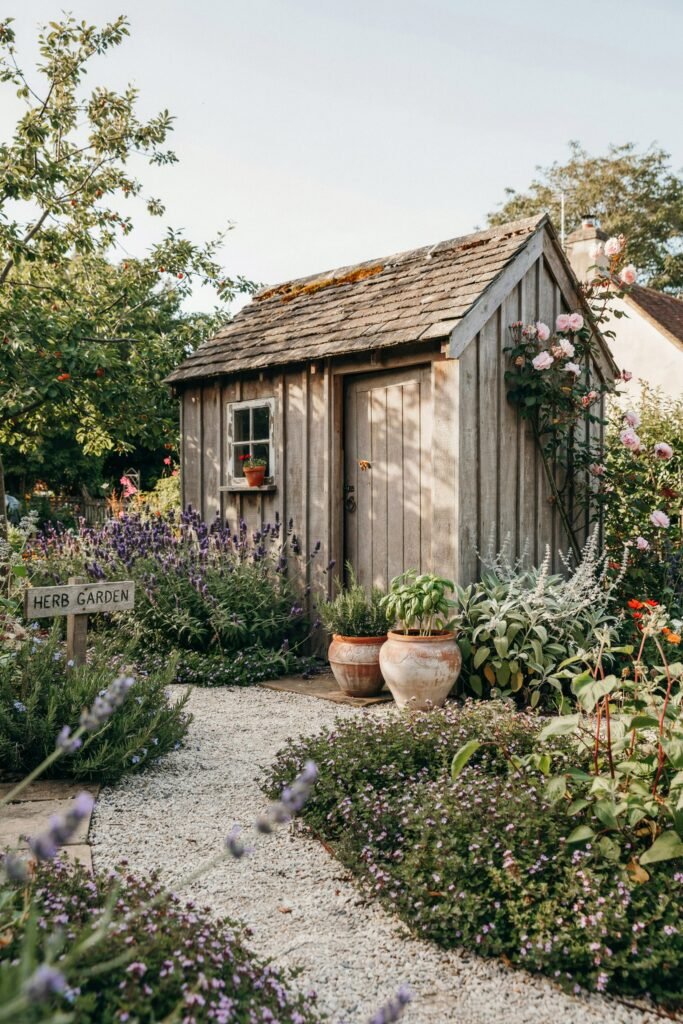
If you love a calmer, more understated cottage garden, consider building your planting scheme around lavender and herbs.
This combination works particularly well around a small potting shed because it creates a garden that feels useful as well as beautiful.
Lavender provides flowers and fragrance, while culinary herbs can be harvested throughout the growing season.
Best Plant Pairing
Lavender + sage + rosemary + thyme
These plants complement one another beautifully because they generally prefer sunny conditions and well-drained soil.
Their foliage also provides interest even when they aren’t flowering.
How to Create the Look
Create a narrow garden bed around the front and sides of your shed.
Plant lavender in groups rather than scattering individual plants throughout the bed.
Use sage behind or between the lavender, then add thyme along the edge of the pathway.
If your climate supports rosemary outdoors, position it where it has plenty of sunlight and enough space to grow.
Add a few terracotta pots near the door for extra charm.
You could even place a small wooden sign near the garden reading “Herb Garden.”
Why This Pairing Works
The different leaf shapes and colors prevent the garden from looking flat.
Lavender brings vertical flower spikes, sage contributes broad foliage, rosemary adds upright evergreen structure, and thyme can soften the edges of pathways.
3. Wildflower Cottage She Shed
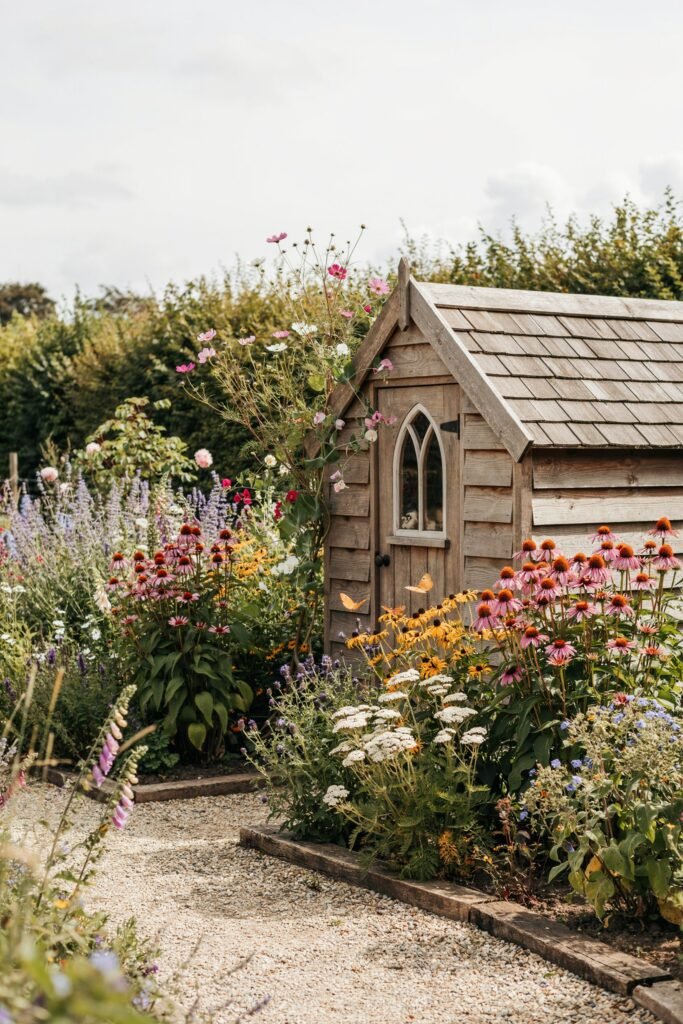
For anyone who loves a relaxed, colorful garden, a wildflower-inspired she shed can be absolutely beautiful.
Instead of using only carefully controlled borders, allow flowers to grow in loose groups around the structure.
The result should feel natural rather than overly formal.
Best Plant Pairing
Coneflowers + black-eyed Susans + cosmos + yarrow
These flowers can create a cheerful summer garden filled with different heights and textures.
Coneflowers provide sturdy flower heads, black-eyed Susans add warm golden color, cosmos bring delicate movement, and yarrow contributes flat flower clusters.
How to Create the Look
Keep the shed itself relatively simple.
A natural wood or muted-painted exterior works beautifully because the flowers become the main attraction.
Create an informal flower border around three sides of the shed.
Place taller flowers farther from the pathway and shorter plants toward the front.
Avoid planting everything in a perfect line.
Instead, repeat groups of plants throughout the bed.
For example, you might plant three coneflowers together, followed by several cosmos plants, then another group of coneflowers.
This repeated pattern gives the garden a natural appearance while still creating visual organization.
Add a Simple Path
A gravel or stepping-stone path leading to the shed can make the wildflower garden feel intentional.
Allow a few plants to gently lean toward the pathway rather than keeping every stem perfectly upright.
4. Hydrangea Hideaway She Shed
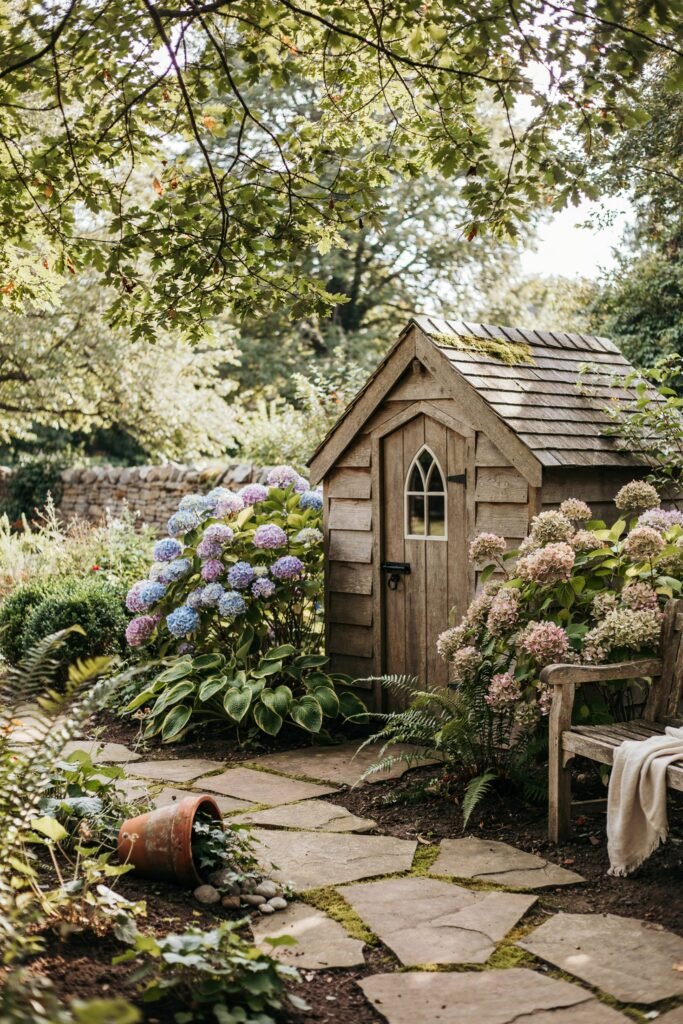
If you dream of a lush, romantic garden retreat, hydrangeas can create a wonderful backdrop.
Their large flower clusters make even a small garden building feel surrounded by abundance.
Best Plant Pairing
Hydrangeas + hostas + ferns
This combination is especially lovely in gardens with partial shade.
Hydrangeas provide large blooms, while hostas offer attractive foliage and ferns add soft texture.
How to Create the Look
Position hydrangeas around the back or sides of the shed, leaving enough space for them to mature.
Place hostas beneath or near the hydrangeas.
Use ferns in areas where you want additional texture.
A small bench or wooden chair positioned beside the shed can turn the space into a peaceful sitting area.
Important Growing Consideration
Don’t choose plants based only on appearance.
Check the mature size, sunlight requirements, soil preferences, and hardiness of each plant before planting.
Hydrangea varieties differ considerably, so choose one that fits your climate and the amount of space available.
Cottage-Style Finishing Touch
Add a window box beneath the shed window and fill it with seasonal flowers.
The contrast between the large hydrangea blooms and smaller window-box flowers can make the entire structure feel more welcoming.
5. The Secret Garden She Shed
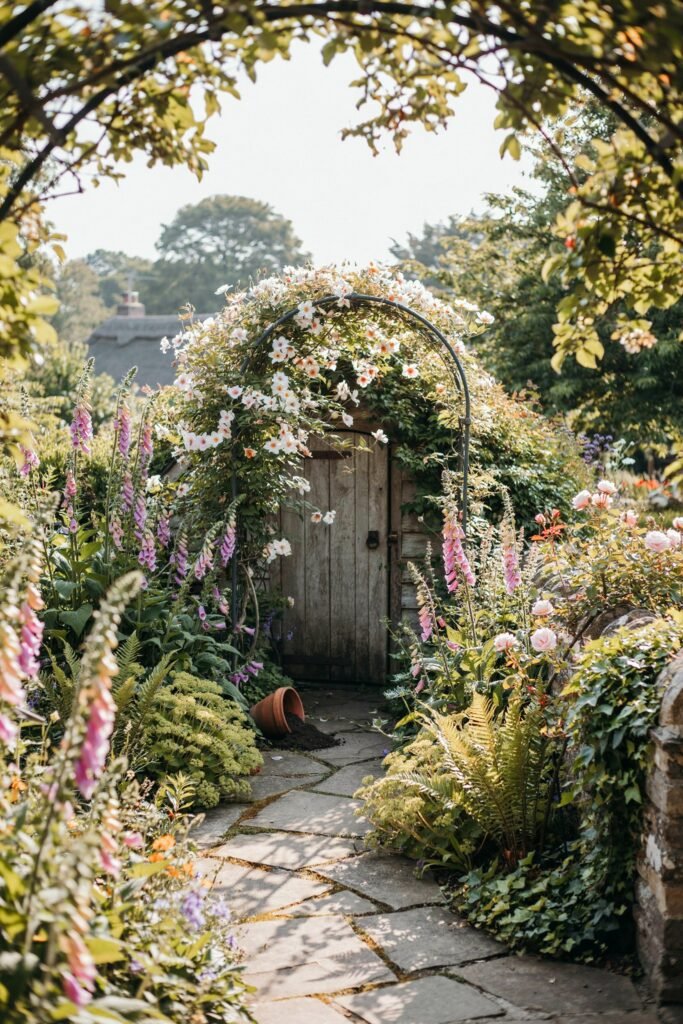
For a more mysterious cottage garden feel, create a she shed that appears slightly hidden behind plants.
This design works beautifully if you want your garden retreat to feel private.
Best Plant Pairing
Climbing clematis + foxgloves + lady’s mantle + ferns
Clematis can climb over a trellis or arch, while foxgloves provide tall flower spikes.
Lady’s mantle creates soft, rounded foliage near the ground, and ferns help fill shady spaces.
How to Create the Look
Rather than placing the shed in a completely open lawn, surround part of it with planting.
Install an archway at the beginning of the pathway.
Train clematis up the arch.
Then create a loose planting border along the path.
Place taller plants toward the back and lower-growing plants near the pathway.
You don’t want to completely hide the shed.
Instead, allow parts of it to appear between the plants.
This creates the feeling that you’re discovering a little garden room.
Add Privacy
A simple trellis can create additional screening without making the garden feel closed off.
You can train a suitable climbing plant onto the trellis and place a small chair or bench behind it.
This can become a wonderful place to read, journal, paint, or enjoy your morning tea.
6. Pink and White Romantic She Shed
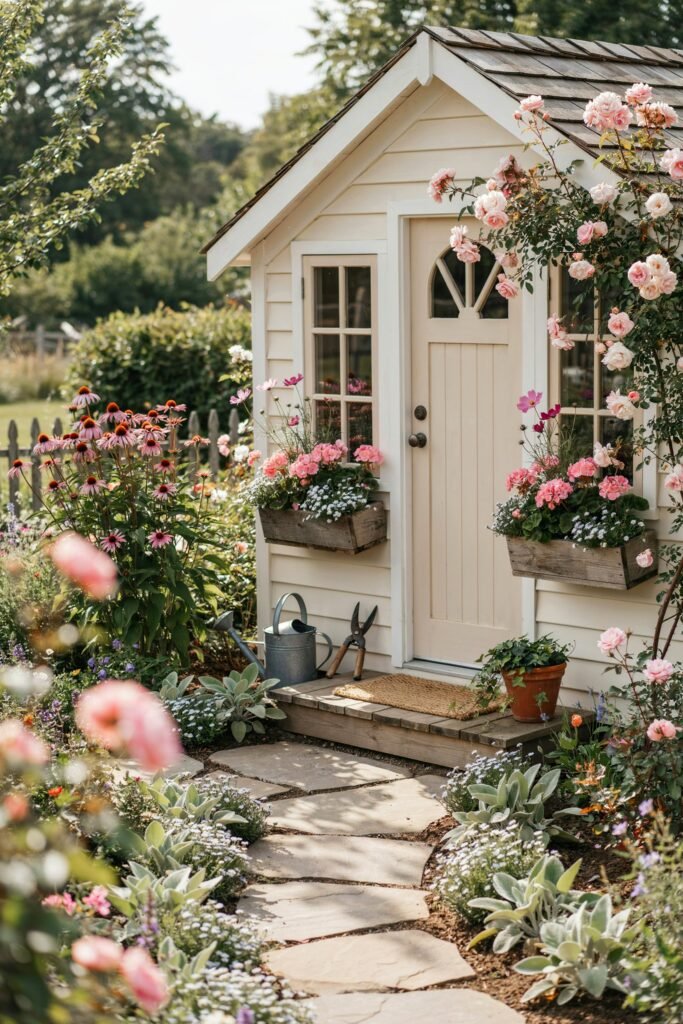
If your dream garden is soft, feminine, and romantic, a pink-and-white planting scheme can be incredibly pretty.
The key is to use different flower shapes and heights rather than relying on one type of flower.
Best Plant Pairing
Pink roses + white alyssum + pink coneflowers + lamb’s ear
This combination creates layers from tall plants down to low-growing edging plants.
How to Create the Look
Start with a soft-colored shed.
White, cream, pale gray, or natural wood can work beautifully.
Add a climbing rose near the doorway.
Plant white alyssum along the pathway to create a low, delicate border.
Add pink coneflowers farther back in the bed.
Use lamb’s ear as an edging plant where appropriate for your growing conditions.
Make the Entrance Special
The entrance should be the focal point.
Consider adding:
- A small wooden porch
- A vintage-style lantern
- A simple welcome sign
- A flower-filled window box
- A small outdoor chair
- A climbing plant around the doorway
Keep the accessories simple so the flowers remain the focus.
7. Cottage Herb Garden Potting Shed
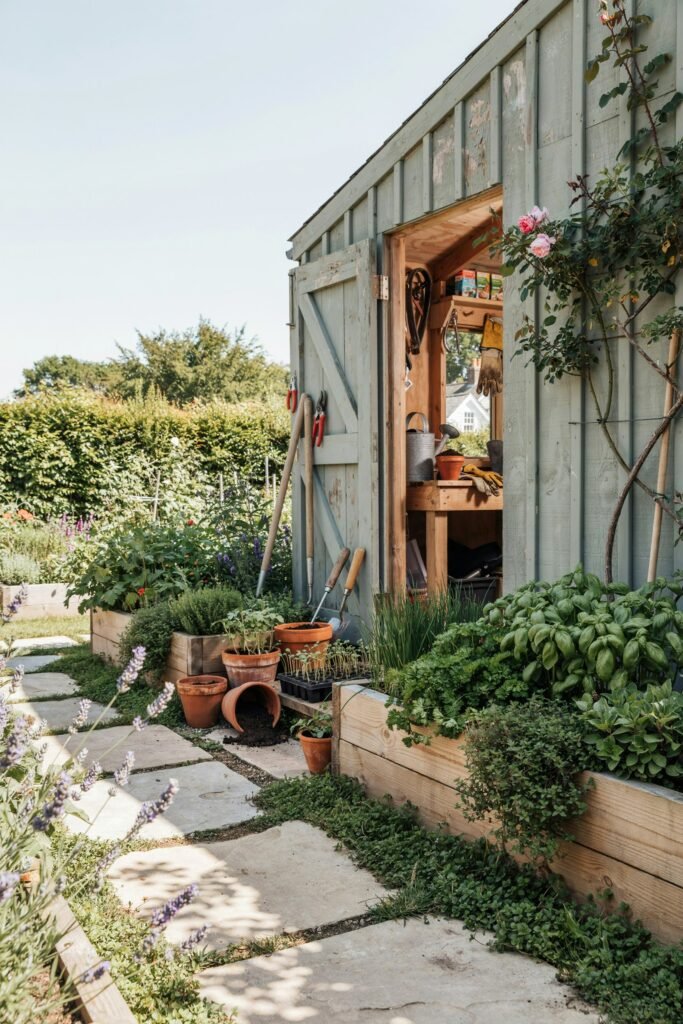
Not every she shed has to be purely decorative.
A small structure can double as a practical potting shed where you store gardening tools, pots, seeds, and supplies.
A surrounding herb garden makes perfect sense for this type of design.
Best Plant Pairing
Basil + parsley + thyme + chives + oregano
These herbs can be grown in beds or containers depending on your space and climate.
How to Create the Look
Place raised beds or containers around the shed.
Keep herbs you use frequently close to the entrance.
For example, you could keep parsley and chives near the door where they’re easy to harvest.
Use containers to separate plants with different watering needs.
A narrow shelf outside the shed can hold small pots and seedlings.
Inside, add:
- A potting bench
- Storage shelves
- Small containers
- Hand tools
- Seed trays
- Plant labels
- Gardening gloves
- Watering supplies
Make It Beautiful
Practical doesn’t have to mean boring.
Use terracotta pots, wooden shelves, galvanized containers, and simple plant labels to give the space a cohesive cottage appearance.
8. Cottage Garden Tea Shed
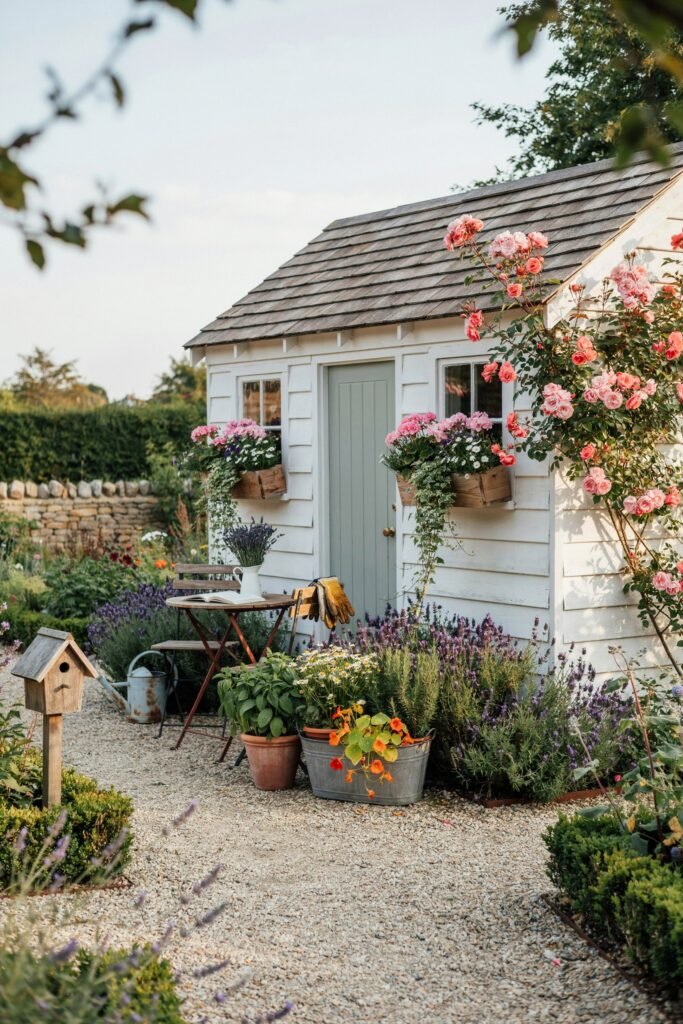
A she shed doesn’t have to be dedicated to gardening.
You can create a little outdoor tea retreat surrounded by flowers.
This idea is perfect if you want a space where you can sit quietly, read, write, or enjoy a peaceful afternoon.
Best Plant Pairing
Lavender + roses + chamomile + mint
The combination creates a soft, fragrant garden surrounding your sitting area.
How to Create the Look
Place a small bistro table and two chairs outside the shed.
Create a curved pathway leading toward the entrance.
Plant lavender along the pathway and roses near the shed.
Chamomile can provide a delicate, daisy-like appearance, while mint is best kept in containers because it can spread aggressively.
Add a small shelf or table near the entrance for a teapot, garden books, or decorative pots.
Create a Comfortable Atmosphere
Consider adding:
- Outdoor cushions
- A small rug suitable for outdoor use
- Soft lighting
- A wooden side table
- A simple blanket basket
- Hanging plants
The goal is to make the space feel like an extension of your home.
9. Butterfly Garden She Shed
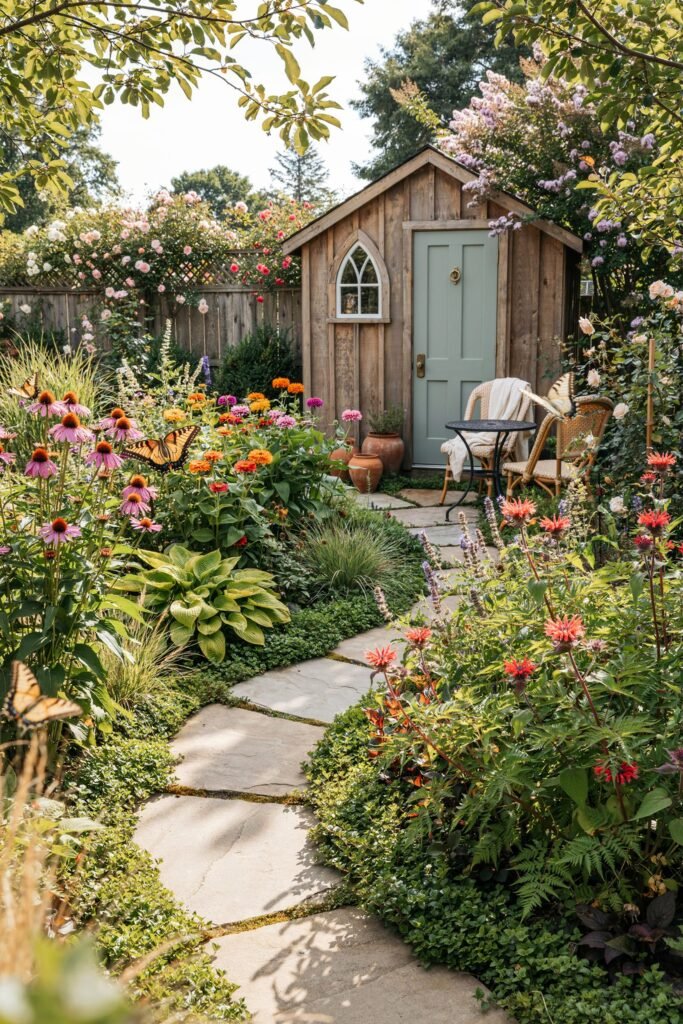
A she shed surrounded by butterflies can feel magical.
If you want your garden retreat to attract pollinators, choose plants that provide nectar and, where appropriate, host resources for butterfly species.
Best Plant Pairing
Butterfly bush + coneflower + bee balm + zinnias
These plants can create a colorful pollinator-friendly planting scheme.
How to Create the Look
Place the taller plants toward the back of the bed and shorter plants toward the front.
Use several flowering plants rather than relying on one species.
This can help provide blooms across a longer portion of the growing season.
Add a shallow water source designed safely for garden wildlife, and avoid using pesticides that could harm beneficial insects.
Make It Kid-Friendly
If children spend time in the garden, consider adding a small educational sign identifying common butterflies and pollinators.
This turns the she shed garden into a beautiful learning space as well.
10. Cottage Rose and Clematis Retreat
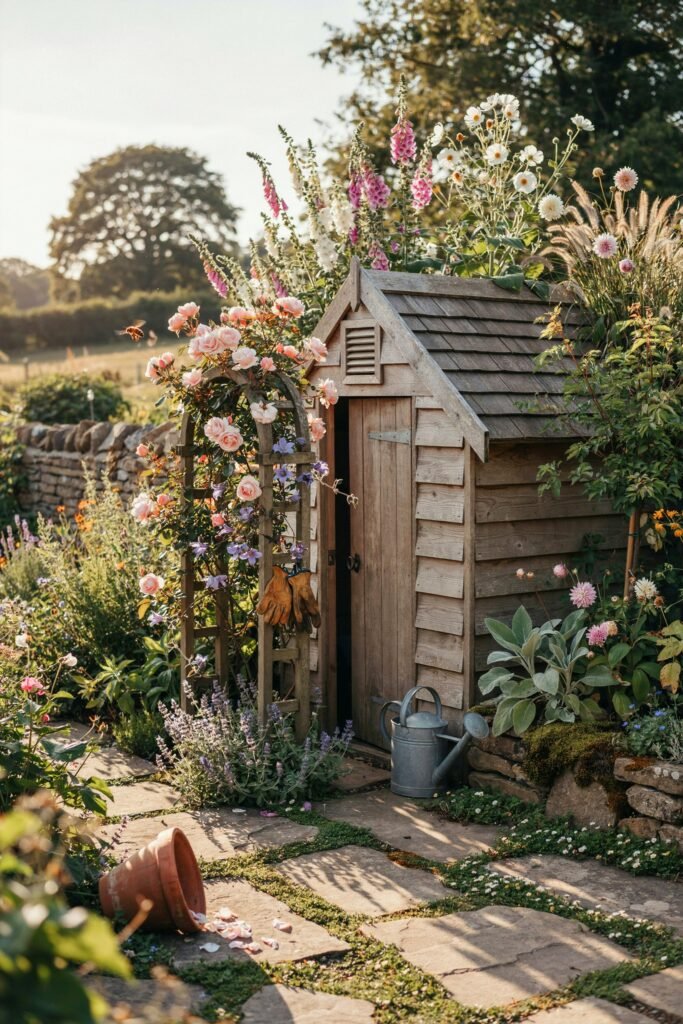
For a more dramatic cottage garden design, combine roses with clematis.
These climbing plants can create a beautiful vertical display when grown on suitable supports.
Best Plant Pairing
Climbing rose + clematis + catmint + creeping thyme
The climbing plants provide height, while catmint and creeping thyme create lower layers.
How to Create the Look
Install a sturdy trellis or arch beside the shed.
Train the rose and clematis on separate supports or carefully plan their placement so neither overwhelms the other.
Plant catmint around the base.
Use creeping thyme near the pathway where conditions are appropriate.
The result is a layered garden that uses vertical and horizontal space.
Important Tip
Don’t place a climbing plant directly against a structure without considering airflow and maintenance.
A sturdy trellis with appropriate spacing can make training and pruning much easier.
Also check the mature size of both plants before planting.
11. Autumn Cottage She Shed
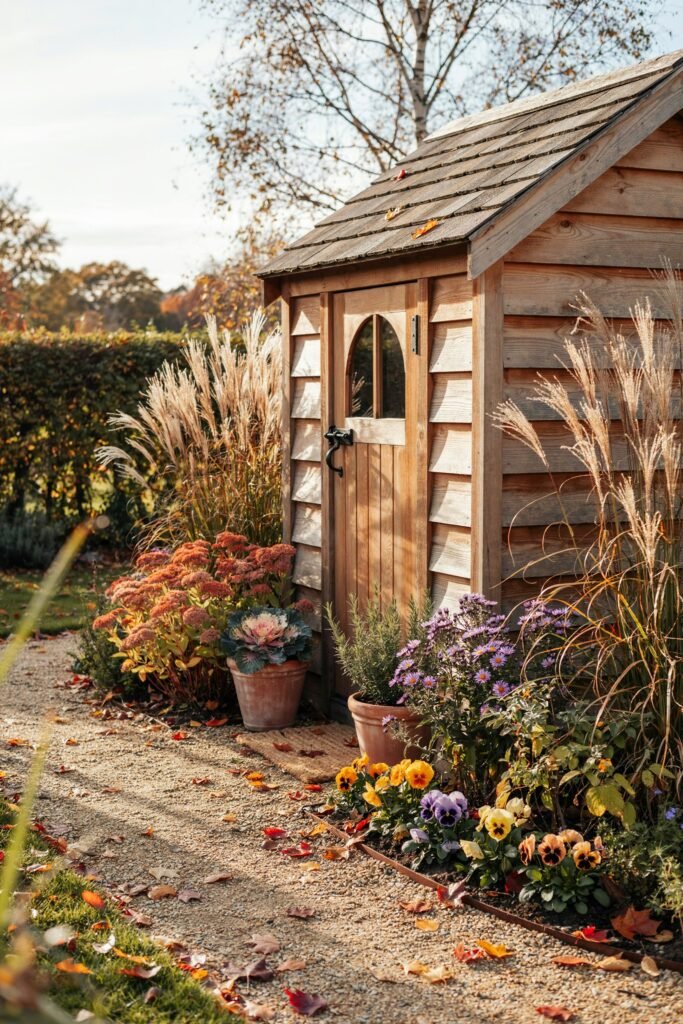
Your she shed doesn’t have to look beautiful only during summer.
With the right plant choices, you can create a cottage garden that remains attractive as the seasons change.
Best Plant Pairing
Ornamental grasses + sedum + asters + pansies
These plants can provide different forms of seasonal interest.
Asters bring late-season flowers, sedum provides substantial flower heads, ornamental grasses add movement, and pansies can provide cool-season color where they grow well.
How to Create the Look
Choose a shed in a warm neutral shade such as cream, soft brown, or muted green.
Create a border around the building using grasses as structural plants.
Add sedum in sunny areas.
Use asters to introduce late-season color.
Add seasonal containers near the entrance for additional interest.
Don’t Forget Containers
Containers are one of the easiest ways to refresh your she shed garden throughout the year.
You can replace summer flowers with autumn combinations without redesigning the entire garden.
How to Choose the Right Plants for Your She Shed
Before buying plants, spend a little time observing the space.
This simple step can prevent many gardening problems later.
1. Watch the Sunlight
Spend a day observing how sunlight moves across the garden.
Some areas may receive full sun while others remain shaded by the shed or nearby trees.
Choose plants according to the conditions they actually receive.
2. Consider Mature Plant Size
A tiny plant at the garden center can become surprisingly large.
Check:
- Mature height
- Mature width
- Root spread
- Growth habit
- Recommended spacing
Don’t plant a large shrub directly beside a small shed simply because it looks attractive in a nursery container.
3. Think About Watering
Group plants with similar watering requirements together.
This makes maintenance much easier.
Plants that prefer dry conditions generally shouldn’t be planted in the same bed as plants that require consistently moist soil.
4. Think About Your Climate
Plant hardiness varies by location.
Before purchasing perennials, check whether they are suitable for your growing zone.
If you live in a warm climate, you may also need to consider heat tolerance and whether a plant can handle your local humidity and rainfall patterns.
5. Don’t Forget Soil
Good soil is the foundation of a healthy cottage garden.
Before planting, assess your soil and improve it where appropriate with organic matter.
Avoid assuming that every plant will thrive in the same soil.
How to Arrange Plants Around a She Shed
A simple planting formula can make your garden look much more intentional.
Tall Plants
Place taller plants toward the back of a border or beside the structure.
Examples include:
- Hollyhocks
- Foxgloves
- Delphiniums
- Ornamental grasses
- Tall coneflowers
Medium Plants
Use medium-height plants to transition between tall plants and edging plants.
Examples include:
- Roses
- Salvia
- Lavender
- Asters
- Yarrow
Low-Growing Plants
Place shorter plants near paths and the front of beds.
Examples include:
- Thyme
- Alyssum
- Creeping phlox
- Low-growing catmint
- Certain sedums
This layered approach helps your garden feel full without every plant competing for attention.
Creating a Cottage Garden Path to Your She Shed
The path leading to the she shed can be just as important as the shed itself.
Instead of creating a perfectly straight walkway, consider a gentle curve.
A curved path creates anticipation because the destination isn’t immediately revealed.
Cottage-Friendly Path Materials
You could use:
- Gravel
- Brick
- Natural stone
- Stepping stones
- Bark or wood-chip paths where suitable
Plant low-growing flowers along the edges.
Lavender, thyme, alyssum, and other suitable edging plants can soften the transition between pathway and flower bed.
How to Make a Small She Shed Feel Larger
You don’t need a huge garden to create a beautiful retreat.
In fact, a small she shed can feel especially cozy.
Use Vertical Gardening
Grow climbing plants upward rather than taking up valuable ground space.
Trellises, arches, and wall-mounted planters can help.
Use Containers
Containers allow you to add flowers wherever you need them.
Place them beside:
- Doors
- Windows
- Steps
- Benches
- Pathways
Keep the Pathway Open
Avoid planting so densely that the entrance becomes difficult to reach.
Your garden should feel abundant but still functional.
Create One Main Focal Point
A beautiful doorway, rose-covered arch, window box, or small seating area can become the visual centerpiece.
You don’t need every corner to compete for attention.
Cottage She Shed Plants for Different Garden Conditions
Not every she shed will have the same growing conditions.
Here is a simple way to think about your planting choices.
For Sunny Locations
Consider plants such as:
- Lavender
- Roses
- Coneflowers
- Yarrow
- Salvia
- Thyme
- Zinnias
Always check the specific needs of the variety you choose.
For Part-Shade Locations
Consider:
- Hostas
- Ferns
- Hydrangeas
- Foxgloves
- Astilbe
Again, suitability depends on your local climate and growing conditions.
For Containers
Consider:
- Herbs
- Lavender
- Compact roses
- Seasonal flowers
- Small ornamental grasses
- Compact perennials
Containers are particularly useful if your soil is difficult or you want flexibility.
How to Keep Your Cottage She Shed Garden Looking Beautiful
A cottage garden may look relaxed, but it still benefits from regular maintenance.
Water Wisely
New plants usually require more attention while establishing their roots.
Water according to the plant’s needs and your local weather.
Avoid automatically watering every plant on the same schedule.
Mulch the Beds
A suitable layer of mulch can help conserve soil moisture and reduce weed growth.
Keep mulch away from direct contact with the base of woody plants.
Deadhead Flowers
Removing spent flowers can encourage continued flowering in many plants and keep the garden looking tidy.
Prune at the Right Time
Different plants require pruning at different times.
Some flowering shrubs bloom on old wood, while others bloom on new growth.
Research each plant before making major pruning cuts.
Keep Paths Clear
A beautiful garden becomes much easier to enjoy when pathways remain accessible.
Trim back plants that begin spreading into walking areas.
Small Details That Make a She Shed Feel Magical
Once the major planting is finished, you can add small decorative touches.
Add Window Boxes
Window boxes are one of the easiest ways to make a plain shed feel more like a cottage.
Use flowers that suit the light conditions around the window.
Hang Baskets
Hanging baskets can add another layer of planting without taking up ground space.
Use Vintage Garden Furniture
A small wooden chair, bench, or bistro table can make the area feel lived-in.
Add a Trellis
Even if you don’t have a climbing plant yet, a trellis can provide structure and give you an opportunity to add one later.
Use Garden Art Carefully
A small birdhouse, watering can, garden sign, or decorative pot can add personality.
Try not to overcrowd the garden.
The plants should remain the stars.
A Simple Planting Formula for Your Own She Shed
If you’re unsure where to begin, try this simple formula.
Step 1: Choose Your Shed Style
Decide whether you want:
- Rustic
- Romantic
- Modern cottage
- Vintage
- Natural wood
- Painted cottage
Step 2: Pick a Main Plant
Choose one plant that will define the garden.
For example:
Rose garden: climbing rose
Herb garden: lavender
Shade garden: hydrangea
Pollinator garden: coneflower
Step 3: Add Two or Three Supporting Plants
Choose plants that complement your main plant in height, texture, color, and growing requirements.
Step 4: Add an Edging Plant
Use a low-growing plant along pathways and the front of the bed.
Step 5: Add Containers
Use pots around the entrance to bring additional seasonal color.
Step 6: Finish With a Seating Area
Even one small chair can transform the space from a garden structure into a true retreat.
Final Thoughts
Creating a cottage garden she shed doesn’t require a huge budget or a massive backyard. What matters most is creating a space that feels welcoming and reflects the way you want to use your garden.
I love the idea of combining a simple little shed with plants that soften its edges and make it feel as though it has always belonged in the garden.
A climbing rose can turn an ordinary doorway into a romantic entrance, lavender can create a peaceful pathway, and a collection of herbs can make a small potting shed both beautiful and useful.
The best part is that you don’t have to copy one particular design.
Start with the plants you genuinely love, consider the sunlight and soil you have, and build your garden around those conditions.
Whether you choose a rose-covered retreat, a hidden secret garden, a practical herb potting shed, or a colorful pollinator haven, your she shed can become one of the most enjoyable corners of your outdoor space.
And don’t worry about making everything perfect.
Cottage gardens are at their most beautiful when they feel a little relaxed, a little abundant, and completely personal.
So choose a cozy shed, plant a few flowers you adore, create a path you enjoy walking down, and give yourself a little garden corner where you can pause, breathe, and enjoy everything you’ve grown.
