
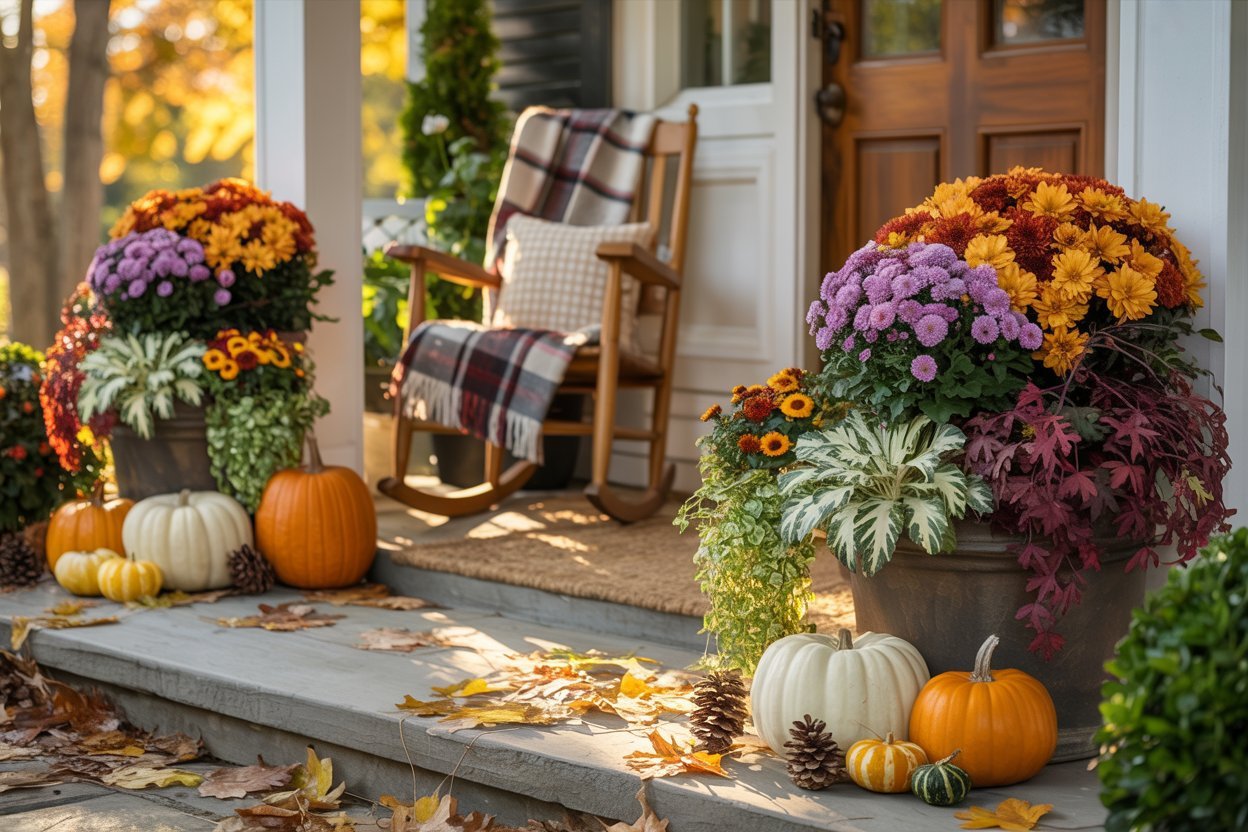

As the summer heat begins to fade and the air turns crisp, my favorite gardening season quietly arrives.
Fall is the perfect time to refresh tired containers with rich colors, interesting textures, and plants that thrive in cooler temperatures.
Instead of letting your pots sit empty after summer flowers fade, you can transform them into beautiful seasonal displays that brighten your porch, patio, balcony, or front entrance for months.
Whether you have a single container or an entire collection, a thoughtfully designed fall container garden adds warmth and charm to your outdoor space while requiring surprisingly little maintenance.
With the right plants, containers, and simple design tips, creating a gorgeous autumn display is easier than you might think.
Why Fall Container Gardens Are Worth Planting
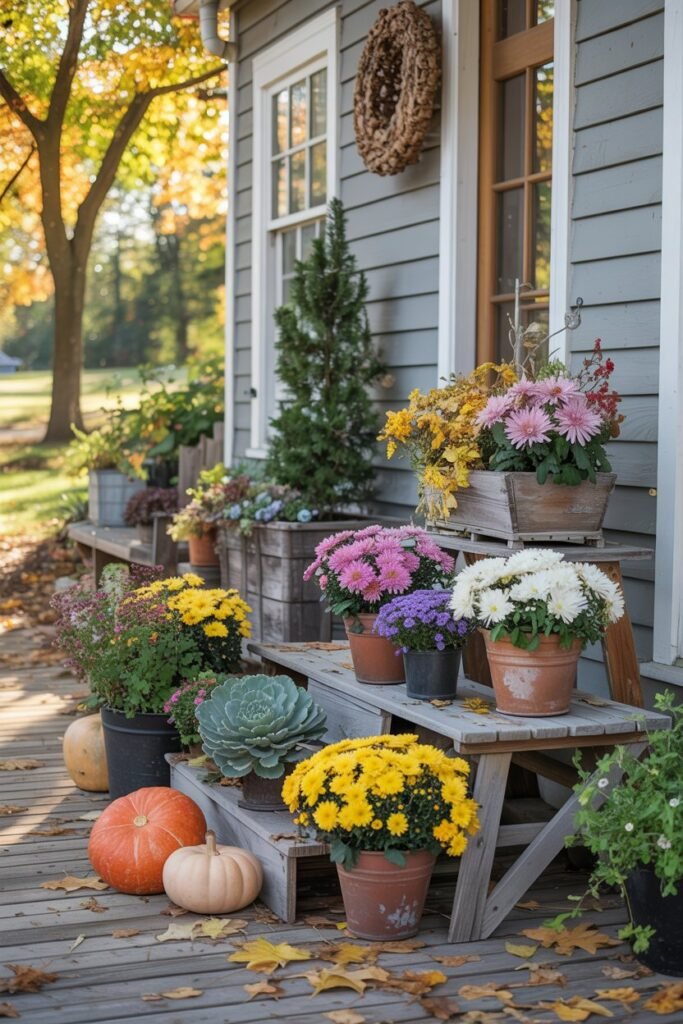
Many gardeners think the growing season ends when summer flowers begin to fade, but that’s far from true. In fact, fall offers some of the best gardening conditions of the entire year.
Cooler temperatures reduce plant stress, making many flowers and foliage plants look healthier and more vibrant than they did during the hottest summer months. Autumn also brings rich seasonal colors that simply cannot be replicated during spring or summer.
A fall container garden can:
- Refresh tired patios and porches after summer.
- Welcome guests with warm seasonal colors.
- Extend your gardening season well into late autumn.
- Add curb appeal to your home.
- Provide seasonal interest until winter decorations take over.
- Allow you to experiment with textures, berries, grasses, pumpkins, and ornamental vegetables.
Unlike large garden beds, containers are flexible. You can move them wherever they look best, rearrange them throughout the season, and even swap plants as the weather changes.
A beautiful autumn planter becomes a centerpiece that celebrates the changing season every single day.
Everything You Need for a Beautiful Fall Container Garden
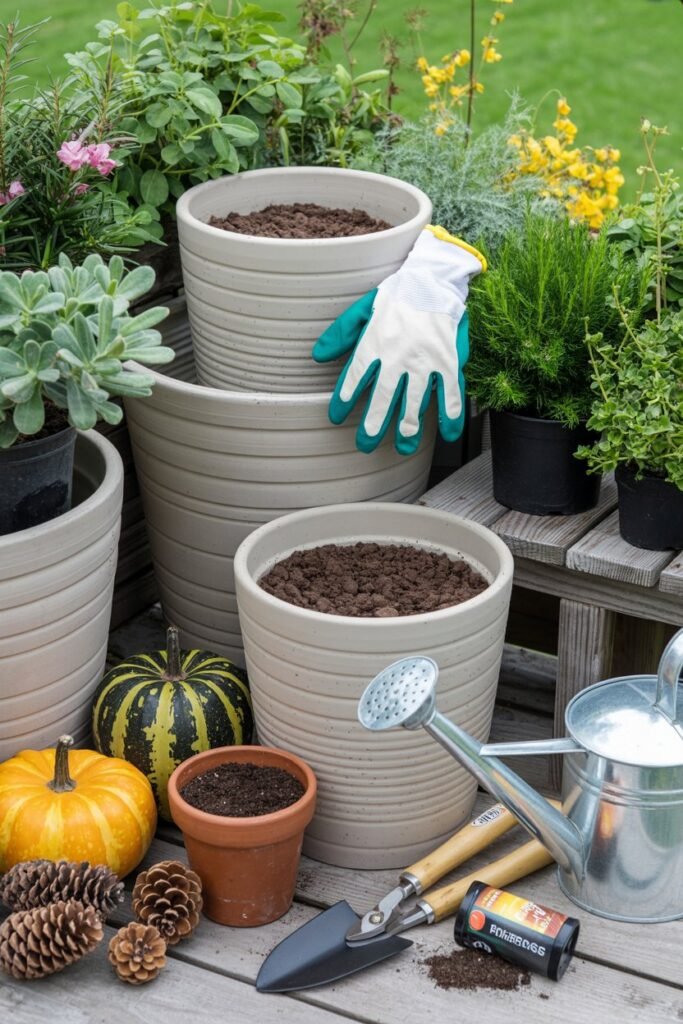
One of the reasons I love fall container gardening is that you don’t need an elaborate setup. A few quality supplies and the right combination of plants can create a display that looks professionally designed.
Here’s what you’ll want to gather before planting.
1. The Right Container
Your container serves as the foundation of the entire display. Nearly any pot can work, but larger containers often make the biggest impact because they allow room for multiple plants and hold moisture longer.
Good container choices include:
- Ceramic pots
- Terracotta planters
- Wooden boxes
- Metal tubs
- Whiskey barrels
- Resin containers
- Concrete planters
- Woven baskets with liners
Choose containers with drainage holes to prevent waterlogged roots. If your favorite decorative pot doesn’t have drainage, use it as a cachepot by placing a nursery pot inside.
Size Matters
Small pots dry out quickly during sunny fall afternoons.
For mixed arrangements, choose containers that are:
- At least 12 inches wide
- 12–18 inches deep
- Large enough to support one focal plant and several companion plants
The bigger the container, the less often you’ll need to water.
2. High-Quality Potting Mix
Never use garden soil for container gardens.
Garden soil becomes compacted inside pots, limiting airflow and making drainage poor.
Instead, use a premium potting mix that contains:
- Peat moss or coconut coir
- Perlite
- Vermiculite
- Compost
- Slow-release nutrients
Fresh potting mix encourages stronger root growth and helps plants stay healthier throughout the season.
3. Slow-Release Fertilizer
Although many fall plants aren’t heavy feeders, adding a balanced slow-release fertilizer helps them establish quickly.
Look for fertilizers with balanced numbers such as:
- 10-10-10
- 14-14-14
Apply according to the package directions when planting.
4. Gardening Tools
You won’t need much.
Basic supplies include:
- Hand trowel
- Gardening gloves
- Watering can
- Small pruning shears
- Bucket for mixing soil
- Garden scissors
- Soft cloth for cleaning containers
Choosing the Perfect Plants
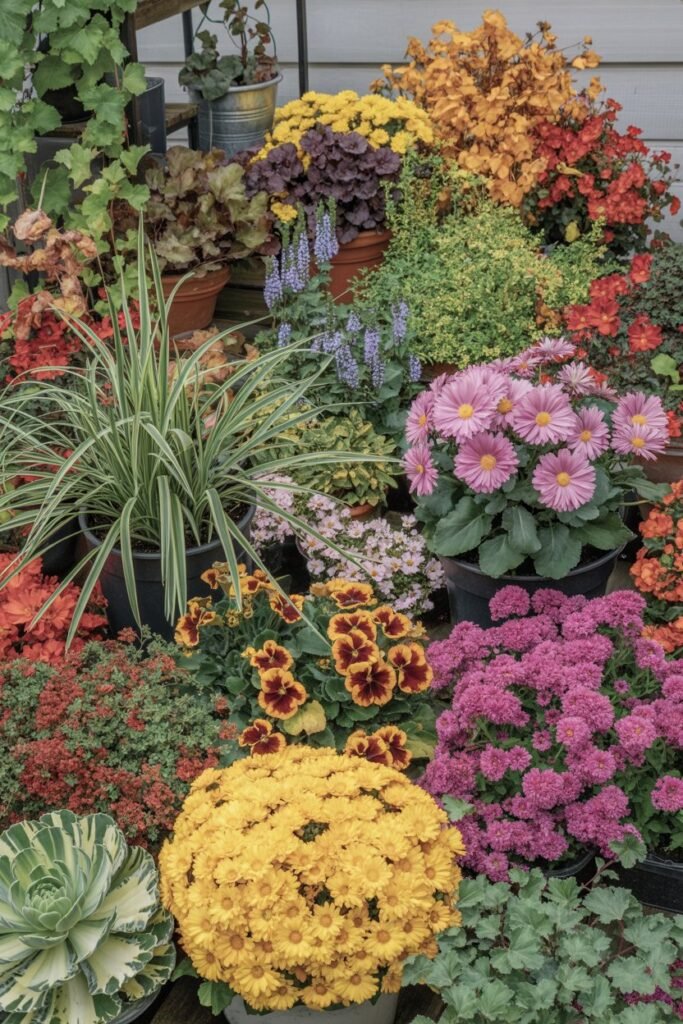
The secret to an eye-catching fall planter isn’t simply choosing colorful flowers. It’s creating layers of interest using foliage, flowers, grasses, berries, and trailing plants.
Professional designers often follow the “Thriller, Filler, Spiller” method.
Thriller Plants
These provide height and create a focal point.
Excellent choices include:
- Ornamental grasses
- Purple fountain grass
- Cordyline
- Millet
- Upright sedge
- Small evergreen shrubs
- Dwarf conifers
Place thrillers toward the center or back of the container.
Filler Plants
Fillers add fullness and connect the arrangement together.
Great fillers include:
- Chrysanthemums
- Asters
- Dianthus
- Celosia
- Ornamental kale
- Ornamental cabbage
- Heuchera
- Dusty miller
Mix different leaf shapes and flower colors for depth.
Spiller Plants
Spillers soften the edges by cascading over the sides.
Popular spillers include:
- Creeping Jenny
- Ivy
- Sweet potato vine
- Trailing pansies
- Lysimachia
- Trailing rosemary
- Bacopa (in mild climates)
The trailing plants create movement and make the arrangement look lush.
The Best Flowers for Fall Containers
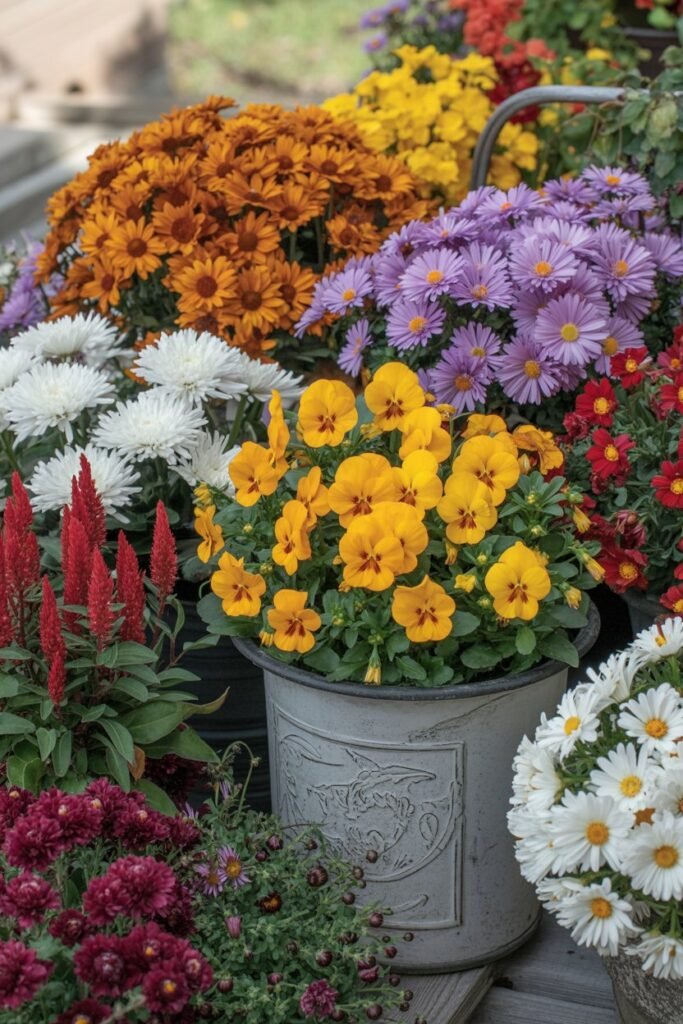
Chrysanthemums
Often called mums, these are the stars of autumn.
They bloom for weeks in shades of:
- Gold
- Burgundy
- Orange
- Bronze
- White
- Pink
- Purple
- Deep red
Choose plants with plenty of unopened buds for the longest display.
Pansies
Pansies thrive once temperatures cool.
Unlike many summer flowers, they often bloom continuously until a hard freeze and sometimes survive through winter in milder climates.
Their cheerful faces instantly brighten any planter.
Violas
Violas resemble miniature pansies but produce many more flowers.
They’re excellent for filling gaps and continue blooming through chilly weather.
Asters
Asters produce masses of daisy-like blooms that attract bees and butterflies during the final weeks of the growing season.
Their purple, lavender, pink, and white flowers pair beautifully with ornamental grasses.
Celosia
Celosia adds striking texture with its feathery or crested flower heads.
Its fiery shades of red, orange, yellow, and magenta make it a perfect fit for autumn arrangements.
Beautiful Foliage Plants That Shine in Fall
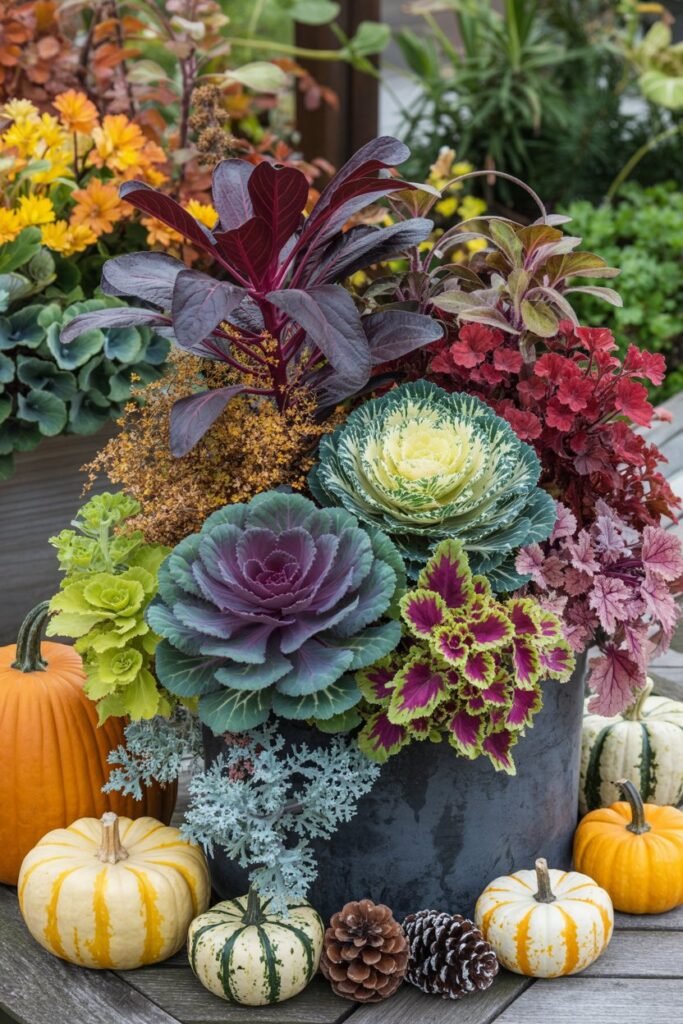
Flowers aren’t the only stars of an autumn container.
Colorful foliage often lasts even longer than blooms.
Some favorites include:
Heuchera (Coral Bells)
Available in stunning foliage colors like:
- Plum
- Lime green
- Amber
- Chocolate
- Bronze
- Silver
- Deep burgundy
The leaves stay attractive all season.
Ornamental Kale
As temperatures drop, ornamental kale develops richer shades of purple, pink, white, and green.
Its large ruffled leaves create incredible texture.
Ornamental Cabbage
Very similar to kale but with smoother leaves, ornamental cabbage makes containers look full and luxurious.
Dusty Miller
Its soft silver foliage brightens darker autumn color palettes and complements almost every flower.
Coleus
Many coleus varieties continue looking fantastic well into autumn, especially in warmer regions.
Their colorful leaves often outshine flowers.
Add Texture with Ornamental Grasses
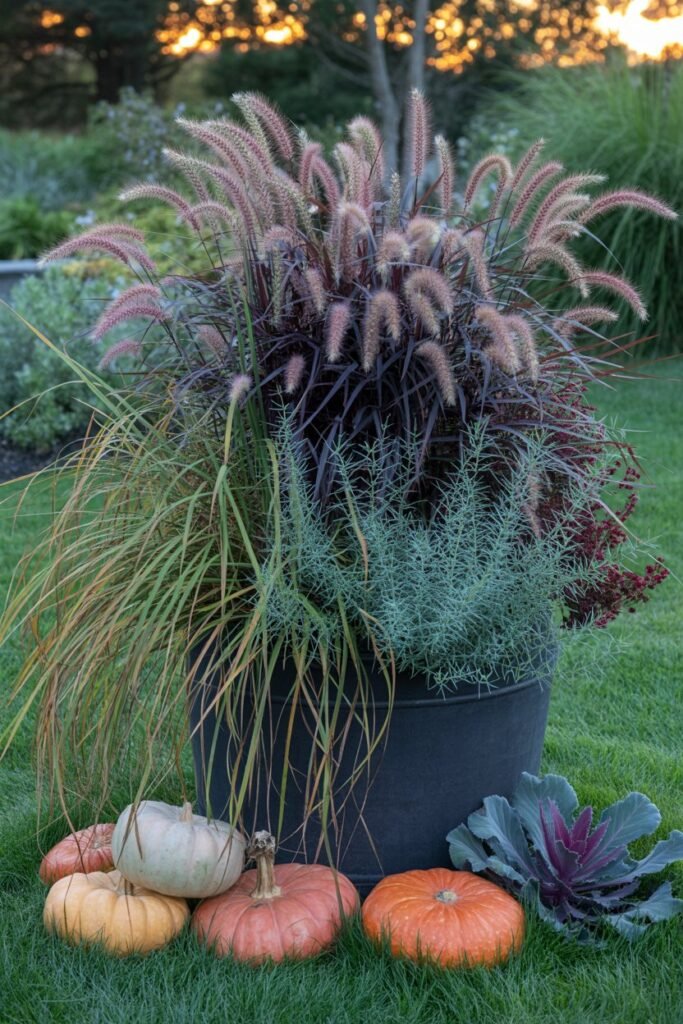
Grasses make containers feel alive because they sway with every breeze.
Popular options include:
- Purple fountain grass
- Japanese forest grass
- Blue fescue
- Carex sedge
- Little bluestem
- Switchgrass
Their seed heads remain attractive well into winter.
Include Seasonal Accents
One thing that makes fall containers so charming is that they can include decorative natural elements alongside living plants.
Consider adding:
- Mini pumpkins
- Gourds
- Pinecones
- Birch branches
- Curly willow stems
- Corn stalk pieces
- Colorful leaves
- Decorative moss
- Dried wheat
- Seed pods
- Cotton stems
- Lanterns
These accents instantly create an inviting autumn feel without overwhelming the plants.
Choosing the Perfect Color Palette
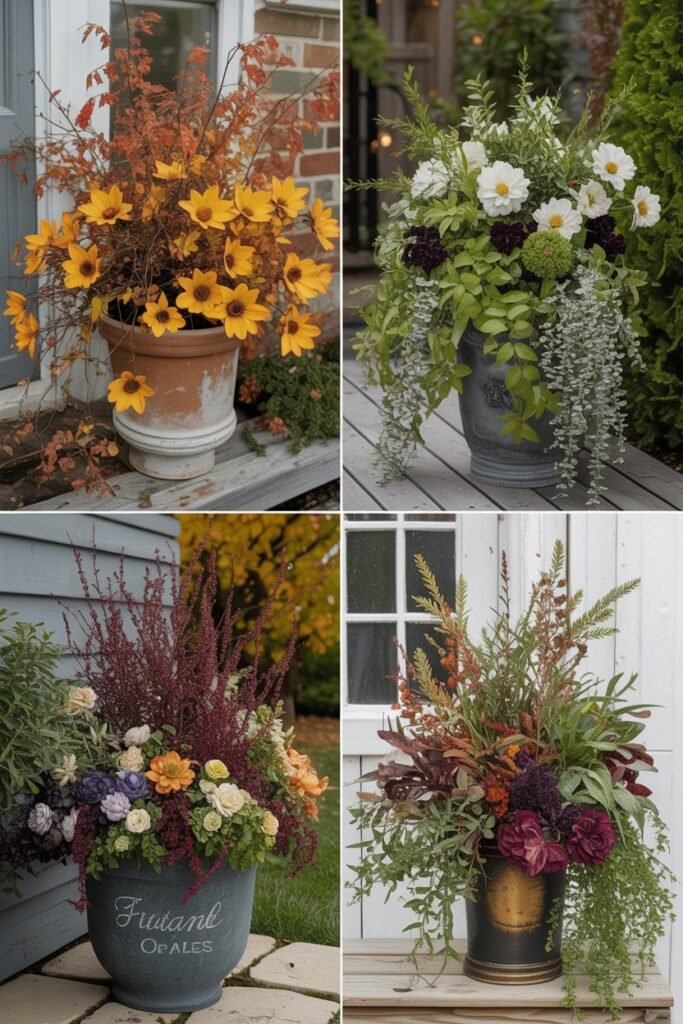
A cohesive color scheme makes any planter look professionally styled.
Popular autumn combinations include:
Warm Harvest
- Orange mums
- Yellow pansies
- Bronze grasses
- Mini pumpkins
Elegant Neutral
- White mums
- Silver dusty miller
- Green ornamental cabbage
- White pumpkins
Deep Jewel Tones
- Purple asters
- Burgundy heuchera
- Dark ornamental kale
- Black ornamental peppers
Rustic Woodland
- Bronze sedges
- Moss
- Pinecones
- Birch branches
- Deep green evergreens
Choosing two to four main colors keeps the arrangement balanced instead of busy.
How to Design a Stunning Fall Container Garden
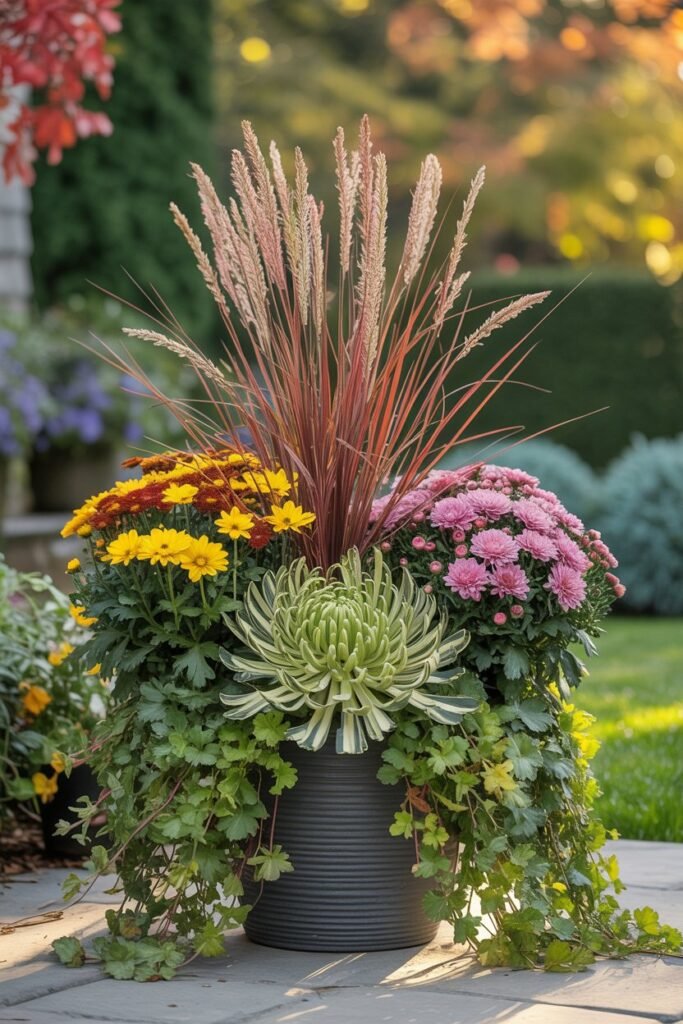
Designing a fall container garden is about more than simply placing plants into a pot.
A well-planned arrangement combines height, fullness, texture, and color so that every plant complements the others. One of the easiest ways to achieve this is by following a simple design formula.
Follow the “Thriller, Filler, Spiller” Rule
Professional gardeners often use this method because it creates a balanced arrangement from every angle.
Start with the Thriller
Choose one tall, eye-catching plant to act as the focal point.
Good thriller options include:
- Purple fountain grass
- Upright ornamental millet
- Cordyline
- Dwarf evergreen shrubs
- Tall sedges
Place the thriller in the center of a round container or toward the back if your planter will sit against a wall.
Add the Fillers
Fillers surround the thriller and create a full, lush appearance.
Some beautiful fillers include:
- Chrysanthemums
- Asters
- Ornamental kale
- Heuchera
- Violas
- Celosia
Use odd numbers of plants for a more natural-looking design.
Finish with the Spillers
Spillers soften the edges and make the arrangement feel complete.
Popular spillers include:
- Creeping Jenny
- Ivy
- Sweet potato vine
- Trailing pansies
- Bacopa (where temperatures allow)
Allow these plants to naturally drape over the rim of the container.
Step-by-Step: How to Plant a Fall Container Garden
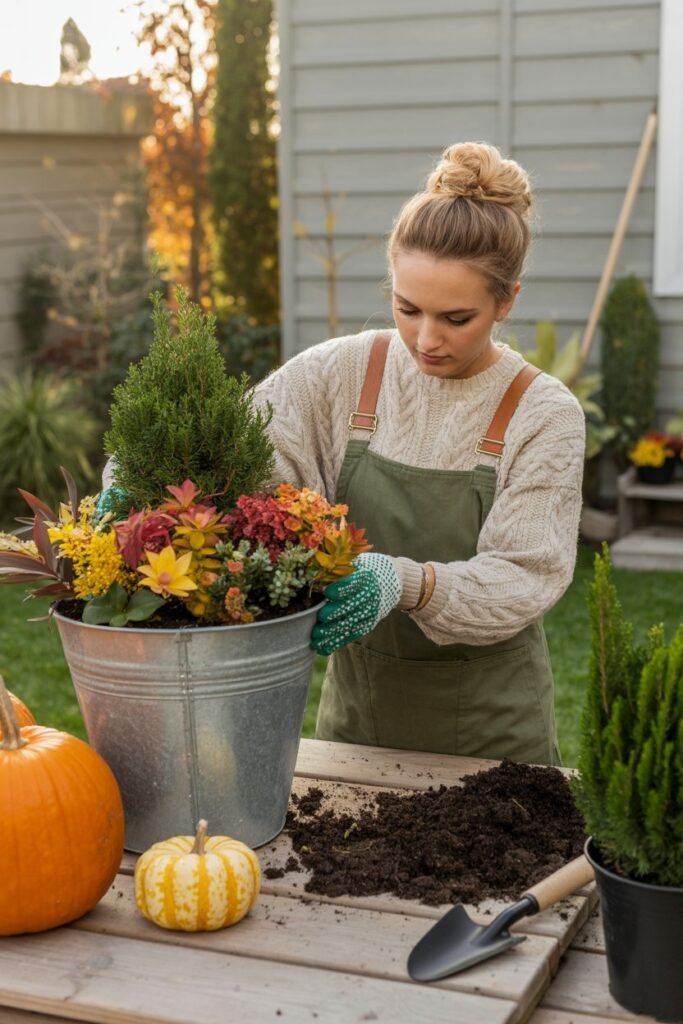
Even beginners can create a beautiful display by following a few simple steps.
Step 1: Clean Your Container
If you’re reusing a summer planter, empty out old soil and remove any dead roots or debris.
Wash the container with a solution of one part bleach to nine parts water, then rinse well. This helps reduce the chance of diseases carrying over to your new plants.
Step 2: Add Fresh Potting Mix
Fill the container about two-thirds full with fresh, high-quality potting mix.
Lightly moisten the soil before planting so it settles evenly.
Step 3: Arrange the Plants Before Planting
Place the nursery pots on top of the soil without removing them first.
Move them around until you’re happy with the layout. This allows you to experiment with spacing and balance before committing.
Step 4: Plant Carefully
Remove each plant from its nursery pot, gently loosen any circling roots, and place it into the container at the same depth it was growing before.
Fill around the roots with potting mix and gently firm the soil.
Step 5: Water Thoroughly
Water deeply until it drains from the bottom of the container.
This helps eliminate air pockets and encourages roots to settle into their new home.
Step 6: Add Decorative Touches
Finish your planter with seasonal accents such as:
- Mini pumpkins
- Pinecones
- Decorative branches
- Moss
- Small gourds
These simple additions instantly give your container an autumn-inspired finish.
How to Care for Fall Container Gardens
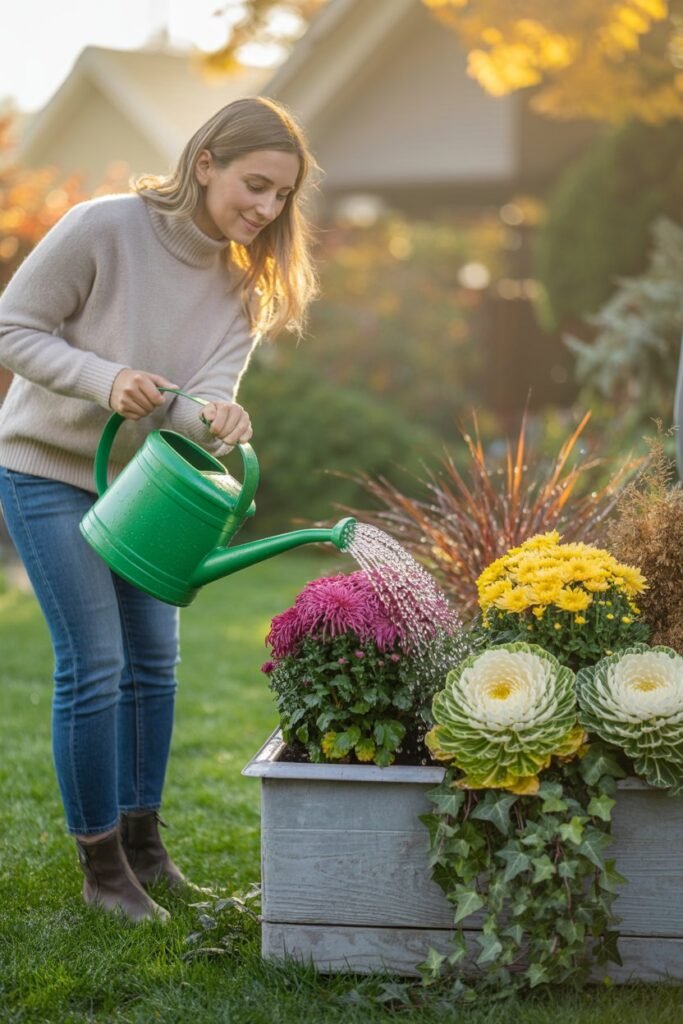
One of the best things about fall container gardens is that they usually require less maintenance than summer planters. Cooler temperatures reduce stress on plants and help the soil stay moist longer.
Still, a little routine care will keep your containers looking their best.
Water When the Top Inch of Soil Feels Dry
Even though the weather is cooler, container plants still need regular watering.
Check the soil every few days by inserting your finger about an inch deep. If it feels dry, water thoroughly.
Keep in mind that:
- Windy days dry containers faster.
- Large containers hold moisture longer than small pots.
- Plants in full sun need more frequent watering.
Avoid watering on a strict schedule. Let the soil guide you instead.
Remove Spent Flowers
Deadheading encourages many flowering plants, such as mums and pansies, to continue producing blooms.
Trim away:
- Faded flowers
- Yellow leaves
- Broken stems
- Diseased foliage
Regular grooming keeps your planter looking fresh and tidy.
Fertilize Lightly
If you used a slow-release fertilizer at planting time, additional feeding is often unnecessary.
For containers that will remain attractive for several months, you can apply a diluted liquid fertilizer once every three to four weeks.
Avoid overfeeding, as this may encourage soft growth that is more vulnerable to cold weather.
Watch for Early Frost
Many fall plants tolerate light frosts, and some even become more colorful after cool nights.
However, if a hard freeze is expected, you can protect sensitive plants by:
- Moving portable containers to a sheltered area.
- Covering them overnight with frost cloth.
- Placing them near the house where they receive some protection from cold winds.
The Best Locations for Fall Containers
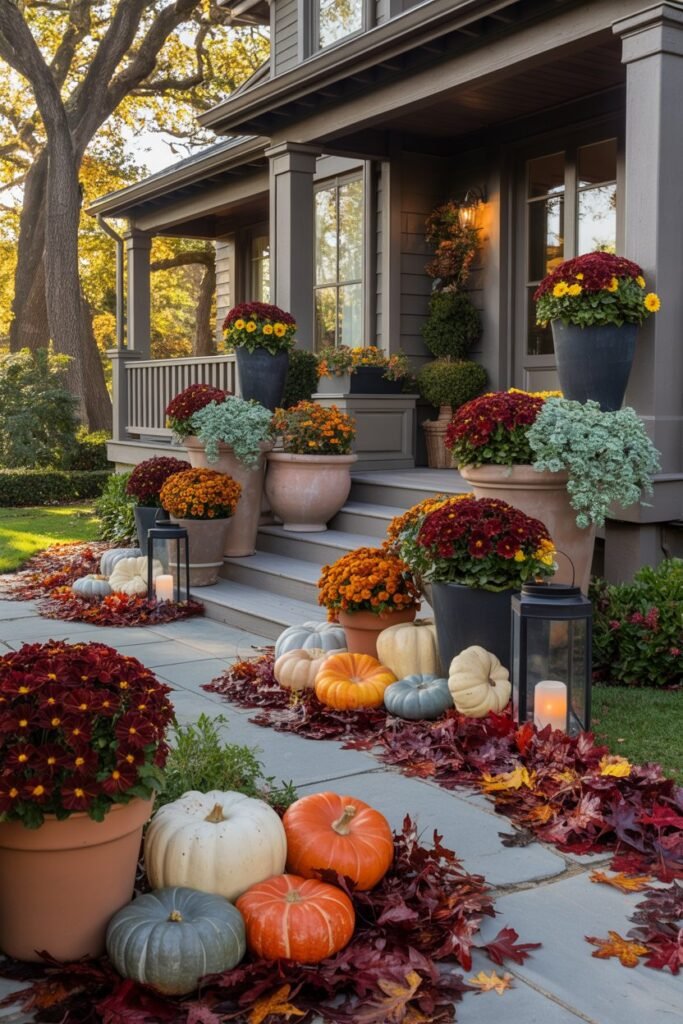
Placement makes a huge difference in how much your containers stand out.
Consider displaying them in these areas:
Front Porch
Welcome guests with matching planters on either side of your front door.
Pair them with a seasonal wreath for a warm, inviting entrance.
Front Steps
Arrange containers of varying heights along your steps for a layered look.
Patio
Create cozy seating areas by placing colorful planters around outdoor furniture.
Balcony
Even a small balcony can feel festive with one or two thoughtfully planted containers.
Garden Path
Position containers along walkways to guide visitors through your landscape.
Deck
Large planters filled with ornamental grasses and mums add color without taking up much space.
Fall Container Garden Ideas to Inspire You
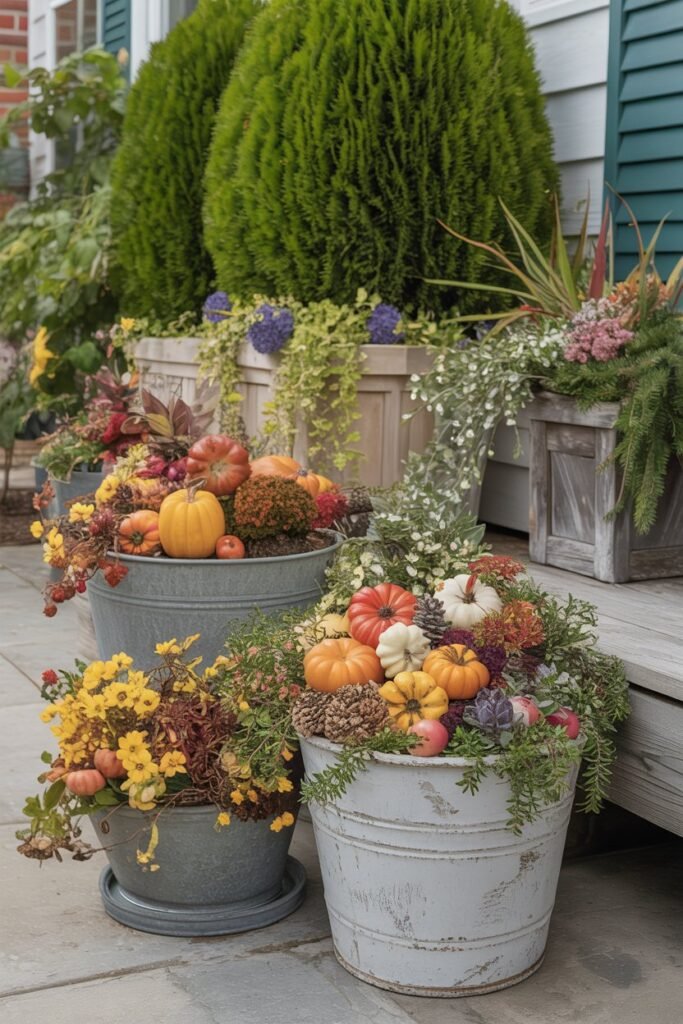
If you’re not sure where to start, these combinations are easy to recreate and always look beautiful.
Classic Harvest Planter
- Orange chrysanthemums
- Purple fountain grass
- Ornamental cabbage
- Creeping Jenny
- Mini pumpkins
Perfect for a traditional autumn look.
Elegant Neutral Arrangement
- White chrysanthemums
- Dusty miller
- Green ornamental kale
- White pumpkins
- Curly willow branches
Ideal for modern homes and minimalist gardens.
Cottage Garden Style
- Purple asters
- Pink pansies
- Heuchera
- Ivy
- Small gourds
A soft, romantic arrangement full of charm.
Rustic Farmhouse Display
- Bronze sedges
- Celosia
- Ornamental peppers
- Pinecones
- Birch branches
This combination brings cozy farmhouse character to any porch.
Evergreen Fall Planter
- Dwarf spruce
- Heuchera
- Ornamental cabbage
- Creeping Jenny
A long-lasting arrangement that transitions beautifully into winter with only a few seasonal updates.
Common Fall Container Garden Mistakes to Avoid
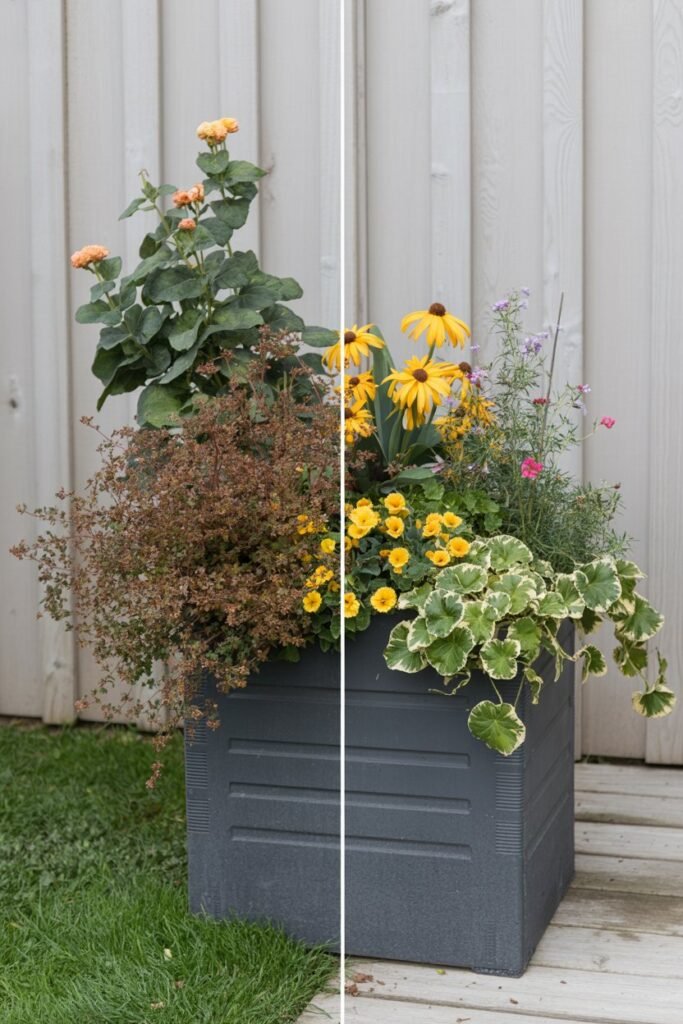
Even experienced gardeners make a few mistakes when planting autumn containers. Fortunately, they’re easy to avoid once you know what to watch for.
1. Choosing Plants with Different Growing Needs
It’s tempting to combine every beautiful plant you find at the garden center, but not all plants thrive under the same conditions.
For the healthiest container, group plants that have similar needs for:
- Sunlight
- Water
- Soil moisture
- Temperature tolerance
For example, shade-loving plants may struggle if they’re planted with flowers that require full sun.
2. Overcrowding the Container
A full planter looks beautiful, but packing too many plants into one pot can reduce airflow and increase competition for water and nutrients.
Leave enough room for each plant to grow. By mid-fall, your container will naturally fill out into a lush display.
3. Forgetting About Height
A container made up entirely of low-growing plants can look flat.
Instead, include:
- A tall focal plant
- Medium-height fillers
- Trailing plants
This layered approach creates depth and gives your arrangement a professionally designed look.
4. Ignoring Drainage
Standing water is one of the quickest ways to damage container plants.
Always make sure your container has drainage holes, and never allow water to collect in saucers for long periods.
Healthy roots need both moisture and oxygen.
5. Watering Too Much
Because temperatures are cooler in fall, soil stays moist longer than it does in summer.
Before watering, check the soil with your finger. If the top inch still feels damp, wait another day or two.
Overwatering can lead to root rot and yellowing leaves.
6. Using Only Flowers
Flowers provide beautiful color, but foliage often lasts much longer.
A balanced fall container should include:
- Flowering plants
- Colorful foliage
- Ornamental grasses
- Trailing plants
- Seasonal accents
The variety of textures makes the arrangement much more interesting.
7. Waiting Too Long to Plant
Don’t wait until frost has already arrived.
Early fall is the ideal time to plant because temperatures are still warm enough for roots to establish while the cooler weather helps reduce transplant stress.
Planting earlier also gives you a longer season to enjoy your containers.
How to Transition Your Fall Containers into Winter
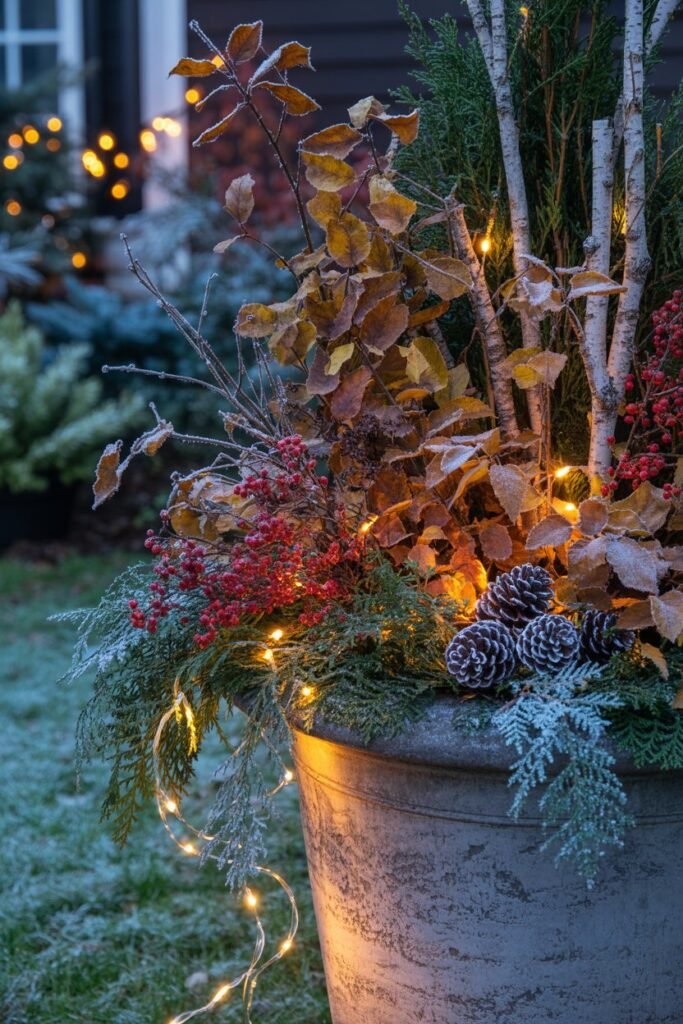
One of my favorite things about fall containers is how easily they can evolve into winter displays with just a few simple updates.
As flowering plants begin to fade, you don’t have to start over. Instead, refresh your containers with seasonal materials that carry them beautifully through the colder months.
Here are a few easy ideas:
- Replace fading annuals with evergreen branches.
- Add red berry stems for color.
- Tuck in pinecones and natural moss.
- Insert decorative birch branches or curly willow stems for height.
- Add battery-operated outdoor fairy lights for a cozy evening glow.
- Swap pumpkins for winter ornaments or festive ribbons.
Evergreen shrubs, ornamental grasses, and heuchera often continue looking attractive well into winter, giving your containers lasting structure.
Frequently Asked Questions About Fall Container Gardens
What is the best month to plant a fall container garden?
The best time depends on your climate, but most gardeners plant in late summer to early fall, when daytime temperatures begin to cool. This gives plants time to establish before colder weather arrives.
How often should I water my fall containers?
Water when the top inch of soil feels dry. Cooler temperatures usually mean you’ll water less often than you did during summer, but containers should never be allowed to dry out completely.
Can fall container gardens survive frost?
Many popular fall plants, including pansies, ornamental kale, ornamental cabbage, asters, and some ornamental grasses, can tolerate light frost. In fact, cooler temperatures often improve their color and appearance.
Can I reuse my summer containers?
Absolutely. Remove old plants, discard the used potting mix if it has become compacted or diseased, clean the container thoroughly, and refill it with fresh potting mix before planting.
What are the easiest plants for beginners?
If you’re just getting started, try combining:
- Chrysanthemums
- Pansies
- Ornamental kale
- Heuchera
- Creeping Jenny
These plants are easy to find, simple to care for, and create beautiful combinations.
Can I leave pumpkins in my containers?
Yes! Mini pumpkins and gourds make wonderful seasonal decorations. As they begin to soften or show signs of decay, simply replace them to keep your display looking fresh.
Final Thoughts
Fall container gardens are one of the easiest and most rewarding ways to celebrate the changing seasons.
With a thoughtful mix of colorful flowers, rich foliage, graceful ornamental grasses, and a few natural autumn accents, you can create displays that bring warmth and beauty to your outdoor spaces long after summer has faded.
Don’t be afraid to experiment with different color palettes, textures, and container styles. Gardening is as much about creativity as it is about growing plants, and each planter is an opportunity to express your personal style.
Start with a few reliable favorites, care for them with regular watering and simple maintenance, and enjoy watching your containers evolve throughout the season.
Whether you’re decorating a front porch, brightening a balcony, or welcoming guests with a pair of elegant planters by the front door, a well-designed fall container garden will add lasting charm to your home and remind you that autumn is every bit as beautiful as spring.
