
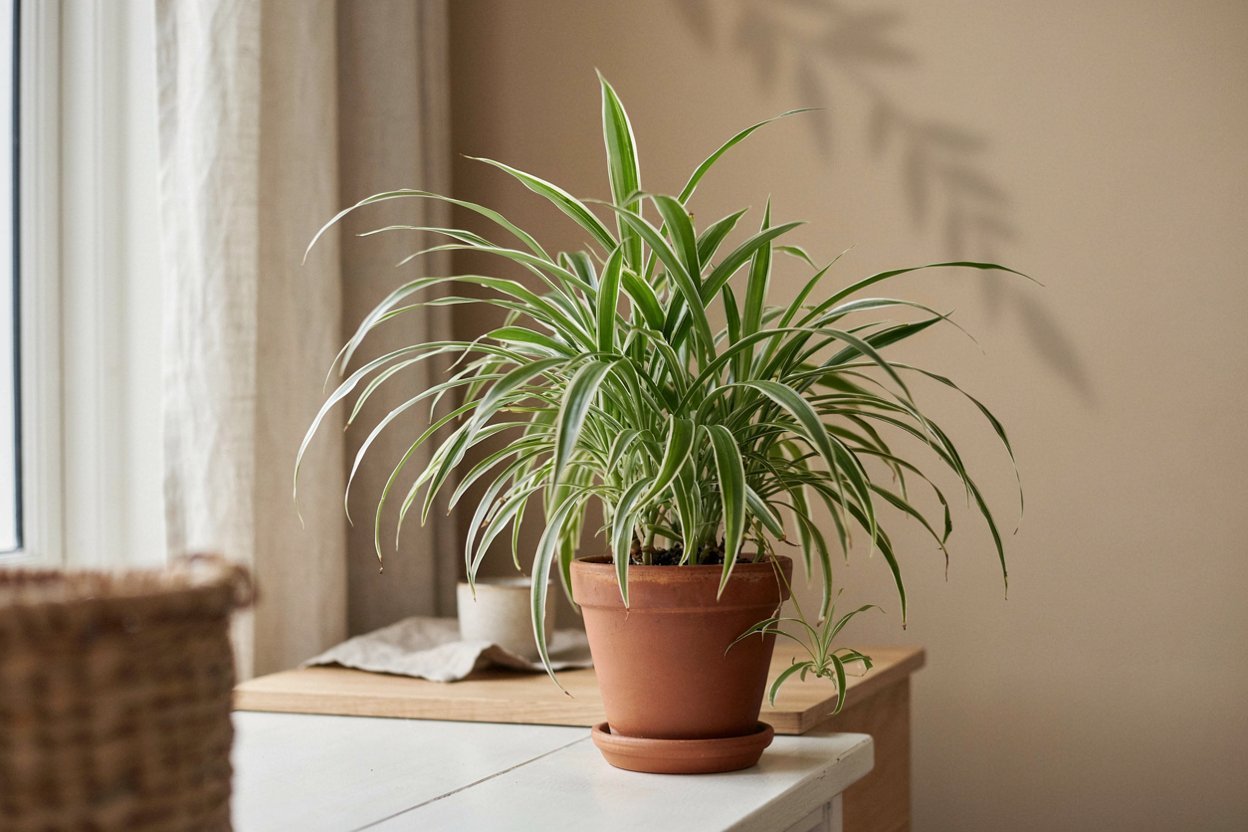

Spider plants have always been one of my favorite easygoing houseplants, but I have to admit that the curly varieties have something extra special.
Those arching, twisting leaves can make a simple plant look full, playful, and beautifully dramatic.
If your curly spider plant is starting to look less curly, stretched out, thin, or simply not as full as you hoped, a few changes in its care routine can make a noticeable difference.
The good news is that you do not need complicated techniques to encourage a healthier, fuller-looking plant.
From giving it the right amount of light to improving watering habits and choosing the right container, small adjustments can help your curly spider plant grow at its best.
Here are six simple tricks I use to encourage healthier, curlier, and more beautiful spider plants.
What Makes a Spider Plant Curly?
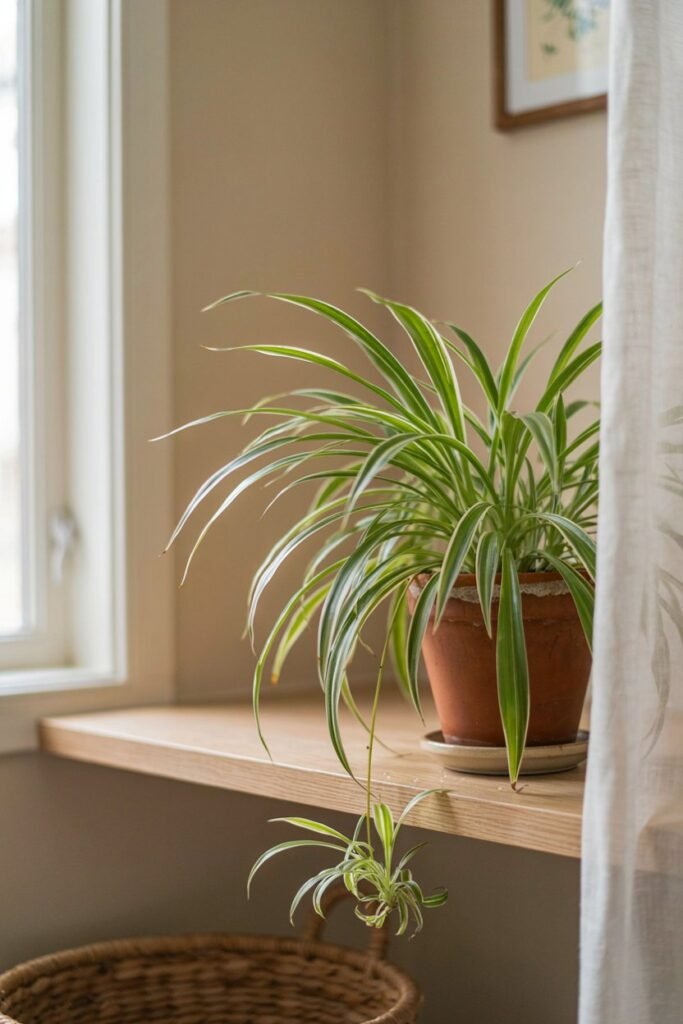
Before getting into the tricks, it helps to understand why some spider plants have curly leaves in the first place.
A plant’s natural growth habit plays the biggest role. Curly spider plants are specific varieties bred or selected for their naturally twisting, arching foliage.
The popular curly types often have leaves that spiral or curl as they grow, unlike traditional spider plants with straighter, arching leaves.
That means one important thing:
You cannot turn every ordinary spider plant into a truly curly variety simply through care.
However, proper growing conditions can help a naturally curly spider plant maintain its characteristic shape. Poor light, inconsistent watering, cramped roots, or general stress can leave the plant looking less full and attractive.
If you already have a curly variety, these six tricks can help you create the best conditions for healthy growth.
1. Give Your Curly Spider Plant Bright, Indirect Light
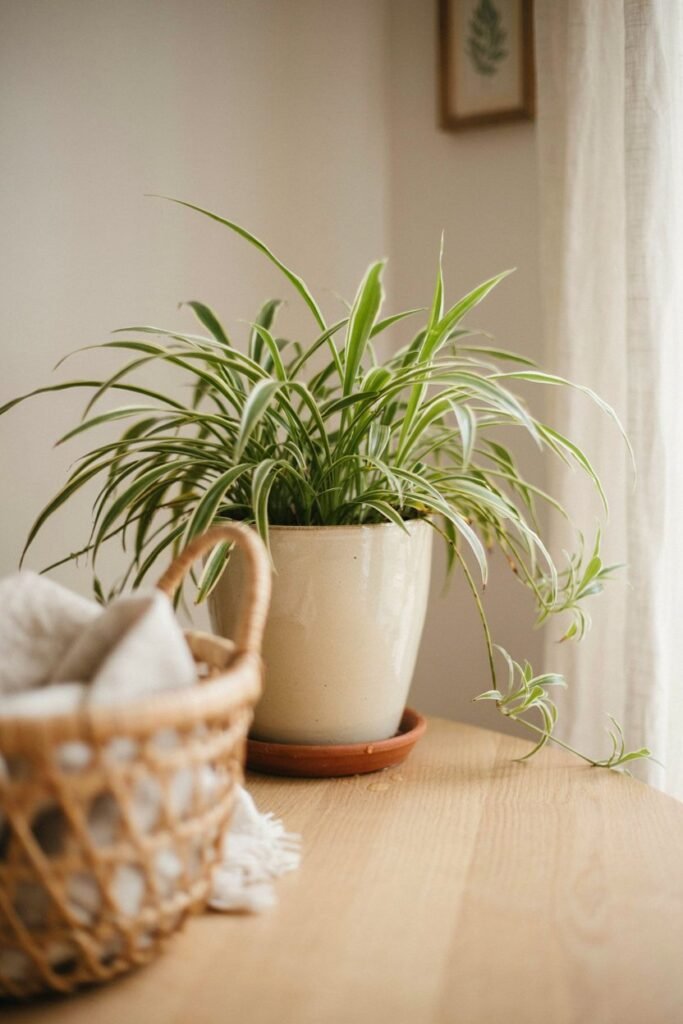
If I could choose one place to start, it would be with lighting.
Spider plants are often described as low-light houseplants, and while they can tolerate lower light levels, tolerating low light is not the same as thriving in it.
A curly spider plant generally grows fuller and stronger when it receives plenty of bright, indirect light.
Why light matters
Light provides the energy your plant needs to produce healthy new leaves. When a spider plant spends too much time in a dark corner, growth can become slower and weaker.
New leaves may also look less vigorous, and the plant can gradually lose that lush appearance we all want.
For the best results, place your plant near:
- An east-facing window
- A bright north-facing window in the Northern Hemisphere
- A few feet away from a sunny south- or west-facing window
- A window covered with a sheer curtain
The goal is bright light without intense, scorching sun hitting the leaves for long periods.
Avoid extremely dark corners
I know spider plants are often recommended for offices and low-light rooms, but if your goal is to grow a really full and attractive curly plant, I would not tuck it into the darkest corner of the house.
Move it somewhere brighter and watch how the new growth responds over time.
Rotate the pot regularly
One little habit that makes a big visual difference is rotating the pot occasionally.
Plants naturally grow toward their strongest light source. If you never turn the pot, one side may eventually become fuller than the other.
Rotate your curly spider plant every week or two so all sides receive fairly even exposure. This can help encourage a more balanced, attractive shape.
My favorite tip: Look at the plant from the front occasionally. If one side is noticeably fuller, turn the pot before the uneven growth becomes too dramatic.
2. Water Consistently but Never Keep the Soil Soggy
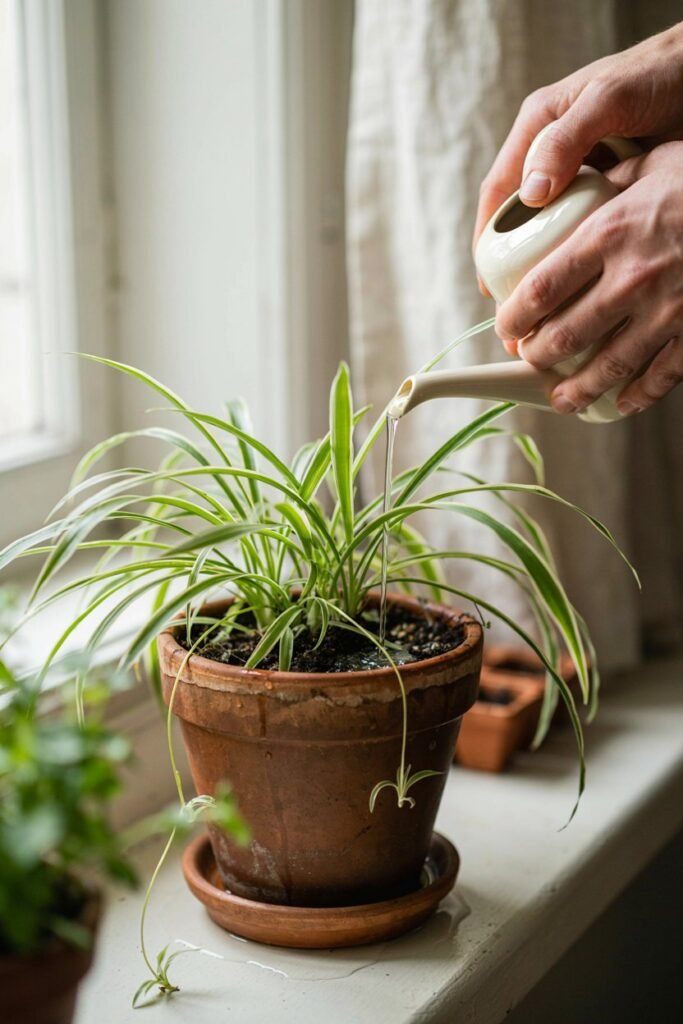
Watering is another area where curly spider plants can become unhappy.
These plants generally prefer soil that is kept moderately moist during active growth, but they do not enjoy sitting in waterlogged soil.
Too much water can stress the roots, while letting the potting mix become extremely dry over and over can also affect the plant’s appearance.
The trick is to find a consistent middle ground.
Check the soil before watering
Instead of watering on exactly the same day every week, check the soil first.
Push your finger into the top inch or so of the potting mix. When that upper layer has dried, it is usually a good time to check whether the plant needs water.
When you water:
- Water thoroughly.
- Allow excess water to drain from the bottom.
- Empty any saucer that remains full of standing water.
- Wait until the upper portion of the soil dries before watering again.
This approach is much better than giving the plant tiny amounts of water every day.
Why proper watering helps
Healthy roots support healthy leaves. When the roots are constantly stressed by overly wet or extremely dry conditions, the plant may struggle to maintain vigorous growth.
A strong root system gives your curly spider plant the foundation it needs to produce fresh, healthy foliage.
Watch for brown leaf tips
Brown tips are common on spider plants and can happen for several reasons, including inconsistent watering and mineral buildup from water or fertilizer.
If you notice brown tips, do not panic. Look at the entire care routine instead of assuming one problem is responsible.
Ask yourself:
- Is the soil staying wet for too long?
- Am I letting the plant dry out completely?
- Am I fertilizing too often?
- Could minerals be building up in the soil?
Making small adjustments is often more effective than dramatically changing everything at once.
3. Choose the Right Pot and Let the Roots Have a Little Room
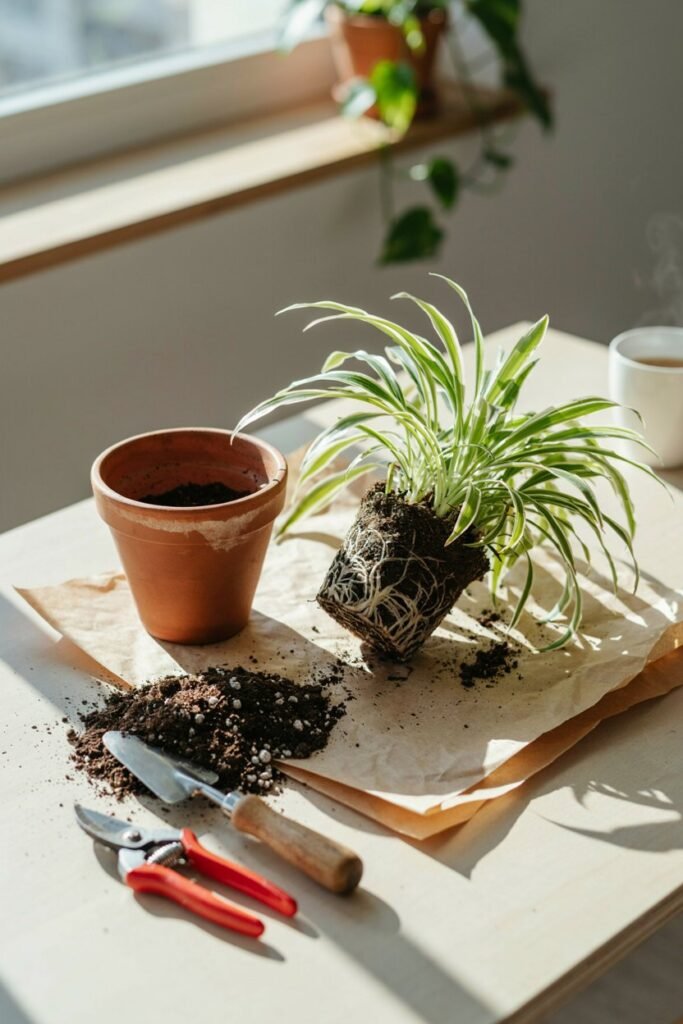
Spider plants have thick, fleshy roots that can eventually fill a pot surprisingly quickly.
If you have ever removed an older spider plant from its container, you may have been shocked by just how much of the pot was filled with roots!
A slightly root-bound spider plant can continue growing well, but a plant that is extremely crowded for too long may eventually struggle to access enough water and nutrients.
Signs your plant may need repotting
Take a closer look if you notice:
- Roots growing through drainage holes
- Water running straight through the pot unusually quickly
- The plant drying out much faster than before
- Roots pushing the plant upward
- A container that looks packed with roots
- Slower growth despite otherwise good care
If several of these signs are present, it may be time to move the plant into a slightly larger container.
Do not choose an oversized pot
This is where many plant owners make a mistake.
It can be tempting to move a plant into a huge pot so you will not have to repot again soon. Unfortunately, a container that is much too large can hold excess moisture around the roots for longer than necessary.
Instead, choose a new pot that is only modestly larger than the current one.
Always use drainage holes
A decorative pot may look beautiful, but your curly spider plant needs a way for excess water to escape.
Drainage holes are one of the simplest ways to reduce the risk of overly wet soil.
If you love a decorative container without drainage, use it as an outer cover pot and keep your spider plant in a nursery pot with drainage inside.
4. Feed Your Spider Plant During Active Growth
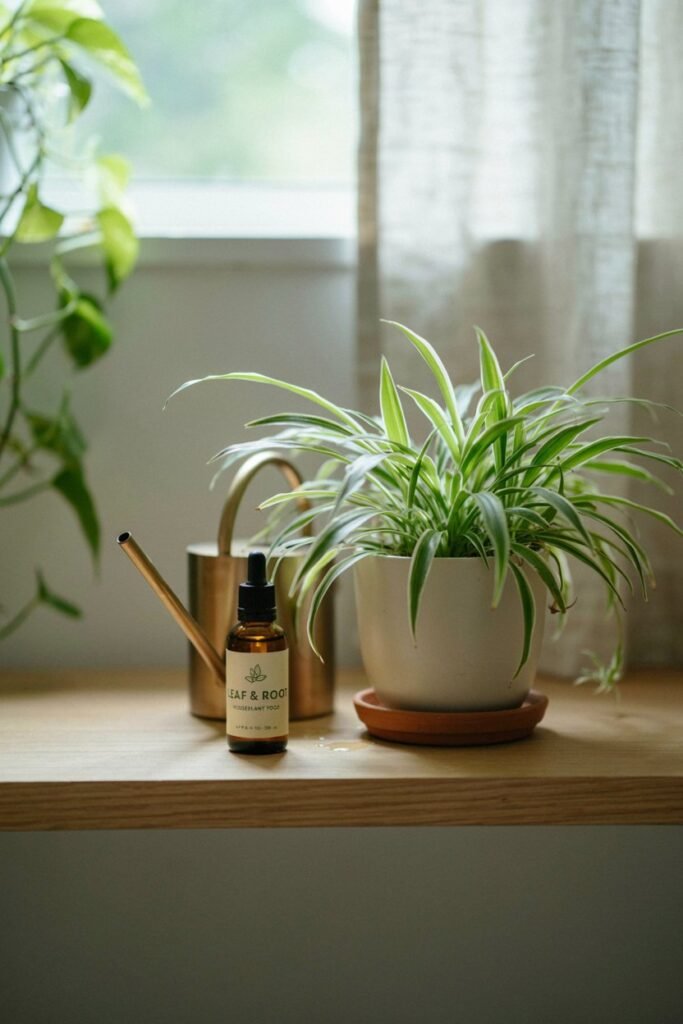
Healthy growth requires more than water and sunlight. Over time, nutrients in potting soil become depleted, especially when a houseplant has been growing in the same container for a long period.
A little fertilizer during active growth can support healthy foliage.
The key word here is little.
Spider plants do not need excessive feeding, and overfertilizing can create more problems than it solves.
How to fertilize
Use a balanced houseplant fertilizer according to the product directions, especially during the plant’s active growing period.
Depending on your fertilizer and growing conditions, you may feed occasionally throughout the growing season rather than constantly adding fertilizer every time you water.
More fertilizer does not mean more curls
This is important to remember.
You cannot force extra curling by giving your plant large amounts of fertilizer. Excess nutrients can build up in the soil and stress the roots.
Instead, focus on steady, sensible care.
Flush the soil occasionally
Minerals from fertilizer and tap water can accumulate in potting soil over time.
Occasionally watering thoroughly and allowing plenty of water to drain through the pot can help wash away some accumulated soluble salts.
Just make sure the pot drains properly and do not leave the plant sitting in the drained water afterward.
5. Keep the Temperature and Environment Comfortable
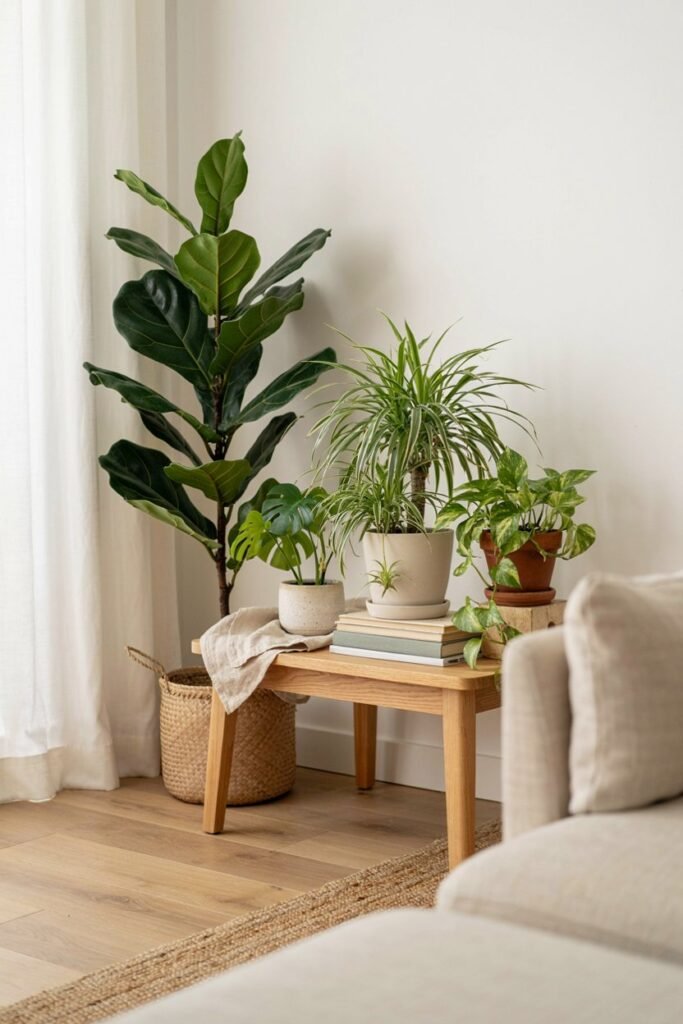
Curly spider plants are wonderfully adaptable, but they still appreciate a stable environment.
Sudden changes can stress almost any houseplant. If your spider plant is constantly exposed to blasts of hot or cold air, its growth may become less vigorous.
Find a comfortable indoor location
A typical comfortable household temperature is generally suitable for spider plants.
Try to keep your plant away from:
- Strong blasts from heating vents
- Air-conditioning vents
- Very cold drafts
- Sudden temperature extremes
Humidity can help the foliage look its best
Spider plants can adapt to average indoor humidity, which is one reason they are so popular. However, extremely dry indoor air may contribute to leaf-tip problems.
You do not necessarily need to turn your home into a tropical greenhouse.
Simple steps can help:
- Keep the plant away from direct heating vents.
- Group humidity-loving houseplants together if appropriate.
- Maintain generally comfortable indoor conditions.
The goal is not perfection. A stable environment is usually more helpful than constantly moving the plant around and changing everything.
Avoid moving it constantly
Once you find a bright location where your spider plant seems happy, try not to relocate it every few days.
Give the plant time to adjust and observe how new growth develops.
Houseplants often respond better to consistent care than constant experimentation.
6. Encourage a Fuller Plant With Proper Grooming and Propagation
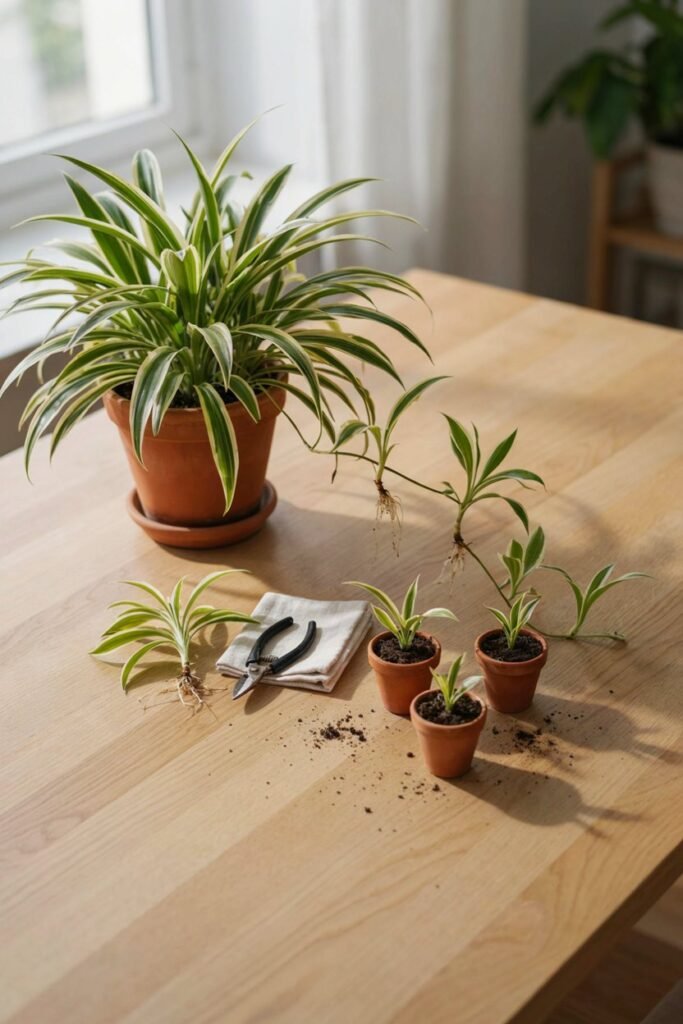
My final trick is one that can make the biggest difference visually: helping the plant look fuller.
A mature spider plant may naturally produce long runners with baby plants. These are one of the most charming features of spider plants, but if your main goal is a thick, full-looking display, you can also focus on maintaining healthy central growth.
Remove damaged leaves
Old, damaged, or heavily browned leaves can make even a healthy plant look tired.
Use clean, sharp scissors or pruning snips to remove leaves that are badly damaged.
Avoid cutting large amounts of healthy foliage unnecessarily. Leaves are important for the plant’s ability to capture light and grow.
Trim brown tips carefully
If only the tips are brown, you can carefully trim away the dead portion for a neater appearance.
Try to follow the natural shape of the leaf rather than cutting straight across in a harsh line.
Remember that trimming brown tips improves appearance, but it does not solve the underlying cause. If the tips continue turning brown, review watering, fertilizer use, and possible mineral buildup.
Use baby plants to create a fuller display
Here is one of my favorite ways to create a lush spider plant arrangement.
When your mature spider plant produces healthy babies, you can root some of them and eventually plant multiple young plants together in a suitable container.
A pot containing several healthy spider plants can create a much fuller, more dramatic display than a single small plant.
This is especially useful if you want that big, overflowing, curly spider plant look.
Propagating spider plant babies
A simple approach is to allow a baby plant to develop roots while still connected to the parent plant, then separate it once it has established itself.
You can also root suitable offsets using methods appropriate for spider plant propagation.
Once established, young plants can eventually be combined for a fuller container display.
Just remember not to overcrowd a small pot. Multiple plants still need enough space and well-draining soil.
The Best Care Routine for a Curly Spider Plant
If you are wondering how all six tricks fit together, this is the simple routine I would follow.
Daily
You do not need to do much.
Simply enjoy your plant and keep an eye out for obvious changes such as:
- Wilting
- Damaged leaves
- Extremely dry soil
- Pest problems
Every few days
Check the soil moisture.
Do not automatically water because the calendar says it is watering day. The speed at which soil dries can change depending on:
- Temperature
- Light levels
- Pot size
- Plant size
- Season
- Humidity
Every week or two
Rotate the plant slightly so it grows evenly toward the light.
Take a quick look at the leaves and remove any fallen debris from the soil surface.
During active growth
Feed occasionally with an appropriate houseplant fertilizer according to the product instructions.
Keep the plant in bright, indirect light and maintain a consistent watering routine.
When the plant becomes crowded
Check the root system and consider moving it to a slightly larger pot with fresh potting mix and good drainage.
Common Mistakes That Can Affect Your Curly Spider Plant
Sometimes the fastest way to improve a plant is to stop doing the things that are making it unhappy.
Here are some common mistakes I would avoid.
Keeping it in very low light
Your spider plant may survive, but it may not produce the strongest, fullest growth.
Move it gradually to a brighter location with indirect light.
Overwatering
Constantly wet soil can stress the roots.
Always make sure excess water can drain away.
Using a pot without drainage
Beautiful containers are tempting, but standing water around the roots can quickly become a problem.
Choose a container with drainage or use a nursery pot inside your decorative planter.
Fertilizing too heavily
More fertilizer is not a shortcut to faster growth.
Follow the product instructions and avoid excessive applications.
Expecting care to change the plant’s genetics
This may be the most important point of all.
Proper care helps a naturally curly spider plant grow well. It does not transform every straight-leaved spider plant into a curly cultivar.
If you want dramatic curls, start with a variety known for naturally curly foliage.
How Long Does It Take to See Better Growth?
Patience is important with houseplants.
You may notice improvements in the plant’s overall appearance after correcting a major problem, but the best evidence of improved care usually appears in new growth.
Older damaged leaves generally will not completely transform into perfect new leaves. Instead, watch what happens as fresh leaves emerge.
With improved light, appropriate watering, and healthy roots, new growth may gradually look stronger and more attractive.
I always recommend taking a photo of your plant before making major care changes. Then take another photo a few weeks later. It can be surprisingly hard to notice slow improvements when you see your plant every day.
Can You Make a Regular Spider Plant Curly?
Not in the true genetic sense.
A standard spider plant and a curly spider plant have different natural growth habits. You may influence how healthy and attractive the leaves look through proper care, but you cannot reliably force a naturally straight-leaved plant to become a true curly cultivar.
If your goal is those beautiful spiraling leaves, the best option is to purchase or propagate a naturally curly variety.
Then use these six tricks to help it grow as beautifully as possible.
Final Thoughts
Growing a beautiful curly spider plant is less about finding one secret trick and more about getting the basics right consistently.
I have found that bright indirect light, careful watering, healthy roots, gentle feeding, a stable environment, and regular grooming can make a huge difference in how lush a plant looks.
The natural curl comes from the variety itself, but good care helps your plant show off that beautiful character.
Give it enough light to grow strongly, avoid extremes with water, and do not be afraid to check whether the roots need more room.
Most importantly, be patient. The healthiest changes often appear gradually through new growth. With a little consistency, your curly spider plant can become a gorgeous, full, eye-catching part of your indoor plant collection.
